Queensland auditor general says state may miss 50pct renewables target — RenewEconomy

Queensland energy minister admits there’s “more work to do” after review suggests state could miss its 50 per cent renewables target. The post Queensland auditor general says state may miss 50pct renewables target appeared first on RenewEconomy.
Queensland auditor general says state may miss 50pct renewables target — RenewEconomy
November 25 Energy News — geoharvey

Opinion: ¶ “Bright Future For Landfill Solar – Yes, Landfill Solar” • There are over 10,000 closed landfills in the US. A report from the RMI, The Future of Landfills Is Bright, estimates that 4,312 of these sites alone – those for which adequate data is available – could host at least 63 GW of […]
November 25 Energy News — geoharvey
Nuclear power for MINDLESS, ENDLESS, ENERGY use – Data ”Farms” and Bitcoin – theme for November 21

When you think about the stupidity of eternal wastage of energy , it’s hard to beat the system of the supposed ”CLOUD”. Every pointless little email, little emoji, tweet, and all the other bits of digital junk produced goes not up into the disappearing ether, but down into a dirty great computer server, just one of the accumulating number of dirty great computer servers. Far from being ”farms”, these collections of steel enclosed machines actually produce nothing, but they do CONSUME massive amounts of electricity.
No wonder that the nuclear industry loves them!
The nuclear industry also loves crypto-currency, Bitcoin being the current top favourite of energy-guzzling systems.
A pernicious trio – data farms, cryptocurrency, and nuclear power – leading the world into eternal energy consumption and environmental degradation.

Fight over millions in native title mining royalties will be thrashed out in the Supreme Court
Fight over millions in native title mining royalties will be thrashed out in the Supreme Court , 24 Nov 21,
Fight for native title mining millions heads to Supreme Court | The Advertiser (adelaidenow.com.au
The credibility of the native title system itself has been called into question as a fight over millions in uranium royalties paid to the Adnyamathanha Traditional Lands Association heads to court.
A dispute over potentially tens of millions of dollars in uranium royalties paid to a South Australian native title group is headed to court, with claims there have been “serious failures” in the management of the money.
The Adnyamathanha Traditional Lands Association was placed in “special administration” in March last year by the Registrar of Indigenous Corporations. The move was a bid to address what the registrar said were “chronic and severe problems” around record keeping issues relating to meetings, memberships, directorships and spending.
The group, whose native title claim covers the Flinders Ranges, has become bitterly divided in recent years, with a dissenting faction claiming that former chief executive Vince Coulthard and his associates have failed to provide clarity over how much money the organisation receives in royalties, and how that money is spent.
ATLA is paid royalties from uranium producers Heathgate Resources and Quasar Resources, which own the Beverley uranium mine in the northern Flinders Ranges. But the money flows into a trust through a company called Rangelea Holdings, managed by Mr Coulthard and others, which does not fall under the remit of the regulator.
The registrar, Selwyn Button, who placed ATLA in administration, has been seeking access to Rangelea’s books. But Mr Coulthard and Rangelea’s other directors have declined to meet with representatives from Mr Selwyn’s office, and last month the company filed a Supreme Court action seeking to wrest back control of the funds.
Mr Button said on Monday that the amount paid by the mining companies over the past decade was estimated to be about $30m.
ATLA’s administrator had successfully called a halt to royalty payments from the uranium mining companies to Rangelea, which now wants those payments reinstated.
In court documents, Rangelea argues that the legal agreements with Heathgate and Quasar stipulate that the royalties be paid to Rangelea, on behalf of ATLA, “without interference from ATLA, the special administrator or any other person”.
But ATLA argues it is the agent for the Adnyamthanha people as registered native title holders, and Rangelea is not the correct recipient of the funds.
ATLA said in the first quarter of 2021, about $260,000 was paid into the master trust each month by the mining companies, on top of about $4m in 2020.
It also said the request to suspend royalty payments was “necessary and appropriate” in light of Rangelea’s refusal to open up its book.
The Advertiser attempted to contact Mr Coulthard for comment. The matter is scheduled to return to court on December 10.
Climate change is driving a drier Australia. So why are we having such a wet year?
Climate change is driving a drier Australia. So why are we having such a wet year?
The southern parts of Australia are expected to become increasingly dry due to climate change. Yet, we now find ourselves subject to another La Niña event. What’s going on?
Australia, with its solar energy, could be the long-term winner worldwide
Australia could be the long-term winner worldwide
Peter Bowden
‘We could power the entire world five times over from the Australian sun… It’s a good measure of how large our country is, and how much great sun we have.’
Economic Cost Of Peak Population: Japan, China, The World. — One Finite Planet

The world has reached peak child, and is headed towards peak population. Many economic metrics collapse between peak child and peak population, resulting in bear stock markets and even collapses, all if the real economy and outside their investment portfolios, most people are relatively unaffected. Economic Ponzi Scheme Metrics. Peak Child and National Economies. Market […]
Economic Cost Of Peak Population: Japan, China, The World. — One Finite Planet
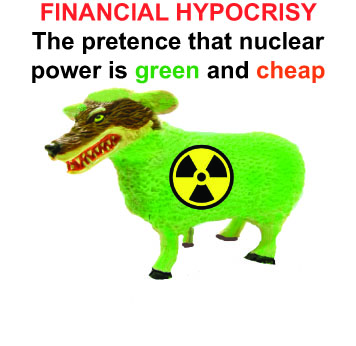
These 129 reputable organisations have signed up to letter opposing inclusion of nuclear and gas as being ”sustainable” and ”green”.
| France Nature Environnement, France CEE Bankwatch Network European Environmental Bureau (EEB) The Green Tank, Greece Umanotera – Slovenian Foundation for Sustainable Development, Slovenia Umweltinstitut München e.V., Germany Socio-ecological union international Climate Strategy Group Andy Gheorghiu Consulting, Germany Green Liberty, Latvia 10 BürgerBegehren Klimaschutz Bürgerbewegung Finanzwende, Germany AnsvarligFremtid, Denmark Klimabevægelsen i Danmark (350 Denmark), Denmark Naturschutzbund Deutschland e.V., Germany BirdLife Europe uranium-network.org, Germany eco-union, Spain Mouvement Ecologique (FoE-Luxembourg), Luxemburg urgewald, Germany 20 .ausgestrahlt, Germany 350.org Europe Deutscher Naturschutzring, Germany Stowarzyszenie Pracownia na rzecz Wszystkich Istot, Poland Legambiente, Italy Carbon Market Watch Health and Environment Justice Support (HEJSupport) Counter Balance ZERO – Association for the Sustainability of the Earth System, Portugal Clean Air Action Group, Hungary 30 Alofa Tuvalu, Tuvalu Réseau pour la transition énergétique CLER, France Creatura Think & Do Tank, Finland Women Against Nuclear Power, Finland Women for Peace, Finland The Alliance of the Associations Polish Green Network, Poland FMKK – The Swedish Anti Nuclear Movement, Sweden Polish Ecological Club Mazovian Branch, Poland Stowarzyszenie Ekologiczne EKO-UNIA, Poland Stowarzyszenie Ekologiczno-Kulturalne “Wspólna Ziemia”, Poland 40 Arbeitskreis Indianer Nordamerikas, Austria EuroNatur Stiftung, Germany Our Fish E3G – Third Generation Environmentalism Bioland e.V., Germany Deutsche Umwelthilfe e.V., Germany Germanwatch e.V., Germany Fair Finance International National Society of Conservationists – Friends of the Earth Hungary, Hungary Nucléaire Stop Kernenergie – Belgium 50 Tegengas/Dégaze – Belgium IPPNW (International Physicians for the Prevention of Nuclear War), German affiliate, Germany Urgenda Foundation, The Netherlands Focus Association for Sustainable Development, Slovenia Milieudefensie, The Netherlands Za Zemiata/Friends of the Earth Bulgaria, Bulgaria Fair Finance Guide, Sweden Corporate Europe Observatory Jihočeské matky, z.s., Czech Republic | WEED e.V. – World Economy, Ecology and Development, Germany 60ShareAction Global Witness Reclaim Finance, FranceFossielvrij NL, The Netherlands Bürgerinitiative “Kein Atommüll in Ahaus” e.V., GermanyThe Peace Movement of Orust, Sweden Global Nature Fund, Germany Climate Action Network International Transport & Environment NewClimate Institute gGmbH, Germany 70 Miljöringen lovisa Finland Réaction en chaîne humaine pour l’arrêt du nucléaire France Calla – Association for Preservation of the Environment, Czech republic Réseau “Sortir du nucléaire”, France BI “Stoppt Temelin”, Germany GLOBAL 2000 – Friends of the Earth Austria, Austria Suomen luonnonsuojeluliitto (Finnish Association for Nature Conservation), Finland Forum Ökologie & Papier, Germany Plattform gegen Atomgefahren Salzburg (PLAGE), Austria Gas Free Pensions, Europe 80 Réseau Action Climat France PSR / IPPNW Switzerland (Physicians for Social Respon sibility /International Physicians for the Prevention of Nuclear War) Greenpeace Begegnungszentrum für Aktive Gewaltlosigkeit, Austria Hiilivapaa Suomi, Finland Food & Water Action Europe, Europe International Network for Sustainable Energy – Europe ReCommon, Italy Inter-Environnement Wallonie, Belgique 90 Campagna “Per il Clima Fuori dal Fossile”, Italy Movimento No TAP/SNAM Brindisi, Italy Redazione emergenzaclimatica.it, Italy BankTrack, the Netherlands TerraBlu, Italy Bellona Europa, Belgium Bellona Deutschland, Germany Forum Ambientalista O.d.V., Italy Climate Action Network, Europe Associazione Tarantola Rubra, Italy 100 Friends of the Earth, Europe Trivelle Zero Molise, Italy Environmental Coalition on Standards, Belgium Collettivo No al Fossile Civitavecchia, Italy WWF Forlì-Cesena, Italy Coordinamento ravennate Fuori dal Fossile, Italy The Swedish Anti-Nuclear Movement, Branch Gävle, Sweden NOAH Friends of the Earth Denmark Wiener Plattform Atomkraftfrei, Austria Parents For Future Vienna, Austria 110 Trivelle Zero Marche, Italy Parents for Future Gütersloh, Germany A Sud, Italy European Alliance for the Self-determination of Indigenous Peoples, Austria/France/Germany/Switzerland Mom Loves Taiwan Forum Ökologisch-Soziale Marktwirtschaft e.V., Germany WISE Netherlands atomstopp_atomkraftfrei leben!, Austria Freistädter Mütter gegen Atomgefahr, Austria Grandparents For Future Austria 120 Parents For Future Oberösterreich, Austria Frauen für den Frieden Schweiz Bund für Umwelt und Naturschutz Deutschland (BUND) e.V – Friends of the Earth Germany, Germany nternational Commission for the Protection of the Alps (CIPRA International), Liechtenstein Rete “Legalità per il clima”, Europe Collectif anti-nucléaire Ouest, France Fédération anti-nucléaire Bretagne, France GasExit Greenpeace, Russia 129 |
Bellona signs open letter to prevent nuclear energy and fossil gas from being labelled as green
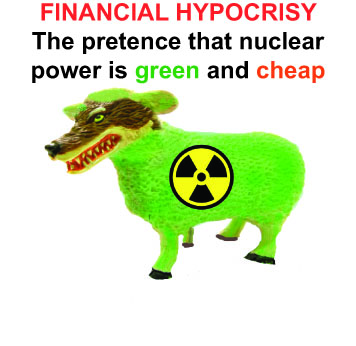
(Signed by 129 reputable European and international organisations)
Granting nuclear and fossil gas the label of sustainability would undermine the EU’s climate targets, divert much-needed investments in the green transition and jeopardize the credibility of the entire European Green Deal. Olaf ScholzFederal Minister of Finance
and Vice Chancellor
11016 Berlin
Germany
Dear Federal Minister,
We are extremely concerned by the announcement of the European Commission’s President, Ursula von der Leyen, to likely label both nuclear energy and fossil gas as sustainable in the context of the EU’s taxonomy. According to media coverage, it was the absence of a strong German voice against nuclear in the European Council on 21/22 October that directly contributed to this decision. In your role as current finance minister and future Chancellor, we call on you to swiftly and decisively confirm the German veto against labelling nuclear as a sustainable form of energy and highlight that the Commission’s attempt to shape this discussion during the sensitive time of a new government being formed in Germany is not acceptable.
The EU taxonomy regulation is meant to provide guidelines for the necessary future-oriented investments for Europe’s economic transition. Nuclear energy, however, is unsustainable due to severe safety risks, environmental pollution and the unsolved waste problem. Fossil gas emits large quantities of climate-damaging greenhouse gases, especially methane, along its extraction and transport chain. Granting nuclear and fossil gas the label of sustainability would undermine the EU’s climate targets, divert much-needed investments in the green transition and jeopardize the credibility of the entire European Green Deal.
Dear Federal Minister, Germany has embarked upon a clear path to phase out nuclear power by the end of next year. NGOs from across Europe count on you to take an equally clear stance against nuclear energy but also fossil gas at the European level. more https://bellona.org/news/climate-change/2021-11-bellona-signs-open-letter-to-take-action-to-prevent-nuclear-energy-and-fossil-gas-from-being-labelled-as-green
The UK’s nuclear plan is a financial, environmental and political risk
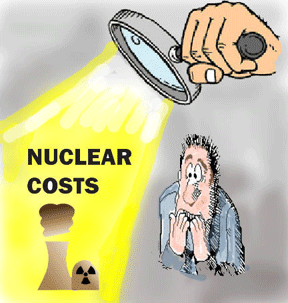
The UK’s nuclear plan is a financial, environmental and political risk, Investment Monitor, Jon Whiteaker , 16 Nov 21, If the UK government thinks the RAB model will solve all its nuclear power problems, it may have a nasty surprise coming its way.
As the dust settles on COP26, the UK government will turn its attention away from global discussions and towards what it is doing domestically to help mitigate the climate crisis.
The government’s Net Zero Strategy sets aside £120m towards developing new nuclear power plants, which it says “could support our path to decarbonising the UK’s electricity system” by 2035.
Could’ is doing a lot of work in that sentence, because although nuclear power plays a prominent role in the government’s decarbonising strategy, bringing additional nuclear capacity online is far from straightforward.
The government says nuclear is a continuous, reliable and low-carbon form of energy that has been part of the UK electricity system for 65 years. Nuclear is also controversial, hugely expensive in comparison to other fossil fuel alternatives, and often proves challenging to develop.
According to the latest World Nuclear Industry Status Report, between 1951 and 2021, of the 783 nuclear reactor projects launched, 12% have been cancelled. Delays and cost overruns are also very common when constructing nuclear plants.
The UK government is hoping to kickstart development of new nuclear in the UK through the introduction of the regulated asset base (RAB) funding model. This model is intended to widen the investor pool for nuclear power, reduce financing costs, and ultimately save bill payers money.
While the RAB model has proved successful for other large UK infrastructure projects, it comes with risks for the government. It is unclear which investors will be happy to support new nuclear projects, and there are potential political costs if UK citizens are made to pick up at least part of the tab if things go wrong.
The government expects electricity usage to increase by 40–60% by 2035. It has mapped out several scenarios for how this demand can be met solely by renewables, all of them dependant on building new nuclear power capacity.
Yet in 2020, while generation from all other renewable energy sources increased, generation from nuclear power actually declined in the UK due to a decision not to restart operations at the Dungeness B plant in Kent, which had been suffering a prolonged outage since 2018.
The UK nuclear fleet is old, suffering performance issues and largely due to be decommissioned. By 2035, the UK will lose almost 8GW of nuclear power plants to decommissioning.
The only new nuclear plant under construction is the 3.26GW Hinkley Point C plant, which is now due to be completed in 2026.
All this means the government needs to quickly develop new nuclear capacity. It seems very taken by new small modular reactors, particularly if they are developed by UK companies such as Rolls-Royce.Yet this and another new technology, advanced modular reactors, are not due to reach the demonstration phase until the early 2030s.
So, the government has been seeking a way to deliver several new Hinkley Point Cs…………………
The National Infrastructure Commission, a body designed to give impartial advice to the government, said in March 2020 that a “renewable-based system looks like a safer bet” and a “substantially cheaper” option than the construction of multiple new nuclear power plants.
That sounds like advice worth considering again. https://www.investmentmonitor.ai/business-activities/energy/uk-nuclear-rab-energy-renewable
November 24 Energy News — geoharvey

Opinion: ¶ “Will Russia Ever Leave Fossil Fuels Behind?” • In Russia, oil and gas provided 39% of the federal budget revenue and made up 60% of Russian exports in 2019. The share of all fossil fuel rents (the price of fossil fuels minus the cost of producing them) amounted to 14% of GDP that […]
November 24 Energy News — geoharvey
“Game changer:” Senate clears way for offshore wind farms in Australian waters — RenewEconomy

Landmark federal legislation that will allow offshore wind farms to be built in Australian waters for the first time has passed through the Senate. The post “Game changer:” Senate clears way for offshore wind farms in Australian waters appeared first on RenewEconomy.
“Game changer:” Senate clears way for offshore wind farms in Australian waters — RenewEconomy
New German government aims for coal exit, and 80 pct renewables, by 2030

New deal between SDP, Greens and pro-business party calls for coal exit by 2030, and an 80 per cent share for renewables. The post New German government aims for coal exit, and 80 pct renewables, by 2030 appeared first on RenewEconomy.
Soren Amelung and Benjamin Wehrmann 25 November 2021 https://reneweconomy.com.au/new-german-government-aims-for-coal-exit-and-80-pct-renewables-by-2030/ Germany’s prospective new government has agreed to speed up the country’s coal exit and accelerate the rollout of renewable power to get the country on track for climate neutrality.
“We will align our climate, energy and economic policies nationally, in Europe and internationally with the 1.5 degree path and activate the potential at all levels of government,” states the coalition agreement between Social Democrats (SPD), Greens, and pro-business Free Democrats.
“With ambition and perseverance, we are making the country a pioneer in climate protection,” likely future chancellor Olaf Scholz, a Social Democrat, said during the presentation of the coalition treaty. He added that “modernisation won’t be for free – we will invest massively so Germany can stay a world leader.”
Germany plans to become climate-neutral by 2045, but the measures implemented by the outgoing government, a coalition between chancellor Angela Merkel’s Conservatives and the SPD, are insufficient to reach that target.
The September vote had been called a “climate election” due to the high importance many voters had given the topic.
Scholz aims to be elected chancellor in the week of December 6. Prior to that, the Greens will invite all 120,000 party members to vote on the coalition agreement online. The SPD and the FDP will organise party conferences on December 4 and 5, respectively, to secure their members’ backing for the agreement.
Faster rollout of renewables
“Reaching climate targets will require an accelerated exit from coal power generation,” the coalition treaty reads. “Ideally, this will be achieved by 2030 already.”
Green Party co-leader Robert Habeck said the measures agreed by the three parties would put Germany on an emissions reduction path compatible with the Paris Climate Agreement‘s target of limiting global warming to 1.5 degrees Celsius.
The coalition treaty’s “core” principle would be to reconcile prosperity with climate action, he argued.
“We have decided against setting higher climate targets in the coalition agreement, but rather formulated concrete measures,” Habeck said, adding that these measures would put the country on a 1.5 degree path.
The three parties aiming to form the next German government, said they aim to cover 80 percent of the country’s power demand with renewables by 2030, a significant increase from the current target of 65 percent. “Renewables are no longer an addition but will have to carry our supply security,” Habeck said.
FDP leader Christian Lindner, who is likely to become new finance minister, said “no other industrialised country will make efforts in climate action as great as ours, this is the most ambitious programme to date” and the government would make sure that it is sufficiently funded. At the same time, Germany would remain “an advocate of prudent financial policy,” Lindner added.
The parties also rejected calls for postponing the end of nuclear power plants. “We will stick to the nuclear exit,” their coalition agreement says.
To help the country’s famed industry to lower emissions, the future government plans to use new instruments, such as carbon contracts for difference, and support an EU-wide carbon border adjustment mechanism.
The coalition partners also said they will consider a national carbon floor price of 60 euros if the price in the EU emissions trading system falls below that limit. In the transport sector, they want to achieve a fast transition to low-emission mobility. “Our target is at least 15 million fully electric cars by 2030,” the treaty says.
The future government also agreed on considerable changes to the government architecture to implement its climate agenda. The parties plan to create a novel climate ministry that merges the energy and industry departments of the economy ministry with the environment ministry’s climate department.
First published on Clean Energy Wire
Australian Radiation Protection and Nuclear Safety Agency (ARPANSA) asks people to comment on public health and radioactive waste dump
Advisory Note: Public health considerations for siting, construction and operation of a radioactive waste disposal facility, Start/End Date: Monday 15 November 2021 – 09:00 to Wednesday 15 December 2021
ARPANSA invites people and organisations interested in this advisory note to tell us their views on this topic. Go to their website to comment https://www.arpansa.gov.au/advisory-note-public-health-considerations-siting-construction-and-operation-radioactive-waste?fbclid=IwAR0Z3RlSlkA8VJg-vLDDJUFnegLe8sYk5v_lIcGIFfGUv6Y9c3WabJldJCc
What is the purpose of this Advisory Note?
This advisory note provides an explanation of health and well-being as referred to in RPS C-3: Code for Disposal Facilities for Solid Radioactive Waste (ARPANSA 2018). It is intended to provide guidance on ARPANSA’s expectations for consideration of community well-being throughout the siting, construction and operation of a radioactive waste disposal facility.
disposal facility, Start/End Date: Monday 15 November 2021 – 09:00 to Wednesday 15 December 2021 ARPANSA invites people and organisations interested in this advisory note to tell us their views on this topic.
What is the purpose of this Advisory Note?
This advisory note provides an explanation of health and well-being as referred to in RPS C-3: Code for Disposal Facilities for Solid Radioactive Waste (ARPANSA 2018). It is intended to provide guidance on ARPANSA’s expectations for consideration of community well-being throughout the siting, construction and operation of a radioactive waste disposal facility.
Once finalised, this advisory note will be published on ARPANSA’s website as supporting guidance to RPS C-3.
What is radioactive waste?
Radioactive waste is material with an activity content or concentration above a predefined level, for which no further use is foreseen. Disposal is the recognised end point for the management of radioactive waste under a hierarchy of waste controls; however, storage of some wastes for periods of tens of years is often a necessary precursor.
What is the exposure risk to the public and the environment?
Radioactive waste management includes the potential for people to be exposed to radiation during the operation and closure stages of a waste facility. Therefore the operator must demonstrate that protection of people and the environment has been considered and that there will be minimal risk of any radiation exposure. In this regard, the operations and closure of waste facilities are regulated in the same way as any other radiation practice.
How is health defined in the Code for Disposal Facilities for Solid Radioactive Waste?
The Code references the World Health Organization (WHO) definition of health, where health is defined as a state of complete physical, mental and social well-being and not merely the absence of disease or infirmity. The state of health and well-being of an impacted community throughout all stages of a proposed Disposal Facility informs the process of optimisation and decision making.
disposal facility, Start/End Date: Monday 15 November 2021 – 09:00 to Wednesday 15 December 2021 ARPANSA invites people and organisations interested in this advisory note to tell us their views on this topic.
What is the purpose of this Advisory Note?
This advisory note provides an explanation of health and well-being as referred to in RPS C-3: Code for Disposal Facilities for Solid Radioactive Waste (ARPANSA 2018). It is intended to provide guidance on ARPANSA’s expectations for consideration of community well-being throughout the siting, construction and operation of a radioactive waste disposal facility.
Once finalised, this advisory note will be published on ARPANSA’s website as supporting guidance to RPS C-3.
What is radioactive waste?
Radioactive waste is material with an activity content or concentration above a predefined level, for which no further use is foreseen. Disposal is the recognised end point for the management of radioactive waste under a hierarchy of waste controls; however, storage of some wastes for periods of tens of years is often a necessary precursor.
What is the exposure risk to the public and the environment?
Radioactive waste management includes the potential for people to be exposed to radiation during the operation and closure stages of a waste facility. Therefore the operator must demonstrate that protection of people and the environment has been considered and that there will be minimal risk of any radiation exposure. In this regard, the operations and closure of waste facilities are regulated in the same way as any other radiation practice.
How is health defined in the Code for Disposal Facilities for Solid Radioactive Waste?
The Code references the World Health Organization (WHO) definition of health, where health is defined as a state of complete physical, mental and social well-being and not merely the absence of disease or infirmity. The state of health and well-being of an impacted community throughout all stages of a proposed Disposal Facility informs the process of optimisation and decision making.
How can consideration of community health and wellbeing be demonstrated?
In demonstrating radiation protection of the public, the proponent also needs to demonstrate the health and well-being of the impacted community related to all stages of the proposed Disposal Facility and directly related to radiation exposure.
An ethical and inclusive approach to engagement with the community allows all concerned parties are given the opportunity to participate in discussions and deliberations and ensures that decision-making takes into account their knowledge as well as their concerns over how the facility may affect them.
A description and discussion of health and well-being considerations should be included in the safety case for the facility. This should include the ongoing and interactive process of optimisation of radiation protection and the consideration of societal factors…..
Making a comment………
ARPANSA invites people and organisations interested in this advisory note to tell us their views on this topic.
China calls on the Association of Southeast Asian Nations (ASEAN) to make Southeast Asia a nuclear-weapons-free zone
China pushes for nuclear-weapon-free Southeast Asia, KhmerTimes, Aandolu Agency ISTANBUL 22 Nov 1 – China on Monday said it is ready to work with the members of the Association of Southeast Asian Nations (ASEAN) towards a nuclear-weapon-free region besides ensuring stability in the disputed South China Sea.
“China supports ASEAN’s efforts to build a nuclear-weapon-free zone, and is prepared to sign the Protocol to the Treaty on the Southeast Asia Nuclear-Weapon-Free Zone as early as possible,” President Xi Jinping told the China-Asia summit marking 30 years of the relations between two sides.
Beijing’s demand for a nuclear-free Southeast Asia comes as the US and UK empower their ally Australia with nuclear-armed submarines under a deal called AUKUS signed in September………..
The bilateral trade between China and ASEAN has skyrocketed by 85 times to $684.6 billion in 2020 from less than $8 billion in 1991, making the two sides each other’s largest trading partners. https://www.khmertimeskh.com/50975461/china-pushes-for-nuclear-weapon-free-southeast-asia/
1 This month.


PETITION – To: Prime Minister Anthony Albanese and the Australian Labor Government
Chernobyl: The Lost Tapes – A good documentary on Chernobyl on SBS available On Demand for the next 3 weeks– https://www.sbs.com.au/ondemand/tv-program/chernobyl-the-lost-tapes/235274195556

19 May – Webinar- Webinar: No Nuclear Weapons in Australia
Start: 2026-05-19 18:00:00 UTC Canberra, Melbourne, Sydney (GMT+10:00)
End: 2026-05-19 19:30:00 UTC Canberra, Melbourne, Sydney (GMT+10:00)
20 May – Webinar – The dangerous world of AUKUS, US, military occupation and suppression of dissent

National Webinar, 20th May, 2026, 6.30pm AEST. Confronting laws restricting/suppressing protest speech and action
Speakers: Former Sen. Rex Patrick, Lawyer Nick Hanna ,Arthur Rorris ,Jorgen Doyle, Sen David Shoebbridge,
Facilitator Kelley Tranter.

of the week – Australians for War Powers Reform (AWPR)
To see nuclear-related stories in greater depth and intensity
 Antinuclear