On economics, nuclear power just doesn’t stack up – Labor’s Shadow Minister for Climate Change

‘The economics don’t stack up of nuclear for Australia’: Bowen, https://www.skynews.com.au/business/tech-and-innovation/the-economics-dont-stack-up-of-nuclear-for-australia-bowen/video/c743e790999f7e62fa243b50aa7c15ea Shadow Climate Change Minister Chris Bowen says the economics “don’t stack up of nuclear for Australia”. 19 Oct 21,
“Open and shut,” Mr Bowen told Sky News Australia.
“It’s the most expensive form of energy.”
Mr Bowen also said the National Party “likes to blame renewables for the energy crisis in Europe”. “When you actually look at the detail a lot of it is also relating to the unreliability both of gas and nuclear, in the British context.
“But no, the economics don’t stack up of nuclear for Australia.”
David Littleproud, Minister for Agriculture – a National Party enthusiast for the nuclear industry

‘Nuclear is OK’: Agriculture Minister backs controversial clean energy source https://www.2gb.com/nuclear-is-ok-agriculture-minister-backs-controversial-clean-energy-source/
The Agriculture Minister is throwing his support behind nuclear energy as the government debates net-zero.
The government is set to make a decision on committing to a global target of net-zero emissions.
Agriculture Minister David Littleproud told Ben Fordham polling shows hesitancy amongst the community for nuclear energy.
“I’m not afraid of it … Nats are big believers in nuclear.
“I think we should create that environment to try and educate our population that it’s OK, nuclear is OK.”
Concern in Association of Southeast Asian Nations about Australia’s nuclear submarines
Indonesia, Malaysia concerned about Australia’s nuclear subs. By NINIEK KARMINI , 18 Oct 21,
JAKARTA, Indonesia (AP) — The foreign ministers of Malaysia and Indonesia expressed concern Monday that Australia’s plan to obtain nuclear-powered submarines may increase the rivalry of major powers in Southeast Asia.
The U.S., Britain and Australia announced last month that they have formed a security alliance that will help equip Australia with nuclear-powered submarines. The alliance will reshape relations in the Indo-Pacific region and beyond……..
“This situation will certainly not benefit anyone,” Indonesian Foreign Minister Retno Marsudi said after meeting with her Malaysian counterpart, Saifuddin Abdullah, in Jakarta. “We both agreed that efforts to maintain a peaceful and stable region must continue and don’t want the current dynamics to cause tension in the arms race and also in power projection.”
The two ministers said at a joint news conference that they agreed to strengthen the unity and centrality of the Association of Southeast Asian Nations and urged all members of the bloc to contribute to the stability, security, peace and prosperity of the region and respect international law.
Saifuddin said having a near-neighbor build new nuclear-powered submarines could encourage other countries to come more frequently into Southeast Asian territory………………………..
ASEAN’s members are Brunei, Cambodia, Indonesia, Laos, Malaysia, Myanmar, the Philippines, Singapore, Thailand and Vietnam. Brunei is chair of the bloc this year.
ASEAN has formal partnerships with several countries including Australia, China, Canada, New Zealand, South Korea and Pakistan as well as the European Union.
Malaysia and Indonesia share many similarities in religion, language and culture. https://apnews.com/article/business-asia-australia-indonesia-global-trade-fbbf5b52e6822d01cdc11c8a5870ebb4
Australian Labor Party has no intention of developing nuclear power.

Labor doesn’t have ‘any desire’ to pursue nuclear: Tony Sheldon https://www.skynews.com.au/opinion/chris-kenny/labor-doesnt-have-any-desire-to-pursue-nuclear-tony-sheldon/video/be4936ec8a8dc0169ff85fcf26b8f2f1 19Oct 21,
Labor Senator Tony Sheldon says he doesn’t believe the party has “any desire” to go down a nuclear energy route to de-carbonise the economy.
“There is still substantially cheaper alternatives to that,” Mr Sheldon told Sky News host Chris Kenny.“We’re talking about making sure we develop those industries and develop that work – such as a hydrogen industry, which is going to be very critical into our future.”
Australia set to disappoint key allies on 2030 emissions target.

Australia set to disappoint key allies on 2030 emissions target, SMH, By Mike Foley October 18, 2021 Australia’s decision not to boost its 2030 emissions reduction target will disappoint key allies that have called on Prime Minister Scott Morrison to do more ahead of next month’s United Nations climate summit in Glasgow.Mr Morrison told Parliament on Monday he would stick with the target that he took to the 2019 election, which was set by former prime minister Tony Abbott in 2015, to reduce emissions by at least 26 per cent from 2005 levels. His decision comes after Nationals leader Barnaby Joyce on Sunday all but ruled out support for a higher 2030 commitment.
British cabinet minister Alok Sharma, who will head the COP26 climate change conference, has called on Australia to set a 2030 emissions reduction target of up to 50 per cent. The United Kingdom has committed to cut emissions 68 per cent by 2030 while the United States has set a goal to reduce emissions by 50 per cent and urged Australia to increase its near-term target. Japan is targeting 46 per cent. South Korea 40 per cent and the European Union 55 per cent.
Climate scientists say deep emissions cuts by 2030 are needed to achieve the goal of the Paris Agreement to limit global warming to less than 2 degrees, and as close to 1.5 degrees as possible to avoid the worst damage from climate change. Waiting longer to
reduce greenhouse gases will allow too much carbon to build up in the atmosphere and cause heating long after 2050, even if net zero is achieved by then.
The government’s “technology not taxes” policy is focused on investment in low-emissions technologies to replace current carbon-intensive systems…………….
A report released on Monday by the Asian Investor Group on Climate Change, Ceres and the Investor Group on Climate Change, which represent investors with a cumulative $62 trillion in assets, called for G20 leaders including Australia to set ambitious 2030 targets. It said Australia was among the least attractive countries for green investment, alongside Argentina, India, Indonesia, Mexico, Russia and Saudi Arabia.
Investor Group on Climate Change policy director Erwin Jackson said global investors, which Australia relies on for foreign investment, would flow away from countries without ambitious 2030 targets………https://www.smh.com.au/politics/federal/for-the-love-of-god-act-now-church-leaders-join-chorus-urging-government-to-boost-2030-climate-target-20211018-p590uy.html
Norway oil giant tips millions into Australian dispatchable “solar hydro” tech — RenewEconomy

Australian concentrated solar and hydro storage technology outfit RayGen Resources claims Norwegian giant as major new investor. The post Norway oil giant tips millions into Australian dispatchable “solar hydro” tech appeared first on RenewEconomy.
Norway oil giant tips millions into Australian dispatchable “solar hydro” tech — RenewEconomy
Taylor faces re-election test in Hume, independent challenger to be revealed soon — RenewEconomy

Angus Taylor to face re-election challenge in Hume, with a community endorsed independent candidate to be revealed next month. The post Taylor faces re-election test in Hume, independent challenger to be revealed soon appeared first on RenewEconomy.
Taylor faces re-election test in Hume, independent challenger to be revealed soon — RenewEconomy
Australia’s biggest online energy and climate change event, the Smart Energy Council Global Race to Zero Summit — RenewEconomy

The Smart Energy Council will be holding Australia’s biggest online energy and climate change event, the Global Race to Zero Summit on 20-21 October. The post Australia’s biggest online energy and climate change event, the Smart Energy Council Global Race to Zero Summit appeared first on RenewEconomy.
Australia’s biggest online energy and climate change event, the Smart Energy Council Global Race to Zero Summit — RenewEconomy
Easiest first step to net zero is to build massive amounts of solar — RenewEconomy

Solar offers the cheapest and quickest option to cut emissions in the net 10 years. We just need to build more of it, and connect more of it. The post Easiest first step to net zero is to build massive amounts of solar appeared first on RenewEconomy.
Easiest first step to net zero is to build massive amounts of solar — RenewEconomy
FRV steps up Australia solar and battery plans, with new investment partner — RenewEconomy

Canadian pension fund takes 49% stake in FRV Australia, including huge development pipeline of solar and battery storage projects. The post FRV steps up Australia solar and battery plans, with new investment partner appeared first on RenewEconomy.
FRV steps up Australia solar and battery plans, with new investment partner — RenewEconomy
Joyce fills Morrison’s policy vacuum and says no to green energy transition — RenewEconomy

Morrison has ceded control of Australia’s climate policies to Joyce’s Nationals, and didn’t even ask them to support an increased 2030 target. The post Joyce fills Morrison’s policy vacuum and says no to green energy transition appeared first on RenewEconomy.
Joyce fills Morrison’s policy vacuum and says no to green energy transition — RenewEconomy
Book review: The Great Melt, by Alister Doyle — The Earthbound Report

Rising sea levels are a well known consequence of climate change, but they’re not necessarily well understood. The exact processes of why it happens, how it happens – and who it happens to – are quite complex. And there’s no better guide to those vital questions that Alister Doyle’s book on the subject, The Great […]
Book review: The Great Melt, by Alister Doyle — The Earthbound Report
October 18 Energy News — geoharvey

Opinion: ¶ “James Hansen Says Nuclear Power Is Answer To Climate. Is He Right?” • We have a climate guru like Hansen saying that the only answer can be the “development and deployment of modern nuclear power.” He believes that without it, we will need natural gas. But is he right? Michael E Mann’s new […]
October 18 Energy News — geoharvey
The week in nuclear news
The past week has seen a bigger than usual burst of news items about small nuclear reactors (SMRs) – with numerous claims about how SMRs are going to be the focus of a nuclear revival that will combat climate change. In country after country, political leaders announce SMRs as a central part of their climate policy, even reversing policies to phase out nuclear power. France is the leading example. There’s even a very interesting logic that goes like this:
‘‘Big nuclear power reactors are unsustainable: therefore small nuclear reactors will be sustainable” – as they say in all those police shows on TV – copy that!
Pandemic
Pandemic Coronavirus around the world.
The climate disaster is here. Climate. Earth is already becoming unlivable. Will governments act to stop this disaster from getting worse?
Some bits of good news.– Solar-Powered Desalination Device Will Turn Sea Water Into Fresh Water For 400,000 People. World’s First Totally-Green Tractor Set to Plow Down European Farming Emissions
AUSTRALIA.
AUKUS nuclear submarines deal must be abandoned. Australia’s nuclear submarines are looking more and more like a mirage. Uncertain delivery date for nuclear submarines. Australia’s existing fleet still in use in 2050? Inquiry to question whether Australia needs nuclear industry to support submarine program. Senate Inquiry quizzes Australian Nuclear Science and Technology Organisation (ANSTO) and Australian Radiation Protection and Nuclear Safety Agency (ARPANSA) on infrastructure needs for nuclear submarines.
New push for nuclear energy in Australia, but does it really stand the test? Pro nuclear argument has ‘more holes than Swiss cheese’ – Ian Lowe. Nuclear power is too expensive for Australia. Collapse of the nuclear industry‘s ”golden hope”. https://www.youtube.com/watch?v=DvpmGP8P6Mk
‘It makes us sick’: remote NT community wants answers about uranium in its water supply.
INTERNATIONAL.
Bizarre twists in USA’s war on Julian Assange and Wikileaks.
Epidemiology – research on baby teeth gives valuable information on health effects of ionising radiation.
What Does Building A Nuclear Power Station Mean for CO2 Emissions As We Near COP26 ?
Crypto currency and nuclear power – a worrying partnership.
Smoke from nuclear war would devastate ozone layer, alter climate.
The scale of global e-waste .
Vale Sister Megan Rice – an anti-nuclear hero. Libbe HaLevy’s interview with Sister Megan Rice 2019.https://www.youtube.com/watch?v=I_cguuNy-3U
Prince William: Saving Earth should come before space tourism.
Catholic Archbishop at UN urges immorality of nuclear weapons, and of militarising space.
Patients lack knowledge on radiation in medical imaging,
Catholic Archbishop at UN urges immorality of nuclear weapons, and of militarising space.
Patients lack knowledge on radiation in medical imaging,
Bizarre twists in USA’s war on Julian Assange and Wikileaks
Britain’s Guantanamo: is Julian Assange a terrorist? https://www.michaelwest.com.au/britains-guantanamo-is-julian-assange-a-terrorist/ By Gary Lord|October 18, 2021
As Julian Assange prepares to face a British court for possibly the last time, threatened with up to 175 years detention in a US supermax prison, journalist Gary Lord, explores the latest bizarre twists in the US effort to extradite the Wikileaks founder and the silence of global media.
Julian Assange likes to say that censorship is “always an opportunity” that should be welcomed because it indicates that “there is something worth looking at”. He also says that it is a sign of weakness because it “reveals a fear of reform”.
So it’s interesting that recent bombshell stories about Assange himself are being censored by global media giants. As the WikiLeaks founder prepares to face a British court for possibly the last time on October 27, threatened with up to 175 years detention in a US supermax prison, perhaps this media censorship is something worth looking at?
wo major stories have emerged since a UK judge ruled against Assange’s extradition to the United States (on health grounds only) at the start of this year.
Firstly, Icelandic media revealed in June that the US prosecution’s prize witness, a convicted pedophile and fraudster who has since been jailed, had withdrawn his testimony against Assange.
Sigurdur Thordarson, who worked for Wikileaks in 2010 but embezzled over $50,000 from the organization, admitted to fabricating key accusations in the US indictment. This important story was almost totally ignored by global media.
Secondly, some 30 anonymous US officials recently confirmed that CIA boss Mike Pompeo, US President Donald Trump, and other staff “at the highest levels” of the Trump administration actively discussed assassinating Julian Assange, and even enlisted UK government support to shoot out airplane tyres if required.
The US government officially designated WikiLeaks a “non-state hostile intelligence service” in order to provide legal cover for any violent action, with “sketches” including possible shootouts with Russian agents on the streets of inner London.
The USA’s FAIR media watch group investigated the extraordinary lack of media coverage this astonishing revelation received, noting that “BBC News, one of the most-read news outlets in the world, appears to have covered the story just once — in the Somali-language section of the BBC website”.
The New York Times, the Washington Post, and many other major media outlets totally ignored it. The Guardian published just two articles about it; by comparison, they devoted 16 articles to alleged Russian government attempts to murder Alexei Navalny.
Sadly, this media censorship of Assange is not new, even if it does appear to be reaching new heights of absurdity. Another widely ignored story is the relentless and invasive spying on Assange and his visitors – including lawyers, family and journalists – while he was in the Ecuadorian embassy.
A Spanish court is currently investigating allegations that UC Global, the company that supposedly provided “security” at the behest of the Ecuadorian government, was secretly working for the CIA as a client of former Las Vegas casino mogul Sheldon Adelson, a major supporter of Donald Trump.
Max Blumenthal first reported back in May 2020 that these spies also discussed plots to kidnap or poison Assange.
A “fix” or media apathy?
How to explain the widespread lack of mainstream media interest in such shocking news stories which could easily be given front page importance?
Are we to assume that “the fix is in”? Is this part of a deliberate effort to suppress public support for Assange, ahead of his inevitable extradition? If so, who is behind it, and what does it say about the politicisation of the British court system, never mind global media organisations? If not, how else can we understand it?
It’s well known that Assange fell out with many of his old media partners following the 2010 Cablegate publications, but most of those journalists still argue that the Australian should not be extradited for the “crime” of journalism.
Editorials in the Guardian, New York Times, the Sydney Morning Herald and other newspapers have called for the US extradition case to be dropped. But the media fraternity’s “support” for Assange has never extended to a full-blown campaign, such as we saw when (for example) Peter Greste was jailed.
In fact, there has been a remarkable lack of Western media interest in Assange’s court case – coupled with smears, lies and poor reporting – for over a decade.
Italian journalist Sefania Maurizi, who has worked closely with WikiLeaks for many years, appears to be the only journalist who bothered to lodge Freedom of Information requests about the Assange case with the British and Swedish governments.
A “non-state hostile intelligence service”
She discovered that the Crown Prosecuting Service, which was then controlled by Sir Keir Starmer (now UK Labour Party leader), advised Swedish prosecutors not to come and question Assange in London, and not to “get cold feet” and close the case. “Please do not think this case is being dealt with as just another extradition,” they wrote – then they deleted all their emails!
In Australia, lawyer Kellie Tranter has been putting Aussie journos to shame by lodging her own FOI applications and sharing the results. Maurizi also has FOI applications lodged with the Australian and US governments, but they have been stalled for years with no explanation.
Assange and WikiLeaks still enjoy huge public support around the world. So why don’t big media organisations want more online clicks from readers digging into these amazing stories?
A clue may come from the CIA’s determination to get WikiLeaks officially designated a “non-state hostile intelligence service”. This legal designation would surely make media reporting on WikiLeaks the subject of increased government attention and maybe even censorship.
All the AUKUS countries have now adopted extreme new “anti-terror” laws that include Orwellian restrictions on the media. Maybe it’s time for AUKUS journalists to ask whether WikiLeaks is also officially designated a “non-state hostile intelligence service” in Canberra and London?
Is it possible that Julian Assange – who has been held in “Britain’s Guantanamo Bay” since 11 April 2019 – has been secretly defined as some new form of “information terrorist“? And if so, would our media today even be allowed to report it? Gary Lord is the author of Julian Assange biography “Wikileaks: a True History“
1 This month.
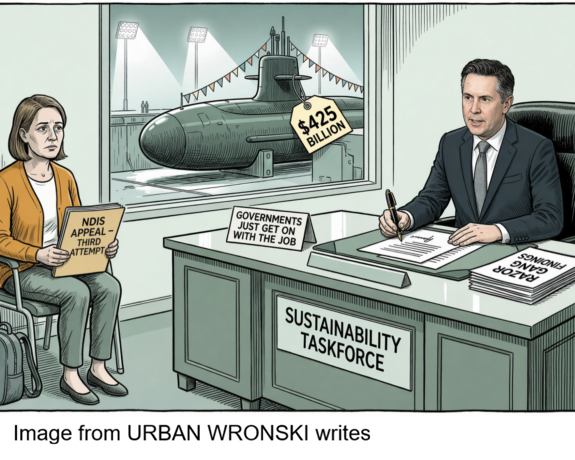

PETITION – To: Prime Minister Anthony Albanese and the Australian Labor Government
Chernobyl: The Lost Tapes – A good documentary on Chernobyl on SBS available On Demand for the next 3 weeks– https://www.sbs.com.au/ondemand/tv-program/chernobyl-the-lost-tapes/235274195556
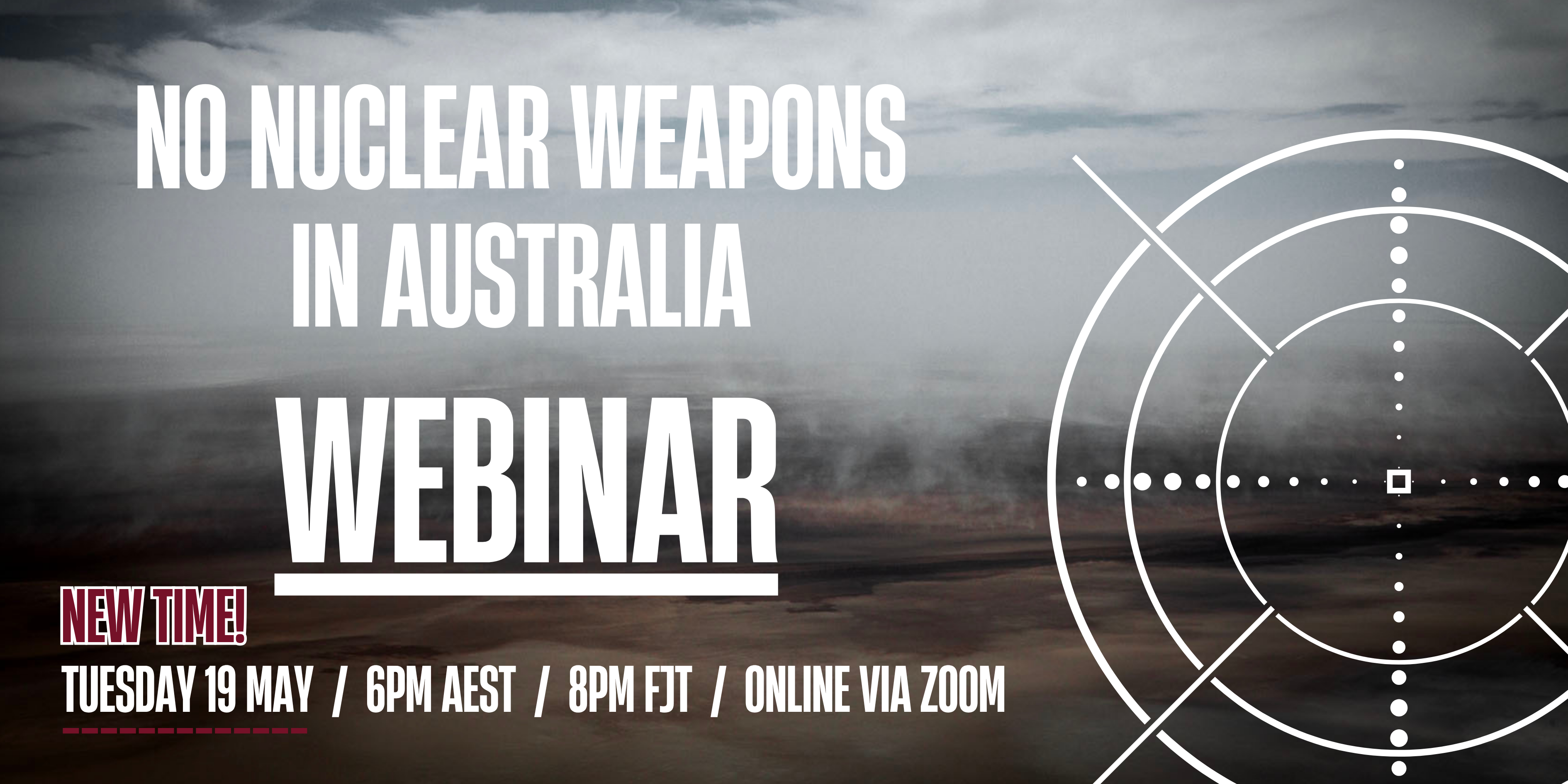
19 May – Webinar- Webinar: No Nuclear Weapons in Australia
Start: 2026-05-19 18:00:00 UTC Canberra, Melbourne, Sydney (GMT+10:00)
End: 2026-05-19 19:30:00 UTC Canberra, Melbourne, Sydney (GMT+10:00)
20 May – Webinar – The dangerous world of AUKUS, US, military occupation and suppression of dissent

National Webinar, 20th May, 2026, 6.30pm AEST. Confronting laws restricting/suppressing protest speech and action
Speakers: Former Sen. Rex Patrick, Lawyer Nick Hanna ,Arthur Rorris ,Jorgen Doyle, Sen David Shoebbridge,
Facilitator Kelley Tranter.

of the week – Australians for War Powers Reform (AWPR)
To see nuclear-related stories in greater depth and intensity
 Antinuclear