Epidemiology – research on baby teeth gives valuable information on health effects of ionising radiation

Baby Teeth Hold Key to Illinois, Michigan Nuclear Reactor Radiation Exposure – Epidemiologist Joseph Mangano – NH #538 http://nuclearhotseat.com/2021/10/14/illinois-michigan-nuclear-reactor-radiation-studied-in-baby-teeth/?fbclid=IwAR268TYnERFMNoEuCYGlk2xbsH_-sq0XESbzxOuMmaEdeDB44TzG4s2CPfg
by Libbe HaLevy | Oct 14, 2021 |
Listen to This Week’s Featured Interview:
Baby teeth were studied in the 1950’s and 60’s to determine childhood exposure to radioactive strontium 90 from atmospheric nuclear bomb tests. The results from what was called theTooth Fairy Project led to U.S. President Kennedy and Russia’s Premier Khrushchev creating the 1963 Treaty Banning Nuclear Weapon Tests in the Atmosphere, in Outer Space and Under Water, known as the Atmospheric Nuclear Test Ban Treaty. Now, a cache of more than 100,000 teeth not used in that initial study has just recently been discovered. These teeth will be compared with baby teeth from communities in Illinois and Michigan near nuclear reactors. The more recent teeth are being collected now by epidemiologist Joseph Mangano, the Executive Director of the Radiation and Public Health Project (RPHP) to determine through data analysis if radiation releases from nuclear reactors pose health problem.
Mangano is a health researcher who has served RPHP since 1989. He is author or co-author of 33 medical journal articles on radiation health, and is the author of the books Low Level Radiation and Immune System Damage: An Atomic Era Legacy (1998) and Radioactive Baby Teeth: The Cancer Link (2008). He managed the study of Strontium-90 in baby teeth, and now manages the citizen-based radiation monitoring programs near the Indian Point NY and Oyster Creek NJ nuclear plants.
Australia’s nuclear submarines are looking more and more like a mirage.

NUCLEAR SUBMARINES LOOK MORE AND MORE LIKE A MIRAGE, AU Manufacturing, Analysis by Peter Roberts, 18 October 21,
Admiral Mead first implied (by wanting to take a question on notice) that he had no idea of schedule, then that the boats were to be in the water by the end of next decade.
Mead then implied he had no idea of whether advice on cost was given to the government, then that advice had been ‘provided by the department to government over many months’, and then that ‘our projected cost forward is that it will be significant and it will be more than Attack’.
The upshot is that Australia entered into a process that will lead to the expenditure of more than $90 billion with only the vaguest idea of how much they would cost or when they could be delivered.
The more time passes since the Prime Minister’s sudden cancelling of our order for French submarines in favour of US or British nuclear ones, the more obvious it is that Australia will never actually acquire them.
Not only that, the more time passes the more obvious it is that even if we did buy nuclear boats, they are unlikely to be built in Adelaide. Or if Adelaide, somehow, had some involvement there would be bugger all genuine Australian industrial content in the things.
This became clearer on Friday in the Senate economic references committee when South Australian Senator Rex Patrick – himself a former submariner – closely questioned the Royal Australian Navy Commander Admiral Jonathan Mead about the N-submarine decision.
As Patrick put it later: ‘Our Collins class subs will still be needed in 2050.
“By that time the last Collins boat, HMAS Rankin, will be unmaintainable and a steel coffin in combat.”
The lack of clarity from the Navy is mirrored by other evidence given – our nuclear science agency and regulator gave very few details on what their role will be in monitoring and regulating any new nuclear propelled submarines, according to Senator Kim Carr.
But it is the likely lack of science and industry involvement in this massive expenditure which is really worrying.
Defence media has been full of speculative stories about whether any submarines would be built in Adelaide, whether Australia might lease submarines from the US, and whether these might be second-hand submarines.
Who would crew and maintain these vessels, who would provide for basic safety given that N-reactors are supposedly going to be fitted to submarines in Adelaide, and whether they would be under Australia’s sovereign control remains a mystery since we will know nothing about the nuclear propulsion systems on board.
Australia acquiring N-submarines under these circumstances is about as useful as giving Borneo head-hunters a F-35 fighter jet………………. https://www.aumanufacturing.com.au/nuclear-submarines-look-more-and-more-like-a-mirage
US nuclear submarine accident sparks safety fears in South China Sea
US nuclear submarine accident sparks safety fears in South China Sea https://www.scmp.com/news/china/military/article/3152181/us-nuclear-submarine-accident-sparks-safety-fears-south-china?module=perpetual_scroll&pgtype=article&campaign=3152181Busy waterway’s complex underwater terrain and shipping litter make it a challenging environment for the giant vessels
Collision has also highlighted the difficulties in safely disposing of the reactors from decommissioned subs, with no agreed guidelines, experts say. Minnie Chan 16 Oct, 2021
The damage to a US nuclear attack submarine which collided with a mystery object in the South China Sea earlier this month has raised concerns about their operational safety, as well as what happens to damaged and decommissioned nuclear reactors.
Defence experts have warned that nuclear submarines – among the world’s deadliest weapons – are also vulnerable in the event of an underwater accident causing a nuclear leak, regardless of whether they are general-purpose attack subs (SSN) or platforms for the launch of ballistic missiles (SSBN).
AUKUS and the Philippines – sleepwalking into military-nuclear entanglements
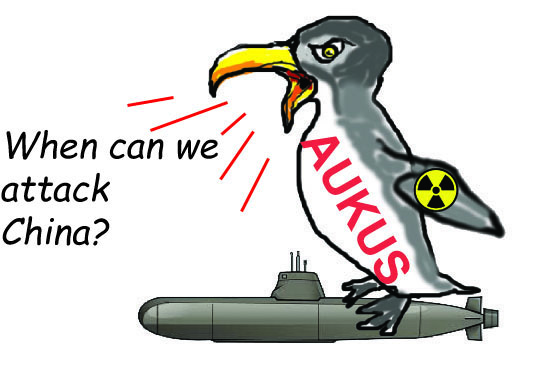
From peaceful, nuclear-free Asean to battle-ready Indo-Pacific? Manila Times, By Dan Steinbock, October 18, 2021As the Duterte era is gradually ending, new arms races and nuclear proliferation cast a dark shadow over Southeast Asia. The Philippines may be sleepwalking into military-nuclear entanglements.
ACCORDING to the new trilateral security pact between the United States, the United Kingdom and Australia (Aukus), Washington and London will “help” Canberra to develop and deploy nuclear-powered submarines.
The highly controversial $66-billion deal is expected to trigger arms races and nuclear proliferation in Asia. It violates the Southeast Asian Nuclear-Weapon-Free Zone Treaty (SEANWFZ, 1995), effective since 1997. It would seem to violate the Philippine Constitution. And it is strongly opposed by China.
Yet, right after the Aukus, when Asean began to build consensus on the nuclear pact, Philippine Foreign Affairs Secretary Teodoro Locsin Jr. welcomed the pact.
PH policies, Asean concerns
According to Locsin, the Philippines “welcomes Australia’s decision to establish” the Aukus. And he added: “Asean member states, singly and collectively, do not possess the military wherewithal to maintain peace and security in Southeast Asia.”
According to this logic, Asean is irrelevant in matters of regional peace and security and therefore each Asean should align with one or another major military power, irrespective of collective consequences.
Such logic shuns and could derail, inadvertently or purposefully, the ongoing work by the Asean and China on the Code of Conduct for the South China Sea by 2022. Most importantly, the logic opens the door to the nuclearization of the region at the expense of the SEANWFZ treaty and the aspirations of the Asean community. That’s why Malaysia’s veteran statesman Mahathir Mohamad blasted the Aukus statement: “You have escalated the threat.”
The first reaction of both Malaysia and Indonesia was to warn of an impending arms race unleashed by such a pact. Australia’s nuclear decision prompted the Indonesian foreign ministry’s official note that it was “deeply concerned over the continuing arms race and power projection in the region.” So, why did Locsin choose to break ranks with the Asean?
ADRi: China the issue of 2022
The plan to drag the Philippines into the Indo-Pacific containment front against China seems to have evolved in the mid-2010s, but fell apart with the Duterte election triumph and the meltdown of the Liberal Party.
To avoid a déjà vu, former Foreign Affairs secretary Albert del Rosario recently called on the Philippines to choose a leader who will reverse President Rodrigo Duterte‘s policy of “loving and embracing” China after the “’22 polls.”
In this quest, a key supportive role belongs to the Stratbase Albert del Rosario Institute (ADRi), embedded with US business and national security interests. Through its board members and executives, Rosario’s ADRi is joined with its parent, Stratbase, an “advisory and research consultancy,” and Bower Group Asia led by Ernest Z. Bower 4th. Stratbase is the Philippine partner of Bower Group Asia.
Until the 2000s, Bower led the US-Asean Business Council. He is an ADRi board member and Southeast Asia advisor at the Center for Strategic and International Studies (CSIS), a leading US think-tank close to the State Department, Pentagon, defense contractors and Wall Street.
The maritime dispute with China, said ADRi’s president Victor Manhit, is what “we will make an issue in the 2022 elections.” Due to interlocking leaderships, Manhit himself heads Stratbase and Bower Asia Group‘s Philippine branch.
The goals go back to the Benigno “Noynoy” Aquino 3rd government (2010 to 2016).
As the Duterte era is gradually ending, new arms races and nuclear proliferation cast a dark shadow over Southeast Asia. The Philippines may be sleepwalking into military-nuclear entanglements.
ACCORDING to the new trilateral security pact between the United States, the United Kingdom and Australia (Aukus), Washington and London will “help” Canberra to develop and deploy nuclear-powered submarines.
The highly controversial $66-billion deal is expected to trigger arms races and nuclear proliferation in Asia. It violates the Southeast Asian Nuclear-Weapon-Free Zone Treaty (SEANWFZ, 1995), effective since 1997. It would seem to violate the Philippine Constitution. And it is strongly opposed by China.
Yet, right after the Aukus, when Asean began to build consensus on the nuclear pact, Philippine Foreign Affairs Secretary Teodoro Locsin Jr. welcomed the pact.
Such logic shuns and could derail, inadvertently or purposefully, the ongoing work by the Asean and China on the Code of Conduct for the South China Sea by 2022. Most importantly, the logic opens the door to the nuclearization of the region at the expense of the SEANWFZ treaty and the aspirations of the Asean community. That’s why Malaysia’s veteran statesman Mahathir Mohamad blasted the Aukus statement: “You have escalated the threat.”
The first reaction of both Malaysia and Indonesia was to warn of an impending arms race unleashed by such a pact. Australia’s nuclear decision prompted the Indonesian foreign ministry’s official note that it was “deeply concerned over the continuing arms race and power projection in the region.” So, why did Locsin choose to break ranks with the Asean?…………..
Conflicts of interest, military entanglements…………..
…….. the Aukus pact does contribute to the ongoing arms races in Southeast Asia. It will foster nuclear proliferation in the region. It violates the goals of the nuclear-free Southeast Asia treaty. It is not in line with the Philippine Constitution.
President Duterte has pledged to end the bilateral military deal with Washington if US nuclear weapons are found in the Philippines. But his term will end by next summer.
Obviously, Australia, the US and UK seek to calm Asean members, arguing that nuclear weapons are not really for military purposes. But since 1945, assurances have not been reliable in nuclear matters. During the Cold War, US nuclear warheads were secretly stockpiled in the Philippines. Moreover, in the 1965 Philippine Sea A-4 crash, a US Skyhawk attack aircraft fell into the sea off Japan. Coming from the US Naval Base in Subic Bay, it was carrying a nuclear weapon with 80 times the blast power of the Hiroshima explosion.
It wasn’t until 1989 that the Pentagon disclosed the loss of the 1-megaton hydrogen bomb.
New policy? Two policies? No policy?
Today, the destructive power of these weapons is far greater, as stressed by the International Campaign to Abolish Nuclear Weapons (ICAN). In January, the Philippines ratified the ICAN’s legally binding Treaty on the Prohibition of Nuclear Weapons (TPNW). On May 19, Locsin stated that the Philippines welcomes the Aukus nuclear pact.
Only two days later, Locsin reaffirmed the Philippines’ “principled policy and commitment toward the complete prohibition of nuclear weapons as enshrined in the relevant provisions of the Philippine Constitution and the Treaty.”
The Philippines’ principled policy is crystal clear: The country definitely welcomes nuclear proliferation in Southeast Asia. And the country is absolutely committed against nuclear-free Southeast Asia. Where will that “principled policy and commitment” take us after the 2022 election?
 |
‘It makes us sick’: remote NT community wants answers about uranium in its water supply
‘It makes us sick’: remote NT community wants answers about uranium in its water supply, Laramba’s Indigenous residents fear they are at risk of long-term illness and say they need to know who is responsible for fixing the problem, Guardian, by Royce Kurmelovs and Isabella Moore, Mon 18 Oct 2021,
Jack Cool is looking to hitch a lift out of town.
The 71-year-old former stockman has lived in Laramba, a remote Indigenous community in the Northern Territory, for most of his life
Since his partner, Jennifer, 57, and his youngest daughter, Petrina, 35, started kidney dialysis at the end of last year, he has been trying to make the two-and-a-half hour trip south into Alice Springs whenever he can.
Cool, who also takes medication for kidney issues, says he doesn’t know why this has happened to his family but he thinks it has something to do with the water.
“When we drink the water it makes us sick,” he says.
Problems with Laramba’s water supply have been known since at least 2008 but the scale of the issue was not revealed until 2018, when testing by the government-owned utility company Power and Water Corporation (PWC) found drinking water in the community of 350 people was contaminated with concentrations of uranium at 0.046mg/L.
That is nearly three times the limit of 0.017mg/L recommended in the Australian drinking water guidelines published by the National Health and Medical Research Council.
Follow-up testing in 2020 found the problem was getting worse as uranium concentrations – which occur naturally in the area – had risen to 0.052mg/L, and the water also contained contaminants such as nitrate and silica.
A stream of conflicting advice
Prof Paul Lawton, a kidney specialist with the Menzies School of Health Research who has been working in the Territory since 1999, says there is no good evidence to say for sure whether the water at Laramba is safe to drink…….
Assoc Prof Tilman Ruff from the Nossal Institute for Global Health at the University of Melbourne says uranium contamination also delivers “relatively low but relatively frequent doses” of radiation
“The overall consequences from a radioactive point of view is that this will widely dispose in the body and organs, and will contribute to a long-term risk of cancer,” Ruff says.
Because children are particularly vulnerable, with girls 40% more likely than boys to be affected over their lifetime, Ruff says there is “no good amount of radiation”.
Though there are still many unknowns, authorities elsewhere have addressed similar situations by acting with caution. In Eton, Queensland, a bore supplying the community was turned off when concerning concentrations of uranium were found in the water supply……….
A permanent holding pattern’
Laramba is just one of many among the 72 remote Indigenous communities in the Territory whose water is contaminated with bacteria or heavy metals.
This year the NT government promised $28m over four years to find “tailored” solutions for 10 towns, including Laramba, after a campaign by four land councils for laws to guarantee safe drinking water across the territory.
Asked what was being done to fix the problem, a spokesperson for PWC directed Guardian Australia to sections of the company’s latest drinking water quality report that discuss pilot programs for “new and emerging” technologies to “potentially” clean water of uranium and other heavy metals……….
What little information that is available has filtered through in the media or highly technical language that many people, for whom English is a second language, can’t understand.
In the meantime both men say several people, including some in their own families, have been diagnosed with kidney problems or cancer.
“We have to drink, so we are drinking it,” Hagan says. “We don’t know anything about $28m. We’re still here drinking the same water. Nothing’s changed.”
The co-director of the Environment Centre NT, Kirsty Howey, says communities such as Laramba have been left in a “permanent holding pattern” and the lack of engagement is a “feature of a flawed system”.
Boiling point
Andy Attack, a non-Indigenous man who runs the Laramba general store, says in the three years he has lived there he has noticed a change in the community.
“People here are just so respectful and polite and calm,” he says. “The water is something that makes them really angry, and they don’t like being angry. It’s not nice seeing them like that.”
Attack says the first thing he was told when he moved to Laramba was not to drink the water. He installed reverse osmosis filters normally used in hospitals, which cost $130 a year to maintain, on the taps in his house.
Those who can’t afford such sums must either rely on rainwater or buy expensive 10L casks. ……….https://www.theguardian.com/australia-news/2021/oct/18/uranium-in-the-water-remote-nt-community-wants-answers-about-safety
Keep space for peace – opposition to New Zealand’s space industry and its military connections
NZ’s $1.7 billion space industry rockets away, but a law review sparks more debate about controversial military payloads, Stuff Amanda Cropp, Oct 17 2021 ”……………….. how far and how fast the New Zealand space industry has come since Rocket Lab’s first test launch blasted off in 2017 from its Māhia Peninsula launch site, with millions being invested by the Government and the private sector.A review of the Outer Space and High-Altitude Activities Act that regulates launches and payloads received only 17 responses last month, but consultation on the “peaceful, sustainable and responsible” use of space, delayed until next year because of Covid-19, is likely to get a much more heated reception.
Peace groups, the Green Party and members of the Māhia community have already been vocal about their opposition to Rocket Lab’s military work in the wake of the controversial Gunsmoke-J satellite it launched for the United States Army Space and Missile Defence Co………….
…… The Outer Space and High-Altitude Activities Act outlaws payloads that contribute to nuclear weapons programmes or capabilities, harm, interfere with or destroy other spacecraft or systems on earth; support or enable specific defence, security or intelligence operations that are contrary to government policy, or are likely to cause serious or irreversible harm to the environment…………….
Space for Peace
In March, 17 peace groups wrote an open letter to Prime Minister Jacinda Ardern saying the Gunsmoke-J launch appeared to breach both the New Zealand Nuclear Free Zone, Disarmament and Arms Control Act and the Cabinet-approved to payload assessments.
They argued that because US military strategy was increasingly using satellite systems to control and direct nuclear, as well as non-nuclear, weapons, it was extremely difficult to determine whether any given satellite was contributing to supporting this weapons system.
……… In mid-September the Anti-Bases Campaign had about 100 attendees at a Keep Space for Peace webinar, and organiser Murray Horton says they were primarily concerned Rocket Lab’s Auckland and Māhia operations effectively constituted a US base in New Zealand, albeit a privately owned one.
Sonya Smith of the Māhia’s Rocket Lab Monitoring Group says they want future regulations to include a clause outlawing payloads that will “assist in the operation of a weapon”.
Professor Kevin Clements is a member of the Peace Foundation International Affairs and Disarmament Committee, which was a signatory to the letter to the prime minister, and he does not believe MBIE is the appropriate agency to vet payloads.
“They have a vested interest in seeing [space] is a thriving industry bringing dollars into the New Zealand economy. This needs to be handled by the prime minister’s department.”…….. https://www.stuff.co.nz/business/126560061/nzs-17-billion-space-industry-rockets-away-but-a-law-review-sparks-more-debate-about-controversial-military-payloads
Australia could easily meet a doubling of its 2030 emissions targets. Here’s how — RenewEconomy

We don’t need new taxes, hydrogen, CCS or a “gas-led recovery”. But we do need the federal government to either get involved or get out of the way. The post Australia could easily meet a doubling of its 2030 emissions targets. Here’s how appeared first on RenewEconomy.
Australia could easily meet a doubling of its 2030 emissions targets. Here’s how — RenewEconomy
FRV steps up Australia solar and battery plans, with new investment partner — RenewEconomy

Canadian pension fund takes 49% stake in FRV Australia, including huge development pipeline of solar and battery storage projects. The post FRV steps up Australia solar and battery plans, with new investment partner appeared first on RenewEconomy.
FRV steps up Australia solar and battery plans, with new investment partner — RenewEconomy
Senate committee endorses offshore wind bill, in hope it can help push out coal — RenewEconomy

Senate committee endorses offshore wind bill, a key stepping stone to several huge project proposals that could help kick coal out of system. The post Senate committee endorses offshore wind bill, in hope it can help push out coal appeared first on RenewEconomy.
Senate committee endorses offshore wind bill, in hope it can help push out coal — RenewEconomy
Solar powers more than half of Australia’s grid for first time, coal at record low — RenewEconomy

As Nationals MPs met to see if they could make coal great again, solar delivered more than half of grid demand for first time, and coal output hit record low. The post Solar powers more than half of Australia’s grid for first time, coal at record low appeared first on RenewEconomy.
Solar powers more than half of Australia’s grid for first time, coal at record low — RenewEconomy
Terra Power’s Natrium nuclear reactor will be an economic lemon

This host of factors makes it reasonably certain that the Natrium will not be economically competitive.
In other words, even if has no technical problems, it will be an economic lemon.
Ramana, Makhijani: Look before you leap on nuclear https://trib.com/opinion/columns/ramana-makhijani-look-before-you-leap-on-nuclear/article_4508639b-d7e6-50df-b305-07c929de40ed.html, Oct 16, 2021
The Cowboy State is weighing plans to host a multi-billion dollar “demonstration” nuclear power plant — TerraPower’s Natrium reactor. The long history of similar nuclear reactors, dating back to 1951, indicates that Wyoming is likely to be left with a nuclear lemon on its hands.
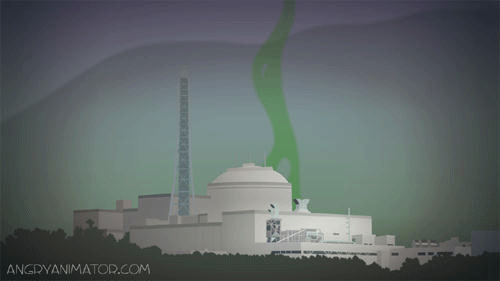
The Natrium reactor design, which uses molten sodium as a coolant (water is used in most existing commercial nuclear reactors), is likely to be problematic. Sodium reacts violently with water and burns if exposed to air, a serious vulnerability. A sodium fire, within a few months of the reactor starting to generate power, led to Japan’s Monju [at left] demonstration reactor being shut down.
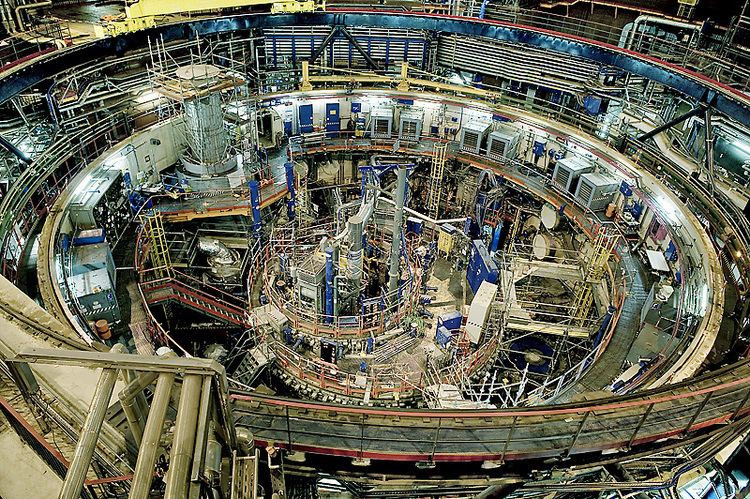
At 1,200 megawatts, the French Superphénix was the largest sodium-cooled reactor, designed to demonstrate commercial feasibility. Plagued by operational problems, including a major sodium leak, it was shut down in 1998 after 14 years, having operated at an average capacity of under 7 percent compared to the 80 to 90 percent required for commercial operation. Other sodium-cooled reactors have also experienced leaks, which are very difficult to prevent because of chemical interactions between sodium and the stainless steel used in various reactor components. Finally, sodium, being opaque, makes reactor maintenance and repairs notoriously difficult.
Sodium-cooled reactors can experience rapid and hard-to-control power surges. Under severe conditions, a runaway chain reaction can even result in an explosion. Such a runaway reaction was the central cause of the 1986 Chernobyl reactor explosion, though that was a reactor of a different design. Following Chernobyl, Germany’s Kalkar sodium-cooled reactor, about the same size as the proposed Natrium, was abandoned without ever being commissioned, though it was complete.
All these technical and safety challenges naturally drive up the costs of sodium-cooled reactors, making them significantly more expensive than conventional nuclear reactors. More than $100 billion, in today’s dollars, has been spent worldwide in the attempt to commercialize essentially this design and associated technologies, to no avail.
The Natrium design, being even more expensive than present-day reactors, will therefore be more expensive than practically every other form of electricity generation. The Wall Street firm, Lazard, estimates that electricity from new nuclear plants is several times more than the costs at utility-scale solar and wind power plants. Further, the difference has been increasing.
To this bleak picture, Terrapower has added another economically problematic feature: molten salt storage to allow its electric output to vary. Terrapower hopes this feature will help it integrate better into an electricity grid that has more variable electricity sources, notably wind and solar.
Molten salt storage would be novel in a nuclear reactor, but it is used in concentrating solar power projects, where it can cost an additional $2,000 per kilowatt of capacity. At that rate, it could add a billion dollars to the Natrium project.
This host of factors makes it reasonably certain that the Natrium will not be economically competitive. In other words, even if has no technical problems, it will be an economic lemon.
To top it all off, the proposed Wyoming TerraPower demonstration project depends on government funds. Last year, the Department of Energy awarded TerraPower $80 million in initial taxpayer funding; this may increase $1.6 billion over seven years, “subject to the availability of future appropriations” and Terrapower coming up with matching funds.
Despite government support, private capital has recently abandoned a more traditional project, the mPower small modular reactor, resulting in its termination in 2017. And it was Congress that refused to appropriate more money for the sodium-cooled reactor proposed for Clinch River, Tennessee when its costs skyrocketed, thereby ending the project in 1983.
A much harder look at the facts is in order, lest Wyoming add to the total of many cancelled nuclear projects and abandoned construction sites. Of course, the Natrium lemon might be made into lemonade by converting it to an amusement park if it is never switched on, like the Kalkar reactor, now refashioned into Wunderland Kalkar, an amusement park in Germany, near the border with the Netherlands. For energy, the state might look to its natural heritage – its wind power potential is greater than the combined generation of all 94 operating U.S. nuclear reactors put together, which are on average, about three times the size of Natrium.
M. V. Ramana is Professor and Simons Chair in Disarmament, Global and Human Security and the Director of the Liu Institute for Global Issues at the School of Public Policy and Global Affairs, University of British Columbia. Dr. Ramana holds a Ph.D. in Physics from Boston University.
Arjun Makhijani, President of the Institute for Energy and Environmental Research, holds a Ph.D. in engineering (nuclear fusion) from the University of California at Berkeley.
Rowan Ramsey, Federal Member for nuclear waste dumping, ignores HUGE PORT AUGUSTA RENEWABLE ENERGY PARK (PAREP)
Kazzi Jai No nuclear waste dump anywhere in South Australia, 17 Oct 21, You CANNOT MISS the HUGE PORT AUGUSTA RENEWABLE ENERGY PARK (PAREP) just outside Port Augusta on the approach from Adelaide on Highway 1!
Why is Rowan Ramsey so quiet over this?
It is ALL HAPPENING in his Federal Seat of Grey – and NOT ONE PEEP OUT OF HIM!!!!
NOTHING!!
Maybe he really is ONLY the Federal Member for Council Area of Kimba with EYES ONLY for a NATIONAL NUCLEAR DUMP for Kimba after all!!
Heads up Rowan! – Kimba is NOT AN ISLAND!
You drag Kimba into being a National Nuclear Dump you drag the REST of South Australia along with it!!
And in case you don’t read the article – BHP Olympic Dam/Roxby Downs is and always has been a copper mine first and foremost. The uranium contaminates the copper and they can’t sell the copper contaminated! Gold, Silver and Uranium are really just sidelines. And copper is needed more than ever for renewable energy technology.
Committing to using Renewable Energy from the PORT AUGUSTA RENEWABLE ENERGY PARK (PAREP) by BHP actually fits like a hand in glove.
|
https://www.facebook.com/groups/1314655315214929
|
America’s paralysis on nuclear waste, as radioactive trash continues to accumulate.

GAO urges Congress to tackle nuclear waste storage impasse
‘The ghost of Yucca still stalks the policy debate and … there hasn’t been enough sustained pressure to find solutions’ By TERI SFORZA | tsforza@scng.com | Orange County Register, October 17, 2021 Who’s to blame for the paralysis that strands millions of pounds of radioactive waste at reactor sites all over the nation, and will cost taxpayers some $40 billion — and perhaps a lot more?
Congress, the U.S. Government Accountability Office says. And Congress must fix it.
In a dispassionate but merciless examination of the string of follies that has put the federal government nearly a quarter-century behind accepting waste from commercial reactors like the San Onofre Nuclear Generating Station — where 3.6 million pounds of waste must sit for years or possibly decades — the GAO chronicled the weeds that have choked the effort, then hacked through them to clear a path forward.
“Commercial spent nuclear fuel is extremely dangerous if not managed properly,” the report said. “About 86,000 metric tons of this fuel is stored on-site at 75 operating or shutdown nuclear power plants in 33 states, an amount that grows by about 2,000 metric tons each year.”
The radioisotopes produced in a reactor can remain hazardous from a few days to many thousands of years, the GAO said.
“The longer it takes the federal government to resolve the current impasse and develop a solution for the permanent disposal of commercial spent nuclear fuel, the greater the potential risk to the environment and public health, or of security incidents associated with temporary on-site storage,” the report said. “(T)he safety of long-term dry cask storage is unknown, and the risks, such as environmental and health risks, of on-site storage increase the longer the fuel is stored there.”
Attempted sabotage and theft of radioactive material are also potential security risks, the report said…………….
How to fix
Obama assembled a Blue Ribbon Commission that laid out a path forward in 2012, and it’s largely the path that the GAO urges lawmakers to embrace now. It recommends that Congress:
- Amend the Nuclear Waste Policy Act to allow the DOE to implement a new, consent-based process for siting temporary storage and permanent geologic disposal facilities.
- Restructure the Nuclear Waste Fund, which has about $43 billion in it to ensure reliable and sufficient funding.
- Create an independent board or similar mechanism to provide political insulation for a nuclear waste disposal program, as well as continuity of leadership.
- Direct DOE to develop a temporary waste management strategy that includes plans for the transportation, interim storage and permanent disposal of spent nuclear fuel.
- It’s not as if officials don’t know what to do with nuclear waste. In 1957, the National Academy of Sciences concluded that disposal in a geologic formation was the safest way to isolate nuclear waste. Myriad studies in the decades since have reached the same conclusion………………………….. https://www.ocregister.com/2021/10/17/gao-urges-congress-to-tackle-nuclear-waste-storage-impasse/
Demonising China is unhelpful while encouraging China to participate in Cop26
As Britain prepares to host the Cop26 climate conference in Glasgow next month, it is pursuing two contradictory policies that undermine its chances of success. On the one hand, it is seeking a unified global response to the climate crisis with nations agreeing to targets for the reduction of their coal and petroleum emissions.
But at the same time, it has joined the US in escalating a new cold war directed at confronting China and Russia at every
turn. The two policies have polar opposite objectives in trying to persuade China, responsible for 27 per cent of global carbon emissions, to cut back on building new coal-fuelled power stations, but at the same time demonising China as a pariah state with whom political, commercial and intellectual contacts should be as limited as possible.
Independent 15th Oct 2021
https://www.independent.co.uk/climate-change/opinion/china-russia-climate-cop26-b1939164.html
October 17 Energy News — geoharvey

Opinion: ¶ “Electrification And Energy Reduction Go Hand-In-Hand To Reduce Household Impacts” • The status quo of getting energy from natural gas, water service, and even sewer service is baked into many if not most homes, and it’s hard for the owner (and harder for a renter) to get out of that rut. Here, I […]
October 17 Energy News — geoharvey
1 This month.


PETITION – To: Prime Minister Anthony Albanese and the Australian Labor Government
Chernobyl: The Lost Tapes – A good documentary on Chernobyl on SBS available On Demand for the next 3 weeks– https://www.sbs.com.au/ondemand/tv-program/chernobyl-the-lost-tapes/235274195556
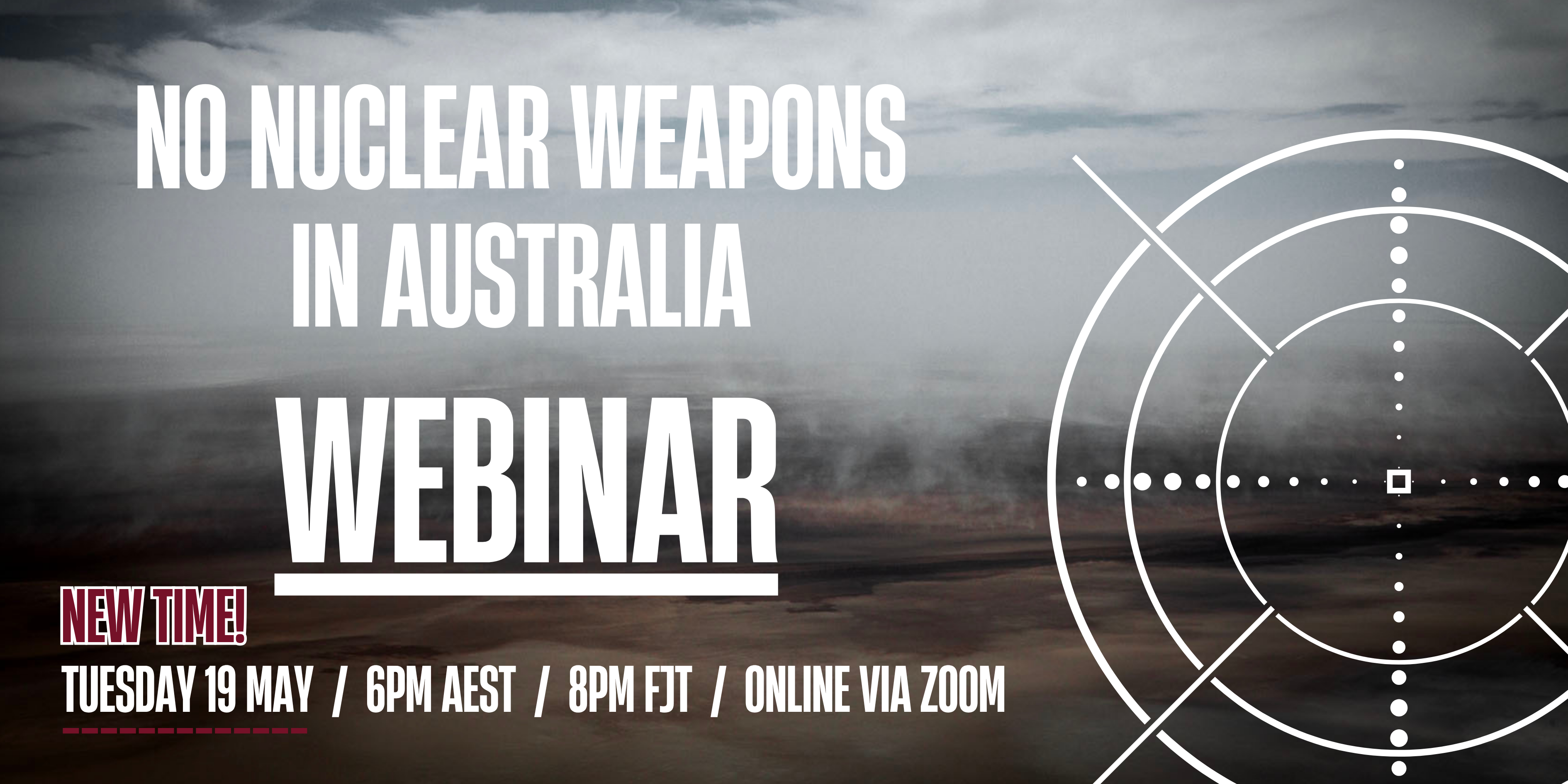
19 May – Webinar- Webinar: No Nuclear Weapons in Australia
Start: 2026-05-19 18:00:00 UTC Canberra, Melbourne, Sydney (GMT+10:00)
End: 2026-05-19 19:30:00 UTC Canberra, Melbourne, Sydney (GMT+10:00)
20 May – Webinar – The dangerous world of AUKUS, US, military occupation and suppression of dissent

National Webinar, 20th May, 2026, 6.30pm AEST. Confronting laws restricting/suppressing protest speech and action
Speakers: Former Sen. Rex Patrick, Lawyer Nick Hanna ,Arthur Rorris ,Jorgen Doyle, Sen David Shoebbridge,
Facilitator Kelley Tranter.

of the week – Australians for War Powers Reform (AWPR)
To see nuclear-related stories in greater depth and intensity
 Antinuclear