This week’s news – Australia and more
As the Afghanistan crisis continues, many writers consider the underlying causes of the USA’s prolonged wars, and reveal the staggering profits made by the weapons-making corporations. From the corporate point of view, the 20 year war has been a great success.
Coronavirus:more than 212.1 million cases of COVID-19 The reported global death toll stood at more than 4.4 million. The Delta variant puts a strain on health systems. Several countries struggle, with lockdowns needed – e.g.in Vietnam, Australia, New Zealand. Case numbers rise in France. Debates go on about child vaccination, mandatory vaccination, and booster doses of vaccine.
Climate. Global heating and its effects, extreme weather events keep on. The IPCC Report finds we will cross the 1.5C warming danger line in the 2030’s, pretty well no matter what we do.
NUCLEAR, Very quietly indeed – you could easily miss this, – come two positive events for the nuclear-free movement; exclusion of nuclear from the Green Zone at COP26, and USA’s nuclear regulator rejecting the push to weaken radiation safety standards.
Some bits of good news: What went right this week: how we saved Earth before, plus more positive news, Australia’s ‘healing journey’.
AUSTRALIA.
Australia’s participation in America’s wars. Was it worth it? Little chance for genuine community consultation on Napandee nuclear waste dump decision.
Kimberley Land Council: New heritage bill is skewed to the mining industry.. Young people rebel on climate. Australian government moves to limit charities’ ability to campaign during election period
INTERNATIONAL
USA’s Nuclear Regulatory Commission affirms that a little ionising radiation may be bad for health.
Nuclear lobby miserable, but Friends of the Earth relieved, that nuclear industry is excluded from the Green Zone at COP26 Climate Summit.
The tie between climate change and nuclear weapons.
Action on climate change is stalled by unwise spending on small nuclear reactors.
Frozen conflicts and forever wars. WikiLeaks and the Crimes of the West in Afghanistan.
Renewables are beating nuclear,
Bill Gates and the corporates behind the fake solutions to climate change. Arnie Gundersen writes to Bill Gates – about public funding for Gates’ false Natrium nuclear solution to climate change.
Little chance for genuine community consultation on Napandee nuclear waste dump decision

MY COMMENTS
What is difficult about these legislative provisions is to know what they mean and why are they there
They are probably meaningless for it is only an invitation with no result to a very restricted group of persons.
I should have thought that if you had a right or interest in the nominated land then you would have been included in the formal nomination
The only persons with a right or interest may be Aboriginal peoples under customary or ancestral ownership
What’s the betting no one in Pitt’s group will have a proper answer or even knows what it means as it is extremely poor drafting
NATIONAL RADIOACTIVE WASTE MANAGEMENT ACT 2012 as amended in 2021
There appear to be only very limited rights for community consultation underthe National Radioactive Waste Management Act 2012 as recently amended despite statements to the contrary
The problem under subsections (5) and (6) of section 10 of this legislation – and replicated for a subsequent situation by subsections (2) and (3) of section 18 – is that there is reference to only persons with a right or interest in the land
Regrettably this is rather vague and on black letter law extremely narrow in its context – what is the right or interest in the land ? with whom and how is the consultation process started ?
These provisions do not encompass or provide for the general community consultations claimed by virtue of the ultimate amendments to the legislation
In fact the community consultation process under the new legislation is extensively restrictive and does no credit to the senators claiming to have achieved a basis for considerable and comprehensive consultations before a ministerial declaration is made under the legislation.
It is certainly not the strong community consultation lauded as having beenachieved by the recently agreed amendments
Added to the seemingly lack of knowledge or simply ignorance of the technicalities and dangerous nature of nuclear waste and its proper management becomes unintentionally a rather toxic combination playing right into the current responsible minister’s hands.
It is unrealistic to rely on the progressive development of the facility for community consultations as obviously the minister will want to rush throughThe the facility’s establishment without any impediments or delays
Section 10(5) of original 2012 legislation reads
Division 4—Procedural fairness in relation to Minister’s declarations and
approvals
10 Procedural fairness in relation to Minister’s declarations and approvals
Section 10
USA’s Nuclear Regulatory Commission affirms that a little ionising radiation may be bad for health

Nuclear Regulatory Commission Affirms that a Little Radiation may be Bad for Health https://srswatch.org/nuclear-regulatory-commission-affirms-that-a-little-radiation-may-be-bad-for-health/?utm_source=rss&utm_medium=rss&utm_campaign=nuclear-regulatory-commission-affirms-that-a-little-radiation-may-be-bad-for-health SRS Watch 21 August 21 Amazingly, the NRC denies industry friendly petitions that claim “a little radiation is good for you.”
“Petition for Rulemaking; Denial: Linear No-Threshold Model and Standards for Protection Against Radiation”Nuclear Regulatory Commission, August 17, 2021
“The U.S. Nuclear Regulatory Commission (NRC) is denying three petitions for rulemaking (PRMs), submitted by Dr. Carol S. Marcus, Mr. Mark L. Miller, Certified Health Physicist, and Dr. Mohan Doss, et al. (collectively, the petitioners) in correspondence dated February 9, 2015, February 13, 2015, and February 24, 2015, respectively.
The petitioners request that the NRC amend its regulations based on what they assert is new science and evidence that contradicts the linear no-threshold (LNT) dose-effect model that serves as the basis for the NRC’s radiation protection regulations. The NRC docketed these petitions on February 20, 2015, February 27, 2015, and March 16, 2015, and assigned them Docket Numbers PRM-20-28, PRM-20-29, and PRM-20-30, respectively.
The NRC is denying the three petitions because they fail to present an adequate basis supporting the request to discontinue use of the LNT model. The NRC has determined that the LNT model continues to provide a sound regulatory basis for minimizing the risk of unnecessary radiation exposure to both members of the public and radiation workers. Therefore, the NRC will maintain the current dose limit requirements contained in its regulations.”NRC webpage: https://www.regulations.gov/document/NRC-2015-0057-0671
“It’s ridiculous:” Lack of leadership leaves Australia starved of capital for energy transition — RenewEconomy

Leading investment group says Australia is being starved of capital for the energy transition, and the regulatory bodies do not appear to know it. The post “It’s ridiculous:” Lack of leadership leaves Australia starved of capital for energy transition appeared first on RenewEconomy.
“It’s ridiculous:” Lack of leadership leaves Australia starved of capital for energy transition — RenewEconomy
“Massive role:” NSW to play match-maker to bring renewable hydrogen to industry — RenewEconomy

NSW government launches new platform to match-make renewable hydrogen producers and industry, sees “massive role” for new technology. The post “Massive role:” NSW to play match-maker to bring renewable hydrogen to industry appeared first on RenewEconomy.
“Massive role:” NSW to play match-maker to bring renewable hydrogen to industry — RenewEconomy
The American world-wide empire of military bases

American military bases overseas are now scattered across 81 countries, colonies, or territories on every continent except Antarctica. And while their total numbers may be down, their reach has only continued to expand.
As long as this count of 750 military bases in 81 places remains a reality, so, too, will U.S. wars. As succinctly put by David Vine in his latest book, The United States of War, ““Bases frequently beget wars, which can beget more bases, which can beget more wars, and so on.” ………..
New Bases, New Wars
Meanwhile, halfway around the world, thanks in part to a growing push for a Cold War-style “containment” of China, new bases are being constructed in the Pacific.
The All-American Base World August 19, 2021 As long as this current count of 750 military bases in 81 places remains a reality, so, too, will U.S. wars, writes Patterson Deppen. Consortium News By Patterson Deppen
TomDispatch.com ”………….. Having closed down hundreds of military bases and combat outposts in Afghanistan and Iraq, the Pentagon will now shift to an “advise-and-assist” role in Iraq. Meanwhile, its top leadership is now busy “pivoting” to Asia in pursuit of new geostrategic objectives primarily centered around “containing” China. As a result, in the Greater Middle East and significant parts of Africa, the U.S. will be trying to keep a far lower profile, while remaining militarily engaged through training programs and private contractors…………
I’ve just finished compiling a list of American military bases around the world, the most comprehensive possible at this moment from publicly available information. It should help make greater sense of what could prove to be a significant period of transition for the U.S. military.
Despite a modest overall decline in such bases, rest assured that the hundreds that remain will play a vital role in the continuation of some version of Washington’s forever wars and could also help facilitate a new Cold War with China.
According to my current count, our country still has more than 750 significant military bases implanted around the globe. And here’s the simple reality: unless they are, in the end, dismantled, America’s imperial role on this planet won’t end either, spelling disaster for this country in the years to come.
Tallying Up the ‘Bases of Empire’
I was tasked with compiling what we’ve (hopefully) called the “2021 U.S. Overseas Base Closure List” after reaching out to Leah Bolger, president of World BEYOND War. As part of a group known as the Overseas Base Realignment and Closure Coalition (OBRACC) committed to shutting down such bases, Bolger put me in contact with its co-founder David Vine, the author of the classic book on the subject, Base Nation: How U.S. Military Bases Abroad Harm America and the World.
Bolger, Vine and I then decided to put together just such a new list as a tool for focusing on future U.S. base closures around the world. In addition to providing the most comprehensive accounting of such overseas bases, our research also further confirms that the presence of even one in a country can contribute significantly to anti-American protests, environmental destruction, and ever greater costs for the American taxpayer.
Continue readingNo apology from France, as new report reveals the harm done to Pacific islands by atomic bomb tests
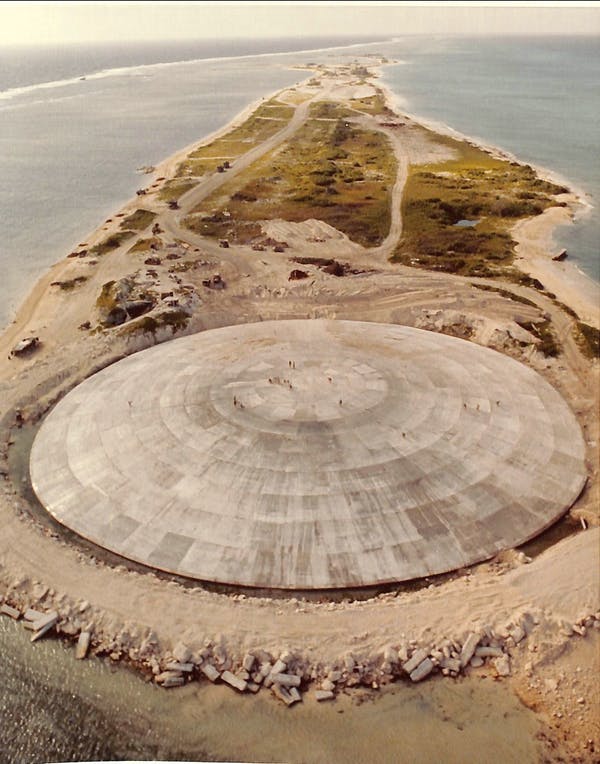
Although testing stopped more than two decades ago, its legacy lives on in French Polynesia’s politics, health, economy and environment,
“In every other Pacific Island, you have the same,” said Colombani, who also spent more than a decade working in French Polynesia’s tourism sector. “You have the postcard, but if you look beyond that, there’s something you cannot even imagine.”
New study on nuclear testing in French Polynesia reveals France’s ‘censorship and secrecy’ https://www.pri.org/stories/2021-08-06/new-study-nuclear-testing-french-polynesia-reveals-france-s-censorship-and
More than 400 claims have been filed against the French government for nuclear tests on French Polynesia between 1966 and 1996. Scientists say about 110,000 people have been affected by radioactive fallout. It’s been nearly two decades since France stopped testing nuclear weapons in French Polynesia.
But many across French Polynesia’s 118 islands and atolls across the central South Pacific were disappointed last month when President Emmanuel Macron, on his very first trip to the territory France has controlled since 1842, failed to apologize for the nearly 200 nuclear tests conducted between 1966 and 1996.
“Faced with dangerous powers in the concert of nations, I wish to say here that the nation owes a debt to French Polynesia,” Macron said in a July 27 speech. He went on to admit that the tests on the Mururoa and Fangataufa atolls were “not clean in any way” — but stopped short of an official apology.
Guillaume Colombani, who works for Radio Te Reo-o-Tefana, said while they weren’t expecting an apology, it was still devastating not to get one.
“So, when you do something wrong, whatever it is, if you go and see the people you have hurt and you say, ‘Listen, I’m sorry for what I’ve done,’” said Colombani, “it is easier for the community to say, ‘OK, we accept, here’s forgiveness,’ or ‘No, we don’t accept. You have to do something for us.’”
Colombani, 41, grew up in Tahiti during the last decades of the nuclear tests and said he remembers seeing images of blue lagoons turning white after bombs were set off. He can recount the hyper-polarization of the issue and the anti-nuclear demonstrations spurred across the Pacific.
Although testing stopped more than two decades ago, its legacy lives on in French Polynesia’s politics, health, economy and environment, he said.
Underestimated exposure levels
Scientists have long estimated some 110,000 people were affected by the radioactive fallout — many of them French Polynesians who worked at the testing sites. However, a study released earlier this year revealed that France underestimated the level of toxic exposure during the atmospheric tests that took place in the 1960s and ’70s.
The Mururoa Files was based on a two-year investigation of more than 2,000 declassified French state documents as well as various interviews conducted in French Polynesia.
“We found that they underestimated the level of exposure by factors of two to 10, depending on the tests and locations,” said Sebastien Philippe, a researcher and lecturer at the Princeton School of Public and International Affairs with the program on science and global security and co-author of the study.
That’s two to 10 times higher than the estimates given by France’s Atomic Energy Commission in a report produced nearly a decade after testing stopped. The findings compiled by Philippe and his team found, among other things, that one reason the estimates of radiation exposure were so low is that France did not take into account contaminated drinking water.
Ultimately, this systematic underestimation not only made it more difficult to link cases of cancer to the nuclear tests, but it also made it harder for victims to get compensated.
“The compensation process was scientifically broken, and I think the reason for that is the government really realized how much money it was going to cost them, and decided it would be easier to deal with this in court,” Philippe said.
More than 400 claims have been filed against the French government, but only about half have been settled in the last 10 years. Philippe said this was allowed to happen because of the French government’s “censorship and secrecy” surrounding the nuclear testing.
One upside of the release of this study, he said, was the French government’s commitment to open more government archives to the public — a commitment that President Macron made on his recent trip. The French government did not respond to The World’s request for comment about Macron’s trip.
Irreversible environmental damage
The underestimation of the radioactive fallout also made it difficult to fully understand the scope of irreversible environmental damage from the nuclear testing.
Keitapu Maamaatuaiahutapu, a physicist and climate scientist at the University of French Polynesia, said the destruction was particularly bad when the testing went underground in the mid-’70s and bombs were set off in boreholes drilled into the atolls.
These bombs had power “100 to 1,000 times more than the bomb dropped on Hiroshima,” he said.
Whole lagoons full of coral were decimated and fish populations were poisoned for years. Now, there’s also a concern that the atolls may break apart — a process being sped up by rising ocean levels due to climate change, he said.
“And the release of the radioactivity from those holes,” Maamaatuaiahutapu said. “Not only would that create [a] tsunami, but it would pollute the ocean.”
France continues to control all of the information about the damage caused by nuclear testing, including heavily guarding the test sites themselves, he said, so there might not be a way to tell when something might happen. Both the Mururoa and Fangataufa atolls are more than 700 miles away from the main island of Tahiti.
Maamaatuaiahutapu also said that he doesn’t believe that French Polynesia will never get an official apology from Paris, and that also creates political problems.
Experts said that French Polynesians who are loyal to France don’t want to criticize Paris, because it supports the territory with some $2 billion a year.
On the other hand, the independent movement, which both Maamaatuaiahutapu and Colombani are part of, supports every effort to hold France accountable, and to spread the word about nuclear tests across the Pacific — a place known mostly for its beauty.
“In every other Pacific Island, you have the same,” said Colombani, who also spent more than a decade working in French Polynesia’s tourism sector. “You have the postcard, but if you look beyond that, there’s something you cannot even imagine.”
August 22 Energy News — geoharvey

Science and Technology: ¶ “How The Climate Crisis Is Changing Hurricanes” • The proportion of high-intensity hurricanes has increased due to warmer global temperatures, according to a UN climate report released earlier this month. Scientists have also found that the storms are more likely to stall and lead to devastating rainfall, and they last longer […]
August 22 Energy News — geoharvey
Give your opinion. Should there be more community consultation on designating the South Australian farm Napandee as nuclear dump site?
Is more nuclear consultation needed? | POLL. – vote at this link https://www.stockjournal.com.au/story/7395908/is-more-nuclear-consultation-needed-poll/?cs=4894&fbclid=IwAR1tI8ZRalqvuxDyGjUJLeoBb2uS_WRBeMVCEz5FLaHDoCJtXPEGt9Uf62E
20 Aug 2021 Federal Resources Minister Keith Pitt believes the Napandee site near Kimba on the Eyre Peninsula should host the country’s radioactive waste storage facility.
……. But before the decision can be made official, a period of further consultation needs to occur, with the Minister considering relevant comments ahead of deciding whether to proceed with declaring the Napandee site.
Earlier this year, the federal government backed down on a key detail of the National Radioactive Waste Management Amendment (Site Selection, Community Fund and Other Measures) Bill 2020. The bill had the chosen site listed as Napandee, but Labor refused support it on the premise that confirming the site in legislation would prevent the possibility of a future legal challenge.
Kimberley Land Council: New heritage bill is skewed to the mining industry
Alex Salmon. Perth. August 20, 2021 https://www.greenleft.org.au/content/kimberley-land-council-new-heritage-bill-skewed-mining-industry
A 400-strong protest organised by the Kimberley Land Council (KLC) on August 19 demanded the Western Australia government halt its Aboriginal Cultural Heritage Act bill (ACH). Traditional Owners have not been consulted on the bill to replace the Aboriginal Heritage Act 1972 (WA).
A 400-strong protest organised by the Kimberley Land Council (KLC) on August 19 demanded the Western Australia government halt its Aboriginal Cultural Heritage Act bill (ACH). Traditional Owners have not been consulted on the bill to replace the Aboriginal Heritage Act 1972 (WA).
The government claims the new bill will protect Aboriginal cultural heritage and “reset” the relationship between land users and Traditional Owners.
Traditional Owners disagree, saying the bill is skewed towards the mining industry and gives them no power to prevent the destruction of sacred sites such as Juukan Gorge, which Rio Tinto destroyed in May last year.
National Native Title Council spokesperson Kado Muir told the National Indigenous Times on July 30 that the draft bill “continues to give the Aboriginal Affairs Minister more power than Traditional Owners”.
“For the Minister of the Crown to be destroying an Aboriginal site without the consent of Traditional Owners is an abuse of human rights,” Muir said.
Greens WA lead Senate candidate Yamatji Noongar woman Dorinda Cox told the rally Aboriginal people must be at the centre of any new ACH law and that principle of Aboriginal self-determination needed to be respected.
The protest marched to Parliament House to hear from other speakers. Slim Parker, an Elder and chair of the Bajima Native Title Aboriginal Corporation, condemned the lack of consultation and the bill for failing to meet international standards set down by the UN Declaration of the Rights of Indigenous People.
Sara Bergmann, a young Aboriginal woman, spoke of the systemic dispossession. Wayne Bergmann from the KLC read out a statement calling upon the government to reconsider the bill, protect the Martuwarra (Fitzroy River), prevent any more Juukan Gorges and to ensure First Nations peoples are able to decide how to update the AHA.
He then presented a bark petition from Traditional Owners of the Kimberly region to Aboriginal Affairs MP Steven Dowson.
Young people rebel on climate
The Age, Nicola Philp, 20 Aug 21,
Some young Australians are now so desperately unhappy with government inaction they feel being arrested and fined is actually less of a cost than the cost to their future if nothing is done.
”…………….the Geo Coral set sail into the ocean towards the King Island region this week to conduct seismic testing, so clearly our governments cannot be serious about their climate targets.
Such news, following the latest International Panel on Climate Change (IPCC) report, creates ever strengthening ripples of anxiety, particularly among our young people who fear for their future.
Some are now so desperately unhappy with government inaction and the cost on their future they feel being arrested and fined is actually less of a cost than the cost to their future if nothing is done. And so, some took to the water, while others chained themselves to fences and the ship itself.
These protesters want their governments to listen and look beyond the short-term dollar and career stepladder of politics. They are rightfully demanding that the current generations in charge consider what our actions will cost the futures of those still to come………
Governments showing such a broad lack of respect and care is beginning to have very significant consequences for the young and yet-to-be-born generations……….
If children are to live with the climate crisis, we must green the curriculum
If children are to live with the climate crisis, we must green the curriculum, Guardian, Meryl Batchelder,
It’s clear to me when I teach that sustainability and the environment should be a thread running through every subject
Thu 19 Aug 2021 ”……………….. With so much focus on children – the ones who will have to live with the coming ecological disaster – the role of education is key. This summer has seen unprecedented wildfires and floods. Pupils see scenes of biblical devastation on the news, but in many schools they are not being given the required information or context and this can lead to misunderstanding or anxiety.
……………. There is still no mention of the climate crisis in the national curriculum for England in primary schools, and in key stage 3 science very little of the curriculum relates to climate education. Incredibly, the last major update to the national geography curriculum for England in 2013 saw the then education secretary, Michael Gove, attempt to drop climate change.
………….. So what needs to change? We need a green curriculum that starts in early years and extends through all key stages. Properly taught, climate change education should be a thread through all subjects – not just science and geography – from the food miles of the ingredients we cook in food technology to debates on humanitarian issues such as mass migration in religious education or personal, social, health and economic (PSHE) education.
Working in a state school means I am duty bound to teach lessons within the confines of the national curriculum. As far as this allows, I have sought to enrich my pupils’ learning with fieldwork, hands-on science, technology, engineering and mathematics (STEM) challenges and even gardening. But not every school has the resources or expertise to bring climate education into the classroom. Earlier this year, the climate education campaign group Teach the Future reported that seven in 10 UK teachers say they have not received adequate training to educate their students on the climate crisis……….. https://www.theguardian.com/commentisfree/2021/aug/19/children-climate-crisis-green-curriculum-sustainability-environment—
“Not doing so well:” US puts pressure on Australia as Labor flags new interim target — RenewEconomy

Labor’s Chris Bowen says medium-term emissions targets need to drive “greatest economic transformation since the Industrial Revolution”. The post “Not doing so well:” US puts pressure on Australia as Labor flags new interim target appeared first on RenewEconomy.
“Not doing so well:” US puts pressure on Australia as Labor flags new interim target — RenewEconomy
Taylor’s favoured coal subsidy could reach $7 billion and hit households — RenewEconomy

New analysis suggests the costs of capacity payments to coal and gas plants could lead to electricity price increases much greater than the carbon price. The post Taylor’s favoured coal subsidy could reach $7 billion and hit households appeared first on RenewEconomy.
Taylor’s favoured coal subsidy could reach $7 billion and hit households — RenewEconomy
August 19 Energy News — geoharvey

Opinion: ¶ “Eight Zero-Emission Transport Items That *Need* To Be In The Next Reconciliation Bill” • There were several provisions in the infrastructure bill that we worked hard to make sure were included (and were as good as possible), but almost none of them go as far as we would have liked or climate needs […]
August 19 Energy News — geoharvey
1 This month.
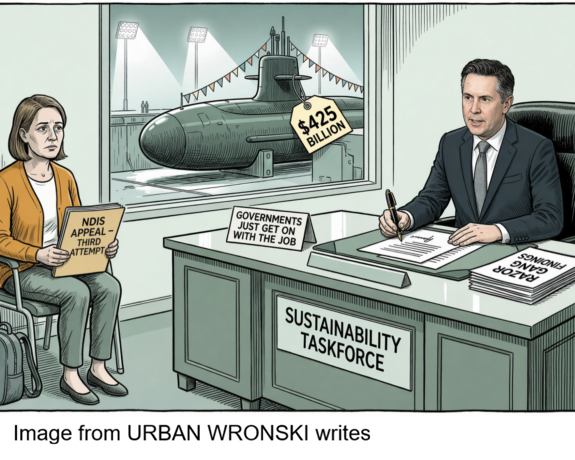

PETITION – To: Prime Minister Anthony Albanese and the Australian Labor Government
Chernobyl: The Lost Tapes – A good documentary on Chernobyl on SBS available On Demand for the next 3 weeks– https://www.sbs.com.au/ondemand/tv-program/chernobyl-the-lost-tapes/235274195556
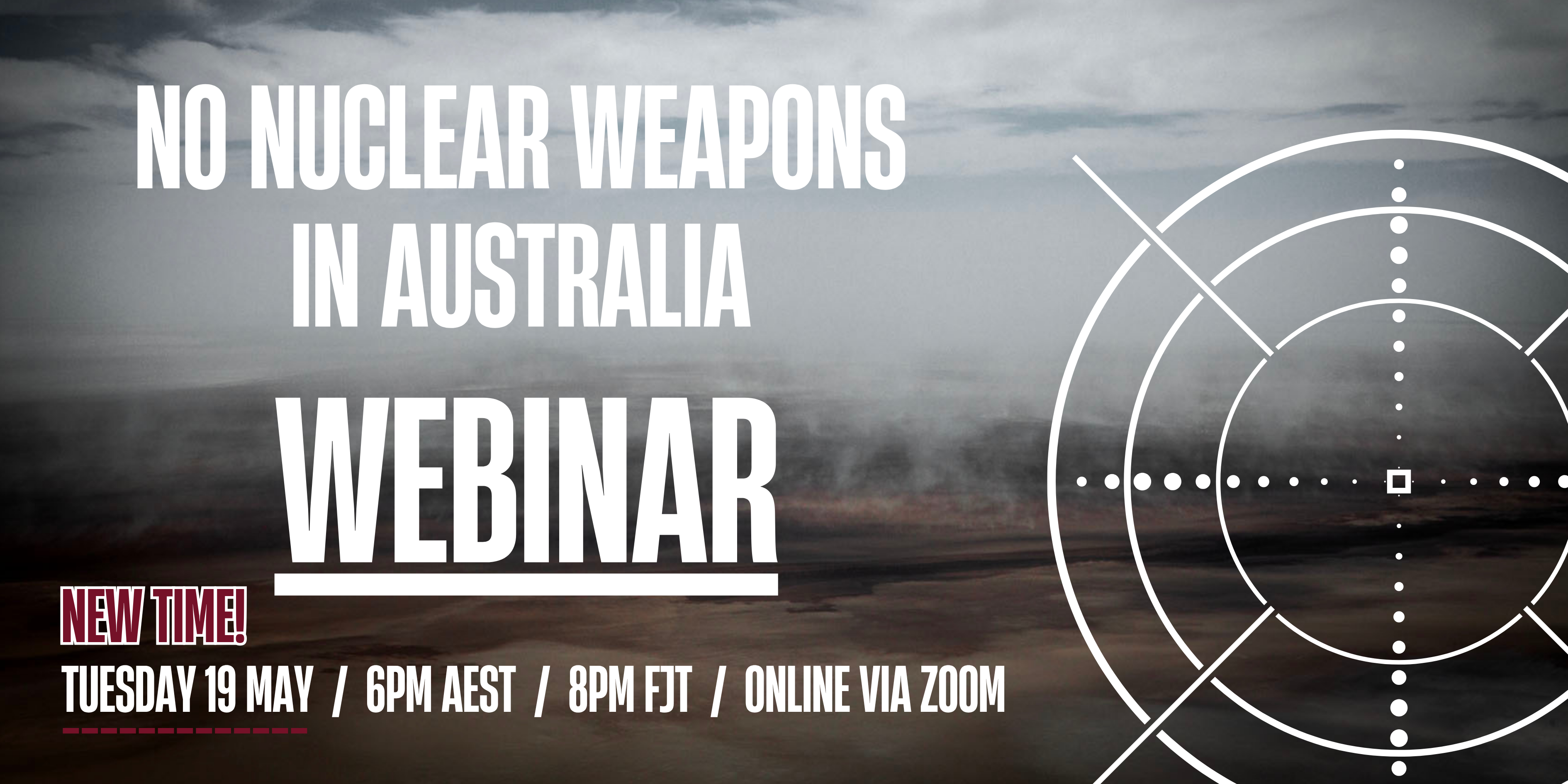
19 May – Webinar- Webinar: No Nuclear Weapons in Australia
Start: 2026-05-19 18:00:00 UTC Canberra, Melbourne, Sydney (GMT+10:00)
End: 2026-05-19 19:30:00 UTC Canberra, Melbourne, Sydney (GMT+10:00)
20 May – Webinar – The dangerous world of AUKUS, US, military occupation and suppression of dissent

National Webinar, 20th May, 2026, 6.30pm AEST. Confronting laws restricting/suppressing protest speech and action
Speakers: Former Sen. Rex Patrick, Lawyer Nick Hanna ,Arthur Rorris ,Jorgen Doyle, Sen David Shoebbridge,
Facilitator Kelley Tranter.

of the week – Australians for War Powers Reform (AWPR)
To see nuclear-related stories in greater depth and intensity
 Antinuclear