UK investment firm unveils $95m entry into Australian solar and battery market — RenewEconomy

London-listed investment fund buys two Australian solar farms and plans one and two hour battery storage facilities at multiple sites. The post UK investment firm unveils $95m entry into Australian solar and battery market appeared first on RenewEconomy.
UK investment firm unveils $95m entry into Australian solar and battery market — RenewEconomy
Bitcoin’s electricity use is boundless. No wonder that Elon Musk etc now want nuclear power to fuel it.
Here’s what a modern massive Bitcoin mining operation in upstate New York looks like:
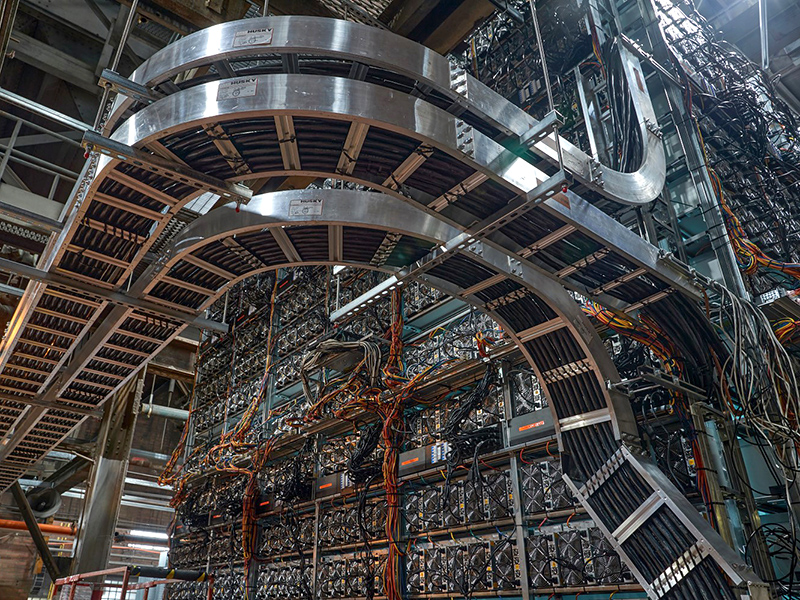
How Bitcoin is Heating This Lake and Warming the Planet more https://earthjustice.org/blog/2021-june/bitcoin-dirty-power?utm_source=facebook&utm_medium=social&utm_term=page&fbclid=IwAR30Z3V5q_FlRtyr1NnIZCQ6tU34tMs1AQUp8rgFRVGNTYaNoXl7I6Au8dg
Bitcoin is bringing dirty power plants out of retirement. Earthjustice is fighting this new trend in order to put an end to fossil fuels once and for all.By Ben Arnoldy | June 1, 2021 Seneca Lake in upstate New York is drawing attention to Bitcoin’s impact on the environment. A nearby Bitcoin mining plant is heating the lake waters — and the climate.
Bitcoin, the first and most famous cryptocurrency, is now burning through as much energy and pumping out as much greenhouse gas as entire nations.
Current estimates put the currency’s electricity usage on par with countries like the Netherlands. This is, shall we say, not helpful at a time when humanity is racing to switch to clean energy before we cook the planet.
In fact, Bitcoin’s energy demands are so high that the people who get rich from producing it want to pull dirty power plants out of retirement to power their operations. Earthjustice is urging regulators not to let that happen.
Bitcoins aren’t physical coins, so you might be asking why does a virtual currency require much energy?
The appeal of Bitcoin for some people is it allows them to trust no person, bank, or government. Bitcoin is entirely decentralized. But there needs to be some system to prevent fraudsters from making copies of the coins and trying to spend them twice.
To solve this, the system incentivizes many people rather than one trusted entity to devote computing power to validating transactions. The system is competitive, awarding new Bitcoins only to one “miner” who completes the validating and other tasks first, leading to an arms race of ever faster and more powerful computer rigs. While other cryptocurrencies use much less energy, Bitcoin’s particular solution to security without trust, it turns out, is extremely energy-intensive.
That monster requires a lot of energy to run the machines and to keep them from overheating. The cooling system for this rig uses cold water from Seneca Lake and discharges it back at temperatures reportedly as high as 98 degrees — with a permit to go even higher — harming trout and promoting algal blooms. For years, Bitcoin miners have sleuthed for places to set up shop where power is cheap and the climate cool, such as China’s Inner Mongolia or the hydro-abundant Pacific Northwest.
But the mining operation pictured above went next level. They own their own damn power plant:
Investors bought this plant in 2014. It was a fixer-upper. Mothballed power plants lying around for sale tend to be dirty fossil fuel plants.
The Greenidge Generation station in New York had been built in the 1930s as a coal-fired power plant. By 2011, there was not enough demand for its costly, dirty power and it was shut down. After not operating for several years, the new owners switched its fuel to dirty gas and re-started its operations, using the plant’s old pollution permits.
The plant struggled to find demand for its electricity, and the operators turned their attention instead to mining Bitcoin. Pollution started to skyrocket. In just one year, emissions of greenhouse gases increased ten-fold. The plant currently uses 19 MW of power, enough to power 14,500 homes if it weren’t mining Bitcoin. And it has plans to go to 55 MW and the capacity to go to 106 MW. At full capacity, the plant would blow past its current pollution permit — but that permit is up for renewal.
Earthjustice and the Sierra Club have sent a letter to regulators urging them not to allow the company, Greenidge Generation LLC, to expand the air permit and to take notice of the emerging trend of cryptocurrency miners taking over power plants and operating them 24 hours a day, 7 days a week, 365 days a year. At least one other plant in the region is planning to get in on the game, and there are nearly 30 plants in upstate New York alone with the potential to convert to full-time Bitcoin mining. A coal plant in Montana is also ramping back up for cryptocurrency mining.
“The aim of the letter to the New York Department of Conservation is to say this is not some random or isolated thing. Cryptocurrency is real and increasingly important, and dirty power plants are coming back from the dead,” says Earthjustice attorney Mandy DeRoche. “Greenidge just gave other retired, retiring, or peaking plants a roadmap of how to do it, how to recruit investors, how to go public on NASDAQ.”
Earthjustice has spent years fighting in public utility commissions around the country to ensure old, dirty power plants get pushed into retirement — and if replacement power is needed, steer clear of dirty gas in favor of clean energy. Our goal is to hasten the day when everything is powered with 100% clean energy.
New York state has a new climate law, and DeRoche says the commitments made in that law won’t be met if dirty power plants get resurrected and operate 24/7. That should spur legislators and regulators to clarify the regulatory gray zone that miners have exploited here with power generation that’s not sent to the grid.
There are many ways to tackle this issue, and we are exploring them,” says DeRoche. “One solution may be to require renewable generation for cryptocurrency mining, with an excess renewable generation requirement on top, so that the mining is not preventing renewables from going directly into the grid. We need that clean power on the grid as fast as possible to mitigate the unequal and most harmful impacts of climate change.”
The climate crisis is accelerating, and we have less than a decade to dramatically cut our carbon emissions if we hope to preserve a livable planet. Tell your members of Congress it’s time to build a sustainable and just future with the American Jobs Plan.
Britain joins the craze for war in space – reviving ”Skynet”
British military launches its own Space Command with official opening Space War by Ed Adamczyk
Washington DC (UPI) Jul 30, 2021 Britain established its Space Command on Friday in a ceremonial opening, with responsibilities split between three specific groups to form a joint space command, Britain’s Ministry of Defense announced on Friday.
The British military budget includes $1.95 billion, over 10 years, for space capabilities, part of a defense budget increase of $33.34 billion in the next four years.
Officially called the “U.K. Space Command,” the new agency will immediately take command and control of the country’s Space Operations Center, its SKYNET military communications center and the ballistic early warning radar station at RAF Flyingdales in northeastern England………
”As our adversaries advance their space capabilities, it is vital we invest in space to ensure we maintain a battle-winning advantage across this fast-evolving operational domain,” Defense Minister for Procurement Jeremy Quin said in the ministry’s statement…..
The United States launched its Space Force as a separate military branch in 2019, charging it with a broad mission to organize, train and equip space forces to protect U.S. and allied interests in space.
On July 13, of this year, Germany opened its own space command center at the Center for Air Operations in Uedem, near the Dutch border. https://www.spacewar.com/reports/British_military_launches_its_own_Space_Command_with_official_opening_999.html
Labor softens stance on Taylor’s changes to ARENA regulations — RenewEconomy

Labor to support parts of Angus Taylor’s re-issued ARENA regulations, including funds for sustainable transport, metals and microgrids. The post Labor softens stance on Taylor’s changes to ARENA regulations appeared first on RenewEconomy.
Labor softens stance on Taylor’s changes to ARENA regulations — RenewEconomy
August 2 Energy News — geoharvey

Opinion: ¶ “Finding Answers To The World’s Drinking Water Crisis” • We are facing a water crisis. Climate change, overpopulation, and global conflict are just some of the factors devastating the water supply in many areas around the world. It means that two billion people – one-quarter of the human population – are without access […]
August 2 Energy News — geoharvey
This week’s nuclear news
This week s news – Olympic ecstasy – all those lovely medals. It’s hard to get past that, – for example, to find out how many of the 220 or more coronavirus positive people associated with the Games, are actually athletes. It is not polite to discuss the costs of the Games, – money that could have gone into tackling Tokyo’s heath problems, as Tokyo’s state of emergency hits 4,000 new Covid-19 cases daily.I’m sorry, but I can’t get enthused about an event designed as the ”recovery” from the Fukushima nuclear catastrophe. It’s so in line with that other timely myth, that it was OK, in 1945, to obliterate two whole cities of children, women and men, in each case, with just one diabolical new bomb. (Attached is a video, 5 years old, but still valid https://www.youtube.com/watch?v=-07xiaBl2vk)World coronavirus– case numbers keep growing. Climate change: Critical measures of global heating reaching tipping point. Climate Change Is Driving Deadly Weather Disasters From Arizona To Mumbai
AUSTRALIA.
Australian Labor Party does not trust Angus Taylor’s ”moronic” approach to energy and economics. A reminder to gullible followers of Angus Taylor – small nuclear reactors are just not economically viable.
Submission: Medical Association for the Prevention of War (MAPW) supports a new Intermediate Level Solid Waste Storage Facility at Lucas Heights. Higher cancer and stillbirth rates in Aboriginal people living near the Ranger uranium mine.
Webinar. Brisbane remembers Hiroshima and Nagasaki. Thurs 5 August 6.30-7.30 p.m. AEST https://events.humanitix.com/hiroshima-commemoration-webinar
INTERNATIONAL
Remember Hiroshima and Nagasaki – no excuses for having nuclear weapons !
Degrowth: the necessary climate solution no-one is talking about. – terrific, thought provoking article
Small nuclear reactors, a dangerous experiment, and distraction from real climate action – David Suzuki.
If man cannot overcome his desire to kill, we are doomed.
Higher cancer and stillbirth rates in Aboriginal people living near the Ranger uranium mine
Aboriginal people near the Ranger uranium mine suffered more stillbirths and cancer. We don’t know why, The Conversation, Rosalie Schultz, Adjunct Senior Lecturer, College of Medicine and Public Health Centre for Remote Health, Flinders University, August 2, 2021 This article mentions stillbirth deaths in Aboriginal communities.
The Ranger uranium mine, surrounded by Kakadu National Park in the Northern Territory, operated for 40 years until it closed in 2021. During this time, Aboriginal people in the region experienced stillbirth rates double those of Aboriginal people elsewhere in the Top End, and cancer rates almost 50% higher.
But a NT government investigation couldn’t explain why. And as I write today in the Medical Journal of Australia, we’re still no wiser.
We owe it to Aboriginal people living near mines to understand and overcome what’s making them sick. We need to do this in partnership with Aboriginal community-controlled health organisations. This may require research that goes beyond a biomedical focus to consider the web of socio-cultural and political factors contributing to Aboriginal well-being and sickness.
Investigating the health impacts
Uranium was mined at Ranger from 1981 until 2012. Processing of stockpiled ore continued until 2021. This is despite community opposition when the mine was proposed and during its operation.
Over the life of the mine, there have been more than 200 documented incidents. Diesel and acid spills have contaminated creeks and drinking water.
The Gundjeihmi Aboriginal Corporation represents the Mirarr people of the region. For decades it has expressed grave concerns about continuing incidents and the lack of an effective government response.
When Ranger’s operators proposed expanding the mine in 2014, opponents pointed to suggestions of higher rates of stillbirth and cancer among Aboriginal people living nearby.
The NT health department then set up an investigation. Investigators began by identifying all Aboriginal people who had spent more than half their lives near the mine between 1991 and 2014. These people were compared with all other Aboriginal people in the Top End.
The investigators considered the worst-case scenario would be if Aboriginal people were exposed to radiation from the mine contaminating bush food, water or air, and this exposure increased stillbirth and cancer rates.
Investigators also looked at smoking tobacco, drinking alcohol and poor diet as possible contributing causes.
Here’s what they found
Investigators found the rate of stillbirth was 2.17 times higher among Aboriginal women near the mine. Radiation can lead to stillbirth by causing congenital malformations, and some other risk factors for stillbirth appeared more common amongst women near the mine. However the investigation found neither radiation nor other risk factors explained the higher rate of stillbirth.
The rate of cancer overall was 1.48 times higher among Aboriginal people near the mine than elsewhere in the Top End. No rates of single cancers were significantly higher…………. https://theconversation.com/aboriginal-people-near-the-ranger-uranium-mine-suffered-more-stillbirths-and-cancer-we-dont-know-why-164862
Remember Hiroshima and Nagasaki – no excuses for having nuclear weapons !
On Friday, ‘Say no to nuclear weapons’ https://www.theday.com/article/20210801/OP03/210809975 August 01. 2021
Frida Berrigan It was a long time ago, but it is still important. On August 6, 1945, the United States dropped a new bomb on the Japanese city of Hiroshima. It was morning, children were walking to school and adults were headed to work. When the bomb dropped, tens of thousands of people were turned to ash in an instant; human beings became shadows on the wall.
A few days later, on August 9, the U.S. dropped another nuclear bomb on Nagasaki
The two bombs killed as many as 210,000 people instantly, destroyed most of the city centers and poisoned countless people with radiation. In the last seven decades, nine countries have come to possess these powerful, nation-destroying weapons. The Soviet Union, which engaged in a decades long Cold War and nuclear arms race with the United States, was joined in the nuclear club by China, France, the United Kingdom, Israel, Pakistan, India and North Korea.
But most of the firepower is in the possession of the U.S. and Russia, the former super-power rivals.
In January 2021, the world celebrated the entry into force of the Treaty on the Prohibition of Nuclear Weapons. Under international law, it is now illegal to possess, use, or threaten to use nuclear weapons. This is a huge step towards abolition — but the United States, Russia and the other nuclear weapons states stand outside the international consensus that nuclear weapons are an existential and unconscionable threat to the future.
Nuclear weapons have cost the United States more than $5.5 trillion since 1945, according to the Brookings Institution. Over the next decade, it is projected that the United States will spend another $634 billion on nuclear weapons research and development. So, while our government has not detonated another weapon in war since 1945, that choice to spend so much money on building and perfecting nuclear superiority means that so many key priorities — from environmental protection to infrastructure restoration — have been underfunded or not funded at all.
People living and working in poor communities say: the bomb goes off every day in my neighborhood.

Here in New London, General Dynamics/Electric Boat is making massive profits designing and building nuclear-powered and armed submarines. The new Columbia-class submarine is another boon to the company, which is the sixth largest U.S. military contractor. CEO Phebe Novakovic personally earned almost $19 million in 2020.
Meanwhile, the median income in New London is less than $36,000 a year. But it isn’t just about money, it’s about what these weapons are capable of: massive destruction and the grim future that will result from spending so much on weaponry and not nearly enough to solve the big problems that face us and future generations.
Each of the 12 new Columbia Class submarines are designed to be armed with up to 16 Trident D-5 submarine-launched ballistic missiles, or SLBMs, which have a range of 4,500 miles. Those D-5s can each carry as many as 14 W-76-1 thermonuclear warheads. Each one of those warheads is six times more powerful than the atomic bomb that the U.S. military detonated at Hiroshima all those years ago.
Multiply 12 times 16 times 14 times 6 and the potential carnage is almost unfathomable.
The best way to understand the Columbia class submarine, then, is as a $100 billion-plus initiative that aims to deliver 16,128 Hiroshimas.
On this 76th anniversary of the Hiroshima bombing, we must say no to nuclear weapons. We call for abolition. We say yes to a better future. Nuclear weapons do not make us secure. A better future must include affordable health care, housing, education, a universal basic income, a functional and modern infrastructure, and sustainable solutions to the climate crisis.
Frida Berrigan is a New London resident and a member of the Connecticut Committee for the Prohibition of Nuclear Weapons. It is organizing a public witness on Friday, Aug. 6 from 3 p.m. to 5 p.m. at the intersection of Howard and Bank streets. Demonstrators will call on General Dynamics to honor the victims of seven decades of nuclearism by converting its operations to the long overdue work of repairing infrastructure and addressing the climate crisis. For more information, email joanne@warresisters.org.
Degrowth: the necessary climate solution no-one is talking about

The Necessary Climate Solution No-one is Talking About https://www.tasmaniantimes.com/2021/08/degrowth-necessary-climate-solution-no-one-is-talking-about/ Erin Remblance 1 Aug 21,
For all the talk of renewable energy, electric vehicles and plant-based diets, there’s a gaping hole in the way we’re trying to solve accelerating climate change.
We will not stay below 2°C of warming while pursuing economic growth – yet barely anyone talks about it.
Since the end of World War II Gross Domestic Product (GDP) growth has been the metric of human prosperity in Western nations – the idea being that if the productivity of the economy increases so will the wellbeing of the people within that economy. And for a while that was the case – but since the 1970’s increases in GDP have, on average, failed to translate into increases in wellbeing and happiness.
It is not surprising. Research has shown that once a certain GDP threshold, or level of wellbeing, has been met people gain little from consuming more ‘stuff’ – a necessary requirement for continuous GDP growth.
Robert F Kennedy eloquently summed up the inadequacy of GDP as a metric of wellbeing at a speech he gave in 1968:t]
The gross national product does not allow for the health of our children, the quality of their education or the joy of their play. It does not include the beauty of our poetry or the strength of our marriages, the intelligence of our public debate or the integrity of our public officials.
It measures neither our wit nor our courage, neither our wisdom nor our learning, neither our compassion nor our devotion to our country, it measures everything in short, except that which makes life worthwhile.

What’s more, GDP has never been, and can’t be, decoupled from material footprint, including energy[i]. This means we cannot roll out renewable energy fast enough to meet the objectives of the Paris Agreement – to keep warming below 2°C – if we continue growing our economy.
Three percent growth every year for the rest of this decade is 30% growth by 2030. Achieving a 75% reduction on 2005 greenhouse gas (GHG) emissions by 2030 is a Herculean effort already, let alone if the economy is 30% bigger by that time. And surely, given the urgency with which we must decarbonise, reducing energy demand must be a part of the mix, even if it means reducing GDP?
There are nearly 8 billion people in the world today – but they haven’t all contributed equally to the climate crisis. Between 1990 and 2015 the world’s wealthiest 1% were responsible for double the greenhouse gas (GHG) emissions of the poorest 50%. Over that same period, the wealthiest 10% of the world’s population were responsible for 52% of the world’s GHG emissions, while the poorest 50% were responsible for only 7% of the world’s GHG emissions.
Degrowing our economy to fit back within the planetary boundaries will also allow people living below satisfactory standards of human wellbeing to improve their living conditions. Data from 2016 showed that 940 million people still didn’t have access to electricity, and 3 billion people didn’t have access to clean fuels for cooking. These people don’t even own a washing machine, let alone a car and they certainly aren’t flying anywhere. Degrowth is not only necessary to solve the climate crisis, it’s the only way to address widening inequality across the globe.
For all the talk of renewable energy, electric vehicles and plant-based diets, there’s a gaping hole in the way we’re trying to solve accelerating climate change.
We will not stay below 2°C of warming while pursuing economic growth – yet barely anyone talks about it.
Since the end of World War II Gross Domestic Product (GDP) growth has been the metric of human prosperity in Western nations – the idea being that if the productivity of the economy increases so will the wellbeing of the people within that economy. And for a while that was the case – but since the 1970’s increases in GDP have, on average, failed to translate into increases in wellbeing and happiness.
It is not surprising. Research has shown that once a certain GDP threshold, or level of wellbeing, has been met people gain little from consuming more ‘stuff’ – a necessary requirement for continuous GDP growth.
Robert F Kennedy eloquently summed up the inadequacy of GDP as a metric of wellbeing at a speech he gave in 1968:t]he gross national product does not allow for the health of our children, the quality of their education or the joy of their play. It does not include the beauty of our poetry or the strength of our marriages, the intelligence of our public debate or the integrity of our public officials.
It measures neither our wit nor our courage, neither our wisdom nor our learning, neither our compassion nor our devotion to our country, it measures everything in short, except that which makes life worthwhile.
What’s more, GDP has never been, and can’t be, decoupled from material footprint, including energy[i]. This means we cannot roll out renewable energy fast enough to meet the objectives of the Paris Agreement – to keep warming below 2°C – if we continue growing our economy.
Three percent growth every year for the rest of this decade is 30% growth by 2030. Achieving a 75% reduction on 2005 greenhouse gas (GHG) emissions by 2030 is a Herculean effort already, let alone if the economy is 30% bigger by that time. And surely, given the urgency with which we must decarbonise, reducing energy demand must be a part of the mix, even if it means reducing GDP?
There are nearly 8 billion people in the world today – but they haven’t all contributed equally to the climate crisis. Between 1990 and 2015 the world’s wealthiest 1% were responsible for double the greenhouse gas (GHG) emissions of the poorest 50%. Over that same period, the wealthiest 10% of the world’s population were responsible for 52% of the world’s GHG emissions, while the poorest 50% were responsible for only 7% of the world’s GHG emissions.
Degrowing our economy to fit back within the planetary boundaries will also allow people living below satisfactory standards of human wellbeing to improve their living conditions. Data from 2016 showed that 940 million people still didn’t have access to electricity, and 3 billion people didn’t have access to clean fuels for cooking. These people don’t even own a washing machine, let alone a car and they certainly aren’t flying anywhere. Degrowth is not only necessary to solve the climate crisis, it’s the only way to address widening inequality across the globe.
What could life in a degrowth economy look like? It would involve shorter working weeks and less commuting, giving us more time to do things we enjoy. Less individual ownership and more sharing. Less debt and more services provided by the government. A focus on community and connection rather than individualism and perpetually trying to find happiness through our next purchase, holiday or experience.In a degrowth economy environmentally destructive and resource intensive industries would be scaled back, and more people would be working in jobs that benefited one another and the planet, putting more meaning and purpose into our lives.
We would value different things in a degrowth economy and define success differently. A degrowth economy does not need to mean a degrowth lifestyle, indeed we could be richer for it.
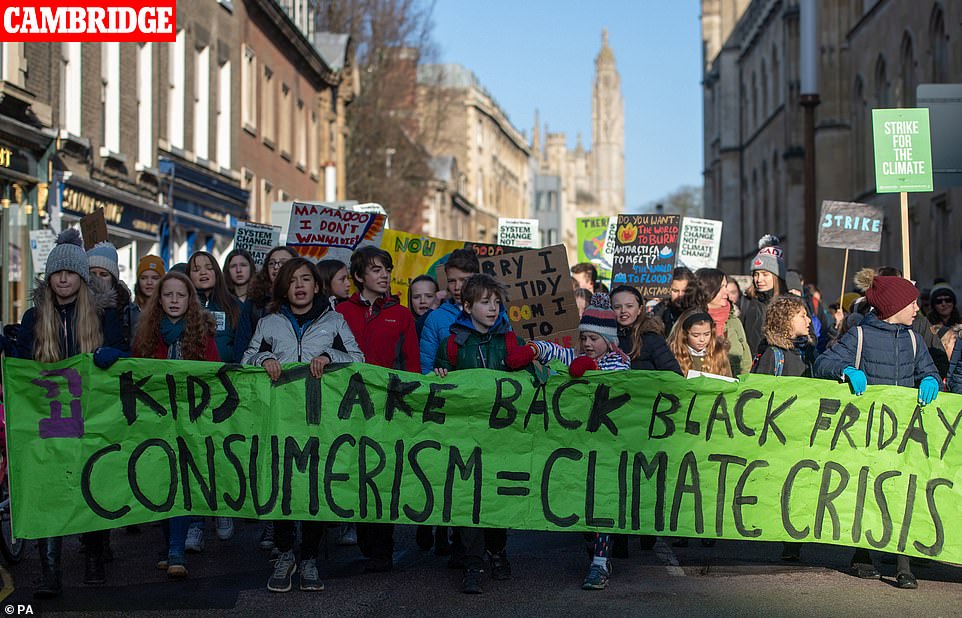
It’s probably tempting to define a ‘degrowth’ economy as socialism, but it’s a false binary that an economic system is either capitalism or socialism. All economies are a mix of both, often with other bits of ‘isms’ thrown in for good measure. Let’s use our imaginations and contemplate what life could look like if we focused on the things that really matter, and not simply the amount of growth in our economy.
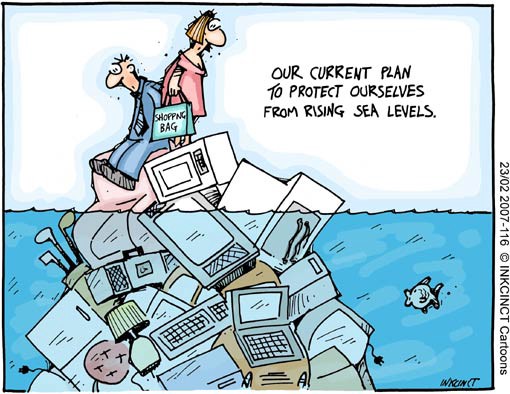
In the end, the economy is a man-made construct. It can be changed. The laws of nature, however, cannot. It would be tragic to look back and think we gave it all up because we weren’t brave enough to challenge the insane notion of endless growth on a finite planet with the urgency it deserves.
[i] Chart page 102, Less is More, Jason Hickel Global GDP & Material Footprint.
Erin Remblance is a mother-of-three who works in carbon reduction, is a climate activist and is studying wellbeing economies.
A hard rain did fall — Hiroshima victims beyond “official” zone will now be compensated

Hiroshima victims beyond “official” zone will now be compensated
A hard rain did fall — Beyond Nuclear International A hard rain did fall, Black rain” victims finally win in court https://beyondnuclearinternational.org/2021/08/01/a-hard-rain-did-fall/ By Linda Pentz Gunter
Just weeks before the 2021 commemoration of the August 6, 1945 US atomic bombing of the city of Hiroshima, a Japanese court ruled that victims of the radioactive “black rain” who were living beyond the officially recognized contamination zone at the time, should be included in the group considered bomb “survivors” or “Hibakusha” and receive the same benefits.
A Hiroshima high court acknowledged in its July 14, 2021 ruling that many more people suffered as a result of exposure to “black rain” than have hitherto been recognized as victims.
“Black rain” was described in a CNN story as a “mixture of fallout particles from the explosion, carbon residue from citywide fires, and other dangerous elements. The black rain fell on peoples’ skin and clothing, was breathed in, contaminated food and water, and caused widespread radiation poisoning.”
When the verdict was first released last month, it appeared that the Japanese government, under Prime Minister Yoshihide Suga, might appeal the decision. Instead, Suga declared his government, the defendants in the case, would not appeal it and even suggested that relief might be extended to other affected people beyond the plaintiffs. According to the Asahi Shimbun, this may even include those exposed to radiation as a result of the 2011 Fukushima nuclear disaster on the Japan coast.
The court ruling was important because it recognized and acknowledged not only the heaths effects of the radioactive “black rain” atomic bomb fallout, but also the internal exposure to radiation through the ingestion of contaminated water and food experienced by the 84 plaintiffs in the case.
The ruling of course comes very late in the day as many Hibakusha are already deceased. Indeed, one of the plaintiffs, 79-year-old Seiji Takato, told CNN he was worried that if there was no verdict soon, “we would all die if this (case were) prolonged”.
The plaintiffs will now receive the same benefits as residents of the state-designated black rain zone. According to the Kyodo News, these will include “free health checkups and atomic bomb survivors’ certificates entitling them to medical benefits in the event that they develop 11 specific illnesses caused by radiation.”
The United States, the country which dropped the two atomic bombs — on Hiroshima on August 6, 1945 and then on Nagasaki three days later — has taken neither responsibility for the devastating health consequences, nor offered an apology or compensation.
Indeed, President Truman, in office when the bombings were authorized, told the Japanese, chillingly, that their sacrifice and suffering were “urgent and necessary.” President Clinton declared that the US “owes no apology to Japan”. He, like other US presidents before and since, clung to the disputable notion that the atomic bombings saved at least one million American lives, an argument ably dispatched by Ward Wilson on these pages in 2018.
To date, Barack Obama is the only sitting US president to have visited Hiroshima, when he traveled there in 2016, but he too failed to apologize for the atrocity. There have been plenty of lively debates on this question: Would an apology open up old wounds, focus too much on the past and be an admission of wrongdoing? Would it also open the door to a floodgate of demands for monetary compensation? Or is an official apology an essential atonement, albeit merely symbolic at this late stage? Could an apology lead in turn to meaningful international engagement on global peace?
Slowly, the Hibakusha have been gaining recognition. One of its most famous and outspoken members, Setsuko Thurlow, accepted the Nobel Peace Prize awarded the International Campaign to Abolish Nuclear Weapons (ICAN) alongside its executive director, Beatrice Fihn, in 2017.
The award came on the heels of the instrumental role the Hibakusha played in persuading the UN to create the Treaty on the Prohibition of Nuclear Weapons, now ratified by 55 countries and counting, five more than the number that ensured it became law this past January. None of the nuclear weapons states, nor Japan, has signed or ratified the treaty.
At the end of the day, the lesson here is the mantra adopted by the nuclear researchers, whistleblowers and watchdogs at Fairewinds Energy Education: “Radiation knows no borders.”
As Fairewinds wrote in the context of the “black rain” verdict: “Radioactive microscopic particles generated from mining uranium ore, reprocessing atomic fuel, bomb tests, and disastrous meltdowns travel well beyond the arbitrary boundaries and demarcation lines that governments establish to limit their liability and to maintain control over others.”
These warnings serve as a compelling reason to neither test nor use atomic weapons and also as a powerful admonition against the continued use of “civil” nuclear power.
Small nuclear reactors, a dangerous experiment, and distraction from real climate action – David Suzuki
Renewables cost less than nuclear, come with fewer health, environmental and weapons-proliferation risks and have been successfully deployed worldwide.
Given rapid advances in energy, grid and storage technologies, along with the absolute urgency of the climate crisis, pursuing nuclear at the expense of renewables is costly, dangerous and unnecessary.
Is smaller better when it comes to nuclear? Pique, By: David Suzuki 1 Aug 21, Nuclear power hasn’t been in the news much since the 2011 Fukushima meltdown in Japan. Thanks to a push by industry and governments, you might soon hear more about how nuclear reactors are now safer and better.
Specifically, the conversation has shifted to “small modular nuclear reactors” or SMNRs, which generate less than 300 megawatts of electricity, compared to up to 1,600 MWe for large reactors.
Some of the 100 or so designs being considered include integral pressurized water reactors, molten salt reactors, high-temperature gas reactors, liquid metal cooled reactors and solid state or heat pipe reactors. To date, the industry is stuck at the prototype stage for all models and none is truly modular in the sense of being manufactured several at a time—an impediment considering the speed at which global heating is worsening.
The benefits touted by industry have convinced many countries, including Canada, to gamble huge sums on nuclear, despite the poor odds. The Small Modular Reactor Action Plan hypes it as the possible “future of Canada’s nuclear industry, with the potential to provide non-emitting energy for a wide range of applications, from grid-scale electricity generation to use in heavy industry and remote communities.” ………
given the seriousness of the climate emergency and the various options for transforming our energy systems to combat it, is nuclear—regardless of size or shape—the way to go? We must rapidly reduce emissions now, and we have readily available technologies to do so.
New nuclear doesn’t make practical or economic sense for now. Building reactors will remain expensive and time-consuming. Studies estimate electricity from small nuclear can cost from four to 10 times that of wind and solar, whose costs continue to drop. SMNRs will require substantial government subsidies.
Even when nuclear has to compete against renewables prepackaged with storage, the latter wins out.
One recent study of 123 countries over 25 years published in Nature Energy found that renewables are much better at reducing greenhouse gas emissions than nuclear—whose benefits in this area are negligible—and that combining nuclear and renewables creates a systemic tension that makes it harder to develop renewables to their potential.
Like all nuclear reactors, SMNRs produce radioactive waste and contribute to increased nuclear weapons proliferation risk—and Canada still has no effective strategy for waste. Nuclear power also requires enormous amounts of water.
Corporate interests often favour large, easily monopolized utilities, arguing that only major fossil fuel, nuclear or hydro power facilities can provide large-scale “baseload” power. But many experts argue the “baseload myth” is baseless—that a flexible system using renewables combined with investments in energy efficiency and a smart grid that helps smooth out demand peaks is far more efficient and cost-effective, especially as energy storage technologies improve.
Even for remote populations, energy systems that empower communities, households, businesses and organizations to generate and store their own energy with solar panels or wind installations and batteries, for example, and technologies like heat-exchange systems for buildings, would be better than nuclear.
Renewables cost less than nuclear, come with fewer health, environmental and weapons-proliferation risks and have been successfully deployed worldwide. Given rapid advances in energy, grid and storage technologies, along with the absolute urgency of the climate crisis, pursuing nuclear at the expense of renewables is costly, dangerous and unnecessary.
David Suzuki is a scientist, broadcaster, author and co-founder of the David Suzuki Foundation. Written with contributions from David Suzuki Foundation Senior Writer and Editor Ian Hanington. https://www.piquenewsmagazine.com/opinion/opinion-is-smaller-better-when-it-comes-to-nuclear-4175458
Australian researchers say simple ‘twist’ could be key to world’s thinnest solar cells — RenewEconomy

Australian researchers show how ‘twisting’ ultra thin ‘2D’ materials could be the key to controlling some of the world’s thinnest solar cells. The post Australian researchers say simple ‘twist’ could be key to world’s thinnest solar cells appeared first on RenewEconomy.
Australian researchers say simple ‘twist’ could be key to world’s thinnest solar cells — RenewEconomy
August 1 Energy News — geoharvey

Opinion: ¶ “Enbridge’s Pipeline 3 Threatens An Endangered Species – Contact The EPA” • The drinking water of people who live along the Mississippi River is put into danger by Enbridge’s Pipeline 3. There are many other reasons to oppose it. One, however, is the survival of a rare mussel species. And that gives us […]
August 1 Energy News — geoharvey
Submission: Medical Association for the Prevention of War (MAPW) supports a new Intermediate Level Solid Waste Storage Facility at Lucas Heights

MAPW supports the construction of a new Intermediate Level Solid Waste Storage Facility at Lucas Heights.
MAPW strongly recommends:
• an open and independent review of nuclear waste production and disposal in Australia, and
• progressing a shift to cyclotron rather that reactor-based production of isotopes for nuclear medicine as rapidly as feasible.
Arguments that radioactive waste should all be at one site overlook the ongoing need for hospitals to store clinical waste. After nuclear medicine is used in a patient, the vast majority of the residual material and radioactively-contaminated equipment is stored on site while the radioactivity decays away. Within a few days, it has lost so much radioactivity that the material can go to a normal rubbish tip. There will always need to be multiple waste storage locations at sites which utilise radiopharmaceuticals.
Clean cyclotron production of Tc99m has recently been approved and is being implemented in
Canada. This should rapidly become the future of isotope production
Medical Association for the Prevention of War (MAPW) 30 July21, Submission to the Public Works Committee regarding Australian Nuclear Science and Technology Organisation Intermediate Level Solid Waste Storage Facility Lucas Heights, NSW.
SUMMARY
MAPW supports the construction of a new Intermediate Level Solid Waste Storage Facility at Lucas Heights. As noted in the ANSTO submission, there will be minimal expected impact on the community and ANSTO has excellent existing security.
This contrasts with the massive distress and community division in regional and remote communities that has been created by a succession of nuclear waste storage proposals.
This facility will be useful over a much greater timeframe if ANSTO’s rapidly expanding production of isotopes for nuclear medicine is reined in. This very heavily subsided export business has only a small minority of the radiopharmaceuticals produced being utilised in the care of Australians. There is no evidence whatsoever of more than minimal cost recovery. The burgeoning amounts of ILW produced will be a liability for Australians or many generations.
More reliable, safer, cheaper and much cleaner cyclotron production of technetium99m (Tc99m) has been shown to work and is being implemented in Canada. Japan, the USA, the UK and several European countries are all looking to implement cyclotron.
The proposed new ILW facility provides an opportunity to identify and implement world’s best practice ILW disposal options and update and reset nuclear medicine production tocleaner, cheaper and more reliable methods.
MAPW strongly recommends:
• an open and independent review of nuclear waste production and disposal in
Australia, and
• progressing a shift to cyclotron rather that reactor-based production of isotopes for nuclear medicine as rapidly as feasible.
Individual criteria will now be addressed.
Continue readingA reminder to gullible followers of Angus Taylor – small nuclear reactors are just not economically viable.

Paul Richards 31 July, 21, SMR is no more than a conventional nuclear reactor, broken down, isolating, the reactor component.
Branding one component, small.’mass produced’ Small reactors destroys the economies of scale of conventional reactors, and they are no longer economically viable.
As every reactor ever built, needs, the other components to function.Same $US trillion-dollar infrastructure, mining, milling, yellowcake, fuel rod manufacture, transport, construction, production, output for the earth’s highest-priced electricity.
Anyone claiming unspent nuclear fuel can be run through twice is lying.The nuclear state has not been able to run unspent fuel through once more, in over 60 years, speaking to economic viably. Let alone the countless times it needs to transmute to make this claim real.
Something to think about is uranium. Uranium is at historic low prices, and running fuel through once more is not even viable.The price will rise, as the resource is limited, making it even far less viable economically.
1 This month.

Australians deserve the truth
about
AUKUS – https://aukuspublicinquiry.com/

PETITION – To: Prime Minister Anthony Albanese and the Australian Labor Government

of the week – Australians for War Powers Reform (AWPR)
To see nuclear-related stories in greater depth and intensity
 Antinuclear