Australian cities not prepared for the coming heatwaves- poor urban planning
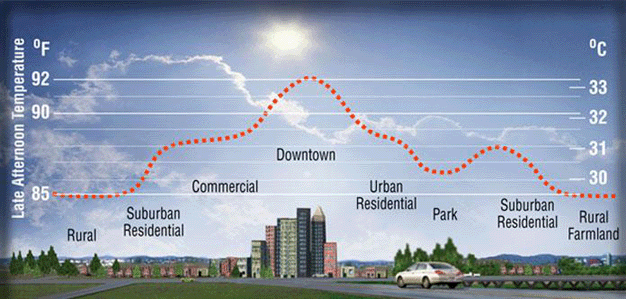
The heat is coming and we are not prepared for it.
It is not just that large houses on small blocks leave no room for trees,….. The little space left between them provides no room for recreation and serve to increase heat, with side-passages often home to air-conditioning systems that spew heated air across dividing fences.
When he looks at new developments on the fringes of Australian cities, Pfautsch says residents have been abandoned to wholly predictable heat extremes caused by global warming but exacerbated by poor planning regulation.
We’re ending up with dark-roofed, back-to-back, nose-to-front, housing suburbs on the outskirts of Melbourne. And if you add dark, asphalt and concrete surfaces you’re going to get really hot suburbs,”
Why a killer US heatwave points to a stifling future for our cities. Brisbane Times, By Nick O’Malley and Miki Perkins, July 17, 2021 It was the hellish evening temperatures that finally caused the authorities to start busing the homeless into heat shelters where they had access to fans, air-conditioning and water.
Three hours from sundown last Saturday the temperature in Las Vegas peaked at 47.2 degrees, equalling a record set in 2017. By dawn, the temperature had bottomed out at a stifling 34 degrees and begun to rise again.
One person was treated for burns after walking on a pavement and the homeless were bussed from an outdoor shelter to indoor cooling centres in response.
West of the city at Furnace Creek in Death Valley a temperature of 54.4 degrees was recorded. Experts are still checking the reading and debating over whether this was the hottest temperature ever recorded on earth.
In the town of Lytton in British Columbia, a Canadian heat record was set at the end of last month when the temperature hit 49.6 degrees and lingered up there over three days. Authorities attributed hundreds of deaths across the region to the heat, even before wildfire arrived and burnt most of the village to the ground, killing two more.
Before the flames approached one local, Lorna Fandrich, told the New York Times that she’d noticed green leaves dropping off the trees, apparently unable to tolerate the heat. On the coast to the west, millions of mussels and oysters cooked and died in superheated shallow waters.
From his home outside Sacramento Ken Pimlott, the recently retired head of Cal Fire, the agency responsible for fighting wildfires across the state of California, watched on with dread. The height of the northern fire season, he noted, has not even arrived yet.
These temperatures, Pimlott told The Sydney Morning Herald and The Age, are no longer outliers, but spikes in a new normal in a world not prepared to manage them.
The temperatures have already extended the North American fire season, causing exhaustion among crews who can’t get enough rest from the fire lines and difficulties in keeping up with maintenance demands on equipment. Aircraft once shared with nations like Australia were under greater demand as fire seasons overlapped, he said.
Pimlott’s dread was shared in Australia.
Dr Sebastian Pfautsch, a specialist on urban heat at Western Sydney University, says though Australian attention has drifted from the terrible summer of 2019 and 2020, he fears for the future of residents of some suburbs in Sydney and Melbourne.
The heat is coming, he says, and we are not prepared for it.
Stephen Livesley is an associate professor in forest sciences at the University of Melbourne, and an expert on the benefits of urban forests. “It’s possible we’re going to end up with large neighbourhoods which people in 20 or 30 years’ time will simply avoid,” he says.
This concern is not misjudged, says Professor Christian Jakob, a Monash University atmospheric scientist.
His analysis of the heatwave that struck North America shows that it originated with an unremarkable rainshower on the other side of the Pacific Ocean, not far from Japan.
The shower caused an atmospheric disturbance that in turn created what scientists call a Rossby wave, which was guided towards North America by the jet stream, amplifying as it travelled before breaking upon the shores of the Pacific Northwest.
There the wave caused a high-pressure system. As Jakob explains, air heats under pressure. On the ground, temperatures soared. What caused the temperatures to reach such extremes, though, and what made the system linger long enough to cause such misery and destruction beneath it, cannot yet be explained by science says Jakob.
Until better computer models are created all we can know is that as the climate heats due to global warming such heatwaves will in some areas increase in intensity and duration.
Areas particularly prone to the phenomenon include northern Europe, North America and south-eastern Australia, he says
On the day that Penrith became for a time the hottest place on earth, with temperatures hitting 48.9 degrees on January 4 last year, Keith Heggart’s air conditioner conked out by midday. The manual said it sometimes did that in extreme heat and recommended hosing it down, but due to bushfires water use was banned. Heggart and his young family closed windows against the smoke and the blinds against the sun and sheltered in the living room where a fan pushed around the hot air.
Watching the news from America these past few weeks, Heggart has fretted about the summers to come. His street in Penrith is older than others and there is some shade, some gaps between the houses, but when he looks at the new developments nearby, he despairs.
“There are no trees, there is no shade,” he says. “You could reach out your window and touch the house next door.
When he looks at new developments on the fringes of Australian cities, Pfautsch says residents have been abandoned to wholly predictable heat extremes caused by global warming but exacerbated by poor planning regulation.
Council areas such as Blacktown, Penrith and Campbelltown in Sydney and suburbs like Wollert, Mernda and Mickleham in Melbourne are compelled to absorb growing populations by state governments, but are failing to impose proper planning regulations. Strapped for cash, they have allowed property developers to shape the built environment, he says.
…….. It is not just that large houses on small blocks leave no room for trees, Pfautsch says. The little space left between them provides no room for recreation and serve to increase heat, with side-passages often home to air-conditioning systems that spew heated air across dividing fences.
But Pfautsch sees other wilful mistakes. Unshaded black roads absorb heat during the day only to radiate it at night, extending the heat of day into the evening. This contributes to the urban heat island effect.
Roofs, exterior walls and even driveways created by developers in currently fashionable dark shades serve to exacerbate the impact, he says.
But, according to Pfautsch, the problems begin even before the new suburbs are laid out, when developers clear new sites of all existing trees, ponds and watercourses to maximise space and save on construction costs.
What greenspace remains is often not connected to homes by shaded foot or bike paths.
“It is inhumane to expect people to live like this in the temperatures we anticipate,” he says. “I can’t say it more strongly than that.”………….
Overall, Melbourne lost 0.3 per cent of its canopy between 2014 and 2018. Almost 2000 hectares of trees were cut from the east and south-east, mostly at residential properties……….
We’re ending up with dark-roofed, back-to-back, nose-to-front, housing suburbs on the outskirts of Melbourne. And if you add dark, asphalt and concrete surfaces you’re going to get really hot suburbs,” he says. “When you have high-temperature events intersecting with urban heat islands, you have really, really high temperatures.”
According to Pfautsch, even a concerted effort to increase tree coverage in the suburbs most prone to the heat-island effect will only have limited impact in the years to come………
All this raises thorny questions of environmental and climate justice, Livesley says, as the suburbs most affected are often the most affordable.
“We are pushing some of the most vulnerable people in our society into these low tree, low services environments, with poor public transport infrastructure.”…………
In Mildura, a town near the border in north-west Victoria, temperatures have increased in line with worldwide heating trends. Between 1998-99 and 2018-19 the number of days each year where the temperature went above 35 degrees increased by about 20 days, and the number of heatwaves rose from six to nine.
For residents living in public housing – who faced huge bureaucratic hurdles to having air conditioners installed – recent summers have been a nightmare,………..
not only should we be tackling climate change, we should be totally re-imagining how we build our suburbs. https://www.brisbanetimes.com.au/environment/climate-change/why-a-killer-us-heatwave-points-to-a-stifling-future-for-our-cities-20210716-p58ae9.html
Nuclear-free Asia Pacific Report
Nuclear-free Asia Pacific Report
By APR editor – July 19, 2021 Over the past 50 years, France has continued to deny the tragedies of nuclear testing in French Occupied Polynesia by propagating the theory of “clean nuclear tests”. Image: Youngsolwara Pacific
Asia Pacific Report newsdesk Moana activists, campaigners, scholars, researchers and Green MPs gathered today in a show of solidarity for Tahiti’s Ma’ohi Lives Matter rally at Auckland University of Technology and vowed to work towards independence for the French-occupied Pacific territory.
A live feed from the Tahitian capital of Pape’ete was screened and simultaneous events happened across the Pacific, such as in Fiji.
Many of the Auckland participants were stalwarts from the early days of the Nuclear-Free and Independent Pacific (NFIP) movement from the 1970s and 1980s and declared their support for pro-independence Tahitian leader Oscar Temaru.
Many speakers protested that Tahitians were still awaiting compensation for the legacy of health problems and the devastation of Moruroa and Fangataufa atolls during 30 years of testing and 193 nuclear blasts, both atmospheric and underground.
The speakers said it was appalling that serious attempts for compensation and a state apology had not happened in the two decades since the tests ended in 1996.
However, reports from Paris at the weekend hinted that the French Polynesian President had indicated that France had for the first time conceded it should compensate Tahiti’s social security agency CPS for the medical costs caused by the tests.
The agency had repeatedly said that since 1995 it had paid out US$800 million to treat a total of 10,000 people suffering from cancer as the result of radiation from the tests.
French PM’s letter
Tahiti’s territorial President Édouard Fritch said he received a letter from French Prime Minister Jean Castex, in which he admitted that the demand for a re-imbursement of the outlays was legitimate…………….
Environmental journalist, author and academic Dr David Robie denounced the “decades of lies, bluster and cover-ups” by French authorities, saying recent allegations published by the book Toxique and investigative website The Moruroa Files were a “game changer” forcing action from Paris…………
The rally participants acknowledged the connection between indigenous struggles in Mā’ohi Nui, Aotearoa, Australia, Hawai’i, Kanaky New Caledonia, Micronesia, Papua New Guinea, Rapa Nui, Solomons, Vanuatu, West Papua, and the rest of Moana.,,,,,,, https://asiapacificreport.nz/2021/07/19/nuclear-free/
Small Nuclear Reactors are all the hype. But here’s the reality
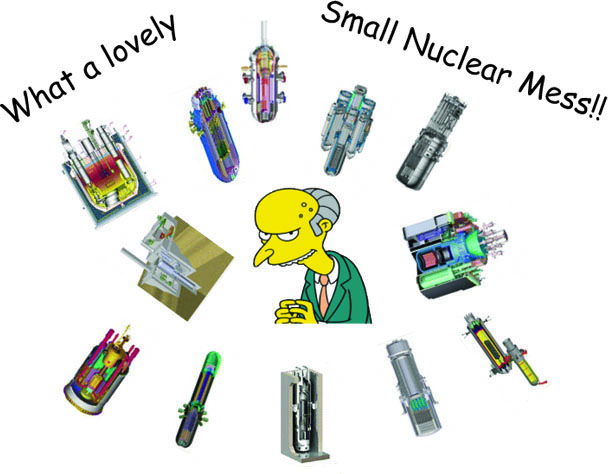
promoting a dizzying assortment of next-generation models that have collectively been dubbed “small modular reactors” (SMRs).……..
The real challenge “is answering all the safety questions that any good regulator would ask: ‘How will this behave if there’s an earthquake or fire? What happens if there’s a complete blackout? What happens if this component fails?’ ” Answering such questions requires an intensive research program and countless hours of laboratory work, which can take decades. There’s no guarantee the answers will be favourable.
Governments, utilities and the nuclear industry hope small modular reactors will power Canada’s future. Can they actually build one? The Globe and Mail MATTHEW MCCLEARN, JULY 17, 2021 Ontario Power Generation plans to make a decision this year that might determine the future of Canada’s nuclear industry.The utility, by far Canada’s largest nuclear power producer, promises to select a design for a 300-megawatt reactor it proposes to build at its Darlington Nuclear Generating Station by 2028. The estimated price tag: up to $3-billion. It would be the first new reactor built on Canadian soil in well over three decades. OPG won’t make that decision alone, because it’s intended to be the first of many reactors of the same design built across the country.Canada’s nuclear industry desperately needs a next act….. With a supply chain of more than 200 companies covering everything from uranium mining, to operating power plants, to decommissioning them, Canada is considered a Tier 1 nuclear country.
But lately, this machine has been devoted to squeezing more life out of old CANDU units, largely through Ontario’s $26-billion plan to refurbish its Darlington station, east of Toronto, and the Bruce Power complex, on Lake Huron. The industry has few, if any, exciting new products for sale……
but renewable forms of generation – hydro, wind, solar and biomass – have become preferred tools for decarbonizing electricity grids. And utilities can buy inexpensive wind turbines and solar panels today.
Seeking to catch up, dozens of nuclear vendors sprung up just in the past few years, promoting a dizzying assortment of next-generation models that have collectively been dubbed “small modular reactors” (SMRs)………
U.S. President Joe Biden and U.K. Prime Minister Boris Johnson have also indicated they will also support SMR development, as have some prominent investors, notably Bill Gates.
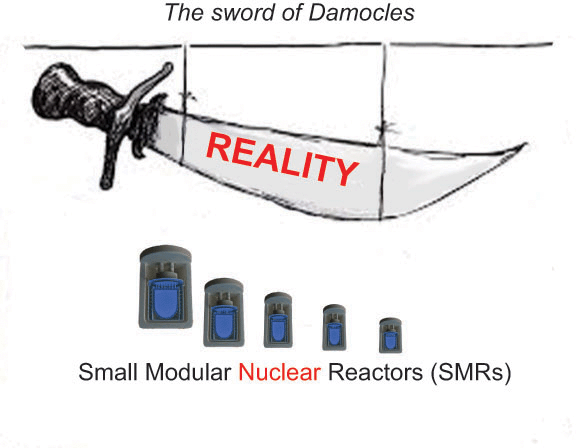
Here’s the reality: Most SMRs exist only as conceptual designs and are not yet licensed for construction anywhere.
The promised assembly lines that would churn them out like clockwork don’t exist
Here’s the reality: Most SMRs exist only as conceptual designs and are not yet licensed for construction anywhere. (The international law firm White & Case says the only contemporary SMR in existence is located on a vessel anchored off Russia’s Arctic coast. According to reports, construction of China’s first SMR recently commenced on the southern island of Hainan.) The promised assembly lines that would churn them out like clockwork don’t exist; many vendors are early-stage companies with hardly any revenues.
To change this, the federal government will probably have to open wide the taxpayer’s wallet. And the industry must move quickly from bold marketing claims to commercially viable products
OLD IDEAS, NEW PACKAGESMR is a marketing term, rather than a technical one, reflecting the industry’s aspirations rather than what it can deliver today.In Canada, SMR has come to describe reactors that generate 300 megawatts or less. That isn’t exactly small – it’s enough to power a small city – but for comparison’s sake, Ontario’s largest current reactors generate around 900 megawatts. Some proposed SMRs would produce just a few megawatts. The industry pitches them for remote Indigenous communities, industrial use (at mines, for instance) and tiny island nations.Small reactors aren’t new. They’ve been used in icebreakers, submarines and aircraft carriers. And many SMRs are based on concepts contemplated as long ago as the 1950s.
Oakville, Ont.-based Terrestrial Energy Inc., one of OPG’s potential partners, intends to use molten salt, rather than water, as a coolant. The company says its technology is a “game-changer”: The Integral Molten Salt Reactor (IMSR) would operate at much higher temperatures (about 700 C) than conventional reactors (about 300 C)….
As for the “modular” part, the notion is that SMRs would be mass-produced on assembly lines and shipped to where they’re needed, rather than custom-built onsite. This plug-and-play approach is intended to reduce purchase costs and accelerate deployment…………….
SMRs appeal to certain nationalist impulses as well: Canada is, after all, the world’s second-largest uranium producer.
…… The industry has made limited progress in addressing wastes from decades-old reactors; it’s unclear how novel detritus from SMRs might be handled. Perhaps most damagingly of all, reactors have earned a reputation for being overpriced relative to other forms of generation, and oftenbeleaguered by massive delays and cost overruns.
SMR GAME PLAN
The nuclear industry’s plan to reverse its flagging fortunes begins at Darlington. OPG announced late last year it was working with three SMR developers on preliminary design and engineering work: North Carolina-based GE Hitachi Nuclear Energy, Terrestrial Energy and X-energy. It promises to select a winner by year’s end….
Naturally, of course, no SMR developer aspires to be a one-hit wonder. So next up: Persuade Saskatchewan to build a fleet of the same reactors……….. Winning Saskatchewan would be a major coup: Jurisdictions that go nuclear tend to stay nuclear for decades. …… quandary remains: Prospective SMR buyers such as SaskPower can only look at conceptual designs. “There’s been some small demonstration units built, but nothing of the size that we would expect to see in operational terms,” Mr. Morgan said.
……... NUCLEAR GHOSTS Twenty years ago, Canada’s nuclear industry staked its future on updating the venerable CANDU design. Atomic Energy of Canada Ltd. (AECL), the
Crown corporation that pioneered it, talked up the Enhanced CANDU 6, CANDU 9 and Advanced CANDU Reactor (ACR) as safer, faster to construct, cheaper and better than previous models. The federal government pumped untold sums into their development.None were licensed. None were ordered. None were built.
In 2011, the federal government sold AECL’s reactor business to SNC-Lavalin for a paltry $15-million. After six decades of development, and dozens of bona fide reactors built and operated in seven countries, the CANDU had become nearly worthless.
The proposed site for OPG’s first SMR, next to the existing Darlington Station, is an artifact of that era. In 2006, OPG began preparing to build up to four reactors at the same location. AECL’s Enhanced CANDU 6 and the ACR 1000 were candidates.But the project was derailed in late 2013 when the Ontario government asked OPG to stand down, essentially because the province no longer needed the power. The viability of those “next-generation” CANDUs, however, was never clear.
It’s relatively easy to sketch a reactor design on the back of a napkin, or create promotional videos and brochures with snazzy renderings. Professor M.V. Ramana, of the University of British Columbia’s Liu Institute for Global Issues, says a few graduate students can develop a conceptual design for a few hundred thousand dollars.
But it’s quite another matter to advance a design to the point of actually building it. The real challenge, Prof. Ramana said, “is answering all the safety questions that any good regulator would ask: ‘How will this behave if there’s an earthquake or fire? What happens if there’s a complete blackout? What happens if this component fails?’ ” Answering such questions requires an intensive research program and countless hours of laboratory work, which can take decades. There’s no guarantee the answers will be favourable.
…………… Even a mature design isn’t enough. Just as Ford wouldn’t build an assembly line for the Mustang Mach-E if it thought it could sell only a handful, SMR vendors need assurances they’ll receive enough orders to justify mass production. It’s unclear how many orders would be sufficient, but published estimates have ranged from as low as 30 to well into the hundreds.
……… Prof. Ramana said many of the earliest power reactors met the modern definition of SMRs. But their diminutive size was rarely a virtue: It meant they couldn’t take advantage of economies of scale, resulting in high costs per unit of electricity generated, not to mention disproportionately greater volumes of radioactive waste. Many were shut down early.
“The lesson that we learned from some of these experiences is that designs that might seem captivating on paper might not actually work so well in real life,” Prof. Ramana said. “SMRs are not going to be economical. You can see that from the outset.”
………………. FEDERAL SUPPORT – THE CRUCIAL INGREDIENT. In contrast with the CANDU, the nuclear industry promises SMRs will be funded largely by the private sector. Many observers are skeptical. “Without government programs and financial support promoting SMRs, industry alone is unlikely to invest in the high up-front costs,” opined lawyers at Stikeman Elliott in a recent commentary.
Nor are non-nuclear provinces likely to make the leap alone. Mr. Morgan confirmed Saskatchewan seeks federal support to deploy SMRs, although the form of that support has yet to be determined.
For several years, federal and provincial government officials have signalled they want Canada to be one of the earliest adopters of SMRs. They’ve partnered with industry to produce road maps for making that happen. The governments of Ontario, New Brunswick, Saskatchewan and Alberta have agreed to collaborate on advancing SMRs. Mr. O’Regan, the federal Natural Resources Minister, has fully embraced the industry’s claim that Canada’s clean-energy transition cannot succeed without them,
So far, however, such pronouncements haven’t translated into generous subsidies. The federal government has channelled just meagre amounts of funding to SMRs, such as $20-million last October toward development of Terrestrial’s IMSR, and $50.5-million to New Brunswick-based Moltex Energy in March.
The latest federal budget didn’t mention SMRs. Nevertheless, studying its fine print, lawyers at McCarthy Tétrault LLP noticed what they described as “exciting policy levers.” They pointed, for example, to an income tax break of up to 50 per cent for manufacturers of zero-emission technologies. There was also $1-billion offered for clean tech projects “where there is a perceived lack of patient capital or ability to scale up because of the size of the Canadian market.” SMR vendors could capitalize on such programs, the lawyers concluded, depending on how they’re implemented.
Meanwhile, SMR vendors seek relaxed safety requirements that could make SMRs more cost-competitive.
……It’s unclear to what extent the Canadian Nuclear Safety Commission (CNSC) will acquiesce………….
Obtaining a licence typically takes a few years. “Experience has shown that it will be dramatically affected by the [proponent’s] capability of submitting adequate and complete information on day one,” Mr. Carrier said. Only one SMR has so far commenced a full licensing review: Ottawa-based Global First Power Ltd. submitted documentation for its Micro Modular Reactor in March.
The Union of Concerned Scientists, a long-time opponent of nuclear power, released a study in March which concluded that SMR designs, including molten salt reactors, are no safer than previous designs. It therefore urged regulators to maintain current requirements.
“The intense scrutiny, from policy makers and the public – given the safety and security angle combined with a nascent technology – will likely cause delays and conflicts” for SMR developers, lawyers from global law firm White & Case predicted in a recent commentary.
In short, SMRs’ future depends to a large extent on vendors delivering hard proof supporting their most ambitious promises about safety, efficiency, cost and other matters…….. a late arrival by SMRs could consign them to irrelevance. And right now, many observers regard them as too speculative to factor into forecasts. The federal government’s own Canada Energy Regulator projects the amount of power generated by nuclear reactors in Canada will continue on a declining trend.
Dennis Langren is a regulatory lawyer with Stikeman Elliott. He says the earliest deployments of SMRs in Canada are at least a decade off
Paris-based Mycle Schneider Consulting has reviewed the status of global SMR development three times since 2015. In the firm’s most recent review, published in September, 2020, it found little had changed over the period.
“Overall, there are few signs that would hint at a major breakthrough for SMRs, either with regard to the technology or with regard to the commercial side,” the firm observed. “Delays, poor economics, and the increased availability of low-carbon alternatives at rapidly decreasing cost plague these technologies as well, and there is no need to wait with bated breath for SMRs to be deployed.”
Ralph Torrie is a partner at Torrie Smith Associates, an energy and environmental consultancy. He says he’s focused on power generation options that can be built this decade to address a warming climate – a criterion that, in his view, disqualifies SMRs.“They’re a long way off.”

Greenland moves toward a stricter ban on uranium mining.
Greenland has taken the first step towards outlawing uranium mining after lawmakers there proposed a stricter version of a ban that the country’s national assembly overturned in 2013. Only July 2, the elected government began a month-long public consultation period for a proposed bill that, in addition to mining uranium, would prohibit the feasibility studies and exploration activities that must be completed before a mining project can be considered for a license to begin operation.
According to proposal, Naalakkersuisut, the elected government, is hoping that a reinstatement of what was known as the zero-tolerance policy, to achieve its goal of ensuring that “Greenland neither produces nor exports uranium.”
Artic Today 14th July 2021
Students from North Arizona researched and wrote about the effects of uranium mining, especially on indigenous people.
Diné student wins uranium essay contest, Beyond Nuclear, By Sandra J. Wright, 18 july 21,
Charisma Black, along with other students from northern Arizona, took on a challenge issued by the 4th World Foundation to research uranium mining effects on Black Mesa.
Each writer was also asked to propose actions to limit exposure to radiation.
Black was named the winner of the contest in April. On May 13, she accepted the $500 scholarship award along with a large hand-woven basket filled with traditional clothing and jewelry.
Tommy Rock, an alumnus of Northern Arizona University’s School of Earth Sciences and Environmental Sustainability, presented the award to Black.
Black’s extended family is from the Pinon, Arizona, area of the Navajo Reservation. But her immediate family moved to Phoenix when she was young.
She returned to northern Arizona about two years ago, and is a graduating student of Flagstaff High School. Only 18 years old, Black has spent a lot of time thinking about uranium.
“My greatest concern was for family members,” Black said. “Uranium has shortened my time with some of them. We have to take care of them. I hope things can change for everyone, not just us Navajo and Hopi people.”
Her awareness of the uranium issue began when she was 10 years old……………
Black’s essay spoke to the environmental reality of living on Black Mesa.
“Uranium is a big issue because it contaminates the water source from underground aquifer of both Navajo and Hopi,” Black wrote. “Water that is accessed is being not only depleted at a dramatic rate, water is also undrinkable in areas that only have wells and windmills for drinking.
“This impacts their health, their livestock, their fields, etc.,” she said. “It is becoming unsafe, uninhabitable and unsustainable to live on the land in Black Mesa. New disease and sickness have come to Black Mesa.”
Black concluded that people “have to participate and learn better ways to keep our land, air and water clean for our peoples, animals and other species. We need to continue the advocacy and organizing to bring attention to the issue of uranium contamination on Black Mesa for sustainability, healthy communities and future generations.”………….
Somana Tootsie, the director of the 4th World Foundation, was on hand during the dinner held in Black’s honor.
Tootsie said that the contest was designed to get tribal youth in the region talking about the larger picture of environmental awareness and responsibility.
“This was an opportunity for young people to hold a conversation with their family members about the effects of uranium on their tribes and neighbors,” Tootsie said.
“We received amazing responses and great ideas on what to do to get more attention on the need for the removal or remediation of radioactive materials left exposed throughout northern Arizona,” she said. “We wanted to get them interested in science.”………….
Exposure not just Navajo
Exposure is not limited to the Navajo, Hopi and other tribes of the region. Radiation from the nuclear testing begun during World War II has created “downwinder” victims across the country to the east.
He finds hope that more people are working the devastating effects of the uranium industry.
“We have many grass-roots organizations addressing uranium,” Rock said. “The University of New Mexico has undertaking a study on uranium exposure. Amended by these studies, we have better access to health care from exposure.
The Navajo Nation Environmental Agency has been stepping up,” he said. “We have the Dine’ Uranium Remediation Advisory Committee, which I sit on.”
The uranium industry has definitely affected drinking water across northern Arizona, and people need to be informed of that fact, Rock said.
“We all must face the reality that we need access to potable water,” Rock said. “Not just for us, but for future generations. We need to be informed.
“We live off the land, and uranium has a great impact on our environment,” he said. “We have to educate tribes, chapter houses, communities, and tell them what we are learning, what we are doing.”………….. https://beyondnuclearinternational.org/2021/07/18/picking-up-the-fight/
Wind farm overlooking closed Hazelwood coal plant seeks public approval — RenewEconomy

Plans for a 33 turbine wind farm overlooking the site of former Hazelwood coal-fired power station in Victoria’s Latrobe Valley put on public exhibition. The post Wind farm overlooking closed Hazelwood coal plant seeks public approval appeared first on RenewEconomy.
Wind farm overlooking closed Hazelwood coal plant seeks public approval — RenewEconomy
Seven years after carbon price was scrapped, Australia’s policies still baked in denial — RenewEconomy

This weekend marks the seventh anniversary of when Coalition MPs danced with joy at the repeal of the carbon price. Their policies are still baked in denial and stupidity. The post Seven years after carbon price was scrapped, Australia’s policies still baked in denial appeared first on RenewEconomy.
Seven years after carbon price was scrapped, Australia’s policies still baked in denial — RenewEconomy
July 18 Energy News — geoharvey

World: ¶ “Green Transport Can Only Succeed With A Greener Grid” • To decarbonize the UK’s roads, railways, and flight paths, more clean energy is needed. Senior energy industry sources warned that the UK’s ambitious targets to drive down carbon emissions from the transport sector will require an acceleration of green investment in the energy […]
July 18 Energy News — geoharvey
Let the Australian nuclear spin begin – in earnest

‘‘until we can have the nuclear [power] discussion then carbon farming will play an important role.’‘ Michael McCormack of the Nationals Party , The Age , 18/7/21
You can bet your boots that Michael Mc Cormack knows about as much about nuclear power as a kindergarten kid does.
He is supposed to be an enemy of Nationals leader Barnaby Joyce, but on nuclear opinion, and nuclear knowledge, they’re in lockstep.
I was meaning to leave until Ausgust, this very NOW story of the renewed nuclear spin in Australia. I just couldn’t let this one pass – as Mc Cormack just slipped this in to a story that purports to be all about supporting agriculture and carbon farming.
Australia must reject nuclear lobby lies about Hiroshima, Nagasaki, AND climate change – theme for August 21

Australia is traditionally very vulnerable to nuclear lobby propaganda . Like the USA, Australia swallowd the story that the atomic bombings in 1845 were essential, to end the war. For Australia this was also seen as essential to save this country from invasion. Historian now genersally agree that the bombings were done in a hurry, because the war was ending, -the purpose was to frighten Soviet Russia with the threat of nuclear bombing
The video below is not new – it was made in 2016 – but the facts remain the same
This was the first big nuclear lie. It was followed quickly by the lie about ‘peaceful nukes’ (It is now openly recognised that the ‘peaceful’nuclear industry is absolutely connected to the nuclear weapons industry.
Today – there is an equally big lie being broadcast around the world – that new nuclear power will solve climate change.
A particularly absurd version of that climate lie is now being pushed by Australian politicians and others bought by the nuclear industry. The idea is that an enormous number highly expensive small nuclear reactors, which cannot possibly be up and running for at leat 30 years, will combat global heating – when the need for action is NOW.
Even despite the Morrison government’s love affair with fossil fuel industries, Australia is already taking up renewable technologies, and is reducing carbon emissions. Australia cannot afford to derail the process of energy conservation, and clean energy, by believing the nuclear lie, and directing its efforts away from genuine climate action.
US and Allies’ military machine – out of Afghanistan (where it’s needed) and into the Pacific – against its new enemy – The Great Barrier Reef

War games on despite pandemic, threat to Great Barrier Reef https://www.greenleft.org.au/content/war-games-despite-pandemic-threat-great-barrier-reef, Kerry SmithJuly 16, 2021 Lurking off the coast of China’s eastern seaboard now are three United States aircraft carrier battle groups (each with about 30 support vessels).
They will be joined by a British aircraft carrier group and Australian and Canadian warships as part of biennial military exercises, which start on July 18 and last until the end of the month.
Talisman Sabre 2021 (TS21) will involve a US expeditionary strike group from the USS America, the amphibious assault ship based at Sasebo Naval Base in Japan, and 17,000 Australian, US and foreign troops in combined land, sea and air war exercises.
According to Stars and Stripes, for the first time, there will be live-fire training: the US Army will fire a Patriot missile defense system from Shoalwater Bay in Queensland at a pair of drone targets on July 16.
This is within the Great Barrier Reef Marine Park and other environmentally and culturally significant areas.
The war games will also take place in Darwin in the Northern Territory and Evans Head, New South Wales.
All are thousands of kilometres away from their home base, and provocatively close to the new declared enemy — China.
Forces from Canada, Japan, New Zealand and the Republic of Korea will take part and Australia-based personnel from India, Indonesia, France and Germany will observe.
Meanwhile, the ABC’s “defence correspondent” hyperventilated on July 14 that a solitary Chinese military ship, outside Australian territorial waters, poses a threat to national security.
The Independent and Peaceful Australia Network (IPAN) is concerned about both the war games and its impact on environmentally and culturally significant sites.
“TS21 will involve amphibious assaults, movement of heavy vehicles, use of live ammunition as well as the use of U.S. nuclear-powered and nuclear-weapon capable vessels,” IPAN spokesperson Annette Brownlie said.
“These activities are incompatible with the protection of the environment and, in particular, the Great Barrier Reef.
“During Talisman Sabre 2013, the US jettisoned four unarmed bombs on the Great Barrier Reef when they had difficulty dropping them on their intended target, Townshend Island,” Brownlie said.
The objective of Talisman Sabre is to further integrate the Australian military with the US — now ranked among the world’s worst polluters.
IPAN said the ADF did not engage in a Public Environment Report process for TS21 and has yet to release an environmental assessment for the areas in which TS21 will take place.
However, the Department of Defence did produce an environmental awareness video for visiting troops that promotes the military use of the Great Barrier Reef. The video reminds troops to consider the reef and not to litter.
“Talisman Sabre is a threat to the reef and to the environment. Putting out a video is a completely inadequate response,” Brownlie said.
This comes as federal environment minister Sussan Ley is lobbying to keep the Great Barrier Reef off the United Nations Educational, Scientific and Cultural Organization World Heritage Committee’s “in danger” list.
Despite a global pandemic, about 1800 foreign military personnel have arrived in Darwin to participate.
Australia’s weapons lobby drumming up fear of nuclear attack by China, against all logic

Those in Australia beating the “drums of war” point to Taiwan as the flashpoint for the next major global conflict. To what end does a first strike on Australia achieve China’s goals in relation to Taiwan?
War with China: zero logic yet the weapons lobby has 42% of Australians believing it Michael West Media, by Marcus Reubenstein | Jul 16, 2021 Incredibly, a survey finds 42% of Australians believe China will attack Australia, this despite exports to China surging 36% over in the last six months, and despite there being no logical rationale for war with China, or an attack by China. Marcus Reubenstein analyses the ludicrous position of Australia’s China hawks and the mainstream media pushing their agendas.
“Cry ‘Havoc!’ and let slip the dogs of war.”
William Shakespeare, Julius Caesar Act 3, Scene 1
China is a rapidly growing economic power, seeking to exert considerable influence in its region and beyond. And like every great power it is a bully which tries to entice, cajole or intimidate other nations into adopting its view of the world.
How is this such a difficult concept for Australians to embrace?
Since Federation we’ve tied our fortunes to two great powers, the declining British Empire then the rising, and rising even more, US global hegemony……….
Who is threatening whom?
A new report from the Australia Institute begins with the following words:

“In April this year, Australians were warned by no less an expert than the former Minister for Defence, Christopher Pyne, that they may need to engage in a ‘kinetic’ war with China in the next five to ten years.”
Perhaps, in the realm of China policy, ‘no lesser expert’ better describes his authority on the subject.
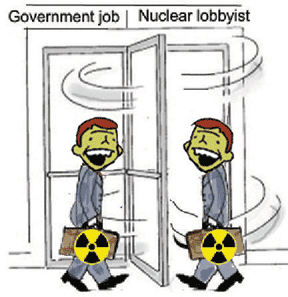
The same Pyne, famously discussed his role as a defence industry consultant with EY whilst he was a sitting member of the Federal Cabinet, a matter which prompted a Senate investigation.
He still works for EY, sits on the board of defence contractor XTEC, is Chair of the Advisory Board of another defence contractor NIOA, and in June last year Arawa Capital announced him as Chair of its Advisory Board and Investment Committee for a fund investing in weapons systems.
In heralding that appointment Arawa specifically referred to the, still unsubstantiated, Scott Morrison announcement of a malicious cyber attack by an unnamed “state-based” actor. Arawa trumpeted Pyne has “unrivalled knowledge of the cyber, intelligence and national security landscape.”
With Pyne on board, Arawa said it “anticipates closing out the initial $50mil capital raising swiftly.” It transpired there was a swift “closing out”, ASIC records show six months later Arawa Capital Pty Ltd was deregistered as a company.
According to research from Michael West Media’s “Revolving Doors” series, Pyne’s numerous board memberships and consultancies put him in direct, or indirect, contact with more than a dozen weapons makers and contractors.
Clearly, talking up a war with China is of no financial benefit to these companies.
Why would China attack Australia?
Should Australia go to war with China in defence of Taiwan? is the title of the Australia Institute report and 42% of its six hundred respondents think China is poised to attack Australia.
How and why?
Those in Australia beating the “drums of war” point to Taiwan as the flashpoint for the next major global conflict. To what end does a first strike on Australia achieve China’s goals in relation to Taiwan?
If Australia has something China wants, it is many times cheaper and easier to buy it than to send your army half way around the world to steal it.
China’s current leadership is presiding over a great deal more diplomatic disasters than triumphs but, if nothing else, the Chinese are pragmatic.
Australia’s rabid China hawks will no doubt dismiss such assessments, saying China doesn’t need to deploy military assets it would simply launch a nuclear strike on a target—which they ignore is home to 1.2 million ethnically Chinese people.
My counter argument?
The policy wonks in Washington, who made you their lapdogs, didn’t throw you a bone because they thought you were smart, they threw you the bone because they knew you were dumb enough to catch it!
This survey’s inconvenient truth
The same number of respondents were polled in Taiwan and only a few more (49 percent) expressed fears of an attack from the mainland. Bear in mind the Taiwanese are of the same Han ethnicity as the majority of Chinese, who moved over from the mainland in the 1680s; the PRC has never given up its claim to what was once part of China; and the island sits just 161 kilometres off the coast of China.
That four in ten Australians should think Beijing—a mere 9,000 kilometres from Canberra—is gearing up for invasion is staggering.
Report author Allan Behm noted, “Given Australia and Taiwan’s historical and geographical differences, it is astounding that Australians could be more fearful than Taiwan in anticipating an attack from China.”
This anticipation is undoubtedly fuelled by Australia’s China hawks, all with close ties to US-funded research groups and patronage from US weapons makers.
However, they should not be too smug in thinking their “drums of war” are resonating.
73 percent of Australians regard the United States as an aggressive nation, while only six in ten Australians believe the US would come to our aid in the event of war with China.
Given Australia has followed the United States into 100 percent of its wars, that Australians would only rate America a 60 percent chance of leaping to our defence is a sobering statistic.
Totally at odds with Prime Minister Morrison and Foreign Minister Maris Payne’s unquestioned support of the US antagonism towards China, 75 percent of Australians think it is in our interests that China and the US “work together towards world peace”. Of concern to the spin merchants inside the government an even higher number of coalition supporters, 79 percent, think peace with China is a good idea.
Despite the US, and Morrison’s, rhetoric of Taiwan being a like-minded democracy of shared values, 76 percent of Taiwanese rate America as an aggressor. Should the US come to Taiwan’s aid in a war with China, only 18 percent of Taiwanese people think they would win.
How reliable are drummers?
By any sensible strategic logic, the dogs of war should remain in their box. Let the drums of war continue to drum up business for the China threat industry and their death-merchant patrons. …..
Liberal-led committee raises concerns about Morrison government’s charity crackdown
Liberal-led committee raises concerns about Morrison government’s charity crackdown, Concetta Fierravanti-Wells fears the regulations could curb political protest and freedom of speech Guardian Daniel Hurst, 16 July 21, A Coalition-chaired committee has raised concerns about the Morrison government’s crackdown on charities suggesting the new regulations could curb certain types of political protests and freedom of speech.
In a newly released letter, the conservative Liberal senator Concetta Fierravanti-Wells also says the government has been too vague in explaining what sorts of offences could lead to charities being deregistered.
An alliance of more than 30 charities welcomed the intervention, with Tim Costello saying it sends “a clear signal that these laws are unprecedented and an unjustified regulatory overreach”.
Late last month, the government said it would press ahead with new regulations to expand the types of offences for which charities could be deregistered, prompting the sector to raise fears the crackdown could silence their advocacy work.
Under the changes, which the government says will reinforce trust and confidence in the sector, the regulator would be empowered to investigate charities engaging in or promoting serious unlawful acts of trespass, vandalism, theft or assault and threatening behaviour.
This will apply regardless of whether they are classified as an indictable offence or the less serious category of summary offences under state and territory laws.
Charities will be prohibited from using their resources – including social media accounts – to “actively promote” others to engage in unlawful activities.
Fierravanti-Wells has written to the assistant treasurer, Michael Sukkar, seeking a response to a range of concerns, including the potential effect on the implied freedom of political communication in Australia.
Fierravanti-Wells is chair of the parliamentary committee that monitors how ministers are making use of their powers to issue regulations.
In her letter to Sukkar on behalf of the committee (PDF), she says while the government has provided some examples of the type of offences to which the rules may apply, “it is unclear what the full scope of the offences may be”.
The government has not provided enough detail about the charities commissioner’s discretionary powers, why they are needed, and any safeguards – even though that information “is important to enable charities to clearly understand their obligations”.
“The committee concerns are particularly amplified noting that the discretionary powers to be exercised by the commissioner may relate to the determination of whether a criminal law has been breached,” Fierravanti-Wells writes.
Similarly, she says, the government has not provided information about whether the measure “may limit registered entities’ implied freedom of political communication, by preventing them from engaging in, or supporting certain activities”.
“This may include limiting their ability to engage in, or support, certain types of political protest,” she writes, without making any assessment as to whether the regulations are constitutional.
Fierravanti-Wells asks Sukkar to explain by 28 July “how the instrument is compliant with the implied freedom of political communication, and whether the explanatory statement can be amended to include this analysis”.
Costello, the chair of the Community Council for Australia and former chief of World Vision Australia, said it was “heartening to see that this important committee shares the concerns of charities from across the sector, which have formed a broad alliance to condemn these egregious regulations”.
“Giving the charity commissioner power to shutter a charity for a minor offence by a member is the equivalent of the electoral commissioner having discretion to deregister the Liberal party because a party member damages someone’s lawn when putting up a sign,” Costello said in a statement on Friday.
Dr Cassandra Goldie, the head of the Australian Council of Social Service, said a healthy democracy was “one where communities and their charities are free to speak up and act in the interests of the people they represent and serve”………… https://www.theguardian.com/australia-news/2021/jul/17/liberal-led-committee-raises-concerns-about-morrison-governments-charity-crackdown
New book ”I Alone Can Fix It” -raises question that Trump could have been ready to launch a nuclear war.
Pelosi feared Trump would launch nuclear weapons in final days, book claims, https://thehill.com/blogs/blog-briefing-room/news/563125-pelosi-feared-trump-would-launch-nuclear-weapons-in-final-daysBY LEXI LONAS – 07/15/21 Speaker Nancy Pelosi (D-Calif.) was fearful former President Trump would launch nuclear weapons in his final days in the White House, according to a new book.
Washington Post journalists Carol Leonnig and Philip Rucker write in “I Alone Can Fix It” that Pelosi called Gen. Mark Milley, the chairman of the Joint Chiefs of Staff, after the Capitol riot to express her concerns about Trump’s behavior, the newspaper reported.
According to the book, she wanted to ensure Trump could not start a war and launch nuclear weapons as one of his final acts in power
“This guy’s crazy,” Pelosi reportedly told Milley. “He’s dangerous. He’s a maniac.”
“Ma’am, I guarantee you that we have checks and balances in the system,” Milley responded, Leonnig and Rucker write.
Trump responded to the excerpts from the book by saying that Pelosi is a “nut job.”
“Nancy Pelosi is a known nut job. Her enraged quotes that she was afraid that I would use nuclear weapons is just more of the same. In fact, I was the one who got us out of wars, not into wars,” Trump said.
They also state that Milley and other military officials feared Trump would attempt a coup to stay in power and considered resigning.
“They may try, but they’re not going to f—— succeed,” Milley reportedly told his deputies when discussing the potential of a coup. “You can’t do this without the military. You can’t do this without the CIA and the FBI. We’re the guys with the guns.”
Milley thought Trump was “the classic authoritarian leader with nothing to lose,” the authors write.
Trump in a statement on Thursday dismissed the allegations in the new book, saying he “never threatened, or spoke about, to anyone, a coup of our Government.”
“So ridiculous!” he said while repeating unfounded allegations of massive election fraud and saying he lost respect for Milley last summer.
The authors interviewed more than 140 people for the book, due out on Tuesday, including Trump himself for more than two hours.
The International Atomic Energy Agency is well aware of that danger we don’t discuss – NUCLEAR TERRORISM

IAEA begins construction of Training Centre to Counter Nuclear Terrorism, NEI Magazine,14 July 2021 The Director General of the International Atomic Energy Agency (IAEA), Rafael Mariano Grossi, on 12 July broke ground for a new facility that will help strengthen countries’ abilities to tackle nuclear terrorism in areas such as the illegal trafficking of nuclear material and the physical protection of facilities and major public events.
The IAEA Nuclear Security Training and Demonstration Centre will be located at the IAEA facility in Seibersdorf, 30 km south of Vienna, and is scheduled to be operational in 2023. “This Centre will help us in supporting countries to remain ahead of the curve in guarding against nuclear terrorism,” Grossi said………….https://www.neimagazine.com/news/newsiaea-begins-construction-of-training-centre-to-counter-nuclear-terrorism-8896130
1 This month.

Australians deserve the truth
about
AUKUS – https://aukuspublicinquiry.com/


PETITION – To: Prime Minister Anthony Albanese and the Australian Labor Government

of the week – Australians for War Powers Reform (AWPR)
To see nuclear-related stories in greater depth and intensity
 Antinuclear