Showdown over millions in mining royalties to Indigenous trust
Showdown over millions in mining royalties to Indigenous trust https://www.theage.com.au/politics/federal/showdown-over-millions-in-mining-royalties-to-indigenous-trust-20210719-p58b31.html, By Adele Ferguson and Deborah Snow, July 20, 2021
A battle for control of millions of dollars in mining revenues that belong to the Adnyamathanha people of South Australia has erupted in the courts, as a trust company fights off efforts by a Commonwealth-appointed administrator to find out where the money has gone.
The revenues derive from two uranium mines operated by US-owned Heathgate Resources on the ancestral lands of the Adnyamathanha, in and around the Flinders Ranges.Adnyamathanha elder Tiger McKenzie says, “All we want is to see the finances.
For nearly two decades the mining company has paid the moneys into an Indigenous-run trust called Rangelea Holdings Pty Ltd, which is meant to hold and distribute the funds to all Adnyamathanha people based on their native title rights.
But Rangelea has refused to open the books to the broader Adnyamathanha community and is also refusing to open them to a special administrator appointed by the federal government regulator, the Office of the Registrar of Indigenous Corporations.
Instead the trust company has mounted a challenge in the courts.
Adnyamathanha man and community advocate Malcolm “Tiger” McKenzie said he was upset and angry at the latest legal developments.
“All we want is to see the finances. Why won’t Rangelea let us see them?” he said.
The case is being closely watched by the mining industry, with implications for Indigenous corporations around the country, which are also in receipt of mining funds.
Special administrator Peter McQuoid told the Herald he’d asked the mining companies, Heathgate and its affiliate Quasar Resources, to stop all payments to Rangelea until such time as Rangelea gave him access to the trust’s financial records.
An estimated $40 million has been paid to Rangelea by the miners since 2003, but many Adnyamathanha say they have seen very little benefit either to themselves or for the community.
Mr McQuoid has been pursuing the matter on behalf of the official native title holder to the lands, the Adnyamathanha Traditional Lands Association (ATLA), which has been under special administration since March last year.
Rangelea last week hit back in the Supreme Court of South Australia, seeking an injunction to force the mining companies to resume their payments to Rangelea.
Mr McQuoid told the Herald that “it’s a fundamental right of a trustee to keep beneficiaries informed as to how their money [royalties] have been spent or distributed”
“I would imagine there will be other trustees around Australia watching this case unfold,” he said.
He said the legal action brought by Rangelea had caused a lot of anxiety in the Adnyamathanha community but he wanted to assure everyone the mining payments were safe.
He described ATLA as “treading water” until such time as the Rangelea issues were resolved. “It is not going to get any easier over the next few months but it is important to get this sorted out,” he said.
Mr McQuoid said the suspension of payments came after several requests to meet Rangelea. But last week Rangelea rejected an offer for the National Native Title Tribunal to facilitate a mediation between ATLA, Rangelea, the regulator and the administrator. Instead, it rushed off to court.
Mr McKenzie said there was a lot of mistrust among Adnyamathanha people about how Rangelea was being run. “We don’t trust Rangelea,” he said.
He said the state of Native Title in Australia was disturbing. “With the resources that have come through over the years, we should be one of the strongest financial and political groups, and we aren’t,” he said.
He said ATLA was the tip of the iceberg and a royal commission was needed to be held to clean up the sector after years of abuse, including some entrenched native title hierarchies that have created a system where benefits get disproportionately directed to “certain families”.
The regulator issued a statement last month saying that, in 2020, Rangelea collected $4 million in royalties between January last year and March this year. “That is a lot of money, I couldn’t believe it,” Mr McKenzie said.
He said Rangelea needed to be wound up and begin again as a more transparent entity that the Adnyamathanha people could trust. No comment was available on Monday from Rangelea.
Wiscasset – just one of thousands of American communities stuck with stranded nuclear wastes.
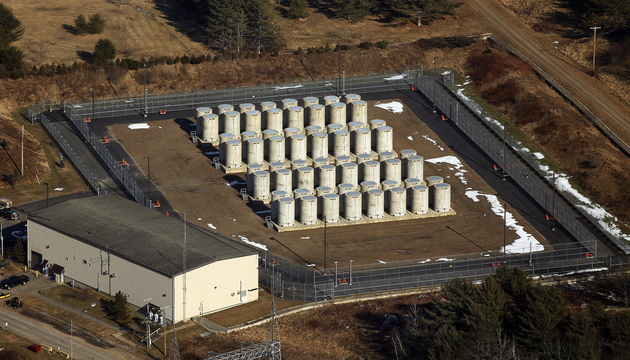
The situation in Wiscasset underscores a thorny issue facing more than 100 communities across the U.S.: What to do with hundreds of thousands of tons of nuclear waste that has no place to go.

All told, the country’s many abandoned nuclear facilities — including Maine Yankee — have cost the federal government billions of dollars, a sum that increases by about $2 million each day
Keeping the spent fuel on the site was meant to be a temporary solution until the dry storage casks, or canisters, could be transported to a permanent home deep underground where they could stay undisturbed for hundreds of thousands of years.
Armed Guards Protect Tons Of Nuclear Waste That Maine Can’t Get Rid Of Maine Public | By By Abigail Curtis, BDN July 19, 2021 In the summertime, the picturesque village of Wiscasset is infamous for its long lines of people hungry to try a lobster roll at Red’s Eats and cars that crawl through town on the often-clogged U.S. Route 1.
But just a few miles south of downtown is a different kind of roadblock: thousands of tons of nuclear waste stored on a coastal peninsula at the now-decommissioned Maine Yankee atomic energy plant that have nowhere to go.
The change in presidential administrations means another chance for the federal government to make good on its promise to remove the waste, so the site can be closed for good. The Biden administration’s Department of Energy seems to be picking up where the Obama administration left off, creating a process for communities to volunteer to host the waste.
“What worries me is that there really isn’t any national leadership right now on this stuff. There isn’t an agency that has a mission and has developed a strategy, that has goals and is willing to act on it,” Don Hudson, the chairman of the Maine Yankee Community Advisory Panel, said. “We’re currently in this limbo.”
That’s a problem because the waste — 1,400 spent nuclear fuel rods housed in 60 cement and steel canisters, plus four canisters of irradiated steel removed from the nuclear reactor when it was taken down — is safe for now, but can’t stay in Wiscasset forever.
The situation in Wiscasset underscores a thorny issue facing more than 100 communities across the U.S.: What to do with hundreds of thousands of tons of nuclear waste that has no place to go.
Securing these remnants of nuclear energy generation is an ongoing task that requires armed guards around the clock and costs Maine Yankee’s owners some $10 million per year, which is being paid for with money from the government.
After the government failed to remove the spent fuel, Maine Yankee and the other two decommissioned nuclear power plants in New England — Connecticut Yankee in East Hampton, Connecticut, and Yankee Atomic in Rowe, Massachusetts — took it to court. So far, they have been awarded a total of $575.5 million in damages during four rounds of litigation, money that has been paid out of the U.S. Judgment fund. A fifth round is happening now, and the lawsuits are likely to continue until the fuel is removed.
Continue readingFukushima effect: Now, South Korea to check food at Olympics for nuclear radiation
Fukushima effect: Now, South Korea to check food at Olympics for nuclear radiation https://www.wionews.com/sports/fukushima-effect-now-south-korea-to-check-food-at-olympics-for-nuclear-radiation-399078WION Web TeamSouth Korea Published: Jul 19, 2021,
According to reports, South Korea will start its exclusive food service for athletes and delegates during the Olympics near the games village and will reportedly screen food content for possible nuclear radiation citing safety concern over the 2011 Fukushima nuclear disaster.
Reports say nearly 420 meals will be delivered from a hotel near the games village to South Korean athletes and others associated with the team.
Small nuclear reactor project cut back to half size, due to financial worries
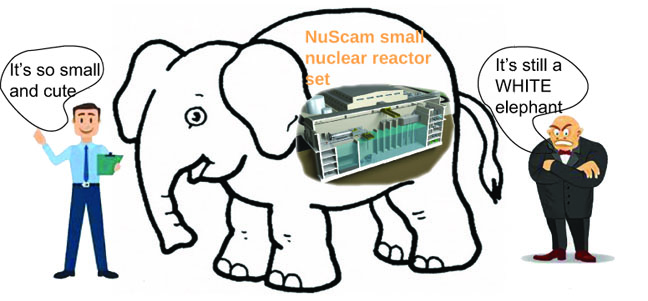
Eastern Idaho nuclear project goes from 12 to six reactors. IDAHO FALLS, Idaho (AP) 19 July 21— A Utah energy cooperative said it will reduce the number of small modular nuclear reactors it will build in Idaho from 12 to six for a first-of-a-kind project [ totally ineffective against global heating] that is part of a federal effort to reduce greenhouse gasses that cause climate change……
The reactors are being built by Portland, Oregon-based NuScale Power. The U.S. Nuclear Regulatory Commission last year approved NuScale’s application for the small modular reactors, the first time U.S. officials approved a design for a small commercial nuclear reactor.
………….. Idaho Falls has committed to buying 5 megawatts of power from the reactors through the Carbon Free Power Project. The city had been committed to 10 megawatts but cut that in half in October amid concerns about financial risks.
……….. Idaho Falls City Council member John Radford said at a July 8 meeting. “This project is something that can help keep this country on this trajectory to a carbon-free future and maybe a better existence for all of us.” – [a complete untruth!! this Councillor is either ignorant, or lying] https://madison.com/news/national/govt-and-politics/eastern-idaho-nuclear-project-goes-from-12-to-six-reactors/article_cb353af6-5659-5baa-8365-dc575aeeba8d.html
City Council in Calgary, Canada, not happy about ”rushed” agreement to own stranded nuclear wastes in Maine.
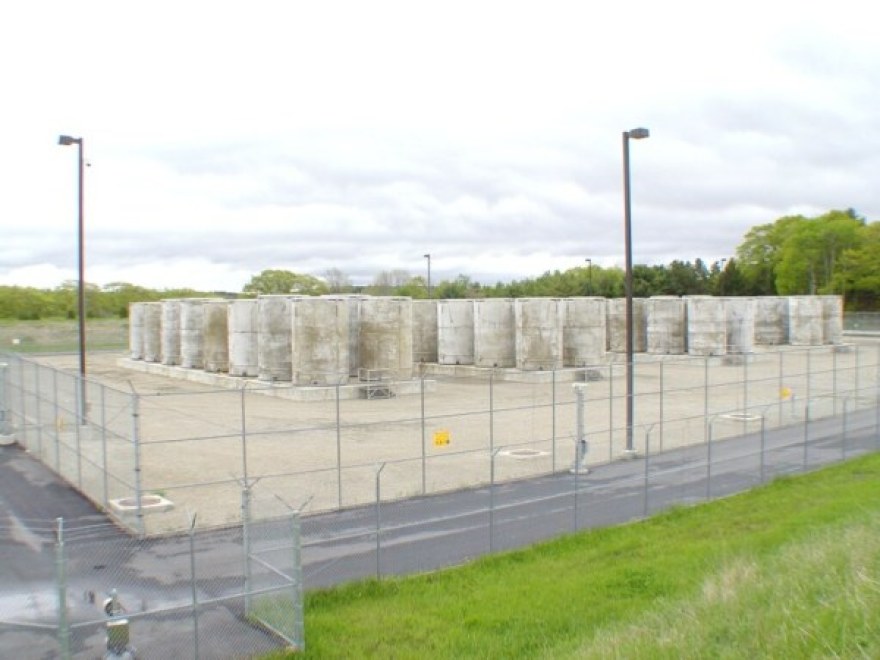
The 11-acre temporary storage site is patrolled around the clock by armed security guards.
The situation concerns Coun. Evan Woolley, who said that Enmax never mentioned the spent nuclear fuel site when the utility briefed city council on its bid for Versant.
Calgarians have a stake in Maine nuclear fuel storage facility AT TOP https://mail.google.com/mail/u/0/?tab=rm&ogbl#inbox/KtbxLthlxCLcsbdhrlMgpmhjJQTWxmvSdV?compose=new
Facility part of the deal when Enmax bought U.S. utility for $1.8 billion, including debt
Scott Dippel · CBC News · Jul 19, 2021 Enmax’s acquisition of a utility in Maine last year came with a nuclear surprise that city council members say they weren’t told about.
When the city-owned Enmax closed on its deal to buy Versant Power (formerly Emera Maine) in March of 2020, it also acquired Versant’s interest in a former nuclear power plant.
The Maine Yankee plant operated from 1972 to 1996 and was decommissioned in 2005.
Versant owned 12 per cent of the electricity generated by the power plant. Its ratepayers also paid up front for 12 per cent of the decommissioning costs.
The plant was torn down and tonnes of spent nuclear fuel rods from the facility were temporarily encased in 64 concrete silos at a protected site in Wiscassett, Maine.
Part of the deal
The president of Versant Power, John Flynn, tells CBC News that Enmax couldn’t avoid taking on the Maine Yankee obligation when it purchased Versant.
“As part of the acquisition, Enmax really didn’t have the opportunity to pick and choose the assets or relationships or obligations it wanted,” said Flynn. “It was making a bid for the entire company.”
He said there isn’t a market for a temporary nuclear waste storage facility, so any buyer of Versant would have had to take on that obligation.
There are approximately $10 million US in annual costs related to the safe operation of the spent nuclear fuel storage site, including monitoring, maintenance and security.
About 38 people work at the site.
But Flynn said this doesn’t actually cost Versant or Enmax any money.
It’s covered by a trust fund which includes legal settlements from the US Department of Energy (DOE), which has a legal responsibility to ultimately remove the tonnes of spent fuel and find a permanent storage site.
Temporary site may be used for years
Flynn said there’s currently no estimate from the DOE on when it may move the materials to a final storage site.
He said the trust fund has enough money in it that the operation of the temporary facility will be covered for years to come.
In some years, Flynn said annual payments from the fund have been made to Versant customers who prepaid the decommissioning costs during the years the nuclear power plant was in operation.
The 11-acre temporary storage site is patrolled around the clock by armed security guards.
“The entire site is surrounded by a security perimeter that has 24/7 security that is of the level you would expect to see on an army base, so it is a hyper-secure site.”
While Enmax says it doesn’t own the spent nuclear fuel, it does list in its annual financial report the historical 12 per cent interest in Maine Yankee.
Council kept in dark
The situation concerns Coun. Evan Woolley, who said that Enmax never mentioned the spent nuclear fuel site when the utility briefed city council on its bid for Versant.
He is one of several council members contacted by CBC News who said they were unaware of that part of the $1.3 billion acquisition, which also included $500 million in debt.
Owning 12 per cent of a company that owns a bunch of nuclear waste has not only reputational risk but also real risk in terms of the world that we live in,” said Woolley.
The Ward 8 councillor, who is also the chair of council’s audit committee, said he would have liked to have known this information before council approved Enmax’s purchase.
“For us to not have been made aware of that is unacceptable,” said Woolley.
“Enmax and now Versant Power, which was Emera Maine, is owned by Calgarians. So council and the shareholder are accountable for that decision.”
Outside eyes needed
He describes Enmax’s pitch to city council to approve its takeover of the company in Maine as “rushed.”
His preference is that in future, a third party could assess such business opportunities for council and make a recommendation.
That perspective could come from the city’s chief financial officer, the city solicitor or an external consultant.
A report is expected before the audit committee in September, which he said could result in changes that could help ensure Enmax and all of the city’s wholly-owned subsidiaries are on the same page as city council in the future.
He describes Enmax as “the massive gorilla in the room in terms of its size and scale.” “The risk appetite of Enmax versus the risk appetite of a shareholder are different. And that’s where we need to provide better alignment,” said Woolley.
If council approves of any changes for its subsidiaries, he said it would mean that another transaction like the Versant purchase could not occur in the way that it did.
Canada’s small nuclear reactor project is looking like just a pipe-dream.
Globe Climate: Canada wants nuclear to power the future. But how? SIERRA BEIN Matthew McClearn is an investigative reporter and data journalist with The Globe. For this week’sdeeper dive, he talks about Canada’s nuclear ambitions. Globe and Mail, 19 July 21
Senior government officials, notably federal Natural Resources Minister Seamus O’Regan, say small modular reactors (SMRs) will help Canada achieve net-zero carbon emissions by mid-century. There’s just one problem: it’s not clear yet whether any will be built.
To be sure, many promises made by SMR vendors seem compelling. By taking advantage of factory-style mass production, they’re supposed to be far cheaper than previous generations of reactors, which tended to be massive and prone to cost overruns. They’d also be easier to deploy……..
A mad scramble to deliver on these promises is now underway. Ontario Power Generation—by far Canada’s most experienced nuclear station operator—plans to select a vendor to build a SMR at its Darlington Station by 2028. Further out, Saskatchewan is considering whether to order its own SMRs to replace coal-fired plants.
Accomplishing all that would silence numerous critics and naysayers. But as I explain in my most recent story, history is littered with reactors that failed to live up to their promises. . Many SMR vendors are very early-stage companies which face years of grueling, expensive R&D work to advance their designs to the point they could actually be built. And they’re competing against renewable technologies including wind and solar, which utilities can purchase and deploy today. It may be premature to count on SMRs to help meet Canada’s emissions targets. https://www.theglobeandmail.com/canada/article-globe-climate-canada-wants-nuclear-to-power-the-future-but-how/https://www.theglobeandmail.com/canada/article-globe-climate-canada-wants-nuclear-to-power-the-future-but-how/
After the lab-leak theory, US-Chinese relations head downhill
The United States and China could work together in sharing biosecurity-related samples, genetic materials and data, developing protocols and countermeasures against biosafety accidents, promoting transparency in dual-use research of concern, countering disinformation, and strengthening compliance with global health laws, including the Biological Weapons Convention and the International Health Regulations.
But the US push to investigate the lab leak and the political context in both countries likely puts the goal of finding the origins of COVID-19 and many other ambitions at risk………
After the lab-leak theory, US-Chinese relations head downhill, Bulletin of the Atomic Scientists, By Yanzhong Huang | July 16, 2021 In October, 2018, more than a year before the COVID-19 pandemic, dozens of international trainees visited the Wuhan Institute of Virology for an expansive workshop meant to “promote the cooperation between China and other countries in the field of biosafety.” The attendees, many from developing countries, took classes on virus handling and bioethics, they listened to speeches by Chinese and UN arms control officials, and learned from eminent scientists. For the organizers, the 10-day event was a chance to showcase China’s expertise in biosafety management. And for this, they could hardly have chosen a more perfect location, a prestigious virology institute that had just months earlier opened the country’s first state-of-the-art, specialized facility for safely studying the world’s most dangerous pathogens, a biosafety-level (BSL) 4 lab.
The marketing plan hasn’t paid out.
Two years on, the lofty vision the workshop at the advanced Chinese biolab embodied—one of international collaboration on disease control and scientific research—has disintegrated as the United States and China tangle in an increasingly nasty fight over the origins of the still-raging coronavirus pandemic. In the United States, President Joe Biden, prominent scientists, and once-skeptical mainstream media outlets have collectively revived a hypothesis that was initially largely framed as a conspiracy theory, that the COVID-19 virus could have escaped from the Wuhan lab. Meanwhile, in China, many are convinced COVID-19 started somewhere else, outside of the country.
The Wuhan Institute of Virology now sits at the forefront of the US-China row on the origins of a once-in-a-century pandemic.
Continue readingWind output nears record levels as two big wind farms join the grid — RenewEconomy

Australia’s main grid came close to a new record for wind energy output over the weekend, as two new wind projects began production for the first time. The post Wind output nears record levels as two big wind farms join the grid appeared first on RenewEconomy.
Wind output nears record levels as two big wind farms join the grid — RenewEconomy
Pedal to the floor: Electric vehicles sales are taking off around the world — RenewEconomy

Electric vehicles sales are taking off around the world. Can Australia seize the opportunity? The post Pedal to the floor: Electric vehicles sales are taking off around the world appeared first on RenewEconomy.
Pedal to the floor: Electric vehicles sales are taking off around the world — RenewEconomy
Enel Green Power Australia joins Monash University to support the next generation of sustainability leaders — RenewEconomy

Enel Green Power Australia (EGPA) has partnered with Monash University to support the launch of its innovative and award-winning Green Steps program for 2021. The post Enel Green Power Australia joins Monash University to support the next generation of sustainability leaders appeared first on RenewEconomy.
Enel Green Power Australia joins Monash University to support the next generation of sustainability leaders — RenewEconomy
July 19 Energy News — geoharvey

Opinion: ¶ “BBC: Electric Cars Will Be “Biggest Revolution In Motoring” Since 1913″ • Many observers forecast a transition to electric cars much sooner than expected. Now, BBC is joining the fray. “What makes the end of the internal combustion engine inevitable is a technological revolution. And technological revolutions tend to happen very quickly.” [CleanTechnica] […]
July 19 Energy News — geoharvey
The week in nuclear news
Today, Dr Helen Caldicott speaks out forcefully on the omnicidal threat of nuclear war, on male aggression, and the need for women to take control in national governments.
On matters nuclear – not much is happening – news items this week, from UK, Canada, France and USA show that nuclear development is stalling. Meanwhile renewable energy is charging ahead globally – cheaper and faster. I am not able to keep up with solar, wind, developments etc.
CORONAVIRUS – What’s happening in Canada and around the world.
CLIMATE. Cascading Tipping Points & Permafrost. Germany the latest victim of extreme weather.
A bit of good news. Huge Supply of Water is Saved From Evaporation When Solar Panels Are Built Over Canals
AUSTRALIA
- ANSTO aims to speed up return to Australia of highly hazardous nuclear wastes.
- Military exercises put the Great Barrier Reef in danger. US and Allies’ military machine – out of Afghanistan (where it’s needed)and into the Pacific – against its new enemy – The Great Barrier Reef.
- Australia’s weapons lobby drumming up fear of nuclear attack by China, against all logic.
- Liberal-led committee raises concerns about Morrison government’s charity crackdown.
- Australian cities not prepared for the coming heatwaves- poor urban planning.
Greenland moves toward a stricter ban on uranium mining.
INTERNATIONAL.
With all its wisdom, the human race is killing itself.
As the world starts to panic over climate change, nuclear evangelists offer spurious solutions.
British court ruling heightens danger of Assange extradition to the US.
How Right-Wing Extremists Pose A Nuclear Threat.
The International Atomic Energy Agency is well aware of that danger we don’t discuss – NUCLEAR TERRORISM.
Automation in nuclear weapon systems: lessons from the man who saved the world.
The Catholic Worker Movement, and its anti-nuclear heroes in prison.
3rd-gen Nagasaki A-bomb survivor continuing decades-long work for nuclear free world
ANSTO aims to speed up return to Australia of highly hazardous nuclear wastes
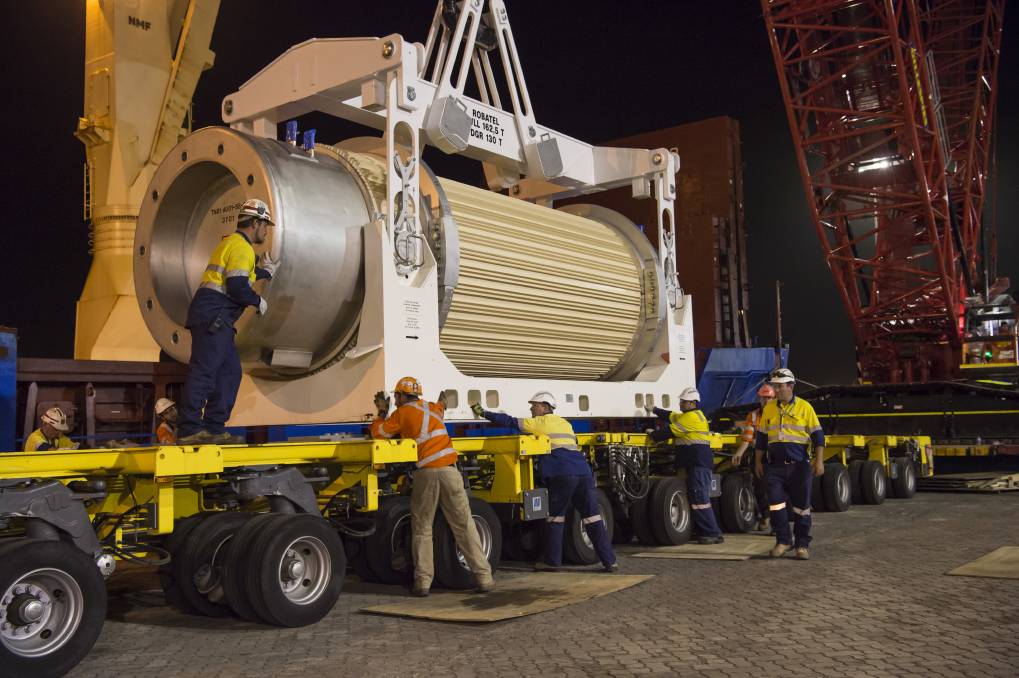
It is ‘highly hazardous’ nuclear wastes... said previously to be due “before 2023”
There is a federal PWC Inquiry on now into ANSTO ILW works – input due by Fri 30 July.
ANSTO seeks to repatriate more nuclear waste from overseas https://www.illawarramercury.com.au/story/7345341/plan-to-bring-back-more-of-australias-nuclear-waste/
Natalie Croxon,
Australia’s nuclear agency plans to bring back a second cask of its radioactive waste back from overseas, following a major operation that saw a container unloaded at Port Kembla in 2015.
Australia does not have the capacity to reprocess the spent fuel rods from its nuclear operations, so the Australian Nuclear Science and Technology Organisation sends these overseas where any remaining uranium is stripped and recycled.
The remainder of the waste goes through a process in which it is solidified in molten glass and placed in 500 kilogram canisters.
These canisters are then put into a transport cask with 20 centimetre-thick walls made from forged steel for shipping to Australia.
Subject to approvals, ANSTO plans to bring back its second of these casks from overseas next year, this time from the United Kingdom.
It will be taken to ANSTO’s interim waste storage facility at Lucas Heights in southern Sydney.
While ANSTO will not yet disclose the route and timing of the transport for security reasons, the 2015 operation saw the waste shipped into Port Kembla before it was taken by road to Lucas Heights.
ANSTO says between 75 and 80 per cent of the nuclear waste it produces is associated with the production of nuclear medicine.
“For decades, Australians have benefited from nuclear medicine, and environmental, industrial and minerals research undertaken at Lucas Heights,” ANSTO’s chief nuclear officer Hef Griffiths said.
“Those benefits include production of millions of doses of nuclear medicine, increased profitability of our mining industry, irradiation of silicon used in everything from fast trains to hybrid cars, and a base of knowledge that secures Australia’s position in international nuclear non-proliferation talks.
“Along with these benefits comes a responsibility for Australia to safely deal with the by-products including radioactive waste.
“Australia does not shy away from that responsibility, and ANSTO has comprehensive plans to safely manage it.”
On a scale of low to high, the waste to be repatriated from the UK is classed as intermediate-level waste: this means it requires additional shielding during handling, transport and storage, but does not have levels of radiation as high as high-level waste.
ANSTO says the cask to be used for this waste is so heavily shielded that there will be no detectable traces of radiation above background levels for someone standing right beside it.
It will be stored at ANSTO’s interim waste facility until a national nuclear waste management facility is established around the end of the decade.
With all its wisdom, the human race is killing itself
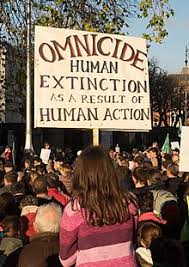
HELEN CALDICOTT: With all its wisdom, the human race is killing itself, Independent Australia, By Helen Caldicott | 17 July 2021 From a historical perspective, Homo sapiens are an evolutionary aberrant.
Unlike other forms of life, armed with an opposing thumb and a highly developed and advanced neocortex, we have, over time, developed the capacity to destroy most organisms on planet Earth.
This has been accomplished either with the energy of heat, light and power that exist inside the sun or, conversely, by slowly cooking the planet as we release fossil gases — carbon dioxide and methane………..
Little did people know when they developed steam engines, motor cars and factories that were powered by these fossil fuels that within several centuries, such wonderful inventions which made life incredibly easy would, in the long run, threaten the biosphere with eventual extinction.
And ever since humans evolved, the male species has seen fit to harness the overwhelming power of testosterone to kill invading species, but more to the point, slaughter his fellow constituents for territorial gains, power plays and control dynamics. Yes, it is true that other male species will fight to the kill over mating imperatives, food or territorial control, but they have no access to reason, scientific knowledge and moral imperatives.
Congruent with this history, it is obvious that as we became more obsessed with gaining scientific knowledge, such wisdom would be put to better methods of killing.
So where does the human race stand now? Nine countries now own nuclear weapons, with the USA and Russia greatly predominating, owning 94 per cent of all the approximately 14,000 in the world……….
The U.S. now spends over one trillion dollars a year on potential murder, all dressed up in the name of “national defence” which is pure rubbish. Because let’s face it, America has no enemies, Russia has joined the capitalist sphere, China is, at the moment, a little belligerent but the U.S. more so with 800 military bases in 80 foreign countries.
For the human race to survive, it is imperative that we encourage and foster friendship with all nations on Earth, that we reign in the killing testosterone instinct, that women with their nurturing hormones rapidly take control of national governments and pursuant to the teachings of the great moral profits – Jesus, Buddha, Muhammad, and all others – that we rapidly learn to live in peace with each other. Or let’s face it, we are doomed and will take the wonders of billions of years of creation with us. https://independentaustralia.net/article-display/helen-caldicott-with-all-its-wisdom-the-human-race-is-killing-itself,15300
Nuclear colonialism – Australian artist’s work censored in UK
An Australian artist has accused a group of Conservative councillors of
using “bullying strategies” to silence and censor her work after an
installation she created to highlight Britain’s “identity as a colonial
nuclear state” was removed from a park in Essex. The councillors
threatened to “take action against the work” if it was not removed,
according to Metal, the arts organisation that commissioned and then
removed the installation from Gunners Park in Southend.
Guardian 17th July 2021
21
1 This month.

Australians deserve the truth
about
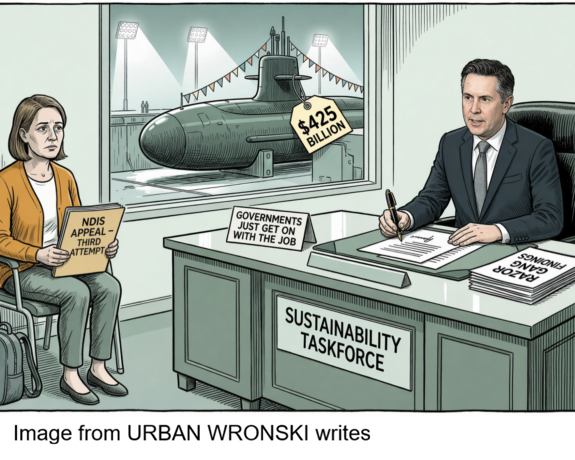
AUKUS – https://aukuspublicinquiry.com/

PETITION – To: Prime Minister Anthony Albanese and the Australian Labor Government

of the week – Australians for War Powers Reform (AWPR)
To see nuclear-related stories in greater depth and intensity
 Antinuclear