July 4 Energy News — geoharvey

Opinion: ¶ “Can We Trust Our Power Plants To Keep Us Cool During Dangerous Heat?” • In this week’s astonishing temperatures, reliable electricity and the air conditioning it powers were often the only thing keeping dangerous, even deadly heat at bay. But how do different types of power plants actually stand up to the soaring […]
July 4 Energy News — geoharvey
Premier Marshall should stand up for South Australia: Reject the federal Liberal’s unlawful, unfair, unsafe and unnecessary nuclear waste dump plan for SA
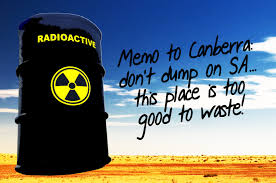
Premier Marshall should stand up for our State: Reject the federal Liberal’s unlawful, unfair, unsafe and unnecessary nuclear waste dump plan for SA
David Noonan, July 2021 Premier Stephen Marshall must stand up for South Australia’s interests and push back on federal Liberal government imposition of an unlawful nuclear waste dump in our State.
Premier Marshall should stand up for our State: Reject the federal Liberal’s unlawful, unfair, unsafe and unnecessary nuclear waste dump plan for SA
David Noonan, July 2021 Premier Stephen Marshall must stand up for South Australia’s interests and push back on federal Liberal government imposition of an unlawful nuclear waste dump in our State.
- The objects of this Act are to protect the health, safety and welfare of the people of South Australia and to protect the environment in which they live by prohibiting the establishment of certain nuclear waste storage facilities in this State.
- As Premier you should give all South Australian’s a Say and take action to instigate a required public inquiry into the impacts of a nuclear waste storage facility on the environmental and socio-economic wellbeing of this State. The NUCLEAR WASTE STORAGE FACILITY (PROHIBITION) ACT 2000, Section 14 states:
- If a licence, exemption or other authority to construct or operate a nuclear waste storage facility in this State is granted under a law of the Commonwealth, the Environment, Resources and Development Committee of Parliament must inquire into, consider and report on the likely impact of that facility on the environment and socio-economic wellbeing of this State.
The Port of Whyalla is targeted for shipments of ANSTO nuclear fuel waste and communities along proposed nuclear waste transport routes across our State all have a right to have a Say.
Nuclear waste dumping is a Human Rights issue for our fellow Indigenous South Australian’s. As Minister for Aboriginal Affairs, Stephen Marshall should support the Barngarla People’s right to say No to nuclear waste storage on their country:
- The “United Nations Declaration on the Rights of Indigenous People” (2007) Article 29 calls on States “to ensure that no storage or disposal of hazardous material shall take place in the lands or territories of indigenous peoples without their free prior and informed consent.”
- The federal Liberal government proposes to ship and truck nuclear waste across SA into indefinite above ground storage in a fancy shed at Napandee on Eyre Peninsula – without any capacity or even a plan for its eventual permanent disposal.
- SA’s clean green reputation, and our prime agricultural lands and farming communities, deserve better than untenable imposition of toxic nuclear wastes in a shoddy reckless federal plan to park and dump wastes that require isolation from the environment for 10,000 years.95 per cent of Intermediate Level Waste (ILW) in Australia are owned by Commonwealth government agencies, the vast majority is produced and held at ANSTO’s Lucas Heights reactor facility in Sydney – where it should stay in secure extended storage.
- The federal Budget provided $60 million for further decades of extended storage capacity for ILW at ANSTO Lucas Heights, building onto the operation of existing stores to 2026.
- In 2015 a separate Interim Waste Store for ANSTO nuclear fuel waste was built at Lucas Heights with a design capacity for 40 years. This store received a shipment of reprocessed nuclear fuel waste from France in 2015 and is intended to now receive a shipment from the UK in 2022, and is safety rated to 2055.
- The CEO of the federal nuclear regulator ARPANSA stated in evidence to a Senate Inquiry in 2020: “Waste can be safely stored at Lucas Heights for decades to come.”
- The federal Liberal government proposes to bring all these nuclear wastes to SA, along with decades of ANSTO’s further proposed nuclear waste production and future shipments of ANSTO reprocessed nuclear waste from France.
Premier – Stand up for our State!
Rooftop solar systems are getting bigger, and now average 8.7kW — RenewEconomy

Australia rooftop solar systems are now bigger than ever, with the rush of business installations pushing average sizes to more than 8.7kW. The post Rooftop solar systems are getting bigger, and now average 8.7kW appeared first on RenewEconomy.
Rooftop solar systems are getting bigger, and now average 8.7kW — RenewEconomy
Biden’s Bombing of Iraq and Syria Only Serves the Weapons Industry, by Glenn Greenwald — Rise Up Times

“The U.S. government is a lawless entity. It violates the law, including its own Constitution, whenever it wants. The requirement that no wars be fought absent congressional authority is not some ancillary bureaucratic annoyance…”
Biden’s Bombing of Iraq and Syria Only Serves the Weapons Industry, by Glenn Greenwald — Rise Up Times
July 3 Energy News — geoharvey

Opinion: ¶ “Decarbonizing Our Supply Chains” • Decarbonizing supply chains and mitigating the environmental footprint of global production are critical for environmental preservation and social stability. Examining the case study of Indian cotton, how will the emission reduction imperative, in turn, protect workers from changing climate? [CleanTechnica] Cotton field (Trisha Downing, Unsplash) Science and Technology: […]
July 3 Energy News — geoharvey
Barnaby Joyce is back as Deputy PM – pushing for nuclear and coal
Barnaby Joyce says Australia needs low-emission coal stations and backs nuclear power
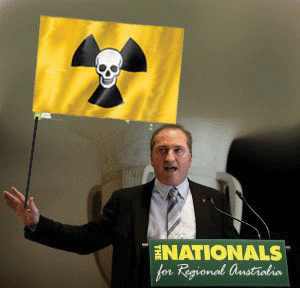
Joyce said small modular reactors could “power the city of Tamworth, the city of Armidale and a lot of other towns beside” with technology you could transport “on the back of a truck”
Deputy prime minister also blasts banks for managing carbon risk and supports coal exports in Sky News interview, Guardian, Katharine Murphy and Amy Remeikis 29 June 21
The newly returned Nationals leader and deputy prime minister Barnaby Joyce says Australia needs high-efficiency, low-emission coal power stations, as well as revenue from continuing exports of thermal coal, to bankroll social services.
While metropolitan Liberals have made it clear they will not support new coal-fired power, and the International Energy Agency has advised wealthy countries to phase out coal power plants by the end of the decade, Joyce used an interview on Sky News to champion modern coal plants, and declare he was in favour of nuclear reactors………..
Joyce told Jones he was a supporter of Australia adopting nuclear power if people wanted zero-emission power generation. But he said whether the nation went down that road was ultimately a matter for voters.
“I can’t change the nuclear position,” the Nationals leader said. “I believe we should have nuclear power and, and I believe that anything to make our nation a stronger place, this is the path we should be going down,………
Joyce said small modular reactors could “power the city of Tamworth, the city of Armidale and a lot of other towns beside” with technology you could transport “on the back of a truck”.https://www.theguardian.com/australia-news/2021/jun/29/barnaby-joyce-says-australia-needs-low-emission-coal-stations-and-backs-nuclear-power
Australia needs loud, fast and furious climate policy – now more than ever — RenewEconomy

To get out of Australia’s climate funk we need to make climate policy loud again, and challenge Morrison’s fantasy of a quiet and unambitious Australia. The post Australia needs loud, fast and furious climate policy – now more than ever appeared first on RenewEconomy.
Australia needs loud, fast and furious climate policy – now more than ever — RenewEconomy
Even this conservative journal recognises renewables as the only meaningful future energy source – nuclear is irrelevant
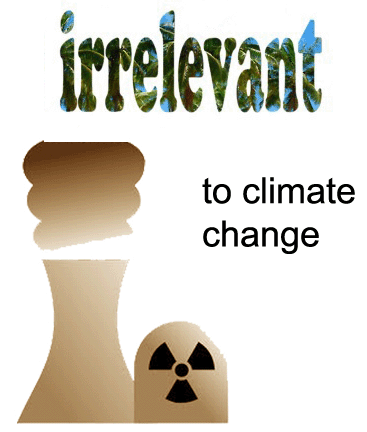
Regardless of what the nuclear industry itself wants, the signs are that renewables may be defining themselves not only as the cheapest, but also as the only meaningful energy proposal for the future.
Let’s Leave Nuclear Power In The Past https://www.forbes.com/sites/enriquedans/2021/06/30/lets-leave-nuclear-power-in-thepast/?sh=4beadbb23864 Enrique Dans, Senior Contributor
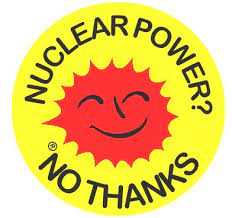
It makes a lot of sense to start this article by linking to the old smiling sun badge that symbolizes the opposition to nuclear energy, to talk about the increasingly negative perceptions of nuclear power around the world, to the point where, with the exception of a few unconditional enthusiasts, it is beginning to be seen as a technology with less and less of a role in the world’s energy future.

During the 1950s, the term atomic age was widely used to describe a future where all energy would be based on nuclear fission, one in which energy would be so cheap and inexhaustible that it wouldn’t be worth metering it, to the point that it would be used not only to make weapons or provide energy, but even to power cars like the Ford Nucleon, to heat water in swimming pools, to keep artificial hearts beating and even for the mechanism of a ballpoint pen.
What happened? First, the obvious problem of safety: in a world with an increasingly unstable climate and more extreme weather phenomena, nuclear power plants are, as the tenth anniversary of the Fukushima accident on March 11 reminded us, a reckless option. Germany became the first major economy to commit to retiring its nuclear power plants by 2022, but China also seems to be losing interest in the technology due to cost and safety concerns, while nuclear power is relegated to a token role in the US energy map.

Large reactors cannot compete with low renewable energy prices. Many of them have already closed, and furthermore, due to their high cost, complexity and difficulties, it seems very unlikely that any new large plants will be built in the coming decades. Nuclear power has turned out to be a promise that never materializes, and looks increasingly remote as an answer to the climate emergency.
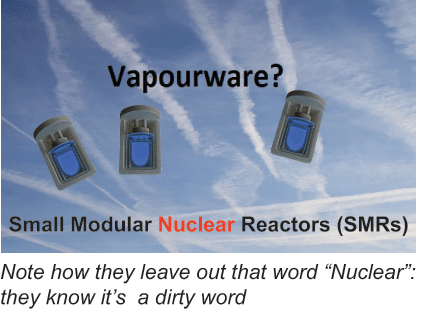
Some point to small modular reactors (SMRs) as the only option that could be implemented on a significant scale in the climate-critical period of the next few decades, but quite a few analyses suggest this is extremely unlikely to happen.
The option that seemed the most obvious can easily be sidelined as new technologies develop and undergo their own economies of scale. Nuclear power, which still generates around 10% of the world’s total energy, is now seen as too slow, too expensive and too dangerous, something no one wants to see being built near their home or town. Regardless of what the nuclear industry itself wants, the signs are that renewables may be defining themselves not only as the cheapest, but also as the only meaningful energy proposal for the future.
Canada is a warning: more and more of the world will soon be too hot for humans
 | |||

Canada is a warning: more and more of the world will soon be too hot for humans https://www.theguardian.com/commentisfree/2021/jun/30/canada-temperatures-limits-human-climate-emergency-earth# Simon Lewis How did a small town in Canada become one of the hottest places on Earth?
Without an immediate global effort to combat the climate emergency, the Earth’s uninhabitable areas will keep growing
The climate crisis means that summer is a time of increasingly dangerous heat. This week in the Pacific north-west, temperature records are not just being broken, they are being obliterated. Temperatures reached a shocking 47.9C in British Columbia, Canada. Amid temperatures more typically found in the Sahara desert, dozens have died of heat stress, with “roads buckling and power cables melting”.
Another heatwave earlier in June saw five Middle East countries top 50°C. The extreme heat reached Pakistan, where 20 children in one class were reported to have fallen unconscious and needed hospital treatment for heat stress. Thankfully, they all survived.
Additional warming from greenhouse gas emissions means that such extreme heatwaves are more likely and scientists can now calculate the increase in their probability. For example, the 2019 European heatwave that killed 2,500 people was five times more likely than it would have been without global warming.
In most places, extreme heatwaves outside the usual range for a region will cause problems, from disrupting the economy to widespread mortality, particularly among the young and old. Yet in places in the Middle East and Asia something truly terrifying is emerging: the creation of unliveable heat.
While humans can survive temperatures of well over 50C when humidity is low, when both temperatures and humidity are high, neither sweating nor soaking ourselves can cool us. What matters is the “wet-bulb” temperature – given by a thermometer covered in a wet cloth – which shows the temperature at which evaporative cooling from sweat or water occurs. Humans cannot survive prolonged exposure to a wet-bulb temperature beyond 35C because there is no way to cool our bodies. Not even in the shade, and not even with unlimited water.
In most places, extreme heatwaves outside the usual range for a region will cause problems, from disrupting the economy to widespread mortality, particularly among the young and old. Yet in places in the Middle East and Asia something truly terrifying is emerging: the creation of unliveable heat.
While humans can survive temperatures of well over 50C when humidity is low, when both temperatures and humidity are high, neither sweating nor soaking ourselves can cool us. What matters is the “wet-bulb” temperature – given by a thermometer covered in a wet cloth – which shows the temperature at which evaporative cooling from sweat or water occurs. Humans cannot survive prolonged exposure to a wet-bulb temperature beyond 35C because there is no way to cool our bodies. Not even in the shade, and not even with unlimited water.
Second, prepare for the inevitable heatwaves of the future. Emergency public health planning is the initial priority: getting essential information to people and moving vulnerable people into air-conditioned locations. Heatwave forecasts should include wet-bulb temperatures so that people can learn to understand the dangers.
Plans should account for the fact that heatwaves intensify structural inequalities. Poorer neighbourhoods typically have fewer green spaces and so heat up more, while outdoor workers, often poorly paid, are especially vulnerable. The rich also buy up cooling equipment at high prices once a heatwave is underway and have many more options to flee, underscoring the importance of public health planning.
Beyond crisis management, governments need to invest in making countries function in the new climate we are creating, including the extremes. In climate policy terms this is known as “adaptation”.
Of paramount importance is energy supplies being resilient to heatwaves, as people will be relying on electricity for cooling from air-conditioning units, fans and freezers, which are all life-savers in a heatwave. Similarly, internet communications and data centres need to be future-proofed, as these are essential services that can struggle in the heat.
Beyond this, new regulations are needed to allow buildings to keep cool and for transport systems, from roads to trains, to be able to operate under much higher temperature extremes.
Many of these changes can meet other challenges. Retro-fitting homes to be energy-efficient is also the perfect opportunity to modify them to also keep us cool. For example, installing electric heat pumps to warm houses in the winter means that in the summer they can also be switched to run in reverse to work as a cooling system. Cities can be kept cooler with green roofs and more green spaces, which also make them better places to live.
The final task is future-proofing agriculture and the wider ecosystems we all ultimately rely on. Heat can cause havoc with crop production. In Bangladesh, just two days of hot air in April this year destroyed 68,000 hectares of rice, affecting over 300,000 farmers with losses of US$39m (£28m). New heat-tolerant varieties of crops need developing and deploying. The alternative is higher food costs and food price spikes with the increased poverty and civil unrest that typically accompanies them.
Given these immense challenges how are governments doing on climate adaptation? Very poorly. The Paris agreement on climate change obliged countries to submit their adaptation plans, but only 13 countries have done so. One of those is the UK, but government plans were judged by its own independent advisors to have “failed to keep pace with the worsening reality of climate risk”.
The Glasgow Cop26 climate talks will need to put the spotlight on adaptation planning and funding for vulnerable countries. To curtail the impacts of ever more ferocious heatwaves, reducing emissions will need to go hand in hand with adapting to the swelteringly hot world we are creating. Stabilising the climate by 2050 is well within the timeframe of one working lifetime, as is adapting to allow us all to prosper in this new world. There is no time to lose.
- Simon Lewis is professor of global change science at University College London and University of Leeds
Hundreds dead as record-breaking heat wave hits Canada and United States

Key Points
Record highs of 4.5 degrees Centrigrade are attributed to climate change.
233 deaths have been reported beteen Friday and Monday in British Columbia
Schools and Covid-19 vaccination centres have been forced to close
Hundreds dead as record-breaking heat wave hits Canada and United States, ABC, Scores of deaths in Canada’s Vancouver area and large wildfires are likely linked to a gruelling heat wave, authorities said Tuesday, as the country recorded its highest-ever temperature amid scorching conditions that extended to the Pacific Northwest region of the United States.
At least 134 people have died suddenly since Friday in the Vancouver area, according to figures released by the region’s city police department and the Royal Canadian Mounted police.
The Vancouver Police Department alone said it had responded to more than 65 sudden deaths since Friday, with the vast majority “related to the heat.”
The chief coroner for the province of British Columbia, which includes Vancouver, said that it had “experienced a significant increase in deaths reported where it is suspected that extreme heat has been contributory.”
The service said in a statement it recorded 233 deaths in the wider British Columbia area between Friday and Monday, compared with 130 on average.
The deaths came as Canada set a new all-time high temperature record for a third day in a row Tuesday, reaching 49.5 degrees Celsius in Lytton, British Columbia, about 250 kilometres east of Vancouver, the country’s weather service, Environment Canada, reported.
Vancouver has never experienced heat like this, and sadly dozens of people are dying because of it,” police sergeant Steve Addison said.
Climate change is causing record-setting temperatures to become more frequent.
Globally, the decade to 2019 was the hottest recorded, and the five hottest years have all occurred within the last five years.
The scorching heat stretching from the US state of Oregon to Canada’s Arctic territories has been blamed on a high-pressure ridge trapping warm air in the region.
Temperatures in the US Pacific Northwest cities of Portland, Oregon and Seattle, Washington reached levels not seen since record-keeping began in the 1940s.
Homes are being evacuated due to wildfires…………… https://www.abc.net.au/news/2021-06-30/heatwave-kills-dozens-in-canada-us/100255480
Government economists accept reality and slash coal export forecasts — RenewEconomy

The government’s resources forecaster has significantly revised downwards their predictions of thermal coal exports. Is this the beginning of the end? The post Government economists accept reality and slash coal export forecasts appeared first on RenewEconomy.
Government economists accept reality and slash coal export forecasts — RenewEconomy
Conservative group says Germany could reach 100% renewables by 2030 at low cost — RenewEconomy

Conservative group says Germany could reach 100 pct renewables by 2030, and save $100 billion a year on energy imports. The post Conservative group says Germany could reach 100% renewables by 2030 at low cost appeared first on RenewEconomy.
Conservative group says Germany could reach 100% renewables by 2030 at low cost — RenewEconomy
| The conservative climate group KlimaUnion (ClimateUnion), which is made up of party members of the governing CDU/CSU alliance, has released a position paper in which the members argue that Germany could become the world’s first industrialised country running on 100-percent renewable energy supply as early as 2030 and simultaneously reduce citizens’ expenses on transport, heating and power use. The group was founded in April with the aim of pushing the conservative bloc to adopt climate policy in line with the Paris Agreement’s 1.5°C target. In the paper, KlimaUnion argues that Germany could save up to 63 billion euros ($A100 billion) in energy imports per year if it manages to achieve a complete transition to renewable energy, which could be turned into a “growth booster” in the wake of the coronavirus pandemic. Renew Economy 30th June 2021 https://reneweconomy.com.au/conservative-group-says-germany-could-reach-100-renewables-by-2030-at-low-cost/ |
Video: New electric motorcycle launched in Australia — RenewEconomy

Nigel Morris test rides the all-new electric Evoke, and talks to its distributors. The post Video: New electric motorcycle launched in Australia appeared first on RenewEconomy.
Video: New electric motorcycle launched in Australia — RenewEconomy
June 30 Energy News — geoharvey

Opinion: ¶ “Japan’s Nuclear Wastewater Plan Clouded By Politics” • The Japanese government’s approval of a plan to discharge treated radioactive water stored at the Fukushima Daiichi nuclear plant into the Pacific Ocean stands out as a reversal of a decade of nuclear safety reform in Japan. Indeed, the issue suffers from an unfortunate lack […]
June 30 Energy News — geoharvey
Nuclear news – this last week of June
Pandemic. Daily Update: What you need to know about the coronavirus around the world right now. World Coronavirus Dispatch: Three studies hint at where pandemic is headed.
Oh dear – I promised myself that I would not digress off into the pandemic discussion. But – I’m finding it scary – to come across people who think that the pandemic is not real, or that vaccination is some plot to take over the world, or who’ve decided that they don’t need vaccination.. Dammit – vaccination is our best bet.……
Climate. As if anti-vacc isn’t enough to worry about, now we’ve got climate complacency – possibly more dangerous than climate denialism – as global heating moves on inexorably. Hundreds of millions of people worldwide at risk from rising sea levels. Canada sets all-time record-high temperature as North America’s north-west cooks under ‘heat dome‘.
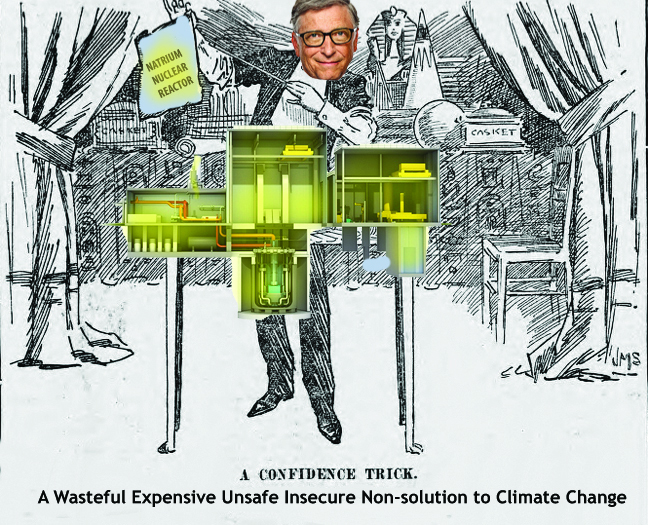
Nuclear. Well it’s the drums of war beating. The one thing that Wester conservatives and progressives agree on – we’d better boost our nuclear weapons ready for a war on China. Meanwhile, the promotion of new small nuclear recators goes on. See below – excellent article by Victor Gilinsky, Henry Sokolski, (highlighted in yellow)
A bit of good news – Park it! Why the world is greener.
AUSTRALIA.
Australia’s collective voice should silence the ‘drums of war‘. Federal nuclear waste dump plan.
- The Senate’s nuclear waste dilemma. Nuclear waste Bill passed. This is what will happen next. Within weeks, Minister Keith Pitt is expected to declare Napandee, (Kimba, South Australia) as the site for the nuclear waste dump.
- Barngarla Aboriginals and Kimba farmers join forces to fight nuclear waste dump plan. Barngarla people hold Native Title land close to planned nuclear waste dump, but were denied a vote on this.
- Need to reveal full details of nomination forms for Kimba and Wallerberdina nuclear waste dump plans. South Australian Minister Dan van Holst Pellekaan shuns Supreme Court Justice’s ruling to release Kimba nuclear documents.
- Australian Parliamentarians misled by Minister Pitt’s lies about nuclear medicine.
- Senator Hanson Young gave the clearest explanation of the issues around the government’s nuclear waste Bill. ‘ Senator Hanson-Young outlined the shambles that the nuclear waste siting process has been. Senator Rex Patrick explained why the Woomera prohibited area would be a more suitable site for a nuclear waste dump.
- OTHER
- Construction of ANSTO’s new intermediate waste facility at Lucas Heights –
- Australian government pushes to remove the ban on nuclear power. Morrison government bringing push for nuclear energy as an election issue.
- Lowy Institute polling shows that 91% of Australians want the federal government to support renewable energy development.
- ‘A new chapter’: NT town to be returned to traditional owners today Historic handback of Kakadu town to Mirarr traditional owners.
- Australian Local Government Association support Mount Isa nuclear weapons ban motion.
- Australia’s failed nuclear front group bites the dust.
INTERNATIONAL
Nuclear power is in the front line of climate change – and NOT in a good way. Ten reasons climate activists should not support nuclear. Rising sea levels might mean the end for many nuclear power stations. Increasing carbon emissions from uranium mining.
Increasing numbers of nuclear warheads globally.Nuclear fusion’s unlikely future, – too late for climate action.
Old cracked infrastructure – the Florida building collapse – a warning for old cracked nuclear reactors.
1 This month.

Australians deserve the truth
about
AUKUS – https://aukuspublicinquiry.com/


PETITION – To: Prime Minister Anthony Albanese and the Australian Labor Government

of the week – Australians for War Powers Reform (AWPR)
To see nuclear-related stories in greater depth and intensity
 Antinuclear