President Biden campaigned on opposing new nuclear weapons, but backs them in his first defense budget.
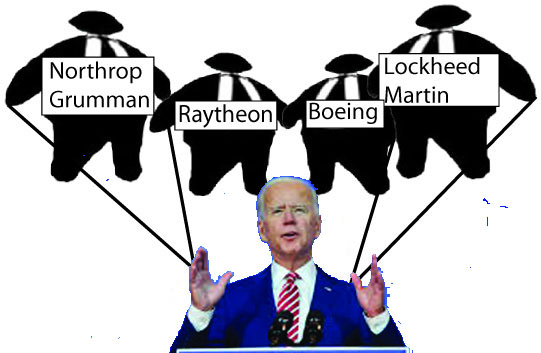
Biden goes ‘full steam ahead’ on Trump’s nuclear expansion despite campaign rhetoric
The decision to retain a low-yield warhead that was outfitted on submarine-launched ballistic missiles in 2019, and to initiate research into a new sea-launched cruise missile, has sparked an outcry. Politico, By LARA SELIGMAN, BRYAN BENDER and CONNOR O’BRIEN, 06/02/2021
President Joe Biden ran on a platform opposing new nuclear weapons, but his first defense budget backs two controversial new projects put in motion by President Donald Trump and also doubles down on the wholesale upgrade of all three legs of the arsenal.
The decision to retain a low-yield warhead that was outfitted on submarine-launched ballistic missiles in 2019, and to initiate research into a new sea-launched cruise missile, has sparked an outcry from arms control advocates and the progressive wing of the Democratic Party, which is vowing a fight to reverse the momentum.
“The signal this budget is sending is full steam ahead: ‘We like what Trump was doing and we want to do more of it,’’ said Tom Collina, director of policy at the Ploughshares Fund, a leading disarmament group. “It is not the message Biden was sending as a candidate. What we have here is Biden essentially buying into the Trump nuclear plan, in some cases going beyond that.”
Emma Claire Foley, a researcher at Global Zero, a disarmament group, said the latest budget “essentially preserves the priorities of the Trump administration,” despite the new administration’s rhetoric about pursuing a more responsible nuclear posture.
During the 2020 campaign, Biden told the Council for a Livable World, an arms control group, that the current arsenal is “sufficient” and the United States does not need new nuclear weapons. In July 2019, Biden also called Trump’s move to introduce new capabilities a “bad idea.”
The Democratic Party platform in 2020 also bluntly stated that “the Trump Administration’s proposal to build new nuclear weapons is unnecessary, wasteful, and indefensible.”
The Democratic Party platform in 2020 also bluntly stated that “the Trump Administration’s proposal to build new nuclear weapons is unnecessary, wasteful, and indefensible.”
That includes modernizing all three legs of the nuclear triad: the Ground Based Strategic Deterrent, which is the replacement for the fleet of Minuteman III intercontinental ballistic missiles; the Columbia-class ballistic missile submarines; and the new B-21 stealth bomber.
The budget also proposes $609 million for the Long Range Standoff Missile, which is designed to be outfitted on bomber planes. That’s $250 million more than what was projected by the Trump administration for fiscal 2022.
Most controversially, the Pentagon’s request maintains the W76-2 low-yield warhead that is now outfitted on submarines and sets aside $5.2 million for a new sea-launched cruise missile capable of carrying a nuclear warhead. Another $10 million is being requested for the warhead in the budget for the National Nuclear Security Administration, an arm of the Energy Department………….. https://www.politico.com/news/2021/06/02/biden-trump-nuclear-weapons-491631
Pentagon’s creepy shift from nuclear deterrence to the use of nuclear weapons

the Biden budget “calls for full speed ahead on new weapons for all three legs of the nuclear triad” — land-based ICBMs, the B-21 bomber and a new nuclear-armed submarine
Nukes, Lies and Invisible Murder, http://commonwonders.com/nukes-lies-and-invisible-murder/ June 2nd, 2021, By Robert C. Koehler
Let’s listen in for a moment to the gentle, awkward language of mass killing:
“The employment or threat of employment of nuclear weapons could have a significant influence on ground operations. . . . Integration of nuclear weapons into a theater of operations requires the consideration of multiple variables. Using nuclear weapons could create conditions for decisive results and the restoration of strategic stability. Specifically, the use of a nuclear weapon will fundamentally change the scope of a battle and create conditions that affect how commanders will prevail in conflict.”
This is a sneak peek into a 2019 report by the Joint Chiefs of Staff called “Nuclear Operations,” which Brian Terrell quoted recently. The document was, for some reason, publicly posted in the waning days of the Trump administration, then — oops — quickly removed, but not before it was downloaded by the Federation of American Scientists.
As The Guardian noted, the document, the first of its kind in 14 years, seemed to indicate a creepy shift in Pentagon thinking: from nuclear deterrence to actually fighting (and of course winning) a nuclear war.
The report even included a quote from Dr. Strangelove, by which I mean Herman Kahn, the high-profile strategist of the Cold War era who was one of several inspirations for Stanley Kubrick’s iconic character. “My guess,” says Kahn, “is that nuclear weapons will be used sometime in the next hundred years, but that their use is much more likely to be small and limited than widespread and unconstrained.”
OK, shrug and move on, right? We survived the Cold War, so any remaining “duck and cover” fear can be stored in the attic of our collective consciousness. Except for the occasional lone nut with a gun — showing up at a school, shopping mall, church, synagogue, massage parlor — violence serves the cause of human safety; it’s the core of our self-defense. And therefore, as the above quotes demonstrate, good violence, even though it may occasionally kill or dismember children, shatter lives, spread toxicity, must be discussed abstractly and strategically. We aim moral rancor only at our enemies, who have been previously dehumanized.
And thus global — and especially American — militarism continues uninterrupted and fully funded. Joe Biden’s 2022 defense budget proposal, for instance, is $754 billion, up $14 billion from Trump’s last defense budget. This includes $715 for the Pentagon and nearly $16 billion for nuclear weapons development and modernization, because . . . this is just the way things are.
As Slate reports, the Biden budget “calls for full speed ahead on new weapons for all three legs of the nuclear triad” — land-based ICBMs, the B-21 bomber and a new nuclear-armed submarine.
“. . . hawks of both parties,” Slate notes, “are likely to breathe a sigh of relief that Biden has ignored the pleas of some Democrats to whack the defense budget in order to pay for more social programs. Biden is upping everything, including taxes and deficits, to pay for everything.”
And the budget also includes something called the Pacific Deterrence Initiative, which focuses on China, establishing it as our current primary adversary and perhaps launching a new cold war with it — as though, what else is new? There’s nothing harder than trying to govern a country without a clear enemy. Not simply a “threat,” mind you — which could include current and future pandemics, not to mention climate change and ecological devastation — but an enemy. When you have an enemy, you can focus the entirety of your thinking on strategy and tactics. No need for complexity. No need to listen, to grope for understanding. No need to acknowledge your own vulnerability and face the unknown. Just modernize your nukes.
But without such courageous vulnerability, peace is impossible. Militarism creates the illusion of safety, though of course its endless presence creates just the opposite. Peace work is not a tool for a leader to summon. It’s deeply complex, requiring an attitude of “power with” rather than “power over” one’s potential enemy.
Joseph Gerson, president of the Campaign for Peace, Disarmament and Common Security, puts it with clarity. Instead of shaking our weapons at China, we should pursue “mutually beneficial diplomacy” with it.
“Instead of increasing military spending to reinforce U.S. dominance,” he writes, “. . . that money should be spent to export billions of vaccine shots to countries in need before new variants renew the pandemic here in the United States. With our housing shortage, real security lies in funding massive home construction. And, with the seas rising and a new fire season upon us, cooperation — not war — with China is essential if the climate emergency is to be contained.”
He adds: “Yes, challenge China on its human rights violations, but do so in tandem with opposing police violence and the prison-industrial complex in the U.S.”
Such a world — such leadership — is within our reach, but first we must free ourselves from the mindset of militarism, which is perpetuated not merely by politicians and generals but, inexcusably, by much of the media, which compliantly speaks their language. In militaryspeak, civilians may be bombed but they’re never murdered, at least not by us. If we can’t avoid acknowledging their deaths, then they become collateral damage, necessary for “the restoration of strategic stability.”
Renewables dominate investment, but needs to triple by 2030: IEA report — RenewEconomy

IEA outlines major shortfall in investment in clean energy, energy efficiency and other decarbonisation measures at a critical moment for climate. The post Renewables dominate investment, but needs to triple by 2030: IEA report appeared first on RenewEconomy.
Renewables dominate investment, but needs to triple by 2030: IEA report — RenewEconomy
Queensland leads the world in Australia’s coal mining blitz — RenewEconomy

Coal-fields of Queensland have more coal under development than any state or province in the world. The post Queensland leads the world in Australia’s coal mining blitz appeared first on RenewEconomy.
Queensland leads the world in Australia’s coal mining blitz — RenewEconomy
1000 per cent renewables for Australia? ARENA boss says that is the goal — RenewEconomy

ARENA CEO suggests Australia’s electricity production could grow ten fold, and all from renewables, while becoming a global clean energy supplier. The post 1000 per cent renewables for Australia? ARENA boss says that is the goal appeared first on RenewEconomy.
1000 per cent renewables for Australia? ARENA boss says that is the goal — RenewEconomy
Investor to focus on US because Australia “not conducive” to growing big solar — RenewEconomy

Solar investor slams Australian policy and regulatory environment as it prepares to sell its two assets and focus on Joe Biden’s America. The post Investor to focus on US because Australia “not conducive” to growing big solar appeared first on RenewEconomy.
Investor to focus on US because Australia “not conducive” to growing big solar — RenewEconomy
Former PM Turnbull backs 5B’s modular solar expansion — RenewEconomy

Former PM joins the rush to clean energy, investing in a new funding round to back innovative solar business 5B. The post Former PM Turnbull backs 5B’s modular solar expansion appeared first on RenewEconomy.
Former PM Turnbull backs 5B’s modular solar expansion — RenewEconomy
Australia’s monster coal exports emit more C02 than entire German economy — RenewEconomy

Coal shipped out of Australia’s ports last year carried 897 million tonnes of embedded CO2 emissions, almost double Australia’s domestic emissions. The post Australia’s monster coal exports emit more C02 than entire German economy appeared first on RenewEconomy.
Australia’s monster coal exports emit more C02 than entire German economy — RenewEconomy
June 2 Energy News — geoharvey

Science and Technology: ¶ “Floating Wind Good, Floating Wind Plus Green Hydrogen Better” • Anyone who thinks rapid global decarbonization is out of reach should take a look at the floating wind turbine sector. Floating wind seemingly popped up out of nowhere in the past couple of years, and it has already hooked up with […]
June 2 Energy News — geoharvey
This week’s nuclear news – Australia and overseas

Covid 19 coronavirus: Around the world – situation update
Climate change behind global heat deaths
Nuclear. The coronavirus, with its global effects on health, human suffering is also, of course, affecting the economy, and most (though not all) businesses. The ”commercial” nuclear industry is affected, but not the nuclear weapons industry. The nuclear-armed nations are revving up their weapons expenditure. The USA is the shiningly obscene example. Clearly the nuclear weapons industry has captured the American government, it hardly matters whether the administration is in Democratic or Republican hands.
Some bits of good news: Chernobyl Guards Have Befriended Abandoned Dogs, Feeding Them and Bringing Medical Care. World’s Largest Wind Turbine Manufacturer Says All Its Blades Will Soon be Fully Recycled.
AUSTRALIA.
Australia, the USA’s only ”best friend” in the Indo Pacific, to deploy more USA military equipment, heightening the threat against China. Australian Robert Floyd to head the Comprehensive Nuclear-Test-Ban Treaty Organisation.
Nuclear trash – a tale of two Sydney suburbs.
Radioactive particles still endanger wildlife in the landscape around Maralinga.
Australian company Greenland Minerals fails community test over controversial rare earths and uranium mine plan.
Environmentalists and Aboriginal traditional owners object to rocket launching on South Australian protected heritage land, at Whaler’s Way.
Tough environmental regulation brings economic benefits. Australia lags behind all OECD countries. Australia/UK Free Trade Agreement will give corporations the right to sue governments.
INTERNATIONAL.
A People’s Guide to the War Industry .
The appalling mistreatment of Australian citizen, Julian Assange, – by USA, UK, and Australia. Targeted surveillance threatens human rights defenders.
“Unqualified” —who is allowed to talk about nuclear power ?
Report on the threat of nuclear terrorism.
New technology comes nowhere close to solving the problem of nuclear waste. Despite the Small Nuclear Reactor push from Bill Gates and the rest of the nuclear lobby, we already have the technologies to decarbonise our global economy.
New research highlights need for international standards to safeguard against plutonium ”hot” particles.
Ionising radiation the big danger to astronauts.
The time to divest from Bitcoin is now.
1st U.N. nuclear ban meeting may be postponed until after Non Proliferation Treaty review.
U.S. Energy Information reports uranium at lowest price since 2007.
As electric vehicles take off, we’ll need to recycle their batteries.
Australia/UK Free Trade Agreement will give corporations the right to sue governments.

Australia/UK Free Trade Agreement: What’s the Scam? https://www.michaelwest.com.au/australia-uk-free-trade-agreement-whats-the-scam/
by Michael West | May 31, 2021 The British Trade Minister has confirmed that corporations are likely to have the right to sue the Australian and UK governments if governments make laws which hit their profits. What’s the scam?
ISDS is the scam; Investor-State Dispute Settlement that is, clauses buried in “Free Trade” agreements, such as this one, which allow corporations to sue governments in obscure foreign tribunals. Australia’s most celebrated ISDS case was brought by tobacco giant Phillip Morris which sued Australia in Hong Kong when Australia introduced its wonderfully successful plain packaging laws.
“There are now over 1,000 known ISDS cases, with increasing numbers against health and environment laws, including laws to address climate change,” says Patricia Ranald convenor of the Australian Fair Trade & Investment Network (AFTINET).
“ISDS would give UK corporations the right to sue Australia over democratic legal changes in Australia. For example, British aged care company BUPA could claim compensation if the government follows the recommendations of the Royal Commission into Aged Care Quality and Safety and regulates for improved staffing levels and quality of care.”
Just another chapter in the saga of rising corporate power over democracy.
“Unqualified” —who is allowed to talk about nuclear power ?

Who is allowed to talk about nuclear power?
“Unqualified” — Beyond Nuclear International Nuclear trolls turn on the aggression as industry collapses around them
By Linda Pentz Gunter, 31 May 21, “My advice is to look out for engineers. They begin with sewing machines and end up with nuclear bombs.” Marcel Pagnol
My normal rule of thumb is to ignore the unrelenting pro-nuclear trolls who pepper our sites with incessant nay-saying and, occasionally ad hominem name-calling. After all, they have only one goal in mind — other than to get up one’s nose — which is to dominate and thereby control the narrative.
But recently, a recurring theme has emerged which needs addressing, because it speaks to who is allowed to talk about nuclear power.
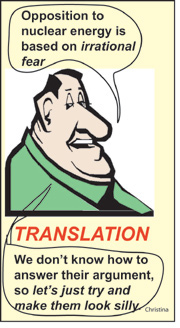
In the view of the trolls, if you have no scientific credentials, you are unqualified to comment on nuclear power. In my case, because I have a degree in English literature, albeit garnered many decades ago, I have, according to the trolls, no authority to expound on the negatives of nuclear anything.
There are some rather obvious flaws in this argument, the first being that it pre-supposes the human brain is incapable of learning anything new after the age of 21.
But it also exemplifies the theme of a recent conference held virtually in Linz by three Austrian anti-nuclear groups which examined the “Atomic Lie.” How has this lie been perpetuated? Answer: by those who promote the nuclear power industry anointing themselves as the only authority deemed knowledgeable enough to either comment about it or make decisions on its use and safety.
What kind of a world we will end up with if, heaven forfend, we allow only engineers to decide what is in our best interest (with all due respect to my friends who are engineers and who, I suspect, would be the first to agree)? Hence the Pagnol quote at the top of this page.
This would mean, for example, that the Western Shoshone should have no say in the fate of the land in Nevada they steward, because nuclear engineers have decided it is perfectly alright to dig a big hole in the volcanic ground and bury nuclear waste there.
It would mean that Marshall Islanders should have nothing whatever to say about the generations of cancers and birth defects they have suffered as the unwilling guinea-pigs of atomic “testing,” because after all it was scientists who decided that it was perfectly alright to detonate 67 atomic bombs there and obliterate islands………..
This intent to dominate the narrative — in our case the nuclear power one — and silence critics, was aptly described by Arnie Gundersen in his presentation during the Linz conference. He talked about the origins of the nuclear cabal — under its alias, Atoms for Peace — in which its originator, President Dwight D. Eisenhower, described the program as solving “‘the fearful atomic dilemma’ by finding some way in which the ‘miraculous inventiveness of man’ ‘would not be dedicated to his death, but consecrated to his life’”.
Gundersen looked up the Oxford Dictionary definition of “consecrate” and found it to mean “to make sacred or declare sacred; dedicate formally to a religious or divine purpose.”

This nuclear priesthood into which believers were ordained did not welcome skeptics gladly, however. Quite the reverse. When Gundersen, a nuclear insider at the time, blew the whistle on a safety issue, he was told to his face that “in this business, you’re either with us or against us, and you just crossed the line.” He was not only fired but persecuted in further attempts to silence him.
Luckily for our movement, the nuclear inquisition was largely unsuccessful in this latter endeavor, but it came at a steep price for Gundersen and his family personally.
As evidenced by Gundersen’s experience, these attacks are by no means restricted to us “lay” advocates, but they have grown observably more vitriolic. This disturbing trend was flagged recently by Andy Stirling of the Science Policy Research Unit at the University of Sussex in the UK, responding to an aggressive critique of an article he co-authored in Nature Energy.
His detractor, Jeremy Gordon, “goes beyond pejorative labelling to actively ridicule any position not in-principle supportive of nuclear power,” Stirling wrote in a letter published in Nuclear Engineering International. “This is exemplified by Gordon’s intemperate ad hominem attack on my fellow author (the globally leading energy scholar Benjamin Sovacool).” Stirling concludes that it is “reasoned policy discourse that forms the lifeblood of democracy itself”.
We are a grand collective of experts. We do have scientists and engineers —Gundersen is one — to whom we can turn in order to unravel the deeper complexities of the workings of nuclear power plants or uranium mines or reprocessing facilities. But it is not the only dimension that matters. So we need Indigenous people, and writers, and lay advocates, and economists, and historians, and artists, and humanitarians to tell this story and set the agenda, too.
Even if it is rocket science, rocket scientists aren’t the only ones who count when decisions are made about whether to put missiles into space or send a nuclear-powered probe to Mars.
As Pagnol implied, when you leave it to the scientists and engineers, you get a Manhattan Project, where consciences pricked far too late. Imagine if humanitarian voices had held sway inside Los Alamos. Would things have turned out differently?
The Japanese mothers, evacuated from Fukushima, who shout on street corners through bullhorns about their experiences, warning Japan never to re-embrace nuclear power, don’t hold engineering degrees. But they know a lot more about the real, lived consequences of using nuclear power than any of the nuclear industry trolls.
Those voices of truth need to be heard, along with those who practice sound science and honest engineering and who are willing to call out the dangers, not control the lies.
It’s one thing to have command of the facts, which of course we must. But it’s another to accompany these with a hefty dose of integrity. And that’s what we are here for, even if we can quote Shakespeare while we are doing it.
Linda Pentz Gunter is the international specialist at Beyond Nuclear and writes for, curates and edits Beyond Nuclear International. https://beyondnuclearinternational.org/2021/05/30/unqualified/
The appalling mistreatment of Australian citizen, Julian Assange, – by USA, UK, and Australia
CHRIS HEDGES ON THE RULING CLASS’ REVENGE AGAINST JULIAN ASSANGE, May 31, 2021 · by Rise Up Times ·
Pulitzer Prize-winner Chris Hedges joins Robert Scheer to discuss the WikiLeaks founder’s plight as he languishes in a British prison. SCHEER INTELLIGENCE: A ROBERT SCHEER PODCAST
BY MODERATOR SCHEERPOST MAY 7, 2021
The mistreatment of WikiLeaks founder Julian Assange over the past decade has been defined as “psychological torture” by the UN Special Rapporteur on Torture, Nils Melzer. Yet, there is still no real end in sight to Assange’s promethean plight. Several months after a British judge blocked his extradition to the U.S.–citing that conditions in America’s inhumane prison system would be detrimental to his health–the WikiLeaks founder continues to be held in a maximum security prison in the U.K. The U.S. government, first under Donald Trump’s rule and now under Joe Biden’s, is appealing the extradition ruling. With a new decision in the case is due to be announced any day now, Pulitzer Prize-winning journalist and ScheerPost columnist Chris Hedges joins Robert Scheer on this week’s installment of “Scheer Intelligence” to discuss what Hedges has called Assange’s “martyrdom.”
Scheer and Hedges assert that Assange’s case is a clear threat to freedom of the press given that he acted in the capacity of a publisher in the same way the global media outlets that printed the content released by WikiLeaks did. Should the publishers of the Washington Post, New York Times and other media have been charged with a crime for publishing the content? Hedges and Scheer, who have both been staunch supporters of the WikiLeaks founder, conclude that there can only be one reason for all recent Republican and Democratic administrations to doggedly persecute Assange: he is a major threat to the establishment’s most sinister interests.
“Your job [as a publisher] is not to be partisan,” says Hedges. “Your job is to expose the machinations of power, the crimes of power, the lies of power–whoever’s in power. And that’s precisely what Julian did. when he was going after Bush with the Iraq War Logs, the Democrats loved him. But as soon as his journalistic integrity led him to also expose the inner workings of the Democratic Party establishment, they turned on him as vociferously as the Republicans.
“I’ve been stunned at what an egregious assault [Assange’s persecution] is on press freedom and how the institutions that purport to care about freedom of the press have been complicit in the persecution of Julian.”
As Assange is tortured before our eyes, Hedges decries the silence of organizations such as PEN, which “are tasked with holding up the kind of liberties and press freedoms that we care about.” The award-winning journalist argues that PEN and others have not only sold out to their liberal donor base, but have been “taken over” by Democratic establishment figures such as Suzanne Nossel, the current head of PEN America and former member of the State Department under Secretary of State Hillary Clinton. Scheer also highlights the plight of another person who has become collateral damage in America’s tyrannical mission against Assange.
“The real hero of this whole thing is Chelsea Manning,” says Scheer. “The U.S. government has been tormenting Chelsea Manning because they basically want to get her to say: ‘Julian Assange put me up to this; he’s the really bad guy.’ It’s a horrible story of government torture and manipulation that you have this rare, exemplary citizen, Chelsea Manning, who does the right thing and says our government, in our name, is committing war crimes–killing innocent children and journalists and everything–and then they want to now break her so she’ll go against Julian Assange.”
Listen to the full conversation between Hedges and Scheer as they examine in detail the U.K.’s role in the Assange trial, as well as discuss the very real dangers the results of the case could pose to journalists and journalism the world over.
TRANSCRIPT
RS: Hi, this is Robert Scheer with another edition of Scheer Intelligence, where the intelligence comes from my guests. And in this case, unquestionably; a very shrewd observer, Chris Hedges, longtime correspondent, bureau chief for the New York Times, and wrote for a lot of other publications.
But I want to get Chris on now with some urgency, because I’m really concerned about the fate of Julian Assange. I’ve turned 85; in my whole life I don’t think I’ve had, experienced a case of such splendid indifference to press freedom and the suffering of a brave journalist in this country, in the United States. He’s of course not from the U.S., which makes it even more appalling that he’s being held under terrible conditions in an English prison……………….. https://riseuptimes.org/2021/05/31/chris-hedges-on-the-ruling-class-revenge-against-julian-assange/
Chris Hedges on the Ruling Class’ Revenge Against Julian Assange — Rise Up Times

“The whole process has really been a mockery of the rule of law. Julian is not a U.S. citizen; WikiLeaks is not a U.S.-based publication.”
Chris Hedges on the Ruling Class’ Revenge Against Julian Assange — Rise Up Times
Tough environmental regulation brings economic benefits. Australia lags behind all OECD countries
Using the example nations – Australia, Germany, United States and United Kingdom – against the OECD average, Denmark had the highest and Germany the second-highest average score over the 17 years of all 22 OECD countries (see
And Australia had the worst.
TOUGHER ENVIRONMENTAL POLICIES CAN CREATE ECONOMIC WINNERS
There seems to be a working assumption that if Australia adopts tougher environmental policies, our economic growth will be undermined. But new research finds the opposite is true , Pursuit, By Dr Ou Yang, University of Melbourne 31 May 21, No longer concerns for a distant future, climate change and environmental degradation are an urgent challenge facing the planet. And they’re happening now.
According to the 2019 United Nations Climate Change report, between 1990 and 2016, global aggregate greenhouse gas emissions increased by 46.7 per cent. In 2018, the global mean temperature had risen about 1°C above the pre-industrial baseline.
As the US and EU move forward with their green recovery, there was little talk of the climate crisis or the environment in Australia’s 2021 Federal budget.
While Australia’s largest trading partners make bigger and bolder commitments to decarbonisation and use their COVID-19 recovery budgets to maximise the opportunity to boost a clean energy transition, the Australian government has committed to a gas-fired recovery over a green one, pouring billions into fossil fuel projects.
Instead of adopting a wide range of more effective and efficient environmental policies, like price and tax mechanisms, the government has pinned its hopes on a low-emissions technology plan.
The Morrison government’s increasing support for fossil fuel projects seems to have some elements in common with former US president Donald Trump’s 2020 Executive Order which allowed US federal agencies to bypass environmental protection laws and fast-track pipeline, highway and other infrastructure projects.
Trump declared regulatory delays would hinder “our economic recovery from the national emergency”.
Likewise, in 2017, Trump withdrew the US from the Paris Agreement for international climate action for the same reason. The Agreement, he said, would undermine the US economy “and put us at a permanent disadvantage to the other countries of the world”.
All of these recent policy moves seem to be made with the notion that greater action on environmental policy harms a nation’s productivity growth. But experts like Australian economist Ross Garnaut argue that taking greater action on climate change now could actually benefit our economy in the long run.
And this is a position our recently published research supports.
Our study looked at the environmental policies of 22 countries belonging to the Organisation for Economic Co-operation and Development (OECD), alongside their productivity growth, finding some positive evidence of the economic effect of environmental policies.
Using the OECD’s Environmental Stringency Policy Index, we rated each nations’ environmental policies including Australia and the US, between 1990 and 2007, in order to investigate the impact of greater environmental policy actions on a nation’s productivity.
These policies include taxes on carbon and subsidies for renewable energy, as well as regulations like limits on sulphur content in diesel.
The model we used is flexible enough to capture country-specific effects of taking greater environmental action on a nation’s productivity growth.
We can also identify the causal impact of environmental policies on productivity by exploiting the time-series variation within each country, which basically measures the movements of productivity caused by changes in policy stringency.
Our research, published in Energy Economics looking at 22 OECD countries, found that all of this group had gradually tightened their environmental regulation between 1990 and 2007.
Using the example nations – Australia, Germany, United States and United Kingdom – against the OECD average, Denmark had the highest and Germany the second-highest average score over the 17 years of all 22 OECD countries (see Figure 1 on original).
And Australia had the worst.
By examining short and long-term effects, our results show that while environmental regulations do increase the cost of production initially – for example, a carbon tax makes coal more expensive, which increases the costs of metal production – adopting tighter environmental policies boosts a country’s productivity in the long run.
This positive effect is more noticeable in countries that showed leadership on environmental protection and adopted tougher environmental policies.
According to our estimates, during the 17-year sample period, if an average OECD country had increased the stringency of its environmental policies by one unit, its annual productivity growth rate in three years’ time would have increased by about 0.71 percentage points from -0.09 per cent to 0.62 per cent………….
Our findings show that while there might be a short-term hike in cost, countries whose governments implement strong environmental regulations reap the productivity – and economic growth – rewards in the long term. https://pursuit.unimelb.edu.au/articles/tougher-environmental-policies-can-create-economic-winners
1 This month.

Australians deserve the truth
about
AUKUS – https://aukuspublicinquiry.com/



PETITION – To: Prime Minister Anthony Albanese and the Australian Labor Government

of the week – Australians for War Powers Reform (AWPR)
To see nuclear-related stories in greater depth and intensity
 Antinuclear