For climate action, renewables clearly beat nuclear power
| Heinrich Boll 26th April 2021, Mark Jacobson: New nuclear power costs about 5 times more than onshore wind power per kWh. Nuclear takes 5 to 17 years longer between planning and operation and produces on average 23 times the emissions per unit electricity generated. In addition, it creates risk and cost associated with weapons proliferation, meltdown, mining lung cancer, and waste risks. Clean, renewables avoid all such risks. https://eu.boell.org/en/2021/04/26/7-reasons-why-nuclear-energy-not-answer-solve-climate-change |
The dangers of extending the operating lives of old nuclear reactors
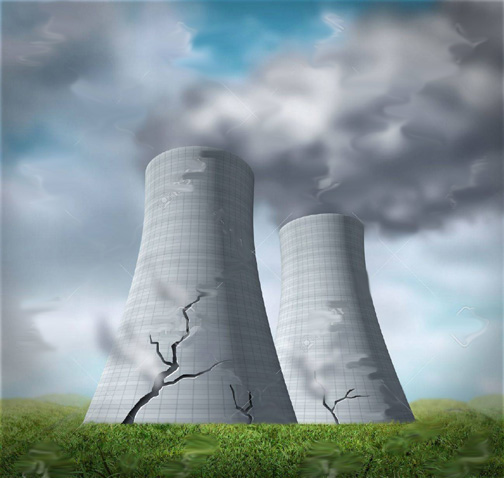
INRAG 26th April 2021, Risks of lifetime extension of old nuclear power plants – A look at the age structure of existing nuclear power plants shows the importance of analysing risks of life-time extension and long-term operation.
Some of the world’s oldest plants are located in Europe. Of the 141 reactors in Europe, only one reactor came into operation in the last decade, and more than 80 percent of the reactors have been running for more than 30 years . Nuclear power plants were originally designed to operate for 30 to 40 years. Thus, the operating life-time of many plants are approaching this limit, or has already exceeded it.
https://www.inrag.org/risks-of-lifetime-extension-of-old-nuclear-power-plants-download
Chernobyl disaster and the U.N. response – a global matter

‘Disasters know no borders’ says Guterres, 35 years on from Chernobyl nuclear accident, https://news.un.org/en/story/2021/04/1090602In his message for Chernobyl International Remembrance Day on Monday, the UN chief reminded that “disasters know no borders”.
A 20-second shut down of the Chernobyl nuclear power plant on 26 April 1986, created a surge that led to a chemical explosion, which released nearly 520 dangerous radionuclides into the atmosphere. As a result, large parts of the former Soviet Union were contaminated; territory which now lies within the borders of Belarus, Ukraine and Russia, according to the UN.
Marking the 35th anniversary of the accident, Secretary-General António Guterres said that together, “we can work to prevent and contain [disasters]… support all those in need, and build a strong recovery”
Never forget
As one of the most serious nuclear accidents in history, nearly 8.4 million people in the three countries were exposed to radiation, according to the UN.
Some 350,000 were forced to leave their homes in severely contaminated areas, which left a deeply traumatic and lasting impact on their lives: “Their suffering must not be forgotten”, said the top UN official.
He also pointed to the anniversary as an occasion to recognize the recovery efforts led by the three governments as well as the work of “scientists who sifted through the evidence” to provide important analysis that has informed emergency planning and reduced risks.
A legacy of assistance
While the Organization had helped the people in the areas surrounding Chernobyl at the onset, four years after the accident the Soviet Government acknowledged the need for international assistance.
That same year, 1990, the General Assembly adopted a resolution calling for “international cooperation to address and mitigate the consequences at the Chernobyl nuclear power plant”. This began the UN’s participation in the recovery effort.
And in 2019, a new safety casing over the old shelter was completed and given to the Government of Ukraine. It was achieved with €2.2 billion in donations from over 45 nations.
The UN said the milestone one of the largest ever seen projects in terms of international cooperation in the field of nuclear safety.
Working for ‘the common good’
UN country teams – working with civil society, international partners and donors – first supported emergency and humanitarian aid, then recovery and finally social and economic development, Mr. Guterres noted, adding that “our joint efforts have enjoyed some success”.
He cited that the number of small and medium-sized businesses operating in areas directly affected by the disaster has risen from 2,000 in 2002 to 37,000 today.
And thousands of residents, community leaders and doctors have been trained on health risks and promoting healthy lifestyles.
The Chernobyl disaster was contained by governments working with academics, civil society and others, “for the common good”, the UN chief said.
“It holds important lessons for today’s efforts to respond to the COVID-19 pandemic”, he concluded.
The health effects of Chernobyl nuclear disaster as far away as Scotland

SCND 23rd April 2021. Ian Fairlie: April 26, 2021 marks the 35th anniversary of the world’s largest nuclear disaster at Chernobyl. Several days later, clouds containing the radioactive caesium-137 released by the reactor passed over Scotland about 1,400 miles or 2,500 kilometres away.
Although we got off lightly in comparison to nearer neighbors, rain brought radioactivity to the ground contaminating parts of southern and central Scotland. Understandings of the impact of radioactivity on human health are constantly being revised but scientists generally agree that any additional radiation over natural levels in the environment can have negative effects particularly on women and children. Even here, it is likely that some cancers will have been caused by Chernobyl.
https://www.banthebomb.org/index.php/news/2138-chernobyl-at-35
Despite the Morrison hype, Australia is at the bottom of the pack for clean power — RenewEconomy

Australia’s power grid is a core bragging point for the government – but where does it really sit on the world stage? The post Despite the Morrison hype, Australia is at the bottom of the pack for clean power appeared first on RenewEconomy.
Despite the Morrison hype, Australia is at the bottom of the pack for clean power — RenewEconomy
“Battery of the world”: Australia’s key role in fast transition to wind and solar — RenewEconomy

Australia well placed to become “battery of the world” if wind and solar can pass political barriers, as well as technical and economic hurdles already jumped. The post “Battery of the world”: Australia’s key role in fast transition to wind and solar appeared first on RenewEconomy.
“Battery of the world”: Australia’s key role in fast transition to wind and solar — RenewEconomy
Australia spends more propping up fossil fuels than it does on the Army — RenewEconomy

Federal and state governments are spending more than $10 billion a year subsidising the fossil fuel industry, mostly through fuel tax credits. The post Australia spends more propping up fossil fuels than it does on the Army appeared first on RenewEconomy.
Australia spends more propping up fossil fuels than it does on the Army — RenewEconomy
No future for new nuclear
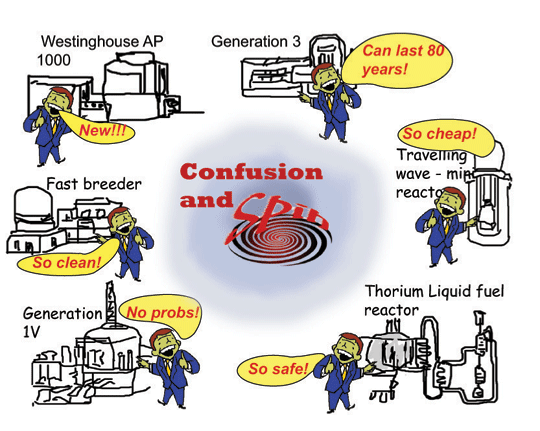
‘the claim that any nuclear reactor system can “burn” or “consume” nuclear waste is a misleading oversimplification. Reactors can actually use only a fraction of spent nuclear fuel as new fuel, and separating that fraction increases the risks of nuclear proliferation and terrorism.’
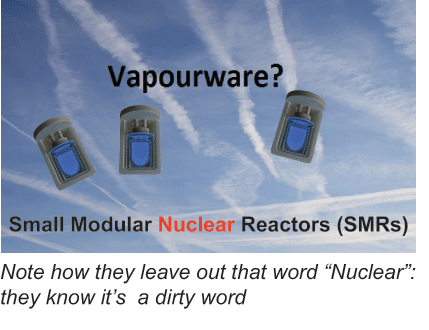
mini-PWR designs, like NuScale’s Small Modular Reactor. – the UCS is none too keen on SMRs, as witness its earlier report on them –it says ‘small isn’t always beautiful’. A more recent review of SMRs by Prof. M.V. Ravana, from the University of British Columbia, looking more at the economics, came to similar conclusions: ‘Pursuing SMRs will only worsen the problem of poor economics that has plagued nuclear power and make it harder for nuclear power to compete with renewable sources of electricity.’
No future for new nuclear— https://renewextraweekly.blogspot.com/2021/04/no-future-for-new-nuclear.htmlAn arguably definitive study 25 Apr 21, of new advanced non-water cooled nuclear options, including molten salt reactors and liquid sodium cooled fast reactors, from the US Union of Concerned Scientists, concludes that none can be ready for at least a decade, more like two, and there are none that meet safety, security, sustainability criteria, apart possibly from once-through breed and burn reactors. If we want nuclear it says it would more sensible just to upgrade the standard, more familiar, water cooled reactors.
It sets the scene by noting that, in the United States, so-called Light Water Reactors (PWRs and BWRs) have dominated, these using ordinary water to cool their hot, highly radioactive cores, as opposed to reactors like the Canadian CANDU that use ‘heavy water’, with a double neutron hydrogen isotope, as a moderator. Support for LWRs has continued, despite some economic problems, which have bedevilled expansion in the US and elsewhere: ‘new nuclear plants have proven prohibitively expensive and slow to build, discouraging private investment and contributing to public skepticism’.
Continue readingChernobyl nuclear disaster: ‘Three-day evacuation lasted 35 years’.
BBC 26th April 2021, Chernobyl nuclear disaster: ‘Three-day evacuation lasted 35 years’.
Thirty-five years ago an explosion at the Chernobyl nuclear power station in Ukraine released lethal radiation into the atmosphere. The nearest city, Pripyat, home to around 50,000 people, was evacuated along with other communities in a 4,000 sq km zone.
Lyudmila Honchar was four years old at the time and lived in Pripyat with her parents. We joined her as she
returned to try and find her family home, 35 years on.
Thyroid cancer increased 20-fold in Fukushima children

IPPNW 26th April 2021, Dr Alex Rosen: Thyroid cancer increased 20-fold in Fukushima children. In 2011, people in Japan were exposed to radioactive fallout in many places. Some still live in irradiated regions where they are confronted with increased amounts of radiation every day: radioactive hot spots on the roadside, in rice fields or in sandboxes, contaminated fungi or algae, irradiated groundwater and recontamination from forest fires or floods.
One of the most dreaded long-term effects of radioactive exposure is the development of cancers through mutation of the DNA. Thyroid cancer in children is certainly not the most dangerous, but it is the easiest to detect form of radiation-related cancer. On the one hand, the latency periods until the development of a cancerous ulcer are relatively short,only a few years; on the other hand, thyroid cancer in children is anextremely rare disease, so that even a slight increase can be statistically significant. In 2011, the pressure on the Japanese authorities to investigate the development of thyroid cancer in children and adolescents in Fukushima was correspondingly great.
https://www.ippnw.de/atomenergie/gesundheit/artikel/de/schilddruesenkrebs-bei-fukushima-kind.html
Nuclear fallout from the Cold War might be killing our bees
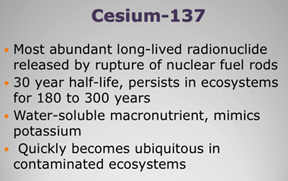
Nuclear fallout from the Cold War might be killing our bees, The Takeout, 26 Apr 21 It’s no secret that humankind has been a massive dick to bees, even though they’re responsible for the pollination and survival of 80% of the world’s plants and are directly linked to more than one third of the world’s food supply…………
we’ve been killing billions of them every year with pesticides, chemicals, and god knows what else. Over the past few decades, the world’s bee population has been decreasing thanks to a phenomenon called colony collapse disorder;; fingers have been pointed at the aforementioned pesticides, malnutrition, starvation, and a whole slew of other things, but science still does not have a definitive answer as to what is killing the bees. Now, according to a study published last month in the scientific journal Nature Communications, there’s another potential culprit in the mix: Cesium-137.
What is Cesium-137, you ask? Well, it’s an isotope produced when radioactive elements like uranium and plutonium become bombarded by neutrons, which split apart their unstable atoms and releases an absolute ungodly amount of energy. In other words: it’s a radioactive byproduct of atomic bombs. Though the atomic bomb has only been used as a weapon twice, during the Cold War more than 2,000 were detonated in military technology tests around the world. Though most of these tests were conducted in New Mexico and Russia, lots of that sweet, radioactive cesium-137 got into the stratosphere where it was blown eastward, ended up in rain clouds, then came pouring down on the east coast of the U.S., where it was greedily sucked up by plants, which transformed it into nectar. Since nectar makes up 100% of bees’ food supply, they’ve been feasting on cesium-137 for decades and have been passing trace amounts into their honey. Of the 122 honey samples gathered from hives up and down the East Coast, cesium-137 was found in 68 of them.
Before you run frantically into the kitchen to grab all your honey and bury it deep underground, Jim Kaste, an associate professor at the College of William & Mary and one of the study’s co-authors, said in a statement that the levels of cesium-137 he’s found in honey are not high enough for humans to start freaking out about. Bees, however, should totally be freaking out, and they have every right to.
“What we see today is a small fraction of the radiation that was present during the 1960s and 1970s,” said Keste. “And we can’t say for sure if cesium-137 has anything to do with bee colony collapse or the decline of population.” https://thetakeout.com/radioactive-honey-bees-cesium-137-atomic-bomb-colony-co-1846749211
France tested 41 nuclear weapons in the Pacific, and grossly underestimated the radioactive fallout
Science 11th March 2021, From 1966 to 1974, France blew up 41 nuclear weapons in above-ground tests
in French Polynesia, the collection of 118 islands and atolls that is part of France. The French government has long contended that the testing was done safely.
But a new analysis of hundreds of documents declassified in 2013 suggests the tests exposed 90% of the 125,000 people living in French Polynesia to radioactive fallout—roughly 10 times as many people as theFrench government has estimated.
April 26 Energy News — geoharvey

Opinion: ¶ “CNBC: How Tesla’s Battery Mastermind Is Tackling Electric Vehicles’ Biggest Problem” • JB Straubel, a Tesla co-founder and former CTO, started Redwood Materials, a recycling company, in 2017. CNBC interviewed him, and he talked about the importance of battery recycling. He said 95% to 98% of battery materials are recyclable and “good as […]
April 26 Energy News — geoharvey
Chernobyl anniversary – nuclear news this week – Australia and beyond
Today is the 35th anniversary of the meltdown at the Chernobyl nuclear power station. The Chernobyl story continues .
Coronavirus. Globally there were about 854,000 new cases in the past 24 hours and over a third of those were from India –hellish second wave ‘tsunami’ ripping India apart.
Climate. Poorer nations are most disadvantaged by climate change, but are not getting much help from rich countries. The failure of the White House summit to produce a breakthrough on climate finance throws the spotlight on the G7 meeting in Cornwall in June, to be hosted by Boris Johnson.
A bit of good news –‘The Year Earth Changed’: Uplifting Wildlife Documentary With David Attenborough Heralds Earth Day.
AUSTRALIA.
Scott Morrison’s plan for Australia to fund small nuclear reactors and other very dubious technologies that purport to combat global heating. Scott Morrison’s climate summit speech was littered with downright dodgy claims. Australian govt keeps mum about Japan’s plan to dump nuclear waste-water into the Pacific (no surprise – it originated from Australian uranium)
INTERNATIONAL
Getting the facts straight about Chernobyl, nuclear disasters, and ionising radiation.
Artificial Intelligence is already a serious problem in military systems.
Insider threats targeting nuclear plants have always been a concern. A stressful pandemic exacerbates those existing risks.
Even nuclear executives must be embarrassed at the pro nuke propaganda aimed at young women.
Getting the facts straight about Chernobyl, nuclear disasters, and ionising radiation
Fact check: 5 myths about the Chernobyl nuclear disaster
Monday marks the 35th anniversary of the Chernobyl nuclear disaster. What happened in the former Soviet Union on April 26, 1986, is no longer a secret. DW,
Is Chernobyl the biggest-ever nuclear disaster?
The 1986 nuclear disaster at the Chernobyl nuclear power plant near the city of Pripyat in northern Ukraine is often described as the worst nuclear accident in history. However, rarely is this sensational depiction clarified in more detail.
The International Nuclear and Radiological Event Scale (INES) does classify nuclear events on a scale of zero to seven, breaking them down into accidents, incidents and anomalies. It was introduced in 1990 after being developed by the International Atomic Energy Agency (IAEA) and the Nuclear Energy Agency of the Organization for Economic Cooperation and Development (NEA/OECD). Level seven denotes a “major accident,” which means “major release of radioactive material with widespread health and environmental effects requiring implementation of planned and extended countermeasures.”
Both the Chernobyl and 2011 Fukushima disaster have been categorized as such. But INES does not allow for nuclear events to be classified within a level.
If the term nuclear disaster is not only used to describe events, or accidents, in nuclear reactors but also radioactive emissions caused by humans then there are many occasions when human-caused nuclear contamination has been greater than that of the Chernobyl disaster, explained Kate Brown, professor of science, technology and society at the Massachusetts Institute of Technology.
“Let’s take the production of plutonium,” she told DW, referring to the American and Soviet plants that produced plutonium at the center of a nuclear bomb. “Those plants each issued as part of the normal working everyday order at least 350 million curies [a unit of radioactivity — Editor’s note] into the surrounding environment. And that was not an accident.
“Let’s look at, even more dire, the issuance of radioactive fallout in the detonation of nuclear bombs during the periods of nuclear testing ground, which were located throughout the world, ” she continued. “Those just take one isotope, one radioactive iodine, which is harmful to human health because it’s taken up by the human thyroid, causing thyroid cancer or thyroid disease.
“Chernobyl issued 45 million curies of radioactive iodine just in two years of testing, in 1961 and 1962. The Soviets and the Americans issued not 45 million curies, but 20 billion curies of radioactive iodine,” she said. And these tests, she added, were by design — not due to an accident or human error.
Are there mutants in the exclusion zone?
………….. “The influence of ionizing radiation may cause some restructuring in the body, but mostly it simply reduces an organism’s viability,” he explained, giving the example of high embryo fatalities in rodents due to genomic defects that prevented the organism from functioning. Those animals that survive the womb sometimes have disabilities that prevent them from staying alive in the wild. Vishnevsky and his colleagues have conducted research into thousands of animals in the exclusion zone, but have not found any unusual morphological alterations.
“Why? Because we were always dealing with animals that had survived and had won the fight for survival,” he said. He added that it was difficult to compare these animals with creatures that scientists had deliberately exposed to radiation in laboratories.
“That’s a very seductive idea, that human messed up nature and all they have to do is step away and nature rewrites itself,” she said. In reality, however, biologists say that there are fewer species of insects, birds and mammals than before the disaster. The fact that some endangered species can be found in the exclusion zone is not evidence of the area’s health and vitality.
Has nature reclaimed the site of the disaster?
Reports entitled “Life Flourishing Around Chernobyl” and photo series suggesting that the exclusion zone has become a “natural paradise” might give the impression that nature has recovered from the nuclear disaster. But Brown, who has been researching Chernobyl for 25 years, is adamant that this is “not true.”
“That’s a very seductive idea, that human messed up nature and all they have to do is step away and nature rewrites itself,” she said. In reality, however, biologists say that there are fewer species of insects, birds and mammals than before the disaster. The fact that some endangered species can be found in the exclusion zone is not evidence of the area’s health and vitality.
On the contrary: there has been a significant increase in the mortality rate and a lowered life expectancy in the animal population, with more tumors and immune defects, disorders of the blood and circulatory system and early ageing.
Scientists have attributed the apparent natural diversity to species migration and the vastness of the area. “The exclusion zone comprises 2,600 square kilometers [about 1,000 square miles]. And to the north are another 2,000 square kilometers to the north is Belarus’ exclusion zone,” said Vishnevsky. “There are also areas to the east and west where the human population density is extremely low. We have a huge potential for preserving local wild fauna.” That includes lynxes, bears and wolves which need a great deal of space.
But even 35 years after the disaster the land is still contaminated by radiation, a third of it by transuranium elements with a half-life of more than 24,000 years.
Is it safe for tourists to visit Chernobyl?
The exclusion zone was already a magnet for disaster tourists, but in 2019 annual numbers doubled to 124,000 after the success of the HBO miniseries Chernobyl. The State Agency of Ukraine on Exclusion Zone Management has set up a number of routes so tourists can visit the region by land, water or air. It has also drawn up a number of regulations to protect visitors, stipulating that people must be covered from head to toe. They shouldn’t eat any food or drink outside, and they should always follow official paths. It’s estimated that the radiation dose received over a one-day visit does not exceed 0.1 millisievert (mSv) — roughly the same dose that a passenger would be exposed to on a long-distance flight from Germany to Japan, according to Germany’s Federal Office for Radiation
Are there people living in the area?
Today, Pripyat, the closed city built to serve the nuclear plant and house its employees, is often described as a ghost town, as is the nearby city of Chernobyl.
However, neither has been entirely empty since 1986. Thousands of people, usually men, have stayed there, often working two-week shifts and ensuring that the crucial infrastructure in both cities continues to function. After the explosion in reactor No. 4, reactors 1, 2 and 3 continued to operate, closing down only in 1991, 1996 and 2000. Special units of the Ukrainian Interior Ministry police the zone. There are also stores and at least two hotels in Chernobyl, which are mainly for business visitors.
There are also a number of unofficial inhabitants, including people who used to live in the area and have chosen to return. They have settled in villages that were evacuated after the disaster. The exact number of people is unknown: when DW asked the State Agency of Ukraine on Exclusion Zone Management how many people lived in Chernobyl, the official answer was “nobody.”
In 2016, about 180 people were thought to be living in the entire exclusion zone. Because they tended to be older, this number may well have fallen. Even though these locals are officially only tolerated, the state does support them in their everyday lives. Their pensions are delivered once a month, and every two to three months they are supplied with food by a mobile store. https://www.dw.com/en/fact-check-5-myths-about-the-chernobyl-nuclear-disaster/a-57314231
Below – a video from past years tells the earlier story of the chernobyl disaster
1 This month.


PETITION – To: Prime Minister Anthony Albanese and the Australian Labor Government
Chernobyl: The Lost Tapes – A good documentary on Chernobyl on SBS available On Demand for the next 3 weeks– https://www.sbs.com.au/ondemand/tv-program/chernobyl-the-lost-tapes/235274195556
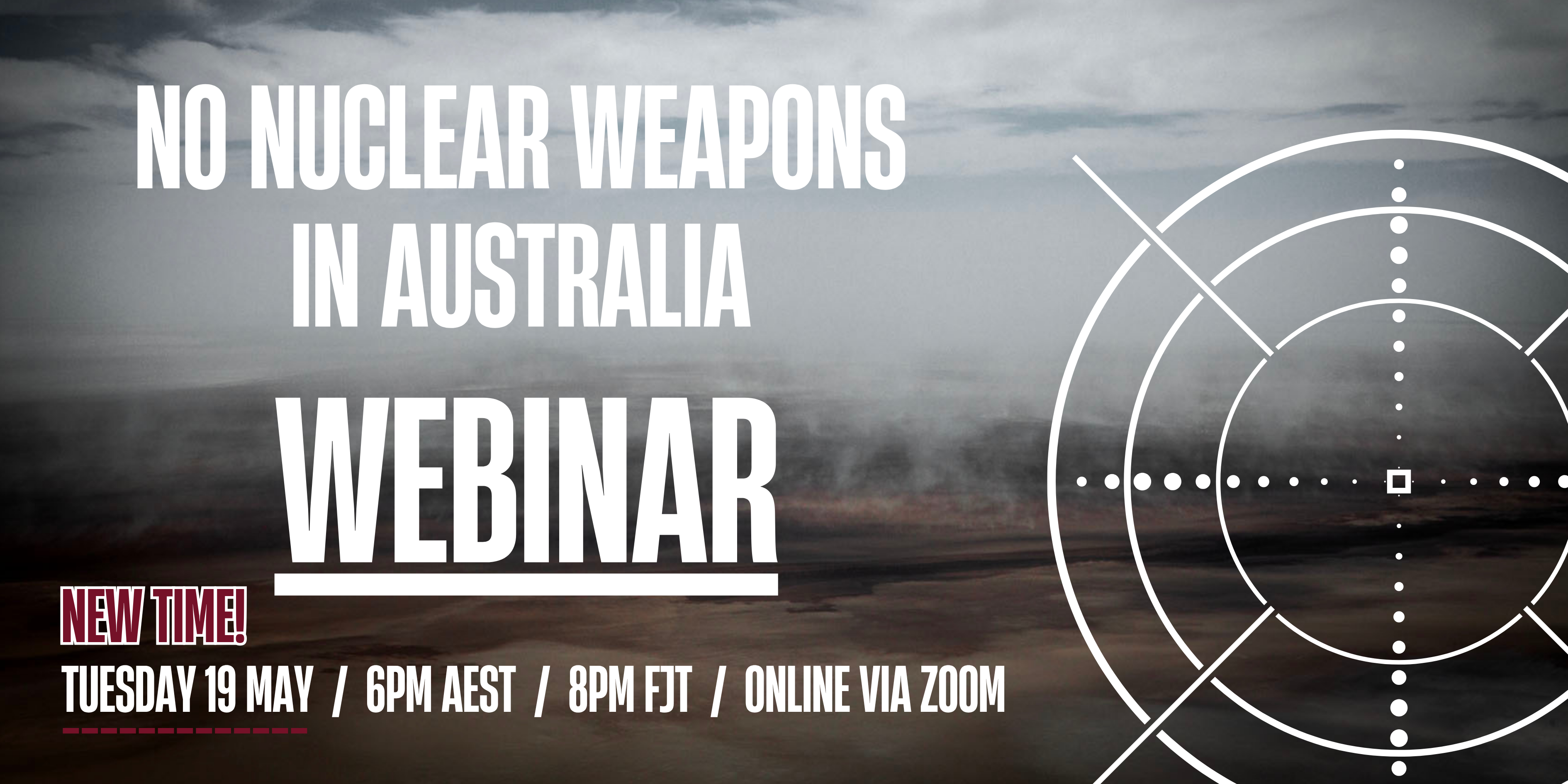
19 May – Webinar- Webinar: No Nuclear Weapons in Australia
Start: 2026-05-19 18:00:00 UTC Canberra, Melbourne, Sydney (GMT+10:00)
End: 2026-05-19 19:30:00 UTC Canberra, Melbourne, Sydney (GMT+10:00)
20 May – Webinar – The dangerous world of AUKUS, US, military occupation and suppression of dissent

National Webinar, 20th May, 2026, 6.30pm AEST. Confronting laws restricting/suppressing protest speech and action
Speakers: Former Sen. Rex Patrick, Lawyer Nick Hanna ,Arthur Rorris ,Jorgen Doyle, Sen David Shoebbridge,
Facilitator Kelley Tranter.

of the week – Australians for War Powers Reform (AWPR)
To see nuclear-related stories in greater depth and intensity
 Antinuclear