Noam Chomsky: Biden’s Foreign Policy Is Largely Indistinguishable From Trump’s — Rise Up Times

“Clearly what is needed is diplomacy and negotiations on contested matters, and real cooperation on such crucial issues as global warming, arms control, future pandemics — all very severe crises that know no borders.”
Noam Chomsky: Biden’s Foreign Policy Is Largely Indistinguishable From Trump’s — Rise Up Times
How many birds are killed by wind turbines? — Beyond Nuclear International

Bird-smart wind energy can lessen the impact
How many birds are killed by wind turbines? — Beyond Nuclear International
The U.S. War on China: Panda Huggers and Panda Sluggers by K. J. Noh — Rise Up Times
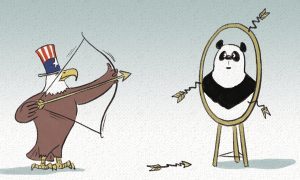
“Unless we do something about it, President Biden’s doctrine toward China will likely be a continuation of the noxious U.S. arc of history, ideology, and planning.”
The U.S. War on China: Panda Huggers and Panda Sluggers by K. J. Noh — Rise Up Times
China, Total Information Warfare: Sinophobia, by K. J. Noh — Rise Up Times
“While China demonstrates the possibility of multi-polarity, or the sharing of power, the U.S. is committed to unipolarity: its domination of world power at any cost.”
China, Total Information Warfare: Sinophobia, by K. J. Noh — Rise Up Times
April 4 Energy News — geoharvey

Opinion: ¶ “Strong Winds Off The Coast Could Power A Clean Energy Economy In North Carolina” • To learn the direction of energy production in North Carolina, look to a weather vane. Last year, Duke Energy and Dominion Energy of Virginia called off the 600-mile Atlantic Coast Pipeline. Now the weather vane points toward the […]
April 4 Energy News — geoharvey
PETITION: Australians don’t want nuclear power

Liberal MPs have called for Scott Morrison to reverse the ban on nuclear power in Australia.
Over 100 communities have been identified as possible locations for nuclear reactors and nuclear dumps – with many of them being near residential homes.
When it comes to nuclear power, there’s a real possibility of catastrophic failure with devastating consequences.
And power from a nuclear power station would be around three times more expensive than cleaner and safer renewable energy.Will you sign our petition telling Scott Morrison that Australians don’t want nuclear power? more https://www.alp.org.au/petitions/australians-dont-want-nuclear-power/
Labor Party’s platform on uranium/nuclear and radioactive waste issues.

Dave Sweeey, 31 Mar 21, At its National Conference federal Labor adopted the platform (below) on uranium/nuclear and radioactive waste issues.
Clearly it is not what we would write but there’s a lot that is useful and important – including options to further contest Australian uranium sales, a commitment to responsible radioactive waste management and a rejection of domestic nuclear power.
Yesterday federal Labor also clearly reaffirmed its commitment to sign and ratify the Treaty on the Prohibition of Nuclear Weapons (the ICAN Ban) in government.
Uranium
1. The production of uranium and its use in the nuclear fuel cycle present unique and unprecedented
hazards and risks, including:
Threats to human health and the local environment in the mining and milling of uranium and
management of radioactive materials, which demand the enforcement of strict safety
procedures;
The generation of products that are usable as the raw materials for nuclear weapons
manufacture, which demands the enforcement of effective controls against diversion; and
The generation of highly toxic radioactive waste by-products that demand permanently safe
disposal methods.
2 Labor accordingly will allow the mining and export of uranium only under the most stringent
conditions.
3. In relation to mining and milling, Labor will:
Ensure the safety of workers in the uranium industry is given priority. Labor has established a
compulsory register for workers in the uranium industry that includes regular health checks
and ongoing monitoring. The register is held by an independent agency and will be subject to
privacy provisions;
Ensure Australian uranium mining, milling and rehabilitation is based on world best practice
standards, extensive continuing research on environmental impacts and the health and
safety of employees and affected communities, particularly Indigenous communities;
Ensure the Australian public is informed about the quality of the environmental performance
of uranium mines through public accountability mechanisms;
Foster a constructive relationship between mining companies and Indigenous communities
affected by uranium mining; and
Prohibit the mining of uranium within national parks under International Union for
Conservation of Nature protected area category 1A, category 1B, and category 2, and listed
world heritage areas.
4. In relation to exports other than to India, Labor will allow the export of uranium only to those
countries that observe the Nuclear Non-Proliferation Treaty (NPT), are committed to nonproliferation
policies, and have ratified international and bilateral nuclear safeguards agreements.
Labor will export uranium only to countries that maintain strict safeguards and security controls
over their nuclear power industries.
5. In relation to India, an important strategic partner for Australia, commitments and responsible
actions in support of nuclear non-proliferation, consistent with international guidelines on nuclear
supply, will provide an acceptable basis for peaceful nuclear cooperation, including the export of
uranium, subject to the application of strong safeguards.
6. In addition, Labor will work towards:
Strengthening export control regimes and the rights and authority of the International
Atomic Energy Agency (IAEA);
Appropriate international responses to violations of existing safeguard commitments;
Limiting the processing of weapon usable material (separation of plutonium and high
enriched uranium in civilian programs);
Tightening controls over the export of nuclear material and technology;
Universalising of the IAEA additional protocol making it mandatory for all states and
members of the Nuclear Suppliers Group to adhere to the additional protocol as a condition
of supply to all their transfers;
Criminalising actions of individuals and companies that assist in nuclear proliferation;
The development of an international guarantee of nuclear fuel supply to states foregoing
sensitive nuclear technologies;
Revising the NPT to prevent countries from withdrawing from the NPT and passing a new
resolution in the United Nations Security Council addressing the penalties for withdrawal
from the NPT;
Encouraging all nuclear states to join the NPT;
Reserving the right to withhold supplies of uranium permanently, indefinitely or for a
specified period from any country that ceases to observe the non-proliferation safeguards
and security conditions applied to Australian uranium exports to that country, or which
adopts nuclear practices or policies that do not further advance the cause of nuclear nonproliferation;
Supporting the maintenance and enhancement of international and Australian safeguards to
ensure that uranium mined in Australia, and nuclear products derived from it, are used only
for civil purposes by approved instrumentalities in approved countries that are signatories to
the NPT (with the exception of India) and with whom Australia has safeguard arrangements;
and
Seeking adequate international resourcing of the IAEA to ensure its effectiveness in
undertaking its charter.
7. Labor will progress these commitments through diplomatic means including the re-establishment
of the Canberra Commission to re-invigorate Australia’s tradition of middle power, multilateral
diplomacy. In doing so, Labor believes that as a non-nuclear armed nation and a good international
citizen, Australia can make a significant contribution to promoting disarmament, the reduction of
nuclear stockpiles, and the responsible use of nuclear technology.
8. Labor will:
Vigorously and totally oppose the ocean dumping of radioactive waste;
Prohibit the establishment of nuclear power plants and all other stages of the nuclear fuel
cycle in Australia;
Fully meet all Australia’s obligations as a party to the NPT; and
Remain strongly opposed to the importation and storage of nuclear waste that is sourced
from overseas in Australia.
9. Labor acknowledges that radioactive waste management is a complex policy challenge that
requires the highest levels of transparency and evidence, while balancing the need of the
community to benefit from treatments for diseases like cancer. Accordingly, Labor will act in
accordance with scientific evidence, and with full transparency, broad public input and best
practice technical and consultative standards, taking into account the views of traditional owners,
to progress responsible radioactive waste management
Federal Labor promises to slash taxes for electric vehicles, build community batteries — RenewEconomy

Federal Labor promises to slash EV taxes and fund community battery roll-out, in some of its first energy policies announced since the 2019 election. The post Federal Labor promises to slash taxes for electric vehicles, build community batteries appeared first on RenewEconomy.
Federal Labor promises to slash taxes for electric vehicles, build community batteries — RenewEconomy
Angus Taylor will take five years of climate delay to COP26, and a plan for another 10 — RenewEconomy

Australia will take five years of climate inaction to COP26, with a plan for another ten. Its climate policy is flying off the rails. The post Angus Taylor will take five years of climate delay to COP26, and a plan for another 10 appeared first on RenewEconomy.
Angus Taylor will take five years of climate delay to COP26, and a plan for another 10 — RenewEconomy
“Delay as dangerous as denial:” Australia faces devastating costs of climate inaction — RenewEconomy

Federal government should target net-zero emissions by 2050 as “absolute minimum,” new scientific report warns, to avoid potentially insurmountable challenges to Australia. The post “Delay as dangerous as denial:” Australia faces devastating costs of climate inaction appeared first on RenewEconomy.
“Delay as dangerous as denial:” Australia faces devastating costs of climate inaction — RenewEconomy
Surge in new coal mine proposals in NSW triggers fresh calls for coal moratorium — RenewEconomy

Calls for a moratorium on new coal mines, as a record number of new mine proposals lodged in 2020, despite a global decline in demand for coal. The post Surge in new coal mine proposals in NSW triggers fresh calls for coal moratorium appeared first on RenewEconomy.
Surge in new coal mine proposals in NSW triggers fresh calls for coal moratorium — RenewEconomy
WAMM Newsletter, Winter 2021: Line 3, Polly Mann on Assange, Biden’s First 100 Days — Rise Up Times

WAMM joins the Water Protectors for Line 3, Biden’s first 100 days, a WAMM campaign on the many sides of military spending, Polly Mann; The Truth Will out despite caging and torture.
WAMM Newsletter, Winter 2021: Line 3, Polly Mann on Assange, Biden’s First 100 Days — Rise Up Times
March 31 Energy News — geoharvey

Opinion: ¶ “ExxonMobil vs Chevron: Fight For Second-To-Last Place Among Fossil Fuel Companies” • There are a lot of noteworthy issues to watch at this year’s virtual annual meetings. Three broad themes are EU versus US climate action, the need for climate lobbying disclosure, and an Chevron vs ExxonMobil fight over which is worst. [CleanTechnica] […]
March 31 Energy News — geoharvey
The massive tax-payer funding for security of nuclear reactors – and this will be just as bad for Small Nuclear Reactors
This article us well worth reading in its full version. Due to problems with WordPress, (the free provider of this site), itis harder to publish this in a ‘viewable size
Nuclear Security Represents $4 Billion Annual Subsidy In US, Trillion For Fleet For Full Lifecycle
This equates to a roughly $4 billion annual subsidy to the US nuclear industry, in addition to the $1.6 billion in permanent tax breaks in the US federal tax code.
Clean Technica, By Michael Barnard 30 Mar 21,The nuclear industry requires, but doesn’t pay much of the price of, several overlapping layers of security on its international and national supply chains, generation sites, and waste management. It’s spread across a hard to fathom number of budget lines, and there doesn’t appear to have been any attempt to consolidate the costs prior to this article. This was covered recently in a CleanTech Talk with Paul Werbos, formerly with the US National Science Foundation, and he agreed that the costs were large and mostly under the radar.[1]
Per reactor annual costs appear to be in the range of $50 million USD per year, with half or less of that paid by the nuclear operator. This equates to a roughly $4 billion annual subsidy to the US nuclear industry, in addition to the $1.6 billion in permanent tax breaks in the US federal tax code.
For this analysis, the expenditures are broken into international fuel and components supply chain security, national/state/municipal security, and finally generation site security.
This will be put in context of costs across the 135 US nuclear reactors that include 94 in operation, 2 in construction, and 39 no longer operating.[2] Nuclear power plants take an average of 10 years to be constructed, operate for 40 years, and are currently taking 100 years to decommission.[3] While these are US costs, they should be reasonably easy to extend to other countries with nuclear generation.
International Costs
There are international security costs for nuclear supply, waste, and materials chains, coordinated through the International Atomic Energy Association (IAEA). The US provides the majority of the IAEA’s annual budget, about $200 million USD.[4] That turns into roughly $1.5 million per reactor per year, or about $220 million for the full lifecycle of each reactor.
The Department of Defense (DOD) undoubtedly spends part of its $637 billion annual peacetime base budget on security for the global nuclear supply chain.[5] Bernie Sanders’ campaign estimated that $81 billion of DOD’s annual budget was effectively oil and gas security forces globally, with a strong concentration in the Middle East.[6] The nuclear war ships and armaments of the us military share supply chains with civilian nuclear reactor fuel and many components. ………….
US international expenditures on security total $1.1 billion annually, or about $8 million per reactor per year, or about $1.2 billion over the full lifecycle of the reactor.
National, State, & Municipal Security
Nuclear energy is the only form of energy with its own regulatory agency in most countries, and with specific call outs in budgets of other agencies. ……….
adds up to about $1.5 billion more per year for security provisions for nuclear power generation in the US. That money is not recovered from operators, but should be considered a complete subsidy for nuclear generation in addition to the nuclear tax code permanent tax breaks of $1.6 billion annually.
Over the 135 reactors in operation, that turns into a per reactor cost borne by US taxpayers of $11.3 million, and a full 150-year lifecycle cost of about $1.7 billion………….
Nuclear Generation Site Security
Only now do we get to the specific site’s annual costs. The budgets are even less transparent for individual reactors. There are aggregated numbers, but not individual budgets as the companies running them are private and not required to disclose that level of detail………..
There are three levels of security for any nuclear reactor site, and the security is shared across the reactors at the site.[22]
“The large outer perimeter, called the “owner-controlled area,” is far enough from the reactor that only minimal security is needed. Other than signs, the security measures in place for the owner-controlled area are not always visible to the public. The “protected area” is fenced and protected by sophisticated security systems and armed security officers. The innermost circle is called the “vital area.” It contains the reactor and associated safety systems, the control room, the used fuel pool, and the main security alarm stations. Access to the vital area is limited and protected by locked and alarmed security doors.”
Then there are the cybersecurity measures on top of that.
AEA best practices staffing guidelines suggest 20% of staff at nuclear generation facilities are security staff.[23] Plants have 500–1000 staff.[24] For an average facility then, there might be 750 staff and 150 security staff. ……..
Given that the site pays for 90% of NRC licensing costs and its site security, nuclear operators are paying roughly $24 million of the annual $53 million in security costs. The rest, roughly $30 million, can be considered uncounted subsidies of nuclear generation per reactor. That amounts to a $4 billion dollar indirect annual nuclear subsidy in addition to the $1.6 billion in direct tax breaks for the nuclear industry……..
Small Modular Reactors
There is nothing about small modular reactors (SMRs) which would indicate that they would have lower security costs than full sized reactors. They would have to be grouped in reactor sites, but with more SMRs per site, in order to spread the operational costs and the like across the reactors economically. They would still require full international, national, state and municipal overlapping layers of protection. They would still require high levels of site security. There is no evidence that decommissioning them will take less time. https://cleantechnica.com/2021/03/29/nuclear-security-represents-4-billion-annual-subsidy-in-us-trillion-for-fleet-for-full-lifecycle/
Turnbull picked to chair NSW zero emissions advisory board — RenewEconomy

Former prime minister Malcolm Turnbull picked to lead key NSW government clean energy advisory board. The post Turnbull picked to chair NSW zero emissions advisory board appeared first on RenewEconomy.
Turnbull picked to chair NSW zero emissions advisory board — RenewEconomy
1 This month.
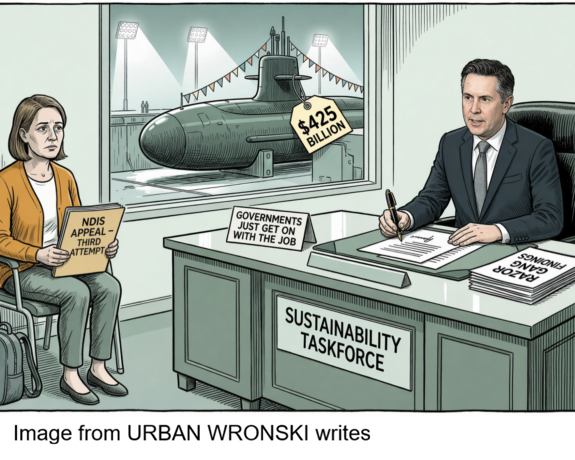

PETITION – To: Prime Minister Anthony Albanese and the Australian Labor Government
Chernobyl: The Lost Tapes – A good documentary on Chernobyl on SBS available On Demand for the next 3 weeks– https://www.sbs.com.au/ondemand/tv-program/chernobyl-the-lost-tapes/235274195556
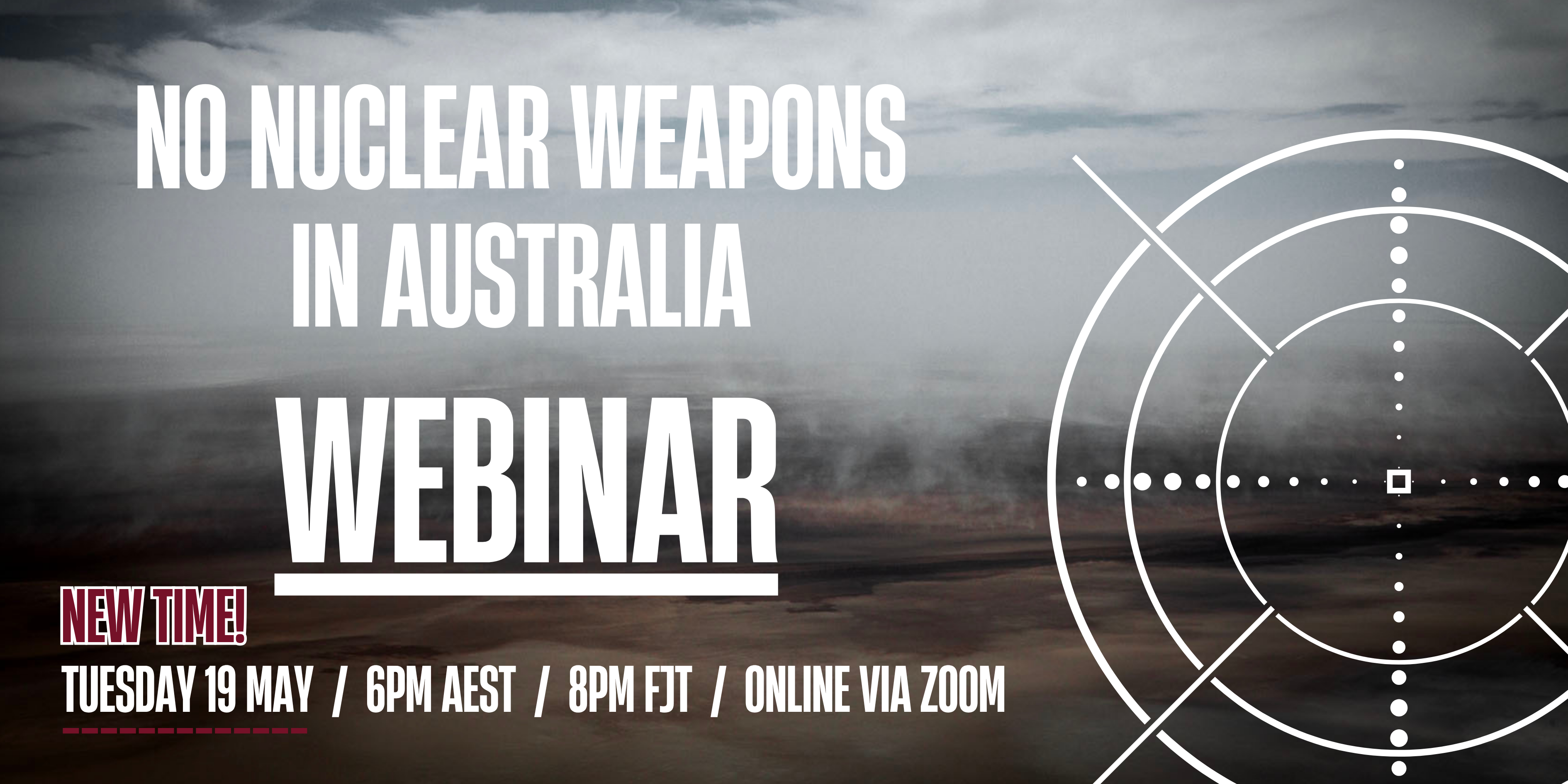
19 May – Webinar- Webinar: No Nuclear Weapons in Australia
Start: 2026-05-19 18:00:00 UTC Canberra, Melbourne, Sydney (GMT+10:00)
End: 2026-05-19 19:30:00 UTC Canberra, Melbourne, Sydney (GMT+10:00)
20 May – Webinar – The dangerous world of AUKUS, US, military occupation and suppression of dissent

National Webinar, 20th May, 2026, 6.30pm AEST. Confronting laws restricting/suppressing protest speech and action
Speakers: Former Sen. Rex Patrick, Lawyer Nick Hanna ,Arthur Rorris ,Jorgen Doyle, Sen David Shoebbridge,
Facilitator Kelley Tranter.

of the week – Australians for War Powers Reform (AWPR)
To see nuclear-related stories in greater depth and intensity
 Antinuclear