Will Australia join the global nuclear lobby’s propaganda onslaught?
‘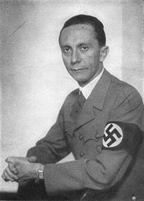 ‘If you tell a lie big enough and keep repeating it, people will eventually come to believe it. A lie told once remains a lie but a lie told a thousand times becomes the truth ” – Joseph Goebbels
With the sudden mysterious departure of Australia’s high priest of nuclear spin, Dr Adi Paterson, and the flummoxed and failing government push for a Kimba nuclear waste dump, – the nuclear lobby in Australia seems paralysed at present.
But the world-wide nuclear industry is anything but paralysed, and, while everyone is agonising, (justifiably), over the pandemic, it is gearing up for a big publicity spin. So I’m guress that it won’t be long before a new nuclear champion takes up the nuclearv religion role in Australia..
 This month, I’ve concentrated my efforts on the ground-breaking and historic UN Treaty for the Prohibition of Nuclear Weapons coming into force. Of course, the nuclear weapons states will try to destroy that Treaty. Failing destruction, they will aim for pooh poohing and rubbishing that Treaty. Finally they’ll go for a favourite strategy – ignoring it, and hoping that the world will just forget about it.
I don’t think that the world will forget about it. The challenge will be to help those workers and communities that depend on nuclear-weapons-making to be helped out of that toxic situation, and into life-sustaining work and activities.
MEANWHILE, as media and science correctly focus on the global coronavirus pandemic, the issue of nuclear power has pretty much disappeared from view. Nothing is happening?
Today, the nuclear weapons industry is pretty much the only reason for”peaceful” nuclear power. ”Peaceful nukes” provide the trained experts, the technology development necessary for the weapons industry. If governments and universities can be persuaded to back commercial nuclear energy, this solves a lot of probems. Especially, it helps the blur the picture onthe astronomic costs of nuclear weapons, as quite a lot of costs are covered by ”peaceful” nuclear development.
There’s another pressing reason to keep nuclear power going. It’s the horrible and never-ending cost of shutting down reactors and dealing with their toxic wastes. How much cheaper to just relicense the for 100 years? That way, the present responsible officials will all be gone, and they don’t have to worry about that problem. Heck – they’ve handed it over to our great-grandchildre, What a fine idea! NOT!!
Against this background, the nuclear lobby is girding its loins for the public perception battle.
Armed with lies – that nuclear fixes climate – that it’s cheap, is clean, works great with renewables, essential for society – blah blah, the nuclear lobby is preparing its onslaught. They generally try pretty hard to ignore matters like comparative costs, and wastes problems. But they can just lie again, if put on the spot about such problems.
Just a few quotatios from World Nuclear News :-
The barrier to nuclear is perception“
”addressing perceptions of its alleged drawbacks”
Bilbao y León – “the nuclear industry has responsibly managed all its used nuclear fuel and waste “from day one”.
“We know where every ounce of used nuclear fuel and nuclear waste is because we have been managing it throughout the history of the nuclear industry. “We know where every ounce of used nuclear fuel and nuclear waste is because we have been managing it throughout the history of the nuclear industry“. ……. https://www.world-nuclear-news.org/Articles/The-barrier-to-nuclear-is-perception,-says-
“The real challenges to nuclear are external” – ”small modular reactors ..cheaper, safer, better, and going to provide more discreet financial solutions”
The government nuclear regulatory authorities are, unfortunately, usually well onside with the industry – in what is known as “regulatory capture”. Again, from World Nuclear News –
”The hurdles advanced nuclear developers face‘ – ””We, as the regulator, are working on building public trust, confidence and social acceptance in these new technologies.’‘
Joseph Goebbels would be proud of the skills of Sama Bilbao y Leon, Director General of the World Nuclear Association. She’s great with language (as the global nuclear lobby has realised, in appointing her, and several other women to top promotional positions”
Chart of the day: European wind and solar share vs Australia — RenewEconomy

How does Australia fare in the European renewable energy stakes? 2020 was a great year for renewables, so competition is tough. The post Chart of the day: European wind and solar share vs Australia appeared first on RenewEconomy.
Chart of the day: European wind and solar share vs Australia — RenewEconomy
Nuclear weapons ban treaty is now international law — IPPNW peace and health blog
The Treaty on the Prohibition of Nuclear Weapons enters into force, three months after the 50th country, Honduras, ratified it. Nuclear weapons are now illegal under international law in every aspect. Possession is illegal; manufacture is illegal; use is illegal; threatening to use is illegal; transfer is illegal; aiding and abetting any of these things is illegal. But much remains in obscurity. Radioactive waste problems continue to fester. It seems appropriate to ask the states parties to the TPNW to set up a Global Truth Commission on Nuclear Weapons under the auspices of the United Nations.
Nuclear weapons ban treaty is now international law — IPPNW peace and health blog
January 26 Energy News — geoharvey

Opinion: ¶ “Poking The Wind Power Dragon In Ohio, One Factory At A Time” • The state of Ohio has been slow to move on the wind power revolution, and last year’s passage of the notorious HB 6 energy bill didn’t help matters much. But CleanTechnica came across One Energy, a wind company has figured […]
January 26 Energy News — geoharvey
The aerospace industry – headed for military dominance
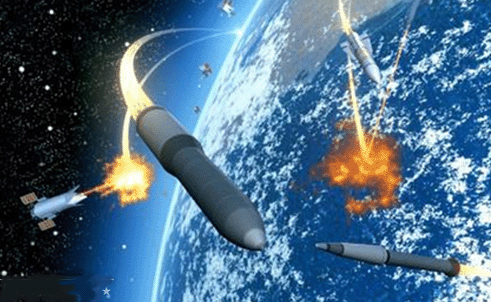
the Space Force will be given the task to create the technologies to “control and dominate” the pathway on and off our sacred Mother Earth.
Earlier this year, Trump was able to “stand up” his new high-tech legacy branch of the military, called the Space Force. Congress was overwhelmingly in favor – that means both parties supported it
The Real Missions of Space Force….
|
Keep Space for Peace! Save the Heavens fro!m Hegemony https://www.womenagainstmilitarymadness.org/articles/2020/12/22/keep-space-for-peace-save-the-heavens-from-hegemony Bruce K. Gagnon
Recently we learned that the aerospace industry is pushing to turn a former naval air station in Brunswick, Maine, into a spaceport. Promising lots of “high tech” jobs, a bill is being pushed in Augusta, our capital, by some of the most “progressive” legislators in the state. Similarly, we are hearing from many other states where launch complexes are being promoted – from Hawaii to New Mexico to Alaska – that the industry wants some of the most pristine places on Earth to become spaceports. Why? A spaceport in Kodiak Island, Alaska (locals call it “Spacepork”), was built some years ago in spite of overwhelming opposition by local residents. They were promised that it would be used only for civilian launches. So far, all the launches at Kodiak have actually been for Pentagon (and Israeli) space-weapons technology tests. We’ve been hearing for several years now that new companies formed by tech-industry billionaires Elon Musk (whose projects include Tesla and SpaceX) and Jeff Bezos (Amazon, Blue Orbit) plan to launch as many as 35,000 mini-sats (satellites) into orbit. Imagine the enormous hole these polluting launches will punch into the ozone layer. The plan is to have a satellite orbiting over the head of every person on Earth 24 hours a day, making it possible for the new 5G wireless technology system to be profitable. Many questions are being raised about the military (dual-use) applications of these satellites as well. Space Force Continue reading |
Australian Capital Territory politicians join calls for Australia to sign nuclear ban treaty
|
ACT politicians join calls for Australia to sign nuclear ban treaty https://www.canberratimes.com.au/story/7097235/act-politicians-join-calls-for-australia-to-sign-nuclear-ban-treaty/, Jasper Lindell 24 Jan 21,
ACT politicians have renewed their calls for the federal government to join a United Nations treaty banning the use of nuclear weapons, which came into force on Friday. Politicians and members of the international diplomatic corps gathered on Saturday at the Canberra Rotary peace bell in Nara Peace Park to mark the entry-into-force of the treaty. Greens member for Ginninderra Jo Clay said Australia’s continued relationship with uranium mining and the creation of nuclear weapons was unacceptable.
“With climate change upon us, the ACT Greens believe that there has never been a more urgent time for Australia to join its 86 international counterparts and show its commitment to a more peaceful and sustainable future for all of us,” Ms Clay said in a statement. All Greens members of the Legislative Assembly have signed the International Campaign to Abolish Nuclear Weapons’ parliamentary pledge.
Some Labor members, including Chief Minister Andrew Barr and Deputy Chief Minister Yvette Berry, have signed the pledge. Federal member for Canberra Alicia Payne has also signed. The Australian government has not signed the treaty, which compels signatories to stop developing, testing, producing or stockpiling nuclear weapons. Signatories are also banned from threatening to use the weapons. Fifty countries ratified the treaty in October, which was condemned by the United States. Red Cross International humanitarian law adviser Tara Gutman welcomed the treaty, saying the law was the cornerstone of a world free of nuclear weapons. “There has been no humanitarian response developed that is remotely capable of being applied to a nuclear weapon attack. We simply will not be there to assist victims,” she said. “These weapons are an inhumane response to any military threat … They decimate populations, cause untold and needless suffering, and their environmental impact would accelerate climate change making some areas of the planet uninhabitable. |
|
Australian companies involved in the uranium plunder of Greenland, and danger to sub-arctic environment
The plundering of Greenland, Uranium and other resources the latest threat to precious sub-arctic ecosystems, Beyond Nuclear International. By Niels Henrik Hooge, 24 Jan 21, The governments of Greenland and Denmark are encouraging large-scale mining in Greenland, including what would be the second-largest open pit uranium mine in the world. Now groups are calling on those governments to halt such desecration and instead establish an Arctic sanctuary. Your organization can sign onto this petition. Read the petition here, then send your organization name (and logo, optional) to either Niels Henrik Hooge at nielshenrik@noah.dk or to Palle Bendsen at: pnb@ydun.net.
No or few World Heritage Sites probably have more or bigger mining projects in their vicinity than the Kujataa UNESCO World Heritage Site (WHS) in Southern Greenland. The property was inscribed on UNESCO’s world heritage list in 2017.
It comprises a sub-arctic farming landscape consisting of five components that represent key elements of the Norse Greenlandic and modern Inuit farming cultures.
On one hand they are distinct, on the other they are both pastoral farming cultures located on the climatic edges of viable agriculture, depending on a combination of farming, pastoralism and marine mammal hunting. The landscape constitutes the earliest introduction of farming to the Arctic.
Some of the world’s biggest mining projects are located near Kujataa
Kujaata is situated in Kommune Kujalleq, the southernmost and smallest municipality of Greenland with its rich mineral resources. These include zinc, copper, nickel, gold, diamonds and platinum group metals, but first and foremost substantial deposits of rare earth elements (REEs) and uranium. ……
Some of the biggest REEs mining projects in the world are located only a few kilometres from the Kujataa WHS. The biggest and most controversial is the Kvanefjeld REEs-uranium mining project, owned by the Australian company Greenland Minerals Ltd., GML. According to GML, in addition to containing the second biggest uranium and by far the largest thorium deposits, the Ilimaussaq Complex, of which Kvanefjeld is a part, possesses the second largest deposits of rare earth elements in the world.
The mine, which would be the world’s second largest open pit uranium mine, is located on top of a mountain, almost one kilometre above sea-level, and only six kilometres away from Narsaq, a town of approximately 1,500 inhabitants, and also near some of the parts of the Kujataa WHS.
A second major project close to Kujataa is the Kringlerne REEs mining project, which is described by its owner, the Australian mining company Tanbreez Mining Greenland A/S, as the probably largest deposit of REEs in the world. …………
Calls for enlargement of the Kujataa WHS
Especially in Southern Greenland, there has long existed a notion that the Kujataa World Heritage Site in its present form has been delineated to accommodate the Kvanefjeld mining project and that the potential impacts of the other mining projects surrounding the site have not been considered. ……………
Kujataa’s OUV under threat
It is also clear that Kujaata’s Outstanding Universal Value, i.e. its exceptional cultural and natural significance, will be under threat if the mining projects surrounding the site are implemented. There have already been calls to put Kujaata on the World Heritage Convention’s danger list. Kujataa’s unique farming traditions have been a determining factor in designating it as world heritage.
However, the Danish Risø National Laboratory has estimated that up to a thousand tons of radioactive dust might be released annually from just the Kvanefjeld open pit mine due to material handling, hauling and blasting and from the ore stock and waste rock piles.
Furthermore, if the tailings by some unforeseen cause such as leakages, technical problems, etc. would turn dry, massive amounts of radioactive and toxic dust would be blown away. The dust from the aforementioned sources will be carried by heavy arctic sea winds across the region, where it will affect among others agricultural activities. The predominant wind direction and the direction for the strongest winds are east- and north- eastwards, where the Kujataa WHS is located. The area, its people, domestic animals and wildlife would be chronically exposed to radioactive and other toxic species via drinking water, food and air1.
Furthermore, most if not all the planned mining projects in the area are open pit mines. Perpetual blasting with explosives on the mountain tops in the open pit mines surrounding the world heritage site and the excavation and transport by dump trucks to the mills, where the rocks are crushed, could cause considerable noise disturbance during the entire operation of the mines.
According to the EIA draft reports for the Kvanefjeld project, a dilution factor in the order of 2000 for the waste water would be required to be rendered safe for the most critical parameters. This would mean that the discharges of waste water during just one year would have to be diluted into 7 km3 of seawater in the Fiord system, which is part of the Kujataa World Heritage Site, and into 260 km3 of seawater during the planned operational lifetime of the Kvanefjeld mine.
Furthermore, seepage, leaks and spills of liquids form the tailings will cause contamination of groundwater and rivers by radioactive and non-radioactive toxic chemical species. Seafood would become contaminated as well, due to the substantial discharges of wastes into the Fiords and the coastal sea.
Large-scale mining and particularly uranium mining are incompatible with the development of three of the four sectors of the farming landscape, namely fishing and hunting, tourism and food production. It is relevant to ask how the entire character of the landscape would change in the development from a rural to an industrial area in the wake of both the big mining projects. This also pertains to the question of urban development, when among others new ports, port facilities and accommodation villages have to be built and corresponding support infrastructure implemented.
No real plans to protect Kujataa…………
in its description of the impacts of the nearby mining activities, the management plan relies on a draft of an Environmental Impact Assessment (EIA) of the Kringlerne mining project, which was rejected by Greenland’s Environmental Agency for Mineral Resources Activities (EAMRA), because it did not contain enough relevant information.
EAMRA has also rejected the four latest EIA draft reports on the Kvanefjeld project because of lack of information. Among other things, Kvanefjeld’s owner, GML, is criticised for not providing a comprehensive assessment of the earthquake risk in the region, final results of tests of toxic elements during extraction and processing, final radiological estimates and results of investigations of impacts of radioactive minerals, and for failing to describe the alternatives regarding management of tailings and the shutdown of the tailings facility.
In September 2019, the CEO of GML was also formally reproached by Greenland’s Prime Minister and the Department of Nature and Environment’s Permanent Secretary for lobbying high-ranking civil servants and ministers who had no competence within the EIA review process in order to undermine EAMRA’s authority.
A Heritage Impact Assessment is not enough
…….. it could be argued that there is already enough reason for the Greenlandic and Danish States Parties to involve UNESCO and – considering that environmental issues are at the core of the problems and Kujataa’s management plan is based on rejected EIA draft reports – to include IUCN in the process.
However, the biggest problem for not only Kujataa, but all Greenland’s three world heritage sites could be the fact that Greenland’s environmental legislation does not mandate strategic environmental impact assessments for minerals exploration areas, which means that the public is not kept informed in advance on what areas could be designated. Thus, implementation of the Aarhus Convention in Greenland should have high priority in order to reinforce Greenland’s environmental legislation.
Niels Henrik Hooge is member of NOAH Friends of the Earth Denmark’s uranium group. https://wordpress.com/read/feeds/72759838/posts/3144708883
Nuclear waste dump plan – ruining the name of the town of Kimba
Paul Waldon Fight to stop a nuclesar waste dump in South Australia, 25 Jan 21 Kimba has already been tagged as an Australian “Shit Town.” Kimba may not tick every box for what criteria defines a shit town, but it ticks enough . We do know it doesn’t have enough people to man a radioactive dump, which is good as the unemployment rate goes, and information of economic hardship isn’t forthcoming as to make any judgement there. Yet the boxes it does tick, would be the elevated prospects of becoming a contaminated environment, a study found that clean environments attract people and businesses, while the closure of the towns hardware store sends a message that other businesses could be struggling, locals shopping outside the community conveys a message that things aren’t right and this is a reduction of sales for the towns remaining businesses and could promote the erosion of existing services.
Morrison and Taylor continue to stack government bodies with fossil fuel allies — RenewEconomy

Another key federal government body, in this case responsible for overseeing emissions reduction projects, is stacked with Morrison government allies. The post Morrison and Taylor continue to stack government bodies with fossil fuel allies appeared first on RenewEconomy.
Morrison and Taylor continue to stack government bodies with fossil fuel allies — RenewEconomy
5 nuclear activities that are now Illegal under international law
|
Here are five examples of the type of activities that will be Illegal under international law on 22 January 2021 https://nukewatch.org/new-and-updated-item/here-are-five-examples-of-the-type-of-activities-that-will-be-illegal-under-international-law-on-22-january-2021/
One of the main problems with talking about nuclear weapons is that it often becomes abstract and hypothetical. Most people barely know which countries have nuclear weapons and do not know to what extent other actors are involved in maintaining and upholding nuclear weapons. WHAT THE TREATY PROHIBITSArticle 1 of the treaty prohibits states parties from developing, testing, producing, manufacturing, transferring, possessing, stockpiling, using or threatening to use nuclear weapons, or allowing nuclear weapons to be stationed on their territory. It also prohibits them from assisting, encouraging or inducing anyone to engage in any of these activities. #1: THE TREATY BANS THE DEVELOPMENT OF NEW NUCLEAR WEAPONS SYSTEMSRight now, all nuclear armed states are quantitatively or qualitatively advancing their nuclear arsenals, to the tune of nearly $73 billion in 2019 alone. Developing nuclear weapons is banned for states parties in Article 1(a) of the treaty. So activities like India’s Agni-V intercontinental ballistic missile? Banned under international law. Pakistan’s Babur-3 submarine-launched ballistic missile? Banned under international law. North Korea’s’ growing nuclear warhead arsenal? Banned under international law. Nuclear-armed states may not be legally obligated to comply with a treaty they haven’t joined. But their behavior contradicts this new instrument of international law and the growing norm it represents. #2: THE TREATY BANS ASSISTING WITH DEVELOPING NUCLEAR WEAPONSDozens of U.S. universities are involved in the U.S. nuclear weapons complex, including through direct management and research partnerships with the laboratories that design and can produce nuclear weapons components. The University of California, Texas A&M University, Johns Hopkins University, the Massachusetts Institute of Technology, and the University of Rochester receive billions in contracts to directly manage laboratories that work on nuclear weapons. The University of California and Texas A&M University are both operators of the Los Alamos National Laboratory, which provides design and engineering for several nuclear warhead types, conducts simulated experiments to evaluate warheads, and has the capacity to produce plutonium pits, the core material for nuclear warheads. An average-sized U.S. nuclear weapon, that could be designed and developed at Los Alamos overseen by the University of California and Texas A&M University, detonated over the center of Paris would immediately kill over 500,000 civilians, and injure more than one million, causing third-degree burns all the way out to the suburbs. From 22 January 2021, these universities, and others that are participating in the development and production of nuclear weapons, are carrying out activities that are banned under international law. Students should demand their universities focus on research to save lives, not end them. #3: THE TREATY BANS THE HOSTING OF NUCLEAR WEAPONSArticle 1(g) of the TPNW explicitly prohibits allowing the stationing, installation or deployment of nuclear weapons. There are five countries in the world that are currently engaged in this soon to be banned behaviour: Belgium, Germany, the Netherlands, Italy, and Turkey.These five countries currently host collectively about 150 U.S. nuclear weapons at bases on their territory. The fact is, there are likely more nuclear weapons in Italy than in North Korea. Not only does the continued hosting of U.S. nuclear weapons run contrary to international law, it also flies in the face of public opinion. Less than one-third of the public in most nuclear hosting states support the continued existence of weapons of mass destruction on their soil. A recent poll in Belgium shows that 77% of Belgians want their government to join the TPNW. #4: THE TREATY BANS THE MANUFACTURING OF NUCLEAR WEAPONSEven outside of nuclear-armed states companies contribute to the development and production of nuclear weapons. Belarus’ Minsk Automotive Factory manufactures mobile launchers for a Russian intercontinental ballistic missile. The multinational Airbus Group, headquartered in the Netherlands, contributes through a German-headquarted subdivision to the development and production of the French submarine-launched ballistic missiles. These companies are engaging in activities outlawed under international law. There is a growing trend for financial institutions to divest from companies producing weapons banned under international law. If these companies do not choose to adhere to the new norm on nuclear weapons, they may pay the price. #5: THE TREATY BANS ENCOURAGING THE USE OF NUCLEAR WEAPONSNuclear-armed states are always ready to use nuclear weapons. They regularly prepare to use nuclear weapons through joint exercises, where many states contribute to nuclear attack exercises. One example is the annual NATO Steadfast Noon nuclear exercise. Non-nuclear-armed states that participate in these mass murder trial runs would be acting contrary to Article 1(e), the prohibition against encouraging prohibited behaviour. This year, countries like the Czech Republic and Poland contributed conventional aircraft to the Steadfast Noon nuclear strike exercise – something that will be illegal under international law when the TPNW enters into force. CONCLUSIONThe entry into force of the TPNW is the perfect opportunity for all countries, companies, universities and other entities to re-evaluate their relationship to this new international legal standard. Countries producing or hosting nuclear weapons or participating in nuclear strike exercises, as well as the companies manufacturing them and universities helping to design them are acting against international law. All entities should end these illegal activities and join the international community in renouncing nuclear weapons entirely. When the Treaty on the Prohibition of Nuclear Weapons (TPNW) enters into force on 22 January 2021, that will need to change. |
|
|
January 24 Energy News — geoharvey

Opinion: ¶ “US Offshore Wind Is Off To The Races (At Last!)” • The first two weeks of 2021 had big news for offshore windpower, and the inauguration of President Joe Biden will put a stiff wind into the industry’s sails. By the end of 2021, the Biden administration will likely have approved two projects […]
January 24 Energy News — geoharvey
Red Cross celebrates Nuclear Ban Treaty- an incremental process towards elimination of nuclear weapons
 Crucial to sign up for a nuclear-free celebration. https://www.theage.com.au/national/crucial-to-sign-up-for-a-nuclear-free-celebration-20210121-p56vtl.htmly Kym Pfitzner Crucial to sign up for a nuclear-free celebration. https://www.theage.com.au/national/crucial-to-sign-up-for-a-nuclear-free-celebration-20210121-p56vtl.htmly Kym Pfitzner
January 22, 2021 — It’s taken 75 years since the bombing of Hiroshima and Nagasaki to reach the historic day when we finally have a ban on nuclear weapons enshrined in international law.
Today is a day for celebration. From January 22, all nations that ratified the Treaty on the Prohibition of Nuclear Weapons are banned from possessing, developing or having any direct dealings with these weapons of mass destruction. This development heralds progress towards a safer and more humane world. The Red Cross and Red Crescent Movement across the globe has been striving towards this moment for three-quarters of a century. How timely it is to achieve this milestone after a year of uncertainty and difficulties. I commend the 86 countries which have already signed this important treaty – from Austria to Zimbabwe – and particularly the 51 nations that have ratified it. They’ve put the interests of humanity and the environment above other considerations. I’d like to remind all other nations of our organisation’s inability to provide any remotely adequate medical or humanitarian response to a nuclear crisis and call on all countries which are yet to sign – including Australia, the nuclear-armed nations, and some of their allies – to do so now. But today should still be celebrated. It’s the dawn of new era in which the last weapon of mass destruction to be regulated by international law will finally begin to be controlled. Other weapons that cause unacceptable harm – contrary to the laws of war – have already been banned, such as cluster munitions, anti-personnel landmine and chemical weapons. Nuclear weapons are incompatible with the rules of international humanitarian law. The laws of war are unambiguous: weapons must be able to distinguish between civilians and combatants, as only combatants can be legally attacked. Weapons must not cause superfluous injury or unnecessary suffering. Their effects must be proportionate to their military objective. And weapons cannot be used if they cause widespread, long-term and severe damage to the environment. Rather than leaving the fate of these weapons to the handful of countries that legally own them, and which were not fulfilling their obligation to work towards their elimination, the public debate has been reframed from being defined as a matter of defence policy, to being about the unacceptable humanitarian consequences of use of nuclear weapons. We know all about those consequences. Members of the Red Cross and Red Crescent Movement were there when the bombs fell on Hiroshima and Nagasaki. There was little they could do to deal with the immediate needs of those needing help, or to alleviate the long-term suffering of the people on the ground. The impacts lasted decades and, devastatingly, even affected the children of those who survived those bombs. Research is still being conducted to determine whether the illnesses being experienced by descendants – two generations later – can be explained by mutations in their DNA that was caused by radiation. With the coming into force of this treaty, let’s hope we’re getting closer to the time that we’re never that helpless again. We want Australians to know that nuclear weapons are not an acceptable defence policy option. They are barbaric tools that cause hellish devastation and untold suffering to civilians. Some critics argue the treaty is toothless because the nuclear-armed nations and their allies have not yet signed it. This ignores the reality of International law-making, which is that creating new norms is an incremental process. It takes patience and persistence. No weapon has ever been eliminated without first being studied, stigmatised and prohibited. With the advent of a vaccine for COVID-19, we can be cautiously hopeful that the end of the current global pandemic is in sight. Unfortunately, though, we can’t rely on medical science to save us from the impacts of a nuclear attack. There can be no vaccine for the health effects of a nuclear weapon. Elimination is the only option. This is why we believe in a future without nuclear weapons. Kym Pfitzner is the CEO of Australian Red Cross. |
|
|
Australia could sign the Nuclear Ban Treaty and still keep its military co=operation with America
 The nuclear weapons ban treaty is groundbreaking, even if the nuclear powers haven’t signed The Conversation 22, 2021 Tilman Ruff– Honorary Principal Fellow, School of Population anobal Health, University of Melbourne,
The UN Treaty on the Prohibition of Nuclear Weapons (TPNW) was adopted at the United Nations in 2017 and finally reached the milestone of 50 ratifications in October. The countries that have signed and ratified include Austria, Ireland, Mexico, New Zealand, South Africa, Nigeria and Thailand.
The treaty completes the suite of international bans on all major weapons considered unacceptable because of their indiscriminate and inhumane effects, including anti-personnel landmines, cluster munitions, biological and chemical weapons………
The TPNW strengthens the current nuclear safeguards found in the 1970 Treaty on the Non-Proliferation of Nuclear Weapons by requiring all states that join to have comprehensive provisions in place and not allowing states to weaken their existing safeguards.
The treaty provides the first legally binding multilateral framework for a process by which all nations can work toward eliminating nuclear weapons………
Further, the TPNW is the first treaty to commit member nations to provide long-neglected assistance for the victims of atomic bombs and weapon testing. It also calls for nations to clean up environments contaminated by nuclear weapons use and testing, where feasible.
Nuclear-armed states have been put on notice
Currently, 86 nations have signed the TPNW, and 51 have ratified it (meaning they are bound by its provisions). The treaty now becomes part of international law, and the number of signatories and ratifications will continue to grow……..
While any treaty is technically only binding on the states that join it, the TPNW establishes a new international legal standard against which all nuclear policies will now be judged.
The treaty, in short, is a game-changer, and the nuclear-armed and dependent countries have been put on notice. They know the treaty jeopardises their claimed right to continue to threaten the planet with their weapons, as well as their plans to modernise and maintain their nuclear arsenals indefinitely…………
The strength of the opposition is a measure of the treaty’s importance. It will have implications for everything from defence policies and military plans to weapons manufacturing to financial investments in the companies that profit from making now illegal nuclear weapons………….
A ‘dangerous’ belief nuclear weapons enhance securityWould joining the treaty mean nations like Australia, Japan, South Korea and NATO members would have to end their military cooperation with nuclear-armed states like the US? No. There is nothing in the TPNW that prevents military cooperation with a nuclear-armed state, provided nuclear weapons activities are excluded. Countries like New Zealand and Kazakhstan have already demonstrated that joining the treaty is fully compatible with ongoing military cooperation with, respectively, the US and Russia. In a recent letter urging their governments to join the treaty, 56 former presidents, prime ministers and defence and foreign ministers from these nations said: By claiming protection from nuclear weapons, we are promoting the dangerous and misguided belief that nuclear weapons enhance security. As states parties, we could remain in alliances with nuclear-armed states, as nothing in the treaty itself nor in our respective defence pacts precludes that. But we would be legally bound never under any circumstances to assist or encourage our allies to use,
The signatories include two former NATO secretaries-general, Willy Claes and Javier Solana. Ban treaties have been proven to work with other outlawed weapons — landmines, cluster munitions and biological and chemical weapons. They have provided the basis and motivation for progressive efforts to control and eliminate these weapons. They are now significantly less produced, deployed and used, even by states that haven’t joined the treaties. We can achieve the same result with nuclear weapons. As Hiroshima survivor Setsuko Thurlow said at the UN after the treaty was adopted, This is the beginning of the end of nuclear weapons. https://theconversation.com/the-nuclear-weapons-ban-treaty-is-groundbreaking-even-if-the-nuclear-powers-havent-signed-153197 |
|
|
Resignation of Dr Adi Paterson from Australian Nuclear Science and Technology Organisation- Australian government keeps mum.
2020-2021 Budget estimates – Parliament of Australia more https://www.facebook.com/groups/344452605899556
- Some examples of government answers to Senators’questions.
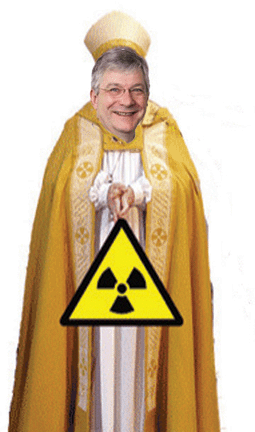 Sen Kim Carr” (Question No 85) : “Did Dr Paterson resign or was he asked to resign by the ANSTO board?
ANSWER. “There was no correspondence between the ANSTO Board and the Minister about Dr Paterson’s performance.”
The nuclear dump for Kimba propaganda continues in 2021, (and jobs for the boys)
 Kazzi Jai, Fight to Stop A Nuclear Waste Dump in South Australia, 22 Jan 21,
1 This month.
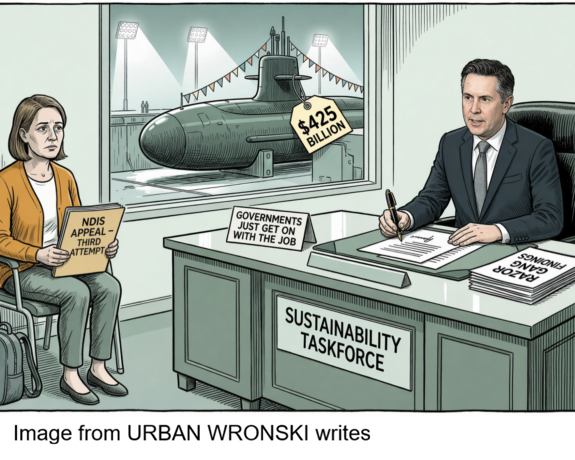

PETITION – To: Prime Minister Anthony Albanese and the Australian Labor Government
Chernobyl: The Lost Tapes – A good documentary on Chernobyl on SBS available On Demand for the next 3 weeks– https://www.sbs.com.au/ondemand/tv-program/chernobyl-the-lost-tapes/235274195556
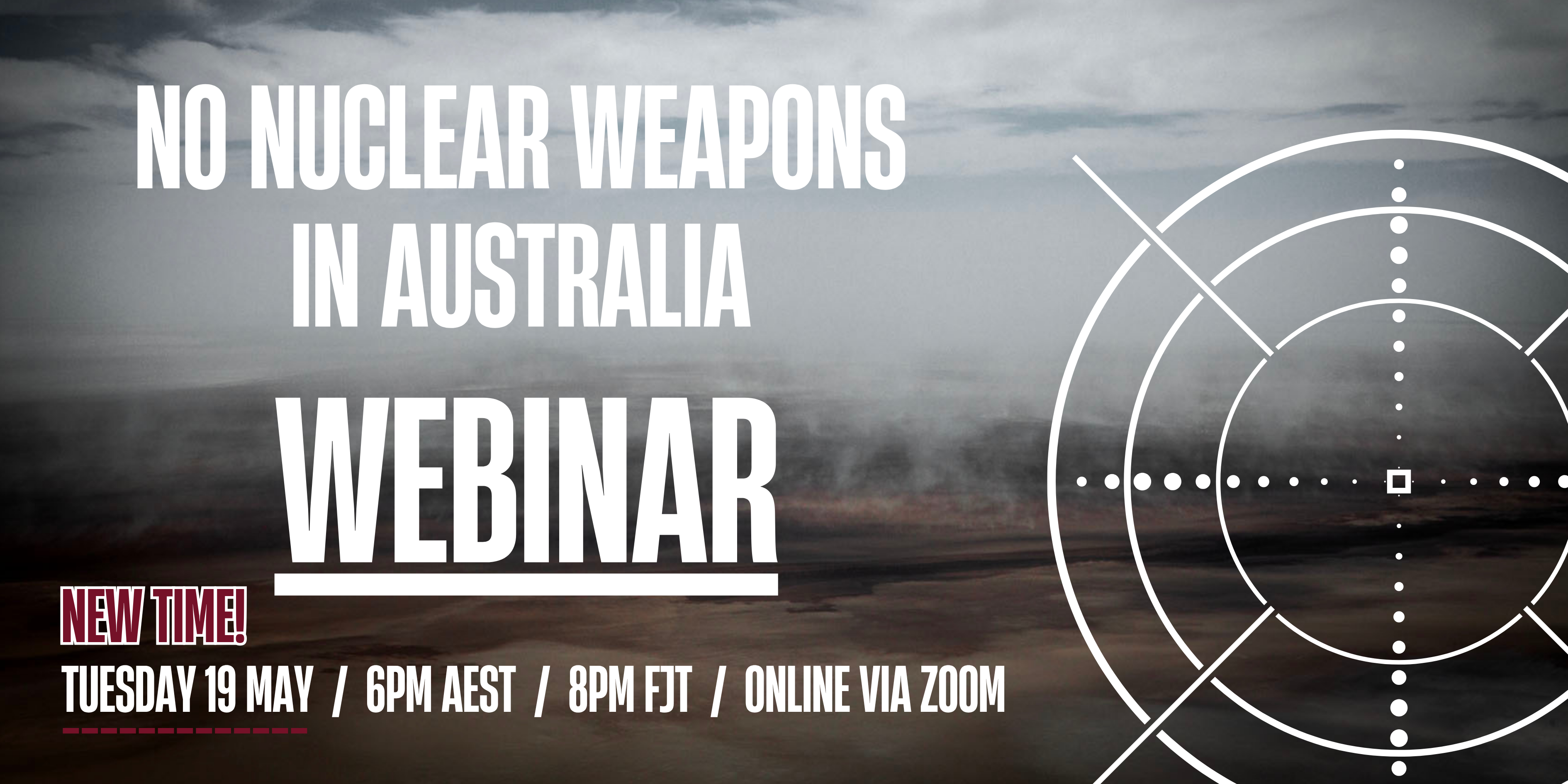
19 May – Webinar- Webinar: No Nuclear Weapons in Australia
Start: 2026-05-19 18:00:00 UTC Canberra, Melbourne, Sydney (GMT+10:00)
End: 2026-05-19 19:30:00 UTC Canberra, Melbourne, Sydney (GMT+10:00)
20 May – Webinar – The dangerous world of AUKUS, US, military occupation and suppression of dissent

National Webinar, 20th May, 2026, 6.30pm AEST. Confronting laws restricting/suppressing protest speech and action
Speakers: Former Sen. Rex Patrick, Lawyer Nick Hanna ,Arthur Rorris ,Jorgen Doyle, Sen David Shoebbridge,
Facilitator Kelley Tranter.

of the week – Australians for War Powers Reform (AWPR)
To see nuclear-related stories in greater depth and intensity
 Antinuclear