A reminder of the danger of ionising radiation, after theft of a nuclear device
|
The machine, a Troxler 3430P plus enhanced nuclear moisture density gauge, went missing from a building site at Eastwood over the weekend. Police said anyone attempting to dismantle the gauge “could expose themselves to radioactive material”. On its website, equipment company Troxler said the devices are commonly used by “contractors, engineers, and highway departments”. They are used to measure the density of substances and “for compaction control of soil aggregate, concrete and full-depth asphalt”. he instruments, which emit neutrons, can contain radioactive elements californium as well as americium, which is commonly found in smoke detectors in much smaller doses but can be more radioactive than plutonium. Police have urged anyone with information about the robbery to contact Crime Stoppers on 1800 333 000. Radiation expert Kent Gregory, from Radiation SA, said while the devices were “reasonably intrinsically safe”, they could be potentially lethal if dismantled, and were much more radioactive than household smoke detectors. “By the order of 1,000 times or even more,” Dr Gregory said.
“There have been occasions these things have ended up going through recycling facilities and turned into doorknobs and metal toilet roll holders incorporating the radioactive material.” Dr Gregory said the density gauges were commonly used by road builders to effectively x-ray the ground, and check whether “the right level of compaction has occurred, and the right level of moisture is in the ground before asphalt is applied”. “When I worked for the EPA (Environment Protection Authority) for 10 years, I think two or three got stolen in that time,” he said. “You’ve got to be very, very careful about making sure these [radiation] sources remain sealed.” |
|
Garnaut’s Sunshot to create Australia’s first renewable energy industrial park — RenewEconomy

Ross Garnaut’s Sunshot Energy plans renewable energy industrial park in Queensland in what could be a template to revive fortunes of rural Australia. The post Garnaut’s Sunshot to create Australia’s first renewable energy industrial park appeared first on RenewEconomy.
Garnaut’s Sunshot to create Australia’s first renewable energy industrial park — RenewEconomy
“Mutual admiration society” -between civilian and military nuclear experts
Civilian nuclear and military nuclear members of a “mutual admiration society” ~ Dr. Gordon Edwards, https://concernedcitizens.net/2020/12/19/civilian-nuclear-and-military-nuclear-members-of-a-mutual-admiration-society/by Dr. Gordon Edwards, President of the Canadian Coalition for Nuclear Responsibility
December 19, 2020
Civilian nuclear and military nuclear have always been friendly room-mates, members of a “mutual admiration” society. In today’s announcement of an SMR Action Plan, Natural Resources Minister Seamus O’Regan said that nuclear power in Canada is a “home-grown” technology and referred to C. D. Howe’s role in this connection. In fact C.D. Howe arranged for all Canadian uranium extracted from Canadian mines to be sold to the US military for use in tens of thousands of nuclear weapons from 1945 to 1965. C D Howe was also on the Committee that met in Washington DC in 1944 to approve the first nuclear reactors to be built in Canada (at Chalk River) as part of the ongoing effort to produce plutonium for use as a nuclear explosive. Mr. Howe approved of the policy of selling plutonium produced at Chalk River to the US military for weapons use, a practice that continued until 1975 and beyond. Plutonium from Chalk River was sent to Britain (it was the first sample of plutonium that Britain had ever obtained) just a few months before Britain detonated its first A-Bomb in the Monte Bello Islands off Australia.
To the best of my knowledge, no civilian nuclear power agency – not the Canadian Nuclear Association, nor the Canadian Nuclear Society, nor the Canadian Nuclear Safety Commission, nor Atomic Energy of Canada Limited, nor Canadian Nuclear Laboratories, NOBODY – has ever issued a clear statement denouncing nuclear weapons or even calling for a nuclear weapons free world. Most nuclear scientists and engineers feel a strong kinship and camaraderie with those who are in the nuclear weapons business. The same goes for those in the nuclear division of Natural Resources Canada. I remember on one occasion (prior to the exchange of nuclear tests between India and Pakistan) I expressed alarm at the fact that both neighbours are developing a nuclear war-fighting capability and a couple of senior civil servants said “Would that be so bad? Maybe that’s just what the world needs. More deterrence. Creates stability”
Despite regular denials from our puppet masters that civilian nuclear has nothing to do with military nuclear, it is clear that civilian nuclear (including the frankly discriminatory provisions of the NPT) has adopted an appeasement policy that will never succeed in bringing about a nuclear weapons free world. Why does Canada continue to sell uranium to countries that are in the process of investing hundreds of billions to improve and modernize the nuclear arsenals in utter defiance of the NPT, knowing that the vast bulk of Canadian uranium that is rejected from enrichment plants as DU end up as the raw material for producing plutonium for Bombs, and that the lion’s share of the explosive power – and the overwhelming share of the radioactive fallout – of every H-bomb comes from the fissioning of DU atoms that are freely accessed by the military even if they are the leftovers of “peaceful” fuel production for nuclear power plants?
“See ‘The Nuclear Fudge’ at https://www.youtube.com/watch?v=0lK65S5eHRQ&feature=youtu.be“. This 16-minute W5 segment from the Regan era is very informative.
Unveiling New Billboards: “Nukes Are Now Illegal!” — limitless life
Unveiling New Peace Billboards We’re thrilled to announce a new series of billboards to be unveiled across multiple cities. Launched on or around January 22, 2021, the billboards based on the images below will celebrate and amplify the historic importance of the UN Treaty on the Prohibition of Nuclear Weapons entering into force. Here’s one going […]
Unveiling New Billboards: “Nukes Are Now Illegal!” — limitless life
December 21 Energy News — geoharvey

Opinion: ¶ “Are Post-Covid Recovery Plans Green? Not So Much” • The opportunity to turn a Covid-19 recover stimulus into a strong move away from fossil fuels is widely acknowledged. But in at least 18 of the world’s biggest economies, the recovery plan fiscal packages are directed toward bailouts for oil or new high-carbon infrastructure. […]
December 21 Energy News — geoharvey
Senator Rex Patrick calls on South Australian govt to come clean about nuclear waste dumping
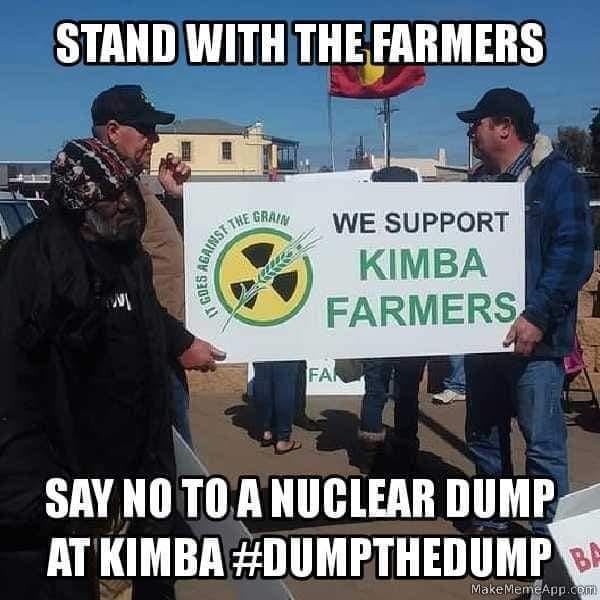 Patrick has Kimba nuclear question, https://www.whyallanewsonline.com.au/story/7058277/patrick-has-kimba-nuclear-question/?fbclid=IwAR3o2cKC_SU9yV-Q-d_xa470gmY0xG5CXkYRiA-LOJuXRDV76e8ls0v1n04, Luca Cetta, 17 Dec 20, The state government has remained silent on its stance relating to the planned Kimba nuclear waste site and South Australian Independent Senator Rex Patrick has called on the government to make known its position on the proposal.
The federal government has talked with the Kimba community about creating the site near the town with a majority of residents favouring the facility.
Senator Patrick said he had lodged a freedom-of-information (FOI) request seeking access to correspondence from the time of the last state election in 2018 to today and was “surprised” there had been only a few pieces of correspondence between Minister for Energy and Mining Dan van Holst Pellekaan and the federal government.
“I was very interested as there was a lot taking place between the federal government and the community in Kimba, and I was interested in what the state government has been doing through the process,” he said.
“The state has a role to play … and I was surprised there was only one letter to the Premier and a letter from former federal Resources Minister Matt Canavan and response. That is all we have seen. That is the only part the state government has had to play.”
While acknowledging it was a federal facility and issue, Senator Patrick said the state government should be involved by way of communication with federal leaders and community engagement.
“While I respect it is a national facility, there is no question the state government has skin in the game and I question why there is silence publicly,” he said.
“They should come out and support or oppose it so their position is known.
“They do need to be engaging the community as well to make sure all state-related issues that will flow from the facility are addressed.”
He said parts of the correspondence included redactions relating to the proposed site.
In a letter from Mr van Holst Pellekaan to Senator Patrick, which has been obtained by the Whyalla News, Mr van Holst Pellekaan said “the FOI Act provides that an agency may refuse access to a document if it is an exempt document” and that there was cause to provide “partial access” to three documents.
The letter outlines why parts should be redacted, including that a document can be exempt if “it contains information from an intergovernmental communication to the Government of South Australia”, while he also pointed to how the Act notes a document could be exempt if it “would, or could reasonably be expected to, cause damage to relations between the Commonwealth and a State”.
Senator Patrick said Mr van Holst Pellekaan made a “fundamental error” in thinking the correspondence was exempt under federal law as he was “not entitled to make that decision”.
He said he would take the matter to the South Australian Civil and Administrative Tribunal (SACAT) to “uncover what is underneath this”.
“There should be transparency about what has been communicated between the government of South Australia and the federal government,” he said.
“The Minister has made a decision. He relies on the fact he thinks it would be exempt under federal law and he is not entitled to make that decision. You can’t say ‘I think it is exempt’, you have to say ‘I think it is exempt because it would harm release in a particular way…’.”
Mr Patrick said the state FOI Act granted people and parliamentarians a positive right to documents and was only subject to restrictions consistent with the public interest and preservation of personal privacy.
He said the Act burdened the agency with establishing their case if they wanted to restrict access.
Both Commonwealth and state constitutions establish a democracy underpinned by a responsible system of government. Democracy and responsible government both require participation by people and, just because this is communication between the state and federal government, it doesn’t mean it automatically gets to be confidential. The Minister does not meet his burden by simply stating that the communications are confidential,” he said.
“This is now a fight between myself and Mr van Holst Pellekaan. This is Senator against Minister in SACAT. The Minister needs to be transparent with me, but more important with the people of SA.
“Governments work for the people, everything they do is paid for by the people. The people have a right to know what it is they are up to and how they are going about what they are up to.”
Mr van Holst Pellekaan did not respond to questions for this article.
Tasmania weighs ocean energy potential in 200 per cent renewables plan — RenewEconomy

Tasmanian government unveils final “action plan” for 200% renewables by 2040, including new push to promote and develop its ocean and tidal energy resources. The post Tasmania weighs ocean energy potential in 200 per cent renewables plan appeared first on RenewEconomy.
Tasmania weighs ocean energy potential in 200 per cent renewables plan — RenewEconomy
Renewables will push power prices lower even after Liddell closure, says AEMC — RenewEconomy

Renewable energy is set to decrease power prices around the country – and that’s before you even count recent new policies. The post Renewables will push power prices lower even after Liddell closure, says AEMC appeared first on RenewEconomy.
Renewables will push power prices lower even after Liddell closure, says AEMC — RenewEconomy
December 20 Energy News — geoharvey

Opinion: ¶ “A Clean Energy Future For Alaska Requires Action By Congress” • Rural communities in Alaska that often face high electricity costs are increasingly turning to renewable energy sources such as wind and solar. Solar PVs save money even in the Arctic. But to continue installations, it will be necessary for the US Congress […]
December 20 Energy News — geoharvey
Coal will blow past world’s climate targets, driven by Australia’s mining frenzy — RenewEconomy

If the world blows past its climate targets in 2025, Australia will have played a key role in supplying the fuel that does the damage. The post Coal will blow past world’s climate targets, driven by Australia’s mining frenzy appeared first on RenewEconomy.
Coal will blow past world’s climate targets, driven by Australia’s mining frenzy — RenewEconomy
Australia’s Industry Department is bluffing in employing staff for non existent nuclear waste project

|
Kazzi Jai, Fight to stop nuclear waste in South Australia, 19 Dec 20,
Have I missed something? Or two things actually?
Unless Minister Pitt has DECLARED the Napandee site right now as per current legislation….NOPE…or Senate passed the Amendments at last sitting ….NOPE….then is this a case of DIIS bluffing it yet again? If you ain’t got it bluff it?
And AWRA has employed ANSTO – who by the way is the MAIN CUSTOMER OF THIS DUMP – to tender for it for them! In their own words…
“ANSTO has been engaged by ARWA to provide a broad range of services to develop the NRWMF engineering design, and associated safety, security and operational framework. This tender is for the appointment of a lead engineering consultant (Consultant) to support ANSTO in progressing the project from the current concept design through to preliminary design”
BIZARRE!
Oh…and by the way Ms Chard –
THERE WAS NO BROAD COMMUNITY SUPPORT ACHIEVED!
Just because you say it and want it …. doesn’t actually make it so!
The FACTS speak for themselve
New engineering partner to assist with design on radioactive waste facility https://www.industry.gov.au/news/new-engineering-partner-to-assist-with-design-on-radioactive-waste-facility?fbclid=IwAR0RnDaKhcv6r07tmyQvhBRzRNDuyn4VfpLhf6KLyWb9bE7T8IFJ09EeCWI |
|
Minister Dan van Holst Pellekaan resorts to threas when asked to be transparent
Federal govt accepted Queensland’s “NO” to nuclear dump. Why not South Australia’s?
 Kazzi Jair No nuclear waste dump anywhere in South Australia, 19 Dec 20, https://www.facebook.com/groups/1314655315214929
The insanity of the big push for nuclear power in space
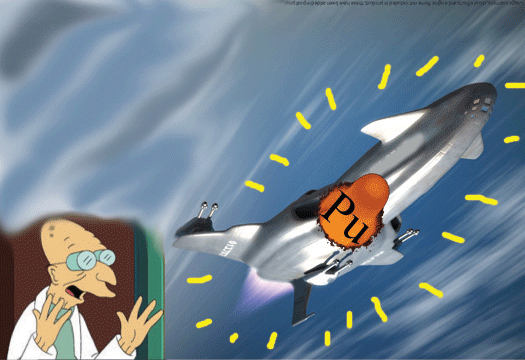 The Big Push for Nukes in Space, https://www.counterpunch.org/2020/12/15/the-big-push-for-nukes-in-space/?fbclid=IwAR1rGf0qomJlTKuhqCOsTTl3EkKOQzxf2QxOJ-3n0MnxGWNLvybgxXPovTU BY KARL GROSSMAN.– 15 Dec 20, Last week a SpaceX rocket exploded in a fireball at the SpaceX site in Texas. “Fortunately,” reported Lester Holt on NBC TV’s Nightly News, “no one was aboard.”
But what if nuclear materials had been aboard?
The nuclear space issue is one I got into 35 years ago when I learned—from reading a U.S. Department of Energy newsletter—about two space shuttles, one the Challenger which was to be launched the following year with 24.2 pounds of plutonium aboard.
The plutonium the shuttles were to carry aloft in 1986 was to be used as fuel in radioisotope thermoelectric generators—RTGs—that were to provide a small amount of electric power for instruments on space probes to be released from the shuttles once the shuttles achieved orbit.
The plutonium-fueled RTGs had nothing to do with propulsion.
I used the U.S. Freedom of Information Act to ask what would be the consequences of an accident on launch, in the lower or upper atmosphere—and what about the dispersal of deadly plutonium. A few years earlier, I wrote Cover Up: What You Are Not Supposed to Know About Nuclear Power, so I was well familiar with plutonium, considered the most lethal radioactive substance.
For 10 months there was a stonewall of challenges to my FOIA request by DOE and NASA. Finally, I got the information, heavily redacted, with the claim that the likelihood of a shuttle accident releasing plutonium was “small.”
Said one document: “The risk would be small due to the high reliability inherent in the design of the Space Shuttle.” NASA put the odds of a catastrophic shuttle accident at one-in-100,000.
Then, on January 28, 1986 the Challenger blew up.
It was on its next mission—in May 1986—that it was slated to have a plutonium-fueled RTG aboard.
From a pay phone in an appliance store –amid scores of TV sets with that horrible video of the Challenger exploding—I called The Nation magazine and asked the folks there whether they knew that the next launch of the Challenger was to be a nuclear mission. They didn’t.
They had me write an editorial that appeared on The Nation’s front page titled “The Lethal Shuttle.” It began, “Far more than seven people could have died if the explosion that destroyed Challenger had occurred during the next launch…”
And I got deeper and deeper into the nukes-in-space issue—authoring two books, one The Wrong Stuff, presenting three TV documentaries, writing many hundreds of newspaper and magazine articles and speaking widely on the issue.
NASA, incidentally, later in 1986, drastically increased the odds of a catastrophic shuttle accident to one-in-76. It turned out the one-in-100,000 estimate was based on dubious guessing.
I found that accidents involving the use of nuclear power in space is not a sky-is-falling threat. In the then 26 U.S. space nuclear shots, there had been three accident, the worst in 1964 involving a satellite powered by a SNAP 9-A radioisotope thermoelectric generator fueled with plutonium.
The satellite failed to achieve orbit, broke up in the atmosphere as it came crashing back down to Earth, its plutonium dispersing as dust extensively on Earth. Dr. John Gofman, an M.D. and Ph.D., professor of medical physics at the University of California at Berkeley, formerly associate director of Lawrence Livermore National Laboratory, author of Poisoned Power and involved in early studies of plutonium, long pointed to the SNAP 9-A accident as causing an increase in lung cancer on Earth.
Today the use of nuclear in space is being pushed harder than ever.
“US Eyes Building Nuclear Power Plants for Moon and Mars,” declared the headline this July of an Associated Press dispatch. “US Eyes Building Nuclear Power Plants for Moon and Mars”.
As Linda Pentz Gunter, editor at Beyond Nuclear International, recently wrote here on CounterPunch, “Yet undeterred by immorality and expense, and apparently without the slightest concern for the radioactive dirt pile these reactors will produce, NASA and the Department of Energy are eagerly soliciting proposals.” https://www.counterpunch.org/2020/10/21/nukes-on-the-moon/
In July, too, the White House National Space Council issued a strategy for space exploration that includes “nuclear propulsion methods.” “US Ramps Up Planning for Space Nuclear Technology”
General Atomics Electromagnetic Systems has come out with a design for a nuclear propulsion reactor for trips to Mars.
Nuclear propulsion, its promoters are saying, would get astronauts to Mars quicker.
Shouted the headline in Popular Mechanics last month: “The Thermal Nuclear Engine That Could Get Us to Mars in Just 3 Months.”
And Elon Musk, founder and CEO of Space X, has been touting the detonation of nuclear bombs on Mars to, he says, “transform it into an Earth-like planet.” https://www.independent.co.uk/life-style/gadgets-and-tech/news/elon-musk-mars-nuke-humans-live-mirrors-spacex-a9072631.html
As Business Insider explains, Musk “has championed the idea of launching nuclear weapons just over Mars’ poles since 2015. He believes it will help warm the planet and make it more hospitable for human life.”
As space.com says: “The explosions would vaporize a fair chunk of Mars’ ice caps, liberating enough water vapor and carbon dioxide—both potent greenhouse gases—to warm up the planet substantially, the idea goes.” https://www.space.com/elon-musk-nuke-mars-terraforming.html
It’s been projected that it would take more than 10,000 nuclear bombs to carry out the Musk plan.
The nuclear bomb explosions would also would render Mars radioactive.
The nuclear bombs would be carried to Mars on the fleet of 1,000 Starships that Musk wants to build—like the one that blew up this week.
SpaceX is selling T-shirts emblazoned with the words “Nuke Mars.”
Beyond the this completely insane plan to ruin Mars, as on Earth, solar energy can provide all the power needed for would-be settlements on Mars and the Moon. Continue reading
Unsafe levels of radiation found in Chernobyl crops
 Unsafe levels of radiation found in Chernobyl crops, By Harry Baker – Staff Writer https://www.livescience.com/chernobyl-radioactive-isotopes-crops.html– 19 December 20, The effects of the explosive 1986 disaster can still be seen in nearby crops.
Crops grown near the Chernobyl nuclear site in Ukraine are still contaminated with radiation from the explosive 1986 disaster.
In a new study, researchers found that wheat, rye, oats and barley grown in this area contained two radioactive isotopes — strontium 90 and cesium 137 — that were above safe consumption limits. Radioactive isotopes are elements that have increased masses and release excess energy as a result.
“Our findings point to ongoing contamination and human exposure, compounded by lack of official routine monitoring,” study author David Santillo, an environmental forensic scientist at Greenpeace Research Laboratories at the University of Exeter, said in a statement, referring to the fact that the government suspended its radioactive goods monitoring program in 2013.
Santillo and his colleagues, in collaboration with researchers from the Ukrainian Institute of Agricultural Radiology, analyzed 116 grain samples, collected between 2011 and 2019, from the Ivankiv district of Ukraine — about 31 miles (50 kilometers) south of the nuclear plant.
This area is outside of Chernobyl’s “exclusion zone,” which is a 30 mile (48 km) radius around the plant that was evacuated in 1986 and has remained unoccupied. They found radioactive isotopes, predominantly strontium 90, were above safe consumption level in 48% of samples. They also found that wood samples collected from the same region between 2015 and 2019, had strontium 90 levels above the safe limit for firewood.
The researchers believe that the lingering radiation in the wood, in particular, may be the reason for the continued contamination of crops, almost 35 years after the disaster. When analyzing the wood ash from domestic wood-burning ovens, they found strontium 90 levels that were 25 times higher than the safe limit. Locals use this ash, as well as ash from the local thermal power plant (TPP), to fertilize their crops, which continues to cycle the radiation through their soil.
However, computer simulations suggest that it could be possible to grow crops in the region at “safe” levels if this process of repeated contamination ceased. The researchers are now calling for the Ukrainian government to reinstate its monitoring program and create a system for properly disposing of radioactive ash.
“Contamination of grain and wood grown in the Ivankiv district remains of major concern and deserves further urgent investigation,” study author Valery Kashparov, director of the Ukrainian Institute of Agricultural Radiology, said in the statement. “Similarly, further research is urgently needed to assess the effects of the Ivankiv TPP on the environment and local residents, which still remain mostly unknown.”
The findings were published on Dec. 17 in the journal Environment International.
Originally published on Live Science.
1 This month.


PETITION – To: Prime Minister Anthony Albanese and the Australian Labor Government
Chernobyl: The Lost Tapes – A good documentary on Chernobyl on SBS available On Demand for the next 3 weeks– https://www.sbs.com.au/ondemand/tv-program/chernobyl-the-lost-tapes/235274195556
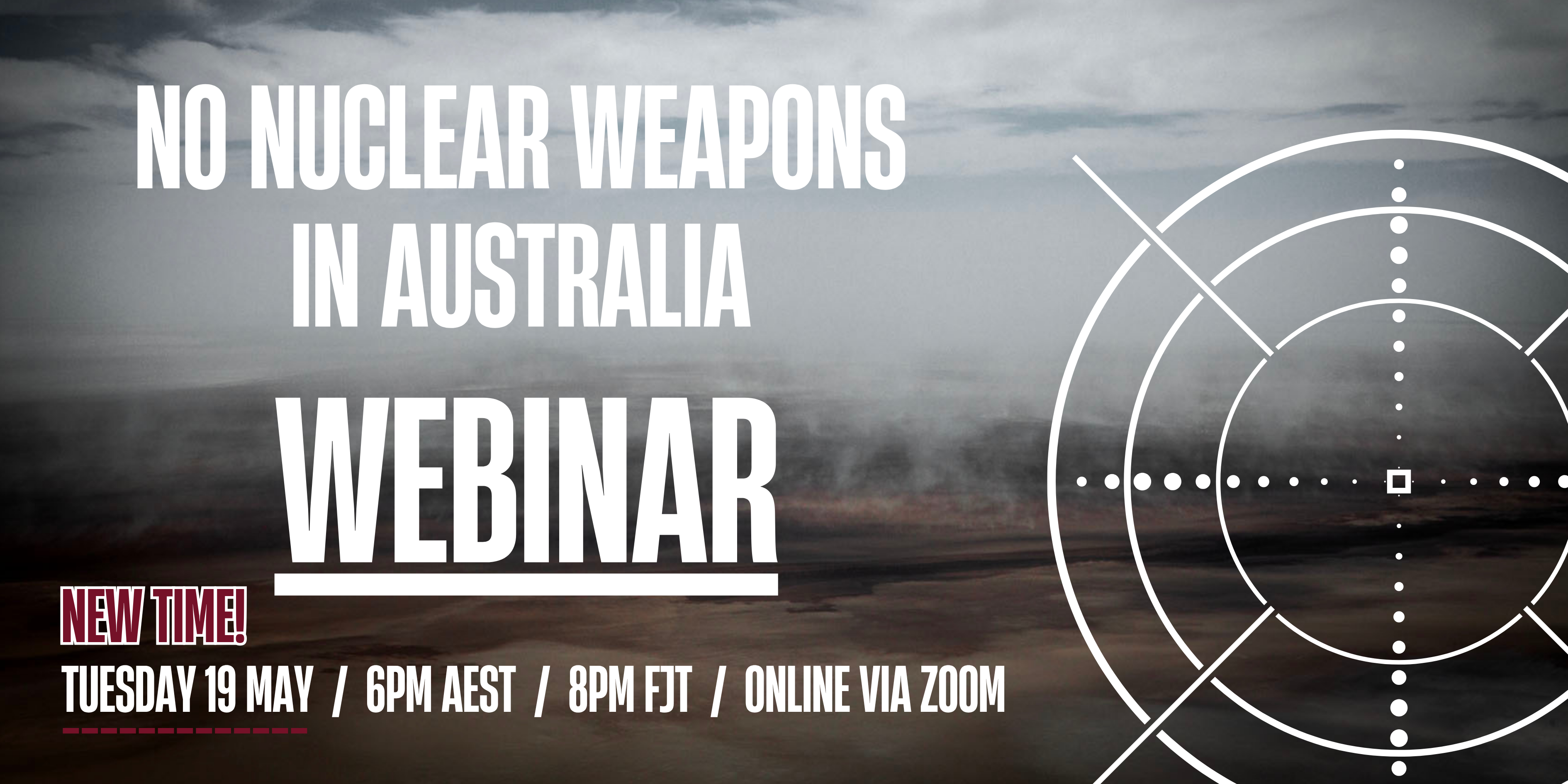
19 May – Webinar- Webinar: No Nuclear Weapons in Australia
Start: 2026-05-19 18:00:00 UTC Canberra, Melbourne, Sydney (GMT+10:00)
End: 2026-05-19 19:30:00 UTC Canberra, Melbourne, Sydney (GMT+10:00)
20 May – Webinar – The dangerous world of AUKUS, US, military occupation and suppression of dissent

National Webinar, 20th May, 2026, 6.30pm AEST. Confronting laws restricting/suppressing protest speech and action
Speakers: Former Sen. Rex Patrick, Lawyer Nick Hanna ,Arthur Rorris ,Jorgen Doyle, Sen David Shoebbridge,
Facilitator Kelley Tranter.

of the week – Australians for War Powers Reform (AWPR)
To see nuclear-related stories in greater depth and intensity
 Antinuclear