Defeated plan to import foreign high-level nuclear waste to South Australia

The main lesson from the dump debate is a positive one: people power can upset the dopey, dangerous ideas driven by political and corporate elites and the Murdoch press. Sometimes. It was particularly heartening that the voices of Aboriginal Traditional Owners were loud and clear and were given great respect by the Citizens’ Jury and by many other South Australians. The Jury’s report said: “There is a lack of Aboriginal consent. We believe that the government should accept that the Elders have said NO and stop ignoring their opinions.”
HOW SOUTH AUSTRALIANS DUMPED A NUCLEAR DUMP

Jim Green, RenewEconomy, 15 June 2017, http://reneweconomy.com.au/south-australians-dumped-nuclear-dump-70197/
Last November, two-thirds of the 350 members of a South Australian-government initiated Citizens’ Jury rejected “under any circumstances” the plan to import vast amounts of high-level nuclear waste from around the world as a money-making venture.
The following week, South Australian (SA) Liberal Party Opposition leader Steven Marshall said that “[Premier] Jay Weatherill’s dream of turning South Australia into a nuclear waste dump is now dead.” Business SA chief Nigel McBride said: “Between the Liberals and the citizens’ jury, the thing is dead.”
And after months of uncertainty, Premier Weatherill has said in the past fortnight that the plan is “dead”, there is “no foreseeable opportunity for this”, and it is “not something that will be progressed by the Labor Party in Government”.
So is the dump dead? The Premier left himself some wriggle room, but the plan is as dead as it possibly can be. If there was some life in the plan, it would be loudly proclaimed by SA’s Murdoch tabloid, The Advertiser. But The Advertiser responded to the Premier’s recent comments ‒ to the death of the dump ‒ with a deafening, deathly silence.
Royal Commission
It has been quite a ride to get to this point. The debate began in February 2015, when the Premier announced that a Royal Commission would be established to investigate commercial options across the nuclear fuel cycle. He appointed a nuclear advocate, former Navy man Kevin Scarce, as Royal Commissioner. Scarce said he would run a “balanced” Royal Commission and appointed four nuclear advocates to his advisory panel, balanced by one critic. Scarce appointed a small army of nuclear advocates to his staff, balanced by no critics.
The final report of the Royal Commission, released in May 2016, was surprisingly downbeat given the multiple levels of pro-nuclear bias. It rejected ‒ on economic grounds ‒ almost all of the proposals it considered: uranium conversion and enrichment, nuclear fuel fabrication, conventional and Generation IV nuclear power reactors, and spent fuel reprocessing.
The only thing left standing (apart from the small and shrinking uranium mining industry) was the plan to import nuclear waste as a commercial venture. Based on commissioned research, the Royal Commission proposed importing 138,000 tonnes of high-level nuclear waste (spent nuclear fuel from power reactors) and 390,000 cubic metres of intermediate-level waste.
The SA Labor government then established a ‘Know Nuclear’ statewide promotional campaign under the guise of ‘consultation’. The government also initiated the Citizens’ Jury.
The first sign that things weren’t going to plan for the government was on 15 October 2016, when 3,000 people participated in a protest against the nuclear dump at Parliament House in Adelaide.
A few weeks later, on November 6, the Citizens’ Jury rejected the nuclear dump plan. Journalist Daniel Wills wrote: “Brutally, jurors cited a lack of trust even in what they had been asked to do and their concerns that consent was being manufactured. Others skewered the Government’s basic competency to get things done, doubting that it could pursue the industry safely and deliver the dump on-budget.”………………………………………
Economic claims exposed
Implausible claims about the potential economic benefits of importing nuclear waste had been discredited by this stage. The claims presented in the Royal Commission’s report were scrutinised by experts from the US-based Nuclear Economics Consulting Group (NECG), commissioned by a Joint Select Committee of the SA Parliament.
The NECG report said the waste import project could be profitable under certain assumptions ‒ but the report then raised serious questions about most of those assumptions. The report noted that the Royal Commission’s economic analysis failed to consider important issues which “have significant serious potential to adversely impact the project and its commercial outcomes”; that assumptions about price were “overly optimistic” in which case “project profitability is seriously at risk”; that the 25% cost contingency for delays and blowouts was likely to be a significant underestimate; and that the assumption the project would capture 50% of the available market had “little support or justification”
The farcical and dishonest engineering of a positive economic case to proceed with the nuclear waste plan was ridiculed by ABC journalist Stephen Long on 8 November 2016: “Would you believe me if I told you the report that the commission has solely relied on was co-authored by the president and vice president of an advocacy group for the development of international nuclear waste facilities?”
The economics report was an inside job, with no second opinion and no peer review ‒ no wonder the Citizens’ Jury was unconvinced and unimpressed.
Prof. Barbara Pocock, an economist at the University of South Australia, said: “All the economists who have replied to the analysis in that report have been critical of the fact that it is a ‘one quote’ situation. We haven’t got a critical analysis, we haven’t got a peer review of the analysis”.
Another South Australian economist, Prof. Richard Blandy from Adelaide University, said: “The forecast profitability of the proposed nuclear dump rests on highly optimistic assumptions. Such a dump could easily lose money instead of being a bonanza.”
The dump is finally dumped
To make its economic case, the Royal Commission assumed that tens of thousands of tonnes of high-level nuclear waste would be imported before work had even begun building a deep underground repository. The state government hosed down concerns about potential economic losses by raising the prospect of customer countries paying for the construction of waste storage and disposal infrastructure in SA.
But late last year, nuclear and energy utilities in Taiwan ‒ seen as one of the most promising potential customer countries ‒ made it clear that they would not pay one cent towards the establishment of storage and disposal infrastructure in SA and they would not consider sending nuclear waste overseas unless and until a repository was built and operational.
By the end of 2016, the nuclear dump plan was very nearly dead, and the Premier’s recent statement that it is “not something that will be progressed by the Labor Party in Government” was the final nail in the coffin. The dump has been dumped.
“Today’s news has come as a relief and is very much welcomed,” said Yankunytjatjara Native Title Aboriginal Corporation Chair and No Dump Alliance spokesperson Karina Lester. “We are glad that Jay has opened his ears and listened to the community of South Australia who have worked hard to be heard on this matter. We know nuclear is not the answer for our lands and people – we have always said NO.”
Narungga man and human rights activist Tauto Sansbury said: “We absolutely welcome Jay Weatherill’s courageous decision for looking after South Australia. It’s a great outcome for all involved.”
Reflections
The idea of Citizens’ Juries would seem, superficially, attractive. But bias is inevitable if the government establishing and funding the Jury process is strongly promoting (or opposing) the issue under question. In the case of the Jury investigating the nuclear waste plan, it backfired quite spectacularly on the government. Citizen Juries will be few and far between for the foreseeable future in Australia. A key lesson for political and corporate elites is that they shouldn’t let any semblance of democracy intrude on their plans.
The role of the Murdoch press needs comment, particularly in regions where the only mass-circulation newspaper is a Murdoch tabloid. No-one would dispute that the NT News has a dumbing-down effect on political and intellectual life in the Northern Territory. Few would doubt that the Courier Mail does the same in Queensland. South Australians need to grapple with the sad truth that its Murdoch tabloids ‒ The Advertiser and the Sunday Mail ‒ are a blight on the state. Their grossly imbalanced and wildly inaccurate coverage of the nuclear dump debate was ‒ with some honourable exceptions ‒ disgraceful. And that disgraceful history goes back decades; for example, a significant plume of radiation dusted Adelaide after one of the British bombs tests in the 1950s but The Advertiser chose not to report it.
The main lesson from the dump debate is a positive one: people power can upset the dopey, dangerous ideas driven by political and corporate elites and the Murdoch press. Sometimes. It was particularly heartening that the voices of Aboriginal Traditional Owners were loud and clear and were given great respect by the Citizens’ Jury and by many other South Australians. The Jury’s report said: “There is a lack of Aboriginal consent. We believe that the government should accept that the Elders have said NO and stop ignoring their opinions.”
Conversely, the most sickening aspect of the debate was the willingness of the Murdoch press and pro-nuclear lobbyists to ignore or trash Aboriginal people opposed to the dump.
Another dump debate
Traditional Owners, environmentalists, church groups, trade unionists and everyone else who contributed to dumping the dump can rest up and celebrate for a moment. But only for a moment. Another dump proposal is very much alive: the federal government’s plan to establish a national nuclear waste dump in SA, either in the Flinders Ranges or on farming land near Kimba, west of Port Augusta.
In May 2016, Adnyamathanha Traditional Owner Regina McKenzie, who lives near the Flinders Ranges site, wrote:
“Last year I was awarded the SA Premier’s Natural Resource Management Award in the category of ‘Aboriginal Leadership − Female’ for working to protect land that is now being threatened with a nuclear waste dump. But Premier Jay Weatherill has been silent since the announcement of six short-listed dump sites last year, three of them in SA.
“Now the Flinders Ranges has been chosen as the preferred site and Mr Weatherill must speak up. The Premier can either support us ‒ just as the SA government supported the Kupa Piti Kungka Tjuta when their land was targeted for a national nuclear waste dump from 1998-2004 ‒ or he can support the federal government’s attack on us by maintaining his silence.”
Perhaps the Premier will find his voice on the federal government’s contentious proposal for a national nuclear waste dump in SA, now that his position on that debate is no longer complicated by the parallel debate about establishing a dump for foreign high-level nuclear waste. He might argue, for example, that affected Traditional Owners should have a right of veto over the establishment of a national nuclear waste dump ‒ precisely the position he adopted in relation to the international high-level waste dump.
Dr Jim Green is the national nuclear campaigner with Friends of the Earth Australia and editor of the Nuclear Monitor newsletter.

Military mansplaining dispels any nonsensical ideas about “the sanctity of space”

Australian Independent Media, 31 Dec 24, https://theaimn.net/military-mansplaining-dispels-any-nonsensical-ideas-about-the-sanctity-of-space/
Doncha love mansplaining? It simplifies everything, takes away your worries, and you can now complacently forget about any silly way-out anxieties that you might have had about technological progress.
As our military defenders develop advanced and artificial intelligence weaponry for war in space , USA Air Force secretary, and former military contractor, Frank Kendall mansplained all this perfectly for us:
Mr. Kendall said when he first came into office, there was an understandable aversion to weaponizing space, but that now the debate about “the sanctity or purity of space” is effectively over.
“Space is a vacuum that surrounds Earth,” Mr. Kendall said. “It’s a place that can be used for military advantage and it is being used for that. We can’t just ignore that on some obscure, esoteric principle that says we shouldn’t put weapons in space and maintain it.
The threat is there. It’s a domain we have to be competitive in.”
One might ponder on where this threat comes from. It seems pretty clear to me that macho military men of one nation, for example the USA, devise killing machines, and then macho men of another nation, for example China, react by devising killer machines. Then the USA men have to go one better and so on. The cleverness of macho men is the original threat.
Of course many men do not have this blinkered macho attitude to exploiting land, sea, and now space, for weaponry that damages no only humans, but other species, and indeed, the whole ecosphere. Unfortunately these many other men are also not so good at confidently mansplaining the ideas that they might have – about caring for the ecosphere, about negotiation as an alternative to war. That takes a lot of hard work, to present those ideas, and they tend to do it in a careful way, rather than talking down to the rest of us..
It is really a lot easier and simpler to decide that becoming the top killer is the way to solve differences: much harder to really think about solving the problems.
The “sanctity and purity of space”. Where did Kendall get that from?
Well, the phrase contains both a religious and environmental significance. Originally from a very spiritual poem – it has caught the imagination of many – as a theme to respect the beauty of the sky, the environment, and our role as custodians of our ecosphere.
This kind of spiritual waffle is anathema to the mansplaining military macho men.
For one thing, it involves some complicated ideas that they probably can’t understand, with their one-track adversarial thinking. To give just one example: light pollution from spacecraft disrupts the lives of not only many tiny species like moths, but also of birds and sea turtles.
Then there are ethical questions – about space vehicles, weapons, debris crashing in various locations, including neutral, uninvolved countries. And, most concerning of all is the newest technology, artificial-intelligence-enhanced fighter jets and space-based warfare. Missile-carrying robot drones with A.I.-enhanced software will be able to independently decide on flying routes, and on identifying and attacking enemy targets. Robots will be able to make decisions on whom to kill.
The phrase that Mr Kendall wanted to discredit comes from a famous poem – High Flight – A Pilot’s Prayer by Pilot Officer John Gillespie Magee, Jr. The author was a religious man, who died at 19, in World War 2. The poem was first read out in a church, right opposite the White House. Written in a romantic style, this poem has inspired many to pond on the writer’s thought:
“with silent, lifting mind I’ve trod The high untrespassed sanctity of space”
I have often thought that art of all kinds does point the way for positive human development, and just phrases like that one from John Gillespie Magee, Jr. can have a powerful influence, No wonder that war-obsessed men are keen to discredit such poems.
If people think of space as a place of beauty, mystery and wonder, they are not likely to be in favour of unrestrained weapons development, and the $215 billion budget overseen by Mr Kendall for ever-advancing weaponry. Whereas if we accept the idea that space is just “a vacuum – a place that can be used for military advantage” , well, the arms race is all OK, and we could be on the way to omnicide.
New Zealand is under siege by the Atlas Network

We have a handful of years to achieve a monumental shift from fossil fuel towards renewable energy: Atlas partners aim to ensure this does not take place.

March 3, 2024, by: Lucy Hamilton, https://theaimn.com/new-zealand-is-under-siege-by-the-atlas-network/—
Just as the Atlas Network-connected Advance body intervened in the Voice referendum in Australia and, in recent weeks, a by-election, similar organisations spawned from the American model are distorting New Zealand’s politics from within as well as from without.
One of the key researchers into the Atlas Network, Lee Fang, observed that it has “reshaped political power in country after country.” In America, every Republican president since Ronald Reagan has begun office with a Roadmap provided by the Heritage Foundation, primary Atlas Network partner. The “Mandate” for 2025 puts America on a hard path to fascism should a Republican win in November. Britain’s economy and standing have been savaged by Atlas partners’ impacts on the Tories. In New Zealand, the recently-elected rightwing coalition government is aping the new “Atlas president” of Argentina, aiming to privatise national assets, but is increasingly also imitating Atlas strategies recently seen in Australia, inflaming racial tensions and harming the wellbeing of Māori people.
Dr Jeremy Walker called Australia’s attention to the local Atlas partner organisations’ impact on the Voice to Parliament referendum and is now helping draw together the focus on the New Zealand partners’ very similar distortion of their national debate. There is a deep racism at the heart of this ultra-free market ideology that has licensed the international right to exploit resources and people around the globe untrammelled, largely in American corporate interest, but more broadly for any corporation or allied sector big enough to be a contender. (They do not, by contrast, fight for the renewable energy sector’s interests, as a competitor to their dominant fossil fuel donors; this shapes their climate crisis denial and delay, and colours their loathing of First People’s capacity to interfere with their profits by environment-driven protest. A sense of Western Civilisation as the apex of human existence and deep disdain for non-Western cultures also pervade the network.)
The Atlas model is to connect and foster talent in the neoliberal sphere. Young men (mostly) are funded or trained to replicate the talking points that Ultra High Net Worth Individuals (UHNWI) and lobbyists have built into a global network of over 500 bodies in 100 nations. The fact that neoliberal orthodoxies are more religious ideology that fact-based theories explains why their impact has been so utterly disastrous everywhere they have reshaped societies. The goal is to spawn replicating bodies with benign-sounding names that promote the UHNWI and corporate talking points – but with a veil hiding the self-interest that is obvious when those groups speak for themselves. Some of the bodies feign being thinktanks, which George Monbiot recently renamed junktanks to clarify their disingenuousness. Others are “astroturf” organisations that pretend to be grass roots bodies representing popular opinion. Another model is the beach-head in universities, an independent organisation within those institutions intended to dignify the neoliberal religion and the chosen strategies, including climate denial. All these produce material to fill civic debate and train more acolytes to enter politics, strategy companies and junktanks. Mainstream media elevates their standing by hosting their operatives as experts without explaining that the benign-sounding organisation to which they belong is a foreign-influence operation’s local outlet.
These groups damage local conditions to favour international corporations. They lobby for the removal of the “regulations” that are actually protections for the public – as workers, as consumers, as residents. They push for the privatisation of national treasures so that (often foreign) corporations can exploit the profits at the expense of the public. The greater the damage to the local democracy, the easier it is for them to act unimpeded. The stronger their infiltration of the media, the harder it is for the local electorate to understand the stakes. The politicians and strategists that emerge from the sphere (or are its allies) know that none of this wins votes, so they fill the space with culture war division to distract the voter from paying attention. Race and sexuality are their most obvious targets, as reactionary nostalgia for a mythical past of white picket fences pervades their ideology: a valorisation of “Christianity” and “family” and the “sacredness of marriage” (preached by adulterous politicians) is equally apparent in their propaganda.
The coalition that took power in NZ late in 2023, after a campaign centred on attacking the country’s founding Waitangi Treaty, has considerable Atlas infiltration. There is concern about Atlas fossil fuel and associated tobacco interests perverting policy in parliament, as well as senior ministerial aides who might be compromised. The government has promised to repeal Jacinda Ardern’s ban on offshore gas and fuel exploration, plans to sell water to private interests, not to mention planning to enable the selling off of “sensitive” NZ land and assets to foreign corporations, just as Argentinian Milei is intending.’
One of the government members, the Act Party, began its existence as an Atlas partner thinktank and continues that close connection. It was founded by former parliamentarian Denis Quigley with two members of the Mont Pelerin Society (MPS), the Atlas Network’s inner sanctum. One, Roger Douglas, was responsible for Rogernomics in NZ which has been described as a “right wing coup” that worked to “dismantle the welfare state.” The other, Alan Gibbs, who has been characterised as the godfather of the party, and a major funder, argued Act ought to campaign for government to privatise “all the schools, all the hospitals and all the roads.” This may not be surprising since he made much of his fortune out of the privatisation of NZ’s telecommunications.
The Act Party is currently led by David Seymour who functions as a co-deputy prime minister in the government. He has worked almost his entire adult life within Atlas partner bodies in Canada and boasts a (micro) MBA dispensed by the Network.
In Seymour’s 2021 Waitangi Day speech, he acknowledged his “old friends at the Atlas Network.” In light of that, his recent disdainful and absolute dismissal of the party’s connection to Atlas in an interview was telling: he clearly felt the association was damaging enough to lie outright.
Seymour is also deeply antagonistic to policies dedicated to repairing the disadvantage suffered by Māori people, disingenuously describing provisions that work cooperatively with Māori people as the “dismantling of democracy.” He appears antagonistic to Māori culture.
Another Atlas partner that has been key to distorting debate in NZ is the Taxpayer Union (TPU) which is emblematic of the production of metastasising bodies central to the Atlas strategy. Its co-founder and executive director is another graduate of the Atlas (micro) MBA program. Jordan Williams (currently “capo di tutti capi” of the Atlas global alliance of anti-tax junktanks) laughably depicts Atlas as a benign “club of like-minded think tanks.” He created, however, a body called the Campaign Company which helped radicalise the established farmer power base in NZ politics, planting sponsored material in the media. Williams claimed to grant the farmers “world-class campaign tools and digital strategies.” He also co-founded the Free Speech Union (FSU), which is unsurprisingly fighting regulation of the damaging impact of internet disinformation as well as fostering culture war battles.
A further spin-off of the bodies illustrates the increasing ugliness of the populist strategies. A former Act Party MP has founded the New Zealand Centre for Political Research which is fomenting civic division against Māori interests, including placing hate-mongering advertisements in the media.
The Act Party (alongside the populist New Zealand First party) is at the heart of the coalition government’s intention to destroy NZ’s admirable efforts to promote Māori interests for the betterment of the commonwealth, including the co-governance innovation. Efforts to undo disadvantage and programs that have promoted the distinctive NZ democratic experiment are set to be dismantled. A “massive unravelling” of Māori rights is at stake.
It is not only Māori people who will suffer. The NZ coalition government is also attempting a kind of “shock therapy” that did so much to tip first Chile and then other “developing” nations into brutal pain in pursuit of market “freedom.” The MPS was at the heart of Pinochet’s neoliberal brutality, resulting from Nixon’s injunction to make the Chilean economy scream.[1] New Zealand now faces cuts to a range of services, welfare and disability payments, even while the new PM, one of NZ’s wealthiest ever holders of the role, charged the taxpayer NZD 52,000 to live in his own property. It’s important to remember that this kind of entitlement is the sort that the neoliberals like, alongside subsidies to industry and corporations.
Lord Hannan (one of Boris Johnson’s elevations to the peerage, and a junktank creature) recently spoke in NZ, welcoming “all the coalition partners around this table” to hear his oration. There he celebrated the small percentage of GDP that NZ’s government spends on its people, cheering on the TPU’s power. He also disdained the “tribalism” that has dictated recognition of First Peoples’ suffering. There is grand (but unsurprising) irony in a graduate of three of Britain’s preeminent educational institutions dictating that humanity’s essential equality is all that can be considered when devising policy, particularly in settler-colonial nations.
Amusingly the weightier debunking of the Atlas connections has come from: Chris Trotter, formerly centre left, now a council member of Williams’ FSU; Eric Crampton, chief economist of the New Zealand Initiative, NZ’s leading Atlas partner and Sean Plunkett whose “anti-woke” vanity media platform, Platform, is plutocrat funded and regularly platforms the NZI talking heads.
While Atlas’s system largely functions to connect and train operatives, as well as acting as an extension of American foreign policy, this modest-seeming program must not be ignored. We have a handful of years to achieve a monumental shift from fossil fuel towards renewable energy: Atlas partners aim to ensure this does not take place.
And Atlas partners will push us at each other’s throats while we procrastinate.
[1] That MPS intervention resulted in massive unemployment, extraordinary inequality, and fire-sale prices of national assets to cronies. Much of Chile’s later success is as likely to be attributable to the trade requirements of (statist) China whose demand for copper has done so much to enrich Chile.
Nuclear power no silver bullet for net zero target
https://www.smh.com.au/national/nsw/nuclear-power-no-silver-bullet-for-net-zero-target-20231229-p5eu7z.html DECEMBER 31, 2023
Thanks to Nick O’Malley and Mike Foley for their comprehensive review of the nuclear power “option” (“Net zero hero or big waste of time that we don’t have on our side?”, December 24). As they explain, nuclear power is too slow and too costly to help Australia meet its 2050 net zero target. As former chief scientist Alan Finkel said in June, “So when put together it’s not realistic, even if we wanted to, to have nuclear in Australia before about 2040, by which time I am quite confident we won’t need it.” The opposition is not strong on science but is better at art – the art of distraction. Ray Peck, Hawthorn
Australian nuclear news 30 December – 6 June.

Headlines as they come in:
- From the archives: -Peter Dutton’s New Clear Vision… Oh, Sorry, Nuclear Fission!
- Can true nuclear independence be achieved without ending the US Alliance?
- The $80 billion question buried in Dutton’s nuclear power plan.
- From the archives: Defeated plan to import foreign high-level nuclear waste to South Australia
- The Coalition’s coal-keeper plan.
- Where is the ‘mature debate’ about the health impacts of nuclear power?
The Coalition’s coal-keeper plan
The widespread concern among energy experts is that the introduction of nuclear into the power system would result in renewables, including rooftop solar, being switched off for extended periods, lest the grid be overwhelmed with power, and to assure the financial viability of nuclear generators.
According to analysis by the peak body for the renewables industry, the Smart Energy Council, “up to five million rooftop solar systems will be switched off, and the average power price bill will more than double” as a result.
The Coalition’s nuclear proposal offers no outlook for lower household bills, and the political debate obscures the fact that the plan is undeliverable.
By Mike Seccombe, 21 Dec 24, https://www.thesaturdaypaper.com.au/news/environment/2024/12/21/the-coalitions-coal-keeper-plan
There are really only two possibilities. Either Peter Dutton and Angus Taylor do not understand the basics of the Coalition’s signature nuclear power policy or they are deliberately, repeatedly broadcasting a falsehood.
At December 13’s Brisbane press conference where the opposition leader and shadow treasurer released the long-awaited costings of the Coalition’s nuclear plan, contained in modelling by Frontier Economics, both men said it showed their policy would cut electricity bills by 44 per cent.
In fairness it should be noted the council has a big vested interest, but the fact remains that Price’s published modelling appears to ignore the impact of nuclear on renewables. As Hamilton noted, in Price’s modelling “these capacity factors [that is, the amount of time renewables are generating power] do not change with the introduction of nuclear producing 38 per cent of generation nearly 24/7.”
In response to the Hamilton critique, Price argued it was already the case that renewables were sometimes turned down or off because there is too much generation. He said this problem would increase as the share of renewables increased.
“This is because you have to build vast amounts of renewables to produce enough electricity to meet demand, and since you never know whether they will produce at the same time or at different times, inevitably you end up at times with too much electricity.”
He did not, however, address the cost issue. And he conceded that under his model, less renewables infrastructure would be built.
The broader point, however, is that this was not apparent in his published work.
Normal protocol in the modelling world is to provide detail of the data on which a model is built, says Professor Warwick McKibbin of the ANU Crawford Centre.
“You should be transparent. That’s just standard good practice. If you can’t see that data that underpins the work, then how do you know what’s been assumed? How do you assess the value of it?” he says.
It doesn’t take an internationally renowned economic modeller to tell us that – every primary-school maths teacher instructs their students to show their work. But when the Smart Energy Council contacted Price, seeking the data underpinning his assumptions, the reply was a single word: “No.”
Dutton did it again on Tuesday at a press conference in Adelaide, called to promote the candidacy of Nicolle Flint, a member of his hard-right faction, for the seat of Boothby at the coming election.
“The work of Frontier says that over time electricity prices will be 44 per cent cheaper under our policy than Labor’s,” he said.
On Wednesday, Taylor repeated the claim. The opposition plan, he said, “will bring down electricity bills by 44 per cent. There’s no doubt about that.”
It’s not true. In fact, the Frontier report specifically says, on page 18: “We do not, at this stage, present any results for the prices, as this will depend on how the cost of new capacity will be treated in the future.”
What the Frontier modelling actually concludes is something quite different: that the total cost of upgrading and running the national electricity market out to 2050 – when we are committed to reaching net zero greenhouse emissions – would be 44 per cent less under one scenario including nuclear power than under another not including nuclear.
That claim, too, is misleading, according to many economists and energy experts, because it compares “apples and oranges” – that is, two dissimilar scenarios labelled “step change” and “progressive”.
The first scenario, step change, is premised on Australia electrifying its economy in a big way between now and 2050, largely using renewable energy to power vehicles, homes, existing industries and energy-hungry new ones, such as data centres and AI services, in a robustly growing economy. The other is premised on a future in which that transition away from coal, gas and oil is slower and growth is significantly smaller.
“This is unequivocally about politics, not policy. The Coalition’s $331 billion nuclear fantasy is a coal- and gas-keeper energy transition plan for Australia, funded by taxpayers.”
According to the modelling produced pro bono for the Coalition by Danny Price, managing director of Frontier, the step change scenario without nuclear would cost $594 billion. The progressive scenario with nuclear would cost $331 billion, a difference of $263 billion, or 44 per cent.
But that does not equate to a similar reduction in prices for consumers. Not if the economy ends up being smaller, with less demand for electric power.
Simon Holmes à Court, businessman, energy analyst and director of pro-renewables body The Superpower Institute, summarises the opposition’s case as “we’re going to pay $263 billion less for electricity, but it’s for a lot less electricity”.
“And meantime, we have to pay an extra $500 billion for fossil fuels.”
His calculation factors in the long lead times involved in building nuclear capacity. The Price model would see 13 gigawatts of nuclear commissioned across Queensland, New South Wales and Victoria by 2050. The first unit would not come online until 2036 – and even this is a highly optimistic forecast. According to the CSIRO, a more realistic timeline is 15 years, not 11, to get the first one up and running. Other experts suggest even longer.
The Price model would see only a small amount of nuclear power before 2039 and the whole 23 gigawatts not operational until 2049.
In the meantime, his report says, Australia would have to extend the life of its fleet of coal-fired power plants.
“Already,” says Nicki Hutley, economist, former banker and now a councillor to the Climate Council, “at any one time, about 25 per cent of coal is down because it is ageing and is either under planned or unplanned repairs. What does that do to power prices when you don’t have enough supply to meet demand?”
In his report, Price suggested the problems with coal-fired plants could be ameliorated by introducing much more gas into the grid, but the cost of that, he wrote, “has not been modelled”.
Nor would the extra costs incurred by a delayed transition to renewables only be financial. More fossil fuels would be burnt, so more planet-warming gases would be emitted.
According to Price’s own modelling, the emissions intensity – the amount of greenhouse gas produced per unit of power generated – remains vastly higher under his plan than the government’s, all the way out to 2046.
The fact that emissions under the Price–Dutton nuclear plan eventually come down to the same level as the government’s renewables-heavy plan is beside the point, says Dylan McConnell, an energy systems analyst at UNSW Sydney.
“The pathway there is more important than the destination, in some respects, because it’s the cumulative emissions that matter,” he says.
By his calculations, as well as those of Hutley and the Climate Council, Steven Hamilton of the George Washington University, and the Tax and Transfer Policy Institute at the Australian National University, the extra cumulative emissions under the Coalition policy would be enormous.
The Price–Coalition plan would produce about 2.5 times the emissions of the government’s preferred step change model – 1.65 billion tonnes, compared with 0.6 billion, according to Hamilton’s analysis, which was published in The Australian Financial Review this week.
And that is in the electricity sector alone, Hamilton wrote.
Add in the costs outside the generation sector, arising from things such as greater consumption of petrol and diesel resulting from the slower take-up of electric vehicles under the Coalition plan, and the cumulative emissions rise even more. To a total of more than 1.7 billion tonnes, according to Holmes à Court.
Those extra emissions “would blow our carbon budget”, says Hutley. “No wonder the opposition wants to abandon the 43 per cent emissions reduction target,” she says, “because you can’t possibly get anywhere near it under this policy.”
Scrapping that 2030 reduction target set by the current government would breach the Paris climate agreement and make Australia an international “pariah”, she says.
Hutley stresses that she has no objection to nuclear power, per se.
“It’s not ideology. It is purely and simply about the numbers. And I just can’t make them add up. You can’t just say we’re going to produce a grid with a whole lot less energy and that’ll cost us less.”
A large part of the problem in trying to make sense of the Price modelling, Hutley and others say, lies in the assumptions that underpin it. Some, like the capital cost per kilowatt of installed capacity, are generally seen as implausibly low.
Price factors in a cost of $10,000 a kilowatt, although the actual delivered costs of nuclear plants in comparable Western countries are about double that.
Others are simply mystifying, such as his assumed “capacity factors” for nuclear generation compared with wind and solar. Skipping the technical details, the essence of the issue is that nuclear runs more or less continuously, producing a constant amount of relatively expensive electricity. Renewables, by contrast, are intermittent, depending on the sun and wind, but produce cheap electricity.
The widespread concern among energy experts is that the introduction of nuclear into the power system would result in renewables, including rooftop solar, being switched off for extended periods, lest the grid be overwhelmed with power, and to assure the financial viability of nuclear generators.
According to analysis by the peak body for the renewables industry, the Smart Energy Council, “up to five million rooftop solar systems will be switched off, and the average power price bill will more than double” as a result.
An approach to the shadow minister for climate change and energy, Ted O’Brien, seeking the data got no response at all.
Experts interviewed by The Saturday Paper noted other worrying or peculiar aspects of the opposition’s policy, including the party of business’s vision of a nuclear industry wholly funded by government.
They say the reason is that the private sector would not risk investing.
But perhaps the biggest mystery, says Holmes à Court, is why Dutton and co chose to bring on this fight.
Opinion polling shows nuclear is not a popular option with the public, in contrast with wind and particularly solar. More pertinently, it is a policy that almost certainly can’t be implemented any time soon.
The Dutton Coalition would have to win both houses of federal parliament in order to overturn a ban on nuclear legislated under the Howard government in 1998 as part of a deal with the Greens. The odds of that happening are very long.
On top of that, Queensland, Victoria and NSW also have bans on nuclear power and show no inclination to reverse them, even though the Liberal National Party of Queensland now holds government.
“A little-known fact,” says Holmes à Court, “is that Queensland made it a requirement that there be a plebiscite to un-ban nuclear. That’s a lovely little poison pill that they left in the legislation.”
That being the case, why pursue it?
Because it is a means of exploiting voter concerns about the cost of living, even if it relies on the untrue promise of a 44 per cent reduction in electricity prices.
And because it avoids another round of the climate wars that have riven the conservative parties for decades. Those wars played a major part in the demise of several Coalition leaders, including Malcolm Turnbull, twice – the second time as a consequence of the plotting of Peter Dutton.
What the nuclear policy actually does is kick the energy-policy can down the road. It promises to get to net zero by 2050, but in the meantime to keep the electricity system running on fossil fuels for another decade or more.
Indeed, says Stephanie Bashir, of the energy consultancy Nexa Advisory, it is a mistake to consider it a serious policy at all.
“This is unequivocally about politics, not policy,” she says.
“The Coalition’s $331 billion nuclear fantasy is a coal- and gas-keeper energy transition plan for Australia, funded by taxpayers,” she says.
And that about sums it up.
Nuclear news in the last week of 2024

So often, art gives us hope, points the way ahead. Over 40 years ago, the Australian folk band Redgum had hit songs, especially opposing war. Above is the cover picture of their first album, depicting the USA’s secret military intelligence hub in Central Australia. In this critical year of 2025, with nuclear war and climate catastrophe dangling over us, Redgum’s message about not giving up, is more pertinent than ever.And people, millions of them, are not giving up, with leadership from so many forward-thinking groups, like the
International Campaign to Abolish Nuclear Weapons, and many anti-nuclear, peace and environmental organisations world-wide.
What didn’t happen in 2024 – Success on the ground and in court for the nuclear-free movement.TOP STORIES
Another expert report finds Israel is committing genocide: The West yawns
Trump suggests Zelensky consider ceding territories – El Pais.
AI bigwigs want to go all-in on nuclear: they also happen to be behind nuclear companies.
New Mexico’s Nuclear-Weapons Boom.
From the archives. Big tech, bigger lies.
Climate. We need to be prepared’: China adapts to era of extreme flooding. A year of extreme weather that challenged billions. Scientists should break the ice.
Noel’s notes. As the Gaza genocide continues, it cannot be a happy 2025. The Australian election as a game of cricket: cost of living is the issue, but does Nature bat last? The good Germans and the good Jews.
***************************
AUSTRALIA. This talk of nuclear is a waste of time: Wind, solar and firming can clearly do the job. More Australian nuclear news at https://antinuclear.net/2024/12/26/australian-nuclear-news-24-30-december/
***************************
NUCLEAR ITEMS
ATROCITIES. Israeli Attacks in Gaza Kill at Least 32 More Palestinians Over 24 Hours. Israel Is Killing Civilians In Gaza On Purpose, And It’s Not Even Debatable.
Gaza babies ‘freezing to death’ amid Israel’s inhumane blockade: UNRWA. All Of Western Civilization Owns This Genocide.
CULTURE and ART. Philosophy Against Nuclear Power.
ECONOMICS. As construction of first small modular reactor looms, prospective buyers wait for the final tally ALSO AT https://nuclear-news.net/2024/12/28/1-a-as-construction-of-first-small-modular-reactor-looms-prospective-buyers-wait-for-the-final-tally/
British energy supplier Centrica is prepared to “walk away” from a planned investment in the Sizewell C nuclear plant. ALSO AT https://nuclear-news.net/2024/12/26/1-b1-british-energy-supplier-centrica-is-prepared-to-walk-away-from-a-planned-investment-in-the-sizewell-c-nuclear-plant/
Labour donor Dale Vince urges ‘rigorous financial scrutiny’ of Sizewell C costs.
Fault puts nuclear power station offline over Christmas.
| ENERGY. Why tech giants such as Microsoft, Amazon, Google and Meta are betting big on nuclear power. |
| ENVIRONMENT. High tide for Holtec |
| INDIGENOUS ISSUES. Ontario First Nation challenging selection of underground nuclear waste site in court |
| OPPOSITION to NUCLEAR . Villagers oppose proposed nuclear plant in Arasinkeri. |
| PERSONAL STORIES. Japan’s fishing town of Suttsu faces nuclear waste dilemma amid population decline. |
| POLITICS. Chris Hedges: How Fascism Came. FRANCE’S NUCLEAR ENERGY POLICY: A CHRONICLE OF FAILURE – FLAMANVILLE 3. Israel to Annex the West Bank – Why Now? And What are the Likely Scenarios? |
| POLITICS INTERNATIONAL and DIPLOMACY. How Ukraine is Helping the HTS Militants Who Overthrew Assad. The rise and fall of Sweden’s nuclear disarmament advocacy. |
RADIATION. Did Israel explode a small nuclear bomb in Syria? Spike in radiation report says…
SAFETY. Jeremy Corbyn speaks out on danger of Trident in Scotland.
There’s a Major Problem With the Nuclear War Bunkers The Rich Are Buying.
Incidents. Workers Seek Shelter As Hanford Nuclear Complex Issues Leak Alert. Earthquake-prone Indonesia considers nuclear power plan as 29 possible plant sites revealed.
| SECRETS and LIES.US-Funded Group Removes Report Warning of Famine in North Gaza After Complaint From US Ambassador.Black Money, Black Flags: How USAID Paved the Way for Syria’s Militant Takeover.No more research for genocide at MIT!Pentagon Admits It’s Been Lying About the Number of Troops in Both Iraq and Syria.’ References to ‘inducing a North Korean attack’ found in ex-military official’s notes. |
| WASTES. Northwestern Ontario nuclear waste site selection raises concerns.Second Fukushima nuclear sample removal eyed for March.Complex plan for dismantling UK’s 27 dead, rusting, radioactive nuclear submarines. |
| WAR and CONFLICT. US Military Supported Syrian Rebel Offensive That Toppled Assad Government.Who’d want to survive a nuclear war?Iranian lawmaker warns Israeli strike could push Tehran toward nuclear weapons. |
| WEAPONS and WEAPONS SALES. The Guardian view on arms control: essential to prevent the total devastation of nuclear war. China sanctions US defense firms. |
This talk of nuclear is a waste of time: Wind, solar and firming can clearly do the job

RENEW ECONOMY, David Leitch, Dec 30, 2024
Australia’s economic future will be at risk if we stop the wind and solar construction to build nuclear. Big energy-intensive manufacturing industries such as aluminium smelters would likely be forced to close, and the risk of blackouts from forcing coal generators to stay on line would be huge.
Wind, solar and firming can clearly do the job. Every hurdle from reliability to inertia has been overcome. There is no need and no reason to change course. Certainly economics is not a reason.
• Makes blackouts more likely by forcing coal stations, already expensive to maintain, that require government support and are increasingly unreliable to go for much longer. The idea of replacing the coal plants with gas while we wait is likely not very realistic, largely because gas plants themselves are expensive and hard to permit and because if asked to run in shoulder mode they are not very efficient and require lots of gas. And right now we are already looking at importing LNG.
If the nuclear plants are 5, 10 or 15 years late, as is entirely possible, it would require heroic assumptions to see the coal fleet managing the gap.
More to the point it’s a completely avoidable and unnecessary risk. Australia is well set on its transition path.
There are some inevitable cost up and downs but no show stoppers have been identified. Every hurdle from reliability to inertia has been overcome. There is no need and no reason to change course. Certainly economics is not a reason.
• Increases emission costs by between A$57 and A$72 bn (NPV @ 7%) even in the very unlikely event the plants are built on time as compared to the present ISP.
• The nuclear plants stand a good chance of being well over budget and late. That’s because:
° Globally that is often but not always the case. By and large the nuclear industry is one of the most likely global industries to be late and over budget.
There is no real nuclear expertise in Australia;
° It will have to be more or less forced on an industry set on a different course;
° It will likely be government owned and developed and the record on that in Australia is poor;
° In general for most capital intensive industries there is an Australia cost premium relative to global averages. This in the end will disadvantage us compared to other countries in terms of the cost of energy.
• Likely will destroy the value of CER (consumer energy resources – rooftop solar, home batteries and EVs) in Australia.
• Will result in the temporary halt in the transition to a firmed VRE system which is already 20 years down the track with a penetration rate of say 50% within 18 months.
• Equally the LNP and by comparison Frontier don’t appear to have done the work or to understand the demand forecasts. The LNP bleat on about EVs, but the real differences are hydrogen, large industrial loads and business demand. One suspects that the aluminium industry in Australia will die if it has to wait for nuclear.
• Finally the old concept of baseload is changing, but in my opinion firming costs are cheaper the bigger the portfolio. This implies firming should sit at least with a large gentailer or possibly with a State or even Federal Govt.
The existing wind and solar build out is working, and it’s far too risky to rely on old coal plants
The biggest, by far, reason for the electricity industry to push back against the ideological LNP Nuclear plan is its far, far too risky.
Australia has a plan to decarbonise. It’s not a perfect plan, no plan survives first contact, but it’s capable of and is in fact being achieved. We are roughly already at 40% VRE. We have at least 20 years experience at developing and integrating wind, solar, behind the meter assets and batteries.
We know the issues around transmission and social license and cost and reliability. There are well developed plans for each issue and a wealth of industry finance and expertise.
The assets to take us from 40% VRE to 50% are already under construction, some are just starting to enter service.
The insurance finance to add another 12 GW of VRE and 4 GW of firming assets (essentially batteries) is already either awarded or in tender through the CIS.
The LNP wants to bring this to a crashing halt, keep our few, increasingly ageing and unreliable coal stations going for another 20 years while it starts up an industry in which Australia has zero comparative advantage and zero experience.
Only in politics could conmen say things with such a straight face. The risk of the coal stations failing is very high. Other stations like Eraring have full ash dams. Yallourn is already on Government support, Vales Point and particularly Mt Piper have coal supply issues………………………………………………………………………..
The errors and sleights of hand in Frontier’s nuclear v ISP analysis………………………………………………………………………………………………………………..
Govt funded and managed likely increases risks very significantly
As far as I know the electricity industry in Australia has expressed zero interest in nuclear and obviously some parts of the industry that are busy building wind and solar will be actively opposed. Clearly this in itself is likely to raise costs. That is, the nuclear plants will have to be forced on the industry to a greater or lesser extent.
Again although the plans are very vague the understanding is that they will Goverment funded and owned. Leaving aside all questions of ideology, in my opinion having the Goverment manage the program rather than industry means that there will be less expertise at almost every stage.
I could rant on about this, the mind truly does boggle a bit at the possible negative outcomes, but perhaps it is sufficient to say that having the Goverment step into this area where it has no expertise raises the odds of cost and delay outcome substantially…………………………………………………………………………………………………………………….. more https://reneweconomy.com.au/this-talk-of-nuclear-is-a-waste-of-time-wind-solar-and-firming-can-clearly-do-the-job/
Complex plan for dismantling UK’s 27 dead, rusting, radioactive nuclear submarines

Fife Council approve Babcock plans for Rosyth Dockyard
28th December, By Ally McRoberts
A NEW secure compound for the Submarine Dismantling Project at Rosyth Dockyard has been given the green light by Fife Council.
Babcock International had sought a certificate of lawfulness to change the use of a car park on Keith Road – with the loss of 86 spaces – and build a storage facility on it.
The much-delayed project aims to dismantle seven old nuclear subs at Rosyth, remove the radioactive waste and recycle as much of the metal as they can into “tin cans and razors”.
The new facility is needed for phases three and four and will be enclosed by three metres high walls, with new gates and drainage infrastructure.
In the application it was described as a laydown area and contractors’ compound that will be roughly 45 metres by 35 metres in size, and take up around half an acre of
land close to dry dock number three.
Swiftsure is the first vessel being disposed of at Rosyth and it’s scheduled to be recycled by 2026. In total, the project will dispose of 27 nuclear subs. Seven have been laid up at
Rosyth for decades – Dreadnought has been there so long, since 1980, that
most of the low-level radiation has “disappeared naturally” – and there are
15 at Devonport in Plymouth. Five are still in service with the Royal Navy.
The UK Government said earlier this year that the project has already
invested more than £200 million into the dockyard and the wider UK supply
chain and sustains more than 500 jobs.
Dunfermline Press 27th Dec 2024
https://www.dunfermlinepress.com/news/24820505.fife-council-approve-babcock-plans-rosyth-dockyard/
Scientists should break the ice
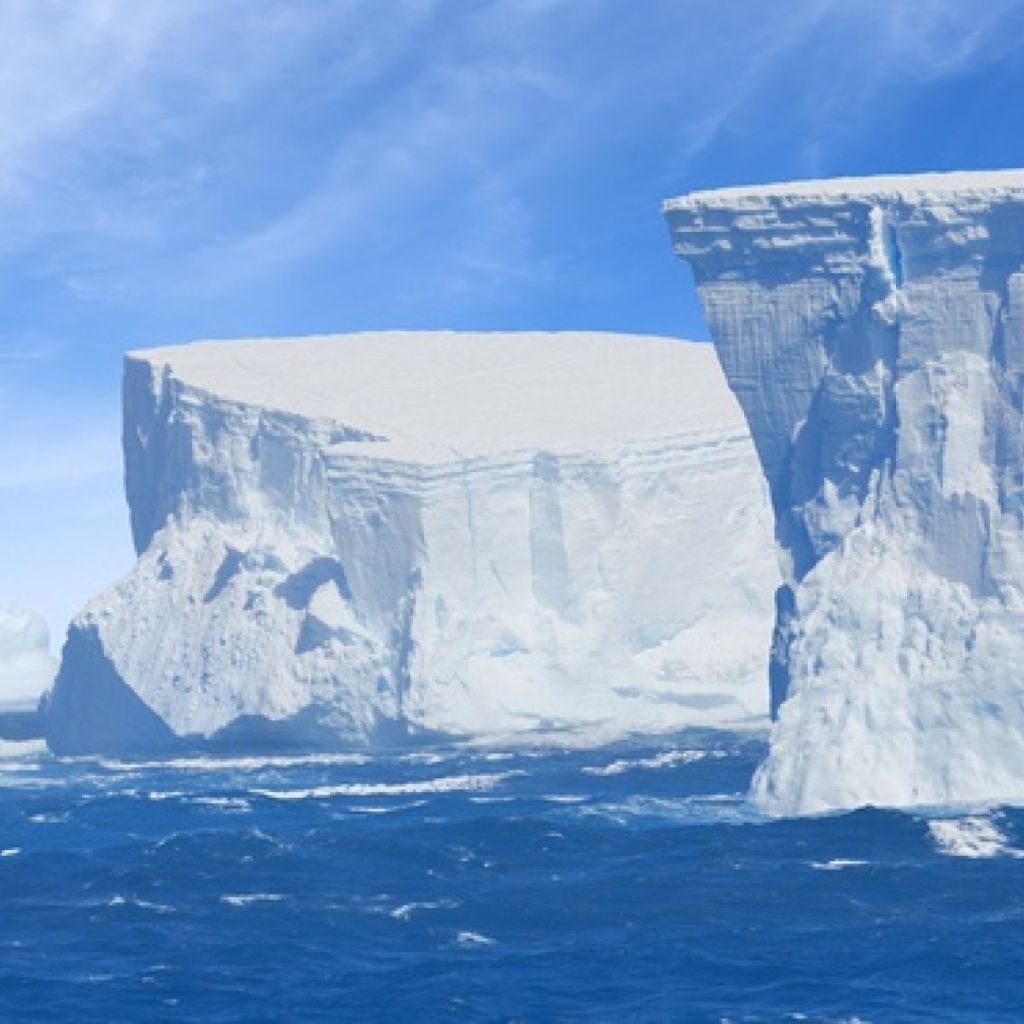
once the ice sheet slides into the ocean, there is no putting it back, even if all carbon emissions ended that day. The ice-sheet holds enough water to raise sea levels by 58 metres. Even if only half of it breaks off, it will be just a waiting game over just a few years for the ice to melt and for us to watch every coastal city on earth to be inundated. In our lifetime.
once the ice sheet slides into the ocean, there is no putting it back, even if all carbon emissions ended that day. The ice-sheet holds enough water to raise sea levels by 58 metres. Even if only half of it breaks off, it will be just a waiting game over just a few years for the ice to melt and for us to watch every coastal city on earth to be inundated. In our lifetime.
Crispin Hull, December 29, 2024
The 2024 award for the biggest disjoin between the importance of a story and the coverage it got must surely go to the science briefing on Antarctica and Sea-Level Rise published by the Australian Antarctic Program Partnership and the ARC Australian Centre for Excellence in Antarctic Science.
It came out in September. The ABC had some coverage, but it seemed to miss some essential points.
Here is what the new science tells us and how it is different from the older science.
The older science tells us that the amount of sea ice in Antarctica is shrinking, but not as badly as in the Arctic. Sea ice expands and contracts quite quickly according to air and sea temperature. So, a gradual reduction in sea ice will mean a gradual and comparatively small rise in sea levels.
This science should be moderately alarming, but the misinformationists in the fossil fuel industry can bat away public fears by saying not much is happening here and it will not happen in your lifetime, so carry on as usual.
This is standard stuff from fossil misinformationists: climate change is not happening, but if it is happening it is part of natural geologic forces and has nothing to do with human-generated carbon, and even if it is caused by human-generated carbon we can develop technologies to capture the carbon and safely store it away.
In short, they base their facts on their desired conclusion that they can continue to make profits from the emission of carbon until ecosystems and economies collapse. When it is too late.
Coming back to Antarctica, earlier science suggested that sea-ice contraction could be reversed if temperatures came down a bit. As it happens sea-ice is an important reflector of solar rays (and heat). Without the sea-ice you have dark ocean which absorbs the rays and increases the heat of the ocean. Nonetheless, it is still a probably reversible process.
Enter the new research. This is about the eastern Antarctic icesheet. Hitherto, this has given climate scientists much less cause for concern. This is because the eastern ice sheet has built up over land. It is anchored.
Unlike sea-ice it is not vulnerable to warmer water melting it.
Picture the land mass and a big thick ice sheet over it. The sea nibbles at the edge and even if the sea is a bit warmer it does not melt much ice. This is not like sea-ice where the warmer water is all around it melting it quickly. So, hitherto scientists have taken some climate solace in the fact that so much ice is safely tied up in the eastern Antarctic ice-sheet (more than 60 per cent of the world’s fresh water) and so will give us more time to slow and reverse the warming of the planet.
Enter the new research. Remove the image of a lump of land mass. Rather picture that the land mass has been forced down by the weight of the ice – heavier at the middle of the land mass and lighter at the edge.
The new science tells us that much of the eastern Antarctic ice-sheet is grounded below sea level. So, one the warmer sea waters get under it, the whole sheet becomes unstable and can slide into the ocean. And even if temperatures are made to fall, the tipping point would have been reached – the warmer sea would have run under the massive ice-sheet, undermining it and making its slide into the ocean inevitable.
And once the ice sheet slides into the ocean, there is no putting it back, even if all carbon emissions ended that day. The ice-sheet holds enough water to raise sea levels by 58 metres. Even if only half of it breaks off, it will be just a waiting game over just a few years for the ice to melt and for us to watch every coastal city on earth to be inundated. In our lifetime.
Once the ice sheet hits the ocean, it is the end of civilisation as we know it.
The ice cannot be put back.
The greater the potential damage the more you should do about it, even if you think the risk is small. This is why people go to a lot of effort to make their houses less exposed to bushfires and cyclones.
It may be that some billionaires might imagine they could set up doomsday retreats to avoid death, injury, and discomfort. They are dreaming. In those circumstances money means nothing and the profit-driven selfishness that drives unnecessarily extending the use of fossil fuel will be brushed aside by the maniac selfishness of those on a desperate if doomed survival mission.
Scientists must change stop their subdued, cautious approach to reporting climate change. It is understandable because scientists do not want to cause panic or unnecessary alarm. But the approach has just given the fossil industry endless free kicks. It is time for alarm and measured panic.
Scientists should stop being scared of publishing scary material in a scary way. It is time to tell people the reality of the biggest security, economic, and existential threat to humans on earth………………………. more http://www.crispinhull.com.au/2024/12/29/scientists-should-break-the-ice/?utm_source=mailpoet&utm_medium=email&utm_campaign=crispin-hull-column
Labor argues ‘economic madness’ of Coalition’s nuclear plan would cost NSW $1.4tn.
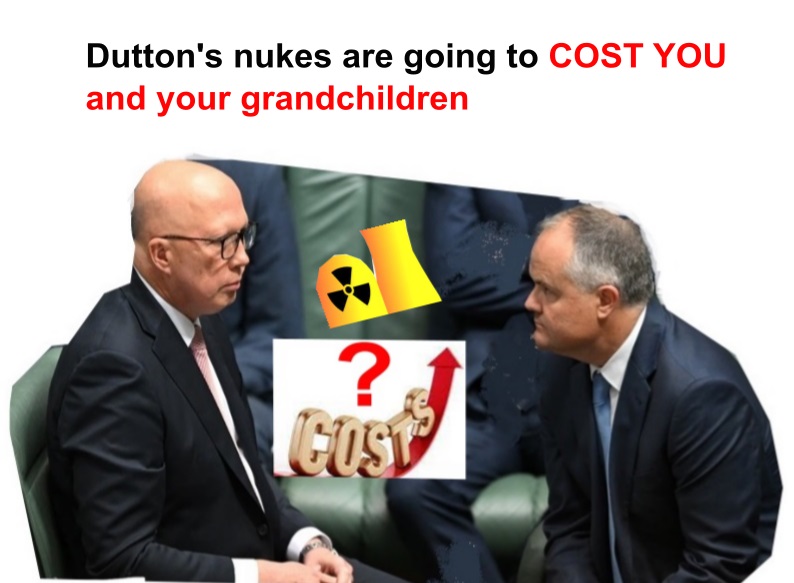
Jim Chalmers says ‘Peter Dutton is the biggest risk to household budgets’ as Coalition defends cheaper costings modelled on a smaller power grid.
Dan Jervis-Bardy, https://www.theguardian.com/australia-news/2024/dec/28/labor-argues-economic-madness-of-coalitions-nuclear-plan-would-cost-nsw-14tn
The Coalition’s nuclear policy will cause a $1.4tn hit to New South Wales over the next 25 years, according to analysis Labor will use to attack the “economic madness” of Peter Dutton’s signature energy scheme.
The federal treasurer, Jim Chalmers, will on Saturday put a dollar figure on the impact on the NSW economy of the Coalition’s plan to build nuclear reactors at seven sites across Australia.
The Albanese government’s analysis is based on the assumption underpinning the Coalition’s costings that less electricity will be needed under its nuclear vision.
Chalmers has argued the Coalition’s plan for a smaller energy grid would result in an economy that is $294bn smaller, with $4tn in lost output, by 2051.
The analysis, to be released on Saturday, suggests that NSW alone would suffer a $1.4tn blow to the state’s economic output over that period, including $114bn in the year 2051.
“Peter Dutton’s nuclear scheme is economic madness,” Chalmers said. “He will push energy prices up and growth down and the people of NSW will be worse off.
“We now know for sure that Peter Dutton is the biggest risk to household budgets and Australia’s economy.”
The new analysis is likely to be quickly dismissed by the Coalition, which brushed off Chalmers’ claims of a $4tn hit to the national economy as “absolute and utter nonsense”.
Asked earlier this month if the Coalition’s plan would shrink the nation’s economy, the opposition’s treasury spokesperson, Angus Taylor, said Labor was already doing that.
The economics of nuclear energy has been thrust to the centre of the political debate after the Coalition released the long-awaited costings for its plan earlier this month.
Frontier Economics modelling suggested the nuclear plan would cost $331bn over 25 years, roughly $263bn cheaper than the estimated bill for Labor’s renewables-focused push to net zero by 2050.
However, the Coalition’s costs are modelled on a scenario – which the Australian Energy Market Operator calls “progressive change” – in which the electricity grid is far smaller than what is envisaged under the “step change” route preferred by Labor.
The rollout of electric vehicles, rooftop solar and the electrification of households and businesses is all expected to be slower under the “progressive change” pathway.
The scenario assumes GDP growth of 1.89% a year through to 2050, compared with 2.21% a year under the “step change” alternative.
The new federal analysis assumes heavy industry, such as aluminium smelters, would have to shut their doors after 2030 because there will not be enough energy to keep operating. That would spell danger for the aluminium smelters in the Hunter Valley in NSW and Portland in Victoria.
The NSW premier, Chris Minns, has repeatedly ruled out lifting the state’s nuclear power ban.
“The bottom line here is that nuclear power costs a lot of money and it takes a lot of time,” Minns said earlier this year.
“And we don’t really have a moment to spare when it comes to renewing our energy grid and thinking about new sources of electricity generation.”
As the Gaza genocide continues, it cannot be a happy 2025

The AIM Network – Australian Independent Media – 28 Dec 24 https://theaimn.net/as-the-gaza-genocide-continues-it-cannot-be-a-happy-2025/?fbclid=IwY2xjawHdUWtleHRuA2FlbQIxMAABHTva4R0kPZ3A_xe9rspp_2i21L7hET2DzTbcj6EQ39kRM3DX-kgx2a6sJg_aem_mG5U-veJEm7a1tJVDHPOoQ
I’m sorry. I can’t rejoice over the New Year and all that stuff. How can we keep pretending – with bells and whistles and fireworks, and worthy preachings from pulpits and parliaments- that it’s all going to be better?
It’s not. It’s going to be worse. Many atrocities have occurred inthe past – and we’ve been shocked to hear about them – afterwards.
Now the atrocity is going on – in Gaza – and we know all about it, while it is happening.
I just remember, when I was a little kid – seeing pictures of Auschwitz. How could people be so cruel to other people? I couldn’t believe it.
I read The Diary of a Young Girl, by Anne Frank , who died at 15 in Auschwitz. Anne Frank had written in her diary “I still believe that people are really good at heart”. That quotation has sustained me for decades.
I wonder what Anne Frank would think about what the Israelis are doing in Gaza. Would she join the many Jews who are trying to make it stop – and are being called “anti-semitic”, some being arrested as “terrorists”?
Jonathon Cook, writing in Middle East Eye, describes how “the wilfully blind, which includes western politicians and their media, are still in denial” . “The West Yawns” as each new research report spells out the genocide that is continuing:
“Nearly 15 months on, the Gaza genocide has become entirely normal, it has become just another minor, routine news item to be buried on the inside pages.”
” those accounts made no impact on the western political and media consensus. Nothing has stuck, even when it is the soldiers themselves documenting their atrocities, and even when it is Israeli Holocaust experts concluding that these crimes amount to genocide.’
The UN Special Committee found Israel’s warfare methods in Gaza to be consistent with genocide, including use of starvation as weapon of war.
Amnesty published a 296-page report concluding that Israel is committing genocide in Gaza. Human Rights Watch issued an 185-page report . Medecins Sans Frontieres (MSF) issued its report, titled Life in the Death Trap That is Gaza.
Of course the USA government immediately rejected the conclusion that Israel is committing genocide. UK and other allies, and the global corporate media dutifully followed suit, and continue to do so.
In 2025, the genocide in Gaza draws to its final stages. It looks as if the global corporate media is going to sigh about it all, spout politicians’ pious statements about the suffering, remind us of the Hamas’ conducted atrocity in October 2023, and of Israel’s “right to defend itself”.
Billionaire- run corporations already dominate the Western media. In the presidency of Joe Biden, it has been bad enough, as Biden continued to support the export of U.S. weaponry to Israel, while his hypocritical Secretary of State, Antony Blinken, said “all the right things” about seeking peace in Gaza.
I wish that I could predict an optimistic development for Gaza, given that there is so much international awareness of the genocide, so many respected researchers who expose it. But there’s the incoming Trump administration in the USA. Trump’s appointees regarding foreign policy and the Middle East form a string of longterm supporters of Israel. Mike Huckabee will be his ambassador to Israel, Marco Rubio his Secretary of State, Steven Witkoff Special Envoy to the Middle East. A further complication, however, might be Trump’s relationship and strong business connections with Saudi Arabia which is not Israel’s best friend and still does not recognize Israeli sovereignty.
The power and influence of a Trump administration over the media is sure to create confusion in the public mind, about many things, but especially about Israel and Gaza. Trump is supposed to have some sort of complex plan for ending Israel’s war on Gaza, but it seems to boil down to open slather on the people of Gaza.
Amidst the confusion the media has a splendid ability to distract attention away from this Gaza horror, making us all, in away, complicit.
Still there are millions, world-wide, who know that this evil should be named and stopped
There will be continued international efforts, including legal ones, to demand a fair cessation of this war. Michael Lynk writes in AA about support for the Palestinians – “a global movement of solidarity – particularly among the young – that will continue to inspire courageous thinking and bold acts. Its lasting impact should never be underestimated.”
Dutton must face coal, hard facts. Nuclear will not work
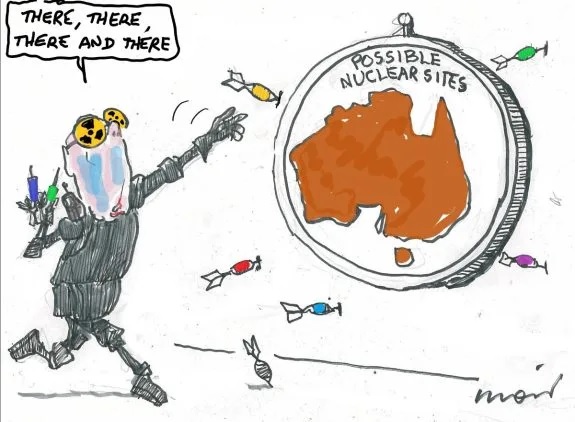
December 27, 2024, https://www.theage.com.au/national/nsw/dutton-must-face-coal-hard-facts-nuclear-will-not-work-20241227-p5l0tj.html
The owners of our coal-fired power plants have pointed to the biggest single flaw in Peter Dutton’s nuclear plan: those plants will all be gone before the first reactor can make an appearance, and long before the last is up and running (“Coal chiefs query Dutton’s nuclear bet”, December 27). Even if the owners wanted to keep them operating, it’s doubtful they could – not without spending inordinate amounts of money. That money, inevitably, would be courtesy of the taxpayer. All so we can enjoy energy at double the cost of renewables. Why can’t the opposition see what all the rest of us can? Or is it just a ploy to delay action on climate change for 20 more years? Ken Enderby, Concord
In March this year, it was reported that AGL, Australia’s largest power supplier, had ruled out taking part in Dutton’s nuclear push. It is instead pressing ahead with long-term plans to transform its legacy coal sites into low-carbon industrial energy hubs, including renewable energy, grid-scale batteries and manufacturing operations for green technologies. The Hunter Energy Hub is to occupy the old coal station Liddell and AGL’s Bayswater coal-fired generator, which is due to retire no later than 2033. Coal stations are ageing and in constant need of repair. Dutton will not include the consequent necessary budget support for coal in his costings, but taxpayers should. Fiona Colin, Malvern East (Vic)
Dutton’s plans depend upon his assumption that the existing coal-fired power plants will keep going until 2050 when nuclear plants replace them. In the Herald article, the Australian Energy Council said Dutton’s assumption was “brave”. “Brave” was a word reserved for impending disaster, that uber-bureaucrat Sir Humphrey Appleby would use to his prime minister Jim Hacker when the latter was contemplating doing something ridiculous. Life imitates art. Joe Weller, Mittagong
We don’t need to replace the soon-to-be redundant 19th century baseload power from ageing coal plants with poisonously expensive and slow-to-build nuclear plants that won’t be ready in time.
We are now well through the transition to a modern, computer-controlled grid that can handle the variable power coming from thousands of sources during the night and millions of sources during the day when rooftop solar is also available. I type this letter on a battery-powered device that was charged yesterday from the grid. An off-the-grid house with solar, wind, batteries and a small generator has no baseload power; one which is on all the time whether needed or not, just clever computer controls managing the balance between the available power and the load. Larger examples are every aeroplane in flight, and every ship away from port. The long-term safety of nuclear and its waste management is another issue. Peter Kamenyitzky, Castle Hill
When is the leader of the opposition going to wake up to the fact that his nuclear option is simply a bad idea? The facts are in. Nuclear will be considerably more expensive and not operational in time. It has no plan for waste disposal and our coal-fired power stations will have closed. This is a classic example of stubborn ideology overwhelming common sense. Bill Young, Killcare Heights
Is Dutton’s persistently promoted nuclear power proposal really a smoke screen over a plan to continue the use of coal, then gas, indefinitely? And to hell with the global heating consequences. Douglas Mackenzie, Deakin (ACT)
We’ve heard from experts, state and local governments, community leaders and now from the fossil fuel operators themselves: not only is it not a technically feasible plan, Dutton’s idea for nuclear power plants is unworkable, from a purely practical perspective. After all the studies and debate demonstrating how Dutton’s plan is economically, technically and practically dead in the water, why do we devote more money and energy giving this oxygen-thieving waste of space the time of day? Frederick Jansohn, Rose Bay
The Coalition has conveniently excluded many of the costs associated with its nuclear plan. The owners of the existing coal-fired plants are well aware of the incredible expense of maintaining them beyond their use-by dates. Eraring is a good example and that extension was only for a couple of years. Additionally, the expenditure involved in the disposal of nuclear waste and the inevitable extraordinary liabilities associated with the future decommissioning of nuclear plants was ignored in Dutton’s costings. If in doubt, check Britain out. Roger Epps, Armidale
Dangerous Tribunal decision paves way for Dutton to keep nuclear blow-outs secret

by Rex Patrick | Dec 27, 2024, https://michaelwest.com.au/art-tribunal-secret-snowy-decision-dangerous-for-dutton-nuclear/
The new Administrative Review Tribunal (ART) just ruled the $2B, no $6B, no $12B Snowy 2.0 project immune from public scrutiny. The decision paves the way for secrecy over Peter Dutton’s nuclear ambitions. Rex Patrick reports.
In April 2023, I made a Freedom of Information (FOI) application for access to Snowy Hydro Limited project reports about Snowy 2.0 pumped storage power scheme to the Minister of Climate Change and Energy, Chris Bowen. I also asked for the briefs on Snowy 2.0 prepared by the Department of Climate Change, Energy, the Environment and Water (DCCEEW) for the Minister.
Suspecting things were off the rails, I wanted to see what Snowy Hydro was saying to the DCCEEW in relation to Snowy 2.0’s progress, or lack thereof, and what DCCEEW was then saying to Minister Chris Bowen.
In August 2023 the Government announced a Snowy 2.0 ‘reset’; a marketing label for a massive cost blowout and schedule delay. That caused me to made a further request for the Snowy Hydro Corporate Plan update sent to Bowen and Finance Minister Katy Gallagher to convince them to back the project cost doubling from $6B to $12B.
Access to the project reports and ministerial briefs was flatly refused and so I appealed the matter to the Administrative Appeals Tribunal, now repackaged by Attorney-General Mark Dreyfus as the Administrative Review Tribunal (ART).
Tribunal rejects transparency
In a decision made by Deputy President Peter Britton-Jones, the Tribunal has affirmed the access refusal decisions, effectively shutting down any FOI scrutiny of Snowy 2.0. This mega-project, which has blown out by $10B, is now shrouded in secrecy, blocking the gaze of members of the public, who are paying for the project.
The ART decision has blown a huge hole in government transparency and accountability because it creates a model that could, and almost certainly will, be used to exempt Opposition Leader Peter Dutton’s $331B nuclear power program from any future public scrutiny. It’s a secrecy barn door that’s big enough to drive a nuclear reactor through.
Protecting business information
How did this happen?
The FOI Act has some reasonable protections in it to ensure sensitive business information is protected from release.
Section 47 of the FOI Act protects trade secrets or commercially valuable information from being disclosed; a company’s ‘11 secret herbs and spices’ stays just that, secret. No other consideration; it’s a full stop exemption from the requirement to disclose.
Section 47G of the FOI Act protects more general business information which, if released, could adversely affect the business in some way. But this particular disclosure exemption clause is conditional on whether the disclosure would be contrary the public interest.
And that’s fair enough – when a company starts taking money from the public for public purposes, if there’s public interest in disclosing the information (like project cost and schedule blowouts), that just sits as a cost of doing business with the Government.
These are important provisions in our FOI law. Last year eighty-three thousand businesses provided their services or products in exchange for $99.6B of public money.
Removing the public interest
There’s another FOI exemption, Section 45, inserted into Act to prevent a “breach of confidence”; that is a promise to keep information confidential – like Aboriginal tribal secrets provided to government in native title matters; artistic assessments by experts of works of art under consideration for purchase – things that need confidentiality but are not business information.
That’s how the Section 45 exemption was presented to the Parliament way back in 1982 when our FOI law was first debated and legislated. In past decisions of the Tribunal Deputy President Britten-Jones has decided not to give that presentation any weight. Instead, Section 45 is interpreted as an unbreakable secrecy clause whenever government and a business agree that it should apply to information that the business has provided to government.
The end result is that now, despite the Parliament determining that business information should be disclosed if that disclosure is not contrary to the public interest, that legislated provision should not be honoured.
Section 45 is, as a result of past Tribunal decisions, the ‘go to’ exemption from departments trying to protect their projects from any scrutiny.
Quacking like a duck
The only reason I actually challenged DCCEEW and the Minister’s FOI decision in this instance is because there’s a carve out in the FOI Act that says Section 45 does not apply if the disclosure of the document would constitute a ‘breach of confidence’ owed to the Commonwealth.
So, one question before the Tribunal was, is Snowy Hydro ‘the Commonwealth’?
To me, the answer was clear.
While Snowy Hydro is a distinct legal entity, it is an 100% government-owned corporation, and is largely funded by the public (the Snowy 2.0 ‘basket case’ project is funded by the taxpayer to the tune of $7B and the rest of the money comes from electricity customers – you).
project is funded by the taxpayer to the tune of $7B and the rest of the money comes from electricity customers – you).
Snowy Hydro has its board appointed by shareholder ministers and remunerated in accordance with a determination of the Commonwealth’s Remuneration Tribunal.
Snowy Hydro is subject to control by the Commonwealth, is obliged to surrender information (unfettered by any confidentiality obligations) requested by a shareholder minister or the Auditor-General or the Senate.
I summarised this legal situation in my submissions to the Tribunal, stating, “If it walks like a duck, looks like a duck and quacks like a duck – it’s a duck!”
The lawyers arguing the government’s case insisted none of that mattered. It might look like a duck, it might even be a government duck but it somehow wasn’t a Commonwealth duck.
Britton-Jones decided it was an elusive night owl, declaring that Snowy Hydro Limited is not the Commonwealth.
Dutton’s Nuclear Power Limited
If the ART decision stands, Snowy Hydro will be effectively excluded from FOI scrutiny. That means an impenetrable wall of secrecy, barring investigation of this government owned and controlled company’s mismanagement of the Snowy 2.0 project and its huge cost to taxpayers.
But that may well be only the beginning of things.
The pieces are all in place for the Coalition’s nuclear power plans to be shrouded in secrecy – thanks in large measure to arguments presented by the Albanese government’s lawyers.
Here’s how Dutton will do it. He just has to follow the Snowy Hydro model and he can ensure than no project reports will ever make it into the hands of the public. The steps are as follows:
- Legislate to set up ‘Nuclear Power Limited’ by way of statute – the ‘Nuclear Power Limited’ Act – with two Ministers to be shareholders in behalf of government.
2. Include the following words in the Act – “‘Nuclear Power Limited’ is not, and does not represent, the Crown”.
3. Subject ‘Nuclear Power limited’ to a policy requirement to report project status to the shareholder ministers (so they at least know what’s going on).
4. Enter into an agreement between Nuclear Power Limited and the government that states “each party agrees to keep the confidential Information confidential and not to disclose it to anyone without the consent of the other party” provided the information is marked as “confidential” (the actual confidentiality of the information does not matter – the key is that the pages are marked “confidential”
Boom! Secrecy heaven
Financial meltdowns can be secret
Nuclear Power Limited will be Snowy Hydro Limited on radioactive steroids. If the similar magnitude $2B to $12 billion blowout to Snowy 2.0 were to occur with Dutton’s (already understated) $331B Nuclear Power Program, the blowout could amount to trillions of public money burned up building reactors that may never be economically viable.
In that regard, ART Deputy President Britten-Jones may have made the most dangerous decision ever made by an administrative review body (even without reference to Dutton’s plans, it casts a secrecy blanket over $100B of annual government procurement).
As such, I’ve put my hand into my pocket and spent $6K initiating a Federal Court Appeal. This secrecy decision can’t be allowed to stand.
And in the meanwhile, we can all just wonder how many more billions Snowy 2.0 will cost us.
Rex Patrick
Rex Patrick is a former Senator for South Australia and earlier a submariner in the armed forces. Best known as an anti-corruption and transparency crusader, Rex is running for the Senate on the Lambie Network ticket next year – www.transparencywarrior.com.au.
Angus Taylor’s word salad blurs the truth about power bills under the Coalition’s $331b nuclear plan.
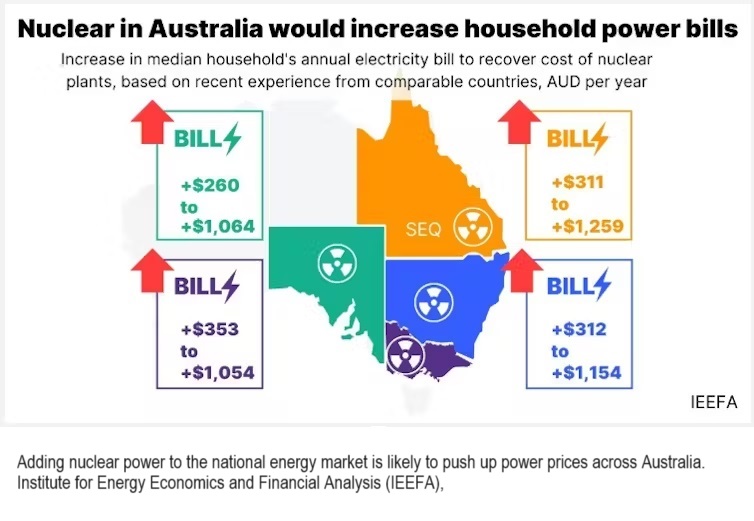
“It will bring down electricity bills by 44 per cent, there’s no doubt about that,” Shadow Treasurer Angus Taylor declared on Wednesday.
Frontier Economics didn’t model what nuclear would mean for household prices because the Coalition didn’t ask it to.
“It will bring down electricity bills by 44 per cent, there’s no doubt about that,” Shadow Treasurer Angus Taylor declared on Wednesday.
Frontier Economics didn’t model what nuclear would mean for household prices because the Coalition didn’t ask it to.
By Brett Worthington,19Dec 24
It started by playing it fast and loose with the details.
Cherry picking data points that told a story the Coalition wanted to tell, Opposition Leader Peter Dutton and his merry band of frontbenchers sought to conflate nuclear energy modelling and household bills — but were at least deliberately vague initially.
Last Friday, they claimed taxpayers would be 44 per cent better off under the Coalition’s $331 billion nuclear plan.
That alone was a heavily contested claim that struggled to stand up to rigorous review. But it was a claim that would only be supercharged as the days rolled on.
“It will bring down electricity bills by 44 per cent, there’s no doubt about that,” Shadow Treasurer Angus Taylor declared on Wednesday.
It was almost as if he suddenly realised what he’d said, bringing on a word salad of caveats.
“I mean, that’s over time, that’s, you know, to the extent that over time, what you see basic economics, as long as you have good competition policy in place, and we absolutely intend to do that, that prices paid reflect costs — underlying costs,” he continued.
“That’s, that’s what you expect to see and that’s economics 101.”
It’s one thing to try and blur the lines and insist that what the federal government spends in taxpayer money directly flows through to household bills.
And look, no-one in the Coalition will be complaining if voters miss the grey area and interpret the opposition’s comments as a rolled gold promise to bring down household energy bills by 44 per cent.
It’s not like Taylor or Dutton will be in the federal parliament when the rubber hits the road on the savings by 2050, which is when Taylor says Australians will have to wait to see the full 44 per cent delivered.
But it can’t go without being said that the 44 per cent household claim simply isn’t backed up in the modelling the Coalition relied upon to cost its plan.
Frontier Economics didn’t model what nuclear would mean for household prices because the Coalition didn’t ask it to.
Forget economics 101. Not asking for something that could give you an answer you might not like is politics 101.
To quote the shadow treasurer himself: Well done, Angus.
Mid-year budget hardly a pre-election sweetener
The Coalition gets away with making erroneous claims because Labor struggles to communicate when it’s shaping the agenda, let alone when it’s responding to it.
Like him or loathe him, Dutton is a skilled communicator. He has a laser focus on his message and delivers it with precision, even if the substance is heavily contested…………………………………
The government’s inability to neutralise Dutton is what fuels the nervousness that is ever-increasing in the ranks of Labor supporters. There’s outright despair in some quarters, fuelled largely by the prospect of Dutton shifting into the Lodge in the new year…………………………….. https://www.abc.net.au/news/2024-12-19/nuclear-costings-household-bills/104746708
1 This month

of the week – Australians for War Powers Reform (AWPR)
To see nuclear-related stories in greater depth and intensity
 Antinuclear