Correcting 5 wrong opinions about the Treaty on the Prohibition of Nuclear Weapons
 FIVE COMMON MISTAKES ON THE TREATY ON THE PROHIBITION OF NUCLEARWEAPONS https://warontherocks.com/2020/11/five-common-mistakes-on-the-treaty-on-the-prohibition-of-nuclear-weapons/
The Treaty on the Prohibition of Nuclear Weapons, the first international ban on nuclear weapons, will take full legal effect on Jan. 22, 2021. It joins the Chemical Weapons Convention and the Biological Weapons Convention as a treaty prohibiting weapons of mass destruction and follows the roadmap of the Mine Ban Treaty (known as the Ottawa Treaty) and Cluster Munitions Convention to bring together a coalition of civil society and diplomats to prohibit and eliminate weapons based on their humanitarian harm. The treaty has widespread support in the international community — 122 countries voted for its adoption in 2017, and these countries have continued to express their support for the treaty in subsequent statements to the U.N. General Assembly, in spite of resistance from nuclear-armed states and some of their allies, who have not joined the treaty.
This treaty is a big deal. And yet, political scientists and nuclear policy experts, largely from nuclear-armed states, repeatedly make mistakes in their analysis and interpretation of this treaty and international law. At a gathering of roughly 800 nuclear policy experts in Washington, D.C. in 2019, experts overwhelmingly and incorrectly predicted the treaty would not enter into force by March 2021. A French academic even misread the actual treaty text — a clear error that was not flagged by any of the article’s expert reviewers, and was only corrected after publication.
I work at the International Campaign to Abolish Nuclear Weapons, which won the 2017 Nobel Peace Prize for its efforts to negotiate the ban treaty. Its work is informed by international lawyers, academics, technical experts, diplomats, survivors of nuclear weapon use and testing, and advocates with regional expertise. This diverse and rich foundation of knowledge and experience informs our work to this day. But some academics and nuclear policy experts that haven’t worked as closely on the treaty often make five key mistakes when analyzing this treaty and international law: that the treaty may be just symbolic, that NATO countries cannot join, that the treaty doesn’t address compliance, that it won’t have any impact on nuclear-armed and NATO states, and that the treaty will only affect democracies.
Mistake One: The Treaty Is Purely Symbolic
The legal impact of the Treaty on the Prohibition of Nuclear Weapons is clear: Once it enters into force, all states parties will need to comply with the treaty’s prohibitions and implement its obligations. While some treaty articles reinforce existing obligations under other treaties, states parties do actually take on new legal obligations, contrary to what some have claimed. Even without any other states joining the treaty, from a strictly legal perspective, the treaty is not merely “symbolic.”
The treaty prohibits states parties from developing, testing, producing, manufacturing, transferring, possessing, stockpiling, using (or threatening to use) nuclear weapons, or allowing nuclear weapons to be stationed on their territory. It also prohibits states parties from assisting, encouraging, or inducing states to engage in any of these prohibited activities. Some of these prohibitions are already enshrined in nuclear weapon-free zone treaties, but not all prohibition treaty states parties are members of these treaties. Given that the Comprehensive Nuclear-Test-Ban Treaty unfortunately has yet to enter into force, the Treaty on the Prohibition of Nuclear Weapons will be the only agreement in force banning nuclear testing internationally.
In addition to adhering to prohibitions, states parties must implement positive obligations, some of which echo previous agreements, but many of which are new to this treaty.
There are some technical requirements. For example, states parties must submit a declaration with the U.N. secretary-general on their nuclear weapon status. They must also bring into force a comprehensive safeguards agreement with the International Atomic Energy Agency on inspecting their peaceful nuclear program, or maintain a more intrusive inspections regime (an “additional protocol”) if they have one in force already.
But the Treaty on the Prohibition of Nuclear Weapons also includes ground-breaking provisions on providing assistance to victims of nuclear weapons use and testing and remediating contaminated environments. This is the first time that international law has mandated that countries address the humanitarian devastation caused by decades of nuclear weapons testing and the U.S. bombing of Hiroshima and Nagasaki 75 years ago. It is a critical step forward to address the racist, colonialist, and unjust legacy left by these uniquely horrible weapons of mass destruction. Analysis of this treaty would do well not to ignore these historic articles.
Specifically, Article 6 of the treaty requires states to “provide age- and gender-sensitive assistance, without discrimination, including medical care, rehabilitation and psychological support,” for victims of nuclear weapons use and testing “as well as provide for their social and economic inclusion.” States must also “take necessary and appropriate measures” towards the remediation of contaminated environments. States with affected communities and contaminated environments under their jurisdiction are primarily responsible to structure and implement these obligations in order to respect these states’ sovereignty and follow the legal precedent for victim assistance in other treaties. However, Article 7, which requires that all countries cooperate to implement the treaty’s provisions, specifically calls on all states “in a position to do so” to provide assistance to other states as they carry out these initiatives. Such assistance can take many forms, including technical, financial, and material, so every state should be in a position to contribute.
These provisions will be at the center of the first meeting of states parties to the treaty, to take place within one year of the treaty’s entry into force. Austria has already offered to host this meeting in Vienna. At this meeting, states will discuss routine logistics of international treaty meetings, such as costs and establishing the rules of procedure. Observer states, including signatory states, and some non-signatory states, including at least Sweden and Switzerland, will also attend and share the cost of the meeting. The extent of their participation will be determined by the rules of procedure. Civil society will also likely play an active role.
Mistake Two: NATO Countries Cannot Join the Treaty
One academic recently argued that membership in NATO and the Treaty on the Prohibition of Nuclear Weapons would be “mutually exclusive.” While fully compliant membership in both treaties would require a few policy adjustments, it is certainly possible. There is no prohibition in the treaty for a member to be involved in military alliances or exercises with nuclear-armed states, as long as there is not a significant nuclear dimension to those alliances. NATO itself states, “NATO is committed to arms control, disarmament and non-proliferation, but as long as nuclear weapons exist, it will remain a nuclear alliance.” However, legal experts explain that if a NATO state would like to join the treaty, they may certainly do so and remain in the alliance as long as that state renounces participation in the nuclear dimension of the alliance and indicates that it does not support activities prohibited by the treaty. There is a precedent of NATO members “footnoting” alliance documents to signal disagreement with certain policies. A NATO state could thus announce its change in policy and adjust its behavior accordingly to be in compliance with the treaty’s provisions. Exactly how the NATO state would need to adjust its behavior to be in compliance with the treaty varies by country and could be determined in consultation with states parties.
Historically, different members of NATO can take different positions on controversial weapons without obliterating the alliance. Indeed, there are already divergent policies within NATO on the extent of participation in the nuclear aspect of the alliance: Some NATO countries go so far as to host U.S. nuclear weapons on their soil while others do not allow deployment on their territory under any circumstances. Opposition within NATO to banning landmines and cluster munitions did not stop those prohibitions from moving forward, even as the United States pressured countries to not even participate in the process to negotiate a treaty banning cluster munitions, and certainly did not destroy the alliance. Dozens of former leaders from NATO states, including two former NATO secretaries-general, recently called on their countries to join the Treaty on the Prohibition of Nuclear Weapons and certainly did not suggest that such a move would involve leaving NATO or that it would fracture the alliance. NATO’s status as a nuclear alliance has evolved over time, and it could continue to adapt to shifting international norms.
Mistake Three: There Is No Mechanism to Address Compliance Concerns in the Treaty
If there are any concerns about compliance with the terms of the treaty, the treaty explains clearly what states should do in Article 11. When a state party has a concern about another state party’s implementation of the accord, the two states may resolve the dispute amongst themselves or bring the matter to a meeting of states parties to discuss.
Concerns about compliance with an international treaty would certainly not be unique to this treaty and do not indicate that it is any less legitimate or valuable than other treaties with compliance disputes. States parties to the Nuclear Non-Proliferation Treaty regularly raise concerns about nuclear weapon-state compliance with their obligation to pursue nuclear disarmament under Article VI during meetings of states parties of that treaty. Likewise, states parties to the Chemical Weapons Convention condemn Syrian and Russian violations. These examples demonstrate the value of international treaties to reinforce norms and provide a forum to discuss and condemn violations of international standards for peace and security. Of course, given that the treaty has not yet entered into force, no state can currently be judged to be in non-compliance with the accord.
Mistake Four: The Treaty Will Only Impact Countries That Have Joined It
States parties’ implementation of their obligation to assist victims of nuclear weapons use and testing will also have lasting impact beyond those countries themselves. There is currently no international standard for adequate victim assistance for those who have been impacted by nuclear weapons use and testing and no standard for how to judge that a nuclear-contaminated site has been adequately remediated. States parties’ work on these provisions in the treaty will help to provide research and experience in these fields that can be applicable and useful even beyond countries that have joined the treaty.
Countries that are not part of the treaty can still contribute to these important measures. The United States, for example, is one of the largest donors to Mine Action, which facilitates mine clearance, despite not joining the Mine Ban Treaty. Mounir Satouri, a French member of the European Parliament, has expressed interest in encouraging European Union countries, including NATO members, to contribute to victim assistance and environmental remediation measures under the treaty, even if they have not yet joined as states parties.
The treaty will continue to grow and integrate into the international system well beyond its entry into force in January and first meeting of states parties. The norm established by previous weapons prohibitions impacted banks, companies, and government policies in countries that had not joined the treaty, and the same can be expected for the nuclear prohibition norm. The treaty’s adoption has already caused a major Dutch pension fund to divest from companies involved in nuclear weapons, and more divestment can be anticipated once the treaty takes full legal effect.
Mistake Five: The Treaty Only Impacts Democracies
Countries that have not yet expressed support for the treaty are also expected to join in time. In many countries that do not officially support the treaty, polls show that domestic opinion is behind the ban and capitals in nuclear-armed and NATO states have adopted resolutions calling on their governments to join. Critics claim that domestic support may push Western democracies – in particular France, the United Kingdom, the United States, and NATO allies — to join the treaty, while more autocratic states — without a strong civil society to demand they adhere — remain unfazed by the new international law and norm.
That’s not how international law works. International law applies to all countries, regardless of their governance structure, and all countries are influenced by the new norms advanced by international treaties. Pressure to join the treaty does not just come from an active civil society, but from other states, international organizations, and the changing norm established by the treaty itself. Article 12 of the treaty legally requires that all states parties urge other countries to join. This can be done in the form of public statements in international fora, like the United Nations, or privately in bilateral meetings. Pressure to adhere can even come from international figures like the U.N. secretary-general, the Dalai Lama, and the Pope who have all welcomed the Treaty on the Prohibition of Nuclear Weapons.
So far, the record shows that Western democracies are not necessarily more susceptible to pressure to support the treaty or to join it. While the United States and some NATO allies held a press conference outside the negotiations of the treaty in protest, China merely abstained on the resolution to start negotiations. When the treaty reached 50 states parties, a U.S. official Twitter account called the treaty “counterproductive,” while the Chinese UN Mission on Twitter claimed its objectives were “in line with purposes of the TPNW.” Of the states that have already joined the treaty, many have done so not because of civil society pressure, but due to their desire to adhere to international laws and norms against nuclear weapons.
Conclusion
In January, the treaty will take its rightful place among the other international treaties regulating nuclear weapons and other weapons of mass destruction, as an implementing instrument of the Nuclear Non-Proliferation Treaty’s Article VI and complement to the Comprehensive Nuclear-Test-Ban Treaty. Most countries support the Treaty on the Prohibition of Nuclear Weapons as an important achievement for peace and security and towards a world free of nuclear weapons. As the risk of nuclear weapons use increases alarmingly, nuclear disarmament measures like this treaty are urgently needed.
The Treaty on the Prohibition of Nuclear Weapons will impact the norm against nuclear weapons and in the meantime will provide concrete assistance for victims of nuclear weapons use and testing and contribute to remediating radiologically contaminated areas. It is a powerful tool: important enough for leaders to ratify even in the midst of a global pandemic and influential enough that the United States actually called on countries to withdraw their instrument of ratification or accession. Analytical attempts to belittle or undermine the significance of this treaty may appease the minority of countries that cling to these weapons of mass destruction for now, but make no mistake — the Treaty on the Prohibition of Nuclear Weapons is a game-changer. And it is not going anywhere.
Book review: The Case for Degrowth
 Book review: The Case for Degrowth, Jeremy Williams, The Earthbound Report , 16 Nov 20, “…………. What are the objectives of degrowth? It’s not shrinking the economy for the sake of it. The aim is to get GDP growth out of the driving seat and then steer towards “what really matters: not GDP, but the health and wellbeing of our people and our planet.”
Or there’s the alternative, which is to stop taking growth as the primary measure of progress and get on with delivering what people need. So many political directions open up when GDP growth takes a back seat and we get on with delivering what people need more directly.
In fact, downsizing in the rich world may be a key enabler of flourishing elsewhere. “There is no technological or policy fix that can generalize to nine billion people the material standard of living currently enjoyed by a minority at high cost to others.” Instead, “high-consumption nations and people must degrow to free space for low-consumption ones.”
- A Green New Deal
- universal incomes and services
- policies to reclaim the commons
- shorter working hours
- public finance that supports the first four
Being a short book, it no doubt opens up lots of other questions that the authors don’t cover, though the frequently asked questions at the end captures many of them. Perhaps the one that still sticks out for me is the word ‘degrowth’ itself. In my opinion it doesn’t capture the positivity of a vision for qualitative progress, for improvement rather than enlargement. I know it’s an old debate. We had it when founding the Postgrowth Institute ten years ago, and it doesn’t feel resolved today.
Still, The Case for Degrowth is a brief and straightforward explainer, and a good starting point for anyone who wants to get their head around the degrowth movement and what it wants to acheive.
- You can get The Case for Degrowth from Earthbound Books UK or my US store. It’s powered by Bookshop.com and supports your local book store as well as this blog.
- More recommended degrowth books here. https://wordpress.com/read/feeds/95197302/posts/3025203412
Unanswered questions cloud the future of NuScam’s Small Modular Nuclear Reactor project
Questions Remain About ID Nuclear Reactor Project https://www.upr.org/post/questions-remain-about-id-nuclear-reactor-project
NuScale‘s small, modular reactor design is the first of its kind to be approved in the United States. The new, compact concept is made up of 12 small reactors and will be located at the Idaho National Laboratory.

Sarah Fields, program director with the group Uranium Watch, said the Nuclear Regulatory Commission needs to scrutinize the project carefully. In particular, she said she’s concerned about a proposal for fewer people to oversee the project.
“They want to reduce the number of operators, and that’s just to save money,” said Fields. “And the NRC is undergoing a review of that.”.
NuScale said the project needs fewer operators because of its design is simpler and the controls involve more automation. The NRC is reviewing the proposal, which could involve policy changes since the approval process is based on conventional nuclear power plant designs.
The NRC has approved the Design Certification Application for the project in its current form. But Fields said the agency still has to authorize certain aspects of the design.
One NRC engineer has raised questions about dilution of boron water around reactor cores, which could cause a dangerous power surge even if the reactor is shut down. Fields said it could be hard to make modifications once aspects of the design are approved.
“It’s like designing a house,” said Fields. “And once you want to change one thing about the house, then you have to make all different kinds of adjustments. And then, get approvals from that.”
NSW to transform Hunter coal region into state’s next renewable energy zone — RenewEconomy

NSW’s coal-heavy Hunter Region to be declared host of the next Renewable Energy Zone, as the Berejiklian works to legislate its energy transition strategy. The post NSW to transform Hunter coal region into state’s next renewable energy zone appeared first on RenewEconomy.
NSW to transform Hunter coal region into state’s next renewable energy zone — RenewEconomy
Victoria to spend $20 million on three-year trial for zero emissions bus fleet — RenewEconomy

Victoria to spend $20 million to kick off three-year trial of electric and other zero emissions buses. The post Victoria to spend $20 million on three-year trial for zero emissions bus fleet appeared first on RenewEconomy.
Victoria to spend $20 million on three-year trial for zero emissions bus fleet — RenewEconomy
From bridge fuel to background noise: Another blow for gas — RenewEconomy

It was meant to be the year of gas, but a drumbeat of news has made it the fuel to forget. The post From bridge fuel to background noise: Another blow for gas appeared first on RenewEconomy.
From bridge fuel to background noise: Another blow for gas — RenewEconomy
Nuclear news – week to 16 November, Australia and more

As in last week. the media continues to be preoccupied with the American presidential situation, and after all, that IS pretty important. The really big global stories are the global coronavirus and climate change.
Still, nuclear issues continue – simmering tensions in nuclear weapons states, and the remarkably co-ordinated promotion of Small Nuclear Reactors to governments around the world, in both rich and developing countries. The nuclear-news.net site will now have to stick to just NUCLEAR news.
Some bits of good news – Vaccine Alliance Raises $2 Billion to Buy COVID Shots for Poor Nations. Renewable Energy Defies COVID-19 Downturn To Hit Record Growth in 2020.
AUSTRALIA
Why the Antinuclear.net site will now stick to examining NUCLEAR issues.
Federal nuclear waste dump plan for Kimba, South Australia
Senate dumps on the Australian government’s radioactive waste plan. The Australian government can still bully its way to imposing a Kimba nuclear waste dump. Karina Lester speaks out: ”Traditional owners’ voices not heard and rights stripped over nuclear waste dump”. Minister Pitt on Kimba nuclear waste dump plan – inept, badly briefed, or just plain lying? Planned nuclear waste dump at Kimba has absolutely nothing to do with the production of nuclear medicine. Doctors call for an open independent review of nuclear waste production and disposal.
Australian govt’s Kimba nuclear waste dump plan will be torpedoed in the Senate. Relief in Kimba, that Labor and crossbench Senators want a fair process on nuclear wastes. Uncertainty over Kimba nuclear waste dump as farmers go to Canberra to oppose it.
Senator Sam McMahon enthuses about Generation IV nuclear reactors for the Northern Territory.
Australian government ponders nuclear submarines.
Since Penny Sackett, Australia’s Chief Scientists have moved further towards the extractive industries. Previous Chief Scientist not a fan of Small Nuclear Reactors
CLIMATE. Australia’s freedom of information system hides climate documents.
INTERNATIONAL
Hibakusha renew their push for the abolition of nuclear weapons.
Julian Assange ‘targeted as a political opponent of Trump administration and threatened with the death penalty’.
Topics in today’s “Nuclear” headlines on Google News.
Doctors call for an open independent review of nuclear waste production and disposal

One of the first principles of toxic waste management is to reduce production.
Non-reactor production of nuclear medicine is increasing, and produces very little radioactive waste. Australia should be partnering with countries like Canada, to research non-reactor production of the commonest nuclear medicine isotope Technetium.
16 Nov 20, The Medical Association for Prevention of War is calling for an open independent review of nuclear waste production and disposal in Australia, to create a careful evidence based long term best practice plan.
The recent deeply flawed proposal for a federal nuclear dump and store at Kimba now looks unlikely to get support in the Senate.
It was a cheap storage plan for highly radioactive waste that stays radioactive for more than 10,000 years- an interim facility with no longer term plan. It effectively dumps the problem on future generations of South Australians.
The Australian Radiation Protection and Nuclear Safety Agency chief executive Dr Carl-Magnus Larsson, at a Senate inquiry in June 2020, said: “Waste can be safely stored at Lucas Heights for decades to come.”
MAPW Vice-President Dr Margaret Beavis said, “We have plenty of time to properly review and plan a disposal facility that meets international best practice standards. The recent proposal did not meet those standards.
Contrary to disgraceful and dishonest government scaremongering, there is no threat to nuclear medicine in Australia. I and other MAPW members regularly rely on nuclear medicine in our clinical practice.”
We call on the government to commit to an open independent review of both production and disposal of nuclear waste.
One of the first principles of toxic waste management is to reduce production.
Non-reactor production of nuclear medicine is increasing, and produces very little radioactive waste. Australia should be partnering with countries like Canada, to research non-reactor production of the commonest nuclear medicine isotope Technetium.
Planned nuclear waste dump at Kimba has absolutely nothing to do with the production of nuclear medicine

Peter Remta, 16 Nov 20, Referring to Minister Keith Pitt’s media release of 9 November 2020 regarding the round table conference on nuclear medicine – it still fails to answer and explain how precisely will nuclear medicine be affected by not having a national waste management facility at Kimba.
It is well known that nuclear waste is currently stored in over 100 different locations throughout Australia most of which has been generated through nuclear medical treatment and is classified as low level waste. However as Minister Pitt has himself acknowledged it would be very doubtful if the national facility managed to get 30% of that waste for storage and
disposal.
How will the production of nuclear medical material by ANSTO at Lucas Heights be affected by the failure to have the waste facility at Kimba?
The proposed facility at Kimba has nothing to do with and will not affect the production of nuclear medicine by ANSTO and to suggest otherwise is totally false and deliberately misleading.
It is no more than clutching at straws in order to convince senators who are opposed to the Bill for the waste facility presently before the Senate to change their minds. It is an insult to their intelligence.
The only thing that will affect the production of nuclear medicine by ANSTO is its own inherent problems with the nuclear medicine facility plant at Lucas Heights which keeps breaking down and having trouble despite the
huge cost of planning and building it.
Again that has nothing to do whatever with the proposed waste facility at Kimba other than perhaps to demonstrate the inefficiency of ANSTO and confirm the dangerous nature of the reactor waste which is completely unsuitable for storage at Kimba before ultimate disposal.
Despite many repeated requests, Senator Pitt has not explained how nuclear medicine will be affected should the waste facility not to be built at Kimba,
I
Relentless lobbying by Small Nuclear Reactor companies still doesn’t make them economic or safe

Telegraph 14th Nov 2020 ”………Rolls-Royce, via a relentless lobbying campaign over the past  few years, seems to have convinced the Government that its “mini-nukes” project is a runner. It claims billions are needed from taxpayers to underpin investment in a new production line that will reduce the costs and risks compared with bespoke new reactors such as the £22bn monster at Hinkley Point C.
There are plenty of reasons to be sceptical that even with its nuclear submarine experience, Rolls and its partners can pull it off. The technology is unproven anywhere and – as anti-nuclear campaigners argue – more reactors inevitably mean more potential points of failure. Nuclear power has a poor record of delivering its budgets too…….”
Julian Assange ‘targeted as a political opponent of Trump administration and threatened with the death penalty’
|
Julian Assange ‘targeted as a political opponent of Trump administration and threatened with the death penalty’ Evening Standard. By Tristan Kirk. @kirkkorner
09 September 2020, Wikileaks founder Julian Assange has been targeted as a “political opponent” of President Trump’s administration and threatened with the death penalty, the Old Bailey heard today.
Professor Paul Rogers, a lecturer in peace studies at Bradford University and specialist on the ‘War on Terror’, said Assange’s opinions put him “in the crosshairs” of Trump’s top team. Giving evidence to Assange’s extradition hearing this morning, he said he believes the prosecution case is part of a drive in the United States to target “dissenters”. “In my opinion Mr Assange’s expressed views, opinions and activities demonstrate very clearly ‘political opinions’”, he told the court. “The clash of those opinions with those of successive US administrations, but in particular the present administration which has moved to prosecute him for publications made almost a decade ago, suggest that he is regarded primarily as a political opponent who must experience the full wrath of government, even with suggestions of punishment by death made by senior officials including the current President.”………
Professor Rogers, in his witness statement, said Assange’s work involved exposing secrets that the US government wanted to keep hidden, he had been in conflict with the Obama administration, but there was “no question” that Assange had been targeted as a political opponent by Trump’s officials. “The opinions and views of Mr Assange, demonstrated in his words and actions with the organisation WikiLeaks over many years, can be seen as very clearly placing him in the crosshairs of dispute with the philosophy of the Trump administration”, he said. Assange’s legal team argue that a decision was taken under President Obama not to prosecute the Wikileaks activist, but that move was overturned under Trump. https://www.standard.co.uk/news/uk/julian-assange-donald-trump-administration-old-bailey-hearing-a4543656.html?fbclid=IwAR3Rj4n0Lzlt5GmE1lXZXoMVDsOS5BdT9sEKgj82SCmMnpNLFQ6ZfEzVUOI |
|
International leading experts opt for 100 per cent renewables and reject nuclear power
Leading experts opt for 100 per cent renewables and reject nuclear power https://100percentrenewableuk.org/leading-experts-opt-for-100-per-cent-renewables-and-reject-nuclear-power
The undersigned believe that a future based on 100 per cent renewable energy underpinned by traditional and advanced energy efficiency and storage techniques is not only practicable, affordable, but immensely preferable to one that involves nuclear power. Renewable energy offers us a rapid path to net zero carbon transition that, unlike nuclear power, does not involve the need for decommissioning of radioactive plant, nuclear waste or concerns about safety or security threats. With this in mind we regard the prospect of the Government effectively offering unlimited sources of funding to EDF to build Sizewell C nuclear power plant with dismay and urge people to send in their objections to their MPs at this prospect.
- Dr David Toke, Director, 100percentrenewableuk,
also Reader in Energy Politics, University of Aberdeen.
- Jonathon Porritt,
Founder, Director and Trustee, Forum for the Future
Co-Director of the Prince of Wales’s Business & Sustainability Programme
- Professor Tom Burke
- Founding Director of E3G
- Professor Peter Strachan
The Robert Gordon University
Aberdeen Business School- Dr Paul Dorfman
Founder and Chair Nuclear Consulting Group
Honorary Senior Research Associate UCL Energy Institute- Professor Bryan Wynne,
- Professor of Science Studies and Research Director of the Centre for the Study of Environmental Change
- Professor Andrew Stirling,
Professor of Science and Technology Policy,
University of Sussex
- Professor David Elliott,
Technology Policy Group
- The Open University
- Professor Stephen Thomas,
Public Services International Research Unit (PSIRU)
University of Greenwich
- Professor Mark Jacobson,
Director of Atmosphere/Energy Program,
- Stanford University (USA)
- Professor Christian Breyer,
Lappeenranta University of Technology (Finland)
- Shaun Burnie
Independent Nuclear Consultant
- Dr Ian Fairlie,
- Vice President CND
- Pete Wilkinson
Chairman, Together Against Sizewell C (TASC)
- Dr Philip Johnstone
Research Fellow
Science Policy Research Unit (SPRU)- Dr Mark Diesendorf
- Associate Professor and Deputy Director
Institute of Environmental Studies
UNSW Australia- Dr Stephen Connelly
Department of Town and Regional Planning
University of Sheffield- Dr Gavin Mudd
- School of Engineering
RMIT University
- Dr Monica Oliphant
Past President International Solar Energy Society
Register for FREE webinar on December 3rd on how Scotland can get ALL of its energy from renewables
Disposal plan all at sea? — Fukushima 311 Watchdogs

In late October pressure appeared to be mounting on the Japanese government to decide on a method of disposal for 1.2 million tonnes of radioactive wastewater from the former nuclear plant at Fukushima Daiichi Workers at TEPCO’s Fukushima Daiichi Nuclear Power Station work near above-ground storage tanks in 2013 11 November, 2020 As rain and […]
Disposal plan all at sea? — Fukushima 311 Watchdogs
Brutal Truth’: Fukushima’s Radioactive Water Threatens Life Worldwide, Warns Environmental Journo — Fukushima 311 Watchdogs

by Mohamed Elmaazi November 10, 2020 The after effects of the disaster at the Fukushima nuclear power plant continues to be felt as Japanese authorities struggle to appropriately deal with contaminated radioactive water which, some of which is already being released into the Pacific Ocean, an environmental journalist explains. Robert Hunziker is a widely published […]
Brutal Truth’: Fukushima’s Radioactive Water Threatens Life Worldwide, Warns Environmental Journo — Fukushima 311 Watchdogs
Japan faces another Fukushima disaster crisis — Fukushima 311 Watchdogs

Collecting sea water samples near the damaged Fukushima nuclear power station. November 3rd, 2020, by Paul Brown A plan to dump a million tonnes of radioactive water from the Fukushima disaster off Japan is alarming local people. LONDON, 3 November, 2020 − The Japanese government has an unsolvable problem: what to do with more than […]
Japan faces another Fukushima disaster crisis — Fukushima 311 Watchdogs
1 This month.


PETITION – To: Prime Minister Anthony Albanese and the Australian Labor Government
Chernobyl: The Lost Tapes – A good documentary on Chernobyl on SBS available On Demand for the next 3 weeks– https://www.sbs.com.au/ondemand/tv-program/chernobyl-the-lost-tapes/235274195556
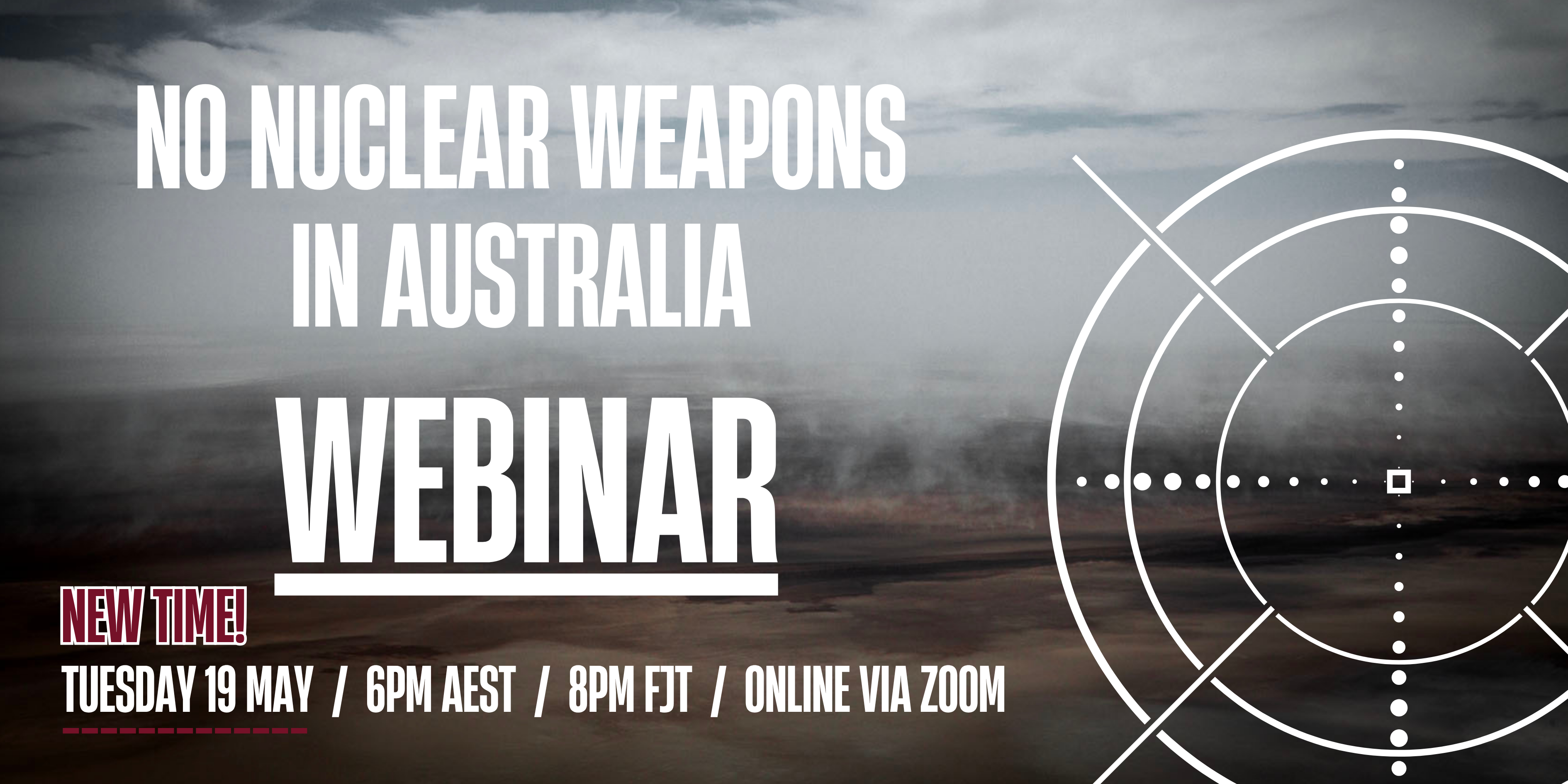
19 May – Webinar- Webinar: No Nuclear Weapons in Australia
Start: 2026-05-19 18:00:00 UTC Canberra, Melbourne, Sydney (GMT+10:00)
End: 2026-05-19 19:30:00 UTC Canberra, Melbourne, Sydney (GMT+10:00)
20 May – Webinar – The dangerous world of AUKUS, US, military occupation and suppression of dissent

National Webinar, 20th May, 2026, 6.30pm AEST. Confronting laws restricting/suppressing protest speech and action
Speakers: Former Sen. Rex Patrick, Lawyer Nick Hanna ,Arthur Rorris ,Jorgen Doyle, Sen David Shoebbridge,
Facilitator Kelley Tranter.

of the week – Australians for War Powers Reform (AWPR)
To see nuclear-related stories in greater depth and intensity
 Antinuclear