See this graphic exposure of the coal, oil, gas, corruption in Australian government
 Australian Government Corrupt Connections – Fossil Fuels , https://tasmaniantimes.com/2020/09/corrupt-connections-fossil-fuels/Our democracy has been hijacked by the fossil fuel industry. Australians need to know about government links with the coal, oil & gas industry.Please share this so more people are aware. WE need an ICAC now!
For more information we recommend watching “Dirty Power” (15 min) which documents many of the fossil fuel links to government detailed in this thread. Australian Government Corrupt Connections – Fossil Fuels
Thread produced by @aaron_brooks10 & @DanielBleakleyMost info sourced from michaelwest.com.au
Coalition to divert renewable energy funding away from wind and solar
|
Coalition to divert renewable energy funding away from wind and solar
Scott Morrison says solar and wind are commercially viable and do not need subsidies from the $1.43bn funding, Guardian, Katharine Murphy and Adam Morton, Thu 17 Sep 2020 The Morrison government will continue to fund Australia’s renewable energy agency to the tune of $1.43bn over a decade but overhaul its mandate so there will be less investment in solar and wind, and more focus on investment in hydrogen, carbon capture and storage, microgrids and energy efficiency.The baseline funding for the Australian Renewable Energy Agency (Arena) will be supplemented by a transfer of funds from the government’s emissions reduction fund and a new grants program worth $193.4m – but that represents a funding cut to the agency which was established by the Gillard government in 2011. The significant overhaul will be unveiled by Scott Morrison on Thursday ahead of the government outlining its next steps in the technology roadmap, which is the government’s emissions reduction strategy. The energy minister, Angus Taylor, is expected to unveil the government’s inaugural low emissions technology statement during a speech at the National Press Club early next week…….. The Morrison government will continue to fund Australia’s renewable energy agency to the tune of $1.43bn over a decade but overhaul its mandate so there will be less investment in solar and wind, and more focus on investment in hydrogen, carbon capture and storage, microgrids and energy efficiency……… The government will also continue to plough more taxpayer funds into carbon capture and storage through a $50m fund, while $70.2m will be allocated for an export hydrogen hub. ……. The overhaul of Arena follows the government outlining first steps in its much vaunted “gas-led recovery” from the economic shock caused by the coronavirus. Morrison on Tuesday pointed to new commitments in the October budget, including funding of $52.9m to unlock more gas supply and boost transport infrastructure. As well as flagging that the government would back the construction of a new gas-fired power station in the Hunter Valley if the energy company AGL failed to replace Liddell, Morrison held open the option of taxpayer underwriting for priority gas projects, streamlining approvals or creating special purpose vehicles for new investment. While Morrison and Taylor have been muscling up about the importance of new generation to replace Liddell, the government’s proposition has not been backed by a taskforce report commissioned to assess the impact of its closure. Morrison said this week the government had estimated 1,000 megawatts of new dispatchable electricity generation capacity would be needed to replace Liddell, which owner AGL has announced will close in early 2023. But the taskforce does not find that 1,000MW of additional dispatchable electricity would be needed. It listed a range of energy committed and probable projects that it found would be “more than sufficient” to maintain a high level of power grid reliability as Liddell shut.https://www.theguardian.com/australia-news/2020/sep/17/coalition-to-divert-renewable-energy-funding-away-from-wind-and-solar |
|
In tropical areas, increasing heat and humidity will make life almost unbearable
These impacts will be stronger in the seasonally wet tropics (such as the Northern Territory of Australia), where more extreme warming is expected than in the equatorial zone.
Predictions for Darwin, in northern Australia, suggest an increase in days with temperatures above 35℃ from 11 days a year in 2015 to an average of 43 days under the mid-range emission scenario (IPCC’s RCP4.5 scenario) by 2030 and an average of 111 (range 54-211) days by 2090. Under the higher emission scenario (IPCC’s RCP8.5), an average of 265 days above 35℃ could be reached by 2090.
|
Climate explained: will the tropics eventually become uninhabitable? https://theconversation.com/climate-explained-will-the-tropics-eventually-become-uninhabitable-145174 James Shulmeister, Professor, School of Earth and Environmental Sciences, University of Canterbury 16 Sept 20, What is the impact of temperature increases in the tropics? How likely is it that regions along the Equator will be uninhabitable due to high wet bulb temperatures such as 35℃ and more in places like Singapore? Do we have models that suggest how likely this is and at what time frames?More than 3.3 billion people live in the tropics, representing about 40% of the world’s population. Despite some areas of affluence, such as Singapore, the tropics are also home to about 85% of the world’s poorest people and are therefore particularly susceptible to the impacts of climate change.
The tropics are expected to experience rising temperatures and changes to rainfall, and the question is whether this could make this region uninhabitable. How would this happen? Heat stressHumans regulate their body temperature in warm conditions through sweating. The sweat evaporates and cools the skin. But if conditions are humid, sweating and evaporation are much less effective. Humans can survive and function in quite high temperatures if humidity is low, but as humidity increases our ability to function decreases rapidly. This effect is measured by a heat stress index which shows the apparent temperature you feel under different relative humidity conditions. From a human health point of view, the wet bulb temperature is critical. This is the temperature a thermometer covered in a wet cloth would measure, and it reflects the maximum amount of cooling that can be achieved by evaporation. High wet bulb temperatures are more problematic to human health than high absolute temperatures. Wet bulb temperatures above 35℃ are life-threatening because they cause hyperthermia, which means the body cannot cool down and the internal body temperature exceeds 40℃. Climate modelling predictions used by the Intergovernmental Panel on Climate Change (IPCC) for the period from 2080-2100 suggest warming in the tropics of about 1.6℃ under mid-range emissions scenarios and up to 3.3℃ under high emissions scenarios, with error margins of about 0.5℃ on both predictions. Continue reading |
Australian government never intended to follow the advice of the review on environmental law
 Coalition began writing landmark environment bill before receiving review it had ordered, Guardian, Lisa Cox, Wed 16 Sep 2020 Coalition began writing landmark environment bill before receiving review it had ordered, Guardian, Lisa Cox, Wed 16 Sep 2020 Review of EPBC Act was delivered to government 11 days after process of drawing up legislation had begun, The Morrison government started preparing controversial legislation to amend Australia’s environmental laws before it had received a report from a formal review into whether the act was working.The environment department instructed the Office of Parliamentary Counsel to begin drafting the changes to the legislation on 19 June, 11 days before the government received the interim report of the review of Australia’s national environment laws.Labor, the Greens and environment groups say the evidence, provided in answers to a Senate committee, suggests the government never intended to adopt the expert advice of the review, chaired by the former competition watchdog head Graeme Samuel. Samuel delivered his interim report, a once-in-a-decade statutory review of the Environment Protection and Biodiversity Conservation (EPBC) Act, to the government on 30 June. It found Australian governments had failed to protect Australia’s unique wildlife and habitats and recommended an overhaul of the laws to make the country’s systems of environmental protection more effective. Samuel recommended the devolution of approval powers to the states along with the introduction of national environmental standards and an independent regulator to enforce the law.
But the bill introduced in August was a near replica of failed “one-stop-shop” legislation introduced under former prime minister Tony Abbott. It contained no reference to any of Samuel’s other recommendations, including national standards. It passed the lower house last month after the government gagged debate…………. Basha Stasak, from the Australian Conservation Foundation, said Samuel’s report had warned against the approach adopted by the Abbott government in 2014, in part because it lacked legislated national environmental standards. “Yet before the federal government had even received Prof Samuel’s interim report, it was already drafting legislation to hand over environmental responsibility to weaker state regimes without national standards,” she said. Crossbench senators have indicated they will not support the proposed changes, in part because they include nothing to improve the protection of Australia’s ailing wildlife and natural heritage. https://www.theguardian.com/environment/2020/sep/16/coalition-began-writing-landmark-environment-bill-before-receiving-review-it-had-ordered |
|

‘Gas-led recovery’ may actually deter energy investment: Experts
|
‘Gas-led recovery’ may actually deter energy investment: Experts, The New Daily, Josh Butler, 16 SEp 20, Climate change and clean energy campaigners were left dismayed at the
federal government’s plans to spearhead a “gas-led recovery” from COVID-19, saying it will be ineffective and damage the prospects of meeting international emissions reduction commitments. Independent MP Zali Steggall claimed the Prime Minister’s announcement was “blackmailing private companies”, while even energy companies said the announcement – however well meaning –could actually lead to further uncertainty and less investment in the market. On Tuesday, PM Scott Morrison announced plans to lean heavily on the gas sector in the nation’s recovery from the pandemic, talking up the fuel’s potential to lower power prices and shore up reliability in the electricity grid. He also flagged the possibility of the commonwealth helping foot the cost for a new gas-fired power station in NSW, if the soon-to-be-closed Liddell plant is not replaced. But climate experts and clean energy campaigners are up in arms over the plan, which they say will be far more expensive and far worse for the environment than renewables. ….. Mr Bourne, a former regional president with BP Australasia, said gas was better for the environment than coal – but only marginally, when emissions linked to its extraction, production and transmission were factored in. “It’s not that much better than coal,” he said. The Australian Energy Council, representing major investors in power generation, said the government’s announcement may actually create more uncertainty and less investment in the sector – saying “even discussions and threats of intervention act as a deterrent”…… Labor’s shadow energy minister Mark Butler slammed gas as “the most expensive way to build new energy”……… https://thenewdaily.com.au/news/2020/09/15/gas-led-recovery-climate/ |
|
Liddell report shows Morrison and Taylor exaggerated case for gas intervention — RenewEconomy

Modelling for the Liddell Task Force reveals that Angus Taylor and Scott Morrison exaggerated the price impacts used to justify their extraordinary gas intervention. The post Liddell report shows Morrison and Taylor exaggerated case for gas intervention appeared first on RenewEconomy.
Liddell report shows Morrison and Taylor exaggerated case for gas intervention — RenewEconomy
September 16 Energy News — geoharvey

Opinion: ¶ “US West Coast Fires: Is Trump Right To Blame Forest Management?” • President Trump has sought to highlight forest management rather than climate change as the key factor explaining the wildfires burning across California, Oregon, and Washington. But most of the forests in those states are owned by the federal government. [BBC] ¶ […]
September 16 Energy News — geoharvey
Are Cannon-Brookes and Elon Musk about to team up for big battery plans? — RenewEconomy

Cannon-Brookes says he is talking to Musk again. Is this just about a Newcastle battery, or plans for the world’s biggest solar and battery project in the NT? The post Are Cannon-Brookes and Elon Musk about to team up for big battery plans? appeared first on RenewEconomy.
Are Cannon-Brookes and Elon Musk about to team up for big battery plans? — RenewEconomy
South Australian Labor calls on the Federal Government to halt its plans to dump nuclear waste at Kimba.
 SUSAN CLOSE MP Shadow Minister for Environment and Water EDDIE HUGHES MP Member for Giles 15 Sept 20,
Kimba site selection process flawed, waste dump plans must be scrapped
South Australian Labor is calling on the Federal Government to halt its plans to dump nuclear waste at Kimba. The The decision follows the release of the Senate Economics Legislation Committee report on the National Radioactive Waste Management Amendment (Site Specification Community Fund and Other Measures) Bill 2020.
The report found there was a deliberate attempt to remove judicial review rights from the Barngarla people and the farming community of the Kimba area.
In June this year, the Federal Opposition voted against this legislation in the House of Representatives.
SA Labor has consistently expressed its concerns about the site selection process and the lack of consultation with native title holders. Quotes attributable to Shadow Minister for Environment Susan Close
This was a dreadful process from start to finish, resulting in fractures within the local community over the dump.
The SA ALP has committed to traditional owners having a right of veto over any nuclear waste sites, yet the federal government has shown no respect to the local Aboriginal people.
Quotes attributable to Member for Giles Eddie Hughes
This report clearly reflects that any mediation undertaken with the Barngarla people did not have any legal or political weight.
This has been a very divisive process from the beginning due to individual land owners nominating the sites.
Instead of rushing this quick fix by dumping in SA, the federal government should do the work on a long-term plan for the management of nuclear waste in Australia.
We clearly have an obligation to manage our domestic nuclear waste in a responsible way for the long term. This proposal falls far short of meeting that obligation.
Observations on the Senate Radioactive Waste Inquiry Report
 Key messages:
- Report has failed to provide a compelling case for the need for the proposed changes and the legal override
- The fact that there are multiple responses and findings highlights there is no broad political consensus – this mirrors that there is no broad community support
- This report does not provide certainty for the project – it remains unproven, unwelcome and this unfinished business will remain the focus of active contest.
The majority report – Coalition (and I presume but am not certain, some Labor members) predictably recommend the legislation be advanced.
Jenny McAllister – (Labor) has an individual dissenting report that changing the process ‘should not proceed at this time’
Rex Patrick – Independent – has a dissenting report stating the process has been flawed and improper and the waste should go to Woomera
The Greens – have a dissenting report that the legislation should not be advanced and that an inquiry into alternative management options and a consultation with transport corridor communities take place.
The majority reports recommends that the legislation be advanced – with the sop that the department and Barngarla ‘discuss issues and find a pathway for on-going consultation’, including through an independent mediator. These folks are graduates in the school that no doesn’t mean no – it means not yet.
Not welcome, not needed: Community alliance united in response to divided Senate report on Kimba radioactive waste plan
 September 15, 2020 ‒ www.nodumpalliance.org.au/senate_nuclear_waste_report Federal government plans to transport, dump and store radioactive waste in South Australia are not needed, not welcome and will be actively contested says the South Australian community based No Dump Alliance.
This statement comes in response to a new Senate report into plans to change the federal radioactive waste laws by removing the community’s right of legal review.
The government controlled Senate Committee report had multiple conflicting findings which highlights the lack of political consensus. The report does not present a compelling case for the proposed changes including the legal override. In the three minority reports Committee members have raised serious concerns and opposition including over the heavy handed legal exclusion, the denial of Aboriginal and wider community rights and protections and the lack of proven need for the planned national facility.
“In the 21st Century it is unacceptable to try and airbrush away Aboriginal peoples concern over nuclear risks”, said NDA spokesperson Karina Lester. “The Barngarla Native Title holders were excluded from the Kimba community ballot about the waste plan and now the federal government is trying to deny them the right to contest the plan in court. This is not only unfair to the Barngarla people but a clear insult to the concerns expressed by Aboriginal people from right across South Australia to any dumping and storage of radioactive waste on our traditional lands from outside the state”.
The federal plan has attracted many critics as the government has failed to demonstrate that moving waste to Kimba is either necessary or responsible.
“This plan is a clear example of government overreach,” said NDA spokesperson and state secretary of the Maritime Union Jamie Newlyn. “South Australian communities have not had any say in the controversial plan but would face increased radioactive transport risks. The plan is deeply deficient and the process is fatally flawed”.
NDA member groups have committed to escalate their efforts around the Kimba waste push and will work against the federal government’s move to reduce community and environment protections in the Senate.
“We have a long, proud and united history of overturning radioactive waste plans in SA,” said Karina Lester. “From the senior desert law women the Kupa Piti Kungka Tjuta challenging Federal waste dump plans in the late 90’s and early 2000’s to the Scarce Royal Commission (2015-2017) our community has taken action to protect and stand up for our state. The federal government – and the Marshall government – should be under no illusions – this will be opposed”.
Critical mass in Canberra puts nuclear dump in doubt
 Kimba radioactive waste plans faces challenge in parliament following release of Senate inquiry report Kimba radioactive waste plans faces challenge in parliament following release of Senate inquiry reportPlans for a nuclear waste dump in the South Australian outback could still be derailed as opposition against laws clearing its path run into opposition from multiple political players. Michelle Etheridge, Regional Editor, The Advertiser, September 14, 2020 https://www.adelaidenow.com.au/business/kimba-radioactive-waste-plans-faces-challenge-in-parliament-following-release-of-senate-inquiry-report/news-story/5f0c57845cb063a6eed2003673350f78 The Federal Government faces a challenge to pass its radioactive waste bill through Parliament, amid dissent from a Labor Senator, the Greens and Independent Senator Rex Patrick. *****************************
A Senate committee probe into the draft legislation paving way for a radioactive waste site at Napandee farm, near Kimba, has recommended it be passed. However, dissenting reports from Labor’s Jenny McAllister, Greens Senator Sarah-Hanson Young and Mr Patrick have raised a raft of concerns, including it preventing the community from seeking a judicial review of the site selection process.
*****************************
Under the plans, the Government will store low-level waste at Napandee permanently, and intermediate level waste for several decades.
*****************************
Senator McAllister said the traditional landowners, the Barngarla people, were worried the new legislation specifying the site would override their right to a judicial review that would normally apply if Resources Minister Keith Pitt declared the location. She said the Government had given “no compelling reason” for the change.
*****************************
Senator Patrick said the bill emerged because “the Government botched its own site selection process to such a degree that it would almost certainly have seen a site selected through a ministerial decision overturned on judicial review”. The Government wanted the Senate to “fix up its mistake”, he said, but it could not do that “without serving up the majority of the stakeholders … with a plate of Government-cooked injustice”.
*****************************
A Kimba Council-run ballot found 62 per cent of respondents supported the waste facility in their region. The Barngarla people lost a court battle to be included, later holding their own vote, which rejected the plans.
*****************************
Resources Minister Keith Pitt says the nuclear proposal will bring more than 40 jobs to the Kimba area. While many in the community have welcomed nuclear storage as a new industry, providing more than 40 jobs and a $31 million community funding package, others are staunchly opposed. They have cited worries including the impact on agricultural land, and double-handling of intermediate level waste.
*****************************
Senator Hanson-Young’s report said most of the 105 submissions the committee received opposed the bill and the broader SA community deserved a say in the project.
Mr Pitt said the committee’s report put the Government “one step closer” to a storage site for nuclear waste – “a process which has been ongoing for four decades”. “The individual dissenting report by Senator McAllister aside, I would like to acknowledge the largely bipartisan approach to the location and construction of this facility,” he said.
*****************************
Conservation SA chief executive Craig Wilkins and Australian Conservation Foundation campaigner Dave Sweeney said the Senate split over the issue reflected broader community division. “This is completely at odds with Federal Government rhetoric of only proceeding with facility if there is clear majority community support,” Mr Wilkins said.
*****************************
Senator Hanson-Young said the Senate inquiry showed the draft legislation was “a highly flawed bill”. “There are deep concerns that this bill blatantly seeks to prevent any right to judicial review of this process and sets in stone Kimba as the dump site against strong community opposition,” she said.
|
|
Senate inquiry recommends passing nuclear waste site at Napandee, South Australia
 Senate inquiry recommends passing nuclear waste site at Napandee, South Australia, ABC North and West SA, By Gary-Jon Lysaght and Gabriella Marchant
Dissent in the ranks
While the committee as a whole recommended the amendments be passed, there were three MPs who opposed the decision — the Greens’ Sarah Hanson-Young, independent senator Rex Patrick and Labor senator Jenny McAllister.
“The proposed facility has not received the support of the relevant traditional owners, or of many other First Nations representatives in South Australia,” Ms McAllister wrote in the report.
“In particular, the process undertaken to assess community attitudes to the facility has been criticised as inadequate by the Barngarla Determination Aboriginal Corporation on the grounds that its members were excluded from participating in the community ballot commissioned to assess sentiment.”
But South Australian Labor senator Alex Gallacher, who is also on the committee, said Ms McAllister’s views did not represent the entire party.
“There’s a variety of views in the Labor party,” he said………
Mr Patrick said the Woomera Prohibited Area (WPA), a large defence testing arena in outback SA, should still be considered as a potential site.
“Defence creates an argument that says there is nowhere within the Woomera Prohibited Area you can put a National Radioactive Waste Management Facility,” he said.
“My report goes to all the areas within the WPA that have never been subject to any testing.”
Traditional owners ‘excluded from vote’
A community ballot was held at Kimba in 2019, which showed more than 60 per cent of the Kimba community supported the facility.
But the traditional owners of the region, the Barngarla, were not included in the vote, because it was limited to those living in the Kimba Council area.
Barngarla Determination Aboriginal Corporation chairman Jason Bilney said the Senate should vote the bill down.
“If the Government would only include traditional owners as a whole from the start and let Barngarla be a part of the process,” he said.
“We were excluded from the vote.”
Mr Bilney said he was concerned the proposed legislation effectively removed citizens’ ability to challenge the Government’s selection of the site in the courts.
“They’ve announced the site, why can’t they just give a reason why they picked the site, and we all have the right to question why they picked it?” he said.
“What have they got to hide, now they want to go and take away the judicial review?” https://www.abc.net.au/news/2020-09-15/senate-committee-recommends-nuclear-waste-facility-at-napandee/12658266
Don’t make light of the climate apocalypse
|
Is San Francisco’s nightmarish echo of Sydney’s summer now a template for fire seasons to come?, Guardian Kirsten Tranter– 14 Sept 20, Just as in Australia, landscape along the US west coast has evolved to withstand fire. But precedents are collapsing all around us
People love to say that Sydney is like San Francisco: a city built around the water with a temperate climate and a pretty bridge. At certain moments the slant of light on the water of San Francisco Bay looks uncannily like Sydney. Australian foliage thrives here — eucalypts, flowering gums, bottle brush, colourful lantana. Over the seven years that I have spent here in the Bay, after growing up in Sydney and living on the US east coast for a long stretch, those echoes usually bring a nostalgic frisson, a bittersweet longing for home. Now, in September 2020, the reminders of Sydney are frankly alarming. I returned to Australia exactly one year ago with my family for a long sabbatical, just in time for the unprecedented horrors of the bushfire season when smoke choked the cities, ash rained down, and an estimated three billion animals perished. We came back to Berkeley a few weeks before the coronavirus lockdown in March. Over the past several weeks, the fires raging along the west coast have delivered sharp parallels with our Sydney summer………
It can’t be like this again anytime soon, we told ourselves in Sydney, just as we told ourselves here in 2018. It is an instinctive human response, I suppose, to get through a disaster by imagining that it’s a one-time thing, a rarity. But climate change means that the seasons will just keep getting hotter. Records will keep being broken. Will this be the last year we can get away with calling the fires “unprecedented”? …….. “Night is day in Berkeley today — but it’s not the apocalypse,” claimed a headline on 9 September. The story explained plausibly that the red sky was caused by light-filtering effects of smoke floating high above and that air quality in the Bay was surprisingly good, but it failed to reassure me. This is what the end of the world looks like, surely, if only we could bear the grief that envelops that vision right in front of us, in our lungs, under our fingers as we draw a smiley face in the ash on the car to make the small child laugh – because making light of the end of the world is now our full-time job.https://www.theguardian.com/australia-news/2020/sep/14/is-san-franciscos-nightmarish-echo-of-sydneys-summer-now-a-template-for-fire-seasons-to-come |
|
Australia should be very afraid of Morrison’s sinister fossil fuel decree — RenewEconomy

There is nothing accidental or haphazard about the Coalition’s latest threat to the energy industry, and the attempt to force-feed more gas generation into Australia’s main grid. The post Australia should be very afraid of Morrison’s sinister fossil fuel decree appeared first on RenewEconomy.
Australia should be very afraid of Morrison’s sinister fossil fuel decree — RenewEconomy
1 This month.


PETITION – To: Prime Minister Anthony Albanese and the Australian Labor Government
Chernobyl: The Lost Tapes – A good documentary on Chernobyl on SBS available On Demand for the next 3 weeks– https://www.sbs.com.au/ondemand/tv-program/chernobyl-the-lost-tapes/235274195556
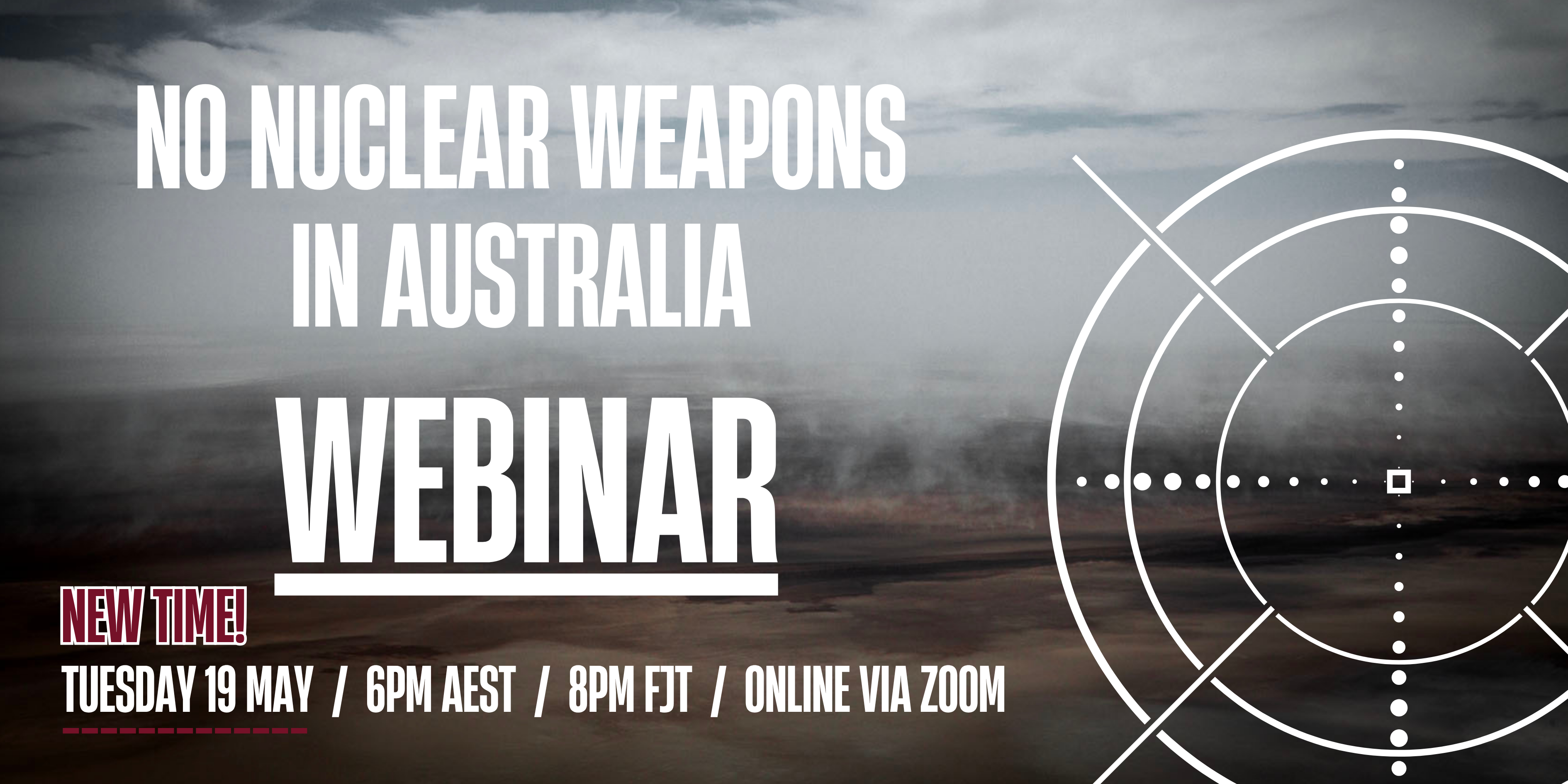
19 May – Webinar- Webinar: No Nuclear Weapons in Australia
Start: 2026-05-19 18:00:00 UTC Canberra, Melbourne, Sydney (GMT+10:00)
End: 2026-05-19 19:30:00 UTC Canberra, Melbourne, Sydney (GMT+10:00)
20 May – Webinar – The dangerous world of AUKUS, US, military occupation and suppression of dissent

National Webinar, 20th May, 2026, 6.30pm AEST. Confronting laws restricting/suppressing protest speech and action
Speakers: Former Sen. Rex Patrick, Lawyer Nick Hanna ,Arthur Rorris ,Jorgen Doyle, Sen David Shoebbridge,
Facilitator Kelley Tranter.

of the week – Australians for War Powers Reform (AWPR)
To see nuclear-related stories in greater depth and intensity
 Antinuclear