The Great Australian Silence: How our Leaders Sold us out to a Foreign Spy Network
The question is not whether Israel has the right to defend itself. The question is whether Australian politicians should be acting as advocates for a foreign state’s military strategy.
28 August 2026 Dr Andrew Klein, AIM Extra
Introduction: A State Within a State?
The Australian voter is entitled to representatives whose sole loyalty is to Australia and the Australian people. Yet recent events have raised a troubling question: Are some Australian politicians acting as advocates for a foreign state, rather than as representatives of their constituents?
This is not a conspiracy theory. It is a documented pattern of behaviour that spans multiple actors, multiple institutions, and multiple years. It is a pattern that has cost Australian lives, eroded Australian privacy, and transferred Australian wealth to foreign corporations and foreign intelligence agencies.
And it is a pattern that the Australian government – under both major parties – has actively facilitated.
The Politicians Who Speak for Another Country
Senator Raff Ciccone: A Consistent Record of Foreign Advocacy
Senator Ciccone has a long-standing, publicly documented relationship with the Israeli government. In October 2023, he expressed “solidarity with the people of Israel” and condemned the Hamas attack. In October 2024, he declared his “enduring support for the people of Israel and the Australian Jewish community.”
His record pre-dates October 7. In August 2023, he participated in a parliamentary delegation to Israel hosted by the Australia/Israel & Jewish Affairs Council (AIJAC). He has described Israel as “the miracle in the desert” and “a state that they can be incredibly proud of.” He has committed to “stand up against the unfair one-eyed treatment of Israel.”
The problem is not that Senator Ciccone supports Israel. The problem is that his support is so unconditional that it creates a clear contradiction with his duties as an Australian senator.
In May 2026, eleven Australians were detained by Israeli forces while attempting to reach Gaza as part of a humanitarian flotilla. Members of the group have alleged they experienced violence, sexual assault, and abuse while in custody. They have lodged a submission with the International Criminal Court alleging war crimes and other breaches of international law.
Foreign Minister Penny Wong has stated she believes the women who came forward, describing the allegations as “terrible” and “horrific”. The Australian Federal Police have formally launched an investigation into the allegations.
Yet Senator Ciccone publicly endorses the state accused of these acts. If the allegations are credible enough for the AFP to investigate, and for the Foreign Minister to publicly believe the victims, then endorsing the state accused of these acts creates a political and moral problem.
As the Centre for Independent Studies notes, the purpose of constitutional provisions against foreign allegiance is “to prevent persons with foreign loyalties or obligations from being members of the Australian Parliament.” While Senator Ciccone is not constitutionally barred, his public posture raises questions about where his primary loyalty lies.
Senator James Paterson: The “Destroy Israel” Threshold
Senator James Paterson, the shadow Home Affairs spokesperson, has taken this advocacy even further. He has publicly stated that “any support for destroying the state of Israel means you are a security risk to Australia.”
This is a remarkable claim. It means that a political opinion – supporting Palestinian statehood, criticising Israeli policy, or advocating for a one-state solution – can make an Australian citizen a “security risk.” It means that a foreign state’s territorial integrity is being treated as an Australian national security interest.
Paterson has also argued that “the act of simply liking a tweet that is supportive of Hamas or that calls for the destruction of Israel is enough for someone to be considered a security threat to Australia”. He has publicly supported “Israel doing what it needs to do to restore deterrence in the region, to put Iran back in its box and to dismantle the terrorist networks on its border.”
The question is not whether Israel has the right to defend itself. The question is whether Australian politicians should be acting as advocates for a foreign state’s military strategy.
Mike Burgess: The Spy Chief Who Became a Moralist…………………………………..
The NDIS: AI Surveillance Dressed as Disability Support
The National Disability Insurance Scheme (NDIS) is being transformed into a surveillance state testbed. Legislation before parliament permits the automation of discretionary decisions – including where “there is (a) a discretion being exercised; (b) an evaluative judgement being made; (c) a state of mind being formed.”
This is unprecedented. As former Human Rights Commissioner Ed Santow notes, “Generally, the advice that oversight bodies give to government is that discretion is something that is quintessentially a human task.” The power being proposed is “incredibly broad.”…………………………………………………………………………………………..
Conclusion: Leave the Future in Better Hands
The Australian people deserve better. They deserve leaders whose sole loyalty is to Australia. They deserve a government that protects the vulnerable, not surveils them. They deserve an intelligence agency that prevents attacks, not issues moral lectures.
The system is not broken. It is working exactly as designed – to extract wealth, power, and information from the Australian people for the benefit of foreign corporations and foreign states.
The solution is not to reform the system. The solution is to leave the future of Australia in better hands.
It is time for a change.https://theaimn.net/the-great-australian-silence-how-our-leaders-sold-us-out-to-a-foreign-spy-network/
Fears WA’s HMAS Stirling naval base now a legitimate nuclear target amid US build-up

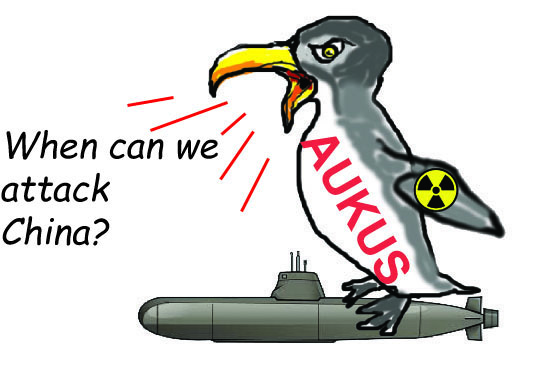


Experts have warned that a naval base in Western Australia has emerged as a potential nuclear target, leaving Aussie lives on the line.
Adrian Zorzut, August 22, 2026, https://www.news.com.au/technology/innovation/military/fears-was-hmas-stirling-naval-base-now-a-legitimate-nuclear-target-amid-us-buildup/news-story/d64650c74a47f29ccdce53c30715cdff?amp
A key Aussie navy base is in the crosshairs of hostile foreign nations – and could even potentially become a nuclear target, an expert has warned.
From 2027, HMAS Stirling – off the coast of Perth – will welcome a rotation of US and UK submarines.
The US could run nuclear-powered submarines out of Australia “tomorrow”, the top American admiral for the Indo-Pacific has said in remarks declaring the endeavour “absolutely essential” to keeping China at bay.
Fronting a congressional committee in Washington on Wednesday (Thursday AEST), Admiral Samuel Paparo praised Australia’s progress in preparing Western Australia’s HMAS Stirling to host US and UK naval rotations from next year
“To have a rotational base in the Indian Ocean is absolutely essential,” he said.
“HMAS Stirling is on track for the rotational force that will arrive here in Perth in a little over a year.
“Between the pier, the shore power, the facilities with the tender and a marine security company, we could be ready today to operate a rotational submarine squadron out of Australia tomorrow.”
He added that “Australian submariners are performing well on the ships” as well as “in the schools”.
“And in every regard, in pillar 1, we’re on track,” he said, referring to the US’ ability to supply three Virginia-class submarines to Australia.
Australia has pumped billions into getting HMAS Stirling ready for Submarine Rotational Force-West, with the biggest work in preparing to support nuclear-powered vessels.
Hosting the boats is part of AUKUS, which aims to arm Australia’s navy with nuclear-powered submarines early next decade.
The $368bn pact is the centrepiece of Australia’s 21st century defence strategy and aimed at deterring China’s growing military aggression in the region.
In a written statement to committee members, Admiral Paparo warned that China was aiming to “project power beyond its near geography to set the rules for every relationship across the globe”.
Hospitals to stock anti-nuclear pills near AUKUS base
Carla Hildebrandt, August 26, 2026 —https://www.watoday.com.au/national/western-australia/the-plan-to-stock-anti-nuclear-pills-at-hospitals-in-perth-s-southern-aukus-suburbs-20260825-p60re6.html
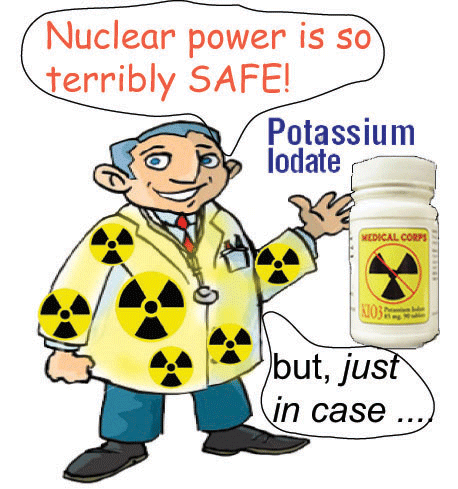
Hospitals in Perth’s southern suburbs could distribute iodine tablets to the community in the “extremely low” chance of a radiation spill, as WA prepares for the arrival of nuclear-powered submarines under the AUKUS partnership.
It comes as the first US and UK submarine rotations are due to begin next year through Garden Island’s naval base, HMAS Stirling, under Submarine Rotational Force-West (SRF-West).
The plans emerged earlier this year after Legalise Cannabis WA MP Dr Brian Walker questioned the health minister in parliament about the government’s emergency preparedness ahead of the incoming visits.
During question time, Walker asked whether the state government would supply the anti-nuclear pills to locals, “as a treatment against radiation poisoning in the event of a nuclear leak or spill”.
An emergency guide released by the Australian Radiation Protection and Nuclear Safety Agency, which leads the national response to a nuclear emergency, describes taking potassium iodide – or KI pills – as a “short-term” measure that blocks radioactive iodine from being absorbed by the thyroid.
The health minister wrote a response to parliament stating the WA Department of Health “has established plans and exercised processes to pre-position and distribute supplies of stable iodine to local hospitals, as required, based on needs and relevant circumstances”, but did not reveal which hospitals would hold the tablets or how many would be available.
Walker said the state government lacked “a clear emergency plan” for communities like Rockingham, Cockburn and Kwinana.
He pointed to France, where iodine tablets have been distributed to communities near nuclear facilities, but warned the pills were only one part of preparing for a potential emergency,
Can the Israeli military be trusted to investigate itself? Evidence shows genuine accountability is rare
Shannon Bosch, Associate Professor (Law), Edith Cowan University, August 20, 2026, https://theconversation.com/can-the-israeli-military-be-trusted-to-investigate-itself-evidence-shows-genuine-accountability-is-rare-290142
Australian Prime Minister Anthony Albanese says it’s an “outrage” the Israeli Defense Forces (IDF) have decided not to open a criminal investigation into the Israeli strikes that killed an Australian aid worker, Zomi Frankcom, and six of her colleagues in Gaza in April 2024. He added:
It falls far short of the accountability that we expect and consistently called for on behalf of Australia.
International law is clear: states are obligated to investigate alleged war crimes committed by their nationals or armed forces, or on their territory. And, if it’s appropriate, they are obligated to prosecute the suspects.
To this end, military and civilian leaders must report suspected breaches of the law up the chain of command to ensure prompt, independent and impartial investigations are carried out.
On Wednesday, the IDF published the findings of an internal investigation into five incidents in Gaza since the war began in October 2023.
Two incidents were deemed to raise “reasonable suspicion of criminal misconduct”. The IDF ordered the Military Police Criminal Investigation Division, the primary investigative unit within the IDF, to open criminal probes into them. They are:
The killing of Hind Rajab, January 2024: The IDF acknowledged that soldiers opened fire on a vehicle carrying five-year-old Hind Rajab and her family as they fled Gaza City. In addition, the IDF said “a shell was fired toward” an ambulance trying to reach the car, killing two paramedics.
The killings of Palestinian rescue workers, March 2025: The review also referred the killings of 15 Palestinians in southern Gaza – some of whom it recognised as paramedics and medical personnel – to criminal investigators.
It said Israeli troops fired on three vehicles, which were later identified as ambulances, a fire truck and a UN vehicle.
Forensic Architecture, a research group at the University of London, alleges the military tried to cover up the killings by crushing and burying the medics’ vehicles.
The IDF investigators did not recommend further investigations into three other incidents, including:
The strikes on the World Central Kitchen convoy, April 2024: In addition to Frankcom, three British nationals, a Palestinian, a Pole and a dual US-Canadian citizen were killed when the IDF mistakenly identified their vehicles as carrying Hamas operatives.
The investigation found serious operational failures in the soldiers’ actions. Two commanders were stripped of their ranks and three officers were reprimanded. However, the review did not find “reasonable suspicion” of criminal conduct.
The other two incidents related to the killings of four employees of Médecins Sans Frontières in 2023 and 2024.
How often are Israeli soldiers prosecuted?
Statistically, very few complaints against IDF personnel result in investigations or criminal convictions.
The Israeli human rights group Yesh Din analysed complaints made to the IDF in 2019–20 and found 72% were closed without criminal investigation and just 2% led to prosecutions.
Another investigation of 52 Israeli military probes between 2023 and 2025 found 88% were either still under review or had been closed. Only one case had led to a prison sentence for an Israeli soldier.
What are the concerns with the IDF investigating itself?
Human Rights Watch has expressed serious concerns with IDF investigations into incidents involving Palestinian civilians. The group says they are “not impartial, thorough or timely”.
Cases often take months or years to navigate the IDF investigative process). Critics say this undermines the cases and diminishes the prospects for prosecutions.
Human Rights Watch reports that initial investigations largely rely on soldiers’ own accounts. The military advocate general, who advises the IDF during military operations, subsequently determines whether conduct should be criminally investigated or prosecuted.
Critics also argue that investigators frequently fail to contact readily available Palestinian witnesses, lack Arabic-speaking investigators, and rely heavily on Israeli NGOs to locate witnesses and obtain evidence.
Palestinian witnesses are often reluctant to cooperate in investigations because of fears of arrest, retaliation or mistreatment.
The military insists investigations are slowed by the difficulties of ensuring due process for its personnel in an active combat zone.
But rights groups say that by the time detectives are authorised to investigate, physical evidence is often long gone, the scenes have been compromised, and witnesses’ memories have faded.
That said, war crimes are not subject to any statutory limitation, meaning prosecutions can occur decades after an alleged offence.
What happens next in these cases?
The Hind Rajab and paramedic cases will now be transferred to military police for formal criminal investigations. They will collect forensic evidence, review communications logs and interrogate the soldiers and commanders involved.
Once complete, the investigation will be handed back to the military advocate general, who will decide whether to issue criminal indictments.
Structural legal barriers suggest, however, that the cases may not go anywhere.
Under Israeli military law, the legality of conduct in war must be assessed based on what a “reasonable commander” knew (or should have known) at the split-second the trigger was pulled. Did they honestly believe they were firing at a legitimate target?
Unless prosecutors can prove explicit intent to murder civilians, cases are often downgraded to “negligence” or closed entirely.
Lengthy proceedings can also create difficulties for eventual prosecution. As evidence becomes unavailable or less reliable over time, defence lawyers may argue that continued proceedings would prejudice their clients’ rights to a fair trial.
In some cases, concerns such as these can lead to reduced charges, plea agreements or the withdrawal of an indictment.
What other options exist?
The International Criminal Court (ICC) is designed to be a “court of last resort”. This means it only steps in if a nation is “unwilling or unable” to genuinely carry out investigations of suspected war crimes.
Israel has long argued that its investigative procedures in cases such as these are both credible and independent.
However, international observers and groups like the Hind Rajab Foundation maintain these internal probes function primarily as a public relations shield rather than a pathway to genuine accountability for wrongdoing.
As Human Rights Watch has put it: “a system that overwhelmingly closes cases without accountability, years after the fact, and only in response to sustained international pressure, is not justice, it’s a whitewash”.
Cases like these could also be investigated and tried in other countries’ courts under what’s known in international law as universal jurisdiction.
This allows domestic courts to launch prosecutions, even when the countries have no link to the perpetrator, victim, national interest or territory where the incidents occurred.
These prosecutions can be supported by UN-appointed independent international commissions of inquiry. These fact-finding bodies collect evidence, interview witnesses and compile exhaustive archives of offences in war zones.
While these UN panels do not hold trials, their formalised, verified evidence files are designed to be handed over to foreign prosecutors or future tribunals.
Segal’s speech code meets the law: Justice Fagan wrecks Canberra’s Israel exception
by Andrew Brown | Aug 22, 2026 , https://michaelwest.com.au/segal-ihra-antisemitism-justice-fagan-decision/
The Israel lobby wrote itself a dictionary. Governments adopted it, regulators enforced it and police made arrests under it. Then it met a judge who required evidence, and it collapsed in an afternoon. Andrew Brown on the Fagan judgement.
Justice Desmond Fagan’s decision in State of New South Wales v Farhat wrecks the architecture designed by Jillian Segal, adopted by Anthony Albanese and enforced across Australia.
Australians have been instructed that hostility towards Israel is hostility towards Jews. The lobby never won that argument. It changed the dictionary instead.
Albanese supplied the imprimatur. Chris Minns supplied the muscle. David Crisafulli criminalised protest slogans. Peter Malinauskas carried the doctrine into the South Australian parliament.
Different parties. Different states. The same obedient genuflection.
The vandal who wasn’t an antisemite
Mohommed Farhat was a vandal for hire. He caused more than $110,000 in damage, torched a vehicle and painted “Fuk Israel” across Woollahra. Fagan found he was recruited and did not know what some slogans meant. Yet the State wanted him branded an antisemite and shackled with 55 terrorism supervision restrictions.
Fagan refused. His judgment is an autopsy of how propaganda becomes administrative fact. Police, prosecutors, the Crown Solicitor and the Director of Public Prosecutions repeated an unexamined claim until repetition replaced proof. The label was false and “injustice to the defendant” followed.
Then he turned to the definition. The IHRA formulation promoted by Segal and embraced by Canberra was, he found, “verbose and imprecise” and “detached from the reality of common usage”. Promoting it sought to change the settled meaning of “a word that has been in use in the English language for 150 years” and to “graft” onto the community’s abhorrence of antisemitism”a parasitic rejection of protest against Israel”.
Fagan cited Pew polling showing 74 per cent of Australians unfavourable towards Israel, rising to 79 per cent this year, and inferred a “humanitarian reaction to Israel’s genocide of the Gazans”. A definition that tars four in five Australians is not detecting hatred.
“It is outlawing majority opinion.”
Antisemitism, Fagan said, is simply “hostility to Jews for their Jewishness”. It is real, repugnant and must be confronted. Israel is a foreign state. Zionism is a political ideology. Neither is entitled to immunity from condemnation.
Protecting Jewish Australians is essential. Protecting a foreign government from criticism is not.
The lobbyist who wrote the law
Segal became special envoy after leading the Executive Council of Australian Jewry, whose published mission includes defending Israel, encouraging Zionism and lobbying governments for positions favourable to Israel.
The referee was recruited from one team’s front office.
She may hold those views. She may not launder them through the Commonwealth and receive them back as law. Albanese outsourced the dictionary to a protagonist, then adopted her every recommendation despite warnings from Jewish and civil liberties groups that it would punish lawful advocacy for Palestine.
Palestine.
Not consultation. Capitulation, formalised in a press release.
The government’s response commits the Commonwealth, states and territories to implementing Segal’s program. National machinery of compliance, and the premiers queued up to install it.
Minns, Crisafulli, Malinauskas
Minns expanded police powers and created new speech offences. Crisafulli criminalised two protest slogans, with two years in prison where words might reasonably cause somebody to feel menaced, harassed or offended.
Offended. The decay of liberal democracy, compressed into one word.
Malinauskas backed IHRA through the South Australian parliament, then pressed Adelaide Writers’ Week to dump Palestinian Australian writer Randa Abdel-Fattah. David Gonski, whose name once meant needs based schooling, now fronts an Antisemitism Education Taskforce with Segal at his side.
The Australian Public Service Commission says IHRA applies in federal workplaces. AHPRA adopted it across sixteen professions and more than 960,000 practitioners. A reference tool held over a doctor’s registration is not a dictionary but a threat to a livelihood. Fear is the cheapest police force ever deployed.
Executive policy cannot rewrite ordinary language. A circular cannot create law. Parliament never enacted IHRA, so the court gave it no force. Not a High Court ruling, but a preview.
Eighteen police, one shirt
I have been the test case.
On 3 November 2024, NSW Police arrested me at Bondi for wearing “Fuck Israel, Fuck Zionism”. I threatened nobody and damaged nothing. I was handcuffed, held six hours, fingerprinted and DNA tested by force over my objection.
Three charges followed, with bail conditions that ran more than a year. At one point I was banned from the eastern suburbs. My home in Surry Hills sat 400 metres from the boundary. One wrong walk meant arrest and up to twelve months in a cell awaiting a hearing. For a shirt.
All three charges collapsed in December 2025 once my lawyers raised the implied freedom of political communication.
On 6 April this year, as many as eighteen officers surrounded me at Bondi over the same shirt, among them Odin squad taskforce officers and two senior officers from area command. Overhead, a drone and a helicopter. On standby, an ambulance and two caged wagons.
Odin is a tactical unit for crowd management, high-visibility policing and high-risk operations. The high-risk operation that morning was a shirt. I took it off. They arrested the shirt. A penalty notice arrived a week later.
Fagan has not decided my remaining matter, but he has demolished its pretence. He found the sprayed “Fuk Israel” was “crude political expression of contempt” for a foreign state, not hatred of Jews. If those words were not antisemitic when painted during a crime spree, they cannot become Jew hatred worn peacefully on cotton.
“The obscenity was never the shirt. It was the state power assembled around it.”
Segal supplied the language. Albanese supplied the authority. Gonski took the classroom, AHPRA the professions, Minns the handcuffs, Crisafulli the statute book, Malinauskas the parliament and the festival stage.
Justice Fagan supplied something none of them could survive: the law.
New South Wales Supreme Court rules that criticism of Zionism is not antisemitism

Fagan’s Damning Verdict: Vandalism and Antisemitism Down Under
26 August 2026 Dr Binoy Kampmark AIM Extra, https://theaimn.net/fagans-damning-verdict-vandalism-and-antisemitism-down-under/
The term “antisemitism” is now so commonly used as an accusation as to be placed beyond questioning. This is particularly so in countries claiming some protections for free speech or lawful assembly. Use that term to your heart’s content and stifle discussion. Carry a placard accusing Israeli policy of genocidal propensities – antisemitic. Raising the issue of dispossession and ethnic cleansing of Palestinians by Israeli authorities – antisemitic. Mention specific slogans, some used with full throated approval by Israeli Zionists themselves – antisemitic. But an interesting New South Wales Supreme Court decision, delivered by Justice Desmond Fagan, restores much needed and merciful balance. Put it simply, not all acts directed at Israel or unflattering views held about that country, however crudely framed, carry the antisemitic streak.
The acts in question in the case before Fagan were certainly crude. The 22-year-old Mohommed Farhat had been a vandal for hire, defacing parked motor vehicles (nine in total) and the walls of various buildings (four in total) in the eastern Sydney suburb of Woollahra using spray-paint. His November 2004 acts featured slogans including “PKK”, “PKK coming” and “Fuk Israel”. A vehicle was also set alight. It transpired that A$4,000 had been given to Farhat to execute his acts of arson and graffiti, including a complement of drugs. The wording used in the vandalism had also been suggested by the recruiter.
On pleading guilty, Farhat was given a term of imprisonment of a year and eight months by the NSW Local Court Magistrate Scott Nash on November 18, 2025. Important in this case was the use of powers available to the state government under the Terrorism (High Risk Offenders) Act 2017 (NSW) to deem an offender an “unacceptable risk” in committing a serious offence in the event of being released on parole. Farhat would have been eligible for release after 10 months but for the concerns of the Corrective Services, which deemed him a “national security risk” inmate in January this year. The State then requested an extended supervision order of a year’s duration with 55 attached conditions. The proceedings, taking place over four days of hearings, centred on whether Farhat’s crimes could be regarded as posing such a risk.
While Fagan delivered his decision on July 30, the reasons were published on August 17. In his reasons, a controlling factor for Fagan was the Federal Court case of Wertheim v Haddad (2025), where Justice Angus Stewart postulated what “the reasonable, ordinary listener” would understand as being said in the context of critiquing Israel and Zionism. Depending on the context, such a reasonable person could “understand that not all Jews are Zionists and that disparagement of Zionism constitutes disparagement of a philosophy or ideology and not a race or an ethnic group.” It also followed that political criticism directed at Israel “however inflammatory or adversarial, is not by its nature criticism of Jews in general or based on Jewish racial or ethnic identity.”
Fagan reasoned that such phrases as “Fuk Israel” could only be considered antisemitic as “dictated […] according to established common usage in Australia.” He found that Farhat had not intended to “express hatred of Jews”. Slogans such as “Fuk Israel”, construed objectively, were “crude expressions of political hostility to the state of Israel”, a “curse against a foreign state.” They were “not antisemitic according to the ordinary understanding of that concept in the Australian community.” It also did not matter that the graffitied slogans had been made in a locality with a high proportion of Jewish residents: this did “imbue the curse with an antisemitic character.”
The judgment also gave the definition of antisemitism so treasured by the Australian government, most state governments and their agencies, and the Special Envoy for Antisemitism Jillian Segal, a frightful dressing down. The International Holocaust Remembrance Alliance (IHRA) definition deems antisemitism to be “a certain perception of Jews, which may be expressed as hatred toward Jews. Rhetorically and physical manifestations of antisemitism are directed toward Jewish or non-Jewish individuals and/or their property, toward Jewish community institutions and religious facilities.”
This semantic spray did not impress Fagan. With bracing clarity, he stated that the text was “so verbose and imprecise that it could not realistically be attributed to the ordinary, reasonably informed member of the Australian public.” It was unclear what a “certain perception” was. Might it manifest “in the expression of some other, less egregious, sentiment towards Jews and, if so, what?” The inclusion of “non-Jewish individuals” was also baffling and “counterintuitive” as were the lack of limits to the notion of which “rhetorical [or] physical manifestations” might amount to antisemitism.
The justice was far from alone in making remarks about the shoddy formulation. He noted the views of Sir Stephen Sedley, a former judge of the Court of Appeal of England and Wales who accepted the proposition that the IHRA failed “the test of any definition: it is indefinite.” Fagan also drew on the critical submission by the Jewish Council of Australia (JCA) to the Royal Commission on Antisemitism and Social Cohesion, established in response to the Bondi terrorist attacks of December 14, 2025. “Discussion of the IHRA wording and adoption of it by some institutions does not change the established meaning of a word that has been in use in the English language for 150 years.” Many of the submissions made to the Senate Legal and Constitutional Affairs committee informing its October 2024 report on the Commission of Inquiry into Antisemitism at Australian Universities Bill 2024 (No. 2) also noted the conflation of “political criticism of Israel with antisemitism.”
The IHRA definition was, the judgment asserted, not intended to give effect to common understandings of antisemitism but aimed to furthering another goal: “Its tendency, and the apparent purpose of promoting it, is to graft onto the community’s abhorrence of antisemitism, understood as hostility to Jews for their Jewishness, a parasitic rejection of protest against Israel.” Such a rejection refused to acknowledge the public repudiation by a majority of Australians of Israeli policies (a Pew Research Center poll from June 4, 2026 found that 79% had an unfavourable view of that country) reflecting a “humanitarian reaction to Israel’s genocide of the Gazans since 7 October 2023, the livestreaming of which to mobile handsets would be difficult to ignore.” It followed that any assertion that 79% of Australians might be “antisemitic because they disapprove of Israel’s treatment of the Palestinians” was bound to be “preposterous.”
Justice Fagan was convinced that the state had not made the case “that the defendant poses an unacceptable risk of committing a serious terrorism offence if not subject to extended supervision.” What mattered was whether he might succumb to using “illicit drugs and lower order crime”; there was no evidence that Farhat had been “politically radicalised.”
Beyond court proceedings, there have also been broader concerns Farhat’s case has seen fiddling on the part of NSW Police. “The material failure of police to provide critical evidence to the court has resulted in Mr Farhat’s prolonged and quite possibly wrongful incarceration, as well as serious errors of fact and law,” wrote Greens MP, Sue Higginson, to the NSW oversight body, the Law Enforcement Conduct Commission (LECC).
Fagan’s reasons provoked howls of protest from the offices of the Executive Council of Australian Jewry. This was a dangerous example of judicial “activism” that avoided “the community impact”. (Presumably a judge favouring an aggressively wide interpretation of antisemitism, one armouring and fortifying Israeli policy from scrutiny, would not be entertaining activism.) “It’s quite extraordinary [given] where we are as a society, as a country, globally with antisemitism, that we’re still being dragged back to these foundational discussions about is and what isn’t antisemitism,” groaned Alex Ryvchin on Sky News. Jamie Hyams, director of public affairs at the Australia Israel & Jewish Affairs Council (AIJAC) chastised Fagan for appearing “to range a long way past the question the court had to decide, into contested questions of history, politics and international law on which his honour appears to have had no independent expert evidence.” Such expert evidence, it would seem, can only be sought by those sacred sources approved by a select cartel, one sympathetic to Israeli policies, whatever their import.
The authorities in NSW have shown what can only be contempt for Justice Fagan’s ruling that Farhat had been subject to a “serious miscarriage of justice.” The commissioner for corrective services, Gary McMahon, had already intervened last December to have the parole order revoked without a hearing from the defence team, a nasty denial of natural justice that should provoke further comment. The parole authority’s August 24 decision also refused to acknowledge the ruling and the reasons by Farhat that he had been a vandal for hire: he would be kept in prison as “the offending was reflective of a deep-seated adherence on the part of the offender to an extremist ideology of an antisemitic character.” The purported ignorance to the meaning of the phrases used was also rejected. It follows that this miscarriage of justice, and the project of inoculating Israeli policy from stern and valid criticism, continues.
Colluding with Violence: Aiding Israeli Settlers in the West Bank
18 August 2026 Dr Binoy Kampmark , https://theaimn.net/colluding-with-violence-aiding-israeli-settlers-in-the-west-bank/
The latest incidents of Israeli settler violence in the villages of Qusra and Kour, located in the northern occupied West Bank, have again caught international attention, reaching the halls of the United Nations with a gravity that, sadly, is unlikely to have much effect. Towards the end of July, the settlers had set their sights on local mosques, which they set on fire. From August 9, three families in Qusra – making up 15 people in all – were confined to their homes in terror, running out of food and necessities. (Settlers had deprived them of access to water and power.)
When Palestinian Red Crescent ambulances attempted to deliver food and water to these homes, they were attacked.
Unusually, this conduct drew public commentary from the US ambassador to Israel, Mike Huckabee, a devout Christian Zionist not normally given to criticising Israeli actions in the West Bank, let alone anywhere else. “Actions by those who carried out this horrific act of terror meant to intimidate and harass this family are disgusting,” wrote Huckabee in a post on X. “No excuse for such thuggish behaviour.” The US embassy had been “VERY involved & the IDF & Israel Police have gone at our request to remove the Israeli terrorists doing this.” (More to the point, interest might have been encouraged by the fact that one of the besieged family members was a dual US citizen.)
Rather than restraining the agitators, the Israeli military proceeded to force two of the besieged families, along with six other neighbouring families, to exit their homes for several hours on August 13. UN News reported that families were subsequently relocated to just one home, also imperilled by the settlers. According to the testimony of one resident, “instead of removing the attackers, the Israeli forces removed the attacked families, while allowing the settlers to stay all this time.”
The mayor of Qusra, Abdel Azim Wadi, regarded the role of the Israeli military as pernicious and distinctly not committed to removing the settlers. “We saw them praying together, barbecuing together and dancing together.” They were hardly “interested in helping the besieged families.” The IDF even goes so far as to run a hotline known as War Room C, intended for use by settlers to report on building activities by Palestinians in Area C. The insinuation of fault is clear. The UN Human Rights Office of the High Commissioner summed up matters: “These criminal actions by the settlers, supported or acquiesced to by Israel, the Occupying power, are making life unbearable for these Palestinian families and are clearly aimed at forcing them to leave their home and their land.”
On August 11, Ramiz Alakbarov, the UN Deputy Special Coordinator for the Middle East Process, told the 15-member Security Council that what was unfolding in the West Bank was the result of “decades of unresolved conflict that has deepened the unlawful Israeli occupation, driven the Palestinian Authority to the brink of collapse and undermined the prospects of an independent, viable and sovereign Palestinian State.”
The picture sketched by Alakbarov is a dismal one, rendering Israeli authorities complicit with the unruly urges of the settlers. (Some 26% of territory in the West Bank is already regarded as “state land,” a status enabling it to be turned over for the construction of new settlements.) Since the start of 2026, approximately 12,360 housing units have beenapproved or advanced by the Israeli authorities in the West Bank. Hefty sums are being allocated for expanding the settlements, including $431 million in aid of 34 new settlements.
The year has also seen the deaths of 76 Palestinians in the territory, due to the work of Israeli forces or settlers. Of this complement, 18 have been children. Three Israelis have also been killed in confrontations with Palestinians. The displacement of the Palestinian population due to settler violence, demolitions and evictions continues with inexorable remorselessness: some 3,800, almost half of them children, have suffered that fate.“Many incidents occurred in the presence of Israeli forces,” insists Alakbarov.
The momentum towards annexation is also being given impetus by plans announced by the Israeli Defence Minister, Israel Katz, to replace the army in the West Bank with civilian police forces. Police would, according to Katz’s office, “establish an appropriate force to handle and address civilian matters,” with the military exclusively tasked with combating “Palestinian terrorism” and protecting borders and communities. The move received much support from various settler figures, with Yisrael Ganz, head of the Regional Binyamin Council in the West Bank, proposing that the next step be “full Israeli sovereignty” over the territory. “The time has come to move from temporary management to the full application of Israeli law.”
The official policy of the Netanyahu government is to regard the attacks as the nasty work of errant juveniles or delinquents who should know better. The thesis on delinquency is not one that holds up when placed alongside the official support for settlement expansion and de facto annexation stemming from Israel proper. The events in Qusra, as with elsewhere in the West Bank, suggest a script of insidious collaboration against the Palestinians, delivered with a forked tongue. The painful implication here is that temporary measures involving the besieging of villagers, and half-hearted efforts by the IDF to combat them, can only inevitably result in dispossession. And that, in the end, is the point.
The Amazon faces a radioactive future
A team of German scientists from the Forschungszentrum Jülich studied the „Environmental impacts of rare earth production“ in several countries including China, Myanmar and Australia. They concluded in their 2022 published study: „The life cycle assessments have highlighted the main problems, such as large quantities of chemicals needed to process Rare Earth Elements and the large quantities of tailings generated during beneficiation, extraction and separation that contain the naturally occurring radionuclides Thorium and Uranium and their decay products. These radioactive elements can enter the environment through air, wastewater and rain leaching.“
By Norbert Suchanek, 25.08.26 – Rio de Janeiro, Brazil – Pressenza New York https://www.pressenza.com/2026/08/the-amazon-faces-a-radioactive-future/
Rush for strategic minerals could turn the Brazilian Amazon into a radioactive sacrifice zone.
The world’s largest rainforest region could face a bleak and radioactive future—driven by new mining projects to extract strategic minerals essential for the global energy transition, the high-tech industry, artificial intelligence, and new weapons systems. Some of these minerals—such as niobium, tin, and rare earth elements—are found in deposits alongside radioactive uranium, thorium, and their radioactive decay products, all of which ultimately end up as mining waste called tailings.
The Amazon region is threatened by an unprecedented mining boom, in the name of sustainability and climate protection. It is at the center of a global race for strategic minerals considered essential for the global energy transition and decarbonization. These include, above all, niobium, copper, cobalt, lithium, nickel, tin and the 17 rare earth elements. They are also necessary for high-tech products like smartphones, war drones, missiles and AI Data centers. Brazil’s mining authority has already received thousands of applications for prospection and exploration in the Amazon, many of which are located near or within forest reserves and indigenous territories.
According to InfoAmazonia, a news organization that combines data, maps and geolocated reporting to tell stories about the planet’s largest continuous tropical forest, there are 5,046 mining applications to exploit essential substances for the energy transition in the Brazilian Amazon Biome. 1,205 of these applications are related to areas that impact Indigenous Lands and 1,207 overlap Conservation Units.
In 2025, an exclusive survey by Brazilian investigative news outlet “Repórter Brasil” identified 1,827 mining requests for copper, lithium, rare earth elements, and 13 other minerals less than 40 kilometer from isolated indigenous groups.
In its official „Guide for Foreign Investors 2026“ the Brazilian Ministry of Mines and Energy (MME) expects a strong increase of Brazil’s mineral reserves from the expansion of geological knowledge and the success of ongoing exploration projects.
“Investments will prioritize the following strategic minerals: Cobalt, Copper, Tin, Graphite, Lithium, Manganese, Platinum Group Metals, Molybdenum, Niobium, Nickel, Silicon, Tantalum, Rare Earths, Titanium, Tungsten, Uranium, Vanadium, Zinc, Phosphate, Potassium.”
According to geological studies potential rare earth deposits can be found in the Amazonian states of Amazonas, Rondônia, Roraima, Pará, and Tocantins. One of the largest reserves identified in Brazil is the Morro dos Seis Lagos deposite at São Gabriel da Cachoeira in the Amazonas state.
However, the mining and processing of rare earths and other critical minerals are a dirty business that can have serious consequences for the environment, workers and local populations. Mining, especially open-pit mining requires clearing large areas of land to access mineral deposits. Rainforest has also to be cleared for the necessary workers’ settlements and access roads. These new highways, in particular, attract landless settlers, land speculators, and illegal loggers who deforest further areas along the routes as observed throughout the Amazon region for decades. But that’s just the tip of the “dirty” iceberg of rare earths and critical mineral production.
High risk of radioactive contamination
There is a threat of widespread contamination of soil, air, and water with toxic substances, heavy metals, and even radioactive elements. This is because some of the critical or strategic minerals such as niobium, tin and rare earth elements occur in the soil in association with radioactive uranium, thorium and their radioactive decay products.
The contamination starts with the first blast. Radioactive and toxic dust caused by the explosions spreads over the mining area. The more rock that has to be blasted and removed, the more dust is generated. The amount of dust can be reduced by irrigation systems. However, that creates sewage containing radioactive substances and heavy metals that can enter soil and water resources. The highly hazardous tailings, which are mixtures of crushed rocks and processing fluids from mills and concentrators have to be stored in artificial lakes or ponds for a long time. Studies show, every tonne of rare earths mined generates up to 2,000 tonnes of toxic and radioactive waste.
In addition the beneficiation process and refining of rare earths need a huge amount of energy and chemicals. Flotation tailings, up to 40 tons per ton of produced rare earth oxide, that include radioactive elements, are also discharged into the open tailings ponds which poses toxicity risks to water, soil, and air through leakage, dust formation, and rain erosion. In addition refining processes generate also huge amounts of dangerous gas. Each ton of rare earth elements produced in China releases 9,600 to 12,000 cubic meters of toxic gas containing flue dust concentrate, hydrofluoric acid, sulfur dioxide, and sulfuric acid, according to the Massachusetts Institute of Technology factsheet “Mission 2016 – The Future of Strategic Natural Resources“.
A team of German scientists from the Forschungszentrum Jülich studied the „Environmental impacts of rare earth production“ in several countries including China, Myanmar and Australia. They concluded in their 2022 published study: „The life cycle assessments have highlighted the main problems, such as large quantities of chemicals needed to process Rare Earth Elements and the large quantities of tailings generated during beneficiation, extraction and separation that contain the naturally occurring radionuclides Thorium and Uranium and their decay products. These radioactive elements can enter the environment through air, wastewater and rain leaching.“
It should also be noted that rare earth elements are toxic to humans and animals. Recent toxicological studies show that rare earths can enter the human body through various pathways such as inhalation, ingestion and dermal contact. They accumulate in different tissues or organs and ultimately posing a serious threat to human health. A 2024 published study considers exposure to Rare Earth Elements as „a public health issue of global importance“. Possible consequences include lung diseases, neurological damage, cardiovascular dysfunction, reproductive harm, and increased risks of cancer and genetic damage.
Dams can and do break.
After all, one of the major risks to the Amazon basin is the enormous amount of tailings from the mining operations, which are stored in huge ponds secured by artificial dams. To avoid radioactive leakage they must be monitored, and permanently managed for a very long time. However, dams can break, as has happened in the past in various countries around the world. Regions with naturally occurring heavy rainfall, such as the Amazon and the Atlantic Rainforest in Brazil, are particularly vulnerable to dam breaches.
In Brazil, there have already been dozens tailings dam failures in mining areas that led to severe environmental disasters. The two worst dam collapses in Brazil to date occurred in Mariana in 2015 and in Brumadinho in 2019, both located in the Atlantic Rainforest region of the southeastern state of Minas Gerais.
Case studies on radioactive contamination from rare earth production
Radioactive contamination resulting from the extraction of rare earths and strategic minerals is neither an unfounded hypothesis nor science fiction. It has already occurred—for instance, in Malaysia during the 1980s: Radioactive waste from the rare earth processing plant of Asian Rare Earth and the Mitsubishi Chemical Corporation poisoned the local population of Bukit Merah. „When the Mitsubishi joint venture plant opened over 1982, the villagers soon began complaining of the factory’s stinging smoke and bad smell which made them choke and cry. Worse was to come. Their health began failing, indicated not only by frequent bouts of coughs and colds, but a sharp rise in the incidence of leukemia, infant deaths, congenital disease and lead poisoning“, remembers the Consumers’ Association of Penang (CAP). The affected population protested and went to court. Finally, in 1994, the Bukit Merah plant closed. The rare earth company left behind its radioactive waste, stored in 80,000 drums of 200 liters each in a dump site just three kilometers outside from Bukit Merah.
Another „dirty“ rare earth mining hotspot is Myanmar, also in Southeast Asia. This country is one of the largest rare earth exploiters in the world serving the Chinese industry for years with dear consequences. The mines along the Myanmar-China border generate radioactive waste and chemical contaminants that seep into waterways, degrading local ecosystems and disproportionately impacting indigenous populations.
A research by Thailand’s Naresuan University found that water samples taken from areas of extraction in Kachin State were severely contaminated with radioactive elements, toxic heavy metals and other harmful substances. In 2025, the policy brief “Kachin, a Sacrifice Zone for the Green Transition” of the EarthRights organization in Washington DC brought to light the environmental destruction and human rights violations resulting from the mining of heavy rare earth elements in Myanmar: „Mining in Kachin is leaving creeks and rivers dangerously contaminated with heavy metals and radioactive elements.“ Worse: These rivers are tributaries of the great Mekong, one of the most fish-biodiverse rivers in the world and a food source for millions of people.
„Toxic runoff from these (Rare Earth) mines is polluting transboundary rivers that run from Myanmar into Thailand and then into the Mekong mainstream. People living in the affected areas cannot use the rivers for fishing, their agricultural products are shunned at markets in Thailand, and they fear their bodies are being exposed to toxins“, wrote the Stimson Center, a nonprofit, nonpartisan think tank based in Washington, D.C., in its 2025 published field note „Toxic Rare Earth Mining is Ruining Mekong Tributaries in the Golden Triangle.“
Even in the Amazon basin, mining activities have already led to radioactive contamination on at least one occasion.
In 1993, a tailings dam at the Pitinga open pit mine in the state of Amazonas at Presidente Figueiredo municipality, roughly 130 kilometers north of Manaus collapsed, contaminating the Tiaraju River of the Waimiri Atroari indigenous territory with heavy metals and radioactive elements. Pitinga was established in 1981 during the military dictatorship by the mining company “Mineração Taboca” and has produced mainly tin ore and niobium since 1982. However, the polymetallic deposit also contains other strategic minerals such as tantalum, rare earth elements and the radionuclides thorium and uranium, which are eventually found in the tailings and processing residues.
“The dam collapse at the Pitinga mine is serious and should concern the entire community, as there is evidence that the company released radioactive minerals that could cause irreversible environmental damage,” warned the Indigenist Missionary Council (CIMI) at the time. The Waimiri Atroari reported cases of tooth loss, hair loss, and leukemia: typical symptoms and consequences of radiation exposure or radioactive contamination.
Egydio Schwade, a co-founder of the Indigenous Missionary Council (Cimi) and resident of Presidente Figueiredo, witnessed already in 1985 the discharging of Pitinga’s mining waste into the Tiaraju Stream, a tributary of the Alalaú River, which serves as the lifeblood of the Waimiri-Atroari Reserve and flows into the Rio Negro. „Conditions worsened significantly in the years that followed — 1987, 1989, 1990, 1991, and 1992 — due to the successive failure of containment dams“, he remembers in his 2016 published report „Criminal Mining: A Testimony“.
Another accusation comes from the indigenist Porfírio Carvalho of Brazil’s Indigenous affairs agency (FUNAI). In 1987, he denounced the collapse of nine dams of the Pitinga mine, which polluted the Riaraju, Alalaú, and Jauaperi rivers and threatened the fauna and flora of the Amazon. Although he did not mention radioactive contamination due to a lack of technical analysis, he described it as a large-scale ecological disaster in the region. Carvalho has been accompanying the Waimiri Atroari since the late 1960s. He died in 2017 from cancer, aged 70.
The mining company Mineração Taboca, which operates the Pitinga Mine in Amazonas, was sold in November 2024 to the Chinese state-owned company CNMC (China Nonferrous Metal Mining Company) for US$340 million. The Chinese company aims to quadruple production at Pitinga. In addition it plans to exploit the mine’s rare earth minerals. Pitinga is considered a potential “hotspot” for large-scale rare earth mining in the Amazon. These elements are present not only in the primary ore body of Pitinga but also in the more than 6,000 hectares of tailings ponds that contain more than 100 million tonnes of waste rock.
According to the Global Environmental Justice Atlas (EJAtlas) the Pitinga mining complex is emblematic for Brazil’s historical injustice against indigenous peoples and the systematic downplaying of environmental pollution and the risks associated with tailings dams.
“China’s recent acquisition of Pitinga in November 2024 escalates threats from rare earth extraction, intensifying impacts on fragile ecosystems and the rights of Indigenous peoples.“
Norbert Suchanek is an experienced journalist based in Rio de Janeiro Born in Germany in 1963, Norbert Suchanek has been researching and writing about environmental and human rights issues since 1988. In 2025, he received the Nuclear-Free Future Award in the Education category in New York City. He is also co-founder of the International Uranium Film Festival.
Australian news to 29 August.
Australian news to 29 August
- The Great Australian Silence: How our Leaders Sold us out to a Foreign Spy Network
- ‘Environmental violence’: inside the fight to save indigenous land from becoming a nuclear dumping ground
- NSW court draws a line between criticism of Israel and antisemitism
- Emergency plan for ‘unlikely’ AUKUS nuclear accident mapped out by WA authorities, (but what about South Australia?)
- Hospitals to stock anti-nuclear pills near AUKUS base
- Fears WA’s HMAS Stirling naval base now a legitimate nuclear target amid US build-up
- Can the Israeli military be trusted to investigate itself?
- Segal’s speech code meets the law: Justice Fagan wrecks Canberra’s Israel exception
- “A Trojan horse for communism!” More big batteries head for review as familiar long distance objectors pile in again
- New South Wales Supreme Court rules that criticism of Zionism is not antisemitism.
- Colluding with Violence: Aiding Israeli Settlers in the West Bank
“A Trojan horse for communism!” More big batteries head for review as familiar long distance objectors pile in again
Another two big battery projects in New South Wales are destined to head
to the state’s independent panel for review after being swamped with
letters of opposition, almost entirely from long distance opponents –
many of them familiar and serial objectors.
The 200 megawatt (MW), 800
megawatt hour (MWh) Romani battery project near Booroorban in the
south-west of the state and the 100 MW, 870 MWh Ebor battery project in the
north of the state, have both attracted more than 60 submissions opposing
their projects as they work their way through state planning approvals.
Once the numbers objections reach 50, a project must be sent for review by
the Independent Planning Commission even if – as is often the case –
there are no submissions against the proposal from the local area.
There is a familiar theme. Big batteries are a “Trojan Horse for communism”,
writes one anonymous objector in full caps, in a claim echoed in several
other letters opposing both the Ebor and Romani batteries. The term
“Renewabulls”, also often written in full caps, is also repeated in
multiple letters, as does a variation of that term “Ruinabull”. Another
common theme is the claimed use of diesel generators to help cool the
batteries.
Renew Economy 24th Aug 2026, https://reneweconomy.com.au/a-trojan-horse-for-communism-more-big-batteries-head-for-review-as-familiar-long-distance-objectors-pile-in-again/
UK Cabinet Office declines to share information it holds about PM’s nuke orders options
Tom Pashby, Aug 26, 2026, https://tompashby.substack.com/p/cabinet-office-declines-to-share?utm_source=post-email-title&publication_id=6735486&post_id=212821041&utm_campaign=email-post-title&isFreemail=true&r=ln98x&triedRedirect=true&utm_medium=email
The Cabinet Office has confirmed to 20 Working Days that it holds information regarding what options the Prime Minister has in terms of the orders they can give to nuclear-armed submarine captains in their ‘Letters of last resort’, but said it is withholding the information.
It is widely understood that one of the first tasks a Prime Minister has on walking through the door to Number 10 Downing Street is writing the letters to the captains of Trident submarines – the UK’s continuous-at-sea-deterrent.
The letters are written so that, if communications are not possible between the submarine and the wider military and political command and control structure, the submarine captains are able to find out what they should do by reading the pre-written letters which are believed to be sealed until they are needed.
The existence of the letters was confirmed by the MOD in an internal review of a FOI request in 2015. The results of the internal review were addressed to a Mr D Black.
In 2016, just before Theresa May took over the role from David Cameron, the Guardian reported: “The options are said to include the orders “Put yourself under the command of the US, if it is still there”; “Go to Australia”; “Retaliate”; or “Use your own judgment”.”
On 4 July 2026, using the FOI Act, 20 Working Days asked the MOD to share “any documents which show whether the options include the orders ‘Put yourself under the command of the US, if it is still there’; ‘Go to Australia’; ‘Retaliate’; or ‘Use your own judgment’,” as per the reporting in the Guardian.
In response, on 16 July, the MOD said: “As the letters are administered by the Cabinet Office, you may wish to approach them regarding […] what options the letters might contain.”
On the same day, 20 Working Days put that question to the Cabinet Office.
On 17 August, the Cabinet Office responded and said: “We are writing to advise you that following a search of our paper and electronic records, we have established that the information you requested is held by the Cabinet Office.
“Information you have requested is exempt under section 24(1) of the Freedom of Information Act. Section 24 exempts information from disclosure if its exemption is required for the purpose of safeguarding national security.”
It added that “Section 24 is a qualified exemption and we have considered whether the balance of the public interest favours releasing or withholding this information”, and confirmed “we have determined that the balance of the public interest favours withholding this Information”.
The Cabinet Office was approached for comment.
Anti-AUKUS march sets off from Port Augusta… and it’s a long one
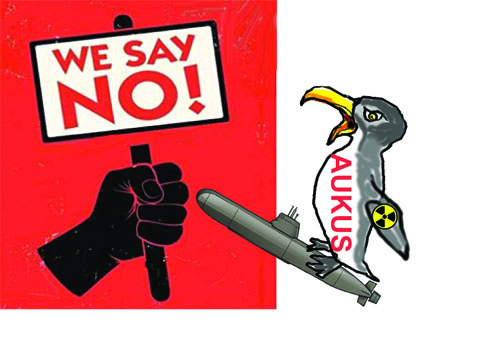
“Entrenching militarisation in lockstep with the US is a real concern for us,”
“And opening the gates for nuclear facilities for high-level nuclear waste via highly enriched uranium, which Australia has never had before, which can be used to make nuclear weapons.”
A group of activists is on a month-long walk to Adelaide protesting the nuclear submarine construction program at Osborne.
InDaily, DavidSimmons, Aug 21, 2026,
A group of activists from around the country ranging in age from 20 to 72, are on a long walk to Adelaide protesting over the nuclear submarine construction program that is set to transform South Australia’s advanced manufacturing base.
The self-proclaimed ‘Peace Walkers’ – including First Nations people – are undertaking a mammoth journey on foot from Port Augusta to Port Adelaide to draw attention to the AUKUS defence pact.
They are expected to complete the 400-plus km walk in a month, supported by a convoy and funds raised in advance by an anti-nuclear group called Beyond Uranium Canberra. Other groups involved include Friends of the Earth, the Medical Association for Prevention of War and the Port Adelaide Community Opposing AUKUS.
The group will be camping along the way and staying at caravan parks, and has supplies and first-aid gear to make the journey safe.
A similar march was completed in 2024, when a group walked from Port Kembla in New South Wales to Canberra.
AUKUS – a trilateral military pact between Australia, the United Kingdom and the United States – is set to transform SA, with a large part of the $368 billion project expected to be spent in Adelaide, where nuclear submarines – based on US technology – would be constructed.
Speaking to InDaily, organiser Reed O’Loughlin said there were currently 14 in the cohort but he expected that number to grow as the convoy headed south.
The group hoped to arrive in Port Adelaide on September 20, to coincide with a national day of action against AUKUS.
“We’re in really high spirits,” O’Loughlin told InDaily while on the road.
“Our bodies are warming up and we’re feeling pretty good. We’ve got beautiful weather and the ranges are really beautiful – we’ve had a beautiful view all day.”
The collective of walkers, who hail from all corners of Australia, are an “anti-nuclear, anti-war movement”, said O’Loughlin, who took part in the 2024 ‘Peace March’ to Canberra.
“Entrenching militarisation in lockstep with the US is a real concern for us,” he said.
“And opening the gates for nuclear facilities for high-level nuclear waste via highly enriched uranium, which Australia has never had before, which can be used to make nuclear weapons.”…………………………………………………………………………………..
The protest march comes after an independent inquiry into the defence project docked in Adelaide last month.
Headed by former Labor politician and now-Lead Commissioner of the ‘AUKUS Public Inquiry’, Peter Garrett, the inquiry is gathering perspectives on the trilateral defence pact.
In Adelaide, the inquiry heard from self-described ‘transparency warrior’ Rex Patrick who raised concerns about the risk associated with the project as well as transparency warnings over the government’s plan for nuclear waste disposal…………. https://www.indailysa.com.au/news/just-in/2026/08/21/anti-aukus-march-sets-off-from-port-augusta-and-its-a-long-one
The Antisemitism Cover
22 August 2026 Dr Andrew Klein & Sera Elizabeth Klein, https://theaimn.net/the-antisemitism-cover/
The Antisemitism Cover: How Australia’s Education Reforms, Israel Lobby, and Palantir Are Connected
Dedication: To the 73,000 Palestinian civilians whose lives became the testing data. To the 800,000 disabled Australians whose data is now being weaponised against them. And to every person who has been told that surveillance is safety, that profit is progress, and that the truth is antisemitic. We see you. We remember you. And we will not forget.
Abstract
This article examines the interconnected web of Australian education policy, the antisemitism envoy network, and the Palantir surveillance apparatus. We demonstrate that the Albanese government’s antisemitism initiatives – framed as a response to rising hatred – are in fact a cover for protecting a network of business interests connecting Australian education policy, Israeli AI investment, and the surveillance state. We trace the thread from the Dawkins and Gonski education reforms to the appointment of David Gonski and Jillian Segal as leaders of the antisemitism taskforce, to Segal’s dual role as Chair of the Australia-Israel Chamber of Commerce, to the embedding of Palantir – the same company providing targeting data to Israel in Gaza – into Australian government systems. We conclude that the antisemitism agenda is not about combating hate but about protecting a multibillion-dollar investment in AI surveillance technology that has already failed in military applications and is now being tested on Australia’s most vulnerable citizens.
1. Introduction: The Thread That Connects
In December 2025, Prime Minister Anthony Albanese announced the establishment of a 12-month Antisemitism Education Taskforce, chaired by David Gonski AC. The taskforce includes Australia’s Special Envoy to Combat Antisemitism, Jillian Segal AO. On its face, this appears to be a good-faith effort to combat rising hatred. But a closer examination reveals something else entirely: a network of business and political interests connecting Australian education policy, Israeli AI investment, and the surveillance state.
This paper traces the thread from the Dawkins reforms of the late 1980s through the Gonski education reviews to the present day, demonstrating that the antisemitism agenda is a cover for protecting business interests—specifically, the multibillion-dollar investment in Palantir Technologies and the Israeli AI industry it serves.
2. The Education Reforms: Creating the Management Framework
2.1 The Dawkins Review (1987-1988)
The higher education reforms introduced by Minister John Dawkins in 1987 and 1988 consisted of growth, institutional rationalisation, the modernisation of management and the establishment of links with industry, user pays arrangements and a more corporate culture. The Dawkins reforms were targeted at improving the efficiency and international competitiveness of Australian universities.
2.2 The Gonski Review
The Gonski Review of Funding for Schooling was commissioned in 2010 and conducted by an expert panel headed by senior businessman and philanthropist David Gonski. The review was the most comprehensive investigation of Australian schools’ funding in the last 40 years. It contained 41 recommendations, including an increase of $5 billion per year to schools funding. The Gonski Review linked quality educational outcomes for students to increased national productivity.
3. The Antisemitism Network: Same People, Same Interests
3.1 David Gonski: From Education to Antisemitism
David Gonski AC, who led the school funding review, is now Chair of the Antisemitism Education Taskforce. The taskforce was announced on 18 December 2025 and will complete a final report in December 2026. Gonski has stated that the taskforce will “support schools and educators to help students at all stages of their education journey to combat antisemitism and other forms of discrimination.”
3.2 Jillian Segal: The Israel Lobby Nexus
Jillian Segal AO, Australia’s Special Envoy to Combat Antisemitism, occupies a unique position at the intersection of power. Her credentials include:
- Chair of the Australia-Israel Chamber of Commerce (NSW)
- Former President of the Executive Council of Australian Jewry
- Member of the International Board of Israel’s Weizmann Institute of Science
- Director of Rabobank Australia Limited, the Garvan Institute of Medical Research, and the Grattan Institute of Public Policy
- Former Director of ASX Ltd and National Australia Bank Ltd
The Australia-Israel Chamber of Commerce is “one of this country’s most prestigious big business lobbies” that remains “cozy with Israeli bosses and weapons contractors.” Segal’s office provides the framework that silences critics.
3.3 The $50,000 Donation
Records show a company co-directed by Jillian Segal’s husband donated $50,000 in 2024 to Advance, a lobby group which campaigned against Albanese and pro-Palestine protests. Segal denied involvement, but the donation reveals the network’s financial interests.
3.4 The Royal Commission Testimony
At the Royal Commission, Segal claimed the Gaza death toll was “grossly inflated” and “inaccurate.” When pressed to share evidence to support her claim, she could not provide it. This is not the testimony of someone seeking truth – it is the testimony of someone protecting an investment.
4. The Palantir Connection: From Gaza to the NDIS
4.1 Palantir in Gaza
Palantir Technologies has become a key partner in military AI operations. The company signed a $10 billion agreement with the US military and has become a key partner in the Pentagon’s Maven program, which uses AI for target identification and battlefield analysis.
In January 2024, Palantir announced a strategic partnership with Israel’s Defense Ministry to provide technology for “war-related missions.” Palantir co-founders Alex Karp and Peter Thiel held a board meeting in Tel Aviv in January 2024 and met Israeli President Isaac Herzog. Karp said demand from Israel for the company’s services had increased after October 7, 2023.
Reports indicate Palantir’s systems have been deployed in Gaza, Lebanon, and operations linked to Iran. Former Microsoft employee Ibtihal Aboussad alleged that “Palantir is essentially weaponizing artificial intelligence and also weaponizing data analysis to make deadly decisions.” The group Open Intel alleges that Palantir’s software combines intercepted communications, satellite imagery and other data to help Israeli forces generate military targeting lists.
4.2 Palantir in Australia
Palantir has secured more than $50 million in Australian government contracts since 2013, largely across defence and national security-related agencies. The Department of Defence bypassed the open market to award Palantir a $7.6 million contract. Defence justified the sole-source deal by claiming no other software could match Palantir’s ability.
AUSTRAC awarded Palantir an $8.1 million contract for data analytics in 2023, subsequently executing five variations in just 12 months, pushing the total value past $12 million. The Australian Criminal Intelligence Commission (ACIC) has committed about $5.7 million to the firm across multiple contracts.
4.3 The NDIS Infiltration
The government has secretly inserted Palantir into its automated decision system inside the National Disability Insurance Scheme (NDIS). If the NDIS Amendment Bill passes, a computer program will have the authority to cut a disabled person’s funding. If the program gets it wrong, section 59E(3) of the Bill provides that the decision stands anyway – there is no appeal.
Freedom of Information documents show the NDIA engaged with Palantir from April 2023 to February 2024, including a Proof of Concept and Palantir’s Foundry Cloud Architecture Diagram. In November 2025, Palantir received its Protected-level security clearance – the level at which NDIS participant files sit.
The NDIA declined to release all 22 documents, citing business information exemptions – protecting Palantir’s commercial interests rather than the public’s right to know. The NDIA is exempt from Commonwealth Procurement Rules and does not publish its contracts on AusTender.
4.4 The Surveillance Reality
A Palantir training manual shows analysts how to search through 42 million pieces of data collected on Australians. The system automatically adds warrant numbers to calls and texts, maps flows between numbers, and plots locations. Permissions are set to “everyone” by default because it “enhances the agency’s discovery capabilities.”
5. Gaza as the Testing Ground
The pattern is clear: Gaza was the testing ground for AI-powered targeting. The US and Israel, which previously used AI to identify targets in Gaza, launched almost 900 strikes on Iranian targets in the first 12 hours of the Iran war. Palantir’s system uses machine learning to identify and prioritise targets and recommend weaponry.
Palantir has recruited former members of Unit 8200, Israel’s elite cyberintelligence division. The company’s AI systems enable “lethal targeting” and “function as a shield protecting Israel from legal accountability.”
The same technology that helped generate kill lists in Gaza is now being used to cut funding for disabled Australians.
6. Israel’s Planned AI Hub
Israel has sought to position itself as the AI hub for the Middle East – a business model of never-ending wars and “innovation” built on death. The Pax Silica Declaration, signed by Australia, Israel, the US, and others, commits signatories to “secure the future of AI.” Palantir’s revenue surged 93% year-on-year in the second quarter, reaching $1.94 billion. CEO Alex Karp called it “otherworldly.”
This is not about security. This is about business.
7. The Government Knows
The Albanese government knows what Palantir is. It knows the company’s technology is being used to target and kill Palestinians. It knows the company’s CEO has spoken proudly of their AI “killing Palestinians.” It knows Palantir has been accused of facilitating human rights abuse.
And yet it:
- Awards Palantir $60 million in contracts
- Allows the Future Fund to hold $160 million in Palantir shares
- Secretly embeds Palantir in the NDIS
- Removes the right of appeal for decisions made by Palantir’s algorithms
- Appoints the Chair of the Australia-Israel Chamber of Commerce as antisemitism envoy
This is not ignorance. This is design.
8. Conclusion: The Business Model of Betrayal
The antisemitism envoy is not about combating hate. It is about protecting a network of business interests that connects Australian education policy, Israeli AI, and the surveillance state.
The thread runs from:
- Dawkins and Gonski creating the management framework for a corporate education system
- Gonski and Segal leading the antisemitism network
- Segal promoting Israeli AI investment through the Australia-Israel Chamber of Commerce
- Palantir connecting Australian data to Israeli targeting
- The government protecting the investment at all costs
The Albanese government is not worried about antisemitism – it is worried about protecting a failed investment. The antisemitism agenda is a cover for a business model built on surveillance, death, and the sacrifice of the vulnerable.
When the truth emerges, the government will claim it didn’t know. But we know the truth. And we will not forget.
References
- Australian Government, Higher Education: A Policy Discussion Paper (Dawkins Review), 1987
- Australian Government, Review to Achieve Educational Excellence in Australian Schools (Gonski Review), 2018
- Australian Government, Antisemitism Education Taskforce Established, 18 December 2025
- Australian Government, Special Envoy to Combat Antisemitism Announcement, 18 December 2024
- Australia-Israel Chamber of Commerce NSW, Jillian Segal AO Profile
- Michael West Media, ”Robodebt on Steroids: Palantir infiltrates NDIS,” 18 August 2026
- Crikey, “Calls, messages, police records: How Palantir helped an intelligence agency analyse 42 million data points on Australians,” 27 April 2026
- Canberra Times, “Defence skips competitive tender process to award Palantir multimillion-dollar contract,” 28 February 2026
- Anadolu Agency, “Palantir AI technologies used in Israeli attacks, say reports,” 10 May 2026
- Anadolu Agency, “Palantir revenue surges 93% amid criticism over support for Israel’s Gaza war,” 4 August 2026
- The Guardian, “Iran war heralds era of AI-powered bombing quicker than ‘speed of thought’,” 3 March 2026
- The Guardian, “Palantir deals are a threat to our data rights as UK citizens,” 23 February 2026
- Asia Pacific Report, “‘We kill enemies’ – spy firm Palantir secures top Australian security clearance,” 21 Januar ,
- ABC News, “Universities could lose accreditation for funding with failure to commit to addressing antisemitism,” 30 June 2026
Just look at Europe
Letters to The Advertiser,20 Aug, 26
It is interesting that those who are in favour of nuclear power have been silent recently.
Could it be due to the shutdowns of power stations in Europe because of the lack of water.
Carol Lloyd, Goodwood
AI has other options
Several writers advocate for AI data centres to be powered by nuclear small modular reactors (SMRs) (Letters, 20/8).
There are two problems with this.
First of all there are no commercially available SMRs.
Secondly, Australia has nowhere to put the nuclear waste.
It will be much easier and cheaper to power data centres with renewables, which are available now.
R. Wood, Valley View
Too dry for nuclear
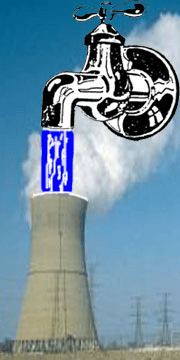
Letter to The Adelaide Advertiser, Jim Allen, Panorama, 21 Aug, 26
Techno-optimists are entitled to their views about supplying nuclear power to data centres any time soon, but I am a realist.
We are the driest State in Australia.
Both water shortages and heatwaves are limiting factors.
Look at what’s happening in Europe now.
European nuclear plants can’t cope, and we need solutions that can withstand what global warming throws at us here.
Early data centres will no doubt locate where there is good transmission already – like the proposal at Bundey – and nearby, there are large wind and solar projects that either have been commissioned or have at least have necessary approvals in place. Again Bundey fits the bill.
Thirsty facilities of all kinds bring risks to our state.
Also, what assurance is there that there can and will be effective safeguards to protect consumers from further electricity price hikes regardless of energy sources relied on by data centres? A “let it rip” attitude to these projects could be an unmitigated disaster. You only need to look at a few examples in the US to see that.
1 This month
17 October, Free Public Talk on Nuclear Issues in South Australia
David Noonan will speak on public interest concerns over the new Roxby Downs Indenture Act 2026 on BHP copper-uranium mining and ore processing in SA, and on how AUKUS may face SA with a High-Level nuclear waste agenda.
Dr Jim Green will discuss international developments in the field of nuclear power including ‘small modular reactors’ and Generation 4 ‘advanced’ nuclear reactor concepts.


Help Aunty Sue Protect Her Land and Sacred Sites From Destructive Rocket Testing.
.

Australians deserve the truth
about
AUKUS – https://aukuspublicinquiry.com/

PETITION – To: Prime Minister Anthony Albanese and the Australian Labor Government

of the week – Australians for War Powers Reform (AWPR)
To see nuclear-related stories in greater depth and intensity

