Scientists predict that 2020 is likely to be the planet’s hottest year on record

2020 expected to be Earth’s warmest year on record, scientists say, Doyle Rice, USA TODAY, 17 Apr 20,
- This year’s warmth is “unusual,” given the lack of a strong El Niño.
- Already, through the first three months of the year, it’s the second-warmest on record.
- There’s a 99.9% chance that 2020 will end among the five warmest years on record.
Federal scientists announced Thursday that 2020 has nearly a 75% chance of being the warmest year on record for the planet Earth.
Already, through the first three months of the year, it’s the second-warmest on record, trailing only the El Niño fueled year of 2016, the National Oceanic and Atmospheric Administration (NOAA) said.
This year’s warmth is “unusual,” given the lack of a strong El Niño, a natural warming of tropical Pacific Ocean water that influences temperatures worldwide, according to Deke Arndt of NOAA’s National Centers for Environmental Information.
He said both February and March were the warmest months on record without an El Niño present. The long-term trend of ongoing heat the planet continues to see is primarily because of the emission of greenhouse gases from the burning of fossil fuels, he said.
Even if 2020 ends up not being the warmest year, NOAA said there’s a 99.9% chance that 2020 will end among the five warmest years on record.
The warmth has been nearly global so far this year: “Record-hot January-through-March temperatures were seen across parts of Europe, Asia, Central and South America, as well as the Atlantic, Indian and western Pacific Oceans,” NOAA said. “No land or ocean areas had record-cold temperatures during this period.”
Climate change:Antarctic glacier retreated 3 miles in 22 years, threatening global sea-level rise
What winter?:Earth just had its second-warmest December-February on record……
Sea-level rise:Greenland and Antarctica are now melting six times faster than in the 1990s https://www.usatoday.com/story/news/nation/2020/04/16/global-warming-2020-expected-warmest-year-record-noaa-said/5144767002/
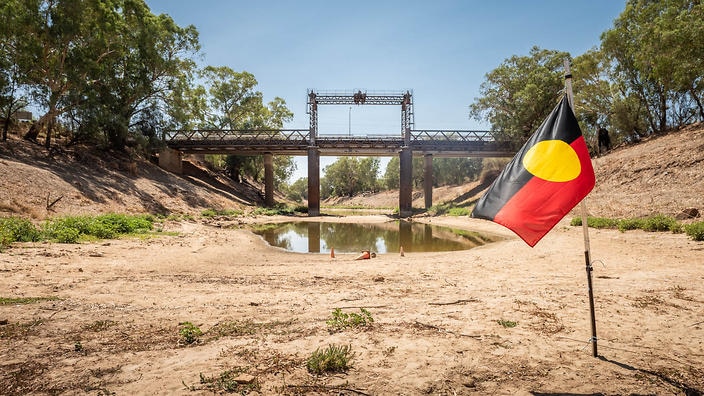
Amid climate change threat to the Murray Darling river system, the States haggle
|
No water, no leadership: new Murray Darling Basin report reveals states’ climate gamble, The Conversation
April 17, 2020 Daniel Connell, Research Fellow, Crawford School of Public Policy, Australian National University A report released today investigating how states share water in the Murray Darling Basin describes a fascinating contrast between state cultures – in particular, risk-averse South Australia and buccaneering New South Wales. Perhaps surprising is the report’s sparse discussion of the Murray Darling Basin Plan, which has been the focus of irrigators’ anger and denunciation by National Party leaders: Deputy Prime Minister Michael McCormack and NSW Deputy Premier John Barilaro. In general terms, the Murray Darling Basin Plan was originally intended to make water management in the Murray Darling Basin more environmentally sustainable. Its critics see it as a restraint on development, and complain it has taken water away from irrigators during a time of extreme drought. In response to McCormack and Barliaro’s criticisms of the plan in late 2019, federal water minister (and senior National Party figure) David Littleproud commissioned Mick Keelty as Interim Inspector General of MDB Water Resources. For the new report, Keelty investigated the changing distribution of “inflows” – water flowing into the River Murray in the southern states. Climate change has brought the inflow to just a trickle. This dramatic reduction over the past 20 years is what Keelty has described as “the most telling finding”. He also investigated the reserve policies under which the three states choose – or don’t choose – to hold back water in Hume and Dartmouth Dams to manage future droughts. Keelty says there’s little transparency or clarity about how much water states are allocated under the Murray Darling Basin Agreement (the arrangement for sharing water between the states which underpins the Basin Plan). This failure in communication and leadership across such a vital system must change. Sharing water across three statesOne major finding of Keelty’s inquiry is that the federal government has little power to change the MDB Agreement between the three states, which was first approved in 1914-15. Any amendment requires the approval of all three governments. To increase the volume of water provided to NSW irrigators, South Australia and Victoria would need to agree to reduce the volumes supplied to their own entitlement holders. That will not happen. Why has the agreement lasted so long? Over the past century it has proved robust under a wide range of conditions. Its central principle is to share water with a proportion-of-available-flow formula, giving each state a percentage of whatever is available, no matter whether it’s a lot, or not much. After receiving its share of the River Murray flows, each state is then free to manage its allocation as it wishes. …… Reliability of water supply What’s more, each state makes its own decision about how its state allocation is shared between its entitlement holders (95% of water goes to irrigators the rest supplies towns and industry). South Australia chooses to distribute a much smaller proportion to its entitlement holders than New South Wales. It also restricted the number of licences in the 1970s. That combination ensures a very high level of reliability in supply. Victoria took a similar approach…….. When climate change is taken into account these differences between the three states result in their irrigators having significantly different risk profiles. The climate change threat to the basin is very realDespite climate denial in the National Party, the threat is very real in the MDB. The report describes a massive reduction in inflows over the past 20 years, approximately half compared with the previous century. One drought could be an aberration, but two begins to look like a pattern. The report also suggests that in many cases irrigator expectations of what should be normal were formed during the wet period Australia experienced between the second world war and the 1990s. Added to this have been business decisions by many irrigators to sell their entitlements and rely on the water market, a business model based on what now seems like unrealistic inflow expectations. In effect, successive New South Wales governments – a significant part of the state’s irrigation sector in the southern part of the state and the National Party – gambled against the climate and are now paying a high price. In desperation, they’re focusing on alternative sources. This includes the water in Hume and Dartmouth held under the reserves policy of the two other states; environmental entitlements managed by the Commonwealth Environmental Water Holder; the very large volume of water lost to evaporation in the lower lakes in South Australia; and the possibility of savings resulting from changes to management of the system by the Murray-Darling Basin Authority. Failure in leadership and communicationFor reasons already outlined, the state reserves policy is not likely to change and use of the Commonwealth Environmental Water Holder environmental water entitlements would not be permitted under current legislation. Management of the lower lakes is being reviewed through another investigation so is not discussed in the report. The report also states that management of the MDB Authority is subject to regular detailed assessment by state governments, and they have assessed its performance as satisfactory. However the report was critical of the performance of all MDB governments with regard to leadership and communications suggesting that failures in those areas were largely responsible for the public concern which triggered its investigation. https://theconversation.com/no-water-no-leadership-new-murray-darling-basin-report-reveals-states-climate-gamble-136514 |
|
With dry and windy conditions, new areas of ‘smoldering’ reported near Chernobyl nuclear plant
The fire began to burn in the region back on April 3, near the town of Pripyat, located over two hours north of the country’s capital of Kiev and near the border with Belarus.
Police say they arrested a 27-year-old man who is being accused of starting the fire last week. On Monday, police said that another local resident burned waste and accidentally set dry grass ablaze.
The location of the fire was reportedly only one kilometer (less than one mile) away from the Chernobyl nuclear power plant, the site of the world’s largest nuclear catastrophe back in April 1986.
However, Greenpeace Russia, on Monday, warned that the fire being in close proximity of the power plant posed a radiation risk.
“Higher-than-usual” radiation levels were first reported by the AP on April 5, and are being carefully monitored as the fire continues.
According to Reuters, Chernobyl tour operator, Yaroslav Yemelianenko, shared on Facebook that the fire was only two kilometers away from where “the most highly active radiation waste of the whole Chernobyl zone is located.” He called on officials to warn people of the danger.
Emergency services said on Tuesday morning that there were still some acreage “smoldering” in the Chernobyl Exclusion Zone, but that the zone contained no open fire.
Acting Chairman of the State Environmental Inspectorate, Yegor Firsov, later said that the fire in the Chernobyl exclusion zone was extinguished, and cited some rain that moved through the region as one helpful factor.
Hundreds of firefighters, as well as several planes and helicopters, battled the blaze for 10 days.
………Strong winds increased the difficulty in containing what’s left of the blaze and new areas of “smoldering” were reported in the Exclusion Zone, but did not pose a threat to any critical facilities, reported officials……..
Dry weather across much of eastern Europe has allowed for a more volatile environment for fire to thrive.
Through April 13, only two percent of the month’s normal rainfall has fallen in Kiev. Since the beginning of 2020, the city has been much drier than normal, only recording 81 mm of rain instead of the average 150 mm.
The dry weather has also caused crop losses already this year across Ukraine, with further damage possible should the dry stretch continue.
Keep checking back on AccuWeather.com and stay tuned to the AccuWeather Network on DirecTV, Frontier and Verizon Fios.
April 17 Energy News — geoharvey

Opinion: ¶ “Coronavirus And The Fragility Of Auto-Centric Cities” • The coronavirus has exposed the ills of continued automobile-centric urban planning practices that adversely impact equity, health, and the climate. Some of us can work at home and conveniently make grocery runs in our automobiles. But many in this country are not so lucky. [CleanTechnica] […]
Thousands rush to S.A. home battery scheme before subsidy winds back — RenewEconomy

More than 5,000 solar households apply for battery subsidy in just five weeks, in a last-minute rush to access a $6000 discount via state government home storage scheme. The post Thousands rush to S.A. home battery scheme before subsidy winds back appeared first on RenewEconomy.
via Thousands rush to S.A. home battery scheme before subsidy winds back — RenewEconomy
Nuclear Business as Usual — Mining Awareness +

While other small business go the wall as collateral fallout of COVID19 , the military and civil nuclear global industrial complex continues with business as usual and even seeks to benefit from the pandemic. Here in Cumbria the BAE shipyard at Barrow continues to build its next generation Weapons of Mass Destruction – nuclear submarines…
ARENA future clouded as Taylor fudges on board appointments — RenewEconomy

Future of ARENA remains uncertain after energy minister chooses to renew terms of existing board for only three months. The post ARENA future clouded as Taylor fudges on board appointments appeared first on RenewEconomy.
via ARENA future clouded as Taylor fudges on board appointments — RenewEconomy
April 16 Energy News — geoharvey

Science and Technology: ¶ “Scientists Confirm Dramatic Melting Of Greenland Ice Sheet” • Greenland’s ice sheet melted dramatically in the summer of 2019, researchers confirmed. A study reveals the loss was largely down to a persistent zone of high pressure. If such high pressure zones become regular weather features, future melting could be twice as […]
Australians installed 22,661 home battery systems in 2019 — RenewEconomy

Australian households invested in almost two-and-a-half “Big Batteries” worth of home energy storage in 2019, installing 22,661 systems over the course of the year with a total capacity of 233MWh, and taking further control over their energy supply. The post Australians installed 22,661 home battery systems in 2019 appeared first on RenewEconomy.
via Australians installed 22,661 home battery systems in 2019 — RenewEconomy
SA Water to build solar farm on former oil refinery site — RenewEconomy

SA Water to build a solar farm on a former oil refinery site to help power the Adelaide desalination plant. The post SA Water to build solar farm on former oil refinery site appeared first on RenewEconomy.
via SA Water to build solar farm on former oil refinery site — RenewEconomy
Climate Change Authority launches review into stalled Emissions Reduction Fund — RenewEconomy

Climate Change Authority launches a fresh review of the Morrison Government’s Emissions Reduction Fund, following flatlining project participation. The post Climate Change Authority launches review into stalled Emissions Reduction Fund appeared first on RenewEconomy.
via Climate Change Authority launches review into stalled Emissions Reduction Fund — RenewEconomy
Australia deploying new renewables at ten times global average — RenewEconomy

New report confirms special status of Australia as “global pathfinder” for renewable energy, deploying new wind and solar 10 times faster per capita than the global average. The post Australia deploying new renewables at ten times global average appeared first on RenewEconomy.
via Australia deploying new renewables at ten times global average — RenewEconomy
13 Australian peak Non Government Organisations seek stronger Environmental Law on Nuclear Issues

Joint ENGO Submission on Nuclear Issues as they Relate to the Environmental Protection & Biodiversity Conservation Act Review 2020
This submission is made on behalf of the following national and state peak environment groups:
-
- Australian Conservation Foundation,
- Australian Nuclear Free Alliance,
- Friends of the Earth Australia,
- Greenpeace Australia Pacific,
- Mineral Policy Institute,
- The Wilderness Society,
- Arid Lands Environment Centre,
- Environment Centre NT,
- Environment Victoria,
- Conservation Council SA,
- Conservation Council WA,
- Nature Conservation Council NSW and Queensland Conservation Council.
This submission outlines the importance of retaining s140A of the EPBC Act which prohibits nuclear power; the retention of uranium exploration and mining in the definition of a Nuclear Action and the inclusion of Nuclear Actions as a Matter of National Environmental Significance (MNES).
This submission is made in consideration of the broader objects and principles of the Act and is based on evidence from recent inquiries into both nuclear power and uranium mining. There is clear evidence that nuclear activities can have a significant environmental and public health risk and, in many cases, irreversible impacts, and this is consistent with the current dedicated legislative prohibitions for both nuclear power and scrutiny for uranium mining.
While the current Act does not include a prohibition on uranium mining we strongly advocate that there be a national ban on uranium mining consistent with state legal or policy prohibitions in New South Wales, Queensland, Tasmania, Victoria and West Australia Written by Mia Pepper, Jim Green, Dave Sweeney, David Noonan & Annica Schoo.
Summary of Recommendations
Uranium:
• that uranium mining and milling be included in s140A prohibitions as nuclear actions that the Minister must not approve, on the basis that the nuclear industry has failed to successfully remediate any uranium mine in Australia and has impacts inconsistent with the objects and principles of the EPBC Act.
• if the above recommendation is not adopted that uranium mining and milling remains within the definition of a ‘nuclear action’ and that nuclear actions continue to be listed as MNES and the protected matters continue to be listed as the ‘environment’ and so be subject to full environmental assessment at the state level
• DAWE to initiate an inquiry into the human and environmental impacts of uranium mining, as advised by the UN Secretary General following the Fukushima nuclear disaster, noting that Australian uranium was present in each of the Fukushima Daiichi reactors at the time of multiple reactor meltdowns
. • regulatory reform for existing operating mines • that the review committee recommend DAWE prioritise the rehabilitation of abandoned uranium mines and processing facilities, exploration sites and uranium mines that have been in care and maintenance for more than two years.
Nuclear Power:
• the retention of s140A of the EPBC Act 1999 which states “No approval for certain nuclear installations: The Minister must not approve an action consisting of or involving the construction or operation of any of the following nuclear installations: (a) a nuclear fuel fabrication plant; (b) a nuclear power plant; (c) an enrichment plant; (d) a reprocessing facility.”
Other Matters:
• a National Environmental Protection Authority be established
• the effectiveness of assessment bilateral agreements be reviewed, and approval bilateral agreements are not pursued
• legislate requirements for mine closure, address activities that are used to avoid mine closure and to work with states and territories to remediate existing legacy mine sites
• there be established internal process for DAWE to pursue the listing of newly identified species by referring to the Threatened Species Scientific Committee
• that the principles of free, prior and informed consent become a mandatory operational principle within the EPBC Act along with a governance mechanism to operationalise this principle……… . https://dont-nuke-the-climate.org.au/wp-content/uploads/2020/04/Joint_Sub_EPBC_Nukes_FINAL.pdf
A brief Submission to the the Review of the Environment Protection and Biodiversity Conservation Act 1999

 I first tried to use their online formal submission form. I found several of the questions they posed to be confusing, and obfuscated the issues. So, I gave up on their form, and just wrote my own ideas
Noel Wauchope, SUBMISSION TO EPBC REVIEW.
It is obvious that the polluting industries, especially mining, are keen to further weaken Australia’s environmental protection laws.
Announcing the statutory review of the commonwealth’s Environment Protection and Biodiversity Conservation Act (EPBC) last October, the Morrison government pitched it as an opportunity to weaken the Howard era laws even further and make it easier still for environmentally destructive projects to be approved. 2
A particular case for scrutiny is in the uranium/nuclear industry. A very telling example of the weakness of the EPBC Act is in the sudden approval given by the then Environment Minister, Melissa Price, for the Yeelirrie uranium project to go ahead, in complete contradiction of its rejection by WA Environmental Protection Agency . The current EPBC Act specifies protection for species at risk of extinction. Still, the approval went ahead, the EPBC Act apparently a toothless tiger. 3
Australian governments, State and federal, are under relentless lobbying by the nuclear industry. There are several nuclear Inquiries going on at State level, and one Federal nuclear Inquiry. Despite the clear knowledge of nuclear power’s high costs, safety dangers and terrorism risks, the global nuclear lobby’s push is to remove Australia’s nuclear prohibition laws. The EPBC Act contains two strong nuclear prohibitions, which should not be changed – EPBC Act 1999 section 140A No approval for certain nuclear installations and EPBC Act 1999 section 22 What is a nuclear action?
2. https://www.theguardian.com/commentisfree/2020/mar/28/with-the-climate-crisis-and-coronavirus-bearing-down-on-us-the-age-of-disconnection-is-over
3. https://www.sbs.com.au/news/labor-questions-shonky-wa-uranium-mine-deal
Call for Australian government to delay review of its Environment laws
|
Environment groups ask government to delay review of Australia’s conservation laws https://www.theguardian.com/australia-news/2020/apr/16/environment-groups-ask-government-to-delay-review-of-australias-conservation-laws
Six organisations raise concerns with environment minister Sussan Ley about the impact of the bushfires and coronavirus, Lisa Cox 16 Apr 2020 Some of Australia’s biggest environmental organisations have asked the government to delay the completion of its statutory review of Australia’s national environment laws.Six groups – the Australian Conservation Foundation, WWF, the Wilderness Society, Environmental Justice Australia, Humane Society International and Birdlife Australia – have raised concerns with the environment minister, Sussan Ley, about the impact of the bushfire and coronavirus crises on the review process. The independent review of the Environment Protection and Biodiversity Conservation Act (EPBC Act) occurs once every 10 years and is due to publish its final report in October. But the process this year has been affected by back-to-back crises that began with the unprecedented bushfires through spring and summer. The government extended its timeframe for submissions to the review to the end of this week to give the public and organisations time to respond to the fire crisis.
But the fires were almost immediately followed by the massive economic and social upheaval caused by the global outbreak of Covid-19. The review has also lost one of the members of its expert panel due to the departure of Andrew Macintosh, leaving it without an environmental law expert. Macintosh stepped down from the review after he was named one of the commissioners on the bushfire royal commission. The government has so far said it intends to continue with the review’s timetable to publish a draft report in June and a final report in October. A spokesman for Ley said the review’s chair, Graeme Samuel, could request an extension for the final report but “he has not indicated a need to do so at this stage”. In their letter, the environment groups ask the government “to be cognisant of the current series of crises” and extend the timeframes for the draft and final reports to ensure “there will be space for meaningful consultation and deliberation”. “Extending timeframes will also enable you to be sure there is requisite sectoral expertise on the advisory panel, which is currently missing,” they say, in reference to both Macintosh’s departure and the failure of the government to appoint an ecologist to the review. When the review was announced last year, the government said it would “tackle green tape” and reduce delays in approvals of major projects. Environment groups, however, have long called for an overhaul of the act, which has been failing to stem Australia’s rate of extinction. In their letter, they say the Covid-19 crisis has affected the capacity of NGOs, business and the community to “meaningfully engage in the EPBC review process”. “We are also highly concerned that the majority of the review will take place without the ability for the reviewer and his panel to visit the natural areas that are at stake, see the impact of the 2019-20 summer bushfires and hear from the communities and organisations working to protect Australia’s unique biodiversity and see their work,” the letter states. Environment groups, however, have long called for an overhaul of the act, which has been failing to stem Australia’s rate of extinction. In their letter, they say the Covid-19 crisis has affected the capacity of NGOs, business and the community to “meaningfully engage in the EPBC review process”. “We are also highly concerned that the majority of the review will take place without the ability for the reviewer and his panel to visit the natural areas that are at stake, see the impact of the 2019-20 summer bushfires and hear from the communities and organisations working to protect Australia’s unique biodiversity and see their work,” the letter states. Ley’s office did not indicate any plan to replace Macintosh on the panel. “While Prof MacIntosh has been a valuable source of advice in the early stages of the review before focussing on the bushfire royal commission, he was one of many people with expertise in a range of areas who have assisted Prof Samuel on all aspects of the review and their contribution will be specifically acknowledged in the final report,” the spokesman said. Australia’s fire crisis caused a spike in concern about the environment among voters. Polling published by the Australian National University in February found about half the respondents listed the environment as the most or second most important issue in deciding their vote. A new poll of 1,024 Australians for the Places You Love alliance of environment groups found 87% were worried species were now at more risk of extinction unless something is done to protect habitat after the bushfires. In the immediate aftermath of the fires, a government analysis found 113 species had needed urgent attention after at least 30% of their habitat was burnt. The effect of social distancing restrictions due to Covid-19 has meant that scientists have had to shut down or scale back some field work that was to assess the full impact of the fires on wildlife. |
|

1 This month.

PETITION – To: Prime Minister Anthony Albanese and the Australian Labor Government
Chernobyl: The Lost Tapes – A good documentary on Chernobyl on SBS available On Demand for the next 3 weeks– https://www.sbs.com.au/ondemand/tv-program/chernobyl-the-lost-tapes/235274195556

19 May – Webinar- Webinar: No Nuclear Weapons in Australia
Start: 2026-05-19 18:00:00 UTC Canberra, Melbourne, Sydney (GMT+10:00)
End: 2026-05-19 19:30:00 UTC Canberra, Melbourne, Sydney (GMT+10:00)
20 May – Webinar – The dangerous world of AUKUS, US, military occupation and suppression of dissent

National Webinar, 20th May, 2026, 6.30pm AEST. Confronting laws restricting/suppressing protest speech and action
Speakers: Former Sen. Rex Patrick, Lawyer Nick Hanna ,Arthur Rorris ,Jorgen Doyle, Sen David Shoebbridge,
Facilitator Kelley Tranter.

of the week – Australians for War Powers Reform (AWPR)
To see nuclear-related stories in greater depth and intensity
 Antinuclear