Antinuclear

Australian news, and some related international items

  • Home
  • 1 This month.
  • Disclaimer
  • Kimba waste dump Submissions

Governments warned: $1 trillion in coal power investments at risk — RenewEconomy

Carbon Tracker warns that more than $1 trillion in planned coal investments is at risk of becoming stranded, as the costs of wind and solar continue to fall. The post Governments warned: $1 trillion in coal power investments at risk appeared first on RenewEconomy.

via Governments warned: $1 trillion in coal power investments at risk — RenewEconomy

March 14, 2020 Posted by Christina Macpherson | Uncategorized | Leave a comment

In Tokyo, a growing sense of angst over possible virus-hit Olympics — Fukushima 311 Watchdogs

A man walks in front of the Tokyo Metropolitan Government building on Feb. 25. Mar 11, 2020 For weeks, Olympic organizers have relentlessly pushed a consistent message: The Summer Games in Tokyo will not be canceled or postponed. On Wednesday, Olympic Minister Seiko Hashimoto called postponement “inconceivable,” pushing back on a Wall Street Journal report […]

via In Tokyo, a growing sense of angst over possible virus-hit Olympics — Fukushima 311 Watchdogs

March 14, 2020 Posted by Christina Macpherson | Uncategorized | Leave a comment

Japan’s Nuclear Cover-up Continues, Nine Years after the Fukushima Disaster — Fukushima 311 Watchdogs

March 10, 2020 Written by Arnie Gundersen The six atomic power reactors at the Fukushima Daiichi nuclear site were severely damaged 9-years ago when a Richter 9 earthquake in the Pacific Ocean occurred at 2 p.m. on March 11, 2011 ravaging the nuclear reactors, flooding safety systems, and causing three atomic power meltdowns. Fairewinds is […]

via Japan’s Nuclear Cover-up Continues, Nine Years after the Fukushima Disaster — Fukushima 311 Watchdogs

March 14, 2020 Posted by Christina Macpherson | Uncategorized | Leave a comment

Map of Soil Radioactivity in 17 Prefectures in Eastern Japan — Fukushima 311 Watchdogs

Starting from March 11, 2020, Minna-no Data Site will be offering free use of Map of Soil Radioactivity in 17 Prefectures in Eastern Japan at the time of the Tokyo Olympics https://en.minnanods.net/blog/pickup/entry-1473.html And if you want further more information, here is another one that many people have been waiting for: https://minna-no-datasite.stores.jp/items/5e48c64ccf327f78ff411139?fbclid=IwAR0YJpnHw_2OXrchb9dvgXgXEPjoGkzZPqVfnub_CkQvSr3beVrdPAYiodQ

via Map of Soil Radioactivity in 17 Prefectures in Eastern Japan — Fukushima 311 Watchdogs

March 14, 2020 Posted by Christina Macpherson | Uncategorized | Leave a comment

Canadian Solar inks its first Australian PPA with Amazon for output of NSW solar farm — RenewEconomy

Online retailing giant inks new deal for supply of renewables in Australia, agreeing with Canadian Solar to buy output of 146MW Gunnedah solar farm in NSW. The post Canadian Solar inks its first Australian PPA with Amazon for output of NSW solar farm appeared first on RenewEconomy.

via Canadian Solar inks its first Australian PPA with Amazon for output of NSW solar farm — RenewEconomy

March 14, 2020 Posted by Christina Macpherson | Uncategorized | Leave a comment

Major clean energy industry events postponed in response to Coronavirus — RenewEconomy

Clean Energy Council, Smart Energy Council, and other industry groups announce postponement of major events and conferences in response to COVID-19 pandemic. The post Major clean energy industry events postponed in response to Coronavirus appeared first on RenewEconomy.

via Major clean energy industry events postponed in response to Coronavirus — RenewEconomy

March 14, 2020 Posted by Christina Macpherson | Uncategorized | Leave a comment

Worst is Yet to Come WHO Warns, After Declaring Coronavirus Outbreak a Pandemic — Mining Awareness +

Because of reporting delays the US map, below, is already dated. Mississippi, Arkansas, North Dakota, Wyoming, for instance, have now reported cases. The Mississippi case had visited Florida, which has had cases: https://msdh.ms.gov/msdhsite/_static/23,21819,341.html https://www.healthy.arkansas.gov/programs-services/topics/novel-coronavirus https://www.health.nd.gov/news/first-case-novel-coronavirus-confirmed-north-dakota-work-continues-prevent-spread https://health.wyo.gov/publichealth/infectious-disease-epidemiology-unit/disease/novel-coronavirus/ Alabama may be testing insufficiently. West Virginia has not yet announced any cases. Maine has still been spared. Current […]

via Worst is Yet to Come WHO Warns, After Declaring Coronavirus Outbreak a Pandemic — Mining Awareness +

March 14, 2020 Posted by Christina Macpherson | Uncategorized | Leave a comment

Speer Goes to Hollywood: A wake-up call about the danger of trivialising Nazi crimes — Rise Up Times

“The title of Vanessa Lapa’s documentary, Speer Goes to Hollywood, and its tagline, “The Unbelievable Second Career of the Good Nazi,” are enough to stop one in one’s tracks.”

via Speer Goes to Hollywood: A wake-up call about the danger of trivialising Nazi crimes — Rise Up Times

March 14, 2020 Posted by Christina Macpherson | Uncategorized | Leave a comment

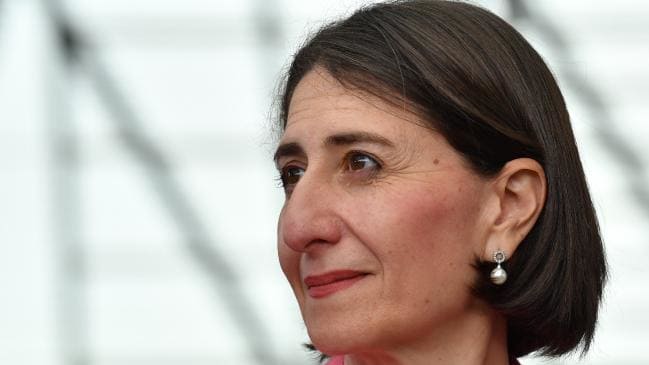
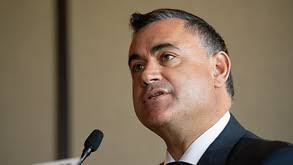
Call to Premier Gladys Berejiklian to stand up for a nuclear-free New South Wales

Premier must stand up to Barilaro on nuclear power,  https://www.smh.com.au/politics/nsw/premier-must-stand-up-to-barilaro-on-nuclear-power-20200310-p548k3.html  10 Mar, 20,    Deputy Premier John Barilaro has issued another ultimatum to the NSW government, this time over his obsession with starting a nuclear industry, but it is high time Premier Gladys Berejiklian called his bluff. Mr Barilaro is demanding that cabinet endorse a report by an upper house parliamentary committee backed by One Nation which recommends lifting the ban on uranium mining and nuclear power generation that has been in place since 1986. If cabinet refuses, he is threatening that he and perhaps the whole National Party will go their own way and vote in favour of a bill to that effect.

The Herald reported on Monday that some cabinet ministers who oppose nuclear power are threatening to respond by quitting if Ms Berejiklian caves in. The question of whether NSW can or should develop a nuclear industry is complicated. In theory, mining uranium could earn money and nuclear power generation could help reduce emissions. In fact, both face huge practical problems.
Of course, the Northern Territory and South Australia already mine uranium. But there is little reason for NSW to follow them now because, quite apart from concerns over waste storage, safety and proliferation, the business case is very weak. As the upper house report says, the state does not have any proven commercial deposits of uranium and, since the Fukushima disaster in Japan, the global market for uranium has been depressed. The conservative government in Western Australia ended its ban on uranium mining in 2010 but no new mines have opened.

Similarly, the prospects are also poor for nuclear power generation here any time soon. Nuclear reactors are very expensive and would take decades to build. By most reckonings, they cannot compete on cost with renewables – backed up by battery storage – or pumped hydro. Private companies will not build them without subsidies from taxpayers.

Given those practical issues, it is hard to understand why Mr Barilaro has joined One Nation’s crusade for nuclear power. Cynics would argue that his main goal is shielding the coal industry by delaying other more immediate and practical forms of action to reduce carbon emissions. And for Mr Barilaro, it might be a political winner. He might steal One Nation’s thunder and win the support of older regional voters and radio shock jocks who have a vendetta against those they see as renewables-loving green hippies.
But Mr Barilaro’s nuclear adventure risks doing damage to the government including a repeat of what happened to the Howard government in 2007 when it campaigned on nuclear power. The ALP pointed out that because plants require enormous amounts of water, they would have to be located on the coast. That went down like a lead balloon with voters and that was before Fukushima.
With a two-seat majority, Ms Berejiklian is more than usually dependent on her Coalition partner. Over the past year, Mr Barilaro has been able to extract some questionable concessions from her on water policy and regional jobs in the energy sector.

But she must not allow policy on such an important issue to be driven by a minority of Nationals MPs and the whims of One Nation backbenchers. As Premier, it should be Ms Berejiklian who sets the priorities of the state’s energy policy.

This is a good chance for Ms Berejiklian to stamp her authority on the government. Mr Barilaro has backed down in the past. He knows how much he and his party need to be in government. His bark is often worse than his bite.

March 12, 2020 Posted by Christina Macpherson | New South Wales, politics | Leave a comment

Australian government manipulates the National Radioactive Waste Management Act so as to prevent an Appeal

Govt accused of legal appeal block, Whyalla News , Louis Mayfield , 11 Mar 20,  

A South Australian Senator has accused the government of stonewalling any attempts to launch a legal appeal against their legislation for a National Radioactive Waste Management Facility (NRWMF) at Napandee.

According to a letter from Resources Minister Keith Pitt to Centre Alliance Senator Rex Patrick, the government has not formalised the decision to make Napandee the location for the facility under the National Radioactive Waste Management Act 2012.

Senator Patrick said this was a deliberate move by the government to avoid the legislation being challenged legally.

“The whole motive behind getting the Parliament to make an Act that selects the site is that what Parliament does is not reviewable by the courts unless someone thinks it’s unconstitutional,” he said.

“The pathway they’re taking this down denies anyone the ability to seek judicial review into whether or not they have achieved broad community support.

“We know the Barngarla people are clearly opposed, we also know there are some neighbours who are opposed as well.

“It’s important that people need to be made aware that no decision has been made, only an assessment.”

Legislation for the NRWMF is now before a Senate Inquiry, with Resoures Minister Keith Pitt saying the government had self-referred the bill….

Both Senator Patrick and Greens Senator Sarah Hanson-Young are calling for a public hearing to be held in Whyalla regarding the legislation.

The Senate Economics Committee are now taking submissions from the public. https://www.whyallanewsonline.com.au/story/6673978/govt-accused-of-legal-appeal-block/?fbclid=IwAR3GEn2HgTDReXDl2Qhp9pkDFk6H7NMonpjmIxg2IC6_pTDObtu5SZIAxxA

March 12, 2020 Posted by Christina Macpherson | AUSTRALIA - NATIONAL, politics, secrets and lies | Leave a comment

Fact-checking the false nuclear claims of NSW Deputy Premier John Barilaro

NSW Deputy Premier John Barilaro’s nuclear falsehoods https://nuclear.foe.org.au/barilaro/Correcting the nuclear falsehoods of NSW Deputy Premier and Nationals leader John Barilaro. Mr. Barilaro has been repeatedly provided with factual information so there is no excuse for his ignorance., March 2020, Jim Green, FoE Australia national nuclear campaigner, jim.green@foe.org.au

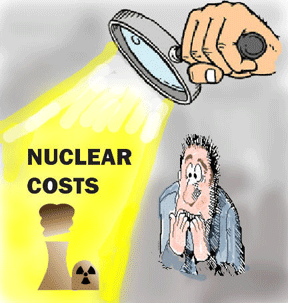
Mr. Barilaro: Nuclear power is “probably the cheapest cost to the average Australian household”.
Facts:

* Nationals Senator Matt Canavan acknowledges that nuclear power is “very expensive”.

* Industry insiders and lobbyists freely acknowledge that nuclear power is suffering from an economic crisis that could prove to be terminal.

* Nuclear power is in decline worldwide and a growing number of countries are phasing out nuclear power including Germany, Switzerland, Spain, Belgium, Taiwan and South Korea.

* Laws banning nuclear power has saved Australia from the huge costs associated with failed and failing reactor projects in Europe and North America, such as the twin-reactor project in South Carolina that was abandoned in 2017 after the expenditure of at least A$13.4 billion, bankrupting Westinghouse. That expensive fiasco could so easily have been replicated in NSW if not for the prudent legal ban.

* There are many other examples of shocking nuclear costs and cost overruns, including:

‒ The cost of the two reactors under construction in the US state of Georgia has doubled and now stands at A$20.4‒22.6 billion per reactor.

‒ The cost of the only reactor under construction in France has nearly quadrupled and now stands at A$20.0 billion. It is 10 years behind schedule.

‒ The cost of the only reactor under construction in Finland has nearly quadrupled and now stands at A$17.7 billion. It is 10 years behind schedule.

‒ The cost of the four reactors under construction in the United Arab Emirates has increased from A$7.5 billion per reactor to A$10‒12 billion per reactor.

‒ The cost of the only two reactors under construction in the UK has increased to A$25.9 billion per reactor. A decade ago, the estimated cost was just A$4 billion. The UK National Audit Office estimates that taxpayer subsidies for the project will amount to A$58 billion.

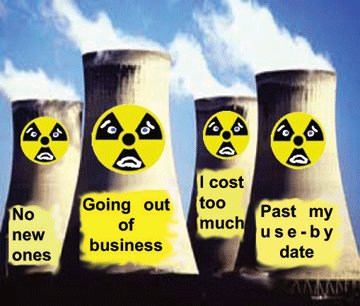
Mr. Barilaro: “As I write this piece, a further 50 nuclear reactors are being built globally (450 reactors currently operate in 31 counties) including in Finland, France, the UK, China and Canada.”
Facts:

* The number of power reactors under construction has fallen steadily from 68 in 2013 to 49 as of Feb. 2020.

* As noted above, reactors under construction in Finland, France and the UK have been subject to catastrophic cost overruns.

* There has only been one reactor construction start in China in the past three years. The number of reactors under construction in China has fallen from 20 in 2017 to 10 now. Renewables generate twice as much electricity in China as nuclear power.

* No reactors are being built in Canada.

Mr. Barilaro on small modular reactors (SMRs): “Given their size and efficiency, their waste is minimal (new advancements in technology continues to address the waste issue)”.

Facts:
* SMRs would produce more nuclear waste per unit of energy produced compared to large reactors.

* A 2016 European Commission document states: “Due to the loss of economies of scale, the decommissioning and waste management unit costs of SMR will probably be higher than those of a large reactor (some analyses state that between two and three times higher).”

* Mr. Barilaro’s “new advancements” (‘Generation IV’ concepts) have failed spectacularly and have clearly worsened nuclear waste management problems (see p.42-43 of our joint submission to the NSW inquiry).

Mr. Barilaro: “The compact nature of SMRs means they need close to only 5 per cent of the nuclear fuel required for large conventional reactors.”

Fact: As the South Australian Nuclear Fuel Cycle Royal Commission report noted: “SMRs have lower thermal efficiency than large reactors, which generally translates to higher fuel consumption and spent fuel volumes over the life of a reactor.”
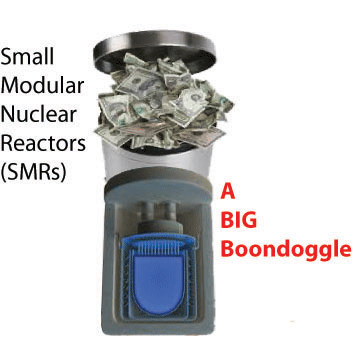
Mr. Barilaro: SMRs are “becoming very affordable”.

Facts:

* Every independent economic assessment finds that electricity from SMRs will be more expensive than that from large reactors.

* SMRs will inevitably suffer from diseconomies of scale: a 250 MW SMR will generate 25% as much power as a 1,000 MW reactor  but it will require more than 25% of the material inputs and staffing, and a number of other costs including waste management and decommissioning will be proportionally higher.

* A December 2019 report by CSIRO and the Australian Energy Market Operator concluded that wind and solar power, including two to six hours of storage, is two to three times cheaper than power from small reactors per unit of energy produced. Nuclear lobbyists dispute the construction costs that underpin this estimate but, in fact, they are a neat fit with real-world construction costs (as opposed to self-serving industry speculation). Indeed the CSIRO/AEMO estimate is lower than the average cost of small-reactor projects in China, Russia and Argentina.

* SMRs in China, Russia and Argentina are, respectively, 2, 4 and 23 times over-budget. None could be described as “very affordable”.

Mr. Barilaro: SMRs “are now on the horizon”.

Facts:

* A handful of SMRs are under construction (half of them to power fossil fuel mining operations in the Arctic, the South China Sea and elsewhere).

* Private sector investment has been pitiful and the main game is to find governments reckless enough to bet billions of taxpayer dollars on high-risk projects. SMRs under construction are all being built by government agencies.

* The prevailing scepticism is evident in a 2017 Lloyd’s Register report based on the insights of almost 600 professionals and experts from utilities, distributors, operators and equipment manufacturers. They predict that SMRs have a “low likelihood of eventual take-up, and will have a minimal impact when they do arrive”.

* Likewise, a 2014 report produced by Nuclear Energy Insider, drawing on interviews with more than 50 “leading specialists and decision makers”, noted a “pervasive sense of pessimism” regarding SMRs.
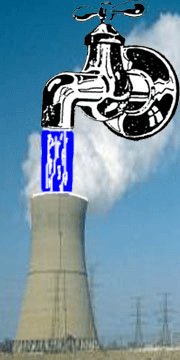
Mr. Barilaro: SMRs are “not as water hungry as traditional nuclear power plants, because they use air or sand to cool the core.”

Facts:

* SMRs will likely use as much water per unit of energy produced compared to large reactors ‒ possibly more due to lower thermal efficiencies. Nuclear power, large or small, is incredibly thirsty: a typical large reactor consumes 35‒65 million litres of water per day. Gas cooling creates its own set of problems and inefficiencies, leading to higher costs ‒ that is why a very large majority of reactors are water-cooled.

* Sand to cool a reactor core? Perhaps he means sodium ‒ which has caused a number of fires in fast neutron reactors. Sand has only been used as a desperate measure in the event of major accidents, e.g. Chernobyl. Continue reading →

March 12, 2020 Posted by Christina Macpherson | New South Wales, spinbuster | Leave a comment

Olympic Games – the pièce de résistance of Japan’s Fukushima coverup

Japan’s Nuclear Cover-up Continues, Nine Years after the Fukushima Disaster, Fairewinds Energy Education, March 10, 2020  by Arnie Gundersen “……. 2020 Olympics

If the 2020 Olympics open in Japan this summer as scheduled, something that may not happened due to the spread of the coronavirus, the pièce de résistance of Japan’s Fukushima coverup will be unfolding in Tokyo.  In 2011, even while the three Fukushima nuclear carcasses were emitting extensive radiation, Japan’s new Prime Minister Noda (he was between the ousted Prime Minister Naoto Kan, who was PM when the Fukushima Meltdowns occurred and today’s Prime Minister Abe), claimed that the three melted down Fukushima reactors were in ‘cold shutdown’, which they were not, in order to lay the groundwork for Japan’s Olympic bid. In order to bid as a host for the 2020 Olympics, Noda claimed “… we can consider the accident contained”.  Fairewinds compared Noda’s ‘cold shutdown’ hypocrisy to former President George Bush crowing about ‘Mission Accomplished’ in Iraq, so that he could gain the support of the American people by calling the war already finished, when it had just begun.

In order for Japan to win its Olympic bid in 2013, two years later, Japan’s next Prime Minister Abe stated that the Fukushima disaster was ‘under control’.  This statement was also a blatant lie that succeeded in winning the bid to hold the 2020 Olympics in Tokyo at the expense of the taxpayers and residents of Japan.  Don’t take Fairewinds word for it!  Read what Japan’s former Prime Minister, Junichiro Koizumi said to Reuters in September 2016. Entitled Abe’s Fukushima ‘under control’ pledge to secure Olympics was a lie: former PM, Reuters wrote,

Japanese Prime Minister Shinzo Abe’s promise that the crippled Fukushima nuclear plant was “under control” in his successful pitch three years ago for Tokyo to host the 2020 Olympic Games “was a lie”, former premier Junichiro Koizumi said on Wednesday.

Frequent readers of the Fairewinds newsletter will remember last year’s posts entitled Atomic Balm 1 and Atomic Balm 2 in which Fairewinds Energy Education described in detail the path of deception that Japan has used to take the world’s attention off of the lives of its own people, who are still being compromised by the Fukushima Daiichi nuclear tragedy.  The 2020 Olympics puts the media focus onto something else – so that the world continues to believe that nuclear power reactors are still a safe form of generating electricity.

This nine year legacy of lies by the government of Japan, nuclear incentivized governments worldwide, and the atomic industry are a harbinger for the seemingly inevitable approach of the 2020 Tokyo Olympics. Hopefully mainstream media covering the summer games will finally see through this glamorous marketing scam and identify the fact that Fukushima Prefecture remains severely radiologically contaminated. Real people, who are citizens of Japan, are seeing their health and that of their families being compromised for generations as they are forced to return to radiologically contaminated areas. Entire families and their communities are facing significant health risks simply to enable corporate profiteering of those investors, energy producers, banks, and government officials associated with the ongoing operation of nuclear power plants in Japan and around the world. https://www.fairewinds.org/demystify/japans-nuclear-cover-up-continues-nine-years-after-the-fukushima-disaster

March 12, 2020 Posted by Christina Macpherson | General News | Leave a comment

The planet’s largest ecosystems could collapse faster than we thought

The planet’s largest ecosystems could collapse faster than we thought  https://www.ehn.org/ecosystems-collapse-2645447028.html?rebelltitem=1#rebelltitem1  

Massive, vital ecosystems that have existed for thousands of years could breakdown in just a few decades, according to a new study

Brian Bienkowski

If put under the kind of environmental stress increasingly seen on our planet, large ecosystems —such as the Amazon rainforest or the Caribbean coral reefs—could collapse in just a few decades, according to a study released today in Nature Communications.

In the case of Amazon forests, stressors could cause collapse in just 49 years. In Caribbean coral reefs, it could take as little as 15 years.

“The messages here are stark,” said lead researcher John Dearing, a professor in physical geography at the University of Southampton, in a statement.

Those estimates come from Dearing and colleagues who examined data on how 42 natural environments—small and large, and on both land and water—have transformed. They found that larger ecosystems may take longer than small ones to collapse, but the rate of their decline is much more rapid.

Ecosystem stress can come in many forms such as climate change, deforestation, overfishing, pollution and ocean acidification.

Humanity now needs to prepare for changes in ecosystems that are faster than we previously envisaged through our traditional linear view of the world, including across Earth ‘s largest and most iconic ecosystems, and the social–ecological systems that they support,” the authors wrote.

Larger ecosystems are made up of smaller “sub-systems” of species and habitats, which provide some resilience against rapid change. However, once these smaller systems start to collapse, the new study finds the large ecosystems as a whole fall apart much faster than previously expected.

Researchers pointed to the destructive Australian and Amazon rainforest wildfires as recent examples of this dangerous fast rate of collapse.

“These findings are yet another call for halting the current damage being imposed on our natural environments that pushes ecosystems to their limits,” Dearing added.

See the full study in Nature Communications.

March 12, 2020 Posted by Christina Macpherson | General News | Leave a comment

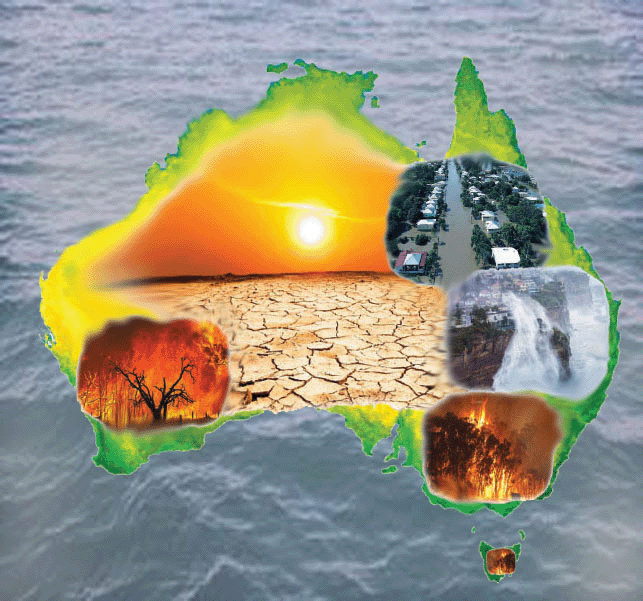
Climate change fuelled Australia’s devastating Black Summer – Climate Council Report

Summer of crisis https://apo.org.au/node/277911, 11 MAR 2020, Lesley Hughes, Will Steffen, Greg Mullins, Annika Dean, Ella Weisbrot, Martin Rice

Climate Council of Australia   Australia’s Black Summer of 2019-20 was characterised by catastrophic bushfires. The bushfire season started in winter and was the worst on record for New South Wales in terms of its intensity, the area burned, and the number of properties lost. It was also the worst season on record for properties lost in Queensland.

This report focuses on New South Wales and the Australian Capital Territory, because the effects of the bushfires were most severe in these areas, but we acknowledge that the bushfires affected Victoria, Queensland, South Australia, Western Australia and Tasmania.

Key findings:

Climate change fuelled Australia’s devastating Black Summer

  • Extremely hot, dry conditions, underpinned by years of reduced rainfall and a severe drought, set the scene for this summer’s unprecedented fires.
  • Cool season rainfall has declined in southeast Australia over the last two to three decades, while temperature records have been broken over and over. 2019 was Australia’s hottest, driest year on record. 2018-2019 was southeast Australia’s driest two-year period on record.
  • The Australian fire season has lengthened in NSW, decreasing the ability of land managers to conduct hazard reduction burns and increasing the number of fire danger days.

Australia’s Black Summer was unprecedented in scale and harm. The bushfire season was the worst on record for New South Wales in terms of the scale of the bushfires, the number of properties lost and the amount of area burned.

The bushfires are estimated to have spewed between 650 million and 1.2 billion tonnes of carbon dioxide into the atmosphere. That is equivalent to the annual emissions from commercial aircraft worldwide and is far higher than Australia’s annual emissions of around 531 million tonnes.

  • Climate change events are becoming increasingly economically devastating.
  • The tourism sector alone is set to lose at least $4.5 billion because of the bushfires. It is estimated that there was a 10-20 percent drop in international visitors booking holidays to Australia.
  • The bushfire smoke that blanketed Sydney is estimated to have cost the city $12-50 million per day.
  • More than 23,000 bushfire related insurance claims were lodged across New South Wales, Queensland, South Australia and Victoria between November and February, totalling an estimated value of $1.9 billion.

The summer of 2019-20 saw unprecedented climate impacts fuelled by the burning of coal, oil and gas.

  • The hot, dry conditions that fuelled these fires will continue to worsen without substantial, concerted action to rapidly phase out coal, oil and gas.
  • Australia urgently needs a plan to cut our domestic greenhouse gas emissions to net zero and to phase out fossil fuel exports because we are one of the world’s largest polluters.
  • Taking action now will provide a chance to stabilise, then eventually reduce disaster risks for future generations.
  • Clearly, what Australia does matters and the longer we delay, the harder the problem will be to solve. We simply cannot leave this mess for our children to try to fix.

March 12, 2020 Posted by Christina Macpherson | ACT, New South Wales | Leave a comment

The climate denialist spin machine – the “Anti-Greta” in Australia

In denial: The spin machine upending the climate consensus, DW, 11 Mar, 20   Climate law rollbacks in the US and Australia have origins in libertarian think tanks that trade in climate denial. Investigative journalists have exposed how one is now trying to strip climate protections in Germany…….

….young and upcoming German YouTuber and “influencer,” Naomi Seibt.   Anti-Greta’

The 19-year-old was also in Madrid during the climate denial side event dubbed the Climate Reality Forum, where she spoke on behalf of Heartland. “These days, what scientists say about climate change isn’t really science,” she said.

Since her February 28 appearance at the Conservative Political Action Conference (CPAC) in the US, global media has dubbed the self-described “climate realist” as the “anti-Greta,” a rising counter to climate activist icon Greta Thunberg. Seibt has embraced the moniker, and during a FOX News interview on the eve of CPAC said that “CO2 emissions are not actually harmful to the planet” while also railing against “climate change propaganda.”………

Outsized influence.   In Australia, climate disinformation campaigns with Heartland links have also helped to depress support for climate action and roll back protections.

Nearly a decade ago, Australia instituted a carbon price and a tax on mining industry profits that made it a climate leader. But both those policies were repealed in 2014 following a misinformation campaign headed by Australia’s incoming conservative prime minister at the time, Tony Abbott — a poster boy for the Heartland Institute and a speaker at climate skeptic conferences who fearmongered about a “carbon tax.” Six years later, Australia is ranked last in climate policy among developed nations.

According to Australian scientist, author and climate analyst Ketan Joshi, a watershed moment in this reversal came in 2011 when Britain’s arch climate denier, Lord Christopher Monckton, told mining industry leaders that Australia needed a news outlet akin to Rupert Murdoch-owned Fox News in the US to fight “bogus” climate science. Monckton also spoke at the Madrid climate skeptic conference in December.

Murdoch’s Sky News soon became that voice, says Joshi, the news channel hiring vocal climate skeptics as regular political pundits who call out “global warming rubbish.” Their voices also echo across Murdoch publications that make up around 70% of the print media market in Australia.

Naomi Seibt inevitably took her bow on Sky last week, telling viewers that Fridays for Future rallies in Germany had been infiltrated by radical anti-fascist protesters. Billed as the “anti-Greta sensation,” she also claimed that “Greta Thunberg never talks about the science,” and that climate alarmism will lead to “energy poverty.” This despite Thunberg’s now famous entreaty to “listen to the scientists.”

‘Instilling doubt’  “It’s not about the science,” says Joshi. “It’s about instilling doubt, it’s about making people distrust information that they receive — even if it’s from a trustworthy source.”

Back in Madrid, Taylor also offered the PRs the services of another young YouTuber, his daughter Tiffany. Her latest video argues that climate change has increased rainfall in Australia, and that the recent megafires were primarily caused by arsonists.

The discredited theory that arson was to blame for the intensity of Australia’s unprecedented bushfire season was pushed globally by climate deniers fighting back against the consensus that global heating is the culprit. Donald Trump, Jr, for example, helped the arsonist meme go viral by tweeting about an “exclusive” in Rubert Murdoch’s The Australian newspaper that promoted the debunked theory.  …….https://www.dw.com/en/trump-climate-change-denial-emissions-environment-germany-fake-heartland-seibt/a-52688933

March 12, 2020 Posted by Christina Macpherson | AUSTRALIA - NATIONAL, spinbuster | Leave a comment

« Previous Entries     Next Entries »

1 This month.

PETITION – To: Prime Minister Anthony Albanese and the Australian Labor Government

No Nuclear Weapons in Australia

Chernobyl: The Lost Tapes – A good documentary on Chernobyl on SBS available On Demand for the next 3 weeks– https://www.sbs.com.au/ondemand/tv-program/chernobyl-the-lost-tapes/235274195556

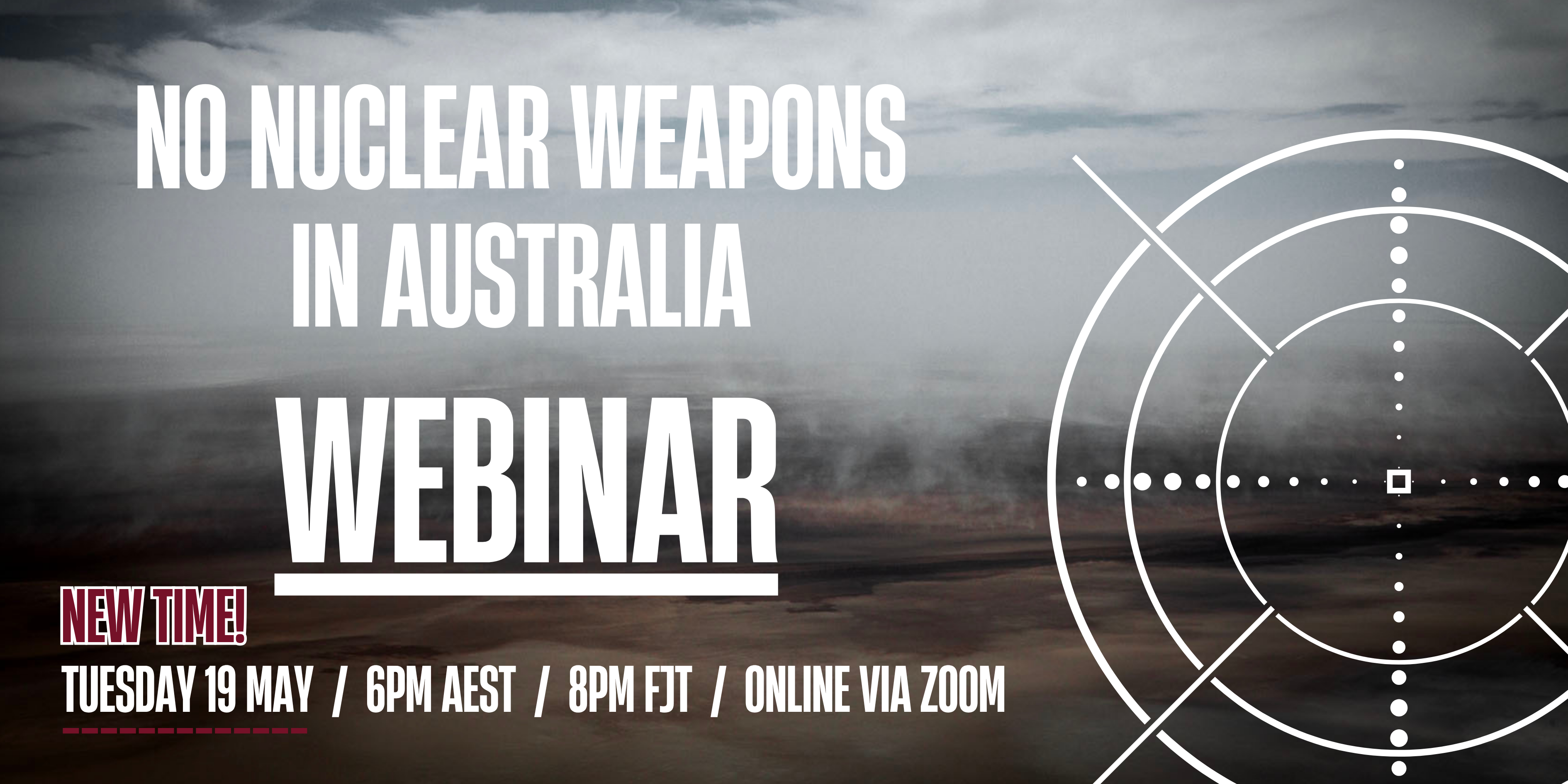
19 May – Webinar- Webinar: No Nuclear Weapons in Australia

Start: 2026-05-19 18:00:00 UTC Canberra, Melbourne, Sydney (GMT+10:00)

End: 2026-05-19 19:30:00 UTC Canberra, Melbourne, Sydney (GMT+10:00)

20 May – Webinar – The dangerous world of AUKUS, US, military occupation and suppression of dissent

National Webinar, 20th May, 2026, 6.30pm AEST. Confronting laws restricting/suppressing protest speech and action

Speakers: Former Sen. Rex Patrick, Lawyer Nick Hanna ,Arthur Rorris ,Jorgen Doyle, Sen David Shoebbridge,

Facilitator Kelley Tranter.

of the week – Australians for War Powers Reform (AWPR)

​To see nuclear-related stories in greater depth and intensity

– go to https://nuclearinformation.wordpress.com/

  • Pages

    • 1 This month.
    • Disclaimer
    • Kimba waste dump Submissions
      • NUCLEAR ROYAL COMMISSION
      • Submissions on Radioactive Waste Code 2018
      • SUBMISSIONS TO SENATE INQUIRY 18
    • – Alternative media
    • – marketing nuclear power
    • business and costs
    • – Spinbuster 2011
    • Nuclear and Uranium Spinbuster – theme for June 2013
    • economics
    • health
    • radiation – ionising
    • safety
    • Aborigines
    • Audiovisual
    • Autralia’s Anti Nuclear Movement – Successes
    • climate change – global warming
    • energy
    • environment
    • Fukushima Facts
    • future Australia
    • HEALTH and ENVIRONMENT – post Fukushma
    • media Australia
    • Peace movement
    • politics
    • religion – Australia
    • religion and ethics
    • Religion and Ethics
    • secrets and lies
    • Spinbuster
    • spinbuster
    • wastes
    • ethics and nuclear power – Australia
    • nuclear medicine
    • politics – election 2010
    • secrecy – Australia
    • SUBMISSIONS to 2019 INQUIRIES
    • weapons and war
  • Follow Antinuclear on WordPress.com
  • Follow Antinuclear on WordPress.com
  • Blogroll

    • Anti-Nuclear and Clean Energy Campaign
    • Beyond Nuclear
    • Exposing the truth about thorium nuclear propaganda
    • NUCLEAR INFORMATION
    • nuclear news Australia
    • nuclear-news
  • Categories

    • 1
    • ACTION
    • Audiovisual
    • AUSTRALIA – NATIONAL
      • ACT
      • INTERNATIONAL
      • New South Wales
      • Northern Territory
      • Queensland
      • South Australia
        • NUCLEAR ROYAL COMMISSION 2016
          • Nuclear Citizens Jury
          • Submissions to Royal Commission S.A.
            • significant submissions to 6 May
      • Tasmania
      • Victoria
      • Western Australia
    • Christina reviews
    • Christina themes
    • Fukushima
    • Fukushima 2022
    • General News
    • Japan
    • Olympic Dam
    • Opposition to nuclear
    • reference
    • religion and ethics
    • Resources
    • TOPICS
      • aboriginal issues
      • art and culture
      • business
        • employment
        • marketing for nuclear
      • civil liberties
      • climate change – global warming
      • culture
      • energy
        • efficiency
        • solar
        • storage
        • wind
      • environment
      • health
      • history
      • legal
      • media
      • opposition to nuclear
      • people
      • personal stories
      • politics
        • election 2013
        • election 2016
        • election 2019
        • Submissions Federal 19
      • politics international
      • religion and ethics
      • safety
        • – incidents
      • secrets and lies
      • spinbuster
        • Education
      • technology
        • rare earths
        • thorium
      • uranium
      • wastes
        • Federal nuclear waste dump
      • weapons and war
    • water
    • Weekly Newsletter
    • Wikileaks
    • women

Site info

Antinuclear
Create a free website or blog at WordPress.com.
Privacy & Cookies: This site uses cookies. By continuing to use this website, you agree to their use.
To find out more, including how to control cookies, see here: Cookie Policy
  • Subscribe Subscribed
    • Antinuclear
    • Join 864 other subscribers
    • Already have a WordPress.com account? Log in now.
    • Antinuclear
    • Subscribe Subscribed
    • Sign up
    • Log in
    • Report this content
    • View site in Reader
    • Manage subscriptions
    • Collapse this bar

Loading Comments...