Support for nuclear power will evaporate at next election, Chris Bowen predicts
Polling shows that Australians prefer renewables, climate change and energy minister says
Adam Morton Climate and environment editor, https://www.theguardian.com/australia-news/2024/nov/04/nuclear-power-support-australia-election-chris-bowen
Support for nuclear power is likely to evaporate once Australians face a clear choice at the next election and realise the Coalition’s policy would mean relying more on old coal plants and increased risk of blackouts, Chris Bowen says.
The climate change and energy minister said that while some polling had suggested some voters were open to nuclear plants being allowed in Australia surveys had also consistently found they preferred renewable energy.
“Every bit of research I’ve seen, public and private, says that when shown details and given a choice between nuclear and other forms of energy, nuclear fares very, very badly,” he said. “If you look at the popularity of different forms of energy, it’s solar, wind, gas, daylight, coal, nuclear, in that order, every single time.”
Support for nuclear power is likely to evaporate once Australians face a clear choice at the next election and realise the Coalition’s policy would mean relying more on old coal plants and increased risk of blackouts, Chris Bowen says.
The climate change and energy minister said that while some polling had suggested some voters were open to nuclear plants being allowed in Australia surveys had also consistently found they preferred renewable energy.
“Every bit of research I’ve seen, public and private, says that when shown details and given a choice between nuclear and other forms of energy, nuclear fares very, very badly,” he said. “If you look at the popularity of different forms of energy, it’s solar, wind, gas, daylight, coal, nuclear, in that order, every single time.”
The Coalition has named seven sites where it says it would eventually replace coal-fired power plants with nuclear plants but not how much this would cost. Multiple energy analysts argue nuclear energy would be more expensive than other options and a nuclear industry would not be possible in Australia until after 2040. The bulk of the country’s coal plants are scheduled to close in the 2030s.
The opposition has suggested it would limit the rollout of large-scale renewable energy – it has criticised Labor’s goal of 82% renewable energy by 2030 – and bridge the gap by keeping ageing coal plants running longer and using more gas-fired power.
It has not yet said what type of gas plants this means. With nuclear banned, gas is the most expensive form of electricity in the national electricity market and it use is largely restricted to “peaking” power turned on only when needed. It provided less than 3% of electricity in the national grid over the past month.
The chair of the Australian Energy Regulator, Claire Savage, told a parliamentary inquiry she did not believe that nuclear plants could be built in enough time to cover the closure of coal-fired power plants. More than a quarter of the coal power capacity in the national grid was offline on the day she gave evidence due to planned and unplanned outages.
Australia votes at the UN General Assembly

A few days ago, Australia voted on a number of nuclear weapons resolutions at the UN General Assembly. Thank you to the hundreds of you that emailed Foreign Minister Wong urging Australia to vote in the right way! In good news, Australia voted “Yes” on the scientific research resolution (L.39) supporting a major new UN-mandated study on the effects of nuclear weapons. Several nuclear-armed states were trying to mobilise supporters to vote against this resolution so we know they are threatened by it. Knowledge is power!
Disappointingly, Australia continued its abstention on the TPNW resolution (L.37) and humanitarian impacts resolution (L.36), instead of voting “Yes”.
Earlier in October ICAN visited Parliament to advocate for the TPNW with parliamentarians across the political spectrum. We were also delighted to have met with Siswo Pramono, Indonesia’s Ambassador to Australia, and congratulate him on Indonesia’s recent ratification of the TPNW. Mr Pramono addressed the Parliamentary Friends of the TPNW group and stated that the success of the TPNW also hinges upon the participation of countries who possess nuclear weapons. “We need a concerted effort to convince them to become Parties to the Treaty,” he said. “In doing so, leadership from developed countries such as Australia is needed.”
New Paper: Nuclear Weapons and Our Climate

Today, we are launching a new briefing paper: ‘Nuclear Weapons and Our Climate’ written by ICAN co-founder, A/Prof Tilman Ruff AO.
In the lead up to the climate COP29, this timely paper sharply lays out how the “two paramount human-made existential threats we confront—nuclear weapons and climate change—exacerbate each other and need to be addressed together—with utmost urgency,” writes A/Prof Ruff. “One harms us and our biosphere every day, the other could deplete it irrevocably and end human civilisation and many species in less than a day.”
The paper’s key findings are:
- Smoke from burning cities ignited by a nuclear war involving 2% of the global arsenal would suddenly plummet temperatures worldwide to ice age levels, decimate agriculture, disrupt ocean food chains and starve to death over two billion people.
- Militaries are large and mostly unconstrained greenhouse gas emitters. Growing conflicts and nuclear threats undermine international cooperation needed to address the climate crisis. Rising military spending and nuclear arsenals have huge opportunity costs and make conflicts more dangerous. An increased risk of war leading to nuclear escalation is the greatest danger of the climate crisis.
- Nuclear power inseparably creates the capacity to build nuclear weapons. In most nuclear-armed states, the infrastructure, personnel, expertise, industrial capacity and government investments in nuclear power are also key to their nuclear weapons programs.
- Nuclear reactors, spent fuel storage ponds and reprocessing plants are effectively pre-positioned large radiological weapons, vulnerable to direct attack or disruption of power and water for essential cooling. Russia’s invasion of Ukraine has seen, for the first time, multiple nuclear power plants attacked and weaponised in war, risking a radiological disaster.
| The paper is a call to action, as “everyone everywhere, everything we treasure and our living planet is threatened by nuclear weapons, this is everyone’s business.” Please share the report with your friends and networks and discuss how you can help prevent climate disruption and nuclear war in your work and daily lives. |
Grazing sheep among solar panels could produce higher quality wool, study finds
Sophie Vorrath, Nov 1, 2024,
https://reneweconomy.com.au/grazing-sheep-among-solar-panels-could-produce-higher-quality-wool-study-finds/
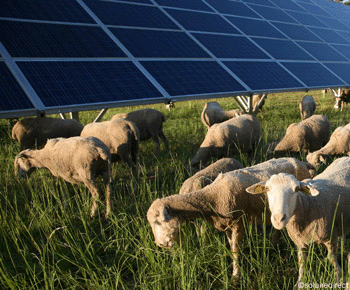
The co-location of solar farming with sheep grazing does not have a negative affect on wool production and could even improve the quality of the wool produced, a new study has found.
The study is based on the results of a second round of wool testing at the Wellington solar farm, south east of Dubbo in New South Wales, which has shared its site with 1,700 merino sheep for the past three years.
Legend has it that the decision to graze sheep at the solar farm came about when an employee of Lightsource bp, the owner of the Wellington project, complained to a local, sixth-generation wool farmer about the hassle and cost of mowing the solar farm six times a year.
According to Tony Inder, who heads up the Allendale Merino Stud, the effect on his sheep has been a lot better than he thought it would be – he says the wool quality they are producing has “increased significantly.”
But Lightsource bp – which is now wholly owned by the oil and gas giant BP, after completing the acquisition of the remaining 50.03% interest – has used the opportunity to gather some formal data.
The study, conducted by EMM Consulting with support from Elders Rural Services, compares two groups of merino sheep – one group grazed in a regular paddock and the other at the Wellington solar farm.
The latest findings show grazing sheep among solar panels does no harm to wool production, even in the case of pre-existing high-quality standards. And it says that some parameters even indicate an improvement in wool quality, although conclusive benefits require further long-term measurement.
Lightsource bp says that while the study at the Wellington solar farm is ongoing, it is another indication that solar farms can exist side-by-side with sheep farming, for the benefit of both enterprises.
“These results are very encouraging and highlight the potential for solar farms to complement agricultural practices,” says Emilien Simonot, Lightsource bp’s head of agrivoltaics.
“By integrating sheep farming with solar energy production, we can achieve dual benefits of sustainable energy together with agricultural output.” . By co-locating grazing with renewable energy, land can remain in agricultural use, offering farmers additional revenue while contributing to cleaner energy for the planet.
“Finding ways for agriculture and clean energy to work together is crucial for a more sustainable future,” says Brendan Clarke, interim head o environmental planning Australia and NZ at Lightsource bp.
“The promising results from this study indicate that we are on the right path, and working closely with farmers to grow our knowledge in this area is paramount.”
As for the sheep, Inder says they “just do really well” when grazing among the Wellington solar farm panels.
“I like to say that panel sheep are happy sheep.”
Sophie is editor of One Step Off The Grid and deputy editor of its sister site, Renew Economy. She is the co-host of the Solar Insiders Podcast. Sophie has been writing about clean energy for more than a decade.
Dangerous Hype: Big Tech’s Nuclear Lies

M.V. Ramana, November 1, 2024, https://www.counterpunch.org/2024/11/01/big-techs-nuclear-lies/
In the last couple of months, Microsoft, Google, and Amazon, in that order, made announcements about using nuclear power for their energy needs. Describing nuclear energy using questionable adjectives like “reliable,” “safe,” “clean,” and “affordable,” all of which are belied by the technology’s seventy-year history, these tech behemoths were clearly interested in hyping up their environmental credentials and nuclear power, which is being kept alive mostly using public subsidies.
Both these business conglomerations—the nuclear industry and its friends and these ultra-wealthy corporations and their friends—have their own interests in such hype. In the aftermath of catastrophic accidents like Chernobyl and Fukushima, and in the face of its inability to demonstrate a safe solution to the radioactive wastes produced in all reactors, the nuclear industry has been using its political and economic clout to mount public relations campaigns to persuade the public that nuclear energy is an environmentally friendly source of power.
Tech giants like Microsoft, Amazon, and Google, too, have attempted to convince the public they genuinely cared for the environment and really wanted to do their bit to mitigate climate change. In 2020, for example, Amazon pledged to reach net zero by 2040. Google went one better when its CEO declared that “Google is aiming to run our business on carbon-free energy everywhere, at all times” by 2030. Not that they are on any actual trajectory to meeting these targets.
Why are they making such announcements?
Greenwashing environmental impacts
The reasons underlying these companies investing in such PR campaigns is not hard to discern. There is growing awareness of the tremendous environmental impacts of the insatiable appetite for data from these companies, as well as the threat they pose to already inadequate efforts to mitigate climate change.

Earlier this year, the Wall Street company Morgan Stanley estimated that data centers will “produce about 2.5 billion metric tons of carbon dioxide-equivalent emissions through the end of the decade”. Climate scientists have warned that unless global emissions decline sharply by 2030, we are unlikely to limit global temperature rise to 1.5 degrees Celsius, a widely shared target. Even without the additional carbon dioxide emitted into the air as a result of data centers and their energy demand, the gap between current emissions and what is required is yawning.

But it is not just the climate. As calculated by a group of academic researchers, the exorbitant amounts of water required in the United States “to operate data centers, both directly for liquid cooling and indirectly to produce electricity” contribute to water scarcity in many parts of the country. This is the case elsewhere, too, and communities in countries ranging from Ireland to Spain to Chile are fighting plans to site data centers.
Then, there are the indirect impacts on the climate. Greenpeace documented, for example, that “Microsoft, Google, and Amazon all have connections to some of the world’s dirtiest oil companies for the explicit purpose of getting more oil and gas out of the ground and onto the market faster and cheaper.” In other words, the business models adopted by these tech behemoths depend on fossil fuels being used for longer and in greater quantities.

In addition to the increasing awareness about the impacts of data centers, one more possible reason for cloud companies to become interested in nuclear power might be what happened to cryptocurrency companies. Earlier this decade, these companies, too, found themselves getting a lot of bad publicity due to their energy demands and resulting emissions. Even Elon Musk, not exactly known as an environmentalist, talked about the “great cost to the environment” from cryptocurrency.
The environmental impacts of cryptocurrency played some part in efforts to regulate these. In September 2022, the White House put out a fact sheet on the climate and energy implications of Crypto-assets, highlighting President Biden’s executive order that called on these companies to reduce harmful climate impacts and environmental pollution. China even went as far as to banning cryptocurrency, and its aspirations to reducing its carbon emissions was one factor in this decision.

Crypto bros, for their part, did what cloud companies are doing now: make announcements about using nuclear power. Amazon, Google, and Microsoft are now following that strategy to pretend to be good citizens. However, the nuclear industry has its reasons for welcoming these announcements and playing them up.
The state of nuclear power
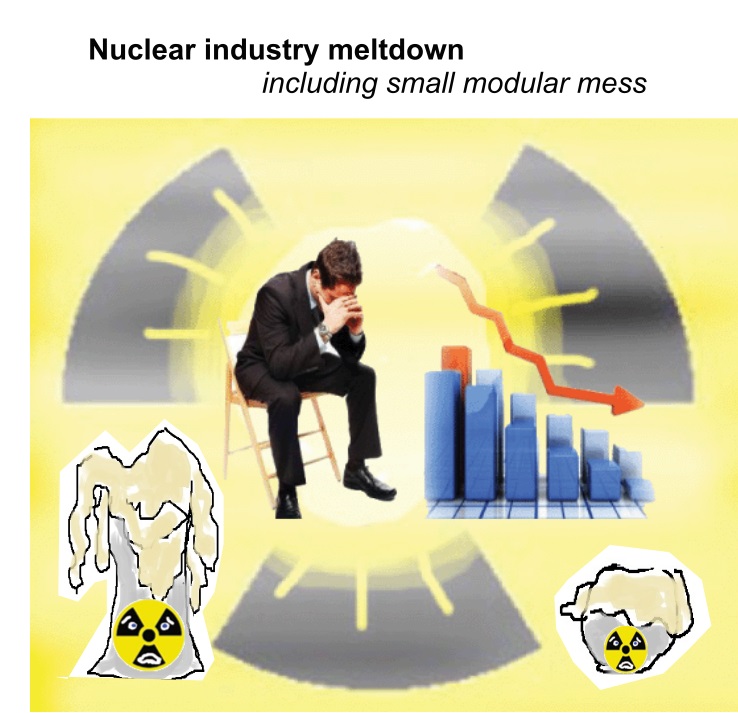
Strange as it might seem to folks basing their perception of the health of the nuclear industry on mainstream media, that technology is actually in decline. The share of global electricity produced by nuclear reactors has decreased from 17.5% in 1996 to 9.15% in 2023, largely due to the high costs of and delays in building and operating nuclear reactors.
A good illustration is the Vogtle nuclear power plant in the state of Georgia. When the utility company building the reactor sought permission from the Nuclear Regulatory Commission in 2011, it projected a total cost of $14 billion, and “in-service dates of 2016 and 2017” for the two units. The plant became operational only this year, after the second unit came online in March 2024, at a total cost of at least $36.85 billion.
Given this record, it is not surprising that there are no orders for any more nuclear plants.

As it has been in the past, the nuclear industry’s answer to this predicament is to advance the argument that new nuclear reactor designs would address all these concerns. But that has, yet again, proved not to be the case. In November 2023, the flagship project of NuScale, the small modular reactor design promoted as the leading one of its kind, collapsed because of high costs.
Supporters of nuclear power are now using another time-tested tactic to promote the technology: projecting that energy demand will grow so much that no other source of power will be able to meet these needs. For example, UK energy secretary Ed Davey resorted to this gambit in 2013 when he said that the Hinkley Point C nuclear plant was essential to “keep the lights on” in the country.
Likewise, when South Carolina Electric & Gas Company made its case to the state’s Public Service Commission about the need to build two AP1000 reactors at its V.C. Summer site—this project was subsequently abandoned after over $9 billion was spent—it forecast in its “2006 Integrated Resource Plan” that the company’s energy sales would increase by 22 percent between 2006 and 2016, and by nearly 30 percent by 2019.
This is the argument that the growth in data centres, propped up in part by the hype about generative artificial intelligence, has allowed proponents of nuclear energy to put forward. It remains to be seen whether this hype about generative AI actually materializes into a long-term sustainable business: see, for example, Ed Zitron’s meticulously documented argument for why OpenAI and Microsoft are simply burning billions of dollars and why their business model might “simply not be viable”.
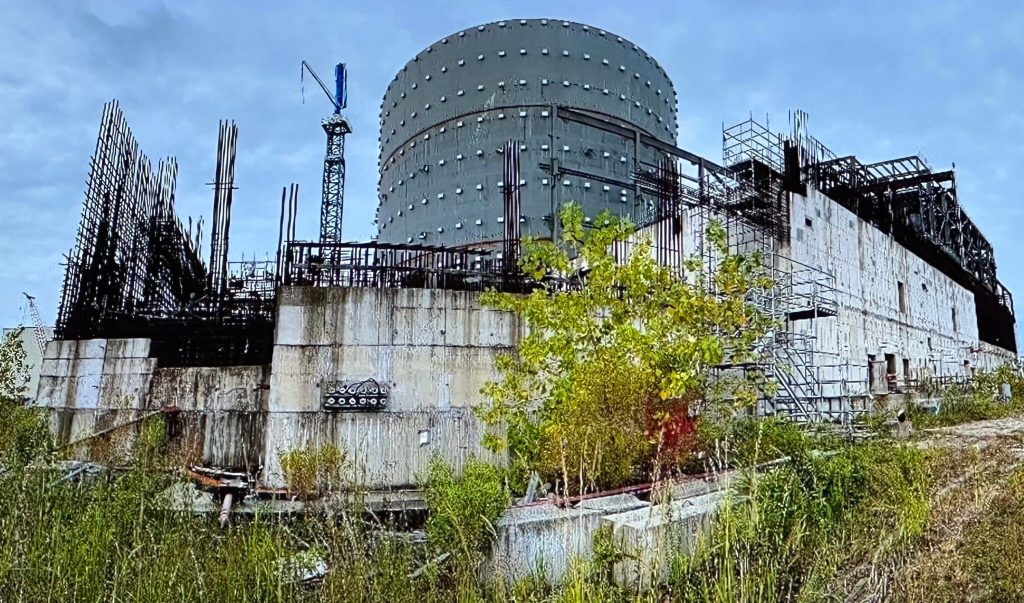
In the case of the V.C. Summer project, South Carolina Electric & Gas found that its energy sales actually declined by 3 percent compared to 2006 by the time 2016 rolled around. Of course, that did not matter, because shareholders had already received over $2.5 billion in dividends and company executives had received millions of dollars in compensation, according to Nuclear Intelligence Weekly, a trade publication.
One wonders which executives and shareholders are going to receive a bounty from this round of nuclear hype.
What about emissions?
Will the investments in nuclear power by companies like Google, Microsoft, and Amazon help reduce emissions anytime soon?

The project expected to have the shortest timeline is the restart of the Three Mile Island Unit 1 reactor, which Constellation Energy projects will be ready in 2028. But if the history of reactor commissioning is anything to go by, that deadline will come and go without any power flowing from it.
Restarting a nuclear plant that has been shutdown has never been done before. In the case of the Diablo Canyon nuclear plant in California, which hasn’t been shut down but was slated for decommissioning in 2024-25 till Governor Gavin Newsom did a volte-face, the Chair of the Diablo Canyon Independent Safety Committee explained why doing so was very difficult: “so many different programs and projects and so on have been put in place over the last half a dozen years predicated on that closure in 2024-25 and each one of those would have to be evaluated and some of them are okay, and some of them won’t be and some are going to be a real stretch and some are going to cost money and some of them aren’t going to be able to be done maybe”.

The cost of keeping Diablo Canyon open has been estimated by the plant’s owner at $8.3 billion and by independent environmental groups at nearly $12 billion. There are no reliable cost estimates for reopening Three Mile Island, but Constellation Energy, the plant’s owner, is already seeking a taxpayer-subsidized loan that would likely save the company $122 million in borrowing costs.
One must also remember that Microsoft already announced an agreement with Helion Energy, a company backed by billionaire Peter Thiele, to get nuclear fusion power by 2028. The chances of that happening are slim at best. In 2021, Helion announced that it had raised $500 million to build its fusion generation facility that would demonstrate “net electricity production” in three years, i.e., “in 2024”. That hasn’t happened so far. But going back further, one can see a similar and unfulfilled claim from 2014: then, the company’s chief executive had told the Wall Street Journal that the company hoped that its product would generate more energy than it would use “in the next three years” (i.e., in 2017). It is quite likely that Microsoft’s decision-makers knew of how unlikely it is that Helion will be able to supply nuclear fusion power by 2028. The publicity value is the most likely reason for announcing an agreement with Helion.
What about the small modular nuclear reactor designs—X-energy and Kairos—that Amazon and Google are betting on? Don’t hold your breath.
X-energy is an example of a high-temperature gas-cooled reactor design that dates back to the 1940s. There have been four reactors based on similar concepts that were operated commercially, two in Germany and two in the United States, respectively, and test reactors in the United Kingdom, Japan, and China. Each of these reactors proved problematic, suffering a variety of failures and unplanned shutdowns. The latest reactor with a similar design was built in China. Its performance leaves much to be desired: within about a year of being connected to the grid, its power output was reduced by 25 percent of the design power capacity, and even at this lowered capacity, it operated in 2023 with a load factor of just 8.5 percent.

Kairos, on the other hand, will be challenged by its choice of molten salts as coolant. These are chemically corrosive, and decades of search have identified no materials that can survive for long periods in such an environment without losing their integrity. The one empirical example of a reactor that used molten salts dates back to the 1960s, and this experience proved very problematic, both when the reactor operated and in the half-century thereafter, because managing the radioactive wastes produced before 1970 continued to be challenging.
Simply throwing money will not overcome these problems that have to do with fundamental physics and chemistry.
Just a dangerous distraction
Although Amazon, Google, and Microsoft claim to be investing in nuclear energy to meet the needs of AI, the evidence suggests that their real motive is to greenwash themselves.
Their investments are small and completely inadequate with relation to how much is needed to build a reactor. But their investments are also very small compared to the bloated revenues of these corporations. So, from the viewpoint of top executives, investing in nuclear power must seem a cheap way to reduce bad publicity about their environmental footprints. Unfortunately, “cheap” for them does not translate to cheap for the rest of us, not to mention the burden to future generations of human beings from worsening climate change and, possibly, increased production of radioactive waste that will stay hazardous for hundreds of thousands of years.
Because nuclear power has been portrayed as clean and a solution to climate change, announcements about it serve as a flashy distraction to focus public attention on. Meanwhile, these companies continue to expand their use of water and draw on coal and especially natural gas plants for their electricity. This is the magician’s strategy: misdirecting the audience’s attention while the real trick happens elsewhere. Their talk about investing in nuclear power also distracts from the conversations we should be having about whether these data centers and generative AI are socially desirable in the first place.
There are many reasons to oppose and organize against the wealth and power exercised by these massive corporations, such as their appropriation of user data to engage in what has been described as surveillance capitalism, their contracts with the Pentagon, and their support for Israel’s genocide and apartheid. Their investment into nuclear technology, and more importantly, hyping it up, offers one more reason. It is also a chance to establish coalitions between groups involved in very different fights.
M. V. Ramana is the Simons Chair in Disarmament, Global and Human Security at the School of Public Policy and Global Affairs, University of British Columbia and the author of The Power of Promise: Examining Nuclear Energy in India.
5 November Protest weapons manufacturer conference in Canberra.
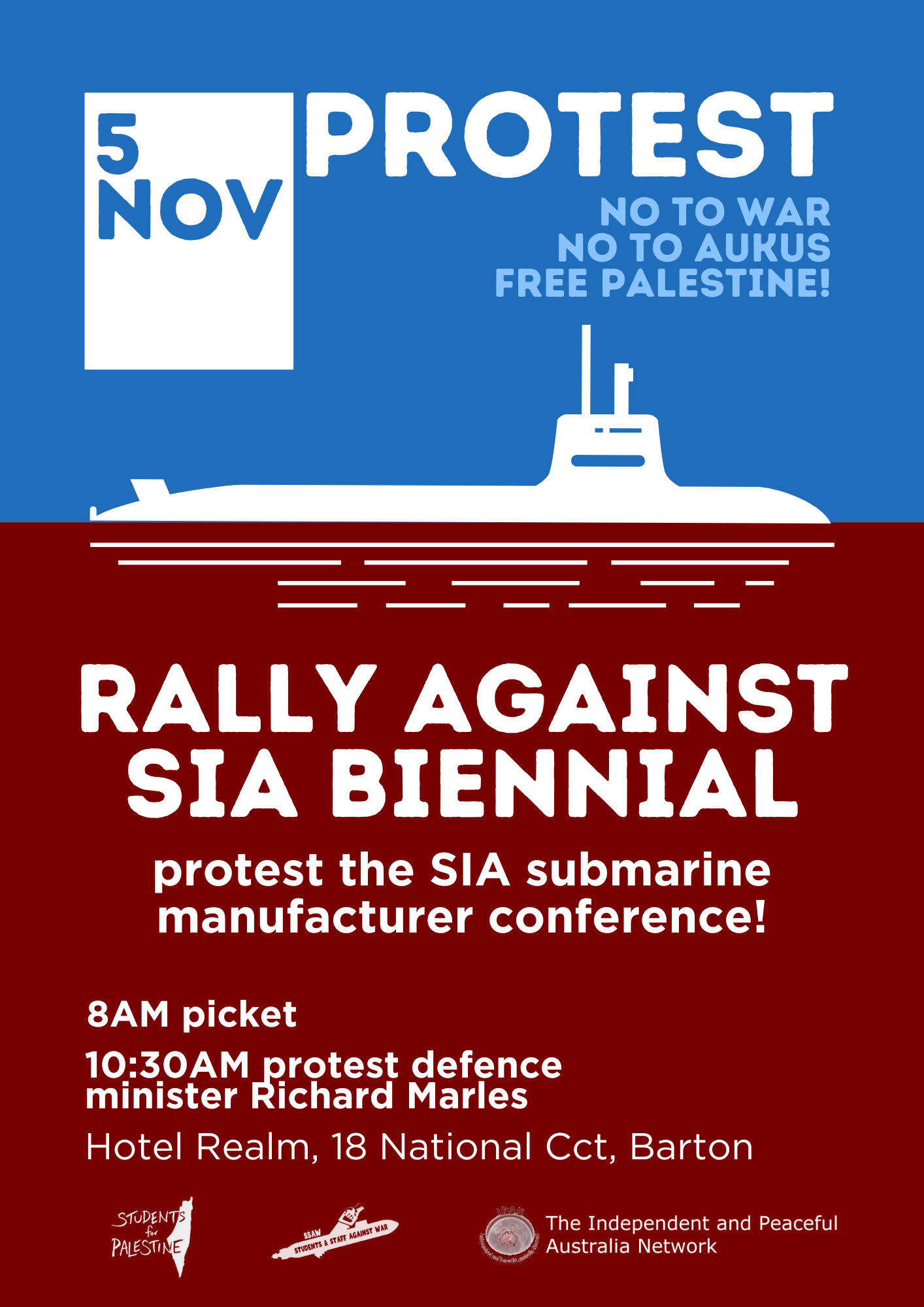
Defence minister Richard Marles will be in attendance – picket the conference starting 8am, Marles speaking at 10:30am, Hotel Realm, Barton.
Canadians are waking up to the nuclear scam. Why are the media and other nations pretending that nuclear is just dandy?

I do read quite a few criticisms of the nuclear industry, from various non-profit groups. But lately, there’s a whole heap of them from Canada. And the unnerving thing is that these pesky Canadians are giving “chapter and verse” – facts and figures on how bad things really are, for the nuclear industry.
Of course, the Canadian, and indeed, the global nuclear lobby too, are pretending not to notice this. (But they must be a tad worried, lest too many intelligent people in other countries catch on to this annoying attention to detail)
Susan O’Donnell writes about New Brunswick’s nuclear fantasies – the history of successive governments pouring tax-payers’ money into “advanced” reactor designs that are known by reputable scientists to be commercially unviable. -The Higgs government passing legislation forcing NB Power to buy electricity, at any price, from SMRs if they are ever built and actually work.
The companies involved have been unable to entice private investors, and are unlikely to get federal funding. NB Power’s $5.4-billion debt is mainly due to the poor performance of its Point Lepreau nuclear reactor. New Brunswickers are facing a 19.4 per cent increase in electricity rates. “Keeping the Point Lepreau and SMR fantasies alive will require considerable effort from the new government. “
Another recent example – from the Seniors for Climate Action Now! (SCAN):
They point out :
- the scandal-ridden nuclear history.
- the revolving door between government officials and nuclear industry well-paid jobs.
- the government/industry nuclear pitch to NATO- “Ontario is selling itself as the nuclear North Star to guide the direction of American power”.
- the failure of theNuScale SMR project.
- OPG’s lengthy submission on small nuclear reactors is full of the things that could go wrong.
- the over $40billion cost of refurbishing old end-of-life reactors.
- New nuclear reactors at over $60billion
They raise such awkward questions about “Ontario’s journey to becoming an energy superpower”

But then, I forgot that this comes from Seniors. And I’ve just remembered that the nuclear industry is all about the young cool and trendy.
There are so many views from Canadians exploding the nuclear propaganda. And they’re not all old fogeys.
Low-level nuclear waste from submarines to be stored at Osborne, South Australia
Adelaide Now, 30 Oct 24
Legislation passed will see a “radioactive waste facility’’ built in an Adelaide suburb, but federal and state ministers maintain it will only house “low level’’ material. Have your say.
Low-level radioactive waste generated by the building of the AUKUS nuclear submarines will be stored at Port Adelaide after legislation passed the federal parliament allowing for the construction of a “waste management facility’’.
However federal Defence Minister Richard Marles and his state counterpart Stephen Mullighan both denied any “intermediate’’ or “high-level” waste will be stored at the Osborne submarine facility, in Adelaide’s western suburbs
A spokesperson for Mr Marles said “submarine construction, test and commissioning activities planned for Osborne will generate small amounts of low-level radioactive waste’’, including personal protective equipment.
“This low-level radioactive waste will need to be managed and temporarily stored in a licensed facility,’’ the spokesperson said. “No intermediate-level waste or high-level radioactive waste (spent nuclear fuel) will be managed or stored in the facility.’’
Both the Albanese Labor government and the Peter Dutton-led Liberal opposition voted in favour of the Australian Naval Nuclear Power Safety Bill. The Bill ‘’regulate activities relating to conventionally armed, nuclear powered submarines’’.
Do you support a “radioactive waste facility’’ being built at the Osborne submarine base
Yes: It’s the right spot for it
69 %
No, I don’t want it anywhere in SA
31 %
563 votes
It names Osborne as a “designated zone’’ where “a facility for managing, storing or disposing of radioactive waste’’ could be built. The legislation does not specify what level of radioactive waste could be stored.
The legislation has sparked a community backlash, with a change.org petition started by former Liberal candidate Jake Hall-Evans already reaching almost 4000 signatures.
Mr Hall-Evans said there had been a lack of transparency about the possibility of a nuclear waste dump at Osborne.
“The people of Port Adelaide were promised submarine jobs, not a nuclear waste dump,’’ Mr Hall-Evans said.
He said Australia had struggled to find a suitable location for low-level radioactive waste, with a proposed facility at Kimba on the state’s Eyre Peninsula knocked back last year.
Premier Peter Malinauskas also opposed the dump at Kimba.
South Australian Greens Senator Sarah Hanson-Young said the new law was a “dangerous disaster for our state’’.
“This is toxic for South Australia,’’ Ms Hanson-Young, who is holding a nuclear forum at the Burnside Town Hall in the marginal seat of Sturt on Thursday.
“Peter Dutton not only wants nuclear reactors across Australia – he wants Adelaide to be an international dumping ground for nuclear waste,’’ she said.
A spokesperson for Port Adelaide Enfield Council said it had “not been consulted or advised of any licences being approved for a radioactive or nuclear waste storage site at Osborne’’.
Defence Minister Stephen Mullighan said there was “no proposal or capacity for nuclear waste, including low-level waste to be stored in the long term’’. term’’.
Yeah, Yeah, United Nations Relief and Works Agency (UNRWA) Is Hamas. Everyone Israel Hates Is Hamas.
Caitlin Johnstone Oct 30, 2024, https://www.caitlinjohnst.one/p/yeah-yeah-unrwa-is-hamas-everyone?utm_source=post-email-title&publication_id=82124&post_id=150919007&utm_campaign=email-post-title&isFreemail=true&r=1ise1&triedRedirect=true&utm_medium=email
The Israeli Knesset has banned UNRWA, an absolutely critical agency for getting humanitarian aid into Gaza, with the architect of the bill saying this was happening because “UNRWA equals Hamas”.
In addition to everything else this genocide has been, it’s been a colossal insult to our intelligence. UNRWA is Hamas. Hospitals are Hamas. Journalists are Hamas. Civilian infrastructure is Hamas. Ambulances, schools and mosques are Hamas. The women and babies — okay maybe they’re not technically Hamas, but Hamas is definitely hiding behind them and using them as human shields.
We are asked to believe self-evidently idiotic things, and if we don’t, we get called Nazi Jew-haters. We are being asked to turn ourselves into empty-headed morons to advance the information interests of a foreign state that’s allied with our government. Stupidity is being framed as a sign of patriotism. Gullibility is being framed as a sign of rejecting antisemitism. In this morally bankrupt and perverse civilization, the noblest thing you can be is a blithering imbecile.
Axios and its Israeli intelligence insider Barak Ravid have penned yet another White House press release disguised as a news story about how “concerned” the Biden administration is about Israel’s actions in Gaza.
“The Biden administration is ‘deeply concerned’ that two bills passed by the Israeli Knesset on Monday will exacerbate the already dire humanitarian crisis in Gaza and harm Palestinians in East Jerusalem and the West Bank,” Ravid writes.
Oh shit you guys the Biden administration is deeply concerned that Israel is doing something bad in Gaza! You’re in trouble now, Bibi!
Like I said. Just one nonstop insult to our intelligence
CNN has issued an apology after its panelist Ryan Girdusky told fellow panelist Mehdi Hasan “I hope your pager doesn’t go off” after Hasan said he supports Palestinians. Israel supporters have been directing this “hurr hurr you should be murdered with an explosive pager” wisecrack at Israel’s critics for weeks, and apparently Girdusky just forgot where he was in the heat of the moment.
CNN was like, This network is shocked and appalled that our panelist joked about murdering a British Muslim journalist with an explosive beeper. That kind of language is only appropriate when directed at Muslims who live in the middle east.
Per the rules of the western empire you are a religious extremist if you want to fight against an occupying force who has been abusing you your entire life, but you are not a religious extremist if you want to carpet bomb the middle east to help fulfill a Biblical prophecy.
❖
MSNBC’s Rachel Maddow is back to pushing her “Russians are interfering in the US election” narrative, so we know what we’ll be hearing again if Kamala loses. No matter who wins we can expect a bunch of outraged shrieking from the other side that the election was unfairly stolen from them.
The US presidential race is very openly a contest between two oligarch-owned Zionist war whores, and yet after the results are announced next week you’re still going to hear half the country going “OMG election interference! The election was stolen from us!”
It already was, you dopes. It was stolen before the race even started. The rest is just narrative.
I sure hope all the US progressives who obediently stopped talking about Gaza these last couple of months remember to start that thing up again after the election is over.
❖
I’m just gonna say this ahead of time so it’s out there: you don’t get to campaign on continuing a genocide and then blame other people when you lose. That is not a thing.
❖
“Trump will be worse on Gaza” is such an obnoxiously dishonest argument. It’s completely unfalsifiable and can’t even be tested after the election since abuses keep getting worse in Gaza anyway, and it’s based on nothing but the claim that very vague statements made by Trump prove he’ll facilitate Israeli atrocities more than the current administration already has been. It’s completely empty narrative fluff with no basis on the facts in evidence.
There are all kinds of legitimate cases to be made that Harris would be a little bit better than Trump on some aspects of domestic policy and the environment, but there is no case whatsoever to be made that he’ll be worse on Gaza than the administration that’s already committing genocide there. He could be worse, he could be a bit better, or he could be exactly the same. There’s no way to know, and there won’t be any way to know in a universe where we can’t observe alternate realities to compare what each presidential candidate would have done if they’d won. It’s an entirely unanswerable question that people are just pretending to know the answer to.
Harris and the Democrats have repeatedly attacked Trump for not starting a war with Iran when he was president. She criticized him for making John Bolton sad when he refused to bomb Iran. How is that less insanely pro-Israel than anything Trump has said?
If you want to argue that Harris will be better on reproductive rights or something then go ahead, but when it comes to Gaza don’t piss on my leg and tell me it’s raining.
Nuclear submarine shipyard fire at Barrow-in-Furness leaves two in hospital
Josh Halliday Hannah Al-Othman and Jasper Jolly Guardian, 31 Oct 24
Two people have been taken to hospital after a “significant” fire broke out at BAE Systems’ nuclear submarine shipyard in Cumbria.
Residents said they saw huge flames and smoke billowing from the complex in Barrow-in-Furness, where the UK’s new multi-billion-pound Dreadnought submarines are being built.
Cumbria police said there was no nuclear risk but two people were taken to hospital for suspected smoke inhalation. Police said: “At this time there are no other casualties and everyone else has been evacuated from the Devonshire Dock Hall and are accounted for.”
BAE said the two people taken to hospital were workers at the site and they have since been discharged. About 200 people were working on a night shift at the time the fire broke out.
…………………………………………………………….. Four nuclear submarines from the Dreadnought class are being built there as part of a £31bn programme, which is due to replace the Vanguard submarines in the early 2030s. The last of the Royal Navy’s seven new nuclear-powered submarines, part of the Astute class, is also being built at the site.
It is understood that the boat in the hall is HMS Agincourt, whose completion had already been delayed to 2026. The previous Astute class, HMS Agamemnon, was launched last month. It remains unclear whether any submarines were damaged by the fire.
The MoD has been contacted for comment. Cumbria fire and rescue service said an investigation into the cause of the fire was under way.
Police on Wednesday advised residents to keep doors and windows closed, having earlier instructed people to stay indoors. Motorists in the area have also been told to close their windows, air vents and sunroofs and turn off fans and air-conditioning units.
It is understood that the warning was because of the risk of particles, such as those from metals, being released in the air from the heavy industry site, where sophisticated extraction techniques are normally in place.
BAE Systems reportedly told non-essential staff working at Devonshire Dock Hall to work from home on Wednesday, while the BBC reported that staff turning up for their shifts were confused as to which parts of the 25,000 sq metre site was accessible.
Shares in BAE Systems fell as much as 2% in morning trading after news of the fire, making it one of the biggest fallers on the FTSE 100 index of blue-chip companies.
A BAE Systems spokesperson said: “The area around the Devonshire Dock Hall has been evacuated and everyone has been accounted for. Two colleagues were taken to hospital having suffered suspected smoke inhalation and have both since been released.”
It is understood that the company will launch an investigation into the cause of the fire. The rest of the site remains open and operating normally.
Additional reporting by Dan Sabbagh
https://www.theguardian.com/business/2024/oct/30/nuclear-submarine-shipyard-fire-at-barrow-in-furness-leaves-two-in-hospital
BAE Systems fire: blaze at shipyard ‘could delay Aukus’
Building schedule of new fleet could be set back, experts warn, as two taken to
hospital after blaze breaks out at facility in Cumbria. Investigators are
still trying to determine the cause of a massive fire at a nuclear
submarine shipyard in Cumbria that analysts warned could delay the delivery
schedule of new boats for Australia as part of the Aukus pact.
Times 30th Oct 2024
Australian Civil Society Statement for COP29 Baku, Azerbaijan

(from Scott Ludlam, on behalf of numerous, and increasing number of Australian civil groups)) 30 Oct 24
We, the undersigned Australian Civil Society organisations are united in support for the global clean energy transition and opposition to the nuclear industry playing a spoiling role in this transition.
Nuclear power is too slow, costly and inflexible to play any meaningful role in the global decarbonisation efforts. Nuclear also brings unique risks and long-lived wastes.
Given the environmental, economic and human urgency of addressing climate change and advancing the energy transition the nuclear industry must not be allowed to cause the global diplomatic community any further delay.
Australia is moving purposefully away from centralised fossil fuel combustion and toward distributed renewable energy generation and storage. In 2024, 40% of Australia’s electricity is generated from renewable energy. This capacity is proven, delivering and expanding rapidly.
We have been fortunate to learn from the world’s experience with nuclear power. We understand why its role in global energy systems and its contribution to global electricity production has been in decline for decades. Its legacy is one of underperformance, burgeoning cost, intractable health impacts and long-lived radioactive wastes.
Despite this, a coordinated campaign is currently being waged to undermine public support for this decarbonisation effort. The last thing Australia needs now is nuclear distraction and delay.
As the former Australian Chief Scientist Dr. Alan Finkel said, “Any call to go directly from coal to nuclear is effectively a call to delay decarbonisation of our electricity system by 20 years”.
Australia, and the world, cannot afford this delay. We stand resolute in our support for real climate action through the clean energy transition and in our opposition to false nuclear promises.
Ontario’s huge nuclear debt and other things Dutton doesn’t understand about cost of electricity

Unfortunately for us, Dutton and O’Brien are also in a hurry. They think they can deliver nuclear power plants far faster than what many experts believe is sensible and what many countries with far more nuclear experience than ourselves have been able to achieve.
Dutton and O’Brien also want to do this via a government-owned utility, instead of via a competitive market.
ReNewEconomy, Tristan Edis, Oct 30, 2024
All of this has left taxpayers with a massive budget and timeframe blow-out. This is what happens when we leave it to politicians in a hurry to hand pick power projects.
It seems our alternative Prime Minister Peter Dutton’s favourite topic is your electricity bill. Given how much he talks about electricity prices, you’d think he might know a fair bit about what makes up your electricity bill, wouldn’t you?
According to Dutton and his Shadow Energy Minister Ted O’Brien, the problem is all about too much renewable energy in the mix. And their answer to the problem is nuclear power, as well as more gas.
According to Peter Dutton, “We can’t continue a situation that Labor has us on of a renewables only policy because, as we know, your power prices are just going to keep going up under this Prime Minister.”
Instead, according to Dutton, “we could be like Ontario, where they’ve got 60 or 70 per cent nuclear in the mix, and they’re paying about a quarter of the price for electricity that we are here in Australia.”
O’Brien, elaborated on this point by saying:
“We will have plenty of time in due course to talk about the costings [for their nuclear plan] once we release them here in the Australian context. But I point to Ontario in Canada, there you have up to 60 per cent of their energy mix in the grid, coming from zero emissions, nuclear energy. Their households pay around about 14 cents kilowatt hour. There are parts in Australia that will be paying up to 56 cents a kilowatt hour from July 1 this year.”
Once you actually delve into these numbers it becomes apparent that O’Brien and Dutton don’t seem know much about electricity costs and pricing.
But even worse, they don’t know how badly Ontario’s taxpayers and electricity consumers were burnt by their utility racking up huge debt building nuclear power plants equal to $70 billion in current day Australian dollars.
Do Dutton and O’Brien understand your electricity bill?
You can actually look up what Ontario households pay for electricity via the Ontario Energy Board’s bill calculator website.
This provides you with a break down on the charges a typical household faces depending on the utility you choose…………………………………………………
But notice there’s also other very significant items in this bill separate to the kilowatt-hour charge? There’s a “delivery” charge which is the cost of paying for the distribution and transmission poles and wires. There’s also regulatory charges and also their sales tax is known as “HST” rather than GST for us.
So the Ontario 14 cents per kilowatt-hour charge that O’Brien and Dutton are referring to covers only the wholesale energy portion of their bill.
In Australia, we pay a majority of the costs of distribution and transmission in our cents per kilowatt-hour charge, in addition to wholesale energy costs, and then we get GST added on top. O’Brien and Dutton don’t seem to have appreciated this important aspect of electricity pricing in this country, which is different to Ontario.
But it actually gets worse.
I went digging on the official government energy retailer comparison sites- www.energymadeeasy.gov.au and www.energycompare.vic.gov.au and I initially couldn’t find a single Australian retailer selling electricity at 56 cents per kilowatt-hour.
This was based on looking at offers based on a single rate tariff. Then I had a brainwave and looked at time-of-use rates. In Queensland and Victoria I still couldn’t find anyone wanting to charge me 56 cents for the peak period.
But eventually I succeeded. Right at the bottom of the EnergyMadeEasy list of retailer offers – which were ordered from best to worst – sat EnergyAustralia as the worst offer, charging 57 cents for the peak period in South Australia (although with a compensating high solar feed-in tariff of 8.5 cents)…………………………………
To help out O’Brien and Dutton, I’ve prepared the table below which provides a proper apples versus apples comparison (as opposed to apples vs peak rate bananas) –[on original ]
…………………………………………….. Ontario’s nuclear debt debacle
Yet this comparison between Ontario and Australia misses a far more important part of the story that O’Brien and Dutton seem to be blissfully ignorant of.
That is the history of the Ontario’s state owned utility – Ontario Hydro – and the unsustainable level of debt that it racked up over the 1980’s and 1990’s as a result of an ambitious nuclear plant construction program that went wrong.
While this cost is no longer apparent in current electricity prices, Ontario businesses and households were stuck with paying back CAD$38.1 billion in debt (over $70 billion in Australian current day dollars) for more than 35 years after their public utility committed its last nuclear reactor to construction in 1981.
So what went wrong?
In anticipation of large growth in electricity demand, over the 1970’s and 1980’s Ontario Hydro committed to construction 12 nuclear reactors with 9,000 MW of generating capacity. To fund the projects the public utility accessed commercial debt markets anticipating that it could comfortably repay this debt from the increased electricity demand it forecast. However, several things went wrong.
The nuclear power stations took far longer to build and were around twice as expensive to build than had been planned
– Interest rates on debt rose to very high levels by historical standards over the 1980’s in order to contain the high levels of inflation that unfolded over the 1970’s and early 1980’s. With the nuclear power stations taking longer than expected to build, interest was accumulating on this debt with far less output from the plants to offset it.
– Lastly, Ontario Hydro’s estimate of large growth in electricity demand didn’t eventuate. A 1977 forecast projected a system peak of 57,000 MW by 1997. Actual peak demand in 1997 was 22,000 MW. This meant that the very large cost and associated debt of the large nuclear expansion had to be recovered from a much smaller volume of electricity sales than it had anticipated, making it much harder to pay off the debt without substantial increases in electricity prices.
……………………………………………………………………………………………………………… “On April 1, 1999, the Ministry of Finance determined that Ontario Hydro’s total debt and other liabilities stood at $38.1 billion, which greatly exceeded the estimated $17.2-billion market value of the assets being transferred to the new entities. The resulting shortfall of $20.9 billion was determined to be “stranded debt,” representing the total debt and other liabilities of Ontario Hydro that could not be serviced in a competitive environment.”
So the CAD$38.1 billion in debt was transferred out of the electricity companies and into a special purpose government entity called the Ontario Electricity Financial Corporation (OEFC). This debt management corporation was given the following revenues to service the debt:
– Both residential and business consumers were required to pay a special “Debt Retirement Charge”. This charge was introduced in 2002 and lasted until 2016 for residential consumers and 2018 for business customers.
– The Ontario government would forgo any corporate income and other taxes owed by the offshoot electricity companies from Ontario Hydro so they could be diverted to the OEFC to pay down debt.
– If the cumulative profits of two of the new state power companies exceeded the $520m annual interest cost on their debts, then this would go towards paying stranded debt rather than dividends to the Ontario government.
None of this is apparent on current bills, but the burden of repaying the nuclear debt left the Ontario government and its taxpayers far poorer than Dutton and O’Brien seem to appreciate.
More things O’Brien doesn’t want to understand about Ontario’s nuclear power program
Dutton and O’Brien like to claim that nuclear power plants last a very long time and so therefore the large upfront cost of these plants isn’t something we should be too worried about………………………..
It’s not as simple as this. Nuclear power plants involve a range of components which are exposed to severe heat and mechanical stress. These all need to be replaced well before you get to 60 years, and such refurbishment comes at a cost.
Ontario’s experience is that refurbishment comes at a very significant cost. Less than 25 years after the Darlington Nuclear Power Plant construction was completed, it needed to commence refurbishment. The total cost? $12.8 billion in Canadian dollars or $14 billion Australian dollars.
This is partly why, even though the original nuclear construction cost debt had been largely paid down and nuclear operating costs are lower than coal or gas plant, Ontario still pays more for its electricity than we do.
This is because the current owner of the nuclear power plants – Ontario Power Generation – operates under regulated return model where the regulator grants them the right to recover these refurbishment costs from electricity consumers.
Are O’Brien and Dutton about to commit to another Snowy 2.0 budget blow-out, but on steroids?
………………………………The problem here is that when you don’t know very much and you’re spending other people’s money, ego can easily cloud your judgement. Don’t get me wrong, ego will often cloud business leaders’ judgement too. But their ability to spend money to feed their ego can only so far before either competitors or shareholders intervene.
Ontario taxpayers on the other hand realised far too late that their public utility, in cahoots with their politicians, were pursuing a nuclear vanity project built upon a poor understanding of the future, and without any competitor to discipline their ego.
Australian taxpayers have seen a similar mistake unfold with the Snowy 2.0 pumped hydro plant whose cost now stands at five times greater than the original expectation, and double what was meant to be a fixed price construction contract.
Snowy 2.0 is a parable of what goes wrong when:
– Politicians rush things leading to inadequate planning and preparation;
– Politicians fail to objectively and thoroughly evaluate alternatives; and
– Politicians fail to employ open and competitive markets to deliver end consumer outcomes.
All of this has left taxpayers with a massive budget and timeframe blow-out. This is what happens when we leave it to politicians in a hurry to hand pick power projects.
Unfortunately for us, Dutton and O’Brien are also in a hurry. They think they can deliver nuclear power plants far faster than what many experts believe is sensible and what many countries with far more nuclear experience than ourselves have been able to achieve. Dutton and O’Brien also want to do this via a government-owned utility, instead of via a competitive market.
While the budget blowout of Snowy 2.0 is bad enough, it pales into comparison with the kind of cost blow-outs that can unfold with nuclear power projects. As an example, the budget for completion of UK’s Hinkley Point C nuclear project now stands at $89.7 billion which is three times higher than what was originally budgeted.
We’ve all seen this movie before, including in Ontario, and it doesn’t end well……………………………………………………………………………………………………………….. more https://reneweconomy.com.au/ontarios-huge-nuclear-debt-and-other-things-dutton-doesnt-understand-about-cost-of-electricity/
Cost of maintaining decommissioned nuclear submarines

UK Defence Journal 29th Oct 2024
Graeme Downie, Labour MP for Dunfermline and Dollar, recently raised a question regarding the financial burden of maintaining decommissioned nuclear submarines at two key UK facilities: Rosyth and Devonport. Specifically, he inquired about the annual costs associated with these sites.
In response, Defence Minister Maria Eagle provided the figures for the financial year 2023-24, explaining that “the annual cost for maintaining decommissioned submarines varies each year depending on the respective maintenance requirements.”
For the last financial year, £1.7 million was spent at Rosyth, while the maintenance costs at Devonport were significantly higher, totalling £7.1 million.
These figures highlight the ongoing financial commitment required to manage the UK’s decommissioned nuclear submarines, a task dependent on the maintenance needs of each vessel and the infrastructure of the respective facilities.
Additionally, during a recent exchange in the House of Lords, Lord Coaker expressed the urgency for the UK to expedite its nuclear submarine dismantling programme, addressing the slow progress in decommissioning and dismantling outdated submarines.
Responding to a question from Baroness Bryan of Partick, he outlined the current challenges and ongoing efforts to dismantle the aging fleet, currently spread across Scotland and Devonport, and acknowledged that, without significant changes, the timeline could stretch into decades.
Baroness Bryan highlighted widespread concerns, pointing out that many submarines have been out of service for years or even decades without being dismantled. She cited, for example, the case of a Dreadnought-class submarine stationed at Rosyth since 1980, a delay emblematic of the broader issue. “There remains real concern that not one of these submarines has yet been dismantled,” she noted, adding that with the rate of dismantling, “it will take decades to dismantle the boats remaining in both Scotland and Devonport.”……………………………………………………..
https://ukdefencejournal.org.uk/cost-of-maintaining-decommissioned-nuclear-submarines
1 This month
Chernobyl: The Lost Tapes – A good documentary on Chernobyl on SBS available On Demand for the next 3 weeks– https://www.sbs.com.au/ondemand/tv-program/chernobyl-the-lost-tapes/235274195556
20 May – Webinar – The dangerous world of AUKUS, US, military occupation and suppression of dissent
National Webinar, 20th May, 2026, 6.30pm AEST. Confronting laws restricting/suppressing protest speech and action
Speakers: Former Sen. Rex Patrick, Lawyer Nick Hanna ,Arthur Rorris ,Jorgen Doyle, Sen David Shoebbridge,
Facilitator Kelley Tranter.

of the week – Australians for War Powers Reform (AWPR)
To see nuclear-related stories in greater depth and intensity
 Antinuclear