A nuclear Australia would grow 12 per cent slower every year until 2050, according to government analysis of Opposition Leader Peter Dutton’s power plan, with economists warning that less energy for the country will lead to a smaller economy.
The long-awaited economic costings of Dutton’s nuclear energy policy, released last week, revealed the opposition is banking on an electricity grid that ends up 40 per cent smaller by 2050 than the government’s plan, which predicts the country to be almost entirely powered by renewables.
Government figures revealed to this masthead project that under Labor’s energy plan the economy would grow at 2.12 per cent a year. But under the opposition’s plan for a smaller grid, the figures state the economy would grow at 1.89 per cent a year.
That equates to a 12 per cent difference in annual economic growth, compounding each year.
The government has not provided this masthead with the analysis used to produce these figures.
Treasurer Jim Chalmers, while not revealing his expectation of how large the economy will be, said the cost to Australia under the opposition’s proposal would equate to $4 trillion by 2050.
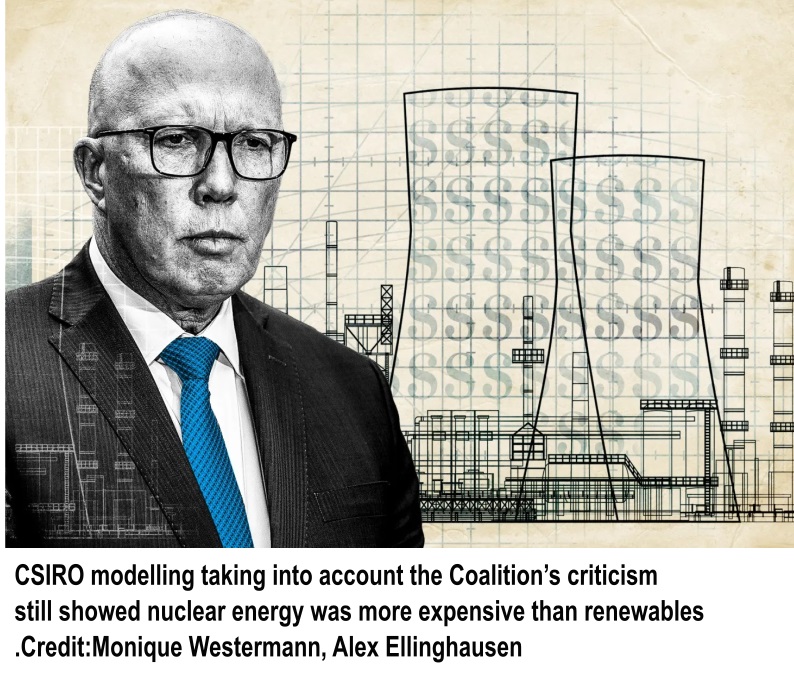
“What these characters are proposing is a recipe for less growth in a smaller economy, with less energy at higher prices,” Chalmers said, referring to CSIRO findings from earlier this month that nuclear energy is at least 50 per cent more expensive than renewables.
“It means an economy which is $294 billion smaller by 2050, and the lost output between now and then would be about $4 trillion.”
………………………………………………………..Treasurer Jim Chalmers, while not revealing his expectation of how large the economy will be, said the cost to Australia under the opposition’s proposal would equate to $4 trillion by 2050.
“What these characters are proposing is a recipe for less growth in a smaller economy, with less energy at higher prices,” Chalmers said, referring to CSIRO findings from earlier this month that nuclear energy is at least 50 per cent more expensive than renewables.
“It means an economy which is $294 billion smaller by 2050, and the lost output between now and then would be about $4 trillion.”
The government’s ambitious renewable plan is based on a scenario identified by the Australian Energy Grid Operator that assumes the capacity of the country’s electricity grid will need to nearly quadruple in the next 25 years.
However, the opposition’s model assumes the grid will only grow just over half as much and also assumes some existing energy-intensive businesses will either reduce their power usage or disappear.
The opposition’s forecast for the energy grid, based on energy market operator modelling of a scenario where electricity grows more modestly than forecast by the government, assumes electricity demand from heavy industry drops about a third between 2027 and 2030.
That could spell bad news for aluminium smelters like those located in NSW’s Hunter Valley and Portland, in Victoria, which are the largest individual electricity customers in the grid and major regional employers.
Australian Aluminium Council chief executive Marghanita Johnson said smelters used about 10 per cent of all the electricity in the grid, and the industry may have to shut if power costs become internationally uncompetitive.
“The next five years are critical for Australia’s aluminium sector,” Johnson said. “High energy costs, regulatory uncertainty, and more attractive policies in competitor nations make the future of our industry far from certain.”
……………………………………………Grattan Institute energy and climate change deputy program director Alison Reeve said the issue of electricity grid planning hinged on assumptions about economic growth.
“If you choose to have a larger economy, you will need a larger electricity grid,” Reeve said.
Independent economist and member of the advocacy group Climate Council Nicki Hutley said it was illogical to argue that power supply can be reduced as much as the opposition plans to do without also reducing economic growth.
“You can’t curtail the supply side to the degree that the nuclear plan does while using the most expensive form of energy without it increasing energy costs,” Hutley said.
The Australian Industry Group, which represents big energy users like manufacturers and smelters, said its members depended on the delivery of reliable and affordable power.
“Energy-intensive industries like aluminium, steel and ammonia are vital and should be able to make an even bigger contribution to our national economy if Australia delivers on our potential for energy advantage,” said AIG principal national adviser Tennant Reed.
Netanyahu’s direct intervention into the Australian political scene has been a complete success for him. He now knows that he can control the political agenda in Australia whenever he feels like it. He gained control of the narrative of the synagogue fire almost as soon as it occurred, all Labor-Coalition politicians hastily falling into genuflection at his command, some only being briefly tardy by suggesting maybe the police should investigate before conclusions were finalised.
No Australian prime minister has ever been subject to such a public attack by the head of a foreign government as that delivered by Netanyahu on 6 December, so it’s somewhat unprecedented to watch Albanese so wretchedly buckle at the knees and capitulate like he was a little boy pleading sorry for doing something wrong.
To briefly summarise Netanyahu’s success. It was interestingly a very rapid response to the destruction by fire of two of three buildings of the Adass Israel synagogue in Melbourne, a synagogue by the way whose congregants are decidedly apolitical, not actively Zionist in any way.
Not with standing this, Netanyahu brazenly excoriated “the federal government’s extreme anti-Israeli position” for “the reprehensible arson attack”, linking the synagogue fire to what he described as Australia’s “scandalous decision to support the UN resolution calling on Israel ‘to bring an end to its unlawful presence in the Occupied Palestinian Territory, as rapidly as possible’, and preventing a former Israeli minister from entering the country”.
Netanyahu was immediately accepted by the pro-Likud Australian mainstream media as the man who should be in charge of Australian decisions, the vitriolic attack against the Albanese government reported as if Netanyahu was entitled to force his interpretation of events and allocation of responsibility as his essential unchallengeable prerogative, beyond question and to be endorsed as a matter of course.
Such is the level of grotesque obsequiousness now entrenched in the Australian political and media culture, that the direct intervention of Netanyahu in Australian affairs for his own political purposes is regarded not merely as acceptable but welcomed wholeheartedly, even by those he attacks, especially the increasingly out-of-depth, embarrassingly ignorant and easily manipulated prime minister.
Irrespective of the identity and motives of those who lit the fire, which are not known, the investigation has been quickly transformed into a “terrorism” incident by the police, which is exactly what Netanyahu sought to achieve, for it opened the door like magic to labelling any opposition to Israeli policies in relation to Palestinians anywhere, however criminal, as promoting “terrorism”.
It went like clockwork. We can expect to see bans against anti-genocide protests legislated post-haste, further clamps imposed on reliable information about Israeli atrocities, a strengthening of censorship and a McCarthyist-style “taskforce against antisemitism” designed to silence and destroy opposition to the annihilation of Palestinian society.
The extreme inability of Albanese to assert a strong voice as an Australian prime minister even against a man like Netanyahu, wanted for war crimes, is no longer surprising, but it is also not the right way to frame the terms of the relationship which now exists between the Australian political establishment – including the Dutton-led Coalition, not just Labor – and Netanyahu’s Likud party regime in Israel.
Consider that not once throughout the daily slaughter of Palestinians for more than a year have Albanese and Dutton spoken against it. Not once have they mentioned the wanton destruction of all places of worship in Gaza, whether Christian or Muslim, even when those places have been destroyed while (and because) civilian women and children in large numbers were seeking refuge in those places.
Their silence about massive atrocities contrasts sharply with their zeal to smear anti-genocide protesters as responsible for the synagogue fire, as abettors of “terrorism”. Even while Netanyahu was successfully imposing his will on Australia his own forces were killing Palestinians in Gaza in refugee camps, in tents and food-lines, as well as killing patients and staff in the Kamal Adwan hospital, not things that Albanese and Dutton regard as worthy of comment.
Netanyahu’s interference was notable for revealing his utter contempt for the Albanese government. With an Australian election not far away it could be said that he seeks to influence the outcome in favour of the more Trump-aligned, and more hard-right Dutton, who he probably sees as more amenable to the Likud party project now in full swing to eliminate any possibility of the creation of a Palestinian state.
As Israeli finance minister Smotrich said after the fall of the Assad government in Syria, it is an opportune time for the Netanyahu government to “create facts on the ground that prevent the establishment of a Palestinian state and remove this possibility from the agenda once and for all”, something which a Dutton administration in Australia would fully support.
The abject failure of the Australian political class to take a principled stance in full support of international law and conventions, and its failure to comply with directives from the ICJ and its distinct lack of support for the ICC’s arrest warrant of Netanyahu, due to its obsequious servility to the US, has now come full circle.
Just as Washington is the boss that actually allows Australia a little room to pretend to be an “independent nation” within its “rules-based order”, now it has been fully exposed that Tel Aviv is also the boss. And it’s a boss which won’t tolerate its Australian political pawns from deviating from the Likud Party agenda to silence all opposition to the creation of Eretz Israel encompassing all of Palestine, south Lebanon, the Golan Heights and other parts of Syria (as a minimum), which means the utter and complete destruction of Palestinian society in Gaza by any means whatsoever.
The Labor-Coalition political class will most certainly comply. The Asia-Pacific, including everyone from Indonesia to China, won’t forget or forgive. That’s Australia’s future. That’s the legacy of the Albanese-Dutton political class, whatever they might do in Canberra during the rest of their political careers.
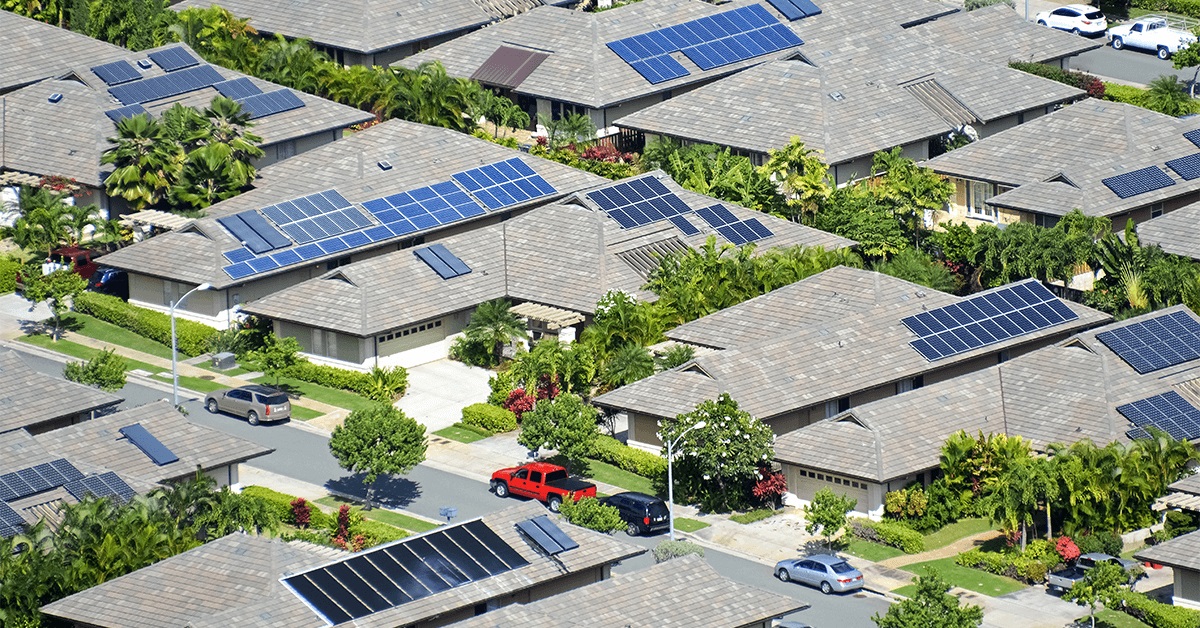
Introducing nuclear power into Australia’s energy mix would be a disaster for the climate and for electricity prices and for renewable energy investors – but the biggest loser would likely be Australia’s four million-and-counting solar households.
Reactions to the release of the Coalition’s long awaited nuclear power policy costings have flooded Renew Economy’s inbox on Friday, ranging from disbelief and astonishment to anger, frustration and dismay.
“Promising Australians a doubling of their power bills in a cost of living crisis is the worst Christmas present ever,” Smart Energy Council chief John Grimes said.
Introducing nuclear power into Australia’s energy mix would be a disaster for the climate and for electricity prices and for renewable energy investors – but the biggest loser would likely be Australia’s four million-and-counting solar households.
Reactions to the release of the Coalition’s long awaited nuclear power policy costings have flooded Renew Economy’s inbox on Friday, ranging from disbelief and astonishment to anger, frustration and dismay.
“Promising Australians a doubling of their power bills in a cost of living crisis is the worst Christmas present ever,” Smart Energy Council chief John Grimes said.
“To create space for inflexible nuclear power plants ramming energy into the grid, millions of household solar systems will be the first casualty,” Grimes said in September when the analysis was released, noting that solar is already being switched off in South Australia when it exceeds demand.
“Nuclear reactors cannot be switched off, meaning they continue forcing power into the grid even when solar is literally producing free electricity for 4 million Australians,” he added on Friday.
“Nuclear and solar do not mix, and it will be Australians who have to pay the price for that.”
The Smart Energy Council has also slammed the Coalition’s costings of its nuclear plans, describing every single line as contestable.
“The renewable energy transition will cost a fraction of the real world cost of nuclear, is largely being paid for by private capital, and is forming the cheapest, cleanest and most reliable power grid,” Grimes says.
“The renewable energy transition will cost a fraction of the real world cost of nuclear, is largely being paid for by private capital, and is forming the cheapest, cleanest and most reliable power grid.”
It’s a common criticism.
“Peter Dutton’s nuclear numbers have more holes than Swiss cheese, leaving out big ticket items like the costs of dealing with radioactive waste,” says the Climate Council CEO Amanda McKenzie.
Nicki Hutley, Climate Councillor and esteemed economist, said on Friday that it was “shocking” to see the the LNP “knowingly mislead Australians on the true costs of nuclear.”
“If we’re going to debate the economics of energy it must be based on real-world evidence–not dodgy modelling that obscures the real price tag.”
“Nuclear doesn’t add up for Australia. …International experience has proven that nuclear is a financial black hole, with the average project costing more than double its original estimate, and projects like the UK’s Hinkley Point C costing triple. We’re already seeing renewables deliver power faster and at lower cost today.”
Clean Energy Council chief Kane Thornton says Dutton’s plan will cap renewable energy at 54 per cent by 2050, despite the nation being on track to hit 48 per cent by the end of next year.
“This new target would represent a dramatic slowdown in the installation and investment of renewable energy across Australia and will be a massive shock and concern to investors who have invested $40 billion into large-sale renewable energy in Australia since 2020,” Thornton said on Friday.
“A nuclear-powered energy grid would also be a disaster for the four million Australian homes that have already installed a rooftop solar system as a way to lower their power bills. These systems would have to be switched off regularly if Australia was to move to inflexible nuclear power.”
“This would be absurd, forcing the cheapest form of generation on people’s homes to turn off so that the most expensive could continue to operate around the clock,” Thornton said.
Guillame Roger, an Associate Professor of Economics at Monash University, says the Coalition’s plan “objectively hovers between fantasy and hopeful naivete.”
“First, SMR do NOT exist today. There is not even a prototype of them. So we have absolutely no idea what they really cost. Second, the cost figures are hopelessly understated.
“The last nuclear plant built in the Western world today (Flamanville 3 in France) is 10 billion Euros over budget (at 13.2 billion euros, so A$20 billion total) and 12 years behind schedule; construction started in 2007.
“There is no mention of the maintenance costs of these nuclear plants. The refurbishment cost of the nuclear fleet in France (58 units) is estimated to cost 50 billion Euros over a decade (over A$75 billion), and is likely an understatement.
“Last, there is no actual model of the interaction of nuclear baseload and renewables in the wholesale market. Nuclear is even more rigid in its operation than coal.
“Today we routinely see negative prices in the NEM when renewables produce. Old coal-fired power plants that are already written off eat these intraday losses. But how will nuclear pay for itself then?,” Roger asks.
John Quiggan, a professor of economics at the University of Queensland, says the nuclear part of Dutton’s energy strategy is just a distraction, and will probably never be built.
“What matters is the disastrous decision to abandon our Paris commitments, keep coal going as long as possible and then rely on gas. A Dutton government can and will take immediate steps to implement this decision,” Quiggan says.
Associate Professor Roger Dargaville from Monash University says the biggest flaw in the coalition’s is that it completely fails in the primary objective to reduce carbon emissions quickly.
“For nuclear to be part of the mix, coal-fired generators need to be kept going well beyond their current scheduled shut down timetable, resulting in carbon emissions for the electricity sector way above the target set by the current government (i.e. 82% renewables by 2030),” Dargaville said on Friday.
“To meet Australia’s UNFCCC Paris commitments, the electricity sector must do most of the heavy lifting in the next decade while transport and industry will take longer to decarbonise.
“The plan presented by the coalition fails to acknowledge this simple fact, and therefore any costings which it comes up with are not a relevant or useful comparison.”
The Queensland Conservation Council says its concern is the impact on industry, regional communities and solar households in the state.
“Queensland industry is already turning to renewable energy backed by storage to remain globally competitive. Rio Tinto is tendering for firmed renewables to power their Gladstone smelter,” said QCC deputy director Anthony Gough.
“This nuclear fantasy is designed to delay the renewable roll out, and in doing so it could devastate regional communities if industry closes shop because they can’t access the affordable clean energy they need now.
“Our research found that just building one nuclear power plant in Queensland would mean we have to switch off 45,000 rooftop solar systems every day to make room in the grid.”
Achieving net zero by 2050 is non-negotiable. Australia and our global partners have agreed to targets that limit warming and maximise the chance to avoid the worst impacts of climate change, such as more natural disasters, rising sea levels, and species and habitat loss.
But the pathway to decarbonisation matters too. Cutting greenhouse gas emissions as far and fast as possible now can reduce the amount of temperature rise experienced in the years ahead and help curb the risks to our economy, communities and way of life.
That’s one reason why accelerating work to create a new electricity network built on renewables such as wind and solar – backed by storage, firming and peaking gas – is essential.
It’s the biggest abatement opportunity available in the short term and the most cost-effective form of new energy generation needed to underpin progress on decarbonisation across the rest of the economy. And the race to pull forward investment in renewable energy generation is on because the owners of existing coal-fired power stations have begun to close them.
The first shutdown occurred at Lake Munmorah, NSW, in 2012, and more have since exited the system. It’s now expected that 90 per cent of the existing coal-fired generation capacity will depart the system by 2035.
Against this backdrop, the Climate Change Authority will undertake analysis of the Coalition’s nuclear proposal. We want to give the Australian people an economic and science-based understanding of the impacts on the grid, the climate and their energy bills. But at first glance, Peter Dutton’s nuclear policy stops decarbonisation, blows the carbon budget, punishes consumers and harms the economy.
Under any scenario contemplated, Australia will be more dependent on coal-fired power stations for longer. The CSIRO says the best case for delivery of a single new nuclear facility in Australia is 15 years. And that assumes the legislative, regulatory, workforce and other issues can be resolved – and the cost blowouts and time delays witnessed overseas aren’t repeated.
Yet to replace all of Australia’s confirmed retiring generation capacity with nuclear as a zero-emission alternative would require deploying at least 15 to 17 large-scale nuclear facilities, or more than 50 proposed small modular reactors, by 2040. In the meantime, Australia will need to depend on coal-fired power that is increasingly unreliable and the cause of price spikes and blackouts. It would be strange to subsidise the ongoing operation of plants that can’t be guaranteed to actually keep the lights on.
It also compounds the challenge of reducing our emissions in the short and long term. Relying primarily on electricity from fossil fuels for longer would also delay necessary and achievable cuts to emissions in other sectors such as transport and industry, which depend on the availability of zero emission energy for their own decarbonisation pathways
The authority has calculated that for every percentage point that Australia falls short of achieving 82 per cent by renewables by 2030, about 2 million tonnes of harmful emissions will be added to the atmosphere.
The other element the authority will consider is cost – to the economy, taxpayers and consumers. For example, the proposal doesn’t just appear to slow decarbonisation, but the economy too. Some initial forecasts have already suggested it assumes an economy 40 per cent smaller than the alternative.
Assuming there will be far less demand for electricity means assuming far fewer Australians take up EVs or electrify their homes. It means assuming fewer industrial and manufacturing businesses switch to efficient, electric production processes.
The sensitivities are heightened given the proposal involves taxpayers funding nuclear power stations, which risks sending private investment now attracted to renewables offshore in pursuit of better returns.
The CSIRO, AEMO and the authority have all also made the point – a system built on renewables will lead to lower power prices for households and businesses compared with nuclear. It would take an astonishing leap of faith to suggest otherwise, but the modelling published last week in support of nuclear seemed to take that path.
The debate over Australia’s energy transition should be based on sober analysis, rooted in economics and engineering. It’s why markets, scientists and experts keep defaulting to a system based on renewables.
Alternatives that place faith in a technology that does not exist in Australia, risks slowing our economy, undermining energy security and stalling our bid to reduce emissions deserve scrutiny. That’s what the Climate Change Authority will do.
Matt Kean is chair of the Climate Change Authority. He previously served as a NSW minister for energy.
the Coalition documents released on Friday don’t seem to get around to mentioning is that its proposal for nuclear power involves taxpayers taking on all the massive financial risks (apart from the other sorts) and costs.
The August 2010 federal election campaign was conducted amid continuing shock waves from the Julia Gillard coup against Kevin Rudd a little less than two months earlier.
So, you may be forgiven for forgetting much that happened in the actual campaign, and specifically, how the federal Coalition didn’t bother releasing the costings of its election promises until just 48 hours before voters went to the polls.
It had already refused to submit the policy promises for independent analysis — which in those days was done by Treasury and the Department of Finance rather than the Parliamentary Budget Office.
That refusal might not have mattered too much to the broad sweep of history if the election result had been different. But a knife-edge result left three crossbench House of Representatives MPs to make the call on which side of politics would get their support and, therefore, be able to form government.
In making their decision the “Three Amigos” — Tony Windsor, Bob Katter and the subsequently infamously loquacious Rob Oakeshott — relied heavily on a Treasury and Finance analysis requested by them post-election.
Its findings? That the Coalition’s claimed budget savings were out by almost $11 billion. In the current age of announcements measured in the hundreds of billions of dollars, that might not sound like a lot.
But given that the claimed cost of Coalition policies was originally only $31.5 billion, that’s a rather spectacular …. miscalculation.
It felt for all the world like the work of an ill-prepared, lazy opposition that thought it could coast to office amid the chaos of a dysfunctional government. And it almost did.
A perfectly timed announcement
There’s something spookily familiar about the circumstances now, as the opposition finally unveiled its much-promised nuclear energy costings on a Friday one week before the country closes down entirely for Christmas.
There may be a lot more detailed modelling in the document prepared by Frontier Economics for the Coalition than there was in 2010.
But the modelling, and more importantly the Coalition’s political message wrapped around it, doesn’t answer the myriad of questions raised by the idea of nuclear energy. And this belated release of what we are led to believe is a signature policy for the election comes as the Coalition still hasn’t released details of most of its other key policies — from tax to immigration.
The decision to release the costing on December 13 feels like the Coalition is once again playing voters for mugs at a time when it is up against a federal government that has spent the year apparently determined to prove it is not very good at politics, or persuading voters that it knows what it is doing.
The Frontier modelling does implicitly raise important questions about the government’s own energy plans: just how much coal-fired power will the system need as we move towards a system that is dominated by renewables, and for how long?; how much gas will be needed (and is it in the right place) to be used to “firm” or underwrite the system?; how much can we really rely on battery technology that is still evolving to store renewables? and just how much transmission infrastructure do we need (and where) for a mostly renewables future?
The government has “sort of” answered these questions. Most analysts will tell you that it is almost impossible to answer them precisely because the wheel is still in spin. Prices and technologies are changing.
But, up against an opposition leader who is better at cut-through messages, it will need to do a lot better than that.
Crucial to the political debate is the fact that much of the uncertainty around these decisions arises because they are being made by individual investors who are taking on all the risks in building new energy capacity.
And this must surely be the threshold point of difference with what the federal Coalition is proposing.
For the one thing that the Coalition documents released on Friday don’t seem to get around to mentioning is that its proposal for nuclear power involves taxpayers taking on all the massive financial risks (apart from the other sorts) and costs.
The Coalition wants this big shift to be overseen by a public sector which it usually loves to point out is notoriously bad at running big projects, either directly or via massive subsidies.
The nuclear divide
The electorate is a lot more disengaged than it was in 2010, but the politically dangerous part of the nuclear policy from the government’s perspective is how it plays to regional Australia and, a bit like Brexit, likely divides the country into two very different blocks of voters.
Many regional voters, most pollsters will tell you, are worried about job losses as coal mining disappears, are unconvinced renewables offer job replacements, and are very exercised about the proliferation of wind and solar farms, and by the transmission lines to link them to the grid.
Earlier talk of small nuclear reactors has disappeared from the model set out using the Frontier modelling, and that modelling doesn’t seem to make provision for the fact that there are usually high costs for a first build, or that most expert opinion says it will take until at least 2040 to have the regulatory system and build in place for a first nuclear reactor to be functional, not 2036………………………………………………………………..
The Coalition has been pledging all year that its plans would lead to lower energy prices for stressed households.
But Peter Dutton had to sidestep on that issue on Friday because there is no clear mechanism for his plans to bring down those costs any time soon.
All the energy experts will be poring over the details for days. One could say they would be poring over them for weeks but (almost as if it was planned that way) the media coverage and the debate seem likely to come to a screeching stop in a week’s time as everything shuts down for Christmas.
Like the 2010 election costings, not many voters may remember the details of any analysis.
But the Coalition will have to be hoping there is no political equivalent of the Three Amigos to answer to this side of the 2025 election.
Radioactive contamination halts work on SSEN subsea link near Dounreay. World War II airplanes to blame for radiation halting work on SSEN cable near Dounreay.
The signature [nuclear] Coalition policy for the 2025 election will be a huge government-owned energy monolith.
The overall costs will be borne by taxpayers because the publicly owned reactors will bear them. But the overall profits will be made by the private sector which will queue up for the construction contracts and whose profits will balloon as the costs of construction inevitably and uncontrollably blow out.
the real aim of the exercise is not to produce the cleanest energy at the lowest cost, but to keep the profits of the fossil industry flowing for as long as possible.
Crispin Hull, 17 Dec 24
Opposition Leader Peter Dutton’s announcement on nuclear energy last week contained a welcome development. For the first time since about 1989, the Coalition has acknowledged that only governments can do some of the really big-ticket items.
Since about 1990, the Coalition has said, Private Sector Good, Public Sector Bad. But with the program to build seven nuclear power stations, the Coalition acknowledges that only the public sector can do it.
The publication of Fightback! by then Opposition Leader John Hewson in 1992 was the touchstone of conservative policy: the private sector was more efficient and could do things quicker and better than the great big bloated public sector full of lazy, box-ticking public servants. Taxpayers and consumers would be much better off, they argued.
If you can find it in the Yellow Pages, they said, buy it there. Or these days, Google it. Don’t let the Government do it, they said. The Government is not the solution to the problem. The Government is the problem, as Ronald Reagan said. Get government out of the way, and the private sector will provide the solution.
So, what has happened now? The signature Coalition policy for the 2025 election will be a huge government-owned energy monolith.
Gulp.
That will require the unlearning of three decades of conservative policy.As it happens, though, much of that policy was a cruel hoax. Far from being cheaper and more efficient, the neo-liberal conservatives did not – to use market parlance – factor in two critical elements of private-sector contracting: fraud and profit gouging.
Since about 1990 in Australia we have seen, through privatisation, a major shift of wealth and income up to the top two percentiles at the cost of people on middle income. From employees and small business to the managers and shareholders of big business.
In the 1990s, the neo-liberals (read, the Coalition) harped on about reducing the role of government, particularly government spending. It did not happen. Government spending remained at 38 percent throughout the 1990s’ privatisations and downsizing. All that happened was that the spending went from public health, education, and welfare into subsidies and tax breaks for the fossil-fuel industry, other big corporates, and private health, education and other providers.
Public spending remained stubbornly the same.
It will be the same with the nuclear reactors. The overall costs will be borne by taxpayers because the publicly owned reactors will bear them. But the overall profits will be made by the private sector which will queue up for the construction contracts and whose profits will balloon as the costs of construction inevitably and uncontrollably blow out.
Importantly, even though the Coalition is going for a massive program of government spending and ownership for its nuclear reactors, it has relied on a private firm of economists to do the costings. Surely, if such a massive spend and risk is to be undertaken by the public sector, you would want the public sector to do the costings.
As it happens, we have that. The CSIRO has costed and re-costed nuclear energy and come up with the same result: higher electricity bills and greater dangerous carbon emissions.
The private-sector costings, on the other hand, look like an exercise in: “These are the conclusions upon which we have based our facts.”
This is because the real aim of the exercise is not to produce the cleanest energy at the lowest cost, but to keep the profits of the fossil industry flowing for as long as possible.
However, it is an electorally risky exercise. Not because a generally financially illiterate electorate will see nuclear as a white elephant, but rather because an ever-growing portion of the electorate has rooftop solar and know it pays off.
Further, in the unlikely event that nuclear goes ahead there will be times when the grid has too much power and domestic solar generators will be blocked from exporting their product to the grid because nuclear power stations cannot be turned on and off without enormous cost and difficulty.
That is going to annoy the owners of four million rooftop solar systems. It would be about as popular as taking away Medicare.
The electoral dynamics for nuclear are made worse for the Coalition because more than three million of those solar systems are on the roofs of stand-alone houses – in the very suburbs and regions which the Coalition hopes to take from Labor. That is about six million voters in an electorate of 18 million.
Moreover, those six million voters are proselytising about the value of solar, and lots of tenants and unit holders – hitherto shut out of solar – want to get a slice of the action sooner rather than later.
The big trouble with nuclear is spending vast amounts of public money with no electricity generation for at least a decade, more likely a lot more. Whereas every bit of renewable infrastructure generates from Day 1 and every battery stores from Day 1. Voters prefer the here-and-now to spending on something they might never see.
Nuclear is a matured industry. It not going to get much more efficient, if at all. Whereas the efficiency of solar, wind, and batteries continues on an upward trajectory well beyond previous expectations.
When you add electric vehicles, the renewables pay for themselves very quickly.
The task for Australia now is to reduce our reliance on our $30 billion a year of imported oil. And to reduce our reliance on $30 billion a year of thermal coal exports before the world does it for us. These are energy and national-security issues.
The Coalition’s decades-long nuclear program and Labor’s continued approval of coal mines fail to meet the urgency and magnitude of the national-security risks arising from climate change and fossil-fuel reliance.
A government’s first priority should be national security: not just from the threat of arms but the threats of disasters and supply-chain disruption.
We need politicians who think about the long-term security of their people not the short-term profits of big corporations and the donations which come from them.
Here are the facts re SMRs. Basically there are three types which generate less than 300 megawatts of electricity compared with current day 1000 megawatt reactors.
Light water reactors designs – these will be smaller versions of present-day pressurized water reactors using water as the moderator and coolant but with the same attendant problems as Fukushima and Three Mile Island. Built underground, they will be difficult to access in the event of an accident or malfunction.
SMRs will be expensive because the cost per unit capacity increases with decrease in reactor size. Billions of dollars of government subsidies will be required because Wall Street is allergic to nuclear power. To alleviate costs, it is suggested that safety rules be relaxed including reducing security requirements and a reduction in the 10 mile emergency planning zone to 1000 feet.
SMRs will be expensive because the cost per unit capacity increases with decrease in reactor size. Billions of dollars of government subsidies will be required because Wall Street is allergic to nuclear power. To alleviate costs, it is suggested that safety rules be relaxed including reducing security requirements and a reduction in the 10 mile emergency planning zone to 1000 feet.
High-temperature gas cooled reactors HTGR or pebble bed reactors. Five billion tiny fuel kernels consisting of high-enriched uranium or plutonium will be encased in tennis-ball-sized graphite spheres which must be made without cracks or imperfections –or they could lead to an accident. A total of 450,000 such spheres will slowly and continuously be released from a fuel silo, passing through the reactor core, and then re-circulated ten times. These reactors will be cooled by helium gas operating at high very temperatures (900 C).
A reactor complex consisting of four HTGR modules will be located underground, to be run by just two operators in a central control room. Claims are that HTGRs will be so safe that a containment building will be unnecessary and operators can even leave the site – “walk away safe” reactors.
However should temperatures unexpectedly exceed 1600 C the carbon coating will release dangerous radioactive isotopes into the helium gas, and at 2000C the carbon would ignite creating a fierce graphite Chernobyl-type fire.
If a crack develops in the piping or building, radioactive helium would escape, and air would rush in, also igniting the graphite.
Although HTGRs produce small amounts of low level waste they create larger volumes of high level waste than conventional reactors.
Despite these obvious safety problems and despite the fact that South Africa has abandoned plans for HTGRs, the US Department of Energy has unwisely chosen the HTGR as the “Next Generation Nuclear Plant”.
Liquid metal fast reactors (PRISM) It is claimed by proponents that fast reactors will be safe, economically competitive, proliferation resistant, and sustainable.
Fueled by plutonium or highly enriched uranium, and cooled by either liquid sodium, or a lead-bismuth molten coolant. Liquid sodium burns or explodes when exposed to air or water and lead-bismuth is extremely corrosive producing very volatile radioactive elements when irradiated.
Should a crack occur in the reactor complex, liquid sodium would escape, burning or exploding. Without coolant, the plutonium fuel could reach critical mass, triggering a massive nuclear explosion scattering plutonium to the four winds. One millionth of a gram of plutonium induces cancer and it lasts for 500,000 years. Extraordinarily, claims are that fast reactors will be so safe they will require no emergency sirens and emergency planning zones can be decreased from 10 miles to 1300 ft.
There are two types of fast reactors, a simple plutonium fueled reactor and a “breeder” in which the plutonium reactor core is surrounded by a blanket of uranium 238 which captures neutrons and converts to plutonium.
The plutonium fuel, obtained from spent reactor fuel will be fissioned and converted to shorter lived isotopes – cesium and strontium which last 600 years instead of 500,000. Called “transmutation”, the industry claims that this is an excellent way to get rid of plutonium waste. But this is fallacious, because only 10% fissions leaving 90% of the plutonium for bomb making etc.
Construction. Three small plutonium fast reactors will be grouped together to form a module and three of these modules will be buried underground. All nine reactors will then be connected to a fully automated central control room operated by only three operators. Potentially then, one operator could simultaneously face a catastrophic situation triggered by loss of off-site power to one unit at full power, in another shut down for refueling and one in start-up mode. There are to be no emergency core cooling systems.
Fast reactors require a massive infrastructure including a reprocessing plant to dissolve radioactive waste fuel rods in nitric acid, chemically removing the plutonium and a fuel fabrication facility to create new fuel rods. A total of 10,160 kilos of plutonium is required to operate a fuel cycle at a fast reactor and just 2.5 kilos is fuel for a nuclear weapon.
Thus fast reactors and breeders will provide extraordinary long-term medical dangers and the perfect situation for nuclear weapons proliferation. Despite this, the industry is clearly trying to market them to many countries including it seems, Australia.
After 22 failed energy policies, the Coalition is being guided by a roadmap to higher bills and higher emissions.
On the front cover of Frontier Economics’ costings of the Coalition’s nuclear policy is a stock photo entitled fork in road, implying that we’re at some kind of juncture where we must decide between a nuclear or renewables path.
In 1969 John Gorton’s Liberal government chose the nuclear path with the construction of the Jervis Bay nuclear power plant project. As Gorton later said, “We were interested in this thing because it could provide electricity to everybody and it could, if you decided later on, it could make an atomic bomb.”
In 1971 Billy McMahon’s Liberal government cancelled the project after a review deemed it too expensive. The cleared site became a massive car park at Murray’s Beach.
No nuclear power station was built in the intervening 27 years before John Howard introduced a federal ban on nuclear power. There were no attempts to overturn the ban during the next 18 years of Liberal government.
At the start of the 1970s we were indeed at an energy crossroads, we took the road towards coal, and as one of those who’d like to pass a safe climate on to the next generation, I wish we had taken the road towards nuclear instead. Our emissions would be dramatically lower
In 1997, just before he banned nuclear, Howard took us down a different path – he announced the mandatory renewable energy target, a plan to add a tiny slice of renewable energy to our sliver of hydroelectricity. In 2009, in what was perhaps the last act of bipartisanship on domestic energy, parliament agreed to massively increase the target to 20% renewables by 2020. Today we’re just shy of 40%, and the government’s policy is to double it again by the end of this decade.
Howard’s modest renewable energy target was surely more successful than he ever intended, in great contrast to the 22 failed energy policies the Coalition famously held during its last tenure. Its latest energy policy began shortly after the last election, when in August 2022 Peter Dutton tasked Ted O’Brien to “examine the potential for advanced and next-generation nuclear technologies to contribute to Australia’s energy security and reduce power prices”. We had to wait until Friday for the costings, published after many of the country’s journalists had filed their last stories for the year.
Here are four reasons why in my opinion the costings, prepared by Frontier Economics, completely undermine the Coalition’s 23rd energy plan:
1. The Coalition plans for lower household income and the collapse of heavy industry
Of the three scenarios the independent market operator Aemo published in June, the Coalition has chosen what’s known as progressive change, giving Aemo’s preferred scenario, known as step change, to Labor.
Under the Coalition’s scenario, large industrial load collapses in 2030, signalling the closure of smelters and presumably datacentres – goodbye AI! By 2050 industrial demand is down by 62%. Over the 25-year modelling period, household disposable income will be down a whopping $2.8tn more compared to Labor’s plan.
With a pivot away from electrification, under the Coalition’s plan Australians will burn an additional 273bn litres of petrol and diesel through to 2050 costing $465bn and an additional 1,831 PJ of gas costing at least $36bn. Even if the Coalition’s purported cost savings were credible, this $501bn would mean that Australia’s total energy bill would be considerably higher.
On top of this, the Coalition’s plan would see a 61% reduction in rooftop solar, meaning that millions fewer Australians would be able to slash their electricity bills.
Currently we are paying hundreds of millions to three coal power stations to stay open for a couple of years. The Coalition budgets nothing to coax the other 14 coal power stations on the east coast to extend their lives by a decade or more.
Economist Steven Hamilton has calculated that the Coalition’s plan would see the power sector emit about 1,000 million tonnes of carbon dioxide above our current trajectory. The Coalition’s crabwalk away from electrification would add a further 723 MtCO2.
The Coalition has chosen an energetically and fiscally poorer Australia with higher energy bills and higher emissions. I’ve long suspected that the Coalition hasn’t bothered to read or understand Aemo’s last seven years of modelling, and this pretty much clinches it.
2. The analysis lowballs nuclear’s cost then punts it over the horizon
Frontier appears to have made the rookie error of confusing the nuclear industry term nth of a kind (Noak) with next of a kind. The Noak cost is not what we’d pay for the next reactor built, but a cost target we’d theoretically hit eventually if we got really good at building them. If you build, say, eight identical reactors on a site, the last one should cost a lot less – and provided nothing goes wrong, theoretically you’d approach the Noak cost.
If Australia were to achieve Frontier’s costs, it’d be the cheapest nuclear built in the western world this century, by a wide margin. Frontier’s head, Danny Price, told the ABC on Friday that he wouldn’t put himself in the category of a nuclear expert, so maybe it’s no surprise that the modelling appears to confuse Noak with next-of-a-kind pricing.
Frontier are, however, modelling experts, so the next thing they did was with eyes wide open. The modelling pushes the vast majority of the cost of nuclear beyond 2050, so if the program is delayed it would appear cheaper and if the cost triples, it’d barely show in the analysis. Nice work!
Next, Frontier assumes that building nuclear reactors will get cheaper every year – what’s known as a positive learning rate. In reality, the US nuclear industry is famous for its negative learning rate – is that a forgetting rate? – meaning that Noak costs are more theory than practice.
3. The Coalition’s unrealistic schedule leaves us short of power
As I told a recent nuclear inquiry – the eighth since 2005 – there’s not a hope in hell that Australia can deliver its first nuclear power reactor producing power before 2040. Even with fantastical assumptions, such as a Coalition that controls both Houses of Parliament, states quickly overturning their bans, the first project sailing through environmental approvals and court challenges and fast build times, it’s almost impossible to achieve the first nuclear kilowatt hour before 2044.
Czechia, a country with 66 years of nuclear experience, embarked on a nuclear construction project in 2022. If all goes well the first unit will start commercial operation in 2038. Australia is at least six years behind this project, and we face many more barriers, so 2044 for our first really does seem optimistic.
4. Our grid doesn’t have room for these reactors
Frontier’s analysis assumes that Australia builds 13.3GW of nuclear, equivalent to 12 AP-1000 reactors, and that these run flat out when they’re not off for refuelling and maintenance.
The problem is that for much of the year Australia uses less power. Our minimum system load (MSL) is already below 10GW and on its way down to 2GW around the end of this decade, thanks to rooftop solar. The inflexible manner in which the Coalition plans to run the reactors would result in masses of excess power and require that we turn off massive amounts of renewables, both utility-scale and rooftop solar. Alternatively we could soak up the excess nuclear energy with gigantic battery farms.
Over the weekend I sent a polite text message to Danny Price, the consultant behind the Coalition’s modelling, explaining that I’m not a newcomer to nuclear and outlining three of the above flaws. Price replied:
“Thanks for sending me your credentials and your generous offer to set me straight, but I will decline. I’ve got all the help and technical advice I need. I know you are just protecting you (sic) financial interest. I get it, but please don’t contact me again.”
Contrary to Coalition belief, I am not a large investor in renewable energy (nor am I a billionaire). This shows the depths of the culture wars we’re in – where impugned motives trump rational discussion. I took the opportunity to reply:
“Since you misinterpreted my motives, allow me this: Less than 2% of my investments are in Australian renewables – similar to millions of superannuation accounts I’m advised – and if the renewables transition slows, the value of those investments would likely increase.”
The fact is, over the last six years, Australia has added wind and solar generation equivalent to the annual output of six gigawatt scale nuclear reactors, according to data from OpenElectricity.
If we’re at a crossroads it’s one where the Coalition took a sharp turn, based on what looks to me like some really sloppy advice. Let’s hope that Australians stay on the path to a cheaper, cleaner and more prosperous energy future.
Simon Holmes à Court is a Director of The Superpower Institute, convener of Climate 200 and an adviser to the Smart Energy Council
Despite a clever comms strategy, there are significant credibility issues around the assumptions on which the cost estimates are based.
The Coalition has moved a considerable way on climate and energy since Scott Morrisson brought a lump of coal into the parliament and told us not to be afraid. On Friday, the Coalition finally released the long-awaited details of the nuclear plan it will take to the election and, once again, asks us not to be afraid – of the price tag, the higher climate pollution and a range of other variables.
However, despite a clever comms strategy, there are significant credibility issues around the assumptions on which the cost estimates are based, and there are other critical issues that have been left unanswered. Australians have a right to consider all the issues they are being asked to vote on, with facts rather than political rhetoric. These issues can be broadly listed under three headings: the economics, the environment and the law.
The Coalition makes the point that many countries use nuclear power. It is true that 9% of global energy capacity comes from nuclear power, which the International Energy Agency (IEA) estimates could increase to about 11% if and when planned projects come online. But the world is voting with its feet, with the IEA reporting that around the world 560GW of new renewable power was installed in 2023, compared with 7.1GW of new nuclear. At COP29 in Baku this year, the conversations were not about whether to invest in renewables, but how to roll them out faster.
The primary reason the world is not embracing nuclear energy on a grand scale is simple: cost (although in Japan’s case, it’s also about safety).
The Frontier Economics report, which the Coalition is using to make its case, is written in an opaque way that makes direct comparisons difficult. Essentially, the report admits that the capital cost of nuclear is $10,000/kW, while solar and wind are $1,800 and $2,500 respectively.
So how is it that the Coalition’s modelling suggests that a world where nuclear makes up more than a third of the east coast energy grid could possibly be cheaper?
It’s easy to come up with the answer you want when you base your modelling on rubbery assumptions.
Firstly, we should appreciate that even a $10,000/kW estimate for nuclear is considerably optimistic if we look at the experience of comparable countries over the past decade. The cost at the off-cited Hinkley C plant in the UK has, to date, risen to $27,515/kW. Three others – France (Flamanville 3), Finland (Olkilutoto 3) and the US (Vogtle) – are between $15,000 and $16,900.
Delays have been a key factor in driving up the cost of nuclear power. The longer it takes to build and operate a plant, the higher the cost of finance. The Coalition believes we can overturn national and state legislation and acquire land and planning approvals virtually overnight. And then we’ll just install an ‘off-the-shelf’ nuclear power plant, ready to run.
By its own admission, having to tweak nuclear power plants so they operate at maximum safety and efficiency can blow out build times and costs. It beggars belief that the Coalition claims Australia, which has no nuclear energy capability, could ship, build and integrate into the grid with no challenges, with a 50,000-strong nuclear workforce appearing by magic.
There is no mention of the costs of extending the life of existing ageing coal-fired power stations, or the likelihood that these plants will increasingly fail as they reach end-of-life, raising energy costs as supply falls short and, increasingly, the likelihood of blackouts. And, apparently, nuclear waste can be transported and stored without cost
The Coalition also argues that, because wind and solar energy are not always “on”, we’ll need to build a lot more capacity, along with transmission and storage. It calls this “overbuild”, but its assumptions have overegged what that need might realistically look like, especially as battery storage becomes cheaper over time (unlike the experience of nuclear) and of longer duration.
Finally, to arrive at these rose-tinted costs, the Coalition has had to cut back on estimates of the amount of energy we will demand over the next two decades by almost half what the Australian Energy Market Operator says we need. That’s because it’s assumed we won’t worry about EVs or electrification. This is why the Coalition will undo Australia’s 2030 43% emissions reduction target, which we are set to get very close to, taking us back to our Morrison-era status of global climate pariah.
And this is the kicker. Under the Coalition’s plan, our modelling shows Australia’s domestic emissions will rise by around one billion – yes billion – tonnes, at a cost of $240bn to the economy, society and environment, based on Infrastructure Australia’s cost of carbon methodology.
The Coalition’s track record on climate and energy has always been poor. In this latest iteration supporting nuclear power, its credentials have been further diminished on climate, energy and the economy.
Nicki Hutley is an independent economist and councillor with the Climate Council
Peter Dutton’s steady progress away from the traditions of his own party continued in Friday’s nuclear policy costings, one of the more disingenuous documents foisted on Australians by either party for quite some time.
Given that the job of the Coalition and Frontier Economics was to invent a set of numbers to claim that a build-from-scratch nuclear power industry would be cheaper than renewables with storage — when the objective truth is the latter is far cheaper — it’s unsurprising the modelling was so shambolic…………………………….. (Subscribers only )https://www.crikey.com.au/2024/12/16/peter-dutton-nuclear-plan-costing-fossil-fuels-coal-economy/
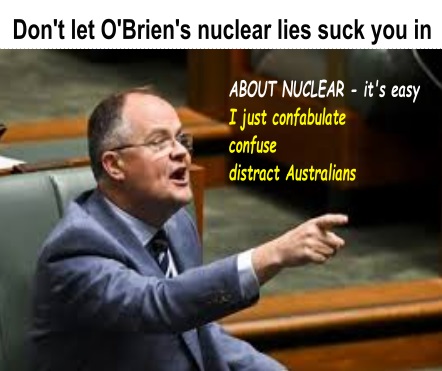
Comments about Ted O’Brien’s (Opposition energy spokesperson) disrespectful and dishonest questioning of witnesses during the hearings of the Inquiry into nuclear power generation in Australia. Maybe these comments could even be useful to future witnesses, if they were forewarned.
At today’s hearing in Lithgow one of the witnesses started to call him out. This is the first time that I can remember anyone really challenging him. It would be helpful if he was called out more clearly, ideally in a way that strikes at the heart of his dishonesty. Make it hard for him to use these tactics.
He regularly asks questions along the following lines:
“Have you read such and such a report?” (99% of the time the witnesses have not.) He then quotes or paraphrases (or misrepresents) something out of the report and asks the witness to answer “Yes” or “No” to some loaded proposition. When the witness doesn’t give him the Yes/No answer he wants, he interrupts them and insists that they answer Yes or No. Loaded questions might be along the following lines:
Based on this report, would you agree that nuclear is a viable option?
Or
Do you think you know better than the [unquestionably authoritative] author of this report?
(These are not direct quotes, just the general gist. See below for a specific example.)
This approach is disrespectful, because it is unreasonable to expect witnesses to have read every official report that O’Brien chooses to use (or misuse) to back up his position. Of course, O’Brien knows they haven’t read the report.
It is also disrespectful, because it is generally used for the purpose of making a fool of the witness in order to destroy their credibility.
It is dishonest, because he quotes or paraphrases the reports selectively, out of context, and probably misrepresents the reports.
An example from today’s hearing in Lithgow (11/12/2024) illustrates the point. It can be heard from 1.24.55 on the following link:
These two witnesses stood up for themselves, but on many other occasions throughout these hearings, the witnesses have been left looking silly, even though the fault is with O’Brien’s dishonest approach. (Note that a similar approach is used by Coalition “Supplementary Member” of the Inquiry, Simon Kennedy.)
Ted O’Brien: “My question was going to go to your comments on the timing for the construction of those plants — Generation 3, Generation 3+. And my question is, Do you recognise the experience of the International Atomic Energy Agency with respect to advice on the timing of introducing nuclear energy to new nations? And also the experience and authority of ANSTO, the government’s nuclear technology advisers, when it comes to the construction of nuclear power plants?”
Geoffrey Miell (retired mechanical engineer): “I look at the actual construction times around the world….”
O’Brien then interrupted Miell’s very reasonable answer and demanded that he give a Yes/No answer to the question “Do you recognise…?”
When Miell offered a variation of his original response, O’Brien asked, “Does that mean you do not recognise their experience and expertise sir?”
After this, at 1.28.25, Sarah Elliot (nursing academic and member of NSW Nurses and Midwives Association) called O’Brien out:
“I will say that I have read transcripts Mr O’Brien where you have misled …[interrupted by bickering between Chair Repacholi and Deputy Chair O’Brien]… Mr O’Brien can I ask you to afford this panel the respect you gave to the last ones. We may not be in agreeance with your views, but can you please respect this panel that is before you right now … I’m disgusted with your behaviour as a representative of…”
The dishonesty of O’Brien’s line of questioning is exposed when you read the latest CSIRO GenCost draft report. That report makes the following comment about the IAEA’s timing estimates:
“Nuclear development lead time
“The development lead time includes the construction period plus all of the preconstruction activities such as planning, permitting and financing. Many stakeholders have agreed with the GenCost estimate of at least 15 years lead time for nuclear generation. Those stakeholders that are more optimistic cite two alternative sources, the International Atomic Energy Agency (IAEA) who have an estimate of 10 to 15 years and the recent completion of a nuclear project in the United Arab Emirates (UAE) had a 12 year lead time. Both estimates are in relation to building nuclear for the first time. This consultation draft provides additional analysis of nuclear lead times to examine this issue more closely. We examine recent construction times and their relationship with the level of democracy in that country.
So the IAEA’s estimate is a 2015 estimate. In the 9 years since then we’ve seen massive blowouts in construction times in the US, UK, France and Finland. Those projects were already in trouble in 2015, but since then they’ve blown out much more, while the VC Summer plant in South Carolina was abandoned part way through construction. But O’Brien still uses the 2015 IAEA estimate to put witnesses on the spot. As for ANSTO, their credibility was demolished by John Quiggen in the following article. https://www.crikey.com.au/2024/03/20/coalition-nuclear-power-ansto-csiro-small-modular-reactors/
Another example was when O’Brien used the first Frontier Economics report (the second can be expected any day) to say the total system cost of the electricity grid in 2050 will be five times what the ALP Government has claimed (AEMO’s ISP report). He also completely misrepresented Minister Bown’s response to that report. However, on this occasion, Tennant Reed (Australian Industry Group), who had actually read the Frontier Economics report, interrupted him (5.55.50). This caused a problem for O’Brien, because his brazen dishonesty was exposed by a real expert. Unfortunately, Reed was too polite. He didn’t call out O’Brien’s dishonesty. He just explained the source of the difference between AMEO’s ISP figure and the figure in Frontier Economics report. “The two numbers are different sorts of number, rather than greatly in disagreement with each other.”
See the following YouTube link from 5.53.50:
See the following YouTube link from 5.53.50:
Inquiry Into Nuclear Power Generation In Australia, Melbourne, 04/12/2024
The above two examples are examples of where O’Brien was actually challenged, but, unfortunately, not exposed for the charlatan that he is. I am hopeful that if witnesses are forewarned of his tactics, they might be in a better position to stand up to him, ideally to expose him, but definitely not to be intimidated by his dirty tactics.
Re: “South Australia’s Copper Strategy”, Submission To: The Department of Energy and Mining c/o DEM.engagement@sa.gov.au
“SA’s Copper Strategy lacks ‘social license’ and fails contemporary public interest expectations and environmental and legislative standards”
By: Mr David Noonan B.Sc., M.Env.St., Independent Environment Campaigner and Consultant, 12 Dec 2024
The SA Copper Strategy is potentially an important way forward for the SA Gov to instigate and require needed reform in the copper – uranium mining sector in our State.
As an individual I provide this public input and 8 x Public Interest Recommendations (p.11) toward required reform in the sector ‘as part of the development of the refreshed SA Copper Strategy’ due to be released in 2025.
The Department of Energy and Mining should provide a Public Forum on the Copper Strategy before finalisation, I request to attend and participate and offer to be a Member of a Panel Discussion. I raise part of my relevant Background at p.12.
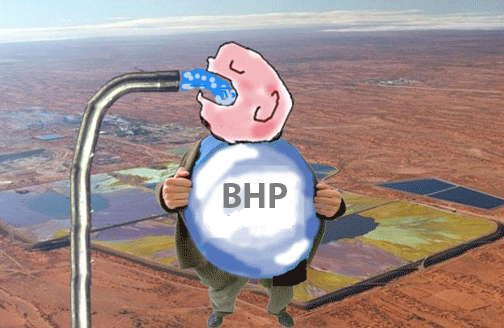
At this stage, the SA Copper Strategy lacks ‘social licence’ and the BHP run copper sector continues to fail contemporary public interest expectations and proper environmental and legislative standards.
Further, the core related Northern Water Project lacks needed ‘social license’ as the SA Gov has to date failed to set clear public commitments to ‘shared benefits’ in protection for the Mound Springs.
It is most important for SA’s Copper Strategy and Northern Water Project realise priority protection for the unique and fragile Mound Springs of the Great Artesian Basin (GAB) with a clear commitment to replace BHP extraction of GAB waters across both Wellfields A and B.
And it is axiomatic the SA Premier can-not credibly look to spend billions of dollars of public monies on water supply and not respect, save and protect the Mound Springs of GAB. – as gems of our State.
Social license, the Gov’s political credibility and public interest standing depend on this outcome.
Please feel free to contact on any aspect of these issues.
Yours sincerely
David Noonan B.Sc., M.Env.St., Independent Environment Campaigner and Consultant, Conservation SA Representative on the Northern Water Project ‘Stakeholder Reference Group’, Seaview Downs, South Australia








 Antinuclear