To comply with Paris climate agreement, France could switch to 100% renewables
Le Point 18th June 2019 “France could switch to 100% renewable energy” INTERVIEW. According to Rana
Adib, head of the network of experts REN21, the effort in favor of
renewable energies must be relaunched to comply with the Paris agreement.
German climate activists storm open cut coal mine

western Germany to campaign against fossil fuels. BBC 23rd June 2019 https://www.bbc.co.uk/news/world-europe-48734321
Russia perturbed, as USA government turning towards a ‘limited nuclear war’
Washington’s mindset sliding back to ‘limited nuclear war’ says Russian Foreign Ministry, https://tass.com/politics/1065118 23 June 19.
Statements by the US officials are clearly designed to justify expanding the Pentagon’s arsenal of nuclear weapons to support the projection of military force around the world,” the diplomat said
MOSCOW, In its approaches to the use of nuclear weapons, the United States is returning to the concept of “limited nuclear war” and for this they could be planning to abandon the Comprehensive Nuclear-Test-Ban Treaty (CTBT), Deputy Director of the Information and Press Department of the Russian Foreign Ministry Artem Kozhin said on Saturday in a statement.
“It causes great concern to reiterate that the United States is going 60 years back in its approaches to nuclear planning, when the ‘limited nuclear war’ between superpowers seemed acceptable to them and seemed to give a chance to win,” Kozhin said. “This, apparently, is connected to the growing signs of Washington’s desire to renounce its obligations under the Comprehensive Nuclear-Test-Ban Treaty,” the diplomat said.
The United States is ready to make low-yield nuclear warheads a means of blackmailing states for global projection of US military power, Kozhin said. “Statements by the US officials are clearly designed to justify expanding the Pentagon’s arsenal of nuclear weapons to support the projection of military force around the world,” the diplomat said. With such actions, the United States reduces the threshold for the use of nuclear weapons, the statement said.
Environmental groups are now considering a legal challenge To Queensland’s approval of Adani mine
Queensland approval of Adani plan ‘unlawful’, say environment groups Activists consider legal challenge, saying rules related to source aquifer have been compromised, Guardian, Ben Smee@BenSmee 23 Jun 2019
The Queensland environment department may have acted “unlawfully” when it approved of Adani’s groundwater plan, in the process backing down on a longstanding requirement that the miner provide definitive proof about the source of an ancient desert spring.
Environmental groups are now considering a legal challenge to the approval, partly because the state’s Department of Environment and Science (DES) appeared to negotiate a last-minute compromise with Adani rather than applying strict conditions.
The DES insisted on Friday that it had not changed its position when granting approval for Adani’s groundwater dependent ecosystems management plan – the final hurdle that will allow the company to begin construction of the Carmichael coalmine.
But documents obtained by Guardian Australia, and an email sent by a DES spokesman on 9 April, indicate that the department softened its interpretation of a key requirement in the politically charged weeks before clearing the proposal.
The email of 9 April says the department believed the CSIRO and Geoscience Australia had highlighted “uncertainties” about whether Adani had identified the source aquifer of the Doongmabulla Springs complex.
“Based on the CSIRO and Geoscience Australia report, it would appear that a number of uncertainties remain, including whether the (groundwater plan) definitively identifies the source aquifers of the Doongmabulla Springs Complex, which has always been a requirement for state approval,” the email says.
Four days after the federal election, the Queensland premier, Annastacia Palaszczuk, insisted on a timeframe for DES to make a decision about the groundwater plan. When the clock ran out on 13 June, Adani’s plan was approved, and DES had subtly changed its language.
It said Adani had “sufficiently” identified the “main source aquifer”. The miner’s conditions require it to identify the “source aquifer(s)”……. https://www.theguardian.com/business/2019/jun/23/queensland-approval-of-adani-plan-unlawful-say-environment-groups
Executed for being an anti-nuclear activist — Beyond Nuclear International

22-year old Greek martyr for peace is remembered
via Executed for being an anti-nuclear activist — Beyond Nuclear International
Nuclear power is not the answer in a time of climate change — Beyond Nuclear International

Forest fires around nuclear sites redistribute radiation
via Nuclear power is not the answer in a time of climate change — Beyond Nuclear International
Beryl solar farm reaches full output after single month of commissioning — RenewEconomy

Beryl solar farm reaches full output just a month after energisation. The post Beryl solar farm reaches full output after single month of commissioning appeared first on RenewEconomy.
via Beryl solar farm reaches full output after single month of commissioning — RenewEconomy
June 23 Energy News — geoharvey

Opinion: ¶ “Nuclear Power And Natural Gas Hit A Wall In US: Now What?” • Two US energy developments call the “clean energy” status of nuclear power and natural gas into question. Rhode Island officials rejected a proposed gas power plant and federal officials okayed the sale of New Jersey’s Oyster Creek nuclear plant for […]
Vestas buys into 4GW Walcha wind, solar and storage hub in NSW — RenewEconomy

Vestas buys majority stake in 700MW wind project, which forms an important part of the largest wind, solar and storage hub planned for Australia’s main grid. The post Vestas buys into 4GW Walcha wind, solar and storage hub in NSW appeared first on RenewEconomy.
via Vestas buys into 4GW Walcha wind, solar and storage hub in NSW — RenewEconomy
The nuclear toll on workers and communities – theme for June 19
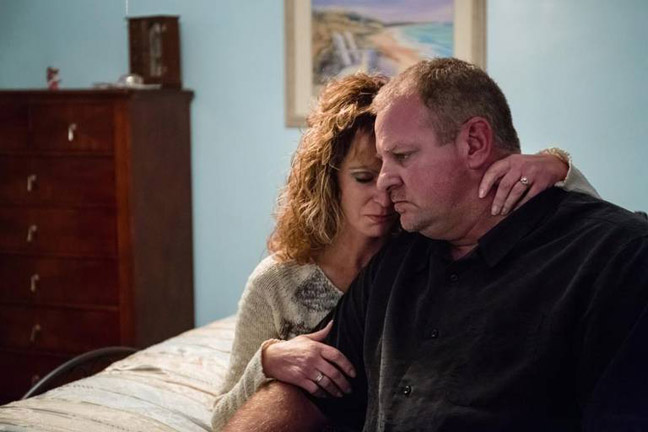
McClatchy reports: 33,480 Americans dead after 70 years of atomic weaponry
“….. The number of deaths has never been disclosed by federal officials. It’s more than four times the number of American casualties in the wars in Afghanistan and Iraq. And it looms large as the nation prepares for its second nuclear age, with a $1 trillion plan to modernize its nuclear weapons over the next 30 years…..
A total of 107,394 workers have been diagnosed with cancers and other diseases after building the nation’s nuclear stockpile over the last seven decades. The project includes an interactive database that offers details on all 107,394 workers.
McClatchy’s yearlong investigation, set in 10 states, puts readers in the living rooms of sick workers in South Carolina, on a picket line in Texas and at a cemetery in Tennessee…..
— Federal officials greatly underestimated how sick the U.S. nuclear workforce would become. At first, the government predicted the compensation program would serve only 3,000 people at an annual cost of $120 million. Fourteen years later, taxpayers have spent sevenfold that estimate, $12 billion.
— Even though costs have ballooned, federal records show that fewer than half of those workers who sought help had their claims approved by the U.S. Department of Labor.
— Despite the cancers and other illnesses among nuclear works, the government now wants to save money by cutting current employees’ health plans, retirement benefits and sick leave….. … https://www.mcclatchydc.com/news/nation-world/national/article49216310.html(photo: Ralph and Jodi Stanton)
Disastrous health effects of uranium mining, on the people of Jharkhand, India
the financial benefits are meaningless when weighed against what his group says is an alarming rise in stillbirths, birth defects, and adults and children diagnosed with cancer, kidney disease, and tuberculosis.
report showed a far greater incidence of congenital abnormality, sterility, and cancer among people living within 2.5 kilometres (1.5 miles) of the mines than those living 35 kilometres away. Mothers in villages close to the mine sites were also twice as likely to have a child with congenital deformities, …. us”…http://www.google.com/hostednews/afp/article/ALeqM5i1G4YWJkajit3t0xD2ddl4UXwN7g?docId=CNG.5b3137d37ca033f82d1946db0c21911c.951
Northern New South Wales MP – “NO nuclear power – not on my watch!”
 Not on my watch” – MP fuming over backing for nuclear power – Gold Coast Bulletin, 21 June 19,
A NORTHERN NSW MP says she will fight tooth and nail against nuclear power after a southern Gold Coast politician said she was open to considering the divisive energy source.
Member for Richmond Justine Elliot pointed to a recent Sky News interview involving Minister for Industry, Science and Technology Karen Andrews, the Member for McPherson.
Shadow Minister for Climate Change and Energy Mark Butler seized on the comments and said it was another example of senior Liberals supporting nuclear power.
“Scott Morrison needs to make his position clear,” he said.
The back-and-forth over the issue prompted Mrs Elliot to weigh in and reaffirm her “longstanding opposition to nuclear power”.
“Our community on the North Coast does have a major issue with nuclear energy and I stand with them in opposing any nuclear power plants in coastal communities like ours on the NSW North Coast,” she said.
The Labor MP said she had a clear message for LNP Prime Minister Scott Morrison.
“As the local Federal MP my message to the Prime Minister is – no nuclear power – not on my watch,” Mrs Elliot said.
“The Liberal National government needs to come clean on their plans for nuclear power and reassure our community that it won’t become home to a nuclear power plant.
Mrs Elliot was adamant the northern NSW community “don’t want it in our area”.
“I stand committed in my opposition to nuclear power and under my watch the North Coast will never become home to a nuclear power plant,” she said.
Mrs Elliot added nuclear power plants could not legally be built in Australia and she said the pressure was on Mr Morrison to “take real action to end the energy crisis that has emerged under the Liberal National Government”.
“So far, all the Liberals and Nationals are promising in energy is expensive new coal-fired power stations and a growing pressure from Ministers such as Karen Andrews, for Australia to pursue even more expensive nuclear power,” she said.
Resources Minister Matt Canavan changes his tune – now REJECTS nuclear power !
 What a waste: Minister’s question for nuclear inquiry, Courier Mail, 21 June 19, RESOURCES Minister Matt Canavan has shied away from backing an inquiry into nuclear power in Australia, as he warns a permanent home would need to be found for high-level waste first.
He said a facility to store low-level radioactive waste from medical facilities had not been agreed on, despite a 40-year search.
Some of his Queensland LNP colleagues, led by Member for Hinkler Keith Pitt and Senator James McGrath, are pushing for a two-year inquiry into nuclear power
Senator Canavan said he did not believe it stacked up financially and it could cost more to generate power than existing energy sources.
He said the British Government had recently underwritten a nuclear power station, guaranteeing a price of $140/megawatt hour, which is higher than the $100/megawatt hour price currently paid in Australia.
“I don’t think it’s the right choice right now for Australia, mainly from a financial and cost perspective,” Senator Canavan said.
“The Government’s focus has been on getting prices down in Australia.
“That’s why right now I don’t think the current technology of nuclear technology is a solution to that.”
Senator Canavan also warned that a facility for storing high-level radioactive waste would need to be found. “We have been trying for 40 years to find a long-term repository for radioactive waste that is produced at Lucas Heights (nuclear reactor in Sydney) and some legacy waste we have from other activities,” he said.
“If we can’t find a permanent home for low-level radioactive waste associated with nuclear medicines, we’ve got a pretty big challenge dealing with the high-level waste that would be produced by any energy facilities.”
But he said he welcomed his colleagues bringing forth significant policy issues, and would speak to them seeking further detail.
Senator McGrath and Mr Pitt said this week they would write to the Prime Minister seeking his support for an inquiry into nuclear power to go ahead, given it has been more than a decade since the previous investigation.
Australian Nuclear Association lobbies government with its “nuclear vision”
 Australians urged to adopt nuclear power, World Nuclear News, 20 June 2019 The
  Australian Nuclear Association (ANA) has appealed to Australians to understand that nuclear energy is ready to make a valuable contribution to low emission dispatchable generation for Australia…… Although it is home to the 20 MWt Opal research reactor, nuclear power has been prohibited in Australia since 1998 under two Acts of Parliament: the Australian Radiation and Nuclear Safety Act and the Environment Protection and Biodiversity Conservation Act.In a declaration yesterday, signed by ANA President Dr Mark Ho, ANA noted that nuclear energy supplies 10% of the world’s electricity “safely, reliably, cleanly and economically”…….
To achieve these benefits, Australia needs to do nine things, the declaration says.
These are: repeal long-outdated federal and state legislation preventing its proper consideration; initiate informed public debate towards achieving social licence while acknowledging concerns of safe waste disposal and radiation protection; commit to a genuinely technology-neutral long-term energy policy; focus on affordability, reliability and sustainability, accounting for total system costs in establishing the optimal mix of low emission technologies; enhance Australia’s internationally respected nuclear regulatory regime; facilitate supportive international technology exchange linkages; invite proposals to establish the business case; enhance research and development, drawing on ANSTO’s facilities and expertise; and support every level of education and training needed by emerging industries.
ANA “strongly encourages” the governments of Australia and its states and territories and industry to deliver this vision. “We will contribute to balanced and open public education and communicate constructively with the media on the benefits of nuclear power to help Australia develop a safe, reliable and cost-effective energy sector,” it adds.
ANA is an independent incorporated scientific institution made up of people from the professions, business, government and universities with an interest in nuclear topics. http://www.world-nuclear-news.org/Articles/Australians-urged-to-adopt-nuclear-power
USA war crimes – mass deaths in Fallujah, depleted uranium effects linger
there is no credible official figure for civilian casualties because the U.S. commanders and the Pentagon played down the  killing of civilians in the Iraq conflict, though some estimates place deaths in the Mideast country at between a half-million and 1 million.
 it was the widespread deployment of depleted uranium (DU) munitions that was to have lasting human damage.
The British scientific report entitled “Cancer, Infant Mortality, and Birth-Sex Ratio in Fallujah, Iraq 2005-2009” confirmed that DU was in shells and also in bullets that were fired in large, unreported quantities, causing radiation contamination. DU’s effects can last for a long period and resulted over time in physical deformities among children.
Ghosts of Fallujah Haunting America http://americanfreepress.net/ghosts-of-fallujah-haunting-america/
By Richard Walker
The admission by Rep. Duncan Hunter (R-Calif.) that his Marine Corps unit may have killed hundreds of civilians, including women and children, in the city of Fallujah in Iraq in April 2004 once again raises the question of whether U.S. forces committed war crimes and used chemical and other unnamed weapons during major battles in Iraq that year. Continue reading
Veteran of Chernobyl nuclear clean-up: HBO TV episode was very accurate
Chernobyl Episode 4 Scene | HBO | Graphite Clearing
This man knows what it’s really like shovelling radioactive debris on top of Chernobyl’s reactor ABC News , 21 June 19
Key points:
- At age 32, Jaan Krinal was forced to go to Chernobyl and clean the roof of the reactor
- He says men were initially enthusiastic to help eliminate the radiation
- One-third of the men of his town he served with in Chernobyl have died
When he left his wife and two children on May 7, 1986 and went to work, Jaan Krinal didn’t know he would be one of those people.
The 32-year-old was working on a state-owned farm in Soviet-occupied Estonia.
Because he’d been forced to complete the Soviet military’s retraining a year before, he was confused when officers surprised him at work and said he’d been called up again — immediately.
Jaan and 200 other men were taken to a nearby school. Once they’d walked through the door, no-one was allowed to leave.
The men’s passports were seized before they were loaded onto buses and taken to a forest, where they were told to slip into brand new army uniforms.
“That’s when I first questioned what’s really going on here,” Jaan recalls………
Workers told radiation could have health benefits
It all happened fast.
Hundreds of men boarded a Ukraine-bound train on May 8. By the next evening, they were setting up camp on the edge of Chernobyl’s exclusion zone.
They were just 30 kilometres away from the site of the world’s worst nuclear disaster — the still-smouldering wreckage of a reactor torn apart by a series of explosions and spewing radiation in a plume across Europe.
Jaan was among the first group sent to clean up in the aftermath of the catastrophe.
Tasked with hosing down radiation on the houses in nearby villages, he was thrown into the thick of it……
Despite the apparent uselessness of the job, they continued to work 11-hour days without a day off until the end of June. After that, they had two days of downtime a month.
As the weeks rolled on, suspicions grew.
“We started to have doubts. But all the officers said, ‘Why are you fretting, the radiation levels aren’t that high.”
In a cruel irony, the commanders told the men that being exposed to radiation would actually have health benefits.
“They joked that whoever has cancer can now get rid of it — because the radiation helps,” Jaan says.
Men unaware of deadly reason behind roof time limit
By the end of September, whatever enthusiasm the men initially felt had faded.
As many developed a cough, concerns grew about whether they were being lied to about the radiation being harmless. The respirators the men were given wouldn’t stay on because of the heat and were used until they got holes in them.
Later they found they should have been replaced every day…….
A rumour had it that the very last leg of the assignment was going on the roof of the reactor to clean up as much debris as possible.
Humans were going to be given a task that remote-control robots had previously attempted, but failed. The machines simply stopped working due to the unprecedented levels of radiation.
“When they told us, ‘You have to go to the roof’, we thought, ‘Oh, this means we can go home soon’,” he says.
On the day, he changed his army uniform for a protective suit, glasses and a gas mask, and a metal groin guard.
“We were all lined up and told, ‘who doesn’t want to go on the roof, step forward’. But only a couple of us did,” he says.
“There was no mass rejection. Most people went up there.
“It had to be done. We couldn’t just leave it. I think everyone realised the longer the reactor would have stayed open, the more dangerous it would have become.”
Jaan was shown on a small screen exactly which piece of debris he had to pick up with a shovel and throw off the roof of the reactor, but strictly warned against going too close to the edge.
He had two minutes to complete the assignment — a bell would ring to tell him when to run back.
The two-minute timeframe was to limit exposure to radiation, which could kill a man.
But this wasn’t communicated to the men at the time.
Jaan says the roof-cleaning scene depicted in HBO’s mini-series Chernobyl mirrored real life events…….
A staggering one-third of the men of his town who went to Chernobyl have died.
The average age of death has been 52.
“Over the past couple of years, just a couple of us have died. But not too long ago it was around 10 men a year,” he says.
“There have been cancers. There have been suicides too, but thankfully not too many.”……
he hopes tourists won’t start flocking to the ghost city.
“I hope they’ll never start sending large groups of tourists there. It’s still a dangerous zone,” he says.
He hasn’t seen the mini-series, but welcomes the attention Chernobyl disaster is getting — he thinks it acts as a warning to the human kind. https://www.abc.net.au/news/2019-06-22/chernobyl-what-it-was-really-like-on-top-of-reactor/11223876
1 This month.

Australians deserve the truth
about
AUKUS – https://aukuspublicinquiry.com/
Australians deserve the truth
about AUKUS

PETITION – To: Prime Minister Anthony Albanese and the Australian Labor Government

of the week – Australians for War Powers Reform (AWPR)
To see nuclear-related stories in greater depth and intensity
 Antinuclear