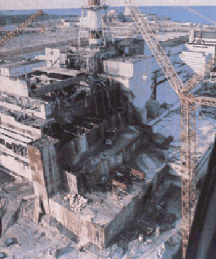
 It’s one of the hottest TV shows in the world but what is the real story of Chernobyl and is it actually safe to visit the site now? https://www.news.com.au/entertainment/tv/the-real-story-of-the-chernobyl-nuclear-disaster/news-story/c3a2487f9392eb79717ae2f6b8c1a8cc
31 May 19, “…. The five-part Sky and HBO co-production, which is based on real-life events around the world’s worst nuclear disaster, has gripped the UK and is also now available in Australia via One Demand on Fox Showcase.
The horrifying events of April 26, 1986 when the Chernobyl nuclear power station went into meltdown have been brought to life in the new drama, and the show is now the highest rated program on IMDb.
Here’s a rundown of what we know about the real life events.
WHAT WAS THE CHERNOBYL NUCLEAR DISASTER?
An alarm bellowed out at the nuclear plant on April 26, 1986, as workers looked on in horror at the control panels signalling a major meltdown in the number four reactor.
The safety switches had been switched off in the early hours to test the turbine but the reactor overheated and generated a blast the equivalent of 500 nuclear bombs.
The reactor’s roof was blown off and a plume of radioactive material was blasted into the atmosphere.
As air was sucked into the shattered reactor, it ignited flammable carbon monoxide gas causing a fire which burned for nine days.
The catastrophe released at least 100 times more radiation than the atom bombs dropped on Nagasaki and Hiroshima.
Soviet authorities waited 24 hours before evacuating the nearby town of Pripyat — giving the 50,000 residents just three hours to leave their homes.
After the accident traces of radioactive deposits were found in Belarus where poisonous rain damaged plants and caused animal mutations.
But the devastating impact was also felt in Scandinavia, Switzerland, Greece, Italy, France and the UK.
An 18-mile radius known as the “Exclusion Zone” was set up around the reactor following the disaster.
HOW MANY PEOPLE DIED IN CHERNOBYL?
At least 31 people died in the accident — including two who were killed at the scene and more who passed away a few months later from Acute Radiation Syndrome.
The actual death toll is hard to predict as mortality rates have been hidden by propaganda and reports were lost when the Soviet Union broke up.
In 2005, the World Health Organisation revealed a total of 4000 people could eventually die of radiation exposure.
About 4000 cases of thyroid cancer have been seen since the disaster — mainly in people who were children or teenagers at the time.
DID THE CHERNOBYL RADIATION CAUSE ANIMAL MUTATIONS?
Farmers noticed an increase in genetic abnormalities in farm animals immediately after the disaster.
This spiked again in 1990 when around 400 deformed animals were born — possibly as a result of radiation released from the sarcophagus intended to isolate the nuclear core.
Some animals were born with extra limbs, abnormal colouring and a smaller size.
Animals that remained in the exclusion zone became radioactive — including as many as 400 wolves, which is the highest density wolf population on the entire planet.
The Eurasian lynx — once believed to have disappeared from Europe — thrived in Chernobyl as there were no humans to run them out.
Birds were also affected by radiation, with barn swallows having deformed beaks, albinism and even smaller brains.
The radioactive animals all live in the “Red Forest”, which got its name after the trees turned crimson in the fallout.
IS IT SAFE TO GO THERE NOW?
The site and Pripyat has been safe for tourists to visit since 2010.
There are around 160 villages in the Exclusion Zone but the basement of the hospital in Pripyat remains one of the more chilling stories.
The firemen were taken to the hospital for treatment and their clothes, which had been stripped off were discarded.
Later radiation readings at the site reached 7000 millisieverts — the risk of haemorrhage starts at 1000 while death begins at 4000.
The ghost town also includes a school that features in the video game Call of Duty, an abandoned Ferris wheel and homes frantically deserted when evacuation began.
Tourists have to be screened before they enter the Exclusion Zone and are told not to touch anything within the cordon.
Holiday companies offer packages that give an official tour of the Exclusion Zone.
June 1, 2019
Posted by Christina Macpherson |
General News |
Leave a comment
SBS, 1 June 19 In her commencement address delivered at Harvard University in the United States, German Chancellor Angela Merkel has urged the world to join together to combat climate change.
German Chancellor Angela Merkel on Thursday urged the world to do “everything humanly possible” to combat climate change and pledged to do her part.
“Climate change poses a threat to our planet’s natural resources,” Ms Merkel said in her commencement address delivered at Harvard University in the United States.
“It and the resulting crises are caused by humans.”,……. https://www.sbs.com.au/news/merkel-urges-world-to-do-all-humanly-possible-on-climate-change
June 1, 2019
Posted by Christina Macpherson |
General News |
Leave a comment
 Uranium Week: Buyers’ Market. https://www.fnarena.com/index.php/2019/05/28/uranium-week-buyers-market/ By Greg Peel, May 28 2019
Sellers continue to chase down ever more empowered buyers in an ongoing weak uranium market.
-Uranium spot price continues to fall
-Rio Tinto may shut down Rossing
-US production falls dramatically
It was Groundhog Week last week in the uranium market. With utilities largely out of the market pending a section 232 decision, sellers continue to lower prices in order to flush out buying interest.
And the buyers are not making it easy. Having the upper hand, they are not simply insisting on lower prices, industry consultant TradeTech reports, but on specific origins, delivery locations and other restrictive terms and conditions.
Four transactions totalling 500,000lbs U3O8 equivalent were recorded in the spot market last week. TradeTech’s weekly spot price indicator has fallen -US20c to US$24.30/lb.
The spot price has now fallen -16% in 2019, whittling a 12-month gain down to 6%.
There were no transactions reported in uranium term markets. TradeTech’s term price indicators remain at US$28.50/lb (mid) and US$32.00/lb (long).
Supply Response
Australian-listed diversified miner Rio Tinto ((RIO)) has announced it will advance the closure of its 69% owned Rossing uranium mine in Namibia to June 2020 if the Namibian competition regulator blocks the US$104m sale of the mine to China National Uranium Corp.
Rio cannot continue to operate the loss-making business and would rather cease operations ahead of a forecast 2025 mine life if the sale is rejected.
The Namibian government owns a 3% stake in Rossing but 51% of the voting rights. The Iranian Foreign Investment Co holds 15% and the Industrial Development Corp of South Africa owns 10%.
Persistently low uranium prices continue to impact on global supply. Last week the US Energy Information Agency reported US uranium mines produced 700,000lbs U3O8 in 2018, down -37% from 2017.
Total shipment of uranium concentrate from US mills fell -35%. US producers sold 1.5mlbs of concentrate at an average price of US$32.51/lb.
May 30, 2019
Posted by Christina Macpherson |
AUSTRALIA - NATIONAL, business, uranium |
Leave a comment
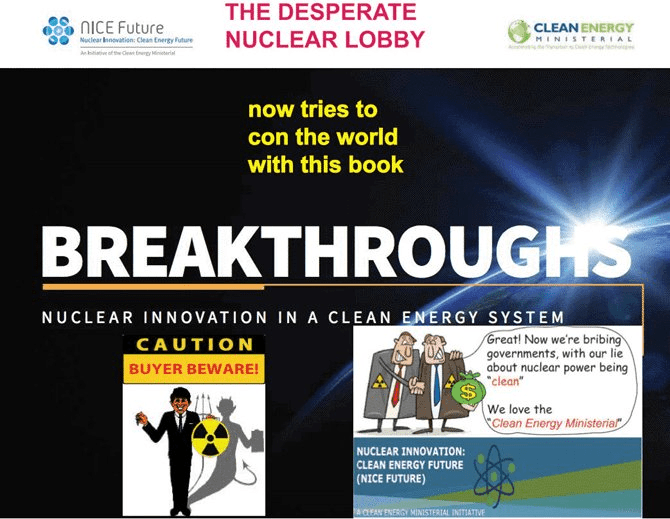
U.S., Canada Energy Leaders Announce New Book on Nuclear Innovation in Clean Energy USA Dept of Energy
MAY 28, 2019, VANCOUVER, CANADA – Today, leaders from the United States and Canada are unveiling a new book, Breakthroughs: Nuclear Innovation in A Clean Energy System, at the Tenth Clean Energy Ministerial (CEM10), a forum including ministers from 25 nations, occurring this year in Vancouver, Canada from May 27-29. MAY 28, 20
“The combination of vision and innovation is having a profound impact on our energy landscape, and nowhere is that more true than nuclear energy,” said U.S. Under Secretary of Energy Mark W. Menezes. “Nuclear energy is one of our most reliable and cleanest sources of energy, and we are determined to revive and revitalize the nuclear energy industry with advanced and smart designs. This book highlights some of the incredible transformative opportunities nuclear innovation can bring to society and the clean energy future of our planet.”
Canada’s Minister of Natural Resources Amarjeet Sohi said, “The Clean Energy Ministerial is part of building the world’s clean energy future. Canada is proud to host the 10th Clean Energy Ministerial in Vancouver at this historic moment in time. We are pleased to be working with the United States, Japan, and other countries under the nuclear innovation initiative. We also welcome the release of Breakthroughs – a collection a real stories about nuclear innovations and how they can contribute to our climate change goals.” ………
The Breakthroughs book is a product of the CEM Nuclear Innovation: Clean Energy Future (NICE Future) initiative that was launched at the May 2018 Ninth CEM in Copenhagen, Denmark. The NICE Future initiative envisions nuclear energy’s many uses in contributing to clean, reliable energy systems of the future. …….. https://www.energy.gov/articles/us-canada-energy-leaders-announce-new-book-nuclear-innovation-clean-energy
May 30, 2019
Posted by Christina Macpherson |
General News |
Leave a comment






 Antinuclear