Australian Nuclear Association’s Rob Parker continues to make absurd pro nuclear claims
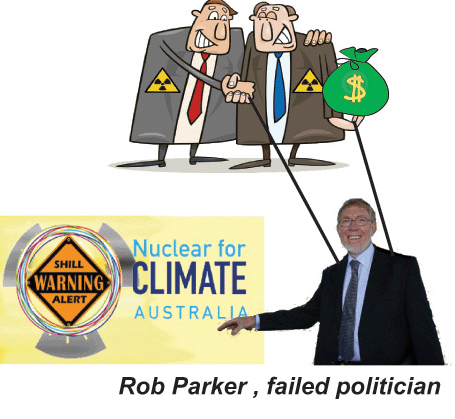 ‘Safest form of power generation’: Calls for nuclear to be put back on the table, HTTPS://WWW.2GB.COM/SAFEST-FORM-OF-POWER-GENERATION-CALLS-FOR-NUCLEAR-TO-BE-PUT-BACK-ON-THE-TABLE/ 16/04/2019, NATALIE PETERS & ERIN MOLAN , Nuclear power plants are illegal in Australia but experts [?] say it could be the answer to Australia’s energy concerns.
Many are calling for the construction of High-Efficiency Low Emission (HELE) coal power plants, in order to avoid outages and soaring power prices.
But Australian Nuclear Association Vice President Rob Parker tells Natalie Peters and Erin Molan nuclear energy is the most environmentally friendly and cost-effective option.
“When we look at nuclear energy we find that it is established as being the safest form of power generation that we have on the planet.
“It is safer than coal, safer than oil, safer than anything, including solar and wind. “We have established that we can have a clear low carbon, low-cost, future using nuclear energy.”
Nuclear power plants not designed, not built, to cope with climate change

U.S. Nuclear Power Plants Weren’t Built for Climate Change, [excellent pictures on original] Bloomberg , By Christopher Flavelle and Jeremy C.F. Lin, April 18, 2019
In 2011, after an earthquake and tsunami caused a meltdown at Japan’s Fukushima-Daiichi power plant, Gregory Jaczko, then the chairman of the U.S. Nuclear Regulatory Commission, had to worry about two things: whether radioactive fallout would harm the U.S. and whether a similar accident could befall an American plant. The answer to the first question turned out to be no. The second question preoccupies him still.
The NRC directed the operators of the 60 or so working U.S. nuclear power plants to evaluate their current flood risk, using the latest weather modeling technology and accounting for the effects of climate change. Companies were told to compare those risks with what their plants, many almost a half-century old, were built to withstand, and, where there was a gap, to explain how they would close it.
That process has revealed a lot of gaps. But Jaczko and others say that the commission’s new leadership, appointed by President Donald Trump, hasn’t done enough to require owners of nuclear power plants to take preventative measures—and that the risks are increasing as climate change worsens.
….. After Fukushima, U.S. regulators told operators to calculate their exposure to various flood risks and compare that with what the plant was designed for. Ninety percent of plants had at least one risk exceeding their design.
According to a Bloomberg review of correspondence between the commission and plant owners, 54 of the nuclear plants operating in the U.S. weren’t designed to handle the flood risk they face. Fifty-three weren’t built to withstand their current risk from intense precipitation; 25 didn’t account for current flood projections from streams and rivers; 19 weren’t designed for their expected maximum storm surge. Nineteen face three or more threats that they weren’t designed to handle.
The industry argues that rather than redesign facilities to address increased flood risk, which Jaczko advocates, it’s enough to focus mainly on storing emergency generators, pumps, and other equipment in on-site concrete bunkers, a system they call Flex, for Flexible Mitigation Capability. Not only did the NRC agree with that view, it ruled on Jan. 24 that nuclear plants wouldn’t have to update that equipment to deal with new, higher levels of expected flooding. It also eliminated a requirement that plants run Flex drills………
The commission’s three members appointed by President Trump wrote that existing regulations were sufficient to protect the country’s nuclear reactors. Jaczko disagrees. “Any work that was done following Fukushima is for naught because the commission rejected any binding requirement to use that work,” he says. “It’s like studying the safety of seat belts and then not making automakers put them in a car.”
The commission “is carrying out the Trump deregulatory philosophy,” says Edwin Lyman, head of the Nuclear Safety Project at the Union of Concerned Scientists. “The NRC basically did everything the industry wanted.” The two Democratic appointees objected to the NRC’s ruling. “The majority of the commission has decided that licensees can ignore these reevaluated hazards,” commissioner Jeff Baran wrote in dissent. His colleague Stephen Burns called the decision “baffling.” Through a spokesman, the Republican appointees declined to comment.
“Nuclear power is weird—it exists to produce electricity, and at the same time it can’t exist without electricity,” says Allison Macfarlane, who chaired the NRC from 2012 through 2014. Plants need constant power to pump cool water into a reactor’s core; if flooding interrupts that power supply for long enough, as happened in Fukushima, the core can overheat, melting through its container and releasing deadly levels of radiation.
The true risk to U.S. nuclear facilities may be even greater than what the documents from the nuclear commission show. The commission allowed nuclear plant operators not only to perform their own estimates of current flood risk but also to decide what assumptions to make—for example, the maximum likely hurricane speed or how much rain would fall in an extreme storm. (The commission reviews that work.) The commission also rejected a recommendation by their own staff that would require nuclear power plants to update their risk assessments periodically to reflect the advancing threat of climate change.
While plant owners weren’t required to project their future storm surge risk, the Union of Concerned Scientists has done its own estimates for some of those regions. The images included here show that projected increase.
Turkey Point Nuclear Generating Station, 35 miles south of Miami, was designed to withstand a storm surge of 16 feet, according to documents submitted to regulators by its owner, Florida Power & Light Co. But the updated storm surge is expected to range from 17.4 feet to 19.1 feet at different parts of the plant. Last year, Florida Power & Light sought permission from regulators to extend Turkey Point’s operating license until 2053.
……….. The Waterford power plant, a half-hour drive up the Mississippi River from New Orleans, was designed to withstand a maximum storm surge of 23.7 feet above sea level, according to documents provided to the NRC by Entergy Corp., which owns the plant. The company told regulators that a combination of storm surge and river flooding would create a maximum surge of 31.8 feet.
……… One of the largest gaps in storm surge protection is at Dominion Energy Inc.’s Surry Power Station, whose two reactors sit on a peninsula jutting into the James River just north of Norfolk, Va. The plant’s east side, which is most exposed to a potential storm surge, was designed to withstand a wall of water as high as 28.6 feet above sea level, Dominion told regulators. The company found that under current conditions, a storm surge combined with river flooding would bring a surge of as much as 38.8 feet. “
…… Dominion asked the NRC to extend its license for Surry to 2053. The commission has yet to rule on that request.
…….. According to documents provided to the commission by Exelon Corp., which owns Peach Bottom, the plant wasn’t designed for its current flood risk from heavy precipitation, storm surge, ice-induced flooding, or a standing wave called a seiche.
The fight over regulation and climate change comes when the nuclear industry, under pressure from cheap natural gas and still viewed with suspicion by many environmentalists, can least afford it, according to Peter Bradford, a former commissioner. “Anything that increases their costs now threatens their existence,” he says.
…… Macfarlane, the former NRC chairman, says the lesson of Fukushima is that the nuclear industry, including regulators, needs to prepare for seemingly unlikely threats. “Boy, did we misjudge natural hazards,” she says. “If something happens and you don’t learn from it, woe unto you.”https://www.bloomberg.com/graphics/2019-nuclear-power-plants-climate-change/
April 19 Energy News — geoharvey

Opinion: ¶ “The Largely Ignored Problem Of Global Peak Oil Will Seriously Hit In A Few Years” • Data from the International Energy Agency shows that with no new investment global oil production will drop by 50% by 2025. That includes oil from all unconventional sources, and new oil exploration is at the lowest level […]
Work begins on Warwick solar farm – UQ’s ticket to 100% renewables — RenewEconomy

Works begin on University of Queensland-owned solar farm that will make UQ world’s first major university to offset 100% of its electricity through its own renewables assets. The post Work begins on Warwick solar farm – UQ’s ticket to 100% renewables appeared first on RenewEconomy.
via Work begins on Warwick solar farm – UQ’s ticket to 100% renewables — RenewEconomy
Bottom line is that electric vehicles in Australia still face barriers — RenewEconomy

Australia can do much better on EVs – mass popularity is likely to take years. And that’s a shame, because in economic terms, EVs beat ICE cars hands down. The post Bottom line is that electric vehicles in Australia still face barriers appeared first on RenewEconomy.
via Bottom line is that electric vehicles in Australia still face barriers — RenewEconomy
Solar industry vents its anger at Queensland government, pleads for review — RenewEconomy

Solar industry confronts Queensland government over new installation rules, with warnings that it could threaten state’s 50% renewables target. The post Solar industry vents its anger at Queensland government, pleads for review appeared first on RenewEconomy.
via Solar industry vents its anger at Queensland government, pleads for review — RenewEconomy
UNSW looks to solar-powered desalination to help bust droughts josh — RenewEconomy

UNSW researchers are combining desalination technology with solar, targeting those in need of secure supplies of fresh water who are also disconnected from electricity grids. The post UNSW looks to solar-powered desalination to help bust droughts josh appeared first on RenewEconomy.
via UNSW looks to solar-powered desalination to help bust droughts josh — RenewEconomy
Global solar capacity surpassed 500GW in 2018 — RenewEconomy

Booming national markets – including Australia’s – helped deliver nearly 100GW of new PV installations in 2018, and took the global total past the 500GW mark. The post Global solar capacity surpassed 500GW in 2018 appeared first on RenewEconomy.
via Global solar capacity surpassed 500GW in 2018 — RenewEconomy
Candidates and MPs supporting the UN Treaty on the Prohibition of Nuclear Weapons.
 Candidates behind the ban, ICAN, Candidates for the 2019 Australian federal election are joining their parliamentary colleagues in Candidates behind the ban, ICAN, Candidates for the 2019 Australian federal election are joining their parliamentary colleagues in  declaring support for Australia to sign and ratify the UN Treaty on the Prohibition of Nuclear Weapons. declaring support for Australia to sign and ratify the UN Treaty on the Prohibition of Nuclear Weapons.
If elected, candidates that “pre-pledge” will be listed as signatories to the Parliamentary Pledge (see text below). The following list of supportive candidates does not include incumbents, who are listed here. Candidates that support the nuclear weapon ban treaty:…………… With the federal election just around the corner, candidates are committing to work for Australia to sign and ratify the UN Treaty on the Prohibition of Nuclear Weapons in Parliament if elected. Ninety-two current federal parliamentarians have signed the ICAN Parliamentary Pledge, and an additional 46 candidates have “pre-pledged” their support.
Fifteen cities and towns across Australia have spoken out against nuclear weapons and called on the federal government to sign and ratify the TPNW. This groundswell of local activism in Australia and worldwide includes Melbourne, Sydney, Canberra, Washington DC, Geneva, Manchester and LA
Former Assistant Secretary of Arms Control and Counter-Proliferation at DFAT, Peter Hooton, has critiqued Australia’s position on the TPNW in this article for Charles Sturt University. He argues “for the formal and complete renunciation of an instrument of war on which the United States continues to depend. We have done this already with respect to landmines and cluster munitions—and we are a party, too, to the nuclear-test-ban treaty, which the United States has not ratified. Australia can join the TPNW and remain a good friend and ally of the United States.” A few days ago Panama became the 23rd country to ratify the TPNW, bringing it one step closer to entry-into-force! Darebin Council in Melbourne has commissioned and launched a stunning new mural to honour local ICAN co-founders Dimity Hawkins and Dave Sweeney as well as nuclear test survivors and disarmament activists worldwide. It features the late Yankunytjatjara elder and nuclear test survivor Yami Lester. The Lester family, including Karina Lester , have advocated against nuclear weapons and nuclear waste for decades. Pledge for the Treaty on the Prohibition of Nuclear WeaponsWe, the undersigned parliamentarians,warmly welcome the adoption of the UN Treaty on the Prohibition of Nuclear Weapons on 7 July 2017 as a significant step towards the realization of a nuclear-weapon-free world.
We share the deep concern expressed in the preamble about the catastrophic humanitarian consequences that would result from any use of nuclear weapons and we recognize the consequent need to eliminate these inhumane and abhorrent weapons. As parliamentarians, we pledge to work for the signature and ratification of this landmark treaty by our respective countries, as we consider the abolition of nuclear weapons to be a global public good of the highest order and an essential step to promote the security and well-being of all peoples. http://www.icanw.org/au/candidates/?fbclid=IwAR2EbAmx4KEqDQvZx0sVwT7pGPoFFvyWWOOAqJqCBpKJVSzlOVj0e2Gc96M |
|
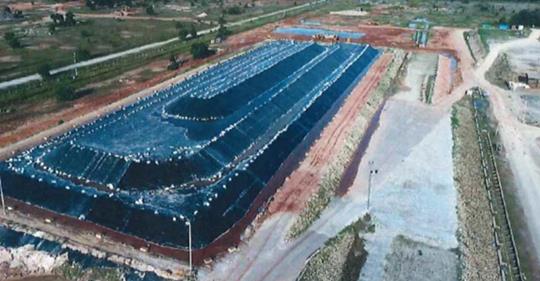
Malaysian government insists that Lynas must remove its 450,000 tonnes of radioactive waste from the country
|
Lynas still has to move a radioactive mountain, say Malay officials, SMH, By Colin Kruger, April 18, 2019 Malaysian Environment Minister Yeo Bee Yin accused Lynas Corp of putting its bottom line before the environmental concerns of local Malays in a letter to the company’s employees last year, and it appears that her hard line stance against the controversial rare earths group is prevailing.Malaysian Government officials told the Sydney Morning Herald and The Ageon Wednesday that Lynas Corp still needs to remove more than 450,000 tonnes of radioactive waste from the country for its licence to be renewed in September.
Minister Yeo laid down the law in a letter to Lynas employees in December just days after her ministry effectively ordered the company to remove 450,000 tonnes of low level radioactive waste. As of now, there is no viable near-term solution to manage the accumulated residue, which is stored at the open landfill temporary site,” Minister Yeo said in the letter. “The risks to the surrounding communities and environment increases with the increasing amount of accumulated residue as it is exposed to the threat of natural disasters such as major flooding.” The officials, who are not authorised to speak on behalf of the government on this subject, confirmed that the original conditions that the Environment ministry introduced in December remain in place. In the Lynas employee letter, which was posted to her official Facebook page, Minister Yeo emphasised that the government was holding Lynas to its promise of removing the waste from Malaysia and seized on Australian analyst reports indicating that the cost of removing the residue could be as low as $60 million…….. Lynas, and its estranged suitor Wesfarmers, both welcomed comments this month from Malaysian Prime Minister Mahathir Mohamad that appeared to give a green light to Lynas continuing its operations if it agreed to extract the problematic radioactive residue before the ore was shipped to Malaysia. While still seeking further clarification from the government on his comments, it was suggested that the radioactive waste no longer needs to be exported. ” … they can continue if they promise that the raw material from Australia would be brought here only after, what they call, cracking and cleaning it up,” Dr Mahathir told a local press after his cabinet had met to discuss Lynas following public disagreement among his ministers…… https://www.smh.com.au/business/companies/lynas-still-has-to-move-a-radioactive-mountain-say-malay-officials-20190417-p51f1k.html |
|
|
Kevin Rudd, as Foreign Minister in 2011, aware of Lynas’ probable radioactive wastes problem
Malaysian concerns over Lynas raised with Kevin Rudd in 2011, https://www.theage.com.au/business/companies/malaysian-concerns-over-lynas-raised-with-kevin-rudd-in-2011-20190415-p51ebx.html, By Colin Kruger, April 16, 2019, Former prime minister Kevin Rudd warned in 2011 that Australian companies needed to operate to high environmental and safety standards in their overseas operations after being alerted to Malaysian concerns about the radioactive waste produced by rare earths group Lynas Corp.
This was around the same time that ASX-listed Lynas was being warned, in a confidential report it commissioned, that it had failed to engage with the Malaysian community, which could jeopardise its operations in the country.
A letter obtained by The Sydney Morning Herald and The Age details a response from Mr Rudd, who was foreign minister at the time, to Senator Doug Cameron, who had met with a delegation of Malaysian citizens expressing their concerns about Lynas’ $1 billion operating plant in Kuantan.
“The Australian government expects Australian companies to operate to high environmental and safety standards in their overseas operations, as they would in Australia,” said the letter from Mr Rudd dated July 20, 2011.
“While ultimately Malaysian law governs the management of residues from the plant, the Australian government has welcomed the Malaysian government’s decision to establish the independent expert panel as an open and transparent response to community concerns.”
Mr Rudd noted that the Lynas plant, once completed, would be the “largest single investment in Malaysia and as such, the government is taking a close interest in the project”.
The plant’s importance went beyond Australia’s relationship with Malaysia.
At the time, there was significant global concern about the fact that China dominated the supply of rare earths – a group of 17 elements crucial to the manufacture of hi-tech products like digital cars, smart phones and wind turbines. Despite the name, the elements are not actually that rare, but they are environmentally hazardous to extract.
In 2010, the then Japanese foreign minister, Seiji Maehara, raised the issue with Mr Rudd during trade talks in Canberra.
Mr Rudd said at the time that Australia “understands the significance of rare earths globally” and “Australia stands ready to be a long-term, secure, reliable supplier of rare earths to the Japanese economy”.
It was shortly after that trade visit that a deal was unveiled under which $US250 million in Japanese government agency financing was made available for an accelerated expansion of Lynas’s Mount Weld rare earths mine in Western Australia, and its associated processing facilities in Malaysia.
Mr Rudd is understood to have played a key role. The Department of Foreign Affairs and Trade and Senator Cameron were approached for comment.
Lynas, which is being pursued by former Coles owner Wesfarmers with a potential $1.5 billion indicative offer, faces closure of its Malaysian operations by September if it cannot comply with new conditions introduced in December due to the environmental concerns. These currently include the removal of more than 450,000 tonnes of residues containing low-level radiation.
Wesfarmers chief executive Rob Scott met with Malaysian Prime Minister Mahathir Mohamad last month to discuss the regulatory issues faced by Lynas.
The following day, Dr Mahathir announced that a company interested in acquiring Lynas had promised to extract the radioactive waste before exporting the ore to Malaysia.
Wesfarmers has denied any impropriety in its meetings with the Malaysian government.
This month, Australian regulators confirmed they had requested detailed information from Lynas and Wesfarmers about communication between the companies before the public announcement of the takeover bid on March 26.
Earlier last month, four Lynas directors had acquired shares during a designated trading window.
A Lynas spokesman said the company had “no reason to believe that Wesfarmers had an ongoing interest in the company at the time the shares were purchased. The purchases were made in a designated trading window”.
Lynas chief executive Amanda Lacaze will update the market on the company’s operational performance for the March quarter on Tuesday.
The company’s results for the December quarter were affected by a temporary shutdown of its operations after Lynas failed to receive approval to lift the approved limit for processing lanthanide concentrate.
Lynas shares closed 6¢ lower at $2 on Monday.
In 2011, secret report warned of dangers of Lynas’ rare earth’s wastes in Malaysia
|
Secret report: Lynas told of Malaysia risks in 2011, The Age,By Latika Bourke, April 15, 2019, Lynas management was warned eight years ago that the rare earths miner had failed to “engage meaningfully” with Malaysia and its operations in the country could be jeapordised if it did not change the way it dealt with environmental concerns and the government.The Herald and Age have obtained a confidential report delivered to Lynas in 2011 by Australian advisory firm Futureye that concluded the company was in “urgent need” of winning the local community’s support for the Malaysian operations’ future.
The report warned that failure to win local support would not just jeopardise the company’s Malaysian business but also call its reputation as a good corporate citizen into question at home in Australia. Lynas is fighting off a $1.5 billion takeover bid from Perth-based conglomerate Wesfarmers with the viability of its operations now hinging on a decision by Malaysian Prime Minister Mahathir Mohamad. The company continues to face major concerns about its 100 hectare materials plant in Kuantan, with community groups stepping up pressure on the government to suspend its operating license. The Wesfarmers takeover has been mired in allegations of aggressive tactics and has caught the attention of the corporate regulator………. Another condition — something the company [Lynas] has previously said was unfeasible — was the removal of more than 450,000 tonnes of low-level radioactive waste from the country by September. Lynas’ auditor Ernst & Young said in February that if the company could not successfully negotiate with the Malaysian government about its processing plant, there was “a material uncertainty that may cast significant doubt about the consolidated entity’s ability to continue as a going concern”. The confidential 2011 report by Futureye appears to anticipate some of these issues. ….
Lynas’ failure to “engage meaningfully” in the two years it had been in Malaysia meant “community outrage is escalating at a time when Lynas is awaiting its pre-operating licence”. Unless Lynas began immediate engagement, the report argues, the issue would grow beyond the company’s control. The 2011 document also warned Lynas about its reliance on an administration headed by then prime minister Najib Razak, Mr Mahathir’s political rival who is now being investigated for corruption. “Corruption (or suspected corruption) is a serious issue that requires proactive management by Lynas … whether there is a direct allegation of any corrupt practice in relation to the project or not, it is essential that Lynas publicly commits to non-corrupt practices.”……. https://www.theage.com.au/business/companies/secret-report-lynas-told-of-malaysia-risks-in-2011-20190412-p51der.html |
|
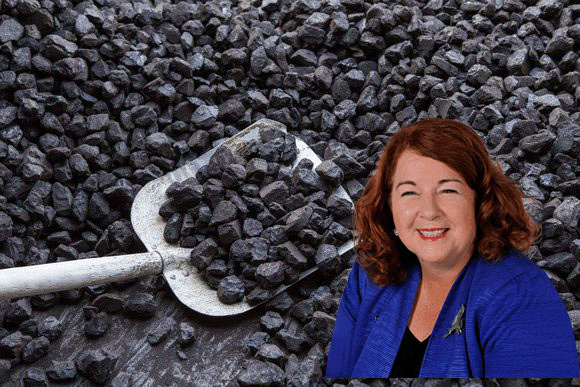
Documents contradict Minister For Coal’s statement that Adani “accepted in full” changes sought by scientists regarding Carmichael mine
|
Adani did not ‘accept in full’ changes sought by scientists during approval stages, meeting notes show https://www.abc.net.au/news/2019-04-18/adani-geosciences-approval-meeting-documents/11025724?utm_source=sfmc&utm_medium=email&utm_content=&utm_campaign=%5bnews_sfmc_newsmail_am_df_!n1%5d%3a8935&user_id=ee3112c28b432c04a45b461292f47b49ebeef4e80ab2
Key points:
Announcing her decision to approve Adani’s water management plans for its Carmichael mine earlier this month, Ms Price said Adani “accepted in full” advice from the CSIRO and Geoscience Australia. Prime Minister Scott Morrison also maintained the Government would “make all decisions based on the expert advice from … Geoscience Australia and the CSIRO”. “We have always been following the advice of the scientists and we’ll continue to do that,” he said. The advice was provided in a damning review in February of the company’s plans. But documents provided to the ABC showed Adani refused to accept key scientific findings and recommendations about its water management plans. The ABC has obtained notes taken by three attendees of a phone hook up on April 5 involving senior officials from the Department of Environment and Energy and staff from Geoscience Australia. The documents show the government science agency was concerned the water plans could allow Adani’s mine to breach the conditions of its environment approval. However, Adani would not accept the need for corrective action if that occurred. The notes said that Adani refused to:
A separate briefing note from the Department of Environment and Energy shows Adani also refused to consider scaling back its mining operation to minimise its impacts, despite being asked to do so. The ABC requested the meeting notes under freedom of information (FOI) laws, but Geoscience Australia took the unusual step of releasing the documents immediately instead The briefing happened after the Department of Environment and Energy had already advised the Minister to approve the plans, which had been finalised the previous month. One set of notes was taken by Geoscience Australia chief Dr James Johnson, another by head of environmental geoscience Dr Stuart Minchin, and the third by senior executive Dr Richard Blewett. A handwritten note by Dr Blewett mentions concerns held by Jane Coram, the head of CSIRO’s land and water division. She complained the science agencies had “not seen the revised plan” set to be approved, and that they were expected to take the summary of it at “face value”. After the meeting, Ms Price published a statement announcing, “Geoscience Australia and the CSIRO have provided written assurances that these steps address their recommendations.” A spokesman for Ms Price said she was not present at the meeting. “Decisions were made between the department officers, Geoscience Australia and the CSIRO on the proper scientific assessment of the issues and no other factor,” the spokesman said. But the notes show the scientific agencies were asked by the Minister’s department to give formal assurances that Adani’s commitments met their concerns in language acceptable to the Government.
“Ideal for gov[ernment]: letter from me to [Mr Finn Pratt] saying based on extensive briefing from [Department of Environment and Energy] on Adani addresses the concerns raised.” Fin Pratt is the head of the Department of Environment and Energy. In his handwritten notes of the meeting, Mr Johnson said the Government was keen for an assurance “based on discussion briefing” from the department, but he scribbled that out and changed it to “based on extensive briefing”. The Minister subsequently published a letter from Mr Johnson to Mr Pratt saying: “Thank you for the extensive briefing … Based on this briefing Geoscience Australia is of the view that Adani have addressed the issues and concerns raised in our recommendations.” Ms Price’s spokesman told the ABC no pressure was placed on the science agencies. Adani said in a statement it could not comment on the content of the documents. “Adani was not privy to internal briefing documents or discussions that the Federal Department of Environment and Energy may have provided to Geoscience Australia and CSIRO, consequently we are unable to comment as to their contents.” ‘Advice to Adani that they refused’The briefing notes listed in point form the “advice to Adani that they refused”. These included a recommendation Adani acknowledge their modelling “is not fit for purpose” and that a “new model could revise impacts [to be] greater than [what] has been approved”. “So told Adani — if new model shows greater impact than current model, they have to sort it out [with] corrective [actions]”, the notes said. “They refused.” Before the verbal briefing to Geoscience Australia, the Department Environment and Energy prepared a summary of Adani’s response to concerns raised by Geoscience Australia and the CSIRO, which was provided to the two agencies. The summary was published by the Department of Environment and Energy. That document shows Adani declined to commit to a reduced mine plan, or to cutting back coal extraction, as suggested by the Department Environment and Energy in response to the damning report on its groundwater management model and plans by Geoscience Australia and the CSIRO. It also shows Adani negotiated compromise outcomes in response to some of the scientists’ concerns and rejected other measures that the two agencies sought. There were gaps between what was included in that document and what was apparently outlined in the verbal briefing to Geoscience Australia staff. The notes of the verbal briefing the department gave to the scientists said that Adani committed to a “maximum timetable of three months” for conducting an investigation if water use limits were triggered — a demand of both CSIRO and Geoscience Australia.
Adani told the ABC it was not provided directly with the advice by CSIRO and Geoscience Australia until after the Government approved the plans. Instead it responded to summaries made by the Department of Environment and Energy. Minister faced intense pressure to approve mineMs Price faced intense pressure from her own side of politics to approve Adani’s water management plans before the federal election was called. Queensland LNP Senator James McGrath warned he would publicly call for Ms Price’s resignation unless she did the “right thing” by Adani, and Queensland’s LNP executive condemned what it called her “delay” in approval. In the wake of the Federal Government’s sign-off on the water management plans, Adani is pressing the Queensland Government to complete a series of other, state-based approvals that are needed before mining can commence. When Ms Price announced that she had approved the water management plans — just one working day after CSIRO and Geoscience Australia were briefed on Adani’s responses to their concerns — the Environment Minister said:
The Queensland Government is yet to approve construction as it seeks to protect a colony of black-throated finches around the mine site. Even if construction is fully signed off, the project still requires more approvals to be granted from the Queensland and Commonwealth governments before coal can be dug out of the ground. In an official statement to the ABC, a spokesperson for Geoscience Australia said it stood by their earlier statement that Adani’s actions addressed the concerns raised in their technical advice. “Adani did not acknowledge our advice that their groundwater model was not fit for purpose, and indicated they would not revise the model in the short term,” the spokesperson said. They said despite that, additional monitoring and mitigation Adani did agree to do satisfied their concerns. Geoscience Australia said it was not pressured to provide the Government assurance. |
|
ABC’s Vote Compass finds that environment is a high issue amongst voters
 Vote Compass finds voters are split on economy and environment as most important issue [interesting graphs] ABC News
Key points
- The environment and the economy are the top issues for Australian voters
- Health and super are next on the list
- The environment is the number one issue for those yet to decide how to vote
For One Nation voters, immigration is the most important issue.
The environment is rated as the number one issue by 29 per cent of Vote Compass respondents, a massive shift from just 9 per cent in 2016.
It is closely followed by the economy, which includes government spending and taxation, on 23 per cent.
Health care and superannuation, each on 8 per cent, are next.
Crucially, the environment is nominated as the top concern among undecided voters — 30 per cent of them say it is the most important issue, as opposed to 19 per cent who nominate the economy.
The Vote Compass survey is based on a nationally representative sample of 119,516 respondents.
Andrea Carson, a political scientist from La Trobe University and a member of the Vote Compass academic panel, said the environment was a potential “wedge issue” for the Coalition.
“Even though overall [Coalition] voters don’t tend to nominate the environment as their most important issue, the Coalition — in order to win seats — need some of those undecided voters………
Millennials are most concerned about the environment
Age is a big factor in what voters care about, too, with 39 per cent of respondents aged under 35 nominating the environment as their greatest concern……. https://www.abc.net.au/news/2019-04-17/vote-compass-election-most-important-issues/11003192
Earth’s ‘skin temperature test’ shows undeniable evidence of global warming
 https://metro.co.uk/2019/04/17/earths-skin-temperature-test-shows-undeniable-evidence-global-warming-9230191/ Jeff Parsons, Wednesday 17 Apr 2019
Satellite measurements of the Earth’s ‘skin temperature’ have confirmed that global warming is heating up the planet. The infra-red sensitive system was used to record temperature trends from 2003 to 2017. It showed a warming pattern consistent with other land-based measurements. Dr Joel Susskind, from Nasa’s Goddard Space Flight Centre, said: ‘Both data sets demonstrate the Earth’s surface has been warming globally over this period, and that 2016, 2017, and 2015 have been the warmest years in the instrumental record, in that order.’
The satellite system, called Airs (Atmospheric Infra-Red Sounder), records temperature at the surface of the ocean, land and snow-covered regions. Its findings were compared with station-based data from the Goddard Institute for Space Studies Surface Temperature Analysis (Gistemp).
1 This month.

Australians deserve the truth
about
AUKUS – https://aukuspublicinquiry.com/
Australians deserve the truth
about AUKUS
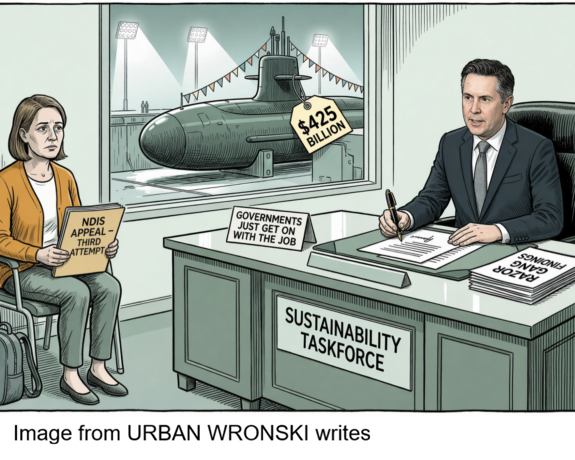

PETITION – To: Prime Minister Anthony Albanese and the Australian Labor Government

of the week – Australians for War Powers Reform (AWPR)
To see nuclear-related stories in greater depth and intensity
 Antinuclear