DUTTON’S RISKY NUCLEAR REACTOR PLAN THREATENS 12,000 FARMS
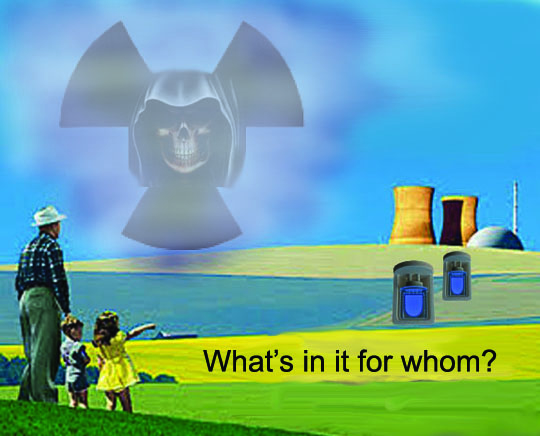
FOOD PRODUCTION ACROSS THE COUNTRY ON HIGH ALERT FROM DUTTON’S RISKY REACTOR PLAN
Agriculture Minister Murray Watt, 18 July 24
The fallout from Peter Dutton’s expensive and risky nuclear reactor announcement continues with new revelations that nearly 12,000 farms across Australia could be impacted.
The LNP’s announcement that nuclear reactors would be built at seven sites across the country could have serious implications for the agricultural sector.
The regions selected by Mr Dutton are major contributors to Australia’s food supply with significant cattle, milk, lamb, grain and vegetable production nearby.
Various states in the United States of America, including Illinois, California, Indiana, Maryland, Missouri and Florida set out detailed guidelines to be followed by farmers, processors and distributors within an 80-kilometere radius of nuclear reactors (known as the “ingestion zone”) to protect their food supply, in the event of a nuclear accident.
Analysis of ABS and local government data by the Parliamentary Library has found approximately 11,955 farms are located within an 80-kilometre radius of the Coalition’s selected sites.
Mr Dutton must urgently explain whether Australian farmers, processors and distributors within a similar ingestion zone will be forced to replicate the expensive actions recommended by American counterparts.
On top of this, leaks have occurred in recent years at nuclear reactors in the United States, Japan, India and Europe, in some cases contaminating agricultural land, crops and water sources.
Eating contaminated foods and drinking contaminated milk and water could have a harmful, long-term effect on the health of the wider community.
Mr Dutton needs to explain his plan to prevent such leaks, how he will manage them if they occur and how he would compensate affected farmers.
Agriculture Minister Murray Watt: –
“Peter Dutton’s risky nuclear plan is not only expensive, slow and unreliable, it also poses a threat to the agricultural industry.
“Based on international practice, farmers would need to take expensive steps during a nuclear leak and would need to inform their customers that they operate within the fallout zone.
“It’s bizarre that the Nationals and Liberals are putting at risk our prime agricultural land like this, especially without the decency to explain it to farmers and consumers how they’d mitigate all the potential impacts.”
BACKGROUND:
Parliamentary library analysis of farm businesses within the 80km ingestion zone of each proposed reactor.
- Collie (WA): Approximately 1,150 agricultural establishments. Major agricultural products include beef cattle, milk, lamb, barley, and carrots.
- Callide (Qld): Approximately 1,040 agricultural establishments. Major agricultural products include beef cattle, cotton, vegetables, wheat, and herbs.
- Hunter (NSW): Approximately 1,650 agricultural establishments. Major agricultural products include beef cattle, milk, chicken (meat), eggs, and hay.
- Latrobe Valley (VIC): Approximately 4,175 agricultural establishments. Major agricultural products include milk, beef cattle, vegetables, applies, and strawberries.
- Mt Piper (NSW): Approximately 1,280 agricultural establishments. Major agricultural products include beef cattle, cultivated turf, lamb, mushrooms, and other vegetables.
- Port Augusta (SA): Approximately 260 agricultural establishments. Major agricultural products include wheat, barley, lamb, wool, hay, and eggs.
- South Burnett/Darling Downs (Qld): Approximately 2,400 agricultural establishments. Major agricultural products include beef cattle, pork, sorghum, cotton, and milk
Farmers who graze sheep under solar panels say it improves productivity. So why don’t we do it more?
Guardian, by Aston Brown, 14 June 24
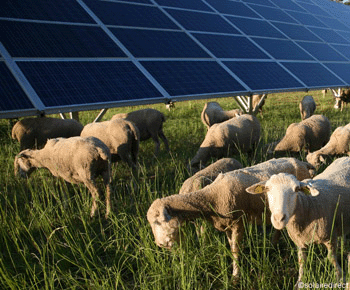
Allowing livestock to graze under renewable developments gives farmers a separate income stream, but solar developers have been slow to catch on.As a flock of about 2,000 sheep graze between rows of solar panels, grazier Tony Inder wonders what all the fuss is about. “I’m not going to suggest it’s everyone’s cup of tea,” he says. “But as far as sheep grazing goes, solar is really good.”
Inder is talking about concerns over the encroachment of prime agricultural land by ever-expanding solar and windfarms, a well-trodden talking point for the loudest opponents to Australia’s energy transition.
But on Inder’s New South Wales property, a solar farm has increased wool production. It is a symbiotic relationship that the director of the National Renewables in Agriculture Conference, Karin Stark, wants to see replicated across as many solar farms as possible as Australia’s energy grid transitions away from fossil fuels.
“It’s all about farm diversification,” Stark says. “At the moment a lot of us farmers are reliant on when it’s going to rain, having solar and wind provides this secondary income.”
In exchange, the panels provide shelter for the sheep, encourage healthier pasture growth under the shade of the panels and create “drip lines” from condensation rolling off the face of the panels.
“We had strips of green grass right through the drought,” Dubbo sheep grazier Tom Warren says. Warren has seen a 15% rise in wool production due to a solar farm installed on his property more than seven years ago.
Despite these success stories, a 2023 Agrivoltaic Resource Centre report authored by Stark found that solar grazing is under utilised in Australia because developers, despite saying they intend to host livestock, make few planning adjustments to ensure that happens……………………………………………………………………………….
According to an analysis by the Clean Energy Council, less than 0.027% of land used for agriculture production would be needed to power the east coast states with solar projects – far less than the one-third of all prime agricultural land that the rightwing thinktank the Institute of Public Affairs has claimed will be “taken over” by renewables. That argument, which has been heavily refuted by experts, has been taken up by the National party, whose leader, David Littleproud, said regional Australia had reached saturation point with renewable energy developments.
Queensland grazier and the chair of the Future Farmers Network, Caitlin McConnel, has sold electricity to the grid from a dozen custom-built solar arrays on her farm’s cattle pastures for more than a decade.
“Trial and error” and years of modifications have made them structurally sound around cattle and financially viable in the long-term, she says.
“As far as I know, we are the only farm to do solar with cattle,” McConnel says. “It’s good land, so why would we just lock it up just for solar panels?” https://www.theguardian.com/australia-news/article/2024/jun/13/farmers-who-graze-sheep-under-solar-panels-say-it-improves-productivity-so-why-dont-we-do-it-more
1 This month

of the week – Australians for War Powers Reform (AWPR)
To see nuclear-related stories in greater depth and intensity
 Antinuclear