Antarctic sea ice ‘behaving strangely’ as Arctic reaches ‘below-average’ winter peak
Carbon Brief, AYESHA TANDON, 26 Mar 24,
Antarctic sea ice is “behaving strangely” and might have entered a “new regime”, the director of the US National Snow and Ice Data Centre (NSIDC) tells Carbon Brief.
Following an all-time low maximum in September 2023, Antarctic sea ice has been tracking at near-record-low extent for the past six months. Last month, it hit its 2024 minimum extent, tying with 2022 for the second-lowest Antarctic minimum in the 46-year satellite record.
Dr Mark Serreze, director of the NSIDC tells Carbon Brief that more warm ocean water is reaching the surface to melt ice and keep it from forming. He says that we “must wait and see” whether this is a “temporary effect” or whether the Antarctic has entered a “new regime”.
Meanwhile, Arctic sea ice has reached its maximum extent for the year, peaking at 15.01m square kilometres (km2) on 14 March. The provisional data from the NSIDC shows that this year’s Arctic winter peak, despite favourable winds that encouraged sea ice formation, was 640,000km2 smaller than the 1981-2010 average maximum.
This year’s maximum was the 14th lowest in the satellite record…………………………………………………………………………………………………………………………………………………..
Record-breaking Antarctic extent
Antarctic sea ice has been tracking at or near record-low levels for months.
The Antarctic set a record-low maximum on 10 September 2023, with an extent of 16.96m km2. This was “the lowest sea ice maximum in the 1979 to 2023 sea ice record by a wide margin”, and one of the earliest, the NSIDC says.
Antarctic conditions over 2023 were “truly exceptional” and “completely outside the bounds of normality”, one expert told Carbon Brief.
As 2023 progressed, Antarctic sea ice melt was “slower than average”, the NSIDC says. The total decline in Antarctic sea ice extent through October was 903,000km2, while the October average was 985,000km2.
Nevertheless, Antarctic sea ice extent continued to track at a record low. On 31 October 2023, Antarctic sea ice extent was still tracking at a record-low of 15.79m km2. This is 750,000km2 below the previous 31 October record low………….. more https://www.carbonbrief.org/antarctic-sea-ice-behaving-strangely-as-arctic-reaches-below-average-winter-peak/
Nuclear news this week – 25 March

Some bits of good news –
- Amid all the climate gloom, let’s not ignore the good news. also at https://nuclear-news.net/2024/03/23/1-b1-amid-all-the-climate-gloom-lets-not-ignore-the-good-news/
- Full Recovery for Coral Reef Within 4 Years – The Speed of Restoration They Saw was ‘Incredible.
- A leading university halted donations from big oil.
- Finland has retained its status as the ‘world’s happiest nation’ in the latest World Happiness Report.
TOP STORIES. Julian Assange and the Plea Nibble. Report: Justice Department Considering Plea Deal for Assange.
House Democrats Tell Biden To Enforce US Law and Suspend Military Aid to Israel.
Dozens of countries pledge support for nuclear power, despite lingering concerns.
Filling Nuclear Power’s $5 Trillion Hole Is Beyond the Banks.Glorious new financial jargon from the nuclear lobby – the “International Bank for Nuclear Infrastructure (IBNI)”.
The International Atomic Energy Agency (IAEA) Cannot Both Police Proliferation and Promote Nuclear Power.
BASE study: Alternative reactor concepts do not solve the repository problem.
Climate .
Mainstream climate scientists run the risk of becoming the new climate deniers. Hundreds of groups for climate action reject nuclear power at Brussels Summit.
State of the Global Climate 2023.
Environment. Where have all the insects gone?
Noel’s notes. Antony Blinken would get into bed with the devil, if it meant lucrative sales of USA weapons and nukes to Hell. Desperation of the nuclear lobby! Its new financial fantasy scheme, couched in impenetrable jargon!” In talking about nuclear matters, why is money the only game in town?
*********************************************
AUSTRALIA. AUKUS: Red flag for arms industry corruption. UK and Australia set to elevate defence relationship to NATO level with new ‘status of forces’ agreement. Australia moves to prop up Aukus with $4.6bn pledge to help clear Rolls-Royce nuclear reactor bottlenecks in UK.
Financiers shun nuclear, upbeat on climate investment . Chief scientist backs renewables, calls nuclear power ‘expensive’ – https://www.youtube.com/watch?v=uxP-6vsditI&t=389s Forget nuclear: would Peter Dutton oppose a plan to cut bills and address the climate crisis? Australia’s big electricity generators say nuclear not viable for at least a decade. “Prohibitive:” Australia’s biggest energy consumers and producers say no to nuclear, but is Coalition listening?
Peter Dutton in standoff with state Liberal leaders over federal Coalition’s nuclear plan. Dutton’s bid for nuclear power: hoax or reckless endangerment? On nuclear, Coalition prefers the optimism of misleading, decade-old, unverified claims.
ERA applies to extend lease on Jabiluka uranium mine against traditional owners’ wishes.
********************************************
NUCLEAR ISSUES
ARTS and CULTURE. A One-State Solution Could Transform the World.
ECONOMICS.
- Deadlines, costs, production: France’s nuclear company EDF in a moment of truth.
- Bulgarian nuclear experts question economic viability of new nuclear project.
- Money is “The Achilles Heal” of the nuclear state.
- New Brunswick’s Point Lepreau nuclear plant ranked as poor performer among international peers. IAEA’s Rafael Grossi in Iraq to market nuclear reactors.
- The West’s Nuclear Power Revival Could Be Slower Than Hoped.
- This is why Sizewell C construction poses ‘possible risk’ to new hospital build.
- The extraordinary financial costs of ‘small’ nuclear power stations.
| ENERGY. For France’s EPR at Flamanville, the objective of loading fuel before the end of March is no longer tenable. | ENVIRONMENT. Oceans. Fourth discharge of treated Fukushima water completed. Canadian officials found radiation levels in these northern Ontario homes ‘well above’ the safe limit. Their response: ‘¯\_(ツ)_/¯’ also at https://nuclear-news.net/2024/03/23/1-a-canadian-officials-found-radiation-levels-in-these-northern-ontario-homes-well-above-the-safe-limit-their-response-%c2%af_%e3%83%84_-%c2%af/ Canadian Coalition for Nuclear Responsibility – Re: Radiation in Elliot Lake homes . | ETHICS and RELIGION. Just Seeing Through The Propaganda Isn’t Enough – We’ve Got To Open Our Hearts As Well. |
| HEALTH. Nuclear test veterans demand compensation and medical records access. | INDIGENOUS ISSUES. Heavy resistance to Canada’s 1st nuclear waste repository, while Nuclear Waste Management Organization (NWMO) says it is safe.. | MEDIA. Normalizing starvation and massacres: Flour Massacre Called ‘Aid-Related Deaths’—Rather Than Part of Israel’s Engineered Famine. |
| PUBLIC OPINION. In Japan, Opposition to restarting nuclear power plants has grown, especially among women | SECRETS and LIES. “Anonymous” claims it has infiltrated Israel’s nuclear plant in Dimona. | SPACE. EXPLORATION, WEAPONS. US and Japan seek UN resolution calling on all nations to ban nuclear weapons in outer space. Space tourists and crew suffer high radiation risks – regulation is needed to protect them. To Mars and Back: Will NASA’s Ambitious Endeavor Be Worth It? |
| SPINBUSTER. The Lying Piper of Nukeland: the IAEA’s nuclear fairy tales are leading nations — and all of us — into climate catastrophe. Zion Lights and her lying, climate-denying mentor Michael Shellenberger | TECHNOLOGY. The questionable promises behind new nuclear power. |
| WASTES. 100,000 years and counting: how do we tell future generations about highly radioactive nuclear waste repositories? Japan finishes first-year ocean discharge of nuclear-tainted wastewater amid backlash. Inside Fukushima: Eerie drone footage reveals first ever look at melted nuclear reactor with 880 tonnes of radioactive fuel still inside – 13 years after disaster. The Waste Isolation Pilot Plant (WIPP) Opened 25 Years Ago; It Was Supposed to Close Next Week. | WAR and CONFLICT. Ukraine’s losses ‘in the millions’ – retired Polish general. Atrocities. ‘We are the masters of the house’: Israeli channels air snuff videos featuring systematic torture of Palestinians | WEAPONS and WEAPONS SALES.How Biden’s budget plunged the Aukus submarines pact into doubt. Can the U.S. Develop A Nuclear Bomb Without Ever Testing It? We’re About to Find Out.US Air Force tests very expensive third-stage rocket motor for next nuclear missile NATO Builds Largest Europe Base Near Black Sea. Nuclear weapons: France to restart tritium production with EDF.Nuclear Deterrence At Sea – France Begins Work On ‘Cutting Edge’ Nuke-Powered Ballistic Missile Submarine.Canada to stop arms sales to Israel – Foreign Minister. UK launches ‘national endeavour’ to reinforce nuclear deterrent. Iranian Cleric Calls For Nuclear Arms. |
[Episode #219] – Nuclear Illusions
Energy Transition Show 6th March 2024 https://xenetwork.org/ets/episodes/episode-219-nuclear-illusions/—
In Episode #209, we peeled back the layers on civilian nuclear power, revealing its history as a facade for the nuclear weapons industry with a corresponding legacy of deception.
Yet, the allure of small modular reactors (SMRs) has recently been touted as the nuclear industry’s saving grace and a beacon of hope with the potential to sidestep a muddled past. Despite all the fanfare and substantial investments, the crumbling of prominent SMR initiatives exposes the continuation of the industry’s tradition of overpromising and underdelivering, a pattern all too familiar to those who’ve been watching closely.
Joining us in this episode is Jim Green from Friends of the Earth Australia, a seasoned nuclear journalist with three decades of experience in critiquing nuclear energy. Jim offers an unparalleled depth of insight into the industry’s persistent shortcomings and the realities behind the SMR hype. Together, we delve into the track record of conventional nuclear power, the latest trends in nuclear plant construction and retirements worldwide, and examine the companies at the forefront of the SMR push, offering a candid exploration of the nuclear power industry’s claims versus its actual performance.
Guest:
Jim Green is the National Nuclear-Free Campaigner with Friends of the Earth Australia, a member of the Nuclear Consulting Group (nuclearconsult.com), and former editor of the World Information Service on Energy’s ‘Nuclear Monitor’ newsletter. He has a First Class Honours degree in Public Health and a Doctorate in Science and Technology Studies for his thesis on the debates over the replacement of Australia’s nuclear research reactor.
France’s first 6 EPR2 nuclear reactors will cost much more than the planned 52 billion euros
Why the first six EPR2s will cost much more than the 52 billion euros
initially planned by EDF. During a hearing in the Senate, the executive
director of EDF’s new nuclear projects, Xavier Ursat, indicated that the
first six EPR2s will cost more than the 52 billion euros announced in 2021.
A first slippage in costs including the new estimate is promised for the
end of 2024.
Why the first six EPR2s will cost much more than the 52
billion euros initially planned by EDF. EDF does not brag about it. But in
the Senate commission of inquiry into the price of electricity, Xavier
Ursat, its executive director in charge of the engineering department and
new nuclear projects, was obliged to talk about it.
As predicted by an expert report in 2021, the construction of the first six EPR2s will indeed
cost more than the 51.7 billion euros, rounded to 52 billion by the State,
calculated by EDF at the time Emmanuel Macron had to decide on the relaunch
of a new nuclear program in France. A relaunch confirmed in his speech on
Belfort’s energy strategy on February 10, 2022. “We are carrying out a
new economic assessment. It led to a figure higher than 52 billion,”
Xavier Ursat declared to the senators. Which, for him, “is not very
surprising”.
L’Usine Nouvelle 12th Feb 2024
AI, climate change, pandemics and nuclear warfare puts humanity in ‘grave danger’, open letter warns
More than 100 politicians, academics and celebrities urge world leaders to act now against the existential threats facing mankind
Samuel Lovett, DEPUTY EDITOR OF GLOBAL HEALTH SECURITY, 15 February 2024 https://www.telegraph.co.uk/global-health/terror-and-security/ai-climate-change-pandemic-nuclear-warfare-humanity-danger/
Climate change, pandemics, nuclear warfare and artificial intelligence all pose an existential threat to humanity and need to be addressed with “wisdom and urgency”, more than 100 politicians, academics, and celebrities have warned in an open letter.
The signatories, including Annie Lennox, Richard Branson, Gordon Brown and Charles Oppenheimer, whose grandfather developed the atom bomb, said today’s world leaders prioritise “short-term fixes over long-term solutions” and “lack the political will to take decisive action” against the many dangers facing mankind.
“Our world is in grave danger. We face a set of threats that put all humanity at risk. Our leaders are not responding with the wisdom and urgency required,” the letter reads. “We are at a precipice.”
The signatories list four key demands for future-proofing humanity: a global financing plan to ease the transition to clean energy; arms control talks to reduce the risk of nuclear war; an equitable pandemic treaty to prepare for future outbreaks; and international governance for regulating AI to make it “a force for good”.
“The biggest risks facing us cannot be tackled by any country acting alone. Yet when nations work together, these challenges can all be addressed, for the good of us all,” the letter states.
The call for action is led by the Elders, an independent group of global leaders campaigning for peace and human rights founded by Nelson Mandela, and the Future of Life Institute, a non-profit working to develop transformative technologies for the benefit of humanity.
Other signatories of the letter include Ban Ki-moon, the former UN Secretary-General, Sir Malcolm Rifkind, the former UK foreign secretary, Helen Clark, the former prime minister of New Zealand, Mary Robinson, the former president of Ireland, and Amber Valletta, the American model and actress.
The letter also encourages the world’s decision-makers to be “bold” in abandoning their short termism in favour of “long-view leadership”.
“In a year when half the world’s adult population face elections, we urge all those seeking office to take a bold new approach,” it reads.
“We need long-view leadership from decision-makers who understand the urgency of the existential threats we face, and believe in our ability to overcome them.
“Long-view leadership means showing the determination to resolve intractable problems not just manage them, the wisdom to make decisions based on scientific evidence and reason, and the humility to listen to all those affected.”
The letter comes ahead of the Munich Security Conference, where government officials, military leaders and diplomats will meet on Thursday to discuss international security.
Each year, the conference brings together roughly 350 senior figures from more than 70 countries to engage in an intensive debate on current and future security challenges facing humanity.
Commenting on the open letter, Ban Ki-moon said the range of signatories “makes clear our shared concern: we need world leaders who understand the existential threats we face and the urgent need to address them”.
Atlantic Ocean circulation nearing ‘devastating’ tipping point, study finds

This is pretty serious, but especially for Northern Hemisphere countries.
But I’m also wondering what’s going on with Pacific Ocean currents, as the Antarctic melts at a racing pace. Nobody’s telling us about this, and about the impacts on our weather etc

Collapse in system of currents that helps regulate global climate would be at such speed that adaptation would be impossible
Jonathan Watts, 12 Feb 24,
https://www.theguardian.com/environment/2024/feb/09/atlantic-ocean-circulation-nearing-devastating-tipping-point-study-finds
The circulation of the Atlantic Ocean is heading towards a tipping point that is “bad news for the climate system and humanity”, a study has found.
The scientists behind the research said they were shocked at the forecast speed of collapse once the point is reached, although they said it was not yet possible to predict how soon that would happen.
Using computer models and past data, the researchers developed an early warning indicator for the breakdown of the Atlantic meridional overturning circulation (Amoc), a vast system of ocean currents that is a key component in global climate regulation.
They found Amoc is already on track towards an abrupt shift, which has not happened for more than 10,000 years and would have dire implications for large parts of the world.
Amoc, which encompasses part of the Gulf Stream and other powerful currents, is a marine conveyer belt that carries heat, carbon and nutrients from the tropics towards the Arctic Circle, where it cools and sinks into the deep ocean. This churning helps to distribute energy around the Earth and modulates the impact of human-caused global heating.
But the system is being eroded by the faster-than-expected melt-off of Greenland’s glaciers and Arctic ice sheets, which pours freshwater into the sea and obstructs the sinking of saltier, warmer water from the south.
Amoc has declined 15% since 1950 and is in its weakest state in more than a millennium, according to previous research that prompted speculation about an approaching collapse.
Until now there has been no consensus about how severe this will be. One study last year, based on changes in sea surface temperatures, suggested the tipping point could happen between 2025 and 2095. However, the UK Met Office said large, rapid changes in Amoc were “very unlikely” in the 21st century.
The new paper, published in Science Advances, has broken new ground by looking for warning signs in the salinity levels at the southern extent of the Atlantic Ocean between Cape Town and Buenos Aires. Simulating changes over a period of 2,000 years on computer models of the global climate, it found a slow decline can lead to a sudden collapse over less than 100 years, with calamitous consequences.
The paper said the results provided a “clear answer” about whether such an abrupt shift was possible: “This is bad news for the climate system and humanity as up till now one could think that Amoc tipping was only a theoretical concept and tipping would disappear as soon as the full climate system, with all its additional feedbacks, was considered.”
It also mapped some of the consequences of Amoc collapse. Sea levels in the Atlantic would rise by a metre in some regions, inundating many coastal cities. The wet and dry seasons in the Amazon would flip, potentially pushing the already weakened rainforest past its own tipping point. Temperatures around the world would fluctuate far more erratically. The southern hemisphere would become warmer. Europe would cool dramatically and have less rainfall. While this might sound appealing compared with the current heating trend, the changes would hit 10 times faster than now, making adaptation almost impossible.
“What surprised us was the rate at which tipping occurs,” said the paper’s lead author, René van Westen, of Utrecht University. “It will be devastating.”
He said there was not yet enough data to say whether this would occur in the next year or in the coming century, but when it happens, the changes are irreversible on human timescales.
In the meantime, the direction of travel is undoubtedly in an alarming direction.
“We are moving towards it. That is kind of scary,” van Westen said. “We need to take climate change much more seriously.”
TODAY. A new Waterloo defeat for France – a nuclear economic one.

Almost 200 years before Electricite de France (EDF) signed a nuclear contract with Britain, France got decisively beaten by England, in the battle of Waterloo. That defeat ended France’s attempts to dominate Europe.
Now in 2024, France is suffering a humiliating blow, because of that 2016 contract. In essence, EDF agreed to be solely responsible for cost overruns during construction of Britain’s Hinkley Point C nuclear power station.
To make matters worse, in 2022, the debt-laden EDF was fully nationalised by the French government, – which paid 9.7 billion euros to take on this burden. Back in 2016, the plant was meant to cost £18bn; it’s now headed to cost. £46bn .
Sacre bleu indeed!
France’s President Macron aims to make the nation the dominating nuclear industry power. Delusions of grandeur indeed. Apart from his grandiose plans for new fleets of big and little reactors, - around his neck is – as The Guardian puts it – a financial albatross that has only become heavier.

Electricite de France (EDF) DF a total basket case, weighed down by its 50 Billion pound nuclear turkey at Hinkley point

Jonathon Porritt, https://www.jonathonporritt.com/edf-a-total-basket-case-weighed-down-by-its-50-billion-nuclear-turkey-at-hinkley-point/ 25 Jan 24
EdF’s bosses must be thanking their lucky stars that President Macron decided to take complete control of EdF back in 2022. Otherwise, its latest announcements about further delays and cost increases for its new reactors at Hinkley Point would have sent any remaining investors running for the hills.
The scale of those announcements is staggering:
- The price tag for Hinkley Point C has now been reset at £31-34 billion (in 2015 prices), twice the original £18 billion.
- In today’s money, that’s around £46 billion – with further delays and cost hikes (rising to at least £50 billion) all but inevitable.
- EdF’s shortfall in completing Hinkley Point has risen substantially, and could now be as high as £25 billion on its balance sheet.
- EdF has admitted that 2029 is now the earliest Hinkley Point will come online. Fat chance of that.
Which makes Hinkley Point C even more of a bust than EdF’s current worst reactor construction nightmare at Flamanville in France. And significantly worse than its plant at Olkiluoto in Finland, which it just managed to get over the line last year.
So, watch out for the fallout.
Hinkley Point C was meant to be coming online in 2027. All neutral commentators now reckon 2031 (EdF’s so-called ”unfavourable scenario”) is the earliest that will happen. That’s a further four-year delay before its low-carbon electrons (providing 7% of the UK’s electricity) will be available to help the UK meet its various decarbonisation targets.
Add to that the knock-on impact of this on the Government’s/Labour’s hopes for a Hinkley Point look-alike (really!) at Sizewell C. The sales pitch to investors for that has now become even trickier than it was before: “Just look at this beautiful £50 billion turkey: another one just like it could be all yours at a bargain-basement price of, say, £40 billion”.
Which leads to the following conclusions:
EdF is even more screwed than it was before, deeper in debt, with further delays for rolling out its look-alike plant at Sizewell C now inevitable.- The Tory Government is screwed, with no chance of Hinkley Point C (let alone Sizewell C) making any serious short-term contribution to its decarbonisation strategy.
- Labour is screwed – for exactly the same reasons.
- The UK’s Net Zero strategy by 2050 looks less and less viable. And that will soon be tested, again, in the courts.
- All this because of the nuclear obsessions of the UK’s entire political establishment – Labour just as much as the Tories.
Happily, there’s no need to panic: the case for the “renewables + efficiency + storage + smart grids” option just got a whole lot stronger, both economically and politically. We just need the donkeys in Whitehall to give up on their nuclear turkeys. Finally!
France presses UK to help fill multibillion-pound hole in nuclear projects

Call comes day after EDF flagged more delays of construction of power plant at Hinkley Point
Sarah White in Paris and Jim Pickard and Rachel Millard in London, 25 Jan 24, https://www.ft.com/content/3320c06e-7ce3-4a6b-ab22-4b8201a4cfca
The French government is pressing the UK to help plug a multibillion-pound hole in the budget of nuclear power projects being built in Britain by France’s electricity operator EDF. The call for a contribution from the UK is likely to cause tensions between Paris and London, a day after state-owned EDF admitted its construction of a new nuclear power station at Hinkley Point in Somerset would suffer further costly delays, taking the bill to as much as £46bn. The UK has said it will not put cash into the project, which counts EDF as a majority shareholder, and is already backed by a government guarantee on its revenues once it is up and running.
But Paris is pushing for a “global solution” that would also encompass funding issues at another planned UK plant, Sizewell C, said a French economy ministry official and another person close to the talks. “It’s a Franco-British matter,” the French economy ministry official said. “The British government cannot at the same time say EDF has to figure it out alone on Hinkley Point and at the same time ask EDF to put money into Sizewell. We’re determined to find a global solution to see these projects through.”
Sizewell in Suffolk has a different financial set-up to Hinkley. The UK this week said it would inject another £800mn of state funds, bringing its total contribution to £2.5bn at the £20bn plant, where it is the top shareholder. Its partner EDF has no obligation to put more money in. French officials said discussions on various options had begun several months ago with British counterparts, although they acknowledged London had flagged budgetary constraints that would have to be taken into account. In the UK, a government official played down the talks, adding that on Hinkley Point: “Costs will be the responsibility of EDF.”
An EDF executive told the BBC on Wednesday that the French company picks up “the tab for the cost overruns”. EDF on Tuesday warned Hinkley Point would not now be completed until 2029 at the earliest, four years later than its original start date, while the two reactors could cost up to £46bn to build at today’s prices, compared with a £18bn budget in 2016.
Other factors might play into the discussions, however. Under Prime Minister Rishi Sunak, Britain took the political initiative to eject Chinese group CGN as an investor in Sizewell — leaving that project in need of fresh private capital, but also prompting CGN to pull back from Hinkley, where it is a 33.5 per cent shareholder. The Chinese group has fulfilled its contracted payments on Hinkley but has no obligation to fund over-costs and stopped doing so a few months ago.
“The French don’t have many levers here but the CGN issue is a very real one,” a third person close to the talks said. Finding private investors to make up the Hinkley shortfall may be tough, several people close to the group said, although formulas such as state guarantees could be discussed. EDF is only just coming out of a period of financial turmoil, and has big investments to make at home, too, in the coming decades. It was fully renationalised last year
“Our goal here . . . is for what’s happening at Hinkley Point, with the delays and the issue with the Chinese partner’s decision, not to impact EDF’s financial trajectory excessively,” the French economy ministry official said. However, one UK nuclear industry figure said that EDF’s plight at Hinkley was the consequence of signing up to a deal with the UK government a decade ago, which at the time was criticised for being too generous to the French group. Under a so-called contract for difference signed with the state, construction costs are not covered but future electricity production is backed up by subsidies in case power prices fall below a certain threshold.
As earth records hottest year, Coalition digs in against climate action and renewables
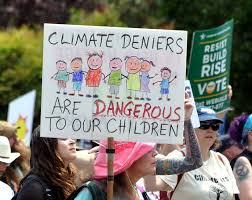
Pearls and Irritations, By Sophie Vorrath, Jan 23, 2024
The science is in. The European Union’s Copernicus Climate Change Service has overnight confirmed that 2023 was the earth’s warmest year on record: 0.16°C warmer than the previous record year (2016); 0.6°C warmer than the 1991-2020 average; 1.48°C warmer than the pre-industrial period.
The report from Copernicus notes that each month from June to December in 2023 was warmer than the corresponding month in any previous year, with July and August the warmest two months on record.
“2023 marks the first time on record that every day within a year has exceeded 1°C above the 1850-1900 pre-industrial level for that time of year,” the report says.
“Close to 50% of days were more than 1.5°C warmer than the 1850-1900 level, and two days in November were, for the first time, more than 2°C warmer.”
Furthermore, it is likely that a 12-month period ending in January or February 2024 will exceed 1.5°C above the pre-industrial level – the threshold climate scientists had hoped to limit global warming to through the sort of emissions reduction policies and actions they have been calling for for decades.
Around the world, the changing climate manifested itself in extreme heat waves in southern Europe, North America and China, devastating wildfires in Canada and Hawaii, record-breaking sea surface temperatures and record low sea ice extent around Antarctica.
Australia, remarkably, was the only continent that did not see large areas register record temperatures. But the impacts of global warming are no less evident.
Far North Queensland is picking up the pieces following a devastating cyclone and floods, while large parts of Victoria remain on flood watch after some regions experienced rainfall “higher than their 100-year rates” over 48 hours, according to the BOM. In Western Australia, a searing heatwave is on the cards.
“It’s not surprising, unfortunately,” prime minister Anthony Albanese said on Wednesday from Queensland, where he announced a $50 million federal support package for people affected by the state’s most recent extreme weather events.
“All of this is a reminder that the science told us that climate change would mean there would be more extreme weather events and they would be more intense. And unfortunately, we’re seeing that play out with the number of events that we’re having to deal with right around Australia.”
Climate Council research director Simon Bradshaw says the most alarming thing about the news from Copernicus is that 2023 broke heat records by such a considerable margin, with 2024 projected to be even hotter.
“We’re seeing how much more extreme our climate becomes as we approach the 1.5°C warming threshold,” he said on Wednesday.
“This is why we must limit future warming as much as possible by getting our emissions down fast by rapidly phasing out the burning of fossil fuels such as coal, oil and gas. We can’t keep stoking the fire if we want the room to cool down.”
But as the reality sinks in that 2023 shattered annual heat records and that the world looks like sailing past the safe climate zone hoped for by scientists, the federal Coalition has set to work walking back national emissions targets, railing against renewables and still – still! – banging on about nuclear.
On Wednesday, reports emerged that a majority of Liberal and National Party MPs will oppose taking a 2035 emissions reduction target to the 2025 election, arguing it will worsen the cost-of-living crisis for regional and vulnerable Australians.
“This is why we must limit future warming as much as possible by getting our emissions down fast by rapidly phasing out the burning of fossil fuels such as coal, oil and gas. We can’t keep stoking the fire if we want the room to cool down.”
But as the reality sinks in that 2023 shattered annual heat records and that the world looks like sailing past the safe climate zone hoped for by scientists, the federal Coalition has set to work walking back national emissions targets, railing against renewables and still – still! – banging on about nuclear.
On Wednesday, reports emerged that a majority of Liberal and National Party MPs will oppose taking a 2035 emissions reduction target to the 2025 election, arguing it will worsen the cost-of-living crisis for regional and vulnerable Australians
A survey by The Australian has found most Liberal MPs are privately opposed to any sort of 2035 target and didn’t see any point in putting a number to the Australian people.
Nationals MPs were more forthcoming with their views on the matter, with Barnaby Joyce, Colin Boyce, Keith Pitt, Matt Canavan and Bridget McKenzie on the record as rejecting “any target” or expressing serious reservations about adopting one, the Australian reports.
“There is also a smaller rump within the Nationals, including Senator Canavan and Mr Boyce, who want the Coalition to drop the current policy of net zero emissions by 2050,” the paper says
The context to this is that the latest climate science says 2050 net zero targets are now not enough to rein in global warming at the rate required to keep the planet safe and liveable. It has also been argued that such a distant target allows governments to take their time on policy – time they do not have.
Recent modelling by Monash University’s Climateworks Centre found Australia must move its net-zero emissions target forward by a decade to 2040 and cut national emissions by 68 per cent below 2005 levels by 2030 in order to have any hope of limiting warming to 1.5°C.
Federal Labor – which wants to get to 82 per cent renewables by 2030 – is under pressure to adopt a 2035 emissions target of more than 70 per cent, and is in consultation on the size of the interim target it has promised to bring to the 2025 election.
But the LNP is having none of it, preferring to believe that its constituents are unable to make the mental leap that “cost of living” might be intrinsically linked with the social, environmental and economic costs of ever increasing extreme weather events.
“I’m not confident the Labor Party’s current targets, let alone anything more ambitious, can be achieved without significant social and economic detriment to the nine million of us that don’t live in capital cities,” said McKenzie…………………………………………………………………
A National Rally Against Reckless Renewables is on the calendar for February 6 – federal parliament’s first sitting day for 2024 – with the Facebook page for the event promising “lots of great speakers,” including Joyce, Senator Jacinta Nampijinpa Price, David Gillespie MP, Senator Gerard Rennick, Senator Malcolm Roberts, and old mate Matt Canavan……………………………………..
But not all of the Coalition’s “people,” as Pitt claims regional Australians to be, are drinking this particular brand of Kool Aid.
“The impact of climate change on our communities is immediate and devastating,” said Major General Peter Dunn, a member of Emergency Leaders for Climate Action and former Commissioner for the ACT’s Emergency Services Authority on Wednesday.
“The urgency to stop relying on fossil fuels such as coal, oil and gas, which only worsen this crisis, has never been greater. The time has come for Australia to decisively move away from these harmful pollutants.”
Peter Lake, a northern NSW farmer and member of Farmers for Climate Action says the ongoing drought his farm is experiencing shows how climate change is continuing to make farming “unpredictable.”
“The sooner we get serious about reducing our burning of fossil fuels and start to reduce the amount of carbon dioxide going into our atmosphere the better,” he said on Wednesday.
For federal Labor’s part, it is now imperative that they move faster and with more ambition in the opposite direction to the Coalition and hold their nerve against what is bound to be a ramping up of anti-renewables propaganda……………… more https://johnmenadue.com/as-earth-records-hottest-year-coalition-digs-in-against-climate-action-and-renewables/
A new wave of climate denialism is on the rise

A new wave of denial about climate change is on the rise even as there is
greater acknowledgment of human-caused global warming, a study of more than
12,000 videos by a disinformation campaign group warns. The “new
denial” seeks to undermine confidence in green energy solutions, as well
as climate science and scientists, the research led by a group of academics
and the Center for Countering Digital Hate shows.
These forms of denial made up 70 per cent of falsehoods related to climate change in videos published on sites such as YouTube and X over a six-year period, said the
report, which was published on Tuesday. Videos that were identified as
containing climate denial claims received more than 325mn views in total,
based on research that used artificial intelligence tools to sort and
classify the assertions in content uploaded from 2018 to 2023.
The academics led by Travis Coan from the UK’s Exeter university found older
forms of denial about climate change had fallen to one-third of the
disinformation. Fewer instances highlighting cold weather or a coming ice
age were found, for example, as meteorological evidence of global warming
increased.
Instead, the majority of claims focused on three new main
categories: that the consequences of global warming were either harmless or
even beneficial; that climate science was unreliable; and that climate
solutions offered would not work — the most predominant theme. Examples
of this included that electric vehicles produce three times as much toxic
pollution as internal combustion engines when mining of the rare earth
materials involved in making the vehicle are taken into account. In fact,
the US Environmental Protection Authority and many scientists are clear
that over an EV’s lifetime the total greenhouse gas emissions are
typically lower even when accounting for manufacturing.
FT 16th Jan 2024
https://www.ft.com/content/aa369295-1805-414c-af99-3c7596df0847
Climate misinformation is mutating on YouTube – and the platform is
profiting. Researchers analysed thousands of hours of YouTube content from
the past six years and found that ‘old’ climate change denial is giving
way to a new type of misleading content intended to muddy the waters.
Independent 16th Jan 2024
IEA: Global renewable capacity grows over 50% YoY in 2023

George Heynes, Current News, 12 Jan 24
The International Energy Agency (IEA) has released a new report revealing that 50% more renewable capacity was added globally in 2023 than in 2022, but financing remains an issue.
As the globe hurtles towards impending net zero targets – and with the recently signed pledge by 118 countries to triple renewables by 2030 at the recent COP28 summit in Dubai – the recent release of the IEA’s Renewables 2023 report will be welcome. But the publication does include some key challenges that must be addressed to bolster net zero efforts.
Crucially, the standout figure from this year’s document is that global annual renewable capacity additions increased to 510GW in 2023. This represents the fastest growth rate that has been witnessed in the past two decades.
Now this should serve as huge praise to all throughout the global renewable value chain who have worked tirelessly to bolster the energy transition and maintain the Paris Agreement’s legislation to keep global warming increase well below 2°C with a target to limit it to 1.5°C.
Turning our attention to GB, the nation has seen its renewable capacity bolstered significantly over the past year and saw various wind generation records broken. The result saw low-carbon energy sources contribute 51% of the electricity used by Britain with fossil fuels having made up 33% of GBs electricity mix across 2023. Carbon Brief attributed the decline of fossil fuels to two factors: renewables increasing sixfold (by 113TWh) from 2008, and reduced electricity demand, which decreased by 21% (83TWh) since 2008.
Of the renewable energy sources added, solar PV accounted for three-quarters of additions worldwide with China being where the largest growth occurred. For readers wanting to learn more about solar across 2023, our sister site PV-Tech provided its own analysis to the IEA report.
China also saw huge growth in its wind sector with additions having risen by 66% year-on-year. This staggering total has seen the nation become the largest developer of wind in the world, something that could come as a blow to the UK with its offshore wind pipeline having dropped below China over the course of 2023……………………………………..
The need to support emerging and developing economies
Another crucial aspect of the IEA report is its view into the global race to net zero. As referenced by the organisation, G20 countries account for almost 90% of global renewable power capacity today meaning that much must be done to support emerging and developing economies and countries as they transition away fossil fuels……………………..
An eye to the future
The IEA referenced various major milestones that could be achieved by 2028. Firstly, should the current trajectory continue at its rate, the globe could well bring online more renewable capacity between 2023 and 2028 than has been installed since the first commercial renewable power plant was built more than 100 years ago.
Indeed, this showcases the opportunity and collective movement to ensure net zero targets are met. However, this may not be enough. As mentioned previously, more time and resources must be allocated to support developing countries in their own net zero journeys to ensure that the Paris Agreement targets are met and maintained.
Other key milestones include:
- In 2024, wind and solar PV together generate more electricity than hydropower.
- In 2025, renewables surpass coal to become the largest source of electricity generation.
- Wind and solar PV each surpass nuclear electricity generation in 2025 and 2026 respectively.
- In 2028, renewable energy sources account for over 42% of global electricity generation, with the share of wind and solar PV doubling to 25%.
With the push to bolster renewable generation capacity expected to ramp up further into the decade, it will be interesting to see how the UK government manages its expectations and is able to take a global leadership role in the fight for net zero. https://www.current-news.co.uk/iea-global-renewable-capacity-grows-over-50-yoy-in-2023/
Climate summit in an oil state: can COP28 change anything?

You are going to be hearing a lot about COP28 over the next two weeks. The
world’s most important climate meeting, beginning on Thursday, is being
hosted in Dubai by the United Arab Emirates (UAE) – one of the world’s top
ten oil producers. COP28 will be the biggest gathering of world leaders of
the year. King Charles III and Rishi Sunak will be there, along with dozens
of other world leaders and some 70,000 other attendees.
Hosting a climate
conference in a petrostate was already controversial – but the BBC’s
evidence that the UAE team planned to use climate talks ahead of COP28 to
do oil and gas deals has heightened concerns. So, can a summit in one of
the world’s richest oil states deliver meaningful action on climate change?
Campaigner Greta Thunberg has said these UN climate summits are just “blah,
blah, blah” – meaning all talk and no action. But if the COP process did
not exist, we would certainly want something like it.
BBC 30th Nov 2023
https://www.bbc.co.uk/news/science-environment-67557533
Special Report: Managing Climate Change. As world leaders meet in Dubai for
the COP28 climate summit, success will depend on whether there is an
agreement to dump fossil fuels. Plus: China under pressure; African nations
unite; EU rewilding plans; cleantech advances; rising sea levels.
FT 30th Nov 2023
Australia’s Previous Chief Scientist spells it out on global warming
Repeating this item. What a pity that the excellent full article has been removed from the Australian government website!
Why we must act now to reduce greenhouse gas emissions
Australian Government 8 Dec 09 Despite world attention, humans emit more greenhouse gases every year than they did the year before. It’s a situation that Australia needs to help turn around if we don’t want to bear the brunt of climate change, says Chief Scientist Professor Penny Sackett……
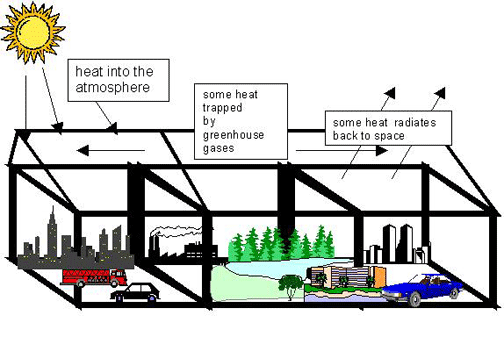
…..The Greenhouse Effect
The sun continuously bathes the Earth with energy in the form of sunlight. Much of this energy is absorbed by the Earth, and then emitted as infrared radiation, or heat. Greenhouse gases prevent the Earth from discarding as much of this heat as it otherwise would back into space.Without naturally occurring greenhouse gases, the Earth would be a much colder place, inhospitable to modern human existence. But by the same token, the additional greenhouse gases added to this store by humans is slowly increasing the average temperature of the Earth system.
Due to the quantity in which it is emitted by humans, its longevity in the atmosphere, and its effects in trapping heat, carbon dioxide is the most important of the greenhouse gases currently causing changes in the Earth’s climate……
In Australia, extreme fire danger days are already becoming more numerous in many parts of the country, and floods and cyclones more intense.
Research by the CSIRO indicates that the frequency of days with very high and extreme Forest Fire Danger Index ratings is likely to increase by 15 to 70 per cent by 2050 in southeast Australia…..
Why we must act now to reduce greenhouse gas emissions | Chief Scientist of Australia
Climate change defines Christine Milne’s fine legacy in Parliament
 Given our climate politics, who can blame Christine Milne for retiring?, Guardian 7 May 15 Tim Hollo
After 25 years of campaigning, Milne’s retirement from parliament is an indictment of how little progress Australia has made on climate change. egardless of the surprise of the press gallery, anyone paying attention realised Christine Milne would have been thinking deeply about her future. With her first grandchild on the way, the planet’s future would also have been brought into a stark new light.
Milne can be confident that she steered the Greens through a hugely difficult period, bringing a new strategic focus to campaigning and beautifully mentoring a new crop of advocates. But it is climate change which keeps her awake at night, and she has had to consider where she could most effectively focus her efforts in the critical years ahead.
Who can blame her for concluding that Australian parliamentary politics is a poor place right now from which to work for radical climate change action?
Milne’s deep knowledge of (and passion for) climate science and policy is legendary in and around parliament. Less well known is her record on climate change over the last quarter century.
In 1990, while a member of the Tasmanian Parliament, she was appointed alongside Joan Kirner and Rupert Hamer to Australia’s first Greenhouse Council. She moved to the international arena in 1998 and was elected to the Global Council of the International Union for the Conservation of Nature in 2000. She was elected its vice president in 2004, the same year she was elected to the Senate.
From all of these positions, Milne worked to build awareness and acknowledgement of climate change. More deeply, she challenged us to grapple with its deep ramifications for our economies, our politics and our lives.
From all of these positions, Milne worked to build awareness and acknowledgement of climate change. More deeply, she challenged us to grapple with its deep ramifications for our economies, our politics and our lives……………..
Milne’s role in bringing depth to the climate change debate through that period was vital to the tremendous election result for the Greens in 2010. She capitalised on that by proposing the Multi Party Climate Change Committee as a condition of supporting the Gillard government, insisting on experts sitting on the committee, and shepherding through it the best possible result that could have been achieved. She also used the process to increase the understanding of climate change in the community.
While we have, of course, lost the carbon price, the Climate Change Authority and the Clean Energy Finance Corporation remain – and both are Milne’s hard-won achievements. More importantly, the idea that we cannot be serious about climate change without phasing out coal remains and is growing ever stronger. No future government will be able to get away with what Tony Abbott has done, and that is in no small part thanks to Milne’s efforts…….http://www.theguardian.com/commentisfree/2015/may/07/given-our-climate-politics-who-can-blame-christine-milne-for-retiring
1 This month

of the week – Australians for War Powers Reform (AWPR)
To see nuclear-related stories in greater depth and intensity
 Antinuclear