Australia, US, UK sign nuclear transfer deal for AUKUS subs – AUSTRALIA RESPONSIBLE FOR THE SPENT FUEL WASTES
Australia would be responsible for the storage and disposal of spent nuclear fuel and radioactive waste from the nuclear power units that are transferred under the deal.
SYDNEY: Australia said on Monday (Aug 12) it had signed a deal to allow the exchange of nuclear secrets and material with the United States and Britain, a key step toward equipping its navy with nuclear-powered submarines.
It binds the three countries to security arrangements for the transfer of sensitive US and UK nuclear material and know-how as part of the tripartite 2021 AUKUS security accord.
AUKUS, which envisages building an Australian nuclear-powered submarine fleet and jointly developing advanced warfighting capabilities, is seen as a strategic answer to Chinese military ambitions in the Pacific region.
“This agreement is an important step towards Australia’s acquisition of conventionally armed nuclear-powered submarines for the Royal Australian Navy,” said Richard Marles, Australia’s defence minister and deputy prime minister.
Australia’s acquisition of a nuclear-powered submarine fleet would set the “highest non-proliferation standards”, he said, stressing that the country did not seek nuclear weapons.
The latest deal – signed in Washington last week and tabled in the Australian parliament on Monday – includes a provision for Australia to indemnify its partners against any liability for nuclear risks from material sent to the country.
Nuclear material for the future submarines’ propulsion would be transferred from the US or Britain in “complete, welded power units”, it says.
But Australia would be responsible for the storage and disposal of spent nuclear fuel and radioactive waste from the nuclear power units that are transferred under the deal.
“Submarines are an essential part of Australia’s naval capability, providing a strategic advantage in terms of surveillance and protection of our maritime approaches,” the transfer deal says.
China’s foreign minister Wang Yi warned in a visit to Australia in April that AUKUS raised “serious nuclear proliferation risks”, claiming it ran counter to a South Pacific treaty banning nuclear weapons in the region.
Counteracting the nuclear spin, and more – week to 29 July

Some bits of good news. The Gambia’s decision to uphold ban on Female Genital Mutilation (FGM) a critical win for girls’ and women’s rights. Oceana Canada Celebrates Major Conservation Victory: Underwater Mountains off the Coast of B.C. Now Permanently Protected, under indigenous guidance. Great Green Wall has revived Africa’s degraded landscapes
**************************************
TOP STORIES.
What the top UN court’s ruling means for Israel. Netanyahu Commands, US Obeys.
Rolling stewardship of nuclear waste.
Young Changemakers Advocate for Nuclear-Free Future through Educational Journey in Kazakhstan.
Climate. Severe heatwave in Iran forces shops and public institutions to close
Noel’s notes. Militarism: How NATO is co-opting women and young people – with a veneer of peace and fun. The digital system threatens the nuclear industry – it’ll get worse with AI. Absolutely fed up with Facebook and Google’s censorship of nuclear issues.
************************************************
AUSTRALIA. Dutton’s nuclear delusion an exercise in stupidity. Czech nuclear deal shows CSIRO GenCost is too optimistic, and new nukes are hopelessly uneconomic. Aussies react to Dutton’s Nuclear Policy – https://www.youtube.com/watch?v=9o4S335dXM4
Canada rejects AUKUS nuclear submarine deal. AUKUS and the pride of politicians.
From the archives. Gina Rinehart’s threat to the proud independence of Australia’s Fairfax newspapers.
Respect and responsibility: Jabiluka safe as uranium mining lease for Kakadu site not renewed8.
Lots more Australian news at https://antinuclear.net/2024/07/23/australian-nuclear-news-headlines-22-29-july/
NUCLEAR ITEMS
CLIMATE. Hungary to allow nuclear plant to exceed Danube water temperature limit. Huge wildfire rips into California.
ECONOMICS.
- Critical AUKUS contract doubles in price and now a year late.
- ‘ Regulated Asset Base’ system mulled in Japan to add nuke plant construction costs to rates.
- Point Lepreau nuclear station down till at least September, costing utility extra $71M ALSO AT https://nuclear-news.net/2024/07/24/3-b1-point-lepreau-nuclear-station-down-till-at-least-september-costing-utility-extra-71m/ A New Brunswick reaction to the exorbitant costs of Point Lepreau nuclear power station.
- Spain: Nuclear Industry Reels After Tax Increase.
- UK / New Energy Minister Underlines ‘Absolute Support’ For SMRs, But Less Certain On Wylfa Plans.
- French nuclear giant ORANO slips into the red following Niger-French breakup. EDF looks towards future projects after flagging tough second half.
| EDUCATION. Bangor University to collaborate with Rolls Royce and the University of Oxford to develop nuclear power for space. | ENERGY. Solar doesn’t need a toxic “friendship” with nuclear power. | ETHICS and RELIGION. A letter to the children of tomorrow. “Nuclear disarmament is a right to life issue” – Catholic Archbishop John C Wester. |
EVENTS. 30 July Webinar: Halt Holtec – the Nuclear Mafia Atomic People will be broadcast on Wednesday 31 July on BBC Two and BBC iPlaye 6 August WEBINAR. Never Again! Remembering the Atomic Bombing of Hiroshima and Nagasaki
| LEGAL. A $36.8 billion lesson from Georgia– “The most expensive electricity in the world”Potential claims against NANO Nuclear Energy Inc. The World Court Has Cleared the Fog Hiding Western Support for Israel’s Crimes.Hundreds protesting Netanyahu visit arrested at US Capitol. Two legal actions against the hasty commissioning of Flamanville nuclear reactor. | MEDIA. BBC correspondent exposes ‘collapse of journalistic norms’ after 7 Oct. Meta’s Policy On Zionism Exposed: Cyberwell Scrambles After Israel Ties Revealed. U.S. media downplays and ignores ICJ ruling declaring Israeli occupation illegal. We published an analysis from a leading economist on soaring nuclear costs. Facebook removed it |
OPPOSITION to NUCLEAR . Nuclear energy not the way to go: coalition Taiwan. UK Nuclear Free Local Authorities back joint statement condemning AUKUS nuclear proliferation. Nuclear Free Local Authorities congratulate marchers on Lakenheath protest.
| PEACE. 2024 Golden Rule Voyage Begins! | PERSONAL STORIES. ‘Atomic bomb hell must never be repeated’ say Japan’s last survivors. | PLUTONIUM. Is nuclear waste able to be recycled? Would that solve the nuclear waste problem? |
| SAFETY Safety warnings as cracks rise at Torness nuclear plant. Japan Nuclear Restart Suffers Major Setback. | TECHNOLOGY. Humans should teach AI how to avoid nuclear war—while they still can. | WASTES. Radioactive Wastes from Nuclear Reactors. |
| WAR and CONFLICT. Israel nearing ‘all-out war’ – foreign minister. Washington gives Netanyahu ‘full backing’ to expand war on Lebanon: Israel Report. While Netanyahu is feted in U.S. Congress, Israeli airstrike hits a school sheltering people in Gaza, killing at least 30. Scottish parliamentarian highlights ‘nuclear annihilation risk’ in major UN speech | WEAPONS and WEAPONS SALES. Will US defend Japan with nukes or turn it into the line of fire? US Forces Japan to be upgraded to warfighting command. Tit for tat? Putin warns Russia may resume production of intermediate-range nuclear weapons. EU sets date of transfer of Russian money to Ukraine for arms purchases. |
A $36.8 billion lesson from Georgia, USA, – “The most expensive electricity in the world”

In May, the plaintiffs along with four other prominent Georgia consumer groups released a report, Plant Vogtle: The True Cost of Nuclear Power in the United States. The analysis detailed how the U.S. Department of Energy, Georgia Power, and the Georgia Public Service Commission (PSC), conspired to force Georgians into purchasing the most expensive electricity in the world, costing ratepayers $10,784 per kilowatt, compared to $900 to $1,500 per kilowatt (KW) for wind or solar. Recent Georgia Power electricity bills have shown the bill increase to be in the 30-40% range.
Again and again, the Georgia Public Service Commission (PSC) was warned about the astronomical cost of the Vogtle reactors and the financial toll it will bear on Georgians for decades to come.
Ratepayers beware. New nuclear power plants will gouge customers
From Georgia Conservation Voters Education Fund and Georgia WAND
Georgia consumer groups have filed a major lawsuit against the State of Georgia [AF1] in federal court, alleging Georgia lawmakers violated the state’s constitution by unilaterally postponing Georgia Public Service Commission (PSC) elections. According to the lawsuit, the PSC election’s unlawful postponement allowed the sitting commission members to rubberstamp the largest utility rate increases in Georgia history and grant utility companies the authority to charge Georgians for cost-overruns and mishaps. The groups argue that the charges may not have been passed onto consumers if elections were held as regularly scheduled.
House Bill 1312, which Georgia legislators passed in April, delays the election of new PSC members until at least 2025, giving multiple sitting PSC members an extra two years in office. Georgia’s constitution requires that PSC terms shall be six years, and therefore cannot be lengthened without a constitutional amendment. All PSC members have had their office terms extended to eight years, and one nine years as a result.
…………………………………….Brionté McCorkle, plaintiff and executive director of Georgia Conservation Voters Education Fund, said: “Georgians are fighting every month to stay ahead of rising costs for food, housing, and now energy. These aren’t optional costs. They’re things we need to survive. Public Service Commissioners like Tricia Pridemore, Fitz Johnson, and Tim Echols have allowed Georgia Power to take money out of the pockets of hard-working Georgians – and it has to end.”
In May, the plaintiffs along with four other prominent Georgia consumer groups released a report, Plant Vogtle: The True Cost of Nuclear Power in the United States. The analysis detailed how the U.S. Department of Energy, Georgia Power, and the Georgia Public Service Commission (PSC), conspired to force Georgians into purchasing the most expensive electricity in the world, costing ratepayers $10,784 per kilowatt, compared to $900 to $1,500 per kilowatt (KW) for wind or solar. Recent Georgia Power electricity bills have shown the bill increase to be in the 30-40% range.
Additional Key findings in the May Vogtle report included:
- Plant Vogtle allowed Georgia Power to expand its rate base, the assets on which they earn a guaranteed rate of return, by over $11 billion. Yet their share of Vogtle is 1,020 megawatts, making it the most expensive electricity in the world at $10,784/KW. Normal (wind, solar, natural gas) generation prices range from $900 to $1500/KW.
- Vogtle Units 3 & 4 took 15 years to build and cost $36.8 billion, well over twice the projected timeline and cost.
- Vogtle independent construction monitors documented that Georgia Power provided materially false cost estimates for at least ten years, falsehoods used to justify expanding Plant Vogtle. Similar false cost estimates sent South Carolina utility executives to jail for that state’s failed nuclear plant, which started construction at the same time as Plant Vogtle.
Patty Durand, consumer advocate, founder of Cool Planet Solutions and a recent candidate for the Georgia PSC, said:
“Again and again, the Georgia Public Service Commission (PSC) was warned about the astronomical cost of the Vogtle reactors and the financial toll it will bear on Georgians for decades to come. Commissioners repeatedly declined to protect ratepayers from cost overruns and ignored PSC staff recommendations to cancel the project. People went to prison for actions like this in South Carolina, yet we have had no accountability for the same, and worse, behavior here. Instead, the state legislature decided to shield current commissioners from facing voters by delaying PSC elections indefinitely. This is clearly unconstitutional. This is un-American.” https://beyondnuclearinternational.org/2024/07/28/a-36-8-billion-lesson-from-georgia/
Canada rejects AUKUS nuclear submarine deal
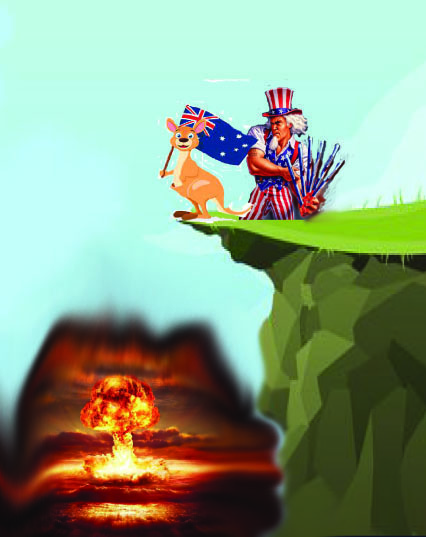
the main concern should be that this deal further locks Australia into US exceptionalism and attempted hegemony in our region. The Albanese government has repeatedly sought to reassure that our sovereignty has been preserved, but this is very difficult to accept given the extent to which our funding underwrites the US submarine-production program. Moreover, it’s likely Australia’s learning and launch activities will further integrate this country into the operational aspects of the American war machine, such that US leaders may effectively give all the instructions in terms of deployment and other activities.
John Hewson , professor at the ANU Crawford School of Public Policy and former Liberal opposition leader.
Some news this month might have given the government pause. Canada – with the longest coastline in the world and a security situation in its Arctic and north changing significantly as the region becomes more accessible, particularly with more Russian and Chinese activity – decided not to join the AUKUS arrangement and buy nuclear submarines. Instead it is considering cooperating with Germany and Norway as partners in a submarine program and will purchase 12 conventionally powered under-ice capable submarines for about $60 billion.
Compare this with the eye-watering cost of Australia’s acquisition: $368 billion for eight Virginia-class and next-generation SSN-AUKUS nuclear submarines with a vague delivery schedule.
Of course, defenders of the AUKUS deal will argue it is more than just an arrangement to buy submarines. They will claim it instead to be a broad, trilateral security arrangement for the Indo-Pacific region that also fosters technology exchanges between the three countries, and helps to build a conventionally armed nuclear-powered submarine force for Australia.
Nevertheless, the deal has been widely criticised and, given its huge cost, it’s worth asking why these criticisms haven’t resonated. One of its most vocal and effective opponents has been former prime minister Paul Keating, who has labelled it “the worst deal in history” and “the worst international decision by a Labor government since the former Labor leader Billy Hughes sought to introduce conscription”. He has slammed the deal particularly for allowing defence interests to trump diplomacy.
It has also been strongly criticised within the Labor Party and union structures: by some 50 units of the party from branches and electoral conferences, and leading unions including the Electrical Trades Union, the CFMEU and the Australian Manufacturing Workers’ Union. The Nobel Prize-winning, Australian-led International Campaign to Abolish Nuclear Weapons has also rejected it for the risks of nuclear proliferation. China’s reaction to the deal was to warn that we are “on a path of error and danger”.“The main concern should be that this deal further locks Australia into US exceptionalism and attempted hegemony in our region … Moreover, it’s likely Australia’s learning and launch activities will further integrate this country into … the American war machine…”
There has also been a host of technical concerns, including in relation to the supply of fuel to run the subs. Keating has drawn a comparison with an alternative deal proposed by the French that emerged after the Morrison government rescinded the original agreement to replace Australia’s ageing Collins-class fleet with the so-called Attack-class sub. This proposal, he says, came with a firm delivery date in 2034 at fixed prices, but was ignored by the government. Technically these French subs would have required only 5 per cent enriched uranium, instead of 95 per cent, weapons grade, for fuel. That this feature was ignored by the government should come as no surprise, as the Coalition has provided no detail about the enriched uranium fuel – neither supply nor cost – for its announced seven nuclear power plants.
However, the main concern should be that this deal further locks Australia into US exceptionalism and attempted hegemony in our region. The Albanese government has repeatedly sought to reassure that our sovereignty has been preserved, but this is very difficult to accept given the extent to which our funding underwrites the US submarine-production program. Moreover, it’s likely Australia’s learning and launch activities will further integrate this country into the operational aspects of the American war machine, such that US leaders may effectively give all the instructions in terms of deployment and other activities.
This should be an even greater concern having heard the Republican candidates for this year’s election speak at their national convention in Wisconsin. Both Donald Trump and J.D. Vance are committed to an even tougher line against China and Australia risks being used somewhat as a pawn in their response to what they like to refer to as the “China threat”. On the contrary, as I have suggested many times, the threat is not so much from the rise of China as it is related to the decline in the global standing of the US. It’s easy to imagine how Trump and Vance could only make this worse, especially by threatening tariffs on Chinese goods.
The Trump–Vance commitment to return to tariff protections flies in the face of voluminous accumulated evidence concerning the costs and disadvantages of doing so. This will certainly not restore the rust-belt states to their former glory as these candidates are promising. China’s only “sin” has been to grow its economy to rival that of the US. The US has lost any cost advantage it may once have enjoyed in manufacturing as well as its edge in technology – most recently in the production of electric vehicles. Just ask Tesla, which now bases much of its production in China.
And the halcyon days of inflation control in the ’90s were much more the result of China flooding the world with cheap manufactured goods, than any effective application of monetary policy. The US was a major beneficiary of this, which is so easily overlooked in its current cost-of-living crisis.
Surely Australia wouldn’t want to end up being pressured to park nuclear submarines along the Chinese coast as part of a US demonstration of strength? Nor should we allow ourselves to be dragged by the US into some conflict with China over Taiwan.
The Albanese government has had considerable difficulty justifying the cost of the AUKUS deal, and so it should. Governing is about priorities and, true enough, national security is a priority. It’s also true that the government has been able to deal effectively with many domestic priorities, such as providing non-inflationary cost-of-living assistance. Defence procurement has long been somewhat ring-fenced from the normal discipline applied to other departments in the Expenditure Review Committee processes, however. It’s no defence to spend so much on submarines, when so much more could have been done in other national priority areas, including education and the care sectors. This is especially so in light of the attendant risks of a deal such as AUKUS.
With the mounting tension between the US and China, world leaders should be increasingly concerned about the threat of another drift to a Cold War situation.
The need for a circuit breaker is clear. I was pleased recently to join the signatories to an open letter drafted by two former foreign affairs ministers, Gareth Evans and Bob Carr, for détente: “a genuine balance of power between the US and China, designed to avert the horror of great power conflict and to secure a lasting peace for our people, our region, and the world.”
Given the state of the world, and its pronounced geopolitical uncertainty, it is disappointing that neither the US nor China has yet responded to the proposal, and surprising that the Albanese government hasn’t embraced it as a mechanism to advance the point that Australia, as a middle-ranking power, has and can continue to punch above its weight in the global interest.
This is especially so given the benefits that Australia as a nation has reaped from the economic rise of China.
Surely a situation can’t be allowed to develop whereby the United States and China embark on trade protection and military conflict.
At the very least, there should be the imperative of a global discourse on this. Unfortunately, attitudes are hardening in Europe and the US – perhaps to the point where the outcome will be gratuitous harm?
This article was first published in the print edition of The Saturday Paper on July 27, 2024 as “Canada’s smart lead on nuclear subs”.
UK Nuclear Free Local Authorities back joint statement condemning AUKUS nuclear proliferation

The UK/Ireland Nuclear Free Local Authorities have joined environmental and peace groups around the world in endorsing a statement that will be delivered to a conference at the United Nations.
The 2024 Nuclear Non-Proliferation Treaty Preparatory Committee will meet today to begin work to make preparations for the next conference of signing to the Nuclear Non-Proliferation Treaty (or NPT).
The statement will be delivered to committee delegates by Jemila Rushton, Acting Director of the International Campaign to Abolish Nuclear Weapons Australia. The NFLAs are a member of ICAN.
Particular reference is made to the adverse impact of AUKUS, the military alliance forged between Australia, the United Kingdom, and the United States in opposition to China, on geopolitics in the Pacific.
Amongst its more controversial elements is the provision of nuclear-powered submarines by the other partners to Australia. We share the concern of other signatories that AUKUS violates in spirit both the Nuclear Non-Proliferation Treaty and the Rarotonga – South Pacific Nuclear Free Zone Treaty. The submarines will be powered by weapons-grade nuclear fuel, supplied by the other partners and will operate from Australian bases within a nuclear free zone.
Although present plans provide for these submarines to be conventionally armed, it is not inconceivable that over time they could be rearmed with nuclear weapons. The Leader of the Opposition in the Australian Parliament, Peter Dutton, is currently actively lobbying for Australia to establish a civil nuclear programme and such a programme is critical to support the development of nuclear weapons capacity.
The statement has also been endorsed by our colleagues Labrats, CND Cymru and Together against Sizewell C.
For more information please contact the NFLA Secretary Richard Outram by email to richard.outram@manchester.gov.uk
AUKUS and the pride of politicians

By Nick Deane, Jul 24, 2024 https://johnmenadue.com/aukus-and-the-pride-of-politicians/
With AUKUS, the pride of politicians has become an obstacle to reaching the best solution to the ‘national security’ conundrum. In the end, it could be that ego-driven reluctance to shift from entrenched positions results in the Australian people being delivered a disaster.
For my own purposes, I have been keeping a record of articles I have read under the topic ‘AUKUS’. There are now some 300 such items on my spreadsheet – nearly all of them finding fault of one kind or another with this extraordinary project.
The criticisms deal with a wide variety of aspects (mainly focussed on the acquisition of nuclear-powered submarines). To summarise a few, the AUKUS project:-
- Leads Australia in the direction of war;
- Has done damage to Australia’s international reputation;
- Destabilises Australia’s immediate region;
- Brings a nuclear industry with it;
- Introduces the intractable problem of nuclear waste disposal;
- Damages our relationship with our most important trading partner;
- Causes a significant loss of sovereignty;
- Is not good value for money;
- Diverts resources away from social programs;
- Will not be as effective as conventional submarines;
- Is aggressive and not defensive, and
- Will probably not come to fruition in any case.
Highly respected commentators, such as Hugh White, Paul Keating, Sam Roggeveen, Andrew Fowler, Rex Patrick and Clinton Fernandes, have all raised significant concerns. Meanwhile ‘civil society’ is also getting mobilised, with ‘anti-AUKUS’ groups springing up in all the major centres.
However, the proponents of AUKUS (and the mainstream media) appear content to ignore the valid, rational arguments being put forward against it. Indeed, industry-based conferences are going ahead as if there is nothing about to the project that needs to be questioned, and, no doubt, secret, military training programs are already well under way. Within the military-industrial establishment, the project is gathering momentum. Those in the military are excited by the prospect of controlling a new, highly lethal weapon, whilst those in the industry are attracted by the smell of the limitless funds being devoted to it.
It is disturbing to have to concede that rational argument appears to have little impact on AUKUS’s proponents. However there is an even more worrying aspect to add. That is the pride of politicians. For the longer the process continues, with all its secrecy and in the absence of meaningful debate at high levels, the harder it is for politicians to change course. Abandoning the project would already cause senior members of both major parties considerable ‘loss of face’. If it falls over (as some predict), or if opposition becomes a vote-winner at the next election, that ‘loss of face’ will be highly embarrassing. With AUKUS, the pride of politicians has thus become an obstacle to to reaching the best solution to the ‘national security’ conundrum. In the end, it could be that ego-driven reluctance to shift from entrenched positions results in the Australian people being delivered a disaster.
In an ideal, democratic society, voters and the politicians they elect appraise themselves of the ‘pros and cons’ of controversial matters and make decisions on a rational basis. If they do that in the case of AUKUS, it is surely doomed. Politicians beware!
TODAY. The digital system is a threat to the nuclear industry – it’ll get worse with AI
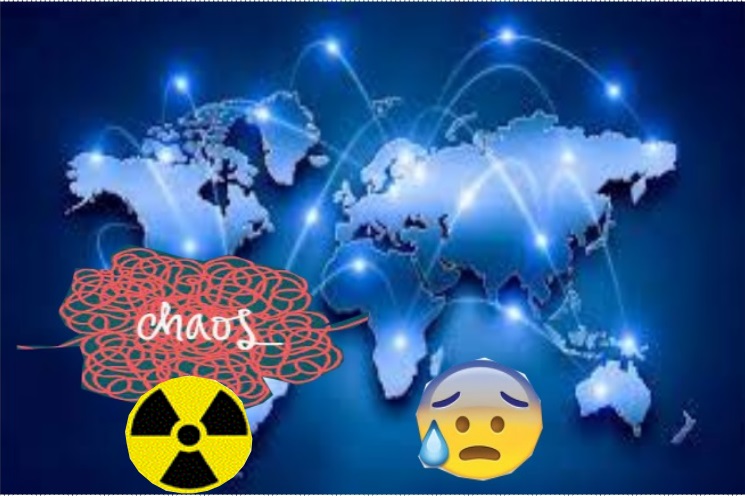
At last, somebody noticed! And the amazing thing is that this warning from think tank Chatham House came on July 12 – 10 days before the global digital outage.
I have wondered about the cybersecurity of nuclear facilities. There have been warnings – that terrorists or “bad actors” – might attack them digitally.
But now – the global collapse of information technology showed the awful truth- things can go wrong with just a teensy little stuffup of “normal” digital operations!
Bad enough if airline booking systems suddenly don’t work, and cash registers at supermarkets don’t work, and all sorts of economic systems grind to an expensive halt.
But what if digital things go wrong in nuclear facilities – reactors, cooling systems, waste management facilities , and hell – nuclear weapons!
But surely, I, a mere amateur, am exaggerating!
Well, the experts at Chatham House are on the same page as I am:
many nuclear plants rely on software that is “built on insecure foundations and requiring frequent patches or updates” or “has reached the end of its supported lifespan and can no longer be updated”.
with operators opting to run the facility by a central computer system without human presence. Increased reliance on cloud systems to run infrastructure is bound to enhance the cybersecurity risks.
Even Chatham House still uses that lying term “cloud” system, when we all know damn well – there is no benign “cloud” – only acres of steel canisters and conglomerations of metal and wires.
We now live in a strange global digital monoculture. A single software update gone wrong and Microsoft Windows computers around the world crash. There is something awfully wrong with our lives being dependent on one, or a very few, digital systems run by great corporations run by a few powerful squillionaires.
And of course, that includes the so-called “defense” systems – limbering up to attack China etc. It’s a sobering thought that Armageddon might come – not from a decision by some evil dictator – but just from a teensy computer glitch.
AI, now being incorporated in weapons systems, might now make digital technology more vulnerable to glitches?
The global IT outage has surely been a wake-up call – as businesses, governments and individuals cope with its expensive after-effects.
But it should be even more of a wake-up call for the public – to think about the danger we are all in, allowing the nuclear industry to proliferate.
This week – nuclear news to 22 July
Some bits of good news. Support for parents and children from birth. Montenegro signs the Declaration on Children, Youth and Climate Action
TOP STORIES.
Nuclear industry faces acute cybersecurity threats – report.
International Court of Justice Tells Israel to End Occupation of Palestinian Territories, Pay Reparations.
- History of Ionizing Radiation and Human Health.
- ‘Low level’ ionizing radiation, and the history of debate about its effects.
- Time to confront to cover-up of the harm of low-level radiation.
- History of the medical profession’s role in illnesses and death caused by nuclear radiation. (Originals at https://ionizingradiationandyou.blogspot.com/)
From the archives. An unacceptable risk to children
Climate. 27 Ways Heat Can Kill You – Update 2024
Noel’s notes. The cover-up of the danger of nuclear radiation and health, but who is speaking for our grandchildren? Nuclear power -costs, wastes, etc, but what about the children? More American media madness.
********************************************
AUSTRALIA.
- Behind the plans for Australia to become a nuclear dumping ground and leverage synergies with the US military alliance and civilian nuclear.
- What are the steps (and the COSTS) to building nuclear power stations – by Peter Farley
- Greens up pressure against nuclear.
- Dutton’s Quixotic Proposal: Nuclear Lunacy Down Under.
- Can the Voices model help communities fight off nuclear reactors? Agriculture ministers raise ‘serious’ concern over nuclear plans,
- Australia: Opposition’s nuclear power plans open the door for nuclear weapons.
- Australia’s secret support for the Israeli assault on Gaza, through Pine Gap.
- How close are we to chaos? It turns out, just one blue screen of death. Lots more Australian nuclear news at https://antinuclear.net/2024/07/17/australian-nuclear-news-headlines-week-to-22-july/
………………………………………….
NUCLEAR ITEMS.
| ART and CULTURE. The chilling map that shows the devastation of a nuclear attack on Scotland. | ATROCITIES. Israeli soldiers tell story of savage cruelty in Gaza – one given blessing by the West. | CIVIL LIBERTIES. Never Forget Julian Assange. https://www.youtube.com/watch?v=5ZLbFkv7I4k |
| ECONOMICS. Premier of New Brunswick Higgs suggests New Brunswick’s Small Nuclear Reactors may not win race to commercialization. ALSO AT https://nuclear-news.net/2024/07/19/2-b1-premier-of-new-brunswick-higgs-suggests-n-b-s-smrs-may-not-win-race-to-commercialization/ France’s EDF faces fresh setback after losing Czech nuclear bid. | ENERGY. China is installing the wind and solar equivalent of five large nuclear power stations per week. Nuclear does not mean reliable power for Australia – by Peter Farley. |
| ENVIRONMENT. EDF’s plans to create new saltmarsh. | EVENT. Cold War Scotland – Exhibition National Museum of Scotland24 July. Rally – Washington – Stop the Gaza Genocide . |
| HEALTH. Radiation.New Book. The Scientists Who Alerted us to Radiation’s Dangers.Mounting evidence of cancer risk from low dose radiation in childhood, or in the uterus.Specific Radioactive Elements and Their Effects on Health – (Original at https://ionizingradiationandyou.blogspot.com/) | INDIGENOUS ISSUES. In New Mexico, a Walk Commemorates the Nuclear Disaster Few Outside the Navajo Nation Remember. | LEGAL. Overwhelming ICJ Ruling against Israeli Occupation Highlights Need for UN Action. ActionAid welcomes the historic judgment of the International Court of Justice. |
| MEDIA. With Media Enamored by US Presidential Race, Israeli Massacres in Gaza Get Even Deadlier. | OPPOSITION to NUCLEAR . Anti-nuclear weapons activists to camp outside RAF base for ten days. Nuclear Free Local Authorities challenge UK government on New Cleo’s application for “justification” of its small nuclear “fast” reactor. Nuclear convoys travelling to Coulport should be peacefully stopped |
| PERSONAL STORIES. Testimonies from the Mawasi massacre: 90 people buried in the sand. | PLUTONIUM . North Korea’s Yongbyon Nuclear Complex: New evidence of increased activity |
| POLITICS.J.D. Vance unlikely to advance peace advancing to Vice Presidency.UK: Ed Miliband unveils plans for mini-nuclear reactors ALSO AT https://nuclear-news.net/2024/07/22/1-b1-uk-ed-miliband-unveils-plans-for-mini-nuclear-reactors/Campaigners against Sizewell C hopeful new MPs will take their concerns to parliament.Absent but not missed: No mention of nuclear in King’s Speech.80 CANADIAN ORGANIZATIONS CALL ON FEDERAL GOVERNMENT TO RESCIND APPOINTMENT OF NUCLEAR REGULATORY AGENCY PRESIDENT. | POLITICS INTERNATIONAL and DIPLOMACY.AUKUS – Australia-United Kingdom-United States nuclear pact endangers us all.Saudi Arabia wants to fully recognize Israel in exchange for arms, nuclear facility — Biden.Nuclear-weapon states are disregarding political commitments accepted under the nuclear Non-Proliferation Treaty (NPT), |
| SAFETY. Major failure at southern Russia’s largest nuclear plant, 1 power unit shut down.‘Near miss’ incident reported at nuclear waste site near Carlsbad. High hopes and security fears for next-gen nuclear reactors | SPACE. EXPLORATION, WEAPONS. Space-Based Warfare: America’s Dominance Challenged.Please, No Weapons and Wars in Space. |
| SPINBUSTER. Shiny New MP’s Fizzingly Push For More Nuclear Waste – Hotter the better! And a Complaint to Advertising Standards – Standards? What Standards!. | TECHNOLOGY. Massive IT outage spotlights major vulnerabilities in the global information ecosystem. Small Modular Nuclear Reactors (SMRs)– Dirty Dangerous Distractions from Real Climate Action. | WASTES. Pacific leaders, Japan, agree on Fukushima nuclear wastewater discharge (not everyone is happy). Fukushima plant ends 7th round of treated water release into sea. |
| WAR and CONFLICT. Nuclear War Is Imminent. Exposing the Myth of the ‘Good War’US Ally South Korea Threatens Nuclear-Armed North Korea With Regime Destruction. | WEAPONS and WEAPONS SALES.Democrats to Keep Unconditional Military Aid to Israel in Party Platform. NATO’s Obscure Relations With Israel and its weapons industry. NATO/US Complicity in Israel’s Relentless Genocide of Gaza. Israel using water as weapon of war as Gaza supply plummets by 94%, creating deadly health catastrophe: Oxfam. North Korean nuclear weapons, 2024. China Stops Arms Control Talks With the US Over Arms Sales to Taiwan. Russia Says It May Deploy Nuclear Missiles in Response to New US Missile Deployment to Germany. |
DUTTON’S RISKY NUCLEAR REACTOR PLAN THREATENS 12,000 FARMS
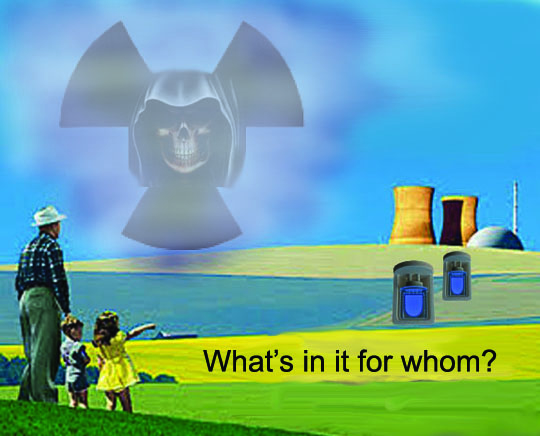
FOOD PRODUCTION ACROSS THE COUNTRY ON HIGH ALERT FROM DUTTON’S RISKY REACTOR PLAN
Agriculture Minister Murray Watt, 18 July 24
The fallout from Peter Dutton’s expensive and risky nuclear reactor announcement continues with new revelations that nearly 12,000 farms across Australia could be impacted.
The LNP’s announcement that nuclear reactors would be built at seven sites across the country could have serious implications for the agricultural sector.
The regions selected by Mr Dutton are major contributors to Australia’s food supply with significant cattle, milk, lamb, grain and vegetable production nearby.
Various states in the United States of America, including Illinois, California, Indiana, Maryland, Missouri and Florida set out detailed guidelines to be followed by farmers, processors and distributors within an 80-kilometere radius of nuclear reactors (known as the “ingestion zone”) to protect their food supply, in the event of a nuclear accident.
Analysis of ABS and local government data by the Parliamentary Library has found approximately 11,955 farms are located within an 80-kilometre radius of the Coalition’s selected sites.
Mr Dutton must urgently explain whether Australian farmers, processors and distributors within a similar ingestion zone will be forced to replicate the expensive actions recommended by American counterparts.
On top of this, leaks have occurred in recent years at nuclear reactors in the United States, Japan, India and Europe, in some cases contaminating agricultural land, crops and water sources.
Eating contaminated foods and drinking contaminated milk and water could have a harmful, long-term effect on the health of the wider community.
Mr Dutton needs to explain his plan to prevent such leaks, how he will manage them if they occur and how he would compensate affected farmers.
Agriculture Minister Murray Watt: –
“Peter Dutton’s risky nuclear plan is not only expensive, slow and unreliable, it also poses a threat to the agricultural industry.
“Based on international practice, farmers would need to take expensive steps during a nuclear leak and would need to inform their customers that they operate within the fallout zone.
“It’s bizarre that the Nationals and Liberals are putting at risk our prime agricultural land like this, especially without the decency to explain it to farmers and consumers how they’d mitigate all the potential impacts.”
BACKGROUND:
Parliamentary library analysis of farm businesses within the 80km ingestion zone of each proposed reactor.
- Collie (WA): Approximately 1,150 agricultural establishments. Major agricultural products include beef cattle, milk, lamb, barley, and carrots.
- Callide (Qld): Approximately 1,040 agricultural establishments. Major agricultural products include beef cattle, cotton, vegetables, wheat, and herbs.
- Hunter (NSW): Approximately 1,650 agricultural establishments. Major agricultural products include beef cattle, milk, chicken (meat), eggs, and hay.
- Latrobe Valley (VIC): Approximately 4,175 agricultural establishments. Major agricultural products include milk, beef cattle, vegetables, applies, and strawberries.
- Mt Piper (NSW): Approximately 1,280 agricultural establishments. Major agricultural products include beef cattle, cultivated turf, lamb, mushrooms, and other vegetables.
- Port Augusta (SA): Approximately 260 agricultural establishments. Major agricultural products include wheat, barley, lamb, wool, hay, and eggs.
- South Burnett/Darling Downs (Qld): Approximately 2,400 agricultural establishments. Major agricultural products include beef cattle, pork, sorghum, cotton, and milk
Nuclear news – week to 15 July

Some bits of good news – Ancient conservation practice restoring the Middle East. Restoration of Maple River offers hope for future conservation initiatives. China cleans up its air and water.
TOP STORIES
NATO SUMMIT: Collectively Losing Their Minds. For 75 Years, NATO Has Been Terrorizing the Globe. German Parliamentarian in Washington Says No to NATO – Yes to Peace.
The Atlas Network and the Council for National Policy: America’s global revolution. The Atlas Network’s transnational revolution. https://johnmenadue.com/the-atlas-networks-transnational-revolution/ https://www.youtube.com/watch?v=bZ_AG6irJ_g
Climate. Temperatures 1.5C above pre-industrial era average for 12 months, data show.
Noel’s notes. The NATO statement – absurdity and collective suicide? The insanity of rampant mindless new technology.
****************************************************
AUSTRALIA.
- Experts argue for an Australian ban on nuclear weapons ahead of UN Summit.
- Book – “Nuked” on Aukus ‘fiasco’ says decision to embrace pact will ‘haunt’ Labor for years.
- South Australia’s renewable triumph is stunning proof that Dutton’s nuclear plans are a folly. No room for nuclear: AGL Energy, Australia’s biggest supplier of AGL baseload power, says flexibility is key as it plans to dump coal for renewables in a decade.
- Aboriginal supporter of right-wing racism, Warren Mundine’s interests in mining uranium -not doing too well.
- The Institute of Public Affairs (IPA) just exploded their argument that the “Atlas Network” is tinfoil hat conspiracy.
- Don’t make my home a nuclear power hub– nuclear reactors in Latrobe Valley unsafe and unrealistic ALSO AT https://antinuclear.net/2024/07/12/2-a-dont-make-my-home-a-nuclear-power-hub-nuclear-reactors-in-latrobe-valley-unsafe-and-unrealistic/
- Decoded: Defence Department’s deadly deceits.
- Power-hungry data centres are booming in Australia. Can the grid cope?
- Game of Mates. The Australian War Memorial and its military industrial conflicts of interest.
- More Australian nuclear news at https://antinuclear.net/2024/07/09/nuclear-and-associated-news-to-16-july
NUCLEAR ITEMS
| ATROCITIES. The Lancet study estimates death toll in Gaza 186,000 or even more. Counting the dead inGaza: difficult but essential. ‘Horrific Massacre’: Israel Bombs Gaza School Used as Refugee Camp, Killing Dozens. | CLIMATE. Texas Nuclear Power Plant Hit By Hurricane Beryl. | ECONOMICS.Analyst Says Nuclear Industry Is ‘Totally Irrelevant’ in the Market for New Power Capacity.New Brunswick’s nuclear-powered rate hikes.New nuclear is ‘too expensive’ for UK zero-carbon energy target.EDF pulls out of competition to build mini-nuclear reactors in Britain.€130 Billion Nuclear Dream in Europe Meets Financial Reality. |
| EMPLOYMENT. With global race to decarbonize electricity sector, demand for skilled nuclear workers heats up.https://nuclear-news.net/2024/07/09/2-b-with-global-race-to-decarbonize-electricity-sector-demand-for-skilled-nuclear-workers-heats-up/ | ENERGY.“The Sun has won”: exponentially growing solar destroys nuclear, fossil fuels on price.Solar power will lead globally- says Rocky Mountain Institute (RMI). South Australia locks in federal funds to become first grid in world to reach 100 per cent net wind and solar. U.S. Solar and Wind Power Generation Tops Nuclear for First Time. | ENVIRONMENT. NATO’s nuclear bases have poisoned water and fish. |
| ETHICS and RELIGION. The false equivalency of nuclear disarmament and nuclear abolition. | EVENTS. 13 – 25th July PROTEST ACTION AT LAKENHEATH -Stop nuclear weapons returning to Lakenheath UK –sign on at https://lakenheathallianceforpeace.org.uk/sign-up/ 24 July. Rally – Washington – Stop the Gaza Genocide | HISTORY.July 16 – New Mexico anniversaries – of first nuclear weapons test, and of Church Rock radioactive waste disaster. The dirty history of ‘Nukey Poo’, the reactor that soiled the Antarctic. ALSO AT https://antinuclear.net/2024/07/12/2-a-the-dirty-history-of-nukey-poo-the-reactor-that-soiled-the-antarctic/ |
| LEGAL. First Nation challenges nuclear waste decision in federal court. | MEDIA. The Corporate News Media at Work, Julian Assange And The Criminalization of Journalism: A Story Of Moral Injury And Moral Courage. Book “Nuked” , on Aukus ‘fiasco’ says decision to embrace pact will ‘haunt’ Australia’s Labor for years. NATO member to fight ‘pro-war propaganda’ – official. 16 July marks 79 years since the Trinity test. | OPPOSITION to NUCLEAR . Anti-nuclear protestors to march from Norwich to Lakenheath. First Nations and allies resist proposed radioactive waste repository. Hundreds of Scientists Urge Biden to Cancel $100 Billion Nuclear Weapons Boondoggle. |
| POLITICS.Biden’s press conference and the war hysteria of American imperialismUS Mayors for Peace Call for Dialogue in a Time of Nuclear Danger. Tracking Dissent: US Officials Who Have Resigned Over The War on Gaza.Newly Signed Bill Will Boost Nuclear Reactor Deployment in the United States. Joe Biden Just Signed a Popular, Bipartisan Nuclear Power Bill. Advocates Say It’s a Sign of Things to Come. Biden signs ADVANCE Act. Now what?Scottish Nuclear Free Local Authorities Convenor seeks ‘respect’ for Scotland’s stance on nuclear power | POLITICS INTERNATIONAL and DIPLOMACY.NATO Washington Summit Declaration – a delusional March of Folly.NATO: From Cold War Defensive Coalition to Global Military Behemoth- https://www.youtube.com/watch?v=1vDfxo653cY NATO at 75: obsolete but still risking nuclear war, seeking dragons to slay.Medea Benjamin DISMANTLES Biden NATO Reelect Pitch. https://www.youtube.com/watch?v=sJDvmAWcuUIInside the NATO Summit in Washington, D.C. Serbia’s Nuclear Energy Quest Opens Geopolitical Flash Point For China, Russia, And The West. |
| SAFETY. US bases in Europe on high alert for possible terrorist attack: US Department of Defense. | SECRETS and LIES. US-made missile suddenly ‘transformed’ into a ‘Russian’ one and killed 40 civilians. Sellafield bosses ignored and punished this whistleblower. | SPINBUSTER. Kiev missile attack. What happened? [i] |
| TECHNOLOGY. Hinkley Point C, the £46 billion mega-project digging tunnels under the sea Blow to Miliband’s nuclear ambitions as top mini-nuke lab faces closure. Point Lepreau nuclear power plant has a generator ‘issue,‘ says NB Power. Utility doesn’t know how long it will take to fix. | WASTES. Radioactive Real Estate: Finding a Forever Home for Nuclear Waste. Ignace, Ontario, betrayed by Council, on nuclear waste decision, Radioactive Waste: Symposium Primer -Samuel Lawrence Foundation – https://www.youtube.com/watch?v=l4c28c3jLY0 Water leaks reported at Germany’s Asse II radwaste facility. Decommissioning. Radiation levels assessed for on-site burial plan at old nuclear power station |
| WAR and CONFLICT. Gaza deal must allow Israel to keep fighting -Netanyahu. How Netanyahu Has Systematically Foiled Talks to Release Hostages From Hamas Captivity. US war games in Pacific seek global participation in imperialist maneuvers. | WEAPONS and WEAPONS SALES. Pentagon keeps commitment to Sentinel nuclear missile as costs balloon. Wall Street Journal finally admits high-tech Western weapons ‘useless’ in Ukraine conflict. Russian Officials Vow Response to US Missile Deployment to Germany. |
For Australia – a cautionary nuclear tale from New Brunswick, Canada

New Brunswick’s nuclear-powered rate hikes, Commentary, by Janice Harvey, July 8, 2024, https://nbmediacoop.org/2024/07/08/new-brunswicks-nuclear-powered-rate-hikes/
The abject failure of this and previous governments’ energy policies is on full display these days. In the 1970s, New Brunswick was one of only three provinces that bought into the federal government’s agenda to build out a civilian nuclear power industry. Quebec has since shut its nuclear generators down, leaving only Ontario and New Brunswick as the nuclear flag-bearers. How has that worked out for us?
NB Power has come to the Energy and Utilities Board (EUB) with a request for the biggest rate hikes in the utility’s history. While the details are buried in thousands of pages of documents filed with the EUB, evidence from previous EUB hearings makes it crystal clear that the utility’s single greatest financial liability driving up power rates is the much-vaunted Point Lepreau Nuclear Generating Station.
Point Lepreau has been a financial white elephant since its construction ended up costing three times the original price tag. Its planned 30-year lifespan (over which all this extra cost was to be amortized) was cut short by premature aging of critical reactor components, prompting a decision to undergo an expensive refurbishment, which was to extend the life of the plant by a fantastical 40 years. At the time, the then-PUB determined based on the evidence that refurbishment was too big a financial risk for New Brunswickers to handle and recommended against it. The Lord government went ahead anyway.
Like the original construction, the refurbishment went way over the timeline and budget. The result has been very poor performance, a miserable 60 per cent in 2022 compared to the wildly optimistic 90 per cent capacity assumption that the EUB rejected. The costs of replacement power alone during these shutdowns have repeatedly sabotaged annual financial performance projections. Now, Point Lepreau is facing even more expensive upgrades to fix problems that were not dealt with during the refurbishment.
In short, Point Lepreau is the most unreliable and most expensive power generator on the grid, responsible for the lion’s share of NB Power’s debt. It is not going to get any better. Keeping it afloat until 2040, its new end-of-life target, is going to mean more of the same – throwing scarce money down a deep, black hole paid for by ever-rising power rates.

Despite the overwhelming evidence that New Brunswickers cannot afford nuclear power, the Higgs government has doubled down on nuclear, floating an equally fantastical proposition that the next generation of nukes – so-called small modular reactors – will quarterback New Brunswick’s climate change strategy, while an SMR export industry is expected to drive economic growth. To that end, New Brunswick taxpayers have already fronted a total of $35 million to two private nuclear upstarts, neither of which has designed or built a reactor. This is despite lots of reasons to put their rosy promises of “clean” nuclear-fueled prosperity in the same wishful thinking category as JOI Scientific’s power-from-water scheme that so beguiled NB Power executives.
Just as the EUB rate hearings got underway, an entirely predictable hitch in the Higgs’ nuclear dream occurred. It seems like the SMR upstart ARC Clean Energy is on its way down and out, taking $25 million provincial dollars and $7 million federal with it. If we’re lucky, Moltex Energy, propped up by $10 million in provincial and $50.5 million in federal tax dollars, will be close behind, and we can breathe a sigh of financial relief. The longer this nonsense persists, the more of our tax dollars will go into the nuclear black hole, and the greater the delay in meeting our climate change pollution targets.
Even if Moltex hangs on, or some other SMR promoter replaces them, any electricity that might eventually flow from an SMR will be, like Point Lepreau, the most expensive power on the grid – entirely unaffordable and unnecessary. The Higgs government knows this, passing legislation this spring requiring NB Power to buy electricity from the planned privately-owned SMRs regardless of price, a silent admission that electricity from SMRs, should they ever see the light of day, will be more expensive than any alternative. In other words, SMRs will drive up your power bill.
Meanwhile, the June 22nd issue of The Economist features the exponential growth of solar energy worldwide, the cost of which – even with storage – is falling exponentially. Other than home retrofits, this is the cheapest new power on offer.
The nuclear cost numbers are there for all to see. For elected representatives to support this industry, knowing people cannot tolerate higher power rates, is grossly irresponsible and a betrayal of trust. Renewables naysayers are depriving New Brunswickers of the benefits of this global energy transition. This – and our nuclear-powered rate hikes – need to be on the ballot on October 21.
Janice Harvey is the chair of the Environment and Society program at St. Thomas University
Nuclear and associated news -week to 8th July

Some bits of good news. Conservation and economic development go hand in hand, more often than expected. Peru has protected 6,449 hectares of an endemic fog oasis that hosts hundreds of rare and threatened species.
TOP STORIES
Trump has a strategic plan for the country: Gearing up for nuclear war.
How do you convince someone to live next to a nuclear waste site?
Nuclear power would put our energy security into Russian hands– ALSO AT https://nuclear-news.net/2024/07/05/1-a-nuclear-power-would-put-our-energy-security-into-russian-hands/
Climate. Climate hazards impact more than four-fifths of cities worldwide, study finds. How record-breaking Hurricane Beryl is a sign of a warming world.
Noel’s notes. Australia further in the grip of the USA, with the Amazon data spy hub – paid for by Aussie tax-payers. The world must stop creating nuclear garbage.
AUSTRALIA. Australians being kept in the dark about Pine Gap expansion. Australia to build ‘top-secret’ cloud for intelligence agencies in $2bn deal with Amazon. Political Mastermind: a toxic waste of everyone’s time. https://www.youtube.com/watch?v=R4HGJ42c2Kg With its nuclear energy policy, Peter Dutton seems to have forgotten the Liberal Party’s core beliefs. See more Australian news at Australian nuclear news headlines this week.
NUCLEAR ISSUES
| ATROCITIES. Israel Has Forcibly Displaced 1.9 Million Palestinians in Gaza. | CLIMATE. Can the climate survive the insatiable energy demands of the AI arms race? | ECONOMICS. French nuclear giant scraps SMR plans due to soaring costs, will start over. EDF’s Nuward U-turn shows risk of betting on Small Nuclear Reactors – analysts. Labour must act fast to fire up Rolls-Royce nuclear reactor deals.Too uncertain, too slow: funds rule out financing Australia’s Dutton nuclear plan. |
| EMPLOYMENT. Talent Shortage Threatens Europe’s Nuclear Renaissance. | EVENTS. 10 July Rally to oppose nuclear mega-dump and support Kebaowek First Nation – at noon in Ottawa https://www.stopnuclearwaste.com/ | LEGAL. Why Julian Assange couldn’t outrun the Espionage Act. | MEDIA. Book. Nuclear is Not the Solution. The Folly of Atomic Power in the Age of Climate Change. |
POLITICS.
- Now Keir Starmer Has to Decide If He’d Use Nukes. https://www.youtube.com/watch?v=NQO6rJsVNkw . Tory accused of exaggerating chances of new nuclear plant. SCOTTISH GREENS WILL OPPOSE ALL PLANS FOR NEW NUCLEAR ENERGY. Work to show UK nuclear ‘environmentally sustainable’ incomplete, 16 months after government announcement. ‘Letters of last resort’: deciding response to a nuclear attack among first of Starmer’s tasks.
- Trump Advisers Call for U.S. Nuclear Weapons Testing if He Is Elected. . Congressional group on nuclear arms sets July hearing for embattled missile program.
- Starmer’s role in Assange’s prosecution.
- Masoud Pezeshkian: Iranian reformer who wants to end Tehran’s nuclear stand-off.
- Public Vote on Nuclear Power Plant Sparks Debate in Kazakhstan.
| POLITICS INTERNATIONAL and DIPLOMACY.Europe is Quietly Debating a Nuclear Future Without the US.Trusting the ‘Five Eyes’ OnlyUkraine to be warned it’s ‘too corrupt’ for NATO .What does Iran’s Nuclear Policy look like with the new president? | SAFETY. Russia might restart the Zaporizhzhia Ukrainian nuclear plant it seized. | SECRETS and LIES. Former New Brunswick energy minister joins nuclear industry after resigning in June. Australian Opposition leader Dutton’s claim about G20 nuclear energy use doesn’t add up. |
| SPINBUSTER. The nuclear and renewable myths that mainstream media can’t be bothered challenging. The overblown hype of the nuclear “bros”. | TECHNOLOGY.The commissioning of the Flamanville EPR, nuclear reactor is proving difficult.Unable to effectively operate its lone existing nuclear reactor, New Brunswick is betting on advanced options ALSO AT https://nuclear-news.net/2024/07/04/1-b1-unable-to-effectively-operate-its-lone-existing-nuclear-reactor-new-brunswick-is-betting-on-advanced-options/World’s Largest Nuclear Fusion Reactor Delayed . ITER nuclear fusion reactor hit by massive decade-long delay and €5bn price hike. Fusion power could transform how we get our energy — and worsen problems it’s intended to solve.Constellation Energy plans restart of Three Mile Island nuclear plant. |
| WAR and CONFLICT. Ukrainian drones injure Zaporizhzhia nuclear power plant workers, say Russian-backed officials.Tensions with Iran spotlight Israel’s hidden nuclear arsenal.The obsolescence of war. | WEAPONS and WEAPONS SALES.You Don’t Want to Live in America’s ‘Nuclear Sponge’ .NATO Members Agree To Give Ukraine $43 Billion in Military Aid for 2025. US announces more than $2 billion package for Ukraine.US nuclear missile program costs soar to around $160 billion, sources say. Trump allies are peddling a catastrophic idea for U.S. nuclear weapon policy.Philippines Says US Will Pull Out Controversial Mid-Range Missile System. |
The Atlas Network’s transnational revolution
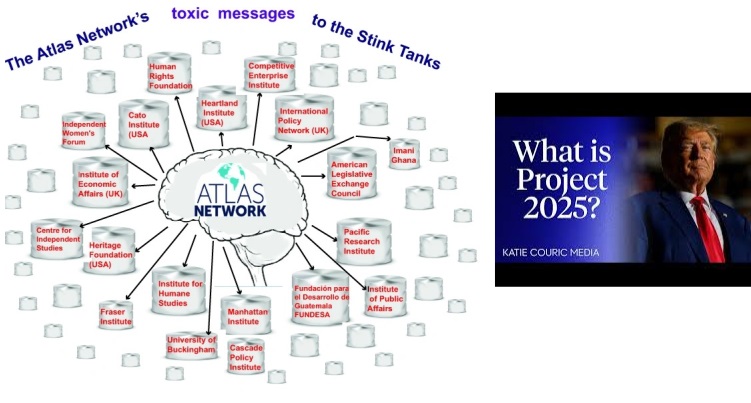
By Lucy HamiltonJul 8, 2024 https://johnmenadue.com/the-atlas-networks-transnational-revolution/
Twice in a fortnight, the president of the Heritage Foundation has declared that America is experiencing its second revolution. The revolution would remain bloodless (because their side is “winning”) “if the left allows it to be.” The two bodies whose acts provoked the announcements are leading Atlas Network partners. They are also spending millions of dollars in Europe to roll back rights for women and LGBTQIA people.
Both president Kevin Roberts’ announcements were made on Steve Bannon’s War Room broadcast, central to the Trumpist movement and its efforts to remake America from every school board and electoral precinct upwards.
The first announcement of revolution was made on the 22nd June. It functioned as an advertisement for the MAGA(Make America Great Again) audience to take part. Becoming a revolutionary involves undertaking Project 2025’s recruitment and training of loyalists to staff the incoming Trump administration, but also at state and local government levels. Roberts declared they were building not just for 2025, but for the next century in the United States.
Project 2025 is the most recent iteration of Heritage’s Mandate for Leadership. The first was written for Ronald Reagan, spelling out his massive reforms. He implemented two thirds in his first term. The last iteration for Donald Trump’s first term was similarly “business Republican” in tone, and Trump too implemented two thirds in his first year. The newest iteration is, as Roberts describes, revolutionary. It dictates the process for the dismantling most of the federal government as well as setting America on track to eliminate reproductive and Queer rights.
It also sets out the intention to dismantle the vital energy transition work underway as a result of the Inflation Reduction Act, with plans to boost fossil fuel production instead. This is fitting as much of Heritage’s funding comes from fossil fuel sources.
Project 2025 is a joint Atlas Network and Council for National Policy project.
The second announcement of revolution was made after the Supreme Court’s dramatic week of judgements. In particular, the one that granted the President of the United States immunity for the vaguely worded field of “official acts.” Naturally the partisan court will make the determination which acts are “official.”
The week also compounded the Trumpist Supreme Court’s norm-violating series of decisions that have rolled back reproductive healthcare access for women across Republican states, further damaged voters’ representation, and frozen programs that aim to address entrenched disadvantage.
In one week, the Court placed itself above the experts in government agencies who define, for example, how much mercury is unsafe to consume. While the relevant judge confused nitrous oxide and nitrogen oxide, he dared to claim that judges were better placed than government experts to determine the minutiae of America’s functioning. This attack on the administrative state’s ability to protect the public from corporate recklessness and malfeasance was a triumph for capital. The court also damaged the SEC’s ability to deal with White Collar crime.
Such gifts to the wealthy were balanced with another judgement that decided a gratuity given after a favour was received would not be determined an illegal bribe. For a court riddled with scandal over oligarch largesse, this was a particularly cynical decision.
As a footnote, the same week revealed a decision that said regions could make it illegal to be homeless. This can provide numbers for private prison operator profits. There prisoners are hired out to businesses for near slave-labour wages.
All these decisions have resulted from the years of work by the Federalist Society which handed Trump his literal list from which to choose judges. Republicans had stalled appointments to federal benches over the Obama era, granting Trump the gift of hundreds of appointments; some appointees were considered scandalous.
The years of surreptitious work by the Federalist Society and its leader Leonard Leo have been documented by Pro Publica. The body made headlines when it was gifted $1.6 billion by a single donor.
Both Heritage and the Federalist Society are Atlas Network partners. They are also Council for National Policy (CNP) members: that’s the interlinked body that has been driving the Christian Nationalist takeover of America.
Dr Jeremy Walker explained the process by which the Atlas Network architecture of influence operates in the lead-up to the Voice referendum in 2023.
Investigative journalist Jane Mayer revealed its American operations in Dark Money, using the label “Kochtopus” after Charles and David Koch, preeminent funders of the network. Historian Nancy MacLean documented its longer history in Democracy in Chains.
With around 500 partner organisations in roughly 100 countries its global operations remain less obvious because the system is intentionally covert.
The central “think” tanks foster the replication of more such bodies, providing seed funding if necessary and training in fundraising and public relations strategies to help the local offshoots become independent. They network. The primary function is to sell the donors’ messages by advertising them constantly: in 1985, Heritage founder Ed Feulner told Australian operatives to treat campaigns as if they were for a toothpaste brand that needed constant reinforcing. The messages: low tax, minimal regulation, small government, dismantling of social safety nets. Together the junktanks, as journalist George Monbiot has labelled them, create a chorus of voices from university centres and civil society bodies reinforcing the wishlist.
While the focus has primarily been on these “business Republican goals,” junktanks have their own remit. Conservative social messaging about the family has been partly used to conceal the lack of ethics in the libertarian mission. It has partly functioned to encourage family and church networks to mitigate the damage done to communities and individuals by the slashing of safety nets. There has also remained a more socially conservative and religious array of junktanks within the network.
The more toxic “family values” groups tend to be interconnected with Atlas rather than Atlas partners themselves. Trump appointee Betsy DeVos, for example, links the two. She has been chair and on the board of two Atlas partners: the American Federation for Children that aims to replace the public school system with privatised charter schools and the Acton Institute for the study of Religion and Liberty which educates business leaders and academics in “the connection that can exist between virtue and economic thinking.” Both Prince and DeVos families are substantial donors to the anti-LGBTQIA group Focus on Family. Focus is part of the CNP, a Christian Nationalist network that includes the Charles Koch and the Prince and DeVos families as donors, not to mention Mike Pence and Steve Bannon as key figures.
Both the extremist Christians and the libertarians are close to achieving their goals in America. Apart from the impact the implosion of the United States government and civil rights framework will have on the rest of the world, this is relevant because the very global nature of Atlas means that its outposts are trying to replicate its work outside the American homeland.
The European Parliament conducted a study affirming reporting that $280 million dollars have been funnelled into the EU over the last decade by Atlas and CNP partners as well as by Evangelical mission programs. Heritage and Federalist stand alongside the Cato Institute, the Leadership Institute and Acton as having donated roughly $20 million towards European groups fighting to repeal reproductive healthcare rights and LGBTQIA rights. Another American body, the American Society for the Defense of Tradition, Family and Property (TFP) has also been training European groups in strategy in cooperation with Bruce Eberle a “visiting professor” at the Leadership Institute. The Koch, DeVos and Prince families are named as major sources of the money.
(These donations are overshadowed in scale by those from European and Russian sources.)
Australia’s Centre for Independent Studies (CIS) mostly leaves the culture war battles on gender and religious virtues to the Institute of Public Affairs (IPA) and their media ally, News Corp. This year’s CIS Consilium event where the Atlas pipeliners intermingle with local and international talking heads is running adjacent to the inaugural conference of the Australian Chapter of the Alliance for Responsible Citizenship. The London original was a religio-ethnonationalist event. The consecutive timing is convenient for international guests to attend both.
The rest of us must remain focused on the fact that these networks operate transnationally. They share talking points, strategies, individuals and sometimes money. The revolution that Kevin Roberts has declared they are winning in the US is to be reenacted, piecemeal, for all of us.
Dutton’s claim about G20 nuclear energy use doesn’t add up
William Summers , July 5, 2024, https://www.aap.com.au/factcheck/duttons-claim-about-g20-nuclear-energy-use-doesnt-add-up/
WHAT WAS CLAIMED
Australia is the only G20 nation that doesn’t use nuclear power.
OUR VERDICT
Misleading. Five other G20 nations don’t generate nuclear power, and two of those don’t use it.
AAP FACTCHECK – Federal Opposition Leader Peter Dutton claims Australia is the only country not to use nuclear energy out of the world’s 20 largest economies.
This is misleading. Five other nations in the top 20 – Germany, Italy, Turkiye, Saudi Arabia and Indonesia – do not generate nuclear energy.
Germany, Italy and Turkiye import very small amounts of electricity generated from nuclear sources, but Indonesia and Saudi Arabia don’t consume any nuclear power.
Australia is the only top 20 economy that doesn’t generate, import or have a plan to do so.
Mr Dutton has made the claim at least four times in interviews about the coalition’s plan to build seven nuclear power stations in Australia without clarifying that he’s counting countries planning to use nuclear power among those that are actually using it.
Mr Dutton said nuclear power was “used by 19 of the 20 biggest economies in the world” at a June 18 press conference in NSW.
He again claimed that of the top 20 economies in the world, “Australia is the only one that doesn’t have nuclear” in a June 20 interview on Sky News.
That same day, the opposition leader spoke out about how Australia could benefit from nuclear power “as 19 of the world’s top 20 economies have done” in an ABC News Breakfast interview.
Mr Dutton again said Australia was the only one of the 20 biggest economies that “doesn’t operate” nuclear at a press conference on July 5.
When asked to clarify his claims, the opposition leader’s spokeswoman told AAP FactCheck that he’s counting countries that have nuclear power and those “taking steps towards embracing nuclear”.
Mr Dutton accurately stated 19 of the world’s 20 biggest economies used nuclear power or “have signed up to it” in another press conference on June 19, and a Today Show interview on June 21.
He also said Australia was the only G20 member that didn’t use or plan to use nuclear power in an ABC TV interview on April 21.
The G20 is a global forum for countries with large economies. Despite its name, the G20 includes only 19 nations, plus the African Union and the European Union. Spain is invited to the G20 as a permanent guest.
It’s unclear if Mr Dutton is referring to the G20 countries plus Spain, or the 20 largest nations by gross domestic product, as he’s used both interchangeably.
However, AAP FactCheck has analysed the former because the nations that don’t generate nuclear power and the nations that only import small amounts of it are exactly the same for both groupings, as per World Bank 2023 GDP data.
Fourteen G20 countries operate nuclear power plants: Argentina, Brazil, Canada, China, France, India, Japan, Mexico, Russia, South Africa, South Korea, Spain, the UK and the US.
Three G20 nations that don’t generate nuclear power but import small amounts are Germany, Italy and Turkiye.
Germany shut down its final three reactors in April 2023. That year, about 0.5 per cent of the electricity consumed there was imported from France, which generates about two-thirds of its electricity from nuclear sources.
Italy closed its last reactors in 1990. About six per cent of its electricity consumption is imported nuclear power.
The country effectively banned nuclear power in 2011, but the current government wants to restart it.
Turkiye is building a plant that could start generating electricity from 2025. The country is also planning to build two other nuclear plants.
In 2022, the country imported a tiny amount of the electricity it consumed, including 0.8 per cent from Bulgaria, which generates about 35 per cent of its electricity from nuclear sources.
Therefore, a fraction of Turkiye’s electricity consumption could be produced from nuclear – likely less than half a per cent.
Saudi Arabia doesn’t use any nuclear energy either but it’s taking steps towards doing so in future.
Indonesia doesn’t have any nuclear reactors but has tentative plans to build some in the coming decades.
Dr Yogi Sugiawan, a policy analyst at the Indonesian government agency responsible for developing nuclear energy policies and plans, told AAP FactCheck that his country doesn’t generate or import nuclear energy.
However, Dr Sugiawan says Indonesia’s government is considering nuclear power, with an initial plant “expected to be commissioned before 2040”.
THE VERDICT
The claim that Australia is the only G20 nation that doesn’t use nuclear power is misleading.
Evidence and experts say six G20 countries do not generate any nuclear energy, and three of those don’t consume it either.
Misleading – The claim is accurate in parts but information has also been presented incorrectly, out of context or omitted.
AAP FactCheck is an accredited member of the International Fact-Checking Network. To keep up with our latest fact checks, follow us on Facebook, Twitter and Instagram.
Trusting the ‘Five Eyes’ Only
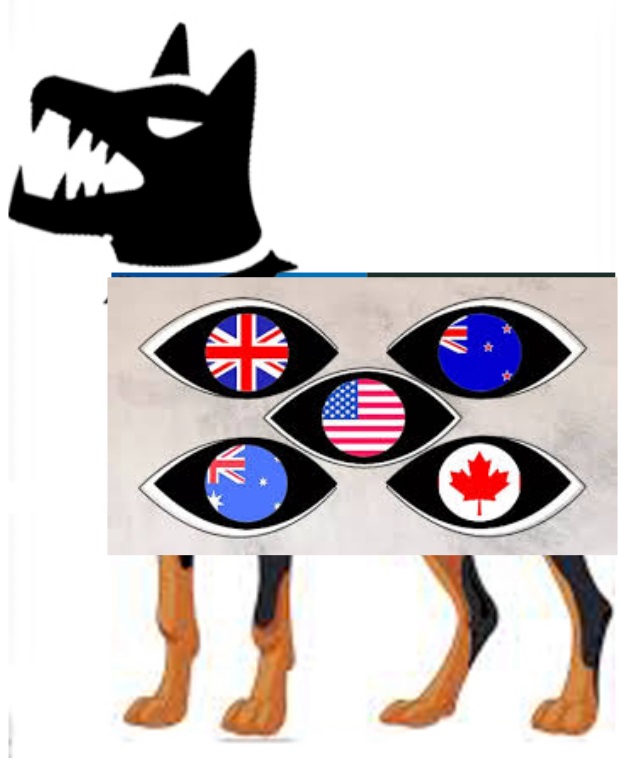
For Their Eyes Only
The “Five Eyes” (FVEY) is an elite club of five English-speaking countries — Australia, Canada, New Zealand, the United Kingdom, and the United States — that have agreed to cooperate in intelligence matters and share top-secret information. They all became parties to what was at first the bilateral UKUSA Agreement, a 1946 treaty for secret cooperation between the two countries in what’s called “signals intelligence” — data collected by electronic means, including by tapping phone lines or listening in on satellite communications. (The agreement was later amended to include the other three nations.) Almost all of the Five Eyes’ activities are conducted in secret, and its existence was not even disclosed until 2010. You might say that it constitutes the most secretive, powerful club of nations on the planet.
Anglo-Saxon solidarity supersedes all other relationships.
JULY 5, 2024 By Michael Klare / TomDispatch, https://scheerpost.com/2024/07/05/trusting-the-five-eyes-only/
Wherever he travels globally, President Biden has sought to project the United States as the rejuvenated leader of a broad coalition of democratic nations seeking to defend the “rules-based international order” against encroachments by hostile autocratic powers, especially China, Russia, and North Korea. “We established NATO, the greatest military alliance in the history of the world,” he told veterans of D-Day while at Normandy, France on June 6th. “Today… NATO is more united than ever and even more prepared to keep the peace, deter aggression, defend freedom all around the world.”
In other venues, Biden has repeatedly highlighted Washington’s efforts to incorporate the “Global South” — the developing nations of Africa, Asia, Latin America, and the Middle East — into just such a broad-based U.S.-led coalition. At the recent G7 summit of leading Western powers in southern Italy, for example, he backed measures supposedly designed to engage those countries “in a spirit of equitable and strategic partnership.”
But all of his soaring rhetoric on the subject scarcely conceals an inescapable reality: the United States is more isolated internationally than at any time since the Cold War ended in 1991. It has also increasingly come to rely on a tight-knit group of allies, all of whom are primarily English-speaking and are part of the Anglo-Saxon colonial diaspora. Rarely mentioned in the Western media, the Anglo-Saxonization of American foreign and military policy has become a distinctive — and provocative — feature of the Biden presidency.
America’s Growing Isolation
To get some appreciation for Washington’s isolation in international affairs, just consider the wider world’s reaction to the administration’s stance on the wars in Ukraine and Gaza.
Following Russia’s invasion of Ukraine, Joe Biden sought to portray the conflict there as a heroic struggle between the forces of democracy and the brutal fist of autocracy. But while he was generally successful in rallying the NATO powers behind Kyiv — persuading them to provide arms and training to the beleaguered Ukrainian forces, while reducing their economic links with Russia — he largely failed to win over the Global South or enlist its support in boycotting Russian oil and natural gas.
Despite what should have been a foreboding lesson, Biden returned to the same universalist rhetoric in 2023 (and this year as well) to rally global support for Israel in its drive to extinguish Hamas after that group’s devastating October 7th rampage. But for most non-European leaders, his attempt to portray support for Israel as a noble response proved wholly untenable once that country launched its full-scale invasion of Gaza and the slaughter of Palestinian civilians commenced. For many of them, Biden’s words seemed like sheer hypocrisy given Israel’s history of violating U.N. resolutions concerning the legal rights of Palestinians in the West Bank and its indiscriminate destruction of homes, hospitals, mosques, schools, and aid centers in Gaza. In response to Washington’s continued support for Israel, many leaders of the Global South have voted against the United States on Gaza-related measures at the U.N. or, in the case of South Africa, have brought suit against Israel at the World Court for perceived violations of the 1948 Genocide Convention.
In the face of such adversity, the White House has worked tirelessly to bolster its existing alliances, while trying to establish new ones wherever possible. Pity poor Secretary of State Antony Blinken, who has made seemingly endless trips to Asia, Africa, Europe, Latin America, and the Middle East trying to drum up support for Washington’s positions — with consistently meager results.
Here, then, is the reality of this anything but all-American moment: as a global power, the United States possesses a diminishing number of close, reliable allies – most of which are members of NATO, or countries that rely on the United States for nuclear protection (Japan and South Korea), or are primarily English-speaking (Australia and New Zealand). And when you come right down to it, the only countries the U.S. really trusts are the “Five Eyes.”
For Their Eyes Only
The “Five Eyes” (FVEY) is an elite club of five English-speaking countries — Australia, Canada, New Zealand, the United Kingdom, and the United States — that have agreed to cooperate in intelligence matters and share top-secret information. They all became parties to what was at first the bilateral UKUSA Agreement, a 1946 treaty for secret cooperation between the two countries in what’s called “signals intelligence” — data collected by electronic means, including by tapping phone lines or listening in on satellite communications. (The agreement was later amended to include the other three nations.) Almost all of the Five Eyes’ activities are conducted in secret, and its existence was not even disclosed until 2010. You might say that it constitutes the most secretive, powerful club of nations on the planet.
The origins of the Five Eyes can be traced back to World War II, when American and British codebreakers, including famed computer theorist Alan Turing, secretly convened at Bletchley Park, the British codebreaking establishment, to share intelligence gleaned from solving the German “Enigma” code and the Japanese “Purple” code. At first an informal arrangement, the secretive relationship was formalized in the British-US Communication Intelligence Agreement of 1943 and, after the war ended, in the UKUSA Agreement of 1946. That arrangement allowed for the exchange of signals intelligence between the National Security Agency (NSA) and its British equivalent, the Government Communications Headquarters (GCHQ) — an arrangement that persists to this day and undergirds what has come to be known as the “special relationship” between the two countries.
Then, in 1955, at the height of the Cold War, that intelligence-sharing agreement was expanded to include those other three English-speaking countries, Australia, Canada, and New Zealand. For secret information exchange, the classification “AUS/CAN/NZ/UK/US EYES ONLY” was then affixed to all the documents they shared, and from that came the “Five Eyes” label. France, Germany, Japan, and a few other countries have since sought entrance to that exclusive club, but without success.
Although largely a Cold War artifact, the Five Eyes intelligence network continued operating right into the era after the Soviet Union collapsed, spying on militant Islamic groups and government leaders in the Middle East, while eavesdropping on Chinese business, diplomatic, and military activities in Asia and elsewhere. According to former NSA contractor Edward Snowden, such efforts were conducted under specialized top-secret programs like Echelon, a system for collecting business and government data from satellite communications, and PRISM, an NSA program to collect data transmitted via the Internet.
As part of that Five Eyes endeavor, the U.S., the United Kingdom, and Australia jointly maintain a controversial, highly secret intelligence-gathering facility at Pine Gap, Australia, near the small city of Alice Springs. Known as the Joint Defence Facility Pine Gap (JDFPG), it’s largely run by the NSA, CIA, GCHQ, and the Australian Security Intelligence Organization. Its main purpose, according to Edward Snowden and other whistle-blowers, is to eavesdrop on radio, telephone, and internet communications in Asia and the Middle East and share that information with the intelligence and military arms of the Five Eyes. Since the Israeli invasion of Gaza was launched, it is also said to be gathering intelligence on Palestinian forces in Gaza and sharing that information with the Israeli Defense Forces. This, in turn, prompted a rare set of protests at the remote base when, in late 2023, dozens of pro-Palestinian activists sought to block the facility’s entry road.
Anglo-Saxon Solidarity in Asia
The Biden administration’s preference for relying on Anglophone countries in promoting its strategic objectives has been especially striking in the Asia-Pacific region. The White House has been clear that its primary goal in Asia is to construct a network of U.S.-friendly states committed to the containment of China’s rise. This was spelled out, for example, in the administration’s Indo-Pacific Strategy of the United States of 2022. Citing China’s muscle-flexing in Asia, it called for a common effort to resist that country’s “bullying of neighbors in the East and South China” and so protect the freedom of commerce. “A free and open Indo-Pacific can only be achieved if we build collective capacity for a new age,” the document stated. “We will pursue this through a latticework of strong and mutually reinforcing coalitions.”
That “latticework,” it indicated, would extend to all American allies and partners in the region, including Australia, Japan, New Zealand, the Philippines, and South Korea, as well as friendly European parties (especially Great Britain and France). Anyone willing to help contain China, the mantra seems to go, is welcome to join that U.S.-led coalition. But if you look closely, the renewed prominence of Anglo-Saxon solidarity becomes ever more evident.
Of all the military agreements signed by the Biden administration with America’s Pacific allies, none is considered more important in Washington than AUKUS, a strategic partnership agreement between Australia, the United Kingdom, and the United States. Announced by the three member states on Sept. 15, 2021, it contains two “pillars,” or areas of cooperation — the first focused on submarine technology and the second on AI, autonomous weapons, as well as other advanced technologies. As in the FVEY arrangement, both pillars involve high-level exchanges of classified data, but also include a striking degree of military and technological cooperation. And note the obvious: there is no equivalent U.S. agreement with any non-English-speaking country in Asia.
Consider, for instance, the Pillar I submarine arrangement. As the deal now stands, Australia will gradually retire its fleet of six diesel-powered submarines and purchase three to five top-of-the-line U.S.-made Los Angeles-class nuclear-powered submarines (SSNs), while it works with the United Kingdom to develop a whole new class of subs, the SSN-AUKUS, to be powered by an American-designed nuclear propulsion system. But — get this — to join, the Australians first had to scrap a $90 billion submarine deal with a French defense firm, causing a severe breach in the Franco-Australian relationship and demonstrating, once again, that Anglo-Saxon solidarity supersedes all other relationships.
Now, with the French out of the picture, the U.S. and Australia are proceeding with plans to build those Los Angeles-class SSNs — a multibillion-dollar venture that will require Australian naval officers to study nuclear propulsion in the United States. When the subs are finally launched (possibly in the early 2030s), American submariners will sail with the Australians to help them gain experience with such systems. Meanwhile, American military contractors will be working with Australia and the UK designing and constructing a next-generation sub, the SSN-AUKUS, that’s supposed to be ready in the 2040s. The three AUKUS partners will also establish a joint submarine base near Perth in Western Australia.
Pillar II of AUKUS has received far less media attention but is no less important. It calls for American, British, Australian scientific and technical cooperation in advanced technologies, including AI, robotics, and hypersonics, aimed at enhancing the future military capabilities of all three, including through the development of robot submarines that could be used to spy on or attack Chinese ships and subs.
Aside from the extraordinary degree of cooperation on sensitive military technologies — far greater than the U.S. has with any other countries — the three-way partnership also represents a significant threat to China. The substitution of nuclear-powered subs for diesel-powered ones in Australia’s fleet and the establishment of a joint submarine base at Perth will enable the three AUKUS partners to conduct significantly longer undersea patrols in the Pacific and, were a war to break out, attack Chinese ships, ports, and submarines across the region. I’m sure you won’t be surprised to learn that the Chinese have repeatedly denounced the arrangement, which represents a potentially mortal threat to them.
Unintended Consequences
It’s hardly a surprise that the Biden administration, facing growing hostility and isolation in the global arena, has chosen to bolster its ties further with other Anglophone countries rather than make the policy changes needed to improve relations with the rest of the world. The administration knows exactly what it would have to do to begin to achieve that objective: discontinue arms deliveries to Israel until the fighting stops in Gaza; help reduce the burdensome debt load of so many developing nations; and promote food, water security, and other life-enhancing measures in the Global South. Yet, despite promises to take just such steps, President Biden and his top foreign policy officials have focused on other priorities — the encirclement of China above all else — while the inclination to lean on Anglo-Saxon solidarity has only grown.
However, by reserving Washington’s warmest embraces for its anglophone allies, the administration has actually been creating fresh threats to U.S. security. Many countries in contested zones on the emerging geopolitical chessboard, especially in Africa, the Middle East, and Southeast Asia, were once under British colonial rule and so anything resembling a potential Washington-London neocolonial restoration is bound to prove infuriating to them. Add to that the inevitable propaganda from China, Iran, and Russia about a developing Anglo-Saxon imperial nexus and you have an obvious recipe for widespread global discontent.
It’s undoubtedly convenient to use the same language when sharing secrets with your closest allies, but that should hardly be the deciding factor in shaping this nation’s foreign policy. If the United States is to prosper in an increasingly diverse, multicultural world, it will have learn to think and act in a far more multicultural fashion — and that should include eliminating any vestiges of an exclusive Anglo-Saxon global power alliance.
1 This month

of the week – Australians for War Powers Reform (AWPR)
To see nuclear-related stories in greater depth and intensity
 Antinuclear