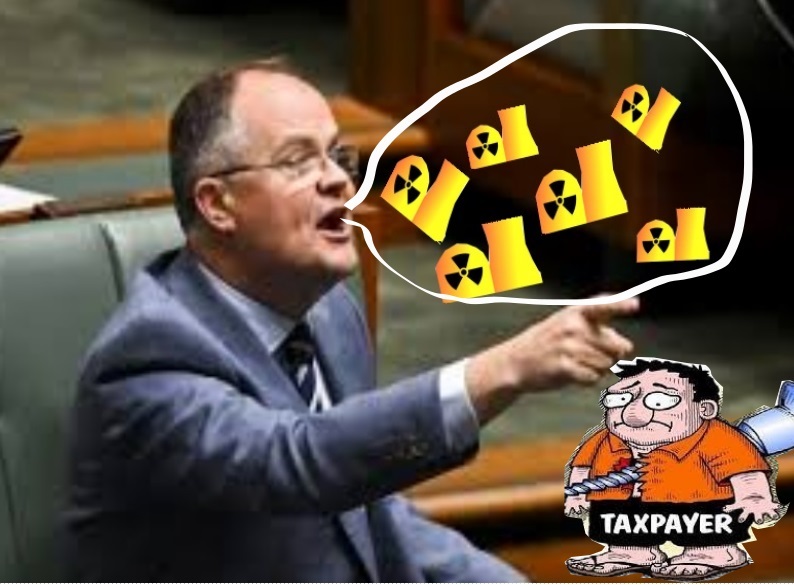
Peter Dutton says nuclear power plants “burn energy.” No they don’t

Giles Parkinson, Jun 25, 2024 https://reneweconomy.com.au/peter-dutton-says-nuclear-power-plants-burn-fuel-no-they-dont/
Opposition leader Peter Dutton has betrayed his complete ignorance about the nuclear technology he threatens to impose on the Australian population by a making a fundamental error: He thinks they burn fuel, or energy.
The comments were made in a heated Question Time in parliament house on the first day of the winter session which promises to be focused on energy and climate.
Opposition energy spokesman Ted O’Brien was ejected from the house by speaker Milton Dick, and Dutton ran close, earning the ire of the speaker on several occasions when he interjected as Labor ministers spoke.
At one point Dutton – trying to tie Labor up in knots over waste from a nuclear submarine, said this, according to Hansard:
Mr Dutton: It’s on relevance. And, perhaps, to be of assistance to the minister, the propulsion system burns energy—that’s how the system is working—and it’s stored in the—
The SPEAKER: Resume your seat.
Actually, they don’t burn fuel. That’s the point of them. If they did, they would likely create emissions, as defence minister Richard Marles explained.
Mr MARLES: Actually, it doesn’t burn any fuel, because burning is oxidisation, which is what happens in an internal combustion engine, which is exactly what happens when you use hydrocarbons. What this is is a nuclear reaction which gives rise to power. That is what happens inside the sealed nuclear reactor. The point is that the waste that will need to be disposed of …
And if he doesn’t accept Labor’s word on it, the Opposition leader could also read up on the website of the Nuclear Energy Institute:
“Nuclear plants are different because they do not burn anything to create steam. Instead, they split uranium atoms in a process called fission. As a result, unlike other energy sources, nuclear power plants do not release carbon or pollutants like nitrogen and sulfur oxides into the air.”
It reminds me of an encounter I had when I first started driving an EV. It was rubbished by a passer-by who suggested the car would be better off powered by nuclear. He seemed to think you could just shovel uranium into a boiler and off you go. Just top it up at the local refuelling station.
It could be that the aspiring prime minister thinks along the same lines. After all, we are constantly told we should mine Australia’s vast uranium reserves – heck, why not burn them like we do with coal.
It’s not the only major misunderstanding of nuclear by Dutton. He has suggested that what he defines as a small nuclear reactor, around 400 MW, would produce just a single can of coke as waste. It will need to be a very big can.
Emeritus Professor Ian Lowe, of Griffith University’s school of environment and science, told the SMH it was safe to say an SMR would generate many tonnes of waste per year, and it was likely that waste would be more radioactive than the waste from a large-scale reactor.
“For a 400-megawatt SMR, you’d expect that to produce about six tonnes of waste a year. It could be more or less, depending on the actual technology but certainly multiple tonnes a year,” he said. “They run on highly enriched uranium and produce a much nastier and a much more intractable set of radioactive waste elements that have to be treated.”
The Coalition’s entire nuclear push is based on lies and misconceptions, from their claim that wind, solar and storage can’t power a modern economy, that their plan needs no additional transmission, that its cheaper than renewables, and that it’s consistent with climate targets.
As virtually all experts have pointed out, with the exception of an heroic rear guard action on Sky News, the policy makes no sense economically, environmentally, or from an engineering point of view.
Perhaps Dutton needs to watch a few more episodes of The Simpsons. Or perhaps not.
This week’s countering the nuclear spin

Some bits of good news. Solar Power’s Giants Are Providing More Energy Than Big Oil. Clean-Energy Investment This Year To Be Twice That of Fossil Fuels, IEA Says. A River’s Rights: Indigenous Kukama Women Lead the Way with Landmark Legal Victory.
TOP STORIES. Blinken made secret weapons promise to Israel – Netanyahu. The US, Russia, and Ukraine: 75 Years of Hate Propaganda. Nuclear-armed countries spent $2,898 per second last year on nuclear weapons. We’ve barely scratched the surface of how energy efficiency can help the energy transition.
Climate. Extreme heat and flash floods: Scientists warn of hazardous summer weather in Europe. Climate Emergency strikes Islam’s Holy Ritual, with nearly 600 dead of Heat stroke at 124.24° F. in Mecca. Saudi Arabia shuts pilgrims out of air-conditioned areas as more than 1,000 die in extreme heat.
Nuclear. Overwhelmed with Australian stuff this week!
Noel’s notes. Nuclear culture wars – especially in Australia. What a disaster, if the anti-war movement brings Donald Trump back to the White House!
*****************************************************************
AUSTRALIA Keep up to date at this site:
Australia’s media quagmire on nuclear power.
Lockheed Martin, Australian Government: joined at the hip. Australian Futures:
Bringing AUKUS Out of Stealth Mode, and the true financial costs.
*****************************************************************
NUCLEAR ISSUES
ECONOMICS. Big Tech Wants Nuclear Power But
Doesn’t See Role as Investor. Australian Opposition Leader Peter Dutton’s nuclear plan could cost as much as $600bn and supply just 3.7% of Australia’s energy by 2050, experts say. Nuclear power’s financial problems exposed in new report. Very late and over budget: Why newest large nuclear plant in US is likely to be the last. UK’s nuclear plant will cost nearly three times what was estimated.
| ENERGY. Why we are heading for a globally connected electricity system based on renewable energy. | EVENTS. Veterans for Peace Golden Rule Project 2024: the Pacific Northwest. | ETHICS and RELIGION. Ten Holocaust survivors condemn Israel’s Gaza genocide. |
| HEALTH. Nuclear industry workers face significant, inevitable and unavoidable radiation health risks. | LEGAL. Sellafield operators plead guilty to criminal charges over security breaches. Veterans for Peace Golden Rule Project 2024: the Pacific Northwest. | MEDIA. Comments to The Times: Nuclear won’t fix our energy crisis |
OPPOSITION to NUCLEAR .
Kenya’s first nuclear plant: why plans face fierce opposition in country’s coastal paradise.
POLITICS.
- Senate Nuclear Fetishists Take Lid Off of Pandora’s Box.
- No more ‘endless’ payments to Zelensky – Trump.
- Prime Minister Rishi Sunak reinforced his party’s commitment to nuclear energy UK nuclear power plants rollout may be hit by planning hurdles. ALSO AT https://nuclear-news.net/2024/06/22/1-b1-uk-nuclear-power-plants-rollout-may-be-hit-by-planning-hurdles/ Nuclear black hole could deal a knock-out blow to UK Labour’s renewable targets.
- Over budget and plagued with delays: UK nuclear lessons for Australia.
- Scotland’s First Minister Swinney hits back at ‘hopelessly ideological’ attack from nuclear industry.
- U.S. Congress passes bill to jumpstart new nuclear power tech, but it may be too little, too late.
- Gavin Newsom’s $12 Billion Radioactive Diablo Scam Could Soon Be Twisting In The Wind.
- Norway To Consider Developing Nuclear Energy.
| POLITICS INTERNATIONAL and DIPLOMACY.Why ‘no’ to NATO? U.S. and China hold first informal nuclear talks in five years, France’s Orano loses operating licence at major uranium mine in Niger. | SAFETY. ‘Lax’ nuclear security leaving UK at risk of cyber attacks from hostile nations. | SECRETS and LIES. Leaked doc reveals Israeli military KNEW of Hamas plan to raid and take hostages 2 weeks before Oct 7, Israeli news reports. |
SPACE. EXPLORATION, WEAPONS The United Nations Security Council takes up Space Security – it might have been best if it had not.
| SPINBUSTER. Australia’s Nuclear debate is getting heated, but whose energy plan stacks up? | WASTES. Specialised device tried to recover highly radioactive melted fuel at Fukushima plant. |
TECHNOLOGY. Researchers have doubts, but Bill Gates is hyping his new liquid-sodium nuclear reactor.URANIUM.
Iran’s Nuclear Point Man : We Won’t Bow to Pressure.
WAR and CONFLICT. Can Israel defeat Hamas? Its own military doesn’t seem to think so, clashing with Netanyahu. Delusional Netanyahu joins delusional Zelensky in seeking total victory when none possible. Israeli ‘extremist’ tells Australian audience Gaza should have been reduced to ashes.
Ukraine, Continued Aid, and the Prevailing Logic of Slaughter.
What nuclear annihilation could look like.
WEAPONS and WEAPONS SALES.
- Corporations are influencing government policy on nuclear weapons, a damning report shows.
- Congress will hold a hearing about the Sentinel missile’s exploding budget, but is it too little, too late?.
- NATO chief says members considering deployment of more nuclear weapons, Kremlin warns it’s an ‘escalation of tension’
- Top lawmakers sign off on massive US arms sale to Israel. Chutzpah: Netanyahu demands Biden give him more genocide weapons “to finish the job a lot faster.” Former Official: Biden State Department Bending US Law to Send Israel Weapons.
- Sweden opens doors to possible US nukes deployment.
- US greenlights new arms sale to Taiwan.
- Vandenberg Conducts Test Launch for Development of New Weapon System.
Keep up to date on Australia’s media quagmire on nuclear power
This is still the most interesting article of all
Patricia Karvelas: Peter Dutton’s nuclear energy plan breaks all the rules of policy making. Is it genius or career self-destruction?
Below is a list of news articles. Now I have not here included the pro nuclear propaganda ones, nor the ravings of the very right-wing shock jocks of commercial radio – such as Melbourne’s 3AW. But you can find all that stuff on mainstream, mainly Murdoch media. The ABC is doing its best to stay afloat and actually give the facts. I am sure that those brave female TV and radio voices are now under quite vicious attack – Patricia Karvelas, Sarah Ferguson and Laura Tingle
I will try to keep this list up-to date – it is a daunting task –
National politics Dutton’s plan to nuke Australia’s renewable energy transition explained in full . No costing, no clear timelines, no easy legal path: deep scepticism over Dutton’s nuclear plan is warranted Nuclear plan is fiscal irresponsibility on an epic scale and rank political opportunism. Dutton’s nuclear lights are out and no one’s home. Peter Dutton launches highly personal attack on Anthony Albanese, calling him ‘a child in a man’s body’ while spruiking his new nuclear direction. Peter Dutton vows to override state nuclear bans as he steps up attack on PM. Peter Dutton is seated aloft the nuclear tiger, hoping not to get eaten.
Local politics. Nuclear thuggery: Coalition will not take no for an answer from local communities or site owners.
Climate change policy. Here’s how bad the climate crisis will get before Dutton builds his first nuclear reactor. Labor’s new climate chief Matt Kean says nuclear not viable. Peter Dutton’s flimsy charade is first and foremost a gas plan not a nuclear power plan. Coalition’s climate and energy policy in disarray as opposition splits over nuclear and renewables.
Economics Peter Dutton’s nuclear plan could cost as much as $600bn and supply just 3.7% of Australia’s energy by 2050, experts say . The insane amount it could cost to turn Australia nuclear – as new detail in Peter Dutton’s bold plan is revealed. Nuclear engineer dismisses Peter Dutton’s claim that small modular reactors could be commercially viable soon. Wrong reaction: Coalition’s nuclear dream offers no clarity on technology, cost, timing, or wastes. ‘Peter Dutton’s nuclear plan is an economic disaster that would leave Australians paying more for electrici.ty’. Dutton’s nuclear thought bubble floats in a fantasy world of cheap infrastructure. UK’s nuclear plant will cost nearly three times what was estimated.
Energy, Coalition won’t say how much nuclear power its plan will generate until after an election. Is rooftop solar a fatal flaw in the Coalition’s grand nuclear plans? Nuclear lobby concedes rooftop solar will have to make way for reactors.
Health Nuclear industry workers face significant, inevitable and unavoidable radiation health risks
Indigenous issues, How a British nuclear testing program ‘forced poison’ onto Maralinga Traditional Owners.
Technology. Dutton’s plan to build nuclear plants on former coal sites not as easy as it seems Over budget and plagued with delays: UK nuclear lessons for Australia.
Sabotaging renewables. There’s one real Coalition energy policy now: sabotaging renewables.
Secrecy. Port Augusta mayor and local MP kept in the dark about Liberal Coalition’s plant to site nuclear reactors there.
Site locations for reactors. Peter Dutton reveals seven sites for proposed nuclear power plants. Coalition set to announce long-awaited nuclear details.
Safety. Nuclear debate is getting heated, but whose energy plan stacks up? Some of the Coalition’s proposed nuclear locations are near fault lines — is that a problem?
Spinbuster. It’s time to go nuclear on the Coalition’s stupidity. Ziggy Switkowski and another big nuclear back-flip . Does the Coalition’s case for nuclear power stack up? We factcheck seven key claims. A Coalition pie-in-the-sky nuclear nightmare.
Peter Dutton’s flimsy charade is first and foremost a gas plan not a nuclear power plan

Dutton’s nuclear castle is made of cardboard. Close questioning over the many months until election day will show that behind the costly facade, it’s not so much a nuclear plan, as a plan to give up on our climate targets, turn our back on a clean energy future and burn a lot more gas (and money).
Simon Holmes à Court, 21 June 24, https://www.theguardian.com/commentisfree/article/2024/jun/21/peter-dutton-nuclear-power-plan-gas-energy
Straight from the Donald Trump playbook the opposition leader left Australia with more questions than answers.
Finally, on Wednesday morning Peter Dutton announced his nuclear plan … well, it’s more a vibe than a plan – a flimsy announcement leaving us with more questions than answers.
If there’s any doubt that Dutton has internalised the Trump playbook, here’s an example of how he’s deployed the infamous Steve Bannon technique: “flood the zone with shit”.
The media conference was a stream of falsehoods, empty rhetoric and veiled swipes, deftly delivered with unwavering confidence.
As an energy nerd, there’s a lot I like about nuclear technology, and my long-held interest has led me to visit reactors in three countries. Last year I took a nuclear course at MIT and met nuclear developers, potential customers, innovators and investors, tracing many footsteps of the shadow energy minister, Ted O’Brien.
I strongly believe nuclear power is an important technology – but it has to make sense where it’s used and that requires close questioning. Here are some important questions, and what we know so far.
How to remove the current bans?
Nuclear is banned in Australia by two acts of parliament. Naturally, to repeal the ban the Coalition would need to win back control of the house – a daunting task when they are 21 seats shy of a majority – and control of the Senate, power it hasn’t held since the end of the Howard era.
Once the federal ban is lifted, Dutton needs a plan for lifting state bans in Victoria, New South Wales and Queensland.
The leaders of the Labor governments and their Coalition oppositions in each of these key states have expressed their clear opposition. Dutton rehashed the old quip that you wouldn’t want to stand between a state premier and a bucket of money, indicating that he thinks dangling commonwealth carrots will solve the issue.
They will not be cheap carrots!
Where will the reactors go?
The Coalition has named seven specific locations, two in Queensland, two in New South Wales and one each in Victoria, South Australia and Western Australia, all on sites of retired or soon-to-be-retired coal power stations.
One big problem – the commonwealth doesn’t own any of these sites, and in many cases the owners of the sites have plans to redevelop the sites, such as a $750m battery on the site of the old Liddell power station being built by AGL.
On Wednesday Dutton hinted that if the owners wouldn’t sell the sites, he had legal advice that the commonwealth could compulsorily acquire them. That’ll go down well.
How do we keep the lights on?
Australia’s 19 coal power stations generated 125 TWh of electricity last year. The Australian Energy Market Operator expects all will be retired by 2037. On top of that, our energy demand is expected to increase by more than 230 TWh by 2050. Over the next 25 years we need to build facilities that generate at least 355 TWh every year.
Dutton announced that the Coalition would build five large reactors and two small modular reactors by 2050. This would be about 6.5 GW of new capacity, which at best could be expected to generate 50 TWh a year – less than 15% of the new generation needed.
The Coalition has been quite clear that it wants to see renewable energy development slowed to a crawl. This would leave a massive hole in our energy supply, which could only be filled by extending the life of coal and a massive increase in gas power generation.
This is first and foremost a gas plan, not a nuclear plan.
What will it cost?
Gas is the most expensive form of bulk energy supply in the electricity market … at least until nuclear is available.
Replacing the cheapest form of energy – wind and solar, even including integration costs – with the two most expensive forms can only send energy prices higher.
The Coalition’s announcement is too vague to cost precisely and nobody really knows what SMRs will cost, but a reasonable estimate using assumptions from CSIRO’s GenCost would be in the order of $120bn, or to coin a new unit of money, one-third of an Aukus.
What does this mean for emissions?
An analysis by Solutions for Climate Australia, released before Wednesday’s announcement and which assumes a much more aggressive nuclear build, shows an aggregate increase in emissions by 3.2bn tonnes of carbon dioxide by 2050 – the emissions equivalent of extending the life of our entire coal fleet by 25 years.
While the Coalition has turned its back on Australia’s legislated 2030 target, their talking points say they’re still committed to net zero emissions by 2050. This does not compute. Dutton’s proposal would see high emissions in the electricity sector all the way to 2050 and beyond, blowing our carbon budget and every emissions target along the way.
What if locals object?
For years Coalition members have been running around the country fomenting then amplifying community concern around wind and solar farms. Genuine community consultation, which has sometimes been lacking, is the best antidote to opposition.
Yet the Coalition has made a massive blunder in telling communities exactly where they’ll go before any consultation. Worse, it has adopted a strong-man posture that communities will have to accept that the reactors are in the national interest. It will be fascinating to watch how the Coalition handles local opposition over the coming months.
How will they be built?
With a combination of astronomical costs and zero interest by energy companies, there only ever was one possible owner of a nuclear power station in Australia: the commonwealth government.
One of the biggest challenges will be locking in major contractors. With the high likelihood that a future Labor government would cancel any contracts, no contractor would proceed without very expensive cancellation protection.
When will the reactors come online?
We often hear that a nuclear reactor can be built in eight years. In reality it takes three to four years from signing the contract to completing the civil works to begin ‘construction’, and it would very optimistically take four years to complete site selection, planning, licensing, vendor selection and contracting. Add in the inevitable legal challenges and it’s highly unlikely a reactor could be delivered by 2035 – as Dutton claimed – let alone before the early 2040s.
The newest reactors in the United States took 18 years from announcement to commercial operation, while in the UAE, it took 13 years under an authoritarian regime … and I’m being kind by not mentioning contemporary projects in France, the UK, Finland and Argentina.
Dutton has said he favours the Rolls-Royce SMR, tweeting an artist’s rendering on Wednesday.
These SMRs exist only on paper, yet Dutton wants us to believe he can provide one by 2035. Remember, this is the mob that brought us the NBN and the Snowy 2.0 disaster. This is the team that couldn’t even build commuter car parks.
What about the water and the waste?
I think we can relax a little about water and waste. Yes, nuclear power stations generally require large volumes of water for cooling, but so do coal power stations. By choosing sites with existing access to cooling water, the Coalition has sidestepped this concern.
Public concern around nuclear waste is high, but ultimately the problem is manageable. The waste will be kept on site, likely in dry casks and eventually moved to wherever Australia decides to store its waste from the Aukus program. Nobody has ever been harmed by spent nuclear fuel.
Who will provide disaster insurance?
While serious nuclear accidents are very rare, their costs can be astronomical. The Japan Centre for Economic Research has estimated that total costs related to the 2011 Fukushima Daiichi nuclear accident may reach $350 to 750bn. The only viable solution is for the commonwealth to accept liability.
For a long time the Coalition’s nuclear plan sat beyond the horizon, to be unveiled before the election. But now Dutton’s built a castle and he has to defend it.
Dutton is still learning about nuclear. On Wednesday he said that an SMR would emit only a “coke can” of nuclear waste a year. In reality it would probably produce more than 2,000 times that.
Nuclear energy is complex. He and his team will keep making mistakes. Keith Pitt, a Nationals backbencher told RN Breakfast on the same day that the grid couldn’t handle more than 10% wind and solar power combined. Over the past year the grid has averaged 31% wind and solar.
Some people want to believe there are simple solutions to the complex solutions behind the cost of living crisis, and like his political forebear Tony Abbott, Dutton has a knack for delivering simple messages with cold competence.
But Dutton’s nuclear castle is made of cardboard. Close questioning over the many months until election day will show that behind the costly facade, it’s not so much a nuclear plan, as a plan to give up on our climate targets, turn our back on a clean energy future and burn a lot more gas (and money).
- Simon Holmes à Court is a Director of The Superpower Institute, the Smart Energy Council and convener of Climate 200. Contrary to Coalition belief, he is not a large investor in renewable energy.
Dutton’s plan to build nuclear plants on former coal sites not as easy as it seems
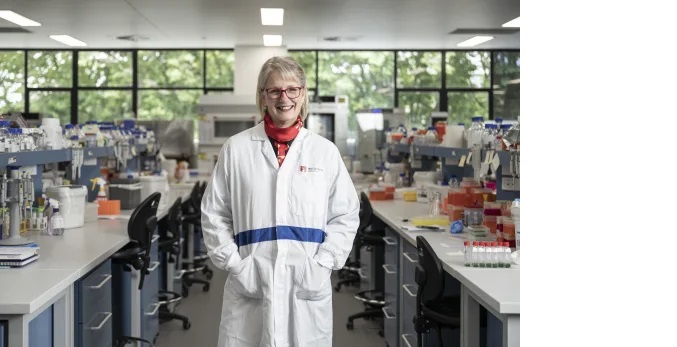
Dr Katherine Woodthorpe said it would be impractical for nuclear facilities to use existing poles and wires. CREDIT:LOUIE DOUVIS
By Bianca Hall, June 21, 2024, https://www.theage.com.au/environment/climate-change/dutton-s-plan-to-build-nuclear-plants-on-former-coal-sites-not-as-easy-as-it-seems-20240620-p5jnbo.html
Experts have cast doubt on the central pillar of Peter Dutton’s nuclear pitch to voters, saying it would take decades to fill in coal mine voids and make contaminated power station sites safe, during which time fragile and valuable transmission lines would be left to deteriorate.
Operators at several of the seven sites identified by the Coalition for nuclear plants already have well-advanced plans to transform their sites into renewable energy hubs with grid-scale batteries, hydrogen and solar once the coal runs out.
Announcing a future Coalition government would build seven nuclear power stations on the sites of existing coal-fired power stations, Dutton said nuclear facilities could be built on the sites of retired coal power plants using existing transmission poles and wires.
“Each of these locations offer important technical attributes needed for a zero-emissions nuclear plant, including cooling water capacity and transmission infrastructure,” he said.
“That is, we can use the existing poles and wires.”
Dr Katherine Woodthorpe, president of the Australian Academy of Technological Sciences and Engineering, said overseas examples like the United Kingdom’s Hinkley Point C showed it could take decades to approve and build new nuclear facilities – leaving aside the time needed to remediate dirty and geologically unstable former mine sites.
Woodthorpe said even if it only took 25 years to get a new nuclear facility up and running, that meant the existing transmission potential could lie dormant for 25 years after a coal plant closed.
“In theory it could be done, but when you look at the actual practicality of doing it they’d pretty well have to replace it all,” she said.
University of Sydney professor Glenn Platt, who specialises in energy policy, markets and grids, said there was already high demand for dormant transmission networks among renewables operators.
“The unknown bit [about the Coalition policy] is what happens to those poles and wires between now and when somebody wants to build the nuclear plant, because everybody else is trying to use those poles and wires today for wind and solar and battery projects,” he said.
“The landowners many of these sites are already deploying wind and solar or batteries on those sites. They would use up the available poles and wire infrastructure.”
AGL, which owns the Liddell Power Plant in the Hunter Valley, and Loy Yang A in the Latrobe Valley, said it was well-advanced in plans to transform the sites into industrial energy hubs with renewables, batteries and associated industries.
A spokesman referred this masthead to a statement made by chief executive Damien Nicks in March.
“AGL is already developing our coal and gas power station sites into low-emissions industrial energy hubs,” he said.
“As the owner of these sites, nuclear energy is not a part of these plans. There is no viable schedule for the regulation or development of nuclear energy in Australia, and the cost, build time and public opinion are all prohibitive.”
Many observers are looking to now-closed mine sites for clues about how Dutton’s policy could work on a practical level.
French energy giant Engie, which is rehabilitating Victoria’s closed coal mine Hazelwood, has estimated it could take up to 35 years under a worst-case scenario to finish filling the enormous mine void to a maximum depth of 116m and surface area of 1145 hectares.
Engie Australia and New Zealand manager of environment and planning Adam Moran, who has led the rehabilitation, said a nuclear facility could in theory be put on the site of a former coal power station.
“Could it be done? Yes, but if you had to choose a location, would you choose next to a mine void that’s been rehabilitated and full of water, or would you put it some distance further away?” he said.
“You would probably err on the side of caution, and move it well outside of the geological buffer zone that would exist around a rehabilitated coal mine.”
At Hazelwood, which had a 1600-megawatt transmission capacity when the coal mine operated, operators have installed a 150-megawatt-hour battery, which is now plugged into the mine’s existing transmission network.
In November, Yancoal announced plans to transform the coal mine at Stratford in the Hunter Valley, slated for closure this year, into a major 330-megawatt solar farm and pumped hydro facility capable of producing 300 megawatts in a 12-hour period.
A spokesman for EnergyAustralia, which operates the Mt Piper mine in Lithgow, said the company spoke regularly with governments and regulators.
“To date, we have not discussed the use of any EnergyAustralia sites in the context of nuclear,” he said
With its Mt Piper plant due to close in 2040, and Yallourn this decade, EnergyAustralia is increasingly looking to diversify, he said.
“We are focused on continuing to roll out existing, readily available technologies,” he said, which included gas and batteries.
“We are developing more batteries in multiple states, pumped hydro at Lake Lyell in Lithgow and working with partners to underpin further renewable energy.”
The Australian Manufacturing Workers’ Union and Climate Action Network Australia commissioned a report identifying industry and workforce opportunities presented by the renewable energy shift.
National secretary Steve Murphy said with government backing, coal workers could retrain and reap the benefits of renewable technologies.
“This is coming, so let’s get involved and get the best results for our members,” he said.
“We’re in a global race for the jobs of the future, and we spent 10 years standing still, [but] we can catch up very quickly with the natural advantages that we’ve got, provided that there is government support.”
No costing, no clear timelines, no easy legal path: deep scepticism over Dutton’s nuclear plan is warranted
Ian Lowe, Emeritus Professor, School of Environment and Science, Griffith University June 20, 2024 https://theconversation.com/no-costing-no-clear-timelines-no-easy-legal-path-deep-scepticism-over-duttons-nuclear-plan-is-warranted-232822
It is very difficult to take Opposition Leader Peter Dutton’s nuclear announcement seriously. His proposal for seven nuclear power stations is, at present, legally impossible, technically improbable, economically irrational and environmentally irresponsible.
Given the repeated community objections to much more modest nuclear proposals, such as storage of low-level radioactive waste, there is almost certainly no social licence for nuclear power stations.
Dutton promises that, if elected, he would make nuclear power a reality within a little over ten years. Given the enormous obstacles even to turn the first sod, this seems like a pipe dream.
Here’s why.
Legal status: seemingly impossible
Some 25 years ago, the Howard Coalition government legislated a ban on nuclear energy in its environment laws. Coalition governments have been in power federally for most of the time since, but have made no attempt to repeal the ban.
Even a sweeping victory in the forthcoming federal election would not give the Coalition the Senate majority necessary to change the ban in the next term of parliament. As is usually the case, only half the Senate will be elected, so simple arithmetic shows no prospect of a Coalition majority. The only possibility would be negotiating with the crossbench.
Of the seven nuclear power stations Dutton is proposing to build on the site of old coal stations, five would be in the eastern states: two in Queensland at Tarong and Callide, two in New South Wales at Mount Piper and Liddell, and one in Victoria at Loy Yang.
Each of these states have their own laws banning nuclear power. The eastern premiers have made clear they will not change their laws. Even Dutton’s Queensland Liberal National Party colleagues, who face a state election in October, do not support the plan.
So the proposal does not satisfy current laws and there is no realistic possibility of these changing in the timeframe Dutton would need to get the first reactors built (he says the first would be operating by the mid-2030s).
Dutton could try to bypass the states by building on Commonwealth land. But this would mean missing the supposed benefit of locating reactors next to existing transmission lines at old coal plant sites.
Cost: astronomical
Cost is a huge problem. Dutton has promised nuclear will deliver cheap power. But CSIRO’s latest GenCost study on the cost of different power generation technologies shows there is no economic case for nuclear power in Australia. Nuclear power would cost at least 50% more than power produced by renewables and firmed with storage.
This estimate is conservative – in reality nuclear would likely cost even more, as GenCost relies on the nuclear industry’s cost estimates. All recent projects have gone way over budget.
The three nuclear power stations being built in western Europe are all costing two to four times the original budget estimate.
It is true a renewables-dominated grid will require more storage, which means building more grid batteries and pumped hydro schemes. It is also true we’ll need to expand our existing 40,000 kilometres of transmission lines by 25% to get renewable electricity to consumers.
But even when we add these extra costs, and even when we accept industry figures, nuclear still cannot compete with solar farms or wind turbines. CSIRO costs nuclear at between A$8 and $17 billion for a large-scale reactor.
There are no private investors lining up to build nuclear. Overseas, nuclear has always been heavily bankrolled by the taxpayer. Dutton’s plan would either require a huge spend of public money or a major increase to power bills. In the United Kingdom, for example, the government has assured the developer of its Hinckley Point C reactor they will be able to recoup the cost by charging higher rates for the power.
While Dutton is promoting nuclear as a way to avoid building expensive and often unpopular new transmission lines, this is not true. Several proposed reactors would need their own lines built, as coal transmission capacity is rapidly being taken up by renewables, as South Australia’s energy minister Tom Koutsantonis has pointed out.
Time: we’re out of it
Building a nuclear reactor takes years or even decades. Dutton has promised Australia would have its first nuclear power station operational in a decade, assuming his party is elected and their scheme implemented without delay in 2025.
This claim is wholly without merit. In 2006, the Coalition government commissioned a study on whether nuclear power was viable in Australia, which found it would likely take 15 years to build a reactor here. The timeframe today would be similar, because we don’t have a workforce with experience of building large nuclear reactors. We also don’t have the regulatory framework needed to give the community confidence nuclear power stations could be built and operated safely.
Even in the United States, the UK and France – three countries with long experience with nuclear – no recent project has been completed within ten years.
It defies logic to suggest we could start with a blank sheet of paper and build complex systems faster than countries with long-established industries and regulatory regimes.
Nuclear backers often point to examples in China and the United Arab Emirates, which have both built reactors within about a decade. But these countries do not tolerate the community objections which would be inevitable. In Australia, consultation, legal challenges and protests often delay far less controversial projects.
Why does this matter? Dutton’s push for nuclear isn’t happening in a vacuum. This is the crucial decade for action on climate change. As Australian climate scientist Joëlle Gergis has written, we are now paying the cost of long inaction on climate change in damage from more severe bushfires, floods and drought.
Let’s say the Coalition is elected and sets about making this plan a reality. In practice, this would commit us to decades more of coal and gas, while we wait for nuclear to arrive. We would break our Paris Agreement undertaking to make deep cuts to emissions, and keep making climate change worse.
A Coalition pie-in-the-sky nuclear nightmare

(Cartoon by Mark David / @MDavidCartoons)
By Belinda Jones | 22 June 2024, Independent Australia
Having reignited the “climate wars” with pie-in-the-sky nuclear energy plans, if the plans fail, Dutton and Littleproud will face the wrath of a climate-war-weary Australian people at the ballot box, writes Belinda Jones.
AUSTRALIANS finally caught a glimpse of the Coalition’s nuclear energy plan this week. And, we mean “glimpse” — a one-page media release identifying seven proposed locations for nuclear power plants and not much more detail than that.
Nationals’ Leader David Littleproud called for Australia to have “a conversation about nuclear”, which culminated in this week’s long-awaited announcement from Littleproud and Opposition Leader Peter Dutton.
It has taken two years to create a one-page media release. By any standard, that is poor form.
As Betoota Advocate editor Clancy Overell so eloquently summed it up this week,
“Man who was paralysed with fear over lack of details about Indigenous Voice provides a one-page media release for his half a trillion dollar nuclear plan.”
In fact, the Coalition press conference on nuclear energy inspired far more questions than answers, despite Dutton claiming the Coalition has done “an enormous amount of work”.
Obviously, for Australians, the most pressing concerns for nuclear energy are cost and the time it’ll take to build seven nuclear reactors, as well as safety concerns.
As a policy, it’s not off to a good start. State premiers have rejected the idea and their support is crucial to the success of nuclear energy, due to the fact state legislation would have to be amended to allow any nuclear energy plan even to exist…………………………………………………………………..
However, the states’ consensus on nuclear energy may not be a major hurdle for the Coalition’s nuclear plans. Constitutional law expert, Professor Emerita Anne Twomey, suggested “state bans on nuclear could be overridden by a federal law, as outlined in section 109 of the Constitution”.
Section 109 of the Australian Constitution states:
‘When a law of a State is inconsistent with a law of the Commonwealth, the latter shall prevail, and the former shall, to the extent of the inconsistency, be invalid.’
Perhaps, similar to the Coalition’s plan to announce first where they plan to build nuclear reactors, then consult with the local communities affected after the fact, their plan is to bulldoze their way past state laws irrespective of the wishes of constituents, state governments or any other objectors to their nuclear plans — which is hardly a democratic process.
One supporter of the current Coalition’s nuclear energy policy is nuclear physicist Dr Ziggy Switkowski, the former Howard Government advisor on nuclear. This is despite Switkowski telling a Federal Parliamentary Inquiry in 2019 of the risk of “catastrophic failure” and that the “window for ‘large nuclear generation’ had closed for Australia”. At the time, Switkowski cited the “emerging technology of small nuclear reactors [as] the viable option on the table”.
That prediction has been proven to be premature with no small nuclear reactors at a viable or commercial stage in 2024. The USA’s first small modular reactor was cancelled by developer NuScale last year due to cost blowouts.
Switkowski also told the 2019 Inquiry:
“It was unlikely the industry could establish enough support to gain a social licence to operate.”
This week, Switkowski weighed in on the scepticism his work in previous years had helped to foment within Australia saying, “The strong positions some critics have taken in the last 24 hours are ridiculous”.
Australia’s wealthiest woman and enthusiastic Coalition supporter Gina Rinehart has long been demanding nuclear energy be part of Australia’s energy mix — a view that may emanate from her business interests around uranium exploration and mining.
Rinehart is no fan of renewables, claiming they’ll force food prices up and send farmers broke. This is despite the fact that they produce alternative sources of income for farmers and provide reliable energy solutions where “there’s no mains just to switch on” in isolated, rural communities.
The Coalition’s proposed seven nuclear reactors would not provide any benefit to those rural communities to which Rinehart refers that are not connected to mains power, whereas a combination of solar or wind and battery power would.
So, the electorally embattled Dutton and Littleproud face an uphill battle to get their nuclear policy off the ground in the face of overwhelming opposition to their plans. And though their scant plans offer nothing substantial on the issue of Coalition nuclear policy, they have managed to “reignite the climate wars”, which may in fact be the method in their madness.
Rather than bring the nation together, divide and conquer on any issue seems to be their modus operandi.
For a nation exhausted by over a decade of “climate wars” that it hoped were well and truly over, the Coalition has taken a huge risk to bring expensive, pie-in-the-sky nuclear to the table and reignite those wars. If it fails and it likely will, based purely on economics, then both Dutton and Littleproud will face the wrath of a climate-war-weary Australian people at the ballot box and, ultimately, their own political parties.
Dutton and Littleproud have both nailed their colours to the mast, demanding a conversation on nuclear energy with no intention of taking no for an answer. Like their failure to consult with communities before announcing their plans, they may have put the cart before the horse. Time will tell. https://independentaustralia.net/politics/politics-display/a-coalition-pie-in-the-sky-nuclearnightmare,18704
Ziggy Switkowski and another big nuclear back-flip
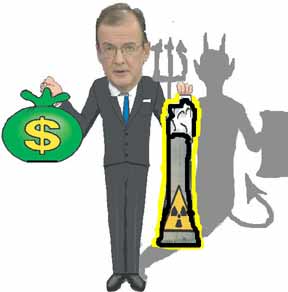
Ziggy 1.0 said in 2009 that the construction cost of a one gigawatt (GW) power reactor in Australia would be A$4-6 billion.
Ziggy 1.0 wasn’t wrong by 4-5 percent, or 40-50 percent. He was out by 400-500 percent. And yet he still gets trotted out in the mainstream media as a credible commentator on nuclear issues. Go figure.
Jim Green, Jun 21, 2024, https://reneweconomy.com.au/ziggy-switkowski-and-another-big-nuclear-back-flip/
Dr Ziggy Switkowski, best known as a former Telstra CEO, less well known as a former oil and gas company director, is a nuclear physicist by training. Wearing his nuclear hat, he was appointed by then prime minister John Howard to lead the 2006 Uranium Mining, Processing and Nuclear Power Review (UMPNER) inquiry.
The UMPNER inquiry didn’t inquire. The panel was comprised entirely of “people who want nuclear power by Tuesday” according to the late comedian John Clarke. Its report was predictably biased and misleading.
Howard evidently decided that he was pushing too hard and too fast. The UMPNER panel was required to finish its report in great haste in late 2006 and the Coalition tried to run dead on the nuclear issue in the lead up to the November 2007 federal election.
However, the Coalition’s political opponents – including Anthony Albanese – were more than happy to draw voters’ attention to the Coalition’s unpopular nuclear power plans. During the election campaign at least 22 Coalition candidates publicly distanced themselves from the government’s policy. Howard lost his seat and the Coalition was defeated. The nuclear power policy was ditched immediately after the election. Past as prologue, perhaps.
Ziggy 2.0
In recent years we’ve had Ziggy 2.0. To his credit, he reassessed his views in light of the cost blowouts with reactor projects and the large reductions in the cost of renewable energy sources.
He said in 2018 that “the window for gigawatt-scale nuclear has closed” and he noted that nuclear power is no longer cheaper than renewables, with costs rapidly shifting in favour of renewables.
Ziggy 2.0 noted in his evidence to the 2019 federal nuclear inquiry that “nuclear power has got more expensive, rather than less expensive,” and that there is “no coherent business case to finance an Australian nuclear industry.”
He added that no-one knows how a network of small modular reactors (SMRs) might work in Australia because no such network exists “anywhere in the world at the moment.”
Ziggy 2.0 noted the “non-negligible” risk of a “catastrophic failing within a nuclear system”. He acknowledged the difficulty of managing high-level nuclear waste from nuclear power plants, particularly in light of the failure of successive Australian governments to resolve the long-term management of low- and intermediate-level waste.
Ziggy 3.0
Now we have Ziggy 3.0, who sounds a lot like Ziggy 1.0. Peter Dutton and shadow energy minister Ted O’Brien “are as well informed on things nuclear as any group I’ve talked to in the last 20 years in Australia,” Ziggy 3.0 says.
Just about everything Dutton and O’Brien say about nuclear power is demonstrably false. Only the ill-informed could possibly claim they are well informed.
Ziggy 3.0 is spruiking the next generation of nuclear plants. Perhaps he’s talking about non-existent SMRs, or failed fast breeder technology, or a variety of other failed technologies now being dressed up as ‘advanced’ or ‘Generation IV’ concepts.
Who knows what he has in mind, and there’s no reason anyone should care expect that he has, once again, assumed the role of a prominent nuclear cheerleader.
“I think it’s unreasonable for anybody to expect the opposition leader to come out with a fully documented and costed plan at this stage,” Switkowski says.
But why is that so hard? O’Brien chaired a 2019 parliamentary inquiry into nuclear power. Coalition MPs initiated and participated in a 2022/23 parliamentary inquiry. And they have a mountain of other research to draw from.
Baseload
According to the Sydney Morning Herald, Switkowski now says “the cost curve for solar and wind has moved aggressively down” and he praises CSIRO for its work on the higher relative cost of nuclear power compared to renewables.
But Ziggy 3.0 goes on to say that “you need to have nuclear as well for baseload power”. Seriously? Nuclear power as a complement to renewables as we head to, or towards, 82 per cent renewable supply to the National Electricity Market by 2030? That’s nuts.
Perhaps he thinks non-existent SMRs can integrate well with renewables? Does he support the Coalition’s plan to expand and prolong reliance on fossil fuels until such time as SMRs i) exist anywhere in the world and ii) are operating in Australia?
Apart from the practical constraints (not least the fact that they don’t exist), the economics of SMRs would go from bad to worse if using them to complement renewables. According to the Institute for Energy Economics and Financial Analysis, power from an SMR with a utilisation factor of 25% would cost around A$600 per megawatt-hour (MWh).
Likewise, a recent article co-authored by Steven Hamilton – assistant professor of economics at George Washington University and visiting fellow at the Tax and Transfer Policy Institute at the ANU – states:
“Opposition Leader Peter Dutton said: “Labor sees nuclear power as a competitor to renewables. The Coalition sees nuclear power as a companion to renewables”.
“The trouble is that nuclear is a terrible companion to renewables. The defining characteristic of being “compatible” with renewables is the ability to scale up and down as needed to “firm” renewables.
“Even if we don’t build a single new wind farm, in order to replace coal in firming renewables, nuclear would need to operate at around 60 per cent average utilisation (like coal today) to keep capacity in reserve for peak demand. This alone would push the cost of nuclear beyond $225/MWh. To replace gas as well, the cost skyrockets beyond $340/MWh.”
Making sense of Ziggy 3.0
Ziggy 1.0 said in 2009 that the construction cost of a one gigawatt (GW) power reactor in Australia would be A$4-6 billion. Compare that to the real-world experience in the US (A$23.4 billion / GW), the UK (A$27.2 billion / GW) or France (A$19.4 billion / GW).
Ziggy 1.0 wasn’t wrong by 4-5 percent, or 40-50 percent. He was out by 400-500 percent. And yet he still gets trotted out in the mainstream media as a credible commentator on nuclear issues. Go figure.
Dr. Jim Green is the national nuclear campaigner with Friends of the Earth Australia and co-author of the ACF’s new report, ‘Power Games: Assessing coal to nuclear proposals in Australia’.
Australia’s media on nuclear power – wading through the quagmire

First of all, I’d like to commend a top article, which analyses the political significance for Peter Dutton, of his extraordinary policy :
Patricia Karvelas: Peter Dutton’s nuclear energy plan breaks all the rules of policy making. Is it genius or career self-destruction?
More recent articles at https://antinuclear.net/2024/06/24/from-25th-june-the-most-recent-australian-nuclear-news/
Below is a list of news articles. Now I have not here included the pro nuclear propaganda ones, nor the ravings of the very right-wing shock jocks of commercial radio – such as Melbourne’s 3AW. But you can find all that stuff on mainstream, mainly Murdoch media. The ABC is doing its best to stay afloat and actually give the facts. I am sure that those brave female TV and radio voices are now under quite vicious attack – Patricia Karvelas, Sarah Ferguson and Laura Tingle
I will try to keep this list up-to date – but that is going to be a daunting task –
National politics Dutton’s plan to nuke Australia’s renewable energy transition explained in full . No costing, no clear timelines, no easy legal path: deep scepticism over Dutton’s nuclear plan is warranted Nuclear plan is fiscal irresponsibility on an epic scale and rank political opportunism. Dutton’s nuclear lights are out and no one’s home. Peter Dutton launches highly personal attack on Anthony Albanese, calling him ‘a child in a man’s body’ while spruiking his new nuclear direction. Peter Dutton vows to override state nuclear bans as he steps up attack on PM. Peter Dutton is seated aloft the nuclear tiger, hoping not to get eaten.
Local politics. Nuclear thuggery: Coalition will not take no for an answer from local communities or site owners.
Climate change policy. Peter Dutton’s flimsy charade is first and foremost a gas plan not a nuclear power plan. Coalition’s climate and energy policy in disarray as opposition splits over nuclear and renewables.
Economics Peter Dutton’s nuclear plan could cost as much as $600bn and supply just 3.7% of Australia’s energy by 2050, experts say . The insane amount it could cost to turn Australia nuclear – as new detail in Peter Dutton’s bold plan is revealed. Nuclear engineer dismisses Peter Dutton’s claim that small modular reactors could be commercially viable soon. Wrong reaction: Coalition’s nuclear dream offers no clarity on technology, cost, timing, or wastes. ‘Peter Dutton’s nuclear plan is an economic disaster that would leave Australians paying more for electrici.ty’. Dutton’s nuclear thought bubble floats in a fantasy world of cheap infrastructure. UK’s nuclear plant will cost nearly three times what was estimated.
Energy, Coalition won’t say how much nuclear power its plan will generate until after an election
Health Nuclear industry workers face significant, inevitable and unavoidable radiation health risks
Indigenous issues, How a British nuclear testing program ‘forced poison’ onto Maralinga Traditional Owners.
Technology. Dutton’s plan to build nuclear plants on former coal sites not as easy as it seems Over budget and plagued with delays: UK nuclear lessons for Australia.
Sabotaging renewables. There’s one real Coalition energy policy now: sabotaging renewables.
Secrecy. Port Augusta mayor and local MP kept in the dark about Liberal Coalition’s plant to site nuclear reactors there.
Site locations for reactors. Peter Dutton reveals seven sites for proposed nuclear power plants. Coalition set to announce long-awaited nuclear details.
Safety. Some of the Coalition’s proposed nuclear locations are near fault lines — is that a problem?
Spinbuster. It’s time to go nuclear on the Coalition’s stupidity. Ziggy Switkowski and another big nuclear back-flip . Does the Coalition’s case for nuclear power stack up? We factcheck seven key claims. A Coalition pie-in-the-sky nuclear nightmare.
Gina Rinehart and co are not the slightest interested in nuclear power plants. Goal is just – dig baby dig – coal, gas, uranium – forever. They can just keep mining forever, and funding the Liberal Coalition’s pointless nuclear mirage. Nobody’s really interested in super-expensive nuclear power plants, big or small. But while Australia is conned into believing that this nuclear power plan is actually real, well – it’ll keep on being dig baby dig. As Helen Caldicott once suggested – if these grasping oligarchs could put a blanket around the sun and sell holes – then they’d be interested in solar power,
Australian news media swamped with Peter Dutton’s pro nuclear gamble.

It’s pretty lacklustre journalism. Everyone crapping on about financial costs – apparently Australians are supposed to think that is the only thing that matters. Even then, the cost of nuclear wastes is ignored.
Never mind about about worker safety, ionising radiation, terrorism risks, weapons proliferation.
And here’s Australia, right now poised to become the global leader in genuinely clean energy!
Patricia Karvelas: Peter Dutton’s nuclear energy plan breaks all the rules of policy making. Is it genius or career self-destruction?

By Q+A and RN Breakfast host Patricia Karvelas, https://www.abc.net.au/news/2024-06-20/nuclear-dutton-coalition-unanswered-questions-beak-rules/104000664
Peter Dutton has broken every single rule when it comes to unveiling radical policy as opposition leader, tearing up the script and gambling with his party’s chances at the next election with his nuclear policy.
If he can pull it off and convince enough voters that his blueprint for an Australian nuclear future is feasible and preferable, it will be the most unorthodox approach we’ve seen from an opposition leader in recent memory. It will rewrite our understanding of how modern politics works and reshape Australia.
Dutton has just placed a target on his back — and many of his state and even federal colleagues are scratching their heads trying to work out what the larger strategy here is. Is it cunning genius or the longest political self-destruction?
But what will it cost?
For months, journalists have been inquiring about when and why the nuclear policy announcement was being delayed. Senior Coalition figures informed me that the opposition — knowing full well that Labor and others would throw everything at pulling it apart — were doing their most comprehensive piece of work to deliver a “bulletproof” policy that could withstand dissection and sustained attack.
Yet when Dutton and his colleagues stood up before the media yesterday, they outlined a policy with many questions unanswered — including, most crucially, the actual cost of their nuclear rollout. The Coalition says it will reveal the cost down the track. But to leave unanswered such a crucial detail when the entire debate is centred around the cost of energy leaves the policy vulnerable and impossible to critically assess.
It is stunning and unheard-of for a mainstream political party to put forward such a significant and consequential policy blueprint without the numbers attached.
One senior Liberal suggested the delay in releasing the figures was to rob Labor of the ability to question the economic basis of the policy — you can’t pull and pick apart numbers that haven’t been provided. Conventional politics would involve the unveiling of modelling and robust independent accounting to explain the cost for taxpayers.
Tony Barry, the director of political research organisation RedBridge Research and a former Liberal Party strategist, says the way the policy had been announced makes the Coalition vulnerable to criticism.
“It isn’t so much ‘bulletproof’ but rather wearing a high-vis vest with a bullseye on it,” Barry told me. “The Coalition has to try and sell its product while Labor only has to convince people not to buy it, and in that scenario, Labor has the easier job.”
There are hurdles to jump
Among the many hurdles for the Coalition to jump before it can even develop a nuclear site will be the state premiers, who have lined up against this blueprint to establish nuclear power plants at seven locations across the country. Peter Dutton says the states’ concerns were easy to deal with.
“Somebody famously said, ‘I would not stand between the premier and a bucket of money’, and we’ve seen the premiers in different debates before where they’ve been able to negotiate with the Commonwealth and will be able to address those issues,” he says.
A Coalition government would also have to convince federal parliament — the Senate too — to lift restrictions on nuclear power and find a solution for nuclear waste. It would also have to build a nuclear workforce from scratch.
Is it achievable? It would be a big departure from the usual way Australia does business.
And then there’s the question of social license. Communities would need to get on board and provide support to build nuclear facilities in their neighbourhood. The Coalition says polling in some of these seats shows that there is support — even if it’s tight.
A poll released by the Lowy Institute earlier this month of 2,000 voters showed 61 per cent said they supported Australia including nuclear generation in its energy mix. Public opinion towards nuclear power in Australia has shifted over time. A significant minority (37 per cent) “somewhat” or “strongly” oppose it. Those who “strongly support” nuclear power generation (27 per cent) outnumber those who “strongly oppose” it (17 per cent).
But on the question of the rights of communities to raise objections, the Nationals were at odds yesterday.
Nationals leader David Littleproud contradicted his deputy, Perin Davey, who said that, “if a community is absolutely adamant, then we will not proceed”. But the Nationals leader later said Davey’s claim was “not correct”.
“Peter Dutton and David Littleproud, as part of a Coalition government, are prepared to make the tough decisions in the national interest. We will consult, and we will give plenty of notice.”
More unanswered questions
Part of the motivation for this massive climate pivot is the opposition to the rollout of renewables. Given the controversy on poles and wires and their rollout on the basis that some communities don’t want them, it seems a stretch that other communities would be pushed to accept nuclear.
The Coalition is right to observe some questioning of the pace and cost of the renewables rollout. But it’s a big leap to go from detecting softening support for renewables to assuming there will be full-blown support for nuclear in the community.
If we accept that community opposition to the idea of nuclear is softening — although we can’t be sure of how much — then the fight shifts to cost.
Will the Coalition be able to convince the public that nuclear will really give them cheaper bills? On this pivotal question, the evidence has not been provided.
The real reason Peter Dutton wants nuclear power
SMH, JUNE 20, 2024
There is no Coalition nuclear plan, except to get re-elected (“Dutton hits the nuclear button”, June 20). No nuclear power plants will ever be built here. Avoiding questions about the exorbitant costs, electorate opposition, absence of technology and radioactive waste, Dutton is exploiting those worried about climate change and energy costs who haven’t the time or ability to question his remedy.
Unfortunately, this will then be followed by countless committees to look into the best way to implement such a “ground-breaking” and “important” policy for another election cycle or two until, finally, some election strategist decides that changes in policy may be needed. Ten years later Australia is left penniless, without enough energy, and polluting the world with the scraps of fossil fuels it is desperately burning to keep the lights on. Andrew Scott, Pymble
Canada, a country similar to Australia, has five nuclear plants containing 22 reactors, built 40 to 60 years ago. They produce only 15 per cent of that nation’s electricity requirements. This raises two issues: Firstly, if we could manage to build two reactors by 2037, as Dutton claims, Australia would still need to source more than 90 per cent of our electricity from fossil fuels or renewables. Secondly, the Canadian Nuclear Safety Commission states on its website that each 600MW reactor produces 90 tonnes of high-level radioactive waste per year which has to be stored on-site in water-filled bays for six to 10 years until cooled enough to be moved to reinforced concrete canisters also on site. John Keene, Glebe
David Crowe (“Seven sites and two black holes: voters deserve better”, June 20) highlights the lack of detail in Dutton’s plan for nuclear power. However, we should allow for the possibility that Dutton thinks that nuclear power will probably never happen in Australia. His only plan is likely to be that of winning the next election by whatever means he can. As in the lead-up to the Voice vote, the aim will be to dominate the framing of the debate and spread division and strengthen tribal partisanship. We may expect a drip feed of bits of the nuclear plan over the coming months, each morsel lacking details. But that won’t matter to Dutton as long as disinformation and division dominate the news cycle. Peter Thompson, Grenfell
Dutton doesn’t care about nuclear. It’s all theatre. What he does care about is causing division with the aim of winning power because the Coalition can’t bear its current irrelevance. He does this via fear, obfuscation and a claim to care about “battlers”. If we voters can’t see through this then all Dutton’s theatrics will pay off. Judy Hungerford, Kew (Vic)
One of the issues in centralising baseload power is national defence planning. Jump forward to 2050, any country threatening us needs just seven intercontinental ballistic missiles to cripple industry and transport over the entire country, never mind the spread of nuclear waste over land and water. Smaller countries could disable the plants effectively with a few drones. Mad Max is real! Keith Smith, Lane Cove
So let me get this right. The political party that claims to be the superior economic manager is offering us an uncosted, unplanned, unsafe, unsure energy efficiency power source on land that they have yet to acquire in communities that it has yet to consult to be constructed decades into the future to address today’s cost of living crisis. Got it! Barry Ffrench, Cronulla
Several years ago I bought a solar array and a battery for my house. The battery was very expensive at $1000 per kW of storage although the costs for gel-ion batteries (developed in Australia) are even less. Our storage carries our household of five through the afternoon/evening peak and most often overnight. We also have a battery-run circuit dedicated to running some lights, the fridge, oven and microwave should there be a blackout in which case we are automatically disconnected from the grid. If the federal Coalition were to spend a portion of the cost of nuclear power stations, say a mere $20 billion, on solar batteries they could currently buy one million 20kW lithium-ion batteries. If the state governments chipped in the same amount, there’d be two million batteries. If the combined governments provided the money as a 50 per cent subsidy, with home and business owners contributing the remaining 50 per cent, there’d be 4 million batteries; eight million if each battery had only 10kW capacity. Even more batteries if gel-ion production was ramped up. Personal storage is one of the best ways to reduce electricity costs. Our worst quarterly bill in three years, for a cloudy, wet autumn was $127 and that included $90 for being connected to the grid. Over a year, we are in credit, so I don’t understand the Coalition’s antipathy to renewables and either state-run or private battery storage. In the face of buying or subsidising battery use, going nuclear would be a mind-boggling silly use … of our taxpayer money. Peter Butler, Wyongah
While visiting a friend in Switzerland recently, she received a package of iodine tablets in the mail. These were issued free by the government, replacing the ones they sent previously which were deemed past their use-by date. Why? Because she lives within 50km of a nuclear power plant … just in case. Julie Wilson, Dubbo
Peter Dutton’s faith in future Coalition leaders is bemusing. I wonder how keen they will be after his maybe six years, to continue with his extraordinarily expensive dream. Where will the costing cuts be made to pay for this? You can bet your life it won’t be negative gearing, franking credits or tax cuts to big business. Watch out you “battlers” facing the cost of living crisis and the need for essential services. Mary Billing, Allambie Heights
Peter Dutton talks of many countries having nuclear power plants, but nearly all of these were built in the past when there were limited other options. Some of the countries are decommissioning functioning plants because of the danger they pose. Very few are building new nuclear plants because there are many better, cheaper, cleaner options. Nuclear is old technology. Peggy Fisher, Manly
Is it too late to nominate the upper north shore for a nuclear plant? With all of our overachieving private schools, there’s no shortage of young people involved in STEM. We’ve also got lots of lawyers and consultants, so the contracts are sorted. As for builders, have you seen the place? Every tradie in Sydney is working on a new six-bedroom, 10-bathroom mansion. We’ve already got lots of trees, so the climate’s covered. As for space, take your pick of the hundreds of parks and ovals ready for development. The upper north shore is ready for a bit of radioactive action. What could go wrong? Chris Andrew, Turramurra
Kudos to John Shakespeare on the brilliant cartoon depicting Peter DOH!tton as Homer Simpson. I expect John Howard will be rolled out soon in desperation as usual by the Libs to play the part of Montgomery Burns. Paul McShane, Burradoo……………………………………………………………………………………………. more https://www.smh.com.au/national/nsw/the-real-reason-peter-dutton-wants-nuclear-power-20240620-p5jna2.html
Very late and over budget: Why newest large nuclear plant in US is likely to be the last

Fereidoon Sioshansi Jun 20, 2024
With a lot of exaggerated fanfare, in early May 2024 the Georgia Power Company announced that the 1,114 MW Unit 4 nuclear power reactor at Plant Vogtle near Waynesboro, Georgia, entered commercial operation after 11 years of construction.
The former CEO of the company reportedly had installed a TV screen in his office remotely monitoring the progress of the work at the construction site. It must have been the most boring show to watch since on most days very little was actually happening at the site. He was mostly watching delays.
Vogtle unit 3 began commercial operation in July 2023. The plant’s first two older reactors, with a combined capacity of 2,430 MW, began operations in 1987 and 1989, respectively. The Plant Vogtle’s total generating capacity is nearly 5 GW surpassing, the 4,210-MW Palo Verde nuclear plant near Phoenix in Arizona.
Construction of the last 2 reactors began in 2009 and was originally expected to cost $US14 billion with a start date in 2016 and 2017. But as often happens the project suffered construction delays and cost overruns – exceeding $US30 billion ($A45 billion).
It is the latest – and possibly the last – addition to the US nuclear installed capacity, which is currently around 97 GW and accounted for nearly 19% of domestic electricity production in 2023, making it the second-largest source of electricity generation after gas, which was around 43% last year.
Vogtle Units 3 and 4 use the Westinghouse AP1000 design (cited enthusiastically by Australian opposition leader Peter Dutton this week) which includes new passive safety features that allow the reactors to shut down without any operator action or external power source.
Two similar reactors were planned for South Carolina, but the utilities halted construction in 2017 amidst escalating costs and delays.
The Executive Director of American Nuclear Society (ANS) Craig Piercy congratulated Southern Company, the parent of Georgia Power Company, and Westinghouse:
“This milestone … secures a generational investment in clean energy. Now complete, Vogtle 3 and 4 will deliver 17 million MWhrs of carbon-free power to Georgia annually – equivalent to the energy from all California’s wind turbines – and will be available 24/7.”
Fair enough but Mr. Piercy failed to mention that it took 11 years and $US30 billion of ratepayer money to build it – few private investors can afford the time or the capital.
Nor did he mention that currently there are no other nuclear reactors under construction anywhere in the US and none are presently contemplated. It may be the end of an era despite ANS’ obviously biased praise of the technology.
The story is much the same in France where the state-owned nuclear power giant Électricité de France (EDF), which operates a fleet of 56 reactors in one of the most nuclear dependent countries in the world, has been struggling to complete its last reactor.
The 1.6 GW Flamanville plant in northwest France is 12 years behind schedule and more than four times over budget – for the usual reasons. A faulty vessel cover needs to be fixed, pushing operation date to 2026.
In the meantime, the estimated cost to construct 6 new nuclear reactors, ordered by President Emanuel Macron, has risen to €67.4 billion ($A110 billion), from the original €51.7 billion, and is likely to go higher before they are completed. Nuclear plants are not cheap…………………………………………………
One of the few places where new reactors are being built without long delays is China, but even there the scale of nuclear build is dwarfed by solar and wind by orders of magnitude.
In the past 10 years, more than 34 GW of nuclear power capacity were added in China, bringing the country’s number of operating reactors to 55 – barely shy of the 56 in France – with net capacity of 53.2 GW as of April 2024 (visual on right on original ). Some 23 reactors are reported under construction in China
Globally, nuclear, while a low-carbon and baseload form of generation, is struggling to make much of a dent despite a few isolated places where it is maintained on the agenda – generally by government fiat and through generous subsidies.
It is hard to come up with a conceivable scenario where its fortunes will significantly improve. A hefty global carbon tax, for example, may help but even in this case, it will simply make renewables, not nukes, even more attractive than they already are.
Fereidoon Sioshansi is editor and publisher of EEnergy Informer, and president of Menlo Energy Economics, based in California. https://reneweconomy.com.au/why-the-newest-large-nuclear-plant-in-the-us-is-likely-to-be-the-last/
Nuclear power’s financial problems exposed in new report

Greenpeace European Unit, 19/06/2024, https://www.greenpeace.org/eu-unit/issues/climate-energy/47124/nuclear-powers-financial-problems-exposed-in-new-report/
Brussels, 19 June 2024 – Nuclear power is a risky gamble with taxpayers’ cash, according to a comprehensive review of financing models published as the European Investment Bank prepares to discuss new support for nuclear energy at a meeting on 21 June.
The report, Fission for Funds: The Financing of Nuclear Power Plants, gives an overview of financing models and reveals how the profitability of nuclear power plants heavily relies on government involvement in de-risking investments. The report was commissioned by Greenpeace Germany and carried out by Jens Weibezahn from the Copenhagen School of Energy Infrastructure, and Björn Steigerwald from the Technische Universität Berlin.
Greenpeace EU political campaigner Lorelei Limousin said: “Nuclear power is a black hole for taxpayers and consumers. High upfront costs, long construction times, and government bailouts make nuclear projects a burden on public coffers and a threat to credible climate action. Wind and solar energy are already much cheaper, and their cost is declining. Not a single euro of EU public money should go to nuclear power – it’s time to put people’s needs ahead of nuclear greed, and invest in a safer, cheaper future.”
The report shows that nuclear power plant projects are unreliable due to budget overruns, construction delays, and reliability problems in the operational phase, and therefore often lose investor interest. Hidden costs are also often not included in initial calculations, such as liability insurance, decommissioning and waste management. These become a burden for taxpayers in the future. The report highlights that the cost of solar and wind energy are already much lower than new nuclear projects.
Jens Weibezahn, Assistant professor Ph.D., Copenhagen Business School, co-author of the report, said: “In our review of current nuclear power plant projects, we found that almost all financing models rely – either directly or indirectly – on government support to make them viable. This places an unreasonable burden on either taxpayers or electricity ratepayers, as they, ultimately, bear a large part of the associated financial risks.”
Although most global economies are focusing on renewables to reach net-zero targets, some EU countries, such as France, the Netherlands, Poland, Sweden, Slovakia, Slovenia and the Czech Republic, are betting on nuclear power, despite major issues in securing funding for new projects and maintaining their existing ageing fleets. This report highlights that government support for these costly, long-term, and high-risk nuclear projects is becoming harder to justify, particularly at a time of high inflation and rising cost of living.
In the past two decades, the European Investment Bank (EIB) has invested €845 million in nuclear power activities. For the first time, the EIB intends to support research and development in so-called small modular reactors (SMRs), according to a draft strategic roadmap, which will be adopted on 21 June. Many uncertainties persist regarding the overall economic viability of SMRs, not to mention safety risks and the radioactive waste problem. Greenpeace calls on EU finance ministers, who govern the EIB, to oppose any funding for nuclear energy, including small modular reactors.
Please find more information about the various financing models used in European countries in this briefing and read more in the full report.
Nuclear proposal rejected by premiers, who say Dutton has no power to lift state nuclear bans
In Queensland, where the Coalition has proposed establishing two nuclear power stations, the state Liberal-National Party has voiced its opposition to nuclear, leaving the opposition without allies at a state level.
ABC News, By political reporter Jake Evans and staff, 19 June 24
- In short: State premiers have unanimously rejected the federal Coalition’s nuclear proposal, which would require lifting several state bans
- Some state Liberal and National members have also distanced themselves from nuclear, though the NSW opposition is open to the idea
- What’s next? The Coalition has been pushed to detail costings of its proposal for seven nuclear sites, and to provide more detail
Among the many hurdles for the Coalition to leap before it can break ground on a single nuclear site will be the state’s premiers, who have lined up against a proposal to establish nuclear power plants at seven locations across the country.
The Coalition has announced its proposal for Australia to go nuclear, eschewing the ramp up of more solar and wind power, to instead build either traditional nuclear plants or small modular reactors on retiring coal sites in Queensland, NSW, Victoria, South Australia and in Western Australia.
To do so, a future Coalition government would first have to convince federal parliament to lift a prohibition on nuclear power, establish viable sites, find a solution for nuclear waste, convince local communities and train workers before a first plant could be built by late next decade.
And state premiers have emerged as another barrier to entry, with Labor premiers in the states proposed to go nuclear unequivocal in their opposition to the plan — but also some Liberal and National MPs in those states saying they won’t be buying in.
NSW Premier Chris Minns and Victorian Premier Jacinta Allan said even if Liberal leader Peter Dutton managed to lift the federal nuclear ban, he would also have to overcome bans at a state level.
“We’ve got our ban in place … if there’s a constitutional way for a hypothetical Dutton government to move through the state planning powers, I’m not aware of it, but that’s probably a question for him to answer,” Mr Minns said.
Ms Allan said building a plant in Gippsland would also require repealing state legislation in Victoria.
“They want to bring more expensive, more risky, more toxic energy solutions to the people of this country. We won’t stand for that,” Ms Allan said.
The Victorian premier has since written to Mr Dutton to confirm her government “won’t be negotiating” and would do all in its power to stop a nuclear plant in the Latrobe Valley.
In Queensland, where the Coalition has proposed establishing two nuclear power stations, the state Liberal-National Party has voiced its opposition to nuclear, leaving the opposition without allies at a state level.
Queensland Opposition Leader David Crisafulli said his party had been “clear” nuclear was not part of their plan.
“That’s a matter for Canberra. We’ve been consistent the whole way through,” Mr Crisafulli said…………………. https://www.abc.net.au/news/2024-06-19/premiers-reject-nuclear-proposal-nuclear-bans/103997020
1 This month

of the week – Australians for War Powers Reform (AWPR)
To see nuclear-related stories in greater depth and intensity
 Antinuclear