The real reason Peter Dutton wants nuclear power
SMH, JUNE 20, 2024
There is no Coalition nuclear plan, except to get re-elected (“Dutton hits the nuclear button”, June 20). No nuclear power plants will ever be built here. Avoiding questions about the exorbitant costs, electorate opposition, absence of technology and radioactive waste, Dutton is exploiting those worried about climate change and energy costs who haven’t the time or ability to question his remedy.
Unfortunately, this will then be followed by countless committees to look into the best way to implement such a “ground-breaking” and “important” policy for another election cycle or two until, finally, some election strategist decides that changes in policy may be needed. Ten years later Australia is left penniless, without enough energy, and polluting the world with the scraps of fossil fuels it is desperately burning to keep the lights on. Andrew Scott, Pymble
Canada, a country similar to Australia, has five nuclear plants containing 22 reactors, built 40 to 60 years ago. They produce only 15 per cent of that nation’s electricity requirements. This raises two issues: Firstly, if we could manage to build two reactors by 2037, as Dutton claims, Australia would still need to source more than 90 per cent of our electricity from fossil fuels or renewables. Secondly, the Canadian Nuclear Safety Commission states on its website that each 600MW reactor produces 90 tonnes of high-level radioactive waste per year which has to be stored on-site in water-filled bays for six to 10 years until cooled enough to be moved to reinforced concrete canisters also on site. John Keene, Glebe
David Crowe (“Seven sites and two black holes: voters deserve better”, June 20) highlights the lack of detail in Dutton’s plan for nuclear power. However, we should allow for the possibility that Dutton thinks that nuclear power will probably never happen in Australia. His only plan is likely to be that of winning the next election by whatever means he can. As in the lead-up to the Voice vote, the aim will be to dominate the framing of the debate and spread division and strengthen tribal partisanship. We may expect a drip feed of bits of the nuclear plan over the coming months, each morsel lacking details. But that won’t matter to Dutton as long as disinformation and division dominate the news cycle. Peter Thompson, Grenfell
Dutton doesn’t care about nuclear. It’s all theatre. What he does care about is causing division with the aim of winning power because the Coalition can’t bear its current irrelevance. He does this via fear, obfuscation and a claim to care about “battlers”. If we voters can’t see through this then all Dutton’s theatrics will pay off. Judy Hungerford, Kew (Vic)
One of the issues in centralising baseload power is national defence planning. Jump forward to 2050, any country threatening us needs just seven intercontinental ballistic missiles to cripple industry and transport over the entire country, never mind the spread of nuclear waste over land and water. Smaller countries could disable the plants effectively with a few drones. Mad Max is real! Keith Smith, Lane Cove
So let me get this right. The political party that claims to be the superior economic manager is offering us an uncosted, unplanned, unsafe, unsure energy efficiency power source on land that they have yet to acquire in communities that it has yet to consult to be constructed decades into the future to address today’s cost of living crisis. Got it! Barry Ffrench, Cronulla
Several years ago I bought a solar array and a battery for my house. The battery was very expensive at $1000 per kW of storage although the costs for gel-ion batteries (developed in Australia) are even less. Our storage carries our household of five through the afternoon/evening peak and most often overnight. We also have a battery-run circuit dedicated to running some lights, the fridge, oven and microwave should there be a blackout in which case we are automatically disconnected from the grid. If the federal Coalition were to spend a portion of the cost of nuclear power stations, say a mere $20 billion, on solar batteries they could currently buy one million 20kW lithium-ion batteries. If the state governments chipped in the same amount, there’d be two million batteries. If the combined governments provided the money as a 50 per cent subsidy, with home and business owners contributing the remaining 50 per cent, there’d be 4 million batteries; eight million if each battery had only 10kW capacity. Even more batteries if gel-ion production was ramped up. Personal storage is one of the best ways to reduce electricity costs. Our worst quarterly bill in three years, for a cloudy, wet autumn was $127 and that included $90 for being connected to the grid. Over a year, we are in credit, so I don’t understand the Coalition’s antipathy to renewables and either state-run or private battery storage. In the face of buying or subsidising battery use, going nuclear would be a mind-boggling silly use … of our taxpayer money. Peter Butler, Wyongah
While visiting a friend in Switzerland recently, she received a package of iodine tablets in the mail. These were issued free by the government, replacing the ones they sent previously which were deemed past their use-by date. Why? Because she lives within 50km of a nuclear power plant … just in case. Julie Wilson, Dubbo
Peter Dutton’s faith in future Coalition leaders is bemusing. I wonder how keen they will be after his maybe six years, to continue with his extraordinarily expensive dream. Where will the costing cuts be made to pay for this? You can bet your life it won’t be negative gearing, franking credits or tax cuts to big business. Watch out you “battlers” facing the cost of living crisis and the need for essential services. Mary Billing, Allambie Heights
Peter Dutton talks of many countries having nuclear power plants, but nearly all of these were built in the past when there were limited other options. Some of the countries are decommissioning functioning plants because of the danger they pose. Very few are building new nuclear plants because there are many better, cheaper, cleaner options. Nuclear is old technology. Peggy Fisher, Manly
Is it too late to nominate the upper north shore for a nuclear plant? With all of our overachieving private schools, there’s no shortage of young people involved in STEM. We’ve also got lots of lawyers and consultants, so the contracts are sorted. As for builders, have you seen the place? Every tradie in Sydney is working on a new six-bedroom, 10-bathroom mansion. We’ve already got lots of trees, so the climate’s covered. As for space, take your pick of the hundreds of parks and ovals ready for development. The upper north shore is ready for a bit of radioactive action. What could go wrong? Chris Andrew, Turramurra
Kudos to John Shakespeare on the brilliant cartoon depicting Peter DOH!tton as Homer Simpson. I expect John Howard will be rolled out soon in desperation as usual by the Libs to play the part of Montgomery Burns. Paul McShane, Burradoo……………………………………………………………………………………………. more https://www.smh.com.au/national/nsw/the-real-reason-peter-dutton-wants-nuclear-power-20240620-p5jna2.html
Very late and over budget: Why newest large nuclear plant in US is likely to be the last

Fereidoon Sioshansi Jun 20, 2024
With a lot of exaggerated fanfare, in early May 2024 the Georgia Power Company announced that the 1,114 MW Unit 4 nuclear power reactor at Plant Vogtle near Waynesboro, Georgia, entered commercial operation after 11 years of construction.
The former CEO of the company reportedly had installed a TV screen in his office remotely monitoring the progress of the work at the construction site. It must have been the most boring show to watch since on most days very little was actually happening at the site. He was mostly watching delays.
Vogtle unit 3 began commercial operation in July 2023. The plant’s first two older reactors, with a combined capacity of 2,430 MW, began operations in 1987 and 1989, respectively. The Plant Vogtle’s total generating capacity is nearly 5 GW surpassing, the 4,210-MW Palo Verde nuclear plant near Phoenix in Arizona.
Construction of the last 2 reactors began in 2009 and was originally expected to cost $US14 billion with a start date in 2016 and 2017. But as often happens the project suffered construction delays and cost overruns – exceeding $US30 billion ($A45 billion).
It is the latest – and possibly the last – addition to the US nuclear installed capacity, which is currently around 97 GW and accounted for nearly 19% of domestic electricity production in 2023, making it the second-largest source of electricity generation after gas, which was around 43% last year.
Vogtle Units 3 and 4 use the Westinghouse AP1000 design (cited enthusiastically by Australian opposition leader Peter Dutton this week) which includes new passive safety features that allow the reactors to shut down without any operator action or external power source.
Two similar reactors were planned for South Carolina, but the utilities halted construction in 2017 amidst escalating costs and delays.
The Executive Director of American Nuclear Society (ANS) Craig Piercy congratulated Southern Company, the parent of Georgia Power Company, and Westinghouse:
“This milestone … secures a generational investment in clean energy. Now complete, Vogtle 3 and 4 will deliver 17 million MWhrs of carbon-free power to Georgia annually – equivalent to the energy from all California’s wind turbines – and will be available 24/7.”
Fair enough but Mr. Piercy failed to mention that it took 11 years and $US30 billion of ratepayer money to build it – few private investors can afford the time or the capital.
Nor did he mention that currently there are no other nuclear reactors under construction anywhere in the US and none are presently contemplated. It may be the end of an era despite ANS’ obviously biased praise of the technology.
The story is much the same in France where the state-owned nuclear power giant Électricité de France (EDF), which operates a fleet of 56 reactors in one of the most nuclear dependent countries in the world, has been struggling to complete its last reactor.
The 1.6 GW Flamanville plant in northwest France is 12 years behind schedule and more than four times over budget – for the usual reasons. A faulty vessel cover needs to be fixed, pushing operation date to 2026.
In the meantime, the estimated cost to construct 6 new nuclear reactors, ordered by President Emanuel Macron, has risen to €67.4 billion ($A110 billion), from the original €51.7 billion, and is likely to go higher before they are completed. Nuclear plants are not cheap…………………………………………………
One of the few places where new reactors are being built without long delays is China, but even there the scale of nuclear build is dwarfed by solar and wind by orders of magnitude.
In the past 10 years, more than 34 GW of nuclear power capacity were added in China, bringing the country’s number of operating reactors to 55 – barely shy of the 56 in France – with net capacity of 53.2 GW as of April 2024 (visual on right on original ). Some 23 reactors are reported under construction in China
Globally, nuclear, while a low-carbon and baseload form of generation, is struggling to make much of a dent despite a few isolated places where it is maintained on the agenda – generally by government fiat and through generous subsidies.
It is hard to come up with a conceivable scenario where its fortunes will significantly improve. A hefty global carbon tax, for example, may help but even in this case, it will simply make renewables, not nukes, even more attractive than they already are.
Fereidoon Sioshansi is editor and publisher of EEnergy Informer, and president of Menlo Energy Economics, based in California. https://reneweconomy.com.au/why-the-newest-large-nuclear-plant-in-the-us-is-likely-to-be-the-last/
Nuclear power’s financial problems exposed in new report

Greenpeace European Unit, 19/06/2024, https://www.greenpeace.org/eu-unit/issues/climate-energy/47124/nuclear-powers-financial-problems-exposed-in-new-report/
Brussels, 19 June 2024 – Nuclear power is a risky gamble with taxpayers’ cash, according to a comprehensive review of financing models published as the European Investment Bank prepares to discuss new support for nuclear energy at a meeting on 21 June.
The report, Fission for Funds: The Financing of Nuclear Power Plants, gives an overview of financing models and reveals how the profitability of nuclear power plants heavily relies on government involvement in de-risking investments. The report was commissioned by Greenpeace Germany and carried out by Jens Weibezahn from the Copenhagen School of Energy Infrastructure, and Björn Steigerwald from the Technische Universität Berlin.
Greenpeace EU political campaigner Lorelei Limousin said: “Nuclear power is a black hole for taxpayers and consumers. High upfront costs, long construction times, and government bailouts make nuclear projects a burden on public coffers and a threat to credible climate action. Wind and solar energy are already much cheaper, and their cost is declining. Not a single euro of EU public money should go to nuclear power – it’s time to put people’s needs ahead of nuclear greed, and invest in a safer, cheaper future.”
The report shows that nuclear power plant projects are unreliable due to budget overruns, construction delays, and reliability problems in the operational phase, and therefore often lose investor interest. Hidden costs are also often not included in initial calculations, such as liability insurance, decommissioning and waste management. These become a burden for taxpayers in the future. The report highlights that the cost of solar and wind energy are already much lower than new nuclear projects.
Jens Weibezahn, Assistant professor Ph.D., Copenhagen Business School, co-author of the report, said: “In our review of current nuclear power plant projects, we found that almost all financing models rely – either directly or indirectly – on government support to make them viable. This places an unreasonable burden on either taxpayers or electricity ratepayers, as they, ultimately, bear a large part of the associated financial risks.”
Although most global economies are focusing on renewables to reach net-zero targets, some EU countries, such as France, the Netherlands, Poland, Sweden, Slovakia, Slovenia and the Czech Republic, are betting on nuclear power, despite major issues in securing funding for new projects and maintaining their existing ageing fleets. This report highlights that government support for these costly, long-term, and high-risk nuclear projects is becoming harder to justify, particularly at a time of high inflation and rising cost of living.
In the past two decades, the European Investment Bank (EIB) has invested €845 million in nuclear power activities. For the first time, the EIB intends to support research and development in so-called small modular reactors (SMRs), according to a draft strategic roadmap, which will be adopted on 21 June. Many uncertainties persist regarding the overall economic viability of SMRs, not to mention safety risks and the radioactive waste problem. Greenpeace calls on EU finance ministers, who govern the EIB, to oppose any funding for nuclear energy, including small modular reactors.
Please find more information about the various financing models used in European countries in this briefing and read more in the full report.
Nuclear proposal rejected by premiers, who say Dutton has no power to lift state nuclear bans
In Queensland, where the Coalition has proposed establishing two nuclear power stations, the state Liberal-National Party has voiced its opposition to nuclear, leaving the opposition without allies at a state level.
ABC News, By political reporter Jake Evans and staff, 19 June 24
- In short: State premiers have unanimously rejected the federal Coalition’s nuclear proposal, which would require lifting several state bans
- Some state Liberal and National members have also distanced themselves from nuclear, though the NSW opposition is open to the idea
- What’s next? The Coalition has been pushed to detail costings of its proposal for seven nuclear sites, and to provide more detail
Among the many hurdles for the Coalition to leap before it can break ground on a single nuclear site will be the state’s premiers, who have lined up against a proposal to establish nuclear power plants at seven locations across the country.
The Coalition has announced its proposal for Australia to go nuclear, eschewing the ramp up of more solar and wind power, to instead build either traditional nuclear plants or small modular reactors on retiring coal sites in Queensland, NSW, Victoria, South Australia and in Western Australia.
To do so, a future Coalition government would first have to convince federal parliament to lift a prohibition on nuclear power, establish viable sites, find a solution for nuclear waste, convince local communities and train workers before a first plant could be built by late next decade.
And state premiers have emerged as another barrier to entry, with Labor premiers in the states proposed to go nuclear unequivocal in their opposition to the plan — but also some Liberal and National MPs in those states saying they won’t be buying in.
NSW Premier Chris Minns and Victorian Premier Jacinta Allan said even if Liberal leader Peter Dutton managed to lift the federal nuclear ban, he would also have to overcome bans at a state level.
“We’ve got our ban in place … if there’s a constitutional way for a hypothetical Dutton government to move through the state planning powers, I’m not aware of it, but that’s probably a question for him to answer,” Mr Minns said.
Ms Allan said building a plant in Gippsland would also require repealing state legislation in Victoria.
“They want to bring more expensive, more risky, more toxic energy solutions to the people of this country. We won’t stand for that,” Ms Allan said.
The Victorian premier has since written to Mr Dutton to confirm her government “won’t be negotiating” and would do all in its power to stop a nuclear plant in the Latrobe Valley.
In Queensland, where the Coalition has proposed establishing two nuclear power stations, the state Liberal-National Party has voiced its opposition to nuclear, leaving the opposition without allies at a state level.
Queensland Opposition Leader David Crisafulli said his party had been “clear” nuclear was not part of their plan.
“That’s a matter for Canberra. We’ve been consistent the whole way through,” Mr Crisafulli said…………………. https://www.abc.net.au/news/2024-06-19/premiers-reject-nuclear-proposal-nuclear-bans/103997020
Coalition’s climate and energy policy in disarray as opposition splits over nuclear and renewables

Simon Birmingham contradicts Nationals’ leader, saying renewables are ‘an important part of the mix’ while Queensland LNP leader rules out nuclear.
Paul Karp and Andrew Messenger, Tue 18 Jun 2024
The federal Coalition’s climate and energy policy is in disarray, with a senior Liberal contradicting the Nationals’ anti-renewables push and the Queensland LNP leader ruling out allowing nuclear energy in that state.
After the Nationals further undermined the push for net zero by 2050 by claiming the Coalition would “cap” investment in large-scale renewable energy, the Liberal leader in the Senate, Simon Birmingham, declared on Tuesday it is an “important part of the mix”.
On Monday the Nationals leader, David Littleproud, said Australia did not need “large-scale industrial windfarms” such as those proposed for an offshore zone south of Sydney. That position was backed by Nationals senator, Matt Canavan, a longstanding opponent of net zero who nevertheless revealed the position had not been to their party room
On Tuesday Birmingham contradicted the junior Coalition partner’s stance. The leading member of the Liberals’ moderate faction told Sky News that there is “absolutely a place for large-scale renewables, as part of a technology-neutral approach” and they are an “important part of the mix”.
Birmingham said that renewables and other sources of power should be judged on reliability – “which is why nuclear is important” – price, including the cost of transmission, and the “social licence” aspects about whether local communities support them.
“There will be difficult discussions on that journey [to net zero by 2050]. We’ve been having them in relation to nuclear energy. The Albanese government has stuck its head in the sand.”…….
As the federal Coalition attempts to ramp up pressure on Labor for refusing to lift the ban on nuclear energy, it also faces opposition at the state level from its own side of politics, as Guardian Australia revealed in March.
In Queensland the Nuclear Facilities Prohibition Act 2007 bans “the construction and operation of particular nuclear reactors and other facilities in the nuclear fuel cycle”.
On Tuesday, the Queensland Liberal National party leader, David Crisafulli, was asked whether he would consider repealing the legislation if his federal colleagues proposed a nuclear plan that stacked up.
“The answer is no, and I’ve made my view very clear on that … contrary to some of the most childish memes that I’ve seen getting around social media from the Labor party,” he said.
Crisafulli said nuclear is a “matter for Canberra” and it is “not on our plan, not on our agenda”. “The things that we are offering are real and they are tangible, I understand there is that debate in Canberra, fair enough, but I can’t be distracted by it”…………..
CSIRO’s Gencost report found that electricity from large-scale nuclear reactors would cost between $141 a megawatt hour and $233 a MW/h compared with combining solar and wind at a cost of between $73 and $128 a MW/h – figures that include building transmission lines and energy storage.
The Albanese government on Saturday gave the green light to a 1,022 sq km area, 20km off the Illawarra coast, in the first stage of a process for it to become the country’s fourth dedicated windfarm zone.
Littleproud declared the Coalition was opposed to it and promised to “send the investment signals that there is a cap on where [the Coalition] will go with renewables and where we will put them”.
The energy and climate change minister, Chris Bowen, seized on the remarks which he said showed “while the world races to cleaner cheaper reliable renewables, the Nationals wants to stop new investment”.
“Peter Dutton would be worse on climate than Abbott or Morrison and David Littleproud would be worse than Barnaby Joyce,” he posted on X…………………………………………………………..
Scrutiny of the Coalition’s climate policy is increasing after Dutton announced a plan to oppose the 43% emissions reduction target by 2030, in contradiction of the Paris agreement.
On Tuesday Forrest warned that the proposal would hit Australian exports with penalty carbon taxes, and also cautioned against new limits on large-scale renewables.
“If we flip-flop between policies, if we go back to the past of uncertainty then it of course makes employing people and investing very difficult to impossible,” he told Radio National. “So that would be Australia kicking an own goal.”
With Graham Readfern https://www.theguardian.com/australia-news/article/2024/jun/18/coalition-climate-energy-policy-opposition-split-nuclear-renewables
This week: countering the nuclear spin, and more

Some bits of good news: Humanity is making progress on reproductive rights. Scotland’s rainforest revival got a boost. Stork That Went Extinct in the UK 600 Years Ago is Spotted
in the English Skies: ‘It was a great sign’.
TOP STORIES
- Gaza has become a humanitarian catastrophe and Israel will have to answer tough questions – https://www.youtube.com/watch?v=CVfJnZAR5P4
- ‘I heard all of my friends’ last breath’: Testimonies from the Nuseirat massacre . When Israel Burned Refugees Alive, Establishment Media Called It a ‘Tragic Accident’.
- (This next one – Long but excellent! -) Putin Offers Reasonable Peace Terms to Ukraine; Zelenskiy Instantly Rejects Them; West Prepares for War.
- Are the prospects for Small Modular Reactors being exaggerated? Five key characteristics examined.
- Surging Renewables Push French Energy Prices Negative, Shutting Down Nuclear Plants.
From the archives. Nuclear power: molten salt reactors and sodium-cooled fast reactors make the radioactive waste problem WORSE
Climate. The ‘extraordinary’ record-breaking data that has climate experts baffled.
Noel’s notes. G7 – and the juggernaut to the destruction of Ukraine rolls on – to the delight of weapons companies. Atrocities upon atrocities – the Israelis have excelled themselves this time. UK and other mainstream media –oblivious of the suicidal danger of attacking Russia.
******************************************
AUSTRALIA.
- Why bet on a loser? Australia’s dangerous gamble on the USA. AUKUS ‘JobGiver’: a non-recourse handout to overseas companies and workers.
- Nuclear options: New research on SMRs raises questions over Australia’s energy debate. Dutton’s nuclear plan wouldn’t even meet net zero by 2050 target, report finds. Energy experts and investors say the Coalition’s nuclear plan is ‘virtually impossible’ without taxpayer funding. Who prepared Dutton’s report on nuclear power? Nationals seats to go nuclear. ABC boss Kim Williams launches stunning attack on Peter Dutton’s nuclear power plan – just days after Laura Tingle said Australia is ‘a racist country’. Dutton’s energy plan to cost $97 billion as we wait for nukes to lumber into action.
- Farmers who graze sheep under solar panels say it improves productivity. So why don’t we do it more?
- Why the AFR economics editor is wrong on GenCost, nuclear and “always on” power. Wind and solar power half the cost of coal and gas, one-third the cost of nuclear, says Lazard.
NUCLEAR ISSUES
| ATROCITIES. Israel committed crime of ‘extermination’ in Gaza, says UN investigation. GAZA HORROR: UN FINDS ISRAELI FORCES GUILTY OF SEXUAL ABUSE AND TORTURE. | ECONOMICS. Building Nuclear Power Is a Bridge Too Far for World’s Private Investors – ALSO AT https://nuclear-news.net/2024/06/06/1-b1-corporate-lobbying-heats-up-around-governments-nuclear-power-plans-despite-concerns-from-anti-nuclear-advocates/ EDUCATION. Nuclearisation of universities. |
| ENERGY. Nuclear power is ‘overblown’ as an energy source for data centers, power company CEO says | ENVIRONMENT. Radioactive Tritium from Monticello Reactor Leaked to the Mississippi River. Oceans. French-Chinese power plant could put 200m UK fish at risk. |
| ETHICS and RELIGION. U.S. Jewish Army Intel Officer Quits over Gaza, Says “Impossible” Not to See Echoes of Holocaust. Saving Gaza Is About More Than Saving Gaza. It’s Also About Saving Ourselves. | HEALTH. Radiation. LANL plans to release highly radioactive tritium to prevent explosions. Will it just release danger in the air? Guam’s fight for radiation exposure compensation ‘far from over’. |
| HISTORY. USING UKRAINE SINCE 1948 | INDIGENOUS. Chief Akagi requests public hearing to review any new governance arrangement for the Point Lepreau nuclear reactor on Peskotomuhkati homeland. Tensions with First Nations threaten to delay nuclear waste facility– ALSO AT https://nuclear-news.net/2024/06/17/1-a-tensions-with-first-nations-threaten-to-delay-nuclear-waste-facility/ |
| LEGAL. ‘Immense’ scale of Gaza killings amount to crime against humanity, UN inquiry says. Judges Named for Assange Appeal. | MEDIA. The day the West defined ‘success’ as a massacre of 270 Palestinians. | OPPOSITION to NUCLEAR . MSP’s claim of support for nuclear power in Highlands challenged, |
| POLITICS.Thousands Protest Gaza Genocide in ‘Red Line’ White House Rally. UK Labour and Conservatives commit to nuclear power in manifesto, Scottish Greens brand Labour’s commitment to nuclear weapons ‘obscene and immoral’. Keir Starmer’s policy on nuclear weapons. MP’s claim of support for nuclear power in Highlands challenged. California legislators break with Gov. Newsom over loan to keep state’s last nuclear plant running. | POLITICS INTERNATIONAL and DIPLOMACY.Ukraine is a ‘gold mine’ – US senator. UN Security Council. Biden makes 10-year security pact with Zelensky that includes sending F-16s to Ukraine. World leaders to gather in Swiss resort in attempt to forge Ukraine peace plan. Adopts Gaza Ceasefire Resolution. Biden’s Saudi Arabia Deal. The West has a 15-month opportunity for a new nuclear deal with Iran that precludes an Iranian Bomb. |
| PUBLIC OPINION. 94% of Americans want to end Ukraine war, but US rejects China peace deal, opposes talks with Russia. | SAFETY. Alarm over 174 security breaches at Clyde nuclear bases. | SECRETS and LIES. Top civil servant joins EDF after running department that struck nuclear deal. Ukrainian officials stole $490 million meant for military – MP. Uncle Sam cool with arming, training Neo-Nazi Azov Brigade in Ukraine |
| SPACE. EXPLORATION, WEAPONS. Radiation could pose challenge to putting people on Mars. SPACEX’S STARLINK MAY BE KEEPING THE OZONE FROM HEALING, RESEARCH FINDS. Unveiling Cosmic Secrets: Black Budget Tech and UFOs with Aerospace Expert Michael Schratt – https://www.youtube.com/watch?v=bOT0tPeQwzI | TECHNOLOGY. Nuclear Power Is Hard. Billionaire Bill Gates Wants to Make It Easier. Great British Nuclear Small Reactors competition timeline delayed for General Election, amid doubts on their viability- ALSO AT https://nuclear-news.net/2024/06/14/2-b1-great-british-nuclear-small-reactors-competition-timeline-delayed-for-general-election-amid-doubts-on-their-viability/ |
| URANIUM. Proliferation warnings over enriched nuclear fuel for advanced reactors. Gates-backed nuclear plant breaks ground without guarantee it’ll have fuel. From the Hiroshima bomb to Israel’s nuclear weapons, the path leads back to Congo’s uranium. | WASTES. Two small communities are competing to receive Canada’s inventory of nuclear waste: they can’t be sure what they’ll get |
WAR and CONFLICT.
- US Drone Flights Over Gaza Supported Israeli Operation That Killed Over 200 Palestinians in Nuseirat. Active-Duty US Service Members Issue Appeal to Congress to Stop Funding Genocide.
- Dennis Kucinich America Prepares for Global War and Restarts the Draft for 18-26 year olds.
- Propaganda vs. Pra Ukraine confirms deep strikes into Russia with Western weapons. NATO threats ignore ‘red lines’ in Ukraine. Macron Says France Working To ‘Finalize’ Plan To Send Troops to Ukraine. Russia broadens tactical nuclear weapons drills. Biden hits ‘new low’ in arming ‘pro-Nazi’ Azov.
- Will NATO member states individually or collectively go to war against Russia? Russia broadens tactical nuclear weapons drills. Biden hits ‘new low’ in arming ‘pro-Nazi’ Azov: US Congressman. Putin details Ukraine peace proposal. Why the West should take Russia’s nuclear threats more seriously..
WEAPONS and WEAPONS SALES.
Global spending on nuclear weapons up 13% in record rise. G7 Leaders Agree To Provide Ukraine With $50 Billion Using Frozen Russian Assets.
A majority of Iranians now favor possessing nuclear weapons. Their leaders take note.
Superficial coverage of Dutton’s nuclear policy does Australia a disservice
By Ernst Willheim, Jun 17, 2024, https://johnmenadue.com/superficial-coverage-of-duttons-nuclear-policy-does-australia-a-disservice/
Noel Turnbull correctly writes that media coverage of the federal opposition’s nuclear power proposal is superficial. There is a very wide range of as yet unanswered issues.
First, who will build and operate the proposed nuclear power stations.
Many years ago, when the Commonwealth proposed establishment of a nuclear power station, it settled on Jervis Bay because the ‘territories’ power in the Commonwealth Constitution gave the Commonwealth plenary power. The proposal was well advanced, and a large concrete platform was built, before the proposal was eventually abandoned because it proved to be uneconomic.
The opposition apparently contemplates location of nuclear power stations on the sites of disused coal fired power stations. Does the opposition believe the Commonwealth has constitutional power to establish and operate nuclear power stations in the States?
The States would of course have the constitutional power to establish nuclear power stations. Remember State electricity authorities used to be publicly owned before they were privatised. But has any of the States indicated any enthusiasm for establishing and operating nuclear power stations?
If the opposition doesn’t envisage either Commonwealth or State government involvement, do they envisage private enterprise.
There are many capable private operators around the world but I haven’t seen any evidence of private corporations clamouring for the right to build nuclear power stations in Australia. Could it be that the private sector understands that privately owned nuclear power stations in Australia would not be competitive, that is, they would not return a profit.
There remain a range of wider regulatory issues, who would be responsible for planning, oversight and safety. How would liability and insurance be handled. Would the opposition envisage that Australia should become a party to the Vienna Convention on Civil Liability for Nuclear Damage. What about safeguards. Would the opposition accept oversight by the International Atomic Energy Agency?
It is not clear that the opposition has addressed any of these issues.
Dutton’s energy plan to cost $97 billion as we wait for nukes to lumber into action

Australia facing a $97 billion bill for Peter Dutton’s energy policy — on generous assumptions, that is.
BERNARD KEANE, Crikey.com JUN 17, 2024
Peter Dutton’s nuclear-plus-coal energy plan will require nearly $100 billion in investment across new nuclear power plants, propping up existing coal-fired power plants and building ultra-efficient new ones, a conservative costing shows, with taxpayers set to bear a substantial amount, if not all, of the cost.
Crikey’s costing of the Coalition policy — which Dutton has steadfastly refused to release the details of — relies on the construction from scratch of six new nuclear power plants by 2040, to which Dutton has committed, the maintenance of a number of existing coal-fired power plants beyond their closure dates to 2040, and the construction of three new 1,000 MW coal-fired power plants to meet additional power demand and security of supply in the absence of further investment in renewables.
Based on either CSIRO costings from its most recent GenCost report or the cost of the NSW Labor government’s recent handout to Origin Energy to keep the Eraring coal-fired power plant operating beyond next year, the total cost to deliver Dutton’s vision would be $97 billion by 2040.
Nuclear power
The CSIRO concluded in its GenCost report that the construction of nuclear power stations in Australia would cost around $8.25 billion for a 1,000 MW plant built as a series of at least five new plants. However, it noted that construction of the first one — dubbed “First of a Kind (FOAK)” — would attract a large premium, noting “FOAK premiums of up to 100% cannot be ruled out.” Crikey has conservatively estimated only a 50% premium for the first nuclear power plant, bringing the total for six plants to $56.3 billion in current dollars.
However, we have also inflated the cost by an additional 26% to take account of persistent cost overruns that plague all of Australia’s major infrastructure projects. According to the Grattan Institute 2020 report on large project cost overruns, the average cost overrun for projects costing between $350 million and $1 billion between 2001 and 2020 was 26%. The average cost overrun of projects above $1 billion was even higher, at 30%, reflecting that “bigger projects tend to be more complex, so it’s not surprising that they are more prone to cost overruns. They also tend to overrun by more, in dollar terms, and often in percentage terms as well.” Crikey has conservatively chosen the lower overrun figure, for a total cost of $70.8 billion.
Moreover, we have not assumed that nuclear power stations suffer from the same delays as all other new nuclear power stations have suffered from, but assume they will all be operating by 2040 — an assumption bordering on the implausible but made to allay any doubt about the veracity of the costing.
Where will this money come from? There may be companies willing to undertake such a large-scale project stretching across one-and-a-half decades, despite the immense risk of a reversal of political fortunes for a Coalition government at any point in that 15-year construction process. Such private investment will require loan guarantees from the Commonwealth at best, and as the experience from the last nuclear reactor to be built in the United States shows, it will be very costly for consumers. At worst, taxpayers will have to foot the entire $70.8 billion.
Dutton’s energy plan to cost $97 billion as we wait for nukes to lumber into action
Australia facing a $97 billion bill for Peter Dutton’s energy policy — on generous assumptions, that is.
JUN 17, 2024
Share

Peter Dutton’s nuclear-plus-coal energy plan will require nearly $100 billion in investment across new nuclear power plants, propping up existing coal-fired power plants and building ultra-efficient new ones, a conservative costing shows, with taxpayers set to bear a substantial amount, if not all, of the cost.
Crikey’s costing of the Coalition policy — which Dutton has steadfastly refused to release the details of — relies on the construction from scratch of six new nuclear power plants by 2040, to which Dutton has committed, the maintenance of a number of existing coal-fired power plants beyond their closure dates to 2040, and the construction of three new 1,000 MW coal-fired power plants to meet additional power demand and security of supply in the absence of further investment in renewables.
Based on either CSIRO costings from its most recent GenCost report or the cost of the NSW Labor government’s recent handout to Origin Energy to keep the Eraring coal-fired power plant operating beyond next year, the total cost to deliver Dutton’s vision would be $97 billion by 2040.
Nuclear power
The CSIRO concluded in its GenCost report that the construction of nuclear power stations in Australia would cost around $8.25 billion for a 1,000 MW plant built as a series of at least five new plants. However, it noted that construction of the first one — dubbed “First of a Kind (FOAK)” — would attract a large premium, noting “FOAK premiums of up to 100% cannot be ruled out.” Crikey has conservatively estimated only a 50% premium for the first nuclear power plant, bringing the total for six plants to $56.3 billion in current dollars.Dutton’s nuclear nonsense catches up with him — while Labor keeps runningRead More
However, we have also inflated the cost by an additional 26% to take account of persistent cost overruns that plague all of Australia’s major infrastructure projects. According to the Grattan Institute 2020 report on large project cost overruns, the average cost overrun for projects costing between $350 million and $1 billion between 2001 and 2020 was 26%. The average cost overrun of projects above $1 billion was even higher, at 30%, reflecting that “bigger projects tend to be more complex, so it’s not surprising that they are more prone to cost overruns. They also tend to overrun by more, in dollar terms, and often in percentage terms as well.” Crikey has conservatively chosen the lower overrun figure, for a total cost of $70.8 billion.
Moreover, we have not assumed that nuclear power stations suffer from the same delays as all other new nuclear power stations have suffered from, but assume they will all be operating by 2040 — an assumption bordering on the implausible but made to allay any doubt about the veracity of the costing.
Where will this money come from? There may be companies willing to undertake such a large-scale project stretching across one-and-a-half decades, despite the immense risk of a reversal of political fortunes for a Coalition government at any point in that 15-year construction process. Such private investment will require loan guarantees from the Commonwealth at best, and as the experience from the last nuclear reactor to be built in the United States shows, it will be very costly for consumers. At worst, taxpayers will have to foot the entire $70.8 billion.
Keeping coal going
The Coalition has now admitted — as its abandonment even of Scott Morrison’s 26-28% emissions cut by 2030 shows (actually 26-28% was Tony Abbott’s target, so Dutton is proposing to be even worse than Abbott on emissions) — nuclear power plants won’t be ready until the 2040s, necessitating extending the lives of existing coal-fired power stations.
Crikey has used the Minns government’s handout to Origin Energy to keep the Eraring coal-fired power station operating for two extra years at $225 million a year as a template and estimated the cost, per megawatt, of keeping those coal-fired plants scheduled to close before 2040 going until that year. However, we have capped that spending at 10 years, assuming that coal-fired plants already at the end of their lives could not be extended beyond that date without massive extra investment. This “Coalkeeper” process would cost a comparatively modest $5.98 billion over 2025-40 in current dollars. Where will this money come from? It will be a direct subsidy from governments — presumably the Commonwealth — to fossil fuel companies.
Dutton’s energy plan to cost $97 billion as we wait for nukes to lumber into action
Australia facing a $97 billion bill for Peter Dutton’s energy policy — on generous assumptions, that is.
JUN 17, 2024
Share
Peter Dutton’s nuclear-plus-coal energy plan will require nearly $100 billion in investment across new nuclear power plants, propping up existing coal-fired power plants and building ultra-efficient new ones, a conservative costing shows, with taxpayers set to bear a substantial amount, if not all, of the cost.
Crikey’s costing of the Coalition policy — which Dutton has steadfastly refused to release the details of — relies on the construction from scratch of six new nuclear power plants by 2040, to which Dutton has committed, the maintenance of a number of existing coal-fired power plants beyond their closure dates to 2040, and the construction of three new 1,000 MW coal-fired power plants to meet additional power demand and security of supply in the absence of further investment in renewables.
Based on either CSIRO costings from its most recent GenCost report or the cost of the NSW Labor government’s recent handout to Origin Energy to keep the Eraring coal-fired power plant operating beyond next year, the total cost to deliver Dutton’s vision would be $97 billion by 2040.
Nuclear power
The CSIRO concluded in its GenCost report that the construction of nuclear power stations in Australia would cost around $8.25 billion for a 1,000 MW plant built as a series of at least five new plants. However, it noted that construction of the first one — dubbed “First of a Kind (FOAK)” — would attract a large premium, noting “FOAK premiums of up to 100% cannot be ruled out.” Crikey has conservatively estimated only a 50% premium for the first nuclear power plant, bringing the total for six plants to $56.3 billion in current dollars.Dutton’s nuclear nonsense catches up with him — while Labor keeps runningRead More
However, we have also inflated the cost by an additional 26% to take account of persistent cost overruns that plague all of Australia’s major infrastructure projects. According to the Grattan Institute 2020 report on large project cost overruns, the average cost overrun for projects costing between $350 million and $1 billion between 2001 and 2020 was 26%. The average cost overrun of projects above $1 billion was even higher, at 30%, reflecting that “bigger projects tend to be more complex, so it’s not surprising that they are more prone to cost overruns. They also tend to overrun by more, in dollar terms, and often in percentage terms as well.” Crikey has conservatively chosen the lower overrun figure, for a total cost of $70.8 billion.
Moreover, we have not assumed that nuclear power stations suffer from the same delays as all other new nuclear power stations have suffered from, but assume they will all be operating by 2040 — an assumption bordering on the implausible but made to allay any doubt about the veracity of the costing.
Where will this money come from? There may be companies willing to undertake such a large-scale project stretching across one-and-a-half decades, despite the immense risk of a reversal of political fortunes for a Coalition government at any point in that 15-year construction process. Such private investment will require loan guarantees from the Commonwealth at best, and as the experience from the last nuclear reactor to be built in the United States shows, it will be very costly for consumers. At worst, taxpayers will have to foot the entire $70.8 billion.
Keeping coal going…………….. https://www.crikey.com.au/2024/06/17/peter-dutton-energy-policy-nuclear-coal-renewables/
Lithgow mayor SLAMS Peter Dutton’s plan for nuclear power plant in her town
By PADRAIG COLLINS FOR DAILY MAIL AUSTRALIA 14 June 24
A mayor whose town is rumoured to be earmarked for a nuclear power plant if Peter Dutton wins the next Federal Election, slammed that plan on Friday – despite some locals being in favour of it.
On Wednesday, Shadow Energy Minister Ted O’Brien did not deny that the central western NSW town of Lithgow was one of the sites where the Coalition plans to place a nuclear plant.
But fired up Lithgow mayor Maree Statham has shut down speculation that her town could go nuclear if Mr Dutton becomes prime minister in an election to be held within a year.
‘More than four decades ago, this council declared the city to be a nuclear free zone. This policy position remains in place,’ Ms Statham, an independent, said.
‘It is my intention to invite Peter Dutton to visit Lithgow and explain to this community why they should welcome a nuclear power plant in their backyard when no other community across Australia would do this.’
Ms Statham also pointed out that her district is also responsible for supplying water to Australia’s biggest city
‘I will suggest that he also then speak to the more than five million people in Sydney who drink water that is sourced from the catchment where he would like to place nuclear power plants,’ she said.
Another Lithgow councillor, Stephen Lesslie, told Daily Mail Australia that he opposes having a nuclear plant in the town because it would be ‘Expensive, unsafe (and there are) no waste solutions.’
But he said he does not expect much support from people in other parts of Australia for keeping Lithgow nuclear free.
‘If this means that the power plant won’t go where they live then the rest of Australia probably won’t give a damn,’ Mr Lesslie said.
Voters will pass judgment at a coming election in the next year on Mr Dutton’s vision for a nuclear Australia and Anthony Albanese’s government pursuing a renewable-led energy transition.
Until this week, the Coalition had been very coy about where it would put nuclear plants, but Mr O’Brien let the cat out of the bag by not denying a suggestion from radio host Ben Fordham that Lithgow was a prime target………………………………………………………………………………………………… https://www.dailymail.co.uk/news/article-13529083/Lithgow-mayor-slams-Peter-Dutton-nuclear-plant.html
Countering the nuclear lobby’s spin – and more, this week
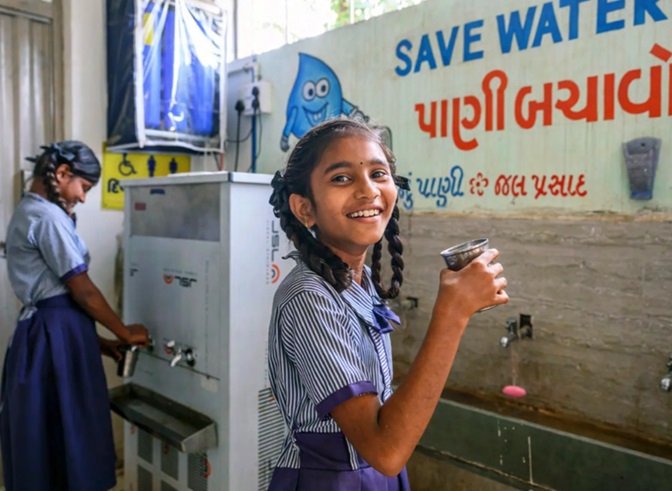
Some bits of good news – Incredible global progress on water, sanitation, and hygiene. The incredible comeback of Britain’s Barn Owls.
TOP STORIES The Military-Industrial Complex Is Killing Us All.
The omnicidal and unnecessary Nuclear Triad.
Energy buffs give small modular reactors a gigantic reality check.
Stockpiling nuclear weapons? That will do nothing for national security, Keir Starmer.
From the archives. Jeremy Corbyn was smeared for rejecting the use of nuclear weapons – but he was right.
Climate. Global warming happening at fastest speed in history. Climate crisis made May heatwaves 1.5C hotter in India, study says.
Noel’s notes. Time to get real about anti-semitism – the renewed danger. A voice of sanity in the UK– Jeremy Corbyn is back! Turning Point: The Bomb and the Cold War -Episode 5 – War Games – and then Glasnost, a welcome thaw.
AUSTRALIA. Opposition’s nuclear-energy policy would increase defence risk .Dutton to ditch Paris Agreement: analysis reveals nuclear impact on emissions.
Dutton’s nuclear policy a disaster for Australia. Dutton spruiks gas and nuclear to win back Victoria. Experts unite to condemn Coalition nuclear policy meltdown. Peter Dutton proposes decades of delay on climate: Federal Liberals still with no climate plan.
If regional communities don’t want a windfarm, why would they accept a nuclear power station? Resources Minister Madeleine King challenges Peter Dutton to name Western Australia nuclear power station sites.
The network of conservative think-tanks out to kill the switch to renewables.
Eraring deal signals death of baseload power in Australia, and Dutton’s nuclear fantasy.
Submarine boss refuses to answer questions over multi-billion-dollar AUKUS payments, A Detectable Subservience – Australia’s ill-fated nuclear submarine deal? Will Port Adelaide, Fremantle or Port Kembla be the Australian Chernobyl? Lockheed Martin deletes Australian F-35 ties.
Was ABC’s firing of Antoinette Lattouf influenced by a pro-Israel group? | Real Talk – Online.
NUCLEAR ISSUES
| ATROCITIES. Report: Vast Majority of Children Under 5 in Gaza Going Full Days Without Food. | CIVIL LIBERTIES. Journalist, critic of U.S. Ukraine policy, pulled off plane, U.S. seizes his passport. | CULTURE. How Nato seduced the European Left. The anti-war movement has fallen for a progressive circus. |
| ECONOMICS. Should USS Investment Builder invest in nuclear power? | EDUCATION. University of Ghent to cease all collaboration with Israeli institutions. | EMPLOYMENT. Allegations managing director of Scotland nuclear complex was ‘shipped out‘ over long-running pay dispute. |
| ENERGY. The ugly truth behind ChatGPT: AI is guzzling resources at planet-eating rates. | HEALTH. Radiation Exposure Compensation for impacted downwind communities is expiring Friday. Speaker Johnson, bring it to a vote.Samsung workers treated for exposure to radiation in South Korea |
| HISTORY. “In Ukraine, a war for memory.”. | LEGAL. ‘We Want Peace’: Spain Applies to Join ICJ Genocide Case Against Israel. | MEDIA. CNN’s Israel bias has been laid bare. But CNN is the norm, not the exception. |
| POLITICS Keir Starmer’s Trident triple lock: how Britain’s obsession with nuclear weapons has become part of election campaigns. Labour pledges to launch Great British Energy ‘within months’ of general election victory: it includes nuclear power. UK Labour talks up nuclear weapons to banish Corbyn’s shadow. UK’s nuclear deterrent key to Starmer’s plans to keep Britain safe.Scots urged to vote in anti-nuclear MPs to ‘take target off our backs’ We should aim for nuclear disarmament – Plaid leader, UK.Corporate lobbying heats up around governments’ nuclear power plans despite concerns from anti-nuclear advocates….ALSO AT https://nuclear-news.net/2024/06/06/1-b1-corporate-lobbying-heats-up-around-governments-nuclear-power-plans-despite-concerns-from-anti-nuclear-advocates/. 42 House Democrats Help GOP Pass Bill Targeting ICC Officials Over Israel. Dutch government is socialist when it comes to funding nuclear power. | POLITICS INTERNATIONAL and DIPLOMACY. Senior U.S. Diplomats, Journalists, Academics and Secretaries of Defense Say: the U.S. Provoked Russia in Ukraine. Peace talks without Russia ‘laughable’ – John Mearsheimer.Putin warns West over Ukraine armaments, nuclear arsenal in news conference. UN offers nuclear inspection deal to Iran’s new leadership. Nuclear watchdog votes to censure Iran for non-cooperation with inspectors. Why a substantive and verifiable no-first-use treaty for nuclear weapons is possible. |
| SAFETY. Restarting Zaporizhzhia nuclear plant ‘difficult to envisage’ during war, says IAEA chief. | SECRETS and LIES. President Biden’s subliminal D Day speech in France |
TECHNOLOGY. U.S. Micro Nuclear Reactors happy to join with NATO military.
URANIUM. The weapons potential of high-assay low-enriched uranium.
| WASTES. No nuke waste down under: Nuclear Free Local Authorities spokesperson receives assurance MOD still committed to decommissioning British nuclear subs at home. China urges long-term supervision over Japan’s radioactive water discharge. | WAR and CONFLICT. NATO plans Europe-wide escalation of war against Russia. Russia doesn’t need nuclear weapons to succeed: Putin. Ralph Nader -on Joe Biden: Pushing America Deeper into the Russian/Ukrainian War. Guterres warns humanity on ‘knife’s edge’ as AI raises nuclear war threat. Israel kills over 200 Palestinians to rescue 4 captives; U.S. allegedly involved in operation- https://www.youtube.com/watch?v=xJnF2CLbibw |
WEAPONS and WEAPONS SALES.
- US Bombs Used in Israeli Massacre of 40 in Gaza Refugee Camp. – https://www.youtube.com/watch?v=m2hjy3e1i2o
- U.S. Considers Expanded Nuclear Arsenal, a Reversal of Decades of Cuts – ALSO AT https://nuclear-news.net/2024/06/09/2-a-u-s-considers-expanded-nuclear-arsenal-a-reversal-of-decades-of-cuts/ US issues major nuclear weapons alert amid fears of all-out war: ‘If that day comes…’
- A Nuclear-Armed European Union? A Proposal Under Fire. European Nuclear Deterrent a Harebrained Illegal Proposal.
- Blinken Confirms Biden Change On Policy Toward Ukraine Using U.S. Weapons Inside Russia. France to give fighter jets to Ukraine – Macron.
- What’s Next for Battlefield America? Israel’s High-Tech Military Tactics Point the Way.
- China: US nuclear weapons in South Korea would undermine its security.
- Russia nuclear-powered submarine to visit Cuba amid rising tensions with US.
Experts unite to condemn Coalition nuclear policy meltdown.
Climate Media Centre
Energy and health experts as well as affected regional and global communities have condemned reports today of the Coalition’s energy policy which includes large nuclear reactors to be sited on mothballed coal-fired power stations across regional Australia, as well as a plan to rip up Australia’s commitments to the Paris Agreement.
The CSIRO’s recent GenCost report showed that renewable energy remains the fastest, safest and lowest-cost energy option is what we’re already building. Clean energy like solar and wind already makes up 40% of our national electricity grid, and one in three households have installed solar panels. Staying this course is the most responsible path toward slashing emissions this decade to avoid the worst impacts of climate change.
Andrew Bray, National Director, RE-Alliance – “The Federal Coalition’s energy policy is a false solution to Australia’s emission reduction commitments – the shift to a clean energy supply is already under way, with the latest data showing almost 40% of Australia’s electricity generation came from renewable energy sources in 2023.
“Policies relying on non-existent small modular reactor (SMR) nuclear technologies and large-scale nuclear plants that take decades to build would commit Australia to a polluting and unreliable fossil fuel powered system for the next 20 years. Our current trajectory will see these ageing plants close progressively over the next ten years.
“Renewable energy is here right now. Australians are increasingly using a cleaner and cheaper electricity supply, which we need to minimise the increasing impacts of climate change. Regional communities can greatly benefit from the rollout of renewable energy infrastructure – provided governments and industry are committed to sustained and significant investment in community engagement.
“We need to stick to the plan but shift our focus to ensure regional communities get the benefits they deserve from the roll-out.”
IEEFA Australia CEO, Amandine Denis Ryan, said: “The research by IEEFA’s nuclear experts calls into question whether nuclear makes financial sense for Australia, for a multitude of reasons – timing, cost, compatibility with renewables and liability issues to cite just a few.”
“Our research shows that nuclear reactors – both small modular reactors (SMRs) and gigawatt-scale reactors – in comparable countries have consistently taken longer and have been more expensive to build than expected. With over 50 years experience in this space, our analysts have researched nuclear projects around the world. For a country like Australia, starting from scratch, we expect that nuclear power reactors would not reach commercial operation before the 2040s, would come at a high cost, and require substantial government support.
“Nuclear plants in Australia cannot be built in time to replace Australia’s fleet of coal power stations, more than 90% of which are expected to retire in the next 10 years. Our research aligns with CSIRO and the regulators’ assessment that it would take at least 15 years to first production. The few existing SMRs in operation took over 12 years to build, despite original construction schedules of three to four years. Large reactors have a history of long delays, with most recent projects taking nine years or more from the first concrete pour, which in turn can only take place after years of planning, contracting and pre-construction works. This is in addition to the time required to develop the regulatory regime.
 Experts unite to condemn Coalition nuclear policy meltdownClimate Media CentreEnergy and health experts as well as affected regional and global communities have condemned reports today of the Coalition’s energy policy which includes large nuclear reactors to be sited on mothballed coal-fired power stations across regional Australia, as well as a plan to rip up Australia’s commitments to the Paris Agreement. Experts unite to condemn Coalition nuclear policy meltdownClimate Media CentreEnergy and health experts as well as affected regional and global communities have condemned reports today of the Coalition’s energy policy which includes large nuclear reactors to be sited on mothballed coal-fired power stations across regional Australia, as well as a plan to rip up Australia’s commitments to the Paris Agreement.The CSIRO’s recent GenCost report showed that renewable energy remains the fastest, safest and lowest-cost energy option is what we’re already building. Clean energy like solar and wind already makes up 40% of our national electricity grid, and one in three households have installed solar panels. Staying this course is the most responsible path toward slashing emissions this decade to avoid the worst impacts of climate change. To arrange interviews, please contact:Danielle Veldre +61 408972997 dan.veldre@climatemediacentre.org.auEmily Watkins +61 420622408 emily.watkins@climatemediacentre.org.au Andrew Bray, National Director, RE-AllianceAndrew has been working with regional communities hosting large scale renewable and transmission infrastructure for more than a decade. He can discuss the policy solutions that are needed to support regional communities to harness the benefits available in the shift to renewable energy.Location: Bungendore, NSW (near Canberra) “The Federal Coalition’s energy policy is a false solution to Australia’s emission reduction commitments – the shift to a clean energy supply is already under way, with the latest data showing almost 40% of Australia’s electricity generation came from renewable energy sources in 2023. “Policies relying on non-existent small modular reactor (SMR) nuclear technologies and large-scale nuclear plants that take decades to build would commit Australia to a polluting and unreliable fossil fuel powered system for the next 20 years. Our current trajectory will see these ageing plants close progressively over the next ten years. “Renewable energy is here right now. Australians are increasingly using a cleaner and cheaper electricity supply, which we need to minimise the increasing impacts of climate change. Regional communities can greatly benefit from the rollout of renewable energy infrastructure – provided governments and industry are committed to sustained and significant investment in community engagement. “We need to stick to the plan but shift our focus to ensure regional communities get the benefits they deserve from the roll-out.” IEEFA Australia CEO, Amandine Denis Ryan, said: “The research by IEEFA’s nuclear experts calls into question whether nuclear makes financial sense for Australia, for a multitude of reasons – timing, cost, compatibility with renewables and liability issues to cite just a few.” “Our research shows that nuclear reactors – both small modular reactors (SMRs) and gigawatt-scale reactors – in comparable countries have consistently taken longer and have been more expensive to build than expected. With over 50 years experience in this space, our analysts have researched nuclear projects around the world. For a country like Australia, starting from scratch, we expect that nuclear power reactors would not reach commercial operation before the 2040s, would come at a high cost, and require substantial government support. “Nuclear plants in Australia cannot be built in time to replace Australia’s fleet of coal power stations, more than 90% of which are expected to retire in the next 10 years. Our research aligns with CSIRO and the regulators’ assessment that it would take at least 15 years to first production. The few existing SMRs in operation took over 12 years to build, despite original construction schedules of three to four years. Large reactors have a history of long delays, with most recent projects taking nine years or more from the first concrete pour, which in turn can only take place after years of planning, contracting and pre-construction works. This is in addition to the time required to develop the regulatory regime. “Nuclear plants are notorious for cost overruns. Our analysts found that SMRs in operation or under construction cost three to seven times more than originally planned. Proposed SMRs in the US have also already seen cost estimates blow out by between two and four times in recent years. Large-scale reactors often face cost overruns as well. The Flamanville EPR in France is an extreme example of this, with costs having more than quadrupled despite France’s deep expertise on nuclear. |
“Nuclear plants are not a good complement for renewable generation. They can be flexible within a range, however the economics rely upon being operated in ‘baseload’ mode. In the 2040s, when the first nuclear plants could begin operating, the Australian Energy Market Operator expects that over 90% of generation will be supplied by variable renewables (wind and solar), and that the average annual utilisation factor of gas generation assets will be between 3% and 15% to complement them. Our analysts estimate that at a utilisation factor below 25%, the cost for electricity supplied by an American SMR would increase to more than AUD 600/MWh, if it was even possible to achieve such a low utilisation operationally.
| Experts unite to condemn Coalition nuclear policy meltdownClimate Media CentreEnergy and health experts as well as affected regional and global communities have condemned reports today of the Coalition’s energy policy which includes large nuclear reactors to be sited on mothballed coal-fired power stations across regional Australia, as well as a plan to rip up Australia’s commitments to the Paris Agreement. The CSIRO’s recent GenCost report showed that renewable energy remains the fastest, safest and lowest-cost energy option is what we’re already building. Clean energy like solar and wind already makes up 40% of our national electricity grid, and one in three households have installed solar panels. Staying this course is the most responsible path toward slashing emissions this decade to avoid the worst impacts of climate change. To arrange interviews, please contact:Danielle Veldre +61 408972997 dan.veldre@climatemediacentre.org.auEmily Watkins +61 420622408 emily.watkins@climatemediacentre.org.au Andrew Bray, National Director, RE-AllianceAndrew has been working with regional communities hosting large scale renewable and transmission infrastructure for more than a decade. He can discuss the policy solutions that are needed to support regional communities to harness the benefits available in the shift to renewable energy.Location: Bungendore, NSW (near Canberra) “The Federal Coalition’s energy policy is a false solution to Australia’s emission reduction commitments – the shift to a clean energy supply is already under way, with the latest data showing almost 40% of Australia’s electricity generation came from renewable energy sources in 2023. “Policies relying on non-existent small modular reactor (SMR) nuclear technologies and large-scale nuclear plants that take decades to build would commit Australia to a polluting and unreliable fossil fuel powered system for the next 20 years. Our current trajectory will see these ageing plants close progressively over the next ten years. “Renewable energy is here right now. Australians are increasingly using a cleaner and cheaper electricity supply, which we need to minimise the increasing impacts of climate change. Regional communities can greatly benefit from the rollout of renewable energy infrastructure – provided governments and industry are committed to sustained and significant investment in community engagement. “We need to stick to the plan but shift our focus to ensure regional communities get the benefits they deserve from the roll-out.” IEEFA Australia CEO, Amandine Denis Ryan, said: “The research by IEEFA’s nuclear experts calls into question whether nuclear makes financial sense for Australia, for a multitude of reasons – timing, cost, compatibility with renewables and liability issues to cite just a few.” “Our research shows that nuclear reactors – both small modular reactors (SMRs) and gigawatt-scale reactors – in comparable countries have consistently taken longer and have been more expensive to build than expected. With over 50 years experience in this space, our analysts have researched nuclear projects around the world. For a country like Australia, starting from scratch, we expect that nuclear power reactors would not reach commercial operation before the 2040s, would come at a high cost, and require substantial government support. “Nuclear plants in Australia cannot be built in time to replace Australia’s fleet of coal power stations, more than 90% of which are expected to retire in the next 10 years. Our research aligns with CSIRO and the regulators’ assessment that it would take at least 15 years to first production. The few existing SMRs in operation took over 12 years to build, despite original construction schedules of three to four years. Large reactors have a history of long delays, with most recent projects taking nine years or more from the first concrete pour, which in turn can only take place after years of planning, contracting and pre-construction works. This is in addition to the time required to develop the regulatory regime. “Nuclear plants are notorious for cost overruns. Our analysts found that SMRs in operation or under construction cost three to seven times more than originally planned. Proposed SMRs in the US have also already seen cost estimates blow out by between two and four times in recent years. Large-scale reactors often face cost overruns as well. The Flamanville EPR in France is an extreme example of this, with costs having more than quadrupled despite France’s deep expertise on nuclear. “Nuclear plants are not a good complement for renewable generation. They can be flexible within a range, however the economics rely upon being operated in ‘baseload’ mode. In the 2040s, when the first nuclear plants could begin operating, the Australian Energy Market Operator expects that over 90% of generation will be supplied by variable renewables (wind and solar), and that the average annual utilisation factor of gas generation assets will be between 3% and 15% to complement them. Our analysts estimate that at a utilisation factor below 25%, the cost for electricity supplied by an American SMR would increase to more than AUD 600/MWh, if it was even possible to achieve such a low utilisation operationally. “One of the major risks for investors in nuclear assets is the size and allocation of liability in case of an accident, with international conventions stating that operators of nuclear installations are liable should an incident occur. Such liabilities are very challenging for a company to carry by itself. In the United States, this issue was addressed with the Price–Anderson Nuclear Industries Indemnity Act (1957) by creating a shared insurance pool, now totalling AUD 22.5 billion across the almost 100 reactors covered. The US Government is exposed to costs beyond the insurance pool. Full costs associated with the 2011 Fukushima disaster could be as high as AUD 770 billion. It is unclear how Australia would be able to manage these liabilities without very material government underwriting of risk.” |
Mia Pepper, Campaign Director at the Conservation Council of WA said: “The Coalition’s nuclear power plans reported today are a clear plan to distract and delay from real action on climate change.
“Nuclear power is expensive, slow and dangerous and simply cannot deliver the energy needed in the time frame we have to decarbonise.
“WA is currently exiting coal and well advanced on the transition to cheaper, safer, cleaner alternatives like renewables. It makes no economic, environmental or energy sense to change direction now.
“The WA Liberals have already ruled out nuclear power for WA, saying it is too expensive and doesn’t make sense for WAs grid. Peter Dutton’s irresponsible reactor plan has failed to convince his own party – and it certainly hasn’t and won’t convince the wider WA community. The Liberal party energy policy is nothing more than a dangerous distraction and delay from the much needed transition out of fossil fuels.”
“Nuclear is thirsty, requiring huge volumes of water for cooling, in an uncertain climate future nuclear also becomes one of the most dangerous and unreliable forms of energy we have seen these issues emerge in nuclear powered countries like France.
There remain significant and unresolved issues with the management of High-Level nuclear waste, insurmountable issues with security, and deep connections to the production of weapons grade materials. The risks of things going wrong are catastrophic.”
Masayoshi Iyoda – 350.org Japan Campaigner, said: “You cannot call nuclear clean energy, and completely ignore the voices of the victims of nuclear disasters and the burden on future generations. Nuclear is simply too costly, too risky, too undemocratic, and too time-consuming. We already have cheaper, safer, democratic, and faster solutions to the climate crisis, and they are renewable energy and energy efficiency.”
Joseph Sikulu – 350.org Pacific Managing Director said: “The legacy of nuclear power in the Asia Pacific region is a harmful one, as is the legacy of climate-destroying fossil fuels. The possibility of Australia venturing into nuclear is dangerous and concerning, and a distraction from what we should really be focused on – the just transition to renewable energy.”
Dutton spruiks gas and nuclear to win back Victoria
Gus McCubbing, AFR, Jun 7, 2024
“……………………… During a wide-ranging speech in which he spruiked the safety credentials of nuclear small modular reactors, attacked former Victorian premier Daniel Andrews and the Suburban Rail Loop, and claimed that teal MPs are Greens in disguise, Mr Dutton on Friday told a Melbourne business lunch the Liberals were “back in town”.
……………………………………. Mr Dutton said Australia must embrace next-generation nuclear technologies as part of its energy mix to achieve cheaper, consistent and cleaner power, despite the CSIRO last month warning the first large-scale nuclear power plant could cost as much as $17 billion in today’s dollars, and would not be operational until at least 2040.
He claimed that a 470-megawatt small modular reactor produces waste the size of a Coca-Cola can each year, with zero emissions…………….

COMMENT. While the toxic radioactive residue from small nuclear reactors IS small in volume – it is so highly toxic that it requires larger space between used fuel rods in disposal – so ending up with an equally dangerous waste problem.
When asked why his former government never moved to roll out nuclear energy during its nine years in office, Mr Dutton said there was no political appetite before AUKUS.
“I don’t think it would have been possible for us to adopt the position that we have if the Labor Party hadn’t signed up to nuclear [powered] submarines,” Mr Dutton said… https://www.afr.com/politics/dutton-spruiks-gas-and-nuclear-to-win-back-victoria-20240605-p5jjcl
If regional communities don’t want a windfarm, why would they accept a nuclear power station?
Guardian, Gabrielle Chan, 4 June 24
The Coalition’s energy policy is leveraged on regional discontent about renewables. But many farmers don’t want nuclear in their back yard either.
Here’s the thing about the Coalition’s latest nuclear policy. It tries to use one of the most contentious issues in rural areas, which is the rollout of renewables and the electricity transmission lines to carry energy around the country, to push an even more controversial energy transition.
Because nuclear power stations would also be built in the regions. And if you’re worried about renewables, hands up who wants a nuclear reactor next door?
My generation grew up with the US-Russian cold war and the Doomsday Clock.
While the conversation and the technology of nuclear energy has moved on, the cost, complexity and construction time has not, as the CSIRO found in a report released last month………………………
If there is one thing that I have learned from calling a country town home, it is that people are very attached to their place and how it is identified.
Not everyone opposes renewables but there is a significant portion of people who don’t want them in their own back yard. Others are quietly making their fortunes, having struck the formula for drought-proofing their businesses for decades to come. If the Big Dry strikes, you will probably find them on a beach somewhere.
That is because annual payments to host turbines start from $40,000 each though I know of agreements that are much higher, especially when communities collectively bargain. The New South Wales government pays landowners $200,000 to host transmission lines in annual instalments over 20 years, with Victoria paying the same over 25 years.
Those payments have crept up because of ongoing regional protests. That action has been amplified by poor community consultation from some energy companies highlighted in the Australian Energy Infrastructure Commissioner Andrew Dyer’s report. He found the rollout had created “material distrust” of developers in some communities.
Discontent is also being amplified for political purposes, including by David Littleproud, Barnaby Joyce and Matt Canavan, who spoke at a rally against renewables at parliament house.
The politics is clear. For starters, the long lead time kicks the nuclear energy can down the road to 2040. The Liberals cannot walk naked into the next election without at least a fig leaf for a net zero policy. The Nationals, on the other hand, don’t give a toss about net zero. They just want to extract the funding from the Liberals in compensation for hosting any technology that delivers on the net zero promise. Nuclear can be that fig leaf.
It is also true the Nats and the country Liberals will have to wear any pushback on where nuclear facilities are placed. They won’t be able to campaign against their own policy like some do on renewables.
Peter Dutton has not, as yet, specifically named any potential sites for a nuclear power station but he has pointed to current coal production facilities that are due to close. His announcement is imminent, perhaps even after the party room meeting on Tuesday.
Possible sites include the Hunter Valley in NSW; Anglesea and Latrobe Valley in Victoria; Port Augusta in South Australia; Collie in Western Australia; and perhaps Tarong in central Queensland – within Littleproud’s Maranoa electorate.
Since then the game has begun to get Coalition MPs to commit to host or rule out a reactor in their own back yard.
This is a bit silly really, because apart from the ACT, which renewable-supporting metropolitan MPs could commit to hosting a wind turbine or a solar farm in their city seats?
Littleproud and Joyce have both indicated their approval to host a reactor. But a dozen others would not commit when asked by Nine newspapers.
Keith Pitt told Nine he supported lifting the moratorium on nuclear power but, alas, there were technical restrictions, including earthquakes in his electorate. But if Pitt is worried about his area, other MPs might be scurrying to the Geoscience Australia map of faultlines for their own get-out-of-jail-free card.
Pitt’s seat of Hinkler looks like a shoo-in compared to the faultlines under Darren Chester’s Gippsland electorate, which covers the Latrobe Valley in Victoria, or the Liberal MP Rick Wilson’s seat of O’Connor, which covers Collie in WA…………………………………………..
Once you combine the feelings of the existing populations with younger populations, does that add up to support for nuclear over renewables in these changing back yards? I wouldn’t bet on it. https://www.theguardian.com/australia-news/article/2024/jun/04/liberal-coalition-nuclear-power-plant-policy-renewable-energy
“We haven’t been consulted:” Coal town on transition to renewables is not interested in nuclear
ReNewEconomy, Aaron Bunch, Jun 2, 2024
A Western Australian coal town lined up as a potential site for a nuclear power station by the federal Coalition says the plan is a distraction as it works to ditch fossil fuels and transition to renewables and storage.
The federal coalition has floated plans to add nuclear energy to the power grid should it win government by building reactors at sites currently home to either coal or gas-fired power stations.
The sites have not yet been announced but the list is widely reported to include Collie, 200km south of Perth and home to about 7500 people, where a state government-supported pivot away from the coal industry is underway. It is the site for two of the country’s biggest battery storage projects.
Shire President Ian Miffling said the state $662 million Just Transition plan had created a “buzz” in the town and the federal coalition’s nuclear power plan hadn’t received much attention.
“Collie hasn’t been consulted at all and we don’t know any of the details of the policy and what they propose, so we’ve not given it too much credence at this stage,” he told AAP…………………
Mr Miffling said locals were focused on bolstering their skills for jobs in new industries, like the recently approved green steel mill and Synergy’s $1.6 billion battery to store renewable energy once coal is retired as an energy supply in 2030.
“The potential for nuclear, which would be a long way down the track, is a bit of a distraction and it really doesn’t need us to spend too much time talking about it at this point,” he said………………..
Local state Labor MP Jodie Hanns said federal opposition leader Peter Dutton and the coalition were out of touch with what was happening on the ground in Collie and floating plans for a reactor in the town was “arrogant and disrespectful”……………………….
“No one I’ve spoken to is in support of a nuclear reactor being put in Collie … my house will be up for sale if this becomes a reality.”
AMWU state secretary Steve McCartney said Collie workers had been discussing for years what they wanted for the town after coal mining ended, “and I can guarantee you one of the things wasn’t a nuclear power station”…………… https://reneweconomy.com.au/we-havent-been-consulted-coal-town-on-transition-to-renewables-is-not-interested-in-nuclear
Summary of Australian federal and state/territory nuclear/uranium laws and prohibitions.

Current prohibitions on nuclear activities in Australia: a quick guide
From Jim Green, 30 May 2024
https://www.aph.gov.au/About_Parliament/Parliamentary_departments/Parliamentary_Library/pubs/rp/rp2324/Quick_Guides/NuclearActivitiesProhibitions
PDF Version [564KB]
Dr Emily Gibson
Science, Technology, Environment and Resources; Law and Bills Digest Sections
This quick guide provides an overview of current prohibitions on nuclear activities under Commonwealth, state and territory laws. It considers the primary legislation most relevant to current policy debates about domestic nuclear energy only and consequently does not consider recent changes to Commonwealth law to facilitate Australia’s acquisition of conventionally-armed, nuclear-powered submarines under the AUKUS partnership.[1] It also does not include consideration of Australia’s international obligations in respect of nuclear activities, including the safeguarding of nuclear materials and the non-proliferation of nuclear weapons.
If a domestic nuclear energy industry were to progress, it is expected that a comprehensive framework for the safety, security and safeguarding of the related nuclear material would need to be legislated to accommodate such an industry.[2] Consideration of these issues is beyond the scope of this paper.
What are nuclear activities?
A nuclear activity is any process or step in the utilisation of material capable of undergoing nuclear fission; that is, any activities in the nuclear fuel cycle.[3] Nuclear activities therefore include:
- mining of nuclear or radioactive materials such as uranium and thorium milling, refining, treatment, processing, reprocessing, fabrication or enrichment of nuclear material
- the production of nuclear energy
- the construction, operation or decommissioning of a mine, plant, facility, structure, apparatus or equipment used in the above activities
- the use, storage, handling, transportation, possession, acquisition, abandonment or disposal of nuclear materials, apparatus or equipment.
Prohibitions on nuclear activities
Commonwealth
Nuclear activities are regulated under the Australian Radiation Protection and Nuclear Safety Act 1998 (ARPANS Act) and the Environment Protection and Biodiversity Conservation Act 1999 (EPBC Act).
Australian Radiation Protection and Nuclear Safety Act 1998
The ARPANS Act establishes a licensing framework for controlled persons (including a Commonwealth entity or a Commonwealth contractor) in relation to controlled facilities (a nuclear installation, a prescribed radiation facility, or a prescribed legacy site).[4] A nuclear installation includes a nuclear reactor for research or the production of radioactive materials for industrial or medical use, and a radioactive waste storage or disposal facility with an activity that is greater than the activity level prescribed by the Australian Radiation Protection and Nuclear Safety Regulations 2018.[5]
The ARPANS Act allows the CEO of the Australian Radiation Protection and Nuclear Safety Agency (ARPANSA) to issue licences for controlled facilities.[6] In issuing a facility licence, the CEO ‘must take into account the matters (if any) specified in the regulations, and must also take into account international best practice in relation to radiation protection and nuclear safety’.[7]
However, subsection 10(2) of the Act expressly prohibits the CEO from granting a licence for the construction or operation of any of the following nuclear installations: a nuclear fuel fabrication plant; a nuclear power plant; an enrichment plant; or a reprocessing facility.[8] This prohibition does not appear to apply to a radioactive waste storage or disposal facility.
Environment Protection and Biodiversity Conservation Act 1999
The EPBC Act establishes 9 matters of national environmental significance (MNES) and provides for the assessment and approval of these actions if the action has, will have, or is likely to have a significant impact on the MNES.[9] ‘Nuclear actions’ are one of the MNES.[10] Where a nuclear action is determined to be a controlled action (that is, one likely to have a significant impact and requiring assessment and approval under the Act), the assessment considers the impact of a nuclear action on the environment generally (including people and communities).[11]
The Act establishes offences for the taking of nuclear actions in those circumstances.[14]
Similarly, the Act provides that a relevant entity (as set out below) must not take an action (including a nuclear action) unless a requisite approval has been obtained under Part 9 of the Act or a relevant exception applies:
- a person must not take a relevant action on Commonwealth land that has, will have or is likely to have a significant impact on the environment[15]
- a person must not take a relevant action outside Commonwealth land if the action has, will have or is likely to have a significant impact on the environment on Commonwealth land[16]
- the Commonwealth or a Commonwealth agency must not take inside or outside the Australian jurisdiction an action that has, will have or is likely to have a significant impact on the environment inside or outside the Australian jurisdiction.[17]
The Act establishes offences and civil penalty provisions for the taking of an action in those circumstances.[18]
Subsection 140A(1) prohibits the Minister for the Environment from granting an approval for a nuclear action relating to specified nuclear installations. These installations are a nuclear fuel fabrication plant, a nuclear power plant, an enrichment plant, and a reprocessing facility.
Potential reform of the nuclear action trigger
The second independent review of the EPBC Act, completed in October 2020 by Professor Graeme Samuel (Samuel Review), recommended that the nuclear actions MNES be retained.[19] The review recommended that ‘the EPBC Act and the regulatory arrangements of [ARPANSA] should be aligned, to support the implementation of best-practice international approaches based on risk of harm to the environment, including the community’.[20]
In 2022, the Government’s Nature Positive Plan adopted this approach and stated, ‘[a] uniform national approach to regulation of radiation will be delivered through the new National Environmental Standards’.
In February 2024, a policy draft of the National Environmental Standard for Matters of National Environmental Significance indicates that ‘nuclear actions’ will be renamed ‘radiological exposure actions’ and states:
Relevant decisions must:
Not be inconsistent with the ARPANSA national codesfor protection from radiological exposure actions including in relation to:
- human health and environmental risks and outcomes; and. radiological impacts on biological diversity,
- the conservation of species and the natural health of ecosystems.[22]
States and territories
States and territories generally regulate nuclear and radiation activities through either the health or the environmental protection portfolios. The relevant legislation provides for the protection of health and safety of people, and the protection of property and the environment, from the harmful effects of radiation by establishing licensing regimes to regulate the possession, use, and transportation of radiation sources and substances.[23] Mining of radioactive materials is regulated through the resources portfolio.
In addition, as outlined below, the states and territories have legislation prohibiting certain nuclear activities or the construction and operation of certain nuclear facilities. Importantly, where permitted, nuclear activities (including mining) would also be subject to assessment and approvals under a range of other legislation, including planning and environmental impact assessment, native title and cultural heritage, and radiation licensing laws at the state or territory and Commonwealth level.
New South Wales
Exploration for uranium has been permitted under the Mining Act 1992 since 2012.[24] However, the mining of uranium is prohibited by the Uranium Mining and Nuclear Facilities (Prohibitions) Act 1986 (NSW Prohibitions Act).[25]
The NSW Prohibitions Act also prohibits the construction and operation of certain nuclear facilities, including uranium enrichment facilities, fabrication and reprocessing plants, nuclear power plants, and storage and waste disposal facilities (other than for the storage and disposal of waste from research or medical purposes, or the relevant radiological licensing Act).[26]
Northern Territory
The Atomic Energy Act 1953 (Cth) provides that the Commonwealth owns all uranium found in the territories.[27] Uranium exploration and mining in the Northern Territory (NT) is regulated under both NT mining laws (the Mineral Titles Act 2010 and the Mining Management Act 2001) and the Atomic Energy Act.[28] The Ranger Uranium Mine operated until 2021 and is now undergoing rehabilitation.[29]
The Nuclear Waste Transport, Storage and Disposal (Prohibition) Act 2004 (NT) prohibits the construction and operation of nuclear waste storage facilities, as well as the transportation of nuclear waste for storage at a nuclear waste storage facility in the NT.[30] Nuclear waste is defined as including waste material from nuclear plants or the conditioning or reprocessing of spent nuclear fuel.[31]
This Act also:
- prohibits public funds from being expended, granted or advanced to any person for, or for encouraging or financing any activity associated with the development, construction or operation of a nuclear waste storage facility
- would require the NT Parliament to hold an inquiry into the likely impact of a nuclear waste storage facility proposed by the Commonwealth on the cultural, environmental and socio‑economic wellbeing of the territory.[32]
Queensland
Exploration for and mining of uranium are permitted under the Mineral Resources Act 1989. However, it has been government policy to not grant mining leases for uranium since 2015.[33] The government policy ban extends to the treatment or processing of uranium within the state.[34]
The Nuclear Facilities Prohibition Act 2007, in similar terms to the NSW Prohibitions Act, prohibits the construction and operation of nuclear reactors and other nuclear facilities in the nuclear fuel cycle.[35]
Unlike other state and territory prohibition legislation, the Nuclear Facilities Prohibition Act would require the responsible Queensland Minister to hold a plebiscite to gain the views of the Queensland population if the Minister was satisfied that the Commonwealth Government has taken, or is likely to take, steps to amend a Commonwealth law or exercise a power under a Commonwealth law to facilitate the construction of a prohibited nuclear facility, or if the Commonwealth Government adopts a policy position of supporting or allowing the construction of a prohibited nuclear facility in Queensland.[36]
South Australia
The exploration and mining of radioactive material (including uranium) is permitted in South Australia (SA), subject to approvals under the Mining Act 1971 and the Radiation Protection and Control Act 2021 (RP&C Act).[37] For example, uranium is mined at Olympic Dam, Four Mile and Honeymoon. However, conversion and enrichment activities are prohibited by the RP&C Act.[38]
The Nuclear Waste Storage Facility (Prohibition) Act 2000 prohibits the construction or operation of a nuclear waste storage facility, and the import to SA or transport within SA of nuclear waste for delivery to a nuclear waste storage facility.[39]
The Nuclear Waste Storage Facility (Prohibition) Act prohibits the SA Government from expending public funds to encourage or finance the construction or operation of nuclear waste storage facilities.[40] The Act would also require the SA Parliament to hold an inquiry into the proposed construction or operation of a nuclear waste storage facility in SA authorised under a Commonwealth law.[41]
Tasmania
The exploration and mining of atomic substances (which includes uranium and thorium) is permitted under the Mineral Resources Development Act 1995 (Tas), subject to approval.
Victoria
The Nuclear Activities (Prohibitions) Act 1983 prohibits a range of activities associated with the nuclear fuel cycle, including the exploration and mining of uranium and thorium, and the construction or operation of facilities for the conversion or enrichment of any nuclear material, nuclear reactors and facilities for the storage and disposal of nuclear waste from those prohibited activities.[42]
Western Australia
Exploration for and mining of uranium is permitted under the Mining Act 1978. A state policy ban on mining approvals was overturned in November 2008;[43] however, this was reinstated in June 2017, with a ‘no uranium’ condition on future mining leases.[44] The ban does not apply to 4 projects that had already been approved by the previous government.
The Nuclear Activities Regulation Act 1978 aims to protect the health and safety of people and the environment from possible harmful effects of nuclear activities, including by regulating the mining and processing of uranium and the equipment used in those processes. The Nuclear Waste Storage and Transportation (Prohibition) Act 1999 also prohibits the storage, disposal or transportation in Western Australia of certain nuclear waste (including waste from a nuclear plant or nuclear weapons).[45]
Can the Commonwealth override a state ban on nuclear activities?
The Commonwealth Parliament only has the power to make laws in relation to matters specified in the Constitution of Australia, including in sections 51, 52 and 122. Assuming the Commonwealth has a sufficient head of power to legislate, section 109 of the Constitution specifically provides for circumstances in which there might be an inconsistency between Commonwealth and state laws:
When a law of a State is inconsistent with a law of the Commonwealth, the latter shall prevail, and the former shall, to the extent of the inconsistency, be invalid.
Therefore, even though some states have enacted prohibitions on certain nuclear activities within their jurisdictions, the Commonwealth Parliament could enact specific legislation in relation to nuclear activities so that such activities can take place within those jurisdictions. One such example is the National Radioactive Waste Management Act 2012 (Cth), which provides for the establishment of a national radioactive waste management facility at a site to be declared by the responsible Commonwealth Minister. Section 12 of that Act provides that state and territory laws have no effect in regulating, hindering, or preventing such a facility
Further information
- ‘Who we regulate’, ARPANSA
- ‘State & territory regulators’, ARPANSA
- ‘Uranium and thorium’, in Geoscience Australia, Australia’s Energy Commodity Resources, 2023 Edition, (Canberra: Geoscience Australia, 2023).
1 This month

of the week – Australians for War Powers Reform (AWPR)
To see nuclear-related stories in greater depth and intensity
 Antinuclear