Australia’s unrecognised radiation victims of Montebello atomic bomb tests
Pat Coverley, now 83, saw most of his shipmates die young, “of various cancers suspected to be linked to radiation”
The [Royal Commission] findings delivered a scathing indictment of the manner with which these tests were conducted
Despite the findings, Drewe says the British and Australian governments have ever since fobbed off allegations that servicemen were exposed to high levels of radiation, making it almost impossible to mount a successful compensation claim.
One man’s island SMH, September 22, 2012 “……..Drewe’s arrival by dinghy to the still-contaminated island
(visit limit: one hour) was the eerie culmination of a lifelong obsession with the Montebello Islands. “It amazes me how few
Australians know about these nuclear tests Britain arrogantly conducted in our backyard,” he declares.
His own fixation began as a Perth nine-year-old, being ordered home from school immediately by his mother, who was “worried to blazes” because the British had just exploded their first nuclear bomb on the Montebellos.
A trail of coincidences kept occurring in Drewe’s life, fuelling his
concern over the Montebello tests’ ongoing effect on the environment,
and for the personnel who observed them clad only in shorts and
sandals……
On the highest point of the 1000 scrubby hectares that make up Hermite
Island sits the gutted remains of the old British military operational
headquarters, where personnel triggered and observed the three atomic
bombs. Drewe clambered up the spinifex-clumped hill, “passing corroded
drums, rusty galvanised iron, British beer bottles; relics the British
bomb squad hadn’t bothered to clean up”. Reaching the grim concrete
building, he silently stared ahead. “The whole Montebello archipelago
unfolded in the sun, like a pirate’s treasure chart … It was hard to
imagine a more beautiful or tranquil nuclear test site.”
Twenty-five years earlier, Drewe had met a former Australian navy
sailor who, at 22, had been sent to Montebello for eight months to
observe that first test. Pat Coverley, now 83, saw most of his shipmates die young, “of various cancers suspected to be linked to radiation”, says Drewe, who also knew the worry throughout families of
genetic problems…
Coverley told Drewe that as well as being given no health or safety
warnings, “We weren’t issued with any protective clothing. On the day
the bomb exploded, we were wearing the usual shorts and toeless
sandals – no shirts, hats or sunglasses. They called us up on deck to
watch. We weren’t told anything about radioactivity and its physical
effects … there was a flash … then a bundle of smoke more like an
enormous bushfire than a mushroom shape. It took minutes for the huge
roar to reach us and even longer for the sound to abate.”
In 1985, with rising amazement, Drewe followed the progress of the
royal commission into the nuclear tests at Maralinga, Emu Field and
Montebello, headed by Justice James McClelland. The findings delivered
a scathing indictment of the manner with which these tests were
conducted. The British government was criticised for failing to
disclose key information to allow the Australian government to make
informed decisions about tests at the sites.
Despite the findings, Drewe says the British and Australian
governments have ever since fobbed off allegations that servicemen
were exposed to high levels of radiation, making it almost impossible
to mount a successful compensation claim. Official lack of concern was
not only shown towards people. “Countless thousands of turtles,
dugongs, dolphins, seabirds and fish died from the Montebello blasts,”
Drewe adds, “but no follow-up tests were ever conducted for radiation
effects, such as mutations, on any animals, birds or fish. Nor were
people warned off eating them. The only surveys done were casual
encounters when two navy ships just happened to be there, some 23 and
38 years later.”….
The unpleasantness was still in the present on Alpha Island, three
kilometres away and ground zero in 1956 for the third and biggest
bomb, as Drewe discovered on his side trip by dinghy. “An official
warning limits visits to one hour, as radiation effects on health are
cumulative,” he explains. “Visitors are instructed not to disturb soil
or handle any objects as they may still be radioactive. The only
structure on Alpha is a triangular obelisk, rather like a gravestone.
It states: ‘A British atomic weapon was test-exploded above this point
in 1956.’ ”: http://www.smh.com.au/lifestyle/one-mans-island-20120917-2612g.html#ixzz27EKIT9py
1 Comment »
Leave a reply to Naomi Whiting Cancel reply
1 This month.


PETITION – To: Prime Minister Anthony Albanese and the Australian Labor Government
Chernobyl: The Lost Tapes – A good documentary on Chernobyl on SBS available On Demand for the next 3 weeks– https://www.sbs.com.au/ondemand/tv-program/chernobyl-the-lost-tapes/235274195556
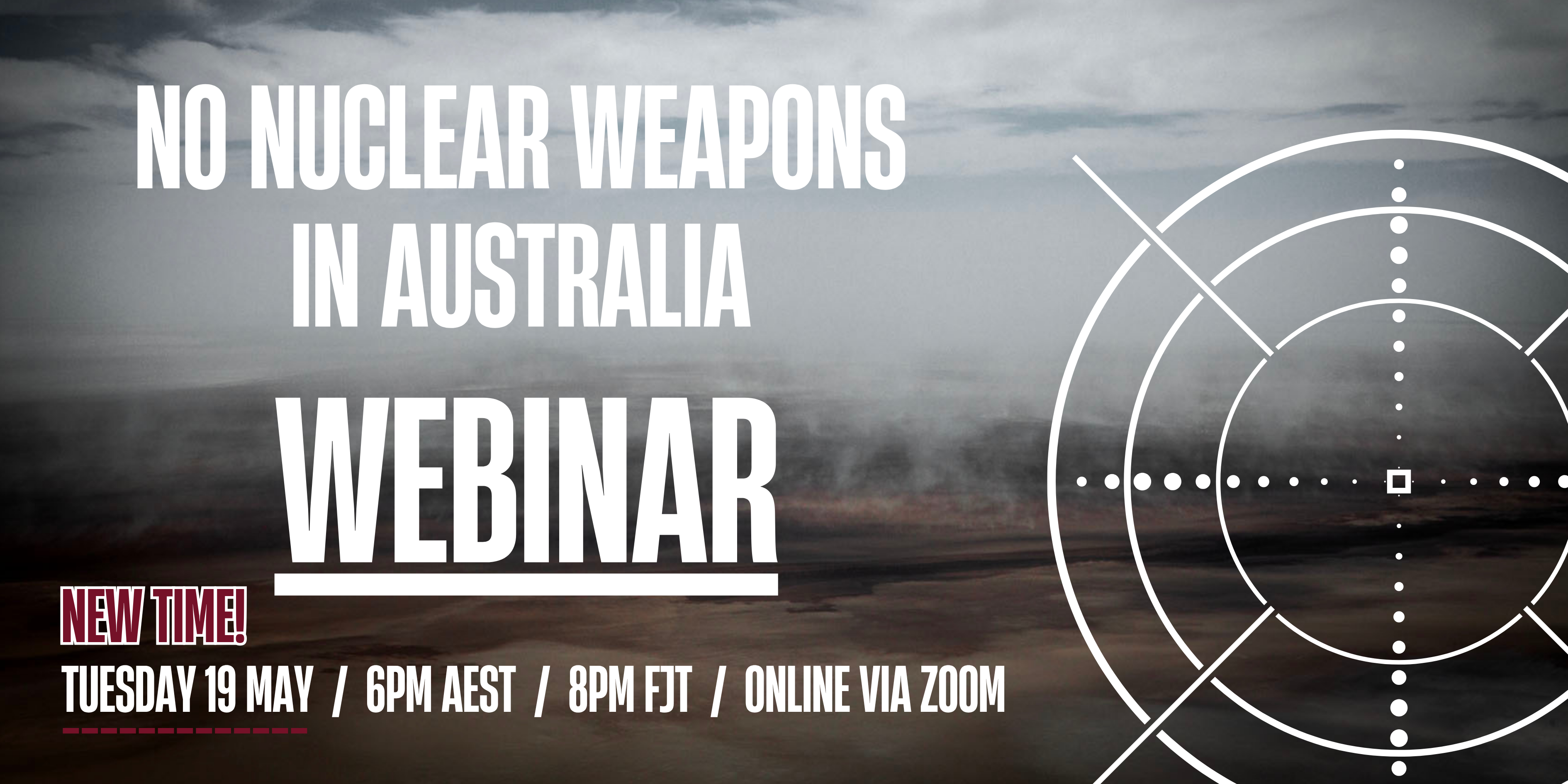
19 May – Webinar- Webinar: No Nuclear Weapons in Australia
Start: 2026-05-19 18:00:00 UTC Canberra, Melbourne, Sydney (GMT+10:00)
End: 2026-05-19 19:30:00 UTC Canberra, Melbourne, Sydney (GMT+10:00)
20 May – Webinar – The dangerous world of AUKUS, US, military occupation and suppression of dissent

National Webinar, 20th May, 2026, 6.30pm AEST. Confronting laws restricting/suppressing protest speech and action
Speakers: Former Sen. Rex Patrick, Lawyer Nick Hanna ,Arthur Rorris ,Jorgen Doyle, Sen David Shoebbridge,
Facilitator Kelley Tranter.

of the week – Australians for War Powers Reform (AWPR)
To see nuclear-related stories in greater depth and intensity
 Antinuclear
this is such an awful tragedy My dad was also subjected to these atomic tests on monte bello island His name was David Whiting I pray for you that the day will come that the government will acknowledge what they had done My dad was a hero as you are and all the servicemen that were involved in this ‘sick’ experiment Regards Naomi
LikeLike