 Fukushima 311 Watchdogs

Russia and Japan are set to team up to become leaders in transgenerational healthcare research, to help prevent the effects of nuclear catastrophes being passed genetically from one generation to the next indefinitely.
Both Russia and Japan have a stake in this research, given that both countries are still dealing with radiation exposure via the events in Nagasaki, Hiroshima, Fukushima and Chernobyl. “This research is extremely important in relation to future generations we are responsible for,” said Nomura Taisei, Radiation Biology and Medical Genetics Department Head at National Institute for Biomedical Research at Osaka University.
The professor was at the 15th Congress on Innovation Technologies in Pediatrics and Pediatric Surgery which was held in Moscow from October 25-27, making a report on trasngenerational healthcare. His report shines a light on how exposure to radiation is passed down through generations via DNA mutation.
When DNA is damaged, the consequences for future…
View original post 302 more words
November 4, 2016
Posted by Christina Macpherson |
Uncategorized |
Leave a comment
 The annual United Nations climate change conference starts in Marrakech on Monday and will also serve as the first official meeting of parties to the Paris agreement struck in 2015. Even with the Paris climate deal, world will warm 3.4°C by 2100. Famine, war and disease – a grim future if climate change is not stalled. Drifting into Arctic Un-Winter. Experts doubt that geo-engineering will succeed in halting climate change. Leonardo Di Caprio’s new film “Before The Flood” debunks climate myths.
Mikhail Gorbachev leads, in appeal for dialogue, and reason.
Australia
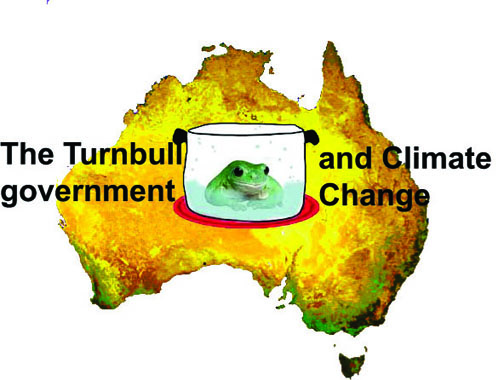
The danger for Australia as Prime Minister Turnbull wants to change Australia’s Environment Act
A Treaty with Australia’s First Peoples is the best path to get us to a good future.
CLIMATE Australia could be excluded from UN climate talks: has not ratified Paris agreement Senate inquiry into bushfires hears of climate change impacts. Mike Baird’s New South Wales government – more “creative accounting” on climate change. Company directors could face penalties for ignoring climate change. Victoria’s Point Lonsdale beach – just one example of rising sea levels.
Western Australia to be hit hard by climate change. W.A. has the opportunity to become a renewable energy superpower. Wind energy a winner for W.A. communities.
New South Wales households lose solar feedin tariff benefits.
Queensland : Activists take coal mine fight to the High Court. Adani coal mine: Queensland Government publicly embarrassed over handling of megamine.
NUCLEAR
UN vote to start negotiating treaty to ban nuclear weapons- Australia voted against it.
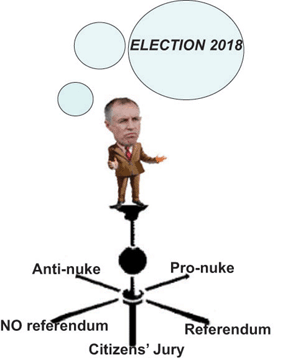
South Australian Labor comes up with the delaying tactic that pro nuclear Premier Weatherill wanted. Weatherill heckled by anti nuclear protestors. South Australian government nuclear focus groups at Port Pirie – separate the sexes! Tax-payer funding goes to South Australian nuclear propaganda event Nov 15-16.
South Australia’s Nuclear Citizens’ Jury – a sophisticated exercise in manufacturing consent. A minority Citizens Jury Report is being prepared.
- Shonky Nuclear Royal Commission could be the end for South Australian Premier Jay Weatherill.
- Kevin Scarce’s Nuclear Conflict of Interest.
- Tainted economic evidence was given to South Australia’s Nuclear Royal Commission.
- Nuclear Royal Commission ignored world’s one and only existing deep underground nuclear waste dump – all this explained by Dr Jim Green.
Queensland : Ben Lomond uranium mine hit with an Environmental Protection Order
November 4, 2016
Posted by Christina Macpherson |
Christina reviews |
Leave a comment
Australia risks being excluded from the first meeting of countries signed up to a landmark deal on climate change because parliament is yet to ratify the agreement, an international agency warns.
The annual United Nations climate change conference starts in Marrakech on Monday and will also serve as the first official meeting of parties to the Paris agreement struck in 2015.
That deal comes into effect on Friday after 55 per cent of the world’s emitters ratified it but Australia isn’t among them, with the government blaming the timing of the federal election for the delay.
It hopes to have parliament ratify the deal by year’s end.
Oxfam Australia’s climate change adviser says the failure to ratify is a disappointment that risks Australia being excluded from the international meeting.
Simon Bradshaw said there was also a bigger issue around the “yawning gap” between Australia’s commitments and the demands on climate action under the Paris agreement.
The deal signed by global leaders agrees to limit global warming to two degrees and commit countries to updating emissions reduction targets every five years. “Australia’s continued recalcitrance risks not only greater harm to vulnerable communities, but also threatens our own economic prosperity in a world shifting ever more rapidly away from fossil fuels,” Dr Bradshaw said on Thursday.
November 4, 2016
Posted by Christina Macpherson |
AUSTRALIA - NATIONAL, climate change - global warming |
Leave a comment
 Bias of SA Nuclear Royal Commission finally exposed, REneweconomy, By Jim Green on 4 November 2016 “……..SA Premier Jay Weatherill should initiate a Royal Commission to investigate the discredited, $9 million Nuclear Fuel Cycle Royal Commission. He should also have the decency to fall on his sword for his role in the fiasco.
Weatherill’s exit is looming as a real possibility. He hoped that the state Labor conference on October 29 would give him licence to push ahead with his nuclear waste plans. But he had to defuse a plethora of no-dump resolutions by promising to hold a ‘Special ALP Convention’ to discuss the issue. The resolution read: “This Special ALP Convention should be held at the conclusion of community consultation and before a decision is made on the development of a high level nuclear waste repository in SA.”
Yet days later, on November 1, Weatherill denied that he had made a commitment to hold a special convention. He told Parliament: “There is no upcoming special convention. There will be a special convention at a time when it is necessary. It is not going to happen anytime soon. It may be a question of years away”.
There is plenty of angst within the state Labor Party (an election is just over a year away) and there will be plenty more as a result of Weatherill’s welshing on his promise to hold a special convention.
And there is plenty of public opposition: a protest rally in Adelaide on October 15 attracted 3,000 people; Aboriginal Traditional Owners are overwhelmingly opposed to the nuclear waste plan and are fighting hard to stop it; trade unions and churches are speaking out in opposition; and the SA Liberal Party is hedging its bets by pointing to the huge upfront costs (estimated at between $600 million and $2.4 billion) that the state would need to gamble before any income was generated.
November 4, 2016
Posted by Christina Macpherson |
NUCLEAR ROYAL COMMISSION 2016, politics, South Australia |
Leave a comment
The world must “urgently and dramatically” step up its efforts to cut greenhouse gas emissions if it is to have any chance of limiting dangerous climate change, according to a new report.
Released in London a day before the Paris Agreement comes into force, the report by the United Nations Environment Programme (UNEP) found that 2030 emissions are set to exceed by more than a quarter the levels needed to keep global warming below the crucial 2 °C level.
Without swift reductions in emissions, the world is on track for a temperature rise of 2.9 °C to 3.4 °C this century, even if the pledges agreed in Paris last year are fully implemented, the report warned.
The Paris Agreement committed signatories — including the UK — to holding the increase in global average temperatures well below 2 °C above pre-industrial levels and to pursue efforts to limit it to 1.5 °C, which it said would “significantly reduce the risks and impacts of climate change”.
Emissions still too high
But the UNEP report finds that, on current trends, emissions are set to reach the equivalent of 54-56 gigatonnes (billion tonnes) of carbon dioxide by the end of the next decade – well above the 42 gigatonne maximum if warming is to be kept below 2 °C .
The demand for urgent action is reinforced by the fact that 2015 was the hottest year on record and the first six months of 2016 were each the warmest recorded, said the report.
The report found that members of the G20 group of industrialised nations, including the UK, were collectively “on a likely track” to meet greenhouse gas reduction pledges made in Cancun, Mexico, in 2010.
But it warned that the Cancun promises “do not deliver the necessary early emission reductions” to avoid breaching the 2 °C threshold.
Not good enough
Though the Paris Agreement will slow climate change, it’s still not quite good enough if we are to stand a chance of avoiding serious climate change, said Erik Solheim, head of UNEP.
“If we don’t start taking additional action now, beginning with the upcoming climate meeting in Marrakesh, we will grieve over the avoidable human tragedy,” said Solheim.
“The growing numbers of climate refugees hit by hunger, poverty, illness and conflict will be a constant reminder of our failure to deliver,” he said. “The science shows that we need to move much faster.”
UNEP identified a range of actions which could deliver large reductions in emissions by 2030.
Investment in energy efficiency measures totalling between $20 and $100 US per tonne of carbon dioxide could deliver global reductions of 5.9 gigatonnes for buildings, 4.1 gigatonnes for industry and 2.1 gigatonnes for transport, the report said.
November 4, 2016
Posted by Christina Macpherson |
Uncategorized |
Leave a comment
 UN paints apocalyptic picture of famine, war and disease unless world wakes up to dangers of climate change, Independent UK
‘We will grieve over the avoidable human tragedy; the growing numbers of climate refugees hit by hunger, poverty, illness and conflict will be a constant reminder of our failure to deliver’
Ian Johnston Environment Correspondent, 3 Nov 16 The world will “grieve over the avoidable human tragedy” of climate change, as refugees flee “hunger, poverty, illness and conflict” unless urgent action is taken to reduce emissions from fossil fuels, the United Nations has warned.Despite the Paris climate agreement being hailed as a the “moment we decided to save our planet” by US President Barack Obama among others, the UN Environment Programme (UNEP) said the commitments made by countries so far were “not nearly enough” to prevent disastrous global warming.
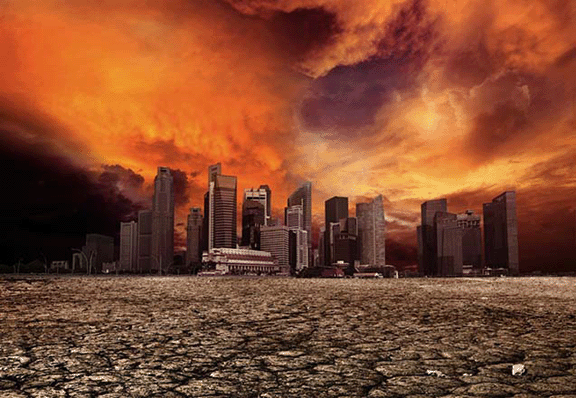
In a report, which UNEP said it hoped would be a “wake-up call to the world”, the world body estimated the Earth’s average temperature was set to increase by up to 3.4 degrees Celsius above pre-industrial levels by 2100 – the kind of change that would take at least tens of thousands of years to occur naturally, accomplished by humans in little over two centuries. It called for further measures to reduce greenhouse gases by a quarter by 2030.
Despite an overwhelming scientific consensus that climate change is real, the total amount of greenhouse gases produced by humans has continued to rise as countries have focused on short-term economic growth.Next week world leaders will meet in Morocco for the first major climate summit after Paris, which organisers have pledged will be a “conference of concrete action”.The UNEP report was unequivocal about the need for the countries to co-operate with that aim in mind.
“Everybody willing to look can see the impact of our changing climate. People already face rising seas, expanding desertification and coastal erosion. They take little comfort from agreements to adopt mitigation measures and finance adaptation in the future. They need action today,” wrote Erik Solheim, head of UNEP, and Jacqueline McGlade, UNEP’s chief scientist, in the report’s foreword.
But the reductions in greenhouse gases promised at Paris were “not nearly enough”.
“This report estimates we are actually on track for global warming of up to 3.4 degrees Celsius,” the foreword said. “Current commitments will reduce emissions by no more than a third of the levels required by 2030 to avert disaster. We must take urgent action. If we don’t, we will mourn the loss of biodiversity and natural resources. We will regret the economic fallout.
“Most of all, we will grieve over the avoidable human tragedy; the growing numbers of climate refugees hit by hunger, poverty, illness and conflict will be a constant reminder of our failure to deliver. None of this will be the result of bad weather. It will be the result of bad choices by governments, private sector and individual citizens.”
Under the Paris treaty, the world committed to trying to restrict global warming to as close to 1.5C as possible, a target that looks increasingly unlikely to be met given it is already at 1C.A leading climate researcher, Professor Niklas Höhne, of the NewClimate Institute in Cologne, previously told The Independent that three degrees of warming would be “completely catastrophic”, resulting in a world that was “not very pleasant” for its human population with increasingly severe droughts, floods and storms.It is also could trigger a number of ‘tipping points’ such as the melting of permafrost in the northern tundra, releasing vast amounts of methane, a potent greenhouse gas, that would send the temperature spiralling upwards………
Speaking last month, Professor Lord Nicholas Stern – who published a landmark report by the financial dangers of climate change 10 years ago – warned the world’s economy could “self-destruct” if fossil fuels continued to be burned. http://www.independent.co.uk/environment/climate-change-global-warming-united-nations-famine-war-disease-a7394926.html
November 4, 2016
Posted by Christina Macpherson |
Uncategorized |
Leave a comment
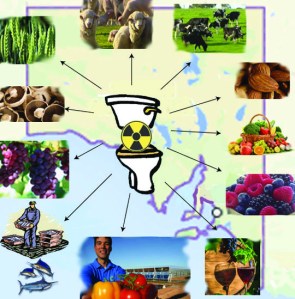 Local nuclear jurors prepare report, Port Lincoln Times 2 Nov 2016,
Port Lincoln residents involved in the nuclear Citizen’s Jury are on the home straight as they work together on a final report on the issue of storing nuclear waste in South Australia. The jurors met for their third and fourth days in Adelaide this past weekend where they heard from witnesses who provided information on the issue.
November 4, 2016
Posted by Christina Macpherson |
Nuclear Citizens Jury |
Leave a comment
Bias of SA Nuclear Royal Commission finally exposed, REneweconomy, By Jim Green on 4 November 2016 “………The Royal Commissioner, retired Rear Admiral Kevin Scarce, denied claims of a conflict of interest. He told the ABC: “The conflict of interest would arise if they [Jacobs MCM] were the only source of information that we were using to assess the evaluation. They were not.”
Scarce’s claim is false. As Prof. Barbara Pocock, an economist at the University of South Australia, told the ABC: “All the economists who have replied to the analysis in that report have been critical of the fact that it is a ‘one quote’ situation. We haven’t got a critical analysis, we haven’t got a peer review of the analysis”.
Another South Australian economist, Prof. Richard Blandy from Adelaide University, said last week: “The forecast profitability of the proposed nuclear dump rests on highly optimistic assumptions. Such a dump could easily lose money instead of being a bonanza.” Blandy contributed a submission to the Royal Commission but was not invited to speak at the Commission’s public hearings.
SA Conservation Council CEO Craig Wilkins said that asking pro-nuclear advocates to provide “independent” advice was “like asking the crew of the Sea Shepherd to provide an independent review of whaling in the Antarctic.”
The Jacobs MCM report estimated that the total costs associated with the project would amount to a whopping $145 billion. And while some allowance is made for cost overruns, both Jacobs MCM and the Royal Commission glossed over massive cost overruns evident overseas. Estimates of the clean-up costs for a range of (civil and military) UK nuclear sites have nearly doubled over the past decade. Estimates of the cost of a building a deep underground nuclear waste dump in France have nearly doubled over the past decade.
And between 2001 and 2008, the estimated cost of constructing the Yucca Mountain nuclear waste dump in the US and operating it for 150 years increased by 67 percent. The Yucca Mountain project was abandoned by the Obama administration, so the US wasted A$17.8 billion on a failed repository project.
The Jacobs MCM report is honest enough to state that many of its assumptions are highly speculative; for example, no-one knows which countries might want to off-load their nuclear waste to South Australia or how much they might be willing to pay. But the speculative nature of its findings was downplayed in the Royal Commission’s report and has been largely ignored by the SA government and its Nuclear Consultation and Response Agency.
The Australia Institute crunched the numbers presented in the Royal Commission’s interim report and wrote a detailed rebuttal. Kevin Scarce responded on ABC radio on 31 March 2016, saying that the Royal Commission would “take apart” the Australia Institute’s report “piece by piece”. When asked if such an aggressive attitude was appropriate, Scarce said: “I’m a military officer, what would you expect?” …….
Before his appointment as the Royal Commissioner, Kevin Scarce said little about nuclear issues but what he did say should have excluded him from consideration. Speaking in November 2014 at a Flinders University guest lecture, Scarce acknowledged being an “an advocate for a nuclear industry”. Just four months later, after his appointment as the Royal Commissioner, he said the exact opposite: “I have not been an advocate and never have been an advocate of the nuclear industry.”
Other than generalisations, and his acknowledgement that he is a nuclear advocate, Scarce’s only comment of substance on nuclear issues in his 2014 lecture was to claim that work is “well underway” on a compact fusion reactor “small enough to fit in a truck”, that it “may be less than a decade away” and could produce power “without the risk of Fukushima-style meltdowns.” Had he done just a little research, Scarce would have learnt that Lockheed Martin’s claims about its proposed compact fusion reactor were met with universal scepticism and ridicule by scientists and even by nuclear industry bodies.
So the SA government appointed Scarce as Royal Commissioner despite knowing that he is a nuclear advocate who has uncritically promoted discredited claims by the nuclear industry. Scarce appointed an Expert Advisory Committee. Despite claimingthat he was conducting a “balanced” Royal Commission, he appointed three nuclear advocates to the Committee and just one critic. There wasn’t even a single, token critic on the staff of the Royal Commission.
November 4, 2016
Posted by Christina Macpherson |
NUCLEAR ROYAL COMMISSION 2016 |
Leave a comment
The danger here is that the Nuclear Citizens’ Jury is being presented as a neutral process, when in reality it is designed to manufacture the outcome the Premier wants.
- The question the jurors have been asked to answer is a leading one. As one juror put it to me: “This is a ‘yes’ question.”
- the purpose of the amber can only be one: to nudge jurors towards the middle-of-the-road option: the “yes but”. That is, the “proceed with caution” desired by the Premier.
- why call it a jury? Why not call it a “focus group” or a “citizens’ inquiry”? Because “jury” appeals to our notions of citizenship and predisposes participants towards trust and good faith. “Jury” implies a trusted verdict.
this process is arguably the most sophisticated illustration of manufacturing consent in the history of South Australia.
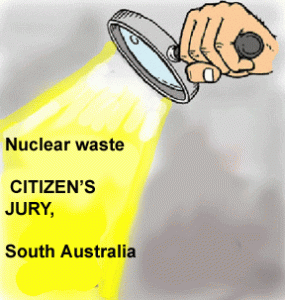 Manufacturing consent for SA’s nuclear program www.crikey.com.au/2016/11/03/manufacturing-consent-for-sa-nuclear-program/ The SA government has turned to a “citizen’s jury” to manufacture trust in its nuclear policy. But the process is far from independent, writes University of Adelaide politics lecturer Benito Cao.
This weekend the Nuclear Citizens’ Jury is expected to deliver a report to South Australian Premier Jay Weatherill that will shape the future of the nuclear industry in this country. But although the jury is presented as a non-partisan body able to make a decision in the state’s best interest, the Premier has designed it so it will return the result he wants.
The jury has been asked to answer this question: “Under what circumstances, if any, should South Australia pursue the storage and disposal of high level nuclear waste from other countries?”
If, as expected by the Premier, the report recommends to “proceed with caution“, the South Australian government will feel legitimised to embark on the gradual expansion of the nuclear industry in the state. The answer, however, will have implications for the whole of Australia.
The Nuclear Citizens’ Jury was established as the centrepiece of the community consultation instituted by Weatherill. In his opening address to the Citizens’ Jury on day one, the Premier presented the jury’s work as “a contribution to democracy” and “a better way of citizens coming together and answering complicated questions”.
However, his words also reveal what is at the heart of this matter: trust. The Premier has said that the Citizens’ Jury was set up because people don’t trust government, and that an independent process was needed to address the complex and contentious issue that is the potential expansion of the nuclear industry in South Australia. Continue reading →
November 4, 2016
Posted by Christina Macpherson |
Nuclear Citizens Jury |
Leave a comment
 Nuclear dump modelling biased: Greens The Greens say economic modelling for a nuclear waste dump in SA is a sham and the SA government should drop the idea. SBS News, Source: AAP 3 NOV 2016 –
The Greens say the South Australian government should stop considering building a nuclear waste dump in the state because its economic modelling is biased,.
Greens Senator Sarah Hanson-Young is calling on the state government to drop the idea after it was revealed two contributors to a royal commission on SA’s involvement in the nuclear cycle were leaders of a nuclear industry lobby group.
Association for Regional and International Underground Storage President Charles McCombie and Vice-President Neil Chapman were two of six authors of a cost analysis and business case for storing nuclear waste in SA.
The case was referenced in the royal commissions final report, delivered in May, which recommended SA consider establishing a dump because of the potential economic benefits.
Ms Hanson-Young says the ARIUS leaders’ contribution to the commission’s economic modelling means it is a “sham”.
“It’s not surprising that a pro-nuclear organisation would come up with economic modelling that supports turning SA into the world’s waste dump,” she said in a statement on Thursday.
“This agenda driven and biased modelling formed the central plank of the government’s push for nuclear storage which should now be dropped, once and for all.”…….http://www.sbs.com.au/news/article/2016/11/03/nuclear-dump-modelling-biased-greens
November 4, 2016
Posted by Christina Macpherson |
General News |
Leave a comment






 Antinuclear