The long-awaited results of a $25 million National Institutes of Health study on the effects of cellphone radio frequency radiation exposure on animals is out, and the results are mixed. They showed a higher risk of tumors, DNA or tissue damage and lower body weight in some groups of rodents, but no obvious ill effect in others and no clear implications for human health. Continue reading
Latest in nuclear news Australia
 Henry Kissinger, long term and still influential political adviser, told the Senate Armed Services Committee last week that a pre-emptive strike on North Korea was “tempting”and “a rational argument”. And, with Trump’s new Nuclear Posture Review, the world moves even closer to the brink. With the nuclear weapons race, is the unthinkable now becoming a comfortable idea?
I think of the “Me Too”movement – to change the situation of women being sexually exploited by predators, and of this being covered up by men in power. And it is surely now time for a “Me Too” movement – as insane decisions are being made about nuclear weapons by men in power.
AUSTRALIA
The “Peace Boat” continues its successful tour of Australian cities, continuing now from Hobart to Sydney.
Nuclear Racism in Australia.
Media silence on Julian Assange‘s precarious situation.
Federal nuclear waste dump plan for South Australia. ARPANSA considering components in radioactive trash dump– asking for public comments, by February 23. Australia’s history of mismanaging nuclear waste. Dishonest scare-mongering linking nuclear medicine and radioactive waste dumps. Keep Lucas Heights nuclear waste-at Lucas Heights, for the safety of all Australians. Any South Australian nuclear waste dump must have broad social consent and specific community consent.
Weatherill Government opposition to all nuke waste dumps in SA welcomed. South Australian Premier Jay Weatherill could take High Court action against proposed Federal Nuclear waste Dump. Australian Greens welcome Labor switch on nuclear waste dump.
Australia’s nuclear macho men always wanted nuclear weapons, and they still do. Australian women – no say in nuclear decisions. BUT – Women take the lead in Australia’s energy revolution.
Jim Green questions Electric Energy Society of Australia (EESA), on its pro nuclear seminar.
Labor Party branches want a new and more effective environment act and independent watchdog.
Turnbull govt to give $3,8billion to develop a weapons export industry.-Sisters of St Joseph speak out against Australian government plan for weapons export industry.
Native Title, the Wangan and Jagalingou people, and Adani Coal Mine Project. Adani mega coal mine – a threat to Australia’s most valuable water source. Polling shows that even Liberals now opposing Adani coal megamine project. Australia way behind on low carbon action – UN investor expert warns.
Great progress in renewable energy: see reneweconomy.com.au
Peace Boat sails in to Hobart with anti-nuclear message

 Peace Boat sails in to Hobart with anti-nuclear message http://www.abc.net.au/radio/hobart/programs/mornings/tilman-ruff/9390554
On Mornings with Leon Compton
Duration: 13min 41sec
ARPANSA considering components in radioactive trash dump- asks for your comments

 This process is about determining the nature of the material to be dumped in the proposed x3 SAust radioactive suppositories.
Currently there is no official determination about what is actually to be accumulated there – hence the delay in remediating the leaking drums @ Woomera & failure to properly inform the local communities.
Also thereby wrongfully expecting them to sign off on an unknown quality/quantity.
Submissions close Feb 23
ARPANSA is engaging in public consultation on the draft Code for Disposal of Solid Radioactive Waste (Radioactive Waste Disposal Code).
Start/End Date:
Thursday 21 December 2017 – 09:00 to 2 March 2018 – 17:00
ARPANSA invites people and organisations interested in the disposal of solid radioactive waste to tell us their views on this topic. Have Your Say Now – more https://www.arpansa.gov.au/code-disposal-solid-radioactive-waste-rps-c-3
Premier Jay Weatherill’s opposition to Federal nuclear waste dump in Kimba and Hawker is welcomed
 Eyre Peninsula Tribune, 31 Jan 18 Conservation SA and the South Australian Greens party have welcomed Premier Jay Weatherill’s opposition to the National Radioactive Waste Management Facility proposed for Kimba and Hawker.
The comments from Conservation SA and the Greens were in response to an article published in The Australian, which suggested the state government would look at legal action if the facility was approved in South Australia.
However Mr Weatherill has told the Eyre Peninsula Tribune this was not the case.
“The state government is not considering High Court action.”
However he said the federal government’s process was “wrong”.
“The state government’s position on this matter hasn’t changed,” Mr Weatherill said.
“The federal government should follow the state government’s lead and consult with the community first.”……..
Conservation SA chief executive Craig Wilkins said the organisation strongly welcomed the news that the state Labor party would oppose any attempt by the federal government to impose nuclear waste from Lucas Heights on South Australia..
“SA Labor have a long and proud tradition of opposing similar moves in the past, most notably Mike Rann, who famously won a High Court challenge against the Howard government over a decade ago,” Mr Wilkins said.
“This statement by Premier Weatherill will help reassure a community that was disturbed and disappointed by his government’s previous push to explore opportunities in the nuclear fuel cycle.
“We commend Premier Weatherill for standing up for our state and the communities of Kimba and Flinders Ranges.”
Greens SA parliamentary leader Mark Parnell invited Mr Weatherill and the state government to join the party in opposing the nuclear facility.
“The Greens have steadfastly opposed the Commonwealth government’s process of nuclear waste dump site selection and we have supported communities in both Kimba and the Flinders Ranges who are opposed to the dump,” Mr Parnell said.
“We invite Labor to join us in this campaign.”
Kimba has two sites in phase two of consultation for a potential National Radioactive Waste Management Facility.https://www.eyretribune.com.au/story/5200966/state-not-considering-nuclear-legal-action-weatherill/
Trump’s Nuclear Posture Review makes the world an even more dangerous place
The review neglects to make a compelling case for the necessity of its proposed systems.
Overall, the NPR reflects an outdated and simplistic view of deterrence.
the most significant problem with Trump’s Nuclear Posture Review is the slanted view it holds of the world and the obsolete theory of deterrence and war fighting that it promotes, which is so poorly suited to today’s threats. Rather than working to reduce nuclear dangers, the nation’s nuclear policy now reflects the reasoning of U.S. adversaries and readily follows them into a more dangerous world.
 Trump’s Troubling Nuclear Plan, How It Hastens
  the Rise of a More Dangerous World https://www.foreignaffairs.com/articles/2018-02-02/trumps-troubling-nuclear-plan,
Australia’s nuclear macho men always wanted nuclear weapons, and they still do
What Dibb suggested is that Australia, under the guise of generating nuclear power or on another pretext, acquire the essential technology to produce the fissile material needed to build a nuclear weapon. The hypocrisy involved is staggering. Analysts making such proposals accuse countries like Iran and North Korea of putting such plans into practice, and support a US pre-emptive attack to eliminate the supposed threat.
Dibb is well aware that Australia is a signatory to the Nuclear Non-proliferation Treaty (NPT).
before signing the NPT in 1970 and ratifying it in 1973, the Australian government drew up plans for a commercial nuclear power plant at Jervis Bay, south of Sydney, that would covertly supply the enriched uranium needed to manufacture nuclear weapons. The Jervis Bay project, which was promoted by Prime Minister John Gorton, was mothballed after he was ousted in 1971 by Billy McMahon.
This discussion is tied to a broader push to boost military spending in preparation for war.
In its 2016 defence white paper the government already foreshadowed a multi-billion dollar military expansion, lifting the defence budget to at least 2 percent of gross domestic product and purchasing advanced weapons systems. In a related move, Prime Minister Malcolm Turnbull yesterday announced a vast expansion of military industries in the name of a drive to export arms and become one of the world’s top ten weapons exporters.
None of these steps has anything to do with “defence” or preserving peace.
 Renewed push for Australia to build nuclear weapons https://www.wsws.org/en/articles/2018/01/30/aust-j30.html#pk_campaign=sidebar&pk_kwd=textlink, By Peter Symonds , 30 January 2018
A discussion has begun over the past month in Australian strategic and military circles about the necessity of building nuclear weapons, or developing the capacity to do so, against the alleged threat posed by nuclear-armed powers, above all China.
The debate, in public at least, is quite cautious, given the widespread popular hostility to war and thus the potential for protests to erupt against any move to create a nuclear arsenal. However, the very fact that the issue is actively being discussed is another sign of rapidly sharpening geo-political tensions and the accelerating arms race by major powers around the world. Continue reading
Malysia’s nasty history of radioactive trash from rare earths processing
A factory processing radioactive materials in Perak gave the people living nearby leukemia.
Bukit Merah’s rare earth metal processing site cleanup had been the largest radiation cleanup so far in the world’s rare earth industry. Dr. Yoshihiko Wada’s report revealed that Mitsubishi Chemical came up with ARE in Bukit Merah after being one of the main companies that caused severe asthma in Nagoya, Japan. Also, 100% of the rare earth products processed in Bukit Merah were exported back to Japan, so it’s not like we gained anything but money from the venture, which puts forth the question of whether it’s worth endangering the lives of local residents for rare earth metals.
 30 YEARS AGO, A HUGE RADIOACTIVE INCIDENT HAPPENED IN PERAK. AND THEY’RE STILL CLEANING IT UP https://cilisos.my/30-years-ago-a-huge-radioactive-incident-happened-in-perak-heres-the-story-behind-it/ 21 Jan 2018,
Earlier this year, Lynas Corporation had been popping up in the news again. For those of who have no idea who or what Lynas is, a few years back there had been a hullabaloo when Lynas set up a rare-earth processing plant in Gebeng, Kuantan, called the Lynas Advanced Materials Plant (LAMP). But what’s the big deal with that?
Well, in very simple words, concerns about radioactive waste.
Basically, rare earth metals are a group of chemical elements that are quite useful in manufacturing electronics and stuff. They’re not ‘rare’, but in nature they come clumped together with a buttload of other elements and minerals that make extraction difficult. Continue reading
Human error caused 71% of Australia’s radiation incidents in 2016: not a good omen for transporting radioactive trash
 Anti-Nuclear Coalition South Australia Australian Radiation Incident Register 2016, ARPANSA
71% of incidents was caused by human error, primarily in hospital based medical procedures. Radioactive waste had no statistically meaningful contribution within the Register.
Transporting radioactive waste across the country is bound to increase the probability of human error in previously unaffected environments nationwide; whilst placing a radioactive suppository in South Australia will not reduce human errors in hospitals.
https://www.arpansa.gov.au/s…/g/files/net3086/f/arir2016.pdf
Response to Electric Energy Society of Australia (EESA), on its pro nuclear seminar
 from Jim Green 3 Feb 2018 To: Electric Energy Society of Australia (EESA)
Re the Feb 21 EESA webinar with nuclear lobbyist Ben Heard talking about nuclear power:
1. Will EESA be organising a separate webinar to provide a perspective from someone who isn’t a nuclear lobbyist? If not, is that lack of balance consistent with the Engineers Australia Code of Ethics and Guidelines on Professional Conduct?
2. Will you amend the bio-note on the ESAA webpage to note that Mr Heard’s so-called environment group accepts secret corporate donations? If not, why not? The bio-note on the EESA webpage claims that his group ‘represents the community’ … if such dubious claims are allowed to stand then it surely needs to be acknowledged that his group accepts corporate donations including secret corporate donations. Is such disclosure not required by the Engineers Australia Code of Ethics and Guidelines on Professional Conduct?
3. During the webinar, will it be made clear that Mr Heard’s group accepts corporate donations including secret corporate donations? Is such disclosure not required by the Engineers Australia Code of Ethics and Guidelines on Professional Conduct?
4. During the webinar, will you make it clear that Mr Heard’s asinine contribution to the SA Royal Commission was rejected by the Commission? Specifically, the final report of the Royal Commission said: “[A]dvanced fast reactors and other innovative reactor designs are unlikely to be feasible or viable in the foreseeable future. The development of such a first-of-a-kind project in South Australia would have high commercial and technical risk. Although prototype and demonstration reactors are operating, there is no licensed, commercially proven design. Development to that point would require substantial capital investment.”
5. Will you ensure that webinar participants are provided with some basic factual information that Mr Heard certainly won’t be volunteering, e.g.
— A$40 billion capital cost for two new reactors in the UK (A$20 billion each)
— A$16 billion capital cost for new reactors in France and Finland
— bankruptcy filing of Westinghouse due to catastrophic cost overruns building conventional reactors in the US (including A$13+ billion wasted on reactors in South Carolina that were cancelled last year).
— Westinghouse, Toshiba and a number of other utilities exiting the reactor construction business
— Ziggy Switkowski, head of the Howard government’s Nuclear Energy review, now says he believes “the window for gigawatt-scale nuclear has closed”. He also said that nuclear is no longer lower cost than renewables and that the levelised cost of electricity of the two is rapidly diverging.
6. Will you ensure that webinar participants are informed that Mr Heard has continued lobbying for the importation of 138,000 tonnes of high-level nuclear waste to SA despite being well aware of the overwhelming opposition of Aboriginal Traditional Owners?
https://www.anfa.org.au/traditional-owners-statements/
7. What steps will you take to ensure that participants are provided with some credible information about high-temperature gas-cooled reactors given that these seem to be Mr Heard’s latest fixation? Some information is copied below.
8. If Mr Heard claims that high-temperature gas-cooled reactors are ‘meltdown-proof’, or other such inanities, will you ensure that his falsehoods are corrected? Continue reading
Recognising the people behind ICAN, and their vision
In Australia, ICAN began with Felicity Ruby, Dimity Hawkins, Dr. Bill Williams, Dr. Tilman Ruff, and others who launched the global effort with a strong medical and scientific perspective. According to Dr. Kathleen Sullivan, a disarmament educator in the United States, and one of the campaign’s earlier members, “the initial thinking revolved around horror, humor, and hope—to amplify the need for a louder nuclear taboo, to educate the public, reignite the movement fueled more by what we love than what we fear.”
Tim Wright, director of ICAN Australia, was the very first volunteer back in 2006. Tim has advocated for ICAN in the Asia-Pacific region, and around the globe.
 The People Who Made a Nuclear-Weapons-Prohibition Treaty Possible https://www.thenation.com/article/the-people-who-made-a-nuclear-weapons-prohibition-treaty-possible/ ICAN’s visionary work has brought us that much closer to a nuclear-free world—and won them a Nobel Peace Prize in the process.By Ari Beser 2 Feb 2018,
More and more American nuclear reactors are biting the dust
 More Premature Nuclear Unit Retirements Loom, Power Magazine, 02/01/2018 | Sonal Patel Two more U.S. nuclear power plants are facing early retirement, joining a string of generators whose fate was determined by market conditions, political pressure, or financial stresses assailing the sector. Several others may be poised to join them.
The 647-MW Duane Arnold nuclear plant in Palo, Iowa, will likely close in 2025 after a current contract with the facility’s primary customer expires, said NextEra Energy Resources’ chief financial officer, John Ketchum, in a fourth-quarter earnings call on January 26.
“Without a contract extension, we will likely close the facility at the end of 2025 despite being licensed to operate until 2034,” Ketchum said. “As a result, during the fourth quarter, Duane Arnold’s book value and asset retirement obligation were reviewed, and an after-tax impairment of $258 million was recorded that reflects our belief it is unlikely the project will operate after 2025.” Ketchum added, however, that NextEra will continue to pursue a contract extension.
On the same day, the Toledo Blade reported that FirstEnergy Corp.’s Davis-Besse nuclear plant in Oak Harbor, Ohio, is headed for premature closure, citing James Pearson, the company’s chief financial officer. Pearson told the newspaper that no date has been set for the closure of Davis-Besse. He also reportedly said that the outlook for the company’s Perry plant in Ohio and twin-reactor Beaver Valley nuclear plant in Pennsylvania is “bleak.” FirstEnergy is intent on exiting its competitive business, but though the company may want to sell the plants, they are “probably impossible to sell in today’s market,” he reportedly said.
A Critical Condition The plants join a series of generators recently stricken by financial pressure primarily by competition from cheap natural gas, expanding renewable capacity, and lethargic power demand growth.
Throughout the short history of the U.S. nuclear power sector, 31 reactors licensed to operate have been permanently shut down—11 between 1960 and 1980; four in the 1980s; and nine in the 1990s. The recent streak began in 2010—12 years after the nation’s last reactor, Millstone 1 in Waterford, Connecticut, had been shut down in 1998—as Exelon announced it would shutter its Oyster Creek plant in New Jersey by 2019 owing to economic conditions and changing environmental regulations. In February 2013, Duke Energy (then Progress Energy) retired its Crystal River reactor in Florida, unable to repair damage to the containment structure. A string of casualties then ensued, as Kewaunee in Wisconsin was closed in May 2013; two units at San Onofre in California were formally shuttered in June 2013; Vermont Yankee in Vermont was shut down in December 2014; and Fort Calhoun in Nebraska closed its doors in October 2016. Other units slated for near-term shutdown include Pilgrim in Massachusetts and Palisades in Michigan. (For more, see, “THE BIG PICTURE: Nuclear Retirements.”)
Early retirement has also been proposed for Clinton and Quad Cities in Illinois and for Nine Mile Point, Fitzpatrick, and Ginna in New York—but their fate appears dependent on the outcome of legal challenges to “bailout” programs to keep those plants operating for economic reasons. The states’ measures are being legally challenged by several independent power producers—including Dynegy, Eastern Generation, NRG Energy, and Calpine Corp.—and, prominently, competitive power producer trade group the Electric Power Supply Association. The consortium has long argued that the state rules interfere with Federal Energy Regulatory Commission (FERC) jurisdiction over wholesale electric rates and unlawfully interfere with interstate commerce………..
Earlier in January, California regulators approved Pacific Gas & Electric’s application to retire the Diablo Canyon plant by 2025, following a protracted battle over the generating station that pitted local economic interests against environmentalists and other opponents of nuclear power. In New York, political pressure combined with economic misgivings, also prompted plans to shut down Indian Point by 2021.
A Swath of Other Reactors May Be Troubled According to a September 2017 report from the Idaho National Laboratory (INL), several more nuclear plants are likely to retire early, stymied by an “ongoing industry wide, systemic economic and financial challenge to operating nuclear plants particularly in the deregulated markets.”
A revenue gap analysis conducted by the national laboratory for 79 of 99 operational reactors that are in a region where public wholesale electricity market prices are available suggests that 63 units would have lost money in 2016. Of those 63, 36 are merchant generators, 19 are regulated, and eight are public power generators.
INL suggests that among plants at high risk of early retirement are Davis-Besse, Three Mile Island in Pennsylvania, and Xcel Energy’s Prairie Island in Minnesota.
A number of studies separately suggest similar findings. ……..http://www.powermag.com/more-premature-nuclear-unit-retirements-loom/
Labor Party branches want a new and more effective environment act and independent watchdog
 Labor branches push for new environment act and independent watchdog. ALP’s internal advocacy group wants sweeping reforms to protect natural heritage to be adopted as policy at next conference, Guardian, Adam Morton, 31 Jan 18,
Bill Shorten is facing rising internal pressure to make the environment central to Labor’s election pitch after 250 ALP branches passed a motion calling for strong new national laws and an independent agency akin to a “Reserve Bank for environmental management”.
Branches from every state and territory have backed a campaign by the Labor environment action network (Lean), an internal advocacy group, for sweeping reforms to protect natural heritage to be adopted as policy at this year’s ALP conference.
It would be backed by a “science-fuelled and politically empowered” agency with the authority of the Reserve Bank and watchdog powers to police the law.
Felicity Wade, Lean’s national convener, said protecting the environment was a legacy issue for Labor. This dates back to Gough Whitlam’s introduction of Australia’s first federal environment laws and Bob Hawke’s protection of iconic sites and early work factoring sustainability into government decisions.
“It’s time for Bill Shorten to recognise the environment has been central to modern Labor’s success and to work with us to make this happen,” she said.
She said the need to act was clear. “Australia’s identity is incredibly tied to this amazing landscape, yet things are crashing at an alarming rate,” she said. “We are one of the top 10 land-clearers in the world and we have one of the highest extinction rates in the world, yet we are one of the richest countries in the world.”
The Lean campaign was devised at a meeting of members in Canberra in August. It has precedent: in 2015, the group won the backing of 370 branches for a successful motion calling on the party to adopt a 50% renewable energy goaland an emissions reduction target for 2030 based on the advice of the federal Climate Change Authority.
………She said the need to act was clear. “Australia’s identity is incredibly tied to this amazing landscape, yet things are crashing at an alarming rate,” she said. “We are one of the top 10 land-clearers in the world and we have one of the highest extinction rates in the world, yet we are one of the richest countries in the world.”
The Lean campaign was devised at a meeting of members in Canberra in August. It has precedent: in 2015, the group won the backing of 370 branches for a successful motion calling on the party to adopt a 50% renewable energy goaland an emissions reduction target for 2030 based on the advice of the federal Climate Change Authority.
Wilderness Society’s national campaigns director, Lyndon Schneiders, said it would be a positive campaign. “We know 2018-19 is the once-in-a-generation chance to set up serious national environment laws,” he said. ……https://www.theguardian.com/environment/2018/jan/31/labor-branches-push-for-new-environment-act-and-independent-watchdog
Mixed messages in research results on health effects of mobile phone electromagnetic radiation
Cellphone radiation study finds mixed effects in rodents without clear implications for human health, WP,
Adani’s threat to Australia’s most valuable water source
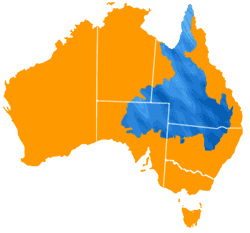 Margaret Gleeson, 2 Feb 18, ‘Last year almost 90% of Queensland was drought declared.
For farmers and graziers struggling for survival this meant increasing reliance on groundwater. …
‘The impact of Adani’s Carmichael coalmine, in Queensland’s Galilee Basin, on groundwater
and the Great Artesian Basin were key aspects of the objections to the mining approvals. …
‘The impact of water use in the development and operation
of the mine is significant by virtue of its sheer scale. …
‘In April last year, Adani was granted an unlimited water licence for 60 years. …
‘Local farmers were outraged. “It’s bloody-minded and barbaric,” said Bruce Currie,
a grazier who lives in the region and has joined legal action against Galilee mines.
“This is going to definitely impact on the integrity of [the Great Artesian Basin].” …
‘Carmel Flint, a campaigner for anti-mining group Lock the Gate, said
the open-ended water licence for Adani amounted to a “free kick” to take water
from important aquifers such as the Dunda Beds and Clematis Sandstone formations.
‘Water from the Great Artesian Basin “is just essential for farming communities” she said.
“Without the water, their businesses are basically finished.” … ‘
Read more of MargaretGleeson‘s informative, insightful, interesting & well-researched article here:
www.greenleft.org.au/content/adani-threat-great-artesian-basin
Total Eren has approval for huge battery at 200MW Victoria solar project — RenewEconomy

New player in Australian renewables market backed by one of world’s oil majors has big plans for solar and storage.
via Total Eren has approval for huge battery at 200MW Victoria solar project — RenewEconomy
1 This month

of the week – Australians for War Powers Reform (AWPR)
To see nuclear-related stories in greater depth and intensity
 Antinuclear