Submission to AUKUS Public Inquiry – How will Australia pay for AUKUS?- Rod Campbell, Richard Denniss and Jack Thrower .
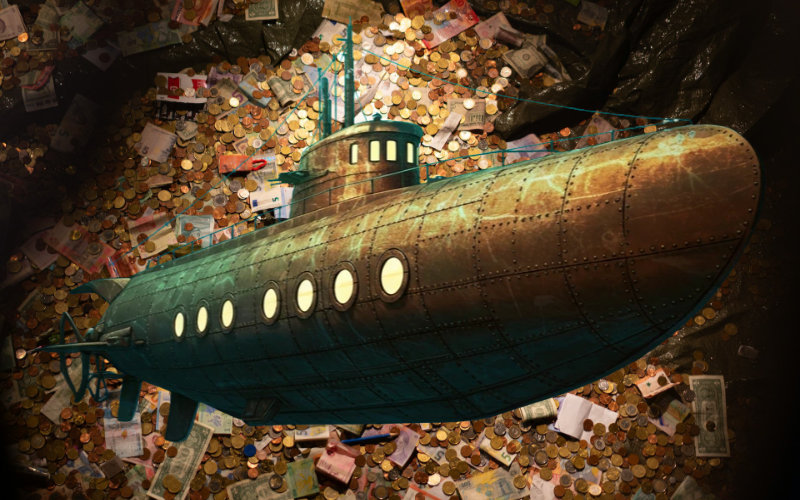
200 Rod Campbell, Richard Denniss and Jack Thrower
The AUKUS trilateral security partnership fails to deliver even the most basic levels of transparency. The partnership was negotiated and struck in secret by the then Morrison Government and supported by the Albanese Shadow Cabinet without approval from the Labor Caucus or broader party.1
It has been reported that AUKUS was even kept secret from most of the national security cabinet for nearly a year and that its announcement took Australia’s Pacific allies by surprise.2
How will Australia pay for AUKUS? 1
This secrecy has been one of the few constants of the AUKUS program over the last five years. Australians have often had to rely on government processes in the United Kingdom or the United States to learn basic facts about a partnership with significant implications for Australia’s future.3
One simple question that successive governments have failed to answer is ‘how will Australia pay for AUKUS?’
Whenever suggestions are made for additional spending on education, health, climate mitigation, the arts or environmental protection, questions are immediately asked about how the new proposal will be financed. However, neither the Government nor the Opposition have expressed any concern about how to pay for AUKUS, most notably the nuclear submarine deal that forms part of AUKUS Pillar 1. In the words of Josh Frydenberg, Treasurer at the time AUKUS was signed, “Everything is affordable if it’s a priority. This is a priority.”4
Mr Frydenberg is correct. Australia is one of the richest countries in the world and as a nation we can afford to do almost anything that is considered a priority. We cannot, however, afford to do everything that is claimed to be a priority. Inevitably there will be trade offs. This submission attempts to put the cost of AUKUS, or at least the estimates available, in the context of the Australian Government budget to examine what some of these trade offs might be.
HOW MUCH WILL AUKUS COST?
The cost of AUKUS submarines is murky; there is no central and transparent accounting for all relevant spending.5
The main figure used in relation to the cost of AUKUS is $368 billion over 30 years. This figure was provided by the Department of Defence to the Parliamentary Budget Office
How will Australia pay for AUKUS? 2
(PBO) in early 2023 in response to a request from then-Greens leader Adam Bandt for “a breakdown of the cost of the nuclear-powered submarines to be acquired under the AUKUS agreement, over the life of the program.”6
It is worth noting that three years later, this same estimate is still the best information the Australian public has about the overall cost of the program. The continued use of this estimate might be reasonable if it was based on rigorous and transparent analysis, but it is not.
The entire response to Mr Bandt’s question, on which all public discussion of the cost of AUKUS is based, is less than a page. It is a one-line table with three dot points of “sensitivities and qualifiers”. The table provided by the PBO is reproduced below, [on the original] under its original heading:
Even the most basic details about this estimate are absent from Defence’s explanations. It is not clear if they are adjusted for inflation, or if so how. It is not clear what exchange rate was used in the estimates, only that the estimates are “subject to regular adjustments to cater for foreign exchange variations”. No such adjustments have been made public. It is not clear what “contingent events” trigger the occurrence of the contingency expenses, or in what years these events might arise. It is not clear how much of these costs would come from existing defence budgets or what is additional.
Defence states these costs represent upper-bound estimates. However, defence spending in Australia and around the world has a strong tendency for cost overruns. For example, the Australian National Audit Office’s latest Major Projects Report assessed 21 major defence projects; only 8 of these projects had no total scheduled slippage, and their total ‘budget variation’ (a proxy for cost overruns) since government second pass approval was $37.2b.7 The Defence/PBO costing also likely does not include several related costs, such as resources spent extending the life of submarines.
How will Australia pay for AUKUS? 3
Australia’s existing Collins-class submarines to bridge the gap until the AUKUS submarines are meant to be delivered.8
A more recent PBO costing places the cost of AUKUS up to 2028-29 at $17.95 billion, and the total up to 2035-36 at $83.3 billion.9 These newer figures cannot be directly compared but may indicate a higher overall cost to the program than the PBO’s 2023 estimate.
Ultimately, no one knows how much AUKUS will cost and those who have the clearest idea of the cost are choosing not to share their knowledge with the public. From the available estimates, it appears that the cost will average in the low tens of billions each year, with most costs being incurred between the mid-2030s and mid-2050s.
HOW WOULD YOU LIKE TO PAY FOR THAT?
Broadly, there are three options available to the Commonwealth Government to pay for additional spending: raise more revenue, cut spending on other budget measures, or increase debt.
Raise revenue
Perhaps the most obvious way to pay for AUKUS is to raise more government revenue. In the current budget year, the Commonwealth Government expects to raise $760 billion in total revenue, so an extra AUKUS cost of perhaps $15 billion per year represents an extra 2%.10
As noted above, Australia can afford to do this. Australia is a low-tax country, with one of the lowest tax collection rates relative to the size of the economy among developed countries. Of the 38 economies in the Organisation for Economic Cooperation and Development (OECD), only eight have lower tax collection than Australia, and these include relatively low-income countries like Türkiye and Mexico, as well as tax havens
like Switzerland and Ireland. Australia would need to raise an extra $140 billion per year in tax revenue to reach the OECD average, similar to Canada or New Zealand.11
Australia could raise enough revenue to pay for AUKUS in many ways. Some of the more equitable and efficient would be:
• Taxing gas exports. A 25% tax on liquified natural gas exports, as proposed by the Australian Council of Trade Unions, could raise around $17 billion per year.12
• End diesel tax loopholes. The Fuel Tax Credit Scheme costs over $10 billion per year and mainly benefits coal and iron ore companies. It is widely considered an inefficient fossil fuel subsidy.13
• Cut superannuation tax concessions that mainly benefit the wealthy and cost up to $20 billion per year.14
Other options would be to increase existing taxes – a 5% increase in personal income tax or a 10% increase in company tax would offer revenue increases in the order of the estimated costs of AUKUS.
Cut spending
An alternative to raising taxes to pay for AUKUS is to cut spending. If this is the preferred option chosen by the Government and the Opposition, then, these preferences should be made explicit. Government budgets are a statement of the priorities of the Government, and by choosing to cut other programs to offset the cost of AUKUS, this is a statement that the AUKUS submarine deal is viewed by the Government and Opposition as a higher priority than other areas of spending.
Spending programs of the general magnitude of AUKUS costs are summarised in Table 2 below: [on original]
Cut opportunities appear to be in the order of spending programs such as the Phamaceutical BenefitsScheme, Job Seeker unemployment benefits, Child Care Subsidy, the Australian Army and funding for both private and public schools. It is unlikely that a government would cut an entire program to pay for AUKUS, as this would have profound impacts on huge numbers of Australians and would likely be extremely unpopular. Instead, cuts to many different programs would be more likely in order to minimise political fallout.
Higher debt
A final option available to the Commonwealth Government is to simply incur a higher level of debt than would otherwise be the case. It is not clear whether the existing PBO cost estimates discussed above include any debt-related costs. Assuming they do not, with no efforts to increase tax revenue or curtail other spending, then the cost of AUKUS could increase government debt by its full value of $368 billion (plus interest).15 If this total were borrowed immediately, interest payments would reach $15 billion per year, assuming a government borrowing rate of around 4%.
According to the most recent budget figures, the Commonwealth Government’s net debt stood at $616.6 billion. Adding over $367.6 billion in additional debt would increase net debt by 60% to nearly $1 trillion ($984.2 billion).
CONCLUSION
There is no ‘right’ answer to the question ‘how to pay for AUKUS’. Democracies are free to make decisions on how to spend, tax, and incur debt based on whatever the public decide to prioritise. However, for this process to properly function, Governments must be clear about how these decisions are made and on what basis. The AUKUS submarine deal has not been justified; it has simply been stated. It is for the Government to explain how it will be paid for.
Submission to AUKUS Public Inquiry – absurd that the seller of submarines is immune from any liability – Monica Mesch.

179.Monica Mesch.
Subject: Agreement among the Government of Australia, the Government of the
United Kingdom of Great Britain and Northern Ireland, and the Government of
the United States of America for Cooperation Related to Naval Nuclear
Propulsion
I thank the Committee for allowing submissions relating to the above Agreement.
I particularly wish to submit my total disagreement with Part E of ARTICLE IV
Naval Nuclear Propulsion Plants, Related Equipment, and Material:-
E. Australia shall indemnify, subject to paragraph F of this Article, the United
States and the United Kingdom against any liability, loss, costs, damage or
injury (including third-party claims) arising out of, related to, or resulting from
Nuclear Risks connected with the design, manufacture, assembly, transfer, or
utilization of any Material or Equipment, including Naval Nuclear Propulsion
Plants and component parts and spare parts thereof, transferred or to
betransferred pursuant to this Article.
It is unconscionable that Australia, on behalf of its citizens, would sign off on
allowing this section in a treaty or otherwise with any dealings or purchases that
it makes with any country.
Ask anyone of your citizens if they’ve ever bought materials or equipment that
indemnify a supplier in the manner in which you propose?
It’s the dumbest thing I’ve heard of lately…. and ridiculous!
Submission to the AUKUS Public Inquiry – no plan for dealing with the nuclear wastes – John Thompson.
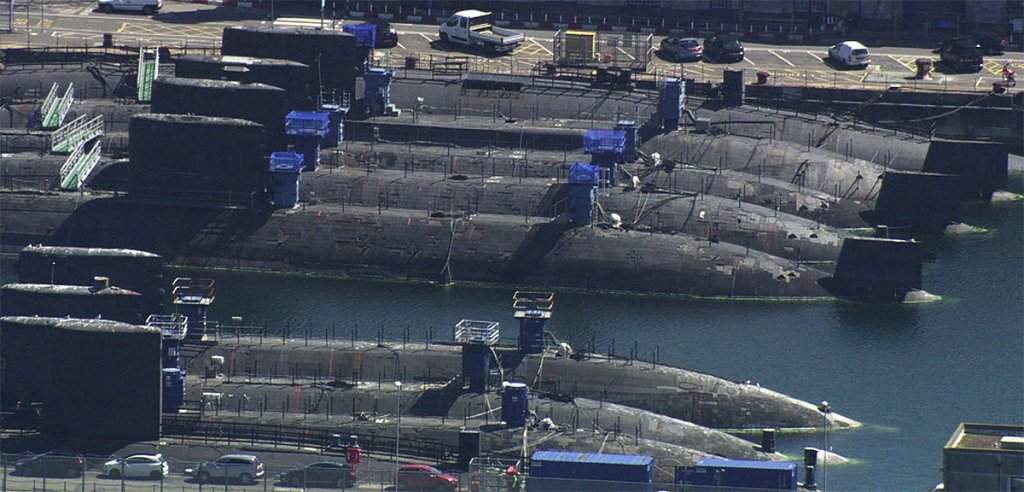
170. John Thompson
Neither the US nor the UK have solved the problem of military nuclear waste
despite it being a problem for more than 50 years.
The US Navy handles its nuclear waste jointly with the Department of Energy
(DOE). The Navy splits the waste into two main categories: spent nuclear fuel
(high-level waste) and the reactor compartments themselves (low-level waste
High-Level Waste: Spent Nuclear Fuel
When a naval reactor is defueled or a ship is decommissioned, the spent nuclear
fuel is taken from the vessel at a specialized shipyard—usually the Puget Sound
Naval Shipyard in Washington or the Norfolk Naval Shipyard in Virginia. It is placed
into massive, heavily shielded shipping containers designed to withstand train
crashes and fires. It travels via rail to the Naval Reactors Facility at the Idaho
National Laboratory (INL) in a remote desert area.. Once there, it is cooled in water
pools and eventually transferred into dry storage casks made of thick steel and
concrete. It will remain here until a permanent national underground repository is
built.
Low-Level Waste: The Reactor Compartments
This part of the Navy’s nuclear disposal process involves the empty reactor hulls.
The remaining steel reactor compartment is still radioactive due to the metals
exposed to radiation during operation. At the Puget Sound Shipyard, workers cut
the reactor compartment completely out of the ship’s hull. They seal it by welding
thick steel plates over all openings, turning the entire compartment into its own
huge leak-proof shipping container. The massive steel cylinder (often weighing
between 1,000 and 1,500 tons) is loaded onto a specialized barge. It is towed
down the Pacific coast, enters the Columbia River, and travels inland to the port of
Benton. At the river port, a massive multi-wheeled high-capacity transporter
moves the container off the barge and slowly drives it across the desert roads to
the Hanford site in Washington State. There the load is lowered into Trench 94, a
massive open excavation. These containers are expected to remain structurally
sound out in the open for more than 500 years, hoping there will be no low-level
radiation leaks into the surrounding environment
The British Royal Navy handles its spent nuclear materials through a very
fragmented strategy.
High-Level Waste: Spent Fuel Cores
When a Royal Navy nuclear-powered submarine reaches the end of its service or
requires refueling, it is taken to the Devonport Royal Dockyard in Plymouth, where
the highly radioactive spent nuclear fuel core is extracted from the submarine. It is
then loaded into heavily shielded, robust transport containers and moved across
the country by rail to Sellafield, the centre of the UK’s nuclear industry.
At Sellafield, the spent fuel is placed into specialized cooling ponds for several
years to lower its temperature and radiation levels. Then it is transferred to
modern, heavily engineered dry-storage facilities on-site. Like the US, the UK plans
to keep this fuel in interim storage until a permanent national Geological Disposal
Facility (GDF) can be located and constructed deep underground. No progress has
been made on this.
Intermediate & Low-Level Waste: The Submarines
Unlike the US Navy, which carves out its reactor compartments and deposits them
in a large open desert trench, the UK has faced a massive historical backlog with
its retired hulls. For decades, the UK has not have a finalized land-based disposal
site for the reactors. Instead, the Royal Navy currently has over 20
decommissioned nuclear submarines sitting afloat in non-tidal basins at two
dockyards. Some of these “laid-up” vessels have been waiting out-of-service for
longer than they were actually operational.
To attempt to resolve this problem, the UK Ministry of Defence launched the
Submarine Dismantling Project. Some of the minor low level radio-active materials
will be sent to a civilian Low Level waste respository. The High Level waste is to be
directed to so-called interim storage facilities giving a century to find and establish
a deep geological repository.
These are Australia’s two partners in the AUKUS project. Neither of them has been
able to deal adequately (or safely) with the nuclear waste problem. Yet we are
entering into a partnership with them. Our government has no plan for dealing
with the problems of nuclear materials and waste (and possible accidents) and
therefore no estimate of costs, timelines, locations, etc. In my view, it is entirely
irresponsible, indeed reprehensible, to allocate very substantial sums to the
acquisition of nuclear equipment or permit such equipment to be operated from
Australia without appropriate strategy and plans and costing for this matter.
Submission to AUKUS Public Inquiry- AUKUS benefits foreign entities not Australians – Simon Murr.
168. Simon Murr
The most serious risks for Australians are:
Dependence on U.S. political and industrial reliability (which is not guaranteed).
Receiving older, less capable submarines at enormous cost.
A potential decade‐long submarine capability gap.
Strategic entanglement in U.S.–China rivalry.
Massive financial exposure with uncertain returns.
Submission to the AUKUS Public Inquiry- SEA LANES, SUBMARINES AND THE LIMITS OF AUSTRALIAN POWER- Peter Holding.

150. Peter Holding
Executive Summary
This submission argues that:
• The principal justification for AUKUS—the protection of Australia’s sea lanes—is unconvincing in the context of a major conflict between the United States and China.
• The ability of any allied naval force to guarantee normal commercial shipping during a major United States–China war is highly questionable. Australia’s proposed fleet of three nuclear-powered submarines would make only a limited contribution to that task.
• Australia’s submarine contribution is unlikely to materially alter China’s strategic calculations or significantly strengthen deterrence.
• Claims that AUKUS will provide Australia with substantially greater influence in Washington are overstated. Australia’s strategic value to the United States already derives principally from intelligence cooperation, particularly Pine Gap, and from Australia’s geographic position in the Indo-Pacific.
• Concerns about coercion in a China-dominated Asia deserve consideration, but discussions often overlook the reality that allies as well as rivals use economic and political pressure to advance their interests.
• Australia’s long-term security is more likely to depend upon economic resilience, diplomatic flexibility and political independence than upon a small fleet of nuclear-powered submarines.
The central question is not whether Australia faces strategic challenges. It clearly does. The question is whether AUKUS is the most effective and proportionate response to those challenges.
Protecting Australia’s Sea Lanes
One of the most frequently repeated justifications for AUKUS and Australia’s massive expenditure on nuclear-powered submarines is the need to protect “Australia’s sea lanes”.
But what exactly are these sea lanes, and can the proposed submarine fleet achieve that objective?
through the Indonesian archipelago, the South China Sea, the Strait of Malacca, the Indian Ocean and across the Pacific. Through them flow our exports of iron ore, gas, coal and agricultural products and many imports upon which Australia depends- manufactured products, pharmaceuticals, industrial components and much of our refined fuel.
As a trading nation, Australia clearly has an interest in keeping these routes open. The question is whether nuclear submarines can do so.
Can Nuclear Submarines Keep the Sea Lanes Open?
The central assumption behind current defence policy is that Australia can contribute to the protection of these sea lanes and, through deterrence, help prevent conflict from occurring in the first place.
Yet this argument becomes difficult to sustain when one asks what would happen in the very conflict for which these submarines are supposedly being acquired: a war between the United States and China.
If such a war occurred, commercial shipping throughout East Asia would immediately become hazardous. Insurance costs would soar. Shipping companies would avoid conflict zones. Missile strikes, submarines, drones, mines, cyberattacks and attacks on port infrastructure would threaten commercial traffic. The economic consequences would extend far beyond the immediate combat zone.
The argument is not that Australia’s submarines would operate alone. Supporters of AUKUS envisage them contributing to a broader allied effort, principally alongside the United States. Even so, it is difficult to see how allied naval forces could guarantee the safety of commercial shipping during a major war between the world’s two largest military powers.
Modern conflict would not resemble the relatively uncontested maritime operations of recent decades. Long-range missiles, submarines, drones, cyberattacks, mines and attacks on port infrastructure would create risks across vast areas of ocean. Commercial shipping companies and insurers would respond accordingly. Insurance premiums would rise sharply, many vessels would avoid conflict zones altogether, and some trade routes could become effectively unusable regardless of how many warships were deployed.
Australian submarines might contribute to military operations conducted by an allied coalition. That is not the same thing as ensuring that commercial sea lanes remain open for normal trade. The ability to sink enemy vessels is not necessarily
the same as the ability to guarantee the safe passage of civilian shipping.
Indeed, the widespread use of drones in Ukraine and the Middle East has highlighted how relatively inexpensive systems can threaten far more expensive military platforms. This raises further questions about whether a strategy centred on a small number of extremely costly submarines represents the most effective means of protecting Australia’s interests.
Would AUKUS Strengthen Deterrence?
Nor is it obvious that Australia’s submarine force would significantly increase deterrence.
China will make its strategic calculations primarily based on the military capabilities and political resolve of the United States. It is difficult to believe that Beijing’s decision-making would be materially altered by the addition or subtraction of a small Australian submarine force.
This does not mean the submarines would be militarily irrelevant. Rather, it means that their existence is unlikely to be decisive in the strategic calculations of a great power.
Does AUKUS Increase Australia’s Influence in Washington?
A second argument often advanced is that AUKUS increases Australia’s influence in Washington.
Australia already possesses assets of enormous value to the United States, particularly Pine Gap and other intelligence and defence facilities. If Australia has influence in Washington, it derives principally from these assets, from decades of intelligence cooperation, and from our geographic position in the Indo-Pacific.
Three submarines will not provide influence that Pine Gap does not already provide.
More fundamentally, history suggests that great powers pursue what they perceive to be their own interests. If a future crisis over Taiwan occurs, Washington will act according to its own assessment of American interests, not according to the wishes of Canberra.
What Would Chinese Regional Dominance Actually Mean?
Supporters of AUKUS often respond that the real issue is not sea lanes or submarines but what happens if China becomes the dominant power in Asia.
No serious analyst suggests that China intends to invade Australia. Australia is geographically distant, sparsely populated, militarily capable and occupies a continent that would be extraordinarily difficult to conquer and administer.
The more plausible concern is that China could seek to pressure Australia to align more closely with Chinese preferences on issues such as Taiwan, intelligence cooperation, human rights criticism or regional disputes.
That concern is not irrational. However, it raises an important question. Why do we assume that coercion is uniquely a Chinese problem? Economic Coercion by Allies: Recent Examples
The United States has repeatedly demonstrated a willingness to use economic pressure against allies when it believes its interests require it.
Recent examples are instructive.
In 2025 the Trump administration imposed significant tariffs on Canada despite Canada being one of America’s closest allies, a NATO member and a Five Eyes intelligence partner. The dispute became intertwined with broader political disagreements and repeated public comments questioning Canadian sovereignty and suggesting that Canada should become America’s “51st state”.
The administration also imposed and threatened tariffs against Brazil while openly criticising legal proceedings involving former Brazilian president Jair Bolsonaro, a political ally of President Trump. Trade measures were linked to concerns about Brazil’s domestic political decisions.
Similarly, the United States threatened retaliatory tariffs against several European allies in response to digital services taxes and regulatory measures affecting major American technology companies. The objective was not simply to secure market access but to influence the domestic regulatory choices of allied governments.
These examples demonstrate that great powers frequently use economic leverage against both allies and rivals.
Coercion, Influence and Australian Independence
China has certainly attempted to exert pressure on Australia. It has objected strongly to criticism of its human rights record, calls for a COVID inquiry and other policies it regarded as hostile. Its trade restrictions on Australian exports were clearly intended to influence Australian behaviour.
However, China’s pressure has generally been directed at what Australia says or does about China.
By contrast, the United States has often sought influence over Australia’s domestic economic arrangements themselves.
Successive American administrations and corporate interests have pushed Australia on pharmaceutical regulation, intellectual property rules, investment
provisions, agricultural market access and other matters. The Pharmaceutical Benefits Scheme has repeatedly been a target of American lobbying because it restrains drug prices and therefore pharmaceutical profits.
In other words, China has largely sought to influence Australia’s foreign policy towards China. The United States has often sought to influence how Australia’s domestic economy operates.
Indeed, one could argue that American influence already penetrates much more deeply into Australian institutions than Chinese influence does. Intelligence cooperation, defence procurement, technology standards, financial markets and trade arrangements all bind Australia closely to the United States.
The point is not that America and China are identical. They are not. The point is that the mere possibility of coercion cannot by itself justify one alliance and condemn another relationship. The relevant question is not whether coercion exists, but how much coercion exists, in what forms, and with what consequences.
Trade, Protectionism and Australia’s Economic Interests
Australia is a trading nation. Yet if our prosperity depends upon open markets and relatively free flows of goods and capital, it is worth noting that China remains deeply dependent upon and supportive of international trade while the United States has become increasingly protectionist.
Under both Republican and Democratic administrations, tariffs, industrial subsidies, export controls and economic nationalism have become mainstream features of American policy. Donald Trump accelerated trends that were already emerging, but those trends have continued under subsequent administrations.
This raises a difficult question. If open trade is an Australian value, why do we automatically assume that our economic interests align more closely with the United States than with China?
Historical Affinities and Strategic Assumptions
The usual answer invokes shared history, shared values and the alliance.
Australia has deep historical, cultural and institutional ties to the Anglosphere. We speak the same language as Britain and America. Our legal and political systems have common roots. Our intelligence services are closely integrated.
But perhaps these historical affinities also shape our perceptions in ways we rarely examine.
Australians tend to view the United States as familiar and therefore reassuring, even when Washington imposes tariffs on allies, seeks changes to our domestic policies, or pursues its own interests at our expense.
China, by contrast, is often portrayed as fundamentally alien, opaque and threatening.
The old phrase was “the inscrutable Oriental”. We no longer use such language openly, but it is worth asking whether remnants of that mindset still influence some of our strategic assumptions.
This does not mean China poses no challenges. It does. Nor is Australia about to abandon the alliance with the United States. Support for the alliance is deeply embedded in Australian political culture and remains strong across much of the electorate.
Conclusion
This submission argues that public discussion of AUKUS often proceeds from a series of assumptions that deserve closer scrutiny.
Even if one accepts concerns about China’s growing power, it does not automatically follow that spending hundreds of billions of dollars on a small fleet of nuclear-powered submarines is the most effective response.
The ability of even a large allied naval force to guarantee normal commercial shipping during a major United States–China war is highly questionable. Australia’s proposed submarine capability would make only a limited contribution to that task. Nor is it likely to alter China’s strategic calculations in a decisive way or provide Canberra with substantial additional influence in Washington beyond that which Australia already derives from intelligence cooperation and its strategic location.
Australia’s security ultimately depends not on the illusion of controlling events far beyond its power, but on maintaining economic resilience, diplomatic flexibility, political independence and a realistic understanding of the limits of Australian influence.
Submission to AUKUS Public Inquiry – Citizens Party – foreign interests used Australian Strategic Policy Institute to foment fear of China and drum up support for AUKUS.

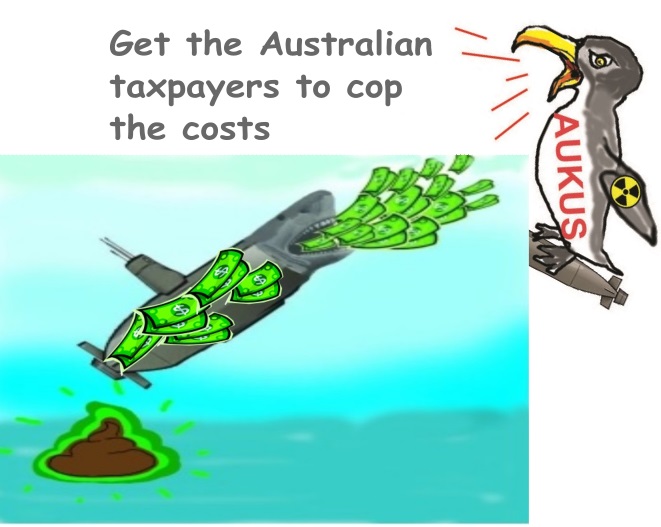
149. Robert Barwick On behalf of Citizens Party
AUKUS is the policy product of foreign interference
On 15 February 2024 Australian Strategic Policy Institute (ASPI) senior analyst Dr
Alex Bristow explicitly connected the willingness of the Australian public to bear
the growing cost of military spending that AUKUS represents, with our level of
alarm about one country—China.
“We will not generate or sustain public consent for necessary rises in defence
spending and the whole-of-nation effort required in the years ahead until our
national security establishment stops treating China as a taboo subject in public”,
Dr Bristow wrote in an article on the ASPI website (https://www.aspi.org.au/strateg
ist-posts/we-mustnt-be-afraid-to-mention-china-in-public-discussions-about-defenc
e/).
There you have it—focus on China to “generate” public consent for mega-spends
like AUKUS.
However, this was not mere advice from ASPI; the AUKUS Public Inquiry should
examine how ASPI has taken the lead on focussing Australians’ attention on China
for more than a decade, and how it has been funded by the US and UK
governments, as well as American and British weapons manufacturers, to do so.
Having paid ASPI in the low tens of millions of dollars over more than a decade to
make repeated, mostly unfounded and always exaggerated accusations against
China in Australia, the US and UK governments and their biggest weapons
companies have already received billions of Australian dollars through the AUKUS
program.
This is the universal business model of the military-industrial complex: sponsor
think tanks that relentlessly hype tensions and threats; cash in with defence
contracts.
Analysis by APAC News published 31 March 2021 (ASPI sponsors collect billions
from Defence) showed that ASPI received almost $7 million in sponsorship and
commercial revenue the previous year, the majority from foreign governments and
weapons companies.
APAC News reported that since 2001, weapons companies that sponsored ASPI
had collectively received more than $51 billion in contracts from the Australian
government.
Because of its funding, ASPI became a specialist in hyping a China “threat”
narrative.
The AUKUS agreement was announced later in 2021 following an intense period of
relentless anti-China commentary from ASPI.
The quality of ASPI’s analysis varies, from sometimes competent analysis, such as
its assessments of China’s technological capabilities, to ridiculous, baseless
fearmongering.
For example, this year is the 10th anniversary of a particularly embarrassing
instance of ASPI inciting baseless hysteria. In 2016, when Australia conducted its
first online census, the Australian Bureau of Statistics (ABS) census website portal
failed, overwhelmed by the public trying to access it on census night. ASPI
Executive Director Peter Jennings immediately jumped to shape the media
narrative by claiming China hacked the census. “I think we’ve had quite a
sophisticated attempt to take down the ABS and maybe also to steal information,”
he told the ABC. “They [China] have the capacity to do this and the interest to do
it.” The ABS later concluded that there was no hack—the IBM hardware hosting the
website was inadequate for the job.
The census claim was a harbinger of things to come, as 2016 coincided with a shift
in US policy towards confronting the rise of China, which ASPI faithfully
represented in Australia.
For a decade, ASPI has pumped out allegations of Chinese cyberattacks on
Australian institutions, foreign interference in Australian politics and the Australian
Chinese community, Chinese infiltration of Australian universities through
academic research collaboration, Chinese bots manipulating Australian social
media, and more.
Because the Citizens Party regularly fact-checked ASPI’s claims, and debunked
most of them, it also became ASPI’s target: an ASPI report in 2023 claimed that
Chinese bot accounts on Twitter were boosting two things: statements by former
prime minister Paul Keating, and the Citizens Party’s campaign to stop banks from
closing branches in regional Australia! (The bot accounts ASPI identified had no
followers and no engagement, and ASPI didn’t prove they were Chinese.)
In this period the Australian media has amplified ASPI’s claims, and ASPI personnel
became permanent, ubiquitous fixtures on media interviews and current affairs
shows when anything to do with China was in the news—without ever declaring
the conflict of interest from their funding.
The Citizens Party urges the AUKUS Public Inquiry to examine the way the foreign
interests which are profiting from AUKUS used ASPI to shape public opinion in
Australia to accept the bill for AUKUS.
Success at last! News Corpse is after me!

Noel Wauchope, 3 Oct 26, https://wauchope.substack.com/p/success-at-last-news-corpse-is-after
And here was I, all these years, thinking that only a few ant-nuclear nuts ever bothered to read my Australian website antinuclear.net. I am so chuffed that News Corpse has finally recognised my work.
It turns out that News Corpse has suddenly noticed my wicked infringement of copyright, that I did, just the bare 8 years ago. Yes, this evil act occurred on an article about Submission 76 to Senate Inquiry on Selection process for a national radioactive waste management facility in South Australia. It was about a farmer, Donald Fels, who opposed nuclear waste dumping in his area. What News Corpse didn’t like, was that I had used a picture of this lovely rural area, with animals grazing. I must have gathered this image from the Internet, and apparently, it was a News Corps image, and under copyright.
Interestingly, on making this discovery of my criminal action, News Corps did not bother to write to me and ask me to please remove the image, – (which I can tell you, all the others do, and I remove those immediately). No, they felt that this matter is so urgent that they employed the Visual Rights Group to demand from me both legal documentation that I had the licence to use the picture, and remuneration – – AUD $525.00, within 14 days, for misuse of its image under section 115(2) and s115(4) section 31 of the Australian Copyright Act.
Anyone who knows me at all well, will know that $525.00 is whopping for me, as I survive on a very low income. But that’s not the point. Actually I’m not sure what IS the point.
Does the use of a pretty picture of a few horses grazing, that was shown 8 years ago, somehow became suddenly important now to News Corps well-being? Or is it that they would prefer that I cease and desist from my current project, which is publishing many of the over 1000 Submissions to the AUKUS Public Inquiry? News Corps itself is strangely reluctant to publish any news at all about this Inquiry.
Last time this happened to me, it was quite a few years ago. The uranium mining company Paladin became most offended, because I quoted an article from a Mali newspaper. That article had said that the Paladin mine manager in Mali at the time was “insensitive to the needs of the local community”. Paladin sent Ashurst legal company after me. That time, a very good journalist saved me, publicising the issue in a national newspaper, and Ashurst backed down. That journalist has since gone on to build his own wonderful independent media.
Who knows what will save me this time? Meanwhile, I have immediately removed the offending picture. I just can’t bring myself to apologise to News Corpse. I mean, I usually do the polite thing. But I have in mind that old feminist chant ‘ “Don’t be too polite, girls”. I really think that it’s pathetic of News Corps to go for me so rudely. And I’d have a bit more respect for them, if they did cover this big AUKUS Public Inquiry. Of course, the submissions are already showing me that the nuclear lobby is boycotting the whole issue.
Why Britain cannot deliver SSN-AUKUS on schedule
Australia is pinning its strategic future to an overburdened, fiscally constrained UK industrial baseline.
Peter Briggs, October 1, 2026, https://pearlsandirritations.com/post/2026/10/why-britain-cannot-deliver-ssn-aukus-on-schedule/
Britain says SSN-AUKUS remains on track. But its shipyards are already stretched while new reactor and workforce capacity is still being built. Australia is betting heavily on that gap being closed in time.
The public relations narrative of AUKUS Pillar 1 rests on a singular, untested premise: that the United Kingdom can seamlessly transition from its current Astute and Dreadnought submarine programs to deliver a brand-new, complex, 10,000-tonne nuclear-powered attack submarine, SSN-AUKUS, on schedule.
Recent developments in the UK demonstrate that this political optimism is fundamentally disconnected from the physical, contractual, financial and industrial realities on the ground at BAE Systems’ shipyard in Barrow-in-Furness.
In September 2025, King Charles formally commissioned HMS Agamemnon, the sixth Astute-class submarine, into the Royal Navy. Press releases heralded a major defence milestone. Yet, far from entering active service, Agamemnon remained tied up inside the Devonshire Dock Basin at Barrow for another full year, only departing for initial contractor sea trials on 24 September 2026.
The early commissioning reverses standard Royal Navy procurement. Laid down in July 2013, Agamemnon took 13 years and two months simply to leave the dock. Her actual entry into service will not occur until mid-to-late 2027 – a 14-year construction timeline.
This ceremonial exercise illustrates a broader pattern of political messaging substituting for industrial output. Claims that steel will be cut for the first SSN-AUKUS hull at Barrow in 2027 follow the same pattern. Embarking on physical hull fabrication before completing a preliminary design review (PDR) and freezing the 3D spatial design model risks severe engineering setbacks. For SSN-AUKUS, detailed design funded under a £3.95 billion development contract running through 2028 remains under way. Without a stable PDR baseline, internal layouts, reactor integration and pipework remain in flux. ‘Cutting steel’ in 2027 will merely involve cutting test rings or material qualification modules rather than assembling an operational warship.
Yard saturation and uncontracted infrastructure
The physical state of Barrow shipyard exposes the impossibility of fast-tracking SSN-AUKUS.
The heart of Barrow’s manufacturing capability is the Devonshire Dock Hall (DDH). Currently, the DDH is full. It houses the first three Dreadnought-class ballistic missile submarines (Dreadnought, Valiant and Warspite) alongside the final Astute hull, HMS Achilles (Boat 7), while initial fabrication for the fourth SSBN (HMS King George VI) proceeds off-site. There is no physical bay space inside the primary hall to establish an SSN-AUKUS production line.
The severity of this spatial bottleneck was underlined in a recent planning application submitted by BAE Systems Marine Ltd for its North Quay site, immediately adjacent to the DDH. BAE sought municipal approval to erect a 125-metre-long temporary enclosed scaffold structure on the open quay to house overflowing component manufacturing and outfitting. In its official filing, BAE acknowledged the improvised structure was explicitly required “as a result of capacity constraints within the Devonshire Dock Hall (DDH)”.
When a major nuclear shipyard must resort to 125-metre fabric sheds on quayside aprons to handle current workloads, absorbing a new 10,000-tonne attack submarine line strains credibility.
To bypass this bottleneck, BAE Systems purchased an 18-acre former gas site at Ramsden Dock. The plan is to manufacture hull cylinders on this port land and barge them via a roll-on/roll-off (Ro-Ro) quay to the main dock basin. However, the site requires extensive clearing, re-grading and deep piling before shed construction can begin.
Crucially, while the initial £3.95 billion contract covers preliminary 3D design and basic enabling works, primary contract packages required to build these sheds and construct the Ro-Ro wharf remain unexecuted or fragmented across future budget cycles. Furthermore, in July 2026, the UK MoD awarded a £5.9 billion delivery contract strictly prioritised for the Dreadnought-class SSBN. Because Britain’s continuous at-sea deterrent takes total strategic precedence, primary nuclear engineers, dry docks and yard resources at Barrow are contractually locked into Dreadnought through to the delivery of the fourth boat in the late 2030s.
Reactor supply and logistics bottlenecks
The industrial choke point extends beyond Barrow to the nuclear supply chain at Raynesway in Derby, where Rolls-Royce Submarines manufactures all Royal Navy reactor cores.
To support both Dreadnought and SSN-AUKUS, Rolls-Royce began work to double the footprint of its Raynesway site in July 2026. Once assembled, complete PWR3 reactor modules must be transported over 150 miles by road in heavy-duty, radiation-shielded containers under armed police escort along the M6 and A590 corridors directly into the Barrow yard.
While the PWR3 reactor has been lowered into lead boat HMS Dreadnought inside DDH, manufacturing and delivering reactors for follow-on SSBN hulls alongside initial SSN-AUKUS units creates a severe industrial queue. Raynesway remains constrained by strict nuclear licensing oversight and an acute shortage of specialised nuclear-certified welding technicians.
The human and civil bottleneck
The physical sheds at Barrow may eventually be erected; however, the civil infrastructure required to support the workforce does not exist in the numbers required.
BAE Systems has expanded its Barrow workforce from 11,000 to approximately 16,000, aiming for over 18,000. In 2026, the UK House of Commons Defence Committee warned that infrastructure investment at Barrow “has already faltered”. BAE Systems formally advised local government that the shipyard requires 900 new homes to be built annually in Barrow to house incoming technicians. Current local construction struggles to deliver 200 units per year. Thousands of contractors commute daily along the single-carriageway A590, creating severe transport gridlock.
In response, the UK Government established ‘Team Barrow’ with a £200 million regeneration fund. However, Team Barrow leadership has publicly acknowledged that this seed allocation falls far short, stating that £400 million to £800 million in combined investment will be required to tackle the town’s infrastructure deficit. Furthermore, this funding is designated for general municipal upgrades – schools, healthcare and roads – rather than industrial shipyard tooling.
Britain lacks the localised housing, transport capacity and specialised nuclear-certified trade workforce to operate two concurrent submarine construction lines.
Strategic imperatives: NATO vs Indo-Pacific overreach
This industrial overstretch must be viewed through the unforgiving lens of Britain’s fiscal deficit and shifting strategic priorities.
Under mounting financial pressure, the UK Ministry of Defence faces a multibillion-pound structural budget shortfall. The UK Strategic Defence Review has formalised a mandatory ‘NATO-first’ posture, directing military resources, capital investment and force readiness primarily toward European defence and deterrence against Russian aggression. Facing a security crisis on its continental doorstep, Whitehall cannot afford to bankroll massive, long-horizon industrial expansions designed to project power into the Indo-Pacific.
Sustaining Britain’s continuous at-sea deterrent via Dreadnought consumes the lion’s share of UK capital expenditure. Coupled with urgent demands to re-arm land and air forces in Europe, attempting to design and build a bespoke 10,000-tonne attack submarine for Australia would appear to be a lower priority.
Industry is striving to recover from decades of systemic neglect that has left operational SSN capability immobilised and the continuous at-sea deterrent under strain. Political ambition cannot overrule the laws of industrial capacity, national economics and engineering physics.
Australia is pinning its strategic future to an overburdened, fiscally constrained UK industrial baseline. The physical and financial evidence at Barrow – an unbuilt off-site facility, a saturated main assembly hall requiring temporary outdoor work space, unfinalised contracts for primary manufacturing sheds, acute housing deficits, severe reactor supply chain queues, and a UK defence budget deficit whilst pivoting back to Europe – demonstrates that Britain cannot deliver SSN-AUKUS on the promised timeline.
Relying on ‘schedule-free’ assurances while ignoring these constraints guarantees a severe capability gap for Australia. It is time for Washington, London and Canberra to acknowledge these ground realities and undertake a fundamental reappraisal before industrial overreach turns into operational and political catastrophe.
Peter Briggs
Peter Briggs retired from the RAN in 2001 after a 40-year career, specialising in submarines. This included two submarine commands, command of the RAN Submarine Squadron, director of Submarine Policy and Warfare and Head of Submarine Capability Team, established to rectify Collins introduction into service issues. He was the president of the Submarine Institute of Australia from 2006-09 and is a frequent contributor to public debate on Australian submarine matters.
1 This month
.
Australians deserve the truth
about
AUKUS – https://aukuspublicinquiry.com/

PETITION – To: Prime Minister Anthony Albanese and the Australian Labor Government

of the week – Australians for War Powers Reform (AWPR)
To see nuclear-related stories in greater depth and intensity

