Submission to the AUKUS Public Inquiry – no plan for dealing with the nuclear wastes – John Thompson.
170. John Thompson
Neither the US nor the UK have solved the problem of military nuclear waste
despite it being a problem for more than 50 years.
The US Navy handles its nuclear waste jointly with the Department of Energy
(DOE). The Navy splits the waste into two main categories: spent nuclear fuel
(high-level waste) and the reactor compartments themselves (low-level waste
High-Level Waste: Spent Nuclear Fuel
When a naval reactor is defueled or a ship is decommissioned, the spent nuclear
fuel is taken from the vessel at a specialized shipyard—usually the Puget Sound
Naval Shipyard in Washington or the Norfolk Naval Shipyard in Virginia. It is placed
into massive, heavily shielded shipping containers designed to withstand train
crashes and fires. It travels via rail to the Naval Reactors Facility at the Idaho
National Laboratory (INL) in a remote desert area.. Once there, it is cooled in water
pools and eventually transferred into dry storage casks made of thick steel and
concrete. It will remain here until a permanent national underground repository is
built.
Low-Level Waste: The Reactor Compartments
This part of the Navy’s nuclear disposal process involves the empty reactor hulls.
The remaining steel reactor compartment is still radioactive due to the metals
exposed to radiation during operation. At the Puget Sound Shipyard, workers cut
the reactor compartment completely out of the ship’s hull. They seal it by welding
thick steel plates over all openings, turning the entire compartment into its own
huge leak-proof shipping container. The massive steel cylinder (often weighing
between 1,000 and 1,500 tons) is loaded onto a specialized barge. It is towed
down the Pacific coast, enters the Columbia River, and travels inland to the port of
Benton. At the river port, a massive multi-wheeled high-capacity transporter
moves the container off the barge and slowly drives it across the desert roads to
the Hanford site in Washington State. There the load is lowered into Trench 94, a
massive open excavation. These containers are expected to remain structurally
sound out in the open for more than 500 years, hoping there will be no low-level
radiation leaks into the surrounding environment
The British Royal Navy handles its spent nuclear materials through a very
fragmented strategy.
High-Level Waste: Spent Fuel Cores
When a Royal Navy nuclear-powered submarine reaches the end of its service or
requires refueling, it is taken to the Devonport Royal Dockyard in Plymouth, where
the highly radioactive spent nuclear fuel core is extracted from the submarine. It is
then loaded into heavily shielded, robust transport containers and moved across
the country by rail to Sellafield, the centre of the UK’s nuclear industry.
At Sellafield, the spent fuel is placed into specialized cooling ponds for several
years to lower its temperature and radiation levels. Then it is transferred to
modern, heavily engineered dry-storage facilities on-site. Like the US, the UK plans
to keep this fuel in interim storage until a permanent national Geological Disposal
Facility (GDF) can be located and constructed deep underground. No progress has
been made on this.
Intermediate & Low-Level Waste: The Submarines
Unlike the US Navy, which carves out its reactor compartments and deposits them
in a large open desert trench, the UK has faced a massive historical backlog with
its retired hulls. For decades, the UK has not have a finalized land-based disposal
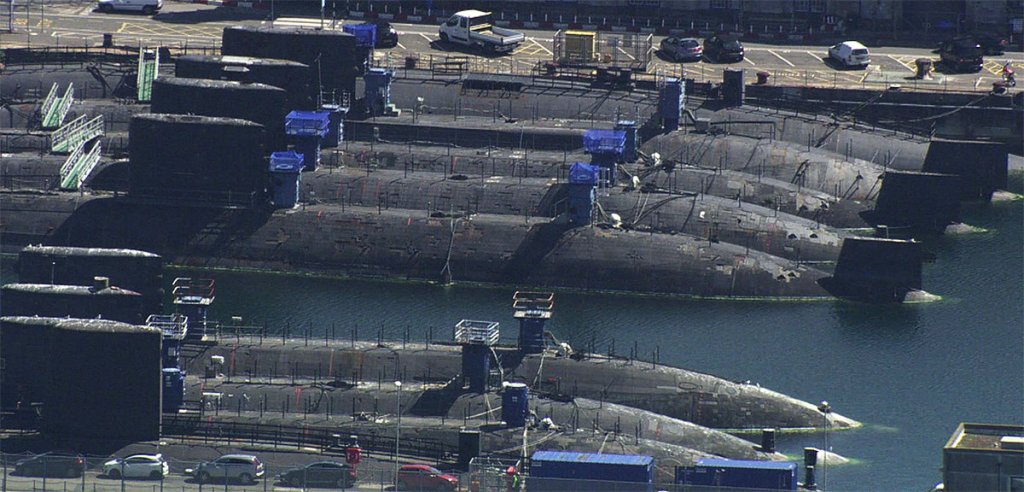
site for the reactors. Instead, the Royal Navy currently has over 20
decommissioned nuclear submarines sitting afloat in non-tidal basins at two
dockyards. Some of these “laid-up” vessels have been waiting out-of-service for
longer than they were actually operational.
To attempt to resolve this problem, the UK Ministry of Defence launched the
Submarine Dismantling Project. Some of the minor low level radio-active materials
will be sent to a civilian Low Level waste respository. The High Level waste is to be
directed to so-called interim storage facilities giving a century to find and establish
a deep geological repository.
These are Australia’s two partners in the AUKUS project. Neither of them has been
able to deal adequately (or safely) with the nuclear waste problem. Yet we are
entering into a partnership with them. Our government has no plan for dealing
with the problems of nuclear materials and waste (and possible accidents) and
therefore no estimate of costs, timelines, locations, etc. In my view, it is entirely
irresponsible, indeed reprehensible, to allocate very substantial sums to the
acquisition of nuclear equipment or permit such equipment to be operated from
Australia without appropriate strategy and plans and costing for this matter.
No comments yet.
1 This month
.

Australians deserve the truth
about
AUKUS – https://aukuspublicinquiry.com/

PETITION – To: Prime Minister Anthony Albanese and the Australian Labor Government

of the week – Australians for War Powers Reform (AWPR)
To see nuclear-related stories in greater depth and intensity


Leave a Reply