Is Australia Becoming the Forward Base of the American Empire in the Asia-Pacific?

3 November 2026 AIMN Editorial, By Terry Dwyer
Will Australia become part of the American Empire’s strategic pivot to Asia – and, in doing so, place itself in the firing line of a potential conflict with China, our largest trading partner?
It is a question Australians should be asking before it is too late.
Through AUKUS, the Five Eyes intelligence alliance, the US Force Posture Agreement and an ever- expanding programme of joint military exercises, Australia is becoming increasingly integrated into America’s military and strategic operations in the Indo-Pacific. US Marines rotate through Darwin, American military aircraft and naval vessels have increasing access to Australian facilities, and plans are advancing for expanded submarine cooperation, military infrastructure, logistics and the pre-positioning of military supplies.
These arrangements have been presented as necessary for Australia’s defence, but they also raise a serious question: are we strengthening our own national security, or increasingly positioning Australia to serve as a forward operating platform for American strategic objectives in a region where tensions with China have been encouraged?
China is Australia’s largest trading partner. Our economies are deeply interconnected, our prosperity depends heavily on regional stability, and there is no compelling Australian national interest in becoming a battlefield in a war between two major powers. China has never attacked Australia in fact Estimates of total Chinese deaths during the Second Sino-Japanese War (1937–1945, or 1931–1945) generally range from 14 to 20 million with total casualties (killed and wounded) exceeding 35 million according to historical and official data.
Most Australians are probably unaware that China was one of Australia’s Allies during World War II. The Chinese people made an extraordinary sacrifice, enduring years of brutal Japanese aggression and tying down enormous numbers of Japanese troops. It is not unreasonable to argue that China’s resistance contributed significantly to Japan’s inability to expand its military ambitions further into the Pacific. Had Japan been able to commit more of its military resources southwards, Australia’s own fate might have been very different. Perhaps Australian historians might otherwise be writing about the Rape of Townsville alongside the Rape of Nanking – one of the most horrific and shamefully neglected atrocities of World War II.
Nor should we ignore the historical record of the country on which we increasingly depend for our security. The United States has a long history of military invasions, occupations, covert operations, coups and attempts to influence or overthrow foreign governments. The following timeline documents many of those interventions, from Hawaii in 1893 to the more recent conflicts and military operations of the twenty-first century.
This is not an argument that China should be beyond criticism, nor that Australia should abandon all its alliances. It is an argument that Australia’s foreign and defence policies must be determined by Australia’s interests, not automatically aligned with the ambitions of a more powerful ally. Former Australian Prime Minister Malcolm Fraser, once a strong supporter of the American alliance, came to a stark conclusion in his later years. In his 2014 essay America: Australia’s Dangerous Ally, he wrote:”The relationship with America, which has long been regarded as beneficial, has now become dangerous to Australia’s future.”
Fraser warned that Australia’s dependence on Washington could compromise our sovereignty and leave us exposed in a major Pacific conflict. His warning deserves renewed attention today.
The question Australians should have been asking for many years is, not whether America is our friend. It is whether we can remain friends and allies without surrendering our independent judgement, our sovereignty or our right to decide which wars Australia will fight? To this question many would argue Australia is sleep walking with a false sense of security around both sovereignty, control of foreign policy and our cultural identity.
The US needs reminding that Empires throughout history have believed their power was permanent. Yet even the mightiest eventually discover that their influence has limits, their wars have consequences and their time will come.
As Percy Bysshe Shelley wrote in Ozymandias: “Look on my Works, ye Mighty, and despair!”
History has a habit of reminding even the most powerful empires that they, too, are not eternal.
US-backed coups, regime changes and interventions: 1893–2026
A historical timeline of American military intervention, covert operations, political interference and support for regime change.
The history of American intervention overseas is long and varied. It includes direct military invasions and occupations, CIA-backed coups, covert operations, financial and political support for opposition movements, and military assistance to governments involved in civil conflicts.
Not every event in this timeline involved the same degree or type of American involvement. In some cases, the United States directly organised or carried out military action. In others, it supported local forces, encouraged political change, or acted after a coup had already occurred. Some cases remain disputed by historians.
The Timeline (this article lists 51 American milittary interventions ………………………………………………………………………………………………
52. Iran, 2026
On 28 February 2026, the United States and Israel launched a major series of strikes against Iran, targeting military infrastructure, nuclear-related facilities, missile capabilities and senior political and military leadership. The attacks killed Supreme Leader Ali Khamenei and triggered Iranian retaliatory strikes across the region. The conflict developed into a wider regional war, with ceasefire efforts and renewed hostilities during 2026.
The longer-term consequences may prove very different from those anticipated by Washington and Tel Aviv. A number of former American military officers and intelligence analysts have publicly questioned whether the campaign has achieved its intended strategic objectives.
Retired US Army Colonel Douglas Macgregor described Iran as the clear winner of the conflict, saying “it was emerging as a great power.” Former CIA officer Larry Johnson argued that Iran now has an exceptionally strong and unified leadership, strengthened by the shared military experience of its senior figures. Retired US Army Lieutenant Colonel Daniel Davis went further, writing in Stars and Stripes that America’s war against Iran had already been lost at the strategic level. Retired US Air Force Lieutenant Colonel Karen Kwiatkowski also questioned the assumptions behind the intervention, arguing that American and Israeli leaders had underestimated the resilience and strength of the Iranian people.
These are significant criticisms from individuals with experience inside the American military and intelligence establishment. Their assessments raise a fundamental question: has the attempt to weaken Iran instead strengthened its resolve, consolidated its leadership and increased its regional influence?
There may also be consequences for America’s own position. Davis has warned that the continuing conflict could erode US military capacity and force an involuntary retreat from other regions. The possibility that this war could ultimately accelerate a substantial reduction in America’s military presence in the Middle East deserves serious consideration. Will the US be forced to leave the region permanently?
Empires throughout history have believed their power was permanent. Rome, Britain and countless others discovered that military might and political dominance do not guarantee immortality. Perhaps the most enduring warning comes from The great British historian Edward Gibbon, in The History of the Decline and Fall of the Roman Empire (1776), wrote:
“The decline of Rome was the natural and inevitable effect of immoderate greatness. Prosperity ripened the principle of decay; the causes of destruction multiplied with the extent of conquest; and, as soon as time or accident had removed the artificial supports, the stupendous fabric yielded to the pressure of its own weight.”
History has a habit of reminding even the most powerful empires that their time, too, will come.
Resources.…………………………………………………………………………………………..https://theaimn.net/is-australia-becoming-the-forward-base-of-the-american-empire-in-the-asia-pacific/
No comments yet.
1 This month
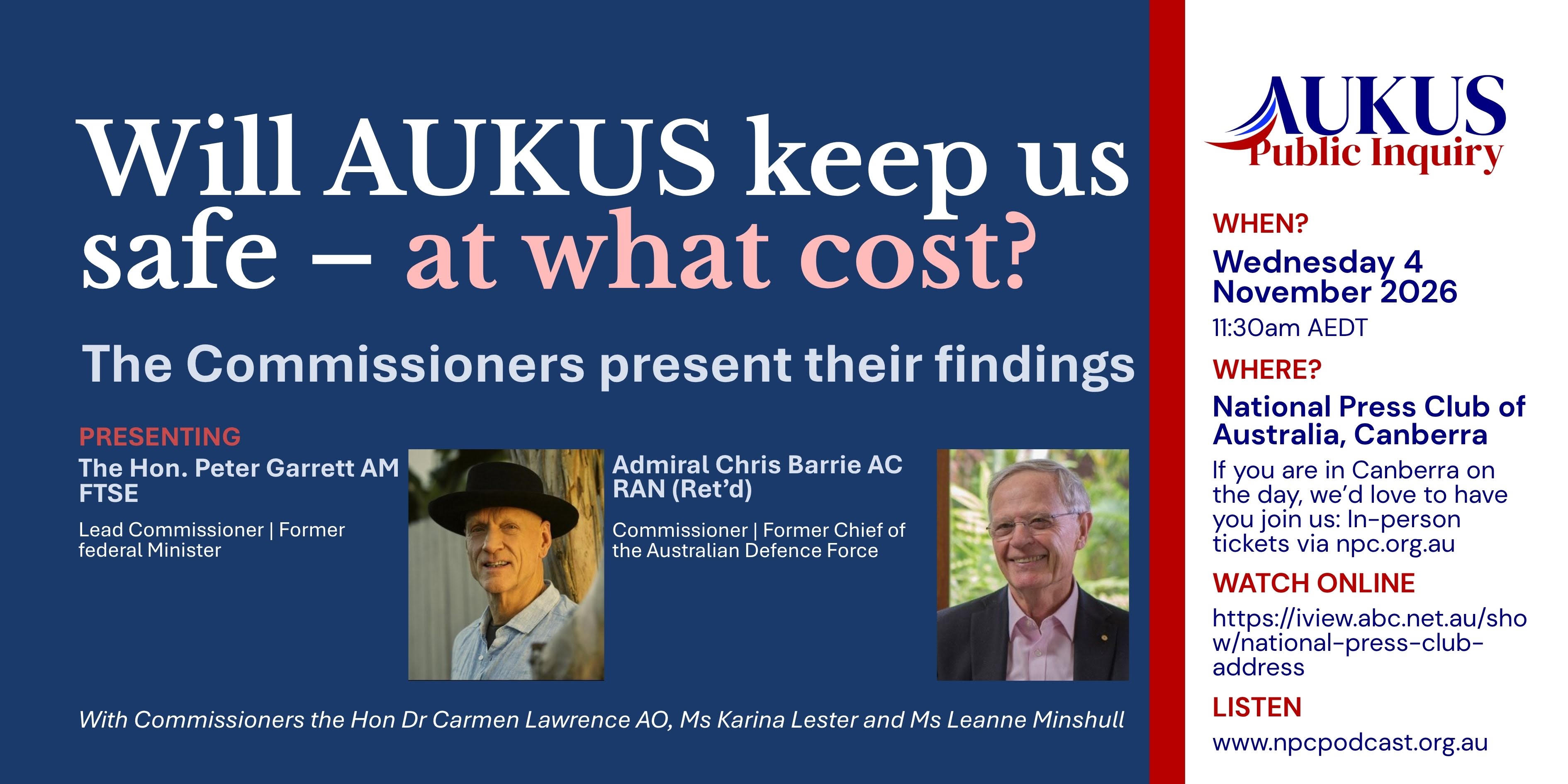
4 November – Will AUKUS keep us safe – at what cost?
the Commissioners of the AUKUS Public Inquiry present their findings at the National Press Club of Australia in Canberra. iview.abc.net.au/show/national-press-club-address

Submissions to the federal government’s new draft framework close on the 13th November 2026.
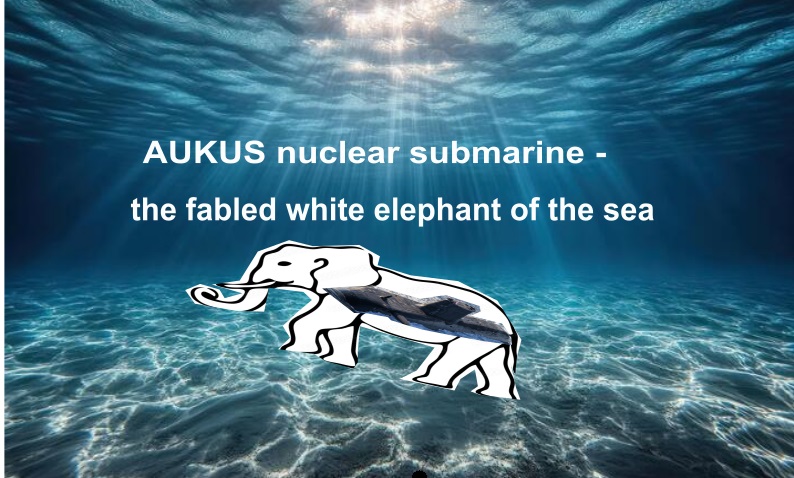
Australians deserve the truth
about
AUKUS – https://aukuspublicinquiry.com/

PETITION – To: Prime Minister Anthony Albanese and the Australian Labor Government

of the week – Australians for War Powers Reform (AWPR)
To see nuclear-related stories in greater depth and intensity


Leave a Reply