Submission to the AUKUS Public Inquiry – AUKUS a poorly planned process, hastily agreed on by Labor – Peter Hayes

No.268 https://drive.google.com/file/d/1kF0ye1Of2ZBGBX_Wm-VzURxDfAXueUNT/view
I am Peter Hayes, a former RAAF Group Captain, having age-retired in July
2011with 46 years Service, including two terms in HQADF. During the first term, in
1982, I completed the Defence Systems Management Course its purpose being to
deepen participant’s understanding of the Force Capability Development process.
I have also completed RAAF and Joint Service Staff Courses and a Masters in
Defence Studies through the Australian Defence Force Academy (UNSW).
ADF Force Structure and Capability Development is a complex tri-Service process
at the centre of the Defence reforms which began in the period 1971-75 and which
have been evolving since. The process is rooted in a series of major high-level
Defence Committees, namely the Force Structure Committee (FSC) and the
Capability Development Committee (CDC) where the senior leadership of the three
Armed Services engage with the senior civilian leadership of various defence
support functions including intelligence, budget, and systems analysis to identify
the best way to defend Australia.
The process begins with a full spectrum situation awareness drawing on
intelligence assessments from all available sources. That awareness is then paired
with the national defence strategy as the primary influencer for shaping force
structure and capability development. A multi-domain balanced force evolves from
this process. Capital equipment acquisition is an outcome of the Force Capability
Development process.
The manner in which the AUKUS Submarine acquisition was announced, clearly
revealed the absence of a deliberate prior analysis of threat, strategy and
capability development needed to inform the preferred equipment and source.
The Labor Opposition acceptance – within a day or so – of the governing coalition’s
decision and announcement, left no room to validate via the well-tested,
well-defined and reliable Defence Capability and Equipment Acquisition process.
Staged conclusions need not be classified.
How the former coalition government decided such an outcome is mysterious to
everyone – except perhaps to a small coterie of senior US naval submariners
hypothesizing how to conceal nuclear armed submarines in a larger conventional
fleet to deceive and frustrate opponents. Such foreign musings do not belong in
the realm of Australia’s Force structure and capability acquisition deliberations.
This is a matter of vital national importance demanding profoundly detailed
analysis and resolve.
How the ADF would use such a capability is an equally vital element of our national
defence strategy; none of which was analysed prior to the AUKUS announcement.
The fleeting analysis since is unworthy of our national Defence leadership
overseeing the process.
The Australian Parliament, through the Defence leadership responsible for the
Force capability and equipment acquisition processes must be afforded the
opportunity to validate the AUKUS pillar one decision via the established and
trusted process.
There are grave consequences of the AUKUS Pillar 1 decision not being the
outcome of that process. They include:
a. a nuclear-powered submarine capability freaking the regional capability balance
in turn jeopardising Australia’s security.
b. The costs/impacts of AUKUS on Australia’s economy, workforce, industry, and
research sectors, and the opportunity costs for other national priorities not being
fully assessed and analysed.
c. AUKUS nuclear accidents in port or Australian waters cannot be absolutely
averted or contained, nuclear waste can’t be stored safely indefinitely without
quantified environmental and community impacts.
d. The lack of transparency, public consultation, and parliamentary oversight
regarding AUKUS decisions arousing public uncertainty and doubt.
e. technological advancements of AUKUS Pillar 2 may be achievable via other
means
f. the strategic rationale for Australia’s commitment to AUKUS should be assessed
in the context of current geopolitical developments – a full-spectrum situation
analysis based on our own sources and Australian intelligence analysts.
g. Uncertain impacts of AUKUS on the ADF force capability needs.
h. Uncertain cost-effective and achievable alternatives to AUKUS – that may better
enhance Australia’s peace and security.
i. arousing suspicion in Australia’s relations with China, ASEAN, and the Pacific
Islands nations, including commitments under the Treaty of Rarotonga (South
Pacific Nuclear Free Zone Treaty).
j. AUKUS Pillar 1 submarines failing to deliver on time and on budget.
I do not support the proposed AUKUS Pillar 1 submarine acquisition without a prior
validation via the Defence Force Structure and capability acquisition process.
No comments yet.
1 This month
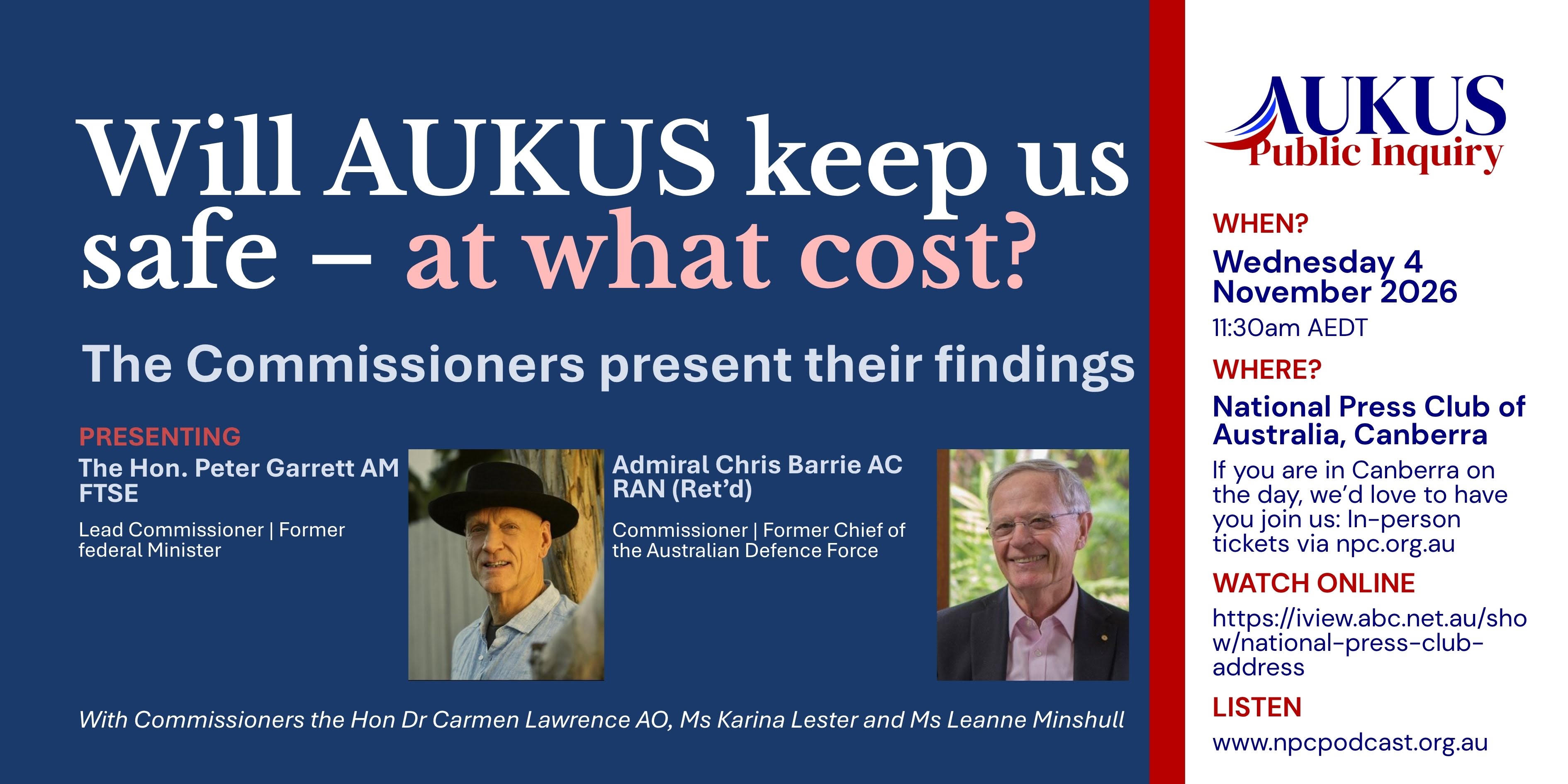
4 November – Will AUKUS keep us safe – at what cost?
the Commissioners of the AUKUS Public Inquiry present their findings at the National Press Club of Australia in Canberra. iview.abc.net.au/show/national-press-club-address
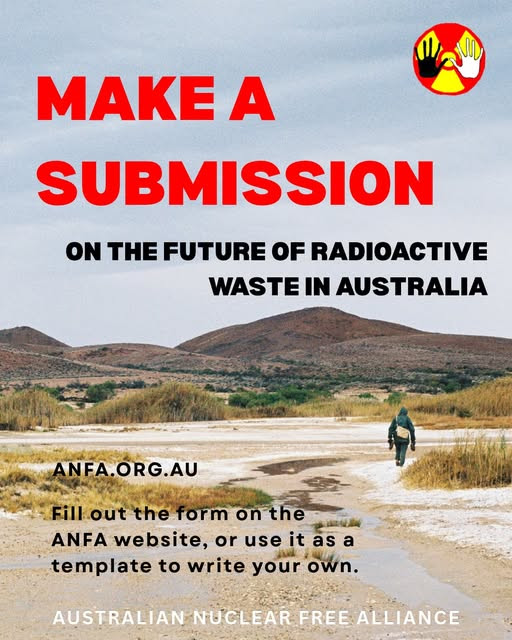
Submissions to the federal government’s new draft framework close on the 13th November 2026.
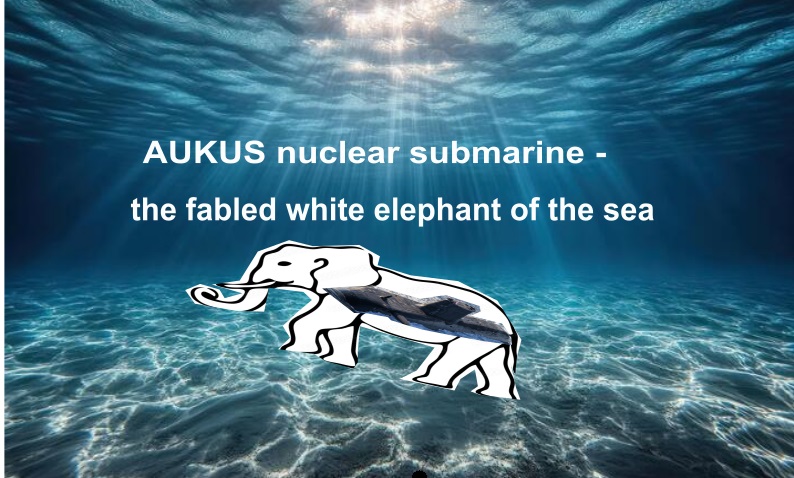
Australians deserve the truth
about
AUKUS – https://aukuspublicinquiry.com/

PETITION – To: Prime Minister Anthony Albanese and the Australian Labor Government

of the week – Australians for War Powers Reform (AWPR)
To see nuclear-related stories in greater depth and intensity


Leave a Reply