SUBMISSION TO AUKUS PUBLIC INQUIRY – A submarine deal thoroughly unfair to Australia – Malcolm Turnbull
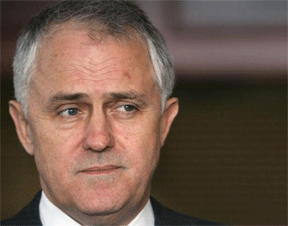
The Pillar I submarine acquisition, as currently structured, was created by the Morrison Government and adopted by the Albanese government. It is a bipartisan error; a submarine deal that will likely result in Australia not receiving any submarines at all.
It will certainly leave Australia with long gaps in submarine capability. The AUKUS bargain is thoroughly unfair to Australia. It makes Australia even more dependent on the United States as the US is becoming, by design, a less dependable ally
No.396 The Hon. Malcolm Turnbull AC 29th Prime Minister of Australia EXTRACTS
https://drive.google.com/file/d/1cR2wrfB0Xjru0bH_DI1winCRrBoUBa9y/view
SUMMARY
I make this submission as a former Prime Minister of Australia and as a citizen with serious
concerns about the strategic consequences of the AUKUS arrangements.
I have been on the public record since AUKUS was announced by my successor in
September 2021, and have written and spoken publicly in Australia and internationally about
the risks embedded in the Pillar I submarine acquisition.
I was so concerned about the lack of public discussion and debate that I convened the
Sovereignty and Security Forum in April 2025 with a second forum held in partnership with
the University of New South Wales in March 2026. My position is consistent and well
documented. This submission draws those arguments together for this Inquiry.
I am a supporter of the alliance with the United States of America. The ANZUS Treaty and
the broader architecture of intelligence, military, and diplomatic cooperation with Washington
have been indispensable to Australian security for over seventy years. Nothing in this
submission should be read as a rejection of that alliance.
I believe Australia is a better ally to, and friend of, the United States by being self-reliant,
enhancing our sovereign capabilities and at all times telling the Americans what they need to
know, not what they want to hear.
The Pillar I submarine acquisition, as currently structured, was created by the Morrison
Government and adopted by the Albanese government. It is a bipartisan error; a submarine
deal that will likely result in Australia not receiving any submarines at all. It will certainly
leave Australia with long gaps in submarine capability. The AUKUS bargain is thoroughly
unfair to Australia. It makes Australia even more dependent on the United States as the US is
becoming, by design, a less dependable ally.
The AUKUS agreement requires that any sale by the United States of America must not
‘degrade US undersea capabilities.’ It is a contractual and legislative constraint.1 The United
States is nowhere near meeting the conditions that would allow that transfer to proceed in the
2030’s. The UK’s submarine industrial base is in absolute disarray and the delivery of
SSN-AUKUS has been acknowledged by the House of Commons as “a lengthy and complex
undertaking” the delivery of which is attendant with very great risk. The arrival of the
SSN-AUKUS boats in the early 2040s seems highly optimistic.
I also note, with regret, that this Inquiry had to be convened by civil society rather than by the
Parliament of Australia which of the three parliaments involved has had the most at stake but
been the least curious and the least informed.
I. A SUBMARINE DEAL WITH NO SUBMARINES
The stated long run goal of AUKUS is for Australia to build and operate nuclear powered
submarines in a design and construction partnership with the UK — the SSN-AUKUS. Thus
the central foundation of AUKUS was the Australian Government cancelling a shipbuilding
partnership with France so that it could be replaced by one with Britain.
The new submarine was to be based upon the as yet undesigned SSN to succeed the Royal
Navy’s current SSN, the Astute Class. The first of the new SSN-AUKUS was to be
completed in 2041. Given the impending retirement of the ageing Collins Class boats this left
a submarine capability gap in the 2030s.
The solution was for Australia to acquire three Virginia Class submarines from the United
States through the 2030s and possibly another two if the SSN-AUKUS were late (as they
inevitably would be). Australia will now receive three second-hand Block IV Virginia-class
submarines rather than the original mix of two second-hand and one new-build. This is a
material change to the programme that puts further pressure on the SSN-AUKUS component
as the life cycle of the Virginias is 33 years.
The transfer of Virginia-class boats is conditional by design, and the conditions are clearly set
out by the United States Congress and enshrined in law. Section 1352 of the National Defense
Authorization Act for Fiscal Year 2024 (Public Law 118-31), signed by President Biden on 22
December 2023, authorises the President to transfer up to three Virginia-class submarines to
Australia. This transfer can only proceed upon Presidential certification to Congress, no later
than 270 days before any such transfer, that the sale will not degrade the undersea warfare
capabilities of the United States Navy, and, among other conditions, that the American
submarine industrial base has the capacity to meet the requirements of both the US Navy and
Australia. That certification is a legal precondition and cannot be waived. On current
submarine production rates, and with rising threats from adversaries, it is clear that a
President could not honestly make that certification today.
Congress made the American obligation to transfer submarines subject to these conditions in
order to protect America’s interests, not Australia’s. This conditionality is part of the deal and
represents a risk Australia, in its folly, assumed with open eyes. The United States can
comply with the AUKUS agreement and not sell any submarines to us if the President
determines that the US Navy cannot spare them. But this risk is not acknowledged by either
the Government or the Opposition in Australia. Neither of them have any plan to account for
it. The United States has been honest about the conditions. It is Australia that has not been
honest with itself.
The Congressional Research Service is a non-partisan research body of the United States
Congress, and has documented this risk since the inception of AUKUS……………………………………………………………………………………………………………..
So there is a very real risk Australia gets no Virginias at all. This risk is acknowledged
everywhere but in Canberra………………………………….
Australia should examine alternative submarine acquisition pathways as a matter of urgency,
II. AN ABDICATION OF SOVEREIGNTY
Beyond the delivery failure risk, there is a structural problem with the AUKUS Pillar I
arrangement: it represents an abdication of Australian sovereignty in matters of national
defence…………………………………………………………………………………………………………………..
The United States has always been a powerful ally whose benign intent we never doubted.
But we have seen big changes with the Trump administration. The international rules based
order whose maintenance was our key strategic objective is dismissed by Washington as “a
cloud castle abstraction.”…………………………………………………………………………………………
AUKUS has diminished our sovereignty. We have effectively ceded control of a Western
Australian naval base to the US Navy. Whether we get any nuclear powered submarines will
depend on political decisions in Washington and industrial developments in the US and the
UK. It is naive to imagine that the submarines, if ever acquired, could be used other than in
accordance with American wishes.
Will AUKUS enhance our security or will it simply draw Australia into a conflict with China
whether we like it or not?
III. THE FAILURE OF PARLIAMENTARY SCRUTINY
The fact that this Inquiry has been convened by civil society rather than by the Parliament of
Australia is an indictment of our democratic institutions.
Consider what is at stake. Australia is committing hundreds of billions of dollars of public
expenditure over the coming decades. We are restructuring our naval force posture. We are
transferring strategic basing rights to allied powers without any public discussion. Our nation bears the greatest risk of any party to this arrangement. Our taxpayers carry the heaviest proportionate fiscal burden. Our sailors will crew these vessels, if they ever arrive.
And yet our Parliament has been the least curious and the least informed.
There has been no comprehensive parliamentary inquiry into AUKUS Pillar I comparable in
depth or rigour to the scrutiny applied by the United States Congress or the British House of
Commons……………………… This Inquiry, whatever its formal limitations, performs a function that Parliament should have
performed. I commend those who established it and urge this Inquiry to press for full
parliamentary hearings with classified briefings made available to the relevant committees.
IV. A WEALTH TRANSFER, NOT A DEFENCE ACQUISITION
Australia has already committed approximately $3 billion to the American submarine
industrial base as a direct contribution to Virginia-class production capacity. Further billions
have been pledged to the United Kingdom. These funds are non-refundable. They are not
payments toward a specific vessel. They are capital transfers to the defence industrial bases
of our allies, with no guaranteed return in the form of an operational submarine.
Australian money channelled into the American submarine industrial base is subsidising both
the Virginia and Columbia programs simultaneously, with no assurance it benefits the one
that is supposed to deliver our boats. Australian tax payer billions poured into the UK’s
submarine industry are likewise directed at a general industrial uplift, not specifically at the
SSN-AUKUS programme. RADM Peter Briggs and others have given this Inquiry detailed
evidence on these points.
I have described AUKUS Pillar I as a massive wealth transfer from the Australian
government to the United States and the United Kingdom. The United States receives a
forward base in Western Australia, Australian capital investment in its shipbuilding industry,
Australian sailors to crew its submarines, and Australian diplomatic support, regardless of
whether a single submarine is ever transferred. The United Kingdom receives Australian
funding for an industrial base widely acknowledged to be in serious difficulty. Australia
receives, at best, the prospect of submarines in the mid-2040s and beyond.
V. THE BRITISH PILLAR: A SUBMARINE BEING DESIGNED, AN INDUSTRIAL
BASE IN DISTRESS
The problems with AUKUS Pillar I are not confined to America’s shipyards. The United
Kingdom’s contribution to this arrangement deserves equal scrutiny, and it receives almost
none from the Australian Parliament.
The SSN-AUKUS submarine that Australia is ultimately meant to operate from the early
2040s is not a vessel being built from a finished design.Following an 18-month consultation
starting in September 2021, the design was renamed SSN-AUKUS in March 2023 when
Australia joined the programme and additional US technology was incorporated. In March
2023, Vice Admiral Jonathan Mead, head of the Australian Nuclear Powered Submarine Task
Force, said the SSN-AUKUS design was “about 70 per cent mature.” A submarine design
that was 70 per cent mature in 2023, with Australia expected to take delivery of the first hull
in the early 2040s, is not a programme that invites confidence in its timeline. SSN-AUKUS is
not a product being purchased off a production line. It is a submarine being designed,
incorporating technologies from three countries, to be built simultaneously in the United
Kingdom and in Australia whose shipyards have never previously constructed a
nuclear-powered vessel……………………………………….
The nuclear reactor at the heart of SSN-AUKUS compounds those risks…………………………………………………………………………………………………………………………………………………………………………………………………………..
The state of the existing British submarine fleet tells the same story. Australia is relying on
the United Kingdom to rotate operational Astute-class submarines through HMAS Stirling as
part of the Submarine Rotational Force-West from 2027. The rationale is that Australian
submariners will gain experience operating nuclear submarines before Australia’s own boats
arrive. But the Royal Navy is in no position to spare operational submarines……………………………………………………………………………………………..
insist that Australia’sParliament be told clearly what contingency plans exist if the British industrial base cannot
deliver reactor cores on schedule; what that means for Australia’s SSN-AUKUS delivery
dates; and what Australia’s legal remedies are if the United Kingdom’s contribution to this
programme falls materially short of what was promised.
VI. BUDGET CONSIDERATIONS
The AUKUS programme expands with each budget cycle regardless of what it delivers, and
systematically crowds out the other capabilities on which Australia’s genuine near-term
defence depends…………………….
The question this Inquiry should press to answer, and which Parliament has not yet had the
resolve to ask, is how much AUKUS will cost both financially, and what is the opportunity
cost of the AUKUS programme when it comes to alternative capabilities that could keep
Australia safe?…………………………………………………………………….
VII. CONCLUSIONS AND RECOMMENDATIONS
This Inquiry should record the following findings:
- The AUKUS Pillar I submarine delivery timeline is not credible on current evidence.
The United States has not achieved, and is not trending toward, the production rate
necessary to transfer Virginia-class submarines to Australia while meeting its own
force structure requirements. The Congressional Research Service, the United States
Navy, and Admiral Franchetti have all confirmed this publicly. - The United Kingdom’s submarine industrial base faces delivery risks of the highest
severity, as confirmed by the British Government’s own project assurance system and
by the House of Commons Defence Committee. The Core Production Capability
programme for reactor cores retains a Red rating. Australia’s SSN-AUKUS delivery
timeline depends on the resolution of these British industrial difficulties, over which
Australia has no control and limited visibility. - The AUKUS arrangement as structured carries a significant risk that Australia will
enter a period of zero submarine capability as the Collins Class retires. This would be
the most serious failure of Australian defence planning in modern history. - The terms of the AUKUS arrangement represent a meaningful reduction in Australian
sovereignty. - The absence of adequate parliamentary scrutiny of these commitments is a democratic
failure. Parliament must institute urgent, comprehensive committee hearings with
access to classified briefings to fulfil its constitutional responsibilities. - Australia should examine alternative submarine acquisition pathways as a matter of
urgency, including reopening discussions with France regarding the Suffren-class, to
ensure Australia is not left defenceless in its own
No comments yet.
1 This month
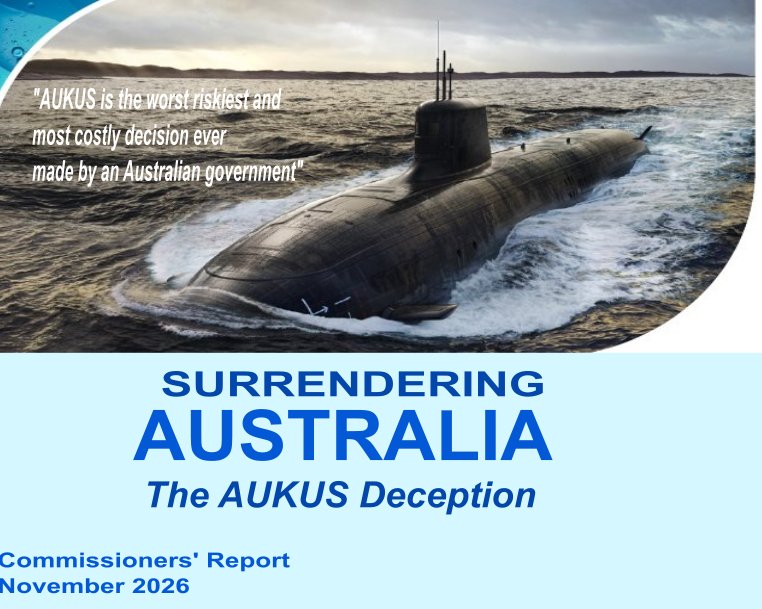
Read the Public Inquiry Report, the Commissioners’ report, Surrendering Australia: The AUKUS Deception is available to download for free at aukuspublicinquiry.com. Or just watch the replay of the National Press Club Luncheon.
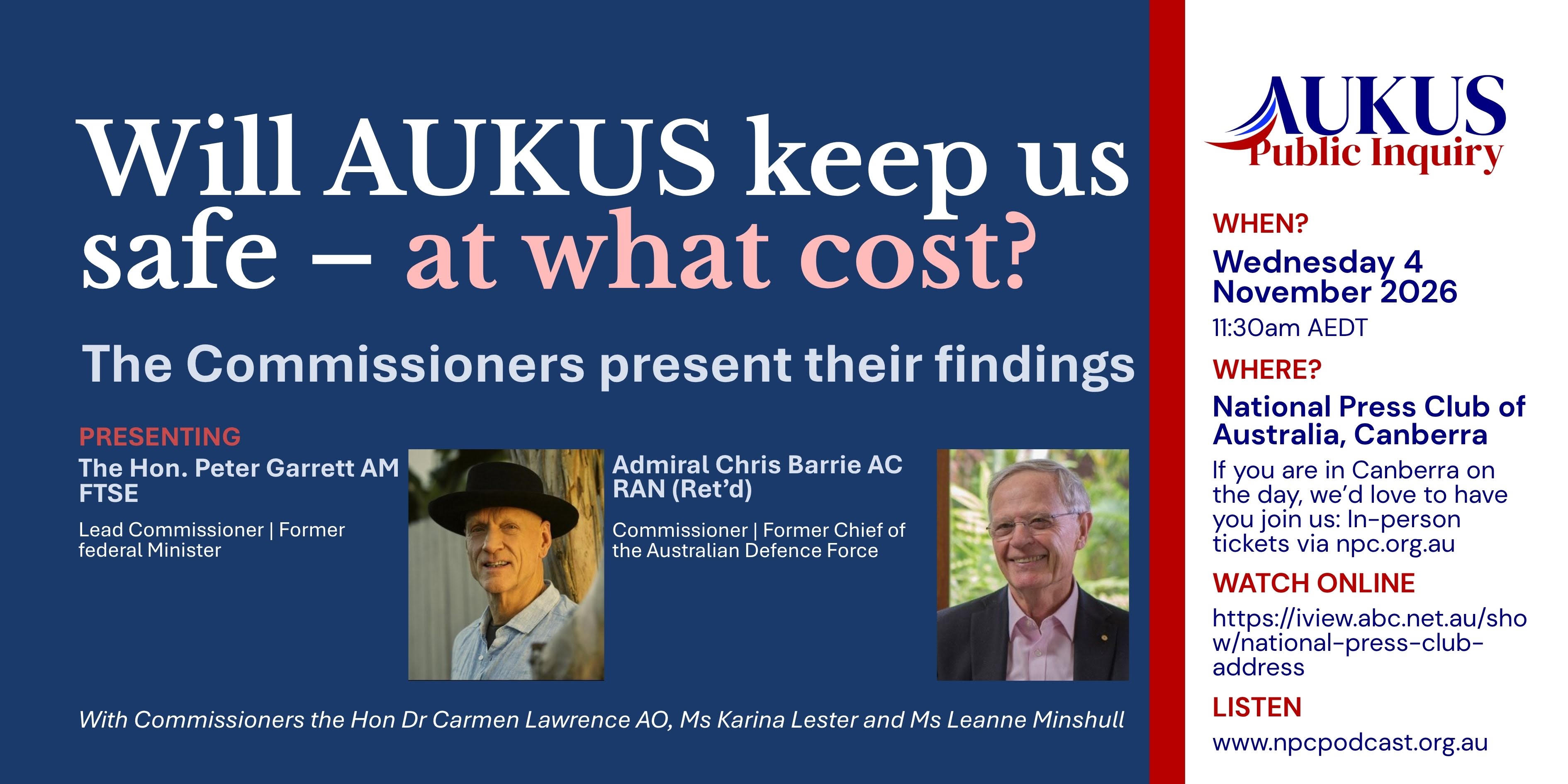
4 November – Will AUKUS keep us safe – at what cost?
the Commissioners of the AUKUS Public Inquiry present their findings at the National Press Club of Australia in Canberra. iview.abc.net.au/show/national-press-club-address
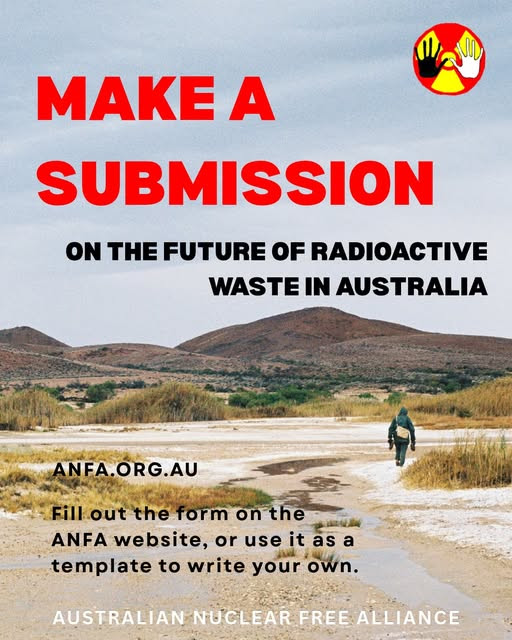
Submissions to the federal government’s new draft framework close on the 13th November 2026.
Australians deserve the truth
about
AUKUS – https://aukuspublicinquiry.com/

PETITION – To: Prime Minister Anthony Albanese and the Australian Labor Government

of the week – Australians for War Powers Reform (AWPR)
To see nuclear-related stories in greater depth and intensity


Leave a Reply