12.1 trillion yen ($82 billion) spent so far on Fukushima nuclear disaster

TEPCO’s Fukushima No. 1 nuclear power plant with rows of tanks storing treated wastewater
November 7, 2022
Around 12.1 trillion yen ($82 billion) has already been spent to deal with the 2011 disaster at the Fukushima No. 1 nuclear power plant, according to sources at the Board of Audit of Japan.
That means more than half of the government’s total estimated cost of 21.5 trillion yen, including compensation payments and reactor decommissioning expenses, has been used in the 11 years since the meltdowns occurred.
However, the nuclear decommissioning process is not going smoothly, and there are fears that the planned discharge of treated radioactive water from the plant into the sea could damage the reputations of the disaster-affected areas.
Expenses could still expand, and the BOA on Nov. 7 asked the government to review its projected cost.
The BOA also asked the government to explain how the public would bear the cost if it is reviewed.
The government, however, said the cost will likely not increase.
“We sincerely listen to various views but at least at the moment, we do not believe the cost will surpass the estimated figure, and we do not plan to review it,” said an official for the Agency for Natural Resources and Energy.
The BOA studied costs incurred up until fiscal 2021.
The breakdown was: 7.1472 trillion yen for damages paid to people affected by the disaster; 2.9954 trillion yen for decontamination-related costs; 268.2 billion yen related to temporary storage facilities for contaminated materials; and 1.7019 trillion yen for nuclear decommissioning work and dealing with contaminated water.
The BOA in 2018 calculated the total cost incurred until the end of 2017 was around 8.6 trillion yen.
The government has repeatedly revised its estimate of the cost.
In 2016, it nearly doubled its estimate from 11 trillion yen to 21.5 trillion yen.
Expenses for damages, decontamination work, or activities related to temporary storage facilities are categorized as “compensation costs.”
The government pays the “compensation costs” with money borrowed from financial institutions or through other means.
Such debts are paid back using revenue from electricity companies across Japan collected through electricity bills or tax revenue.
Tokyo Electric Power Co., operator of the stricken plant, and other parties published an “estimated compensation cost” of 12.5865 trillion yen as of April.
However, this figure doesn’t include projected damages to compensate businesses and others for reputational damage caused by the treated water being discharged into the sea.
Also, seven court rulings have ordered the government and TEPCO to pay damages to those who fled the disaster more than the figures recommended in the interim guidelines published by the Dispute Reconciliation Committee for Nuclear Damage Compensation.
The committee was established within the Ministry of Education, Culture, Sports, Science and Technology.
These seven rulings have been finalized. If the guidelines are reviewed, the recommended figures for damages could increase.
A BOA official said these two points–damages for reputational damage and damages for evacuees–could raise the cost to deal with the accident, including the amount the public will have to bear.
TEPCO pays for all nuclear decommissioning work and dealing with contaminated water.
According to the BOA, the breakdown of the costs in this area in the 11 years after the accident was: 195.7 billion yen for removing nuclear fuel from spent fuel pools; 182.1 billion yen for dealing with contaminated water and treated water; and 37.1 billion yen for removing melted fuel debris from nuclear reactors.
Removing fuel debris is said to be the most difficult task in the process of decommissioning, and the government estimates the cost for this process will reach 1.37 trillion yen by 2031.
TEPCO, in fact, abandoned the planned removal work this year because robotic arms used for the task haven’t been developed as quickly as predicted.
The utility now aims to start that work in the second half of fiscal 2023.
It was TEPCO’s second postponement of the work, which was initially scheduled to start in 2021.
TEPCO has saved funds every year for decommissioning the Fukushima nuclear power plant. The balance was 585.5 billion yen as of the end of fiscal 2021.
But TEPCO’s financial condition is deteriorating, and it could be forced to spend the money more quickly depending on how smoothly the task of removing fuel debris goes and run out of the funds.
France’s Nuclear Power Problems Are Mounting
Oil Price, By ZeroHedge – Nov 07, 2022,
France’s nuclear troubles are mounting due primarily to routine maintenance of the country’s 56 aging reactors. A new update from French electric utility company Electricite de France SA, commonly known as EDF, said an outlook for nuclear power generation was slashed ahead of winter, causing chaos in energy markets.
EDF is the world’s largest owner of nuclear plants. It reported Friday that its fleet of nuclear reactors is expected to produce between 275 and 285 terawatt-hours of energy this year, down from the range of 280 and 300 terawatt-hours.
The reduced outlook comes amid a series of strikes at nuclear plants across the country that delayed planned maintenance work. Nuclear power generation has been sliding all year due to technical issues, and about half of the country’s 56 reactors are shuttered.
“The situation changed drastically this year, when France swung from being one of Europe’s largest exporters of electricity to a net importer because of issues with its reactors. The outages worried officials that France and the broader region might run short of electricity in the winter, when power demand in Europe peaks,” Bloomberg said. …………………………………………………………………………………https://oilprice.com/Latest-Energy-News/World-News/Frances-Nuclear-Power-Problems-Are-Mounting.html
Australian and more -Nuclear news – week to 7 November

Some bits of good news, Here are all the positive environmental stories from 2022 so far.
Coronavirus: Long Covid’s astounding impact, explained in numbers and charts – video.
Global Heating: UN weather report: Climate woes bad and getting worse faster.
Nuclear. Where to start? Today, I am taken with the significance, and danger, of that word “Ambiguity“. It is the means by which we are kept in the dark, by which our governments can start a war, a nuclear war, at any time, without the bother of consulting parliament or people. Why are we letting ourselves put up with this farcical state of affairs – put across by the American government, and repeated by the Australian, (and no doubt other) government?
There’s the ambiguity about Taiwan . Governments of both USA and Australia recognise Taiwan as part of China, legally a province of China. Yet apparently we’re happy to go to war against China on behalf of Taiwan.
There’s America’s ambiguity about being the first to attack with a nuclear weapon. President Biden approved a version of the policy from the Obama administration that permits the use of nuclear weapons not only in retaliation to a nuclear attack, but also to respond to non-nuclear threats.
AUSTRALIA.
Australia is addicted to fighting other people’s wars. As Australia gets American nuclear-capable bombers, it risks becoming a dangerous military mess and target – like Guam. ‘Target Oz’: Defence Strategic Review must address nuclear risks. Australia’s $multibillion submarine madness and the phoney China threat. Australia’s ongoing nuclear submarine debacle – ‘A tangle of overlapping interests’, Why does Australia still sell uranium to China?
This is what Australia needs to bring to Egypt for COP27
Read more: Australian and more -Nuclear news – week to 7 NovemberCLIMATE. The climate crisis and the danger of nuclear war are deeply intertwined. COP27 in Egypt. Will rich nations fulfil their promises to help poor countries to fight global heating? Environmentalists slam corporate influence at U.N. climate talks
ECONOMICS. French nuclear corporation EDF – facing huge debts, but cosily enmeshed with UK government . Failure of the “nuclear renaissance” leaves Britain with super-costly closures of reactors, and electricity shortage. U.S. company Westinghouse wants to build a fleet of nuclear reactors in Europe, starting with Poland.
EMPLOYMENT. Nice work if you can get it: £750 a day for leading Lincolnshire’s nuclear dump bid.
ENERGY. Does the UK need new nuclear plants like Sizewell C to reach net zero? EDF Warns of Lower Output Across Its Nuclear Reactors in France. France, depending on nuclear power, now imports more electricity than it exports.
ENVIRONMENT. Councillor wants to know why there has been an increase in radioactive particles found on Dounreay foreshore.
HEALTH. Carbon-14: Another underestimated danger from nuclear power reactors. Studies on nuclear radiation’s impact on people necessary (Indonesia).
MEDIA. Ukrainian First Lady Zelenska ordered The Grayzone’s Web Summit cancellation.
NUCLEAR TECHNOLOGY. America’s Abandoned Nuclear Power Projects (includes Interactive Map)
POLITICS. UK government might scrap Sizewell nuclear plan. Will they, won’t they – great uncertainty over government go ahead for Sizewell C. Japanese government seeks to allow nuclear reactors to operate for 80 years. The new Jewish state in the Levant: A fanatics-led nuclear power. Poland picks nuclear power that the International Energy Agency says is “stagnating or in decline”.
POLITICS INTERNATIONAL and DIPLOMACY. The U.S. President’s Dismissal Of Diplomacy Undermines His Own Party, Prolongs The Destruction Of Ukraine And Threatens Nuclear War. In America Pro-war hawks have progressive Democrats on their Squad. USA’s deliberate ambiguity on use of nuclear weapons really means “don’t mess with us or we’ll nuke you”. Biden lost temper with Zelenskyy in June phone call when Ukrainian leader asked for more aid.
Poland, South Korea sign outline accords on nuclear power project. When it comes to a nuclear industry project – Europe puts no sanctions on Russia.
Europe can’t cut economic ties with Russia unless it cuts nuclear power use as well. World Nuclear Industry Status Report delivers all the empirical data we need to know about nuclear power’s decline.
SAFETY. Attacks on Ukrainian nuclear-power plants challenge treaties, and raise other safety concerns. Nuclear Free Local Authorities ask when will the Olkiluoto farce ever Finnish?
SECRETS and LIES. Israeli finance minister added to Kiev’s ‘kill list’.
WAR and CONFLICT. War and Regrets in Ukraine. The nuclear threats that hang over the world. Doomsday Clock Reveals How Nuclear War Would Decimate Civilization. US troops on the ground in Ukraine – media. Six Reasons Why Americans Should Care That US Troops Are In Ukraine. U.S. troops on the ground in Ukraine: this is bad! https://www.youtube.com/watch?v=YXSEhwbZhAc How Close are We to Nuclear War? Will Biden Gamble on a Ukraine Coalition? ‘Sloppy’ US Talk on China’s Threat Worries Some Skeptical Experts. North Korea fired intercontinental ballistic missile – Seoul.
WEAPONS and WEAPONS SALES. Nuclear gravity bomb more powerful than Hiroshima blast to be added to NATO’s arsenal. Finland hints at allowing NATO to station nuclear weapons (?targets) on its soil. U.S., NATO ready array of missiles for war in Ukraine. Pentagon to provide $400 million more for Ukraine war effort
Loosening the Nuclear Knot – ARMS CONTROL TODAY, Pentagon Scraps Submarine Nuclear Cruise Missile Program.3
Australia is addicted to fighting other people’s wars

The legal status of the island [Taiwan] as a province of China is clearly little understood; or that military involvement, as far as international law is concerned, would be an illegal invasion of China and would be seen in that way in many parts of the world.
This brings us back to the question of war with China over the future of Taiwan. So many decisions and commitments have already been made in secret that going to war will be easy. The only question left to us now is can involvement in a likely catastrophe be avoided? Or will our addiction to war and our insouciance about its consequences finally catch up with us?
https://johnmenadue.com/australia-is-addicted-to-warfare/ By Henry ReynoldsNov 6, 2022,
How do we explain that half the Australian community thinks we should go to war with China? After twenty years of conflict in the Middle East, will our addiction to war and our insouciance about its consequences finally catch up with us in an American war over Taiwan?
‘Paddy the Irishman’ was one of the stock characters who appeared in the cartoons in the Sydney Bulletin in the early C20th. In one of the cartoons Paddy addressed the readers but behind him was a sketch of what appeared to be a brawl. He asked:’ Is this a private fight or can anyone join in’? I was reminded of the cartoon after reading two news items published last week.
The first was a report of the results of a YouGov survey into public opinion about attitudes to a possible future war over the fate of Taiwan. I found the results both surprising and troubling. As the Guardian reported, almost half of Australians (46%) believe the country should send troops to help defend Taiwan against China if required. More surprising was that it was a much higher percentage than in the U.S with(33%) or Japan with (35%).
Two days later the government announced that it was setting aside $475 million for assistance to Ukraine and dispatching 70 ADF personnel to Britain to help train their soldiers. No matter how sympathetic we might be about the beleaguered nation, Australian involvement is quite strange. Ukraine has the strong support of the thirty members of NATO, many with much larger armies and defence budgets than Australia. Are we just making a declaration that we wish to now tag along as NATO’s camp followers? And if our Department of Defence has a lazy half billion dollars it would have been more appropriate to spend it as a gesture of reparation for the destruction and devastated families we left behind after twenty years of war in Iraq and Afghanistan. We might then be able to convince observers all over the world that our empathy is not colour coded.
How do we explain that half the community thinks we should go to war with China? We might well have thought that twenty years of conflict in the Middle East with little to show for it had mollified our addiction to warfare. What is outstanding here is the combination of belligerence and insouciance. Little thought seems to have been given to the possibility of landing troops on Taiwan and of ever getting them back again. The legal status of the island as a province of China is clearly little understood; or that military involvement, as far as international law is concerned, would be an illegal invasion of China and would be seen in that way in many parts of the world.
But the government’s slapdash preparation for war is far more consequential. There are innumerable military exercises on land, sea and in the air. Weapons and tactics are methodically tested. We have an ongoing enquiry into strategic objectives. But is anyone calculating the cost of war with China? Is there any serious assessment of the impact on the national economy which might well be devastated? Do we have any precedents for a country that decided to go to war with its major trading partner? Has anyone considered what would happen to large segments of the mining industry? And what would happen to shipping to and from Australia?
Access to Japan and South Korea would be seriously inhibited. And regardless of outcomes we would have to assume that we would have hostile relations with China for a generation and more. Then there is the question of our large Chinese community. Do our war mongers give them any consideration? Would they just be treated with restless suspicion or would a government under pressure consider the detention which was imposed on Germans and Italians during the Second World War? All this and more for Taiwan which many Australians could not mark on a map? How much suffering does our defence establishment estimate they will subject us to? Have they any idea? Do they actually want to know?
All of these questions remind us of outstanding features of Australia’s distinctive history of engagement in wars in far- away places against enemies who presented no threat to the homeland. The British inducted us into a tradition of engagement in Imperial adventurism. They were incessantly at war somewhere in the world for most of the C19th. As the great liberal Prime Minister William Gladstone observed: ‘The English piously believe themselves to be a peaceful people. Nobody else is of the same belief.’ At the time of federation the Australian colonies followed the British into conflict in both South Africa and China. It was the start of a long tradition.
The Empire made it easy for the Australians to go to war. Enemies were chosen for them. The decisions about where, when and how to fight were presented ready- made. Debate about strategy, legality or morality was left to Britain. Loyalty to Crown and Empire was sufficient motivation for the majority and was used as a gag to smother dissent. So going to war could proceed without serious debate about Australia’s obligations or responsibilities as a nascent nation state or the wider ramifications of its geographical location. Return from wars was also easy. If things did not turn out as expected there was no need for introspection because Australia had been there merely to lend a hand. The Australians showed themselves to be proficient and resourceful warriors. And that was enough. There was no need to give serious thought to warfare itself. Ultimate responsibility, reassessment and soul searching could be left to the British. This was graphically illustrated in the case of the South African War of 1899-1902. There was far more dissent in Britain than in Australia and there was almost nothing like the profound reassessment which resulted in the war being seen as disgraceful descent into ‘methods of barbarism’.
How the patterns are replicated! Our behaviour in our ‘American wars’ in Iraq and Afghanistan is similar to that of earlier ’British’ ones. Going to war was easy. Using our legal inheritance from the common law which determined that war and treaty making are the preserve of the Crown or more correctly the Prime Minister. As many people now understand it can all be done without reference to the parliament. Our enemies were chosen for us. The fact that we knew comparatively little about the location didn’t matter. The legality and morality of the conflict was defined in Washington. Even the rhetoric was borrowed including repeated reference to the non- existent ‘weapons of mass destruction.’ Return from war was just as easy. There was no public scrutiny about whether the wars were a good idea, whether the cost in lives and billions of dollars was worth it. War seems to be the only aspect of government which escapes any serious cost/benefit analysis. There was little of the soul searching which followed the Iraq war in Britain and America.
This brings us back to the question of war with China over the future of Taiwan. So many decisions and commitments have already been made in secret that going to war will be easy. The only question left to us now is can involvement in a likely catastrophe be avoided? Or will our addiction to war and our insouciance about its consequences finally catch up with us?
Will Biden Gamble on a Ukraine Coalition?
First, what is the aim of the coalition? Is the aim to expel Russian forces from Ukrainian territory? Is the aim to reinforce Ukrainian defense lines and achieve a ceasefire for negotiations? Or is the coalition merely a device to drag the rest of the NATO alliance into a war with Russia that very few Europeans will support?
The Washington establishment is considering a risky and ill-defined intervention in Europe.
https://www.theamericanconservative.com/will-biden-gamble-on-a-ukraine-coalition/ Douglas Macgregor, Nov 3, 2022,
When Napoleon Bonaparte began his 1812 campaign to conquer Russia, he led the largest “coalition of the willing” in history. In addition to its French core, Bonaparte’s army of more than 400,000 consisted of Italian, Dutch, German, and Polish soldiers. They were at best unenthusiastic. Frankly, other than the French, only Napoleon’s Polish allies were truly eager to march on Moscow.
By the time Bonaparte’s multinational force reached Moscow, paralyzing cold, ruinous battles, exhaustion, disease, and poor logistical planning reduced the original invasion force to less than half of its original strength. It was not long before Prussia and its North German allies defected to the Russians while the remainder (minus the Poles) deserted or died on the march home.
Today, the Biden White House appears to be considering the use of a multinational force aimed at Russia. The NATO alliance is unable to reach a unanimous decision to intervene militarily in support of Ukraine in its war with Russia. But as signaled recently by David Petraeus, the president and his generals are evaluating their own “coalition of the willing.” The coalition would allegedly consist of primarily, but not exclusively, Polish and Romanian forces, with the U.S. Army at its core, for employment in Ukraine.
All military campaigns succeed or fail based on strategic assumptions that underpin operational planning and execution. Without knowing the details of the ongoing discussions, it is still possible to raise questions about the coalition’s proposed operational “purpose, method, and end state.”
First, what is the aim of the coalition? Is the aim to expel Russian forces from Ukrainian territory? Is the aim to reinforce Ukrainian defense lines and achieve a ceasefire for negotiations? Or is the coalition merely a device to drag the rest of the NATO alliance into a war with Russia that very few Europeans will support?
Second, what will U.S. air and ground forces do if they are decisively engaged from the moment they cross the Polish and Romanian Borders into western Ukraine? The Russian High Command will no doubt identify the U.S. military component as the coalition’s center of gravity. It follows that Russian military power will focus first and foremost on the destruction of the U.S. warfighting structure together with its space-based command, control, intelligence, surveillance, and reconnaissance capabilities.
Third, is Washington building a “coalition of the willing” for political reasons or because it anticipates a resource-intensive commitment and needs regional allies to share the burden? Since it is unlikely that conventional U.S. military power would defeat conventional Russian military power on its own, can the U.S.-led coalition assemble the diverse military capabilities required to dominate Russian forces with enough striking power to compel a change in Russian behavior? Equally important, can U.S. and allied forces protect Europe’s numerous transportation networks, as well as air and naval bases, from Russian air and missile attack?
Fourth, will the coalition’s conduct of operations be subject to limitations deemed essential to allied partners? Differences of opinion always exist on questions of how to fight the opponent, how far to move, and just how much to risk. Lack of clarity about specific objectives can have serious consequences. In other words, how much unity of command can U.S. military commanders really expect from their allies in war and will the demand for unity of command outweigh purely national interests? It is useful to remember that Moscow enjoys complete authority over all its forces including those of its partners and allies. Russian unity of command is absolute. Moscow is not compelled to cope with diverging preferences and opinions from coalition members.
Finally, Jens Stoltenberg, the Secretary General of NATO insists that Ukraine’s failure to prevail in its war with Russia would be interpreted as a defeat for NATO. Would heavy losses inflicted on U.S. ground forces in a confrontation with Russian military power not also signal Washington’s defeat? How rapidly could U.S. and allied forces replace their losses? Would severe U.S. losses raise the specter of a U.S. nuclear response? When does support for Ukraine put NATO’s security and survival at risk?
Washington’s recently announced reiteration of strategic ambiguity regarding the “first use of nuclear weapons” raises additional questions. Spokesmen for the Biden administration indicate that the president will not follow through on his 2020 pledge and declare that the sole purpose of nuclear weapons is to deter a nuclear attack against the United States or its allies.
Instead, President Biden approved a version of the policy from the Obama administration that permits the use of nuclear weapons not only in retaliation to a nuclear attack, but also to respond to non-nuclear threats. President Biden’s decision is at least as dangerous and destructive to American and Allied goals as was the Morgenthau Plan: a plan to deindustrialize Germany that, while rejected, probably lengthened the war against Nazi Germany by at least half a year. Does anyone in Washington, D.C., really believe that this new policy makes a nuclear war with Russia less likely?
France, depending on nuclear power, now imports more electricity than it exports

Nuclear power provides 70pc of French electricity. The failure to replace
ageing infrastructure has left more than half of the 56 reactors out of
service as the worst winter in living memory approaches.
EDF, whichnoperates the plants, has been nationalised and, for the first time in
decades, France is importing more energy than it exports, only narrowly
avoiding blackouts so far. For the foreseeable future, the country has not
only been overtaken by Sweden as Europe’s leading electricity exporter,
but has lost its vaunted reputation for energy security.
Telegraph 6th Nov 2022
https://www.telegraph.co.uk/business/2022/11/06/how-france-became-trapped-spiral-chaos-decline/
Australia praised for methane reductions, but should be prepared for uncomfortable COP — RenewEconomy

Coal mines will help Australia meet a COP26 methane pledge but developing countries are gearing up to make loss and damage the cause de jour of COP27. The post Australia praised for methane reductions, but should be prepared for uncomfortable COP appeared first on RenewEconomy.
Australia praised for methane reductions, but should be prepared for uncomfortable COP — RenewEconomy
Solar plane and electric vertical take-off and landing technologies win Australian grants — RenewEconomy

Australian start-up developing long range electric vertical take-off and landing aircraft technology, and another focusing on solar panels on planes have won federal funding. The post Solar plane and electric vertical take-off and landing technologies win Australian grants appeared first on RenewEconomy.
Solar plane and electric vertical take-off and landing technologies win Australian grants — RenewEconomy
Solar nears 60pct of grid generation for first time, taking biggest bite yet out of coal’s lunch — RenewEconomy

Rooftop PV and large scale solar producer nearly 60 per cent of generation for first time, sending grid demand to record low and eating further into coal’s lunch. The post Solar nears 60pct of grid generation for first time, taking biggest bite yet out of coal’s lunch appeared first on RenewEconomy.
Solar nears 60pct of grid generation for first time, taking biggest bite yet out of coal’s lunch — RenewEconomy
Sloppy’ US Talk on China’s Threat Worries Some Skeptical Experts
- Tough talk can provoke ‘war that we seek to avoid:’ analyst
- Pentagon officials have offered predictions on Taiwan invasion
By Iain Marlow 4 November 2022,
Almost everyone in Washington wants to be a China hawk now, making it a lonely town for some well-placed skeptics.
With US-China ties at a low ebb and Chinese President Xi Jinping securing a precedent-breaking third term in office, the Biden administration is maintaining its sharp-edged approach toward ………. (Subscribers only) https://www.bloomberg.com/news/articles/2022-11-03/-sloppy-talk-on-china-threat-by-us-is-decried-by-some-skeptical-experts
Electrical storm: Is it time for a reset of Australia’s energy market? — RenewEconomy

Australia’s ossified institutions may not have the vision to make the changes our energy markets need. For consumers, that would be a terrible tragedy. The post Electrical storm: Is it time for a reset of Australia’s energy market? appeared first on RenewEconomy.
Electrical storm: Is it time for a reset of Australia’s energy market? — RenewEconomy
November 6 Energy News — geoharvey

Opinion: ¶ “Will We Ever … Live In City-Sized Buildings?” • Enclosed cities have become a narrative shorthand for futuristic settlements in science fiction. Many are self-contained habitats, incorporating all essential infrastructure, including energy generation, food production, waste management and water. Some have already been proposed for construction. [BBC] The Line, a proposed city 105 […]
November 6 Energy News — geoharvey
Why the Australian media is – at best – USELESS

At worst – I think it’s dangerous.
There is some investigative journalism going on – but only on selected topics. By that, I mean that it’s OK for the news media to cover various scandals, about individuals, politicians, and companies, for example, ones too slack about cyber-security -etc.
The topics that must not be investigated are:
- Ukraine – that is, only pro-Ukrainian news, may be covered – showing Ukrainians in a good light, Russians bad, and Ukraine winning the war preferably sourced exclusively from Kiev, or USA.
- China – must be shown in a bad light at all times, and seen as a military threat to Australia.
- Nuclear submarines (at up to $200billion) . I will admit that a few brave souls, even from within the Defence establishment, have suggested the uselessness of these, for Australia’s defence. But the over-riding media mesaage goes along the lines of – we need them against China, they’ll bring jobs, blah blah.
Where do we find critical investigative journalism? Not among the ranks of the well-paid journalists. We find it in the digital media outlets, struggling so hard to survive, and unable to pay journalists a living wage, or perhaps anything at all. I’m talking about Michael West Media. Pearls and Irritations, Indepndent Australia, Online Opinion, and some inependently minded mavericks such as Caitlin Johnstone.
I can understand the plight of journalists who need to earn a living – support a family. They do the compromise, and some happily can escape into sport, fashion, food, or feminism about women getting to the top.
Caitlin Johnstone is not as forgiving as I am . From her tweets today:
The only reason the mainstream world view is mainstream is because the world’s most powerful people have poured a tremendous anount of money into making it mainstream.
All journalistsd have biases and all journalists have agendas. It’s just that most of them have the mundane agenda of becoming esteemed and well-known, and the easiest way to do that is to espouse the mainstream world-view, where the tide of propaganda can caarry you to shore.
The easiest way to become rich and famous in news media is to promote the interests of the rich and powerful people who own and influence the news media. The easiest way to become reviled and maginalised is to attack those interests. Your values determine which path you choose.
Australia’s ongoing nuclear submarine debacle – A tangle of overlapping interests’
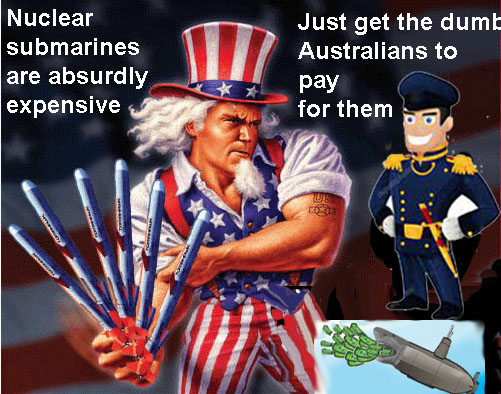
https://undueinfluence.substack.com/p/a-tangle-of-overlapping-interests?utm_source=post-email-title&publication_id=297295&post_id=82059669&isFreemail=true&utm_medium=email Michelle Fahy 5 Nov 22
The federal government’s secret hiring from 2015 of numerous former US Navy officials to advise on Australia’s submarine procurement was exposed by The Washington Post a fortnight ago. “Some of the retired admirals have worked for the Australian government while simultaneously consulting for US shipbuilders and the US Navy, including on classified programs,” the Post said. The US officials benefited financially from “a tangle of overlapping interests”. The Post revealed that one former US admiral had been consulting to Australia while also occupying a full time position as chairman of the board of Huntington Ingalls Industries, a US company that builds US nuclear-powered submarines. That arrangement was abandoned in April this year due to conflict of interest concerns.
Australian defence experts Mike Scrafton and Richard Tanter have outlined the implications of these revelations in John Menadue’s public policy journal, Pearls and Irritations.
Mike Scrafton said, “What remains unclear now is the extent to which the abandonment of the French submarine and the decision to pursue a nuclear powered version was influenced by the Americans. The dramatic shift to the AUKUS project casts the role of the ex-US officials in a different light.”
Red flags have been a feature of Australia’s submarine procurement process since the original deal with France’s Naval Group in 2016. Concerns there included the government’s selection of Naval Group despite it being under investigation for corruption in three earlier shipbuilding contracts, with a fourth investigation added after Australia handed Naval Group the deal. Neither this alarming fact, nor other questionable aspects of the deal, triggered a rethink to find a more suitable contractor. The Washington Post revelations now raise even more questions about the backroom dealings in this disastrous extended procurement process.
B52’s mark the demise of Australia as a self-reliant nation
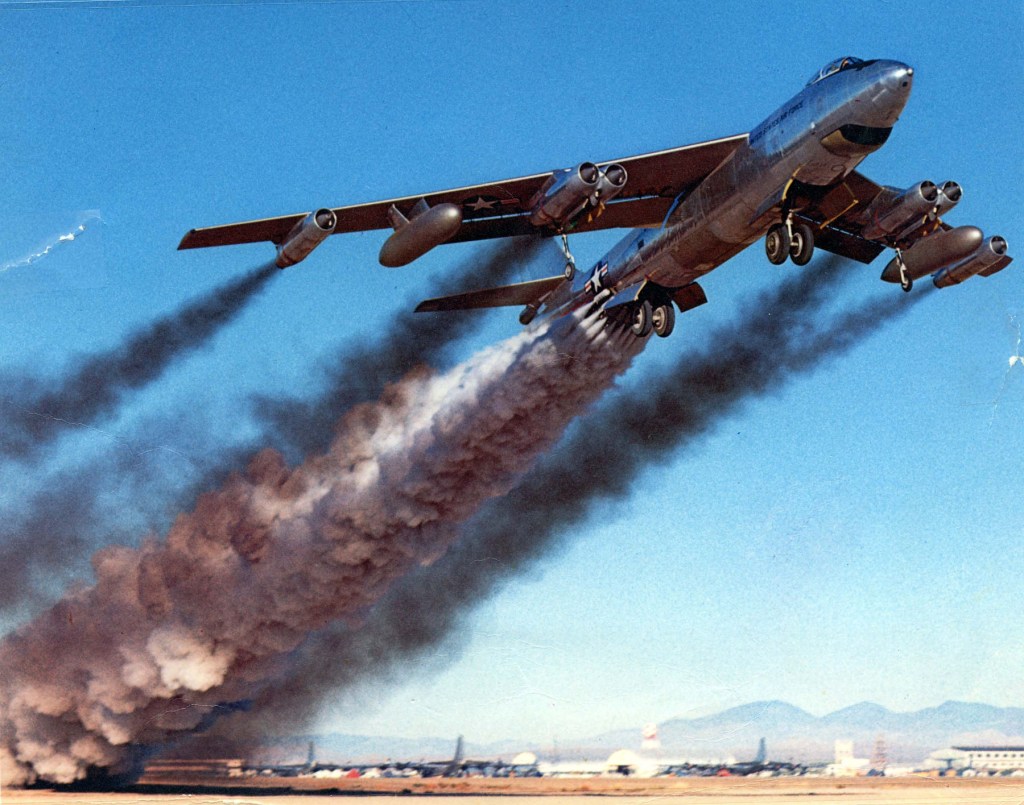
Australia has become a base for the possible use of US nuclear weapons against China………………..
And all this has happened without the Parliament being consulted
https://johnmenadue.com/b52s-mark-the-demise-of-australia-as-a-self-reliant-nation/
By Bruce Haigh, Nov 5, 2022
News that the US plans to base six B52’s at RAAF, Tindal, will likely change the dynamic, in what has admittedly been a half-hearted attempt by Australia, at improving relations with China.
The Foreign Minister, Penny Wong, got off to a good start, but the momentum was slowed by Prime Minister Albanese’s remarks that China constituted a threat, his rushed attendance at an anti-China NATO Summit meeting, the QUAD meeting and the Abe funeral. Abe like his grand farther Kishi was very anti-Chinese.
Albanese’s remarks echo those of Biden, who has chosen on a number of occasions to say that the US would ‘defend’ Taiwan. These guarantees have each time been denied by White House spokes persons but have been reiterated often enough by Biden to indicate where he stands on the question of the ‘reintegration’ of Taiwan with China.
Biden in his confusing way did nothing to stop the ill-conceived Pelosi visit to Taiwan. Biden has refused, indeed prevented, diplomatic negotiations toward ending the war in the Ukraine. He sees the war, mistakenly and naively, as an opportunity to break Russia. Albanese has gone along with this, recently sending 70 Australian soldiers to the UK to train Ukrainian troops. His thinking, and that of Biden, appear in lockstep over the major foreign policy and defence issues confronting Asia and Europe, mainly created and fanned by the US.
An almost frenzied pace is building in the US for confrontation of China. Why? John Menadue, Richard Tanter, Mike Scrafton and Jeffrey Sachs have all recently written in Pearls & Irritations on this unfolding madness.
The basing of B52’s in the Northern Territory changes the nature of Australia’s defence relationship with the USA and our diplomatic relationship with China. Australia has become a base for the possible use of US nuclear weapons against China. Tentative and overly cautious moves to re-establish a sound and workable relationship with China will have been set back, if not put on ice. Moves that Morrison was a party to, or patsy to, have proceeded apace without the brakes being applied by Marles or Albanese. The horse has bolted. And all this has happened without the Parliament being consulted. So much for Australian democracy. All this talk about Western Democracies standing up to totalitarian regimes is so much cant.
China is unlikely to regard Australia as having acted in good faith and nor is the region and the Pacific. Overnight the US and Australia changed the nature of the game with no prior warning and no special briefings. It is a unilateral and hostile upping of the anti.
It is also unlikely that Australia will be advised if the aircraft are carrying nuclear weapons on planned patrols. The line that can be expected is that for operational and security reasons information relating to carriage of nuclear weapons is classified and can neither be confirmed or denied.
No doubt the Chinese are seriously thinking of writing Australia off as being incapable of independent decision making- a vassal state, a follower, lacking the capacity and courage to shape its regional destiny. The chances of Xi Jinping meeting with Albanese at the G20 have receded, if not evaporated.
Perhaps it is symbolic that the ubiquitous B52 marks the demise of Australia as a self-reliant nation.
The B52 is the symbol of US foreign policy failure in Asia. Not satisfied with the terms of the Paris peace settlement, Nixon and Kissinger decided to bomb the Accord, as it was termed, out of existence. Over a ten-day period beginning on 18 December 1972, B52’s bombed Hanoi and surrounding areas. It was a disaster anywhere from 15 to 30 aircraft were shot down, depending on whether you believe the Americans or Vietnamese. The US was forced back to the negotiating table and agreed to the original terms.
B52’s bombed Laos and Cambodia during the same undeclared war with a greater tonnage of bombs than the US used over Europe in WWII. Fields are still being cleared of unexploded armaments and men, women and children are still being maimed.
The basing of the B52’s blind sides the Defence Review called by Albanese and Marles and gives a great deal of weight to AUKUS, details of which are yet to be put to the Australian Parliament. It is unconscionable that AUKUS is bandied about as a joint defence arrangement when little is known about it.
It is presumed that all that is currently taking place and has taken place between the US and Australia, such as the embedding of US personnel in the ADF, base upgrades and proposed and past purchases of defence equipment, such as the Mark II Abrams tank, were all done under AUKUS, except that the UK seems to have been notably absent. So, is it AUUS? Or against the wishes of the Japanese people will it become JAPAUUS? Or AUJAPUS? OR AUJAPUKUS?
Whatever the Monty Python outcome, it needs to go before the Australian Parliament. It has been a big mistake for Prime Minister, Albanese, to take on and run with Morrison’s dirty and deceitful deal. Australia needs to be aware of the immediate and long-term consequences of the US military and industrial China folly of which once again we have been railroaded into. No debate, no consideration and no brains.
1 This month


Help Aunty Sue Protect Her Land and Sacred Sites From Destructive Rocket Testing.
.

Australians deserve the truth
about
AUKUS – https://aukuspublicinquiry.com/

PETITION – To: Prime Minister Anthony Albanese and the Australian Labor Government

of the week – Australians for War Powers Reform (AWPR)
To see nuclear-related stories in greater depth and intensity

