Australia’s $multibillion submarine madness and the phoney China threat
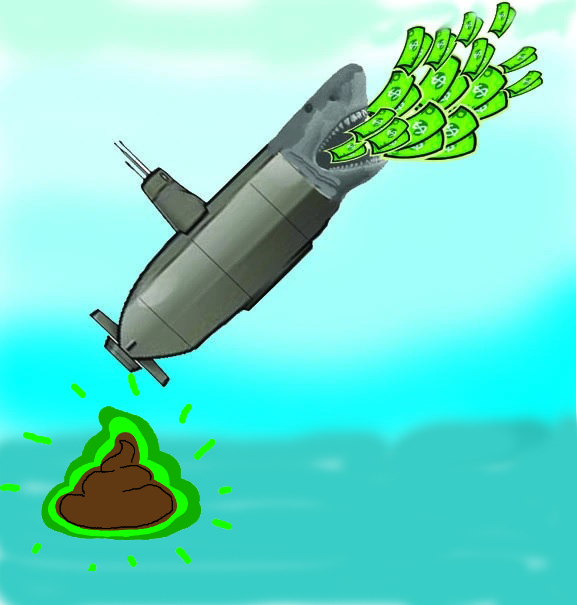
According to the Australian Strategic Policy Institute, the cost of eight would be $171 billion after inflation. More recent estimates are over $200 billion.
https://johnmenadue.com/australian-submarine-madness/ By Brian Toohey, Nov 4, 2022
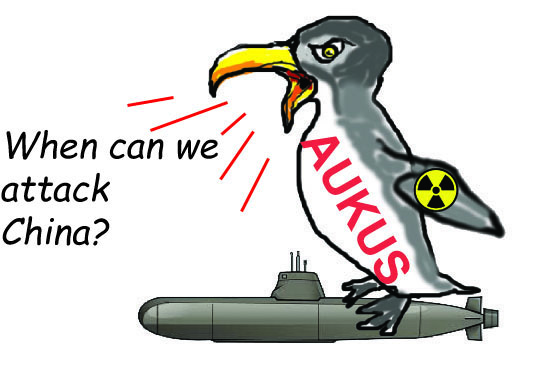
Nobody knows what military threats to Australia from China or anyone else will exist in 2050. In these circumstances, it is folly to commit to spending over $200 billion on acquiring eight US designed nuclear attack submarines to deploy in support of the US on the China coast.
This is particularly extravagant when modern conventionally powered submarines are much cheaper and far harder to detect. Nuclear submarines are noisy because they rely on a reactor to power a steam engine with cooling pumps, turbines, reduction gears and steam in the pipes. They also expel hot water that can be detected, as can the wake on the surface when travelling at high speeds.
Modern battery powered submarines, which Australia perversely has no plans to get, maintain near silent operation with what’s called air independent propulsion (AIP) supplied by a hydrogen fuel cell in Singapore’s German submarines, a Sterling engine favoured by the Swedes or in the case of the latest Japanese submarines, by advanced batteries with long endurance.
These submarines have the great advantage of making the crew far safer than noisy nuclear ones while leaving funds over for much needed improvements in Australian’s health, education, and social security systems as well as for tackling climate change.
Yet the Albanese government has a 350 strong task force in Defence planning the big changes needed to build nuclear powered submarines in Adelaide. In contrast, a prize-winning essay published in the US Naval Institute’s magazine Proceedings in June 2018 said the US Navy would do well to consider acquiring “some quiet, inexpensive and highly capable diesel-electric submarines. It said, “The ability of AIP was demonstrated in 2005, when HMS Gotland, a Swedish AIP submarine, ‘sank’ many U.S nuclear fast-attack subs, destroyers, frigates, cruisers, and even the USS Ronald Reagan aircraft carrier in joint exercises”. However, the Australian Navy somehow sees a great advantage in getting US nuclear attack subs such as the Virginia Class that were sunk in the exercise.
One of the US’s most highly regarded defence analysts, Winslow Wheeler, recently pointed out that these subs have been available only 15 times in 33 years for their six-monthly deployments. This suggests fewer than two of Australia’s eight nuclear submarines would be operationally available, on average, each year. According to the Australian Strategic Policy Institute, the cost of eight would be $171 billion after inflation. More recent estimates are over $200 billion.
Australia could build ten of the latest German submarines operated by Singapore for about $10 billion. They also have an outstanding maintenance record, as well as being well suited to the shallow waters in Australia’s region. A similar figure could apply to the latest Swedish ones, but they may not be so readily available. Japan’s new Taigei class would cost roughly the same to buy, but more to operate its bigger crew. The Japanese government would be reluctant to build it in other than in its own shipyards.
These figures suggest that the job of defending Australia could be performed for a reasonable cost, particularly if greater use were made of modern, low-cost, drones. The trend for low-cost drones to become more useful is only likely to grow by 2050 when Australia might be getting its first operational nuclear submarine.
At some stage, a reality check needs to apply to the barrage of claims about increased Chinese aggression or the China threat. The last major war involving China was in Korea in 1950. China argues its rapid arms build-up reflects how it’s surrounded by potential enemies, including the US, which has been in many more aggressive wars and spends much more on its military.
The Pentagon 2021 annual report to Congress on China acknowledged it had withdrawn six land claims to settle border disputes with neighbours. Contrary to the common assumption that it is ready to invade Taiwan, the Pentagon said “There is no indication it is significantly expanding its force of tank landing ships and landing craft – suggesting a traditional large-scale direct beach assault operation requiring extensive lift remains aspirational”.
China could settle some of the extreme territorial sea claims that were originally made by the Communist Party’s political opponent, the Nationalist Party, before 1949. Taiwan also makes these claims. Although abrasive, nobody has been killed. By 2050 the US, with Australia tagging along, may have extended its well-established history of killing people by engaging in international aggression in violation of the rules. Alternatively, in 2050 China could engage in its first major war since 1950 by attempting to invade Australia, except no one no one has suggested any plausible motive.
Although Australian nuclear submarines will not be available, many Australian pundits see a need to go to Taiwan’s aid if secret intelligence analysis says China is about to attack it. Following the illegal invasion of Iraq in 2003 based on concocted intelligence, the Challis chair of international law at Sydney University, Ben Saul, said it’s important to ask if a war over Taiwan would be legal. He wrote in the Lowy Institute’s The Interpreter, “The conventional legal answer favours China. Only a state has the right to use military force in self-defence against an armed attack by another state – and to ask other states to help it to defend itself.”
The Australian Foreign Affairs department says Taiwan is not a state. Saul adds, “In a world with a plurality of different political systems, states are not permitted to use force simply to protect democracy or ‘freedom’ abroad. The US backed Taiwan even when it was a military dictatorship until the 1990s; its defence has never really been about freedom.”
This is what Australia needs to bring to Egypt for COP27 — RenewEconomy

Australia will need to walk the talk at COP27. That means moving rapidly away from coal and gas, and helping developing nations manage climate impacts. The post This is what Australia needs to bring to Egypt for COP27 appeared first on RenewEconomy.
This is what Australia needs to bring to Egypt for COP27 — RenewEconomy
The U.S. President’s Dismissal Of Diplomacy Undermines His Own Party, Prolongs The Destruction Of Ukraine And Threatens Nuclear War.

a proxy war between the U.S. and Russia in which Ukraine is being devastated, ironically in the name of saving Ukraine.
U.S. security absolutely does not depend on NATO enlarging to Ukraine and Georgia.
Russia doesn’t want a heavily armed NATO military on its border, just as the U.S. would not accept a Chinese-backed heavily armed Mexican military on the U.S.-Mexico border.
BIDEN’S FOREIGN POLICY SINKING HIS PARTY AND UKRAINE
https://popularresistance.org/bidens-foreign-policy-sinking-his-party-and-ukraine/ By Jeffrey D. Sachs, Consortium News., November 3, 2022, Educate!
President Joe Biden is undermining his party’s congressional prospects through a deeply flawed foreign policy.
Biden believes that America’s global reputation is at stake in the Ukraine War and has consistently rejected a diplomatic off-ramp. The Ukraine War, combined with the administration’s disruptions of economic relations with China, is aggravating the stagflation that will likely deliver one or both houses of Congress to the Republicans.
Far worse, Biden’s dismissal of diplomacy prolongs the destruction of Ukraine and threatens nuclear war.
Biden inherited an economy beset by deep disruptions to global supply chains caused by the pandemic and by former President Donald Trump’s erratic trade policies. Yet instead of trying to calm the waters and repair the disruptions, Biden escalated the U.S. conflicts with both Russia and China.
Biden attacked Republican House Minority Leader Kevin McCarthy for expressing doubts on another large financial package Ukraine, declaring:
“They [House Republicans] said that if they win, they’re not likely to fund — to help — continue to fund Ukraine, the Ukrainian war against the Russians. These guys don’t get it. It’s a lot bigger than Ukraine — it’s Eastern Europe. It’s NATO. It’s real, serious, serious consequential outcomes. They have no sense of American foreign policy.”
Similarly, when a group of progressive congressional Democrats urged negotiations to end the Ukraine War, they were excoriated by Democrats following the White House line and forced to recant their call for diplomacy.
Stoked a Proxy War
Biden believes that American credibility depends on NATO expanding to Ukraine, and if necessary, defeating Russia in the Ukraine war to accomplish that. Biden has repeatedly refused to engage in diplomacy with Russia on the NATO enlargement issue.
This has been a grave mistake. It stoked a proxy war between the U.S. and Russia in which Ukraine is being devastated, ironically in the name of saving Ukraine.
The whole issue of NATO enlargement is based on a U.S. lie dating back to the 1990s. The U.S. and Germany promised Soviet leader MikhailGorbachev that NATO would move “not one inch eastward” if Gorbachev would disband the Soviet Warsaw Pact military alliance and accept German reunification. Conveniently — and with typical cynicism — the U.S. reneged on the deal.
In 2021, Biden could have headed off the Ukraine War without sacrificing any single vital interest of the U.S. or Ukraine. U.S. security absolutely does not depend on NATO enlarging to Ukraine and Georgia.
In fact, NATO enlargement deeper into the Black Sea region undermines U.S. security by putting the U.S. into a direct confrontation with Russia (and a further violation of the promises made three decades earlier). Nor does Ukraine’s security depend on NATO enlargement, a point that President Volodymyr Zelensky acknowledged on numerous occasions.
Russian President Vladimir Putin has warned the U.S. repeatedly since 2008 to keep NATO out of Ukraine, a region of vital security interests for Russia. Biden has equally, resolutely insisted on NATO enlargement. Putin made one last diplomatic try at the end of 2021 to stop NATO enlargement. Biden completely rebuffed him. This was dangerous foreign policy.
As much as many American politicians don’t want to hear it, Putin’s warning about NATO enlargement was both real and apt. Russia doesn’t want a heavily armed NATO military on its border, just as the U.S. would not accept a Chinese-backed heavily armed Mexican military on the U.S.-Mexico border.
The last thing the U.S. and Europe need is a long war with Russia. Yet that’s just where Biden’s insistence on NATO enlargement to Ukraine has brought about.
The U.S. and Ukraine should accept three absolutely reasonable terms to end the war: Ukraine’s military neutrality; Russia’s de facto hold on Crimea, home to its Black Sea naval fleet since 1783; and a negotiated autonomy for the ethnic-Russian regions, as was called for in the Minsk Agreements but which Ukraine failed to implement.
Instead of this kind of sensible outcome, the Biden administration has repeatedly told Ukraine to fight on. It poured cold water on the negotiations in March, when Ukrainians were contemplating a negotiated end to the war but instead walked away from the negotiating table.
Ukraine is suffering grievously as a result, with its cities and infrastructure reduced to rubble, and tens of thousands of Ukrainian soldiers dying in the ensuing battles. For all of NATO’s vaunted weaponry, Russia has recently destroyed up to half of Ukraine’s energy infrastructure.
Sanctions Boomeranged
In the meantime, the U.S.-led trade and financial sanctions against Russia have boomeranged.
With the cutoff of Russian energy flows, Europe is in a deep economic crisis, with adverse spillovers to the U.S. economy.
The destruction of the Nord Stream pipeline further deepened Europe’s crisis. According to Russia, this was done by U.K. operatives, but almost certainly with U.S. participation. Let us recall that in February, Biden said that if Russia invades Ukraine, “We will bring an end to it [Nord Stream].” “I promise you,” said Biden, “we will be able to do it.”
Biden’s flawed foreign policy has also brought about what generations of foreign policy strategists including Henry Kissinger and Zbigniew Brzezinski warned against: driving Russia and China into a firm embrace. He has done that by dramatically escalating the cold war with China at precisely the same time as he is pursuing the hot war with Russia.
From the start of his presidency, Biden starkly curtailed diplomatic contacts with China, stirred up new controversies regarding America’s long-standing One China policy, repeatedly called for greater arms sales to Taiwan, and implemented a global export ban on high-tech to China. Both parties have rallied to this destabilizing anti-China policy, but the cost is further destabilization of the world, and also the U.S. economy.
In sum, Biden inherited a difficult economic hand — the pandemic, excess Fed liquidity created in 2020, large budget deficits in 2020, and pre-existing global tensions. Yet he has greatly exacerbated the economic and geopolitical crises rather than solved them.
We need a change of foreign policy. After the elections, there will be an important time for reassessment. Americans and the world need economic recovery, diplomacy, and peace.
Jeffrey D. Sachs is a university professor and director of the Center for Sustainable Development at Columbia University, where he directed The Earth Institute from 2002 until 2016. He is also president of the U.N. Sustainable Development Solutions Network and a commissioner of the U.N. Broadband Commission for Development. He has been adviser to three United Nations secretaries-general, and currently serves as an SDG Advocate under Secretary-General Antonio Guterres. Sachs is the author, most recently, of A New Foreign Policy: Beyond American Exceptionalism (2020). Other books include: Building the New American Economy: Smart, Fair, and Sustainable (2017) and The Age of Sustainable Development, (2015) with Ban Ki-moon.
Six Reasons Why Americans Should Care That US Troops Are In Ukraine
Andrew Korybko, Nov 2 2022, https://korybko.substack.com/p/six-reasons-why-americans-should
This is a big deal for more than just the obvious reason that it could push that declining unipolar hegemon closer to a hot war with Russia by miscalculation.
An unnamed senior military official revealed during a press briefing on Monday that US boots are on the ground in Ukraine as part of the Pentagon’s efforts to inspect and track weapons shipments to that crumbling former Soviet Republic according to a transcript published by the Department of Defense. This is a big deal for more than just the obvious reason that it could push that declining unipolar hegemon closer to a hot war with Russia by miscalculation.
Here are the six other reasons why Americans should care that US troops are in Ukraine:
The Deployment Proves That The Ukrainian Conflict Is Indeed A Proxy War On Russia
The US-led West’s Mainstream Media (MSM) nor the SBU’s anti-Semitic and fascist global troll network (“NAFO”) can no longer deny that the Ukrainian Conflict is indeed a NATO proxy war on Russia, which was obvious to all objective observers but has hitherto not been acknowledged by those two forces.
* America Is Indisputably Leading The Abovementioned Effort
Building upon the above, there’s no question that America is leading this multinational proxy war effort against that newly restored world power as evidenced by this latest deployment, which further confirms what Russia’s been saying this entire time about Washington’s direct involvement in the conflict.
* Public Pressure Might Have Played A Role In The Pentagon’s Accountability Mission
CBS News’ bombshell report in early August revealing that only around 30% of all foreign military aid to Ukraine actually reaches its destination provoked unprecedented public anger and might thus have played a role in the Pentagon’s commencing its accountability mission that its officials just disclosed.
* The US Doesn’t Fully Trust Its Ukrainian Proxies
Another element of the “official narrative” that was shattered by the Pentagon’s confirmation of its limited deployment to Ukraine is that the US supposedly places full trust in its Ukrainian proxies, which clearly isn’t true otherwise it wouldn’t be putting its troops in harm’s way to track weapons shipments.
* Ukrainian-Based Neo-Nazi Terrorist Groups Are A Credible Threat To Europe
Elaborating on the insight that was just shared in the preceding point, it can therefore be confidently surmised that American spy agencies also assess that Ukrainian-based Neo-Nazi terrorist groups are a credible threat to Europe since they’re the only actors who could realistically siphon off those arms.
* The Next Congress Might Use This Deployment As The Pretext For Scaling Down Military Aid
The US will inevitably have to scale down its arms shipments to Ukraine since its military-industrial complex lacks the capability to indefinitely sustain the pace, scope, and scale of this assistance, yet the next Congress might use this deployment as the pretext for doing so instead of admitting that fact.
The remainder of the analysis will summarize the six reasons that were just shared.
Americans should care that their country is leading NATO’s proxy war on Russia through Ukraine, especially since their own government doesn’t trust their local partners to the point where US troops had to be deployed to monitor arms shipments there. Public pressure might already have played a role in commencing this accountability mission so it therefore follows that subsequent such pressure could facilitate the next Congress’ potential plans to scale back aid to that country and hopefully foster peace.
Attacks on Ukrainian nuclear-power plants challenge treaties, and raise other safety concerns

Researchers and policymakers must ask new questions. Are other locations at risk, given the projected global growth in nuclear energy?
As the crisis at the Zaporizhzhia plant worsens, international agreements need to be extended to ensure nuclear safety during war.
Nature Anthony Burke, 3 Nov 22,
This year marked the first time in which civilian nuclear-power facilities have come under attack during war. As Russian armed forces pushed into Ukraine in February, troops took control of the Chernobyl nuclear exclusion zone, where hundreds of people still manage the aftermath of the catastrophic 1986 meltdown. Thousands of vehicles stirred up radioactive dust as they moved towards Kyiv. Russian soldiers worked and slept in the deadly ‘red zone’ near the abandoned city of Pripyat.
In March, Russian armoured vehicles and tanks took control of the Zaporizhzhia power station — Europe’s largest nuclear power plant. Conditions rapidly deteriorated. Today, all six reactors are shut down. In August, Russia used artillery located at the plant to shell the city of Nikopol, provoking counterattacks from Ukrainian forces. As witnessed by an International Atomic Energy Agency (IAEA) team sent to report on the situation in September, shelling has disconnected main power lines, knocked out radiation-detection sensors and damaged water pipes, walkways, the fire station and the building housing fresh nuclear fuel and solid radioactive waste1. More power losses in October left backup diesel generators as the only electricity supply to keep fuel rods cool. External power was restored, only to be disrupted again by a landmine explosion. One wrong move, and another Chernobyl could be possible.
The international community must urgently address the inadequacy of nuclear-safety architecture, policy and preparedness.
The powers of the IAEA are limited. It has responded in a rapid and principled way to the crisis in Ukraine, after being unable to prevent the Fukushima disaster following the Tohoku earthquake in Japan in 2011. But the international Convention on Nuclear Safety — one of several treaties that the IAEA serves to reinforce — was never designed to grapple with the nightmare of nuclear-power stations coming under military attack. As a ‘soft-law’ instrument, it allows states to create their own regulatory mechanisms with weak international oversight.
Researchers and policymakers must ask new questions. Are other locations at risk, given the projected global growth in nuclear energy? How do Russia’s actions in Ukraine challenge the world’s commitment to the ‘peaceful uses’ of nuclear energy and to international mechanisms for countering nuclear-weapons proliferation? Can current treaties be adapted, or is a more robust legal architecture and rapid-response capability required? And how can political obstacles be overcome?
Unsafe conditions
Conditions at Zaporizhzhia are “not sustainable and could lead to increased human error with implications on nuclear safety”, the IAEA warned in September1. Ukrainian plant staff are working under duress after Rosatom, the Russian energy company, took control and a Russian holding company was established. Energoatom, Ukraine’s state nuclear-energy company, has reported that the plant’s deputy director and head of human resources have been detained and that others are being pressured to sign contracts with Rosatom. The plant’s director, Igor Murashov, was earlier arrested by Russian forces, interrogated and expelled from Russian-held territory.
The integrity of reactor cores and storage pools is the main concern. If fuel rods are exposed, a core meltdown and uncontrolled release of radiation is likely, as happened at Fukushima, Chernobyl and Three Mile Island in Pennsylvania in 19792. “And so, one mine or one missile or whatever”, warned Ukraine’s energy minister Herman Halushchenko, “could stop the working of the generators and then you have one hour and probably 30 minutes, not more than 2 hours, before the reaction starts.”
Russian control of the plant also delayed the IAEA from conducting its required annual inspection, which is crucial for ensuring safety and verifying the secure disposal of nuclear fuel and preventing its diversion for military uses1.
Nuclear-power plants elsewhere in Ukraine are also under threat. Shelling has been reported at the Khmelnytskyy plant in Netishyn, and cruise missiles have overflown the South Ukraine plant in Yuzhnoukrainsk. And Ukraine’s energy infrastructure across the country is coming under attack, including substations linked to nuclear plants.………………………………….
COP27 in Egypt. Will rich nations fulfil their promises to help poor countries to fight global heating?
Tens of thousands of people will be jetting to an Egyptian holiday resort
beside the Red Sea this weekend in an effort to tackle climate change. It
sounds like a joke, but this latest UN climate summit – COP27 – is reckoned
to be the world’s best hope of progress on the climate issue.
Progress is certainly needed. The global effort to cut emissions is “woefully
inadequate” and means the world is on track for “catastrophe”, the UN
warned last week.
But the meeting in Sharm El-Sheikh is shaping up to be a
prickly and confrontational affair. The Egyptian hosts have set themselves
a tough challenge. Last year’s UN climate conference in Glasgow delivered a
host of pledges on emissions cuts, finance, net zero, forest protection and
more. Egypt says their conference will be about implementing these pledges.
What that really means is it will be all about cash, and specifically
getting wealthy nations to come good on their promises of finance to help
the developing world tackle climate change. So expect the main battle lines
to be between the north and south, between rich and poor nations.
BBC 4th Nov 2022
The stunning wind and solar leaps in Australia’s most advanced renewable grids — RenewEconomy

Stunning new peaks for instantaneous share in the country’s two biggest grids, and an insight into what a near 100% wind and solar share looks like over a whole week. The post The stunning wind and solar leaps in Australia’s most advanced renewable grids appeared first on RenewEconomy.
The stunning wind and solar leaps in Australia’s most advanced renewable grids — RenewEconomy
WA “orchestrates” hundreds of home solar and storage assets, as coal shortage continues — RenewEconomy

WA switches on Project Symphony, a VPP harnessing customer resources from rooftop solar and battery storage to hot water systems and electric vehicles. The post WA “orchestrates” hundreds of home solar and storage assets, as coal shortage continues appeared first on RenewEconomy.
WA “orchestrates” hundreds of home solar and storage assets, as coal shortage continues — RenewEconomy
NSW formally declares its third renewable zone as shift from coal accelerates — RenewEconomy

NSW declares the third of its planned five renewable energy zones as it accelerates plans to deal with shift from coal over coming decade. The post NSW formally declares its third renewable zone as shift from coal accelerates appeared first on RenewEconomy.
NSW formally declares its third renewable zone as shift from coal accelerates — RenewEconomy
Neoen storage revenues treble to $100 million, driven by Australia’s biggest battery — RenewEconomy

Neoen says battery storage revenue triples thanks to start of Australia’s biggest battery, and flags higher prices for wind and solar contracts after market turmoil. The post Neoen storage revenues treble to $100 million, driven by Australia’s biggest battery appeared first on RenewEconomy.
Neoen storage revenues treble to $100 million, driven by Australia’s biggest battery — RenewEconomy
November 4 Energy News — geoharvey

Opinion: ¶ “COP27: Why The Latest UN Climate Conference Matters” • COP27 is reckoned to be the world’s best hope of progress on the climate issue. The global effort to cut emissions is “woefully inadequate” and means the world is on track for “catastrophe”, the UN warned last week. But the meeting in Egypt is […]
November 4 Energy News — geoharvey
‘Target Oz’: Defence Strategic Review must address nuclear risks
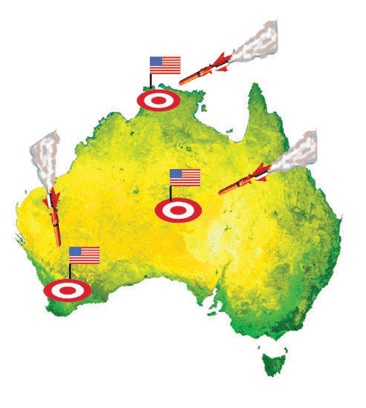
Pine Gap near Alice Springs, RAAF Base Tindal for US B-52’s near Katherine, Darwin Harbour, North-West Cape near Exmouth, and the Stirling submarine base near Fremantle are all potential targets for a strike by China in a conflict with the US over Taiwan or the South China Sea
Pearls and Irritations, By David Noonan, Nov 3, 2022
The Defence Strategic Review must act in accordance with Australia’s commitment to sign the UN “Treaty on the Prohibition of Nuclear Weapons” (the ‘Ban Treaty’) and not seek to compromise that path by supporting roles in nuclear warfare alongside the US.
Anthony Albanese made a commitment in his “Changing the World” Speech (ALP National Conference, 18 Dec 2018), stating:
“We have on our side the overwhelming support of the Australian people. …
Our commitment to sign and ratify the nuclear weapons ban treaty in government is Labor at our best”
The ALP National Platform (2021, p.117) commits “to sign and ratify the Ban Treaty” and Australia must do so in this term of the ALP in federal office.
The Ban Treaty Article 1 Prohibitions require nations to never under any circumstance use or threaten to use nuclear weapons, OR to assist or encourage, in any way, anyone to do so.
To come into compliance with the Ban Treaty, the Defence Review must evolve our Alliance with the US to put an end to defence reliance on US ‘nuclear deterrence’.
The US ‘nuclear weapons umbrella’ is a threat to use nuclear weapons in Australia’s defence policy – a threat that has long been contrary to International Humanitarian Law and is now illegal since the Ban Treaty came into force as a permanent part of International Law from 22 January 2021.
The roles of Pine Gap and the North-West Cape communications base must evolve to exclude military operations related to the use, or threat to use, nuclear weapons.
The ICAN Report “Choosing Humanity” (July 2019) best sets out the case for Australia to sign the Ban Treaty. Foreign Affairs Minister Penny Wong should now refer the Ban Treaty to an Inquiry by the Joint Standing Committee on Treaties as a proposed treaty action.
Australians have a right to know the risk exposure we face in peace time and in war:
While preparing for war, a second lead task for the Defence Review is to provide transparency on the consequences for Australia as a target in an escalating conflict between the US and China.
The Review must report on the scenarios, risks, and consequences of a nuclear or conventional attack by China on bases in Australia and on the potential resultant health calamity.
Both China and Russia’s priority and capacity to attack US bases in Australia has long been recognised. An ASPI Report (Sept 2022) states Pine Gap is a high-level nuclear target, noting:
“We need to understand what the implications would be for Alice Springs, which is a town of 32,000 people only 18 kilometres from the base.”
The lead author of the report, Paul Dibb has stated: “The risk of nuclear war is now higher than at any time since the Cold War. … Australia should not feel its geographic distance from the epicentre of conflict affords it any significant protection. … We need to plan on the basis that Pine Gap continues to be a nuclear target, If China attacks Taiwan, Pine Gap is likely to be heavily involved.”
A Lowy paper (09 August 2021) also cites Darwin as a potential target in a US-China conflict:
“The arena of hostilities for any such conflict would be mostly confined to East Asia, with the possible exception of strikes against US forces using Darwin as a rear-area staging base.”
No doubt Australia acquiring nuclear powered attack submarines and visits or basing US or UK nuclear subs at Stirling naval base near Fremantle escalates the risk profile we face.
Beijing’s Global Times “China needs to make a plan to deter extreme forces of Australia” (07 May 2021) threatened “retaliatory punishment” with missile strikes “on the military facilities and relevant key facilities on Australian soil” if Australia coordinates with the US in a war over Taiwan:
“China has a strong production capability, including producing additional long-range missiles with conventional warheads that target military objectives in Australia when the situation becomes highly tense.”
Pine Gap near Alice Springs, RAAF Base Tindal for US B-52’s near Katherine, Darwin Harbour, North-West Cape near Exmouth, and the Stirling submarine base near Fremantle are all potential targets for a strike by China in a conflict with the US over Taiwan or the South China Sea……………………more

David Noonan B.Sc., M.Env.St., is an Independent Environment Campaigner and was a long-term campaigner for Australian Conservation Foundation.
See the public submission to the Defence Review by David Noonan (29 Oct 2022).
War and Regrets in Ukraine

The truth is Moscow’s redline concerning Ukrainian entry into NATO was always real. Eastern Ukraine and Crimea were always predominantly Russian in language, culture, history, and political orientation. Europe’s descent into economic oblivion this winter is also real, as is support for Russia’s cause in China and India and Moscow’s rising military strength.
Washington may regret its role in the war in Ukraine.
https://www.theamericanconservative.com/war-and-regrets-in-ukraine/ Douglas Macgregor, Oct 19, 2022
Of the Vietnam War, Henry Kissinger, former national security advisor and secretary of State under Presidents Nixon and Ford, said, “We should never have been there.” Before long, Americans, even the politicians inside the Beltway, will reach the same conclusion about Washington’s Ukrainian proxy war against Russia.
No one in the White House, the Senate, or the House consciously set out to turn the proxy Ukrainian war with Moscow into a contest of “competitive societal collapse” between Russia and NATO. But here we are. No one imagined that the Biden administration and the bipartisan war party would drive Americans and Europeans into a political, military, and economic valley of death, from which there is no easy escape. Yet that is precisely what is happening.
For the moment, Washington remains blind to these developments. Whether in print, radio, television, or online, the narrative is clear: despite horrific losses—at least 400,000 Ukrainian battlefield casualties including 100,000 soldiers killed in action—Ukrainian forces are winning. Moreover, the narrative says, America’s financial and economic dominance will ultimately overwhelm the deceptively weak Russian economy.
The Ukrainian-victory narrative admittedly benefits hugely from Western media that actively “tune out” opposing views and depict Russia and its armed forces in the worst possible light. The fact that nearly half a century of the Cold War conditioned Americans to think the worst of Russians certainly helps.
Yet there is also a measure of “true faith” at work, a condition of national narcissism, inside the Beltway that believes Washington can control what happens thousands of miles away in Eastern Ukraine. The message resonates in Congress because it rests on a critical strategic assumption that American citizens have yet to challenge: that American national power is limitless and unconstrained—as though a series of strategic failures, from Vietnam to Afghanistan, never happened.
Given that American politicians are always more preoccupied by domestic affairs than foreign policy, members of Congress are quick to adopt the “true faith.” This faith explains why for the last eight years members thought a future war with Russia was a low-risk affair. Ukrainians would provide the cannon fodder and Washington would provide the expensive weaponry and munitions.
Predictably, Washington’s governing strategic principles are unchanged from previous U.S. interventions around the world. Muddle through: masses of soldiers—in this case Ukrainians advised by U.S. and allied officers—and huge infusions of cash, equipment, and technology can and will permanently alter strategic reality in America’s favor.
The stupefying air of self-righteousness the Biden administration assumes when it attacks erstwhile strategic partners such as Saudi Arabia or delivers moralizing lectures to Beijing’s leadership, or when its media surrogates express contempt for the Russian state, is downright dangerous. Political figures in Washington are ready to indulge any transgression if it is committed in the name of destroying Russia. They do not view U.S. foreign policy in the context of a larger strategy, nor do they comprehend Russia’s capacity to hurt the United States, a bizarre judgment of Russia’s actual military and economic potential.
The result is a toxic climate of ideological hatred making it hard to imagine a contemporary U.S. secretary of State ever signing an international agreement renouncing war as an instrument of U.S. national policy, as Secretary of State Frank Kellogg did in 1928. But as one of Shakespeare’s characters in the Merchant of Venice warned, “The truth will out.”
The ongoing buildup of 700,000 Russian forces with modern equipment in Western Russia, Eastern Ukraine and Belorussia is a direct consequence of Moscow’s decision to adopt an elastic, strategic defense of the territories it seized in the opening months of the war. It was a wise, though politically unpopular choice in Russia. Yet, the strategy has succeeded. Ukrainian losses have been catastrophic and by November, Russian Forces will be in a position to strike a knockout blow.
Today, there are rumors in the media that Kiev may be under pressure to launch more counterattacks against Russian defenses in Kherson (Southern Ukraine) before the midterm elections in November. At this point, expending what little remains of Ukraine’s life blood to expel Russian forces from Ukraine is hardly synonymous with the preservation of the Ukrainian state. It’s also doubtful that further sacrifices by Ukrainians will assist the Biden administration in the midterm elections.
The truth is Moscow’s redline concerning Ukrainian entry into NATO was always real. Eastern Ukraine and Crimea were always predominantly Russian in language, culture, history, and political orientation. Europe’s descent into economic oblivion this winter is also real, as is support for Russia’s cause in China and India and Moscow’s rising military strength.
In retrospect, it is easy to see how Congress was beguiled by the denizens of think tanks, lobbyists, and retired generals, who are, with few exceptions, people with a cocktail level of familiarity with high-end conventional warfare. Members of the House and Senate were urged to support dubious strategies for the use of American military assistance, including reckless scenarios for limited nuclear war with Russia or China.
For some reason, U.S. politicians have lost sight of the reality that any use of nuclear weapons would overwhelm the ends of all national policy.
Carbon-14: Another underestimated danger from nuclear power reactors
https://beyondnuclear.org/carbon-14-another-underestimated-danger-from-nuclear-power-reactors/ 1 Nov 22,
There are a number of radionuclides released from nuclear energy facilities. This paper highlights carbon-14 for a number of reasons:
- Carbon-14 is radioactive and is released into air as methane and carbon dioxide.
- Before 2010, carbon-14 releases from nuclear reactors were virtually ignored in the United States. Today only estimates are required and only under certain restrictive circumstances.
- There is no good accounting of releases to date, so its impact on our health, our children’s health, and that of our environment remains unknown, yet environmental measurement is possible, but can be challenging under certain conditions.
- Carbon-14 has a half-life of over 5700 years and the element carbon is a basic building block for life on earth. Therefore, “it constitutes a potential health hazard, whose additional production by anthropogenic sources of today will result in an increased radiation exposure to many future generations.”
- Like tritium, it can collect in the tissues of the fetus at twice the concentration of the tissues in the mother, pointing to its disproportionate impact on the most vulnerable human lifecycle: the developing child.
Why does Australia still sell uranium to China?

‘Target Oz’: Defence Strategic Review must address nuclear risks, Pearls and Irritations, By David Noonan, Nov 3, 2022“…………… War with China is in open debate. China has potential to attack Australia with nuclear weapons.
Australia banned sale of uranium to Russia in 2014, with Prime Minister Tony Abbott stating:
“Australia has no intention of selling uranium to a country which is so obviously in breach of international law as Russia currently is.”
China should be disqualified from receiving Australian uranium sales given China’s severe breaches of Human Rights and International Humanitarian Law against the Uighur and Tibetan peoples.
I have campaigned against uranium sales to China “Uranium policy a hypocrisy” (Opinion, The Age & SMH, 5 Oct 2009) and raised Human Rights cases:
“Australian uranium will effectively disappear off the safeguards radar on arrival in China, a country whose military is inextricably linked to the civilian nuclear sector and where nuclear whistle-blowers and critics are brutally suppressed and jailed. This alone is reason to disqualify China from acquiring Australian uranium.”
The routine “substitution” of Australian uranium in China, and the Illusion of Protection in ASNO safeguards, warrant an exit from uranium sales to China.
Transparency is a core pre-requisite to any ‘trust’ in nuclear issues but is sorely lacking in China.
BHP Olympic Dam is the only outfit still selling Australian uranium to China.
At best this frees up China to divert its own limited supply of uranium for use in its military nuclear regime, at worst, it directly contributes to nuclear weapons. This is a Defence Review issue.
Australia has no leverage on China and must end our exposure in BHP’s risky uranium sales to China. https://johnmenadue.com/target-oz-the-defence-strategic-review-and-our-risk-exposure-with-the-us-and-china/
1 This month


Help Aunty Sue Protect Her Land and Sacred Sites From Destructive Rocket Testing.
.

Australians deserve the truth
about
AUKUS – https://aukuspublicinquiry.com/

PETITION – To: Prime Minister Anthony Albanese and the Australian Labor Government

of the week – Australians for War Powers Reform (AWPR)
To see nuclear-related stories in greater depth and intensity

