A new motley crew of Australian politicians form “Friends of Nuclear”

Reporter Rosie Lewis, writing in THE AUSTRALIAN (25/12/21) recorded, with that paper’s usual pro nuclear joy and delight, that 21 Australian politicians have signed up to this group. They named only 9 of these MPs, a motley crew indeed, of minor party members, and 5 Labor Party ones.
It gets confusing, as Labor has a clear policy of prohibiting nuclear technology, ( excluding the Lucas Heights Opal reactor). But then, sabotage of Labor policies is not a new thing for Joel Fitzgibbon. He opposes Labor’s climate policy (which is strange, as nuclear’s big push is about purporting to combat climate change)
However, you can bet that the remaining 12 ‘nuclear friends’ would be Liberals and Nationals.
Meanwhile, the 9 mentioned have an odd assortment of views on energy – some support renewable energy, some oppose. There’s some scepticism on climate change, where you’d expect nuclear being touted as the solution. And Pauline Hanson is on record as opposing the nuclear lobby’s plan for a nuclear waste dump at Kimba, South Australia.
“Dr Gillespie and Senator Gallacher said their priority was on educating other MPs — particularly within Labor — about nuclear energy.” “We can introduce the best scientific minds into our parliamentary friendship group and bring them to Canberra.”
Of course, those “best scientific minds” will come from “Australia’s Nuclear Science and Technology Organisation and other government and industry bodies” which function primarily as nuclear promoters, anyway. I don’t think they’ll be inviting Dr Helen Caldicott, Dr Jim Green, or Dave Sweeney fron the Australian Conservation Foundation.
The end of the NEM as we know it — RenewEconomy

As coal generators exit the grid, Australia is going to have to focus on flexibility in the market, and harnessing distributed resources. The post The end of the NEM as we know it appeared first on RenewEconomy.
The end of the NEM as we know it — RenewEconomy
Small Nuclesar Reactors – not all they’re cracked up to be
Small Nuclear Reactors, There has of late been a lot of promotion of the idea of Small Modular Reactors (SMRs) of a few tens or hundreds of megawatts, which it is claimed will be cheaper than conventional gigawatt scaled plants since they can benefit from economies of mass production in factories. Much has been promised for SMRs, including the delivery of power at £40-60/MWh, but there is still some way to go before any project actually goes ahead and we can see if the promises hold upon practice.
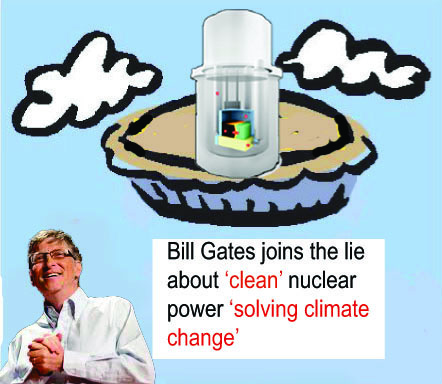 stage. But it is claimed that one of the more novel design, the Natrium fast reactor system, proposed by Terrapower and backed by Bill Gates, will be on line this decade. Given that this makes use of liquid sodium and molten salt heat storage, that is quite a claim. So is the idea, also being pursued by Terrapower, that reactors can be run with molten salt fluoride as both reactant medium and reaction coolant. It has even been claimed that reactors like this, with suitable fast spectrum neutron fluxes, can burn nuclear waste. That has yet to be proven. But certainly, if they are to use thorium as a fuel, they will need an input of plutonium or some other neutron source, since thorium is not fissile, so in that sense they do recycle something. Though we still have to have uranium reactor, possibly fast breeders, to make the plutonium.
 As can be seen, there are many possible problems ahead for SMRs. Perhaps the central one is safety. Working with high radiation fluxes in small confined spaces is not easy. Even in the case of molten salt systems, which avoid the need for control rods, the super-hot corrosive fluids have to be pumped around for heat and waste extraction. It may not be easy to design compact systems that can do this reliably long-term.
The safety issue interacts with the other key issues for SMRs- location. If they are going to be economically viable, some say that SMRs will have to be run in Combined Heat and Power ‘Cogen’ mode, supplying heat for local used, as well as power for the grid. That implies that they will have to sited in or near large heat loads i.e. in or near urban areas. Will local residents be keen to have mini-nuclear plants near by? That issue is already being discussed in the USA, with some urban resistance emerging.
A key issue in that context is that it has been argued that since they allegedly will be safer, SMRs will not need to have such large evacuation zones as is the norm for standard reactors, most of which are sited in relatively remote area. Indeed, unless that requirement was changed, operation in cities could be impossible- they could not easily be evacuated fast if there was an accident, or perhaps a security threat. On the basis of this view, SMRs will only ever be relevant for remote sites, and of course there are plenty of such locations where local power generation might be welcome, although arguably, renewable sources might be easier, safer and cheaper to use. Indeed, that might be said of all locations.
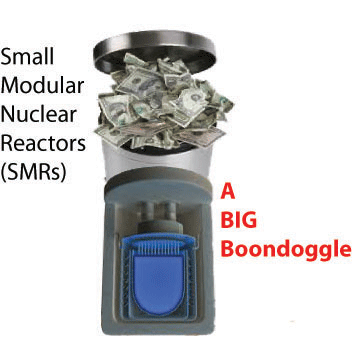 The debate over safety, security and location will continue to unfold, with folksy mini-nuke designs emerging for remote rural locations, but concerns also growing over the many unknowns, not least the costs and market potential. There are SMR programmes in the US and UK and elsewhere, but there are big doubts about whether there would be a viable market for this technology.
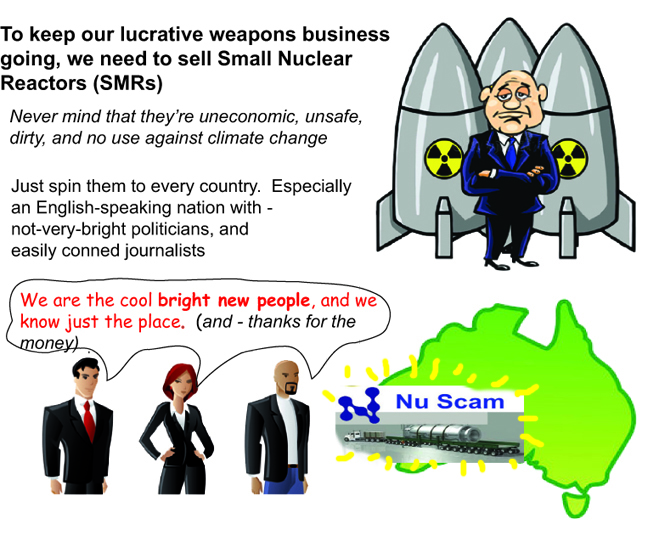
That is despite the fact that there is some dual use/expertise overlap between civil and military nuclear, and, more specifically, that mini reactors are used for submarine propulsion. While that may be one reason why companies like Rolls Royce are pushing for SMRs, on its own military submarine use is a relatively small market.
There is no shortage of promotional enthusiasm for SMRs for a variety of reasons, including, it is claimed, defence-related, and some arguably extravagant claims on comparative investment costs have been made. However, there have also been some strong critiques and gloomy prognoses. At best, they say, SMRs may have a role to play in some remote locations and, as with nuclear generally, perhaps for heat production and hydrogen production, for example for industrial purposes. It has also been claimed that SMRs could produce synthetic aircraft fuel as substitute for kerosene, although ‘at around about twice the price’.
That all seem to be a long shot, with many unknowns, and in terms of energy supply of whatever type, renewables may have the edge in most contexts. However, it is just conceivable that SMRs could be used to back up renewables. Some types of SMR may be able to run more flexibly than can large conventional reactors, so that they could play a role in balancing variable renewables. That is still very uncertain, in operational and cost terms, and there are many other arguably simpler, safer and cheaper options for grid balancing. Though, evidently keen to try their luck, a UK developer has talked of using NuScale units in a hybrid wind-SMR system.
So what’s the bottom line? For the moment, although being pushed in the US and UK and elsewhere, SMRs are some way off, with very mixed prospects. But technology can move fast, and although there will no doubt be local resistance, and they may not pop up near you for a while, we may yet see fission-based SMRs emerge for some remote applications within in a decade or two. Can the same be said for fusion? Some very optimistically are talking about the arrival soon of mini fusion! That seems unlikely, and my guess is that, if fusion SMRs are ever possible, their main use will be off-planet. Same possibly for most fission SMRs! Back on this planet, we’ve got plenty of renewables to get on with, and in that context, arguably, small nuclear, of whatever sort, does not really offer anything different from big nuclear. Just another costly distraction from getting on with renewables
Fukushima disaster: Is TEPCO nuclear plant still a safety risk? — Fukushima 311 Watchdogs

Ten years after the Fukushima nuclear disaster, the Tokyo Electric Power Co. has been criticized for failing to learn safety lessons. A seismograph at the Fukushima Daiichi plant malfunctioned during a recent earthquake Februay 26, 2021 Tokyo Electric Power Company (TEPCO), the operator of the Fukushima Dai-ichi nuclear power plant, is facing renewed criticism that it […]
Fukushima disaster: Is TEPCO nuclear plant still a safety risk? — Fukushima 311 Watchdogs
Radiation criteria sow confusion for evacuees — Fukushima 311 Watchdogs

Workers decontaminate a road in a special reconstruction district in the town of Futaba, Fukushima Prefecture, in October. | FUKUSHIMA MINPO February 26, 2021 Traffic was lighter on the Joban Expressway in the Futaba district in Fukushima Prefecture during the New Year holiday, with people avoiding traveling back to see their relatives due to the […]
Radiation criteria sow confusion for evacuees — Fukushima 311 Watchdogs
Quake shifts 53 water tanks at Fukushima plant — Fukushima 311 Watchdogs

February 26, 2021 The operator of the crippled Fukushima Daiichi nuclear power plant says it has found that 53 tanks storing radioactive wastewater were shifted from their original locations by a powerful earthquake earlier this month. But it says there have been no leaks from the tanks. Tokyo Electric Power Company inspected 1,074 tanks after […]
Quake shifts 53 water tanks at Fukushima plant — Fukushima 311 Watchdogs
Making Waves — Beyond Nuclear International

The original peace boat sets sail again
Making Waves — Beyond Nuclear International
Environmental collapse: It’s time economists put the planet on their balance sheets — RenewEconomy

Planet’s natural systems are on the verge of breakdown, after being ignored by economic theory and policies. That must change. The post Environmental collapse: It’s time economists put the planet on their balance sheets appeared first on RenewEconomy.
Environmental collapse: It’s time economists put the planet on their balance sheets — RenewEconomy
February 28 Energy News — geoharvey

Opinion: ¶ “Environmental Collapse: It’s Time Economists Put The Planet On Their Balance Sheets” • A ‘ground-sparing’ economic report on biodiversity indicates that economic practice has to change because the world is finite. Climate change results from a larger issue, the threat to our life support systems from the plunder and demise of our natural […]
February 28 Energy News — geoharvey
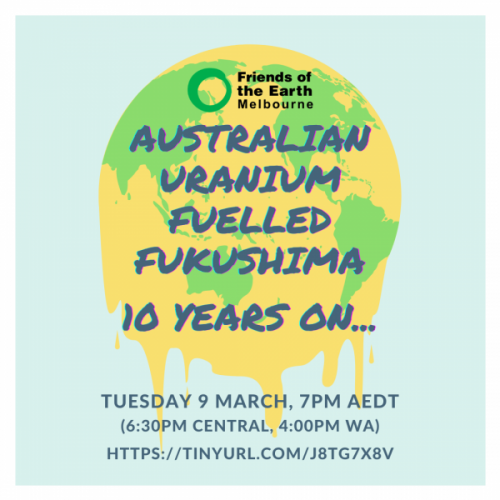
Australian Uranium Fuelled Fukushima Nuclear Reactors – theme for March 21
Please come along to this webinar discussing the Fukushima disaster which is an ongoing disaster that Japan is still pretending to the world is under control.
9 March – WEBINAR.
7 pm Eastern time AAEDT
6.30 pm Central rime South Australia
6 pm. Weatern Australia
Guest Speakers: Ayumi Fukakusa, Climate Change and Energy campaigner,
Australian government obsessed with preventing legal appeals against its nuclear waste dump plan
Commenting on the opinion piece: They have let it come: now build it , In Daily Dave Sweeney, Australian Conservation Foundation InDaily 25 Feb 21
Sean Edwards’ defence of the federal governments push for a hotly-contested national radioactive waste facility near Kimba on the Eyre Peninsula fails to recognise that the deeply flawed plan has once more hit the rough.
Mr Edwards speaks of respect, but there is nothing respectful in the governments new legislation seeking to remove people’s rights to legally appeal or challenge the plan.
Access to a day in court is a fundamental democratic right, and the governments obsession with removing this should sound alarm bells in the wider community, just as it has in the Senate where the planned law was again deferred this week after it failed to garner broad political support.
The plan shirks the hard questions about responsible long-term radioactive waste management in favour of a sub-optimal short-term political ‘fix’.
The waste comes from the Lucas Heights reactor in Sydney. There is a growing call that it should stay at this secure federal site until there is a credible pathway for its long-term management. Moving it to an area in regional South Australia where there are far fewer management assets and resources is both unnecessary and irresponsible.
This is not a decision about on which hill to put a mobile tower. Deciding on Australia’s first purpose-built national radioactive waste facility requires much more evidence, effort and evaluation than has occurred to date.
If radioactive waste lasted as long as our politicians it would hardly be a problem. But it doesn’t. This is Australia’s most serious radioactive waste and some of it needs to be isolated from people and the environment for 10,000 years.
Our nation needs a credible, evidence-based approach to the long-term management of radioactive waste.
Sadly, neither Minister Pitt’s plan nor Mr Edward’s assurances deliver this. It is time the current approach was scrapped and the federal government got serious about advancing responsible waste management. – https://indaily.com.au/opinion/reader-contributions/2021/02/26/your-views-on-nuclear-waste-submarines-and-jobseeker/
Dr Helen Caldicott on Independent Australia tells The Truth About Nuclear Power
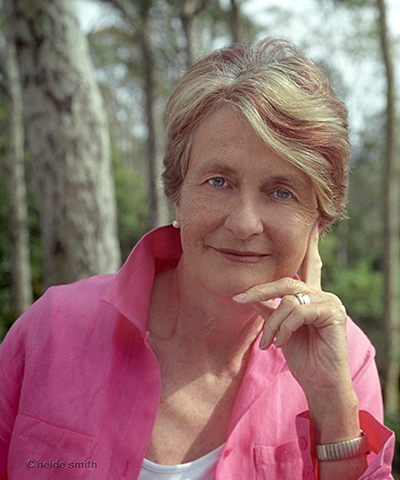 HELEN CALDICOTT: The truth about nuclear power — neither clean nor green https://independentaustralia.net/environment/environment-display/hthe-truth-about-nuclear-power–neither-clean-nor-greenelen-caldicott-,14837 HELEN CALDICOTT: The truth about nuclear power — neither clean nor green https://independentaustralia.net/environment/environment-display/hthe-truth-about-nuclear-power–neither-clean-nor-greenelen-caldicott-,14837
By Helen Caldicott | 26 February 2021, While nuclear power is considered clean by many, there are several harmful and long-lasting consequences resulting from its use, writes Dr Helen Caldicott.
AN ENORMOUS AMOUNT of fossil fuel is used to mine and mill uranium, to enrich and fashion the nuclear fuel rods, to build the enormous concrete reactor, let alone decommission the radioactive mausoleum at the end of its active life of 40-60 years. Finally, but not least, to transport millions of tons of intensely radioactive waste to some as-yet-to-be-constructed storage site in the U.S. to be kept isolated from the ecosphere for one million years according to the U.S. Environmental Protection Agency. We all know to our detriment that the combustion of oil, gas and coal creates CO2, the main global warming gas. According to a definitive study by Jan Willem Storm van Leeuwen and Philip Smith titled ‘Nuclear Power: the Energy Balance’, the use of nuclear power causes, at the end of the road, approximately one third as much CO2 as gas-fired electricity production. The rich uranium ores required for this reduction are limited and the remaining poorer ores in reactors would produce more CO2 than burning fossil fuels directly. Nuclear reactors are best understood as complicated expensive and inefficient gas burners. Setting aside the above energetic costs and accepting the nuclear industry’s claim that it is clean and green, and assuming a 2% growth in global demand, all present-day reactors – 440 – would have to be replaced by new ones. Half the electricity growth would be provided by nuclear power and half the world’s coal fire plants replaced by nuclear plants requiring the construction over 50 years of 2,000 to 3,000 1,000-megawatt reactors — one per week for 50 years. The International Atomic Energy Agency estimates already there are 370,000 tons of high-level radioactive waste in the world awaiting disposal, containing over 100 radioactive elements such as:
Dr John Gofman MD, the discoverer of uranium-233, estimated that if 400 reactors operated for 25 years at 99 per cent perfect containment, caesium loss would be equivalent to 16 Chernobyls. A half-life is multiplied by ten or 20 to give the total dangerous radiological life. There is no containment that lasts 100 years let alone one million. As these radioactive elements inevitably escape and leak into the environment, they will concentrate at each step of the food chain tens to hundreds of times, for instance through algae, then crustaceans, then small fish, then big fish, then us. They are tasteless, invisible and odourless. Once deposited in human or animal organs, they irradiate a small volume of cells over many years inducing mutation of regulatory genes which control the rate of cell division, thus inducing uncontrolled cell division which is cancer. Leukemia takes five to ten years to appear post contamination, solid cancers 15 to 80 years. Genetic abnormalities will take generations to manifest. Animals and plants are similarly affected. In effect, by creating more and more nuclear waste, we humans will be inducing random compulsory genetic engineering for the rest of time. That’s what clean, green nuclear power means. You can follow Dr Caldicott on Twitter @DrHCaldicott. Click here for Dr Caldicott’s complete curriculum vitae. |
|
Gippsland town volunteers for micro-grid trial to reduce dependence on main grid — RenewEconomy

The town of Heyfield 200km east of Melbourne will be the guinea pig for new microgrid technology in a study led by UTS. The post Gippsland town volunteers for micro-grid trial to reduce dependence on main grid appeared first on RenewEconomy.
Gippsland town volunteers for micro-grid trial to reduce dependence on main grid — RenewEconomy
Australia cannot afford to allow coal generators to hijack clean energy transition — RenewEconomy

Regulators overseeing the new energy market rules for Australia’s main grid must push back against the attempts by the coal lobby to hijack the process. The post Australia cannot afford to allow coal generators to hijack clean energy transition appeared first on RenewEconomy.
Australia cannot afford to allow coal generators to hijack clean energy transition — RenewEconomy
Solar panels installers on notice in safety blitz — RenewEconomy

Metropolitan and regional installers of rooftop solar panels can expect an unannounced visit from SafeWork’s inspectors as the work health and safety regulator targets heightened risk associated with a boom in demand. The post Solar panels installers on notice in safety blitz appeared first on RenewEconomy.
Solar panels installers on notice in safety blitz — RenewEconomy
1 This month
17 October, Free Public Talk on Nuclear Issues in South Australia
David Noonan will speak on public interest concerns over the new Roxby Downs Indenture Act 2026 on BHP copper-uranium mining and ore processing in SA, and on how AUKUS may face SA with a High-Level nuclear waste agenda.
Dr Jim Green will discuss international developments in the field of nuclear power including ‘small modular reactors’ and Generation 4 ‘advanced’ nuclear reactor concepts.


Help Aunty Sue Protect Her Land and Sacred Sites From Destructive Rocket Testing.
.

Australians deserve the truth
about
AUKUS – https://aukuspublicinquiry.com/

PETITION – To: Prime Minister Anthony Albanese and the Australian Labor Government

of the week – Australians for War Powers Reform (AWPR)
To see nuclear-related stories in greater depth and intensity

