Hibakusha renew their push for the abolition of nuclear weapons
Hiroshima atomic bomb survivor Abe Shizuko was reacting to the October 24 ratification of the United Nations Treaty on the Prohibition of Nuclear Weapons. The accord will take effect in January – although none of the world’s nuclear powers are members.
Nevertheless, hibakusha, which is what the atomic bomb survivors are called in Japan, see the treaty as a victory for their cause. “I take pride in the fact that the decision is a result of the united little voices of individual hibakusha,” says 93-year-old Abe.
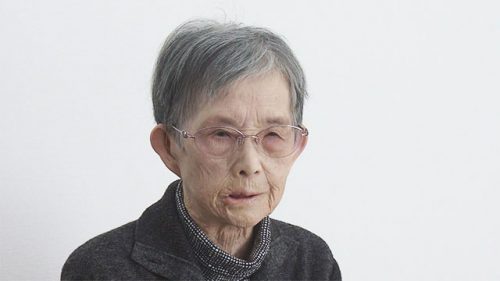
On August 6th, 1945, the United States dropped an atomic bomb for the first time in human history. Its target was Hiroshima, where 18-year-old Abe was helping to dismantle buildings to prevent the spread of fires caused by air raids during World War Two. Abe was working just 1.5 kilometers away from ground zero. She suffered severe burns on the right side of her body and face, and has been through 18 surgeries.

“The operations were very painful and difficult. There wasn’t enough anesthetic back in those days, so doctors could not give me supplemental relief even if I started feeling pain. I tolerated the pain through a strong hope to restore my body,” Abe recalls.
The bomb left keloid scars on her face and the right side of her body. In photographs from when she was younger, Abe always looks down, or shows only her left side.
A-bomb survivors call the 10-year period following the world’s first atomic bombing “the blank decade.” That is because people who were injured had little to no medical or financial support. At the same time, they were exposed to severe prejudice and discrimination.
Abe says she was once nicknamed “Red Ogre” because of her scars. “My wound did not heal. My body weakened. I was in poverty. Many people stared at me only just to satisfy their curiosity, because they wanted to know what a hibakusha looked like. They did not feel sympathy for me. They bullied me. The suffering that I went through, and the emotional wound, will never go away.”
In 1956, Abe joined other atomic bomb survivors to form a delegation. They traveled to Tokyo to appeal to the then prime minister and government officials to offer relief for victims, and support their call for the abolition of nuclear weapons. Those efforts led to the establishment of the Japan Confederation of A- and H-Bomb Sufferers Organization.
As the Cold War progressed, the hibakusha became disheartened. Even though they were speaking out about the need to eliminate nuclear weapons, the world was not listening. Nuclear experiments were being carried out repeatedly, and the arms race took off.
“It was really a difficult time for our campaign,” Abe remembers. “We felt as if we were yelling out while trying to survive in rough waves on a dark night.”
Abe carried a grudge against the US, but started to feel a change of heart almost 20 years after the bombing. In 1964, she went to the US and Europe for what was known as the Peace Pilgrimage. It was an opportunity for A-bomb survivors to speak about their personal experiences in front of audiences. Abe stayed at a private home with local hosts in the US, and she was deeply touched by their tender-heartedness.
“They listened attentively to my stories and said to me, ‘It must have been very hard for you. You’ve been through a lot. We’re so sorry for you,'” Abe recalls. “I realized we should never let anyone fall victim to nuclear weapons, regardless of what nationality you are. Americans or anybody.”
The voices of the hibakusha spread to all corners of the world, slowly but steadily.
These days, the average age of hibakusha is more than 83 years old, and there are fewer chances to hear their direct accounts. Some of them, like Taniguchi Sumiteru, played a direct role in the recent ratification of the UN treaty that bans nuclear weapons.
Taniguchi died three years ago, but he put the wheels in motion with a campaign that collected signatures to demand an international convention to ban nuclear weapons. He worked on that until the last moment of his life.
Taniguchi was 16 when he was exposed to the second atomic bomb that the US dropped on Japan. He was working as a postman in Nagasaki. A picture that shows the red burned flesh on his back shocked the world.
He delivered an impassioned speech at the 2010 Nuclear Non-Proliferation Treaty Review Conference at the UN’s New York headquarters: “Please don’t turn your eyes away from me. Please look at me again. I have survived miraculously, but for me, to ‘live’ was to ‘endure the agony’. Bearing the cursed scars of the atomic bomb all over our bodies, we the hibakusha continue to live in pain.”
“For humans to live as humans, not even one nuclear weapon should be allowed to exist on earth. I cannot die in peace until I witness the last nuclear warhead eliminated from this world,” said Taniguchi.
Hibakusha and their supporters gathered at Nagasaki Peace Park shortly after last month’s treaty ratification to share their joy. Among them was Okuma Yuka, a member of an activist group that calls itself “Hiroshima and Nagasaki Peace Messengers”.
Okuma took part in the signature-collecting campaign for the abolition of nuclear weapons after being deeply shocked by the image of a young Taniguchi in the aftermath of the atomic bombing. Her great-grandmother was a hibakusha but didn’t talk much about her experience. The photograph of Taniguchi brought it home to Okuma that suffering had occurred in her own family.
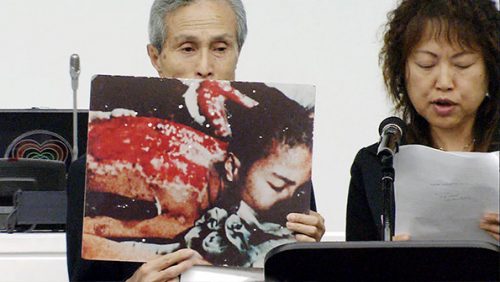
“I believe the Treaty on the Prohibition of Nuclear Weapons is definitely an important step forward,” Okuma says. “I expect that this will become a good opportunity for us to move toward a world that is completely free of nuclear weapons.”
Nuclear disarmament for health: time to rejoice — IPPNW peace and health blog
For decades people have marched, protested, sung songs, made films and written books calling for the abolition of nuclear weapons, and for decades the nuclear weapons states have stymied all efforts to force them to disarm. …The Treaty on the Prohibition of Nuclear Weapons is very explicit. There can be no misinterpretation or waffling on its provisions. It prohibits the development, testing, production, stockpiling, transfer, use and threat of use of nuclear weapons. It also prohibits countries giving assistance and encouragement to the prohibited activities. Finally, any direct or indirect control over nuclear weapons or other nuclear explosive devices is forbidden.
Nuclear disarmament for health: time to rejoice — IPPNW peace and health blog
November 13 Energy News — geoharvey

Opinion: ¶ “Hitting Net Zero Is Not Enough – We Must Restore The Climate” • The climate crisis is here now. No matter how quickly we reach zero emissions, the terrible impacts of the climate crisis will not just go away. They will continue to cause millions to suffer for centuries to come. Just cutting […]
November 13 Energy News — geoharvey
New wind and solar farms begin production in NSW — RenewEconomy

Molong solar farm welcomed to the NSW grid this week, alongside the Sunraysia solar farm, the Collector wind farm, and the Wellington solar farm. The post New wind and solar farms begin production in NSW appeared first on RenewEconomy.
New wind and solar farms begin production in NSW — RenewEconomy
Kill Cogati: Wind and solar sector urges ESB to drop “wrong reform at wrong time” — RenewEconomy

The clean energy sector has urged the Energy Security Board to finally kill-off the controversial COGATI reforms once and for all. The post Kill Cogati: Wind and solar sector urges ESB to drop “wrong reform at wrong time” appeared first on RenewEconomy.
Kill Cogati: Wind and solar sector urges ESB to drop “wrong reform at wrong time” — RenewEconomy
BoM wake up call: Record warming leading to more extreme heat, drought and fires — RenewEconomy

BoM issues wake up call with latest ‘State of the Climate’ report, warning Australia on track for more extreme heat, bushfires and coral reef destruction. The post BoM wake up call: Record warming leading to more extreme heat, drought and fires appeared first on RenewEconomy.
BoM wake up call: Record warming leading to more extreme heat, drought and fires — RenewEconomy
Victoria called on to ditch “outdated” network fees making EV fast-chargers unviable — RenewEconomy

Victorian government called on to intervene over ‘out-dated’ network access fees, that could jeopardise the roll-out of new EV fast-chargers. The post Victoria called on to ditch “outdated” network fees making EV fast-chargers unviable appeared first on RenewEconomy.
Victoria called on to ditch “outdated” network fees making EV fast-chargers unviable — RenewEconomy
Clean energy sector concerned new foreign relations laws could kill investment — RenewEconomy

Clean energy sector raises concerns that new foreign investment laws could impose new regulatory burdens on wind and solar projects, and stymie new investment. The post Clean energy sector concerned new foreign relations laws could kill investment appeared first on RenewEconomy.
Clean energy sector concerned new foreign relations laws could kill investment — RenewEconomy
The Australian government can still bully its way to imposing a Kimba nuclear waste dump
 Today the Advertiser reports that the federal government does not have the numbers to get the draconian, racist National Radioactive Waste Management Bill passed in the Senate. Labor and most or all of the crossbench Senators oppose the Bill.
Senate dumps on the Australian government’s radioactive waste plan
 Senate dumps on government’s radioactive waste plan
The federal government should drop its plans for a national radioactive waste facility in regional South Australia after One Nation joined Labor, the Greens and others on the Senate crossbench in rejecting the government’s proposal for a site near Kimba.
One Nation confirmed it will not support the federal government’s bill to remove the right of affected communities to legally contest the decision to make Kimba the site for a radioactive waste facility and is instead seeking ‘to make the right decision for future generations’.
With Labor, the Greens, other crossbenchers and now One Nation opposed, the government appears to lack the numbers in the Senate to advance the plan.
“The federal plan is politically divisive, technically deficient and increasingly uncertain,” said the Australian Conservation Foundation’s nuclear campaigner Dave Sweeney.
“It has failed the test in the broader community and now also in Canberra.
“The government’s proposal is based on excluding people from consultation and review processes. It is based on the heavy handed overriding of legal principles and the unnecessary double handling of long-lived intermediate level waste.
“Access to a day in court is a fundamental democratic right that should not be jettisoned – especially on an issue with such significant and lasting impacts as radioactive waste.
“Many state and national civil society groups, Aboriginal and professional groups, the South Australian Upper House, SA Labor and Unions SA opposed the government’s approach.
“The government should now stop playing politics and start paying attention.
“This waste lasts longer that any politician and needs to be responsibly managed.
“We need a new approach that is based on evidence, inclusion and respect.”
Further information, context or comment: Dave Sweeney on 0408 317 812
Read ACF’s 3-page background brief on the federal radioactive waste plans
Australian govt’s Kimba nuclear waste dump plan will be torpedoed in the Senate
 Pauline Hanson’s One Nation torpedoes Kimba nuclear waste dump in SA, Claire Bickers, Federal Politics Reporter, The Advertiser, November 11, 2020
Pauline Hanson will torpedo the Federal Government’s bid to build a radioactive waste dump in regional South Australia.
The One Nation leader, who aims to win a seat in SA at the next federal election, has confirmed she will not back legislation to build the nuclear waste storage site at Napandee farm, near Kimba.
Without One Nation’s two crucial votes – and Labor, the Greens, and independent senator Rex Patrick not backing the Bill – the government does not have enough votes for it to pass parliament without changes.
Senator Hanson told The Advertiser she had serious concerns about the process to select Napandee, the level of community support, the waste site being built on farming land, and the facility storing intermediate radioactive waste above ground.
“I want to make the right decision, not for the interim, I want to make the right decision for future generations,” Senator Hanson said.
“I’m not going to be badgered or pushed into this.
“It’s about looking after the people of SA, but also the whole of Australia.”
Senator Hanson said One Nation wanted to win a seat in SA at the next election, and she hoped South Australians would take into account her strong stance on the waste site.
One Nation adviser Jennifer Game, who ran as the party’s SA Senate candidate at the 2019 election, has been leading research and consultation on the Kimba site.
“I think the government has rushed the decision to have it there,” Senator Hanson said.
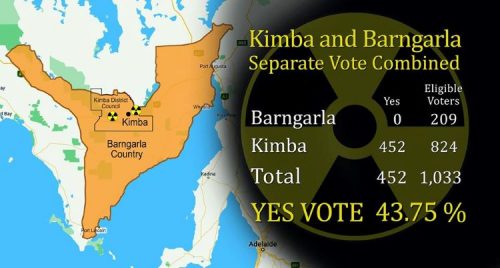
Almost 62 per cent of 734 Kimba residents supported the facility in a postal vote in 2019 but Senator Hanson said locals had indicated to the party that closer to half of the town did not support the facility.
The region’s native title holders, the Barngarla people, were also not given a say in the official vote.
Senator Hanson was concerned other locations that may be suitable were not investigated, such as an old mining site in Leonora, in Western Australia, which may be able to store the waste underground.
“We don’t know what the future is going to hold, we don’t know if war is going to touch our shores,” she said.
“Do we really want a facility that is above ground that could be problems further down the track, if anything happens?”…https://www.adelaidenow.com.au/news/south-australia/pauline-hansons-one-nation-torpedoes-kimba-nuclear-waste-dump-in-sa/news-story/9043c46fa44ecd8a1b4e46be111745f3
Karina Lester speaks out: ”Traditional owners’ voices not heard and rights stripped over nuclear waste dump”
”Traditional owners voices not heard and rights stripped over nuclear waste dump”
 Extract:
Chairperson of Yankunytjatjara Native Title Aboriginal Corporation (YNTAC) Karina Lester says, “The two key issues that I’m quite concerned about are the lack of consent from the traditional owners; and that they want to take away judicial review. No Barngarla person or anyone in that Kimba region can take it to the courts for it to be properly heard. That’s a given right for any Australian; to take an issue through a judicial process and they’re now trying to shift the goalposts away from Aboriginal people and people from the Kimba region so it can’t be challenged.”
Four Aboriginal groups submitted their concern about the lack of Indigenous community engagement in the consultation and selection process, as well as potential violation of those communities’ rights, these were the Yankunytjatjara Native Title Aboriginal Corporation (YNTAC), Tjayuwara Unmuru Aboriginal Corporation (TUAC), De Rose Hill-Ilpalka Aboriginal Corporation (DRHIAC) and the First Nations of South Australia Aboriginal Corporation (FNSAAC).
They acknowledged that the specified site has significance for a wider group of Aboriginal People than just the Barngarla, and that the proposed use is a matter of significance for Aboriginal People right across the state.
“They’ve been saying that this is just a Barngarla issue, just a Kimba issue – but it’s not. No, this is an issue for First Nations people everywhere. We need to stand in solidarity and send a strong message as the First Nations people of South Australia to say that no dump is wanted in our state,” said Ms Lester, who is the daughter of anti-nuclear and Indigenous rights advocate, Yami Lester.
“We have been pressured to be the ‘solution’ to waste management; it’s not been clear why the Federal Government keeps coming back to our state. I think that’s part of the problem.
“The process has been flawed from the very beginning. The risk is that if we open the door to this, we could well be opening the door to a permanent solution here in SA. Why put a temporary solution here when the facility says they can keep storing it at Lucas Heights in Sydney?
“There’s so much history of Aboriginal people’s activism against this in South Australia. For it to come back to our state, after leaving our state so many years ago, it feels like an ongoing generational battle for us to put an end to this issue in South Australia.”
Sneator Sam McMahon going all out for Small Nuclear Reactors

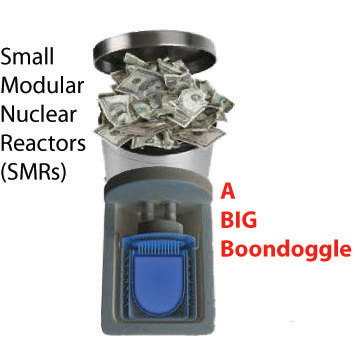
Senator McMahon is looking beyond currently commercialised nuclear technology, to Small Modular Reactors (SMRs). None of these exist in service anywhere in the world and as the WNISR2020 report points out, will cost more per kilowatt than conventional nuclear energy – and beyond a few prototypes SMRs are unlikely to come into play.
So, as renewables are perceived to be expensive when backed by storage, the solution is to shoot for a technology that may never hit prime time and even if it does, will be even more expensive than conventional nuclear, push up energy prices and erode carbon mitigation outcomes?
Perhaps channelling Senator Matt Canavan, this is some of what the senator had to say about renewables in late October:
“Renewables are the dole bludgers of the energy mix,” said Senator McMahon. “They are a great hoax perpetrated by the industry on the gullible.” Continue reading
Rolls Royce small nuclear reactors – not really feasible?

|
Mini-nuclear plants may be an experiment worth exploring, Guardian Nils Pratley 11 Nov 20, Roll-Royce gave an eye-catching pitch but the economics of nuclear power needs further inspection.An energy white paper is in the offing, so consider Rolls-Royce’s pitch for the wonders of small modular reactors (SMRs) a piece of last-minute lobbying. After all, it is clear already that more nuclear, in combination with more offshore wind capacity, is likely to be judged a central way to meet the UK’s targets for cutting carbon emissions.
It’s an eye-catching pitch… What’s not to like? The clue is in that word “feasibility”. The consortium hasn’t actually built an SMR yet, so claims about lower costs per megawatt hour versus EDF’s at Hinkley are yet to be tested on the ground. The first few stations would arrive at £2.2bn-£2.5bn, says the consortium, with the price dropping to £1.8bn after the first five. Yes, one can see how costs would fall: automated production lines, with the pieces transported for assembly on site, should yield efficiencies over time. On the other hand, we also know that nuclear projects never arrive on budget (as EDF could attest). And a key point about mini-nuclear plants, say sceptics, is that they have to be built near to where the energy is used in order to reduce transmission losses. Since a nuclear reactor is few people’s idea of a local community asset, there’s a planning issue……. The immediate question for government is whether to give a green light for the next stage of development. That would mean legislative support, making sites available and coughing up roughly £2bn of public money. …… https://www.theguardian.com/business/nils-pratley-on-finance/2020/nov/11/mini-nuclear-plants-experiment-economics |
|
Previous Chief Scientist not a fan of Small Nuclear Reactors
 Dr Finkel said it was “hard to see” small nuclear modular reactors being ready before 2040, and even after that Australia would have to monitor commercial installations overseas before allowing the technology.
“So, is it something we should be looking at hard at the moment? I am certainly not looking at it intensely at the moment,” he said. https://www.smh.com.au/politics/federal/gas-critical-for-renewable-energy-future-chief-scientist-says-20200212-p54026.html?fbclid=IwAR00ucWlw1Lsq_gNEPkPQ8ru301_hEmu9gXMxdG3CunZHBXyf_zE4E9QB3E
1 This month
17 October, Free Public Talk on Nuclear Issues in South Australia
David Noonan will speak on public interest concerns over the new Roxby Downs Indenture Act 2026 on BHP copper-uranium mining and ore processing in SA, and on how AUKUS may face SA with a High-Level nuclear waste agenda.
Dr Jim Green will discuss international developments in the field of nuclear power including ‘small modular reactors’ and Generation 4 ‘advanced’ nuclear reactor concepts.


Help Aunty Sue Protect Her Land and Sacred Sites From Destructive Rocket Testing.
.
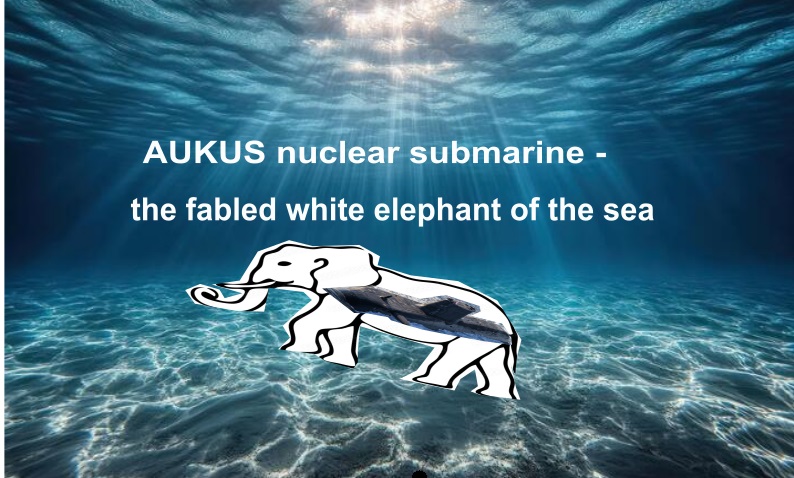
Australians deserve the truth
about
AUKUS – https://aukuspublicinquiry.com/

PETITION – To: Prime Minister Anthony Albanese and the Australian Labor Government

of the week – Australians for War Powers Reform (AWPR)
To see nuclear-related stories in greater depth and intensity

