AEMO declares system strength shortfall in Queensland after wind, solar curtailed — RenewEconomy

AEMO has called for action on North QLD system strength issues, making formal declaration of shortfall that has impacted solar and wind projects. The post AEMO declares system strength shortfall in Queensland after wind, solar curtailed appeared first on RenewEconomy.
via AEMO declares system strength shortfall in Queensland after wind, solar curtailed — RenewEconomy
April 10 Energy News — geoharvey

Opinion: ¶ “Staying On Course: Renewable Energy In The Time Of COVID-19” • Decisions on addressing the social and economic impacts of the pandemic come at a time of profound uncertainty about long-term effects of the crisis on the world’s societies. The response must accomplish more than just to bail out the existing socio-economic structures. […]
Conservation Council of Western Australia stresses importance of submissions to strengthen environmental protection


K-A Garlick Nuclear Free WA Campaigner, 10 Apr 20, The webinar, Yeelirrie – A Case for Environmental Law Reform was a great success, with a wealth of information from our four stellar speakers, on the urgent need for improved environmental laws using Yeelirrie as a case study for environmental law reform. We reviewed the Yelirrie uranium mine assessment process and how we can improve the agility in the Commonwealth environment department to identify and classify threatened and endangered species.
If you missed the webinar or would like to see the highlights again ~ click here for some great information to help you form your submission to the EPBC Act review.
Keynotes from the webinar, include;
- The importance of retaining the prohibition of nuclear power and the retention of uranium exploration and mining and the inclusion of nuclear actions as a matter of national environmental significance (MNES) under the EPBC Act,
- Environmental protection laws should protect against the extinction of species,
- Opportunity to introduce a merits review in a reformed EPBC Act as an independent, expert court or tribunal to ensure worlds best practice for community participation, accountability and environmental protection,
- We need an independent authority to administer the EPBC Act,
- We need increased open and transparent assessment processes, and
- We need a national EPA as there is no equivalent body at the federal level. A national EPA could undertake independent and technically expert assessments of projects, ensuring that the scientific evidence is put into focus.
The push for the nuclear industry and the Minerals Council of Australia to remove the prohibition on nuclear power and to remove the trigger for uranium mining is a serious push and real threat.
To retain these parts of the EPBC Act we encourage you to write a submission.
The new dont-nuke-the-climate website is a great tool to help you understand the nuclear issues and threat. There is a really useful nuclear ban page, to support your submission writing.
Submissions are due 17 April 2020.
Make a submission to the The Independent Review of the Environment Protection and Biodiversity Conservation Act 1999
- Via the Department: make a submission using the online form here.
- Via email: epbcreview@environment.gov.au
- Via post: EPBC Act Review Secretariat, Department of the Environment and Energy. GPO Box 787, CANBERRA ACT 2601
The committee ask that you complete and submit this cover page with any submission via e-mail or post. All submissions that include this cover sheet will be considered by the review.
Bob Phelps’ submission: There is no valid case for the planned national nuclear waste facility at Kimba
 Bob Phelps, 9 Apr, 20 The federal government’s proposed changes to the National Radioactive Waste Management Act are unfair, undemocratic and dangerous.
There is no valid case on safety or security grounds for the planned national nuclear waste facility at Kimba. The necessary infrastructure, resources and expertise for nuclear operations and waste management are all located at Lucas Heights and transferring the waste component of the system to a remote location at Kimba is a recipe for disaster in the medium and long term – up to 10,000 years from now, in the case of intermediate waste. Synroc failed and there is no credible alternative disposal proposal.
The traditional owners of the land were also disrespected and excluded from the purportedly public and democratic approval process. All citizens of Australia have a stake in the successful resolution of our national nuclear waste problems yet we were not consulted either.
My objections to the proposed Bill and its proposed changes to the Act specifically include that it would:
o compromise judicial review of the government’s site selection plans currently available
o enable unfair and undemocratic ‘consultations’ that reduce the rights and options of Barngarla Traditional Owners’ and other directly impacted parties
o render key environmental, cultural and heritage protection laws irrelevant to the decisions
o make no clear or compelling case for transferring long-lived intermediate level waste (ILW) from secure to insecure storage, at substantial additional public expense
o provide far less certainty about the final fate and long-term management of Australia’s radioactive waste
o be inconsistent with international best practice for containment, siting, transport, and temporary storage of radioactive wastes
o ignores long-standing South Australian laws that prohibit a federal radioactive waste facility
Nuclear waste containment continues to fail globally and there are no safe, secure or permanent repositories for nuclear waste anywhere. There is no justification at all for taking such wastes out of Lucas Heights, where they continue to be produced. It is also the best repository for lower level created in hospitals and other facilities nationally.
The Kimba nuclear waste dump and temporary storage, with no future plan, is a short term and fatally flawed proposal that does not serve the public interest.
I ask the Committee to reject the proposed changes to the current Act and to recommend a complete review of all nuclear waste and related operations, to best achieve robust and sustainable radioactive waste management for Australia, for the long-term future.
University boffins discuss the eternal problem of nuclear wastes
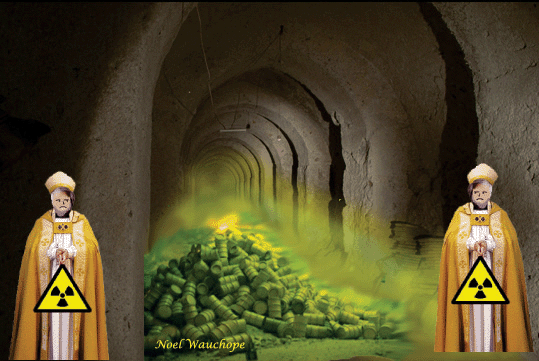
 Amazing – still none of these scientists suggests stopping making this radioactive trash!
Part of the show The Rise of Radioactivity
Chris – So what you’re saying is, if we’ve got say something that looks like glass, because it’s spitting out all these energetic particles of radiation all the time, it’s slowly going to shatter the glass. It’s almost like shaking the glass very, very hard for hundreds of thousands of years; it’s eventually going to fall to pieces and it will no longer be any good at retaining and constraining the radioactive products inside.
Adam – How do we design something in the future so that this stuff stays where it is, and isn’t archeologist bait, and they suddenly dig up a radioactive cube of glass?
Why Australia needs to aim for at least 75% renewables by 2030 — RenewEconomy

A high renewables grid is essential for Australia to meet its share of climate goals, and help reductions in other sectors. But it needs to happen fast. The post Why Australia needs to aim for at least 75% renewables by 2030 appeared first on RenewEconomy.
via Why Australia needs to aim for at least 75% renewables by 2030 — RenewEconomy
COVID-19 First Outbreak — Viral Glass-Like Nodules in Lungs — robertscribbler
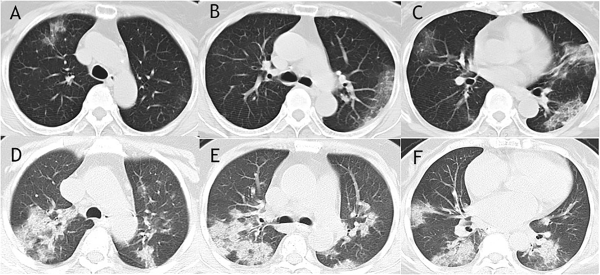
Comparison of lungs of a Wuhan patient who survived COVID-19 — image A-C — to those of a patient who suffered death from the illness — image D-F. Both image sets show the tell-tale ground glass like opacities of COVID-19 in lungs. Image source: Association of Radiologic Findings.
“The chances of a global pandemic are growing and we are all dangerously underprepared.” — World Health Organization in a September 18, 2019 statement mere months before the COVID-19 outbreak. “There’s a glaring hole in President Trump’s budget proposal for 2019, global health researchers say. A U.S. program to help other countries beef up their […]
via COVID-19 First Outbreak — Viral Glass-Like Nodules in Lungs — robertscribbler
April 8 Energy News — geoharvey

Opinion: ¶ “Rock Bottom: How COVID-19 Has Shattered The Oil Industry” • The spread of Covid-19 poses a significant threat to the global oil and gas industry. The increasingly drastic action taken to reduce the spread of the virus interferes with many of the sector’s key processes, and the uncertainty of the pandemic only worsens […]
Cleantech startups get a boost with ARENA funding for EnergyLab — RenewEconomy

ARENA tips in $480,000 into new EnergyLab start-up fund that will support new innovative clean tech businesses enter the Australian market. The post Cleantech startups get a boost with ARENA funding for EnergyLab appeared first on RenewEconomy.
via Cleantech startups get a boost with ARENA funding for EnergyLab — RenewEconomy
Big win for fossil fuels as regulators seek 12 month delay on 5-minute rule change — RenewEconomy

Big win for incumbent fossil fuel generators as regulators argue that Covid-19 pandemic requires 12-month delay to crucial market reform that would encourage more competition from batteries. The post Big win for fossil fuels as regulators seek 12 month delay on 5-minute rule change appeared first on RenewEconomy.
via Big win for fossil fuels as regulators seek 12 month delay on 5-minute rule change — RenewEconomy
Josephite South Australia Reconciliation Circle’s advice to the Senate Inquiry on Radioactive Waste Bill
It’s not too late to send in your submission, closing date is 9 April. Submissions can be sent by following simple steps on the link below. Also on this link are published some of the submissions received.
THIS EXCELLENT SUBMISSION COVERS ALL IMPORTANT ASPECTS.  I publish it in full, and urge you to read it all
on Kaurna Land Submission No. 7
Solidarity, Justice, Advocacy, Reconciliation
The Secretary
Senate Standing Economics Legislation Committee of Inquiry
National Radioactive Waste Management Amendment Bill 2020
c/o economics.sen@aph.gov.au
1. Introduction and Summary The Josephite SA Reconciliation Circle is an advocacy group based in
Australia and elsewhere and a long time involvement and concern for environmental matters. Under the
leadership of our mentor and Chairperson, the late Kaurna/Narrunga Elder Dr Alitya Wallara Rigney, and
together with other Aboriginal South Australians, as a group of Josephite, Carmelite Sisters and Associates
we have worked together as a social justice group for 16 years regarding political structures,
environmental concerns and cross-cultural awareness.
significance of the words and phrases – controlled; and safely and securely managed:
(1) The object of this Act is to ensure that controlled material is safely and securely managed by
providing for:
(a) the specification of a site for a radioactive waste management facility; and
(b) the establishment and operation of such a facility on the site specified.
(2) By ensuring that controlled material is safely and securely managed, this Act, among other
things, gives effect to certain obligations that Australia has as a party to the Joint Convention,
in particular, Australia’s obligations under Chapters 3 and 4 of the Joint Convention.
waste can be ‘controlled’ and ‘safely and securely managed’ in Australia is for it to presently remain in
the federal facility at Lucas Heights where the nuclear experts are and where the necessary safety
measures and skilled personnel are at optimum levels. We question the sense, the expense and the risks
of transporting long lived intermediate nuclear waste (LLILW) from where it is temporarily housed at
Lucas Heights with the nuclear experts, 1700 kilometres across the country to be temporarily stored in a
regional, yet to be built, facility. We submit that this proposal is the antithesis of safe and secure
management. Given that most of Australia’s intermediate level nuclear waste comes from Lucas Heights
we believe that it should be kept there, at least until a final disposal solution is established. Short term
proposals for the storage of Australia’s nuclear waste will leave insoluble problems for present and future
generations. There are no present plans for its permanent disposal.
contain the LLILW nuclear waste component of this proposed project.
fails to represent International Best Practice, 4. The Nuclear Medicine debate wrongly used to justify the
need for a NRWM Facility, 5 Kimba as an international grain farming area, 6.The Restrictive Voting Area, 7.
The Flawed Consultation processes, 8.The Need for Consultation in the chosen Port and along Transport
routes, 9 State legislation to be overriden. 10. Conclusion. 11. Recommendations.
impose nuclear waste against the express will of the Barngarla People, compromising their Indigenous
rights and interests. The broad Australian community has an obligation to respect and to protect
Aboriginal rights and interests. This must be reflected in the Senate Inquiry’s considerations, Report and
Findings. In addition to their express opposition, the Barngarla People’s heritage, Song Lines & Story Lines,
are protected by the SA Aboriginal Heritage Act 1988 as Indigenous cultural values.
Barngarla Traditional Owners, native titleholders over the area. Excluded from the Kimba ballot last year,
Barngarla people engaged the Australian Election Company to conduct a confidential postal ballot. Not a
single Barngarla Traditional Owner voted in favour of the dump.The Barngarla initiated a legal action
ignored on our traditional lands and unheard and unrecognised by the Kimba Council,’ said Mr Jason
Bilney, chairperson of the Barngarlaarla Determination Aboriginal Corporation. Mr Bilney said the land
and waterways held storylines with significant connections to Barngarla people.1
to wonder at the standing human rights legislation has in our nation when such rights can be so easily be
legislated away without redress. As Barngarla Traditional Owner Jeanne Miller laments, Aboriginal people
with no voting power are put back 50 years, ‘again classed as flora and fauna.’2 If the results of the two
ballots are combined, the overall level of support falls to just 43.8% of eligible voters (452/824 for the
government-initiated ballot, and 0/209 for the Barngarla ballot) ‒ well short of the government’s
benchmark of 65% for ‘broad community support’.3
Management Act 2012 (NRWM Act) to over-ride both Federal and State Aboriginal Heritage Acts. Sections
12 & 13 of the NRWM Act state that: “the significance of land in the traditions of Indigenous people … has
no effect to the extent that it would regulate, hinder or prevent” actions that are authorised by Section 11
Selecting the site for a facility.4
Indigenous people’s traditions, rights and interests, as set out in and protected by any State law: On the
contrary Federal claims to “not impose a facility on an unwilling community” 5,should exclude sites where
the Native Title representative body opposes siting of nuclear waste facilities on their traditional lands.
We call on Inquiry members and after that our Australian Senators to refuse to take such action
‘authorised ‘ by overriding human rights. We agree that such is unacceptable in a modern era.
show special care for Indigenous communities and their cultural traditions. They are not merely one
minority among others but should be the principal dialogue partners…When they remain on their land,
they themselves care for it best. Nevertheless in various parts of the world, pressure is being put on them
to abandon their homelands to make room for agricultural or mining projects which are undertaken
without regard for the degradation of nature and culture.’ Pope Francis Laudato Si 6
The NRWM Facility plan for “indefinite storage” of ANSTO nuclear fuel wastes and Intermediate Level
Wastes is not consistent with longstanding advice of the regulator ARPANSA, Radiation Health & Safety
Advisory Council and of the Nuclear Safety Committee (NSC) on International Best Practice (p.16).
We note also that the Nuclear Safety Committee (NSC) has advised (2013) that dual handling transport
for interim storage as named in our Introduction above “does not represent International Best Practice”
and “also has implications for security” and for safety. 7
The nuclear regulator ARPANSA states these wastes require radiation shielding, safe handling and
security, and isolation from people and from the environment for over 10,000 years.
an above-ground interim Nuclear Waste Store. However for the past four years no other states have been
under consideration for the deposition of Australia’s most toxic material. From the original 26 nominated
sites, the final three selected were all from South Australia. Surely a political rather than a scientific
decision.
(IWS) at Lucas Heights with a conservative design operating life of 40 years to take reprocessed nuclear
fuel waste shipments from both France and the UK. The IWS received the French waste in Dec 2015 and
can take the UK waste due in 2020’s. The regulator ARPANSA has said it expects separate Licence
Applications for the above ground Nuclear Store and for the Low-Level Waste Disposal Facility.8
Applications for the above ground Nuclear Store and for the Low-Level Waste Disposal Facility.8
The “National Radioactive Waste Management Facility” (NRWMF) is really two dumps in one with a Low-
Level radioactive waste disposal site (including wastes that require isolation for up to 300 years) which is
also primarily over 95% for Federal gov. wastes.
for the less toxic low level waste has been submitted, it is astonishing to our members that the federal
government and its department officials have shown and continue to show scant regard for these safety
and security values in practice by the startling failure to provide any planned facility design for the
deposit of the far more dangerous LLILW. We wonder if all Members and Senators voting on the Bill
realise that this is the case.
imposed on to SA. It is a main thrust of our submission – to regularly transport 1700 kms and then simply
store the nuclear waste, toxic for 10,000 years, above ground in a yet to be designed facility in regional SA
– that this ‘plan’ is unconscionable and must change. Waniwa Lucy Lester Yankunyjatjara Elder brings
attention to Intergenerational justice: Do we have the right to condemn future generations to poisoning
the land?9
on in this process, federal government officials and representatives have increasingly ramped up the
government’s nuclear medicine defence for the NRWM Facility.
1)Dr Bill Williams, Medical Association for the Prevention of War “As health organisations, we are appalled
that access to nuclear medical procedures is being used to justify the proposed nuclear waste dump. Most
waste from these procedures break down quickly and can be safely disposed of either on site or locally.10
2)Nuclear Radiologist Dr Peter Karamoskos. “Linking the need for a centralized radioactive waste storage
facility with the production of isotopes for nuclear medicine is misleading. The production of radioactive
isotopes for nuclear medicine comprises a small percentage of the output of research reactors. The
majority of the waste that is produced in these facilities occurs regardless of the nuclear medicine isotope
production.” 10
misunderstanding about the most dangerous intermediate level nuclear waste (LLILW) destined for the
proposed NRWMF (National Radioactive Waste Management Facility) continues. The use of nuclear
medicine in hospitals does not produce any nuclear waste that will go to a NRWMF.The ‘Australian
Radioactive Waste Management Framework’ shows that at January 2018 the volumes of ILW to be stored
at a NRWMF to be1771 m3. Of this just 13m3 (less than 1%) comes from ‘Industry, hospitals, universities’,
in all states and territories. Little if any LLILW is stored in hospitals…The use of nuclear medicine produces
only low level waste which sits a while then goes to the usual (non radioactive) waste streams. The
manufacture of nuclear medicine produces LLILW and LLW (Low level waste ) but that happens and stays
at Lucas Heights. X-rays and CTs produce no radioactive waste. The ‘heads’ of radiotherapy devices will
National Radioactive Waste Management Amendment (Site Specification, Community Fund and Other Measures) Bill 2020
[Provisions] be radioactive waste but the modern ones need to be returned to the manufacturer when obsolete and
all manufacturers are overseas.’11
Australia’s just 4.5 per cent agricultural cropping land. This flawed Federal government process has
seriously divided and damaged the Kimba agricultural and town community and presents a reputational
and material impact risk to their livelihood and community cohesion.
*Kimba farmer James Shepherdson names the long term implications of the one off federal government
promise of payment: ‘Farmers are under scrutiny and at the beck and call of buyers and brokers, and to
risk what is an $80m income for this district every 12 months, for a one-off $20m payment, that’s
absurd.The people in favour (of the facility being built), I can see it from their point of view, they want
financial prosperity for the town and area, but to risk it all just for a bit of prosperity is madness.
“Seeing as this is the entire nation’s waste, and we all share the responsibility of nuclear medicine, why
shouldn’t it be a national decision? 12
*Farmer Peter Woolford, President of No Radioactive Waste Dump on Agricultural Land in Kimba or SA
summarises the seriousness of the local divisive campaign: ‘if you want to know what intimidation is, you
stand between people and money.’13
*Tom Harris who has been farming in Kimba for over 50 years has named with some distress the current
doubt by insurance agents regarding his insurance viability because of its proximity of his farm to the
nuclear storage site; this may jeopardise his sons’ succession.13
*Barry Wakelin, the retired Coalition federal member, is another of the farmers fiercely opposing the plan
and the danger to the Kimba international grain markets. In the face of groundwater, transport and
serious, hugely long-term safety risks, Wakelin insists, ‘This is a national issue, not something that a
regional community should be left to deal with.’14
central Kimba Council. As well as the Barngala people being excluded many farmers were also.James
Shepherdson notes, ’We’ve got people who are closer to the site than the township of Kimba is, but aren’t
in the council boundary, who did not get a vote.’16 One farming couple opposed to the facility were denied
a vote even though just a road separates their farm from the proposed site
restricted vote: ‘Both nominated sites near Kimba are closer to the council boundary than the Kimba
township or the centre of the district. I live at Cootra which shares councils. Our farm is 8 km from the
waste site and I did get a vote but my immediate neighbors don’t. If the 50 km radius was applied at
Kimba like it is at Hawker the vote would fail at these waste sites. Our neighborhood is split in half by the
vote here. Volunteers from our neighbourhood that are members of the local fire service attend incidents
around the waste dump site area and yet most didn’t get a vote. We have already been through this once
already where everyone was on equal terms. The minister at the time has already ruled there was not
broad community support. However the landholder that nominated his land the first time then
renominated a different part of his farm and his friends and family within the Kimba council moved for a
vote of only the council area. The community funding has now been restricted to the Kimba council area
only. Because of this people are looking at the large inducement not the radioactive waste issues.’ 17
declares ‘At the least, the entire Eyre Peninsula should have been consulted. It’s not only the grain
exports, you’ve got to realise there’s the fishing industry at Port Lincoln, there’s oysters out of Cowell. The
Eyre Peninsula is isolated, but it’s a very healthy, productive area for South Australia and creates a lot of
wealth. A lot more wealth than any waste dump could ever provide for SA. ‘!
there were ‘years of consultations’ with the stakeholders in the Kimba locality. Unfortunately as our members
proposed SA regions opposed to the project, the consultations were, in fact, only in the form of
information about already decided government plans with a determined resistance to hear considered
and factual genuine objections from those opposed.
Our Josephite SA Reconciliation Circle in fact had personal experience of this approach.Following our
letters of concern about the whole issue to the then Minister, a meeting was convened by Minister
Canavan with our own members and two members of the relevant government department. A
consistent line of dismissal of our informed comments and objections by members was the pattern of the
meeting. As one member recalled, ‘ I remembered the emphasis seemed to be on avoiding or stalling
replies to our comments and questions. I also remember one man actually speaking over us when we
made comments. I thought then it was a “political” meeting to find out more about us and with attempts
to influence us to withdraw our objections.‘19
government within their departmental documentation named Whyalla or Port Pirie as required nuclear
waste ports facing decades of shipments of ANSTO reprocessed nuclear fuel waste imports to SA: Two
shipments of nuclear fuel waste in 130 tonne TN-18 casks are intended in the first 2 years of operations
including a shipment of reprocessed nuclear fuel wastes from UK in the early 2020’s and a shipment from
Lucas Heights, then multiple future shipments direct from France. 20
The affected Eyre Peninsula, Whyalla and transport route communities have been denied a say on these
Federal plans and now face potential serious reputational risks and material impacts. The Whyalla City
Council states there has had no advice from Federal or SA governments on use of the Port. Whyalla is
targeted for nuclear waste shipments and should have a right to refuse untenable plans.
(LLILW) are also to be trucked into SA, primarily from Lucas Heights, in the first four years of Nuclear
Store operations in SA. 21 That there has been no consultation at all to those communtities along the
transport routes mean that Federal government processes are a direct breach of advice from the Nuclear
Safety Committee. In a letter to ARPANSA CEO Dr Carl-Magnus Larsson (Nov 2016), Nuclear Safety
Committee Chair Dr Tamie Weaver stressed the “ongoing requirement to clearly and effectively engage all
stakeholders, including those along transport routes…such engagement “is essential”. 22
Waste Facility (Prohibition) Act, introduced by the SA Liberal Government in the year 2000 and
strengthened by the SA Labor Government in 2002. The federal government is expected to take the
draconian and unacceptable step of using regulations to specifically override the SA Nuclear Waste Facility
(Prohibition) Act. South Australians are opposed to the proposed nuclear waste facility: a 2015 survey
found just 15.7% support for a nuclear waste dump, and a 2018 survey found that those who strongly
agreed with stopping the dump outnumbered those who strongly disagreed by a factor of three (41:14).
Submission 7
of the planet and its peoples is in unprecendented crises. In this scenario our members, many of whom
have spent a lifetime in the education of young people declare It is unconscionable that the present
federal government by proposing an interim storage above ground facility in country South Australia
should be passing the responsibility and bestowing high risk down the road for next generations to deal
with. Now is the time for a genuinely safe plan for Australia’s long term intermediate nuclear waste. The
time for cavalier action in the face of real evidence and human and environmentally linked risk is over.
This is a project full of huge risks in an unprecendented time of enormous risks. It must not go ahead.
Recommendation
National Radioactive Waste Management Amendment Bill 2020 and repeal of the National
Radioactive Waste Management Amendment Act.
1 The Committee should assess the compatibility of the Act, the Bill and the proposed nuclear waste
facility with the UN Declaration on the Rights of Indigenous Peoples, in particular the principle of free,
prior and informed consent.
2. Given that the government has consistently failed to provide any logical justification for doublehandling
of intermediate-level waste, the Committee should recommend that intermediate-level waste
stored at ANSTO’s Lucas Heights site should remain there until a long-term solution is realised.
3.The Committee should recommend that the Bill is withdrawn, and the federal government’s nuclear
waste agenda put on hold, until such time as public opinion among other relevant stakeholders is
determined (including state-wide opinion in SA; and opinion along potential transport corridors).
Michele Madigan for the Josephite SA Reconciliation Circle
25th March 2020
Footnotes as requested
1. Jason Bilney Chair BDAC Sarah Martin The Guardian 26th February 2020
2. Jeanne Miller video link : https://vimeo.com/382855709
3. Kim Mavromatis general email 6/2/20
4. NRWM Act Section 12 and 13 and Section 11
5. Frequent saying of former Minister Canavan quoted in notes and audios of various consultations
eg Hawker SA, Kimba SA Quoted in M Madigan Eureka Street Marchers Unite against federal
nuclear dump 27/8/2018
6. Pope Francis Laudato Si An Encyclical Letter on Ecology and Climate 2015
7. Nuclear Safety Committee International Best Practice p 16 2013
8. David Noonan Briefinf document email 27/2/20
9. Waniwa Lucy Lester, Josephite SA Reconciliation Circle meeting convened with Department
representatives. Bethany, St Joseph’s Convent Kensington SA 2018
10. Bill Williams and Dr Peter K Friends of the Earth Friends of the Earth Nuclear medicine and the
proposed national radioactive waste dump
11. Dr Susi Andersson email to Michele Madigan Quoted in 23rd November 2019 Responses to
Farmers and Traditional Owners decry SA nuclear vote 20th November Eureka Street
12. James Shepherdson Stock Journal February 6, 2020
13. Peter Woolford Speech at Kimba SA Rally Feb 2nd 2020 M Madigan notes
14. Tom Harris Speech at Kimba SA Rally Feb 2nd 2020 M Madigan notes
15. Barry Wakelin Speech at Kimba SA Rally Feb 2nd 2020 M Madigan notes
16. James Shepherdson Stock Journal February 6, 2020
17. Terry Schmucker, December 5, 2019 Written Response to M Madigan Eureka Street article
Farmers and Traditional Owners decry SA nuclear vote November 20th 2019
18. Tom Harris as above
19. Josephite SA Reconciliation Circle member email 20/2/20 in preparation for Circle submission
20. Department of Industry, Innovation and Science Government 18 page Information document
researched by David Noonan
21. David Noonan Briefing document https://nuclear.foe.org.au/wpcontent/
uploads/Transport-Napandee-Nuclear-Store-targets-Whyalla-Port-Feb2020.pdf
22. NSC Chairperson Dr Tamie Weaver Letter to Dr Carl- Magnus Larsson CEO ARPANSA November
To 7 April – Nuclear and climate news
Global problems intertwine. Global heating contributes to epidemics of infectious diseases, by promoting the spread of disease vectors, like mosquitoes. There is no established link between covid-19 and climate change. However, the way we are altering the planet will make the spread of some diseases more likely. National responses to the coronavirus pandemic bring the opportunity to tackle climate change. To get a perspective – the climate crisis is a greater catastrophe than Coronavirus.
The current story of Captain Brett Crozier, captain of the nuclear aircraft carrier Theodore Roosevelt, illustrates the moral poverty of the secretive nuclear culture, and the moral poverty of USA’s nuclear commander-in-chief, Donald Trump. The ship, with nearly 5000 crew, had a number of cases of coronavirus. The captain wrote to the Navy, begging to have the sailors evacuated, a plea which was rejected. Later, the sailors were evacuated, but the captain was fired. President Trump explained that what Crozier did “was terrible” .
But that’s just one nuclear ship – what about the world’s nuclear ships and nuclear submarines? How safe are they, with warship crews now falling victim to COVID-19 ?
Some bits of good news – Another Roundup of Positive Updates on the COVID Outbreaks From Around the World. Earth’s Ozone Layer Continues to Repair Itself. (Also – if you can persevere with the video “Sam and the Plant Next Door”- it’s quite uplifting. )
AUSTRALIA
The importance of strengthening the Environment Protection and Biodiversity Conservation Act (EPBC). Submissions due by 17 April.
Doctors warn on coronavirus danger for Australian citizen, Julian Assange, imprisoned without conviction, in a coronavirus incubator.
NUCLEAR. Outlandish claims made by Byron Shire Councillors, (Greens!!) promoting mobile Small Nuclear Reactors.
CLIMATE. Finally, Australia’s energy network planning will include climate policies. Australia has what it needs to go “all in” and reach zero emissions by 2035. Under cover of pandemic, fossil fuel interests unleash lobbying frenzy. Sorry to disappoint climate deniers, but coronavirus makes the low-carbon transition more urgent. Big swings to the Greens in Brisbane wards elections.
RENEWABLE ENERGY. Northern Territory offers $6,000 grant for home batteries, cuts solar tariff. NT plans big battery in Darwin to cut gas costs and accelerate solar. NSW approves critical Snowy 2.0 factory as more energy experts call for project halt. Final Government approvals for core lithium to move on first lithium production in the NT. Solar constraints could be relaxed before end of April, clearing path for new projects. Rooftop solar charts another big month, but Covid-19 clouds future. How your home battery can help keep the grid stable and prices down.
INTERNATIONAL.
Despite propaganda from nuclear/coal front group, Breakthrough Institute, NOW IS the time to talk about climate change. The Climate Crisis Will Be Just as Shockingly Abrupt as the Coronavirus Pandemic.
Put people and health before nukes. New hypersonic weaponry complicates Nuclear Arms Control Regime. Noam Chomsky on the urgent need to eradicate nuclear weapons.
Covid 19 and government responses are affecting nuclear construction world-wide. The nuclear industry and the impact of coronavirus. A creeping catastrophe: the world’s nuclear reactors are getting dangerously old.
Under cover of pandemic, fossil fuel interests unleash lobbying frenzy — RenewEconomy

Oil and gas sector, including in Australia, ramps up lobbying for financial support and the repeal of environmental regulations due to Covid-19 pandemic. The post Under cover of pandemic, fossil fuel interests unleash lobbying frenzy appeared first on RenewEconomy.
via Under cover of pandemic, fossil fuel interests unleash lobbying frenzy — RenewEconomy
Sorry to disappoint climate deniers, but coronavirus makes the low-carbon transition more urgent — RenewEconomy

There is every reason to expect that the virus crisis will strengthen and accelerate the imperative to transition to a low-carbon world by mid-century. The post Sorry to disappoint climate deniers, but coronavirus makes the low-carbon transition more urgent appeared first on RenewEconomy.
Northern Territory offers $6,000 grant for home batteries, cuts solar tariff — RenewEconomy

Northern Territory to provide $6,000 grant for homes and businesses to install battery storage, funded by a cut in the solar feed in tariff. The post Northern Territory offers $6,000 grant for home batteries, cuts solar tariff appeared first on RenewEconomy.
via Northern Territory offers $6,000 grant for home batteries, cuts solar tariff — RenewEconomy
1 This month
25 October – Film –Britain’s Nuclear Bomb Scandal: Our Story – part of the Adelaide Film Festival,
Screening and Conversation
A screening of Britain’s Nuclear Bomb Scandal: Our Story (2024) followed by a talk with 2026 Bettison and James Awardee and Tradtional Owner Karina Lester in conversation with Simone Tur.
When: Sun 25 Oct, 12:00pm-Screening, 1:15pm-Talk
Where: The Mercury
Free admission, register below by clicking on BUY TICKETS and select free event tickets, at end of web page:
https://www.adelaidefilmfestival.org/program/2026/britains-nuclear-bomb-scandal-our-story
.
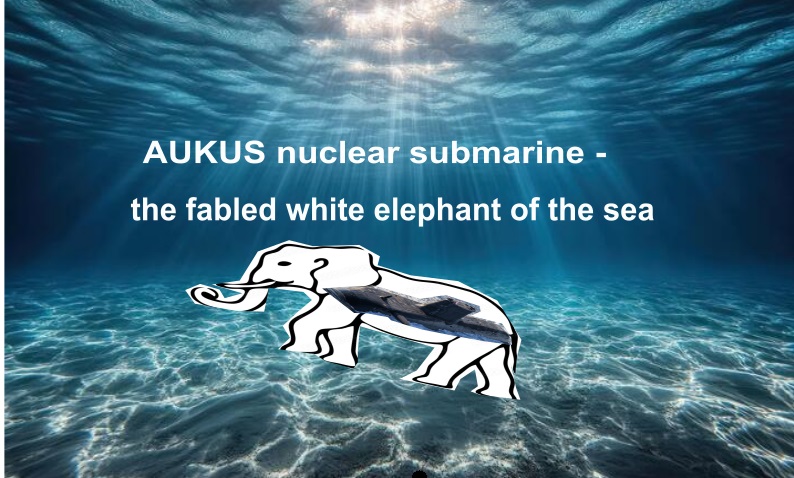
Australians deserve the truth
about
AUKUS – https://aukuspublicinquiry.com/

PETITION – To: Prime Minister Anthony Albanese and the Australian Labor Government

of the week – Australians for War Powers Reform (AWPR)
To see nuclear-related stories in greater depth and intensity

