Forget the lobbying. It’s the spin that wins on climate, report finds
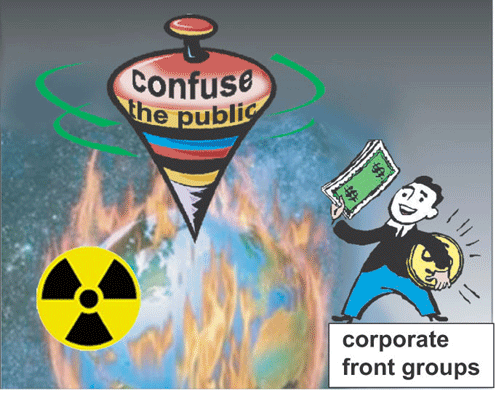 When it comes to impacting Australia’s climate wars, little can stand up to the fossil fuel industry’s public spin. GEORGIA WILKINS, SEP 24, 2020
These tactics focus on influencing public opinion and the broader political agenda rather than direct engagement with policymakers.
InfluenceMap, which is funded by environmental and investor groups, says the Minerals Council of Australia had the biggest negative influence on Australian climate-related….(subscribers only) https://www.crikey.com.au/2020/09/24/forget-the-lobbying-its-the-spin-that-wins-on-climate-report-finds/
Farmers have called out the federal government’s climate change low emissions policy as selling out an industry for profit
Farmers have called out the federal government’s climate change low emissions policy as selling out an industry for profit.Farmers for Climate Action slam Australian Government’s technology investment roadmap, Examiner, Caitlin Jarvis, 25 Sept 20
Federal Energy Minister Angus Taylor unveiled the draft technology investment roadmap this week, with steps towards low emissions.
Tasmanian farmer Brett Hall, who runs a beef property at Bronte Park, near Miena, said climate change was evident every day on his farm.
He said low emissions targets were an excellent first step, but it was a matter of too little, too late, and time was running out.
“Climate change is evident to us working on the land, but we need to see stronger initiatives because the evidence is there to suggest that we have not done enough so far and we’re past that point,” he said……… https://www.examiner.com.au/story/6938510/why-farmers-are-angry-about-low-emissions-roadmap/?cs=95
From October 6, the Australian Senate will discuss the NATIONAL ISSUE of the Napandee nuclear waste dump plan
The Senate returns on October 6th. At some time there will be a vote on what is indeed this national issue. The stakes remain high.
 The federal nuclear dump is a national issue, https://www.eurekastreet.com.au/article/the-federal-nuclear-dump-is-a-national-issue?fbclid=IwAR0zfICU9GSIJmfVdU30x9jCx847PF8ztvozbQNq0q57QCiWnhlKVtBHdJY Michele Madigan, 22 September 2020
Moreover, despite the former responsible Minister Matt Canavan’s repeated assertions that submissions from others outside the extraordinary narrow designated voting zone was a possible way to influence proceedings — there seems to have been no recorded mention of any of the 2789 submissions. With some of extraordinary length and scholarship, 94.5 per cent were against the federal nuclear waste proposal. They were seemingly ignored; one wonders were they even read?
From July 28th to August 28th, there have been four Senate Inquiry sessions concerning the Radioactive Waste Management Amendment Bill 2020, all by video link. During the Inquiry sessions it became obvious which three Senators had done their careful homework with penetrating questions to witnesses on either side of the debate.
Extreme concern about the issue was expressed by the Chair of the Barngarla Determination Aboriginal Corporation, Jason Bilney and by other Barngarla people; by Peter Woolford, farmer President of the No Radioactive waste on Agricultural Land in Kimba or SA group; by Dave Sweeney of the Australian Conservation Foundation, the single environmentalist invited to be a witness. On the other hand, there was spirited defence of the project, including every aspect of the process by the two senior government officials; by the landholder of the chosen site and by Kimba council representatives. There was an eager willingness by some Senators to positively enable these latter presentations.
On Monday 13th of September, the Senate report was released. Predictably in a Coalition led Inquiry, the report recommends the Senate proceed to vote yes to the plan on the Minister designated site on Barngarla country in agricultural land at the Kimba region Eyre Peninsula site.
However three Senators contributed separate dissenting reports released concurrently with the main report. Labor’s Jenny McAllister, formerly Centre Alliance and now Independent South Australian Rex Patrick, and the Green’s Sarah Hanson-Young SA all recommended that the legislation not go ahead. There were a number of reasons cited by the dissenting Senators.
The context of this ‘national issue’ declaration cited above by the Department was a defence of the strategy to take the Napandee (Kimba region) site to the Parliamentary vote — ensuring that if the proposed legislation is passed by the Senate, there will be no opportunity to take any aspect of the decision making to court. In the words of Labor Senator Jenny McAllister in her dissenting report: ‘In evidence to the committee, the Department confirmed that the effect of the change proposed in the legislation is to remove the requirements for procedural fairness in the selection of the site.’
As well, Senator Rex Patrick’s dissenting report included an emphasis on the heavily redacted nature of the government officials’ documentation: ‘The Department has, through its interaction with the committee, demonstrated a predisposition to secrecy—undue secrecy—in relation to provision of process information to the very people who pay them and who they are supposed to serve.’
The Greens’ summary was included in their final recommendation: ‘The Australian Greens believe the Federal Government has no mandate to situate a radioactive waste management facility in South Australia. It has mismanaged the site selection process, fallen short of international best practice and failed to secure the consent of traditional owners. For these reasons the Australian Greens recommend that this bill not be passed.’
No Dump Alliance is a group of organisations including First Nations, public health, trade union, faith and environment groups, academics and concerned individuals concerned about this matter. Revered SA theologian and international author Denis Edwards was an identified member.
On the release of the Senate report, NDA released their own media statement in which spokesperson Karina Lester (pictured), daughter of late former NDA Patron Yami Lester was clear: ‘In the 21st Century it is unacceptable to try and airbrush away Aboriginal peoples concern over nuclear risks. The Barngarla Native Title holders were excluded from the Kimba community ballot about the waste plan and now the federal government is trying to deny them the right to contest the plan in court. This is not only unfair to the Barngarla people but a clear insult to the concerns expressed by Aboriginal people from right across South Australia to any dumping and storage of radioactive waste on our traditional lands from outside the state’.
The Senate returns on October 6th. At some time there will be a vote on what is indeed this national issue. The stakes remain high.
- ’
Medical experts testify to court on Julian Assange’s precarious mental health
 Assange faces “very high risk of suicide,” medical expert tells court, WSWS, By Thomas Scripps and Laura Tiernan, 23 September 2020
Medical evidence was produced in Julian Assange’s extradition hearing yesterday detailing the terrible harm done to the heroic journalist by a decade of state-orchestrated persecution.
The day was given over to the examination of Professor Michael Kopelman who testified to Assange’s mental health. Kopelman is a psychiatrist and Emeritus Professor of Neuropsychiatry at Kings College London. He has given expert evidence in multiple extradition cases on behalf of both the defence and the prosecution. In assessing Assange, he conducted seventeen visits in 2019 and additional visits in 2020, constructed a “full family history” and a “full personal psychiatric history,” and carried out “interviews with his family and lifelong friends.”
His findings constitute a clear bar to Assange’s extradition to the United States. Under Section 91 of the UK Extradition Act (2003), extradition is prohibited if “the physical or mental condition of the person is such that it would be unjust or oppressive to extradite him.”
Under Section 87, extradition is prohibited if it is incompatible with the European Convention on Human Rights (ECHR). Article 3 of the ECHR states, “No one shall be subjected to torture or to inhuman or degrading treatment or punishment.”
Medical evidence speaking to these bars has played a critical role in previous US-UK extradition hearings, for example in the case of Lauri Love. The risk of notoriously poor conditions in US prisons exacerbating mental illness is an important factor.
Assange’s case meets these criteria. The details in today’s WSWS coverage are being reported consistent with the “sensitivity” called for by defence lawyer Edward Fitzgerald QC, on behalf of his client. Nonetheless they make overwhelmingly clear the “unjust and oppressive” treatment to which Assange has already been subjected.
Assange, Kopelman told the court, has experienced periods of serious mental illness in his earlier life. Since being confined to the Ecuadorian Embassy and then Belmarsh maximum security prison, these issues have resurfaced and worsened. Assange has suffered symptoms of severe and recurrent depression. Those symptoms have included “loss of sleep, loss of weight, a sense of pre-occupation and helplessness” and auditory hallucinations which Kopelman summarised as “derogatory and persecutory.”
They have also included “suicidal preoccupations.” Kopelman told the court, “There are… an abundance of known risk factors in Mr Assange’s case” and that Assange has “made various plans and undergone various preparations.” He gave his opinion that there was a “very high risk of suicide.”
These symptoms and risks, Kopelman explained, are exacerbated by an anxiety disorder and Post Traumatic Stress Disorder (PTSD) and by a diagnosis of Asperger’s syndrome. Kopelman cited a paper by world-leading autism expert Dr Simon Baron-Cohen which found that the lifetime experience of suicidal thoughts in those with Asperger’s “was more than nine times higher than in the general population in England.”
Explaining the impact of the US government’s persecution, Kopelman said, “The risk of suicide arises out of the clinical factors of depression and the other diagnoses, but it is the imminence of extradition and/or an actual extradition that will trigger the attempt, in my opinion.”
If Assange were to be incarcerated in the US and segregated from other prisoners, Kopelman gave his opinion that the WikiLeaks founder would “deteriorate substantially” and see an “exacerbation” of his “suicidal ideas.” This would “amount to psychological harm and severe psychological suffering.”
Kopelman’s evidence confirms the warnings made since November 2019 by Doctors for Assange, representing hundreds of medical professionals from around the world, that Assange is suffering “psychological torture” and “could die in prison.” It underlines in distressing detail UN Special Rapporteur on Torture Nils Melzer’s comment regarding Assange’s treatment that “psychological torture is not torture-lite. Psychological torture aims to wreck and destroy the person’s personality and identity… to make them break.”
Assange’s year-and-a-half long incarceration at Belmarsh has been designed to achieve this objective. It has profoundly undermined, in numerous ways, his legal right to prepare his defence against extradition. Kopelman reported yesterday that Assange has repeatedly complained that the medication taken for his mental health has caused him “difficulty in thinking, in memorising [and] in concentration.”
During the morning’s cross examination, Kopelman forcefully rebuffed prosecution lawyer James Lewis QC’s challenge to his credentials. He said solicitors had called him several times in recent years saying that Lewis himself was “keen to have your services” in an extradition case.
In the afternoon, cross-examination continued, with Lewis challenging the veracity of Kopelman’s diagnosis, and claiming that Assange’s appearance was “wholly inconsistent with someone who is severely or moderately-severely depressed and with psychotic symptoms.”
Kopelman replied, “Could we go back a step?” Having seen Assange between May 30 and December [2019], “I thought he was severely depressed, suicidal and was experiencing hallucinations.”………….. https://www.wsws.org/en/articles/2020/09/23/assa-s23.html
Australian scientists censored on speaking about climate change

 Censored: Australian scientists say suppression of environment research is getting worse
Survey finds that many researchers are banned from speaking about their work or have had their research altered to downplay risks. Nature , Dyani Lewis, 22 Sept 20, Environmental scientists in Australia say that they are under increasing pressure from their employers to downplay research findings or avoid communicating them at all. More than half of the respondents to an online survey thought that constraints on speaking publicly on issues such as threatened species, urban development, mining, logging and climate change had become worse in recent years1.
The findings, published this month in Conservation Letters, reflect how politicized debates about environmental policy in Australia have become, says Saul Cunningham, an environmental scientist at the Australian National University in Canberra. “We need our publicly funded institutions to be more vocal in defending the importance of an independent voice based on research,” he says.
Australian scientists aren’t the only ones who have reported interference in science or pressure — particularly from government employers — to downplay research findings. Scientists in the United States, Canada and Brazil have also
Scale of the problem
Two hundred and twenty scientists in Australia responded to the survey, which was organized by the Ecological Society of Australia and ran from October 2018 until February 2019. Some of the respondents worked in government; others worked in universities or in industry, such as environmental consultancies or non-governmental organizations.
The results show that government and industry scientists experienced greater constraints from their employers than did university staff. Among government employees, about half were prohibited from speaking publicly about their research, compared with 38% employed in industry and 9% of university staff. Three-quarters of those surveyed also reported self-censoring their work (see ‘Scientists silenced’)……….
One-third of government respondents and 30% of industry employees also reported that their employers or managers had modified their work to downplay or mislead the public on the environmental impacts of activities such as logging and mining. ………. https://www.nature.com/articles/d41586-020-02669-8
Medical groups are urging Greg Hunt to include climate change in 10-year health strategy
SBS, 22 Sept 20
A national preventative health strategy is useless if it doesn’t address the risks of climate change, experts have told the responsible minister.
Numerous health groups from across the country have signed a joint statement to Health Minister Greg Hunt calling for climate change to be a key part of the national preventative health strategy.
The strategy is currently being developed, with public feedback on its consultation paper open until the end of the month.
Julian Assange dragged from embassy “on the orders of the president”
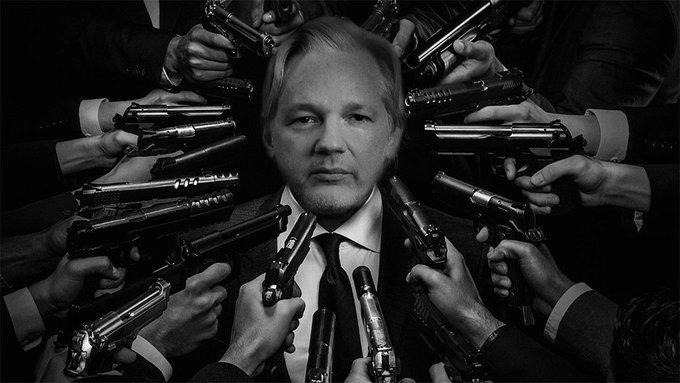 Explosive evidence from Trump insider,Assange dragged from embassy “on the orders of the president”, WSWS, By Laura Tiernan and Thomas Scripps, 22 September 2020
Alt-right media personality Cassandra Fairbanks’ witness testimony was read out in court yesterday, providing evidence that Julian Assange’s April 2019 arrest at the Ecuadorian Embassy in London was politically motivated and directed by United States President Donald Trump.
Fairbanks testified that Arthur Schwartz, a wealthy Republican Party donor and key Trump ally, had told her that Assange was taken from the Ecuadorian Embassy “on orders from the president.” The conversation between Schwartz and Fairbanks occurred in September 2019 and was recorded by Fairbanks.
Schwartz, a frequent visitor to the White House and “informal adviser” or “fixer” to Donald Trump Jr., told Fairbanks the president’s orders were conveyed via US Ambassador to Germany Richard Grenell, who brokered a deal with the Ecuadorian government for Assange’s removal. Grenell was appointed acting director of national intelligence by Trump in February this year, holding the position until May.
Assange’s lawyer, Edward Fitzgerald QC, spelled out the significance of Fairbanks’ disclosures, telling Judge Vanessa Baraitser they were, “evidence of the declared intentions of those at the top who planned the prosecution and the eviction from the embassy.”
Fairbanks, who writes for the pro-Trump Gateway Pundit, is a prominent Assange supporter who visited the WikiLeaks founder at the Embassy on two key occasions. Her evidence was read into proceedings yesterday afternoon unopposed, with Fitzgerald explaining, “My learned friend [James Lewis QC for the prosecution] reserves the right to say ‘because she’s a supporter of Julian Assange you must take that into account in weighing her evidence.’ But we say [her evidence] is true.”
Given her close connections to leading figures in the Trump administration’s fascistic entourage, Fairbanks is uniquely positioned to expose key aspects of the politically motivated vendetta against the WikiLeaks founder. Throughout the extradition hearing, lawyers for the US government have repeatedly claimed the charges against Assange under the Espionage Act are motivated by “criminal justice concerns” and are “not political.”
Fairbanks’ evidence shreds the official narrative of the Department of Justice (DoJ) that Assange was arrested on April 11, 2019 in relation to “hacking.” In a phone call with Schwartz on October 30, 2018, he made clear that Assange would be arrested as political payback for his role in “the Manning case,” i.e., the disclosure by US Army whistle-blower Chelsea Manning of US war crimes in Afghanistan and Iraq……………
Speaking outside the court, Assange’s father, John Shipton, said, “Today we had the prosecution trying to prove that water runs uphill and up is down. … The defence replied and conclusively demonstrated that it was David Leigh [who caused the unredacted cables to be released]. We can only conclude from the amount of time that the prosecution spent defending David Leigh that David Leigh is a state asset.”
At the end of the hearing’s morning session, an exchange between District Judge Vanessa Baraitser and the legal teams pointed to further restrictions being imposed on the defence’s ability to present its case.
Seizing on the delays caused by a potential COVID-19 outbreak in the first week of the hearing, Baraitser insisted that the defence prepare a timetable that allowed the hearing to “finish within two weeks.” When the defence replied that this would leave no time for closing submissions, she reacted enthusiastically to the suggestion of prosecution lawyer James Lewis QC that these could be submitted in written form and summarised in just half a day each for the prosecution and the defence. A final decision is forthcoming.
The hearing continues today……… https://www.wsws.org/en/articles/2020/09/22/assa-s22.html
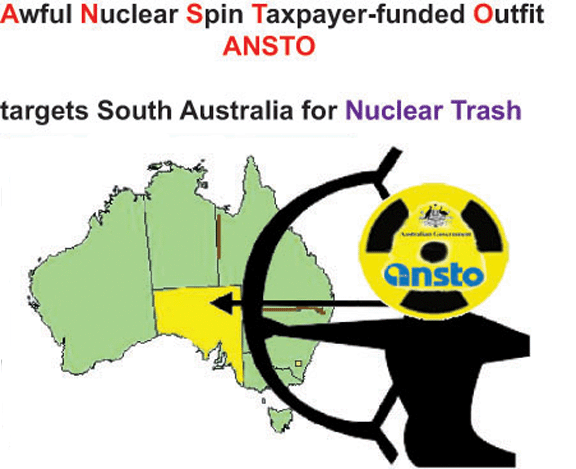
Australian Nuclear and Science Organisation distancing itself from the Napandee nuclear waste dump?
|
I wonder how many people have put TWO AND TWO together yet and realize that ANSTO is distancing itself further and further away from the dump! ANSTO will be in fact VERY HAPPY to have THEIR waste off their books!! Remember that ANSTO does NOT have to pay to use the dump – nor does any other Commonwealth entity! And ARWA has already said they will only use ANSTO for advice if necessary …
“ARWA is a Commonwealth entity, initially established with the department, and subsuming the National Radioactive Waste Management Facility Taskforce. Over the next two years, ARWA’s capability will be developed and it will become a non-corporate Commonwealth entity under its own legislation. ARWA will continue to work closely with ANSTO, who provide their support and extensive expertise.” – Sam Chard August 2020
|
|
A mixed blessing – the sudden departure of Australia’s nuclear high priest, Dr Adi Paterson
I am reminded of Hilaire Belloc’s advice to the young – ”Always keep a hold of Nurse, for fear of  finding something worse”.
Among other sycophantic tributes, Dr Adi Paterson is lauded for encouraging women into the nuclear industry.
Adi Paterson spent several years in South Africa, trying to establish Small Nuclear Reactors. It turned out to be Tan expensive and useless exercise. Then he came to Australia, with the same dream. He quietly signed Australia up to the Framework Agreement for International Collaboration on Research and Development of Generation IV Nuclear Energy Systems, without any consultation, discussion in Parliament (which rubber-stamped this later).
He quietly organised Australia’s participation with China in developing small nuclear reactors.
He rubbished renewable energy at a solar conference.
He went to Kimba to do propaganda for the nuclear waste dump plan, but admitted that there was no economic benefit in the low level waste dump, so the intermediate level waste was the real intention.
Leadership changes at ANSTO, Statement from the ANSTO Chair: Dr Annabelle Bennett 9 Sep 20, Dr Adi Paterson has resigned as CEO of ANSTO slightly ahead of time of his term. He has decided to take a period of leave before formally finishing. ……..
Mr Shaun Jenkinson will continue as acting CEO, while the Board undertakes a global search for a permanent CEO. https://www.ansto.gov.au/news/leadership-changes-at-ansto?fbclid=IwAR0cLOwne84D7XJP9UGwrf1aVAxyXgStAB6502zPYUgsqxdbjUuyUR3MYjo
Adrian “Adi” Paterson is a South African scientist and engineer best known for his work on Pebble Bed modular reactor research and development. He was appointed CEO of the Australian Nuclear Science and Technology Organisation (ANSTO) in 2009
He emigrated to Australia in 2008 and was appointed Chief Executive Officer at ANSTO in March 2009.
Australia is to build new nuclear reactors, in partnership with China (does Parliament know?)
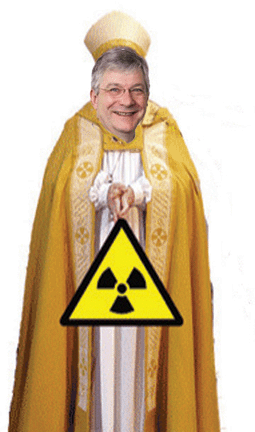

Republishing again, in view of Dr Adi Paterson’s departure from Ansto.
Republishing this one, in view of news from the UK, that a British-China nuclear research programme may be siphoning UK tax-payers’ funds off into China’s military projects.
Australia is back in the nuclear game, Independent Australia, By Noel Wauchope | 24 March 2019, One of Australia’s chief advocates for nuclear power Dr Adi Paterson, CEO of Australian Nuclear Science and Technology Organisation, (ANSTO), has done it again.
This time, he quietly signed Australia up to spend taxpayers’ money on developing a new nuclear gimmick — the Thorium Molten Salt Reactor (TMSR).
This new nuclear reactor does not physically exist and there is no market for it. So its development depends on government funding.
Proponents claim that this nuclear reactor would be better and cheaper than the existing (very expensive) pressurised water reactors, but this claim has been refuted. The TMSR has been described by analyst Oliver Tickell as not “green”, not “viable” and not likely. More recently, the plan has been criticised as, among other things, just too expensive — not feasible as a profitable commercial energy source.
Paterson’s signing up to this agreement received no Parliamentary discussion and no public information. The news just appeared in a relatively obscure engineering journal.
The public remains unaware of this.
In 2017, we learned through the Senate Committee process that Dr Paterson had, in June 2016, signed Australia up to the Framework Agreement for International Collaboration on Research and Development of Generation IV Nuclear Energy Systems (also accessible by Parliament Hansard Economics Legislation Committee 30/05/2017).
This was in advance of any Parliamentary discussion and despite Australia’s law prohibiting nuclear power development. Paterson’s decision was later rubber-stamped by a Senate Committee……..
Dr Paterson was then obviously supremely confident in his ability to make pro-nuclear decisions for Australia.
Nothing seems to have changed in Paterson’s confidence levels about making decisions on behalf of Australia.
Interestingly, Bill Gates has abandoned his nuclear co-operation with China. His company TerraPower was to develop Generation IV nuclear reactors. Gates decided to pull out of this because the Trump Administration, led by the Energy Department, announced in October that it was implementing measures to prevent China’s illegal diversion of U.S. civil nuclear technology for military or other unauthorised purposes.
Apparently, these considerations have not weighed heavily on the Australian Parliament.
Is this because the Parliament doesn’t know anything about Dr Paterson’s agreement for Australia to partner with the Shanghai Institute of Applied Physics (SINAP) in developing Thorium Molten Salt Reactors? https://independentaustralia.net/environment/environment-display/australia-is-back-in-the-nuclear-game,12488#.XJWdhxDqitc.twitter
The process for selecting Napandee nuclear waste site – flawed and divisive
Julian Assange case: Witnesses recall Collateral Murder attack: “Look at those dead bastards,” shooters said
|
Witnesses recall Collateral Murder attack: “Look at those dead bastards,” shooters said, WSWS, By Thomas Scripps and Laura Tiernan, 19 September 2020New Zealand investigative journalist Nicky Hager testified in Julian Assange’s extradition hearing yesterday morning. Hager has extensive experience in reporting imperialist violence and intrigue. In 2017, he released the book Hit and Run with co-author Jon Stephenson exposing the killing of civilians by New Zealand and United States forces in Afghanistan. He worked with WikiLeaks in the release of US diplomatic cables from November 2010 and made use of other releases in his writing.
Hager explained that serious journalists routinely make use of classified materials when reporting on conflicts and potential state crimes. This, he said, was “generally impossible … without access to sources that the authorities concerned regard as sensitive and out of bounds. Consequently, information marked as classified is essential to allow journalism to perform its role in informing people about war, enabling democratic decision making and deterring wrongdoing.” The Iraq and Afghanistan war logs and US embassy cables obtained by WikiLeaks, Hager said, were documents “of the highest public interest—some of the most important material I have ever used in my life.” Referring to the “Collateral Murder” video, which District Judge Vanessa Baraitser intervened to stop him describing in full, he said, “After the shooting, the pilot and the co-pilot were heard saying ‘Look at those dead bastards,’ with the other replying ‘Nice’ … My belief is … the publication of that video and those words was the equivalent of the death of George Floyd and his words ‘I can’t breathe.’ They had a profound effect on public opinion in the world.” The Iraq and Afghanistan war logs and US embassy cables obtained by WikiLeaks, Hager said, were documents “of the highest public interest—some of the most important material I have ever used in my life.” Referring to the “Collateral Murder” video, which District Judge Vanessa Baraitser intervened to stop him describing in full, he said, “After the shooting, the pilot and the co-pilot were heard saying ‘Look at those dead bastards,’ with the other replying ‘Nice’ … My belief is … the publication of that video and those words was the equivalent of the death of George Floyd and his words ‘I can’t breathe.’ They had a profound effect on public opinion in the world.”……………. Yesterday’s cross-examination centred on the scope of the Espionage Act, with US prosecutors making clear that journalists and media outlets are now a legitimate target—especially those which are deemed “non-conventional.” …….. Throughout the hearing, US prosecutors have claimed the “Collateral Murder” video is not part of their case against Assange. But as Fitzgerald argued, after taking instruction from his client, the “Collateral Murder” video is connected “indivisibly” from the Iraq Rules of Engagement published by WikiLeaks and named in the US indictment. It was on the basis of these Rules of Engagement that Apache’s crew member “Crazy Horse 1-8” fired on civilians, leaving 18 dead and horrifically injuring two children. The hearing continues on Monday. https://www.wsws.org/en/articles/2020/09/19/assa-s19.html |
|
Scott Morrison transfers his love affair with coal, to gas
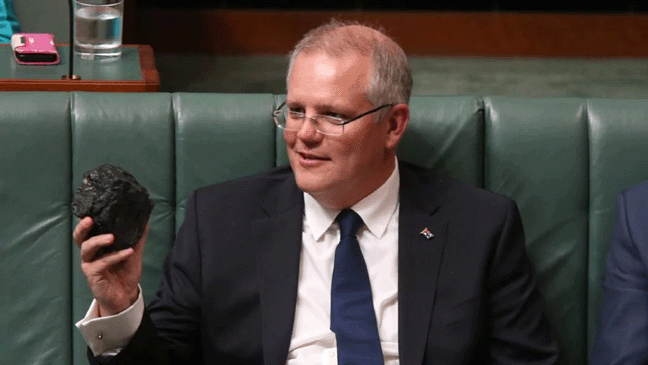
Our coal-fondling PM switches his prop to gas, but is anything really different? Jacqueline Maley, Columnist and senior journalist, The Age, 20 Sept 290 In February 2017, Scott Morrison walked into Parliament to perform a piece of coal-centred theatre that became one of the defining moments of his political career. “Mr Speaker, this is coal,” he pronounced, brandishing a black lump. “Don’t be afraid, don’t be scared. It won’t hurt you!”
As was pointed out at the time, the coal must have been lacquered – touching raw coal covers you in black dust. Morrison didn’t want to get his hands dirty. He just wanted to score a political point.
His speech was not about the benefits of coal so much as it was a gleeful attempt to wedge Labor over the electability problem it had, and still has – the insoluble tension between its heavy industry-reliant, blue-collar voter base, and its urban voters, who want meaningful climate action.
No one feels this tension more than Opposition Leader Anthony Albanese, who is old-Labor in his sensibilities, but whose inner-Sydney electorate is under siege from the Greens…………
It was always the Coalition, of course, that had the ideological attachment to coal as an energy source. The Nationals, in particular, appear to be moving away from representing farmers to supporting what is buried in the earth beneath their crops.
It is Labor that has always had the political problem with coal. It needed to convince its blue-collar base it cared about jobs and electricity prices, while also being serious about emissions reduction. But Labor is also the only side of politics that has ever been effective on emissions reduction, instituting in 2012 the only sensible mechanism to bring emissions down – a carbon price and emissions trading scheme.
It worked, in the short time it was operational, before being abolished by Tony Abbott, elected in a 2013 landslide to do exactly that.
The energy prop has changed now, with Morrison this week announcing he wants a “gas-led recovery” for the post-COVID-19 future. He is backing slowly away from coal.
In a speech in the Hunter Valley – a carefully chosen location given its significance in Labor’s own climate wars – he said there was “no credible energy transition plan for an economy like Australia that does not involve the greater use of gas”.
Details of his plan were scant. It is a plan for a plan. Morrison issued an ultimatum to electricity companies, saying if the industry did not back “dispatchable” electricity generation by next year, taxpayer money would be used to build a gas-fired power plant in the Hunter Valley, replacing the near-defunct Liddell coal plant at Muswellbrook………
Most Australians are too stressed by contemporary events, and fatigued by the climate wars, to follow the detail, which is complex. But Morrison will be able to use his “gas-led recovery” rhetoric to hedge.
His government no longer has to fight a rearguard action in defence of coal, an energy source that markets have firmly turned away from, and which public opinion is swaying against. But his party can still keep its distance from the renewable energy sources to which it seems to nurse an ideological objection. It remains to be seen if the plan will work to reduce emissions, or ensure low electricity prices.
Meanwhile, business continues to move ahead faster than the government. On Friday, BlackRock, the world’s largest investor, with $US7.32 trillion in assets under management, released a report showing that more than 1000 global companies and other organisations had signed up to the Task Force on Climate-related Financial Disclosure standards.
………Morrison’s plan for a plan will stand in for an energy policy, for now, from a government that has thoroughly betrayed the electorate on this issue for the seven years it has been in power. In that time, the earth has warmed further, and Australia has had a good taste of what is yet to come in terms of climate devastation. https://www.theage.com.au/politics/federal/our-coal-fondling-pm-switches-his-prop-to-gas-but-is-anything-really-different-20200918-p55ww9.html
News Corp, Facebook and disinformation about climate and pandemic


With its stranglehold on daily newspapers and online news, News Corp in Australia has created the most rightwing media culture in the English speaking world, and they aren’t really accountable to anyone.
Facebook is also the place where we see the two disinformation crises overlap.
Just like Australia, disinformation is thriving during the US fire crisis https://www.theguardian.com/commentisfree/2020/sep/19/just-like-australia-disinformation-is-thriving-during-the-us-fire-crisis
Jason Wilson 20 Sept 20 In both countries, fake news about arson proliferated while the role of climate change was obscured.
isinformation successfully obscured the real causes of Australia’s catastrophic bushfire season. Now the same thing is happening around me, as I report on a disastrous wildfire season in the American west.
In both countries, the response to a pandemic is also being complicated by disinformation, as conspiracy theorists refuse isolation, refuse masks, and ready themselves to refuse vaccines.
A lot of the fundamental problems are the same, but there are differences in detail.
In the western United States in recent days, backroads vigilantism has seen civilians set up armed road blocks, and journalists held at the point of loaded assault rifles.
Australia does not have the complication of American gun culture, which is itself one marker of the clash of ideologies and identities in a deeply divided nation, and also raises the stakes on every other social conflict.
That may be, but it’s easy to forget that one of the major stumbling blocks to stricter gun laws in the United States is a bill of rights.
We can argue whether the right to bear arms is a sensible thing to constitutionally enshrine, but Australia has no such constitutionally defined individual rights, beyond those that the high court has seen fit to torture from the document.
The absence of such rights also contains the real world effects of conspiracy theories – the people recently arrested for incitement in Victoria over the promotion of Covid conspiracy theories and anti-lockdown protests would likely enjoy first amendment protections in the US. Whether or not people ought to have the liberty to promote ideas which are, frankly, insane, and a threat to public order, is beyond the scope of this article.
In other ways, Australia is worse off. It is easy to make the mistake of thinking that Fox News, or other skewed or tabloid media, is representative of US media as a whole. Continue reading
Killing the virus comes at enormous cost — doing nothing will cost more.
Killing the virus comes at enormous cost — doing nothing will cost more.

|
Why harsh COVID-19 lockdowns are good for the economy https://www.abc.net.au/news/2020-09-21/why-harsh-covid-19-lockdowns-are-good-for-the-economy/12683486, By Ian Verrender
It has been a pile-on for the past few months as Team Australia has splintered right down the political divide.
Border closures in Western Australia and Queensland have been called out as unnecessary while the Victorian lockdown has been labelled an overreaction that has angered business leaders and drawn the ire of Prime Minister Scott Morrison. The restrictions, we are constantly told, are costing the nation dearly, delaying a return to normal activity and pushing out the timetable for an economic recovery. While some argue state governments are milking the pandemic for political gain, pointing the blame at regional and state governments for our current predicament ignores two important points. The first is that the restrictions have been imposed to limit the spread of a pandemic. It is the virus that is the fundamental cause, not the restrictions. And the second is that, while it’s almost impossible to measure the true cost of the lockdowns and the shutdowns, most critics look only at the costs and completely overlook the economic benefits the shutdowns have delivered. How could lockdowns have helped the economy?Here’s one good example. Continue reading |
1 This month
17 October, Free Public Talk on Nuclear Issues in South Australia
David Noonan will speak on public interest concerns over the new Roxby Downs Indenture Act 2026 on BHP copper-uranium mining and ore processing in SA, and on how AUKUS may face SA with a High-Level nuclear waste agenda.
Dr Jim Green will discuss international developments in the field of nuclear power including ‘small modular reactors’ and Generation 4 ‘advanced’ nuclear reactor concepts.


Help Aunty Sue Protect Her Land and Sacred Sites From Destructive Rocket Testing.
.

Australians deserve the truth
about
AUKUS – https://aukuspublicinquiry.com/

PETITION – To: Prime Minister Anthony Albanese and the Australian Labor Government

of the week – Australians for War Powers Reform (AWPR)
To see nuclear-related stories in greater depth and intensity

