Australia seen as successful in Covid-19 response, deplorable in climate response
 Global report gives Australia an A for coronavirus response but a D on climate https://theconversation.com/global-report-gives-australia-an-a-for-coronavirus-response-but-a-d-on-climate- Global report gives Australia an A for coronavirus response but a D on climate https://theconversation.com/global-report-gives-australia-an-a-for-coronavirus-response-but-a-d-on-climate- 141982 John Thwaites Chair, Monash Sustainable Development Institute & ClimateWorks Australia, Monash University 6 July 20 The global Sustainable Development Report 2020, released this week in New York, ranks Australia third among OECD countries for the effectiveness of its response to the COVID-19 pandemic, beaten by only South Korea and Latvia.Yet Australia trundled in at 37th in the world on its overall progress in achieving the United Nations’ Sustainable Development Goals, which cover a range of economic, social and environmental challenges – many of which will be crucial considerations as we recover from the pandemic. Australia’s worst results are in climate action and the environment, where we rate well below most other OECD countries. 141982 John Thwaites Chair, Monash Sustainable Development Institute & ClimateWorks Australia, Monash University 6 July 20 The global Sustainable Development Report 2020, released this week in New York, ranks Australia third among OECD countries for the effectiveness of its response to the COVID-19 pandemic, beaten by only South Korea and Latvia.Yet Australia trundled in at 37th in the world on its overall progress in achieving the United Nations’ Sustainable Development Goals, which cover a range of economic, social and environmental challenges – many of which will be crucial considerations as we recover from the pandemic. Australia’s worst results are in climate action and the environment, where we rate well below most other OECD countries.
South Korea tops the list of effective COVID-19 responses, whereas New Zealand (which declared the coronavirus eliminated on June 8, albeit with a few sporadic cases since) is ranked sixth. Meanwhile, the United States, United Kingdom and several other Western European countries rank at the bottom of the list. South Korea, Latvia and Australia did well because they not only kept infection and death rates low, but did so with less economic and social disruption than other nations. Rather than having to resort to severe lockdowns, they did this by testing and tracing, encouraging community behaviour change, and quarantining people arriving from overseas. Using smartphone data from Google, the report shows that during the severe lockdown in Spain and Italy between March and May this year, mobility within the community – including visits to shops and work – declined by 62% and 60%, respectively. This shows how much these countries were struggling to keep the virus at bay. In contrast, mobility declined by less than 25% in Australia and by only 10% in South Korea. Why has Australia performed well?There are several reasons why Australia’s COVID-19 response has been strong, although major challenges remain. National and state governments have followed expert scientific advice from early in the pandemic. The creation of the National Cabinet fostered relatively harmonious decision-making between the Commonwealth and the states. Australia has a strong public health system and the Australian public has a history of successfully embracing behaviour change. We have shown admirable adaptability and innovation, for example in the radical expansion of telehealth. We should learn from these successes. The Sustainable Development Goals provide a useful framework for planning to “build back better”. The Sustainable Development Goals, agreed by all countries in 2015, encompass a set of 17 goals and 169 targets to be met by 2030. Among the central aims are economic prosperity, social inclusion, and environmental sustainability. They are arguably even more important than before in considering how best to shape our post-pandemic world. As the report points out, the fallout from COVID-19 is likely to have a highly negative impact on achievement of many of the goals: increased poverty due to job losses (goal 1), disease, death and mental health risks (goal 3), disproportionate economic impacts on women and domestic violence (goal 5), loss of jobs and business closures (goal 8), growing inequality (goal 10), and reduction in use of public transport (goal 11). The impact on the environmental goals is still unclear: the short-term reduction in global greenhouse emissions is accompanied by pressure to reduce environmental safeguards in the name of economic recovery. How do we ‘build back better’?The SDGs already give us a roadmap, so really we just need to keep our sights set firmly on the targets agreed for 2030. Before COVID-19, the world was making progress towards achieving the goals. The percentage of people living in extreme poverty fell from 10% in 2015 to 8.6% in 2018. Access to basic transport infrastructure and broadband have been growing rapidly in most parts of the world. Australia’s story is less positive, however. On a composite index of performance on 115 indicators covering all 17 goals, the report puts Australia 37th in the world, but well behind most of the countries to which we like to compare ourselves. Sweden, Denmark and Finland top the overall rankings, followed by France and Germany. New Zealand is 16th. It is not surprising, in light of our performance during the pandemic, that Australia’s strongest performance is on goal 3: good health. The report rates Australia as on track to achieve all health targets. Australia also performs strongly on education (goal 4), and moderately well on goals relating to water, economic growth, infrastructure and sustainable cities. However, we perform extremely poorly in energy (goal 7), climate change (goal 13) and responsible consumption and production (goal 12), where our reliance on fossil fuels and wasteful business practices puts us near the bottom of the field. On clean energy (goal 7), the share of renewable energy in total primary energy supply (including electricity, transport and industry) is only 6.9%. In Germany it is 14.1%, and in Denmark an impressive 33.4%. Australia rates poorly on goal 12, responsible consumption and production, with 23.6kg of electronic waste per person and high sulfur dioxide and nitrogen emissions. Australia’s performance on goal 13, climate action, is a clear fail. Our annual energy-related carbon dioxide emissions are 14.8 tonnes per person – much higher than the 5.5 tonnes for the average Brit, and 4.3 tonnes for the typical Swede. And whereas in the Nordic countries the indicators for goal 15 — biodiversity and life on land — are generally improving, the Red List measuring species survival is getting worse in Australia. There are many countries that consider themselves world leaders but now wish they had taken earlier and stronger action against COVID-19. Australia listened to the experts, took prompt action, and can hopefully look back on the pandemic with few regrets. But on current form, there will be plenty to regret about our reluctance to follow scientific advice on climate change and environmental degradation, and our refusal to show anything like the necessary urgency. |
|
Independent advice essential for Kimba community: they have received only pro nuclear dump propaganda
 Having read the Hansard transcript of Tuesday’s Senate committee hearing it becomes even more imperative that the community at Kimba opposing the facility and others who are not completely convinced must get their own independent advice and assessment on the government’s proposals
The most concerning of the evidence was that on behalf of ARPANSA which contrary to expectations suggested that any community involvement or engagement in the licensing process would be rather perfunctory
The way I understand that evidence by Dr Larsson is that the extent of the consultations with the community will really be what and how the community decides – this would suggest that they will be in a far stronger position if they have proper technical information and knowledge to argue against the government’s proposals in the course of the consultations
In view of this evidence the chairman and members of the inquiry committee should be formally requested to provide the necessary funding for the independent advice and assessment and the right to bring the results into the evidence for the inquiry
The community at Kimba opposing the facility, and others must stress the disadvantage and unfairness in their being deprived of that advice and assessment, and that is it is also equitable for the Government to pay for the independent assessment having regard to the money already given to the community to bolster approval for the government’s choice of the facility location
After all how can ARPANSA expect them to be fully and properly involved in the community consultation process if they do not have the necessary information?
AustralianGovtWatcher comments on Senate Committee enquiry hearing on Tuesday 30 June 2020
In general both the committee members and the witnesses appeared to be ill prepared and lacked knowledge of some of the pertinent issues involved
Several important factors were neither raised by questions nor otherwise dealt with by the witnesses – these included:
- details of expenditure of the whole exercise particularly the cost of the reports by AECOM
- more specific description of how the Kimba proposals and present arrangements for storage of nuclear waste comply with international standards and best practice
- no information on the radionuclides inventories and mobility
- information on examination of techniques and methods for permanent disposal of intermediate level waste – merely mentioned directional drilling which no doubt refers to the borehole technology
- no specific mention of geological burial requirements and applicable codes
- complete silence on immediate availability of the highly suitable Leonora site of the Azark Project
- no questions regarding the previous nominations
- no questioning of the ballot results yet seemed to agree with the Department’s proposition that the Barngarla peoples’ own ballot was of not much help since so many had not voted
Senator Sarah Hanson-Young pursued a couple of worthwhile points regarding consultations with the Barngarla and their lack of informed consent and the issue of double handling of the intermediate level waste by initial storage at Kimba followed by permanent disposal at some other location
The other member who pursued a number of issues with some success was Senator Jenny McAllister but again she appeared to lack the required knowledge to be really effective
However she was a butt to Senator Chris Carr who is obviously very much in favour of the Kimba proposal particularly with his references to his discussions with Dr Adi Paterson from ANSTO
Senator Rex Patrick asked some good questions but regrettably this was obviously slanted towards his present campaign to get the waste disposed of at Woomera
Perhaps the most badly prepared witness was Ms Sam Chard from the Department who simply could not answer some fairly basic questions and kept asking for them to be put on notice for subsequent provision of the necessary information – she was actually castigated by Senator McAllister
Asking for requests to be put on notice is invariably good tactics to avoid having to answer immediately an uncomfortable question and I suspect there is more use of this than necessary
However this can be reduced to some extent if the inquiry committee made greater use of its powers of production and discovery before and even during the hearings
The witness with whose answers I was disappointed – and I did see a bit of him on video – was Dr Carl-Magnus Larsson from ARPANSA who was very noncommittal and not extremely helpful by continuously claiming that ARPANSA would only become involved once it received the applications for the necessary licences for the Kimba facility
The very disappointing aspect of his evidence is that he would not provide any significant technical information and seemed too interested in shoring up the position of ANSTO
It is of course very difficult in these hearings since the members of the enquiring committee are mostly not trained in the art of forensic questioning as well as having insufficient knowledge to make the inquiry process very effective
It also seems that the research team for the enquiry did not delve sufficiently into various issues that should be investigated which only makes it more difficult for the committee considering the limited time given to each member for questions
From the submissions by the government and its agencies it is now quite clear that the community members opposing the Kimba facility must get proper independent assessment and advice to be able to be involved in the consultations with ARPANSA during the licensing process in a meaningful manner
They should ask the committee to ensure sufficient funds are available for that purpose as otherwise it will be practically impossible for the community members to deal with the technical and rather scientific aspects of the licensing applications particularly as Dr Larsson was not overly encouraging in his evidence about assisting them
The best self serving evidence was from AEMCO who simply relied on their report and very stated that quite a few of the issues raised by questions ere outside of its commission
Murdoch press enthusiastic about nuclear propagandist Michael Shellenger
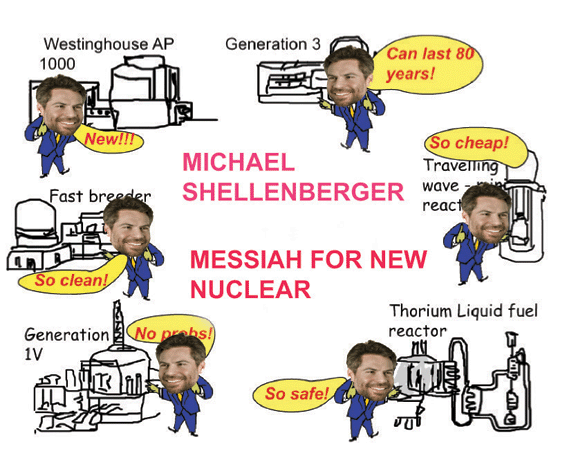
Murdoch press supports ‘reformed climate activist’ Michael Shellenberger https://independentaustralia.net/business/business-display/murdoch-press-supports-reformed-climate-activist-michael-shellenberger,14065 By Steve Bishop | 3 July 2020, The mainstream press published an attack on climate science by a supposed environmentalist who is, in fact, a nuclear lobbyist, writes Steve Bishop.
THE AUSTRALIAN misled its readers this week when it carried a major article purporting to be written by a climate activist who was, as it turned out, admitting climate science was bunkum.
Michael Shellenberger, headlined as an environmentalist in the article, is, in fact, a self-advertised nuclear power lobbyist and an advocate for nuclear weapons proliferation.
Other Murdoch newspapers and Australia’s Sky News have also carried Shellenberger’s claim that:
‘On behalf of environmentalists everywhere, I would like to formally apologise for the climate scare we created over the past 30 years.’
He may once have been an environmentalist, but the fact is he was exposed – not for the first time – for attacking climate science as long ago as 2010 by the Public Interest Research Centre which reported that along with a co-author he had restated:
‘…a plethora of half-truths, misrepresentations and outright fantasies that have lately become almost canonical in the public sphere.’
Shellenberger makes his agenda clear on various websites and elsewhere: the present approach to dealing with climate change is not working, renewable power sources won’t solve the problem and, therefore, the entire world needs to be nuclear powered.
He told the Sydney Morning Herald in 2017 that the widespread adoption of nuclear power across the world would solve the climate change problem:
“…because it basically reduces your carbon emissions to near zero in the power sector.”
The Herald described him not as an environmentalist but as a ‘nuclear power advocate’.
In 2003, he co-founded the Breakthrough Institute which says on its website:
Breakthrough’s energy work has focused heavily on the future of nuclear energy. Along with a growing cohort of scientists, journalists, philanthropists, and environmentalists, we have made the case that addressing climate change will require abundant, cheap, safe, and reliable nuclear energy.’
In 2016, he became the founder and president of an enterprise lobbying for the nuclear industry, giving it the misleading title of Environmental Progress.
He describes its aim:
‘The greatest threat to the climate today comes from the decline of clean energy as a share of electricity globally. EP is working with scientists, conservationists and citizens around the world to defend our largest source of clean energy, nuclear power.’
The website boasts:
‘He has helped save nuclear reactors around the world, from Illinois and New York to South Korea and Taiwan, thereby preventing an increase in air pollution equivalent to adding over 24 million cars to the road.’
In a major article for Forbes magazine in 2018, Shellenberger wrote:
‘Who are we to deny weak nations the nuclear weapons they need for self-defence?’
In another 2018 Forbes article under the cross-heading ‘Why nuclear energy prevents war’, Shellenberger wrote:
‘After over 60 years of national security driving nuclear power into the international system, we can now add “preventing war” to the list of nuclear energy’s superior characteristics.’
Renew Economy reported in 2017 he was:
‘…stridently pro-nuclear, hostile towards renewable energy and hostile towards the environment movement.’
At that time, Shellenberger was in Australia to speak at a major conference – not a climate change summit but the International Mining and Resources Conference – to advance the cause of nuclear power.
This is not the first time The Australian has used this nuclear lobbyist to attack renewable energy and climate science. It featured him three years ago under the headline: ‘Nuclear “must replace coal, gas”’.
He was in Australia to promote his message that wind and solar have failed, that they are doubling the cost of electricity and that:
“…all existing renewable technologies do is make the electricity system chaotic and provide greenwash for fossil fuels.”
In his article, Shellenberger gives 12 examples of scientific findings which he says are incorrect and which are climate alarmism.
Take just the first: ‘Humans are not causing a “sixth mass extinction”’.
His assertion contradicts the work of more than 1,000 scientists contributing to the Intergovernmental Science-Policy Platform on Biodiversity and Ecosystem Services (IPBES) which found ‘1,000,000 species threatened with extinction’ and warned:
“We are eroding the very foundations of our economies, livelihoods, food security, health and quality of life worldwide.”
What makes The Australian’s publishing of the article all the more risible is that in reality, it is a puff piece for Shellenberger’s new book, ‘Apocalypse Never’ and is more or less identical with what he had published on his website on 29 June.
Forbes, which has carried Shellenberger’s articles in the past, withdrew the puff piece.
National Post asked Forbes why this had happened and was told:
‘Forbes requires its contributors to adhere to strict editorial guidelines. This story did not follow those guidelines and was removed.’
Don’t expect The Australian to follow suit.
(Readers who might want to read about a real climate scientist changing his mind about global warming should read Professor Richard Muller’s story.)
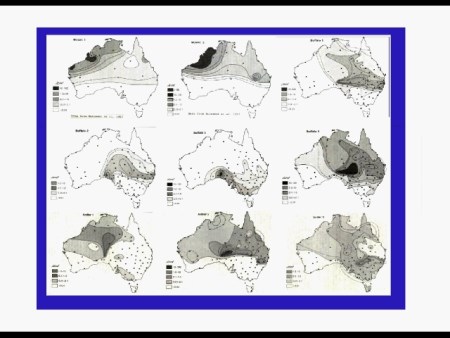
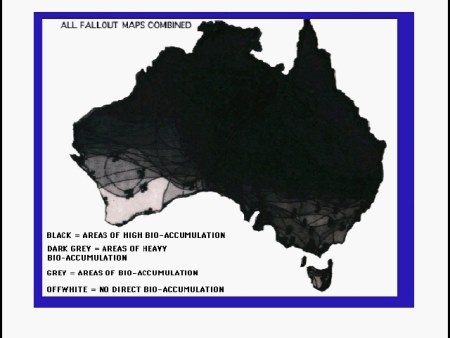
Australia was the guinea pig population for Britain’s nuclear weapons tests radiation fallout
Julian Assange’s fight for freedom
 Julian Assange’s fight for freedom https://www.abc.net.au/radionational/programs/latenightlive/julian-assanges-fight-for-freedom/12409182?fbclid=IwAR2rdBdg8aKbjWtITDgh-0EYRgJ_jqGuHL2HhlBxZe6cWz_Jwtt5HxUXl9k
By Phillip Adams on Late Night Live n a revised edition of his book ‘The Most Dangerous Man in the World’, Investigative reporter Andrew Fowler reports on a tangled tale regarding the negotiations between Julian Assange and the US Department of Justice, to strike a deal with the incoming Trump Administration. At that time, Wikileaks was in a strong bargaining position with its Vault 7 CIA disclosures, but a lack of trust and mounting pressure from various sources saw Assange decide to publish the CIA secrets.
Busting Australian govt media spin about Napandee nuclear waste plan, – by AustralianGovtWatcher

Cut through this spin from the Department of Industry, Science, Energy and Resources – glossing over the licensing problem about waste classification. It is duplicitous about “medical” wastes. It ignores the plan’s failure to comply with all regulatory requirements, failure to properly inform local community. It makes dubious claims on economics and employment, and dubious claims about the selective community ballot, and duplicitous claims about Aboriginal involvement (AustralianGovtWatcher’s comments in red italics)
Department of Industry, Science, Energy and Resources National Radioactive Waste Management Facility: Hearings last Tuesday of the Senate Standing Committee on Economics
Media release
2 July 2020
The following can be attributed to a spokesperson from the Department of Industry, Science, Energy and Resources:
“The department was pleased to attend the committee hearings on Tuesday to discuss the proposed legislation to support the National Radioactive Waste Management Facility,” the spokesperson said.
“Specifically it was also an opportunity to address some questions about the process and proposed facility, including some those which have since been raised in the media, as outlined below.
Is there are need for a facility?
“The legislation delivers on the Australian Government’s commitment to site the facility at Napandee in Kimba, South Australia.
“The facility will be for the disposal of low-level waste and temporary storage of intermediate level waste, which will be stored at the facility only if it meets strict Waste Acceptance Criteria.”
The facility will fail to meet the safety codes and prescriptions of IAEA as adopted in Australia by ARPANSA
What is proposed to overcome this problem as otherwise ANSTO or whoever else will be the operator of the facility will not get the necessary licences
“About 80 per cent of Australia’s radioactive waste stream is associated with the production of nuclear medicine which, on average, two in three Australians will need during their lifetime.”
This is a dubious claim and depends entirely on the level of classification and the source of the waste – it should be specifically broken down into those categories.
“This medical waste, along with Australia’s historical radioactive waste holdings, is currently spread over more than 100 locations across the country, like science facilities, universities and hospitals.”
True but only a portion of that waste is held or controlled by the federal government.
“It is international best practice to consolidate this waste at a purpose-built facility.”
Agreed but the facility at Napandee will not achieve this.
Can’t the waste be permanently stored at ANSTO?
“Australia cannot indefinitely produce the vital nuclear medicine
that it needs, without responsibly and safely managing the radioactive waste by product.
“The national facility will not fit at ANSTO – it requires at least 40 hectares plus a buffer zone and enabling infrastructure.
“On the other hand, the whole ANSTO Lucas Heights campus, designed for nuclear medicine and research, is only 70 hectares in size, and already has more than 80 buildings on it.”
Although unavoidable due to simply adding new buildings when needed it still shows a dismissal lack of planning over many years which is acknowledged by former senior personnel at ANSTO
Do we need more scrutiny around the process to identify a site?
“The process to site the facility was developed with the assistance of an Independent Advisory Panel which included members with a range of academic, industry and environmental backgrounds, and people who are both generally supportive and against the proposal to establish the facility.”
Absolute nonsense since the choice of the site and subsequent development proposals fail to comply with all regulatory requirements.
Moreover the community members against the proposals were never given full and proper information despite their specific requests.
A good example of this was the issue of fire risks which is of prime importance with the proposed above ground structure in the heart of prime agricultural land.
The so-called Independent Advisory Panel proved to be ineffective and was not constituted as initially planned – it certainly did nothing of consequence to identify the location and provide any real scrutiny.
“And the process has already been independently scrutinised
on two occasions.
“In 2018, the Senate Economics References Committee ran an inquiry into the process for the selection of a site for the facility, and this found that that the process was sound.
“Four years of community engagement and three years of technical studies support the identification of Napandee as a site, which is suitable technically to safely and securely manage Australia’s waste, and broadly supported by the community.”
The Senate Committee inquiring into the selection process in 2018 could not possibly be regarded as being an independent scrutiny as seen from its conclusions and recommendations.
What was the second occasion of scrutiny?
Most importantly the community at Kimba has requested funding and governmental assistance in getting their own proper and independent expert scrutiny and assessment but the government has refused the requests.
The District Council of Kimba also refused a similar request despite claiming to represent the whole community.
What economic benefits would the facility deliver for regional Australia?
“Independent economic analysis conservatively estimated the facility would bring over $8 million in economic benefits to Kimba each year.”
How?
“The facility will also be the area’s largest employer, bringing 45 local jobs.”
Much larger facilities overseas employ a fraction of that number – it is more likely to be less than 10 employees in total and will no doubt depend on the infrequent deliveries of waste to the facility.
Hard to see where the yearly economic benefits of $8 million will come – it will do nothing to replace an agricultural industry at Kimba worth between $55 million to $85 million a year which based on recent overseas situations will suffer dramatically due to the presence of the facility.
“And some 62% of the local Kimba community supported the facility in a Council-run ballot undertaken last year.”
This is based on a very selective ballot the results of which have not been correctly interpreted.
Most importantly the ballot failed on the principle of informed consent as there was a lack of proper information given to the voters prior to the ballot.
What are the ways of protecting cultural heritage?
“While there is no native title or registered heritage at Napandee, which is cleared farming land, the department recognises the Traditional Custodians in the region, who have strong views about a radioactive waste facility being situated in the area.
“If the Barngarla People are willing to consider the opportunity, the department is seeking to engage with the objective of a funded agreement between BDAC and the Government, which could include:
• a Barngarla economic plan – including $3 million allocated
by the Australian Government,
• training, employment and business opportunities,
• a cultural heritage assessment and management program,
• the opportunity to ensure Barngarla heritage and cultural values are enhanced by the Facility and its design,
That is not what the Barngarla people say particularly as the proposed funding outlined by the government will in any case come from other existing financial assistance already available to them.
In any case the government should have been consulting the Barngarla for that type of agreement several years ago and certainly well before their legal actions were taken and which were strongly opposed by the government.
It seems that it will be hard to mend the bridges!
CONCLUSION
These comments are based on various expert advice from overseas which is far more credible in the areas of nuclear science and engineering then exists in Australia mainly due to there being no local nuclear generation industry .
This expert advice can be made available to the Senate committee if necessary
However the whole process of selection of a previously nominated site and the subsequent development proposals lack any community consideration of such inherent issues as the radionuclides inventories of the waste and the risk of fires
Napandee nuclear waste plan futile and unnecessary, as it lacks adequate knowledge of radionuclides involved

From the AINS Group (a multi-discipline engineering consultancy specialised in nuclear waste management services, Finland)
“… it is quite unlikely that Napandee could ever be commissioned by the regulatory body
Nonetheless the selection of a site would need a thorough safety assessment that includes climatic and groundwater conditions, rock stability, host rock composition, and the amounts and nature of the hazards of the waste (i.e. the radionuclide inventory). AS said before the AECOM report is not enough to demonstrate or ensure the safety of the site and the post closure monitoring for 300 years may also be an issue.
Final remarks. Knowledge of the inventory and mobility of the radionuclides in the wastes must be the first step in determining how and where the wastes should be stored and disposed of permanently.
Without this, it is not possible to even consider or decide the conditions or attributes of the waste management location and the manner of storage and disposal, and this will, or should be, the prime consideration in the licensing process.
This does not seem to have been done with the Kimba location and the nature of its facility and hence its selection and subsequent plans may prove to be futile and unnecessary….”
References. ARPANSA 2010 Safety guide. Classification of radioactive waste – Radiation protection series No.20. Eurajoki T 2006 Lovisa Low and Intermediate Level Waste Repositary Safety case LOKIT – 2543 Fortum Nuclear Services Ltd, Espaa Finland. IAEA 2006 Geological disposal of radioactive waste, IAEA Safety Standard Series No. WSR4
ANSTO has been completely disingenuous in communicating to Kimba community about radioactive waste levels

RADIONUCLIDES
Three internationally renowned nuclear science academic and research institutions from overseas have tried to find out the inventory of the radionuclides of the re-processed nuclear waste at Lucas Heights which is to be placed in aboveground storage at Napandee near Kimba
The reason is that this would help – but not definitively – to determine the true level of that waste which ANSTO claims is intermediate level but France as the re-processing country classifies it as high-level waste.
All attempts to get this information have proved unsuccessful and the three institutions quite independently of each other believe that the information was deliberately withheld from them as it was probably realised that it could be used in some form to reclassify the intermediate level waste held at Lucas Heights.
However the radionuclides for the low level waste are readily available on ANSTO’s website.
Is this believable?
Should this be correct then it means that ANSTO has been completely
deceptive and disingenuous in its public disclosures particularly with regard to the Kimba community and all further attempts or actions to establish the national facility at Napandee should cease immediately
EXTRACT FROM WIKIPEDIA:
A radionuclide (radioactive nuclide, radioisotope or radioactive
isotope) is an atom that has excess nuclear energy, making it unstable.
This excess energy can be used in one of three ways: emitted from the
nucleus as gamma radiation; transferred to one of its electrons to
release it as a conversion electron; or used to create and emit a new
particle (alpha particle or beta particle) from the nucleus. During those
processes, the radionuclide is said to undergo radioactive decay.
Australia must plan for permanent disposal of Lucas Heights nuclear waste, not hurriedly transfer it to Kimba “temporarily”
 Senator Sarah Hanson-Young, No Nuclear Waste Dump Anywhere in South Australia, 1 July 20,
ARPANSA has out on the record that there is NO urgency or safety concerns with the current storage at Lucas Heigts — then my questions is —- why move this intermediate-level waste before establishing long term plan for the disposal? Wouldn’t it make more sense? Otherwise we will be just double handling and risking the ILW to become potentially stranded at Kimba. https://www.facebook.com/groups/1314655315214929/
Queensland splinter political party North Queensland First pushing for uranium mining in Queensland
Jason Costigan wants Queensland to export uranium again, Canberra Times, Derek Barry 3 July 20
Impressions of Senate hearings on nuclear waste dump Bill
 We saw ANSTO, ARPANSA and the Department of Industry etc being grilled by Senators Rex Patrick, Sarah Hanson-Young and ALP Jenny McAllister.
In Australian Senate Inquiry uncertainty grows over whether Kimba nuclear dump site is really needed
the day saw uncertainty grow over the need for the proposed Kimba site while there was a corresponding growth in clarity that there is no urgency re this decision. The govts plan might suit ANSTO but it is not Australia’s only option – and it faces growing scrutiny.
from Jim Green, 1 July 2020 , Yesterday, Tuesday June 30 , the Senate Inquiry into Minister Pitt’s planned amendments to the national radioactive waste laws to cement and secure Kimba as a Facility site took evidence in Canberra.
The Committee heard from Govt agencies and contractors and key themes included both the need for the planned new laws and, importantly, for the Facility itself – esp. around the double handling of Intermediate Level Waste from ANSTO’s Lucas Heights.
ANSTO – as ever, there was too much bluff and bluster and too many Dorothy Dixers – as invariably happens with them in Estimates – but there were some very interesting arisings:
- Confirmed there are ‘no safety concerns’ with current waste – although ‘we cannot say that in 40 or 50 years they (ANSTO’s waste stores) will be fit for purpose’ – clear acknowledgement that they could retain waste on site and four decades is more than enough for a credible review and a more integrated approach.
- Further, ANSTO has ‘proposals under development with government for pre-2027 construction of new storage’ for ILW waste
- Hardly credible that they did not know the general proportions of ANSTO origin waste at the proposed Facility (around 80% of total wastes, and more importantly, 95% of ILW)
- They see extended on-site storage as a ‘significant management challenge and significant financial cost’ and so want to both cost shift and physically waste shift. Again, this is ANSTO’s agency agenda – not a national imperative or Australia’s sole or best option.
- Odd claim that a delay in advancing Kimba would be ‘detrimental to our sense of ourselves’ however it would not be inconsistent with any international treaty obligations. No treaty or convention obligations require Kimba to be advanced in its current form – or at all. (also I would suggest that ignoring Traditional Owner opposition to the siting of a national radioactive waste facility poses a bigger threat to our national sense of self)
- No credible threat to secure access to nuclear medicine supply should Kimba be delayed – although there would be ‘some scenario’s’ where supply could potentially be impacted. This is a very significant reduction in ANSTO’s threat messaging and a long way from a pressing problem. As I understand the scenario referred to is that Kimba is not advanced and ANSTO has taken no steps to develop a contingency.
In summary Kimba is not essential for nuclear medicine nor is it essential for Australia’s compliance with international frameworks. ANSTO could extend interim storage at Lucas Heights but understandably would prefer to transfer both the waste and its continuing management cost to a non ANSTO purse and place. Not a good enough rationale for a deficient national plan.
ARPANSA
- ANSTO waste ‘can be safely stored at Lucas Heights for decades to come’ – absolutely critical point: there is no need to rush – we have time to develop a more credible approach.
- ‘International best practice is to store radioactive waste safely – current storage at the Lucas Heights site is fully aligned with international best practice’
- There will be distinct licensing applications required for the two waste streams – LLW and ILW (with no certainty that they will have a shared approval outcome)
Dept of Industry:
- Repeated reference to the ‘contentious’ nature of the siting decision
- Extremely deficient responses re the rational and process for the change in legislative decision making from Ministerial decision to legislative instrument. Some Senators not happy at Depts inability to answer basic process questions –it is very clear the rationale is to isolate against future legal challenge.
- Statement that decision to change the legislative basis of the siting was made sometime in 2019 – then a later statement that it was made by Minister Pitt (note: Pitt was sworn in 6/2/20)
- The Departments Sam Chard rear guard action was to state that the intent of the change was to enable Parliament ‘to test the merits of the action’ – that is long overdue – could we please do this as it simply doesn’t stack up
- Increasingly clear that the Dept is utterly adrift re Barngarla liaison – understandably as they simply do not want the Facility on their country – the Facility plan is heading for some pretty sharp rocks if it doesn’t change course.
Dept of Defence:
- strongly arguing against any siting on the Woomera Prohibited Area as this could reduce its functionality. Not at all keen.
- Hard pressed by Rex Patrick though about how credible is it to say ‘not possible’ for a 100 hectare Facility inside a site twice the size of Tasmania.
AECOM:
- Predictable defence of process, their expertise and kept referring to the restricted extent of their brief as the way to avoid any tricky questions (like Barngarla liaison)
- No tech or site reason why the Facility couldn’t be at Kimba
There were good efforts from Sarah Hanson Young, Rex Patrick and Labor’s Jenny McAllister to highlight and tease out issues.
In a nutshell I would say the day saw uncertainty grow over the need for the proposed Kimba site while there was a corresponding growth in clarity that there is no urgency re this decision. The govts plan might suit ANSTO but it is not Australia’s only option – and it faces growing scrutiny.
We now need to keep up the issue profile and the expectation on Labor and the cross-benches to oppose this legislation when it comes to the Senate and instead support a strategy that advances both human and environmental rights and responsible radioactive waste management.
Oppose Kimba nuclear waste dump plan – Senator Sarah Hanson-Young

|
No Nuclear Waste Dump in South Australia https://www.sarahhansonyoung.com/no_dump
The nuclear waste dump site selection process is fundamentally flawed, has fallen short of international best practice and failed to secure the consent of Traditional Owners. The Federal Government has no mandate to situate a radioactive waste management facility in South Australia. The communities of Hawker and Kimba have been significantly impacted by the ongoing mismanagement of the site selection process. It is imperative that all stakeholders within transport corridors in South Australia, every community impacted by the potential thoroughfare of nuclear waste should be fully informed of the relevant costs and benefits, throughout the transport chain, and offered the opportunity to have their say on the proposal. The proposed double-handling of intermediate-level radioactive waste is not consistent with international best practice. Alternatives should be canvassed, including the suspension of the site selection process until a permanent disposal site can be identified. |
|
Julian Assange’s father in tireless fight to free his son, calls on Scott Morrison to help Australian citizen Julian
 Assange’s father calls extradition process ‘disgrace’ https://telanganatoday.com/assanges-father-calls-extradition-process-disgrace?fbclid=IwAR1a7bQ0W_Xcgc9EIeGaAHVP7Zmm2cM6nNV65ZXtkhCwNUlarqIYTJVw6xo1 July 20, The 80-year-old is organizing public events in Australia despite the ongoing coronavirus pandemic and hopes to travel to London in August to support Assange during his extradition trial.
Sydney: WikiLeaks founder Julian Assange’s father, John Shipton, is fighting tirelessly for the release and return of his son, who is facing an extradition trial in London for publishing classified information, a process he described as abuse.
“We maintain that the extradition request is a fraud in the English court… It’s a fraud in the English legal system, it’s a case of abuse of process, it is a disgrace,” Shipton, who travelled from Melbourne to Sydney to campaign for his son’s release, told Efe news in an interview.
The 80-year-old is organizing public events in Australia despite the ongoing coronavirus pandemic and hopes to travel to London in August to support Assange during his extradition trial which, he says, is being carried out under “dire” circumstances.
In May 2019, the UN Special Rapporteur on Torture, Nils Melzer, said, after visiting Assange in the Belmarsh prison along with two medical experts, that he showed “all symptoms typical for prolonged exposure to psychological torture, including extreme stress, chronic anxiety and intense psychological trauma”.
Assange has spent almost a decade in confinement, first under house arrest in a British town and then at the Ecuadorian embassy in London between 2012 until 2019, when Ecuador withdrew his political asylum status.
Shipton has urged the Australian government to mediate with the UK administration for the release of his son, who is wanted in the US on 18 charges of espionage and computer intrusion, for which he could be sentenced to prison for up to 175 years.
“I believe the government can, if it wishes to, assist us in bringing Julian home. I believe that (it) is very simple for the Prime Minister (Scott Morrison) to pick up the phone and ring (his UK counterpart) Boris Johnson and say Julian Assange is an Australian citizen in dire circumstances.
“This will resolve this immediately and that’s easily possible,” he told Efe news during the interview.
1 This month
.

Australians deserve the truth
about
AUKUS – https://aukuspublicinquiry.com/

PETITION – To: Prime Minister Anthony Albanese and the Australian Labor Government

of the week – Australians for War Powers Reform (AWPR)
To see nuclear-related stories in greater depth and intensity

