Australia: USA’s Deputy Sheriff goes for bloated military expenditure
 Defending Australia: The Deputy Sheriff Spending Spree https://theaimn.com/defending-australia-the-deputy-sheriff-spending-spree/?fbclid=IwAR0K25d1UTZX_0DTF_2JFQESQ3nBlXbvGjv3PihUHH3ib6Q9yW6mNUV6LBE,
 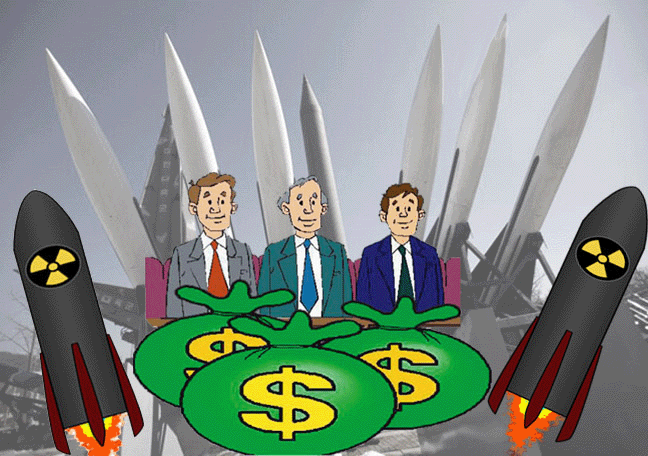 July 1, 2020, by: Dr Binoy Kampmark There are few sadder sights in international relations than a leadership in search of devils and hobgoblins. But such sights tend to make an appearance when specialists in threat inflation either get elected to office or bumped up the hierarchies of officialdom. The sagacious pondering types are edged out, leaving way for the drum beaters. As the Roman general Vegetius suggested with solemn gravity in the 4th century, “Igitur qui desiderat pacem, praeparet bellum,” an expression that has come to mean that those desiring peace best ready for war.
- Australia’s drum beating government has told its citizens rather pointedly that “we have moved into a new and less benign strategic era.” It is something that the federal government has never tired of stressing ever since the White Tribe of Asia developed fears of genetic and maternal abandonment, being thousands of miles from Britannia but uncomfortably close to the hordes of Asia. To the north lay the colours black, brown and yellow, tempered, for a time, by the powers of Europe. Henry Lawson, who had a fear or two tucked under his belt, reflected on this sentiment in his patchy Flag of the Southern Cross: “See how the yellow-men next to her lust for her, Sooner or later to battle we must for her.”
Instead of committing to an easing of that tension, Morrison is keen to throw Australia into an increasingly crowded theatre of participants in the Indo-Pacific on the mistaken premise that things have dramatically changed. “And so we have to be prepared and ready to frame the world in which we live as best as we can, and be prepared to respond and play our role to protect Australia, defend Australia.”
That defence is, invariably, linked to that of the United States, which sees Australia as an essential cog in the containment strategy of the PRC. The idea that this new round of spending will assist Australia’s own independence from this project is misleading in the extreme. For one, the continuing stress on interoperability between the Australian Defence Force and its US counterparts remains a feature of spending decisions. Deputy Sheriffs know where and from whom to take their cues and stock from. Such weapons as the United States Navy’s AGM-158C Long Range Anti-Ship Missile (LRASM) are on the list of future purchases. There is also the promise of underwater surveillance systems, and research and development in what promises to be another frontier of an international arms race: hypersonic weapons or, as US President Donald Trump prefers to call them “super duper missiles.” (Some $9.3 billion has been allocated for the latter.)
The prime minister also revisits a term that is impossible to quantify, largely because of its fictional quality. Deterrence, ever elastic and rubbery, only has meaning when the hypothetical opponent fears retaliation and loss. To undertake any attack would, to that end, be dangerous. For decades, this fictional deterrent was kept up by the vast umbrella of the US imperium.
The sense that this umbrella might be fraying is being used as an excuse to beat the war drum and stir the blood. Senator Jim Nolan is one, insisting that “we must share some of the blame [for the likelihood of regional conflict] because we have ignored our century-long history of national unpreparedness, and have relied blindly on an assumed level of US power which, since the end of the Cold War, exists at a much lower and dangerous level, and looks less likely to deter regional conflict.” Nolan nurses a fantasy that seems to be catching: that Australia aspire to “self-reliance” and have “confidence that we could adjust in time required to defend ourselves and so, with a bit of luck, deter conflict impacting directly on us. At present, we are severely deficient.”
Morrison similarly opines that, “The ADF now needs stronger deterrence capabilities. Capabilities that can hold potential adversaries’ forces and critical infrastructure at risk from a distance, thereby deterring an attack on Australia and helping to prevent war.” To imagine that Australia would be able to deter a power such as China, even with projected purchases, is daftly entertaining. The term simply does not come into play.
This incoherence is of little concern to the family of strategists that inhabit the isolated climes of Canberra. When money and weaponry is promised, champagne corks pop. Peter Jennings of the Australian Strategic Policy Institute is duly celebrating, given his fixation with that one power “with both the capacity and the desire to dominate the Indo-Pacific region in a way that works against Australia’s interest.” He even has a stab at humour: “We’re not talking about Canada.”
Broad policy commitments to bloated military expenditure are always to be seen with suspicion. They come with warnings with little substance, and only matter because people of like mind find themselves on opposite sides of the fence warning of the very same thing. If you do not spend now, you are leaving the country open to attack. That most important question “Why would they attack us in the first place?” is never asked. Even at the height of the furious battles of the Second World War, Imperial Japan debated the merits of invading an island continent which would have needlessly consumed resources. Australia, in short, has never been an inviting target for anyone.
The dangers of adding to the military industrial complex, then, are only too clear. Countries who prepare for war in the name of armed security can encourage the very thing they are meant to prevent. Purchased weapons are, after all, there to be used. The result is the expenditure of billions that would better be spent on health, education and, ever pressingly, on redressing environmental ruination.
We are then left with the desperate sense of a psychological defect: the need to feel wanted and relevant on the big stage. This was very much the case when Prime Minister Robert Menzies committed Australian troops in 1965 to stem the Red-Yellow Horde in the steaming jungles of Vietnam. The language being used then was much as it is now: to deter, to advance national security, to combat an authoritarian menace in a dangerous region. Little weight was given to the subtleties of a nationalist conflict that was not driven by Beijing. Half-baked and uncooked strategy was served in the messes.
In adding their bloody complement to a local conflict that would eventually see a US defeat, Labor’s Arthur Calwell, himself a self-styled white nationalist, made a sober speech in denunciation. Australia was committing resources to “the bottomless pit of jungle warfare, in a war in which we have not even defined our purpose honestly, or explained what we would accept as victory.” Doing so was “the very height of folly and the very depths of despair.” Australia now finds itself committed to a defence strategy against a mirage dressed in enemy’s clothes masked in language that resists meaning or quantification.
Western Australia: call for Mt Walton hazardous waste facility to accept toxic material from across Australia, i(includes radioactive wastes
 Call for Mt Walton hazardous waste facility to accept toxic material from across Australia, ABC Goldfields By Madison Snow, 26 June 20 The closest neighbour to a toxic waste facility in Western Australia’s Goldfields region is calling for licence changes that will allow it to accept hazardous material from across Australia. Call for Mt Walton hazardous waste facility to accept toxic material from across Australia, ABC Goldfields By Madison Snow, 26 June 20 The closest neighbour to a toxic waste facility in Western Australia’s Goldfields region is calling for licence changes that will allow it to accept hazardous material from across Australia.Key points:
The Intractable Waste Disposal Facility (IWDF) at Mt Walton East is only licensed to take waste from within WA, a condition was set following consultations with the community before its establishment in 1992. The state-owned facility is Australia’s only long-term disposal site for intractable waste and accepts chemicals such as arsenic trioxide and pesticides, along with low-level radioactive waste, permanently storing them underground. But the approval of a commercial waste facility at nearby Sandy Ridge, which has a licence to take hazardous materials from around the country, has some residents worried. Anna Killigrew, who lives 120 kilometres away in Boorabbin National Park, is a member of Mt Walton’s Community Liaison Committee (CLC) and supports the existing site’s management. She said she was concerned Mt Walton would be left “dead in the water” and unable to compete unless it too could accept waste from around the country.
|
|
Agressive defence policy – Australian Strategic Policy Institute has too much influence on government and media
 The recent announcement about a fresh $270 billion to rev up the defence force – even one equipped with long range hypersonic missiles (an impossibility at this stage) – will tempt our Whitehall Warriors to overreach with their rhetoric and provoke a reaction from a much superior power that would be highly destabilising for us and for others. In the lead of this, stirring up the government, is the notorious Australian Strategic Policy Institute whose original purpose was to provide objective analysis of strategic issues but not to be a stentorian advocate of an aggressive foreign and defence policy. At its head is our very own ‘Secular Santamaria’, Peter Jennings, who gets disproportionate airplay on these matters by a susceptible government and media.
Militarism and Popularism, a dangerous mix https://johnmenadue.com/military-matters-and-popularism-by-andrew-farran/, By ANDREW FARRAN | On 2 July 2020
The recent announcement about a fresh $270 billion to rev up the defence force – even one equipped with long range hypersonic missiles (an impossibility at this stage) – will tempt our Whitehall Warriors to overreach with their rhetoric and provoke a reaction from a much superior power that would be highly destabilising for us and for others. In the lead of this, stirring up the government, is the notorious Australian Strategic Policy Institute whose original purpose was to provide objective analysis of strategic issues but not to be a stentorian advocate of an aggressive foreign and defence policy. At its head is our very own ‘Secular Santamaria’, Peter Jennings, who gets disproportionate airplay on these matters by a susceptible government and media.
As the government has become heavily focussed on China, it being the military threat, what the government says and does from now on must be seen in that light. Considering the huge imbalance between Chinese and Australian military capabilities – our GDP is about 5% of China’s; the military comparison is much the same – one must ask if we were to engage militarily against China what optimum outcome would/could we seek? At the least it would be our survival, but the probability is that even that would incur great cost, involving great destruction.
Were we to engage in conjunction with the US, the outcome would be similar or worse as our most effective or currently valued capabilities (e.g. Pine Gap) would be picked out for destruction. To engage with the US in any case would be a mistake as we can assume that any such conflict would be initially and ultimately one directly between China and the US. Indications are that the US would not be exercising ‘leadership’, or what goes for leadership, for any purpose other than its own. That is the foreseeable and inexorable trend now. Australia, it must be stressed, does not lie naturally in the sphere of influence of either China or the US, which gives it the option of dealing with both pragmatically and rationally on a case by case basis.
Over time Australia has been, and continues to be, obsessed by an overriding sense of insecurity about its place in the region, and the world generally, causing its strategic policy to be fixated on the inevitability of conflict, discounting its ability to sustain an effective role in an orderly and stable world. Since the 1970s we have been engaged in wars of little or no strategic relevance, at a disproportionate cost in lives and substance. The only military examples of constructive relevance was our unarmed intervention in 1999 in East Timor under INTERFET, and peacekeeping operations in the Southwest Pacific under RAMSI in 2003, both with the full acceptance of the affected parties.
The strategic implications of Covid-19 are that we may be expected to do more on these lines and not more of the over-reaching interventionism of the kind witnessed in recent decades in the Middle East. We should act as an independent power within our own capabilities and not harness ourselves to the interests of any foreign power which complicates our relationships with others, especially our neighbours. If we continue to be connected ‘at the hip’ with one unreliable and irrational major power we will again be the first casualty of any misconceived adventurism.
What might justify a heightened build up of military capabilities, though not on the lines now proposed? It is said that the post-COVID-19 world will be poorer and more hand-to-mouth in nature than before, when there was a sense of order under a rules-based system. Hopefully elements of the rules-based system will be retained in the region, though it may break down in some places because of the pressures of poverty and dissatisfaction. As the much earlier UN Secretary-General, the late Dag Hammarskjold, famously remarked, the UN multilateral system “was not created to take mankind to heaven, but to save humanity from hell”.
To have the ability to assist regional states threatened by poverty and disease within, and disorder from without, may be a good thing in which Australia could have an effective (essentially peacekeeping or stabilising) role.
For that role we should develop a force structure suitable for the purpose, not for extraneous long-range purposes as would now seem to be the case. We should also, militarily and otherwise, develop a top-class counter-cyber capability both for our own protection and the protection of others. With regard to supply lines, these are predominantly serviced by foreign owned planes and ships for whose protection others have responsibility. If picked on by unfriendly fire, that would elevate a conflict beyond the region.
Overall, in this less stable situation, Australia should work closely with Japan, Indonesia and Vietnam to shore up regional cohesion, and with New Zealand in specific projects for stability and development in the South Pacific. Punching above our weight could lead to brawls. Punching at our weight is the way to go.
Labor rejects National Radioactive Management Amendment Bill. 2020- Josh Wilson MP
Hansard , Mr JOSH WILSON (Fremantle) Senate Committee Inquiry into National Radioactive Management Amendment Bill. 2020. “…….. There is no question that Australia needs to make progress when it comes to the proper long-term storage of nuclear waste. It is just that this bill doesn’t help take us towards that end. It’s taken us 40 years and it’s cost$55 million to get us to this point. ……..
Effectively this bill seeks to rush and force the issue of community acceptance, which is a mistake. The ministerhas the power to make the decision in question. You can only guess that the reason for this legislation is to lockin an outcome, when the minister and the government accept that there are some concerns with the communityacceptance process that has occurred so far.
The bill effectively also wants to ignore, avoid and further neglect the key issue of a permanent disposal site for intermediate-level waste. There are two kinds of waste that this bill proposes to send to a site in South Australia—low-level waste and intermediate-level waste—and they are very different. A lot of what has been said, including what the minister said in introducing this bill, glides over that difference in a way that is wrong and is certainly not helpful in terms of getting to where we need to get to with a permanent disposal site for low-level waste and a permanent site for intermediate-level waste…..
We have to get towards a long-term disposal solution, and yet this bill raises two serious questions about how the government wants to take us there. There’s concern over the site selection process, which goes to the question of consultation, engagement and community agreement, and there are concerns about the purpose and function of the facility…….
Departmental officials came before the energy and environment committee when we were inquiring into nuclear energy, and they gave us some very rough estimates of what the construction of the site itself would cost. That will be somewhere around $340 million to $350 million. That’s for the construction of the site, and that was described to us as a conservative estimate.Bizarrely, there is no current process underway with even a single dollar of government resources going towards the issue of a permanent disposal site for intermediate-level waste. It’s quite strange. It’s almost hard to believe that, when it’s taken us 40 years to get to the brink of a permanent site for low-level waste, there is not yet any departmental group or any taskforce on this and there’s not a single dollar going to the process of site selection,engineering design or anything else around the question of a permanent disposal site……
There is plenty of room [at Lucas Heights] in that interim storage facility, so there’s no issue with space as far as intermediate-level waste is concerned, and there’s no issue in relation to safety or health concerns either……where is the evidence that there is anyproblem with the intermediate-level waste staying where it is, as it should do, until the government of Australiaidentifies and resources an appropriate permanent disposal site for intermediate-level waste? …..When the interim facility was set up, there was no suggestion it was only for a few years. The licence that exists for the storage of the intermediate-level waste at Lucas Heights runs to 2055. …
ARPANSA is aware that some stakeholders have interpreted ARPANSA’s decisions regarding the IWS— which is the intermediate-level storage— as a requirement for relocation of the waste stored in the IWS, even suggesting that there is an urgent need for relocation. This is not correct. ARPANSA has not raised safety concerns regarding storage of waste at the IWS. ANSTO seems to share this view. ANSTO has indicated to ARPANSA that the mandatory recertification of the TN-81 casks every 10 years can be carried out at the IWS
But the claims that the government and government members in this place have made that intermediate-level storage needs to go to South Australia because there’s no room for it and that there are health and safety concerns about where it is currently are rubbish.
And so it should stay where it is as a spur to the government to get on with the process, which currently hasn’t even started, of finding and resourcing a permanent disposal site. That is not occurring, and that’s one of the chief flaws of this bill. ……
They need to immediately start and resource the process of a permanent disposal site for intermediate-level waste. They should commit to maintaining that waste where it is currently stored, which is another reason for an inquiry on this issue.
……..there are members of the government running around saying that nuclear power should be part of our energy mix in our communities across Australia. Frankly, that is not only deeply irrational but ridiculous and unhelpful in the task this bill presents to us.
This bill is not a sensible or appropriate way in which to move towards the waste storage solution. It puts the program at risk. That’s why we don’t support the bill.
Misinformation about Energy Economics, from nuclear companies and their propagandists
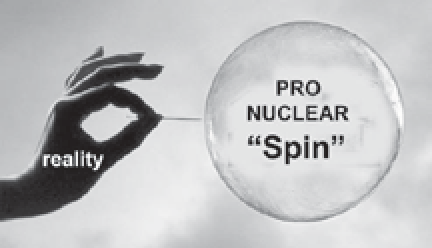
It is generally accepted in the energy industry that the cost of new nuclear is several times that of wind and solar, even when the latter are backed up by storage.
The nuclear lobby, however, has been insisting to the parliamentary inquiry that wind and solar are four to seven times the cost of nuclear, and to try and prove the point the lobby has been making such extraordinary and outrageous claims that it makes you wonder if anything else they say about nuclear – its costs and safety – can be taken seriously.
Supplementary Submission to the Victorian Parliament’s Standing Committee on Environment and Planning
Inquiry into Nuclear Prohibition Friends of the Earth Australia www.nuclear.foe.org.au
June 2020 – Extract
“……..MISINFORMATION REGARDING ENERGY ECONOMICS BY NUCLEAR COMPANIES AND ENTHUSIASTS
Highly questionable economic claims made by nuclear companies and enthusiasts are addressed in:
- submission #40 by Friends of the Earth Australia to the NSW nuclear inquiry[1]
- submission #64 to the NSW nuclear inquiry (see esp. sections 3.5 and 3.6)[2]
An important article by Giles Parkinson ‒ an energy expert and former business and deputy editor of the Australian Financial Review ‒ is particularly helpful in this regard. An excerpt is reproduced below but we encourage members of the Committee to read the full, referenced article. The article is focused on submissions to the federal nuclear inquiry[3] but many of the same claims have been presented to the NSW and Victorian inquiries.
Why the nuclear lobby makes stuff up about the cost of wind and solar
[1] https://www.parliament.nsw.gov.au/lcdocs/submissions/66217/0040%20Friends%20of%20the%20Earth.pdf
[3] https://www.aph.gov.au/Parliamentary_Business/Committees/House/Environment_and_Energy/Nuclearenergy
Giles Parkinson, 23 Oct 2019, ‘Why the nuclear lobby makes stuff up about the cost of wind and solar’, https://reneweconomy.com.au/why-the-nuclear-lobby-makes-stuff-up-about-cost-of-wind-and-solar-46538/
Giles Parkinson, 23 Oct 2019,
It is generally accepted in the energy industry that the cost of new nuclear is several times that of wind and solar, even when the latter are backed up by storage. The GenCost 2018 report from the CSIRO and the Australian Energy Market Operator (AEMO) puts the cost of nuclear at two to three times the cost of “firmed renewables”.
The nuclear lobby, however, has been insisting to the parliamentary inquiry that wind and solar are four to seven times the cost of nuclear, and to try and prove the point the lobby has been making such extraordinary and outrageous claims that it makes you wonder if anything else they say about nuclear – its costs and safety – can be taken seriously.
RenewEconomy has been going through the 290-something submissions and reading the public hearing transcripts, and has been struck by one consistent theme from the pro-nuclear organisations and ginger groups: When it comes to wind, solar and batteries, they just make stuff up.
A typical example is the company SMR Nuclear Technology – backed by the coal baron Trevor St Baker – which borrows some highly questionable analysis to justify its claim that going 100 per cent renewables would cost “four times” that of replacing coal with nuclear.
It bases this on modelling by a consultancy called EPC, based on the south coast of NSW, apparently a husband and wife team, Robert and Linda Barr, who are also co-authors of “The essential veterinarian’s phone book”, a guide to vets on how to set up telephone systems. of wind at A$157/MWh (before transmission costs), which is about three times the current cost in Australia, and A$117/MWh for solar, which is more than double.
The costs of wind and solar are not hard to verify. They are included in the GenCost report, in numerous pieces of analysis, and even in public announcements from companies involved, both buyers and sellers. St Baker could have helped out, as his company has signed two big solar contracts (for the Darlington and Vales Point solar farms) and we can bet he won’t be paying A$117/MWh.
Apart from costs, the EPC scenarios for 100 per cent renewables are also, at best, imaginative. For some reason they think there will only be 10GW of solar in a 100% renewables grid and just 100MW of battery storage. Big hint: There is already 12GW of solar in the system and about 300MW of battery storage. But we discovered that assuming wind and solar do not or won’t exist, and completely ignoring distributed energy, are common themes of the nuclear playbook.
The delivered cost of energy from wind and solar in the EPC modelling of a 100 per cent renewables grid? A hilariously outrageous sum of A$477/MWh (US$330/MWh).
Contrast this with SMR Nuclear Technology’s claims about the cost of a modern small modular reactor – US$65/MWh – even though it admits the technology “has not been constructed”, and which leading nuclear expert Ziggy Switkowski points out won’t likely be seen for at least another decade. …
Why the nuclear lobby makes stuff up about the cost of wind and solar
[1] https://www.parliament.nsw.gov.au/lcdocs/submissions/66217/0040%20Friends%20of%20the%20Earth.pdf
[3] https://www.aph.gov.au/Parliamentary_Business/Committees/House/Environment_and_Energy/Nuclearenergy
Giles Parkinson, 23 Oct 2019, ‘Why the nuclear lobby makes stuff up about the cost of wind and solar’, https://reneweconomy.com.au/why-the-nuclear-lobby-makes-stuff-up-about-cost-of-wind-and-solar-46538/
Why the nuclear lobby makes stuff up about the cost of wind and solar
[1] https://www.parliament.nsw.gov.au/lcdocs/submissions/66217/0040%20Friends%20of%20the%20Earth.pdf
[3] https://www.aph.gov.au/Parliamentary_Business/Committees/House/Environment_and_Energy/Nuclearenergy
Moltex, which says it is “developing” some sort of fission technology (it says it has a design but hasn’t actually built anything) uses the same trick as EPC to paint a daunting picture of renewable and storage costs, in this case by multiplying the cost of batteries by the total amount of electricity consumed in a single day. “Australia consumes 627 Gigawatt hours of electricity per day, and so the battery storage required to cover just one 24 hour period would cost A$138 billion,” it proclaims. It is such an incredibly stupid and misleading claim that it simply takes the breath away. …
But that’s what the nuclear industry feels it needs to do to make its yet-to-be invented technology sound feasible and competitive.
Let’s go to StarCore, a Canadian company that says it, too, wants to manufacture small modular reactors, and claims renewables are “seven times” the cost of nuclear, and which also has a fascination with the Nyngan solar farm. It uses the cost of Nyngan to make the bizarre claim that to build 405 of them would cost A$68 billion, and then compares this to what it claimed to be the “zero upfront capital costs” of one of StarCore’s plants.
Say what? Does the nuclear plant appear just like that? Solar and wind farms also usually have long-term power purchase agreements, but they still have to be built and someone has to provide the capital to do so. Nuclear with a zero capital cost? Really, you couldn’t make this stuff up.
Down Under Nuclear Energy, headed by a former oil and gas guy and a former professor at the University of Western Australia who specialises in mathematical social science and economics, also bases its solar costs on the Nyngan solar farm and makes this bizarre claim about battery storage: “The precipitous decline in solar technology is highly unlikely to be replicated in batteries, a technology already approaching 150 yrs of maturity,” it says.
Hey, here’s some breaking news. Costs of battery storage have already mirrored solar’s fall, down 80 per cent in last decade and utilities like Transgrid predict another 60 per cent fall over next 10-15 years.
And most large-scale storage batteries use lithium, an abundant resource, and this is battery technology that was actually invented just over 40 years ago by the winners of this year’s Nobel Prize for Chemistry. As the Nobel citation says: “(Co-winner Stanley) Wittingham developed the first fully functional lithium battery in the 1970s.” Not 1870.
Women in Nuclear and the Australian Workers Union both quote the Industry Super report on nuclear, which we debunked a while back, which puts the cost estimates of wind and solar plants at 10 times their actual cost.
The “capital cost” of the Dundonnel wind farm in Victoria, for instance, is put at A$4.2 billion (try A$400 million) according to their bizarre calculations, while the Darlington solar farm is put at $5.8 billion (try A$350 million). It’s pure garbage and the fact that it is being quoted really does beggar belief. …
But all the nuclear submissions have one common trait. They assume that the deployment of renewables is stopped in its tracks, either now or sometime soon. It’s more wish than analysis, but in that they will have found a willing fellow traveller in federal energy minister, Angus Taylor “there is already too much wind and solar on the grid” Taylor, who thought it a good idea to have the inquiry.
But the reality is that the rest of the energy industry wants to move on. They know that the grid can be largely decarbonised within the next two decades from a combination of renewables and storage. That’s a simple truth that the nuclear lobby cannot accept, and they’ve passed up the opportunity to have an open and honest debate by promoting utter garbage about renewables, to the point where it would be difficult to believe much of anything else they say.
USA adds a new indictment to its charges against Julian Assange
 WikiLeaks founder Assange faces new indictment in US, By ERIC TUCKER, 29 June 20, WASHINGTON (AP) — WikiLeaks founder Julian Assange sought to recruit hackers at conferences in Europe and Asia who could provide his anti-secrecy website with classified information, and conspired with members of hacking organizations, according to a new Justice Department indictment announced Wednesday.
The superseding indictment does not contain additional charges beyond the 18 counts the Justice Department unsealed last year. But prosecutors say it underscores Assange’s efforts to procure and release classified information, allegations that form the basis of criminal charges he already faces.
Beyond recruiting hackers at conferences, the indictment accuses Assange of conspiring with members of hacking groups known as LulzSec and Anonymous. He also worked with a 17-year-old hacker who gave him information stolen from a bank and directed the teenager to steal additional material, including audio recordings of high-ranking government officials, prosecutors say.
Assange’s lawyer, Barry Pollack, said in a statement that “the government’s relentless pursuit of Julian Assange poses a grave threat to journalists everywhere and to the public’s right to know.”
“While today’s superseding indictment is yet another chapter in the U.S. Government’s effort to persuade the public that its pursuit of Julian Assange is based on something other than his publication of newsworthy truthful information,” he added, “the indictment continues to charge him with violating the Espionage Act based on WikiLeaks publications exposing war crimes committed by the U.S. Government.”
Assange was arrested last year after being evicted from the Ecuadorian Embassy in London, where he had sought refuge to avoid being sent to Sweden over allegations of rape and sexual assault, and is at the center of an extradition tussle over whether he should be sent to the United States.
The Justice Department has already charged him with conspiring with former U.S. Army intelligence analyst Chelsea Manning in one of the largest compromises of classified information in U.S. history by working together to crack a password to a government computer.
Prosecutors say the WikiLeaks founder damaged national security by publishing hundreds of thousands of classified documents, including diplomatic cables and military files on the wars in Iraq and Afghanistan, that harmed the U.S. and its allies and aided its adversaries.
Assange maintains he was acting as a journalist entitled to First Amendment protection. His lawyers have argued the U.S. charges of espionage and computer misuse were politically motivated and an abuse of power.
Assange generated substantial attention during the 2016 presidential election, and in investigations that followed, after WikiLeaks published stolen Democratic emails that U.S. authorities say were hacked by Russian military intelligence officials. An investigation by special counsel Robert Mueller revealed how Trump campaign associates eagerly anticipated the email disclosures. One Trump ally, Roger Stone, was found guilty last year of lying about his efforts to gain inside information about the emails. Assange, however, was never charged in Mueller’s Russia investigation.
The allegations in the new indictment center on conferences, in locations including the Netherlands and Malaysia in 2009, at which prosecutors say he and a WikiLeaks associate sought to recruit hackers who could locate classified information, including material on a “Most Wanted Leaks” list posted on WikiLeaks’ website.
According to the new indictment, he told would-be recruits that unless they were a member of the U.S. military, they faced no legal liability for stealing classified information and giving it to WikiLeaks “because ‘TOP SECRET’ meant nothing as a matter of law.”
At one conference in Malaysia, called the “Hack in the Box Security Conference,” Assange told the audience, “I was a famous teenage hacker in Australia, and I’ve been reading generals’ emails since I was 17.”
Australian government to blame for failure of environment laws
 Let there be no doubt: blame for our failing environment laws lies squarely at the feet of government, The Conversation June 29, 2020 Peter BurnettHonorary Associate Professor, ANU College of Law, Australian National University A long-awaited draft review of federal environment laws is due this week. There’s a lot riding on it – particularly in light of recent events that suggest the laws are in crisis.
Late last week, the federal Auditor-General Grant Hehir tabled a damning report on federal authorities’ handling of the Environment Protection and Biodiversity Conservation (EPBC) Act. Incredibly, he found Australia’s premier environmental law is administered neither efficiently or effectively.
It followed news last month that mining company Rio Tinto detonated the 46,000 year old Juukan rock shelters in the Pilbara. The decision was authorised by a 50 year old Western Australian law –and the federal government failed to invoke emergency powers to stop it.
Also last month we learned state-owned Victorian logging company VicForests unlawfully logged 26 forest coupes, home to the critically endangered Leadbeater’s possum. The acts were contrary both to its own code of practice, and the agreement exempting VicForests from federal laws.
As relentless as Hehir’s criticisms of the department are, let there be no doubt that blame lies squarely at the feet of government. As a society, we must decide what values we want to protect, count the financial cost, then make sure governments deliver on that protection.
Shocking report card
I’ve been involved with this Act since before it began 20 years ago. As an ACT environment official reading a draft in 1998 I was fascinated by its complexity and sweeping potential. As a federal official responsible for administering, then reforming, the Act from 2007-2012, I encountered some of the issues identified by the audit, in milder form.
But I was still shocked by Hehir’s report. It’s so comprehensively scathing that the department barely took a trick.
Overall, the audit found that despite the EPBC Act being subject to multiple reviews, audits and parliamentary inquiries since it began, the Department of Agriculture, Water and the Environment’s administration of the laws is neither efficient nor effective………
How did this happen?
The EPBC Act itself remains a powerful instrument. Certainly changes are needed, but the more significant problems lie in the processes that should support it: plans and policies, information systems and resourcing.
As I wrote last month, between 2013 and 2019 the federal environment department’s budget was cut by an estimated 39.7%.
And while effective administration of the Act requires good information, this can be hard to come by. For example the much-needed National Plan for Environmental Information, established in 2010, was never properly resourced and later abolished……..
A national conversation
There is a small saving grace here. Hehir says the department asked that his report be timed to inform Professor Graeme Samuel’s 10-year review of the EPBC Act. Hehir timed it perfectly – Samuel’s draft report is due by tomorrow. Let’s hope it recommends comprehensive action, and that the final report in October follows through.
Beyond Samuel’s review, we need a national conversation on how to fix laws protecting our environment and heritage. The destruction of the Juukan rock shelters, unlawful logging of Victorian forests and the Auditor-General’s report are incontrovertible evidence the laws are failing……https://theconversation.com/let-there-be-no-doubt-blame-for-our-failing-environment-laws-lies-squarely-at-the-feet-of-government-141482
Australia could create hundreds of thousands of jobs by accelerating shift to zero emissions – report
 could create hundreds of thousands of jobs by accelerating shift to zero emissions – report
Decarbonising the economy by investing in renewable energy, clean buildings, clean transport and manufacturing could help fight the recession, Guardian, Adam Morton Environment editor @adamlmorton, Mon 29 Jun 2020 Hundreds of thousands of jobs could be created in Australia by hurrying the shift to zero greenhouse gas emissions, a study backed by business and investment leaders has found.
The Australian Bureau of Statistics estimates 835,000 jobs have been lost since the coronavirus pandemic shutdown began in March. A report by Beyond Zero Emissions, an energy and climate change thinktank, says practical projects to decarbonise the economy could create 1.78m “job years” over the next five years – on average, 355,000 people in work each year – while modernising Australian industry.
Called the “million jobs plan”, it says further stimulus measures needed to fight the Covid-19 recession are “a unique opportunity to lay the foundations for a globally competitive Australian economy fit for 21st century challenges”.
The report focuses on proposals it says are already being planned and could create jobs by accelerating private and public investment in renewable energy, clean buildings, clean transport, manufacturing and land use that will happen in the years ahead anyway. Benefits would include improved air quality and new employment in regional areas.
Eytan Lenko, Beyond Zero Emissions’ interim chief executive, said the group had brought together investment, business and industry leaders to scope the best clean solutions that would drive productivity and growth.
“No one thought 2020 would turn out the way it has. We now have a unique opportunity to seize this moment, to retool, reskill, and rebuild our battered economy to set us up for future generations,” he said.
The plan would require hundreds of billions of dollars in investment. It says clean energy investors have indicated their willingness to spend on this scale, pointing to the more than $100bn of existing renewable energy projects proposed but yet to be built.
The report says Australia risks missing out on some of these opportunities, and others in electric transport, zero-carbon manufacturing and green steel, unless governments deliver policy certainty and help create an environment that encourages large clean investment deals. Reserve Bank research found the number of large-scale renewable energy projects reaching commencement fell about 50% last year after a record-setting 2018.
Beyond Zero Emissions says governments also have a role to play in direct investment in, for example, urgent transmission line projects to new renewable energy zones, the construction of energy-efficient social housing, and the introduction and expansion of electric buses and trains………. https://www.theguardian.com/australia-news/2020/jun/29/australia-could-create-hundreds-of-thousands-of-jobs-by-accelerating-shift-to-zero-emissions-report
South Australian MP Rowan Ramsey, and Minister for Resources, Keith Pitt, talk nonsense about the planned nuclear waste dump at Napandee.
By Noel Wauchope, 27 June 20. Examining the Joint media release by the Member for Grey Rowan Ramsey MP and Keith Pitt, Minister for Resources, 11 June 2020 – “Important step for national radioactive waste facility in South Australia.” – here it is –
Legislation has been introduced to federal parliament that will pave the way for a critical piece of national infrastructure to support the increasing use of nuclear medicine in Australia and provide an economic boost to a regional South Australian
community. The National Radioactive Waste Management Amendment (Site Specification, Community Fund and Other Measures) Bill today passed through the House of Representatives.
Minister for Resources, Water and Northern Australia Keith Pitt said it’s an important milestone for the establishment of the facility.
“Governments have been attempting to find a solution to this issue for decades and today our Government has taken a
significant step in bringing the process to a conclusion,” Minister Pitt said.
My Response That just shows how hopeless and incompetent the government has been on this issue and still cannot do everything correctly and in an acceptable manner under internationally prescribed standards.
Moreover the government lacks the capacity or simply does not want to follow and adopt the most recent developments and advances in the field of nuclear waste disposal and storage.
The legislation will confirm the site near Kimba in South Australia as the home for the facility that will allow the continued growth of nuclear medicine in Australia.
My Response This has nothing to do with nuclear medicine and is a most dishonest representation. It again shows bad planning on the part of the government, particularly as the new nuclear medicine facility at Lucas Heights for the production of molybdenum is having persistent problems which could have led to a total shutdown last year.
Interestingly there was little public reporting of these problems by either ANSTO or ARPANSA as the regulatory authority which as a result had to issue only an interim operating licence.
“The site was one of 28 across the country that was voluntarily nominated, followed by extensive engagement and consultation with the surrounding community that has shown broad support for the project,” Minister Pitt said.
My ResponseThere have not been 28 voluntary nominations or the extensive engagement and consultations particularly as there has been no contact by the government with the Azark Project at Leonora in Western Australia since early 2018.
“There has also been extensive engagement with other stakeholders during this process, including with Traditional Owners.”
My Response Again, there has been no extensive engagement with Traditional Owners, particularly as the Azark Project has far more internationally based scientific and technical knowledge available to it in the areas of nuclear chemistry and engineering as to waste then possessed by the government through ANSTO and CSIRO There has not been any contact even with the traditional owners\ of the Azark site at Leonora.
Member for Grey, Rowan Ramsey, said the local community has heard enough and just wants work on the facility to begin. “I thank the landholders who nominated their properties and have been the centre of attention ever since and I also thank the whole community for engaging in the consultation process,” Mr Ramsey said.
My ResponseRamsey is being disingenuous as in all probability the proposal for Napandee will have difficulty getting the necessary licences for its establishment and operations.
No work can begin until those licences are issued.
The land owners concerned did not voluntarily nominate their properties but only did so at the suggestion of Ramsey and the government through the then Department of Industry Innovation and Science, since other properties in the Kimba region were found unsuitable.
The government has refused to produce the nomination forms for the properties at Napandee and Lyndhurst, as they were apparently filled out for them by the Department’s staff.
“Of course there are differing views, but the whole community has made a decision and most are looking forward to the commencement of work.”
My ResponseThis is absolute rubbish as Ramsey knows that there are many people who are against the proposed facility and if a proper and fully informed plebiscite were held then the government would struggle to get approval for its ill-conceived proposals.
Whichever way it is examined the government has failed to provide sufficient information for an informed decision or consent by the selected voters for the Kimba ballots and excluded many other persons who should have had a vote on this important issue.
Minister Pitt said the legislation will now head to the Senate and called on Labor and the cross-benchers to support the project.
My ResponseWishful thinking as discussions with both the opposition and cross-benchers in the Senate are already suggestive of lack of support for the legislation.
“Suggestions that a site in the Woomera area could be used for the facility are simply not practical due to the increase in Defence Force training activities that will limit access to the area,” Minister Pitt said.
My Response Is not the real reason that the Defence Force does not trust or rely on ANSTO and will not work with it in containing or disposing of any nuclear waste as Defence wants to retain complete control of its nuclear material?
“The passage of this Bill, and the construction of the facility, is crucially important to the future of nuclear medicine in Australia, which will benefit two in three Australians”.
My Response This, as already mentioned, has nothing to do with the future of nuclear medicine in Australia and this is confirmed by overseas experts who regard the proposals for Kimba as unrealistic and uncommercial with an obvious lack of research.
“Currently the waste is stored in around 100 locations across the country, including hospital basements, research facilities and universities”.
My Response Yes but only a relatively small portion of this waste is under the control of the federal government and again, from discussions with state government and private institutions having waste, is that they will not use the facility as they regard ANSTO as completely unreliable.
“The project at Kimba will support the future growth of nuclear medicine in Australia, and provide new job and economic opportunities for a South Australian regional community.”
My Response How will this support the future growth of nuclear medicine in Australia as its production has nothing to do with the storage issue?
Equally the numbers of 45 new jobs or others stated by the government are completely unrealistic, as much larger similar facilities overseas have only a fraction of that staff complement.
To be quite clear about the situation:
1. Even though it claims that it has not raised any concerns regarding the storage of waste at what is known as the interim waste storage facility at Lucas Heights, ARPANSA still requires ANSTO under existing licensing arrangements to report by 30 June 2020 on the plans for the storage and disposal of that waste.
2. This came about because when this waste was returned by the end of 2015 from overseas reprocessing, the intended storage facility for it which is described as the national radioactive waste management facility was not available.
3. As a result ARPANSA permitted by licence for ANSTO to temporarily store the reprocessed waste at the interim waste storage facility at Lucas Heights but on the condition that ANSTO provides plans for the final management of that waste by its removal.
4. It follows that the urgency is for the government through ANSTO to have firm plans for the removal by being able to specify the proposed facility at Napandee for that purpose.
5. This is obviously the reason for the rushed legislative process which will probably involve debating the bill in the Senate before the existing committee inquiry is completed.
6. A similar condition has been imposed by ARPANSA under the licence for ANSTO to operate the new nuclear medicine facility at Lucas Heights.
7. The waste in question is classified by the government as being of intermediate level but it is at the higher end of that class as to volatility and was classified as high level waste by France when being returned to ANSTO after reprocessing.
8. It is this level of waste about which the government has been rather backward in providing any information of a public nature as by the international safety prescriptions it should even for temporary storage be by appropriate geological burial which is simply not possible at Kimba.
9. It is a major reason for the obvious difficulties that ANSTO will encounter in trying to get the necessary licences for the storage facility at Napandee.
10. The other important aspect of the government’s proposals will be the disclosure by ANSTO of the inventory of radionuclides applicable to that waste which becomes the determining factor of the manner of storage and ultimate disposal to be used for that waste. That is why the level or quantum of radionuclides should be the first issue examined by the Senate inquiry as it will form the basis of the safety case and even indicate whether the Napandee facility plans should be pursued.
11. The ridiculous part of all of this is that the government has persistently refused to consider the Azark Project facility at Leonora , which would readily overcome the problems of storage and ultimate disposal of the intermediate level waste in a completely acceptable manner in accordance with all international standards and at a fraction of the cost of the government’s proposals.
Trump’s Justice department doubles down on USA allegations against Julian Assange
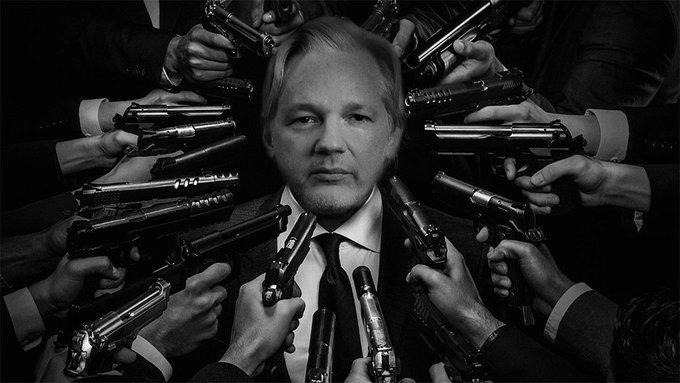 ASSANGE EXTRADITION: Assange Hit With New Superseding Indictment, Reflecting Possible FBI Sting Operation The U.S. Justice Department on Wednesday unveiled the new superseding indictment against the WikiLeaks publisher, adding to existing computer intrusion charges. By Joe Lauria, Consortium News June 24, 2020 The Justice Department on Wednesday said it had filed a second superseding indictment against imprisoned WikiLeaks publisher Julian Assange, adding to existing computer intrusion charges.“The new indictment does not add additional counts to the prior 18-count superseding indictment returned against Assange in May 2019,” the DOJ said in a press release.
“It does, however, broaden the scope of the conspiracy surrounding alleged computer intrusions with which Assange was previously charged,” the release said. “According to the charging document, Assange and others at WikiLeaks recruited and agreed with hackers to commit computer intrusions to benefit WikiLeaks.”…….
The indictment quotes Assange at hacking conferences encouraging hackers to obtain a “Most Wanted Leaks” list of classified materials that WikiLeaks sought to publish.
It provides new allegations that Assange instructed a “teenager” from an unnamed NATO country to conduct various hacks “including audio recordings of phone conversations between high-ranking officials” of the NATO nation as well as members of parliament from that country. The indictment claims Manning “downloaded classified State Department materials” about this country.
WikiLeaks has identified the “teenager” as Sigurdur Thordarson, “a diagnosed sociopath, a convicted conman, and sex criminal” who had impersonated Assange to embezzle money from WikiLeaks………..
Thordarson, an Icelander, became an FBI informant, and was flown to Washington in May 2019 for an interview with the FBI.
The superseding indictment says Assange was allegedly able to learn from “unauthorized access” to a website of this government that police from that country were monitoring him. The indictment says the source of this information was a former member of Anonymous who worked with WikiLeaks named Sabu, identified in the press as Hector Monsegur, who became an FBI informant after being arrested in June 2011.
In the same month, Iceland’s Interior Minister Ögmundur Jonasson prevented FBI agents from entering Iceland, testifying that “FBI dirty-tricks operations were afoot against WikiLeaks.” He said the agents had been sent to seek “our cooperation in what I understood as an operation to set up, to frame Julian Assange and WikiLeaks.” The possibility remains that the new evidence against Assange was obtained in an FBI sting operation.
Jeremy Hammond, a hacker arrested for obtaining the Stratfor files, is named in the new indictment has having revealed information about his activities with Assange to Sabu in December 2011. Last September, Hammond, who was serving a 10-year sentence in Memphis, TN, was brought by prosecutors investigating Assange to Alexandria, VA to compel him to give testimony against Assange. Hammond has refused.
Reiterates Original Charges
The new indictment repeats the existing espionage and computer intrusion charges………
In 2010, Robert Parry, one of the best investigative reporters of his era, and the founder of this website, wrote that the then pending plans of the Obama administration to indict Assange “for conspiring with Army Pvt. Bradley Manning to obtain U.S. secrets strikes at the heart of investigative journalism on national security scandals.”
Parry added:
“That’s because the process for reporters obtaining classified information about crimes of state most often involves a journalist persuading some government official to break the law either by turning over classified documents or at least by talking about the secret information. There is almost always some level of ‘conspiracy’ between reporter and source.” [Emphasis added.]
Parry thus admitted to encouraging his sources to turn over classified information even if it meant committing the lesser crime of leaking classified information if it could help prevent a larger crime from being committed. In this way Assange encouraged Manning to turn over material such as the “Collateral Murder” video in the hope that it could end the illegal war in Iraq…….
The New York Times reported at the time that “federal prosecutors were reviewing the possibility of indicting Assange on conspiracy charges for allegedly encouraging or assisting Manning in extracting ‘classified military and State Department files from a government computer system,’” Parry wrote.
“The Times article by Charlie Savage notes that if prosecutors determine that Assange provided some help in the process, ‘they believe they could charge him as a conspirator in the leak, not just as a passive recipient of the documents who then published them,” wrote Parry.
This is precisely what the Trump Justice Department has done in the first computer intrusion indictment against Assange and now with this superseding one. https://consortiumnews.com/2020/06/24/assange-extradition-assange-hit-with-new-superseding-indictment-broadening-computer-intrusion-charges/?fbclid=IwAR3uZdqQkMLxeheGyUVLpkUYPIo0ywUZwFiQcu6pD9woYSYyPhZtyh3kiw4
Auditor general finds that Morrison government has failed in its duty to protect environment
|
Morrison government has failed in its duty to protect environment, auditor general finds
Conservation groups call for independent environment regulator after scathing review of national laws, Guardian, Lisa Cox, 25 Jun 2020 The government has failed in its duty to protect the environment in its delivery of Australia’s national conservation laws, a scathing review by the national auditor general has found.
The Australian National Audit Office found the federal environment department has been ineffective in managing risks to the environment, that its management of assessments and approvals is not effective, and that it is not managing conflicts of interest in the work it undertakes. The report also finds a correlation between funding and staffing cuts to the department and a blow-out in the time it is taking to make decisions, as highlighted by Guardian Australia. The review, which comes in advance of the interim report on Australia’s Environment Protection and Biodiversity Conservation Act, has prompted renewed calls for the establishment of an independent national environmental regulator……. Among its findings, the auditor found the department could not demonstrate that the environmental conditions it set for developments were enough to prevent unacceptable risk to Australia’s natural environment. Of the approvals examined, 79% contained conditions that were noncompliant with procedures or contained clerical or administrative errors, reducing the department’s ability to monitor the condition or achieve the intended environmental outcome. The report also found that a document the department is required to produce to show how the proposed environmental conditions would produce the desired environmental protections was in most cases not being written……. “This report is a scathing indictment of the federal government’s administration of our national environment law and highlights why we need a stronger law and a new independent regulator,” said James Trezise, a policy analyst at the Australian Conservation Foundation. Trezise said the audit showed the government and department had failed in their duty to protect Australia’s unique wildlife and environment. “Worryingly for an area of public policy in which commercial interests are constantly trying to influence, the auditor general found ‘conflicts of interest are not managed’,” he said.
He said the organisation had raised concerns with the auditor about the capacity for political interference in what should be independent decisions………. Australia’s conservation laws are currently subject to a statutory review by the former competition watchdog chair Graeme Samuel. In advance of the interim report, due next week, the government has expressed a desire to streamline approvals and cut so-called “green tape”. But environment groups said the audit confirmed Australia’s laws were “fundamentally broken”. The Wilderness Society’s Suzanne Milthorpe said the findings showed a “catastrophic failure” to administer the law and protect the environment. “This report shows that the natural and cultural heritage that is core to Australia’s identity is being put at severe risk by the government’s unwillingness to fix problems they’ve been warned about for years,” she said. “It shows that even when the department is aware of high risks of environmental wrongdoing, like with deforestation from agricultural expansion, they are unwilling to act…….. https://www.theguardian.com/environment/2020/jun/25/morrison-government-has-failed-in-its-duty-to-protect-environment-auditor-general-findshu |
|
With Liberal Coalition business as usual on energy, thousands of renewable energy jobs will vanish
Up to 11,000 renewable energy jobs at risk if the government ignores calls for new policies, https://www.sbs.com.au/news/up-to-11-000-renewable-energy-jobs-at-risk-if-the-government-ignores-calls-for-new-policies Renewable energy groups are calling for greater public investment as companies risk losing thousands of jobs if the government ignores calls for a policy refresh. BY OMAR DEHEN, 26 June 20, Up to 11,000 jobs in Australia’s renewable energy sector could be lost over the next two years if no additional policies are introduced by the Morrison government, a new report has found.
Modelling from the University of Technology Sydney looked at several scenarios that predicted a reduction of jobs in the industry.
The modelling also examined scenarios that increased employment and reduced electricity costs across Australia.
Assange faces new indictment in US
|
WikiLeaks founder Assange faces new indictment in US, https://apnews.com/218d39782d70c434533b8faa033eb45e By ERIC TUCKER, 26 June 20 WASHINGTON (AP) — WikiLeaks founder Julian Assange sought to recruit hackers at conferences in Europe and Asia who could provide his anti-secrecy website with classified information, and conspired with members of hacking organizations, according to a new Justice Department indictment announced Wednesday. The superseding indictment does not contain additional charges beyond the 18 counts the Justice Department unsealed last year. But prosecutors say it underscores Assange’s efforts to procure and release classified information, allegations that form the basis of criminal charges he already faces. Beyond recruiting hackers at conferences, the indictment accuses Assange of conspiring with members of hacking groups known as LulzSec and Anonymous. He also worked with a 17-year-old hacker who gave him information stolen from a bank and directed the teenager to steal additional material, including audio recordings of high-ranking government officials, prosecutors say. Assange’s lawyer, Barry Pollack, said in a statement that “the government’s relentless pursuit of Julian Assange poses a grave threat to journalists everywhere and to the public’s right to know.” “While today’s superseding indictment is yet another chapter in the U.S. Government’s effort to persuade the public that its pursuit of Julian Assange is based on something other than his publication of newsworthy truthful information,” he added, “the indictment continues to charge him with violating the Espionage Act based on WikiLeaks publications exposing war crimes committed by the U.S. Government.” Assange was arrested last year after being evicted from the Ecuadorian Embassy in London, where he had sought refuge to avoid being sent to Sweden over allegations of rape and sexual assault, and is at the center of an extradition tussle over whether he should be sent to the United States. The Justice Department has already charged him with conspiring with former U.S. Army intelligence analyst Chelsea Manning in one of the largest compromises of classified information in U.S. history by working together to crack a password to a government computer. Prosecutors say the WikiLeaks founder damaged national security by publishing hundreds of thousands of classified documents, including diplomatic cables and military files on the wars in Iraq and Afghanistan, that harmed the U.S. and its allies and aided its adversaries. Assange maintains he was acting as a journalist entitled to First Amendment protection. His lawyers have argued the U.S. charges of espionage and computer misuse were politically motivated and an abuse of power. Assange generated substantial attention during the 2016 presidential election, and in investigations that followed, after WikiLeaks published stolen Democratic emails that U.S. authorities say were hacked by Russian military intelligence officials. An investigation by special counsel Robert Mueller revealed how Trump campaign associates eagerly anticipated the email disclosures. One Trump ally, Roger Stone, was found guilty last year of lying about his efforts to gain inside information about the emails. Assange, however, was never charged in Mueller’s Russia investigation. The allegations in the new indictment center on conferences, in locations including the Netherlands and Malaysia in 2009, at which prosecutors say he and a WikiLeaks associate sought to recruit hackers who could locate classified information, including material on a “Most Wanted Leaks” list posted on WikiLeaks’ website. According to the new indictment, he told would-be recruits that unless they were a member of the U.S. military, they faced no legal liability for stealing classified information and giving it to WikiLeaks “because ‘TOP SECRET’ meant nothing as a matter of law.” At one conference in Malaysia, called the “Hack in the Box Security Conference,” Assange told the audience, “I was a famous teenage hacker in Australia, and I’ve been reading generals’ emails since I was 17.” |
|
Doctors accuse UK and US of Assange ‘psychological torture’ amid new indictment
US prosecutors are seeking the WikiLeaks founder’s extradition on grounds that he damaged national security by publishing classified documents. More than 200 doctors from 33 countries have signed a letter saying British public officials could be held accountable for the “psychological torture” of Julian Assange.
It came as the WikiLeaks founder faced a new indictment in the US, which alleges that he sought to recruit hackers at conferences to train in obtaining official secrets.
In their letter, printed in The Lancet, the Doctors for Assange group accuse UK and American officials of “intensifying Julian Assange’s psychological torture” and call for his immediate release.
They add in the letter, which has also been sent to Justice Secretary Robert Buckland, that Assange is at medical risk because of increasing abuse of his “fundamental human and legal rights at the hands of judicial, prison and contracted security authorities”.
Earlier this month, the 48-year-old was said to be too ill to attend the latest court hearing in his extradition case.
He is wanted in the US to face 17 charges under the Espionage Act as well as conspiracy to commit computer intrusion after the publication of hundreds of thousands of classified documents in 2010 and 2011……
US prosecutors are seeking his extradition on the grounds that he damaged national security by publishing hundreds of thousands of classified documents, but Assange maintains he was acting as a journalist entitled to First Amendment protection.
His full extradition hearing is set to take place on September 7, having originally been scheduled for May 18, although a crown court has not yet been found to take the case.
A further administrative hearing is due to take place on June 29.https://www.expressandstar.com/news/uk-news/2020/06/25/doctors-accuse-uk-and-us-of-assange-psychological-torture-amid-new-indictment/?fbclid=IwAR28IW4pqkYDsqMW-GxrZ3kGC7l0xE4aVan58Ppt34RhTCQpP5hJebTbAvw
Ben Heard and the fake environment group ‘Bright New World’

Ben Heard and the fake environment group ‘Bright New World’ that accepts secret corporate donations, Jim Green, Nuclear Free Campaign, Friends of the Earth
For factual rebuttals of the misinformation promulgated by other nuclear advocates, please visit: https://nuclear.foe.org.au/propaganda/
Ben Heard – corporate-funded greenwasher Ben Heard is arguably the most aggressive and abusive of Australia’s nuclear advocates − see for example this temper tantrum and compare it with the matter-of-fact tone of the paper he is attacking. He has repeatedly indulged in personal, defamatory attacks.Like so many other nuclear advocates, Heard very rarely or never says or does anything about the problems of the nuclear industry such as its systemic racism (abundantly evident in his home state, South Australia) or the inadequate nuclear safeguards system.
A mining industry magazine article says that Heard was “once a fervent anti-nuclear campaigner”. However Heard never had any involvement whatsoever in anti-nuclear campaigning. Heard made no effort to correct the error in the magazine article – indeed he put the article, uncorrected, on his own website. His website was later corrected, but only after his dishonesty was publicly exposed. Likewise, Heard made no effort to correct an ABC article which describes him as a “former anti-nuclear advocate”.
A November 2015 ABC article falsely describes Heard as a scientist. It isn’t clear whether this was an error by the ABC or the latest fabrication and misrepresentation by Heard. Either way, it’s a safe bet that Heard won’t be correcting the error. And again in March 2016, Heard was described as a scientist in the media (inDaily); and again it’s a safe bet that Heard won’t correct the error.
Heard has a recurring disclosure problem. He rarely disclosed his consulting work for uranium company Heathgate when spruiking for the nuclear industry. More recently, he rarely discloses corporate funding – indeed his fake environment group has a policy of accepting secret corporate donations. He said the reason he rarely disclosed his consulting work with Heathgate was that it was mentioned on his website. So any time you hear anyone speaking about anything in the media, it’s your responsibility to do a web-search to see if they have a financial interest!
Heard’s university supervisor was none other than Barry Brook, best known for insisting there was no risk of a serious accident at Fukushima even as multiple meltdowns were in full swing, and for promoting a bogus ‘outstanding scientist’ award on his university website and leaving it there long after he knew it was bogus.
Ben Heard’s “outright lie”, massive hypocrisy and extreme censorship
June 2020 ‒ Long story short … RenewEconomy published a FoE article about small modular reactor economics. Ben Heard demanded a right of reply. RenewEconomy told him that anyone is welcome to submit a contribution and it would be reviewed. Heard said he had been denied a reply. That was an “outright lie” according to the RenewEconomy editor. Anyhoo … Heard’s response to the FoE article was published on his Bright New World website. He denied me a right of reply (!) so I replied in the comments section and my comments were deleted by Heard! And my comment alerting readers to a substantive response on this FoE webpage was not published!
An “outright lie”, massive hypocrisy and extreme censorship … all in a day’s work for Australia’s foremost ‘ecomodernist’ and his lobby group (which accepts secret corporate donations from the nuclear industry).
Here are the comments censored by Heard.
Ben Heard: “Then find the cost estimates, add them up and divide it by three, and float that as the cost of SMR nuclear that will inform decision-making in Australia.”
Response: Yes, real-world SMR construction cost data is limited but it is a better guide than self-serving industry claims. Also relevant are real-world data about cost overruns including the huge overruns with SMR projects and the A$10+ billion-dollar overruns with large reactors in western Europe and the US.
Ben Heard: “If Friends of the Earth thinks +50% is too low, they could have stated their reasoning, made their case (succinctly, if at all possible) and proposed their loading.”
Response: The general recent pattern is that EARLY vendor estimates underestimate true costs by an order of magnitude (see my article – citing AP1000s, EPRs, and Argentina’s SMR as examples), while estimates around the time of initial construction underestimate true costs by a factor of 2-4 (numerous examples cited in my article).
So a 100% loading above NuScale’s estimate would be the minimum starting point.
Note that the WSP / Parsons Brinckerhoff LCOE estimate for a NuScale SMR (A$225 or ~US$150 per MWh) is 2.5 times greater than NuScale’s estimate, and it is roughly twice the BNW estimate.
Ben Heard: “We went with vendor first-of-a-kind estimate +50%, consistent with this being a Class 4 cost estimate, independently verified, based on well-known and understood technology …”
Response: None of that changes the fact that real-world projects have been subject to vastly greater cost overruns.
Ben Heard: “We look forward to the author securing employment with a major accounting firm and explaining this [that NuScale’s cost estimate is bollocks] the next time the estimates are verified.”
Response: Heard himself adds a 50% loading. WSP / Parsons Brinckerhoff’s LCOE estimate is 2.5 times greater than NuScale’s estimate. No-one believes NuScale’s estimate.
Ben Heard: “Friends of the Earth didn’t understand ‘Class 4 estimate’. It is a defined term, established for estimates of engineer/procure/construct in civil projects. This is clearly described in our submission. We doubt they read it.”
Response: Yes, I do understand the term and have read your various articles and submissions – and referenced three of them at the top of my article. The real-world evidence, for both small and large reactors, demonstrates that Class 4 estimates need a rethink, especially the demonstrably false assertion that a 50% loading will cover any conceivable overruns.
Ben Heard: “‘NuScale’s estimate (per kW) is just one-third of the cost of the Vogtle plant’. Drawing comparison with large nuclear units, the very paradigm SMR is devised to disrupt, while not entirely irrelevant, is pretty dubious.”
Response: The relevance is that there is a solid body of expert opinion that construction costs per kW and LCOE will be greater for SMRs compared to large reactors. For example a 2015 report by the IEA and the OECD Nuclear Energy Agency predicts that costs per MWh for SMRs will typically be 50−100% higher than for current large reactors, and a UK report estimated a 30% cost increase per MWh.
Ben Heard: “‘BNW objected to the previous CSIRO/AEMO estimate of five years for construction of an SMR and proposed a “more probable” three-year estimate’. We neither objected, nor proposed a ‘more probable’ 3 years, nor even used the words ‘more probable’!”
Response: From the cited BNW paper: “No SMR developer is working on the basis of 5-year construction. This would also raise the LCOE considerably compared with a more probable 3 three years on the basis of what those bringing SMR to market are actually devising.”
As noted in my article, SMR projects typically take about a decade from start of construction to completion or near-completion (8 to 12.5 years).
Ben Heard: “‘100% agreed with Friends of the Earth [that there’s no empirical basis, nor any logical basis, for the learning rate assumed in the GenCost report]. There remains lack of transparency and replicability as regards the SMR learning rates applied in GenCost.”
Response: So do the maths … what is a reasonable learning rate based on the 12.5 year Russian floating plant?
What is a reasonable learning rate based on the Argentinian SMR, conceived in the 1980s, with construction of the first prototype currently stalled due to the project’s ‘serious financial breakdown’?
What is a reasonable learning rate based on mPower, abandoned after the expenditure of US$500 million and before construction of a first prototype began?
What is the learning rate for fast neutron reactors? That question could be answered based on 70 years of mostly-failed projects and would usefully inform current SMR / Gen 4 debates. My guess is that the FNR learning rate is negative.
What are the learning rates for large light water reactors? Well, we can answer that question, and I did so in my article: a very slow learning rate with modest cost decreases, or a negative learning rate.
Heard / Bright New World claims about SMR learning rates are 100% speculative.
Ben Heard: “‘Even with heroic assumptions resulting in CSIRO/AEMO’s low-cost estimate of A$129 per MWh…’. Friends of the Earth has studiously avoided all of the other necessary corrections identified by Bright New World, in particular operating costs and capacity factor, which bring this right down to more like $100/MWh.”
We have considered all the real-world data and plenty more besides. That research is synthesised in the RenewEconomy article and there’s loads more info in submissions such as this:
Our conclusions are shared by informed expert opinion (cited in the submission), e.g. the pro-nuclear US academic researchers who concluded that for SMRs to make a significant contribution to US energy supply, “several hundred billion dollars of direct and indirect subsidies would be needed to support their development and deployment over the next several decades”.
Ben Heard: “‘NuScale Power…hasn’t yet begun construction of a single prototype’. The reference case technology uses the most commercially established fuel cycle in the world, with standard fuel.”
Response: mPower was based on conventional light water technology, but still went bust after the expenditure of US$500 million. Rolls-Royce is proposing light water technology for SMRs in the UK but won’t proceed unless and until a long list of demands are met and hefty subsidies granted…….. https://nuclear.foe.org.au/ben-heard-secret-corporate-donations/?fbclid=IwAR3GNEcscxXXrxshahmX6K76lufOPFnr6QXcgXnQrSnG_LAVjK8uw1poX24
1 This month


Help Aunty Sue Protect Her Land and Sacred Sites From Destructive Rocket Testing.
.

Australians deserve the truth
about
AUKUS – https://aukuspublicinquiry.com/

PETITION – To: Prime Minister Anthony Albanese and the Australian Labor Government

of the week – Australians for War Powers Reform (AWPR)
To see nuclear-related stories in greater depth and intensity

