Morrison government just doesn’t get it, on climate change
Hewson’s View: How long can Morrison deny the undeniable? https://www.canberratimes.com.au/story/6793657/how-long-can-the-pm-deny-the-undeniable/?cs=14246#gsc.tab=0
John Hewson, 19 June 20, The government is doing little to ensure that our soils are more drought resistant and resilient.
Unfortunately, the Morrison government just doesn’t get it when it comes to the imperative for urgent climate action.
Sure, the worst of the drought is over. Sure, the bushfire season has ended. Sure, Morrison has handled the COVID-19 pandemic well, certainly better than expected, but only so far – the more difficult economic and social challenges are yet to come, and the risk of a pick-up in the infection rate is omnipresent.
But, what has the government actually learned from these experiences such as to encourage them to embrace longer-term strategic thinking and planning to better respond to the inevitability of more of these crises in the future? Apparently, very little!
Climate was an important cause of the drought, and the climate predictions are that droughts will occur more frequently and with even greater intensity. Climate was an important cause of the bushfires, again the predictions are for more and worse to come. COVID-19 was very much a dress rehearsal for what awaits us if we continue to ignore the science and the urgent demands of the climate threat. The government has a “tin ear” to all this, not really accepting the significance of the science; certainly not doing much to ensure that our soils are more drought resistant and resilient, or to better prepare for the next bushfire season; and clearly failing to seize the opportunity in developing its COVID Recovery Strategy to accelerate our transition, sector by sector, to a low carbon Australia by mid-century.
They are totally self-absorbed in short-term politics, cynically relieved that they have been able to “survive” their mismanagement of both the drought and the fires, and are now making anti-climate decisions, perceiving some sort of short-term political advantage from paying out to certain vested interests and political supporters, against our longer-term national interest.
Australia is now clearly a laggard in response to climate ...
Australia is now clearly a laggard in response to climate, having squandered the opportunities to lead over the last three decades, thereby forgoing billions of dollars of investment and growth, and hundreds of thousands of jobs.
A new survey (based on digital news) released this week by the University of Canberra and conducted at the end of the bushfire season earlier this year, found that the number of climate deniers (8 per cent) in Australia is more than double the global average (3 per cent), and of the 40 countries surveyed, behind only the US (12 per cent) and Sweden (9 per cent).
While 58 per cent think climate is an “extremely or very serious problem”, this is lower than the global average of 69 per cent, and only one-quarter of the countries surveyed are less concerned than we are.
This clearly reflects the reliance on commercial AM radio and Sky/Fox News – more than one-third who listen to these outlets consider climate to be “not at all” or “not very” serious. It also reflects the government’s failure to encourage and sustain a mature debate on climate, including “threats” of job losses and disruption.
Moreover, as our government is sticking with support for more coal and gas projects, including new coal and gas-fired power projects, large fossil fuel companies are accelerating the transition away from fossil fuels. Following on from the likes of BHP and Rio Tinto, global oil giant BP this week announced the write down of its exploration and production assets by some A$25 billion, as it reassesses the global energy market – post COVID – and the increasingly rapid shift to clean energy.
The finance and investment sectors are also driving the essential climate transitions, with most major banks refusing to finance new fossil fuel or dirty energy projects; major insurers becoming increasingly reluctant to insure them; and the big global investors, fearing the possibility of “stranded assets”, are shifting their investments towards less climate-exposed assets – for example, the largest sovereign wealth fund, the Norwegian Fund, has quit coal, and Blackrock, the world’s largest funds manager, has adopted its Climate Action Strategy. Also, major corporates such as Unilever have urged Morrison to join the climate fight.
Morrison is clearly focused within the “Canberra Bubble”, mostly taking his much lauded “Quiet Australians” for granted. His short-term political game is grossly irresponsible, selling out our national interest, and stealing from future generations, to whom he will happily leave the increasingly difficult task of cleaning up his mess, probably in the context of lower living standards.
John Hewson is a professor at the Crawford School of Public Policy, ANU, and a former Liberal opposition leader.
ARPANSA sits on the fence regarding Napandee choice for nuclear waste dump
ARPANSA to Senate Committee on National Radioactive Waste Management Amendment (Site Specification, Community Fund and Other Measures) Bill 2020 [Provisions] Submission 86 (Extracts)
(…….“ARPANSA does not have specific comments on the Amendment Bill per se, as the Bill does not relate to thehealth and safety criteria that are core to any review and assessment under the ARPANS Act and Regulations. It is also premature for ARPANSA to comment on the suitability of the specified site at Napandee, near Kimba in South Australia. The site, the design of the facility and the plans and arrangements for managing safety will be considered in ARPANSA’s review and assessment of an application for a licence to prepare a site for the facility”… )
…. the IWS was designed and constructed as a contingency solution. The bulk of the activity in the repatriated waste is immobilised in a glass matrix and contained in a dual-purpose (transport and storage) TN-81 cask; and the remainder technological waste is made up of less active material in cemented form.
Additional ILW remains in the UK from reprocessing of HIFAR spent fuel, and is planned to be returned to Australia in 2022. Should the shipment take place at that time, the NRWMF will (again) not be available, which in all likelihood leaves Lucas Heights as the preferred (by ANSTO) option, and possibly the only feasible destination. ARPANSA is aware that the waste in this second shipment is likely to be immobilised and contained in a TN-81 cask with considerably less activity content than the first cask. ARPANSA expects an application from ANSTO for approval to make a change with significant implications for safety under section 63 of the Regulations10, supported by a revised safety analysis report and an updated safety case well in advance of the time the second shipment is intended to be loaded on a vessel for shipment to Australia.
8 A chemical process by which fissile material (uranium and plutonium) is separated from fission products for which no further use is foreseen and therefore considered waste; this waste is repatriated.
9 The CEO’s Statement of Reasons is at
https://www.arpansa.gov.au/sites/default/files/legacy/pubs/regulatory/ansto/SOR operationIWS.pdf
10 Section 63 states a licence holder must obtain approval from the CEO before changing anything described in the application for the licence or modifying the controlled apparatus, controlled material or controlled facility described in the licence
Production of molybdenum-99 in the ANSTO Nuclear Medicine Facility (ANM). ANSTO received a licence to operate the ANM Facility on 12 April 2018. In the facility, molybdenum-99 (Mo-99; a fission product) is extracted from uranium plates that have been irradiated in the OPAL reactor. The immediate decay product of Mo-99 is technetium-99m (Tc-99m), used in the majority of nuclear medicine procedures.
in Australia and overseas. ANSTO was authorised to commence routine production for the domestic and international nuclear medicine markets on 24 May 2019.
The liquid residue from the Mo-99 extraction and purification process is classified as ILW. The storage tanks at the ANM can accommodate six years of Mo-99 production. ANSTO’s intention is to immobilise the radioactive substances in the liquid waste in an inert ceramic matrix in a planned facility at Lucas Heights known as the SyMo Facility. ANSTO received ARPANSA’s authorisation to prepare a site and construct the facility in 201411. Construction is under way and an application for a licence to operate the facility is preliminarily expected by mid-2021.
Implications of ILW generation and storage at Lucas Heights for the NRWMF. The licence decisions regarding the IWS were predicated on the fact that the intended storage facility (the NRWMF) was not available; that no alternative interim solution other than the IWS was feasible; and that there was some urgency as Australia was under obligations to enable repatriation from France before the end of 2015.
Furthermore, there was at the time of the decision no consideration given to disposal of ILW in the national plans, only to storage. The Australian Nuclear Science and Technology Organisation Act 198712 prevents disposal of waste at the ANSTO premises at Lucas Heights; this is supported by ARPANSA.
The CEO of ARPANSA, therefore, imposed a condition on the licence to operate the IWS which requires ANSTO to provide plans for the final management of the waste held in the IWS: “the licence holder must submit to the CEO, no later than 30 June 2020 and in a form acceptable to the CEO, plans for the removal of waste stored in the facility.”
Likewise, the CEO included a condition in the licence to operate the ANM Facility that requires ANSTO to report by 30 June 2020 on, inter alia: plans for storage and disposal of the ILW, and contingency plans should one or several components of the ILW management system not eventuate or fail. This condition complements the condition issued with the IWS licence.
ARPANSA is aware that some stakeholders have interpreted ARPANSA’s decisions regarding the IWS as a requirement for relocation of the waste stored in the IWS, even suggesting that there is an urgent need for relocation. This is not correct. ARPANSA has not raised safety concerns regarding storage of waste at the IWS. ANSTO seems to share this view. ANSTO has indicated to ARPANSA that the mandatory recertification of the TN-81 casks every 10 years can be carried out at the IWS; and in response to a request for identification of contingency measures in the short to medium term, ANSTO Identified the following:
Retention of the returned residues at ANSTO until the availability of a final disposal optionRetention of the returned residues at ANSTO until the availability of the NRWMF for storage
……..Regarding the ILW planned to be processed in the SyMo facility, ARPANSA anticipates that information on storage, including whether this would involve the NRWMF, is included in the forthcoming report developed by ANSTO, in compliance with the condition issued with the operating licence for the ANM facility.
Radioactive Waste at Woomera
CSIRO holds just under 10,000 drums of waste at the Woomera Prohibited Area. CSIRO currently estimates that less than 200 of these barrels would require management at a future NRWMF. These 200 barrels are estimated to be LLW, with no ILW currently detected. These drums are undergoing characterisation work to improve the inventory of waste held. ARPANSA has been monitoring CSIRO’s characterisation work since 2016. This includes environmental monitoring of radiation levels. CSIRO is developing a pilot program to test new methods to manage their waste, however, this will require ARPANSA’s approval prior to implementation.
Radioactive Waste at ARPANSA
ARPANSA has custody of approximately 68 m3of radioactive waste, being legacy waste from activities carried out by the ARL and its predecessors at a time these organisations were involved in production of radiopharmaceuticals. The waste will be kept in safe storage until such time it can be safely disposed of in a suitable facility.
About half of the waste is stored at ARPANSA’s premises in Melbourne, comprising 137 x 220 litre steel drums (i.e. approximately 30 m3). Most of these drums are filled with building material contaminated with radium. This material was recovered from the decontamination and subsequent demolition of the former Commonwealth Radiation Laboratory (one of ARL’s predecessors) in Melbourne. About 27 m3 could be considered LLW, with the remaining three m3 considered ILW due to its radium content.
The waste at the Defence site comprises 76 x 220 litre steel drums (i.e. approximately 15 m3) and 42 x 540 litre High Integrity Containers (i.e. approximately 23 m3). Much of this waste is a mixture of disused
medium-lived radioactive material (cobalt-60, cesium-137 and strontium-90) and long-lived laboratory waste from the operations of the ARL and the Materials Research Laboratory. There are also a number of drums and containers enclosing consumer materials recovered from the public, such as watches and compasses with radium dials and luminous paints containing radium. About 27 m3 could be considered LLW, whereas about 11 m3 could be considered ILW.
ARPANSA’s requirements for a licence application for the NRWMF
The requirements ARPANSA places on an applicant for a licence for a radioactive waste storage or disposal facility are in accordance with the ARPANS Act and Regulations, regulatory guides and ensures that international best practice is considered.
The licence requirements are extensive and can be found in the ARPANSA Regulatory Guide: Applying for a Licence for a Radioactive Waste Storage or Disposal Facility, REG-LA-SUP-240L v3.1 January 2019. In addition, any disposal facility for solid radioactive waste should meet the requirements set out in nationally agreed Radiation Protection Series (RPS) C-3 Code for Disposal Facilities for Solid Radioactive Waste 2018……
Kimba community unaware that Australia’s medicine does not need nuclear reactor
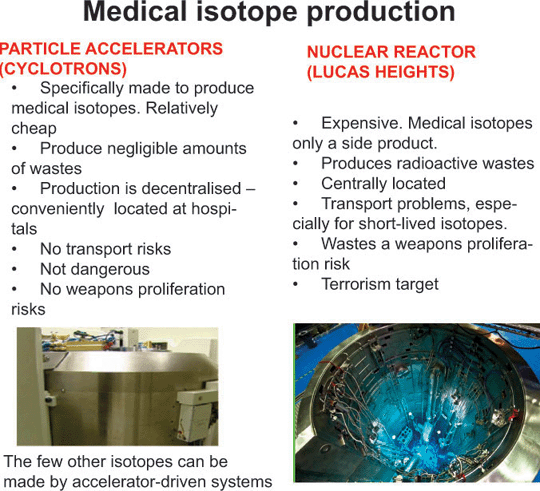
even ANSTO is using cyclotrons for generating imaging isotopes! And we actually have imaging/cyclotron partnerships set up in almost every major city in Australia….do not produce nuclear wastes.……..(expanding nuclear production) so that ANSTO can become one of the major players in the global export market. Where was this information in the glossy handouts given to Hawker and Kimba?
Name withheld. to Senate Committee on National Radioactive WasteManagement Amendment (Site Specification, Community Fund and Other Measures) Bill 2020 [Provisions] Submission 39 Excerpt
“States and territories are responsible for managing a range of radioactive waste holdings, accounting for about one per cent of total radioactive waste holdings in Australia.”…according to the DIIS – “Australian Radioactive Waste Management Framework April 2018”page 7
https://www.industry.gov.au/sites/default/files/2019-
04/australian_radioactive_waste_management_framework.pdf
And what about the requirement of the diagnostic isotope for Australians? It is afterall in our best interests to maintain this? This is an interesting question. In Senate Estimates Adi Paterson in 2017 stated…. ”As we submitted to the question on notice, currently approximately 28 per cent of molybdenum-99 produced by ANSTO is used domestically. Approximately 72 per cent of Mo-99 produced by ANSTO is exported, meeting a global need for access to life-saving nuclear medicines.” https://parlinfo.aph.gov.au/parlInfo/search/display/display.w3p;db=COMMITTEES;id=committees%
2Festimate%2F0493150c-8738-423c-a856- 9cb37d9e9073%2F0009;query=Id%3A%22committees%2Festimate%2F0493150c-8738-423c-a856- 9cb37d9e9073%2F0000%22
He then goes on to say later at the Senate Estimates, “The research use of isotopes predominantly takes place in our Camperdown facility, where we produce flourine-18, carbon-15 and oxygen-11.
These are cyclotron-based isotopes which are used for different types of clinical development of new imaging techniques, for developing new drugs and understanding the biological function of human living systems. That is a research cost for the production of those isotopes. There are small
amounts of isotopes whose inclusion into clinical trials we support. We do that under a very careful set of rules that ensures that should those clinical trials be successful we will be able to sell into the market the isotopes we produce that have supported the clinical trials. We have very good protocols on that which are very clear. We also sometimes undertake trials with stable isotopes, which are sourced from different jurisdictions. These are not radioactive isotopes, but with our careful tracing capabilities we can make use of those isotopes as well.”
So, even ANSTO is using cyclotrons for generating imaging isotopes! And we actually have imaging/cyclotron partnerships set up in almost every major city in Australia. For example Adelaide has one set up in the SAHMRI building. The thing about cyclotrons is that the isotopes are generatedon site, and do not have a distance factor involved and do not produce nuclear reactor quantities of nuclear waste!
And just for those interested, there are now advancements being made in immunotherapy and nanotechnology which means that patients can now receive treatment in a way which does not disrupt normal cells as a consequence. Immunotherapy is genetically modifying your own cells and
then reinjecting them into you to fight the cancer cells specifically. And nanotechnology is a way of specifically directing chemotherapy drugs specifically to cancer cells. Scott Morrison has injected almost half a billion dollars into Victoria to aid in this cutting edge technology. And neither involve nuclear reactors. https://www.abc.net.au/news/2016-01-11/nanocrystals-could-change-the-waycancer-
is-treated/7079958
https://www.heraldsun.com.au/news/victoria/peter-maccallum-cancer-centre-to-become-globallifesaving-
cancer-treatment-hub-under-budget-boost/newsstory/
7e6e0880ddac37973d1588c56c13a064
But getting back to the quantities of Molybenum-99 produced by ANSTO. Only 28% is used by Australians. This is for 550,000 doses produced per annum. And 72% is exported. Now, ANSTO has a brand new ANM building which they are intending to use to generate 10 MILLION DOSES PER
ANNUM, so that ANSTO can become one of the major players in the global export market. Where was this information in the glossy handouts given to Hawker and Kimba? With higher production of course comes higher levels of nuclear waste. It is one of the reasons why Canada exited the global
market scene because it was too expensive for their own taxpayers to continue to subsidize.
“Scheduled to be turned on just next year, once the ANM Project is fully operational, Australia will go from producing 550,000 doses of medicine a year to more than 10 million doses a year.“Our medicine production will increase exponentially. We’ll be producing enough medicine to meet more than a quarter of world demand,” said ANSTO CEO Dr Adi Paterson.” https://anstoprod.
cd.pnx.com.au/news/four-million-nuclear-medicine-doses-produced-and-going-strong
The ANM Project received operational licence by ARPANSA in late 2018.So for people like our MP’s to say that we all as Australians use the medical isotopes and therefore are responsible for the nuclear waste generated runs a bit hollow when we are actually propping up a major player in an export market!…..”
Why we must fight miners’ push to fast-track uranium mines
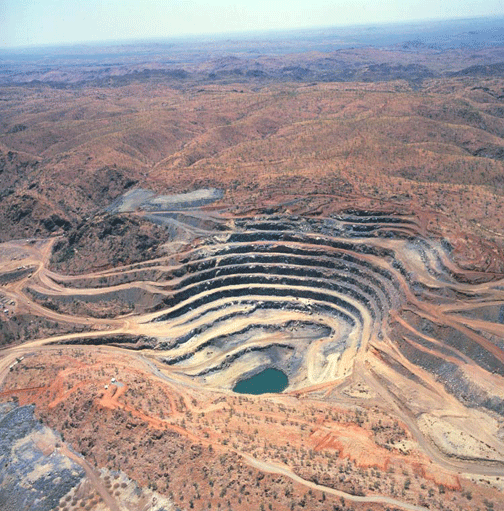 Expensive, dirty and dangerous: why we must fight miners’ push to fast-track uranium mines https://theconversation.com/expensive-dirty-and-dangerous-why-we-must-fight-miners-push-to-fast-track-uranium-mines-139966?fbclid=IwAR173tiUPtRX3YkqQh5VlmoWHWWCUHxSFtCFxFIxKtuvI3IaghgbGhAEBAM, Gavin Mudd, Associate Professor of Environmental Engineering, RMIT University, June 18, 2020 Of all the elements on Earth, none is more strictly controlled under law than uranium. A plethora of international agreements govern its sale and use in energy, research and nuclear weapons.
Australian environmental law considers nuclear actions, such as uranium mining, as a “matter of national environmental significance” under the Environment Protection and Biodiversity Conservation (EPBC) Act. This means uranium involves matters of national and international concern for which the Australian government is solely responsible.
The states, which own minerals, cannot exercise such oversight on uranium exports and use. So any new uranium mine needs both state and federal environmental approvals.
On Monday, Prime Minister Scott Morrison announced that BHP’s proposed expansion of the Olympic Dam copper-uranium-gold-silver mine in South Australia was one of 15 major projects set to be fast-tracked for environmental approval. This would include a single, joint state and federal assessment.
But responsibility and past performance make a compelling case to maintain our federal environmental laws more than ever. Here’s why uranium mining must remain a federal issue.
Our international obligations
Australia is a signatory to several international treaties, conventions and agreements concerning nuclear activities and uranium mining and export.
As of the end of 2018, the nuclear material safeguarded under international agreements derived from our uranium exports totalled 212,052 tonnes – including 201.6 tonnes of separated plutonium.
In response, a spokesperson for the Minerals Council of Australia said a national mechanism to manage safeguards already exists through the Australian Safeguards and Non-Proliferation Office, adding:
Uranium is further regulated through the Australian Radiation Protection and Nuclear Safety Agency (ARPANSA) […] under the provisions of the ARPANS Regulations 1999. The object of the ARPANS Act is “to protect the health and safety of people, and to protect the environment, from the harmful effects of radiation”.
Successful rehabilitation has yet to be seen
Uranium mines are difficult to rehabilitate at the end of their lives. In my 24 years of research, including visiting most sites, I’ve yet to see a successful case study of Australia’s 11 major uranium mines or numerous small sites.
For example, the Rum Jungle mine near Darwin, which operated from 1954 to 1971, left a toxic legacy of acidic and radioactive drainage and a biologically dead Finniss River.
The former Mary Kathleen mine, also part of Rio Tinto’s corporate history, operated from 1958-63 and 1976-82.
Rehabilitation works were completed by 1986 and won national engineering awards for excellence. But by the late 1990s, acid seepage problems emerged from the tailings dam (where mining by-products are stored) and overlying grasses were absorbing toxic heavy metals, creating a risk for grazing cattle.
Both Rum Jungle and Mary Kathleen were rehabilitated to the standards of their day, but they have not withstood the test of time.
Australia’s biggest uranium mine, Ranger, is fast approaching the end of its operating life.
Rio Tinto is also the majority owner of Ranger. Despite Ranger’s recent losses, Rio has retained control and given Ranger hundreds of millions of dollars towards ensuring site operations and rehabilitation.
Site rehabilitation is required to be complete by January 2026, with Rio Tinto and Ranger assuming 25 years of monitoring – although plans and funding for this are still being finalised.
Recently, it emerged that Ranger had not agreed to continue its share of funding the scientific research required for the rehabilitation – an issue still unresolved. So despite promises of world’s best ever rehabilitation, concerns remain.
The Conversation contacted Rio Tinto to respond, and it referred us to Energy Resources Australia (ERA), which operates Ranger. An ERA spokesperson stated:
ERA is required to cease processing in January 2021 in accordance with the expiration of its Authority to Operate under the Commonwealth Atomic Energy Act. Given the impending cessation in processing, ERA believes it is appropriate and reasonable to review the current research funding arrangements.
No other former uranium mine in Australia can claim long-term rehabilitation success. Nabarlek, Radium Hill-Port Pirie, South Alligator Valley and other small mines all have issues such as erosion, weeds, remaining infrastructure, radiation hot-spots and/or water contamination. They all require ongoing surveillance.
Uranium mining is set to be outcompeted
Even if Olympic Dam expands (and especially if it stops extracting uranium in favour of tellurium, cobalt and rare earths also present), this trend is expected to increase in the coming years as Ranger closes and the world transitions to renewable energy and electric vehicles to help address climate change.
In response, the Minerals Council of Australia stated that lithium’s contribution to large-scale electricity storage is just beginning, arguing:
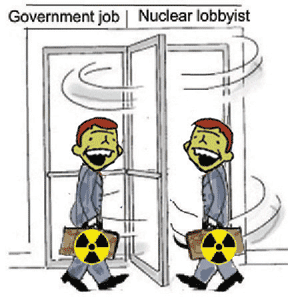
Gabrielle Costigan- another one revolving from tax-paid jobs to weapons industry!
 Gabrielle Costigan MBE https://www.michaelwest.com.au/gabrielle-costigan-mbe/
MILITARY INDUSTRY REVOLVING DOOR
A former Colonel in the Australian Army who led logistic operations for the Australian and US governments. Left the military to move into a US-based military industry company. Currently, CEO of BAE Systems Australia.
Current Positions
Corporate
CEO, BAE Systems Australia (1.1.18-present)
Publicly funded
Chair, Council for Women and Families United by Defence Service (term: 17.5.19–14.5.2021)
Previous Positions
Corporate positions
CEO (designate), BAE Systems Australia (2.10.17-31.12.17)
CEO, Linfox International Group (May 2014-June 2017)
Vice President, Military Programs and Business Development Commercial Aircraft, VAS Aero Services, LLC (USA) (July 2013-Mar 2014)
Vice President, Military Programs, VAS Aero Services, LLC (USA) (July 2012-June 2013)
Publicly funded positions
Board member, Australia-ASEAN Council [Joined board while at Linfox; no longer listed on board. Emailed DFAT-AAC for dates 15.2.20; no reply]
Military positions
Director, Multi-National Logistics Division, United States Central Command (Jan 2010-July 2012)
Military Assistant to the Chief of Joint Operations Command, Australian Defence Force (Jan 2008-Dec 2009)
Australian Command and Staff College, Australian Defence Force (Jan 2007-Dec 2007)
Australian Army, various positions (Jan 2002-Dec 2006)
Defence departmental positions
Project Manager–Simulation, Defence Department (1999-2002)
Related Items
June 2019: Awarded MBE by the United Kingdom, Queen’s Birthday honours list, “for services to UK/Australia relations.”
Another Australian wonderful lead – in CLIMATE DENIAL!!!!
 The number of climate deniers in Australia is more than double the global average, new survey finds, The Conversation, Caroline Fisher, Co-author of the Digital News Report: Australia 2020, Deputy Director of the News and Media Research Centre, and Assistant Professor of Journalism, University of Canberra, Sora Park, Lead Author of Digital News Report: Australia 2020, Associate Dean of Research, Faculty of Arts & Design, University of Canberra, June 16, 2020 Australian news consumers are far more likely to believe climate change is “not at all” serious compared to news users in other countries. That’s according to new research that surveyed 2,131 Australians about their news consumption in relation to climate change.
The Digital News Report: Australia 2020 was conducted by the University of Canberra at the end of the severe bushfire season during January 17 and February 8, 2020.
Read more: Media ‘impartiality’ on climate change is ethically misguided and downright dangerous
It also found the level of climate change concern varies considerably depending on age, gender, education, place of residence, political orientation and the type of news consumed.
Young people are much more concerned than older generations, women are more concerned than men, and city-dwellers think it’s more serious than news consumers in regional and rural Australia.
15% don’t pay attention to climate change news
More than half (58%) of respondents say they consider climate change to be a very or extremely serious problem, 21% consider it somewhat serious, 10% consider it to be not very and 8% not at all serious.
Out of the 40 countries in the survey, Australia’s 8% of “deniers” is more than double the global average of 3%. We’re beaten only by the US (12%) and Sweden (9%).
While most Australian news consumers think climate change is an extremely or very serious problem (58%), this is still lower than the global average of 69%. Only ten countries in the survey are less concerned than we are.
Strident critics in commercial media
There’s a strong connection between the brands people use and whether they think climate change is serious.
More than one-third (35%) of people who listen to commercial AM radio (such as 2GB, 2UE, 3AW) or watch Sky News consider climate change to be “not at all” or “not very” serious, followed by Fox News consumers (32%)……. https://theconversation.com/the-number-of-climate-deniers-in-australia-is-more-than-double-the-global-average-new-survey-finds-140450
Kimba farmer, neighbouring Napandee, stands firm against nuclear waste dump on agricultural land
 Confidential Submission. National Radioactive Waste Management Amendment (Site Specification, Community Fund and Other Measures) Bill 2020 [Provisions] Submission 37 Inquiry into National Radioactive Waste Management Amendment
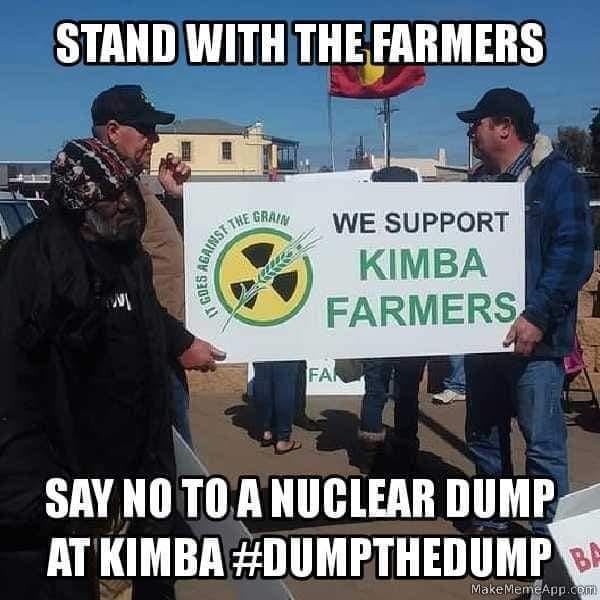
I am a farmer residing and working on a cereal crop and sheep property near the nominated site Napandee, within the Kimba District Council region. I have a good understanding of the project and I remain strong in my opposition to the siting of a Radioactive Waste Management Facility on agricultural land. Please find following my response in relation to the site selected.
The site selection process declared that the location should not be on agricultural land. The Code for Disposal of Solid Radioactive Waste provided by ARPANSA clearly stated that the siting of a Radioactive Waste Management Facility should not be on agricultural land:
“Section 3.1.29 (a) the immediate vicinity of the facility has no known significant natural resources, including potentially valuable mineral deposits, and which has little or no potential for agriculture or outdoor recreational use.”
The National Radioactive Waste Management Facility, Nomination of Land Guidelines, November 2016 also clearly stated in Attachment A, Section A8 under the Community Well Being Objective the criteria: “Is the site located within an area that is likely to be expanded upon for community or industrial use or for natural/agricultural use in the foreseeable future”. The weighting to this criteria when taking site selection into consideration according to the guidelines was stipulated as “High”
Both these documents show that the facility should not be located on agricultural land, and yet the nominated site at Kimba is specifically located on a farm. Directly next to farming country, and entirely neighboured by productive farms.
That this part of the ruling is not being enforced is beyond me. It would be apparent to most people that under best practice the production of food should be separated from the production or storage of nuclear waste. That it is not the case in other countries does not provide adequate reason as to why Australia should lower their standards with regards to this.
It is imperative that this part of the legislation is upheld and made mandatory, rather than being optional. The increased focus globally on the production and storage of food shows that society values a clean green source of food highly and the scrutiny around this is ever increasing.
Lack of Broad Community Support. The requirement for broad community support has never been defined which has created chaos and confusion throughout the process. Neither the definition of community, nor the term “broad” were explained prior to any research being undertaken, so any suggestion of support or otherwise has been clearly manipulated to ensure the required outcome is achieved. The constantly moving goalposts throughout this project has been an obvious undertaking, so that opposition is selectively removed. The division and angst created through the district is genuine and has had devastating effects. It has bred an attitude of bullying and intimidation, resulting
in a strong feeling of mistrust throughout the community.
Project of Best Practice. I note that a recent development project of significant size occurring on the Eyre Peninsula has secured an Aboriginal Land Use Agreement (ALUA) showing genuine commitment to working with the Barngala people in an inclusive manner. It provides evidence that the Barngala people are not opposed to development within their region, and for the Australian Government to not be able to achieve a similar agreement with the Barngala people should be a significant red flag process to trample over the opinions of both the Barngala people and the South Australian people. In
the attempts of best practice, ensuring that the South Australian law prohibiting the storage of nuclear material is upheld (not overridden) and that the unanimous opposition shown by the local indigenous community is acknowledged (not overridden) this site should have been removed as a contender. While overriding these things is possible, it clearly does not support the attitude of a “best practice” approach.
If the government was genuinely focussed on best practice, there would be a good explanation as to why the Leonora, WA site has been continually disregarded. I can only feel that there is a political agenda being pushed here, rather than a genuine effort to find a permanent solution.
Scott Morrison gives a boost to uranium mining at Olympic Dam
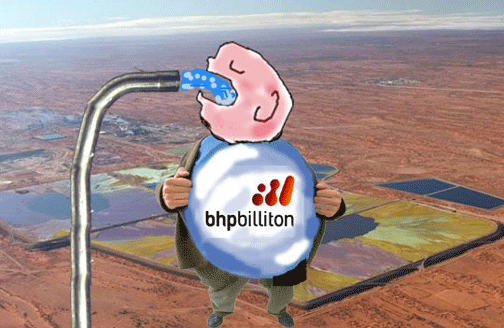
Poor old BHP. My heart bleeds! The so-called “Big Australian” (about 70% owned by overseas interests), is so poor that it’s had to get exemptions from just about every regulation that matters. The SA Roxby Downs Indenture Act legislation allows the mine to operate with  wide-ranging exemptions from the Aboriginal Heritage Protection Act, the Environment Protection Act, the Natural Resources Act, and the Freedom of Information Act. There are constant problems with tailings such as ongoing seepage and large numbers of bird deaths.
Probably worst of all, BHP plans to increase extraction of precious Great Artesian Basin water to an average 50 million litres per day for the next 25 years, with likely serious adverse impacts on the unique and fragile Mound Springs ‒ which are listed as an Endangered Ecological Community and are of significant cultural importance to Aboriginal people.
Olympic Dam expansion on fast track,e InDaily, 15 June 20
The Olympic Dam expansion is being fast-tracked as part of a Federal Government plan to boost employment and reduce the length and severity of the coronavirus-induced recession.
Prime Minister Scott Morrison is expected to today announce $1.5 billion to immediately start work on priority projects identified by the states and territories…….
BHP is proposing for a staged increase in copper production at Olympic Dam from 200,000 to up to 350,000 tonnes per annum.
The expansion has been granted Major Development status by the state government …. https://indaily.com.au/news/2020/06/15/olympic-dam-expansion-on-fast-track/
Coalition’s push to deregulate environmental approvals will lead to extinction crisis
 Scientists fear Coalition’s push to deregulate environmental approvals will lead to extinction crisis
Scott Morrison’s announcement in wake of bushfires is ‘distressing’ and puts threatened species at risk, ecologists say, Guardian, Lisa Cox, Tue 16 Jun 2020 Scientists have expressed dismay and frustration at Scott Morrison’s latest push to deregulate the environmental approval process for major developments, noting it comes just months after an unprecedented bushfire crisis and during a review of national conservation laws.In a speech on Monday, the prime minister said he wanted to slash approval times for major projects by moving to a streamlined “single touch” system for state and federal environmental assessments.
Morrison said the change would be informed by the review of Australia’s environment laws, the Environment Protection and Biodiversity Conservation (EPBC) Act, which is under way. But his speech did not mention the environment or the act’s objectives to protect threatened species and ecosystems. ……
Scientists and environmentalists argue the act is failing to prevent an extinction crisis. Just 22 of 6,500 projects referred for approval have been knocked back in the act’s 20-year history.
Australia has the world’s highest rate of mammalian extinction. Reporting by Guardian Australia has found the government has failed to implement or track measures for species known to be at risk, stopped listing major threats to species, and not registered a single piece of critical habitat for 15 years.
The listing of species and ecosystems as threatened has been delayed by successive ministers, funding has been directed to projects that did not benefit threatened species and hundreds of plants and animals have been identified as requiring urgent attention after the summer bushfire disaster.
The government has framed its commentary about the review around a desire to speed up approval times for projects as the country moves out of the economic shutdown caused by the Covid-19 pandemic. …..
Megan Evans, an environmental policy researcher at the University of New South Wales in Canberra, said one of the reasons approvals could be slow was because the capacity of the public service had been cut. …… we have highly ambiguous wording [in the act] which provides maximum discretion to the minister that reduces certainty and puts all power in the hands of the minister of the day. You can’t on one hand complain about the lack of certainty but then on the other shy away from measures that would actually provide greater certainty.”
The climate scientist, Bill Hare, said Australia’s approach to its natural environment was damaging not only for the country’s ecosystems, but its democracy…….. https://www.theguardian.com/environment/2020/jun/16/scientists-fear-push-to-deregulate-environmental-approvals-will-lead-to-extinction-crisis
Is Napandee another Maralinga?
 Kim Mavromatis Fight To Stop Nuclear Waste In The Flinders Ranges, 15 June 20,
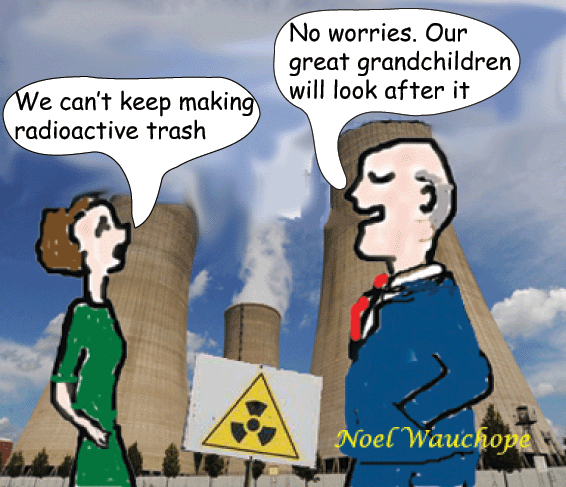
The similarities between Napandee and Maralinga are frightening.
Australia’s Environment Laws have no teeth, are in much need of strengthening
‘No checks, no balances’: push for change to environment laws, The Age, By Mike Foley, June 14, 2020 Australia’s 20-year-old flagship environmental protection laws are failing badly and in urgent need of an overhaul, the crossbench senator who helped the Howard government install the landmark legislation says.
“Clearly it’s not working well,” former Democrats senator Andrew Bartlett said ahead of an imminent review of the Environmental Protection and Biodiversity Conservation Act. “The most obvious failure is despite the fact conditions can be attached to project approvals, there are just so many cases where conditions aren’t adhered to. There are no efforts to check and no penalties.”
Mr Bartlett stared down bitter opposition from some powerful players in the conservation movement and sided with the Howard government against Labor and the Greens to vote for legislation in 1999.
The act was an attempt by the Howard government to modernise environmental protection laws and was controversial because it significantly increased the environment minister’s powers, such as allowing them to intervene in project approvals to protect threatened species.
Since the act’s introduction, Australia’s list of nationally threatened species and ecosystems has grown by more than one-third – from 1483 to 1974.
The act is being reviewed by the former chair of the Australian Competition and Consumer Commission, Graeme Samuel, who is due to complete his report for Environment Minister Sussan Ley later this month.
Both conservationists and industry are unhappy with the application of the act. Conservation groups say successive governments have not used the powers in the act to protect threatened species, while industry argues the act has delayed development because of so-called “green law-fare”.
Australian Conservation Foundation policy co-ordinator James Trezise said “the idea that vexatious litigation is rife under national environment law is not borne out by the evidence”.
Professor Hugh Possingham, one of the scientists who advised the Howard government on the legislation, said the act had failed to protect the environment.
“There’s no ambiguity in the science, the EPBC Act isn’t delivering,” Professor Possingham told The Sydney Morning Herald and The Age. ……
The Wentworth Group of Concerned Scientists’ submission to Mr Samuel’s review said the “objectives of the [EPBC] act are not being met”….. https://www.theage.com.au/politics/federal/no-checks-no-balances-push-for-change-to-environment-laws-20200610-p55180.html
Government -owned Woomera a better site than agricultural land, for nuclear waste dump

|
Senator pushes Woomera instead of Kimba for waste facility, Port Lincoln Times, Jarrad Delaney , 12 June 20, South Australian senator Rex Patrick will push for the Woomera Prohibited Area to be the location of the National Radioactive Waste Management Facility instead of land near Kimba. The Centre Alliance senator has announced he will move amendments to the National Radioactive Waste Management Facility Bill, which would allow the Minister for Defence to nominate a site in the prohibited area. This comes as the National Radioactive Waste Management Amendment (Site Specification, Community Fund and Other Measures) Bill passed through the House of Representatives on Thursday.
The bill was tabled in February to formally name Napandee, near Kimba as the site for the National Radioactive Waste Management Facility. Minister for Resources, Water and Northern Australia Keith Pitt said it was an important milestone for the establishment of the facility.
However Mr Patrick said the bill was now before the Senate Economics Committee which is expected to report on July 31, although this could be extended. He said the act was based on volunteerism, as no site could be considered as a potential location for a radioactive waste management facility without the voluntary nomination of that site and agreement of persons with relevant rights and interests. “The Federal Parliament will be given a choice on whether the site should be on prime agricultural land on the Eyre Peninsula in a community that is bitterly divided about it being built there, or in the remote and highly secure Woomera Prohibited Area where a significant amount of low and intermediate level radioactive waste has been stored for more than two decades,” he said. Mr Patrick has pointed to a 2002 study which identified sites for a low level and short-lived intermediate level radioactive waste repository at three sites. These are located within the prohibited area near Koolymilka, about 20km east of Woomera and about 50km northeast of Woomera. Mr Patrick said there were already two radioactive waste storage facilities inside the prohibited area, one CSIRO building (Hanger 5 at Evetts Field) and one defence bunker (Koolymilka). “My amendment will, instead of selecting Kimba as the site, allow the Minister for Defence to nominate a site in the Woomera Prohibited Area,” he said. “If the Minister can’t find a suitable site somewhere within that 12.7 million hectares of desert, then she’s not looking hard enough. “My proposed amendments will require the Minister to consult with affected parties, including First Nation’s people, before making her decision as to the preferred Woomera site.” Mr Patrick said he would not seek to amend the community funding being directed at Kimba by the bill. However Mr Pitt said suggestions of a site in the Woomera area could be used for the facility was not practical due to the increase in Defence Force training activities that would limit access to the area……https://www.portlincolntimes.com.au/story/6788596/senator-pushes-woomera-for-waste-facility/ |
|
Town of Kimba depicted as failing, desperate to have nuclear waste dump for its survival
|
Waste dump gives bush town ‘secure future’ https://www.theleader.com.au/story/6789645/waste-dump-gives-bush-town-secure-future/?cs=9397 Finbar O’Mallon 11 June 20
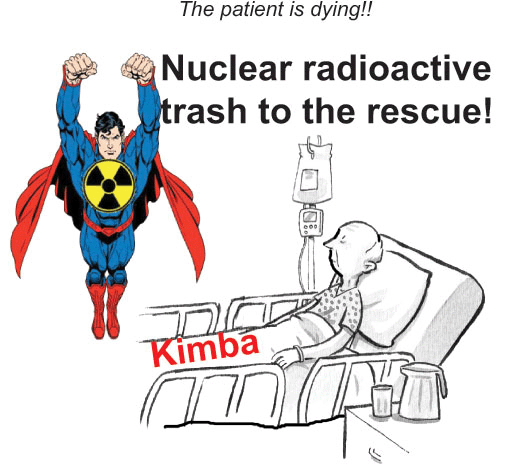
A South Australian regional town desperately needs to become the site of a nuclear waste dump to stop the town’s decline, its federal MP says.
Government chief whip Rowan Ramsey’s dreams for his hometown on the Eyre Peninsula are one step closer to reality as the bill cementing the site passed the House of Representatives. “The project will be a game changer for Kimba. It will offer a secure future,” the Liberal MP told parliament on Thursday.
Native title holders have unsuccessfully gone to the courts to block the facility. Environmental advocates are concerned the bill has major holes, while Labor wanted the government to let a Senate committee review the proposal.
Government chief whip Rowan Ramsey’s dreams for his hometown on the Eyre Peninsula are one step closer to reality as the bill cementing the site passed the House of Representatives. “The project will be a game changer for Kimba. It will offer a secure future,” the Liberal MP told parliament on Thursday.
Native title holders have unsuccessfully gone to the courts to block the facility. Environmental advocates are concerned the bill has major holes, while Labor wanted the government to let a Senate committee review the proposal.
The local native title holders tried to have the proposal thrown out by the courts in March. Barngarla Determination Aboriginal Corporation claimed some votes on whether to support the facility had been excluded. The ballot returned about 62 per cent support for the dump. While native title rights don’t exist at the Napandee property site, the bill allows the government to override nearby rights holders and not seek permission to build access roads on their land. Under the bill, the Kimba farm would become Australia’s number one nuclear waste dump, with the facility expected to store radioactive refuse for 100 years. A one-off $20 million community fund would help establish and maintain the site. Mr Ramsey said it would create 33 local permanent jobs. He painted a picture of a town in decline, with a shrinking population, no permanent doctor and even the loss of three of its four footy clubs. “Survival of our towns will require something new, something outside the square,” Mr Ramsey said. “I’m convinced 100 other communities around Australia will look at Kimba and ask, ‘Why didn’t we put our hand up?'” |
|
Former weapons chief executive now South Australian Premier’s top advisor
This could shed some light on the South Australian government’s silence on the Federal plan for a nuclear waste dump in South Australia. We can expect the South Australian government to now support the nuclear waste dump at Napandee, and to promote schemes to make south Australia a nuclear hub, especially with nuclear submarines production.
|
Weapons of Influence: BAE arms boss turns Premier’s right-hand man https://www.michaelwest.com.au/weapons-of-influence-bae-arms-boss-turns-premiers-right-hand-man/ Michael West Media, by Michelle Fahy | Jun 12, 2020 As part of her series of investigations into the close links between the military industry and politics, Michelle Fahy reports on former weapons chief executive for BAE, Jim McDowell, who is now at the centre of government in the Defence State, South Australia. Jim McDowell was employed in the weapons industry for 37 years. Born in Belfast, he studied law then spent 18 years with Northern Ireland firm Bombardier Shorts. After that, he joined British Aerospace (now BAE Systems) in Singapore and worked his way up through various positions in Asia. In 2001, McDowell was appointed CEO of BAE Systems Australia. During a decade in that role he oversaw BAE’s 2008 acquisition of Tenix Defence, a deal that doubled the size of the company and resulted in BAE becoming Australia’s largest weapons-maker at the time. It remains one of the largest today, mostly for building Australia’s warships, among other projects. In September 2011, Jim McDowell left Adelaide for Riyadh, where he ran BAE’s Saudi Arabian operation for a little over two years. Saudi Arabia is crucial to BAE’s business, its third largest market after the US and the UK (Australia is fourth). The company has been supplying combat aircraft to the Saudis since the 1960s. Several of its arms deals have been dogged by controversy (and continue to be due to the Saudi role in the humanitarian catastrophe in Yemen), and some by corruption. In the UK, a Serious Fraud Office investigation into BAE’s relationship with the Saudis was notoriously shut down in December 2006 following intense pressure from the Saudi government and the UK’s then prime minister Tony Blair, citing national security reasons. The capitulation of the Serious Fraud Office was later deemed “unlawful, an “abject surrender” and a “threat to the reputation of British justice” by the British High Court. By the time McDowell arrived, all that was in the past and it was back to business. In a media release describing a visit of the BAE Board to Saudi Arabia in March 2012, McDowell said, “Saudi Arabia is a key market for the company. We want to be considered as an industrial and a strategic partner for the Kingdom… The meeting was a wonderful way to strengthen relations.” Several multi-billion pound arms deals were concluded during the period McDowell was BAE’s chief executive in Saudi Arabia. Back to Australia with ANSTOIn December 2013, McDowell resigned from BAE and returned to Australia. He was immediately appointed to the board of the Australian Nuclear Science and Technology Organisation, as deputy chair. Then Industry Minister Ian Macfarlane said, “Mr McDowell’s business background coupled with his knowledge of international marketing and joint ventures will support the development of emerging business opportunities…” ANSTO’s chair, Dr Paul Greenfield, said, “This is a dynamic and exciting time for ANSTO and this is reflected in the overall contribution nuclear science and technology is now making across a range of key areas.” Earlier that year (in February 2013), ANSTO had signed a formal research cooperation agreement with the Defence Science and Technology (DST) Organisation. This was a period when DST, under Chief Defence Scientist Alex Zelinsky, signed a number of collaborative agreements with military industrial companies, including BAE in October 2013 and, as we have covered previously, Lockheed Martin in March 2014, among others. At the completion of Dr Greenfield’s term, in August 2014, McDowell was appointed chair of the ANSTO board, a position he held for the next four years. McDowell’s timely departure from the military industry created an influx of new opportunities for him from a government with a policy of recognising industry as a “fundamental input to capability”. Following his rapid appointment to the ANSTO board, over the next four years, McDowell was awarded lucrative contracts across six major areas by Defence (see table), which together totalled almost $1.5 million in consultancy fees. To supplement the government’s largesse, in the same four-year period, McDowell accepted appointments as Chancellor of the University of South Australia and to the Council of the Australian Strategic Policy Institute. He also joined the boards of eight public companies, most of which operate in the military industrial sector. In addition to those in the chart, McDowell was made chair of another two private companies, duMonde Group Pty Ltd and Total Construction Pty Ltd (dates of those appointments are not publicly available). In 2017, it appears McDowell was engaged simultaneously in at least 12 different roles. Continue reading |
Anne Wharton- appalled at exclusion of Barngarla from nuclear waste dump decision-making: a national issue, not just local
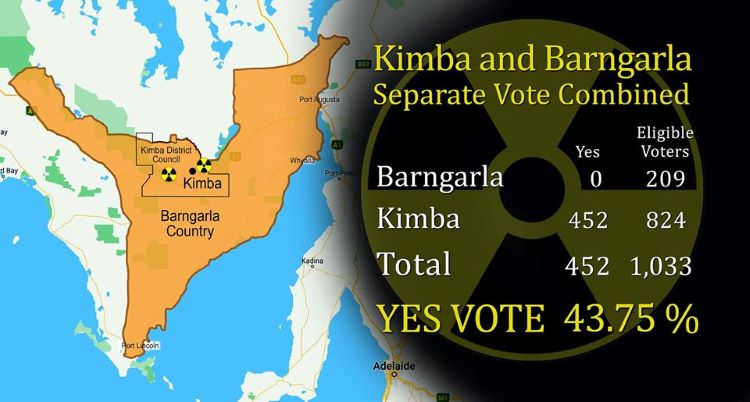
Kimba. I am especially appalled that the Barngarla Determination Aboriginal Corporation
were denied the right to vote in the community ballot and the Federal Court has now
dismissed their appeal. The people in these communities have never been asked what they
think about having a nuclear waste dump on their land, and they need to be listened to.
This is a huge transgression of their basic human rights.
established in SA (the “Nuclear Waste Storage Facility (Prohibition) Act 2000”).
Recently the Federal Morrison Government has introduced legislation to over-ride this
legislation. This is appalling – another violation of every citizen’s basic human rights.
As this affects every citizen of Australia, there should be a national inquiry into the need
for, and role of, a national nuclear waste dump in Australia.
1 This month
.

Australians deserve the truth
about
AUKUS – https://aukuspublicinquiry.com/

PETITION – To: Prime Minister Anthony Albanese and the Australian Labor Government

of the week – Australians for War Powers Reform (AWPR)
To see nuclear-related stories in greater depth and intensity

