#ScottyFromMarketing ‘s hypocritical ploy to do nothing effective against climate change
 The government’s sudden passion for climate technology is newfound and insincere, The call for technology before action is a specious distraction designed to paper over the plan to take no action Guardian, Simon Holmes à Court– @simonahac 21 Feb 2020 The government’s sudden passion for climate technology is newfound and insincere, The call for technology before action is a specious distraction designed to paper over the plan to take no action Guardian, Simon Holmes à Court– @simonahac 21 Feb 2020
If you’re committed to the Paris agreement – to keep the increase in global average temperature to well below two degrees above pre-industrial levels, and pursue efforts to limit the increase to 1.5 degrees – then at a minimum, logically, scientifically, you’re committed to net-zero carbon emissions by 2050. So far, at least 77 countries have committed to the target, as has every state and territory in Australia. The fact that prime minister Scott Morrison is pushing back hard against the calls for such a target sends yet another strong signal that his government still denies the need to tackle climate change. Sensing it must be seen to do something, but committed to doing nothing substantive, the government is arguing that investing in technology is the superior pathway to… to… to what? Are billions of dollars of public funds about to be allocated to a strategy that delivers on an unspoken goal? This passion for technology is newfound and insincere. In truth, our government has a long history of undermining climate technologies. In the three years to 2016, the government ripped just shy of $1bn from the Australian Renewable Energy Agency (Arena), the body charged with helping early stage technologies through to commercial launch. The funding of a feasibility study for a coal power station in Collinsville and the foreshadowed gift of $11m to extend the life of the 42 years old Vales Point coal power station in the Hunter, demonstrate just how reluctant the Coalition is to let go of last century’s energy technologies. One of the most promising and critical new technologies is the rapid maturation of the electric vehicle, but who can forget the government’s pushback against EVs during last year’s election?…… Mike and Annie Cannon-Brooke’s Resilient Energy Collective is a case study for how far we’ve come. In just a handful of weeks the group has put together an emergency power product for restoring power to bushfire affected communities. The solar-powered, battery-backed system can be installed in a single day, and will be rolled out to 100 communities in as many days. The energy supply companies partnering in the project are stunned that the infrastructure is being rolled out in hours not months. Community members are amazed that they’re using solar power at night. ….. In reality, the call for technology before action is a specious distraction designed to paper over the plan to take no action. The greatest proponent of the frame is Danish political scientist Bjorn Lomborg, one of a small cadre of almost respectable climate obfuscationists. …… The first three years of the Coalition government focussed on tearing down climate policy. The next three used endless reviews that came to nothing – as intended. In July 2014, Tony Abbott finally made good on his promise to dismantle Australia’s carbon price mechanism, our most effective and efficient climate policy. In doing so, not only did he throw away the best tool we had, he cheated Australian farmers out of earning billions from exporting carbon credits to Europe. In 2015, Abbott managed to slash the renewable energy target – assisted in the background by Angus Taylor, the man now charged with reducing emissions – cutting future activity under the target by 40%…… In July 2014, Tony Abbott finally made good on his promise to dismantle Australia’s carbon price mechanism, our most effective and efficient climate policy. In doing so, not only did he throw away the best tool we had, he cheated Australian farmers out of earning billions from exporting carbon credits to Europe. In 2015, Abbott managed to slash the renewable energy target – assisted in the background by Angus Taylor, the man now charged with reducing emissions – cutting future activity under the target by 40%….. So here we are again. Another strategy to kick the can down the road……https://www.theguardian.com/commentisfree/2020/feb/21/the-governments-sudden-passion-for-climate-technology-is-newfound-and-insincere |
|
Frank Simpson warns against the pollution of Victoria’s agricultural land by thorium/uranium mining
 Risk in contaminating a prime green food producing region of Victoria. (3) This implies all stages of the fuel cycle from exploration to waste repository storage.
Greens in the Senate will oppose bill to storage nuclear waste at Kimba farm
 Greens to oppose bill to storage nuclear waste at SA farm, Queensland Country Life, Jamieson Murphy@jamiesonmurph18 Feb 2020, THE government may have to negotiate with the Senate crossbench to get through legislation that will transform a South Australian farm into a nuclear waste facility, after the Greens declared their opposition to the bill. Greens to oppose bill to storage nuclear waste at SA farm, Queensland Country Life, Jamieson Murphy@jamiesonmurph18 Feb 2020, THE government may have to negotiate with the Senate crossbench to get through legislation that will transform a South Australian farm into a nuclear waste facility, after the Greens declared their opposition to the bill.
The Kimba farm, which was voluntarily nominated and chosen after a four-year search, would store medical nuclear waste for 100 years. South Australian Senator and Greens nuclear spokesperson Sarah Hanson-Young said her party would work to block the “offensive” legislation. “The federal government wants to dump on South Australia and we won’t leave it to the community of Kimba to hold the line on their own,” Senator Hanson-Young said. “It is wrong to say there is broad community support. Traditional Owners have rejected the proposal. Once again the Morrison government and [former Resource] Minister Canavan haven’t listened. “A government minister from Queensland thinks South Australia is the place to dump and it’s deeply offensive to the people of SA. “Every South Australian should be concerned this government is more interested in building a radioactive waste dump than they are in investing in renewable energy and our growing potential for green industry.” Labor resource spokesperson Joel Fitzgibbon did not respond to questions about whether his party would support the bill. The recently appointed Resource Minister Keith Pitt introduced the legislation to the House of Representatives last week – just two weeks after the Kimba site was announced – where the government will have the numbers to pass the bill. With the Greens opposing the bill in the Senate and Labor not stating its position, the government will need the backing of either the Centre Alliance or One Nation to carry the bill. A spokesperson for Mr Pitt said the new minister was “working with other parties to deliver the outcome”. “Minister Pitt wants bipartisan support on the National Radiation Waste Management Bill,” the spokesperson said. “This bill has been 40 years in the making and the establishment of a national radioactive waste facility is a national priority.” South Australian Energy and Mining Minister Dan van Holst Pellekaan said the federal legislation would override SA’s state legislation….. https://www.queenslandcountrylife.com.au/story/6635712/greens-to-oppose-bill-to-storage-nuclear-waste-at-sa-farm/?cs=4704&fbclid=IwAR17gRLqP-DpCp_Ya5UqDUHu0Tj7y3siBi04TWo1wktCu-ZqtuBRG-PVyaE |
|
|
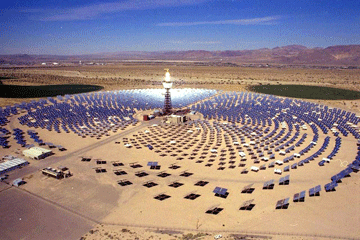
Solar thermal energy the way forward for Australia- says nuclear expert
Dr Wilson described nuclear power as simply “too risky”.
He also said the cost factor was also a major deterrent from going nuclear.
“It’s not the cost of building it. They are expensive to build and they are expensive to run but it’s the cost of demolition when it gets to the end of its life,” he said.
“Nuclear is not cheap, it’s not safe, and will be destructive to key Queensland industries like agriculture and tourism.”
|
Solar thermal power the way forward for Australia despite hiccups, nuclear expert says
https://www.abc.net.au/news/2020-02-18/solar-thermal-power-should-be-major-export-expert-says/11971938?fbclid=IwAR3zjCStZwOvdHFGY0EtSWxu4oQ0i43QAgm6O9S5YNW5I3KKna370tb7KtQ ABC Radio Brisbane
By Rebeka Powell 19 Feb 2020, As the world looks to Germany as a shining example of how to shift away from polluting coal power, a Queensland-based nuclear expert says solar thermal power is the way forward for Australia. Key points:
Paul Wilson is an electrical and control systems engineer with almost five decades’ experience who has previously made submissions to the parliamentary inquiry into nuclear power. Dr Wilson told ABC Radio Brisbane’s Steve Austin he was disappointed Australia was not showing leadership or innovation in renewables. “We’re very good in Australia at innovation and at engineering and I think we should take a leaf out of the German book,” he told the Drive program. “And they’re basically trying to systematically close down their coal mining industry but they’re doing it by replacing jobs. So they’re deliberately setting out, for every job that is lost in coal mining, they’re trying to create another job. Continue reading |
Religious leaders urge ScottyFromMarketing to move Australia away from fossil fuels
|
Faith leaders press PM on climate action, Herald Sun Heather McNab, Australian Associated Press
February 20, 2020 Religious leaders have appealed to Prime Minister Scott Morrison as a “fellow person of faith” to heed climate science following the country’s catastrophic bushfire season. The open letter – signed by 18 Christian, Hindu, Buddhist, Jewish, Muslim and other faith leaders – urges Mr Morrison to show leadership and urgently transition Australia away from fossil fuels. The signatories include: Dr Peter Catt, the Dean of St John’s Anglican Cathedral in Brisbane, the Most Reverend Vincent Long Van Nguyen OFM, Chair of the Catholic Bishops Commission on Justice, Mission and Service Muslims Australia president Dr Rateb Jneid and Buddhist Council of NSW Religious leaders have appealed to Prime Minister Scott Morrison as a “fellow person of faith” to heed climate science following the country’s catastrophic bushfire season. The open letter – signed by 18 Christian, Hindu, Buddhist, Jewish, Muslim and other faith leaders – urges Mr Morrison to show leadership and urgently transition Australia away from fossil fuels. The signatories include: Dr Peter Catt, the Dean of St John’s Anglican Cathedral in Brisbane, the Most Reverend Vincent Long Van Nguyen OFM, Chair of the Catholic Bishops Commission on Justice, Mission and Service Muslims Australia president Dr Rateb Jneid and Buddhist Council of NSW president Dr Gawaine Powell Davies…. https://www.heraldsun.com.au/news/breaking-news/faith-leaders-press-pm-on-climate-action/news-story/48ebb95e2fdee026ccc593583ea622ab |
|
Divisions within both Liberal and Labor parties over Coal
Both the Coalition and Labor are battling divisions over climate policy and the future of coal.
While a majority of Labor MPs believe the opposition needs to stay the course on climate action, some in the party’s right argue the party needs to be more positive about the coal industry……. https://www.theguardian.com/australia-news/2020/feb/19/anthony-albanese-backs-adani-coalmine-but-criticises-proposed-collinsville-power-plant
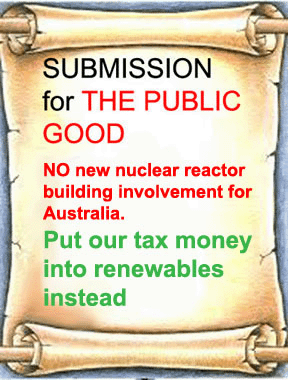
143 Anti-Nuclear, 10 Pro Nuclear Submissions (published) to Victorian Parliament
Submissions published so far to the Victorian Government’s Inquiry into Nuclear Prohibition are running strongly ANTI NUCLEAR https://www.parliament.vic.gov.au/epc-lc/article/4348
There are currently 143 submissions opposing the nuclear industry.
There are 10 submissions favouring the nuclear industry. (You can bet that vested interests have sent in confidential submissions)
 PRO nuclear
1. Don Hampshire ( with attack on ABC, The Age )
2 Robert Heron – vaguely
3 Terje- Petesen
116 Leah McDermott
122 Simon Brink
123 CFMMEU Mining and Energy Division 21 Azark 26 Buchanan, Bill 27 Murphy, Barry 28 Patterson, John
ANTI nuclear
 4 Jessica Lawson 5 Pro Forma list of 122 contributors 48 Janet Nixon 49 Karen Furniss 63 Graeme Tyschsen 68 Barbara Devine 76 Vivien Smith
77 Lachlan Dow 81 RVS Industries 92 Alan Hewett and Joan Jones 103 Anne Wharton 106 John Quiggin vague 107 Amy Butcher 109 Nick Pastalatzis 112 Philip White 22 Friends of the Earth 23 Derek Abbott 24 Simpson, Frank 25 Wauchope, Noel 29 Wissink, Bart 30 Sharp, Robyn 31, Smith, Colin
Labor stays strongly against nuclear power, despite pro nuke push from one union
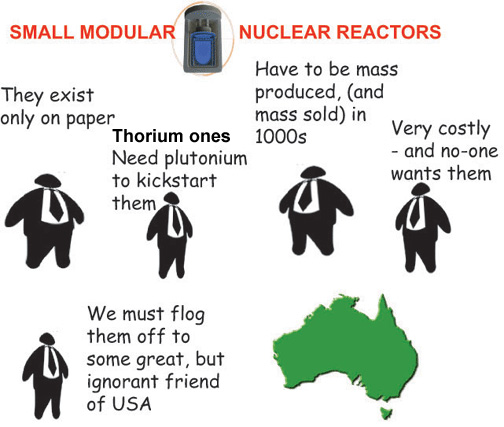
Labor bipartisanship on nuclear energy needed: AWU,Australian Financial Revieew Phillip Coorey – Political Editor, Feb 18, 2020
The Australian Workers’ Union has stepped up its call for Australia to embrace nuclear power by urging Labor leader Anthony Albanese to provide the political bipartisanship that is needed. …….
Like other pro-nuclear advocates, Mr Walton supports small modular reactors. He also accepts that if Labor were in government, nuclear power would not be an option for it.
In the Coalition, the Nationals are hardening against a proposal floated by Mr Morrison and Energy Minister Angus Taylor to achieve net zero emissions by 2050.
On Monday, Mr Morrison was very cautious.
https://www.afr.com/politics/federal/labor-bipartisanship-on-nuclear-energy-needed-awu-20200217-p541eh
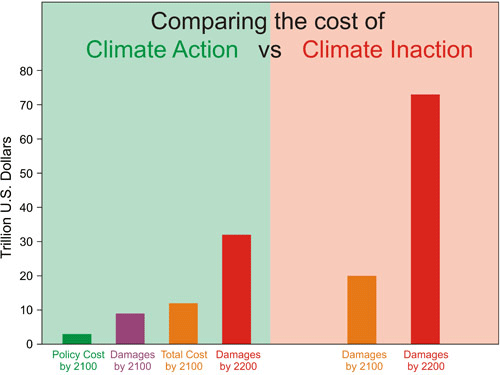
For Australia “business as usual” on climate change, will cost many $billions
|
Australia faces a multi-billion dollar economic hit without strong climate action https://probonoaustralia.com.au/news/2020/02/australia-faces-a-multi-billion-dollar-economic-hit-without-strong-climate-action/ ________________________________ Australia was ranked the fifth worst affected nation by the loss of nature over the next 30 years, with the country’s annual income set to decline by 1.43 per cent by 2050. WWF-Australia economist Joshua Bishop said across all countries the reduction was 0.67 per cent, meaning Australia was projected to lose more than twice the global average.“Because so much of Australia’s population, infrastructure and service sector output is concentrated in coastal areas, we are more vulnerable than most to sea level rise and storm surges,” Bishop said. WWF noted that the damage could be much worse than anticipated, as the economic cost calculated did not consider the destruction from future bushfire emergencies. The study used new economic and environmental modelling to assess the macroeconomic impact if the world continued a “business as usual” approach to the environment.
This approach – which includes continued greenhouse gas emissions increases, and further loss of natural habitats – would cost the world up to US$9.87 trillion (A$14.68 trillion) by 2050. Marco Lambertini, director general of WWF International, said the study showed how conserving nature was not only a moral issue but a social and economic one. “People across the world are already feeling the impact of rising food prices, droughts, commodity shortages, extreme flooding and coastal erosion,” Lambertini said. “Yet for the next generation things will be many times worse, with trillions wiped off world economies by 2050.”
The report said if land-use was better managed in the future to conserve biodiversity and ecosystem services, it would deliver dramatically better economic outcomes. Under this scenario, global GDP would rise by $490 billion a year above the business as usual calculation, while damage to Australia’s GDP would be halved to $14.3 billion by 2050. Bishop said this highlighted the opportunity Australia had “to save billions by protecting our coastal areas, forests and woodlands and becoming a world leader in renewable energy”.
Meanwhile, new analysis from the Australian Conservation Foundation has found that fossil fuel industry donations to Australia’s major political parties have more than doubled over the past four years.
Australian Electoral Commission data revealed that the coal, oil and gas industry’s political donations grew from $894,336 in 2015-16 to $1.9 million in 2018-19. This figure excludes Clive Palmer’s $83.7 million donation to his own party. ACF’s democracy campaigner Jolene Elberth said these figures highlighted the extent of the fossil fuel industry’s attempts to buy political power in Australia. “As more Australians demand action on climate change and the pressure builds on politicians to take the problem seriously, the fossil fuel industry is doubling down by spending more money to influence public policy,” Elberth said.
“Serious donations reform is needed to curb the power of big money in politics which harms our natural world and drives more climate damage.”
|
|
Climate change extreme weather making parts of Australia uninsurable
 Risks aren’t worth it’: QBE says parts of planet becoming uninsurable due to climate concerns, SMH, Charlotte Grieve February 17, 2020 Global insurance giant QBE has warned climate change poses a material threat to its business and the entire economy as its chief executive Pat Regan said premiums were at risk of becoming too high in areas exposed to repeated, extreme weather……
Mr Regan said there had always been parts of the world that were difficult to insure. But as floods and fires become have dominated headlines this summer, this risk was increasing across “swathes of Australia” and could potentially price out customers from home and business property insurance.
He said climate change was a “big topic” in the sector, requiring the insurance giant to “up its game on a number of fronts”. QBE boosted its reinsurance program for catastrophic events to $2 billion in a process that would be reassessed each year, he said. …..
“The evidence is there for all to see that the amount of weather events globally, not just in Australia, is consistently rising and most of the worst years on record have happened in the last 10 years.”
“The most prone ones [areas] are the ones we see in the news frequently,” Mr Regan said, referencing the Queensland floods and east coast fires…… https://www.smh.com.au/business/banking-and-finance/qbe-warns-of-climate-risk-as-300m-hit-to-revenue-alongside-unusual-weather-20200217-p541e3.html
Australian public unaware of the dangers of small nuclear reactors
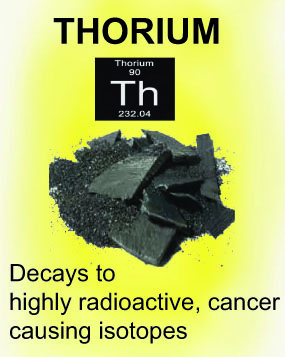 Thorium advocates say that thorium reactors produce little radioactive waste, however, they simply produce a different spectrum of waste from traditional reactors, including many dangerous isotopes with extremely long half-lives. Technetium 99 has a half-life of 300,000 years and iodine 129 a half-life of 15.7 million years.
|
HELEN CALDICOTT: The dangers of nuclear power in Australia https://independentaustralia.net/environment/environment-display/helen-caldicott-the-dangers-of-nuclear-power-in-australia,13597
By Helen Caldicott | 16 February 2020 Long-time anti-nuclear campaigner and writer Dr Helen Caldicott believes the risks of nuclear power outweigh the benefits.
AS AUSTRALIA grapples with the notion of introducing nuclear power as an energy source, it is imperative that people understand the intricacies of these new technologies including small modular reactors (SMR) and thorium reactors. There are basically three types of SMRs which generate less than 300 megawatts of electricity compared to current 1000 megawatt reactors. Light water reactors designs – smaller versions of present-day pressurised water reactors – will be built underground but with the same attendant problems as those at Fukushima and Three Mile Island. They will be mass-produced, so large numbers must be sold yearly to make a profit, and should a safety problem arise like the Boeing Dreamliner plane, they all will have to be shut down interfering substantially with electricity supply. SMRs will be expensive because the cost of unit capacity increases with decrease in the size of the reactor. To alleviate costs, it is suggested that safety rules be relaxed including reducing security requirements and a reduction in the 10-mile emergency planning zone to 1000 feet. High-temperature gas-cooled reactors (HTGR) or pebble bed reactors Continue reading |
South Australia’s grain exports could be at risk, if Kimba nuclear waste dump goes ahead
 Paul Waldon Fight To Stop A Nuclear Waste Dump In South Australia, 17 Feb 20,
Keeping in mind the safe standard for radioactive contaminated food in Australia is 1200 becquerels, which fails to keep up with the safer standards of Japan at only 100 becquerels per kilo. Not only is Japans standards safer than ours but Australia’s grain export to Japan is about $646 million per year, and that could be in jeopardy if the program to turn Kimba into a radioactive dump proceeds.
Dr Bandazhevsky’s study came with the added problem of finding children of Belarus free of contamination, there was also a health cluster in children now recorded and known as Chernobyl heart, a condition of multiple holes in the heart, due to radioactive exposure.
NukeMap – what if Australian cities were hit by a nuclear bomb
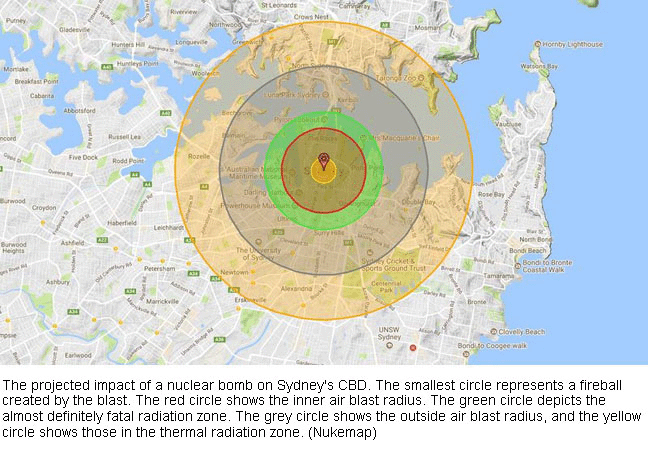
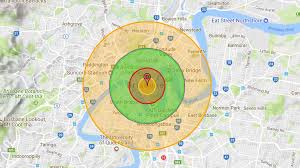
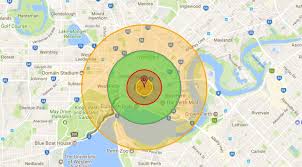
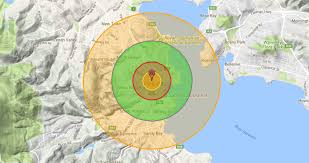
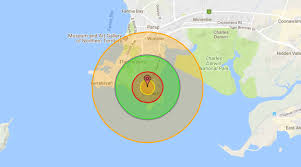
What Happens If Australia Is Hit By A Nuclear Bomb? lifehacker, Jackson Ryan | Feb 16, 2020, “….NUKEMAP provides a few different readouts for each map with colour coded rings :
- The yellow ring is the size of the nuclear fireball
- The red ring denotes the air blast zone where 20 psi of pressure is felt – enough to damage concrete buildings
- The green ring denotes the radiation diameter – within this ring, you would receive a 500 rem radiation dose. That’s enough to kill 65-90% of all exposed within 30 days.
- The grey ring denotes the air blast zone where 5 psi of pressure is felt
- The orange ring is the thermal radiation zone – if you are within this ring you receive third degree burns that extend through the layers of the skin.
The most recent bomb tested by North Korea was reportedly around 50 kilotons. So if we used that as a base, what would the damage from a 50 kiloton nuclear bomb do to:
Sydney
Melbourne
The size of the nuclear fireball would destroy Melbourne’s CBD and the resulting pressure from the explosion would flatten the land around it. Most of the iconic landmarks in Melbourne’s inner city would be gone.

Brisbane
Adelaide
Adelaide’s CBD would be mostly non-existent, with the fireball engulfing a large portion and the overpressure extending from North to South Terrace. Rundle Mall would be hit hard and you wouldn’t expect Adelaide Oval to remain standing, either. The thermal radiation would extend out as far as the parade in Norwood and almost entirely cover North Adelaide.

Perth
Owing to its place right next to the Swan River, Perth City may not see the same level of immediate fatalities but the destruction would be extensive. The thermal radiation ring would extend from the centre of the CBD out to the Perth Zoo and as far as Lake Monger. The famous Perth Mint would sadly be caught in the 5psi overpressure zone, a space where most buildings collapse.
Canberra
Parliament House as a target, would be completely decimated by the fireball and the 20psi overpressure would flatten everything as far as National Circuit. The National Library, the National Museum and the National Gallery would also likely crumble under the pressure of the air blast. The Australian War Memorial and the Royal Australian Mint would fall just outside the thermal radiation zone.

Hobart
A direct hit on Hobart’s CBD would see a lot of the blast rip across the River Derwent. The fireball would circle most of the city, while the overpressure blast would extend up Elizabeth Street and out to the Salamanca Market. The Royal Tasmanian Botanical Gardens would receive a huge amount of thermal radiation, which would reach across the Tasman Highway bridge and into Rosny.
Darwin
The size of an atomic bomb blast of this size would take out a lot of Darwin’s waterfront, but the thermal radiation wouldn’t extend all the way across Charles Darwin National Park but, provided it hit the CBD, the overpressure air blast would do incredible damage all the way through the city and across to the Gardens…..
Australia must learn to mine rare earths responsibly
 we don’t seem to notice the problems with renewable energy.
We must jump on to the circular economy. If the world could RECYCLE rare earths elements – there’d be so much less need for mining and processing of rare earths, with its problematic creation of radioactive wastes.
What is needed is DESIGN – clever design of all devices that use rare earths, so that these elements can be easily retrieved, to use again in new devices.
While renewable energy technologies are used in the same old way – dig it up, throw away the wastes, we are locked in the 20th Century thinking – that also includes the aim of endless energy use, endless growth.
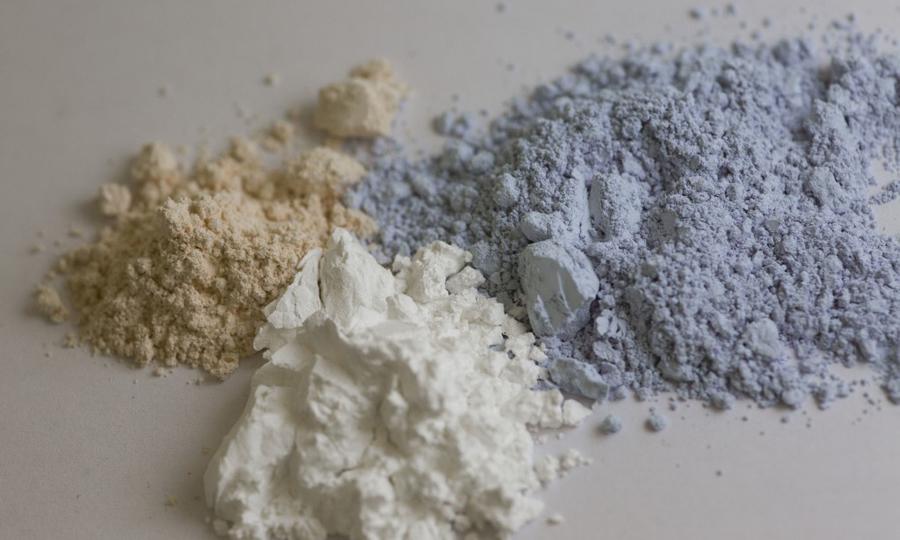 Critical minerals are vital for renewable energy. We must learn to mine them responsibly Bénédicte Cenki-Tok, Associate professor at Montpellier University, EU H2020 MSCA visiting researcher, University of Sydney
This includes common industrial metals such as steel and copper, but also less familiar minerals such as the lithium used in rechargeable batteries and the rare earth elements used in the powerful magnets required by wind turbines and electric cars. Production of many of these critical minerals has grown enormously over the past decade with no sign of slowing down.
Australia is well placed to take advantage of this growth – some claim we are on the cusp of a rare earths boom – but unless we learn how to do it in a responsible manner, we will only create a new environmental crisis.
One consequence of a massive transition to renewables will be a drastic increase not only in the consumption of raw materials (including concrete, steel, aluminium, copper and glass) but also in the diversity of materials used.
Three centuries ago, the technologies used by humanity required half a dozen metals. Today we use more than 50, spanning almost the entire periodic table. However, like fossil fuels, minerals are finite.
Can we ‘unlearn’ renewables to make them sustainable?
If we take a traditional approach to mining critical minerals, in a few decades they will run out – and we will face a new environmental crisis. At the same time, it is still unclear how we will secure supply of these minerals as demand surges.
This is further complicated by geopolitics. China is a major producer, accounting for more than 60% of rare earth elements, and significant amounts of tungsten, bismuth and germanium.
This makes other countries, including Australia, dependent on China, and also means the environmental pollution due to mining occurs in China.
The opportunity for Australia is to produce its own minerals, and to do so in a way that minimises environmental harm and is sustainable.
Where to mine?
Australia has well established resources in base metals (such as gold, iron, copper, zinc and lead) and presents an outstanding potential in critical minerals. Australia already produces almost half of lithium worldwide, for example…….
Fuelling the transition
For most western economies, rare earth elements are the most vital. These have electromagnetic properties that make them essential for permanent magnets, rechargeable batteries, catalytic converters, LCD screens and more. Australia shows a great potential in various deposit types across all states.
The Northern Territory is leading with the Nolans Bore mine already in early-stage operations. But many other minerals are vital to economies like ours.
Cobalt and lithium are essential to ion batteries. Gallium is used in photodetectors and photovoltaics systems. Indium is used for its conductive properties in screens.
Critical minerals mining is seen now as an unprecedented economic opportunity for exploration, extraction and exportation.
Recent agreements to secure supply to the US opens new avenues for the Australian mining industry.
How can we make it sustainable?
Beyond the economic opportunity, this is also an environmental one. Australia has the chance to set an example to the world of how to make the supply of critical minerals sustainable. The question is: are we willing to?
Many of the techniques for creating sustainable minerals supply still need to be invented. We must invest in geosciences, create new tools for exploration, extraction, beneficiation and recovery, treat the leftover material from mining as a resource instead of waste, develop urban mining and find substitutes and effective recycling procedures.
In short, we must develop an integrated approach to the circular economy of critical minerals. One potential example to follow here is the European EURARE project initiated a decade ago to secure a future supply of rare earth elements.
More than ever, we need to bridge the gap between disciplines and create new synergies to make a sustainable future. It is essential to act now for a better planet.
Greens leader Adam Bandt seeks new deal with “renewable mining and manufacturing” sector
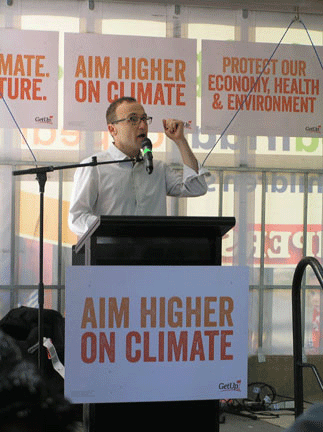 New Greens leader Adam Bandt will tour Australia’s mining regions to promote his plan to create a “renewable mining and manufacturing” sector and repair his party’s poor relations with resources industry workers. THE AUSTRALIAN , RICHARD FERGUSON FEBRUARY 16, 2020
New Greens leader Adam Bandt will tour Australia’s mining regions to promote his plan to create a “renewable mining and manufacturing” sector and repair his party’s poor relations with resources industry workers.
Mr Bandt — who started his tenure as leader saying big business was “killing people” — wants to shift the mining sector towards lithium and process materials such as iron ore in Australia to build a domestic “zero-carbon” manufacturing industry…. (subscribers only)
1 This month
.

Australians deserve the truth
about
AUKUS – https://aukuspublicinquiry.com/

PETITION – To: Prime Minister Anthony Albanese and the Australian Labor Government

of the week – Australians for War Powers Reform (AWPR)
To see nuclear-related stories in greater depth and intensity

