Whyalla urgently needs a policy to prevent becoming the radioactive trash port

“A question was asked to (Whyalla) council regarding potential use of the port for the transport of intermediate level waste. The response is on the council website under Council Meeting Minutes Monday 17/2/20. There is no current policy.
As a community we should have a policy. We should be standing up on behalf of the divided Kimba community and refuse the use of the port and surrounding roads and rail. It is the responsibility of the council to represent the community, not to bow down and take orders from the state government.” – Mr Andrew Williams.
Link source to Minutes: http://www.whyalla.sa.gov.au/…/council%20minutes%20-%20PUBL…
Celebrities urge ScottyFromMarketing to to shift from coal to renewable energies.
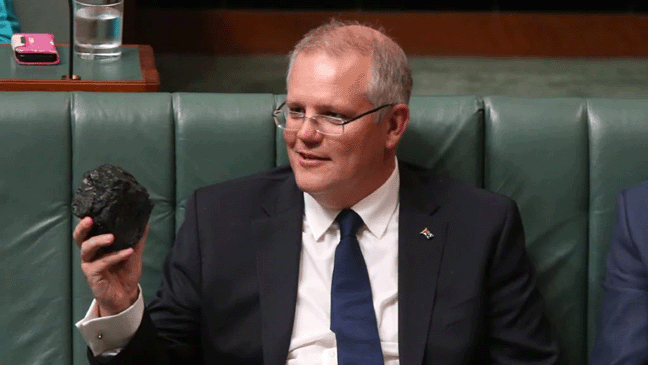 Aussie celebrities appeal to Prime Minister on climate policies, https://thenewdaily.com.au/news/national/2020/02/24/greenpeace-celebrities-climate-policies/ Australian celebrities are calling on Prime Minister Scott Morrison to take action on the nation’s energy policies in a campaign aimed at preventing new bushfires.Voices such as actor Simon Baker, musician Julia Stone and footy player Dyson Heppell have appeared in a Greenpeace video released on Monday, ask Scott Morrison to shift from coal to renewable energies. Aussie celebrities appeal to Prime Minister on climate policies, https://thenewdaily.com.au/news/national/2020/02/24/greenpeace-celebrities-climate-policies/ Australian celebrities are calling on Prime Minister Scott Morrison to take action on the nation’s energy policies in a campaign aimed at preventing new bushfires.Voices such as actor Simon Baker, musician Julia Stone and footy player Dyson Heppell have appeared in a Greenpeace video released on Monday, ask Scott Morrison to shift from coal to renewable energies.
The new campaign features bushfire survivors and Aussie personalities asking the Prime Minister “what sort of world” he wants his daughters to grow up in as a family man. Imploring Mr Morrison to act so Australia stops “falling behind the rest of world”, the video lists the “unprecedented fires”, “extreme drought” and “flash flooding” that have devastated communities in a “black summer”. The message from the Dear Scotty campaign claims to be directed to “both sides of politics” and calls for “change, unity, and leadership” to tackle the country’s future. “People have lost their lives, families have lost their homes, and koalas have burnt alive all over Australia,” Greenpeace Australia Pacific Senior Campaigner Nathaniel Pelle said. “Everyone is feeling the impacts of this coal-fueled bushfire crisis and we need Scott Morrison to act for their future and the future of all Australians.” |
|
#ScottyFromMarketing dodges the question of how much “climate business as usual will cost the economy
 Morrison admits there are climate costs, but won’t say what 3C heating would do to economy
Ahead of the release of its technology roadmap, the Coalition tries to ramp up pressure on Labor over its net zero emissions target, Guardian, Katharine Murphy Political editor, @murpharoo, Mon 24 Feb 2020 Scott Morrison has acknowledged there are “costs associated with climate change” but has declined to spell out what 3C heating would do to job creation and economic growth in Australia.
Ahead of the release of its technology roadmap, the federal government is attempting to ramp up political pressure on Labor over its commitment to a net zero target by 2050, blasting the opposition for adopting a target without a fleshed-out strategy to meet it, and pointing out that CSIRO research cited positively by Labor assumes a carbon price of more than $200 to drive the transition.
But the government is also having to fend off sustained questions about basic contradictions in its own messaging…….
While keeping all its options open, the government has been signalling for some days it is unlikely to adopt a 2050 target. …… https://www.theguardian.com/australia-news/2020/feb/24/morrison-admits-there-are-climate-costs-but-wont-say-what-3c-heating-would-do-to-economy
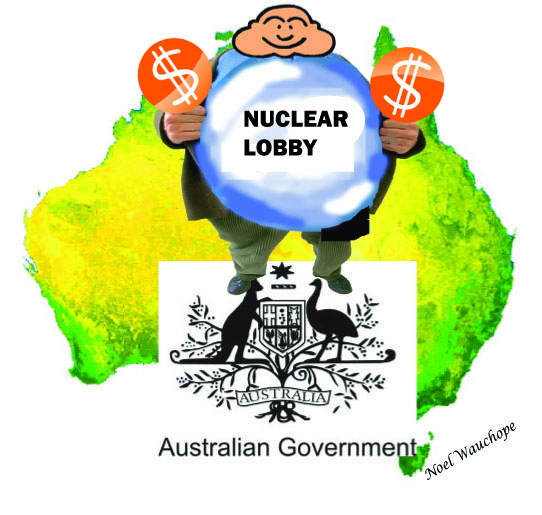
Bill in Aust Parliament names South Australia as the Nuclear Waste State
the Bill makes provision for the Federal gov. to pass Regulations to name and over-ride specific State Laws. For instance, it may be the case that the Federal gov. requires to pass a Regulation to name and over-ride the public interest protections in the SA “Nuclear Waste Storage (Prohibition) Act 2000”, and potentially to also do so regarding the SA “Aboriginal Heritage Act 1988”.
David Noonan, 24 Feb 20, Bill names SA as the Nuclear Waste State:
The Bill specifies South Australia as a nuclear waste dump state.
And specifies Napandee near Kimba as a Nuclear Waste Store – which effectively also targets Whyalla Port for multiple nuclear waste shipments.
The Bill has been to the HoRep’s and now goes to the Senate:
“to enable the decision about the location of the facility to be subject to Parliamentary scrutiny”
(see the Bill Explanatory Memorandum Outline p.1).
For access to the doc’s and to speeches, and to Track the Bill – so as to receive e updates…
The Bill is expected to be Referred by the Aust Greens around Wed 26th Feb to a short Inquiry by the Senate Standing Economics Legislation Committee. The Bill may go to a vote in Senate in the last week of May.
If the Bill is passed, the Federal gov. then instigates a Licensing process on the NRWM Facility by the nuclear regulator ARPANSA, and in parallel makes a referral for environment assessment of the proposed NRWM Facility under EPBC Act.
ARPANSA are expected to conduct separate Licensing processes for the above ground interim Nuclear Waste Store, and for the so-called Low-Level Waste Disposal Facility. ARPANSA may require the Federal gov. to make separate Licensing Applications for the two types of waste facilities.
The Federal gov. can-not assume that both facilities will be approved by the regulator.
It is arguably likely that Licensing for the NRWM Facility, and in particular for above ground interim Nuclear Waste Store, should and will fail – leaving the amended Act stranded will a failed single specified site and no provision for consideration of any further siting elsewhere in SA or in other States / Territories.
However, the Bill is said by the Minister and the Department to provide ‘certainty’.
Notes on Bill:
The Bill names and specifies South Australia, and omits “the State or Territory”, for siting a NRWM Facility and to register acquired lands;
The Bill specifies Napandee as the NRWM Facility site and amends the 2012 Act to that effect as a single site;
The Explanatory Memorandum (EM, Outline p.2) says: “Additional land will not be able to be acquired to establish a second facility”;
The Bill “Notes on Clauses” p.22 states: “Once established, it is expected to be in operation for 100 years.”
The Bill “Notes on Clauses” p.14 claims: “there is broad support in the community for the project.”
The Bill strengthens the Commonwealth powers to use the 2012 Act to over-ride State laws and to impose the NRWM Facility on unwilling communities;
The Bill specifically asks Senators to vote to approve a set of powers to over-ride any State law (or other Cth law), Continue reading
Labor’s Chris Bowen: Renewables make much more sense than ‘nuclear fantasy’
  Labor’s Chris Bowen: Renewables make much more sense than ‘nuclear fantasy’, The New Daily, Colin Brinsden , 23 Feb 20, Labor’s Chris Bowen: Renewables make much more sense than ‘nuclear fantasy’, The New Daily, Colin Brinsden , 23 Feb 20,
Federal Labor frontbencher Chris Bowen has criticised the Morrison government for even considering nuclear power as an option in the future energy mix, calling it a “fantasy and a furphy”……… Mr Bowen, the former shadow treasurer and now the opposition’s health spokesman, told reporters in Sydney that billions of dollars will be “unleashed” by renewable energy investment that will create jobs. Asked by a journalist if he would be open to nuclear power, Mr Bowen said: “No”. “The economics of nuclear power don’t stack up. You could start building a nuclear power station today and it wouldn’t be ready for decades,” Mr Bowen said. “The idea that this is part of the mix to Australia’s response to global warming is a fantasy and a furphy.”……. https://thenewdaily.com.au/news/national/2020/02/22/labors-bowen-rejects-going-nuclear/ |
|
Barngarla Aboriginal people take legal action against Australian govt’s planned Kimba nuclear waste dump
  Indigenous group fights on to stop SA dump https://www.9news.com.au/national/indigenous-group-fights-on-to-stop-sa-dump/d72f3453-28e8-4182-a9bb-6c9390098bf6?fbclid=IwAR3l91JVzBoJhkIhnf49 Feb 21, 2020 Native title holders on South Australia’s Eyre Peninsula are continuing their court fight to stop the federal government establishing a nuclear waste dump near Kimba. Indigenous group fights on to stop SA dump https://www.9news.com.au/national/indigenous-group-fights-on-to-stop-sa-dump/d72f3453-28e8-4182-a9bb-6c9390098bf6?fbclid=IwAR3l91JVzBoJhkIhnf49 Feb 21, 2020 Native title holders on South Australia’s Eyre Peninsula are continuing their court fight to stop the federal government establishing a nuclear waste dump near Kimba.
The government recently named a site on a local station as the location for the dump which will take Australia’s low to medium level nuclear waste material.
The government’s decision was informed in part by a ballot of local residents which supported the proposal.
But it’s that ballot that the Barngarla people are fighting in new Federal Court action.
They’re appealing against a court judgment last year that the council had not acted wrongly in excluding about 200 native title holders from the vote.
Counsel for the Barngarla, Daniel O’Gorman SC, told the court on Friday that their request to take part in the ballot should have been granted.
“They, therefore, are part of the community,” he said.
“This was a ballot of the community, the Kimba community. They are the native title holders of the land surrounding the sites in question.
“Therefore, we submit, they clearly had an interest in the ballot, they clearly had an interest in the dump and whether it goes ahead or not.
“Their mere standing as native title holders, warranted them being included as part of the community.”
The ballot ultimately returned about 62 per cent support for the dump, which then Resources Minister Matt Canavan accepted as broad community backing.
Those still opposed to the dump going ahead include some locals, environmental groups as well as indigenous communities.
Earlier this month, legislation to allow construction of the waste facility was introduced to federal parliament.
The underpinning laws allow for acquisition of land for the facility as well as a $20 million payment for the community to help establish and maintain the site which is expected to operate for at least 100 years.
The Federal Court’s ruling on the Barngarla appeal is expected to be handed down on a date to be fixed.
|
|
|
Immoral and illegal spying on Julian Assange and his lawyers – MP Andrew Wilkie calls on Australian government to act.
 Wilkie says Assange extradition efforts should be dropped after US spying revelations, https://www.theage.com.au/politics/federal/wilkie-says-assange-extradition-efforts-should-be-dropped-after-us-spying-revelations-20200223-p543j3.html, By Rob Harris, February 24, 2020 The revelation Julian Assange’s confidential conversations with his Australian lawyers were secretly recorded should force the British courts to throw out attempts to extradite him to the United States, independent MP Andrew Wilkie says.Mr Wilkie has again called on Prime Minister Scott Morrison to lobby the British government to reject the United States attempts to extradite Australian-born WikiLeaks founder who faces several espionage charges over the publication of hundreds of thousands of confidential government documents. Wilkie says Assange extradition efforts should be dropped after US spying revelations, https://www.theage.com.au/politics/federal/wilkie-says-assange-extradition-efforts-should-be-dropped-after-us-spying-revelations-20200223-p543j3.html, By Rob Harris, February 24, 2020 The revelation Julian Assange’s confidential conversations with his Australian lawyers were secretly recorded should force the British courts to throw out attempts to extradite him to the United States, independent MP Andrew Wilkie says.Mr Wilkie has again called on Prime Minister Scott Morrison to lobby the British government to reject the United States attempts to extradite Australian-born WikiLeaks founder who faces several espionage charges over the publication of hundreds of thousands of confidential government documents.
A Spanish private security company is under investigation over allegations it spied on Mr Assange while he was living at the Ecuadorian embassy, passing on hundreds of hours of recordings and other surveillance to American intelligence, according to former workers at the Spanish company. The ABC reported on Sunday that Mr Assange’s Australian lawyers, including prominent QC Geoffrey Robertson, were also among those spied on in “Operation Hotel”. Mr Wilkie, who met with Mr Assange as part of Australian parliamentary delegation in London last week, told The Sydney Morning Herald and The Age the actions were “immoral and illegal”. “It alone should be the basis for the extradition to be dropped this week,” Mr Wilkie said. “If the court doesn’t drop the proceedings in light of these allegations, a question mark hangs over the court’s neutrality. It just adds to the injustice that’s being experienced by Julian”. The ABC reported the covert surveillance was uncovered through a public investigation into the Spanish company, UC Global, contracted by the Ecuadorian government to provide security at the embassy. WikiLeaks Spanish lawyer, Aitor Martinez, told the ABC it came to light after Mr Assange was arrested, when former UC Global employees provided a large file of material.
Hundreds of supporters of Julian Assange marched through London on Saturday to pressure the British government into refusing to extradite the WikiLeaks founder to the United States to face spying charges. Famous backers, including Pink Floyd’s Roger Waters, Pretenders singer Chrissie Hynde and fashion designer Vivienne Westwood joined the crowd protesting the US espionage charges against the founder of the secret-spilling website. He will again face an extradition hearing on Monday night (Australian time) relating to US criminal charges against him for his role in the WikiLeaks releases of classified US government material. WikiLeaks adviser Jennifer Robinson, one of the Australian lawyers caught in the spying operation, said the federal government had not done enough to protect Mr Assange. “His Australian lawyers — all of us Australian citizens — have [also] had our rights as lawyers and our ability to give him a proper defence superseded by the US and potentially the UK government,” she told the ABC. “This is something that the Australian government ought to be taking very seriously and ought to be raising, both with the UK and with the United States. It is time the Australian government stands up for this Australian citizen and stops his extradition.” A spokesman for the Department of Foreign Affairs and Trade said the Australian government had discussed Julian Assange’s circumstances with partners, including as recently as during the UK Foreign Secretary Dominic Raab’s visit. “In the past 12 months, we have sought relevant assurances on multiple occasions from the UK,” the spokesman said. |
|
How will Julian Assange’s extradition case proceed in court?
 Julian Assange’s extradition case is finally heading to Julian Assange’s extradition case is finally heading to  court – here’s what to expect more https://www.sbs.com.au/news/julian-assange-s-extradition-case-is-finally-heading-to-court-here-s-what-to-expe court – here’s what to expect more https://www.sbs.com.au/news/julian-assange-s-extradition-case-is-finally-heading-to-court-here-s-what-to-expeFebruary 24, 2020 Holly CullenAdjunct professor, University of Western AustraliaThe extradition hearing to decide whether to send Julian Assange to the United States to be tried for publishing classified military documents on Wikileaks is expected to finally begin today in London. Assange is charged with 17 counts under the Espionage Act, involving receipt, obtaining and disclosing national security information. He has also been charged with one count of conspiracy to assist Chelsea Manning to crack a US Department of Defense password to enable her to access classified information. Assange has been in Belmarsh prison since his arrest in April 2019. He had been in solitary confinement in a prison medical unit, but was recently moved into a less isolated section of the prison due to concerns about his mental health. From May to September of last year, Assange served a sentence for bail absconding, but since then has been waiting for the extradition hearing. How will the process play out? Continue reading |
No place for nuclear energy in Australia: Labor’s Josh Wilson spells it out
There is still no place for nuclear energy in Australia
Josh Wilson MP ‒ federal shadow assistant minister for the environment.
February 21, 2020
I find it astonishing that while our communities and ecosystems alike suffer through Australia’s first national climate change disaster there are politicians who seek to distract from the key challenges before us by jumping on the old nuclear hobbyhorse.
More than 10 years on from the Switkowski review, all the relevant considerations have tipped further away from nuclear power. It continues to be expensive, slow, inflexible, uninsurable, toxic, and dangerous at a time when renewable energy generation and storage is becoming faster, cheaper, and more efficient. And in the meantime we’ve experienced Fukushima, which has displaced 40,000 people, still leaks radiation into the sea, and will cost Japan more than $200 billion.
The clearest point made in evidence to the recent nuclear inquiry was that settling a national energy policy is our highest priority. Without this framework, Australia’s progress towards a decarbonised energy system with better co-ordination and lower prices remains stymied. Despite that call being made by Ziggy Switkowski, Ian MacFarlane, our energy regulators and various economic and energy experts, government members of the committee couldn’t bear to see this sensible recommendation in print. Why? Because they knew it reflected poorly on the government.
The hard conservative core of the Coalition doesn’t believe in climate change and sees renewable energy as a similarly “green-left” plot. This wild disconnection from science, economics, and public consensus is hurting Australia. Even the mild courage required to deliver their own National Energy Guarantee cannot be found within the current circus.
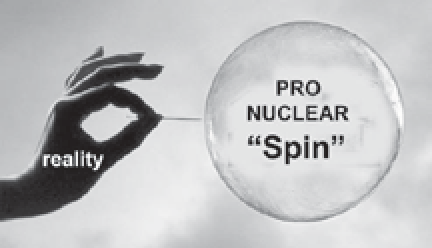
Instead, we get the rising hum of nuclear fairy tales and the wishful myths that go with them. Top of that list is the furphy that nuclear energy, while risky and poisonous and productive of waste that no one knows how to safely store, is somehow comparatively cheap. That’s just rubbish. The definitive analysis of energy costs in the Australian context is the recently updated AEMO/CSIRO GenCost report. It confirms under various scenarios that nuclear power simply cannot compete on cost with firmed renewables.
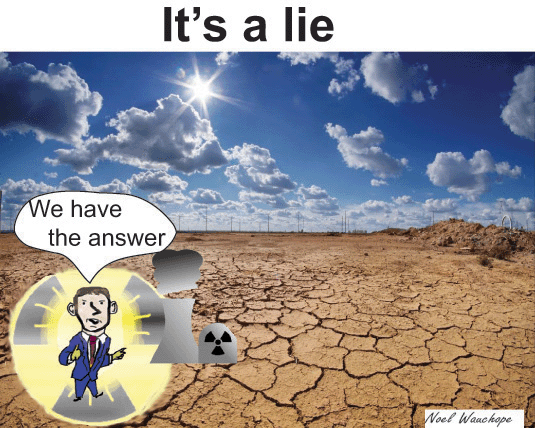
The latest darling of the ever-faithful nuclear fan club is the small modular reactor. SMRs, we are told, will be magically cheaper and safer. Such claims have been made by the nuclear industry about each new generation of technology right up to the point at which they turn out to be spectacularly untrue. At the moment SMRs simply don’t exist.
Myth number two asserts that as a matter of fact it is impossible to reach 100 per cent zero-emission energy without nuclear. Also wrong. Those making the claim are the same people who said that a 20 per cent renewable energy target for 2020 was reckless, and that a 50 per cent target for 2030 would be “economy wrecking”. Experts at the ANU gave evidence pointing to Australia’s potential as a renewable energy superpower with both generation and storage meeting our electricity needs and allowing us to export emission-free hydrogen.
The third myth is that Australia is missing out on the popular uptake of nuclear technology. In reality nuclear energy worldwide is in serious decline. The latest issue of the World Nuclear Industry Status Report shows that the nuclear share of electricity generation has dropped from its 1996 high of 17 per cent in 1996 to 10 per cent in 2018.
Countries that have relied on nuclear energy in the past are winding down their reliance. France has a target to reduce nuclear energy by a third. South Korea has decided it will no longer build nuclear. The UK is grappling with the costly implications of a new reactor that is years behind schedule and billions over budget, propped up by a 35-year power purchase agreement at double the current cost of electricity.
The most absurd myth of all is that we are being prevented from having a conversation about nuclear because of the current moratorium. Really? The claim is made in the report of yet another Parliamentary committee inquiry, which, in addition to receiving thousands of submissions, also involved public hearings in Brisbane, Melbourne, Sydney, Perth, Canberra, and Adelaide. Our inquiry followed the Switkowski review, the South Australian Royal Commission, and sits alongside a Victorian upper house inquiry.
There is nothing wrong with keeping an open mind on any topic but it shouldn’t be a blank mind. All the evidence shows there is no place for nuclear energy in Australia. Our policy paralysis is holding back our potential to be a renewable energy superpower. Those who agitate for an ongoing conversation on nuclear are spruiking a dangerous distraction.
No, Mr Baldock, our children do not deserve this dirty, long-lasting, nuclear trash dump
 Paul Waldon Fight To Stop A Nuclear Waste Dump In South Australia, 21 Feb 20, People leaving, property values dropping, large tracts of land hitting the market, children’s heritage being sold and/or eroded, a once strong community now divided, people happier to shop outside their community, these are the trademarks of a dying town with poor opportunities.
An aggressive social cancer fueled by a desperate and ignorant nuclear embracing dichotomy trying to grasp the doctrines of the indentured servitude bound nuclear coterie with a vested interest spouting factoids will surely fail to attract new business and people to the region.
Meanwhile Andrew Baldock, nuclear profiteer, social axe man has continued to state “We are doing this for the children!”
Well Baldock my children, my children’s children’s children don’t deserve this. https://www.facebook.com/groups/941313402573199/
Correcting the propaganda: Australia’s nuclear medicine DOES NOT NEED a national radioactive waste dump
|
Commenting on the opinion piece: Kimba nuke decision dumps on Indigenous rights In Daily 21 Feb 20, Once again, Sam Chard (Your views, February 19) glosses over some of the less flattering details of the proposed National Radioactive Waste Management Facility.
A lot of focus is given to the permanent disposal of the so-called ‘gloves and gown’ low-level waste. However, the proposal also includes the temporary above-ground storage of long-lived intermediate level waste. This waste will not be be safe after a half-life of 30 years (as with the low level waste). In fact, it will not be safe after 100 years when the facility is projected to close. This long-lived intermediate level waste is not currently ‘spread across 100 sites’. It is housed in one location in a purpose-built facility at Lucas Heights. This long-lived intermediate level waste is not currently ‘spread across 100 sites’. It is housed in one location in a purpose-built facility at Lucas Heights. There is no future plan, nor funding, to manage this waste in 100 years when the facility closes. The question that South Australians have to ask is; how our grandchildren are going to manage this waste long after the ‘community development’ fund is gone? – Megan Johnson The head of the federal government’s radioactive waste task force stated (Your views, February 19) that the planned national waste facility at Kimba is ‘critical to Australian nuclear medicine’, and went on to assert that ‘radioactive waste from nuclear medicine is currently spread over more than 100 locations across the country, at science facilities, universities and hospitals. It needs to be consolidated into a purpose-built facility, where it can be safely managed’. Sounds reasonable, but is it accurate? With minor exceptions, Australia’s waste from nuclear medicine is managed on a ‘store and decay’ basis. This means it is secured and stored at the site of use until it has decayed to a point where it can be disposed to local landfill. This material does not need any federal facility, and continuing access to nuclear medicine is not dependant on the planned national facility. The facility is related to nuclear medicine in as much as it is planned to house spent nuclear fuel from the Lucas Heights reactor, but not in relation to any need from clinics, Uni’s, hospitals or medical centres that use nuclear medicine. Perhaps the federal department could step up and list the one hundred sites that currently store radioactive material that will no longer need to do so should a national facility ever be built. No doubt they will claim they can’t do so because of security considerations, an explanation that sounds better than because there are few or no sites that need this. Radioactive waste lasts longer than any politician’s promise. Matt Canavan, who signed off on the contested Kimba plan at the start of this month, is now no longer a Minister – but the waste has up to another 10,000 years to go. We need to do better than to try and manage half-lives with half-truths. – Dave Sweeney, Australian Conservation Foundation https://indaily.com.au/opinion/reader-contributions/2020/02/21/your-views-on-nuclear-waste-le-cornu-site-and-holden-demise/ |
|
What was #ScottyFromMarketing planning, with U.S. military, at PineGap?
PRIME MINISTER’S PINE GAP VISIT RAISES EYEBROWS NT NEWS, 21 Feb 20,
The Prime Minister has made a visit to the secretive Pine Gap military intelligence base raising eyebrows about the potential involvement of the facility in ongoing tensions between the United States and Iran….. (subscribers only)
Heavens to Betsy! Murdoch media suddenly discovers that wind and solar power are great for Australia!
 How we’re riding a wind and solar wave to energy future, PAUL GARVEY, THE AUSTRALIAN, FEBRUARY 21, 2020 A nationwide wave of wind and solar projects has Australia on track to become one of the world’s biggest users of renewable energy, defying predictions a Canberra policy vacuum would make Australia a global climate laggard.
Such is the frenzy of new projects that parts of the electricity grid are struggling to accommodate the power now being generated, with a growing backlog of proposed developments waiting for grid infrastructure and battery technology to catch up…. (subscribers only) https://www.theaustralian.com.au/nation/politics/how-were-riding-a-wind-and-solar-wave-to-energy-future/news-story/18e3d0e0f69c81a14d3655a26e8914c3
Conflict in the COALition over climate change and emissions reduction

Mathias Cormann says Coalition will ‘finalise longer-term target in time for Cop26’ but Angus Taylor commits only to ‘long-term strategy’, Guardian, Paul Karp @Paul_Karp – 21 Feb 20 Senior Morrison government ministers are publicly at odds about whether Australia will take a long-term emissions reduction target to global climate talks in November after Labor unveiled a target of net zero emissions by 2050.On Friday the finance minister Mathias Cormann confirmed the government “will be finalising a longer-term target in time for Cop26” but the emissions reduction minister would commit only to “a long-term strategy” despite repeatedly being asked about a new target.
As revealed by Guardian Australia, Anthony Albanese used a speech to a progressive thinktank on Friday to commit the ALP to adopting a net zero target by 2050 if it wins the next federal election, without the use of carryover credits from the Kyoto period.Senior Morrison government ministers are publicly at odds about whether Australia will take a long-term emissions reduction target to global climate talks in November after Labor unveiled a target of net zero emissions by 2050.
On Friday the finance minister Mathias Cormann confirmed the government “will be finalising a longer-term target in time for Cop26” but the emissions reduction minister would commit only to “a long-term strategy” despite repeatedly being asked about a new target.
As revealed by Guardian Australia, Anthony Albanese used a speech to a progressive thinktank on Friday to commit the ALP to adopting a net zero target by 2050 if it wins the next federal election, without the use of carryover credits from the Kyoto period.
Scott Morrison is holding off from making a commitment to carbon neutrality by 2050, partly because of an internal brawl within the Coalition and partly because the prime minister says Australia should not sign up to targets in the absence of costings.
Some in the government have noted publicly in recent weeks that Australia implicitly accepted the net zero pathway when the Coalition signed and ratified the Paris agreement, and Liberal moderates are now pushing to make net zero an explicit target beyond the 26-28% emissions reduction promised by 2030…..
Despite the Coalition criticism, business rode to Labor’s defence. Australian Industry Group chief executive Innes Willox said the net zero target “is increasingly widely supported by Australian businesses, industry advocates such as Ai Group, the wider community and governments of all complexions”.
“That growing consensus is important to guide and discipline the development of efficient, trade neutral and fair policies to get there,” he said.
“We shouldn’t underestimate the challenge of net zero, which goes well beyond generating cleaner electricity……
Every state and territory has expressed at least an aspirational objective of achieving net zero emissions by 2050, and Australia has been urged by the UK and its Pacific neighbours to sign up to that target.
Albanese noted on Friday that the Business Council of Australia is calling for it as well as major corporates including AGL, Santos, BHP, Amcor, BP, Wesfarmers and Telstra.
“Seventy-three countries, including the UK, Canada, France and Germany, many with conservative governments, have already adopted it as their goal,” he said. “Australia should too
Earlier, Labor’s climate change spokesman, Mark Butler, told Radio National the opposition would set out a detailed policy about how to achieve targets and its cost “well before” the next election.
Butler argued that the cost of reducing emissions should not be divorced from the cost of inaction and noted Melbourne University research had found actions to reduce emissions have a benefit cost ratio of 20 to one. https://www.theguardian.com/australia-news/2020/feb/21/coalition-ministers-at-odds-over-emissions-target-after-labor-commits-to-net-zero-by-2050
Australia the ‘poster child’ for climate change inaction
 Paris Agreement architect Christiana Figueres says Australia the ‘poster child’ for climate inaction
The bushfire crisis made Australia the “poster child” for climate change inaction – but the fires should force the world to act, the architect of the Paris Agreement says. https://www.adelaidenow.com.au/technology/paris-agreement-architect-christiana-figueres-says-australia-the-poster-child-for-climate-inaction/news-story/e1798a8339a817804c2330731f11775f, Tory Shepherd, State Editor, The Advertiser, 21 Feb 20
Devastating bushfires have made Australia the “poster child” for climate change inaction and the world is weeping for us, the architect of the Paris Agreement says.
Christiana Figueres was the executive secretary of the United Nations Framework Convention on Climate Change when it brought almost 200 nations together to commit to the historic agreement in 2015.
The global goal is to reach net zero emissions by 2050 in order to cap temperature rises, and Ms Figueres’ comments come as federal Labor commits to that goal.
“Any time the word Australia is uttered outside of Australia we all have to contain our tears,” she told The Advertiser.
“This has been so painful, so deeply painful to witness in the news every day the destructive power of bushfires that have gone completely out of control despite the heroic efforts of the firefighters.”
Ms Figueres is coming to Womadelaide in two weeks to talk about her new book The Future We Choose: Surviving the climate crisis.
The lives lost – including a billion animals – and the destruction of the environment and property are just “completely irreplaceable”, she said.
“This is not normal. This is so tragic that Australia is now the poster child, the example of irresponsible management and of undue care on climate change measures.
“I think history will be (divided into) before the Australian fires and after the Australian fires.”
Despite those words, Ms Figueres is optimistic the world can meet the Paris targets, although she is still concerned it won’t happen fast enough.She welcomed Labor leader Anthony Albanese’s commitment to the 2050 target. In a major policy speech today, the Opposition Leader said Australia had always prided itself on pulling its weight.
“We have seen climate change be a factor in our devastating bushfires. We could see it, smell it, even touch it,” he said.
”Our amazing continent is particularly vulnerable, so we have a lot to lose. But the good news is we also have a lot to gain. Action on climate change will mean more jobs, lower emissions and lower energy prices.”
Ms Figueres said it had been “rather odd” that Australia had seemed to be stepping away from the agreement, as the Federal Government battles a split on the issue.
Energy Minister Angus Taylor says the government is not going to “commit to a target without costings and without a clear plan”.
She said Mr Albanese’s commitment was “the only responsible target”.
“It’s the target stipulated in the Paris agreement. The Paris agreement is science based,” she said.
The Federal Government is setting up a Royal Commission on the summer’s devastating bushfires.
1 This month
.

Australians deserve the truth
about
AUKUS – https://aukuspublicinquiry.com/

PETITION – To: Prime Minister Anthony Albanese and the Australian Labor Government

of the week – Australians for War Powers Reform (AWPR)
To see nuclear-related stories in greater depth and intensity

