Australian government pushes on with nuclear dump, tramples on indigenous rights
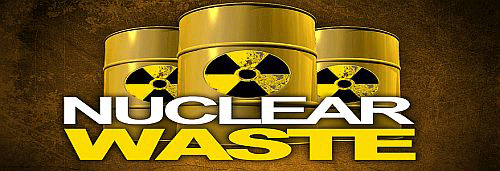 Kimba nuke decision dumps on Indigenous rights, https://indaily.com.au/opinion/2020/02/13/kimba-nuke-decision-dumps-on-indigenous-rights/ The federal government’s decision to place a a nuclear waste storage site at Kimba on SA’s Eyre Peninsula turned deaf ears to the opposition of the area’s native title holders, argue Jim Green and Michele Madigan. Kimba nuke decision dumps on Indigenous rights, https://indaily.com.au/opinion/2020/02/13/kimba-nuke-decision-dumps-on-indigenous-rights/ The federal government’s decision to place a a nuclear waste storage site at Kimba on SA’s Eyre Peninsula turned deaf ears to the opposition of the area’s native title holders, argue Jim Green and Michele Madigan.
The federal government recently announced that it plans to establish a national nuclear waste ‘facility’ near Kimba on South Australia’s Eyre Peninsula. It will comprise a permanent dump for low-level nuclear waste, and an ‘interim’ store for long-lived intermediate-level waste. Shamefully, the federal government has decided to move ahead despite the unanimous opposition of the Barngarla Traditional Owners, native title holders over the area. The federal government refused a request from the Barngarla Determination Aboriginal Corporation (BDAC) to include traditional owners in a community ballot held last year. So BDAC initiated a legal action protesting their exclusion. The court case is ongoing and an outcome is expected soon. BDAC also engaged the Australian Election Company to conduct a confidential postal ballot. Not a single Barngarla Traditional Owner voted in favour of the dump. BDAC wrote to the government calling for the dump proposal to be abandoned in light of their unanimous opposition, and stating that BDAC will take whatever steps are necessary to stop it being imposed on Barngarla Country against their will. The National Radioactive Waste Management Act systematically discriminates against Australia’s First Nations. For example, the nomination of a site for a nuclear dump is valid even if Aboriginal traditional owners were not consulted and did not give consent. And the Act has sections which nullify or curtail the application of laws such as the Aboriginal and Torres Strait Islander Heritage Protection Act 1984, and the Native Title Act 1993. The federal government recently announced that it plans to amend the Waste Management Act. While the Act is sorely in need of an overhaul, the planned amendments aren’t those that are needed. Clauses in the Act that dispossess and disempower traditional owners will remain untouched. The SA Labor Party argues that traditional owners ought to have a right of veto over nuclear projects given the sad and sorry history of the nuclear industry in SA, stretching back to the British atomic bomb tests. Deputy Leader of the Opposition Susan Close says that SA Labor is “utterly opposed” to the “appalling” process which led to the recent announcement regarding the Kimba site. Compare that to the federal government, whose mind-set seems not to have advanced from the ‘Aboriginal natives shall not be counted’ clause in the Constitution Act 1900. As Barngarla Traditional Owner Jeanne Miller says, Aboriginal people with no voting power are put back 50 years, “again classed as flora and fauna.” The current debate follows a history of similar proposals ‒ all of them defeated, with traditional owners repeatedly leading successful campaigns. In 2004, after a six-year battle, the Howard government abandoned plans for a national nuclear waste dump in SA. The Kupa Piti Kungka Tjuta ‒ a senior Aboriginal women’s council ‒ congratulated the government for belatedly getting their ‘ears out of their pockets’. In 2016, the plan to import high-level nuclear waste from around the world was abandoned after a Citizens’ Jury noted the lack of Aboriginal consent and concluded that “the government should accept that the Elders have said NO and stop ignoring their opinions.” And last year, the federal government abandoned plans for a national nuclear dump in the Flinders Ranges, a plan that was fiercely contested by Adnyamathanha Traditional Owners. SA Premier Steven Marshall is rightly proud of his record promoting the growth of renewable energy in SA. And he’s proud of his significant role in putting an end to the plan to import high-level nuclear waste from around the world. So where will the Premier ‒ whose portfolio includes Aboriginal Affairs and Reconciliation ‒ stand on this latest nuclear controversy? He needs, as the Kungkas put it, to get his ears out of his pockets and to respect the unanimous opposition of the Barngarla First Nation. Dr. Jim Green is the national nuclear campaigner with Friends of the Earth Australia. Michele Madigan is a Sister of St Joseph who has spent the past 40 years working with Aboriginal people across SA. |
|
Nuclear waste dumping: as the Baldock family sells farming land, is the agricultural market for Kimba now stuffed up?
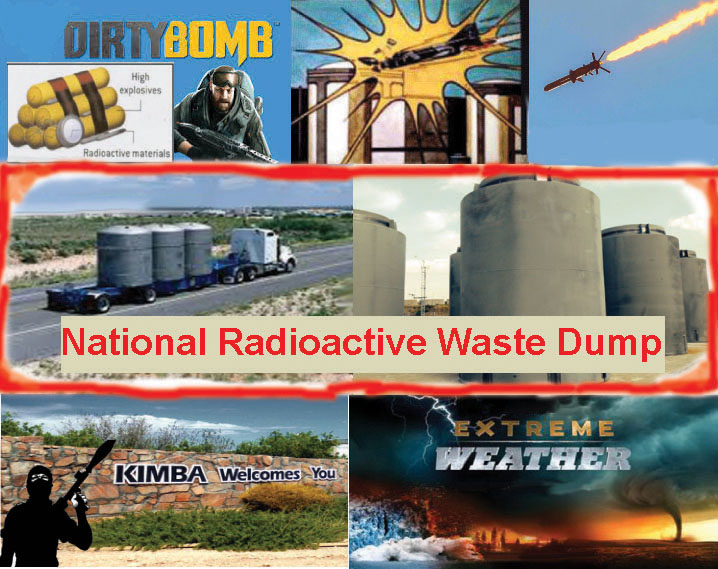
As the Baldock family anticipates the establishment of a nuclear waste dump on Jeff Baldock’s land, they now sell a large chunk of their farming land, along with three other farming families that have made the same decision. (Reported in The Advertiser , 14 Feb 2020)
It looks as if they are getting out fast, before the dirty nuclear waste news is widely known.
And here are some of the many comments on Facebook:
James Shepherdson It is actually about roughly 20ks from the site and has only just been added to the other land for sale. Read into it what you will , but if he’s planning to stay he’s sure sending the wrong message with this move .As far as being approachable, been there done that and got jumped on by council and the gov department and were accused of bullying . this will go down in history as the most undemocratic process in this country
K Bruun I can’t – but at the same time ‘can’ – believe this. I am amazed at how planned this has been. There must be something sociopathic about these people. I still don’t understand how Baldock could spend his nuffield scholarship learning how to keep families on farms together, yet does this. What is the psychology behind people like this? They have effectively harmed their entire community.
Kazzi Jai Paul Waldon “It was sheer elation when I heard,” Baldock says. “I’m 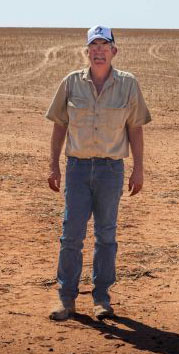 very, very excited about what lies ahead for Kimba. It gives me a great feeling of relief. I’m quite excited to have it on my property and see it develop, to have our kids around it and see some opportunities close to home.”
The Saturday Paper February 8th -14th 2020
Noel Wauchope Perhaps the Baldocks and others look to a “healthy”economic transition for Australia from an agricultural country to the world’s quarry and waste dump.
#WETOOARE PROTESTERS FREE JULIAN ASSANGE
https://weetoo.home.blog/We are a group of mothers, fathers, teachers and students from all over the world, and we are extremely worried about the health condition, as well as the violations of the most basic human rights, of journalist and editor Julian Assange.
The award-winning journalist, in fact, has been held for months in isolation in the maximum security of Belmarsh Prison waiting for extradition to the United States where, confirmed by United Nations experts, it will be difficult for him to have a fair trial and where he risks up to 175 years in prison or even the death penalty.
The motive for the indictment was made mainly by his having published military documents confirming corruption and atrocious war crimes; in particular his website Wikileaks documents show how the wars in Afghanistan and Iraq that have massacred millions of people were created by governments for economic interests and for the exploitation of resources. In these territories the number of terrorists has increased exponentially. Not only that, Assange unveiled the conditions of Guantanamo prisoners, abuses of every type, and tens of thousands of civilian homicides in Iraq and Afghanistan by the American army, including the assassination of two Reuters journalists all documented in the chilling video, Collateral Murder. https://www.youtube.com/watch?v=5rXPrfnU3G0&t=59s
In Julian Assange’s long and frightening persecution, we witnessed seven years of systematic violation of his human rights. The right of citizens to question public interests was also completely ignored. Now, we refuse to participate in a further extension of psychological and physical torture perpetrated against the journalist, as reported by Nils Melzer, the special reporter of the United Nations, who found Assange in a condition of extremely troublesome health. Continue reading
Media coverage of Kimba nuclear waste dump is found wanting
|
Marc Daniel, Commenting on the story: Kimba nuclear dump laws hit parliament So much misinformation in this article. It does not have broad community support. The voting pool was narrowed to 800 and the vote was won by 70 votes. That’s not broad support. It’s a manipulated outcome. Then the actual figures ‘vanish’ and they talk of percentages and broad support. ” ‘I thank the people of Kimba, Hawker, Quorn and surrounds, Traditional Owner groups, the Kimba District and Flinders Ranges councils and the Outback Communities Authority for their participation in this process,’ Pitt said today.” They took the Kimba traditional owners to court to specifically exclude them from the poll. Funny how the first site was offered by the sitting Liberal member Rowan Ramsey, and this was only withdrawn when someone pointed out the conflict of interest so blatant but unrecognised by him. It’s actually against the laws of South Australia, a law that was given broad discussion and brought in by the SA Rann Government, now to be overridden by federal law. 45 Jobs. Maybe, but that’s during construction. Maybe. They promise 25 in operation, but who can trust that figure when any new process built in a modern era can be fully automated. Maybe 2 security guards on the gate if its not remotely monitored from a capital city somewhere. Where is the nearest hospital and medical services? Kimba has none. How will it get there? None have been consulted about this, especially in Whyalla, the port that a report nominates as the shipping point. This article has taken the Government’s “facts” and failed to examine any of them. Its not reporting, its propaganda. Marc Daniel https://indaily.com.au/opinion/reader-contributions/2020/02/14/your-views-on-a-city-stadium-nuclear-dump-and-planning-reform/ |
|
|
|
Kimba nuclear dump laws hit parliament. In Daily 13 Feb 20Draft laws to turn a Kimba farm into a national nuclear waste facility have hit federal parliament, only weeks after the site on SA’s Eyre Peninsula was announced.
Resources minister Keith Pitt said today legislative amendments had been introduced to parliament to “support the delivery” of the facility, at Napandee near Kimba. …… [Pitt goes on to put the “medical “argument for the waste dump – not a word about spent fuel rods from the Lucas Heights nuclear reactor] Under this Government, decisive action has been taken to finally provide a facility where we can consolidate existing and future radioactive waste stream.” The Bill would also enable the establishment of a $20m community fund to help deliver on federal commitments to Kimba, which Pitt said “broadly supports” the facility. Kimba was chosen after a four-year process and is expected to be a nuclear waste dump for 100 years. About 45 people will be employed at the site, which the government says will store low-level waste permanently and intermediate-level waste temporarily. Environmental and indigenous groups oppose the dump, but a recent poll conducted around Kimba returned a 62 per cent vote in favour of the facility. A site near Hawker was ruled out after a community survey found minority support. Native title has been extinguished at the Kimba site, but the government insists it wants to protect indigenous cultural heritage and work with the Aboriginal community near the facility. “I thank the people of Kimba, Hawker, Quorn and surrounds, Traditional Owner groups, the Kimba District and Flinders Ranges councils and the Outback Communities Authority for their participation in this process,” Pitt said today. The draft laws will be considered by a parliamentary committee so stakeholders can give feedback. https://indaily.com.au/news/2020/02/13/kimba-nuclear-dump-laws-hit-parliament/ |
|
Controversial legislation for Kimba nuclear waste dump is tabled in Federal parliament
Nuclear legislation on the table, Whyalla News, Louis Mayfield 14 Feb 20 The federal government’s goal of establishing a National Radioactive Waste Management Facility (NRWMF) at Napandee, Kimba is a step closer after key legislation was tabled in the Parliament on Thursday.
The controversial National Radioactive Waste Management Amendment (Site Specification, Community Fund and Other Measures) Bill 2020 will be subject to much scrutiny from the Senate crossbench and other stakeholders.
“It is wrong to say there is broad community support. Traditional Owners have rejected the proposal. Once again the Morrison Government and Minister Canavan haven’t listened,” she said.
“Whilst the decision by 62% of the community to back the facility being built must be respected, so too must the views of those who were under the impression that the facility would not go ahead without ‘broad community support’,” he said.
The bill will also allow the government to establish a $20 million Community Fund for Kimba, promising to support long-term infrastructure and development priorities for the town……. https://www.whyallanewsonline.com.au/story/6629280/nuclear-legislation-on-the-table/?fbclid=IwAR0Q46EnPyGMac0c6shR7o_dhPh5BQBhWwkN1FuCaq6zwJi_6lfc2qjS0SA
Yearly climate costs $29bn for Australia with ‘business as usual’
Australia faces annual $29bn climate bill The Saturday Paper, Max Opray 15 Feb 20, A “business as usual” response to climate change will cost Australia at least $29 billion a year, according to a new study. The World Wide Fund for Nature report projected that Australia’s economy will be the fifth worst-affected over the next three decades. This was a best-case scenario, and did not factor in the cost of more intense bushfires. “Because so much of Australia’s population, infrastructure and service sector output is concentrated in coastal areas, we are more vulnerable than most to sea-level rise and storm surges,” said WWF-Australia economist Joshua Bishop. The modelling shows that the global price of some key commodities will rise by almost 10 per cent. The report noted that environmentally friendly land-use management techniques alone could halve the hit to national GDP. The news comes as an Australian Conservation Foundation analysis found that the fossil-fuel industry has doubled its donations to the major parties in the past four years. …. https://www.thesaturdaypaper.com.au/thebriefing/max-opray/2020/02/13/australia-faces-annual-29bn-climate-bill?utm_medium=email&utm_campaign=The%20Briefing%20-%20Thursday%2013%20February%202020&utm_content=The%20Briefing%20-%20Thursday%2013%20February%202020+CID_a8e00424e41f86960e9b9
Australia’s Mawson research station monitors radionuclides in the atmosphere
|
Nuclear watchdog sniffs wind at Mawson, Mirage News, 14 Feb 20 An ordinary-looking shipping container at Australia’s Mawson research station plays an important role in the global network that polices a ban on nuclear testing.Inside is a high-volume air sampler, one of 80 world-wide, running every day since 2013 to ‘sniff’ the wind for traces of radioactive debris.
The air sampler at Mawson is part of the international monitoring system for the Comprehensive Nuclear-Test-Ban Treaty (CTBT), which aims to ensure that no nuclear explosion goes undetected. The Australian Radiation Protection and Nuclear Safety Agency (ARPANSA) is responsible for a total of 21 monitoring stations within Australia and its territories. Three are in Antarctica – Mawson research station monitors radionuclides in the atmosphere and seismic vibrations in the earth’s crust, and an infrasound facility near Davis research station uses acoustic pressure sensors to detect very low-frequency sound waves in the atmosphere. A radionuclide is an atom with an unstable nucleus that loses its excess energy by emitting radiation in the form of particles or electromagnetic waves. All chemical elements can exist as radionuclides. They occur naturally or can be produced artificially by nuclear reactors, particle accelerators, or nuclear explosions. ……. https://www.miragenews.com/nuclear-watchdog-sniffs-wind-at-mawson/ |
|
Risk that Environment Protection and Biodiversity Conservation (EPBC) Act could be changed to promote nuclear power

K-A Garlick at Nuclear Free WA, 12 Feb 20
The Environment Protection and Biodiversity Conservation (EPBC) Act is currently under review and will look at how the Act has been operating, and any changes needed for Australia to support ecologically sustainable development into the future.
Currently, under the EPBC Act, nuclear power is banned and the ‘nuclear action’ triggers uranium mining and milling projects to be Federally assessed. This should remain.
There is a real threat that the EPBC Act could change to remove the ban on nuclear power and the ‘nuclear actions’ trigger, so that this dirty industry can push forward. We urge you and your organisation to make a submission to keep the ban on nuclear power and the ‘nuclear action’ triggers.
Don’t nuke the climate is a great new website with a ton of information to use for your submission including last years no nuclear power statement by a broad coalition of faith, union, environmental, Aboriginal and public health groups, representing millions of Australians, that clearly outlines our energy future is renewable, not radioactive. Click here to read the statement.
Submissions are due 17 April 2020. You can send submissions via email to epbcreview@environment.gov.au Or via post to: EPBC Act Review Secretariat Department of the Environment and Energy GPO Box 787 CANBERRA ACT 2601. Please complete and submit this cover page with your submission. All submissions that include this cover sheet will be considered by the review. For more information on the EPBC Act and submissions, click here.
Whyalla is targeted for nuclear waste shipments and should have a right to refuse untenable plans.
 Whyalla is targeted for nuclear waste shipments and should have a right to refuse untenable plans.
Napandee Nuclear Store site nomination also targets Whyalla Port: Nuclear Brief (Feb 2020) by David Noonan, Independent Environment Campaigner
Amidst rising controversy, a Federal Minister has nominated Napandee near Kimba on Eyre Peninsula as a Nuclear Store to take reactor fuel wastes and long-lived wastes from Lucas Heights.
The “Site Characterisation Technical Report: Napandee” (DIIS, July 2018, Proximity to ports p.150) named Whyalla Port to take shipments of nuclear fuel wastes, in the event Napandee is named as a Nuclear Store. Two shipments of reprocessed nuclear fuel wastes, in 130 tonne TN-81 casks, are intended within the first two years of operations of a Nuclear Waste Store at Napandee (p.152).
Some 100 x B-double 50 tonne loads of Intermediate Level Wastes (ILW) are also intended in the first four years of Nuclear Store operations at Napandee (p.152). The Report (p.157-158) states:
“It may be possible to have these containers shipped from Port Kembla to ports such as Whyalla”
However, the Federal government has conspicuously failed to consult the SA community on plans to impose multiple shipments of nuclear waste across SA, including potentially through Whyalla Port.
This flawed practice is in continued breach of advice of the Nuclear Safety Committee (NSC) to the nuclear regulator ARPANSA (Nov 2016) on the NRWMF, on transparency in decisions, stating:
“The ongoing requirement to clearly and effectively engage all stakeholders, including those along transport routes.” With the NSC stating that: “Such engagement is essential…
” Eyre Peninsula, Whyalla and transport route communities have so far been denied a say on these Federal nuclear waste plans and now face potential serious reputational risks and material impacts.”
The Australian Radioactive Waste Management Framework (DIIS, April 2018, p.4) reports total Intermediate Level Wastes at 1,770 m3 – with 95% (by volume) arising as Federal government wastes.
The Federal gov. plans to more than double Intermediate Level Wastes to produce a further 1,960 m3 over next 40 years, with 1,850 m3 (95%) of that arising from ANSTO Lucas Heights operations.
All these nuclear wastes are intended to go to Napandee for up to 100 years above ground storage.
Proposed indefinite above ground storage of nuclear fuel wastes at Napandee may compromise safety and security in SA and contravenes Nuclear Safety Committee advice. The NSC has stated dual handling in transport associated with interim storage “does not represent international best practice” and raises “implications for security”. These federal nuclear plans are also illegal in SA.
The previous SA State Liberal government prohibited the import, transport, storage and disposal of nuclear fuel wastes and reprocessed wastes under the Nuclear Waste Storage (Prohibition) Act 2000.
“The Objects of this Act are to protect the health, safety and welfare of the people of South Australia and to protect the environment in which they live by prohibiting the establishment of certain nuclear waste storage facilities in this State.”
ARPANSA states these nuclear wastes require isolation from the environment for 10 000 years.
Nuclear waste can pose serious Safety, Accident and Security Risks:
“In the event of a major nuclear accident, adverse impacts on the tourism, agriculture and property sectors could potentially be profound.”
SA Nuclear Royal Commission: Tentative Findings, Risks and Challenges, Impacts on other Sectors (Feb 2016, p.28)
Key questions on safety and security in nuclear fuel waste transport and storage remain unanswered (see D Noonan submission to Minister Canavan, p.11-12). These wastes must not be allowed into SA.
The UK Nuclear Free Local Authorities “Briefing: Nuclear security concerns – how secure is the UK civil nuclear sector?”
(NFLA, May 2016) highlights key security threats including the risks from potential malicious attack on a nuclear waste transport or on a nuclear waste storage site. NFLA (p.8) cites the views of nuclear engineer Dr John Large on safety as at the heart of its concerns:
“Movement of nuclear materials is inherently risky both in terms of severe accident and terrorist attack. Not all accident scenarios and accident severities can be foreseen; it is only possible to maintain a limited security cordon around the flask and its consignment; … terrorists are able to seek out and exploit vulnerabilities in the transport arrangements and localities on the route; and emergency planning is difficult to maintain over the entire route.”
NFLA Recommendations (p.15) call for real discussion on the aftermath of a nuclear security incident given the major emergency response issues that arise. That belated debate is yet to be heard in SA.
SA is arguable unprepared for the consequences of nuclear fuel waste accidents or security events. Hundreds of Police were required for security at a 2018 nuclear waste shipment out of Port Kembla.
Whyalla is targeted for nuclear waste shipments and should have a right to refuse untenable plans.
In “Nuclear port potential” (Whyalla News, 3 rd August 2018, p.1) the Mayor said Federal gov. plans to use Whyalla’s port for nuclear waste: “would require significant community consultation”, noting:
“In the past Whyalla has opposed any nuclear or radioactive shipping in this region”.
DIIS’s Napandee Site Characterisation Report refers to potential “occurrences of complete shutdown” (p.154) in Iron Triangle Cities during nuclear waste shipments. This is unacceptable.
These are fundamentally State issues and the SA public have not given consent to proposed nuclear waste transport and storage. Under the leadership of Premier Steven Marshall the SA State Liberal government has a responsibility to protect the public interest and to uphold the law in our State.
The Marshall gov. must protect all SA regional communities and reject a Nuclear Waste Store in SA. For further Information, see: https://nuclear.foe.org.au/waste
Senate opens the door for nuclear developments
Senate opens the door for nuclear developments: From ENuFF[SA]
https://www.facebook.com/sanuclearfree/–13 Feb 20
 February 11 2020
Senator HANSON-YOUNG (South Australia) (16:12): I move:
That the Senate:
(a) affirms its commitment to a complete moratorium on nuclear energy, as expressed in the Australian Radiation Protection and Nuclear Safety Act 1998 and the Environment Protection and Biodiversity Conservation Act 1999;
(b) notes the devastating and lasting impacts of the nuclear disasters in Fukushima, Chernobyl and Three Mile Island; and
(c) call on all Ministers to commit to Australia being a nuclear-free zone.
========================
DIVISION:NOES 35 (6 majority) AYES 29 PAIRS 6
Question negatived.
========================
Rex Patrick voted No
P Wong paired
https://parlinfo.aph.gov.au/parlInfo/search/display/display.w3p;query=Id%3A“chamber%2Fhansards%2Fc220a265-e5aa-42c9-8cd9-19390fabb066%2F0127”
#ScottyFromMarketing ‘s bushfire inquiry studiously ‘ignores’ carbon emissions
 PM’s bushfire inquiry ‘ignores’ carbon emissions, Barr says, Canberra Times, Dan Jervis-Bardy 11 Feb 20, PM’s bushfire inquiry ‘ignores’ carbon emissions, Barr says, Canberra Times, Dan Jervis-Bardy 11 Feb 20,
Chief Minister Andrew Barr has criticised the scope of Scott Morrison’s proposed royal commission into the summer bushfire crisis, saying it overlooks the role that cutting carbon emissions plays in combating climate change and future fire threats.
How the Prime Minister responds to Mr Barr’s concerns will determine if the ACT supports the national inquiry. Mr Barr wrote to the Prime Minister on Tuesday with his feedback on draft terms of reference for the royal commission into the bushfire disaster.
The Chief Minister wants a national inquiry into the horror fire season, but has repeatedly said that any review would be inadequate unless it thoroughly examines the effect climate change has had on the length and ferocity of bushfire seasons…… In his letter to Mr Morrison, the ACT Chief Minister said the inquiry also needed to look at strategies to tackle climate change, such as cutting carbon emissions.
|
|
MPs Andrew Wilkie and George Christensen to UK to help free Julian Assange
 MPs take Assange freedom campaign to UK
https://www.news.com.au/national/breaking-news/mps-take-assange-freedom-campaign-to-uk/news-story/633a9baa272bd155623423565e86e6b4 12 Feb 20,
Tasmanian independent MP Andrew Wilkie and Queensland Nationals MP George Christensen will travel to the United Kingdom to lobby for Julian Assange’s freedom Paul Osborne, Two Australian politicians will travel to the UK this weekend at their own expense to visit Julian Assange in jail and seek his release.
Tasmanian independent MP Andrew Wilkie and Queensland Nationals MP George Christensen, who chair a parliamentary group in support of the WikiLeaks founder, will pay a visit to Belmarsh Prison near London and lobby the British government.
Assange is set to face trial on February 24 to determine whether he should be extradited to the US, where he has been charged with 17 counts of spying and one count of conspiracy to commit computer intrusion.
New Resources Minister Keith Pitt ignores renewables, pushes for more coal, gas and uranium exports
 New Resources Minister calls for more coal, gas and uranium exports, Brisbane Times, By David Crowe, February 11, 2020 Australia will need more coal, gas and uranium exports to pay for essential services and lift living standards, incoming Resources Minister Keith Pitt has declared in a warning shot to activists trying to block new projects.Mr Pitt vowed to use his new job to make Australia an even bigger energy exporter and sent a message to state governments to open up new coal seam gas fields to drive down the price of energy for households…… New Resources Minister calls for more coal, gas and uranium exports, Brisbane Times, By David Crowe, February 11, 2020 Australia will need more coal, gas and uranium exports to pay for essential services and lift living standards, incoming Resources Minister Keith Pitt has declared in a warning shot to activists trying to block new projects.Mr Pitt vowed to use his new job to make Australia an even bigger energy exporter and sent a message to state governments to open up new coal seam gas fields to drive down the price of energy for households……
An advocate of nuclear power in the past, Mr Pitt said he would not be making any decisions about nuclear energy given this was the responsibility of Energy Minister Angus Taylor, but he backed more uranium exports……. https://www.brisbanetimes.com.au/politics/federal/new-resources-minister-calls-for-more-coal-gas-and-uranium-exports-20200211-p53zu5.html |
|
South Australia’s renewable energy future hampered by lack of electricity infrastructure
 South Australia’s renewable energy future hampered by lack of electricity infrastructure https://www.abc.net.au/news/2020-02-11/sa-renewables-future-hampered-lack-of-instructure/11935392
By Emma Pedler and Lucy Robinson South Australia’s drive to be the national leader in renewable energy is being hampered by infrastructure unable to support the future growth potential, according to economist Ross Garnaut.
Key points:
- A lack of infrastructure is undermining SA’s goal to lead the nation in renewable energy, experts say
- A windfarm that was approved almost 20 years ago was never developed because of a lack of support for large-scale operations
- State officials say a proactive approach to infrastructure would attract businesses and create jobs
Dr Garnaut highlighted the Eyre Peninsula and Spencer Gulf as two of the regions most likely to be able to both create renewable energy and house the industries that want to use it.
But he said the region would not be able to capitalise on opportunities without high voltage transmission infrastructure similar to the interconnector recently approved to link SA and New South Wales.
“We need lots more of that kind of infrastructure … so that we can bring together at single points a range of high quality wind and high quality solar, so that we can balance the requirements of different parts of the region,” he said Continue reading
Zali Steggall’s climate Bill, Labor’s befuddlement on coal
|
Mike Cannon-Brookes says Zali Steggall’s bill could repair Australia’s reputation on climate
Guardian, Atlassian co-founder says the MP’s bill is the exact type of action we need and deserves bipartisan support, Katharine Murphy and Adam Morton, Tue 11 Feb 2020 Atlassian co-founder Mike Cannon-Brookes has thrown his support behind a climate action bill proposed by the independent Zali Steggall and has urged the major parties to put down the cudgels and support it.And the Australian Energy Council, representing major electricity and gas businesses, said the Steggall bill deserved to be seriously considered as it had the potential to deliver certainty and a path forward for the national economy. Cannon-Brookes said on Tuesday the Steggall proposal, unveiled this week, was “a smart bill, and the exact type of action we need to change Australia’s international reputation on climate”. The bill includes a proposal for a net zero emissions target by 2050, a carbon emissions budget, and assessments every five years of national climate change risk. The MP has called on the major parties to bring the bill to the floor and allow a conscience vote. Cannon-Brookes said the proposal contained all the elements of a viable settlement to the climate wars. “The legislated 2050 target and five-year increments are precisely what is required, and the bill deserves bipartisan support.” ……. It follows a declaration by the Business Council of Australia that Australia should work to achieve net zero emissions by 2050……. Steggall’s bill will not be brought on for debate unless either the government or Labor supports it reaching the floor of the House. The government has not yet made a decision but it is unlikely to support it. On Tuesday morning, the Labor leader Anthony Albanese said it was highly unlikely the bill would be voted on “because that’s what happens with private member’s bills in the House of Representatives, unless the government agrees to allocate time for the bill, it will not be voted on”. Albanese said the proposal was very well intentioned, and he “respected” Steggall for bringing it forward, but told the ABC “we are unlikely to have a conscience vote on climate change. What we’ll do is support action on climate change.” The Labor leader said the opposition would commit to a long-term emissions reduction target “very soon” and, referencing an internal split within the Coalition about taxpayer backing for new coal plants, said: “I don’t think there is a place for new coal-fired power plants in Australia. Full stop.” On Sunday, Labor’s deputy leader Richard Marles, in a particularly awkward interview, did not rule out the party supporting new coal developments, saying it would be a decision for the markets despite previously declaring it would be a “good thing” if the thermal coal market collapsed. https://www.theguardian.com/australia-news/2020/feb/11/mike-cannon-brookes-says-zali-steggalls-bill-could-repair-australias-reputation-on-climate |
|
1 This month
.

Australians deserve the truth
about
AUKUS – https://aukuspublicinquiry.com/

PETITION – To: Prime Minister Anthony Albanese and the Australian Labor Government

of the week – Australians for War Powers Reform (AWPR)
To see nuclear-related stories in greater depth and intensity

