Adani about to receive criminal conviction over false documents
 Adani agrees to plead guilty to giving ‘false or misleading documents to an administering authority’, may be fined up to $3m
Key points:
- The company’s Australian arm, Adani Mining Pty Ltd, is listed for sentencing in the Brisbane Magistrates Court
- It belatedly declared clearing land on its mine site after environmentalists complained to the government
- The company says it has been prosecuted for an “an administrative error”
Adani has agreed to plead guilty to giving “false or misleading documents to an administering authority”, according to the court file and sources familiar with the case.
The company’s Australian arm, Adani Mining Pty Ltd, is listed for sentencing today in the Brisbane Magistrates Court.
It faces a fine of up to $3 million if convicted under the Environmental Protection Act.
According to notes in the court file made by Magistrate Stephen Courtney and seen by the ABC, the matter is “to be [a] plea of guilty”.
In court papers, the Department of Environment and Science (DES) says Adani filed its annual return in March 2018 with a graph declaring it cleared no land on the Carmichael mine site, north-west of Clermont, in 2017-18.
The DES alleged it became aware of the offence six months later. It alleged Adani “knew or ought reasonably to have known [the document] was false or misleading” because it had planned and carried out land clearing before and during the reporting period.
On September 6, 2018, conservation group Coast and Country raised land clearing allegations with the State Government, citing satellite imagery.
State and federal environment department officials then inspected the site within days……..https://www.abc.net.au/news/2020-02-06/adani-to-plead-guilty-court-qld/11932640
Greens leader Adam Bandt vows to hold torch to Coalition on climate
 Greens leader Adam Bandt vows to hold torch to Coalition on climate, The New Daily, 3 Feb 20, Adam Bandt has been elected unopposed as Greens leader following the surprise resignation of Richard Di Natale Greens leader Adam Bandt vows to hold torch to Coalition on climate, The New Daily, 3 Feb 20, Adam Bandt has been elected unopposed as Greens leader following the surprise resignation of Richard Di Natale
The only Greens member in the lower house, Mr Bandt was formally endorsed by his federal party room colleagues in Canberra on Tuesday morning. He has promised to pursue a “Green New Deal” focused on including dental treatment in Medicare, making education free by abolishing public school fees, and replacing fossil fuels with renewable energy. Mr Bandt aims to win the balance of power in the upper and lower houses of federal parliament at the next election. In the meantime, he intends to pressure the Morrison government to take stronger action on climate change. Mr Bandt labelled the Coalition government “criminal” for abolishing the carbon price under Tony Abbott and argued climate inaction was fanning the ongoing bushfire crisis. He also claimed big businesses were “killing people” by contributing to a “climate catastrophe”. Mr Bandt said the Greens would provide “real opposition” and hold the government to account He said the major parties were “singing from the same song sheet” on coal mining. “I’m not one of those people who says that Labor and the Liberals are the same,” he said, shortly after his election to the leadership. “But when it comes to coal, Labor is now using exactly the same terminology as the Liberals.” Queensland senator Larissa Waters will remain co-deputy of the party and will share the role with Tasmanian senator Nick McKim. Senator Waters will also be the Greens leader in the Senate……https://thenewdaily.com.au/news/politics/australian-politics/2020/02/04/adam-bandt-greens-leader/ |
|
A reminder to South Australian govt that nuclear waste dumping is illegal there

Our laws are clear, there are ten year imprisonment penalties and multi million dollar fines for offences relating to planning and promotion and establishment and operation of a nuclear waste dump in South Australia – these are very serious penalties, in accord with the gravity of the threat.
These laws have been breached by recent bribery and deception activities … and there are clear public statements of intention to breach these laws further in the near future, recently moving from conspiring to breach the importation prohibition, to specifying a precise place where an illegal dump is planned, on farm land in the middle of a large area of precious farm land.
Please act to fight this evil criminal activity.
As specified in the legislation, this is a matter of acting “to protect the health, safety and welfare of the people of South Australia and to protect the environment in which they live by prohibiting the establishment of certain nuclear waste storage facilities in this State.”
(Nuclear Waste Storage Facility (Prohibition) Act 2000 https://www.legislation.sa.gov.au/…/NUCLEAR%20WASTE… )
Best wishes
from
Brett Stokes
resident of Willaston 5118
High Level Nuclear Waste: Believe Canavan’s Queensland mate or official sources?
DEFINITION OF HIGH LEVEL RADIOACTIVE WASTE :
Source : US Nuclear Regulatory Commission (USNRC) :
High-level radioactive wastes are the highly radioactive materials produced as a byproduct of the reactions that occur inside nuclear reactors. High-level wastes take one of two forms:
1) Spent (used) reactor fuel when it is accepted for disposal.
2) Waste materials remaining after spent fuel is reprocessed.
Source : International Atomic Energy Agency (IAEA) :
High-Level Radioactive Waste (HLW) is produced from the burning of uranium fuel in nuclear power reactors. It is of two kinds:
1) Spent nuclear fuel.
2) Waste resulting from the reprocessing of spent nuclear fuel.
Due to its high radioactivity and very long half-life, HLW has to be well contained and isolated from the human environment.
RADIOACTIVE WASTE 10,000 X MORE RADIOACTIVE THAN URANIUM ORE
Source: Nuclear


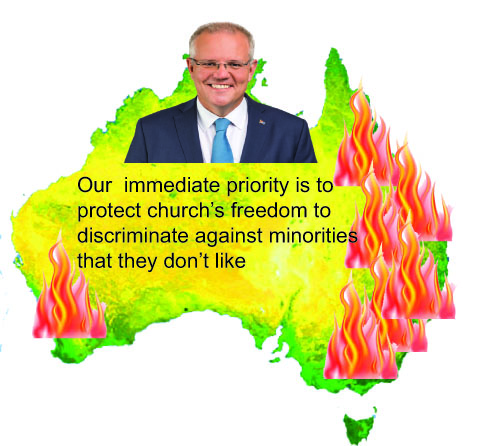
#ScottyFromMarketing has no climate target, because he is controlled by climate denialists
|
Scott Morrison’s missing target: climate https://www.afr.com/policy/energy-and-climate/scott-morrison-s-missing-climate-target-20200203-p53x5g
If he is going to appease noisy climate change denialists, it would be better if the Prime Minister left emissions reduction policy to the states. Richard Denniss Columnist Scott Morrison loves long-run targets for everything except climate policy.The federal government has long-run targets for inflation (2 to 3 per cent), the budget surplus (1 per cent of gross domestic product) and net debt (zero). It’s got a long-run target for defence spending (2 per cent of GDP) and countless long-run targets when it comes to Indigenous disadvantage, education performance, aged care quality and foreign aid. But when it comes to reducing the amount of coal, oil and gas Australia burns, apparently long-run targets are an unnecessary distraction for an “action man” like Scotty from Marketing. Targets give business, consumers and other levels of government something clear to work towards. Energy sources, especially the coal and nuclear power stations that the Prime Minister likes the sound of, take years to plan, years to build and decades to pay for themselves. Targets give business more certainty but they also make governments accountable for performance, which is presumably why the Prime Minister is so determined to avoid them when it comes to carbon emissions. In his sermon to the National Press Club last week, he avoided committing to net zero emissions by 2050 on the basis that his “climate action agenda is a practical one, it goes beyond targets and summits”. But you can’t go “beyond” long-run targets without having first set them.
Morrison knows targets matter. That’s why his government targeted so many sports grants to marginal electorates, and it’s why he spends so much time talking about meeting and beating Tony Abbott’s 26 to 28 per cent Paris target. Scott knows that if you set the bar low enough you can easily clear it, and if you don’t set the bar at all you can do nothing at all. After six years in office, continuing to avoid long-run emissions targets makes the government’s job easier and the energy industry’s harder. The Prime Minister’s real problem with long-run climate targets is the long-run climate change deniers in the party he’s trying to lead. For 10 years the only way for a Liberal leader to survive has been to publicly promise to do something about climate change while privately promising not to. Morrison waved a lump of coal in Parliament when he wanted to destabilise Malcolm Turnbull, but today he waves his “climate action now” slogan to stabilise his slide in the polls. Ultimately, like the last five Liberal leaders, he will be impaled on the fence his party insists he sit on. Morrison’s new-found interest in hazard reduction is no substitute for spending his prime ministerial capital in international forums, trying to steer the world away from the 3 degrees of warning we are currently on track to experience. The state premiers are perfectly capable of raking the leaves, but only the federal government can negotiate on the nation’s behalf for more ambitious action. Which brings me back to targets. Back in 2016, the ACT set a target to source 100 per cent of its electricity from renewable sources by 2020, and it’s already “meeting and beating” that goal and providing some of the cheapest electricity in Australia. The City of Sydney will be 100 per cent renewable by the end of this year and the state Coalition government of Gladys Berejiklian has committed NSW to net-zero emissions by 2050. In fact, every state in Australia is committed to carbon neutrality by 2050 – which, whether Scott Morrison likes it or not, means that Australia has committed to being carbon neutral by 2050. But rather than using those targets as leverage on the international stage, Morrison is undermining them on the domestic stage. If the Prime Minister was as interested in appeasing the quiet Australians as he was in appeasing the noisy climate denialists, he would welcome the bear hug the state premiers have wrapped him in and take credit for their ambition on the world stage while holding the premiers to account for their commitments back home. While a national approach to emissions reduction would be nice, the federal Coalition has shredded every initiative that has been put forward. Rather than take over more responsibilities from the states, Morrison would do better to leave climate and energy policy to them. The only thing stopping him from showing up at the next global climate talks and putting the states’ target of net zero by 2050 on the table is his backbench. |
|
|
Pro nuclear stooge Minister Matt Canavan faces conflict-of-interest inquiry
 Matt Canavan faces conflict-of-interest inquiry over $20m club loan, SMH By David Crowe, February 3, 2020 The Morrison government is caught up in another inquiry into one of its own senior figures after Resources Minister Matt Canavan revealed a potential conflict of interest over a $20 million loan.Senator Canavan announced on Monday night he had not declared his link to the North Queensland Cowboys football club at the time it gained the loan from the Northern Australia Infrastructure Facility…….. Matt Canavan faces conflict-of-interest inquiry over $20m club loan, SMH By David Crowe, February 3, 2020 The Morrison government is caught up in another inquiry into one of its own senior figures after Resources Minister Matt Canavan revealed a potential conflict of interest over a $20 million loan.Senator Canavan announced on Monday night he had not declared his link to the North Queensland Cowboys football club at the time it gained the loan from the Northern Australia Infrastructure Facility……..
Senator Canavan disclosed the inquiry at the same time he announced he had offered his resignation from the ministry because he would back former Nationals leader Barnaby Joyce in a challenge against party leader and Deputy Prime Minister Michael McCormack. The Northern Australia Infrastructure Facility, or NAIF, is a key agency within Senator Canavan’s portfolio and was used last year to fund a multi-use training centre at the club……. The inquiry into the loan raises the prospect that Senator Canavan may remain outside the ministry whatever the outcome of the Nationals leadership ballot. The potential conflict has similarities with the resignation of former Nationals deputy leader Bridget McKenzie, who stood down because she had not disclosed her membership of a gun club when the club received money from the sports funding program she oversaw as minister……… https://www.smh.com.au/politics/federal/matt-canavan-faces-conflict-of-interest-inquiry-over-20m-club-loan-20200203-p53xez.html?fbclid=IwAR2SINUWJoXs791GHHySuwgvYFHG9YJRtCT-qtRYJGdmcVvUeXIBb2_P0yQ |
|
Strong rally in Kimba, South Australia, against nuclear dump plan
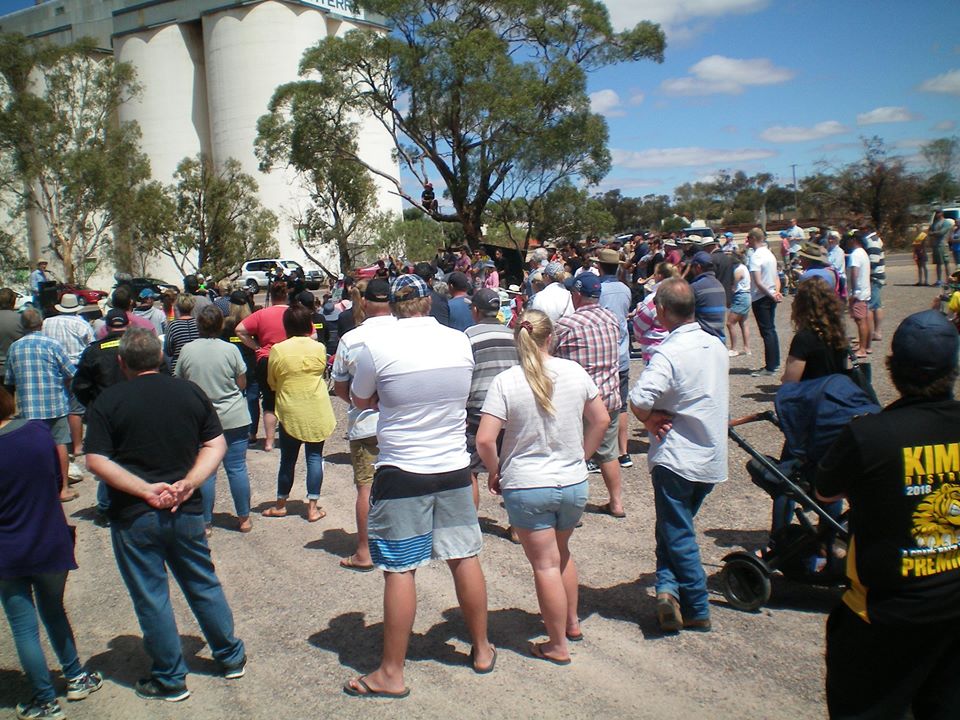
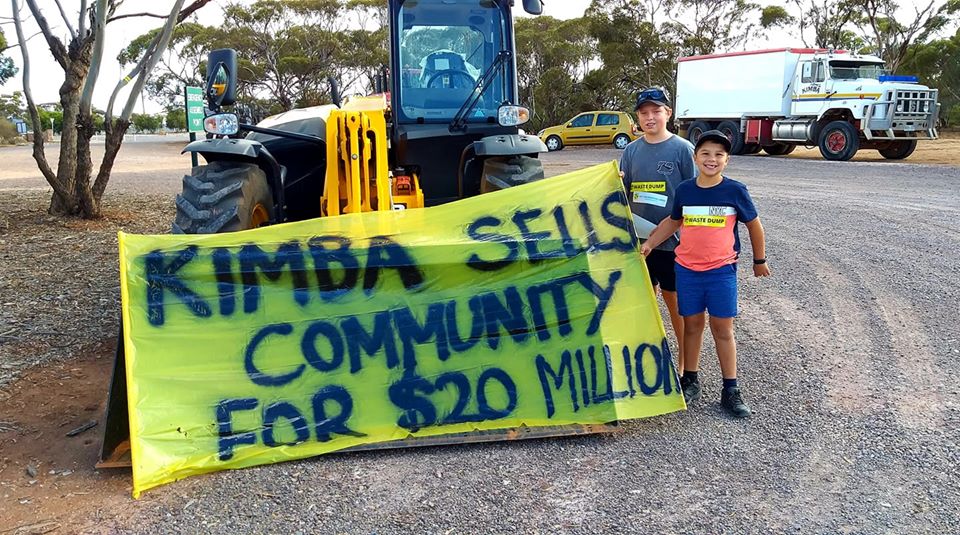
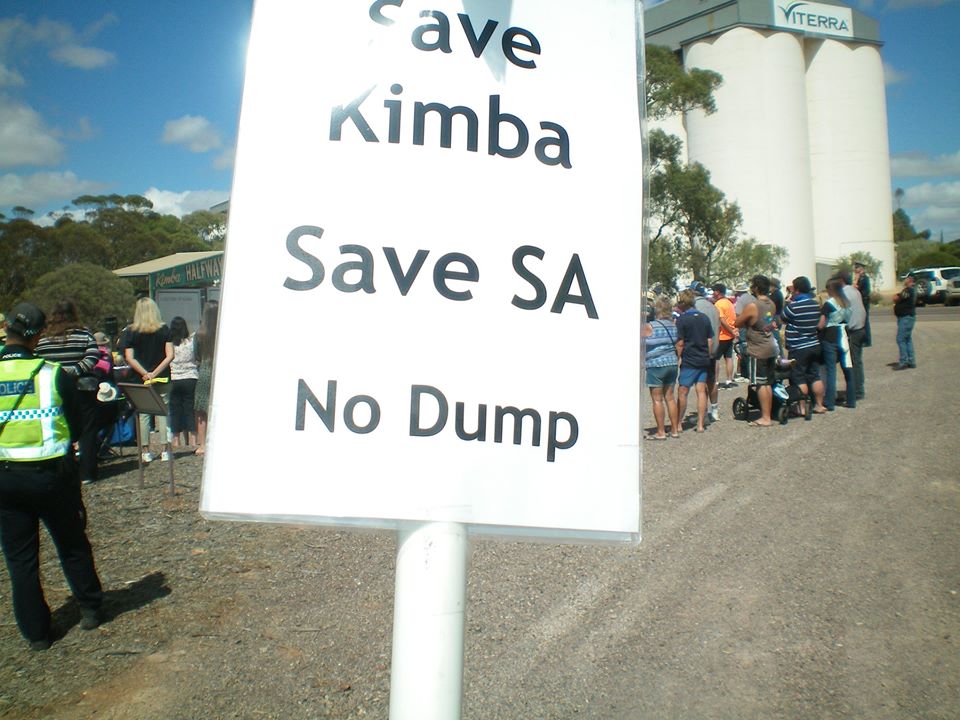
SA community calls on government to scrap planned nuclear waste dump, SBS, 2 Feb 2020 Protesters are venting their anger at a nuclear waste dump proposed on South Australia’s Eyre Peninsula. Protesters are calling on the federal government to scrap a proposed nuclear waste dump on South Australia’s Eyre Peninsula at a rally on Sunday.
The farming property Napandee near the town of Kimba was announced as the site of the radioactive facility on Saturday.
But the No Radioactive Waste on Agricultural Land in Kimba or SA committee says the community consultation process was flawed.
“Those opposed to the facility have had no choice but to fight, at every opportunity, for our legitimate concerns to be heard,” president Peter Woolford said…..
Federal Resources Minister Matthew Canavan said a decision on the site would be announced soon. https://www.sbs.com.au/news/sa-community-calls-on-government-to-scrap-planned-nuclear-waste-dump
A clear path to climate action for Australia
 The Princes Highway to climate action, SMH, Jono La The Princes Highway to climate action, SMH, Jono La Nauze 2 Feb 2020 In the past few weeks a clear path to real action on climate change has emerged. State and territory governments are aligning on the need for stronger climate policy.If the states act decisively and act together on setting emissions targets they can reduce pollution through an alternative route. Let’s call it the Princes Highway to climate action, because, like the famous road, it passes through the eastern capitals and deliberately avoids Canberra. Nauze 2 Feb 2020 In the past few weeks a clear path to real action on climate change has emerged. State and territory governments are aligning on the need for stronger climate policy.If the states act decisively and act together on setting emissions targets they can reduce pollution through an alternative route. Let’s call it the Princes Highway to climate action, because, like the famous road, it passes through the eastern capitals and deliberately avoids Canberra.
The biggest barrier to action has been a lack of political will and outright climate denialism in Federal Parliament, mainly from the Liberal and National parties. Even after the bushfires, the Prime Minister has tried to deflect attention from his party’s failure by focusing the debate on how we can “adapt” to a hotter, more chaotic climate, rather than cutting the pollution that causes it. But at the state level, things have been different. In recent weeks, senior Liberals have been speaking out about the need to cut pollution and have called for stronger climate policy – including the South Australian Premier, the outgoing and incoming Tasmanian premiers, the Victorian Opposition Leader and the NSW Climate and Energy Minister. In South Australia, the Liberal Party shifted a long time ago. When a freak storm toppled transmission lines and blacked out the state, the federal Coalition rolled out an aggressive misinformation campaign blaming the then Labor government’s renewable energy leadership. But when the Liberals came to power they didn’t follow their federal counterparts in trashing wind and solar – instead, they embraced it. “A lot of people thought when I got elected that we would be scaling back the state’s focus on renewable energy, when in fact we are putting the foot to the floor,” said Liberal Premier Steven Marshall on Friday. South Australia is now on track for 75 per cent renewable energy by 2025, and the Premier has linked the recent bushfires to climate change. Every single state and territory in the country has now set a goal of net zero emissions by 2050 – a long-term target the Prime Minister has so far rejected. Of course, the reality is that emissions cuts in the next five and 10 years will count the most. That’s why it’s critical that premiers such as Gladys Berejiklian and Daniel Andrews seize this moment to work with their fellow premiers on a national climate change strategy…….. This is a critical moment that could shift the national debate. If Victoria adopts emissions targets in line with the Paris Agreement, it is possible for other states to follow suit, passing similar legislation and creating a de-facto national climate change strategy – whether Scott Morrison decided to help out or not. In a few years, rather than being stuck in a stalemate at the federal level while temperatures rise and the country burns, we could have agreement between states and territories to get on with the job of lowering emissions and creating a safer future. https://www.smh.com.au/national/the-princes-highway-to-climate-action-20200131-p53wg6.html |
|
|
Australian govt’s dodgy process, with “jobs promises” for getting support for Kimba nuclear waste dump.
 Megan Jo I Fight To Stop A Nuclear Waste Dump In South Australia 3 Feb 2020 I feel empathy for the people that voted yes. I think they truly believe that the promises of jobs, safety and prosperity are going to materialise. Sure, the government has promised 45 jobs….. but the current definition of ‘employed’ is 1 hour per week.
 Australia’s extreme bushfires – forests might not recover
 Wildfires have spread dramatically—and some forests may not recover. An explosion in the frequency and extent of wildfires worldwide is hindering recovery even in ecosystems that rely on natural blazes to survive. https://www.nationalgeographic.com/science/2020/01/extreme-wildfires-reshaping-forests-worldwide-recovery-australia-climate/
|
BY JOHN PICKRELL, JANUARY 30, 2020, Pungent and damp, the so-called tall, wet forests of southeastern Australia are home to the tallest flowering plants on Earth. Eucalyptus regnans, the Latin name of the mountain ash, means “ruler of the gum trees”—which is fitting, given these giants can reach more than 300 feet high.
Many of Australia’s gum trees, particularly those in drier forest types, are famously able to tolerate fire, throwing out new buds and shoots within weeks of being engulfed in flames. But even these tenacious species have their limits. Old-growth forests of the mountain ash and a related species, the alpine ash, are among the gum trees that are less tolerant of intense blazes. In the state of Victoria, these trees had already been severely depleted by logging and land clearing. Now, the bushfires that have burned more than 26 million acres of eastern Australia in recent months are putting the forests at even greater risk. Some of the forests razed this year have experienced four bushfires in the past 25 years, meaning they’ve had no chance to recover, says David Lindenmayer, an ecologist at the Australian National University in Canberra. “They should be burning no more than every 75 to 125 years, so that’s just an extraordinary change to fire regimes,” he says. “Mountain ash need to be about 15 to 30 years old before they can produce viable amounts of seed to replace themselves following fire.” The loss of these dominant trees is a significant problem, since they provide vital habitat for threatened animal species such as the sooty owl, the giant burrowing frog, and a fluffy arboreal marsupial called the greater glider. (Also find out how Australia’s fires can create big problems for freshwater supplies.) |
|
Federal Government chooses Kimba farm Napandee on the Eyre Peninsula for nuclear dump
|
Federal Government chooses Kimba farm Napandee on the Eyre Peninsula for nuclear dump, ABC, 1 Feb 2020
The Federal Government has selected a farm on South Australia’s Eyre Peninsula as the site of a controversial nuclear waste dump. Key points:
Jeff Baldock’s Napandee property 20 kilometres west of Kimba will be used to permanently store low-level waste and temporarily store intermediate-level waste. The decision to use the 160-hectare area for what the Government calls a “disposal and storage facility” was made after four years of consultation. Nearly 62 per cent of people voted in favour of the site being used in November, while a site near Hawker in the Flinders Ranges was opposed by Aboriginal traditional owners and residents……. Dump to consolidate nuclear wasteLocal federal Liberal MP Rowan Ramsey said waste would come in from more than 100 sites around Australia, such as hospitals and universities, and the Lucas Heights nuclear reactor in Sydney. Processed medium-level nuclear fuel rods from Lucas Heights will be temporarily stored at Kimba while a permanent site is found for them, he said. Mr Ramsey, who tried to nominate his own property near Kimba for the dump but was barred as a federal MP, said there would be no fly-in, fly-out workers at the facility……. Aboriginal group opposed the voteThe Barngarla Determination Aboriginal Corporation launched legal action in 2018 against the District Council of Kimba, arguing it contravened the Racial Discrimination Act by excluding native title holders from a ballot due to be held that year. The Federal Court dismissed the claim last year because it said no contraventions of the Racial Discrimination Act had been established…….. The Howard government proposed a similar dump in South Australia in 1998 but withdrew its plans after losing a fight with the South Australian Labor government in the Federal Court. In 2007, a property called Mukaty Station in the Northern Territory was put forward to host the nuclear waste facility. The plan was abandoned in 2014, again because of legal action, this time by the area’s traditional owners. A group called No Radioactive Waste Facility for Kimba District held a rally against the decision in the town on Sunday.Friends of the Earth national nuclear campaigner Jim Green said the Federal Government promised the facility would not be approved unless it received at least 65 per cent of community support. “They’ve ignored the traditional owners, ignored South Australians. South Australia’s got legislation banning the imposition of nuclear waste dumps and that’s been ignored and it’s just disrespectful from start to finish,” he said. “South Australians have got greater ambitions for our state than to be someone else’s nuclear waste dump.”https://mobile.abc.net.au/news/2020-02-01/kimba-farm-eyre-peninsula-chosen-for-nuclear-dump/11920514 |
|
Bushfire state of emergency in Australian Capital Territory (ACT)
Times 2nd Feb 2020, An inferno was raging near the Australian capital, Canberra, yesterday as a heatwave combined with high winds to prolong the country’s devastating bushfire season. The tiny Australian Capital Territory (ACT), between Sydney and Melbourne, declared a state of emergency as the fire, covering 140 square miles, threatened Canberra’s southern suburbs.
Drinking water threatened by forest fires
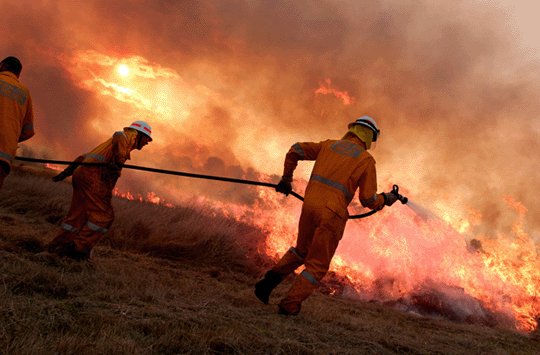 As forests burn around the world, drinking water is
  at risk https://www.westhawaiitoday.com/2020/01/31/features/as-forests-burn-around-the-world-drinking-water-is-at-risk/
In Australia’s national capital of Canberra, where a state of emergency was declared on Friday because of an out-of-control forest fire to its south, authorities are hoping a new water treatment plant and other measures will prevent a repeat of water quality problems and disruption that followed deadly wildfires 17 years ago.
|
“The forest area burned in Australia within a single fire season is just staggering,” said Stefan Doerr, a professor at Swansea University in England who studies the effects of forest fires on sediment and ash runoff. “We haven’t seen anything like it in recorded history.” The situation in Australia illustrates a growing global concern: Forests, grasslands and other areas that supply drinking water to hundreds of millions of people are increasingly vulnerable to fire due in large part to hotter, drier weather that has extended fire seasons, and more people moving into those areas, where they can accidentally set fires. More than 60% of the water supply for the world’s 100 largest cities originates in fire-prone watersheds — and countless smaller communities also rely on surface water in vulnerable areas, researchers say. Continue reading |
Scott Morrison, in the grip of fossil fuel lobby, is wrong about more gas for Australia
So, Scott Morrison, let’s come clean and let the public know that there’s no domestic case for increasing gas extraction. Given that gas extraction threatens landscapes and has a major problem with emissions, it’s better we leave it in the ground
The prime minister, Scott Morrison, surrounded by advisers out of the fossil fuel industry, is stuck in a time warp.
His claim that “there is no credible energy transition plan, for an economy like Australia in particular, that does not involve the greater use of gas as an important transition fuel” is demonstrably wrong. There are many. Continue reading
225 $billion for Australia’s submarine plan – a fleet of B-21 bombers would be better
|
Scrap submarines project before it’s too late says former public service boss, Michael West media, by Jon Stanford | Feb 3, 2020 Australia’s $225 billion SEA 1000 submarine project is so high risk, it would be better for Department of Defence to scrap it and start again, writes former public service chief, Jon Stanford, in the final instalment of his Second Rate Leadership series. In addition to some very serious problems with progress with the SEA 1000 program, there are some more fundamental questions to be addressed in the longer term. The first of these is whether the Attack class will embody the technologies required to be successful in its operations in the mid-2030s and beyond. In other words, will it be fit for purpose? An associated question is around the submarine’s cost effectiveness. The escalating cost of this acquisition means that the opportunity cost is also going up. With the submarines being designed mainly for joint operations with the US Navy, there are also significant risks in the future around whether a continuing US presence can be assumed.
In regard to the first question, it is very difficult to be able to judge whether the submarines will be fit for purpose if we do not know what that purpose is. Based on comments and submissions to Parliamentary inquiries from former Australian submariners we can be fairly confident that our submarines’ main area of operations (AO) is in the South China Sea, 3,500 nautical miles from base. But once there, we are not told what they do. In Australia at least, the missions the submarines undertake are classified….. ……..In addition, at a whole of life cost of $225 billion, this deterrent, such as it is, has a very high opportunity cost. Two former RAAF Chiefs have recently proposed that the ADF needs to acquire a long-range bomber force. Even if the new American B-21 bomber delivers only half the capability currently being spruiked, the early acquisition of two squadrons – 48 aircraft off the shelf – at a cost of around $50 billion looks an attractive power projection proposition. By comparison, the ability to put one conventional submarine on station “up threat” at any time at an acquisition cost of $80 billion, with associated doubts around its effectiveness and survivability, must be of questionable value………. |
|
1 This month
.

Australians deserve the truth
about
AUKUS – https://aukuspublicinquiry.com/

PETITION – To: Prime Minister Anthony Albanese and the Australian Labor Government

of the week – Australians for War Powers Reform (AWPR)
To see nuclear-related stories in greater depth and intensity

